
Wherever you meet this sign, respect it. It means that the land behind the sign has been dedicated by the American people to preserving, for themselves and their children, as much of our native wildlife as can be retained along with our modern civilization.
~Rachel Carson on our national wildlife refuges (referring to their logo and welcome sign)
As Melissa mentioned in her introductory post about our May road trip, we do try to visit as many brown signs (national and state parks, national wildlife refuges, etc.) as possible along our route. Her post got us to Kansas on day 3 of our trip so I’ll pick it up from there. Leaving our Chase Lake campsite on day 4, we headed to Quivira National Wildlife Refuge (NWR), a spot in south central Kansas we had visited on a road trip in 2020. As is typical of many of the refuges that were established primarily for waterfowl, a visit during non-migration periods often does not have the hordes of birds (Quivira is host to around 800,000 waterfowl during migration) that the refuge may be famous for. But, any place that has water, wild lands, and is protected offers glimpses into the wildlife of a region. What makes Quivira unique is its combination of inland salt marshes and prairie habitat. The salty surface water and salt marshes are fed by groundwater moving to the surface through halite-containing subsurface layers. The water is 20-40 times saltier than drinking water but only about a quarter to a half as salty as sea water. And the birds along the Central Flyway appear to love it.
Our first stop was a small pond that had several wading birds working the shallows including two of my favorites – Black-necked Stilts and American Avocets.

-The comical-looking long legs of a Black-necked Stilt when seen on land remind you that this bird has the second longest legs in proportion to body size of any other bird (only flamingos beat them out in legginess) (click photos to enlarge)
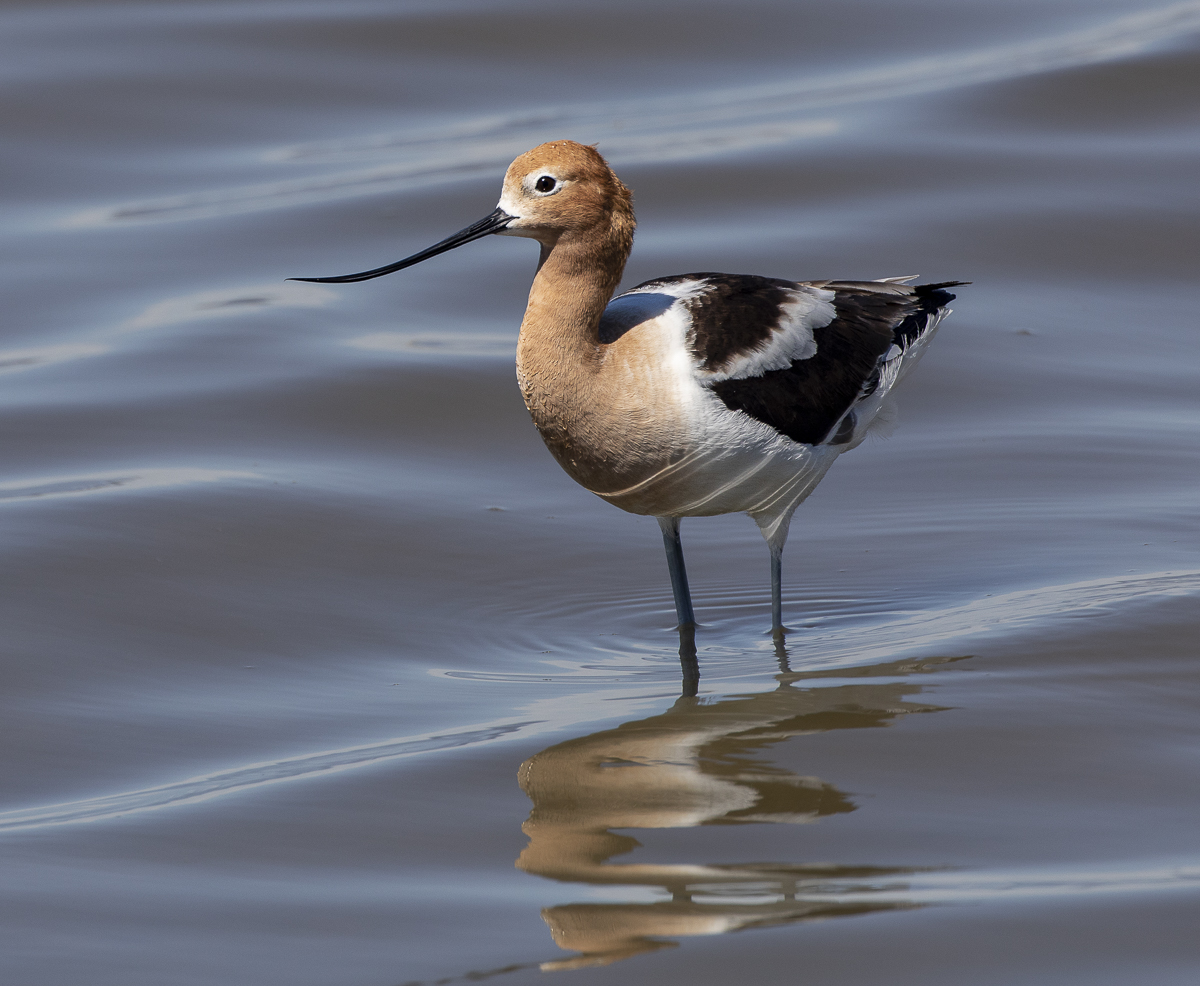
-One of our most graceful and elegant-looking birds, the American Avocet, in its glorious breeding plumage
Away from the water, we spotted a Grasshopper Sparrow singing into the wind.

-A Grasshopper Sparrow singing its insect-sounding buzzy song (one I can finally hear now with my hearing aids!)
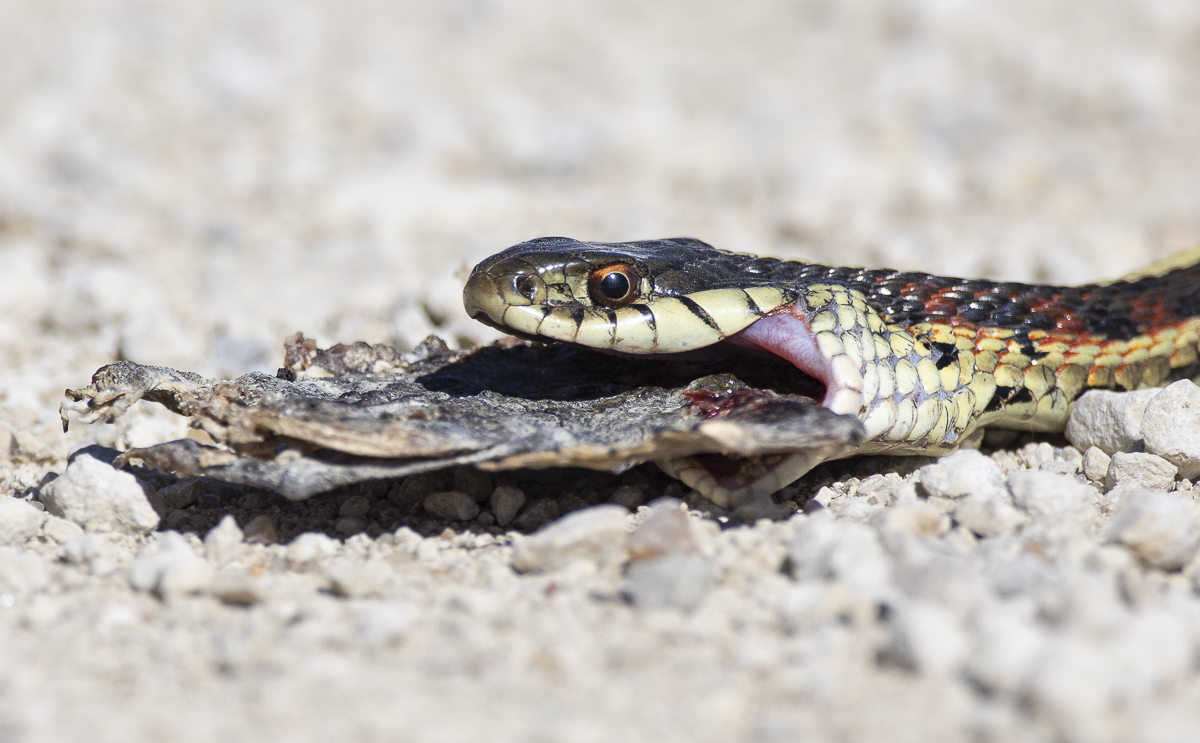
-We came across this Garter Snake feasting (or at least trying to) on a reptilian version of a pancake – a roadkill-flattened toad

-An abundant shorebird in the major salt pond was the Wilson’s Phalarope. These birds have some interesting traits – they spin in tight circles to feed when in deeper water; the females are slightly more colorful than the males (I think this is a female); and the female abandons her nest once the eggs are laid and the male takes over for care and feeding of the young, while she goes out and looks for other males!

-Every time I see a small shorebird, I am reminded of the definition of the term peep – small shorebirds that are notoriously hard to tell apart. I think this one is a Baird’s Sandpiper.

-The primary waterfowl we saw were Mallards and Blue-winged Teal, like this beautiful male
After driving much of the Auto Tour at Quivira, we hit the road across the seemingly never-ending flat lands of the plains and made a stop at another brown sign along the way – Little Jerusalem Badlands State Park.
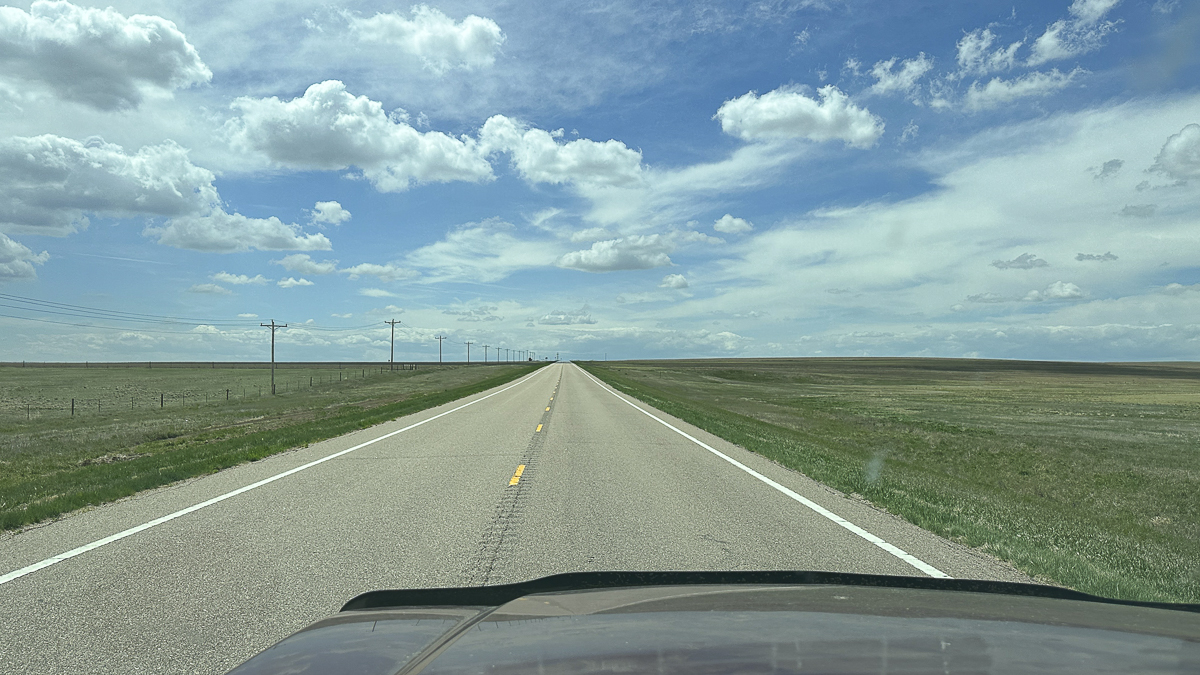
-Looking out the windshield across Kansas
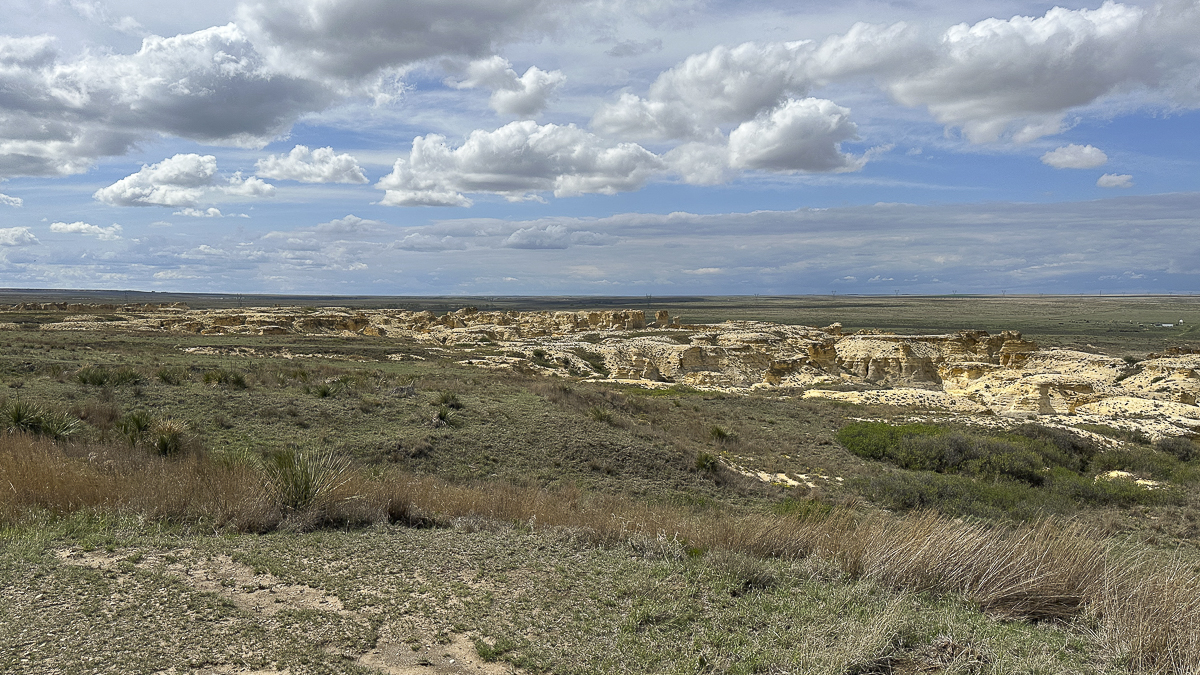
-And then a brown sign leads you to this surprise

-Little Jerusalem Badlands State Park is a gem of a state park and, indeed, resembles the better known badlands of South Dakota (we stop there later on this trip). The Nature Conservancy (TNC) acquired this tract and turned it over to the state for management. The interpretive signs were among the best I have seen (thank you, TNC). The name, Little Jerusalem, may have come form people that said, from a distance, the geologic formations look like the ancient walled city of Jerusalem.

-The bird stars of this park were a few Horned Larks. You gotta love those facial masks. The ‘horns” are laid flat in this individual while it scopes us out along the trail.
I had suggested a trip to Denver see another wildlife refuge ( a new one for us) – Rocky Mountain Arsenal NWR. Since it can be tough to find good camping spots on Friday and Saturday nights, we opted for a Denver hotel to give as an early start on the refuge the next morning. This refuge sits only 10 minutes from downtown Denver. During WWII, the Army bought thousands of acres of farmland outside Denver and opened a chemical weapons plant. Years later, Shell acquired the site and manufactured agricultural chemicals up until the mid-1980’s. All those years of industrial use, many during times when we had little environmental regulations, resulted in toxins in the soil and groundwater. But, a large tract of undeveloped land and water had attracted wildlife over the years. The discovery of large numbers of Bald Eagles using the area created an effort by locals to clean up the site and turn it into the wildlife refuge it is today, one of the premier urban national wildlife refuges n the country. It now includes re-introduced Bison, Elk, and many other species of wildlife, including the federally endangered Black-footed Ferret.
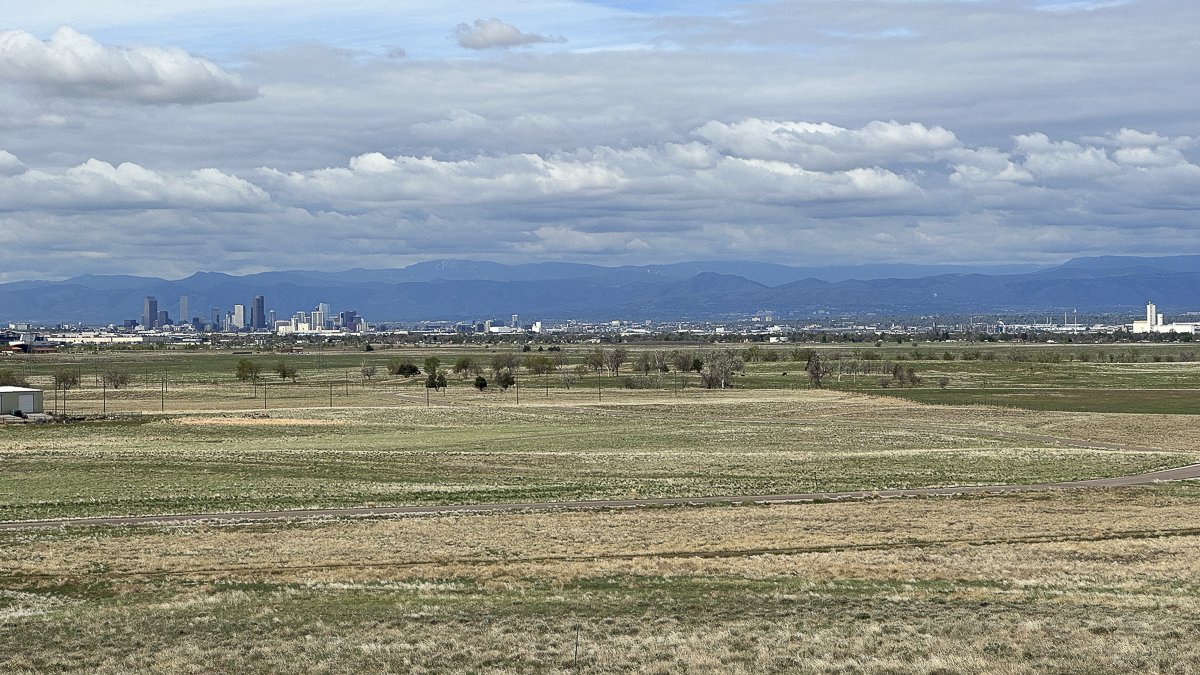
-View of the Denver skyline from the refuge.
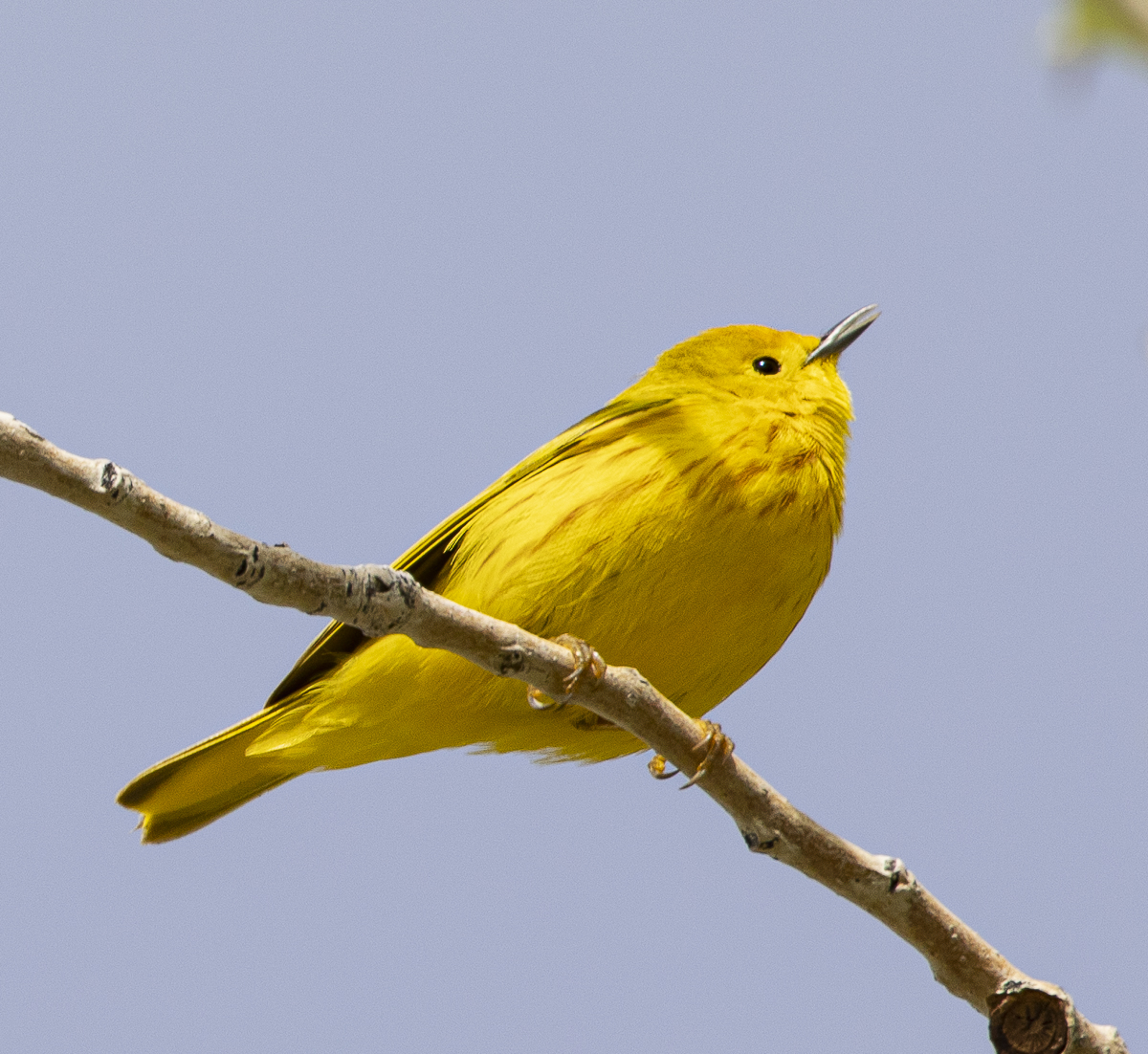
-Recent heavy rains had closed most of the Auto Tour Road so we weren’t able to get close to some wildlife (like the small Bison herd that lives on the fenced refuge), but the birds were plentiful. Yellow warblers were far and away the most abundant warbler species we saw on our trip.
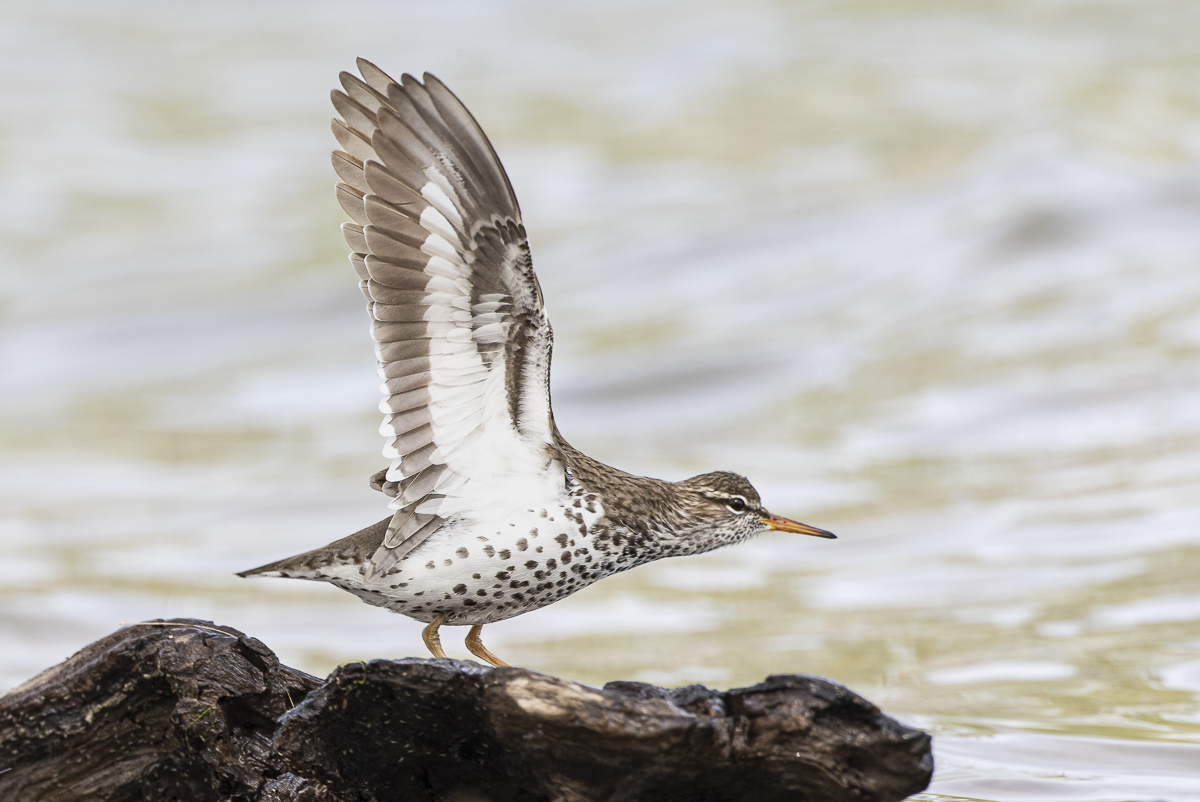
-This Spotted Sandpiper was doing shorebird yoga on a log by one of the ponds.
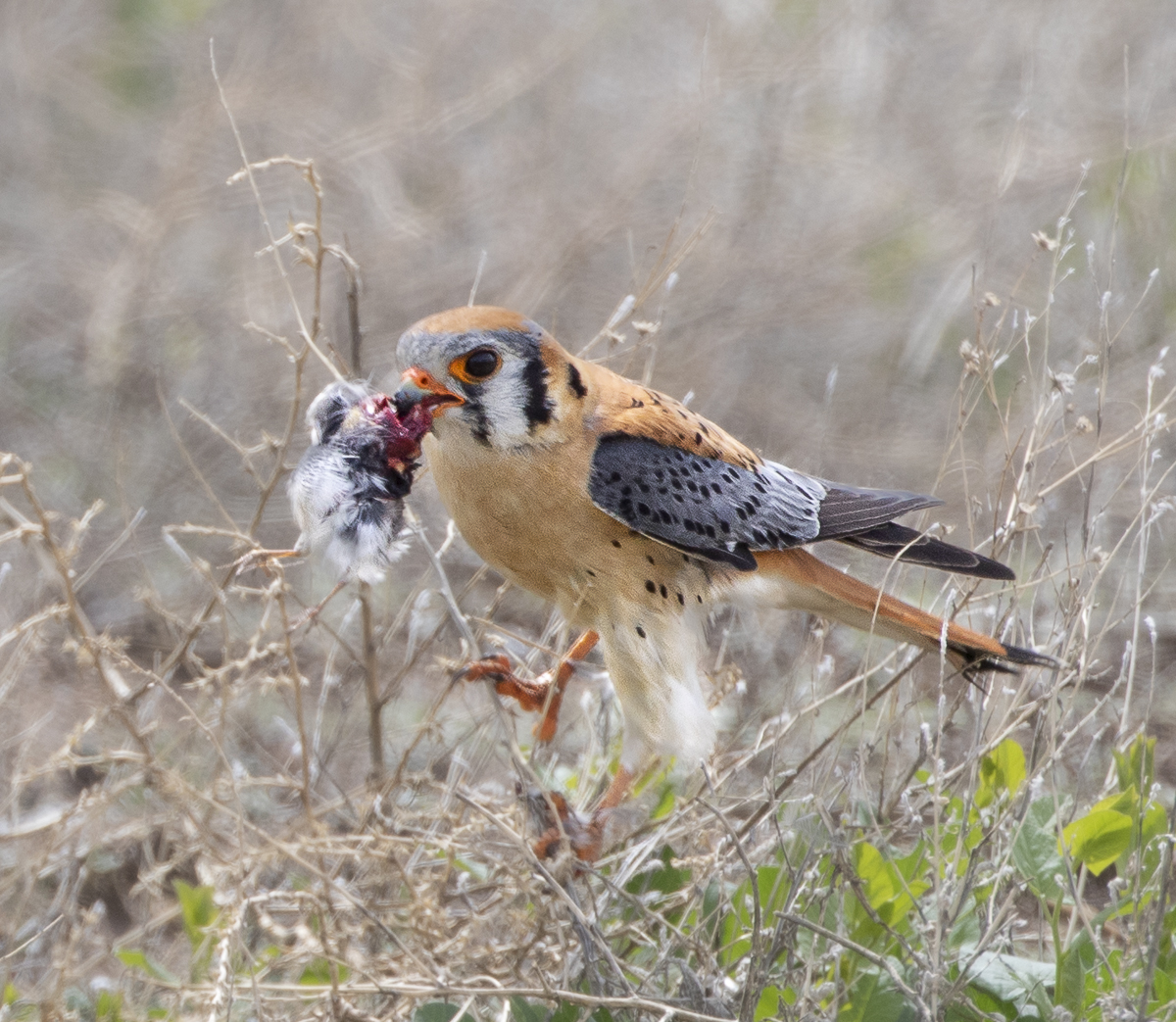
-The highlight of our wildlife sightings at the refuge happened as we were leaving the visitor center (which is beautiful, by the way). An American Kestrel carrying a prey item flew across the parking lot and landed on a roof edge. Another car drove past and it flew and landed on the ground at the edge of the parking area. We eased over and got a few pictures. It looks like it had captured a baby bird, perhaps a Killdeer.
From Denver, we hit the road again, trying to avoid the rain that seemed to be popping up all over this part of the world. Melissa worked her magic on the computer, planning alternative routes and seeking out brown signs and beautiful campsites. Next time – Dinosaur National Monument and the Uinta Mountains.


 Roads End Naturalist
Leave a comment