To catch a glimpse of a moose in its natural habitat is to witness a fleeting moment of pure magic, a connection to the wild that stays with you forever.
~Douglas Chadwick
I went out into the park on Monday to refresh my brain and see what I could see. I eventually drove out to Round Prairie, the local moose hot spot and saw two bulls that had already dropped their antlers. Unfortunately, there was a large “moose jam” and so I just drove through. On my way back, the moose were apparently laying down in the willows and could not be seen. I pulled into the now empty pullout and soon met a wildlife photographer using a thermal imaging device which picks up heat signals in the environment. He let me take a look and I saw the shapes of two moose hidden from view in a willow stand. Pretty neat! The price tag on that unit was bout $2000 so i guess I won’t be buying one anytime soon:)
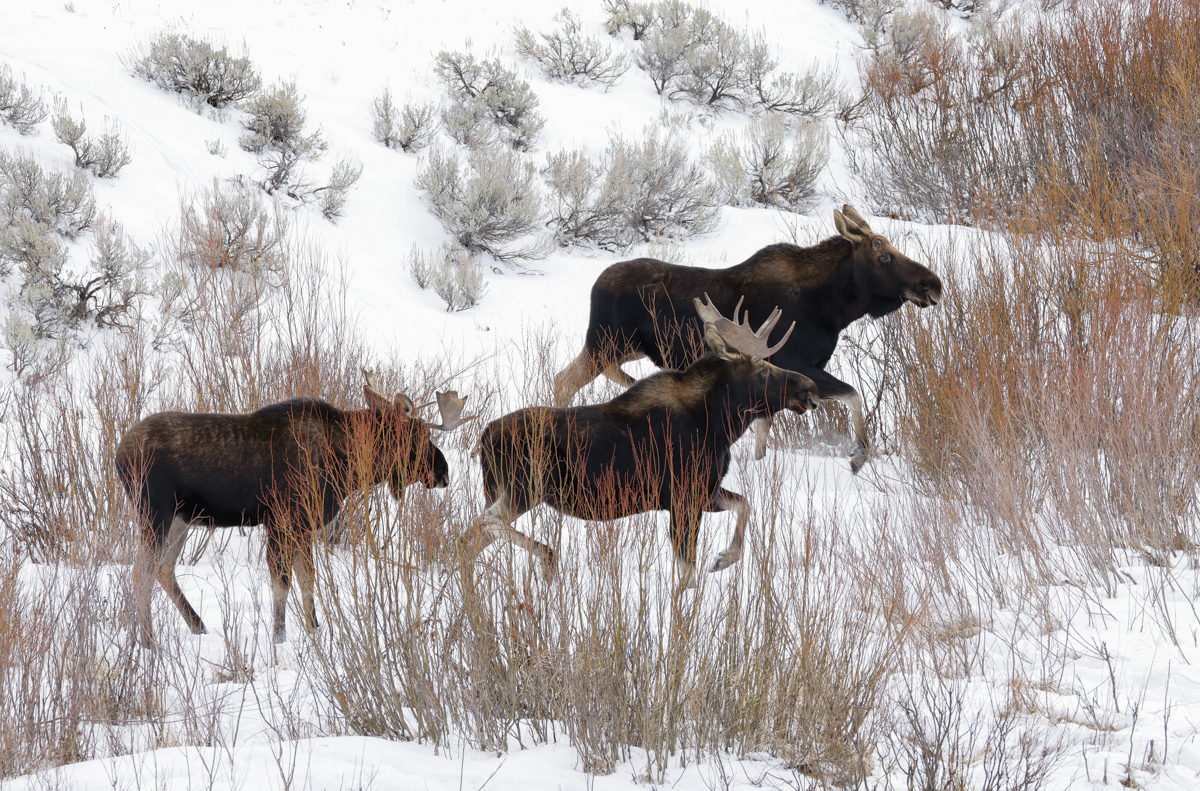
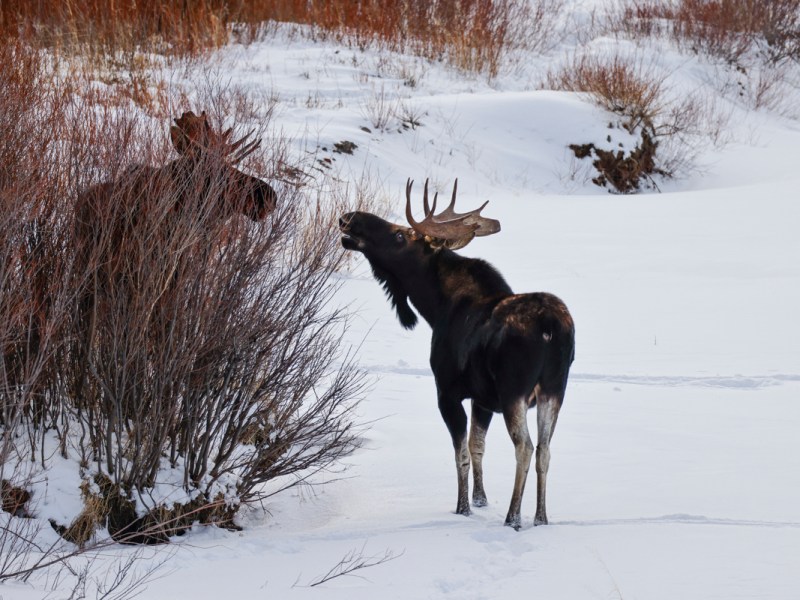
Continuing on toward Lamar Valley, I spotted three moose out along Soda Butte Creek – and no one else was there! I pulled into the closest gravel pullout and started watching the three bulls (one had dropped its antlers) as they fed on willows along the creek. Cars drove by me and I was surprised no one stopped. There were scattered bison near the trio of moose so I am guessing people just didn’t notice that three of those large dark shapes had really long legs! In what is an uncommon occurrence in Yellowstone, I had these moose to myself for over 20 minutes before some visitors finally saw them and stopped
Three bull moose along Soda Butte Creek . The lead bull has already dropped his antlers. (click photos to enlarge)
Here’s a short clip of the moose browsing on willow branches. Videos are best viewed full screen.
I continued to watch these big guys as they fed and interacted. The one without antlers was larger and would often lay his ears back as the other two would half-heatedly spar with one another. Here is a slow motion clip of one such interaction. These next two clips were filmed with my Canon camera and telephoto.
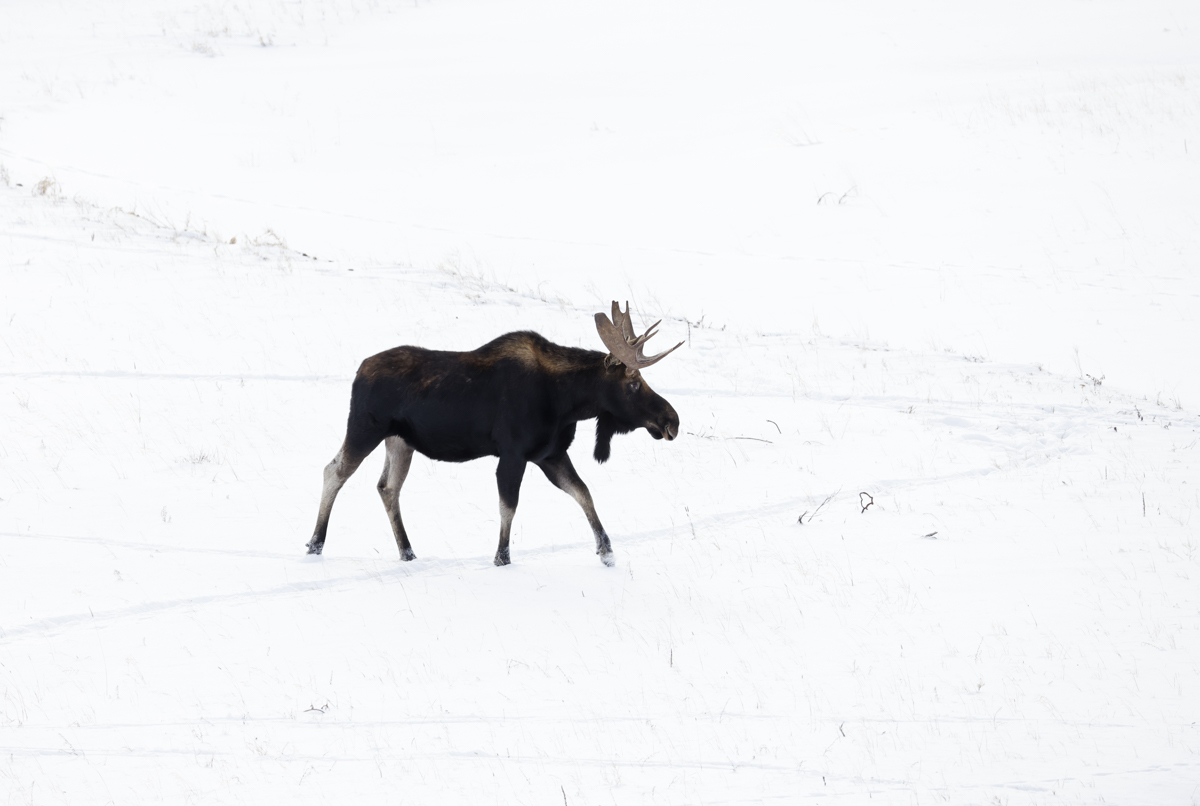
They would also occasionally take off running a short distance and then stop and resume feeding. One bull lagged behind after one running bout and walked away from the willows towards the creek, crossing a large expanse of snow and ice.
One bull heads to the water
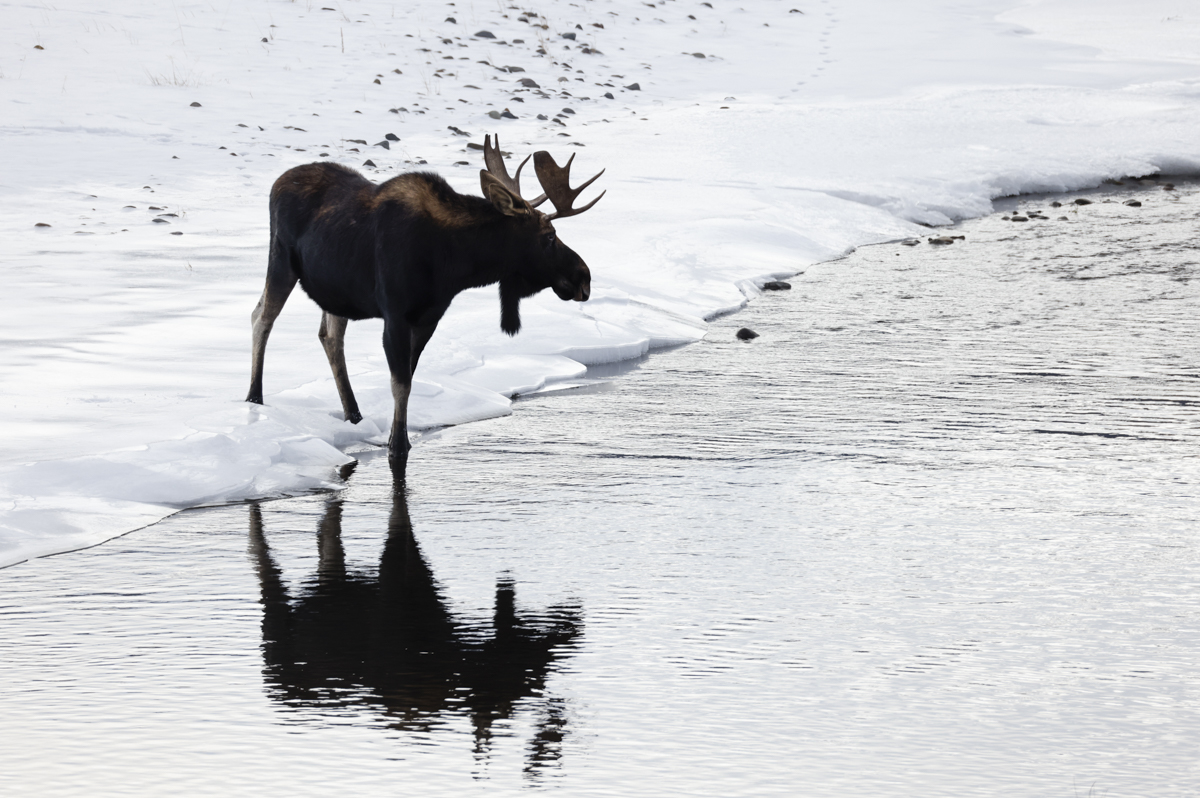
I drove a short distance down to the next pullout which was closer and where there was already a group of visitors excitedly photographing this incredible scene. The moose slowly ambled to the water’s edge and then paused as if to admire his reflection (the rest of us sure did).
Moose and reflection
After taking two long drinks, he slowly made his way back to the willows (leaving many happy photographers on the other aide of the creek).
The three moose made one last run and essentially disappeared into a thick stand of willow shrubs. I’m always grateful for these moments in the wild in this winter wonderland.
For life and death are one, even as the river and sea are one.
~Kahlil Gibran
Living in this wild place you see the reality of how the death of one creature provides sustenance for others. This happens in all natural systems but here in Yellowstone it is more visible than in the forests back in North Carolina. The landscape here often provides long views that facilitates seeing the wildlife. And the wildlife community is one of the richest in terms of species in all of North America. This past week provided two examples of the interconnections of life and death that were easily observed by park visitors – an elk killed by wolves and a bison that died after apparently being struck by a vehicle. Both carcasses were easily viewed from the road that crosses the northern range (the only road open to regular vehicles in the park in winter).
I had heard reports that a fast-moving vehicle hit a few bison one evening but did not know anything about their fate. On our drive into the park we came across a crowd with scopes and cameras near the spot where that had happened. As we got closer, we saw a huge dark mound maybe 50 yards off the road with lots of ravens and magpies nearby. We pulled in and then saw a partially hidden (at least from our view point) coyote was also at the carcass. As we watched, someone mentioned there was another carcass down the road with wolves on it so off we went.
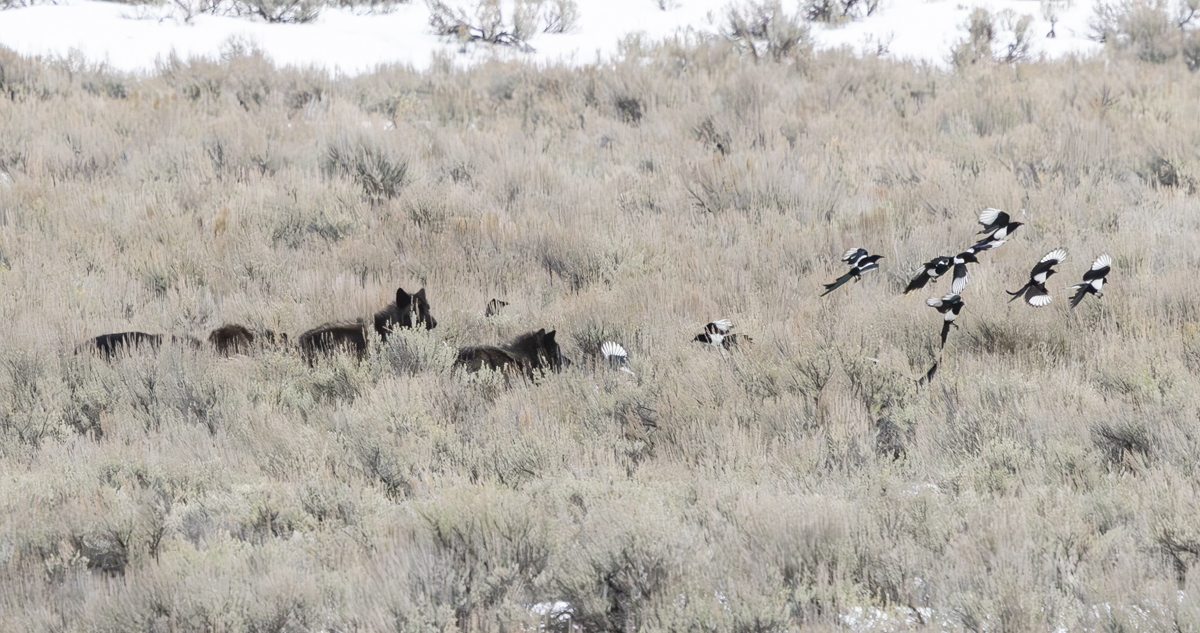
The main pullout was packed with cars and viewers so we drove by to an unpaved pullout just down the road. We could see ravens and magpies but no wolves until suddenly a black wolf stood up in the sage. Someone near us shared that the wolves had taken down a bull elk during the night and there were four of the Junction Butte pack feeding on it.
A young black wolf at the elk carcass in the sagebrush. We’ve been told that young wolves (those born this year) tend to have fur along the back of their neck that stands up like you see in this photo. (click photos to enlarge)
Other wolves soon became visible as they moved about the carcass. When the wolves moved, magpies and ravens would also move around fighting for a space at the dinner table.
A black wolf runs toward the carcass scattering a group of ravensA wolf flushes a group of magpies off the carcass area
We watched this scene for the next two hours with wolves appearing and disappearing in the sage. There were at least 4, maybe as many as six wolves feeding on the carcass at any one time with a couple having unusual color patterns on their back. Most of the wolves in this pack are black in color but note the one unusual color pattern on one wolf in this clip. These videos are taken with my iPhone and Phone Skope adapter on my spotting scope.
This next clip has two wolves feeding including a gray one. You will see its fur is stained red from the carcass when it raises its head up. Also note the elk antler from the carcass.
Melissa spotted some of the other pack members resting on a ridge above the valley. Then it happened – a magical moment when the wolves up on the ridge started howling (the sound was much louder than can be heard in this phone recording). Melissa captured this video clip through her scope.
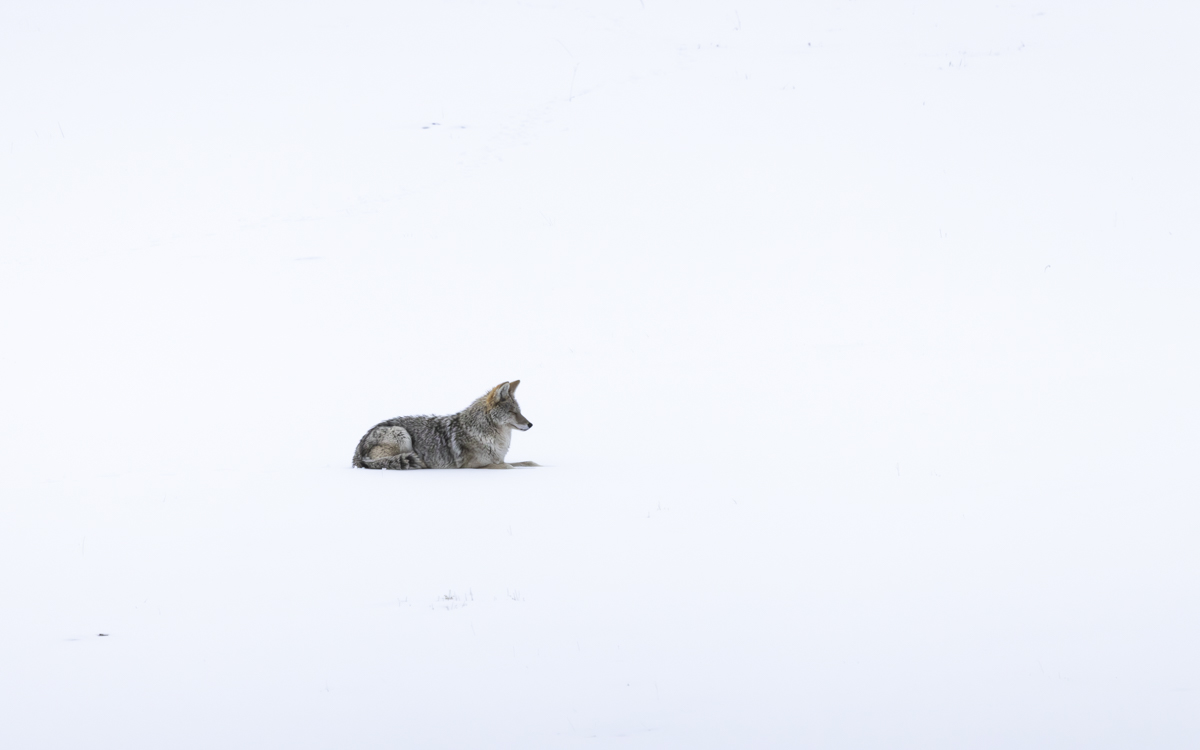
It was getting late so we headed back in the direction of home driving through the expanse of Lamar Valley. We soon saw four dark shapes spaced out on the snow-covered valley floor. As we got closer we could make out they were coyotes, all resting on the snow.
A coyote taking a late day nap in Lamar Valley
As we passed by the bison carcass we saw a coyote and a few ravens still working on it. We should definitely come back in the morning.
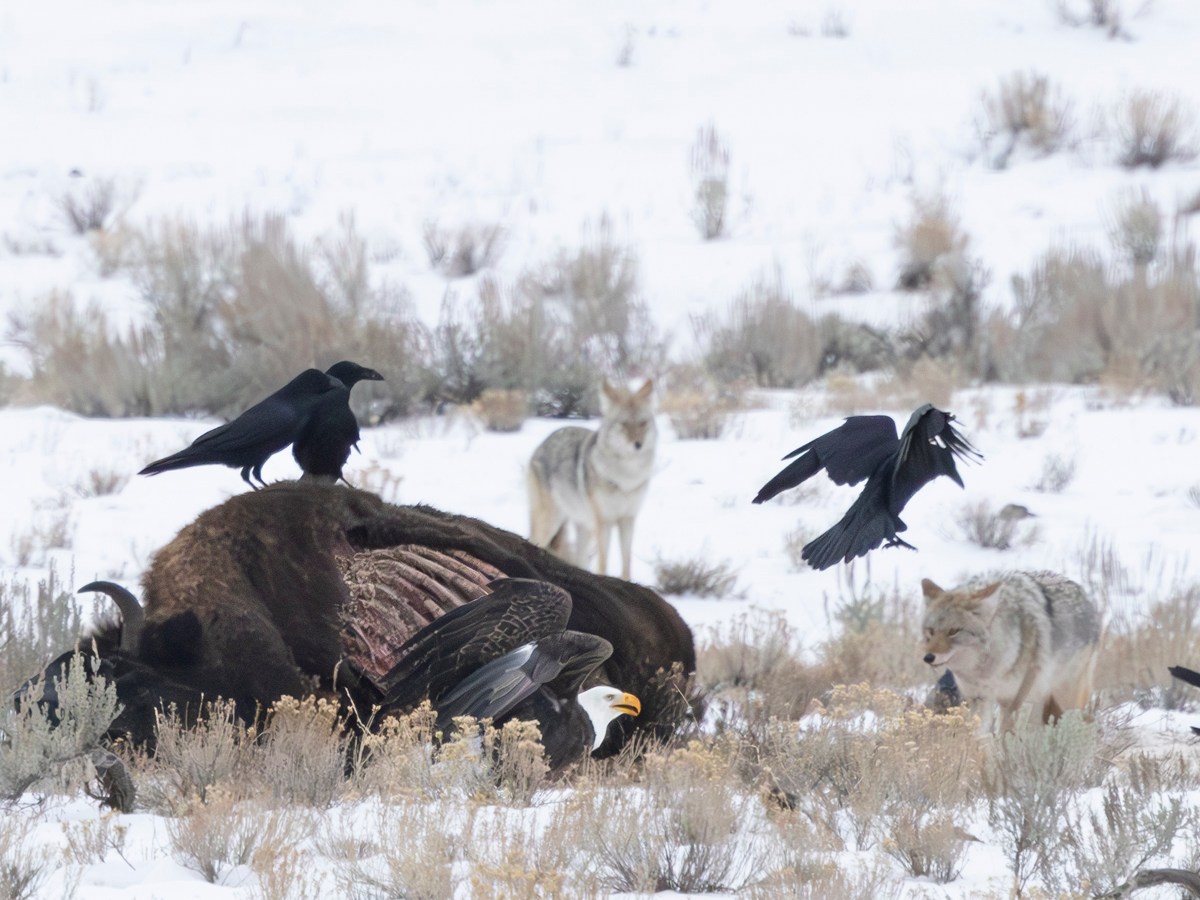
We headed out early the next morning and found a great parking spot to view the bison carcass which was already teeming with action. There are several things to note in this next video clip. There is a raven with leg bands visible at the start of the clip. I believe this bird also has an antenna coming off its back that is from a backpack harness with a GPS transmitter to track the raven. There is a long-term research study in the park investigating raven movements. Note the eagle’s reaction just before a second coyote comes in from the right. Both coyotes end up leaving the carcass with tucked tails and we witnessed a coyote chase (two against one) that happened away from the carcass. And note how quickly ravens and magpies rush in as soon as the coyotes move away.
The last clip shows a coyote working hard to get at meat under the tough bison hide. It is a longer clip that shows how tenacious all of these animals are as they try to get scraps of food in this winter landscape. Note the tagged raven is back. And at the end of the clip you can see a raven tugging at the coyotes tail as if to say “my turn”.
We drove by yesterday (one week from when we took this footage) and you can barely see the bison carcass unless there is a raven or something else sitting there. We’ll try to walk out in a day or two to take a look. The cycle continues…
Often when you think you’re at the end of something, you’re at the beginning of something else. ~Fred Rogers
For a number of years, Mike and I have made calendars for friends and family. Each month has a picture from that month in the previous year (give or take a bit) and a quote.
Our 2025 calendar was slightly different. Given our departure from North Carolina after 24 and 47 years (for Melissa and Mike, respectively), we decided to make a “greatest hits” calendar. Each month featured one of our favorite photos from one of our favorite places in North Carolina, as well as a quote.
The Fred Rogers quote was on the cover. This year has indeed been one of endings and beginnings. So, as we celebrate the arrival of 2026, we thought it would be nice to share the photos and quotes from our 2025 calendar with you.
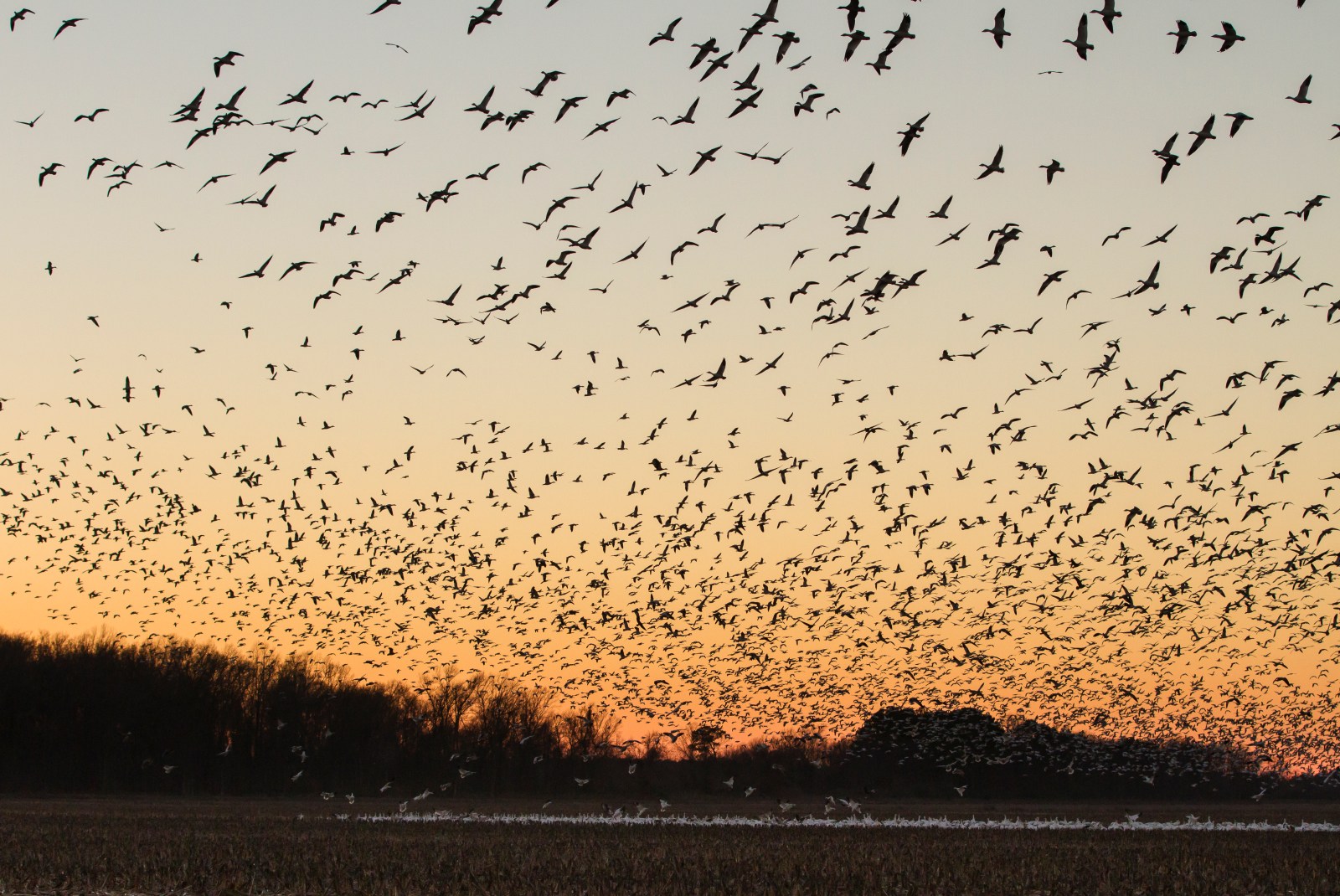
The Snow Goose Spectacle, Pocosin Lakes National Wildlife Refuge, Hyde County, NC – Mike
Watching the animals come and go, and feeling the land swell up to meet them and then feeling it grow still at their departure, I came to think of the migrations as breath, as the land breathing. ~Barry Lopez
Sunrise, Lake Mattamuskeet, Hyde County, NC – Mike
Nature is painting for us, day after day, pictures of infinite beauty, if only we have the eyes to see them. ~John Ruskin
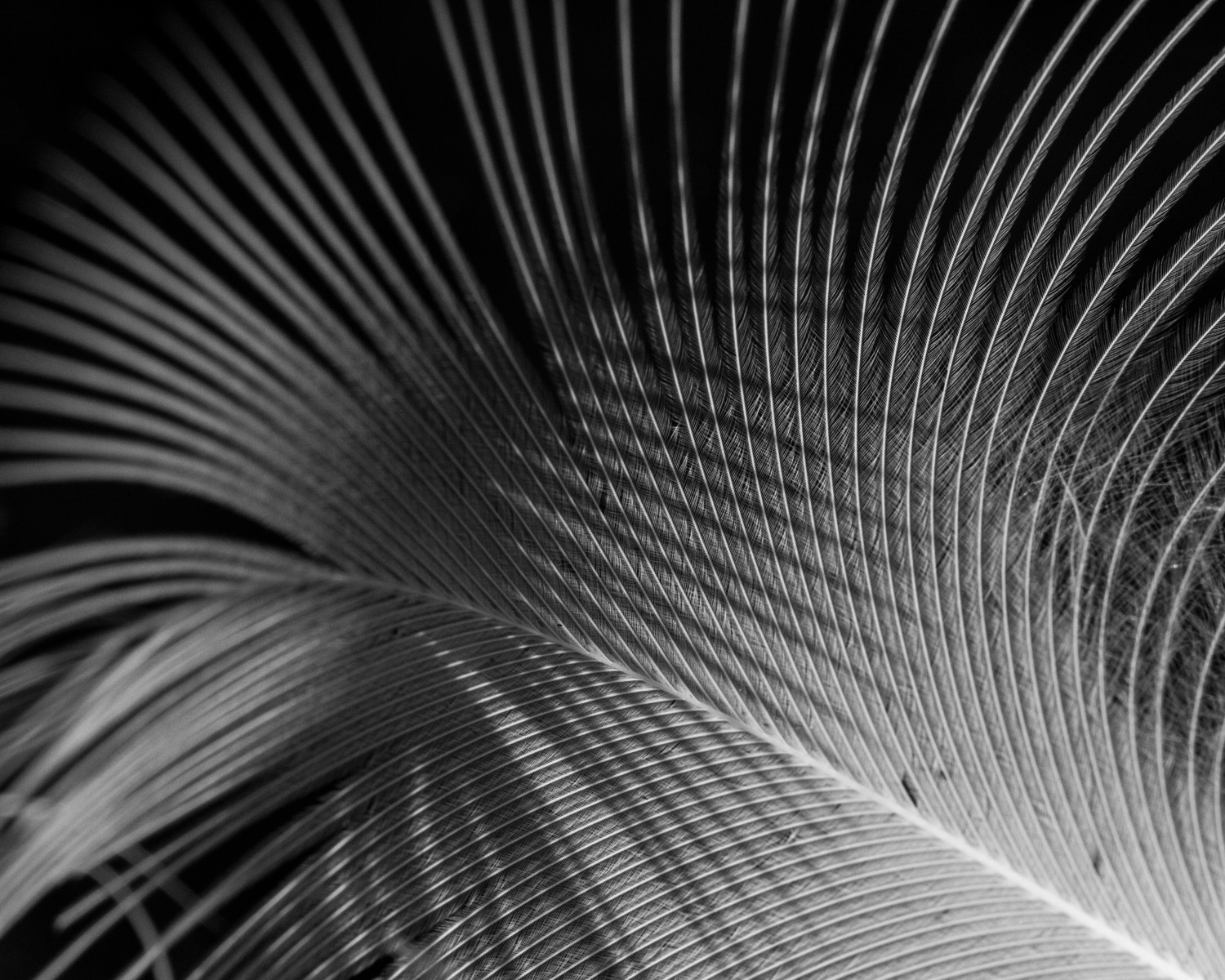
Egret Feather, Merchants Millpond State Park, Gates County, NC – Melissa
“Hope” is the thing with feathers— / That perches in the soul— And sings the tune without the words— / And never stops— at all— ~Emily Dickinson
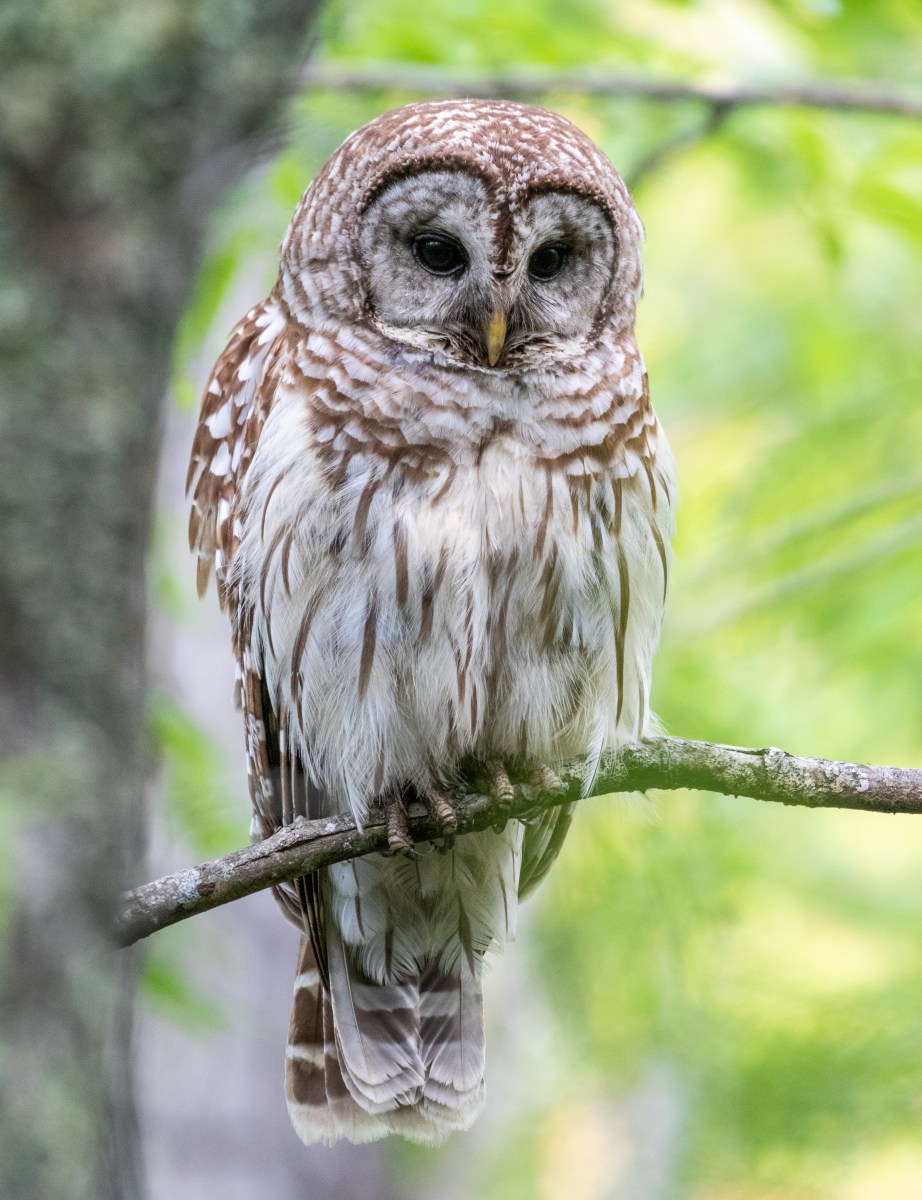
Barred Owl, Cashie River, Chowan County, NC – Melissa
I enter the swamp as a sacred place. ~Henry David Thoreau
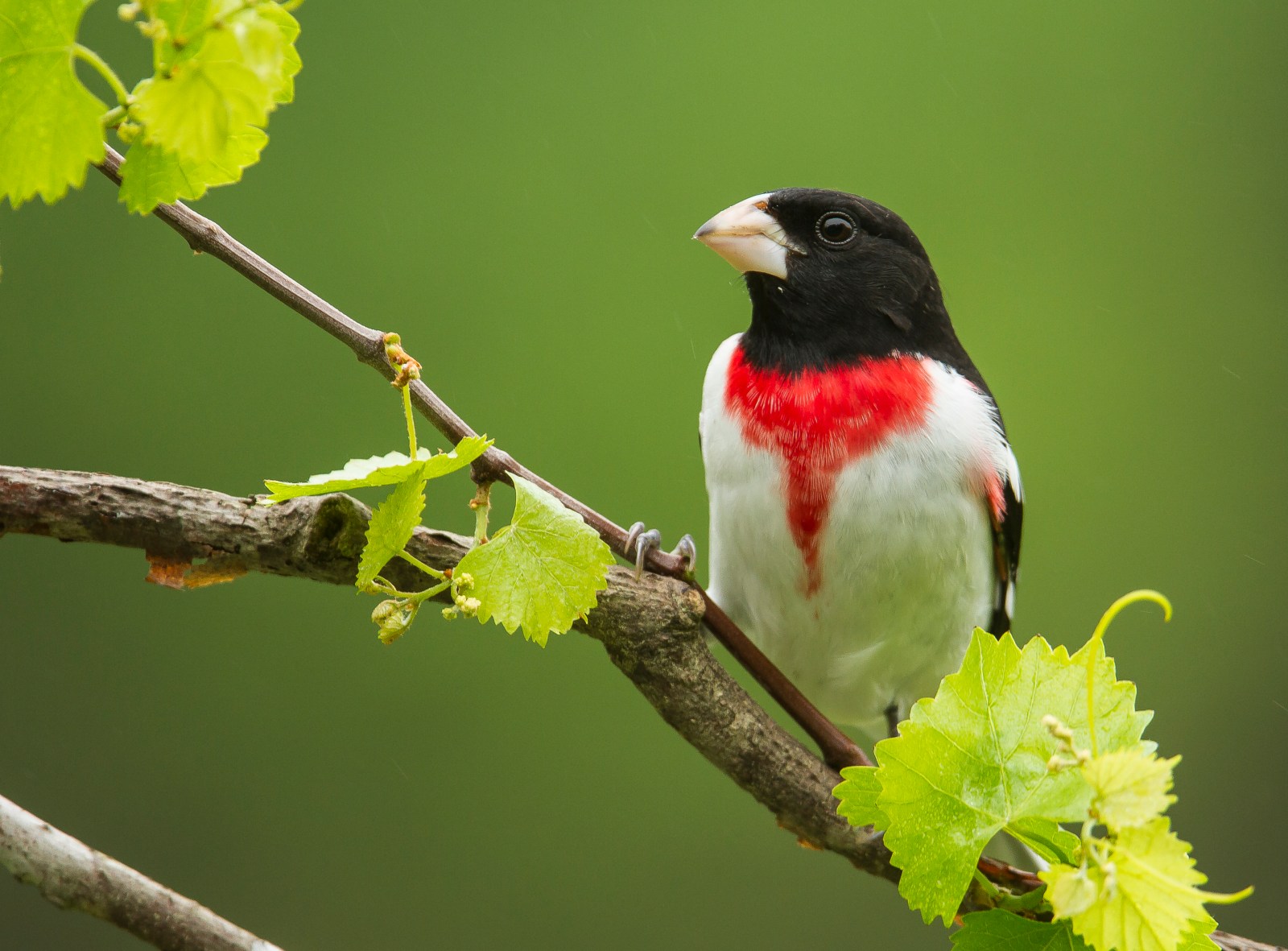
Rose-breasted Grosbeak Male, Roads End, Chatham County, NC – Mike
The presence of a single bird can change everything for one who appreciates them. ~Julie Zickefoose
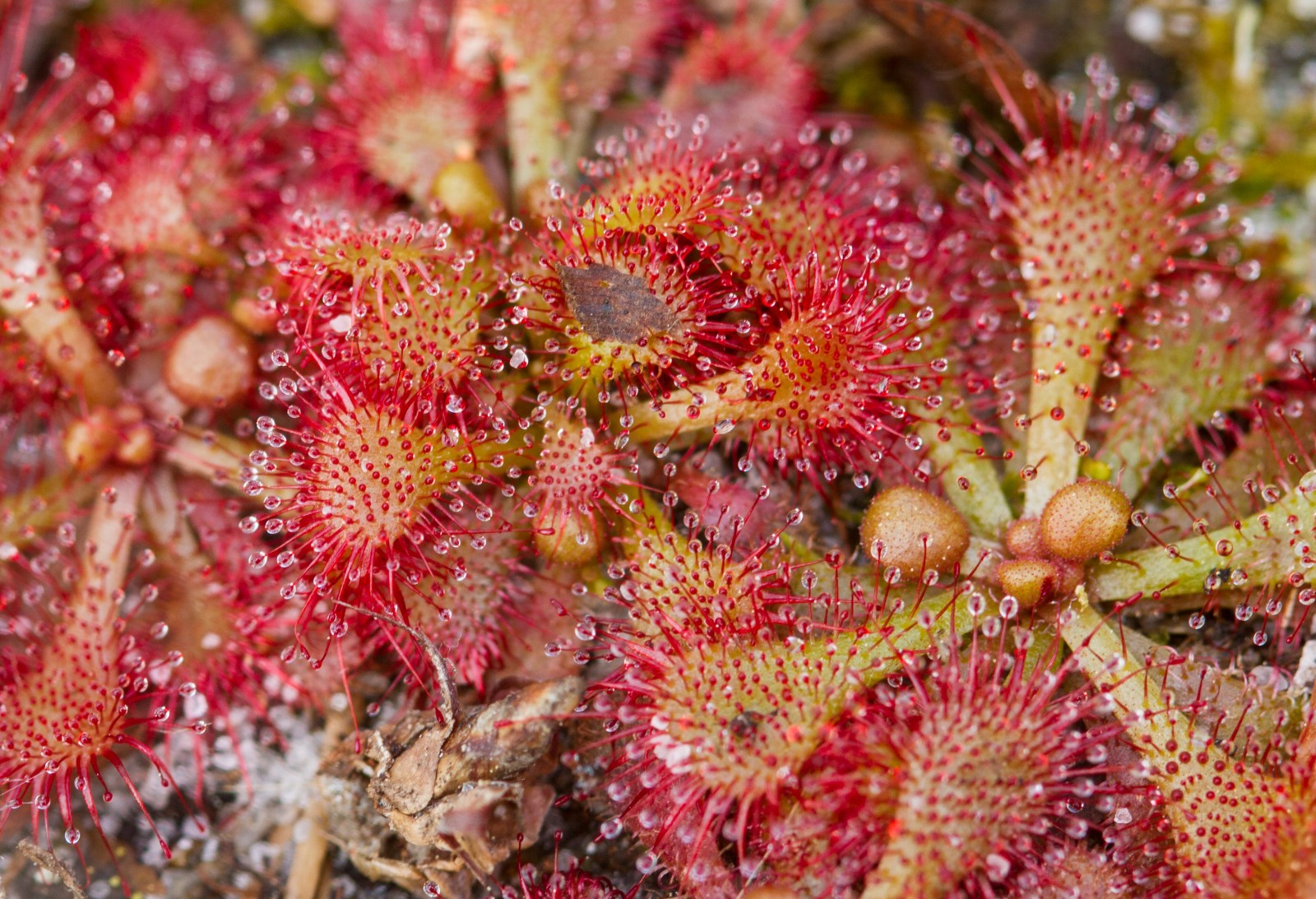
Sundews, Green Swamp Preserve, Brunswick County, NC – Melissa
To think that plants ate insects would go against the order of nature… ~Carl Linnaeus
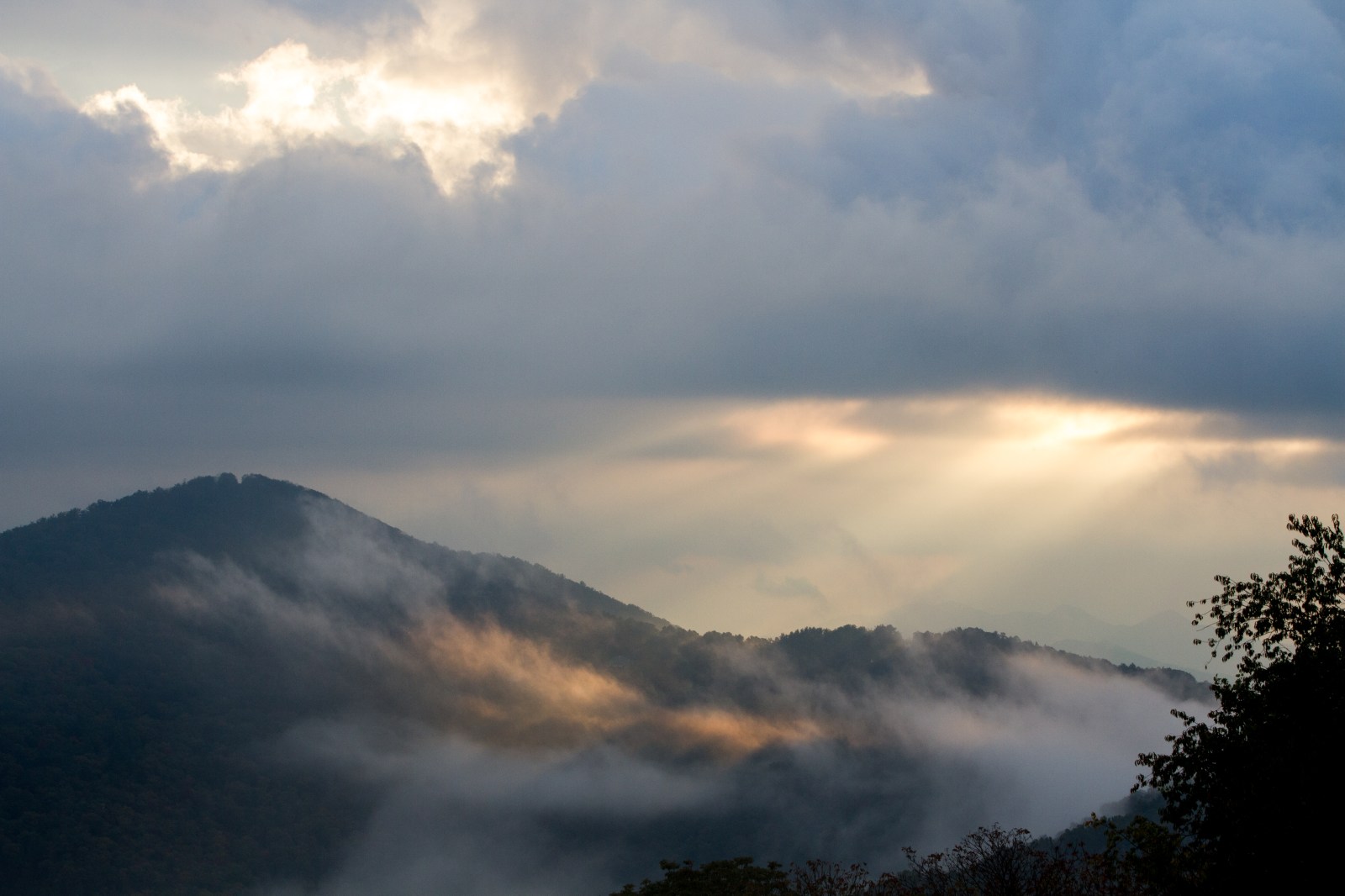
Sunset from the Blue Ridge Parkway, Haywood County, NC – Melissa
Sunsets are proof that no matter what happens, every day can end beautifully. ~Kristen Butler
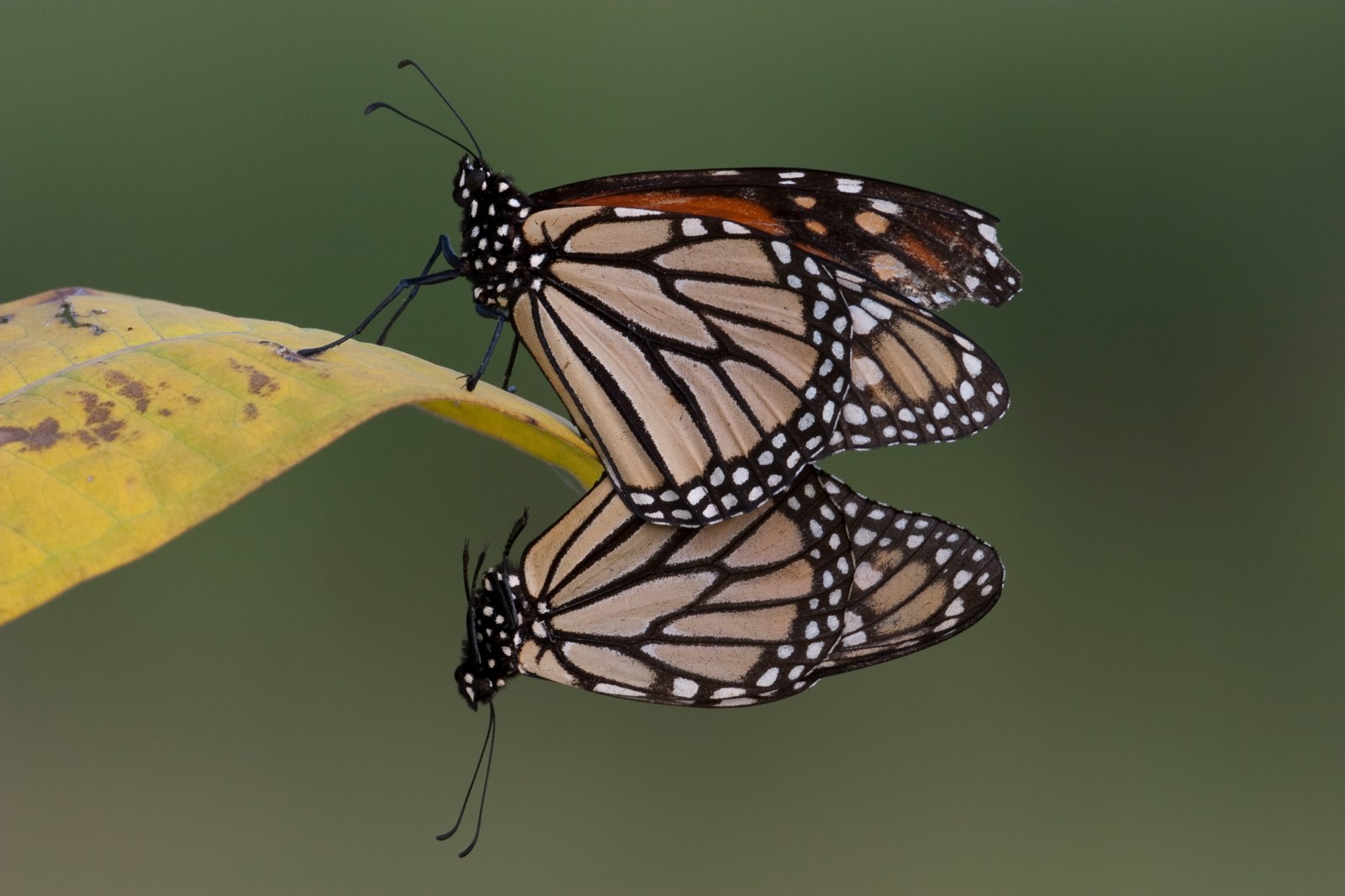
Monarch Butterflies Mating, Prairie Ridge, Wake County, NC – Mike
The butterfly counts not months, but moments, and has time enough. ~Rabindranath
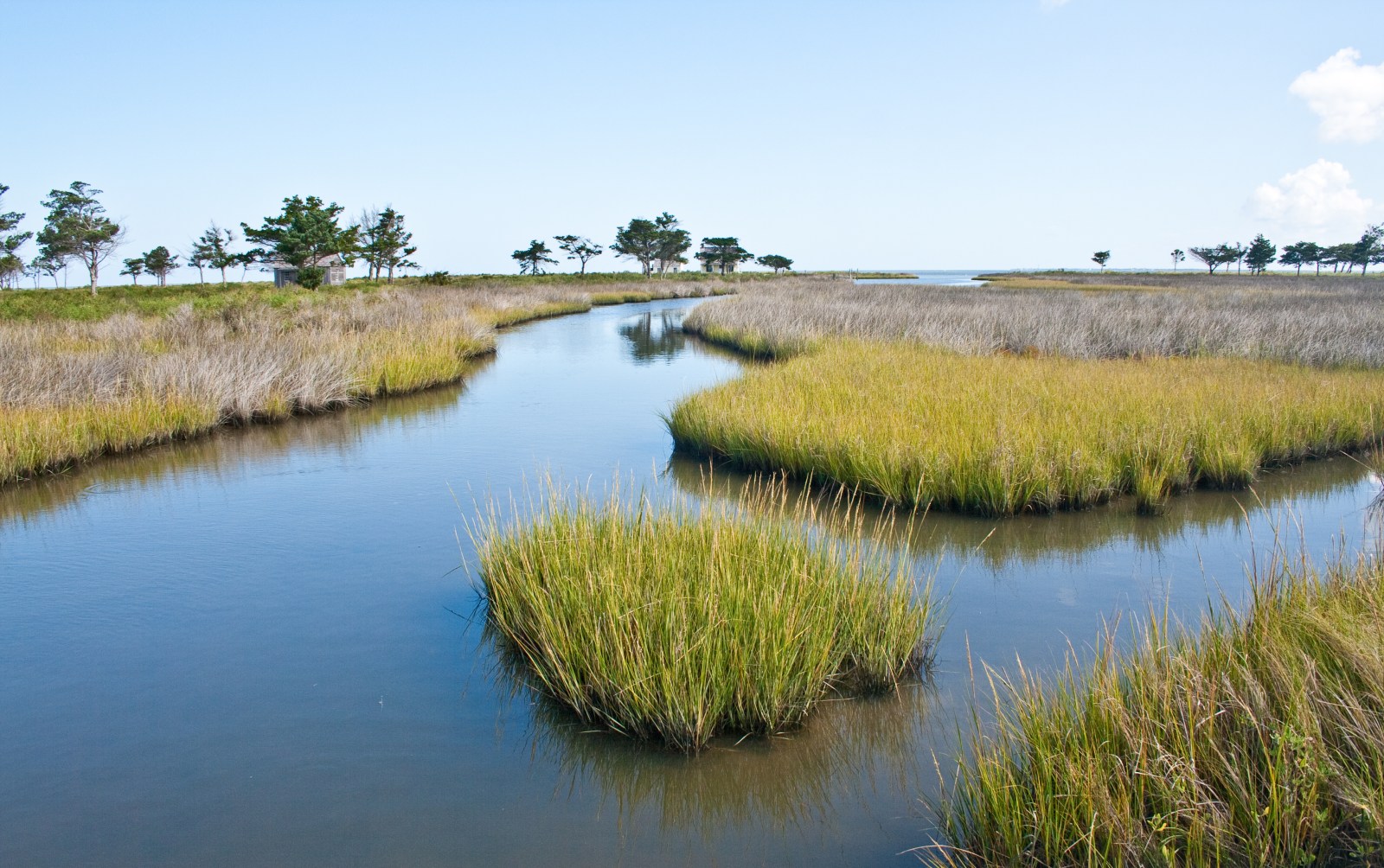
Tidal Creeks of Portsmouth Island, Outer Banks, Hyde County, NC – Melissa
The edge of the sea is a strange and beautiful place. ~Rachel Carson
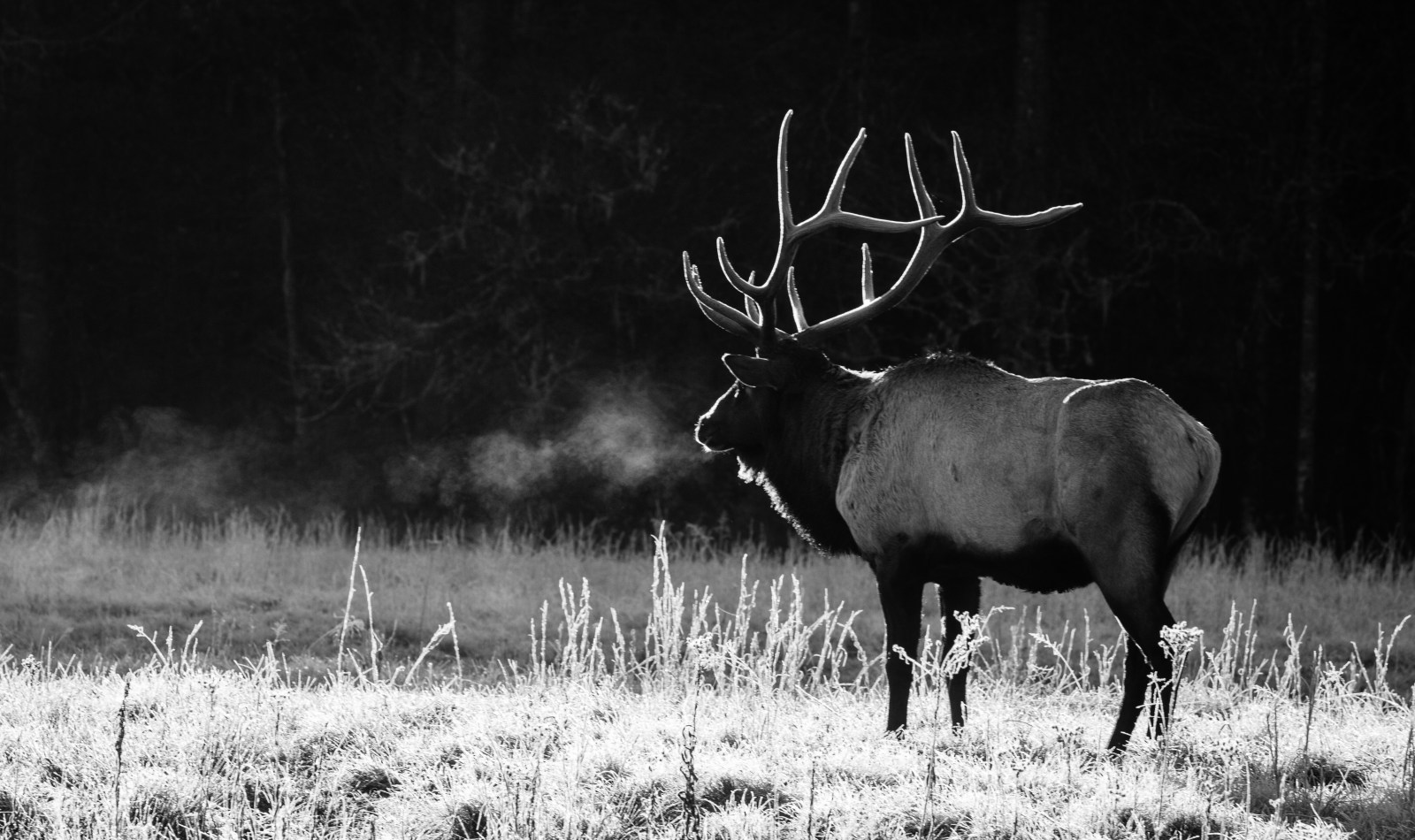
Bull Elk Breathing, Cataloochee Valley, Great Smoky Mountains National Park, Haywood County, NC – Melissa
Any glimpse into the life of an animal quickens our own and makes it so much the larger and better in every way. ~John Muir
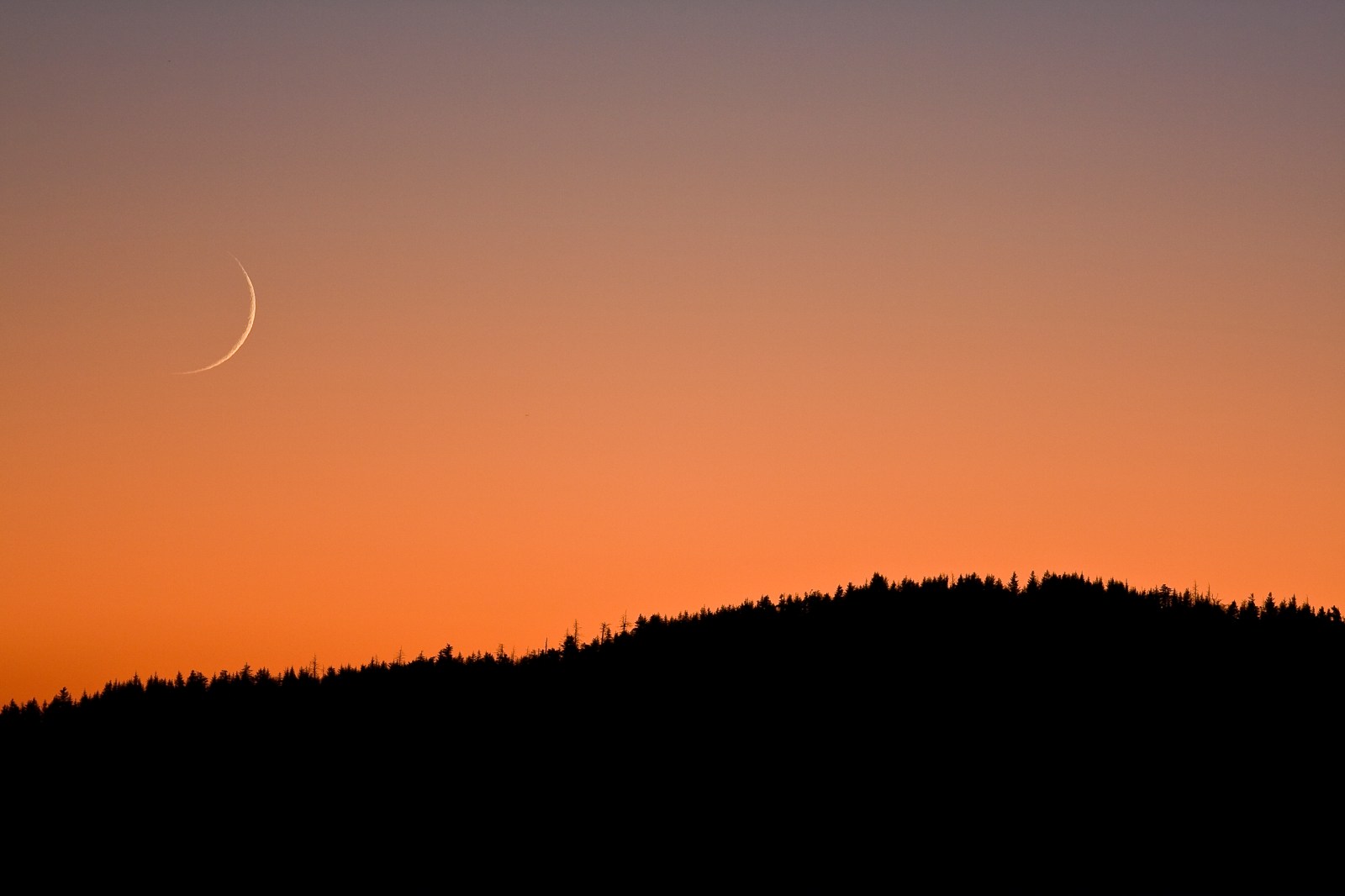
Sunset and Moonset, Mount Mitchell, Yancey County, NC – Mike
The sky is that beautiful old parchment in which the sun and moon keep their diary. ~ Alfred Kreymborg
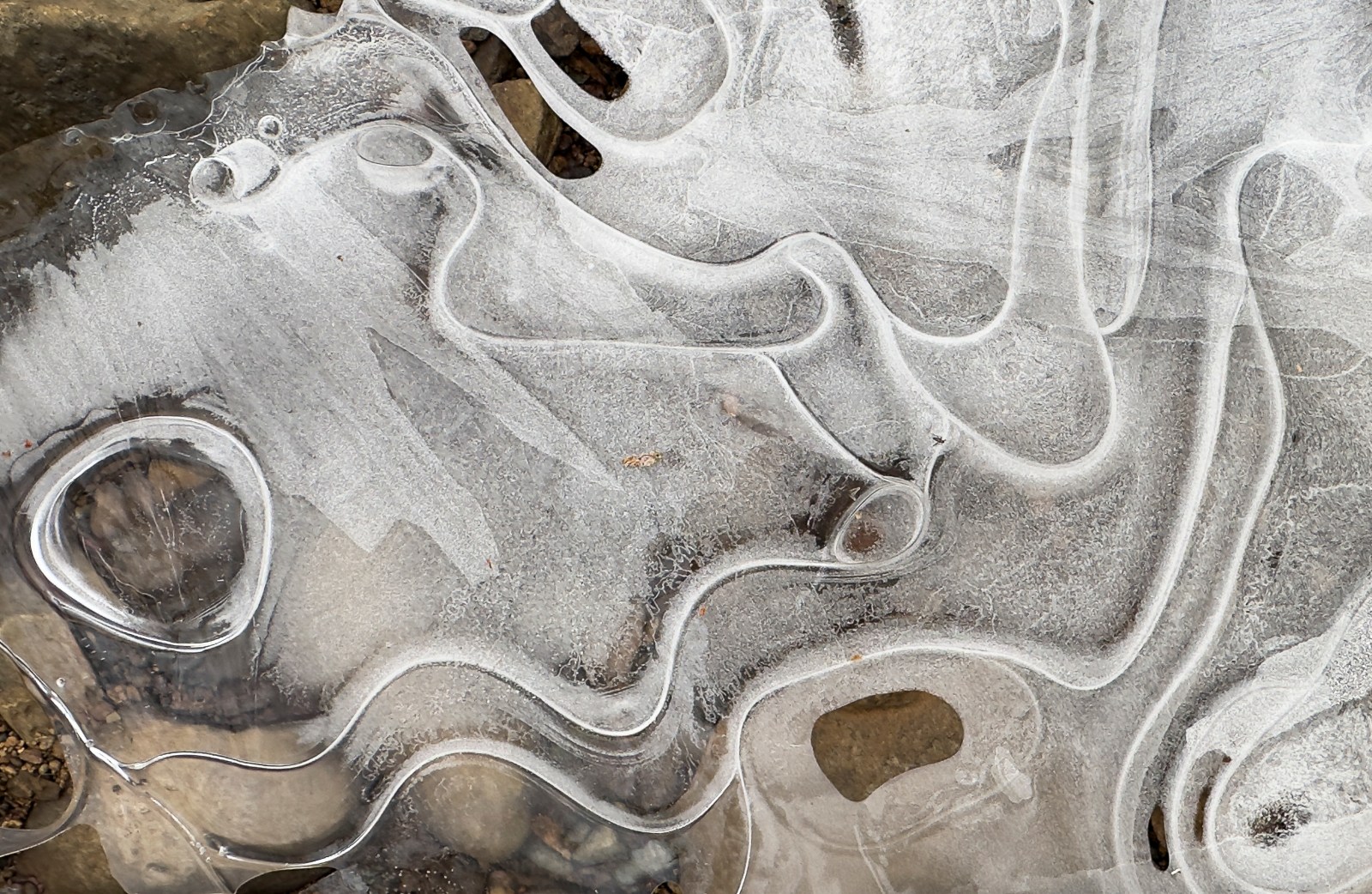
Ice on the Ephemeral Stream, Buteo Ridge, Chatham County, NC – Mike
When you leave a beautiful place, you carry it with you wherever you go. ~Alexandra Stoddard
We have most certainly carried the beauties of North Carolina with us to our new home. And, as we’ve shared in posts since our move in May, we have found many new beauties here in Yellowstone.
Today, we spent time in the park marveling at ice crystals decorating the trees, listening to the sound of moose antlers clashing, following the joyful tracks of an ermine across the snow, and taking in this huge and spectacular landscape. We’ll share more details and images soon.
For now, we reflect on a momentous year. We are grateful for our time in North Carolina, and for the wild places we love there. And, we are grateful that life has afforded us the chance for this new adventure in Yellowstone. Thank you for following along and sharing our journey!
He who marvels at the beauty of the world in summer will find equal cause for wonder and admiration in winter…. In winter the stars seem to have rekindled their fires, the moon achieves a fuller triumph, and the heavens wear a look of a more exalted simplicity.
~John Burroughs
After traveling East for Thanksgiving, we decided to stay in Montana for perhaps our first white Christmas in many years. Unfortunately, the crazy weather has other things in mind and on Christmas Eve we may have set a new record high temperature of 51 degrees F. Plus, instead of snow, we recorded 0.6 inches of rain into Christmas morning. We do see snow on the mountains from our deck but none on the ground here. We traveled into the park on Christmas afternoon in hopes of finding snow. Well, there is some snow on the ground in the northeast section of the park, but much of what we saw was mud and water standing where I have never seen water before. Even the aptly named Phantom Lake had standing water (not sure I have ever seen that in my 40+ years of visiting). After walking just a few short steps in Lamar Valley in hopes of seeing wolves at a carcass, we returned to the car with muddy boots and only a few ravens out in the direction of the elk carcass. And now the day after, more rain. But the forecast is calling for snow tomorrow and then cold temperatures with nighttime lows below 10 degrees next week, then more snow. So, perhaps we will see a winter landscape soon.
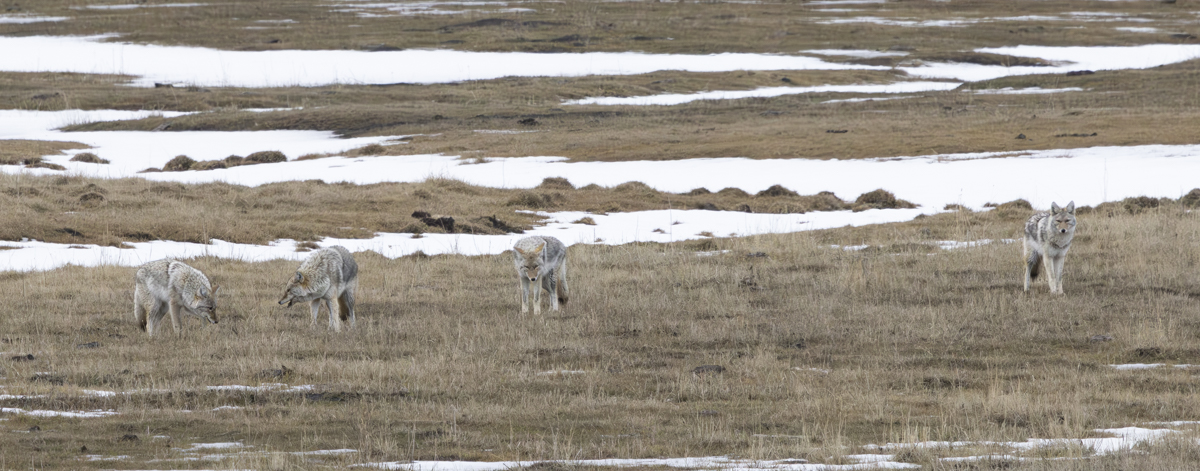
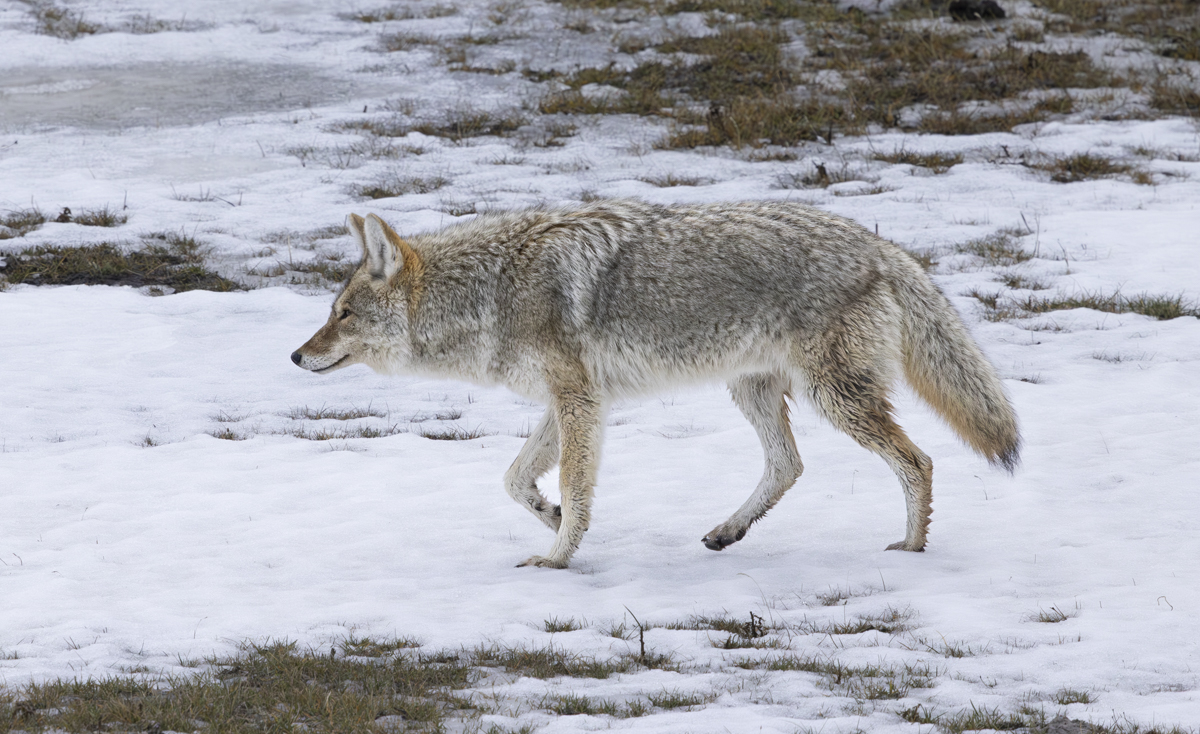
Meanwhile, here are a couple of images from our Christmas day trip with the unusual sighting of 7 coyotes hanging together in Lamar. One must not have belonged as it was soon ostracized by the others who calmly headed towards us and crossed the road before disappearing into the sage. Can’t recall ever seeing that many seemingly adult coyotes together at one time so we are guessing it was a family from last summer still hanging out.
Four of the seven coyotes we saw together in Lamar Valley on Christmas Day. Note the lack of snow!This coyote was apparently the leader as it determined the direction that the group followed
There was yet another coyote further down the valley and then we saw one more on our drive home making for a 9 coyote day. Lots of bison, a large bull moose, some eagles (golden and bald) and herds of elk and pronghorn near Gardiner rounded out our wildlife sightings for the afternoon.
Today, we went up to the base of the cliff behind the house to change the card in our trail camera. I thought the batteries would be dead after all the wind we have had in recent days (the blowing vegetation tends to trigger the camera) but was pleasantly surprised to find otherwise. Below are the highlights from the last two weeks. Be forewarned that he first clip is a tough one to see.
Back in the summer, this camera regularly caught two coyotes on this trail. Then they disappeared and have not been seen (or heard) for a few months. Wondering if these are the same two.
Lastly, a beautiful animal that now has been recorded twice on this camera, the last time back in October. Looking back at that footage, it looks like this is a different individual as it is much more spotted than the previous one and appears smaller. Always great to see these wild beauties. Ironically, this one came through on the same night as the two coyotes and was ahead of the limping coyote by about two hours.
You only need sit still long enough in some attractive spot in the woods that all its inhabitants may exhibit themselves to you by turns.
~John Muir
One of my favorite things is to find a place out in nature and just sit and watch. You never know what you might see and the longer you are there, the more the wild creatures begin to accept you and go about their business. Trail cameras offer another version of this activity as they sit in one place for days at a time and record our wild neighbors doing things we otherwise might not see. They have the added benefit of being on duty 24/7 but do have limitations – they can’t turn and survey the entire scene plus there are limits to battery life especially in cold weather. I have one camera right behind the house at our small water hole and one up along a path at the base of the cliff above our house. Its been a couple of months since I shared what the cameras have seen, so here are a few highlights..
The day after we got home I found a pigeon carcass in one of our yard walkways. It had been pecked at but there was still plenty of meat on the carcass. This is the second pigeon kill I have found in the past month (glad some predator is taking advantage of the many birds that roost on the cliff). They were both most likely day-time predators so I figured it was a raptor of some sort, either an accipiter or falcon. I put a trail camera on one of the deck supports and checked it the next morning when I saw the carcass was gone. A deer mouse nibbled on the carcass for a couple of hours off and on. Then a critter came by and took it away.
Then the camera captured what I am assuming was the killer of the pigeon coming back at sunrise to reclaim its meal. I first thought it was a Cooper’s Hawk based on the size and the fact I think it might be tough for a sharpie to take down a pigeon. But the more I look at it, I’m not sure and it is possible it is a large female sharp-shinned hawk. Your thoughts are welcome as replies.
I’m looking forward to seeing what new animals appear this winter. It may be more difficult to reach the camera at the base of the cliff with snow and ice on that slope but the insights into our wild neighbors will make it worth the effort.
Always be on the lookout for the presence of wonder.
~E.B. White
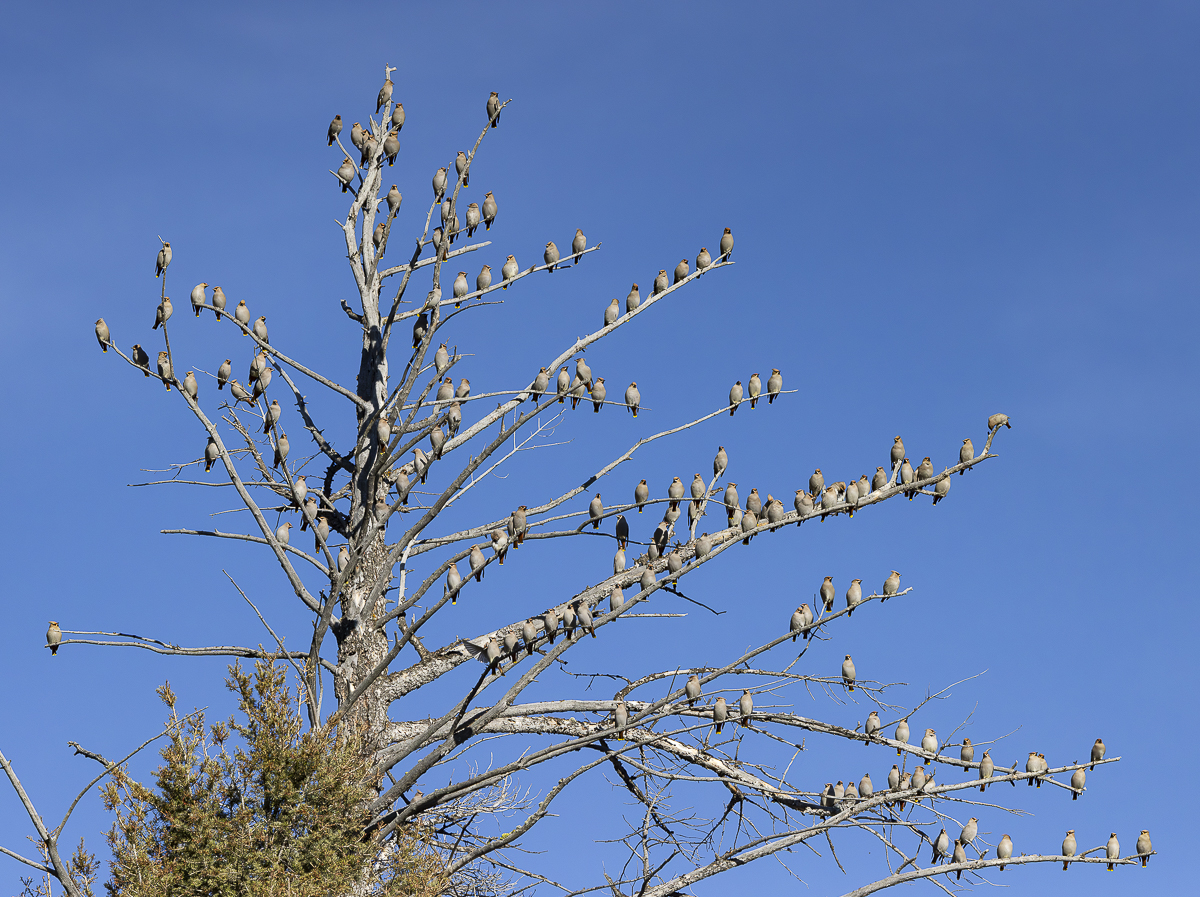
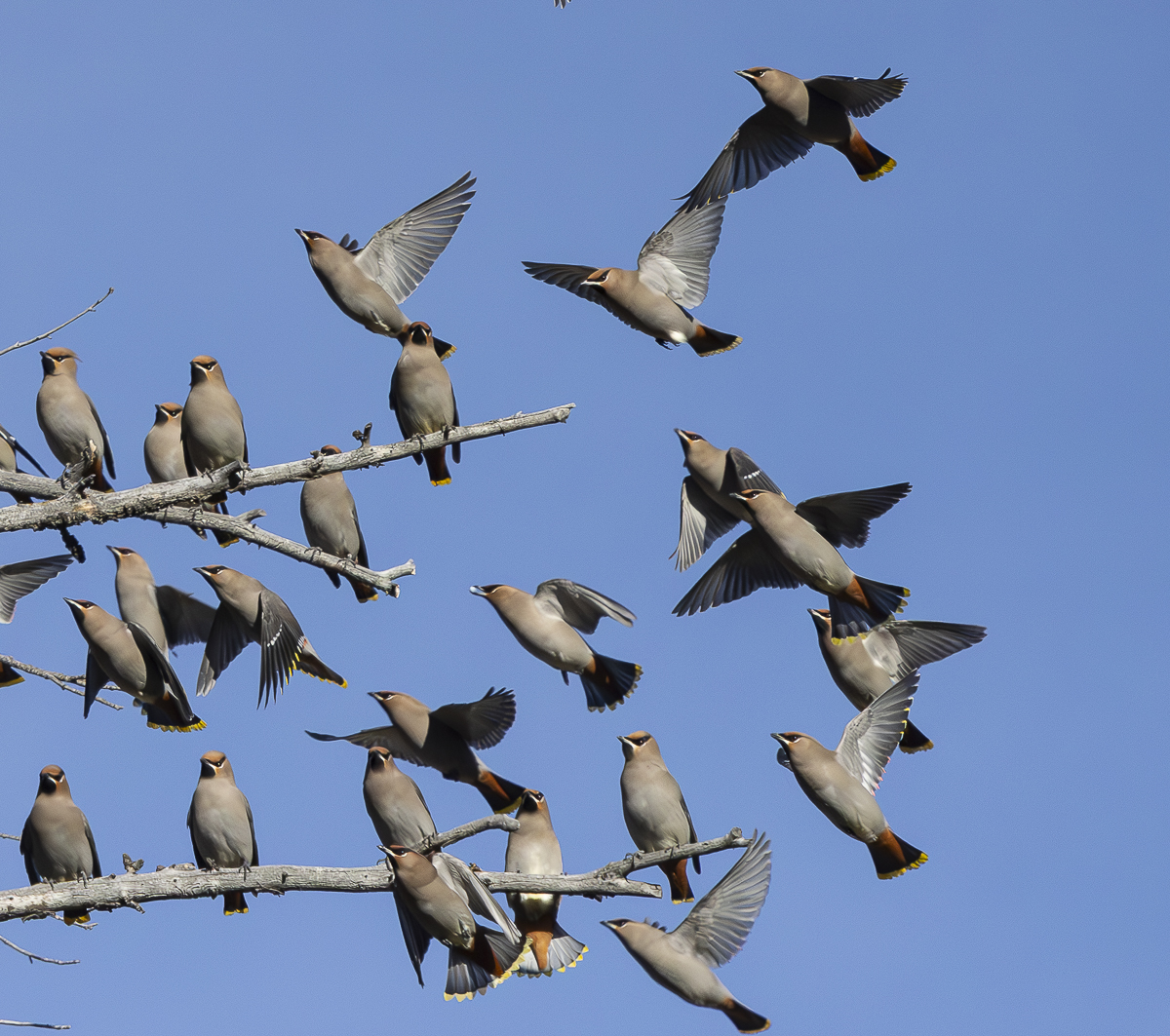
We ventured into the park this weekend hoping to find some wildlife and to just get out and enjoy the scenery and weather on perhaps the last day before the late-coming snows arrive. It was overcast even though the weather had predicted a sunny day. We quickly saw elk, bison, and a large flock of trumpeter swans on Blacktail Ponds. A little farther along I spotted group of birds perched in a dead tree along the road – waxwings! They looked a little bigger than the cedar waxwings we commonly see back in North Carolina and in our yard here in Montana. The light was terrible for photos but we pulled off the road and got out the spotting scope and confirmed they were Bohemian waxwings, a species that only occurs here in the winter and one that we have only seen once. Named for their nomadic wanderings, especially in winter, Bohemian waxwings are a bit chunkier in appearance than cedar waxwings and have more reddish tones in their feathers and some white in their wings. We traveled on happy to have seen this elusive species.
As we approached a group of cars at the far end of Lamar Valley, Melissa spotted a golden eagle perched in a tree along the river. We pulled over and I walked back to the eagle to get a couple of pics.
Golden eagle in Lamar Valley (click photos to enlarge)
Meanwhile, she got out the spotting scope and looked in the direction of the group of observers down by the vehicles just ahead. As we had suspected, the group was watching wolves of the Junction Butte pack. A large herd of elk were bunched together on the slope and we could see wolves on the horizon above them. Melissa got this video through her spotting scope showing the scale of the scene.
We watched the wolves until they all disappeared over the ridge with a group of pups having a playfest for several minutes before finally following the adults. Melissa walked back to the eagle and got this quick clip of it. The combination of that spotting scope, her Pphone and the Phone Skope adapter is truly amazing.
The golden eagle surveying the landscape of Lamar valley (video by Melissa Dowland)
We then did a short hike down to Soda Butte Creek and then headed back through Lamar Valley to see what we could see. We spotted another, much larger flock of Bohemian waxwings on a snag in Lamar Canyon. We pulled over and since they were on her side, Melissa grabbed my camera to get a few shots.
Bohemian waxwings chowing down on Rocky Mountain juniper fruits (photo by Melissa Dowland)
As I had seen with cedar waxwings in NC, this flock would fly down to a juniper tree and eat fruit, then return to their perches. They sat for awhile and then dropped down to a nearby muddy patch with puddles of water collected in depressions left by bison hoof prints. It was all done in a frenetic fashion and then they would return to their perch. A Townsend’s solitaire was not too fond of this enormous flock of waxwings devouring its winter food supply so it was constantly harassing the waxwings causing them to shift positions on the branches. But it seemed the solitaire knew this was a lost cause as it would periodically fly off and rest before returning to try once more. We headed off for another hike and by the time we finished the skies had cleared so we decided to head back to the waxwings to try to get some more shots. Now the birds were on my side of the car and the light was fantastic. We spent the next hour watching the birds feed, fly to the water, and interact in the snag.
The Bohemian waxwing flock on their preferred snag.The flock switched to a different juniper for their feeding frenzies but then would return to the same dead tree.Waxwings returning to their perch in the dead tree
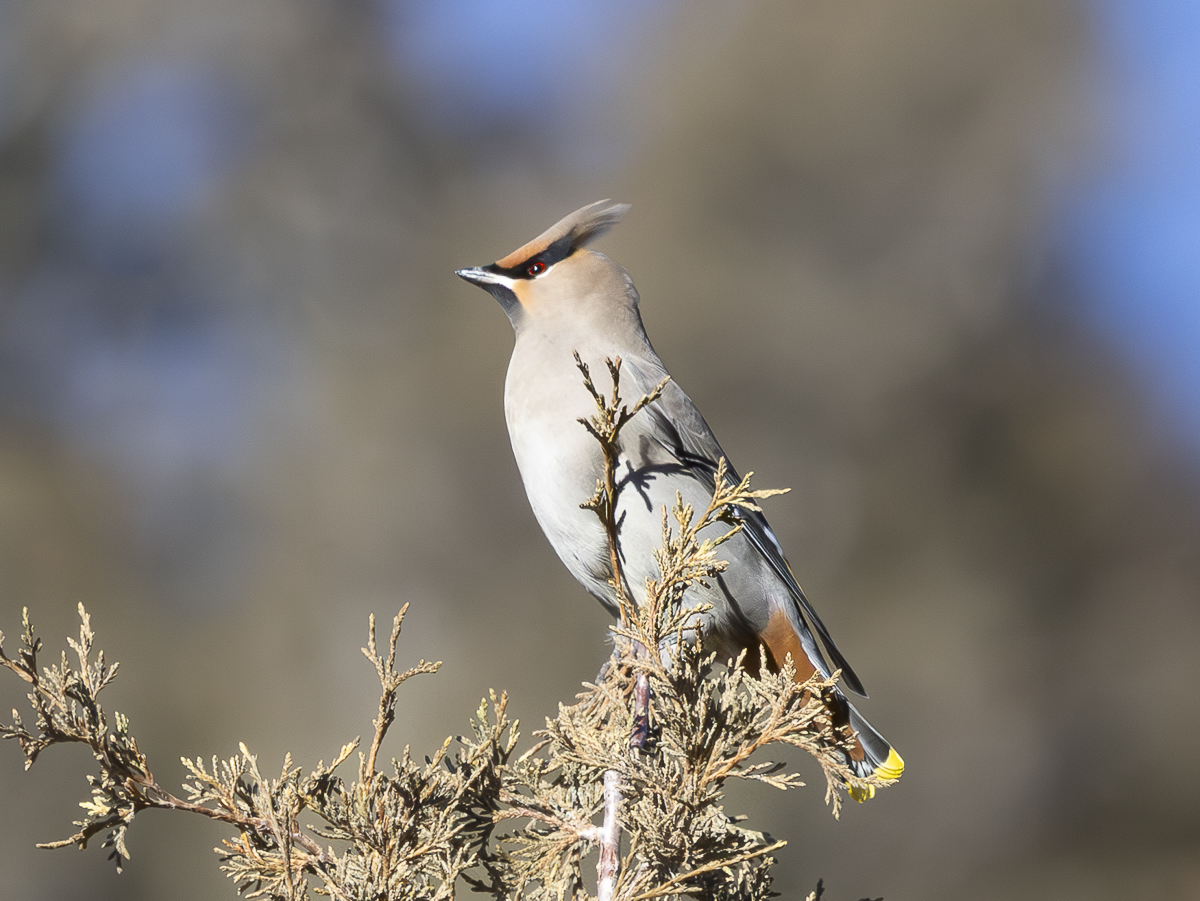
One juniper was just above the water hole and a few birds continued to use that one for feeding allowing me a closer photo in good light.
Bohemian waxwing in the top of a nearby juniper. The rust-colored under-tail feathers are diagnostic.
They would occasionally rush down to the water hole (which looked more like a mud hole from our vantage point inside the car) and create quite the chaotic scene as some birds poked their heads down into the wet hoof prints while others flew back and forth to the snag.
Waxwings landing to get waterA Bohemian waxwing gulps a drink of water from the wet mud. This view shows their beautiful wing pattern.
After photographing the birds from inside the car for a long time, we decided Melissa should try to ease out and set up the spotting scope behind the car to get some closer images. The birds tolerated that movement and she was able to get some nice close-ups of the birds on their perch.
When the birds flew down to the water hole, Melissa was careful not to move so as to not spook them. I continued to shoot from inside the car and managed a few shots of birds in flight as they came and went from the ground.
A waxwing takes off after getting a drinkTake a look at the feather details on this flying Bohemian waxwing – the yellow tips to the tail, the small red waxy-looking tips on some of the flight feathers (easier to see from the upper side than this view), the rusty under-tail coverts. The black mask is characteristic of both of our waxwing species.
After spending time watching these beautiful birds, we hope they will visit the mountain ash trees in our yard sometime this winter so we can view them up close. Based on what we saw in the park (we saw another large flock late in the day in the upper part of Lamar Valley), this may be an excellent year for the wandering winter waxwings.
A woodpecker’s drilling echoes to the mountain clouds.
~Dakotsu Iida
Melissa and I hiked a wonderful trail back in June that took us though several diverse habitats including rocky slopes, mature conifer forests, open grasslands, and a few beautiful aspen groves. We love aspen groves for their beauty and diversity of wildlife that call them home. Years ago, our friend Dan took us to a grove up in the Beartooths and showed us how valuable aspen trees are to a variety of wildlife, especially cavity nesting birds. I reported on this hike in an earlier post and mentioned how we discovered a three-toed woodpecker nest under construction.
The aspen grove (click photos to enlarge)
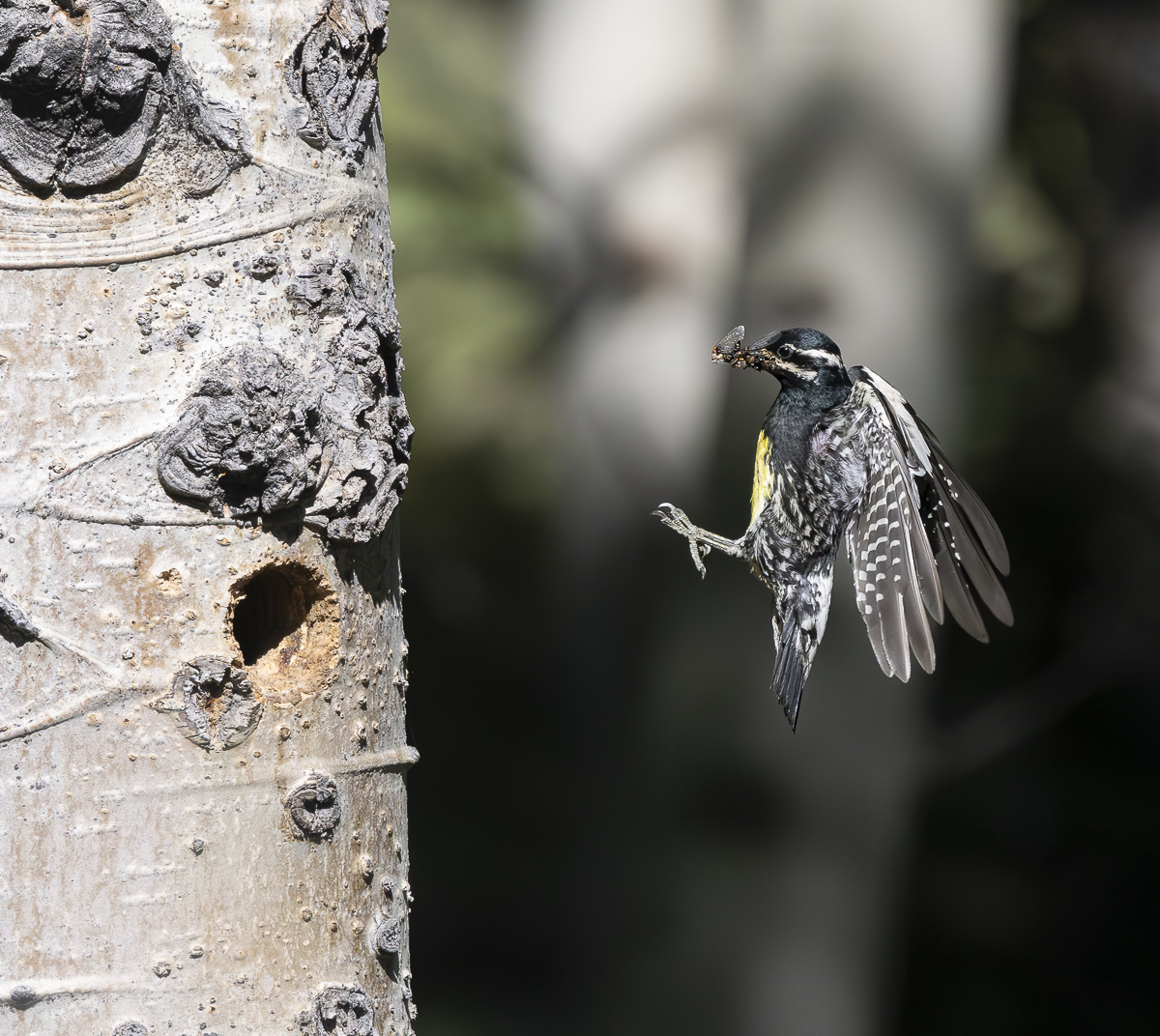
After some time with visiting family, I went back a couple of weeks later to check on the woodpecker’s progress. While watching the three-toed nest cavity, I saw another woodpecker fly through the grove and land on an aspen trunk about 100 feet away. It went into another nest hole! So, I slowly walked over and sat on the trail edge to watch, but before I got close, the bird flew out. This aspen was down in the grove proper but I had a vantage point from the trail which was up a steep slope from the nest tree giving me an almost eye level view of the cavity. Soon, another woodpecker came in calling and landed on a nearby aspen trunk, looked around and then flew to the nest cavity entrance. I could now see that this was a Williamson’s sapsucker nest.
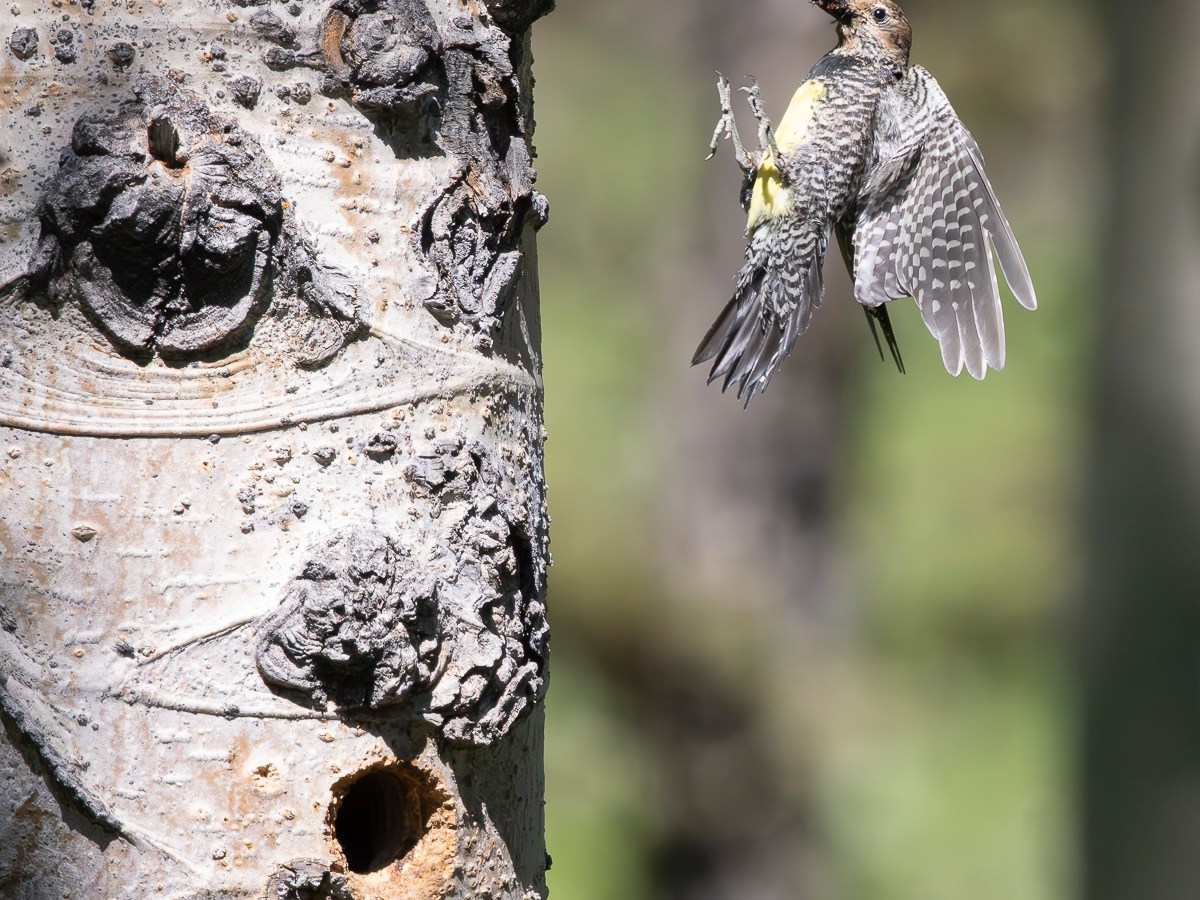
Williamson’s sapsucker nest cavity. Male has just arrived with food for young. Note the start of another hole on lower left of trunk. This is a cropped image using a 500mm telephoto.
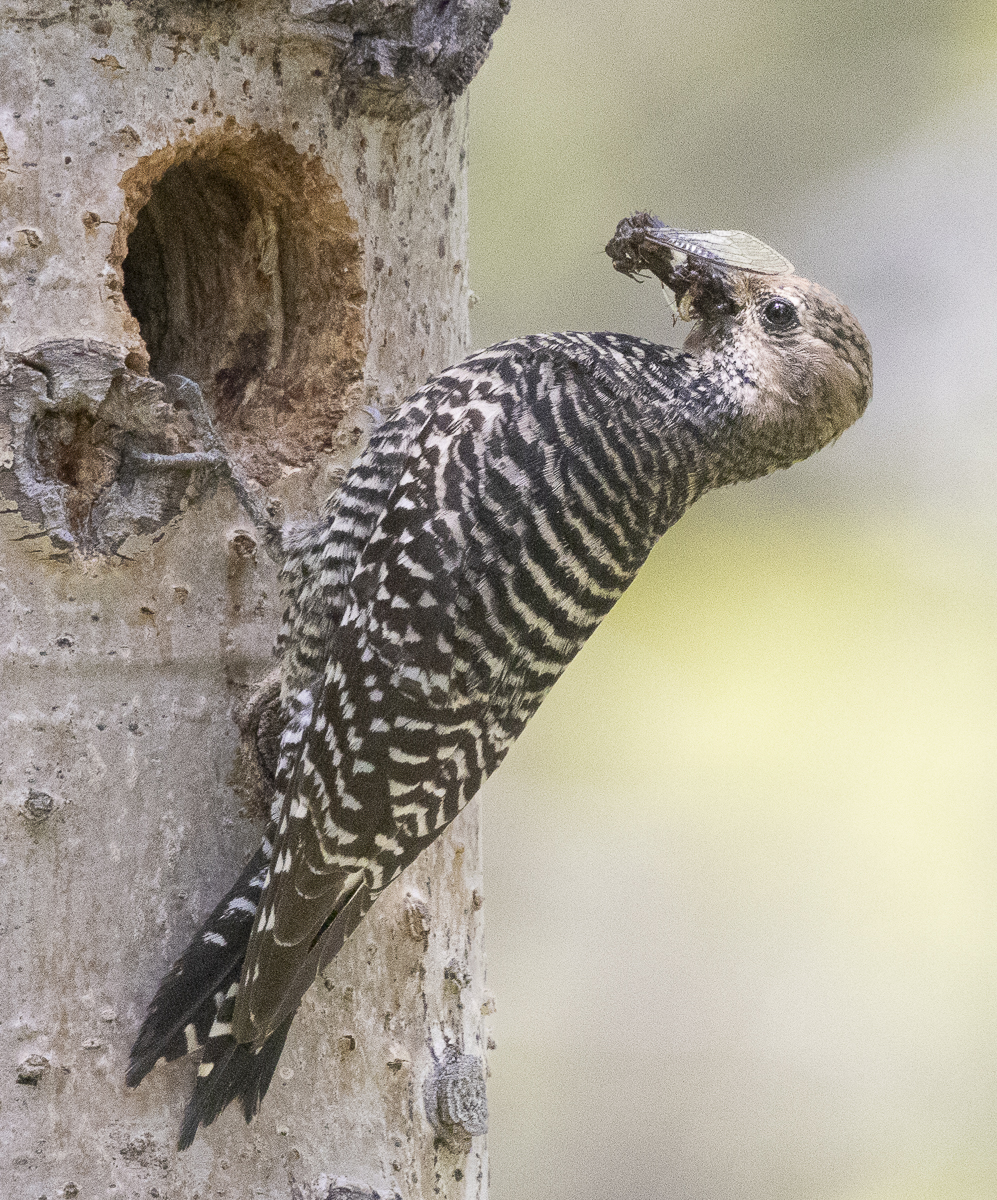
It seems as though the sapsuckers had started their nesting activities before the nearby three-toed woodpeckers as they were already feeding their young. I decided to focus on the sapsucker nest since it was a better location for viewing the nest cavity from a distance far enough sway to limit any disturbance to the birds. This tree also had much better light on the nest cavity (at least about one and a half hours each morning). On my first visit I noted that the male and female were both feeding the young with an interval of only about 10-20 minutes between each feeding. For many years scientists thought that the males and females were two distinct species since they look so different from one another. The male is boldly patterned in black and white with a yellow belly and red throat patch. The female is more muted in brown and black and white stripes (but also has a yellow belly).
The female Williamson’s sapsucker resting on a tree limb near the nest tree. She often went to this same branch after feeding the young and preened or spread her wings and tail feathers (called splooting).
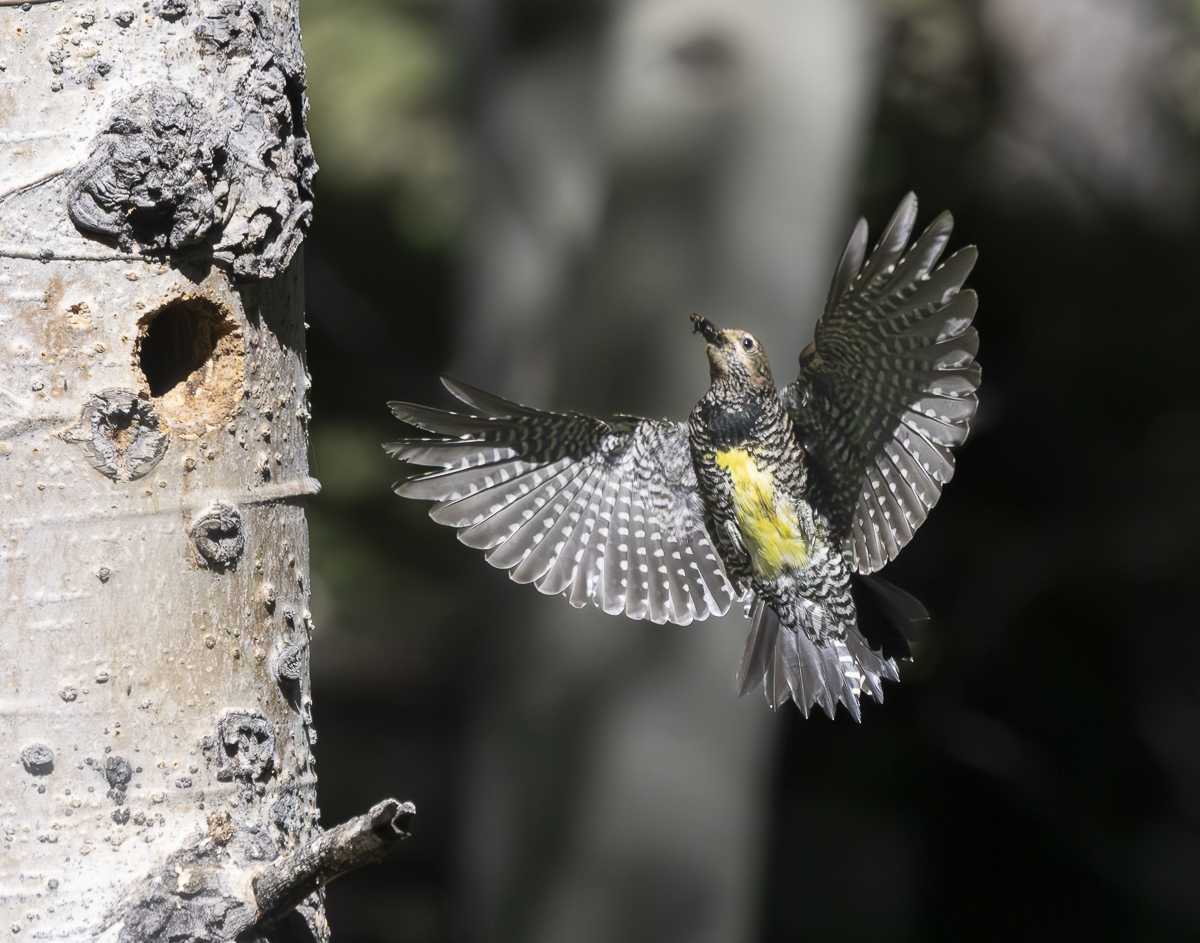
I made three trips to the aspen grove over the next several days and tried to photograph the comings and goings of the adults as they fed their very hungry young. The male had a pattern of landing on a tree trunk about 30 feet from the nest tree, looking around, and then flying over to the nest cavity. The female usually flew directly to the nest tree, calling as she flew in. I was hoping to get some photos of the birds flying in to the tree trunk with wings spread and feet outstretched but I discovered this was challenging. I generally use the mechanical shutter option in my camera which shoots at about 12 frames per second. That is generally plenty fast to capture moving subjects. But these birds came in so quickly I decided to switch to the electronic shutter which provides 20 frames pr second. That made all the difference in the world. As soon as I thought a bird was flying toward the nest tree I just pressed the shutter and held it. The up side was a series of photos showing different poses and wing beats as the woodpecker came in for a landing. The down side was it made for a crazy number of images to go through that were only slightly different from one another.
Here are a few of my favorites as the birds flew in to feed their young (these images are heavily cropped).
The female coming in with a load of insects for her youngThis was the usual pose right before landing – feet outThe female coming in with wings wide openI love this shot that has both the bird and its shadow coming in for a landing
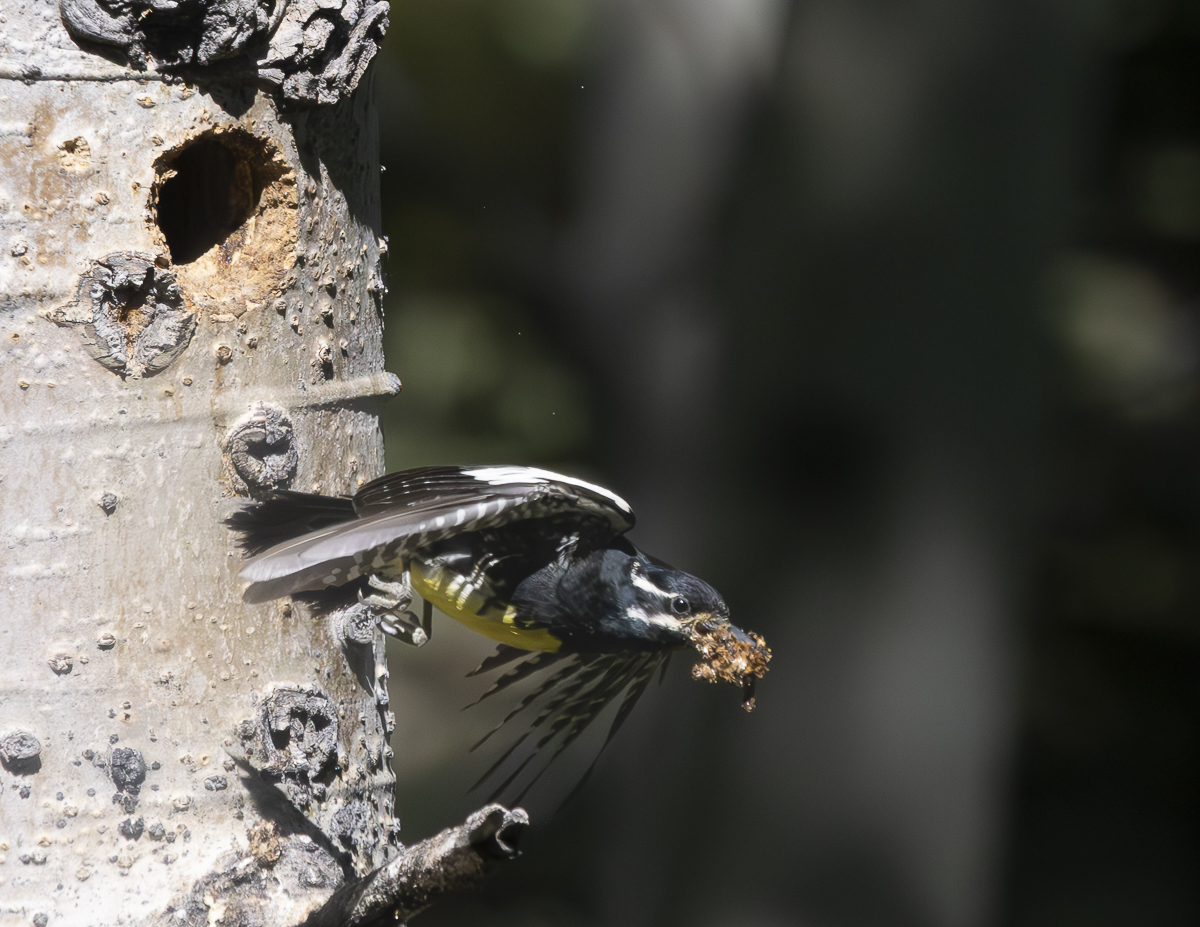
The pair of sapsuckers kept a fast pace of feeding trips. I couldn’t tell what they were bringing by looking through the binoculars, but when I started looking at the images I was amazed – they were feeding their young blobs of ants. I have since read that this is common for this species.
A beak full of ants going to the nestlingsThe female did bring in a few cicadas over the few days I watched
When leaving, the female often dropped down to a short branch below the nest cavity and sat there for a few moments before flying off.
She flies off with a flying insect hovering above
I was surprised to see relatively few carries of fecal sacs from the nest. I have witnessed this many times with various species of cavity nesting birds when the adult goes into the nest after a feeding and flies out with a pre-packaged fecal sac that usually looks like a small white blob. They tend to fly some distance before dropping it. This probably helps remove scents that could help predators cue in on the nest. But I never saw the white blob when these sapsuckers came out of the nest. Instead, it looked like a large blob of wood chips and ants stuck together.
The male removes a fecal sac from the nest
On my last trip to the grove, I took Melissa’s spotting scope and a newly arrived adapter for our cell phones. This combination provides excellent resolution for filming at a distance. And video is much more forgiving in low light than stills with my camera so I sat for a time at the three-toed woodpecker nest and captured this footage of a feeding.
The female brings in some insects to feed the young and then sits on the outside chirping, perhaps to the male. She then enters and flies out with a fecal sac.
I had hoped to witness the young birds leave the nest (or at least poke their heads out to be fed as they got bigger) but we had more family visiting shortly after these images were taken and by the time I got back to the aspens, the birds were all gone. I look forward to checking out this and other aspen groves next summer to see what a new year brings.
The great gray owl, or great gray ghost as it is sometimes called, truly seems to be a spirit of these northern woods
~Paul Bannick, in his book The Owl and the Woodpecker
Last week was the last time the roads to the interior would be open for vehicular travel for the season. We went down to Canyon, Hayden Valley, and Lake twice to experience it and hopefully see some wildlife before the winter closure. One thing we really hoped to see was a great gray owl as there had been many posts on social media recently of people seeing these elusive birds in various locations in the interior. Years ago we had seen one near Canyon thanks to a friend sharing a location. Indeed, when we drove past the pullout where we had parked years ago to head into the wood, there were several empty parked cars. Our guess was people were out looking for the owls. The other two spots we had heard owls were being seen also had numerous empty parked vehicles. We pulled into the Bridge Bay area as a couple of cars were leaving and the folks said they had not seen any. We decided to walk around a bit just to look. Unfortunately, we saw no owls but did run into a man from Idaho who was also looking and, like us, with no luck.
Great gray owls seem to prefer small meadows surrounded by coniferous forests. They sit and watch and listen for rodents in the meadow and then open their enormous wings and pounce. Great grays are the largest owls in North America by size standing over two and a half feet tall with wing spans over 4 feet. But they are not the heaviest owl as both snowy and great horned owls are usually heavier weighing in at around 4 pounds each.
There is something magical about seeing a great gray owl. Its large size (and equally large head and facial disks) never fail to impress any observer. But it may be its vagueness, how it blends into the forest, that makes it so very special anytime you are lucky enough to see one. In fact, its scientific name is Strix nebulosa, with the species name meaning misty or cloudy, a reference to the gray coloration of its feathers which are an ideal match to the gray tree trunks of its forest home.
And so the day went as we drove to the owl hot spots and waited and watched, hiking one more time in the woods near Canyon. There were tracks in the snow of marten, snowshoe hares, squirrels, ad the occasional ermine, but no owls. Driving on, we came across a large gathering of cars and people near Mud Volcano that were waiting to photograph an ermine. While we wanted to see one, it just didn’t feel right with so many people. But we did walk up a section of trail there that we had never visited and saw an amazing thermal feature named Churning Cauldron.
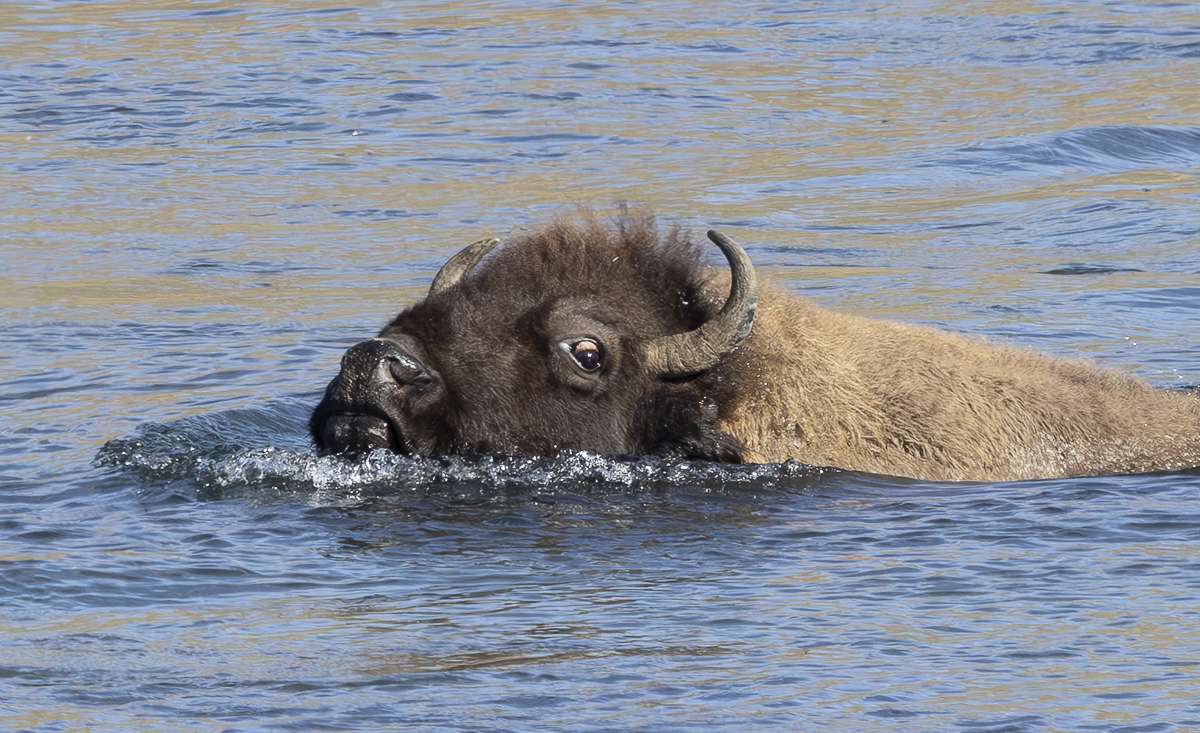
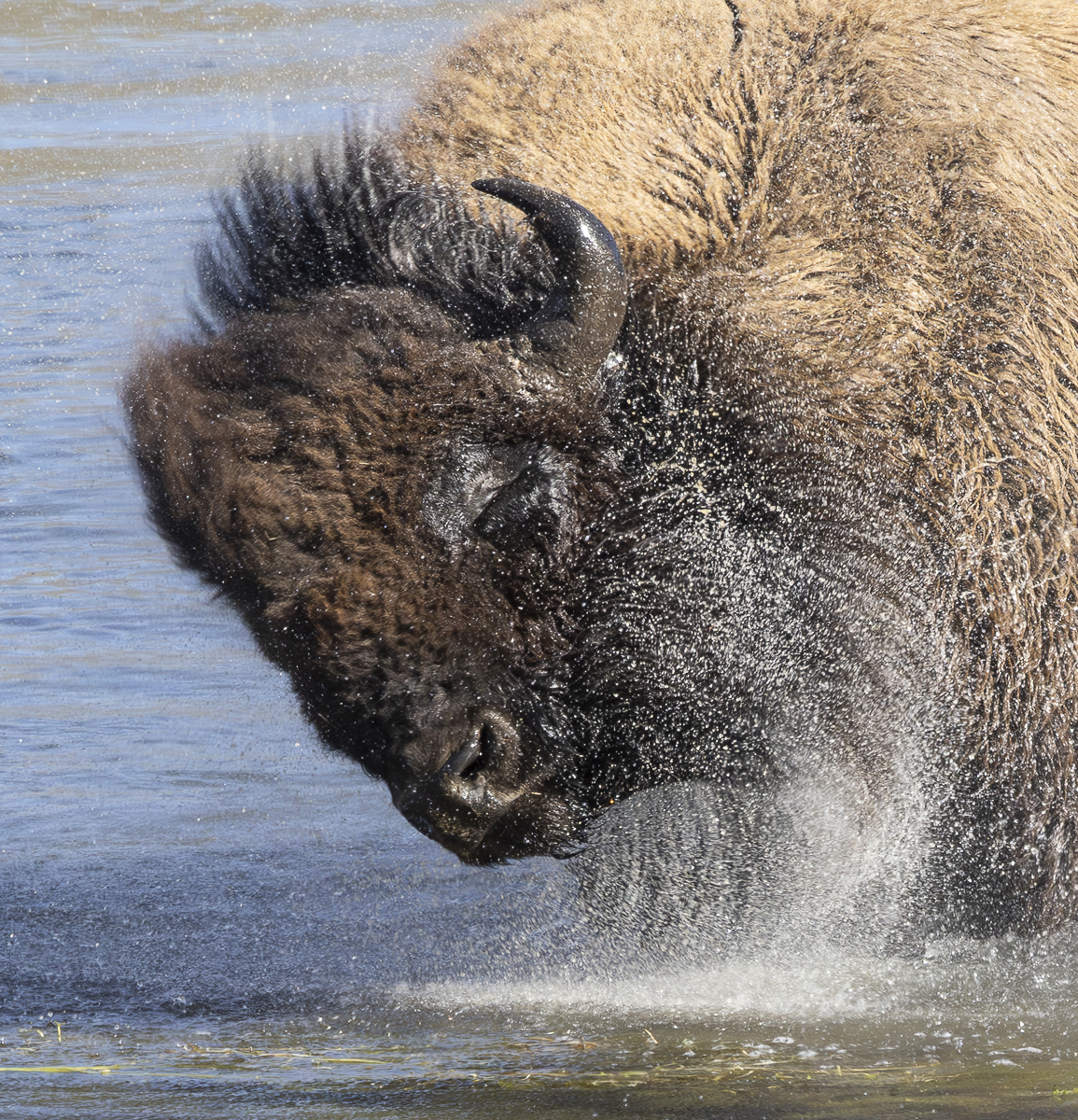
On one of our passes through Hayden Valley we came across a herd of bison crossing both the road and the adjacent river. We both enjoy watching bison cross rivers so we stopped and watched.
Bison swimming across Yellowstone River in Hayden Valley (click photos to enlarge)Bison shaking it off after swimming across the river
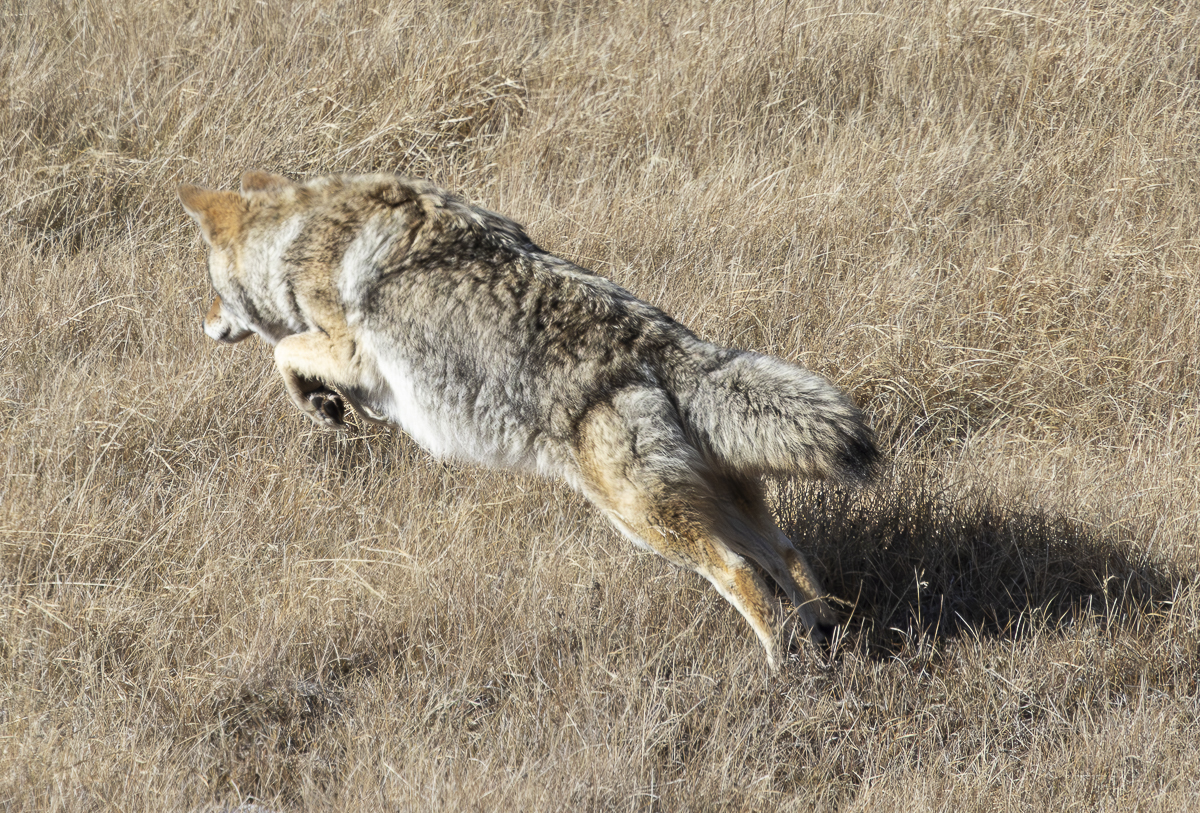
We also watched a few coyotes as we traveled. It is always fun to watch them hunt.
A particularly fluffy coyote pounces after a prey. In this case, it missed.
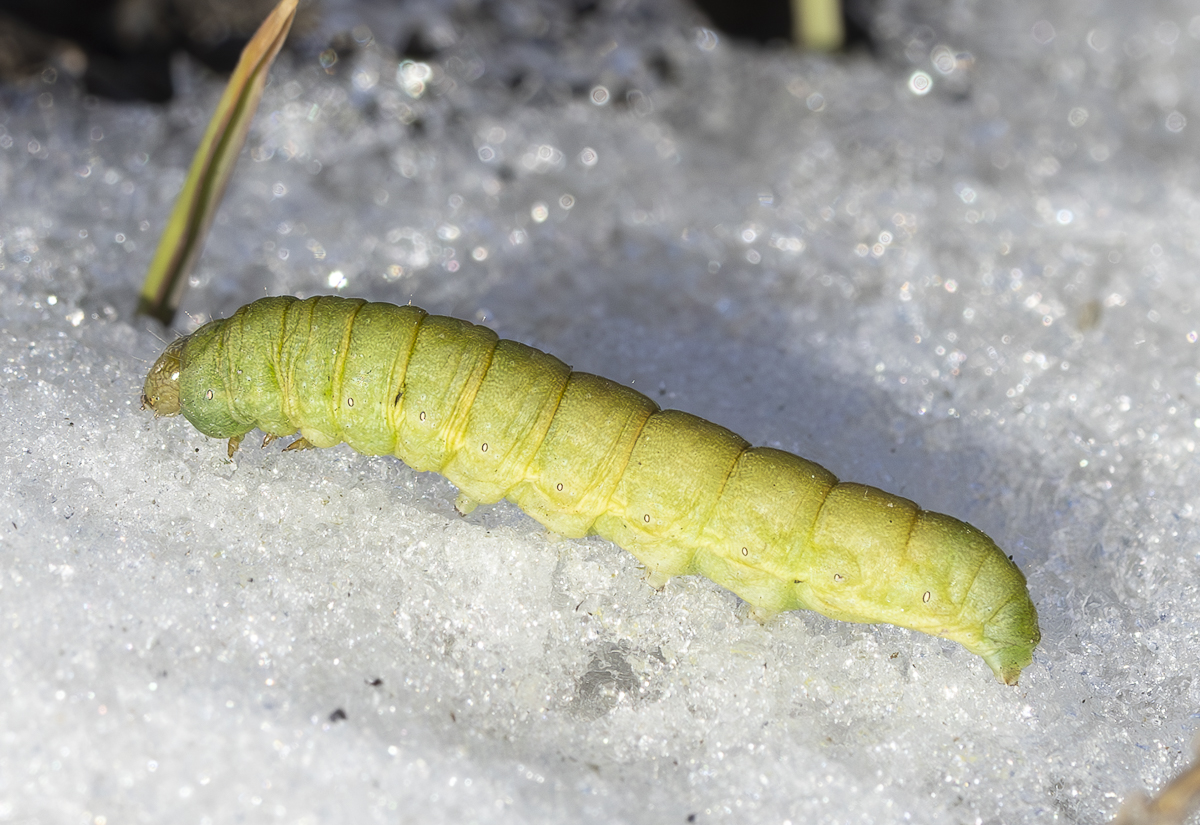
While watching a coyote at one spot, Melissa spotted something that surprised both of us – a caterpillar out on a patch of snow! I have not been able to identify it yet, but whatever it is, it is a tough little guy.
A small green caterpillar out on the snow in Hayden Valley
As the day was waning, we decide to try one more time for the gray ghost of the forest. We drove to our spot at Canyon and found several cars parked at a similar angle facing out toward one of the roadside meadows. But there were no passengers so we figured people were out looking. We decided to just stay in the car and watch. Suddenly, I saw a large bird fly across the road about 75 yards away. It had to have been an owl. We slowly drove in that direction and then saw a group of photographers walking out of the woods where the owl had flown. The trees were dense as we approached the group who had stopped at the edge of the road. Then, there it was, the gray ghost!
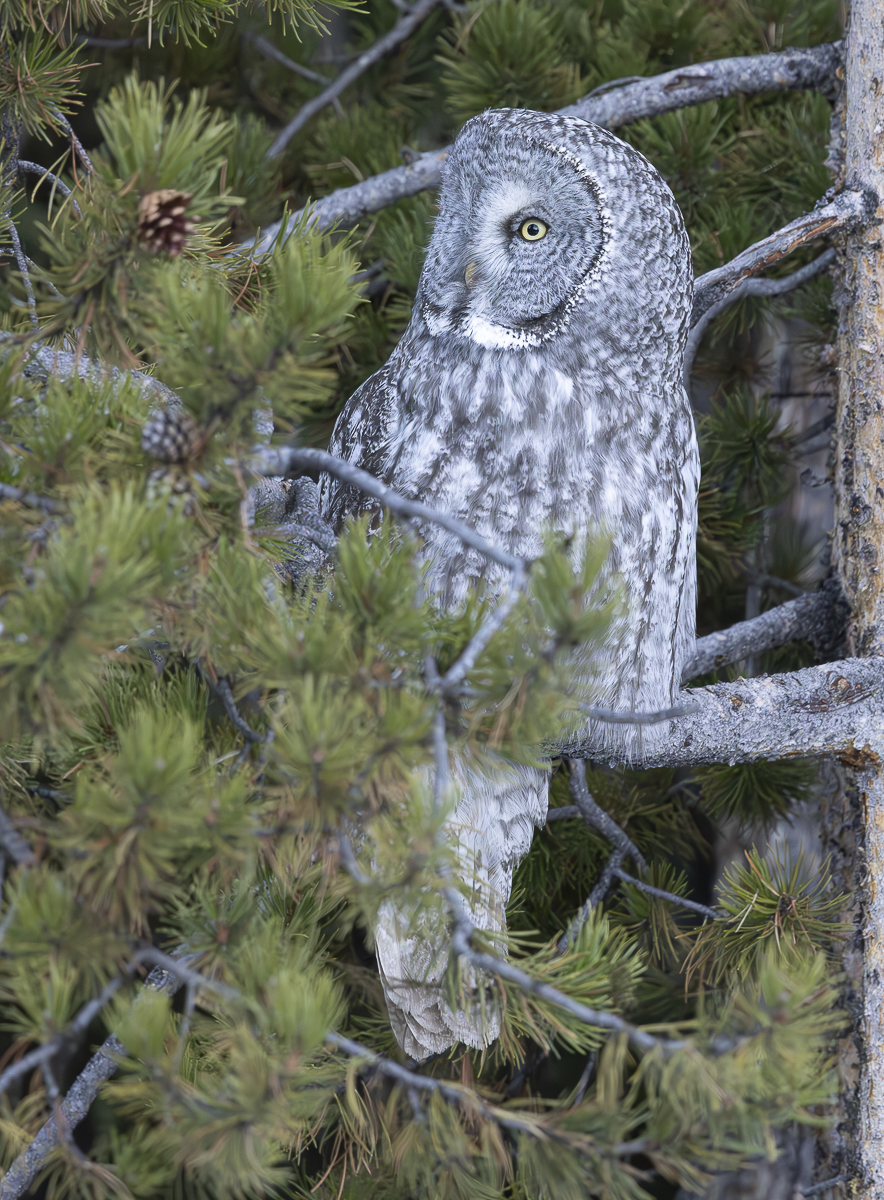
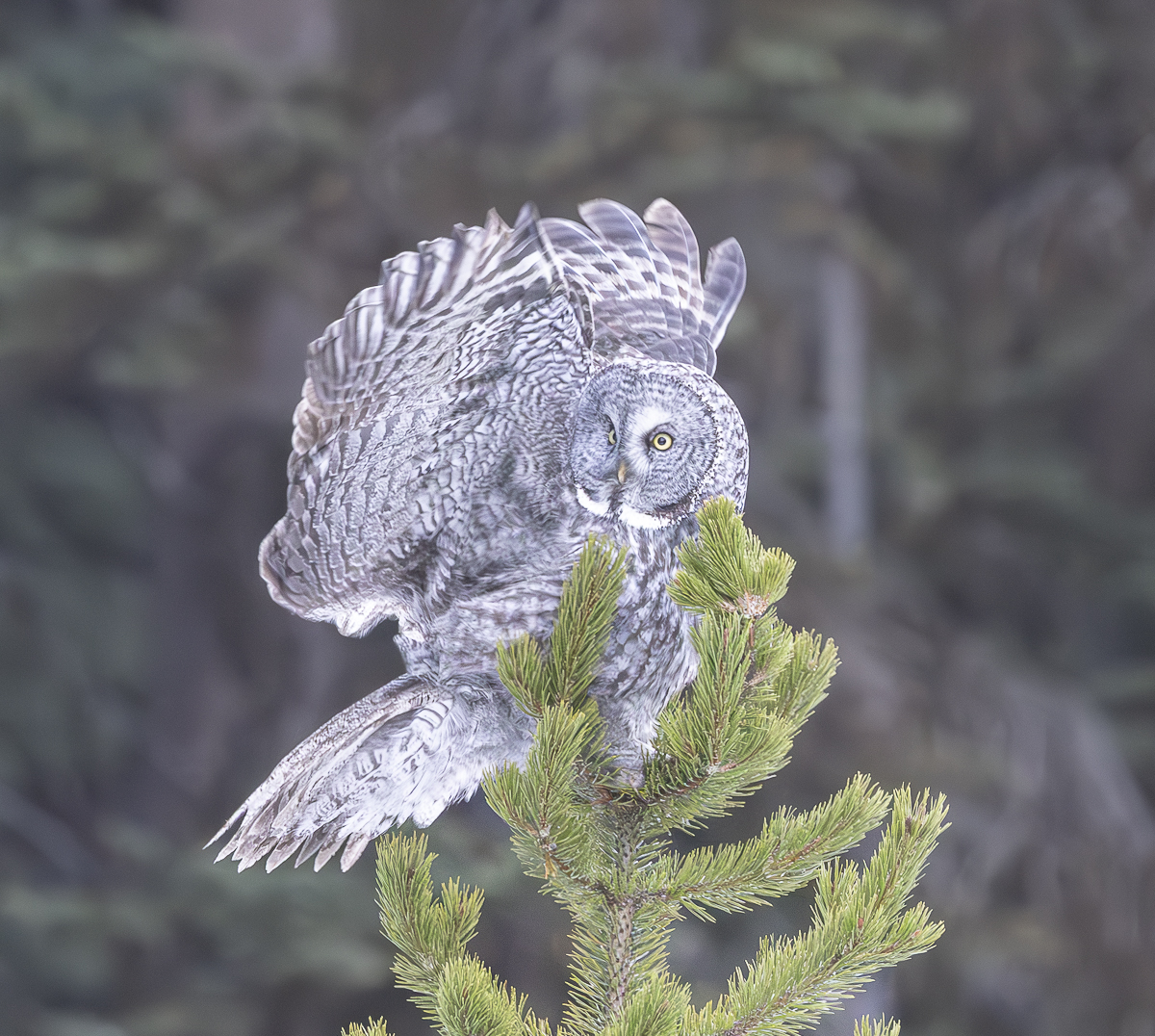
The owl landed right next to the road in a pine. This photo taken from the car with 500mm telephoto and is cropped.
We stopped to watch and I looked at the group of men following the owl. None of them were taking photos, they just watched from the opposite side of the road. I wasn’t sure what they were waiting on and we eventuality drove past them and parked on the edge of the road. The owl dropped down into the snow but didn’t catch whatever it was after. It then flew back into the trees and landed at the edge of a meadow. The group followed it, walking into the meadow and standing in some small tees opposite the owl. We walked to the edge of the meadow and watched as the owl gazed around looking for prey.
The owl landed on the far side of a meadow and started searching for prey
We were about 50 yards away, the other group much closer. The owl then flew over to the center of the meadow and landed at the top of a small pine.
The owl landing atop a small pine in the meadow
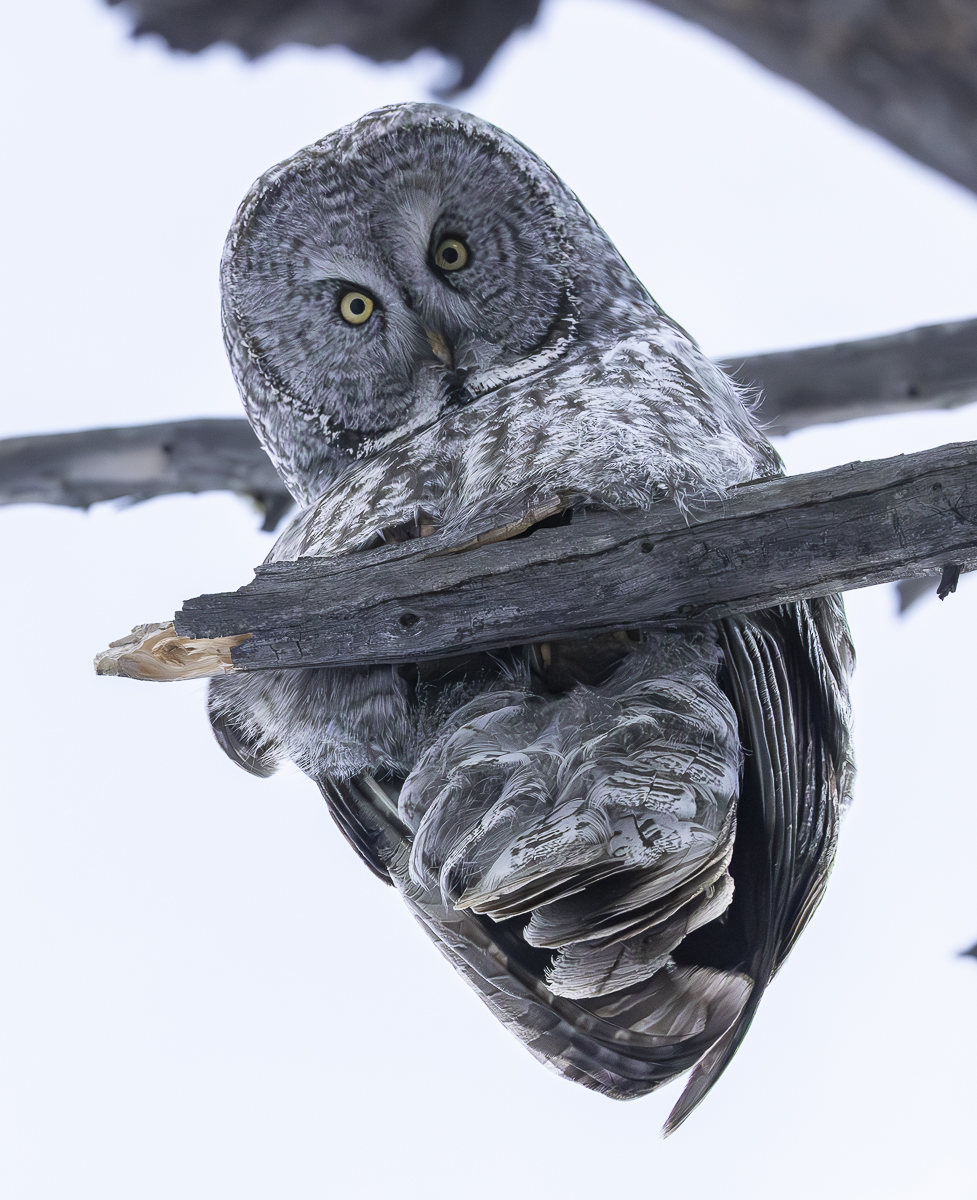
The light was fading fast so I leaned against the dead tree we were standing near to brace my camera and telephoto. I fired off a few shots and suddenly I saw it take off. Melissa whispered, it’s flying right at us. I pressed the shutter a couple of times and looked up and the owl was coming straight at us about 4 feet off the ground! As it neared our tree, it swooped up and landed directly above our heads about 20 feet up in the tree I was leaning against. It gave us a look and then continued swiveling its head scanning for prey. I took a couple of photos and it responded by looking down again so I stopped. We just stood there in amazement. I honestly don’t know how long it was above us as it seemed so surreal. We would never approach an animal this close but the bird had flown to us so we didn’t want to move for fear of spooking it. The owl finally stretched up and pooped (which landed about 2 feet from me in the snow) and then flew off across the road.
The great gray owl staring down at us
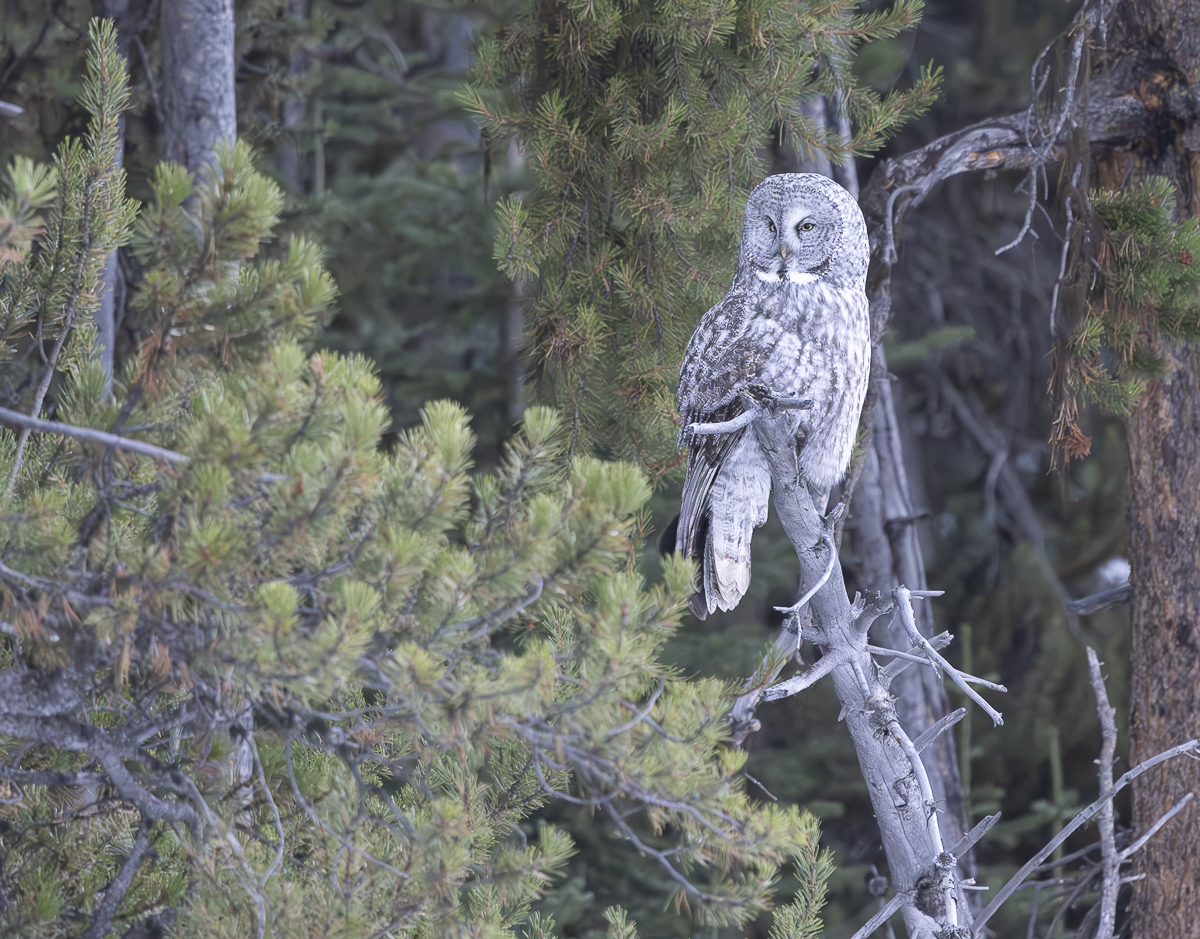
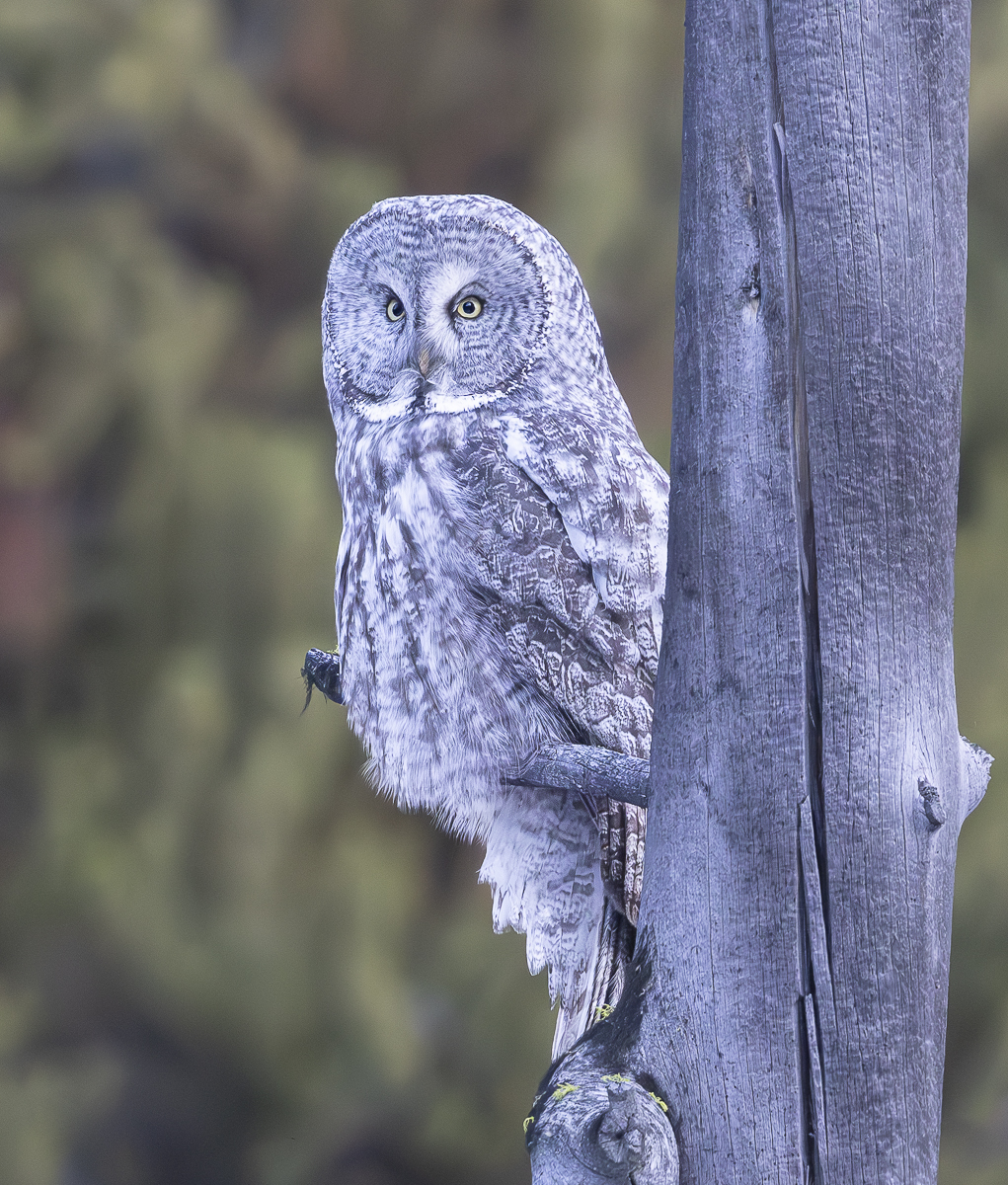
The crew of photographers walked by us following the bird while we just looked at each other and smiled at what had just happened. We walked out to the edge of the road across from our parked car and the owl was perched in a snag about 40 feet off the road. Two other photographers had stopped and were standing with us. The owl crew had walked across the road into the woods in front of the perched owl.
The owl perched on this snag for several minutes scanning the surroundings.
Since our car was parked near where the owl landed, we stayed where we were, not wanting to approach any closer. We just waited and watched.
It finally flew deeper into the woods, followed once again by the same group of men. We stood and talked with the folks near us for a few minutes and then walked to our car and headed home.
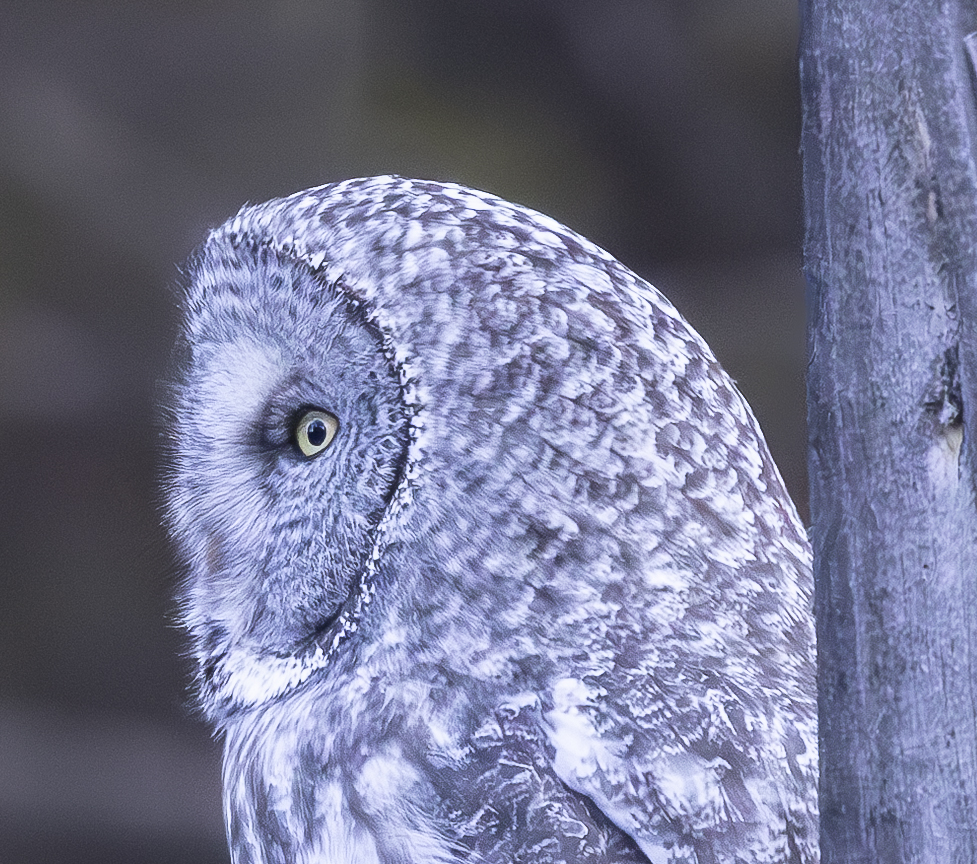
A heavily cropped image of the beautiful face of a great gray owl showing its huge facial disks which help funnel sound into its sensitive ears
What an amazing way to end our last opportunity on the roads into the interior for the season. As we drove away we discussed how having so many photographers (including us) might be stressful to these animals even though great gray owls do seem very accepting of our presence. One person we spoke to had been at the ermine jam earlier in the afternoon when the ermine did make an appearance. But he left when a small group of photographers kept crowding around the animal. I guess the lesson here is to observe and photograph from a distance so as to not change the behavior of an animal. We should probably do more walking away from the roads and sitting in places and watching to let the wildlife move freely and do what they do without interference. I understand the excitement of being close to a wild creature, but we must also realize that having a crowd of people following your every move can’t be a good thing, especially as the harsh winter season approaches. I imagine all these animals will appreciate the road closure and the freedom to just be for the next 7 months.
To catch a glimpse of a moose in its natural habitat is to witness a fleeting moment of pure magic, a connection to the wild that stays with you forever.
~Douglas Chadwick
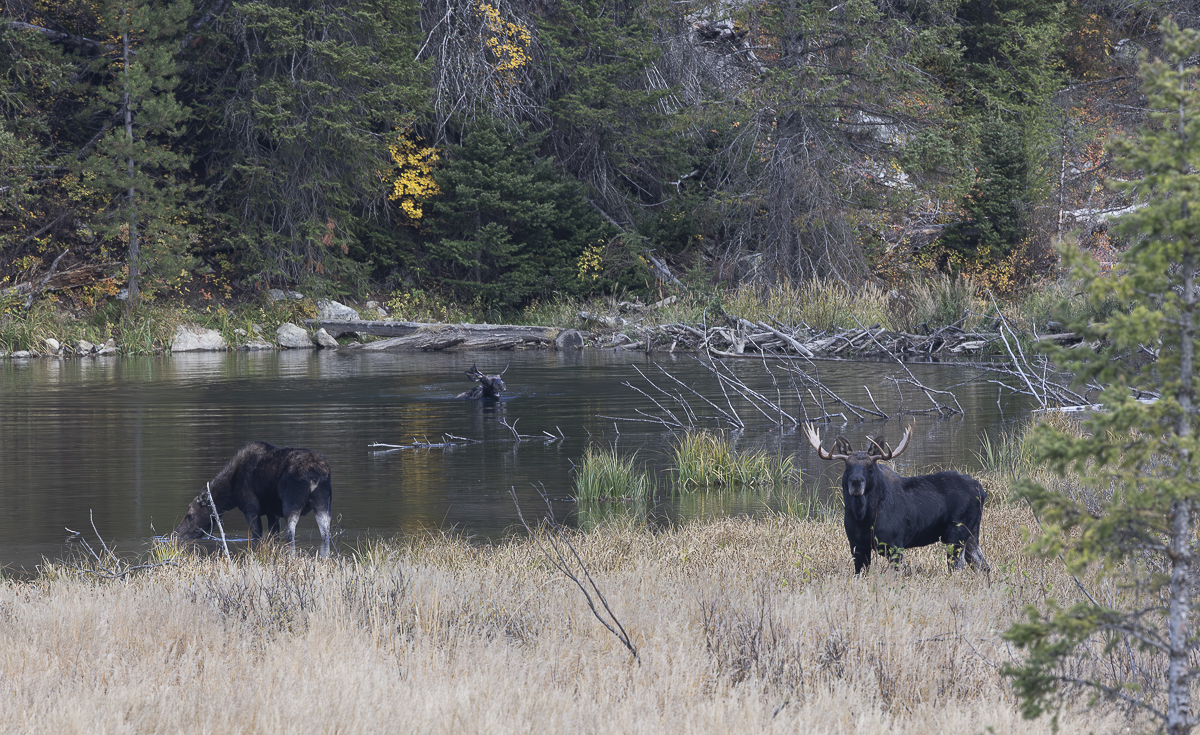
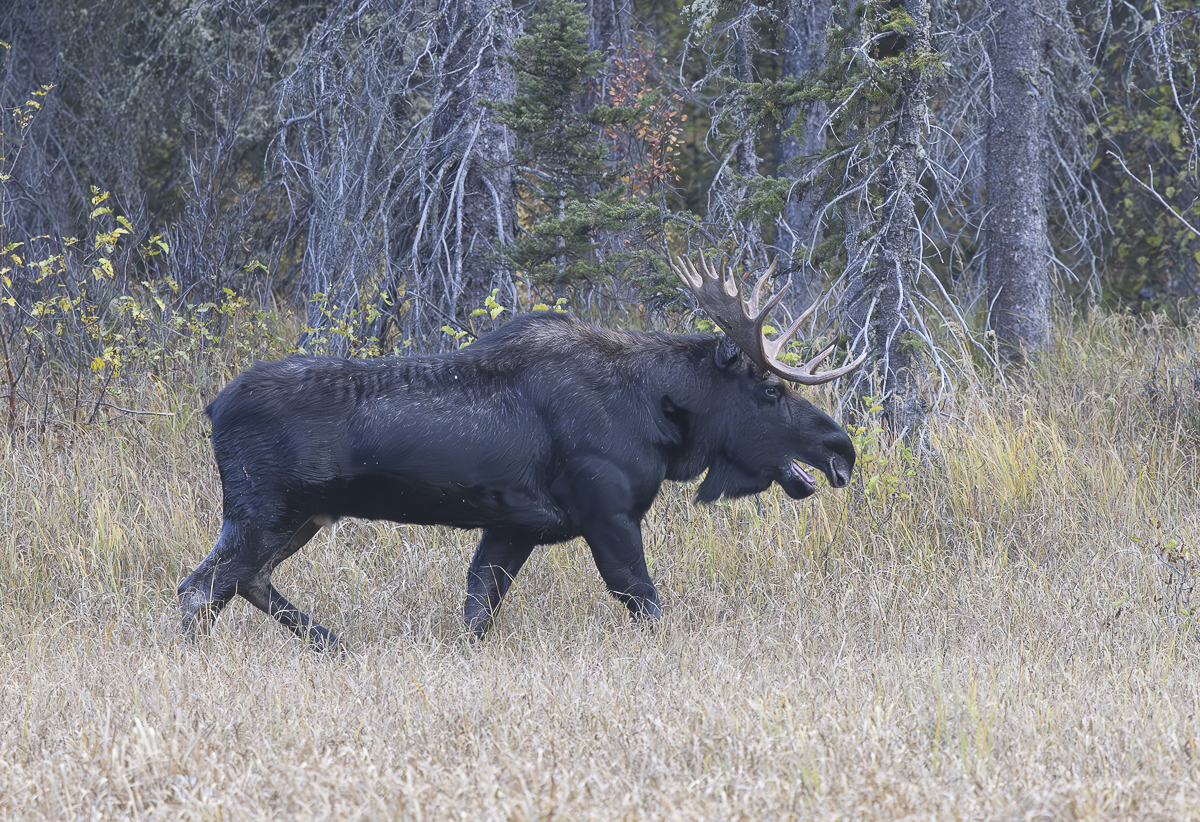
A couple of weeks ago we went on our annual truck camping road trip during our birthdays week (our birthdays are a week apart). Our first stop was Grand Teton National Park. Melissa shared some of the incredible fall colors of that area in our last post. One of my goals on this trip was to see a moose, hopefully a nice bull. I think the moose population in Yellowstone is increasing but this year we have had little luck seeing these magnificent creatures on our outings in the park. The Tetons are well-known for the larger numbers of moose so I was hopeful. On our first day we drove down the road toward the Gros Ventre campground, a road we had seen a nice bull moose on earlier this summer. And, in almost the same location as our earlier sighting, there was a bull moose. He was bedded down in thick vegetation along the river so not a great photo op, but at least we saw one. After driving around to various locations the next day, we decided to take a hike to a pond where Melissa and her sister had seen a moose a few weeks earlier. It was late afternoon and as we walked, an elderly couple (can I still say that?) approached from the direction of the pond. I asked if they had seen any moose. “No, but someone said a few have been seen up another trail and have been there all day”. I was bummed, but we continued on. A few minutes later we encountered three young men coming out. They immediately said there were 3 moose at the pond and cautioned us to be careful as one was a large bull. We laughed and wondered how two reports just minutes apart could be so different. As we approached the ponds, we saw a few folks gathered on the other side of the far one and then we saw them – two moose! A cow out in the water and a large bull on shore.
Our first view of the moose at the pond (click photos to enlarge)
If you look closely, you will also see something else…another moose swimming in the pond. When I first saw it, there was splashing on the far shore and I wondered what the heck people were doing in the pond. Then the head of a young bull moose became apparent. He swam across the pond and got out on the shore in some thick vegetation beyond the large bull who was keeping an eye on us and the other people on the opposite shore.
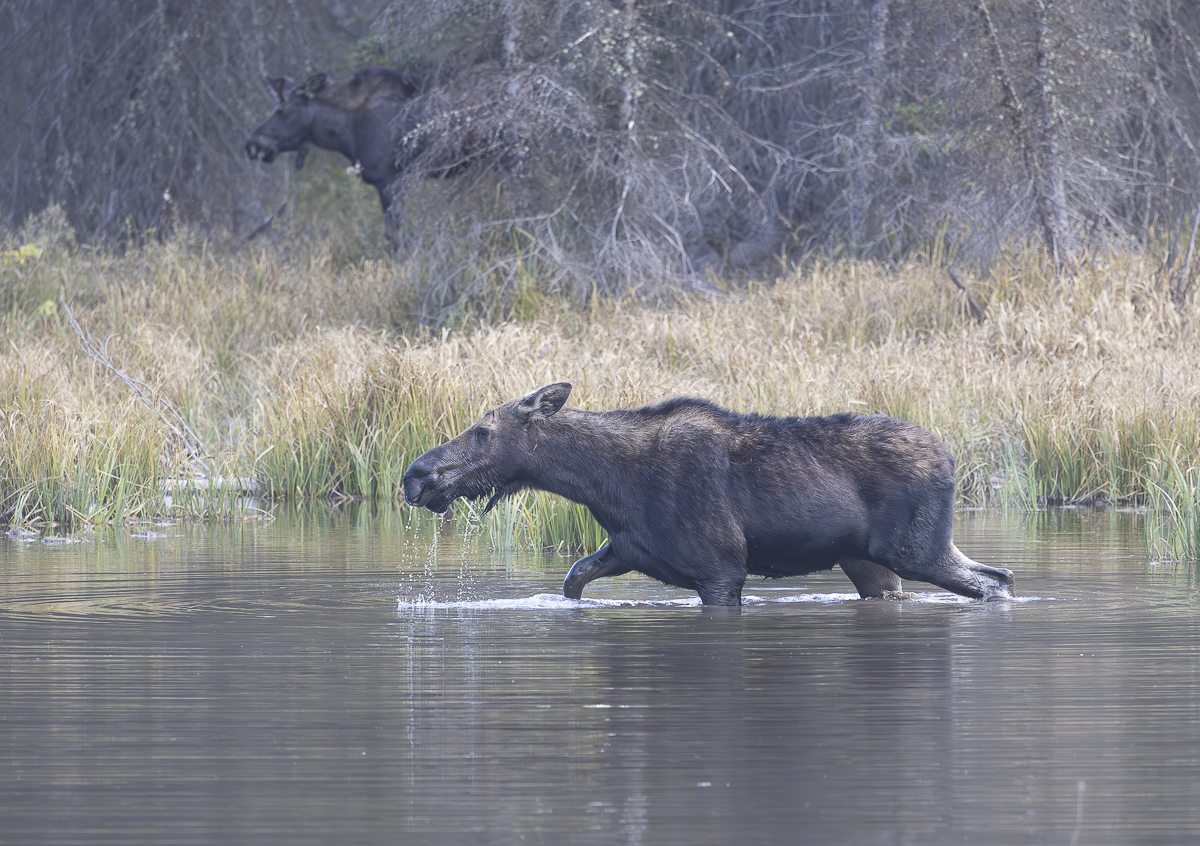
Cow moose walking in pond with young bull in background
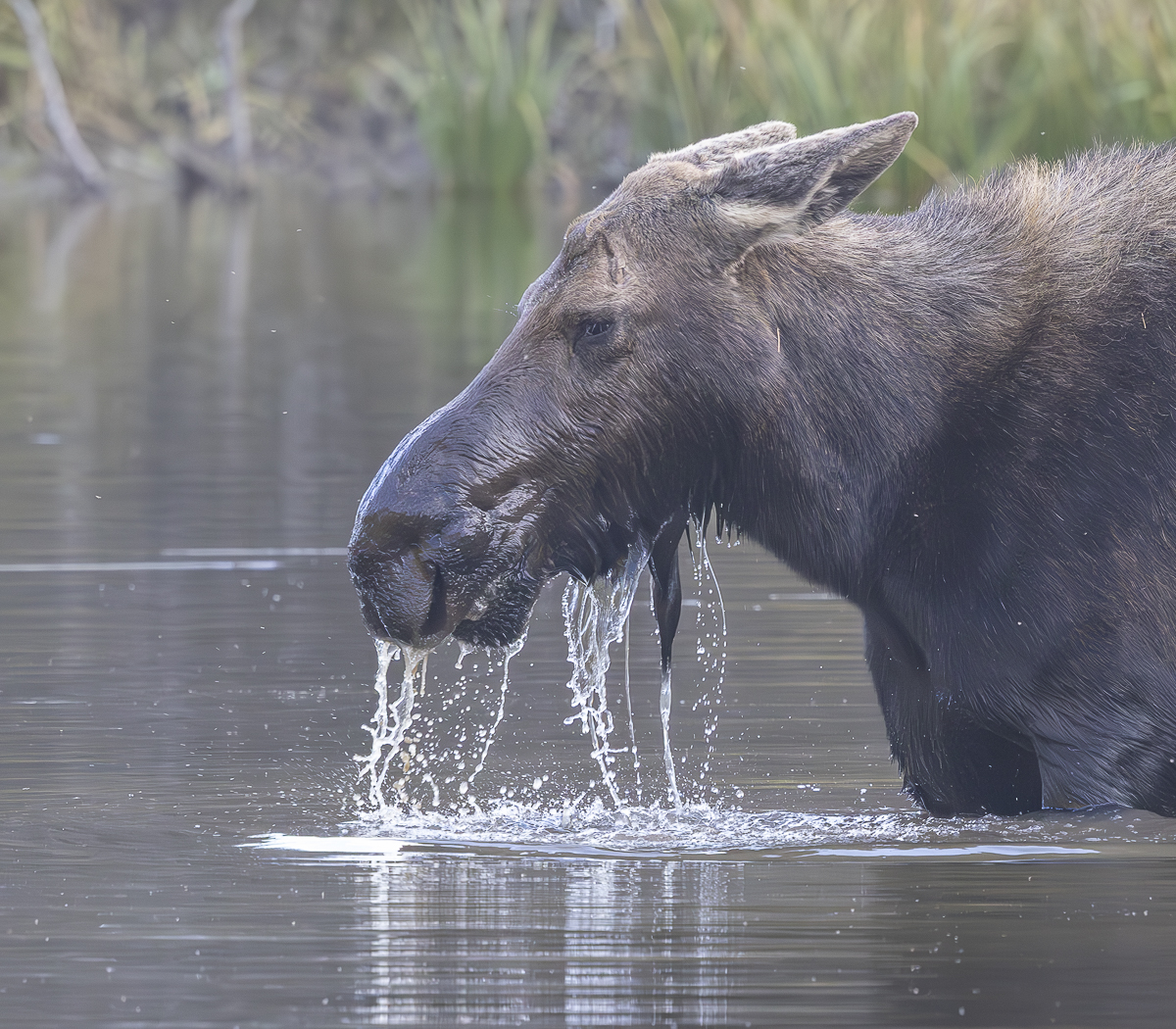
We walked over to join the rest of the people and settled in to quietly watch the cow feed on submerged vegetation while the big bull looked on. This was the start of the rut for moose so this big fella was undoubtedly guarding her in order to mate. The young bull was either an offspring of the cow from the previous year or a young guy hoping to get lucky.
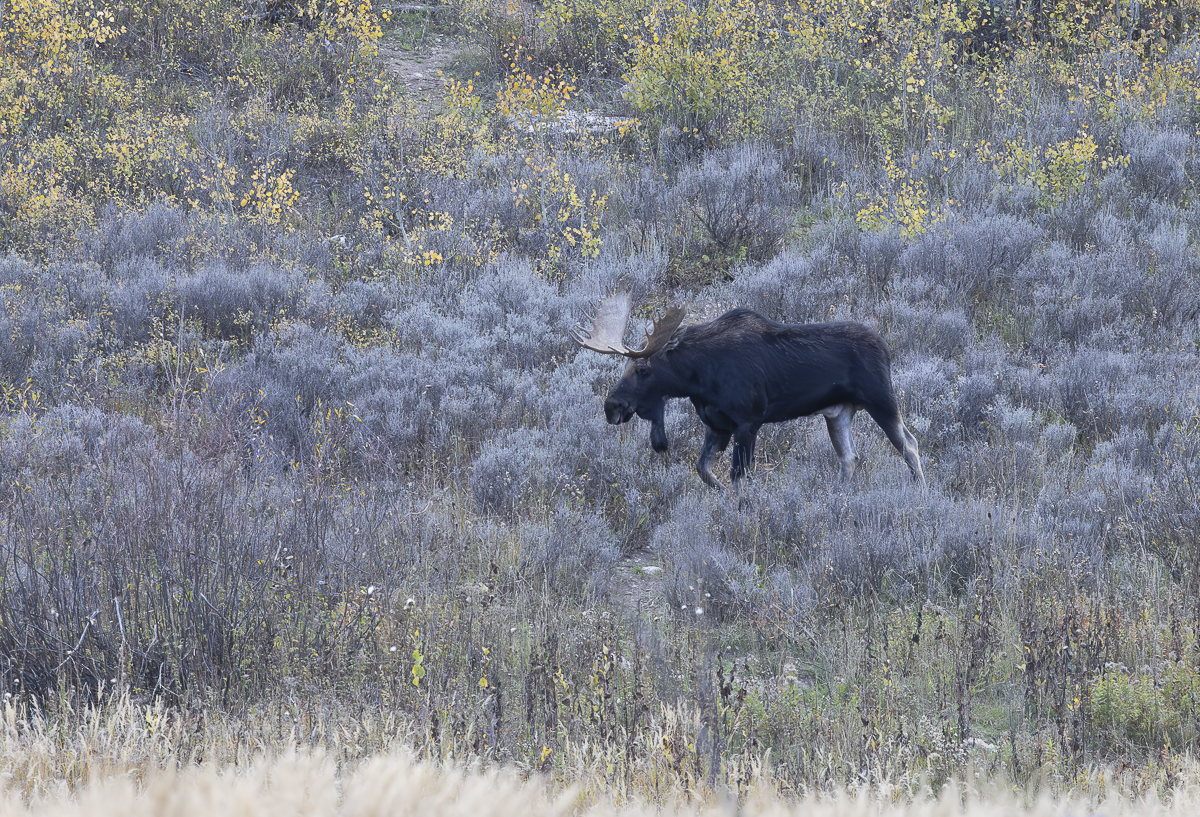
The cow suddenly looked off to the side of the pond where we had recently walked and stared. I glanced over and saw another bull moose coming down across the trailAnother large bull moose approaching the pond
The first bull spotted the other one, stood up and walked stiff-legged toward the intruder, grunting every few steps.
The original bull gave out loud grunts as he approached the other bull
I really thought we were about to witness an epic battle between two large bull moose. The first bull stopped twice and thrashed the bushes with his antlers, a sure sign he was ready for a challenge.
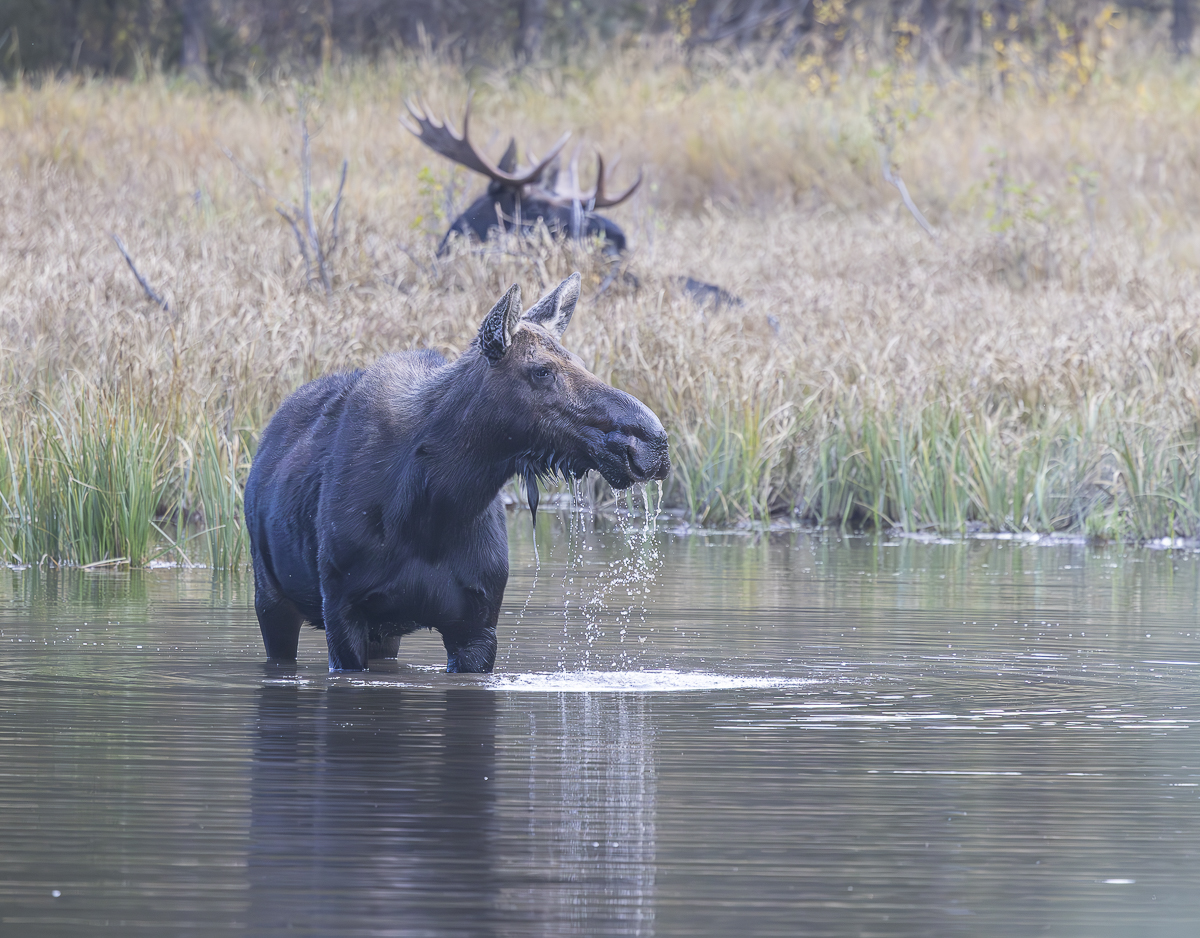
Meanwhile, the cow went back to feeding. Guess she has seen this bravado before.
The cow continued to dunk her snout into the water to eat submerged vegetation
The other bull soon disappeared back into the woods and the dominant bull returned the victor without ever having to battle. And the cow just kept feeding, seemingly oblivious to all the drama.
We continued watching the moose for quite some time before deciding to hike back to the car. It was a privilege to witness this group of moose in their world. I must say, I was also happy that the gathered group were quiet and respectful of the animals and we all seemed to appreciate the wonder of the moment. On our way back, we came around a curve in the trail and encountered a young black bear only about 30 feet from us chowing down on berries. We paused, talked quietly to the bear who glanced our way and continued feeding. The bear turned away feeding as it went and we slipped down the trail realizing how special this hike had been. In a world of crazy headlines and sadness, it is healing to witness wildlife going about their lives.
How about a blog post with some pretty landscape pictures?
~Jane Cardwell, my mother — this one’s for you!
Fall is a fleeting season. I’ve always loved it — the colors, the cooling weather, the promise of change. Here in the West, it seems to move even more quickly that it did back East.
The landscape around our new home in Gardiner has been brown for a while now. In this dry climate, it’s not heat or day length that seems to govern the fading of green. It’s the lack of water. This summer, the hummocks just inside Yellowstone that are visible from our living room had turned brown by mid-July. This is quite a change from the moisture of North Carolina that turns things green that aren’t supposed to be.
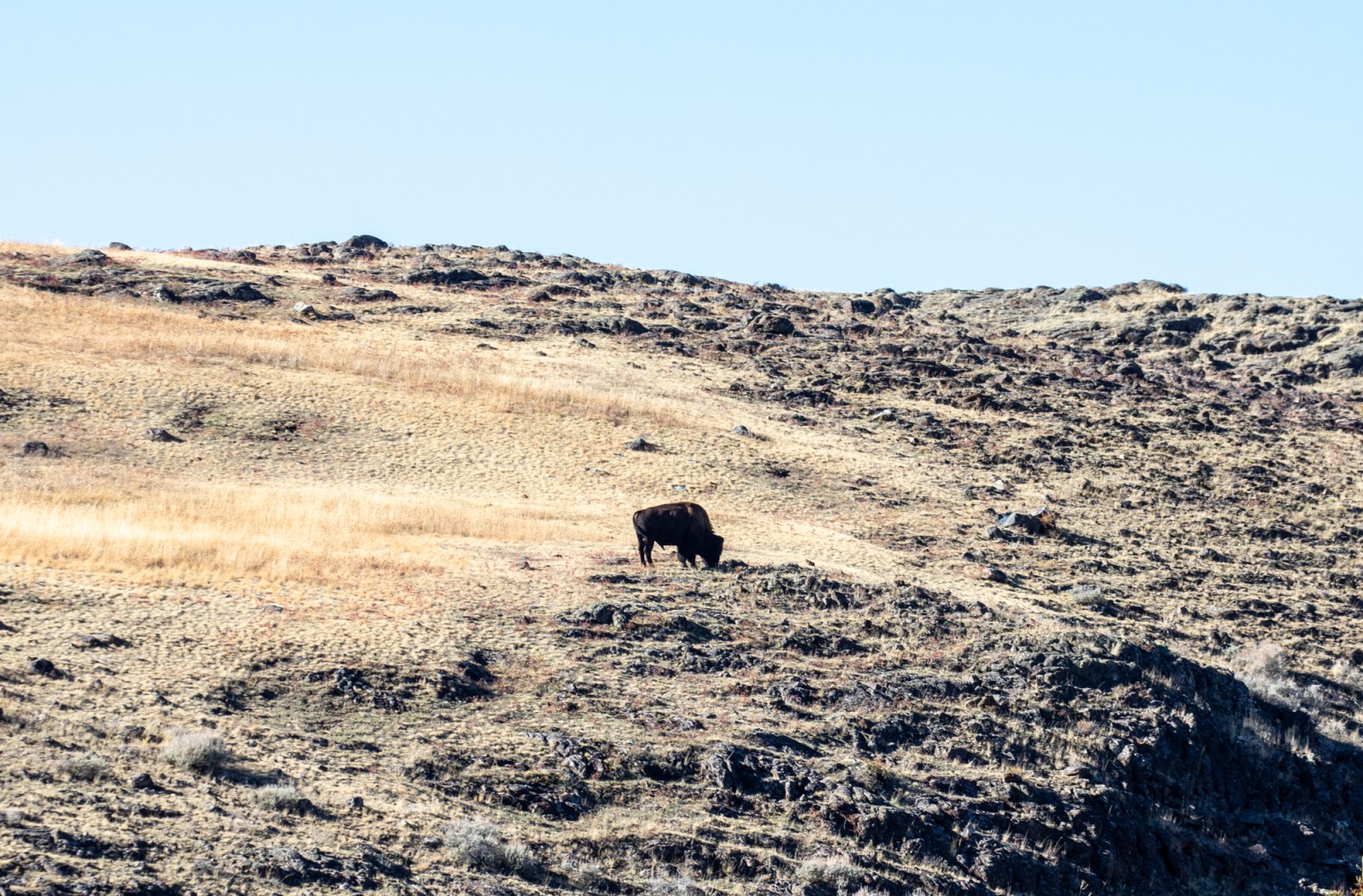
This is not the view from our house, rather out in Yellowstone. However, I like how it captures the starkness of the landscape as the greens of summer fully faded away.
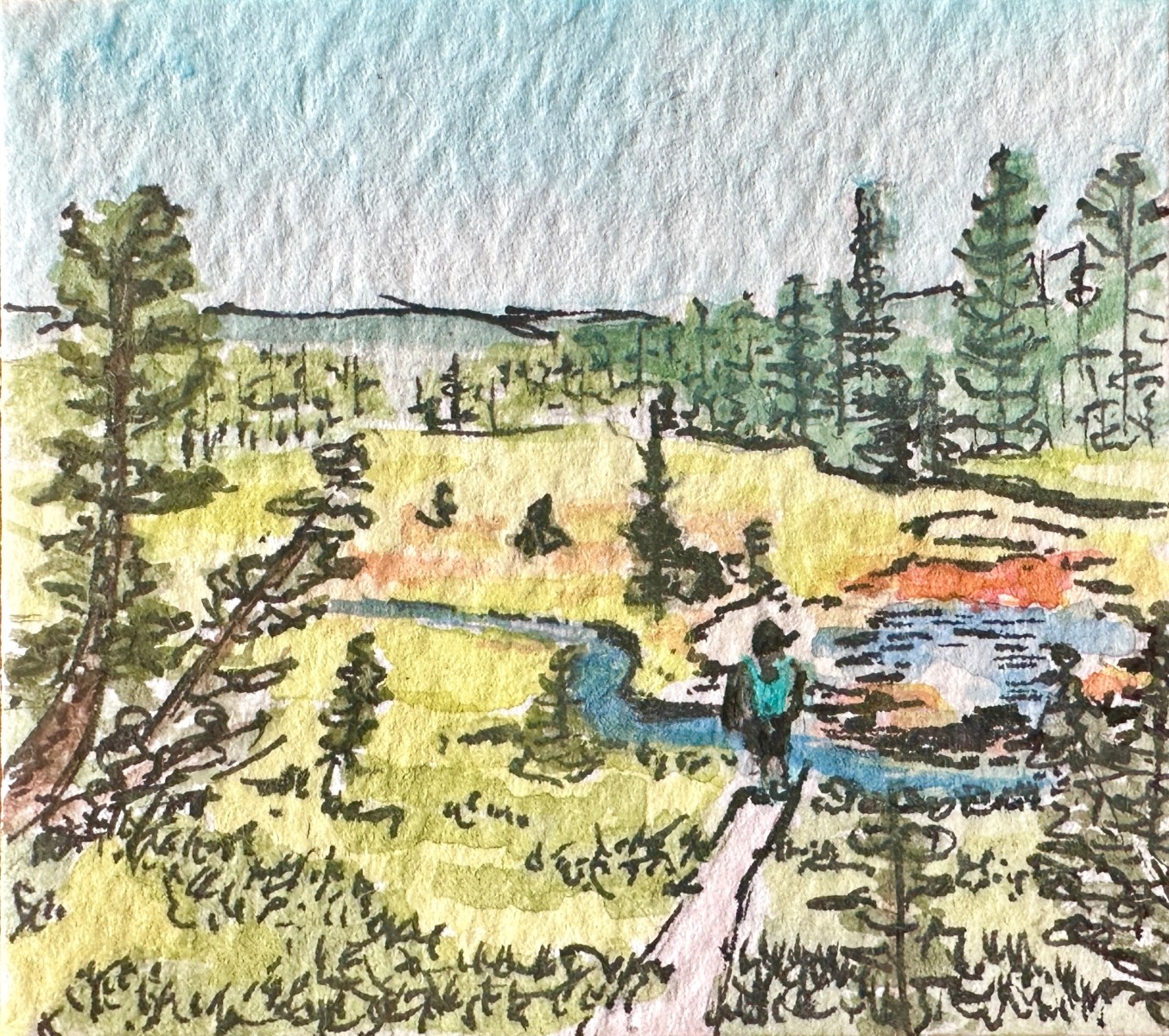
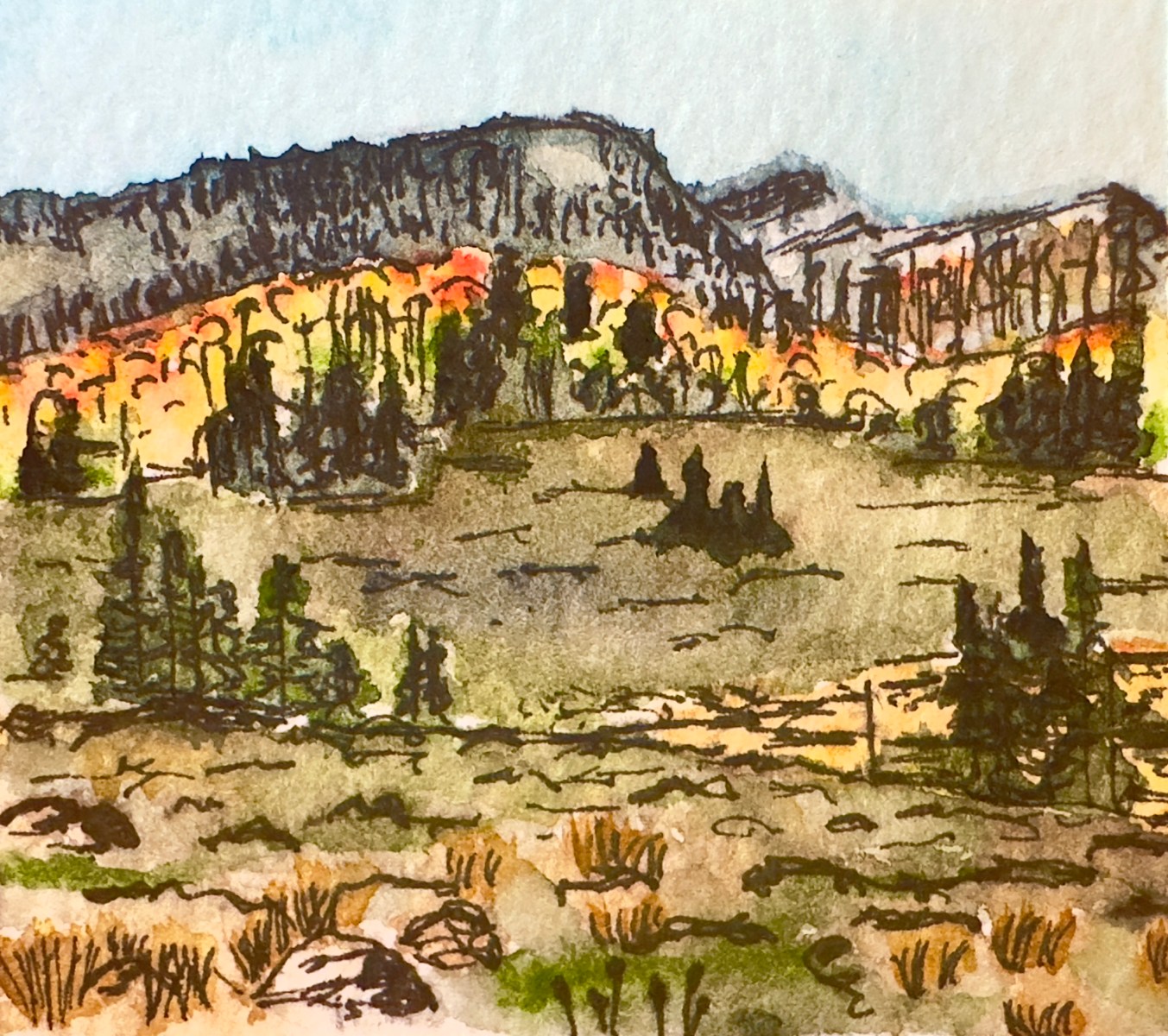
Since participating in a nature journaling conference in early September, I’ve been experimenting with watercolors and trying my hand at some small landscape paintings. It’s fun to try to match the colors I’m seeing on the landscape using just a few simple primary colors. But I think I need to discover a new vocabulary for shades of brown and yellow: Grass. Sand. Ochre. Bronze. Umber. Amber. Flax. Sienna. Sepia. Teak. Gamboge. Perhaps the naming will help me appreciate their variation more?
Each of these is about two inches wide. The left painting is from a backpacking trip in the southwest corner of Yellowstone in early September with some friends from NC. The right one is from near our campsite on my birthday in Cache National Forest near the Utah-Idaho border.
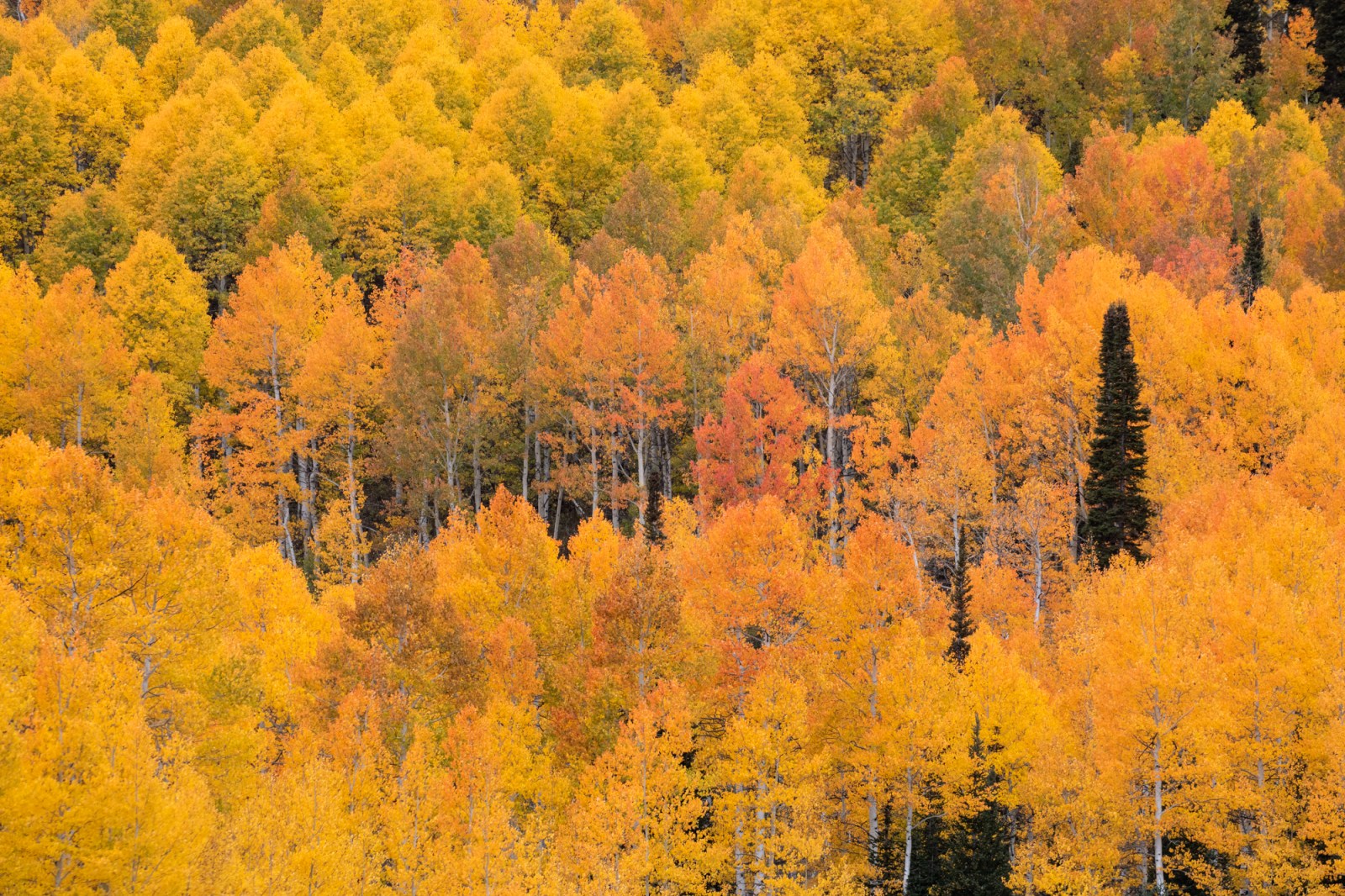
As September has waned and October begun, new colors have popped up on the landscape. The highlight of fall color here in the West is certainly quaking aspens. On past trips to Colorado, Mike and I have enjoyed their glowing yellow. Here in the Greater Yellowstone Ecosystem, or perhaps just this year (as it’s our first Rocky Mountain fall), there seems to be more variety in their color. While there is still a lot of the typical yellow, oranges and even colors verging on red blend in. In places where some of the aspens hold their green a bit longer, there’s been some beautiful “aspen rainbows” where a patch, or even a single tree, will showcase a spectrum from green to yellow to orange to red-orange.
This aspen grove isn’t quite a rainbow-y as some I saw, but it does showcase the variation in their color well!
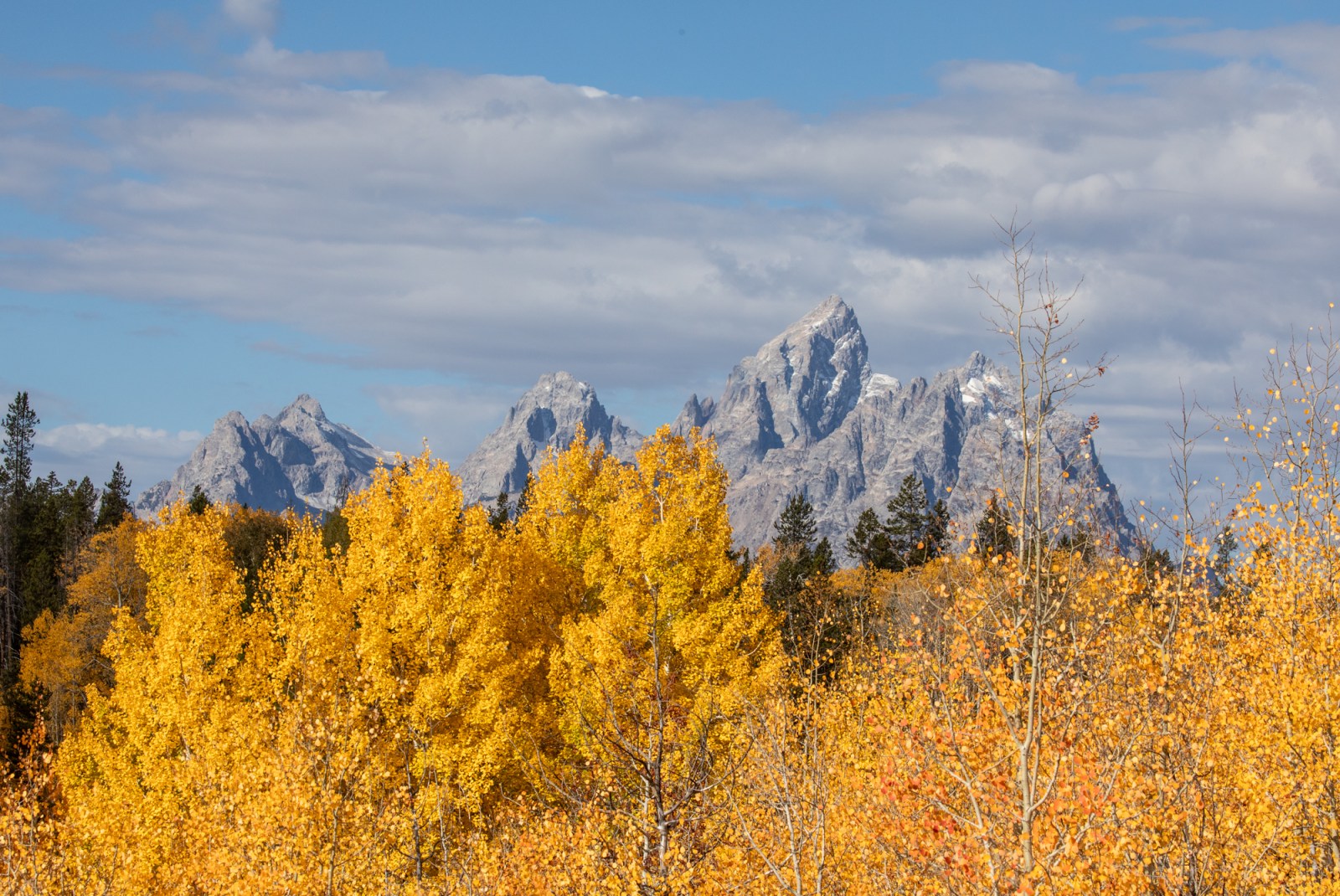
On a recent trip south (to go to the closest Ikea in Salt Lake City, of course), we were fortunate to hit peak fall color in the Tetons. There are many more aspens there than in Yellowstone, as well as many cottonwoods in wetter areas, which generally seem to turn a slightly more golden-brown (ochre?) shade. It was a spectacular fall color show. The looming mountains in the background didn’t hurt the scene either.
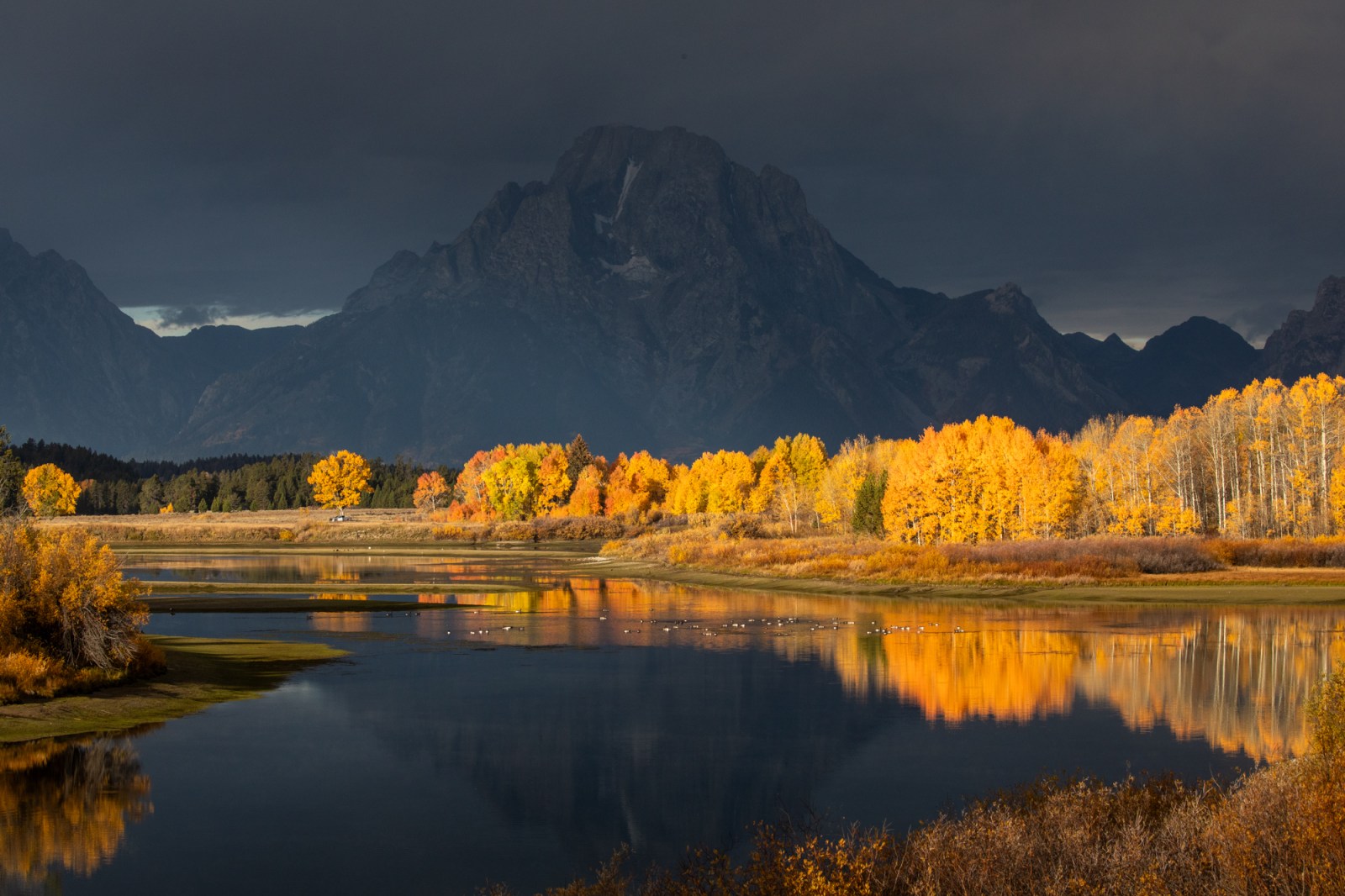
Our second morning in the Tetons, storms were rolling in. Just before Mount Moran was hidden by clouds, we had this amazing moment of sun.
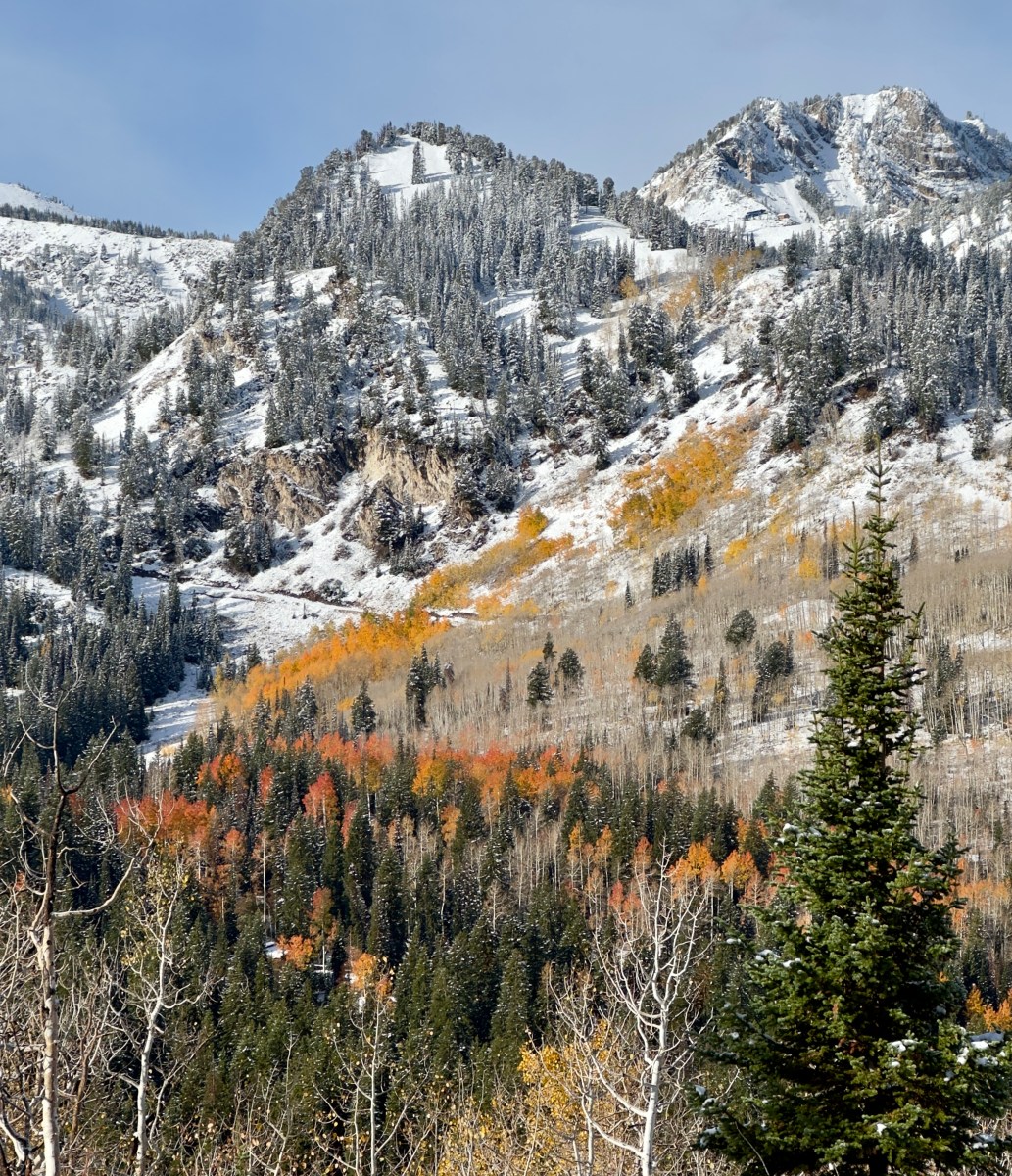
As we continued on to Utah, we ran into some wet weather that produced snow at high elevations. The mix of aspens in fall color just beneath the jagged, snow-covered peaks of the Wasatch mountains was stunning. Again, we saw a blend of oranges and reds. In a 1989 paper in Forestry Science, scientists observed variation in the color change of aspen leaves in certain groves from year to year (e.g. orange one year and yellow the next). They speculated that particular weather conditions might lead to the production of higher levels of anthocyanins (chemical compounds that cause the red colors in fall leaves), thus changing leaf color from year to year. However, other groves were always red or always yellow, so they hypothesized that color was influenced by a genetic component as well. No matter how or why, the addition of the reds into our recent leaf peeping trip was welcome, as I miss the brilliant red maples and scarlet oaks and black gums of the East.
The view from Guardsman’s Pass above Salt Lake City was spectacular with the first snowfall on the fading aspens!
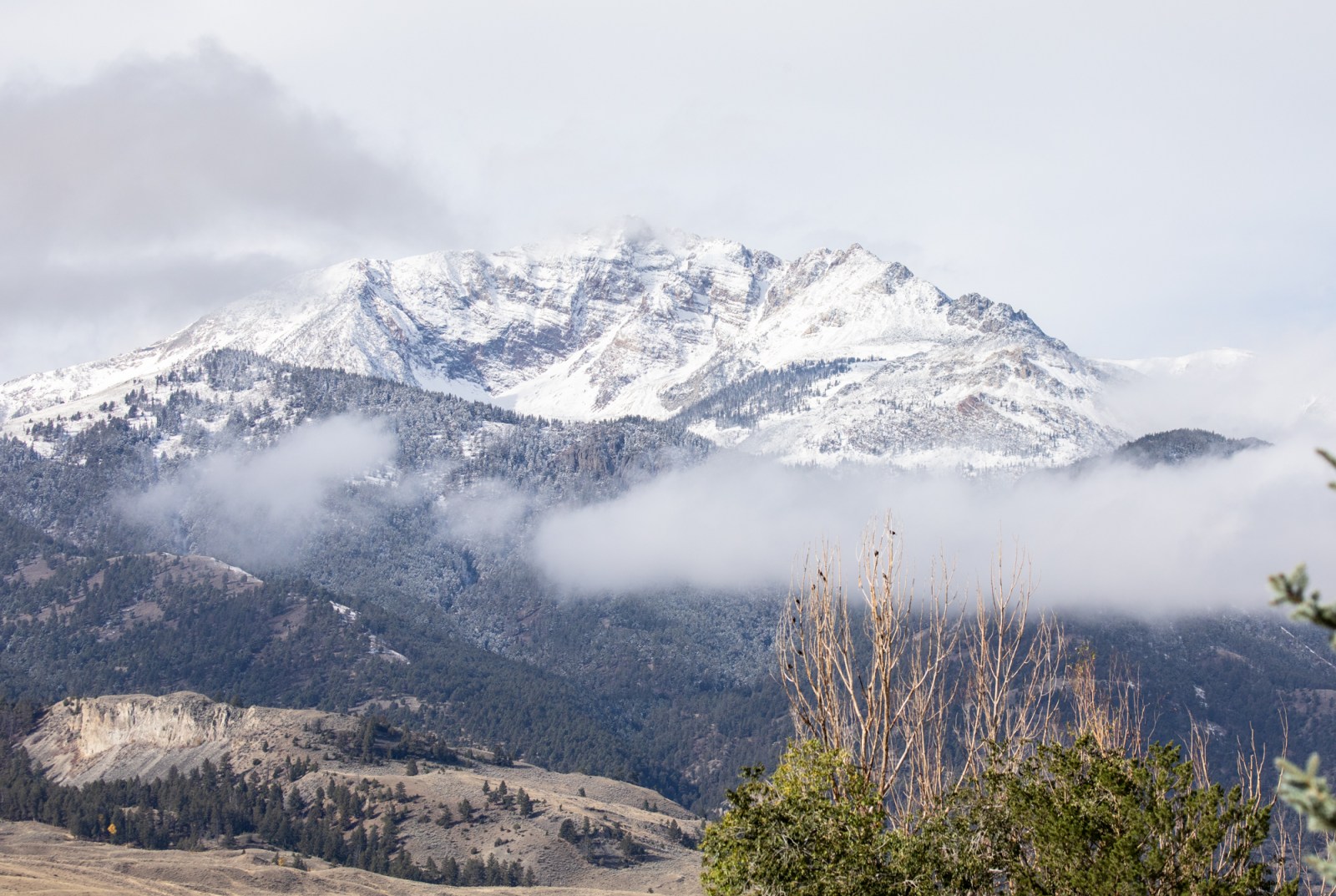
A few nights ago, we had our first snowfall of the season with a dusting around our house and much more on the mountains across the valley in the Park. We may have another week or two of some fall color at lower elevations, but the main show seems to be over as winter sets in. Perhaps it’s time to start working on my color vocabulary for whites and blues…
Electric Peak from our deck a day after the first snowfall. Before some melting in the afternoon sun, the snow level was much lower on the hills!















 Roads End Naturalist