
So much detail goes unnoticed in the world.
~Barbara Kingsolver
After our moth party last month during National Moth Week, we have put out the moth lights and sheet a few more times to see what new species we might attract to our deck here in the woods. It has been pretty productive and we have recorded many new species for my iNaturalist project where I am documenting all the species of invertebrates we see on our property (more on that in a future post). Here are some of the highlights from our moth nights this month (these species are different from the ones reported in my July post on National Moth Week). I have made identifications based on a variety of sources, including iNaturalist. As always, if you think I made an error, please drop me a note in the comments.
I’m starting with a group of moths that I think would make great models for jackets for British university professors.

-Tephra Tussock Moth – I particularly like the fuzzy leggings in this outfit. Adults do not feed; larvae are on oaks (click photos to enlarge)
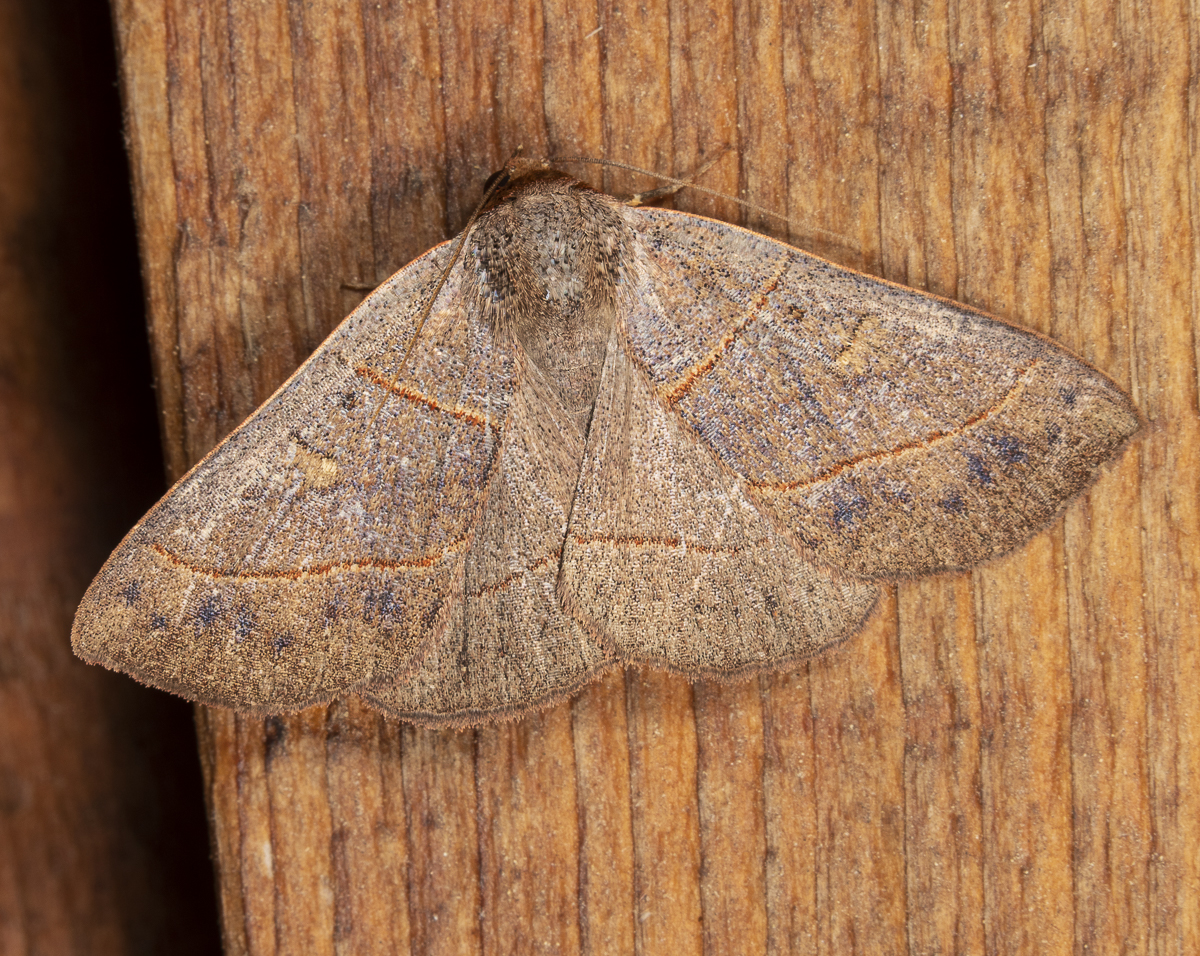
-Red-lined Panopoda Moth – nice stripes. Larvae on beech and oaks.

-White Furcula Moth – a nice salt and pepper look with a hint of metallic blue and orange. Larvae often found on cherry.

-White-blotched Prominent – nice greenish cast (and the accessory works with this outfit). Larvae feed on oaks.

-Brown Panopda Moth – distinctive accent in this outfit (one reference described the dark wing marks as looking like a body-less person sitting in a chair). Larvae usually on hickory.

-White-headed Prominent -love those striped socks. Larvae on oaks.

-Orange-tufted Oneida Moth – described s having a “woodsy color scheme”. Larvae feed on oaks and oak galls apparently.

-Oval-based Prominent – for the bold professor – nice shoulder patches. Larval food unknown

-Wavy-lined Heterocampa – a nice greenish tint allows you to blend in with a moss-covered tree trunk on campus – larvae feed on a variety of hardwood trees.
These next moths are a bit bolder in their fashion statements…
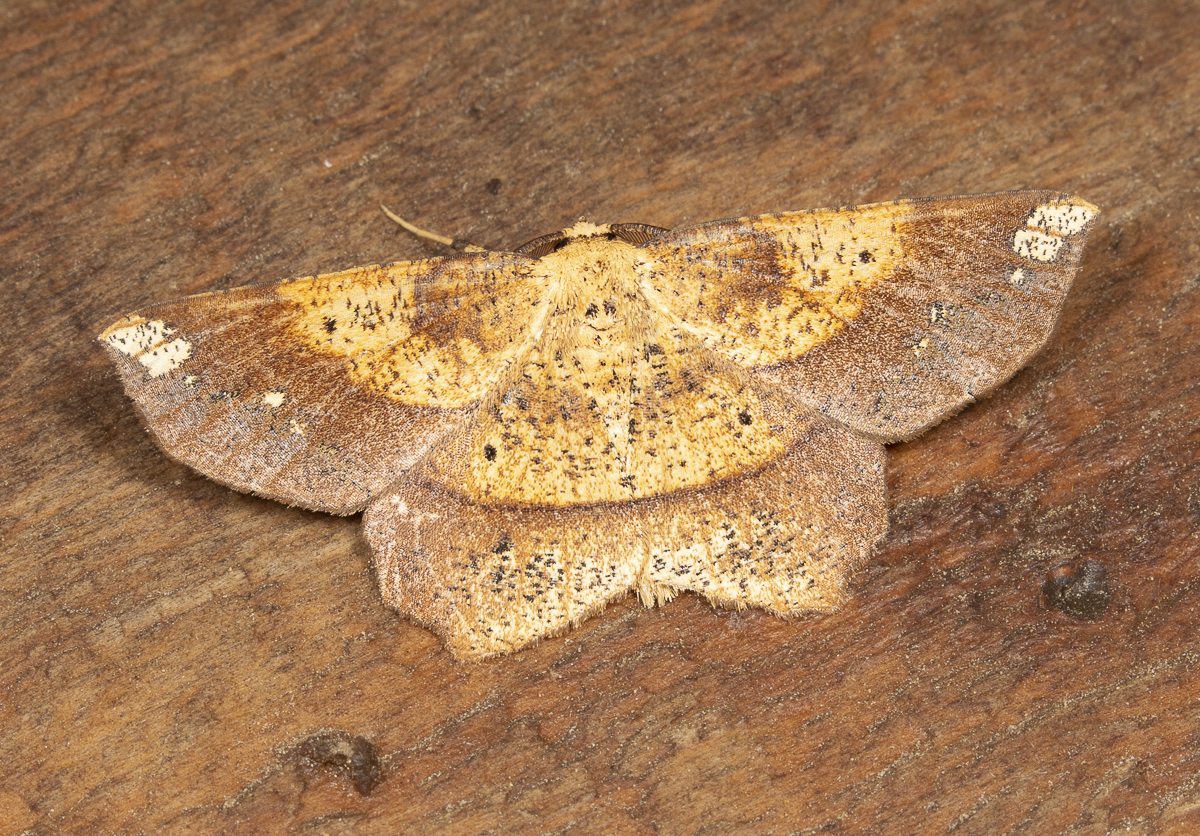
-Deep Yellow Euchlaena Moth – a beautiful, yet mysterious moth. Larval food plants reportedly unknown.
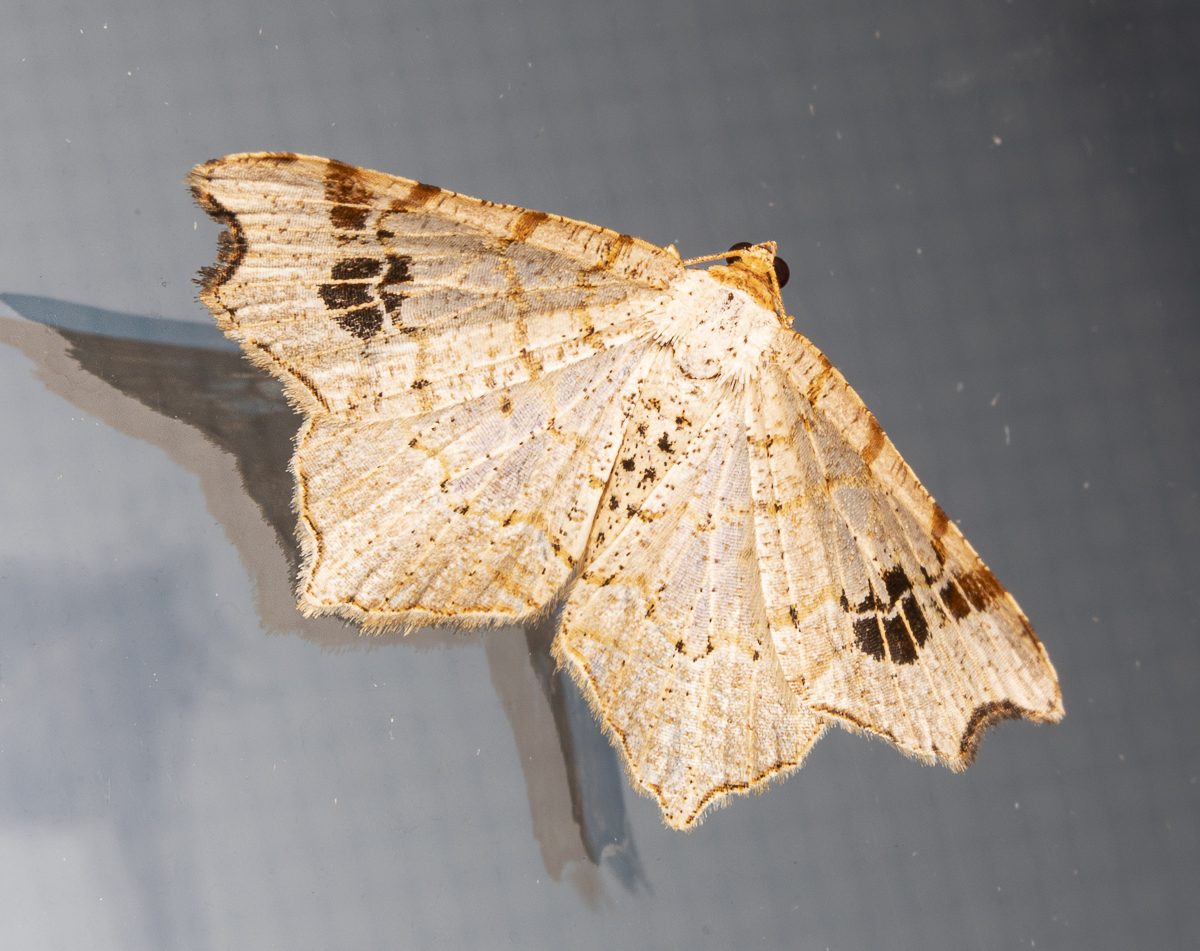
-Common Angle – dark, paw-print-looking marks on outer wings. Larvae feed n maples.
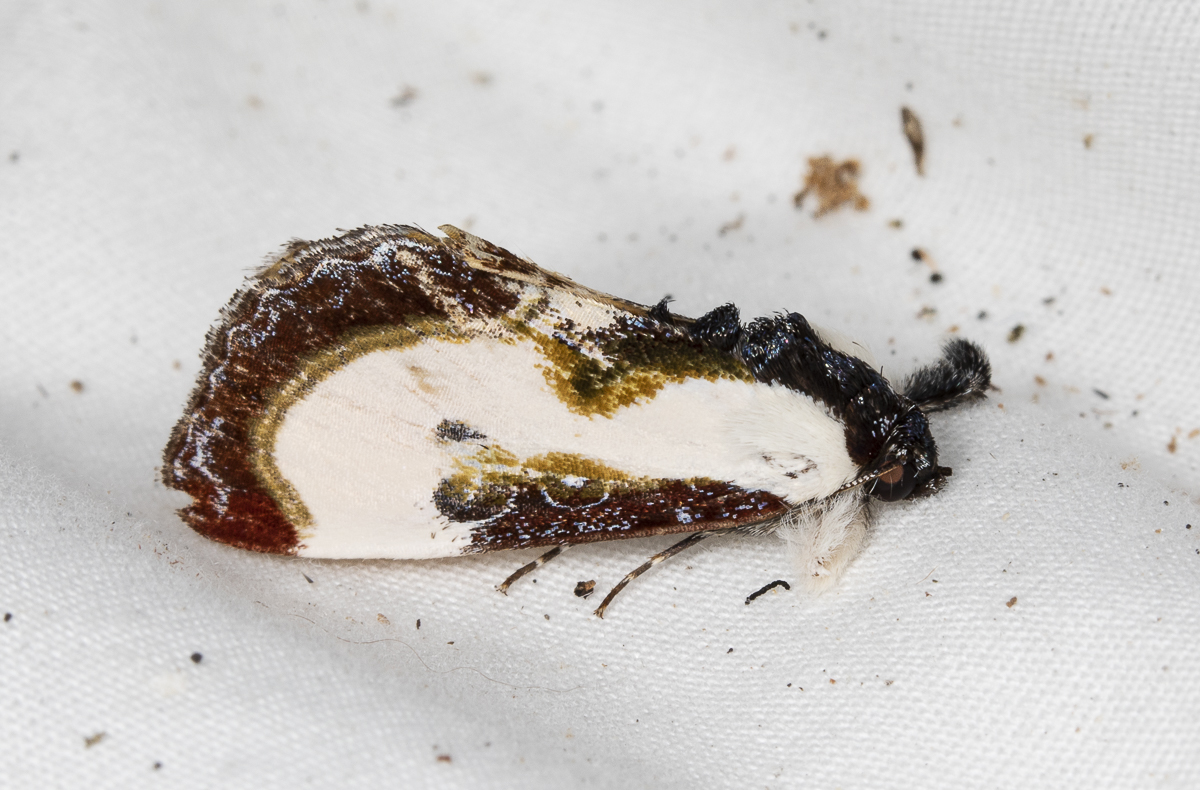
-Beautiful Wood-nymph – gotta love moth names – often seen resting with front legs outstretched. This is a bird-dropping mimic. Larvae on Virginia Creeper and grape.
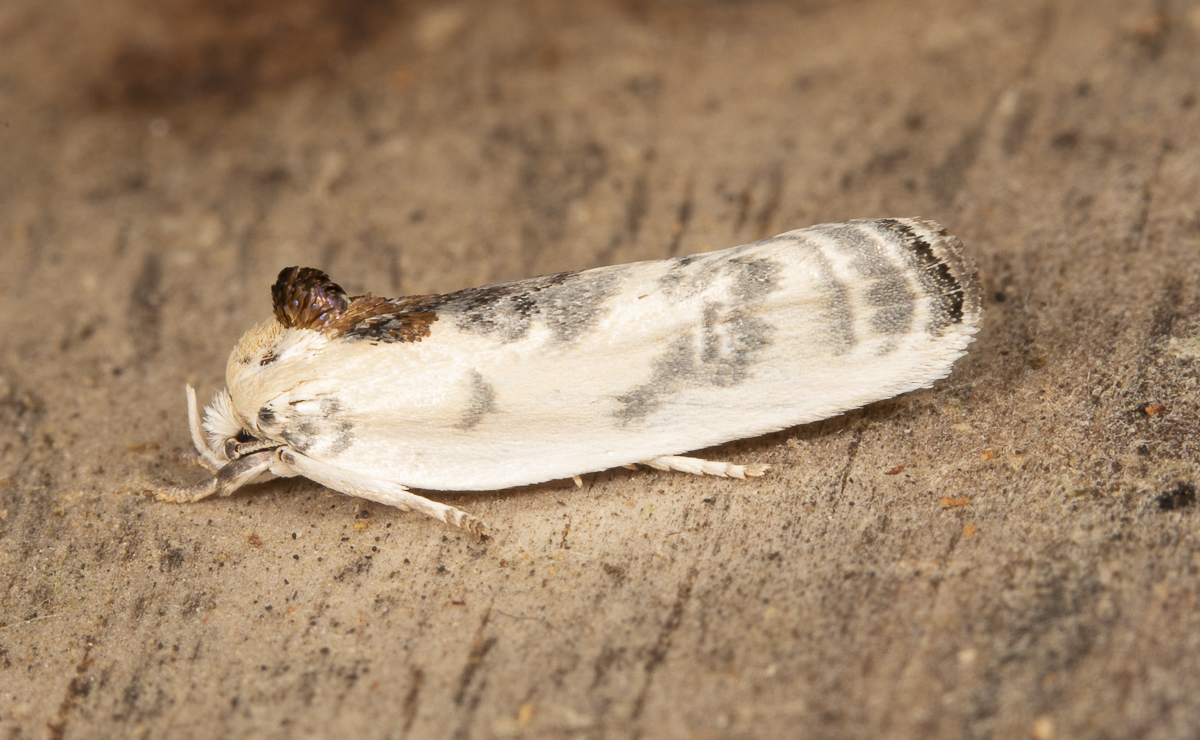
-Genus Antaeotricha – one of the so-called bird-dropping moths. Makes it easy to hide in plain sight. Consider this strategy when venturing in tough neighborhoods. Larvae on oaks.
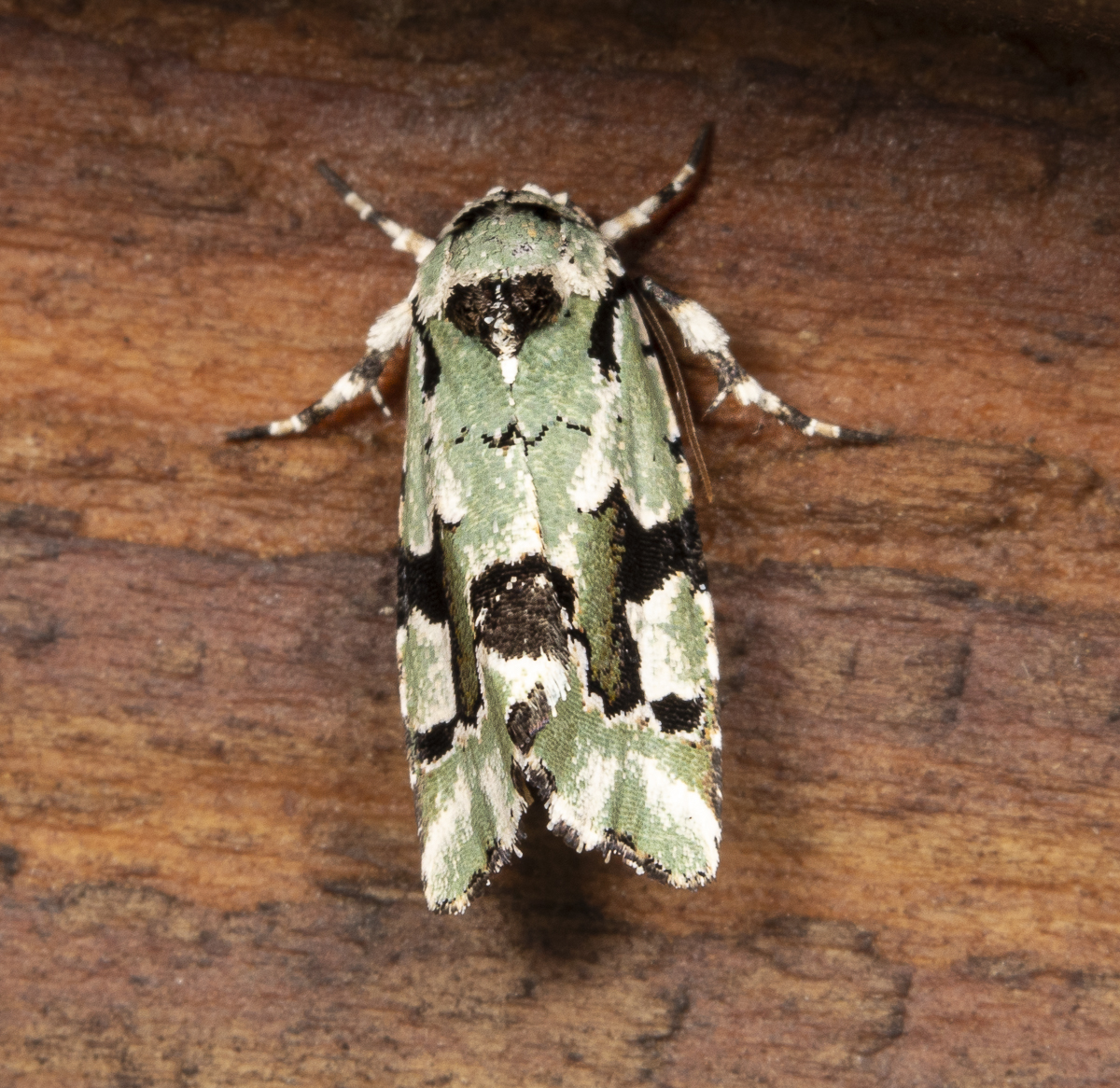
-Beloved Emarginea Moth – built to camouflage perfectly on a lichen-studded tree branch. The equally-camouflaged caterpillars feed on mistletoe!
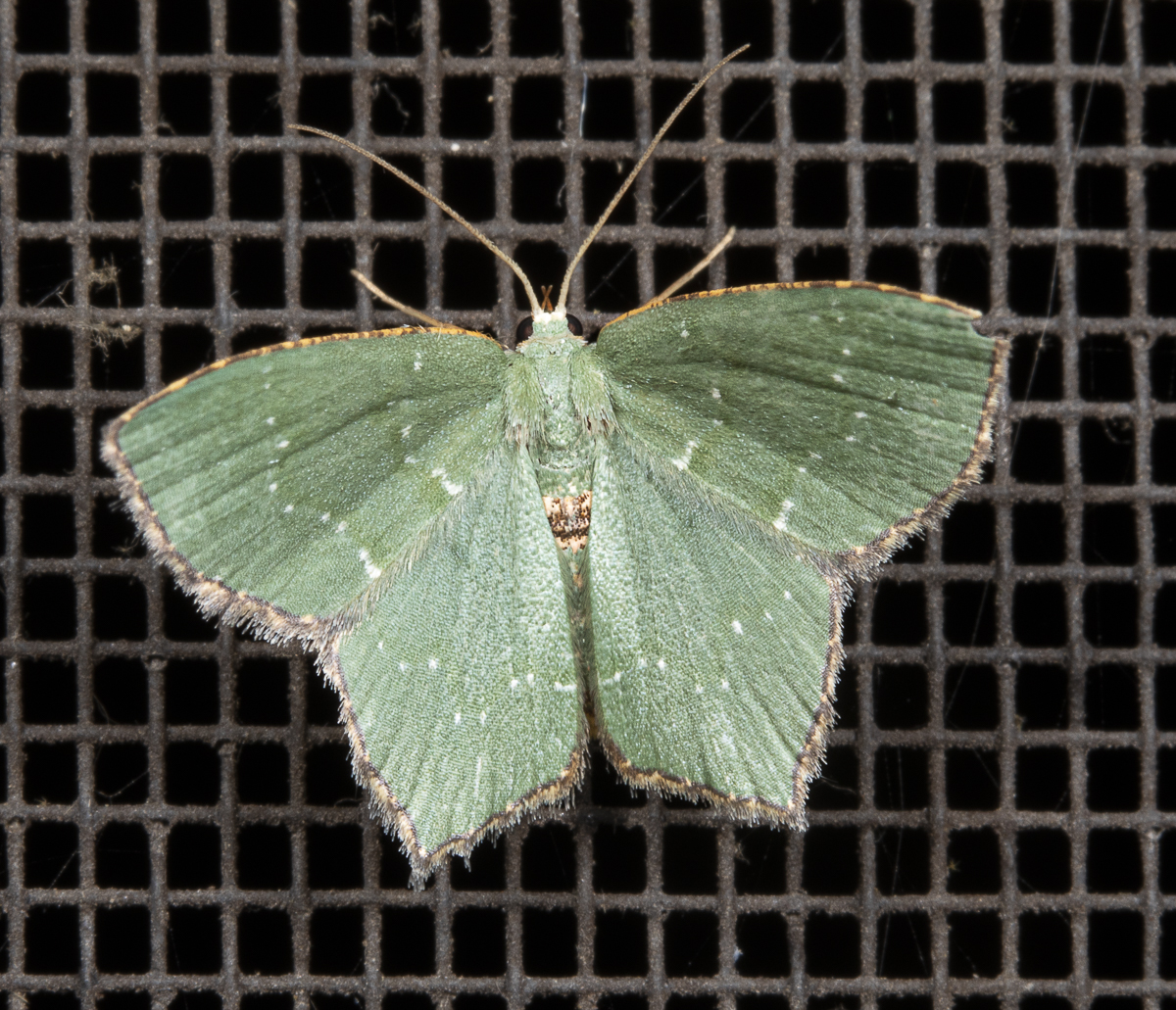
-Angle-winged Emerald – another mystery moth. Caterpillars believed to feed on Bald Cypress, but have been raised on fir and hemlock. Some think Winged Sumac is also a host.
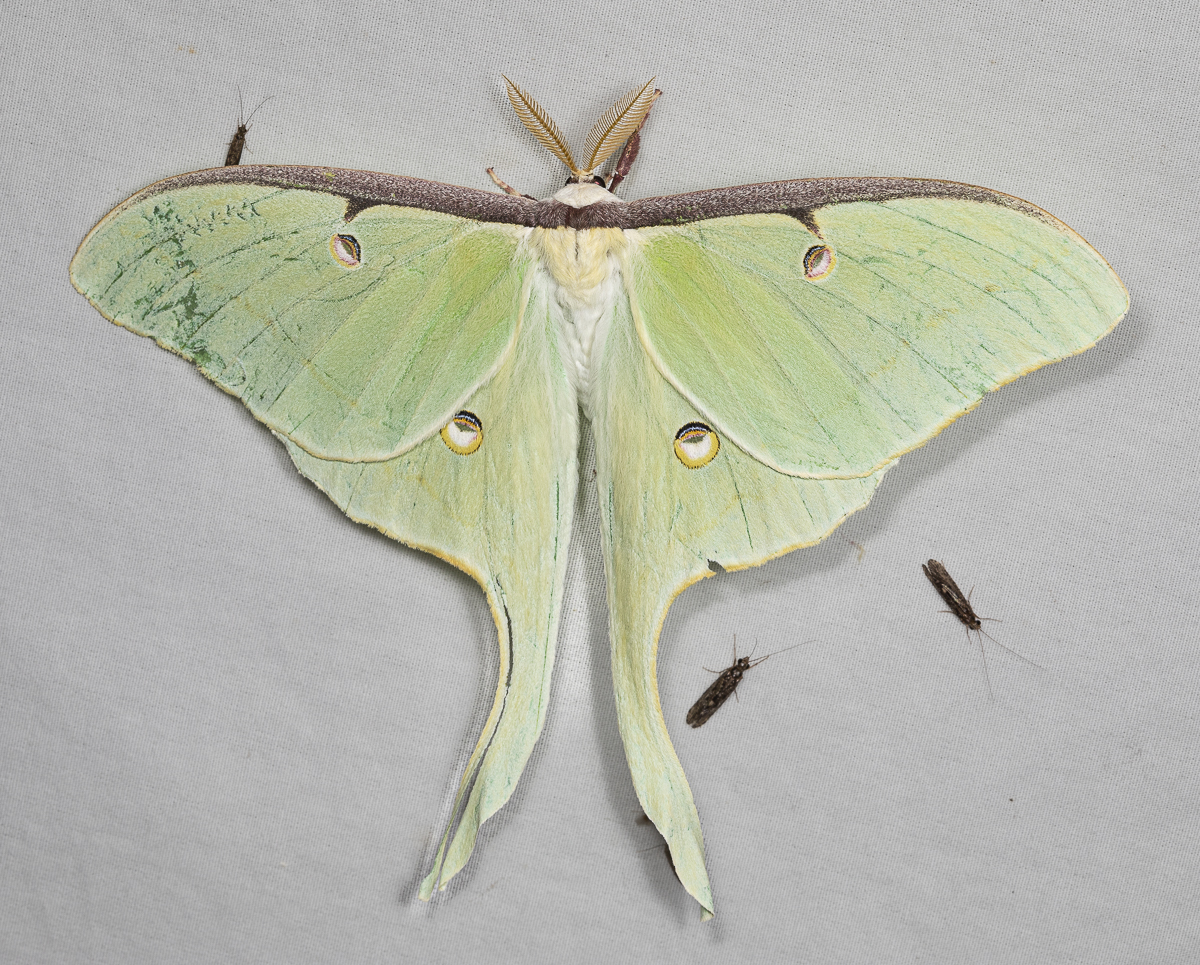
-Luna Moth – each time we have put out the moth lights, the large silk moths like this Luna and several Imperials (photographed in an earlier post) usually appear late (after midnight). It is worth the wait.
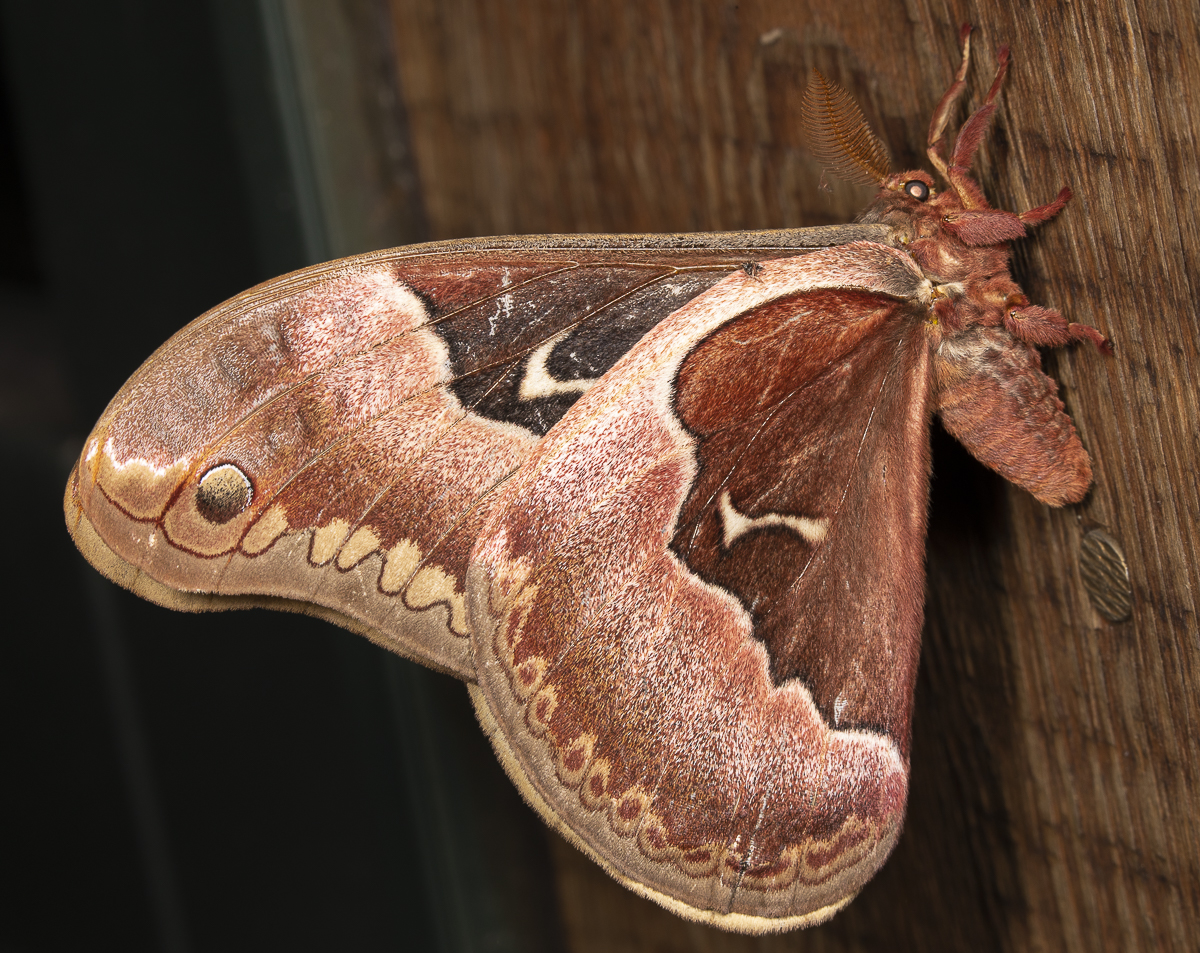
-Tulip-tree Silkmoth – this species is the exception to the late arrival rule for the big moths. These have been showing up early and usually sitting tight once they land (until the lights are turned off and then they disappear).
As always, there are many non-moths that come to the moth party lights. Here are a few highlights…

-Genus Phytocoris (a member of the Plant Bug family) – this tiny (compare to the size of the weave on the sheet) beauty is a first for me.
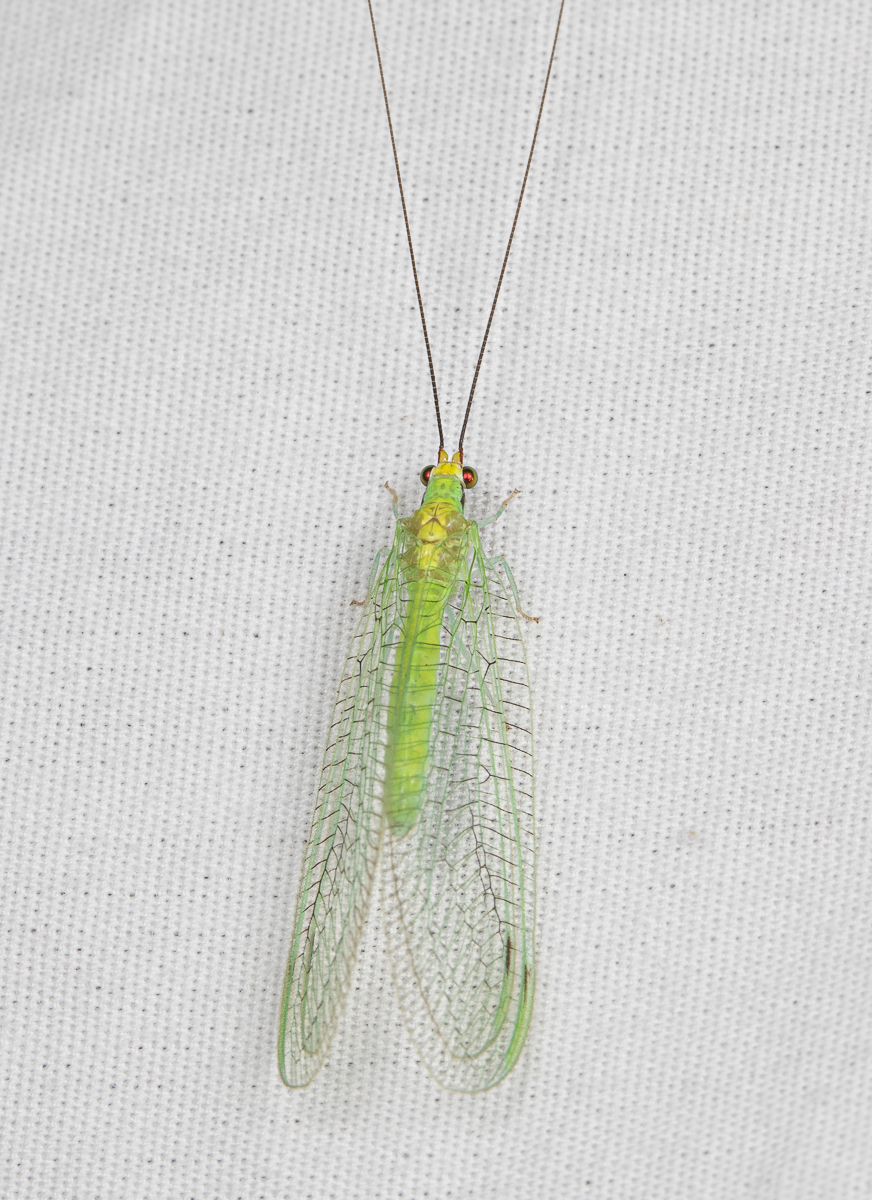
-Green Lacewing – a delicate-looking lacy-winged insect with a fluttery flight. Larvae are voracious predators of aphids and often camouflage their backs with lichens or the dead bodies of their prey. Zoom in and check out those golden orb eyes.

-Green Mantidfly – looks like a cross between a lacewing (back portion) and a praying mantis (front). And check out these eyes! Larvae are parasitoids in spider egg sacs.
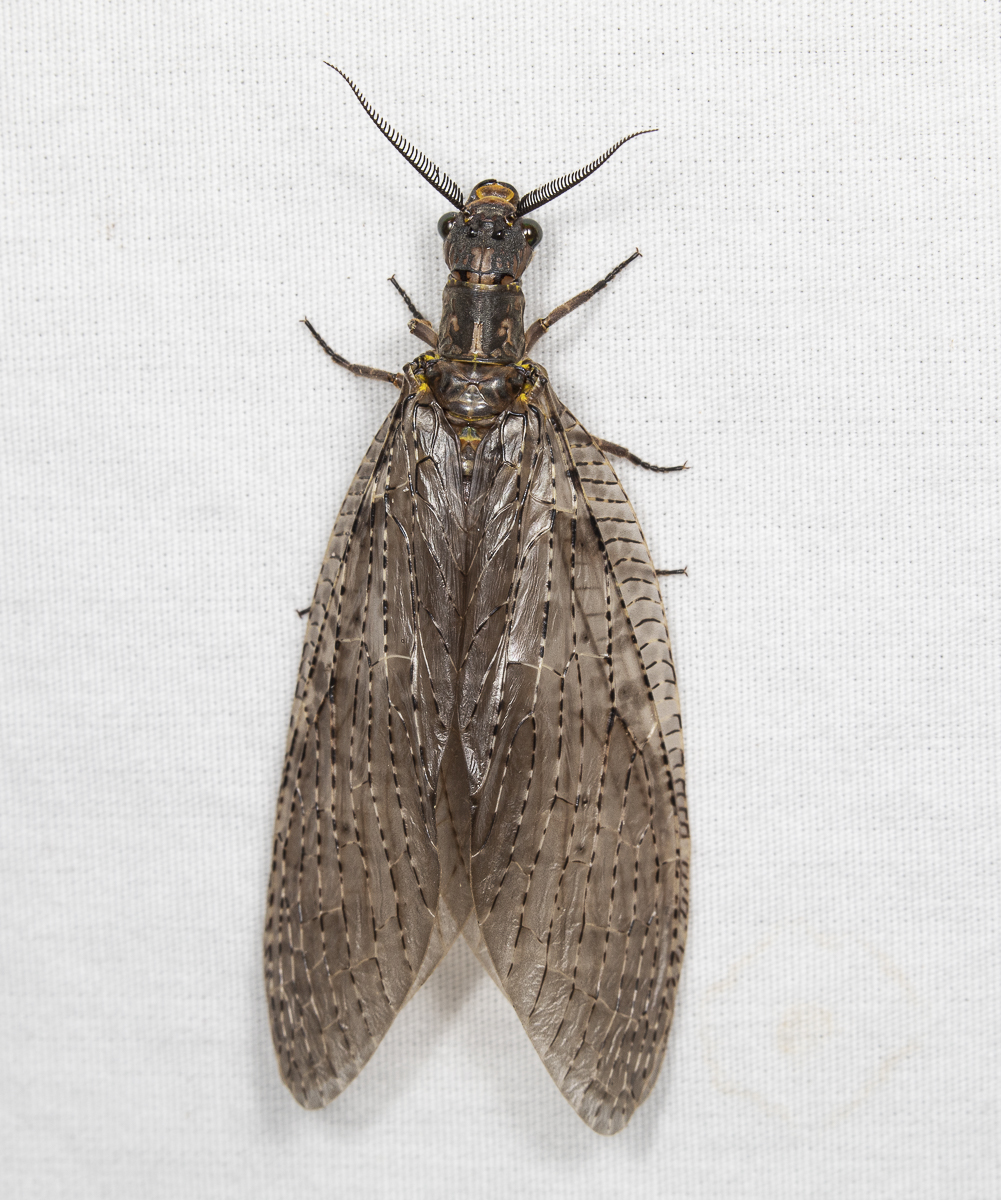
-Summer Fishfly – related to the larger Dobsonflies, but males lack the tusk-like mandibles of male Dobsonflies. This is a female, as her antennae only have the cob-like teeth on one side (males have feathery antennae).

-Eastern Rhinoceros Beetle – Xyloryctes jamaicensis. A large robust beetle. Three females came to the light on one night. They supposedly feed on ash leaves as adults. Larvae feed on the roots of ash trees and on decaying organic matter. Males have a single horn.
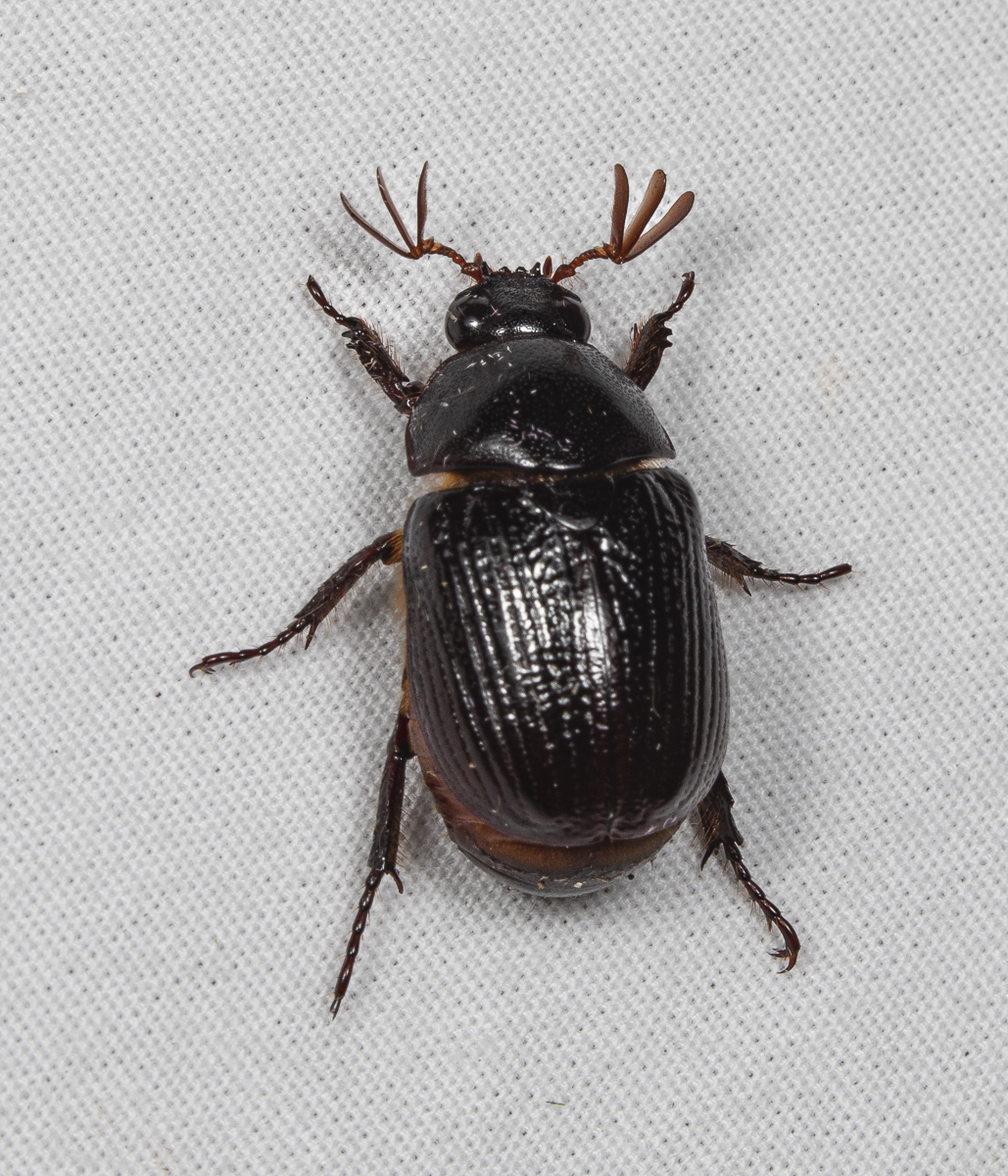
-Genus Parastasia (a member of the Shining Leaf Chafer Beetles). – winner of the cool antennae award. Tthis beetle feeds on leaves as an adult .
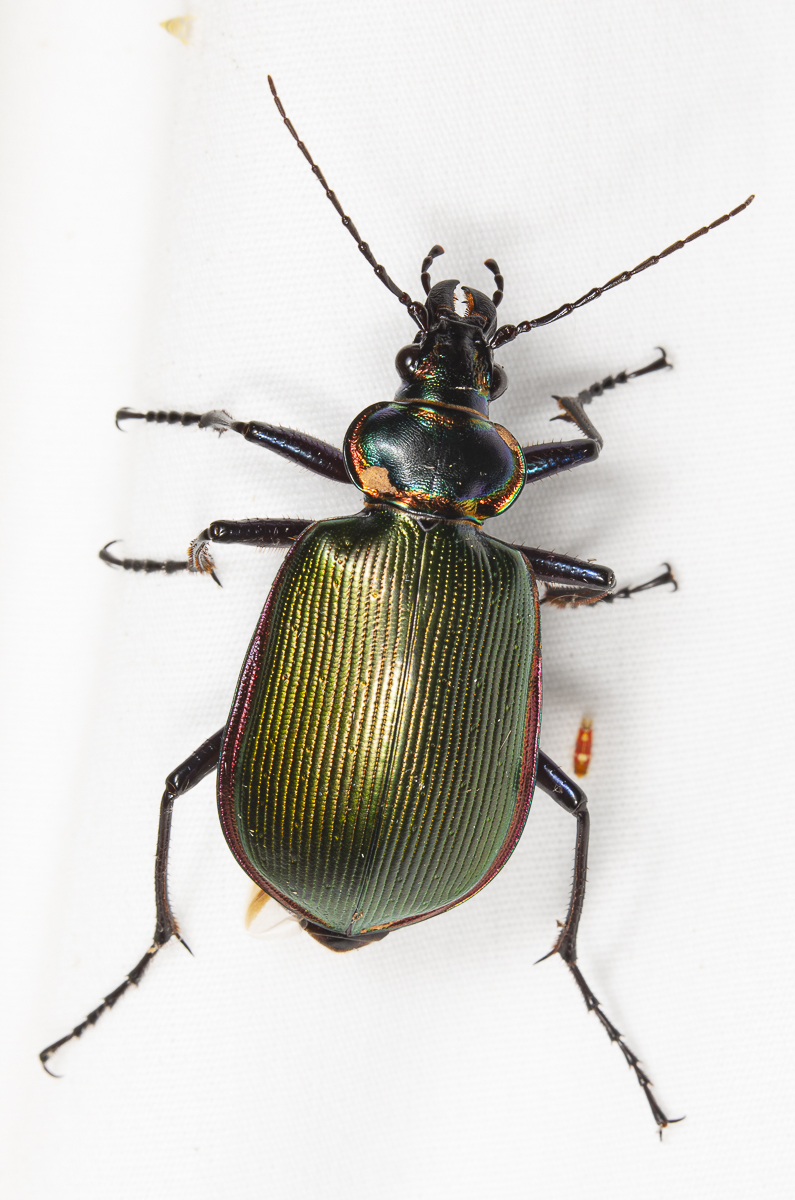
-Fiery Searcher – This large (1.25 inches) beetle is an active hunter. In fact, it is a member of the caterpillar hunter group of ground beetles. It can give you a powerful bite, so look, but don’t touch. The metallic colors can be stunning.

-While I was photographing something high on the moth sheet, the Fiery Searcher was busy doing what it does, seeking prey. It grabbed one of the several Rosy Maple Moths that had come to the light. By the time I saw it, it was too late to help the moth. The beetle fed on it the rest of the evening.
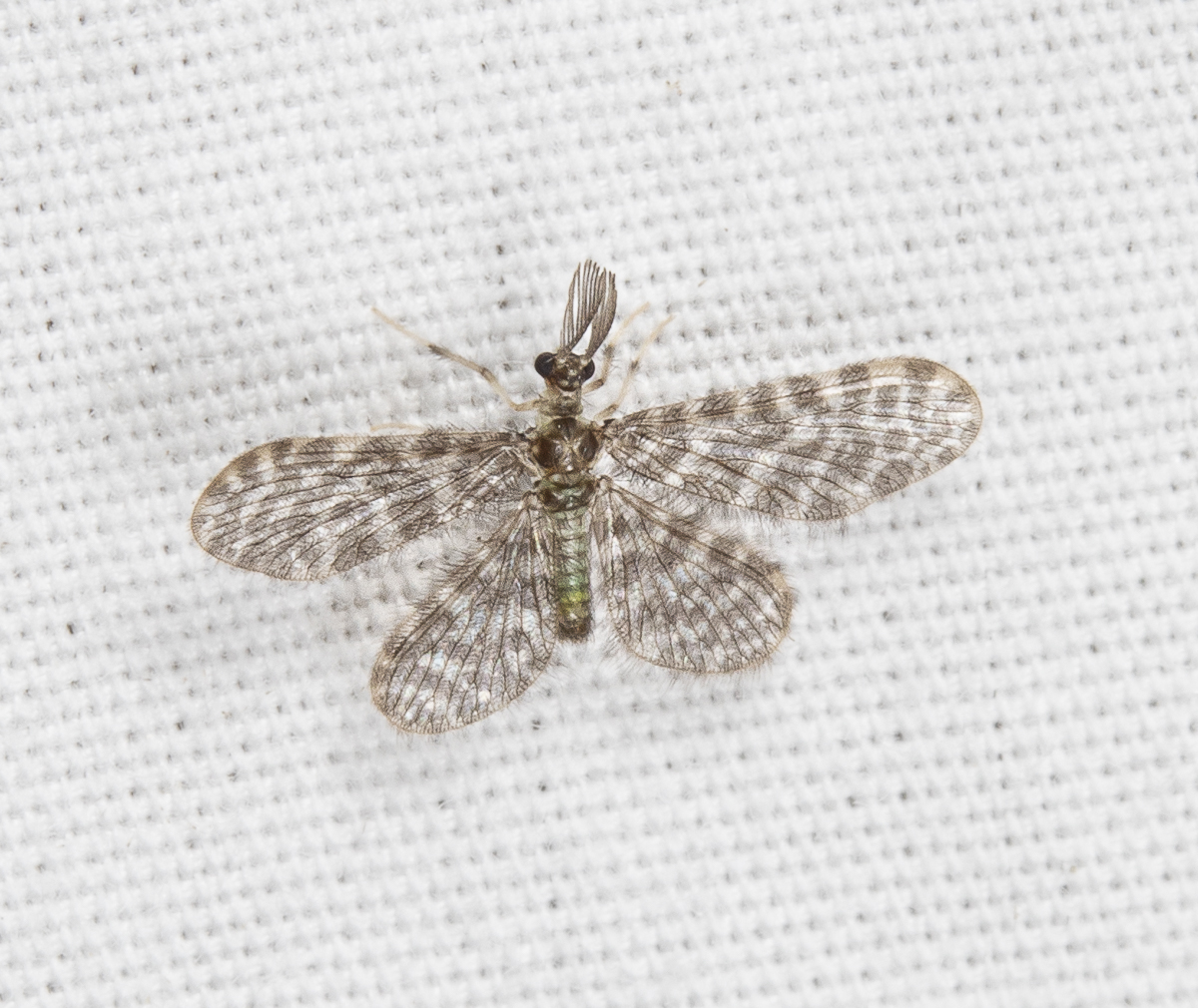
-I saved the coolest critter until last. Our friend and Museum scientist, Chris Goforth, had recently posted about this unusual insect when one came to her moth light. It is a tiny moth-like insect known as a Pleasing Lacewing, Nallachius americanus. It is related to antlions. This one is a male as indicated by the very feathery antennae (females’ are more filiform). Not much is known about these minuscule bugs, but the larvae are believed to feed on beetles and ants (especially eggs and larvae) under tree bark.


 Roads End Naturalist
Leave a comment