
Custos Naturae – Guardian of Nature
~The slogan formerly found on the logo of Kruger National Park, South Africa
Last summer, a friend and former coworker, Andrew Torlage, asked me out for a beer to discuss an idea. Andrew was born in South Africa and moved to North Carolina less than a decade ago. He is starting a tour company (named Vakasha – which means to visit) where he hopes to share the beauty of his homeland with others. He was asking for some feedback on his plans and some assistance with getting together the inaugural group. Though not on my bucket list of places to travel anytime soon, Melissa and I jumped at the chance. So, in November, we headed to Johannesburg with a group of eight plus Andrew. The trip was sensational, full of natural beauty, extraordinary wildlife, cultural highlights, laughter with friends, and good food (and wine!). I’m going to put together a few of the many, many highlights in the next blog or two. It was truly quite a trip!
We flew on Delta in what is their longest flight (and the 13th longest flight of any commercial airline) – approximately 16 hours from Atlanta to Johannesburg. We stayed in a beautiful Airbnb in J’burg a full day and a half before meeting up with Andrew, our guide. The people, the city, the power of visiting Soweto and learning more about the incredible Nelson Mandela, made for an amazing beginning to our trip.

-A Gray Go-Away-Bird. It’s common name is based on its unusual call – a nasal “gwaay”. These were common at our Airbnb in Johannesburg

-Andrew picked us up in our transportation for the next several days and we were off
After getting ourselves and our gear into the van and trailer, we headed to Kruger National Park, our home for the next 4 days. We proved our nature nerdiness to everyone right away when we stopped at the entrance gate and discovered a dung beetle doing its thing. With screams of delight we gathered everyone around to witness the spectacle.
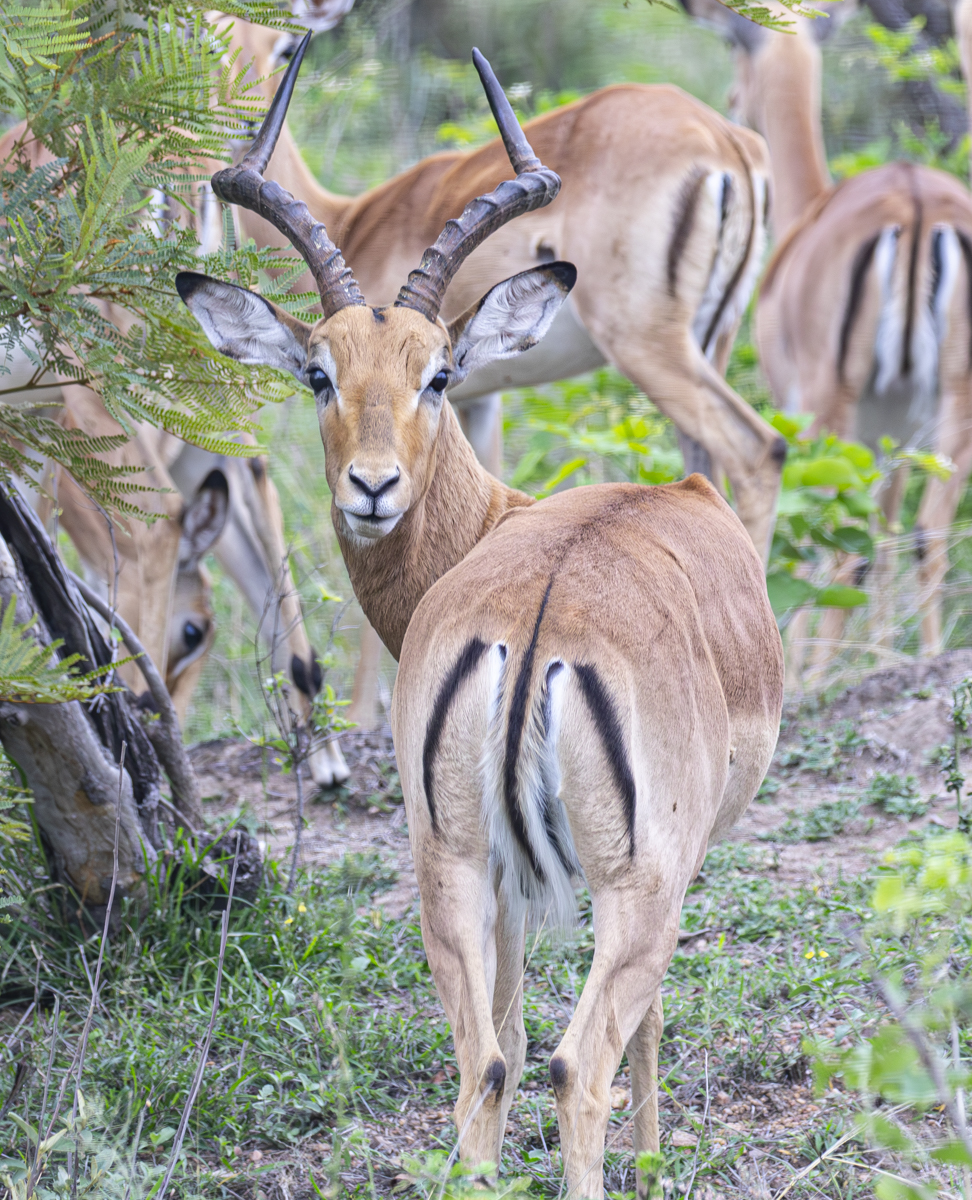
-Perhaps the most common prey animal for several of the park’s larger predators is the Impala (this one is a buck). Andrew told us the locals called this the “McDonald’s of the bush” due to the M-shape they all have on their rear and the fact they are on the menu of so many other animals. We preferred the “M&M animal” because when you saw one, you saw several.

-A Southern Ground Hornbill, the largest of the hornbills. This is a species of concern in Kruger, but we were lucky enough to see several.

-I’m used to bear jams in Yellowstone, but this is the scene at a Leopard jam in Kruger. You are not allowed to get out of a vehicle in Kruger so people jockey for position in their cars or safari vehicles. My position in our van did not allow me a pic without a stick blocking part of the animal’s face. But, that wasn’t the last one we saw that day…
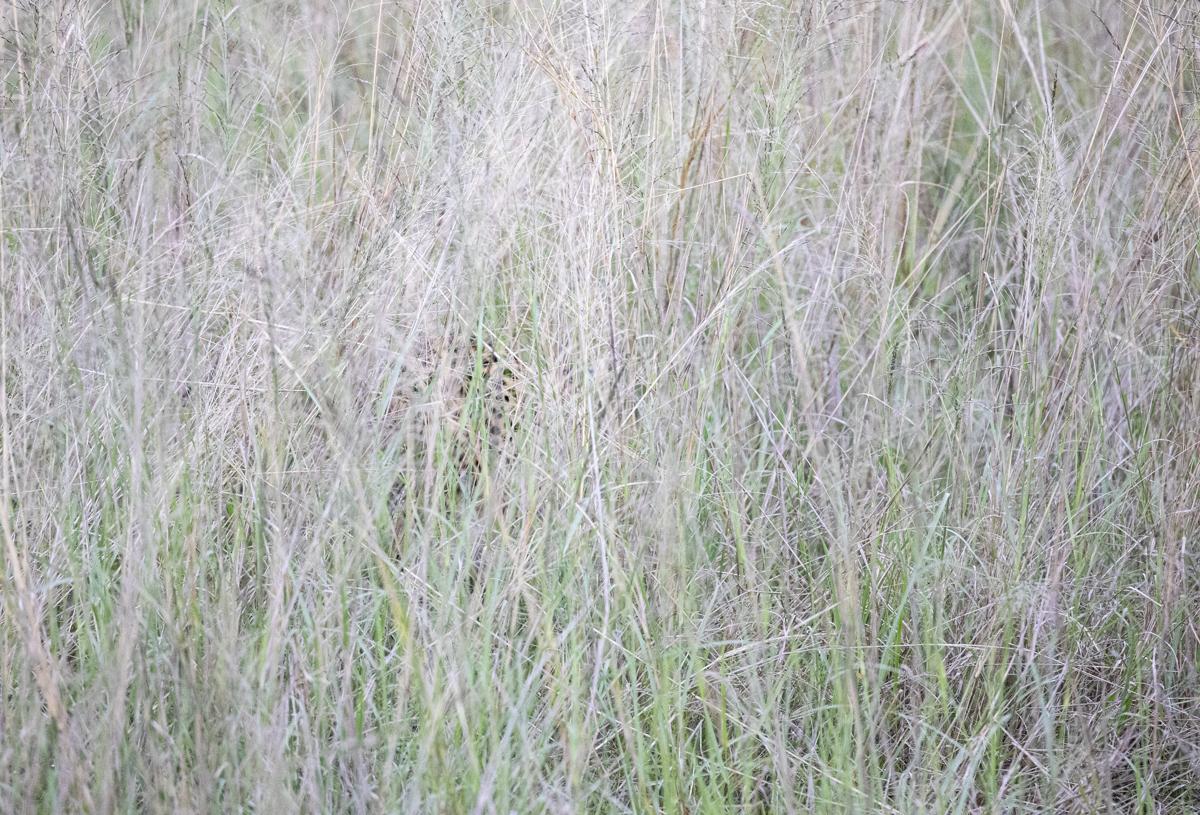
-On our afternoon game drive with a ranger, we came across another traffic jam. An adjacent car said there was a Leopard lying in the grass next to the road. After several minutes of staring and moving around a bit in the safari vehicle (a large open bus) a woman next to me spotted it (this is all we could see). It amazed all of us that it was so hidden and only about 20 feet from us.

-Driving back toward our camp, we came across another Leopard (probably the same one we had seen earlier that had now moved across the road). Leopards are solitary animals and are expert stalkers. They use the element of surprise and their power to overcome prey. They spend the hotter parts of most days resting.

-We spent several minutes with this beautiful animal and it finally turned its face toward us for a few seconds, allowing this nice portrait. Leopards often carry their prey up a tree trunk and feast in relative safety from other predators such as Lions and Hyenas.

-While watching the Leopard, we spotted this Magpie Shrike perched in a nearby shrub. We saw several species of African birds that have extremely long tails. This may be an adaptation to mate choice (aerial displays) and/or the ability to perform abrupt maneuvers in flight for foraging.

-A bit later that day we drove back by the spot where the Leopard had been hiding in the grass and it was up and moving. It slowly began stalking a large herd of Impala on the other side of the road. The vehicles in the traffic jam gave cover to the approaching Leopard and we all braced for an exciting predator-prey moment. But as the big cat tried to cross the road, there were just too many people and cars and it apparently gave up the hunt and moved off the road and sat down.

-Each of the major camps in Kruger are surrounded by an electric fence and electrified cattle guard with a gate manned by a ranger to keep out the potentially dangerous animals like Leopards, Elephants, and Lions.

-A personal highlight was seeing the Giraffes. What amazing adaptations! They are the tallest land mammal on Earth with big males coming in at over 15 feet at the shoulder and able to reach leaves a full 24 feet above the ground. They can also tilt their heads vertically due to special bone articulations at the base of the skull and that, along with their height and long tongues (up to 18 inches) gives them extra reach for their feeding.

-You can identify males from females from a distance by looking at their “horns” (more accurately called ossicones). Male horns are usually bare at the tips from their head/neck butting for mating rights, whereas female horns have tufts of dark hair. I believe this one is a male.

-We soon saw a small herd of Elephants alongside the road. it was a mixed-age group including a few very young ones. More on these magnificent creatures in the next post.
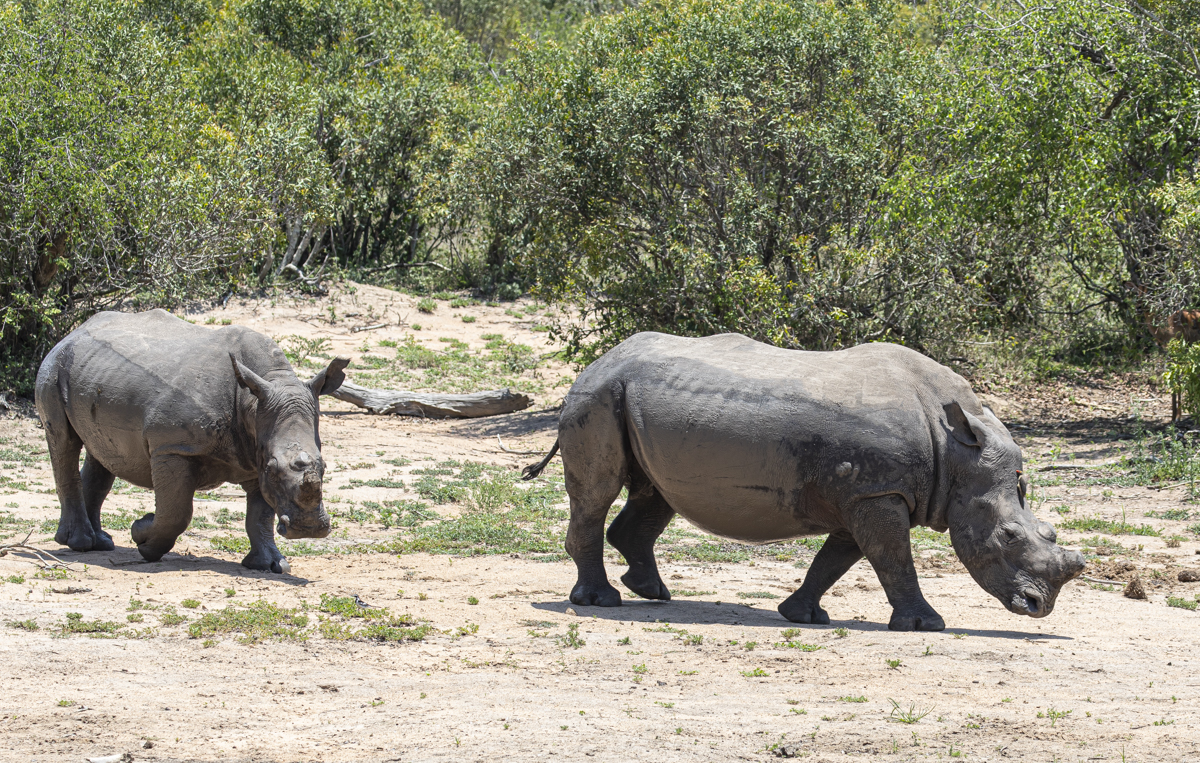
-We visited a hide (we call the blinds) on a watering hole mid-day and saw a herd of impala and some birds. Suddenly, two huge White Rhinos ambled into view and the rest of the wildlife gave them a wide berth. Due to excessive poaching in recent years, park managers dart every rhinoceros in the park and cut off their horns, which are highly valued on the black market. I must admit to being saddened to not see the diagnostic horn but thankful if it helps keep these giant beasts alive. The horn continues to grow throughout the animals’ life so rangers must cut off the horns again every few years. The record length for a White Rhino horn was 5.1 feet! White Rhinos are the second largest land mammal on Earth (big males can weigh over 5000 pounds) and are part of the so-called “Big 5” of Africa (much sought-after by tourists ) – Elephants, Rhinos, Cape Buffalo, Lions, and Leopards. And we were lucky to observe all five on this trip!

-A diminutive Steenbok (standing only 20 inches at the shoulder) is one of the smallest antelope. The name is derived from the Afrikaans word, steen, which means brick – because of its color).

-Lions are Africa’s largest land carnivore (big males are between 400 and 500 pounds). They hunt cooperatively and can take down large prey from Giraffes to Cape Buffalo and Zebra (even Elephants). They spend much of their day resting as this group of 3 (one off-camera) was doing, sleeping right in the road. The rangers knew that this group had recently taken down a Cape Buffalo and were feeling well fed.

-A Lion wakes up as our big open safari van passes. I imagined it was thinking, “you know I could jump up there and take you guys if I wanted”. Hence the reason for not getting out of your vehicle in Kruger!

-On our way back to camp we stopped for a second to look at some wildlife and when it came time to crank up the safari van again, there was nothing. Turns out the very bumpy road had caused something to become disconnected in the wiring and it took some time to figure out the problem and get it fixed. We all cheered as the engine cranked (a lot of the predators were starting their nightly hunt) and we finally headed back. Along the way we enjoyed a spectacular Kruger sunset. The next post will highlight the remaining two days in Kruger and travel to our next destination.


Leave a comment