
Christmas Bird Count data helps us better understand birds so we can better protect them!
~US Fish & Wildlife Service
Here’s a quick report on our annual trip to Pungo for the Pettigrew Christmas Bird Count that was held last weekend. For a change, we had nice weather – chilly and windy, but sunny most of the day. The count circle is centered on Lake Phelps and Melissa and I cover the Pungo Unit of Pocosin Lakes National Wildlife Refuge. We camped at Goose Creek State Park and were at Pungo around 6:30 a.m. as the sky was turning light. We headed straight for one of the flooded impoundments on the refuge to catch the sunrise and were surprised to see only a few swans on the water (this area usually has hundreds all winter). We were also hoping to see the Sandhill Cranes that had been reported from a week before, but no luck. The water levels were very high due to recent heavy rains and we wondered if that might be an issue but I later learned from refuge staff that there had been someone illegally hunting on the refuge in that spot the day before.
It seems as though the increased visitation at this refuge since the pandemic has bought with it some bad visitor behavior and several areas of the refuge have restricted access, When we arrived at the observation platform we found the port-a-john lying on its side. We wondered if a bear or a lousy human had been the culprit.
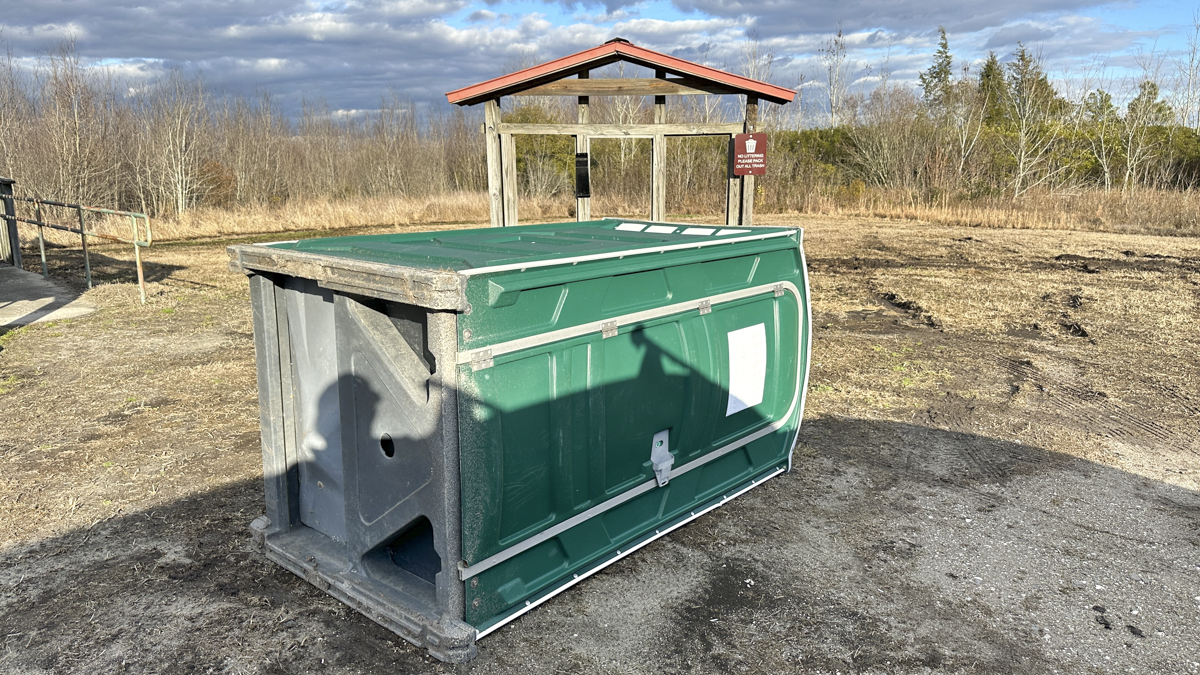
-Was this bear or human mischief? (click photos to enlarge)
I later learned from staff that, unfortunately, it had been a human pushing it over with his truck (the person has not yet been caught). Surprisingly, it was in its proper position the next day when we returned (set up and cleaned by the company that supplies these I was told).
In spite of my concerns about the issues facing the refuge, the wildlife was able to remind me of why I love this place so much. I didn’t take a lot of photos but here are a few highlights from our day in the field at Pungo.
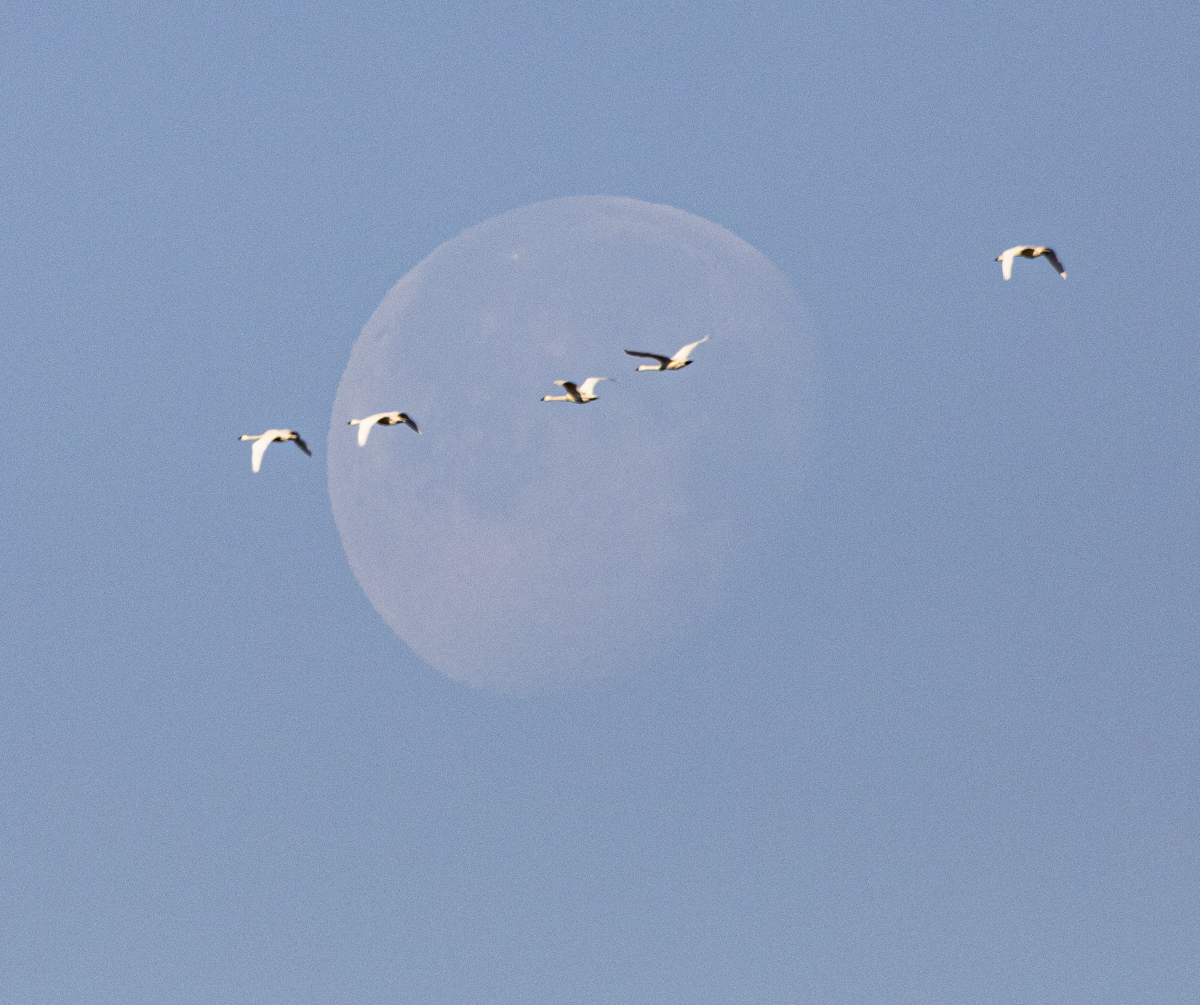
-Tundra Swans flying off the refuge to feed as the moon sets Saturday morning

-Tundra Swans on Pungo Lake. The strong south wind had them piling up on the south shore where it was more protected.
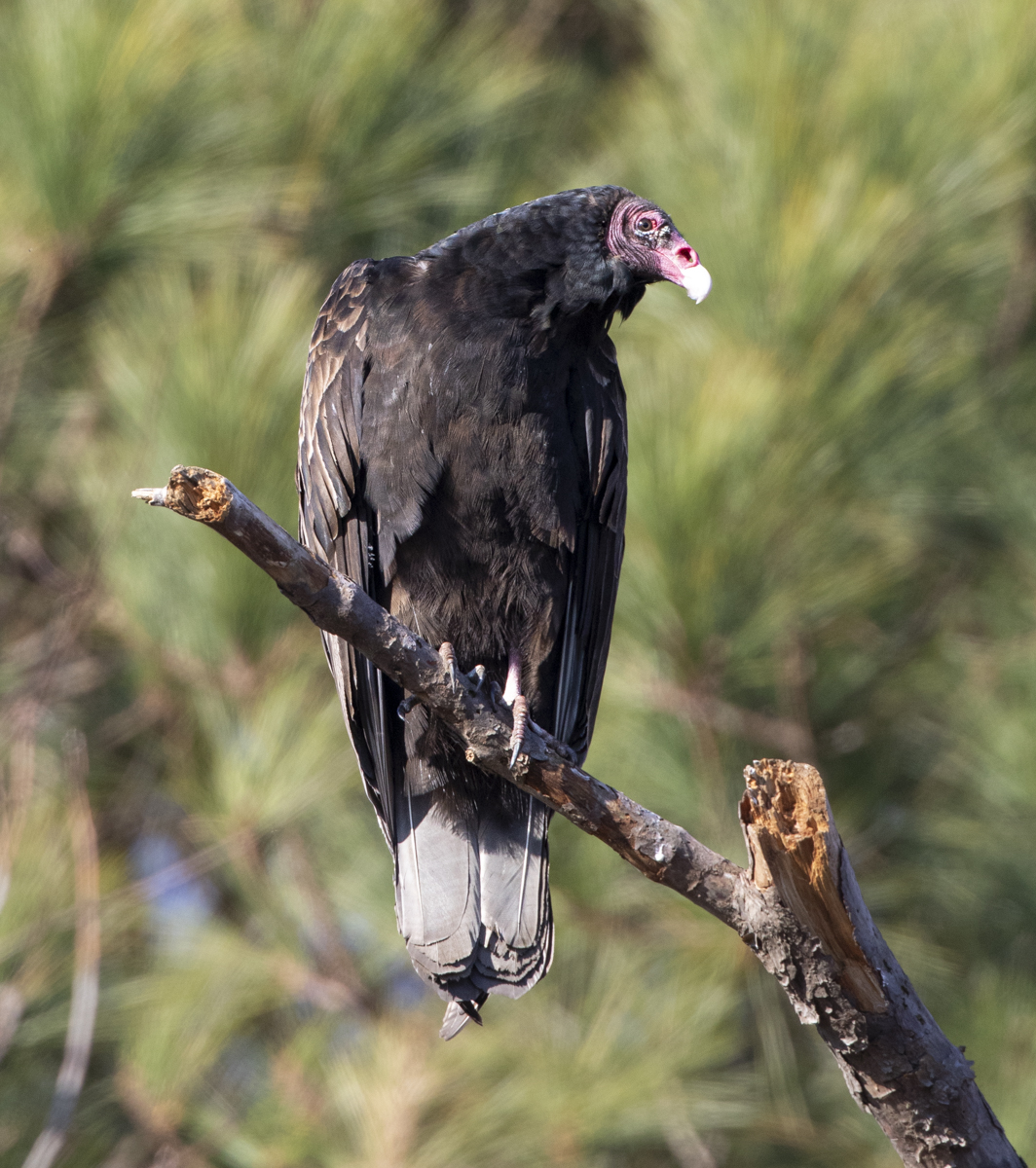
-A Turkey Vulture peers at me as I walked along “pishing” for birds in the thick roadside vegetation (making a repeated pish noise that imitates the alarm call of several songbirds – this often causes nearby birds to reveal themselves as they try to see what is going on).
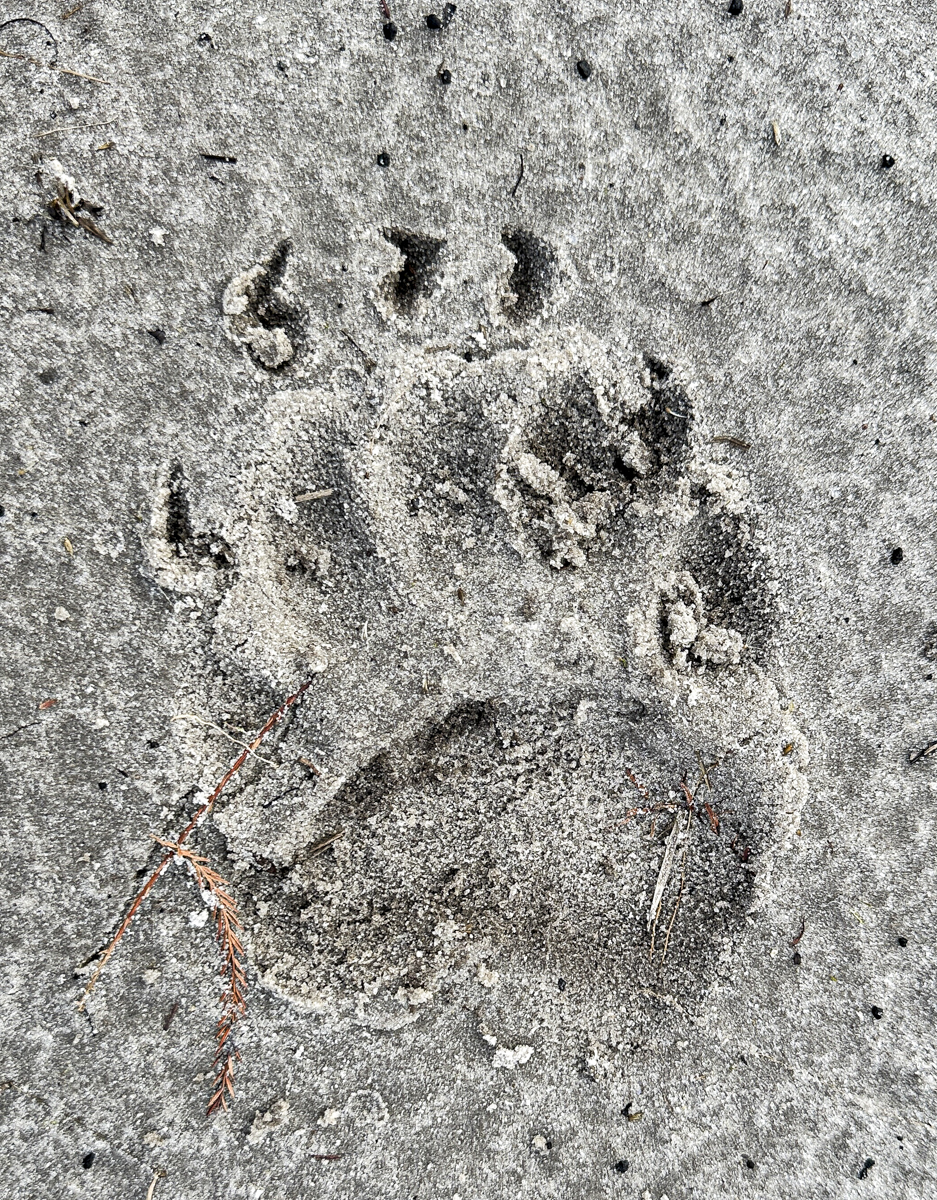
-We found some great tracks in the sandy and muddy soils along the roads – bear, otter, bobcat, raccoon, canid (red wolf or coyote), and plenty of deer tracks. This is a nice front paw print of a black bear

-Although it is a bird count, I always stop to enjoy the other critters we come across (we saw three bears, one otter, and several deer). Melissa spotted this young black bear trotting toward us along one of the roads. I stopped the truck and it kept coming until, finally, it saw us and slowly turned around. Then another car came from the opposite direction and the little guy decided to head into the swamp. We watched as it swam across two open bodies of water and finally disappeared into the flooded forest.
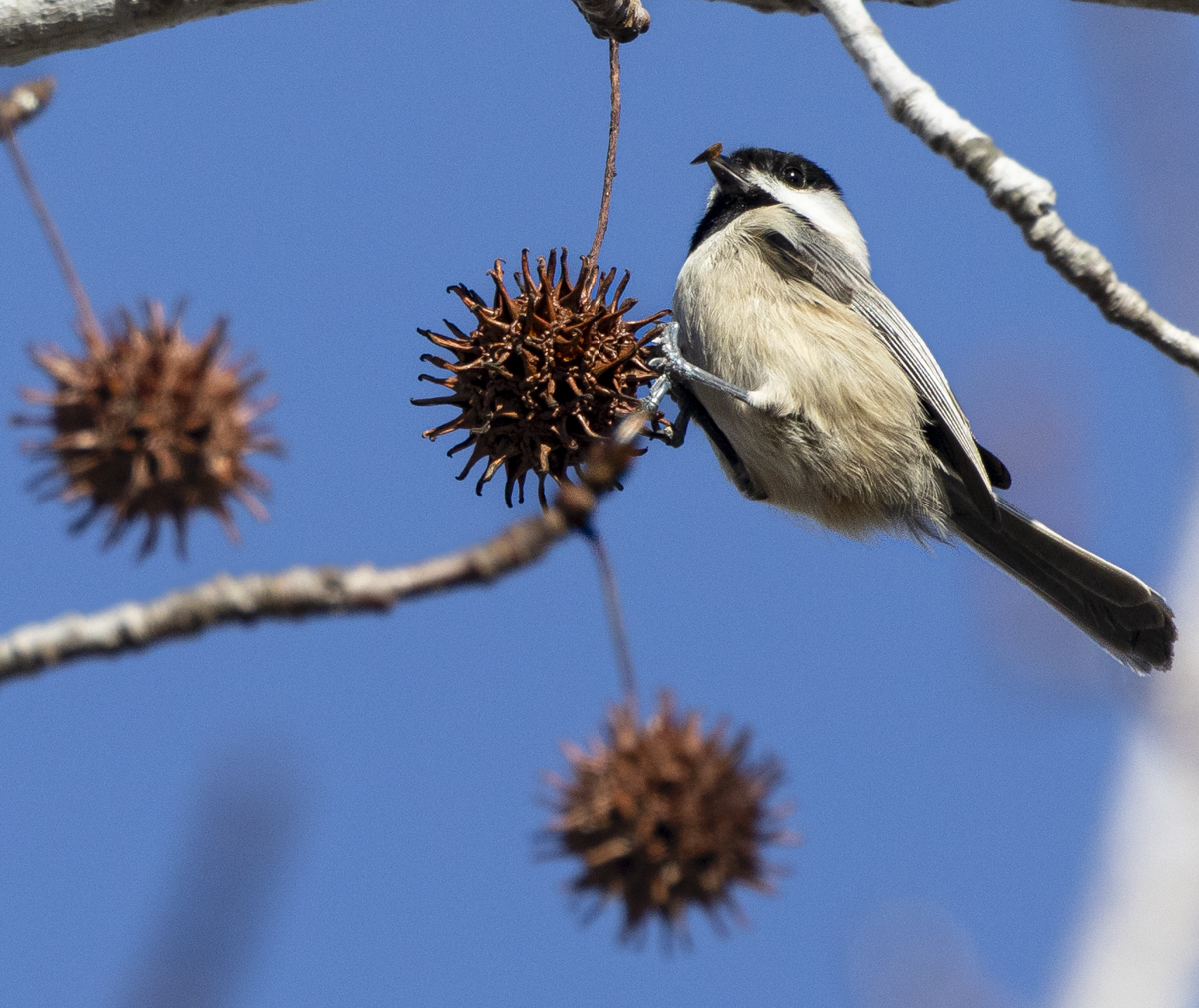
-While driving slowly along in the afternoon, I heard some chickadees calling (hearing aids are a wonderful thing). We stopped and got out as they were feeding on the seeds of Sweet Gum (as were some Red-winged and a few Rusty Blackbirds). There are one or two small seeds in every hole in a Sweet Gum ball and several species of birds utilize these as a winter food source. I have always wanted a photo of this behavior so we started following these busy birds around as they flitted from branch to branch extracting seeds and picking at them to eat. You can see a seed in this one’s beak.
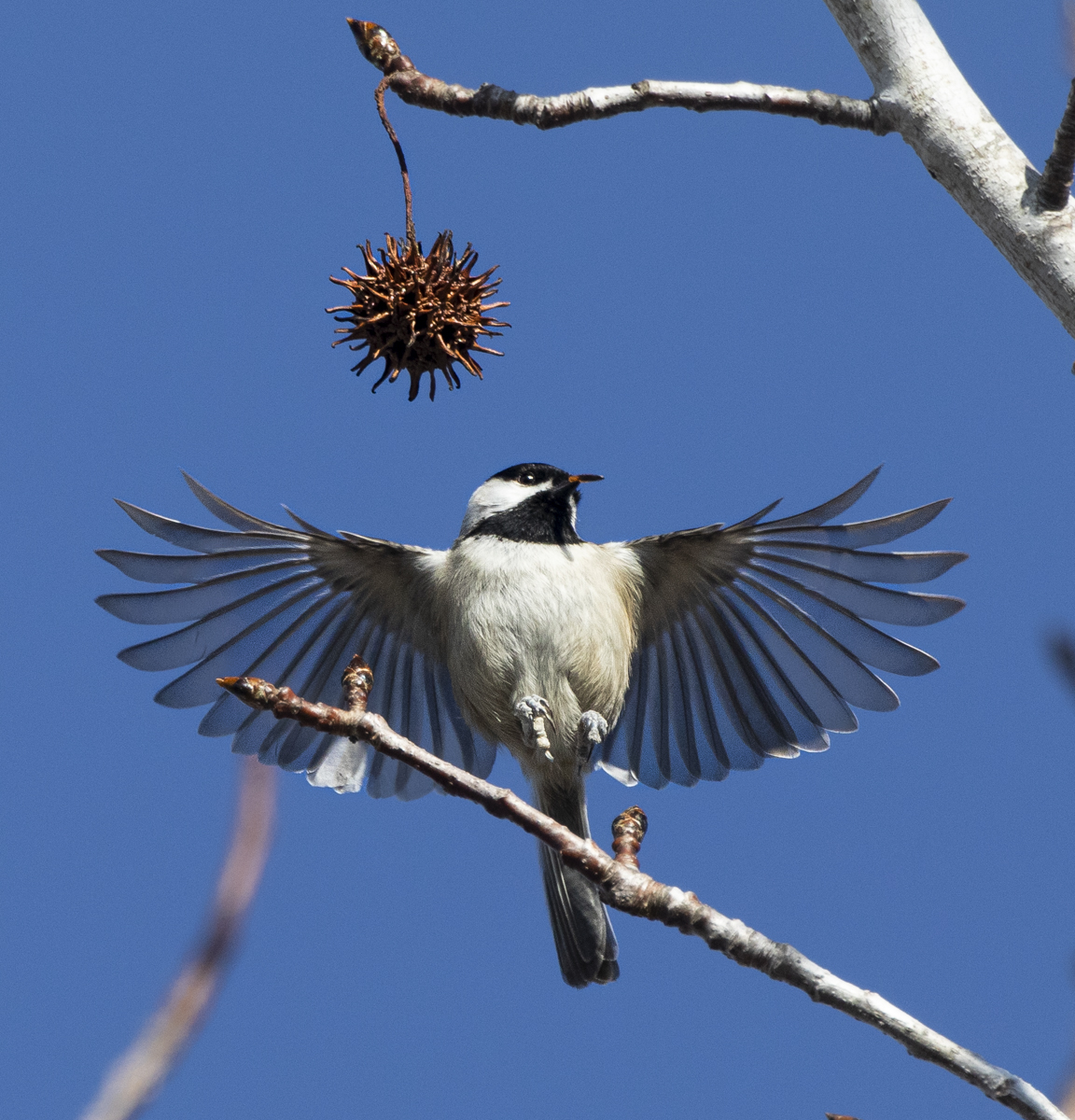
-They often grabbed a seed while hanging on one of the gum balls and then would fly to a nearby branch to feed on it.
The wildlife highlight of the day was when Melissa spotted (yes, she spots more things now than I do) an American Bittern in a roadside canal. It was on her side of the vehicle (she claims this a rarity and that I always have the wildlife on my side to photograph:). She took lots of photos and several video clips as it patiently made its way along the shoreline.
–An American Bittern slowly moves into position for a strike (video by Melissa Dowland)
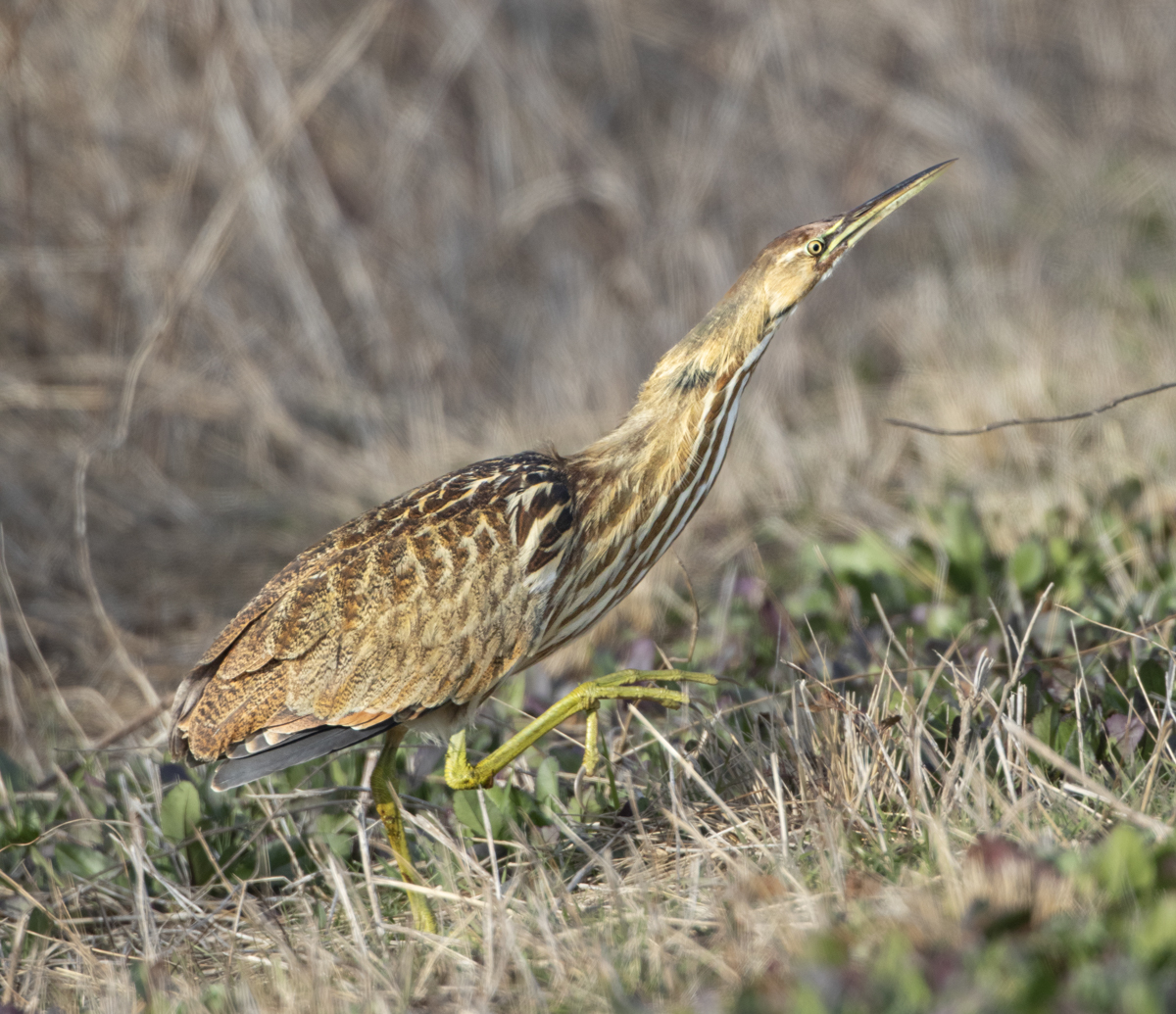
– Finally, the bittern flew to a closer side of the canal and started walking across the road where I managed this pic.

-It disappeared into the tall grass and then came back out, looking much like the dried vegetation that surrounded it. These birds are simply beautiful, and those eyes!!
All in all, a wonderful day. Here are our results for the Pungo Unit portion of the count as reported on eBird:
2500 Snow Goose — This is actually few snow geese for this count! There was one flock on Pungo Lake.
100 Canada Goose
10000 Tundra Swan — This is typical to low for this location at this count.
80 Wood Duck
20 Northern Shoveler
212 Gadwall — Large mixed flock on the Pungo Lake with scope
803 American Wigeon — Large mixed flock on Pungo Lake
25 Mallard
21 American Black Duck
840 Northern Pintail — Large mixed flock on Pungo Lake
1520 Green-winged Teal — Large flock on Pungo Lake both sitting and then in flight.
2 Bufflehead
12 Hooded Merganser
1 Pied-billed Grebe
73 Mourning Dove
65 Killdeer
3 Bonaparte’s Gull
500 Ring-billed Gull
1 Double-crested Cormorant
1 American Bittern
3 Great Blue Heron
25 Turkey Vulture
9 Northern Harrier
1 Cooper’s Hawk
6 Bald Eagle
2 Great Horned Owl
3 Red-bellied Woodpecker
2 Downy Woodpecker
5 Northern Flicker
1 American Kestrel
5 Eastern Phoebe
1 Blue-headed Vireo
9 Blue Jay
8 American Crow
3 Carolina Chickadee
3 Tufted Titmouse
4 Ruby-crowned Kinglet
3 Golden-crowned Kinglet
1 Winter Wren
4 Carolina Wren
12 European Starling
1 Brown Thrasher
1 Northern Mockingbird
252 American Robin
20 American Pipit
50 White-throated Sparrow
4 Savannah Sparrow
43 Song Sparrow
60 Swamp Sparrow
8 Eastern Towhee
19 Eastern Meadowlark
1600 Red-winged Blackbird
1 Brown-headed Cowbird
2 Rusty Blackbird
20 Common Grackle
20 Yellow-rumped Warbler
3 Northern Cardinal
Total number of species – 57.
Results for the entire count circle included a total of 106 species, which is about average for this count.
I’ll get back to blogging about our Africa trip next time.


 Roads End Naturalist
Leave a comment