
You cannot leave Africa, Africa said. It is always with you, there inside your head.
~Bridget Dore
Well, I’m finally getting back to continue the story of our November trip to South Africa. In the first blog post, I covered our first few days after arriving in Johannesburg and traveling to Kruger National Park. This post covers our last couple of days in Kruger. I’ll try to wrap up the highlights of this amazing trip in the near future. We traveled with our friend and guide, Andrew Torlage, who is from South Africa and now lives in Hillsborough. I want to thank him again for arranging this incredible tour of his homeland and sharing its many wonders. Several of you asked about how to learn more about the trips Andrew offers. His website is now up (https://vakashaafrica.com/ ) and he is offering two other trips this coming year (you may recognize some of the people and wildlife in the pictures as many are from our inaugural trip last year). One trip is basically a repeat of our tour. The other is for the more adventure-minded traveler. That one will visit a few of the same places we saw but will include some camping and more walks in the bush with wildlife. It will also venture further afield to some other great locations. If the adventure package appeals to you (it looks fantastic), he is offering it at an introductory price below what is listed on the website, just $2799 per person. Contact Andrew for additional information. I highly recommend it.
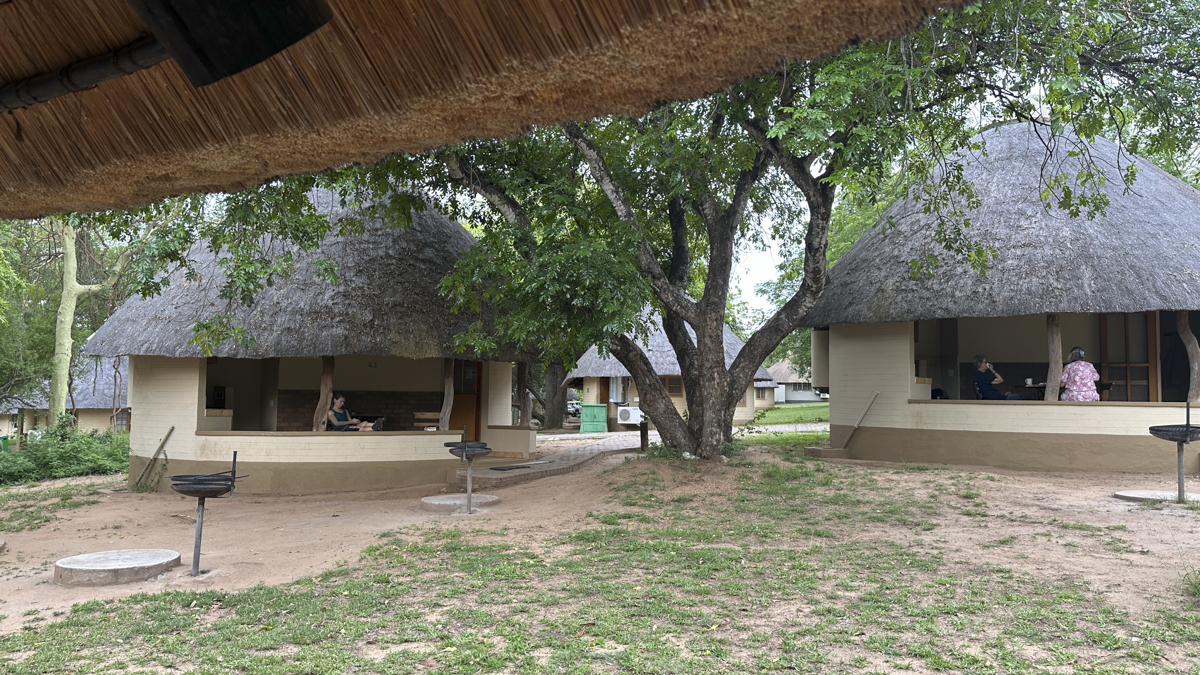
Now, back to our trip. After two nights at Berg-en-Dal, we drove over an hour to our next lodging – Skakuza Rest Camp situated along the Sabie River. Our accommodations were in thatched-roof round huts called rondavels. We had an ambitious schedule with a night game drive our first night, followed by an early start for a guided bush walk the next morning. I had read about the possibility of seeing fruit bats roosting under the eaves of some of the buildings at this camp, so when we arrived, a few of us started looking and soon discovered a large bat hanging upside down on the edge of the roof of the restaurant.

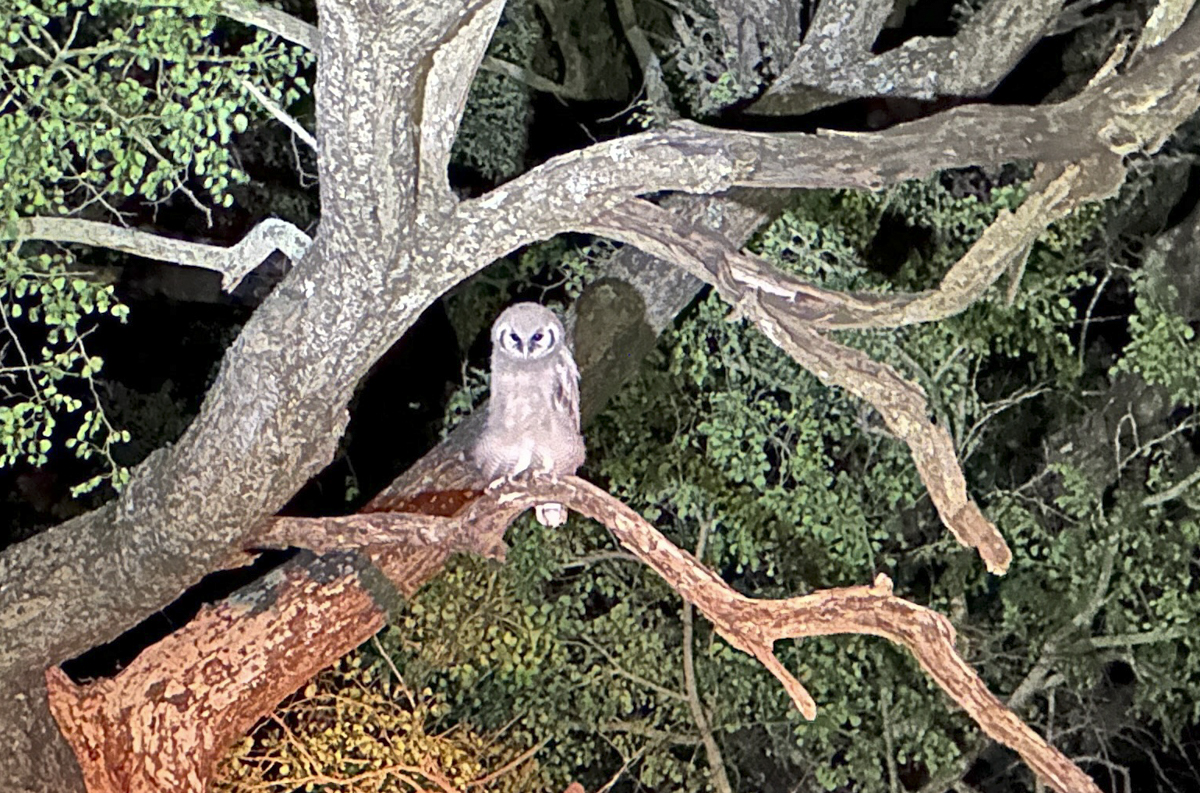
The night game drive was fascinating although I do believe we saw almost as much night life on the afternoon game drives as they usually ended after dark (except there were definitely more hippos out later as they leave the water to feed after sundown). The highlight for me on this drive was seeing a large owl, a Verreaux’s Eagle Owl, which can take prey as large as monkeys.
The morning bush walk came a bit early (we met at 4:30 am) after the late night game drive, but we all were stoked about this walk into the bush with gun-toting rangers. There is a maximum limit of 8 tourists allowed on these hikes, so, our guide, Andrew, had to sit this one out.
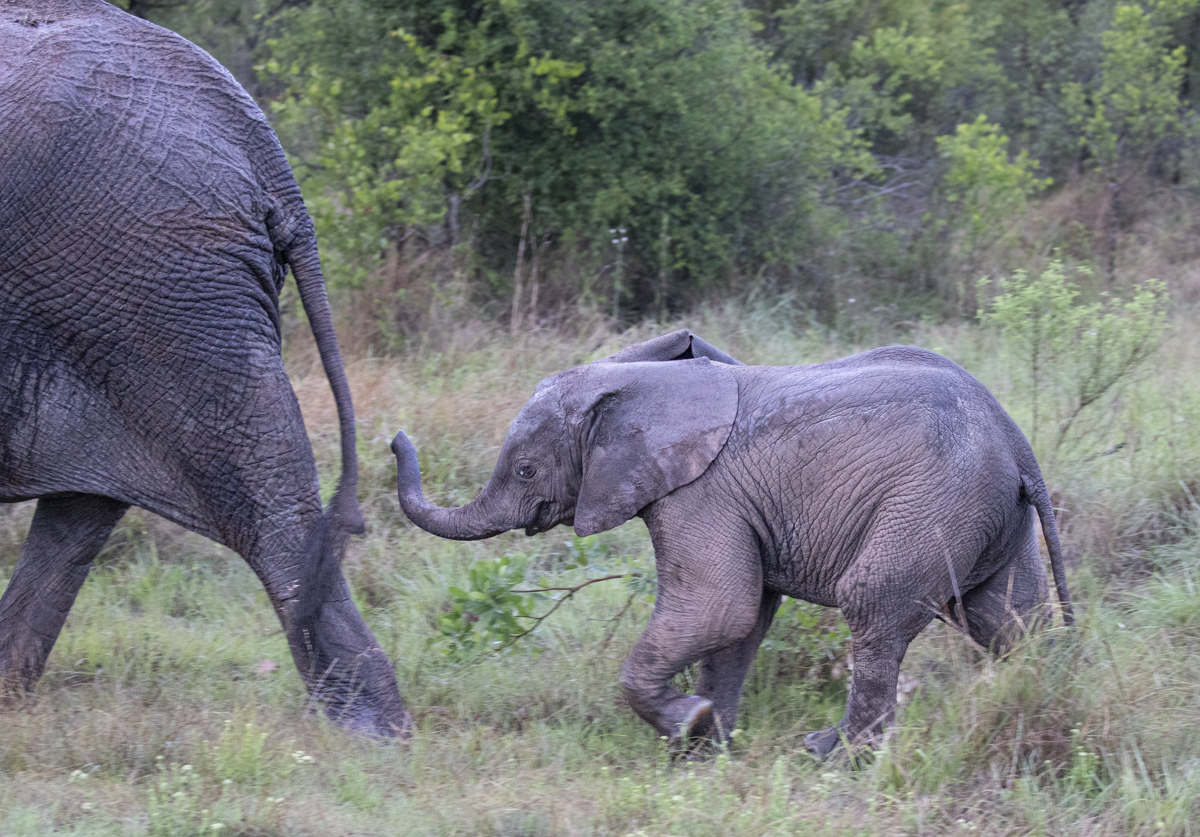
On the drive to the bush walk site, we experienced the African equivalent to the many bison jams we have n Yellowstone, only bigger – an elephant jam. A small herd of elephants decided to come out next to and into the road and take their time meandering through the bush. One baby elephant was incredibly cute as it tossed and retrieved a stick as it walked.
–An elephant feeding on shrub vegetation alongside the road
When we finally reached our destination, we had two Kruger rangers with rifles as our leaders. Oddly, they both walked at the front of the single file line of us hikers. I was next to last and turned to the person behind me and said, “good luck”. We walked at a brisk pace but made frequent stops to hear about the plants and animals along the trail. Early into the hike, we encountered hyena tracks, and then lion tracks.
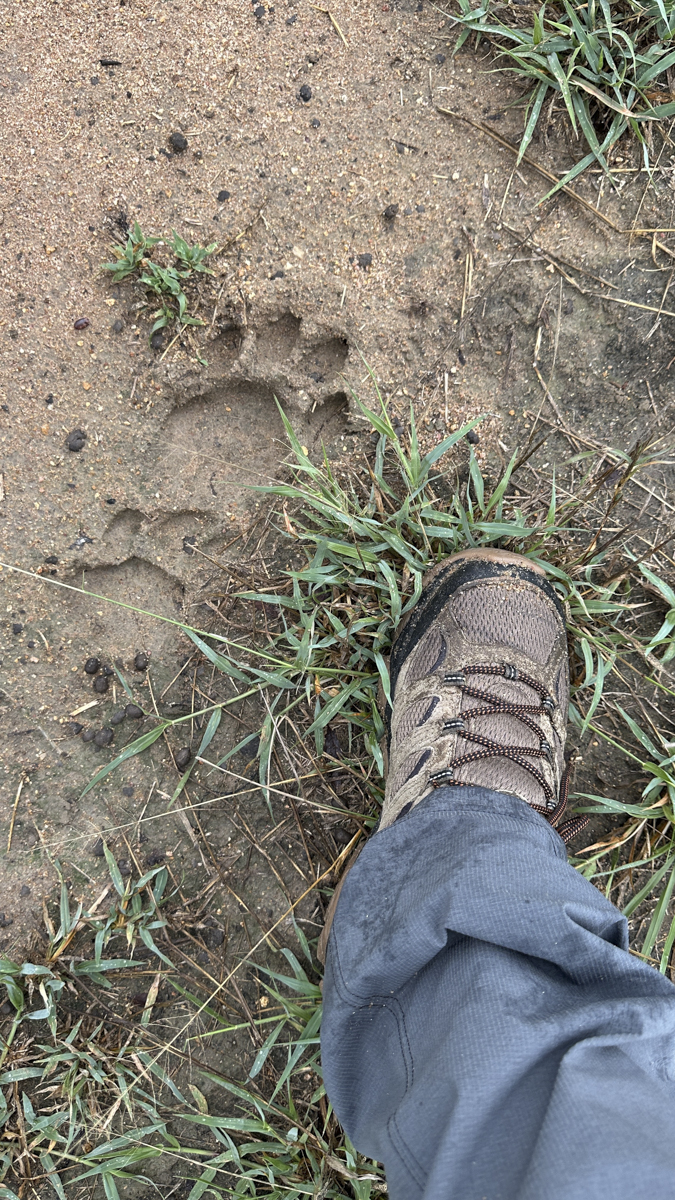
Shorty afterward, the lead guide spotted a male lion about 50 yards out, lying down and blending in to the bush very well. He whispered some information to us and then, to our surprise, said, “let’s get closer”. We walked about 5 yards and the lion stood up and ran off. We all (including the guides) were very excited with this encounter.
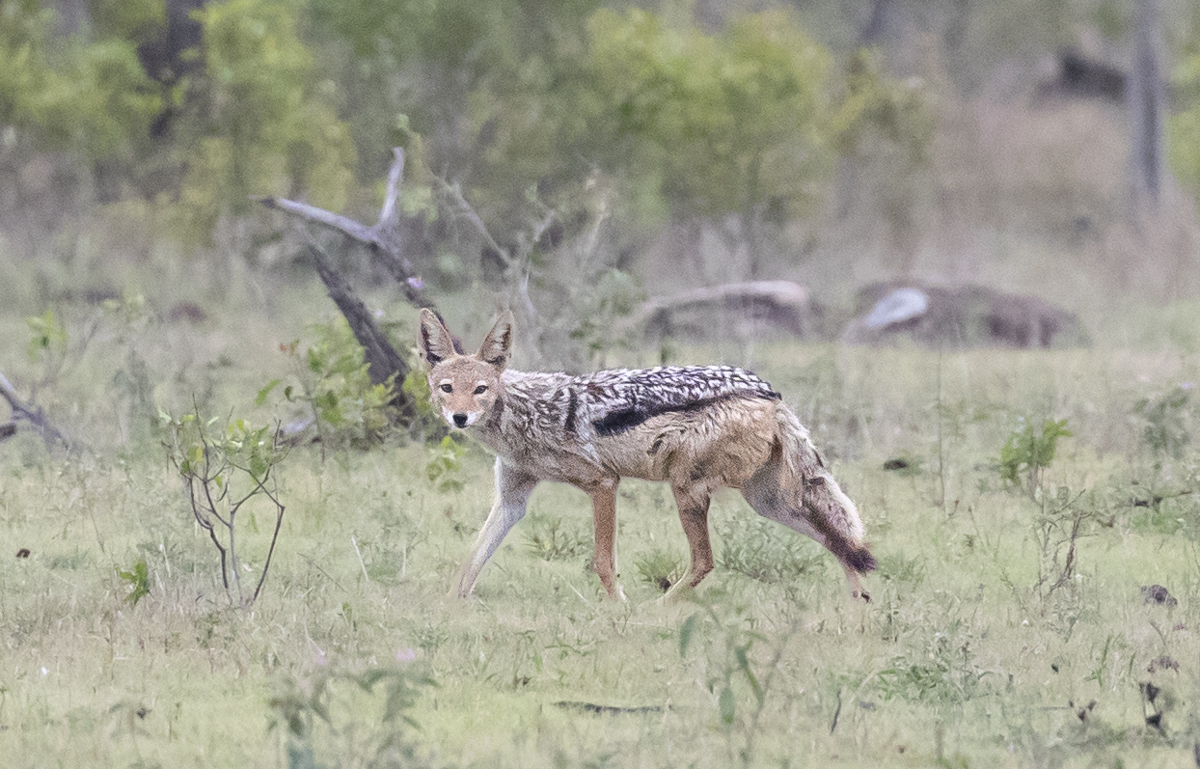
At a lunch break, a Black-backed Jackal trotted back and forth across an open grassy area, occasionally pausing to glance our way. It reminded me of the Coyotes I see in Yellowstone.
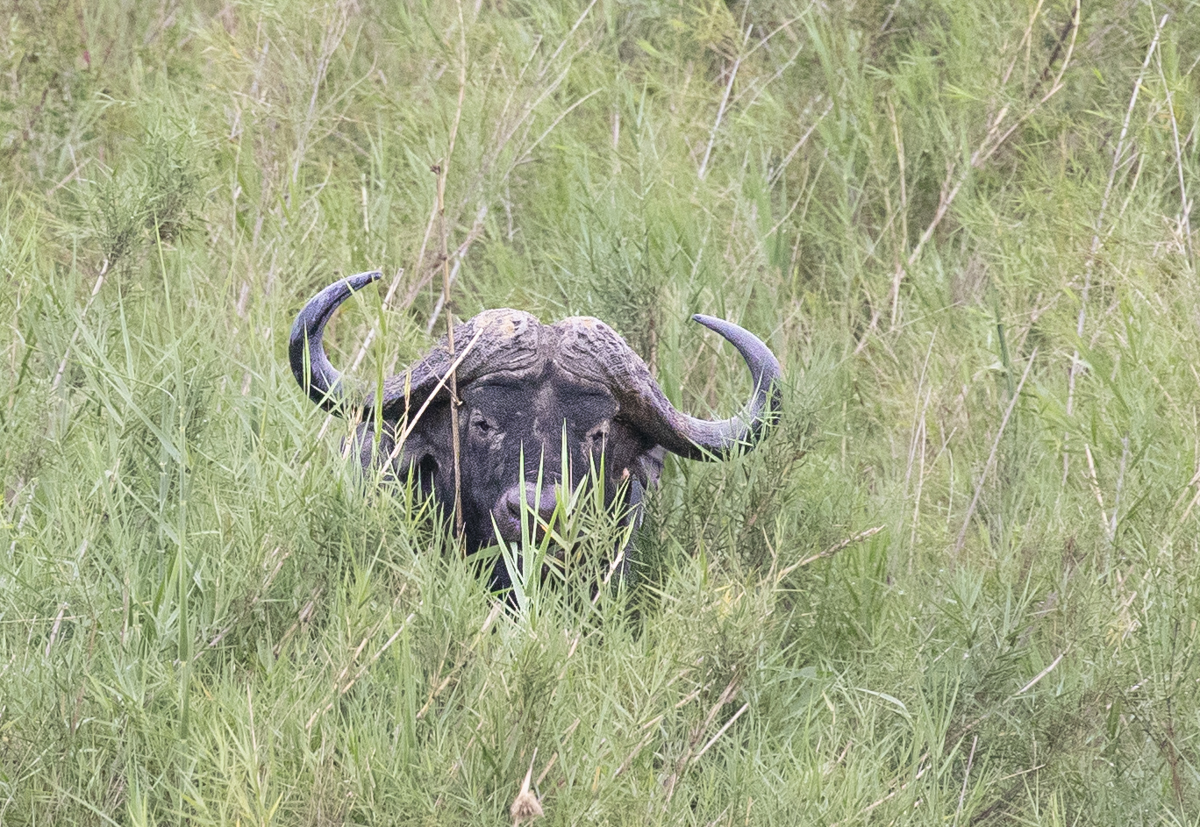
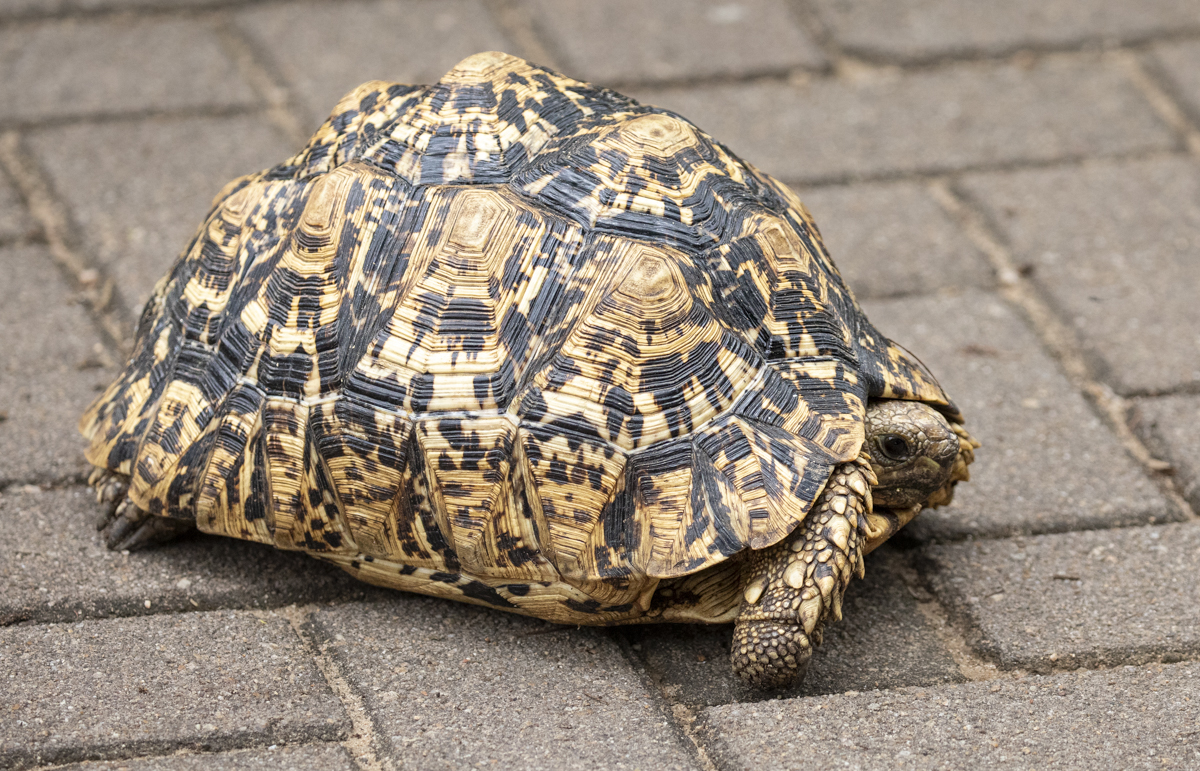
On our return to camp, we had a nice lunch at the cafe on the river. As is often the case in Kruger, our meal was interrupted several times by wildlife sightings (and wildlife thinking they might get some of our food).


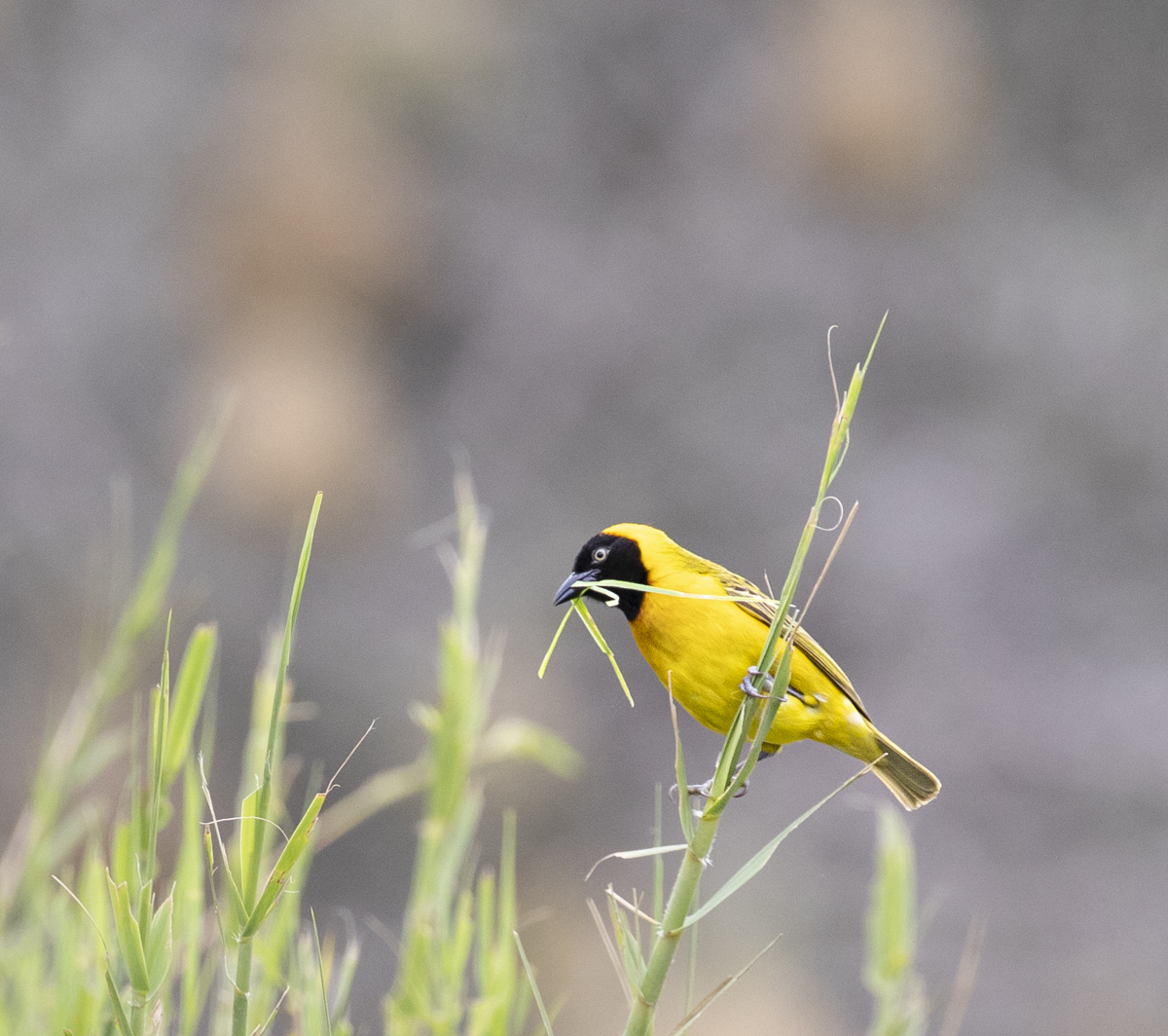
That afternoon we headed to another hide for some wildlife watching. It was on a large pond full of hippos and birds.


The drive back to our lodging had plenty more wildlife sightings. Another elephant group near the road was among the many highlights.


It had been a productive few days in Kruger National Park. But the next day we were to head out on a new adventure traveling across South Africa toward the coast. I’ll try to get some more posts on this amazing trip in the coming weeks.


 Roads End Naturalist
Leave a comment