
For a scavenger, patience is the key to the pantry.
~Delia Owens
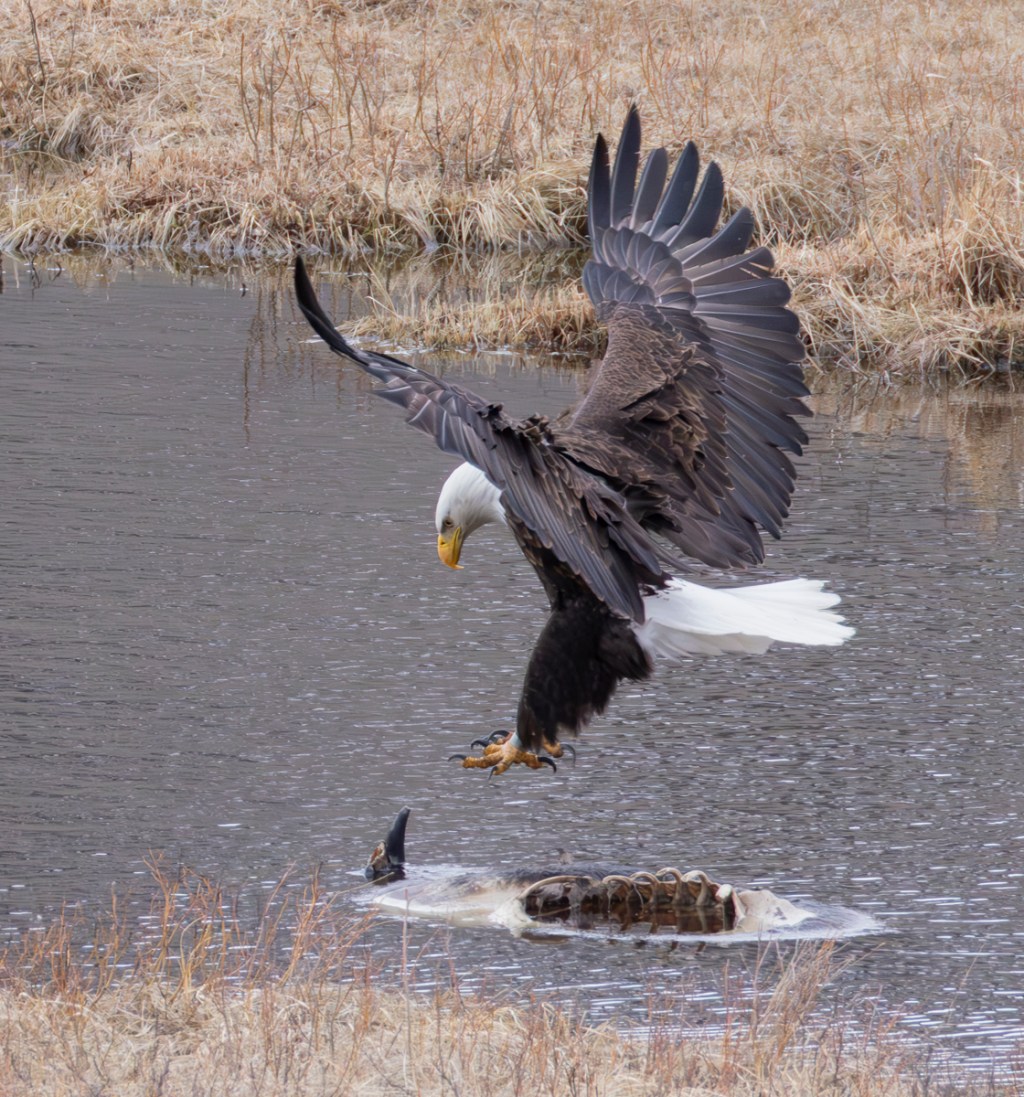
Every winter, one or more bison drown in the Blacktail Ponds area when they break through the ice. If the carcass is away from the shore, eagles and ravens can land on it and try to feed but the hide is so tough that it takes things with teeth (like coyotes, wolves, bears) to break through. The carcass shown below has been floating in this small pool for some time now and I have seen coyotes looking longingly at it from the bank but I haven’t seen any on it (though eagles and ravens have landed on it and the ribs are exposed so maybe something has been able to pull away at some of the meat).
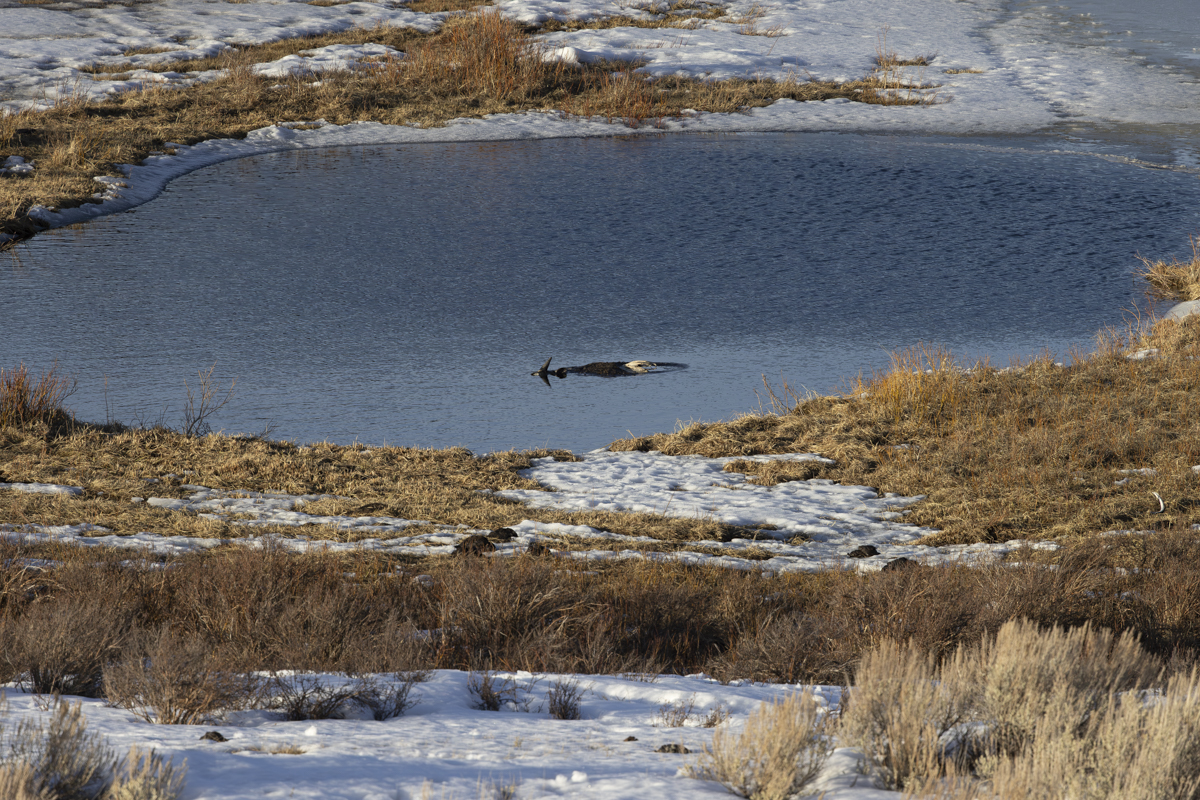
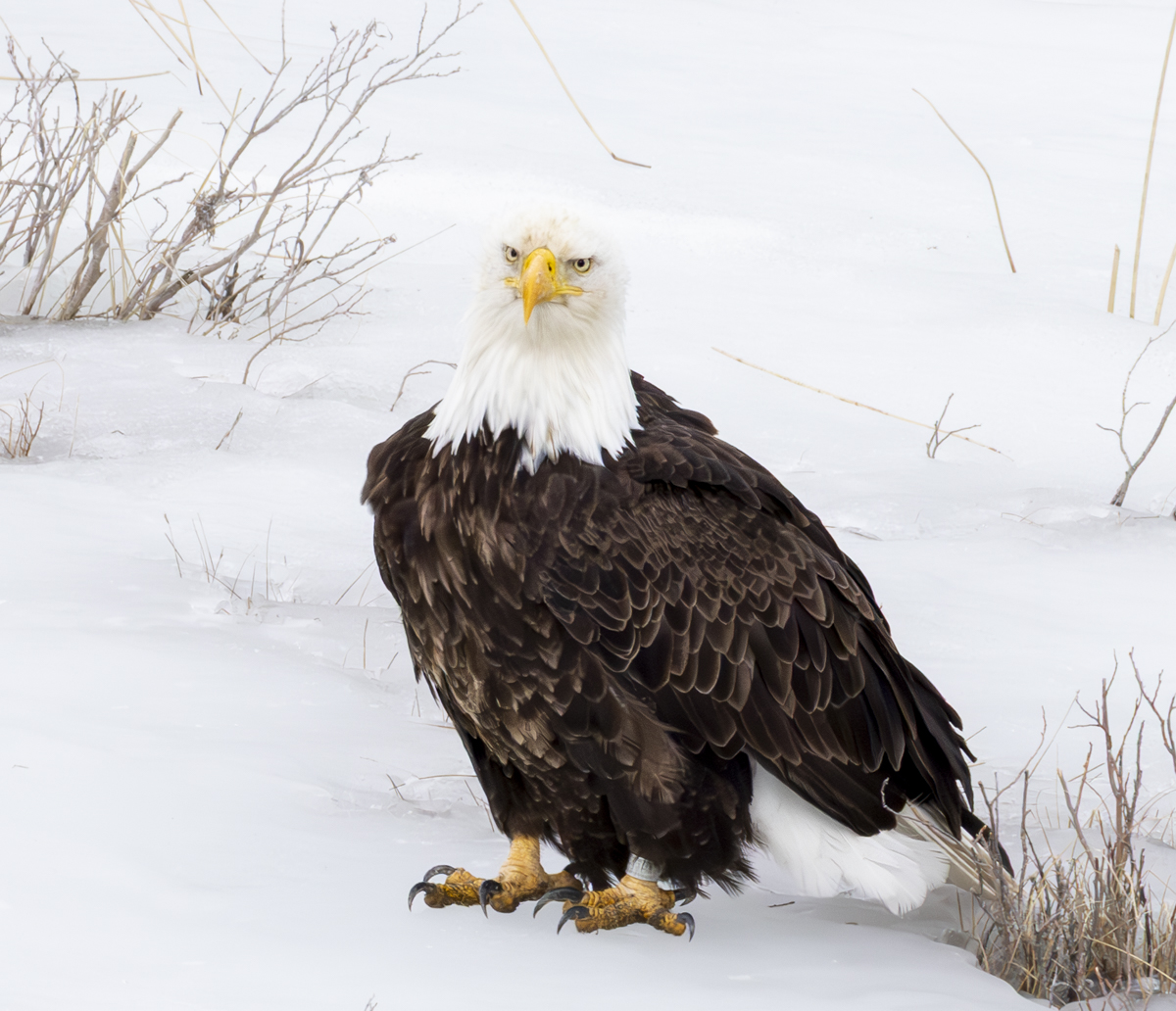
A few days ago I drove into the park and saw a couple of cars at a pullout close to the carcass so I pulled in. The first thing I saw was an adult bald eagle sitting several yards away with that typical eagle “I’m mad at something” look in its eyes.
Soon, a coyote appeared and one of the folks standing nearby told me that the eagle and coyote were “fighting” near a small water hole right before I drove up (that may explain that look in the eagle’s eyes). Bald eagles are generally displaced from a carcass by a coyote, but there may be a disagreement or two before that happens. There were also several magpies and a few ravens at the water-filled hole that was many yards away from the floating bison carcass.
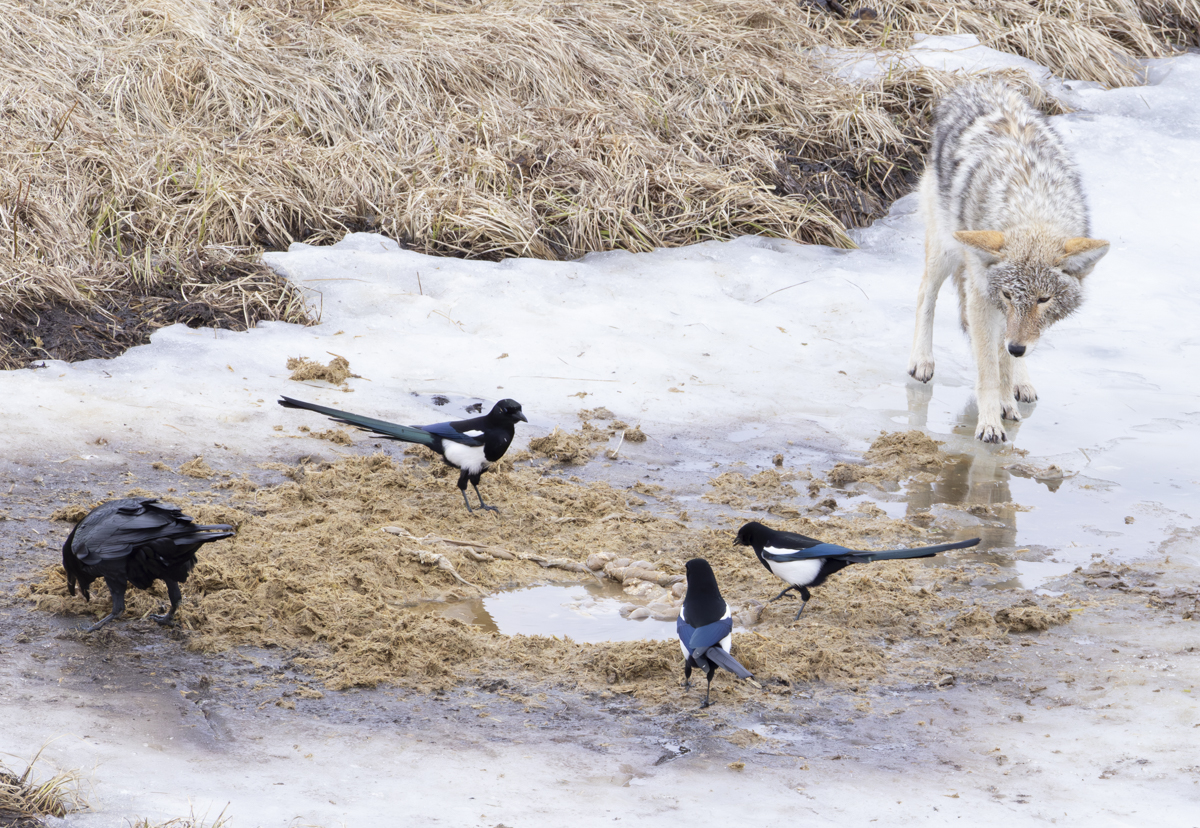
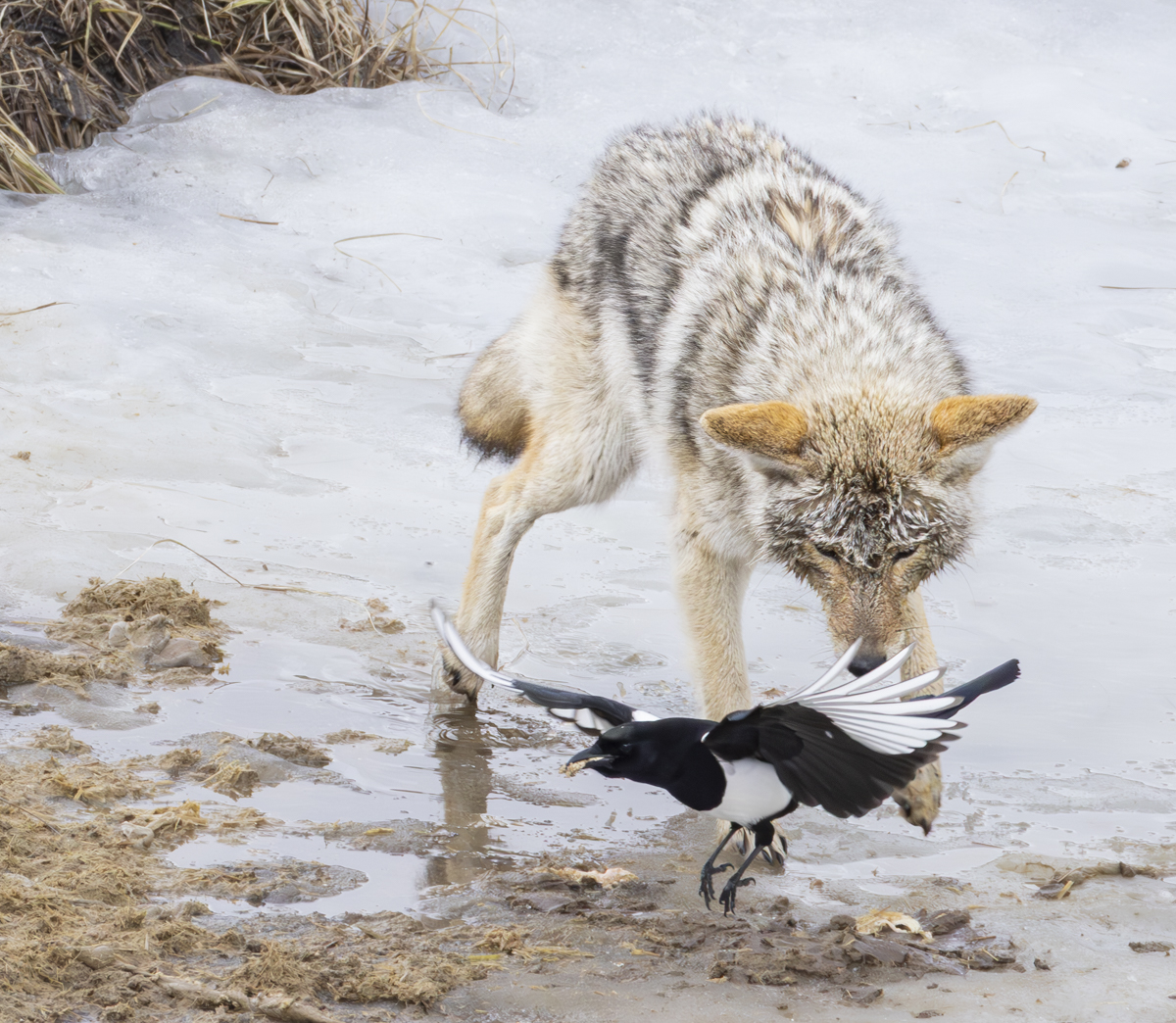
As I watched, the coyote went up to the hole and dunked his head down into the icy water! What is going on here?
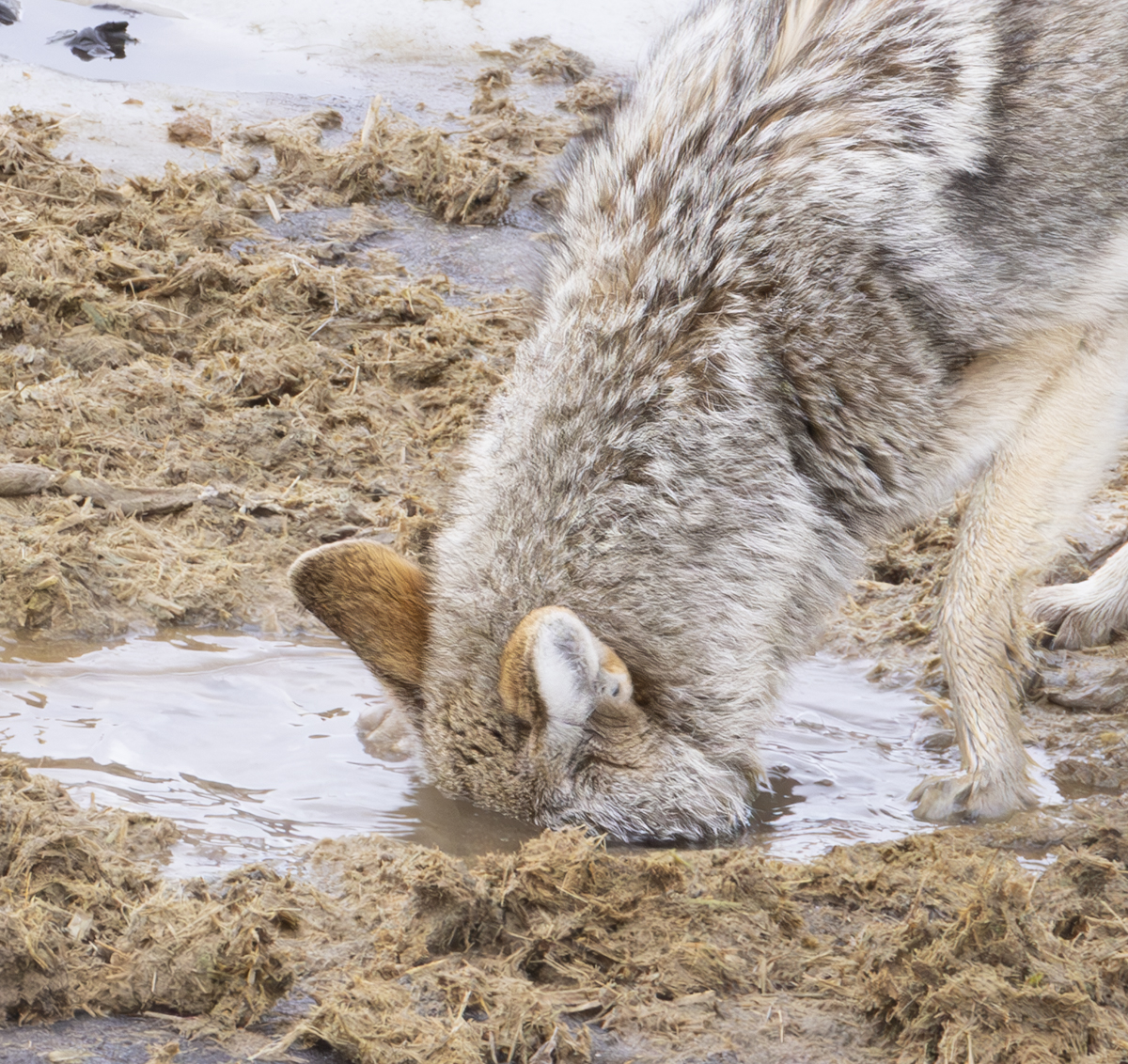
He pulls out a long stringy object that I realized was the intestines of a creature (probably a bison). But I did wonder how it got over to this spot (and under water) if it was from the floating carcass many yards away.
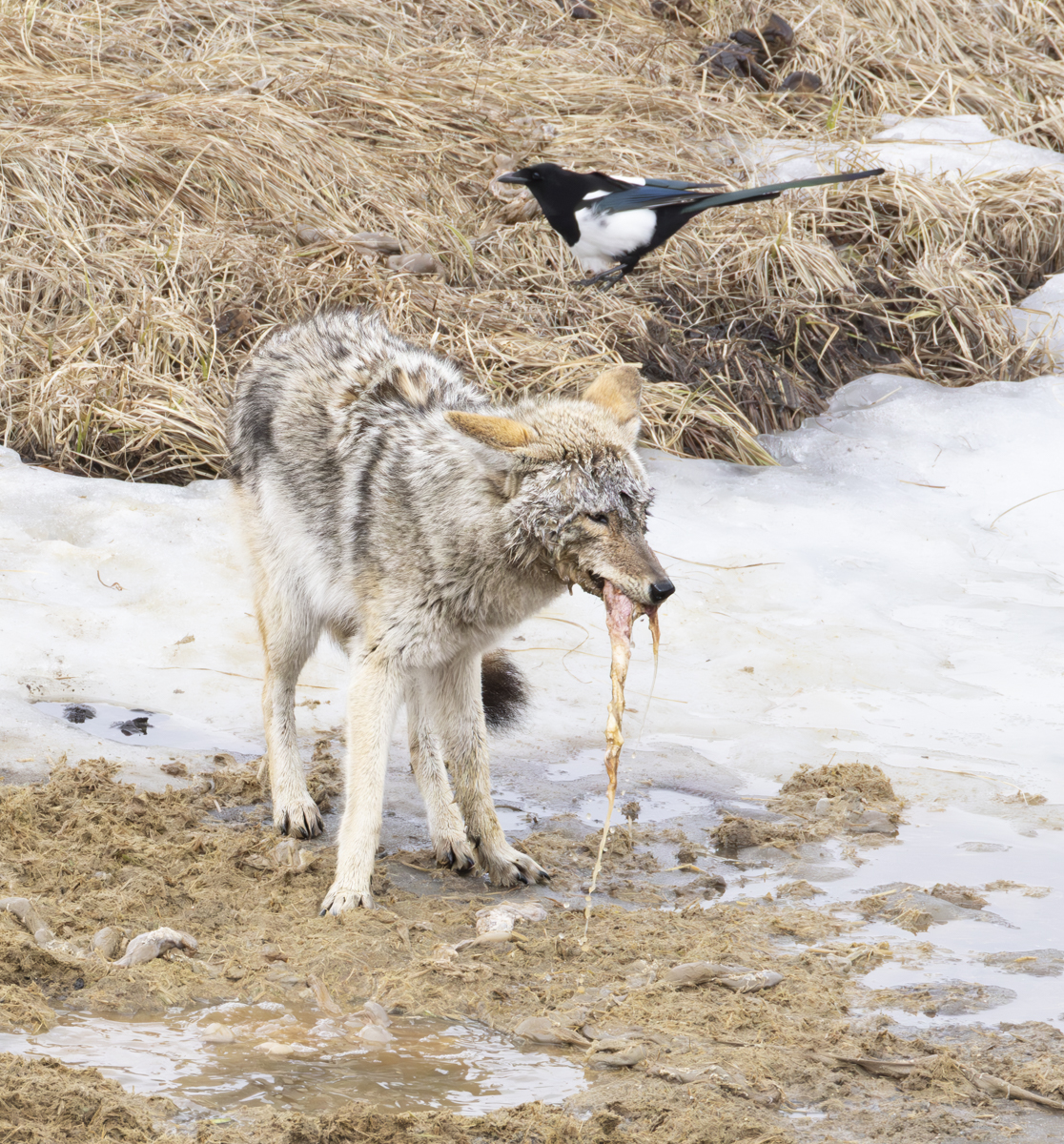
This next clip is not for the squeamish I suppose. It shows the coyote pulling out some more of the internal organs of a carcass as magpies and a raven continue to pick at the leftovers. Notice the circular patch of dried “grass” that surrounds this small water hole. That is probably the contents of the deceased animals’ rumen (one of the four chambers of the stomach of grazers like bison – ruminants). Melissa and I discussed the oddity of the distance of this pile of “goodies” so far from the floating carcass. Did something manage to get the organs out of the carcass and carry it here? Or is this from another bison carcass that is submerged beneath the ice layer but that has this hole that gives critters access? However it happened, this coyote was doing a bunch of head dunks to pull out whatever it could to eat as other scavengers looked on (and grabbed some for themselves).
–The coyote doing a head dunk to pull up some lunch
I sat here for over an hour and a half watching this play out. The wind was fierce so I stayed close to the truck to shield myself and the camera from the gusts as much as possible. After many head dunks, the coyote walked off about 40 feet and laid down. The bald eagle then started walking toward the carcass. But the coyote was having none of that and got up and positioned itself between the incoming eagle and the hole. The coyote then resumed “bobbing for guts” as the eagle looked on.
–The coyote and eagle in a standoff
But the eagle was not to be outdone. When the coyote stepped away at one point to chew on its snack, the eagle swooped in and grabbed a section of the intestines and flew off landing several hundred feet away to pick at the remains in peace.
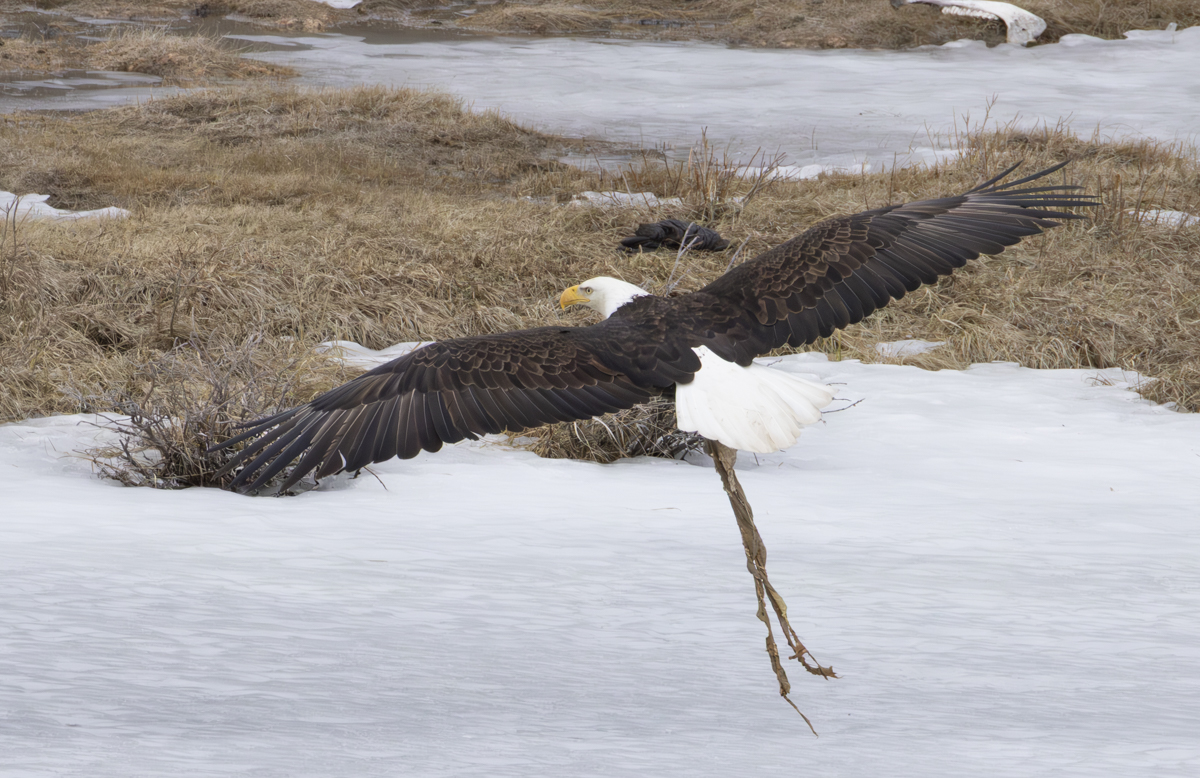
After several more head dunks, the coyote seemed satiated, but perhaps unhappy with its appearance (and maybe smell). So, he started rubbing his head and neck on nearby shrubs to rid himself of any unpleasant residue. It seemed as though only certain shrubs would do as he would walk along rubbing on some and rejecting others.
==The coyote seeks out some shrubs to rub off the grime and smell of his lunch
The eagle took off and flew around the area spooking a group of mallards that had been in a small section of open water on a larger pond. It finally headed back to the floating carcass and landed.
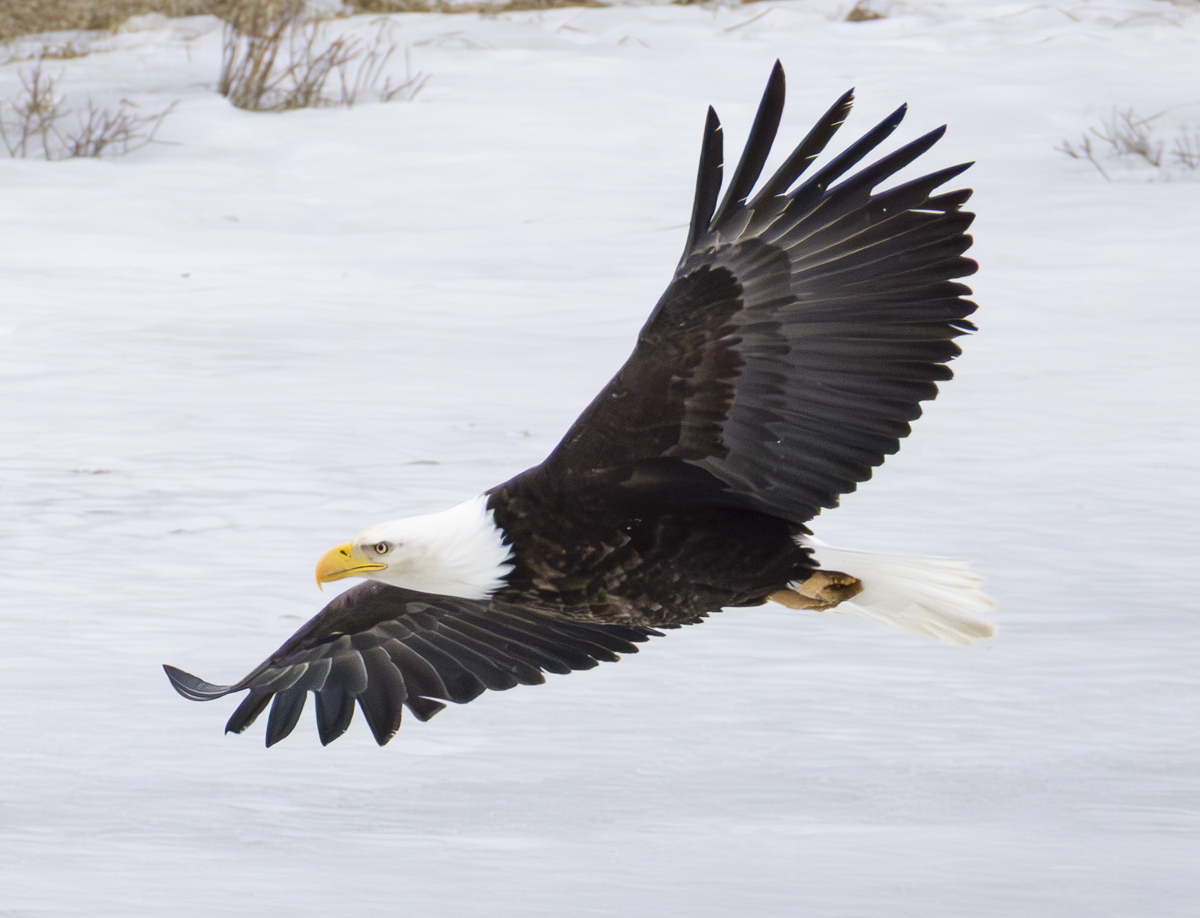
The eagle flies toward the floating carcass
That eagle only stayed a short time before flying off to the far shore of the pond. Another adult eagle came in and headed straight for the floating carcass while the first eagle sat and watched what I assume was its mate. A third bald eagle, a juvenile, soared overhead shortly after the arrival of the second adult, but never came in to the site.
–A second bald eagle flies onto the carcass (slow motion)
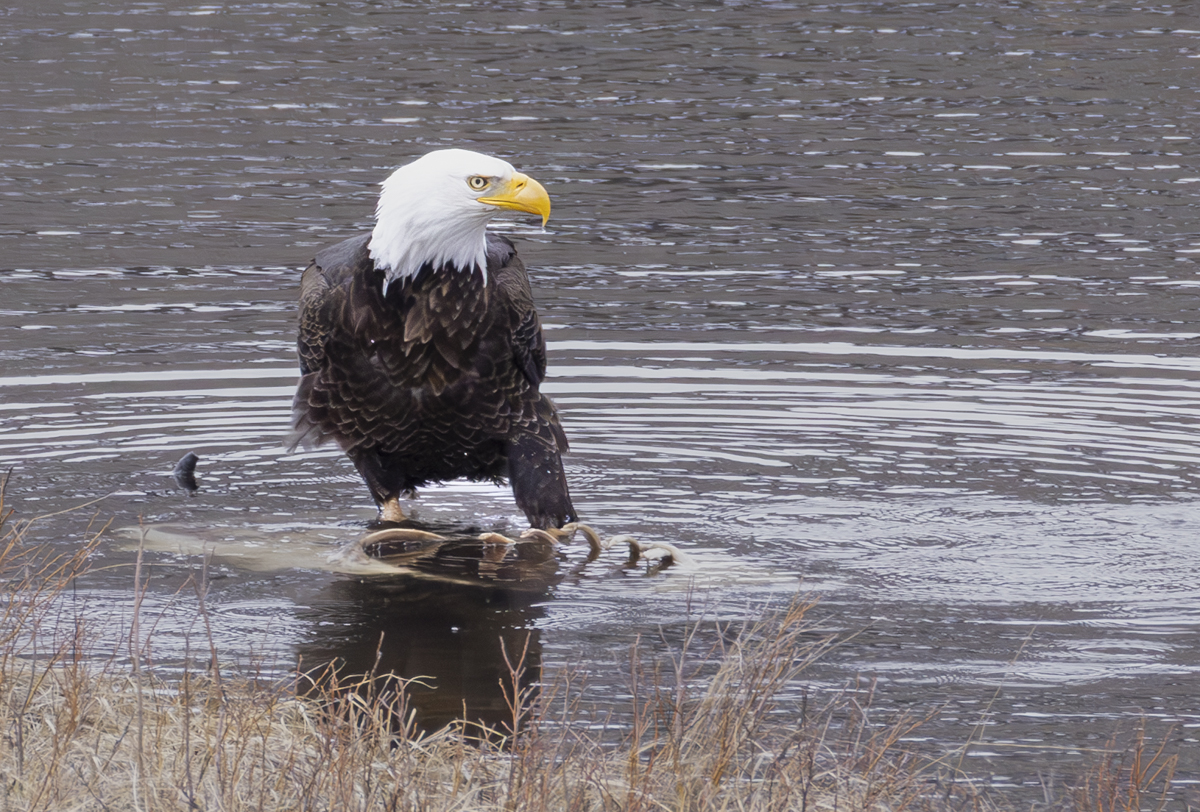
The second eagle started tugging at the skin and even plunged its head underwater several times to search for available meat. But I never saw it come away with anything edible.
–An eagle pulling at the carcass trying to get a morsel
I finally headed home with the second eagle still on the carcass and its mate watching, perhaps knowing they would both need to wait for an awakening grizzly to come and pull the bison out of the water before they would get much else from this carcass.

 Roads End Naturalist
Leave a comment