
Whereas, the Dogwood is a radiantly beautiful flower which grows abundantly in all parts of the State; and
Whereas, there is a great demand from all parts of the State that this Legislature adopt an official flower; Now, therefore,
The General Assembly of North Carolina do enact:
That the Dogwood be, and it is hereby, adopted as the official flower of the State of North Carolina.
In the General Assembly read three times and ratified, this the 15th day of March, 1941.
~H.B. 609, 1941
Most people are familiar with the flowering dogwood tree. Not only does it grow fairly abundantly in the wild, but it’s also frequently used in landscaping because of its beautiful white springtime blooms. It’s our state flower here in North Carolina, and also in Virginia (where it is both the state flower and the state tree). It’s the state tree in Missouri and the state memorial tree in New Jersey as well. While Virginia, Missouri, and New Jersey all specify that they’re referring to the flowering dogwood (Cornus florida), North Carolina does not. But reading the declaration by the General Assembly, I’m going to go out on a limb (pun intended) and assume they meant the flowering dogwood, too.
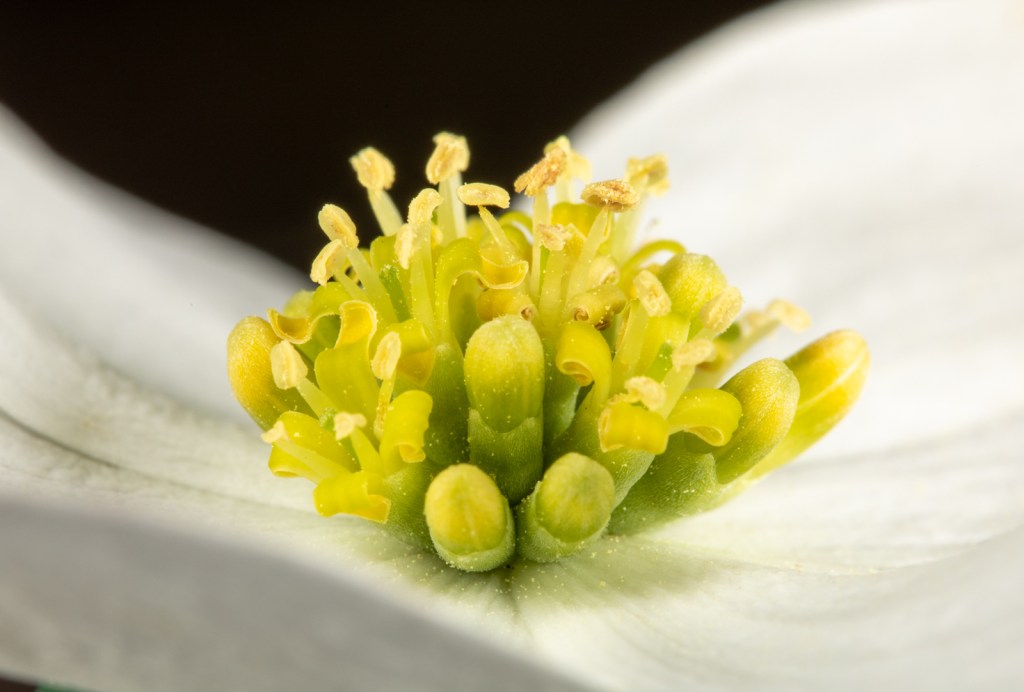
Though I’m a proud transplanted North Carolinian, I must say that I think Missouri and New Jersey did a better job when they selected the tree rather than the flower for their state symbol. Because this is our state flower:

Yup, that’s it. Not only is it kind of unremarkable, but it’s only about 1/4″ long. Unless you’re a nature nerd, you might have been expecting to see a picture like this:

Because I am a nature nerd, I have heard many times that the white “petals” on a dogwood are not really petals; they are actually bracts. Back to everyone’s favorite Plant Identification Terminolog: An Illustrated Guide by Harris and Harris, a bract is “a reduced leaf or leaflike structure at the base of a flower or inflorescence.” Hmmm… those don’t look like leaves to me! But if you take a closer look at the center of the bloom, and refer back to my previous post about parts of a flower, you begin to see why.
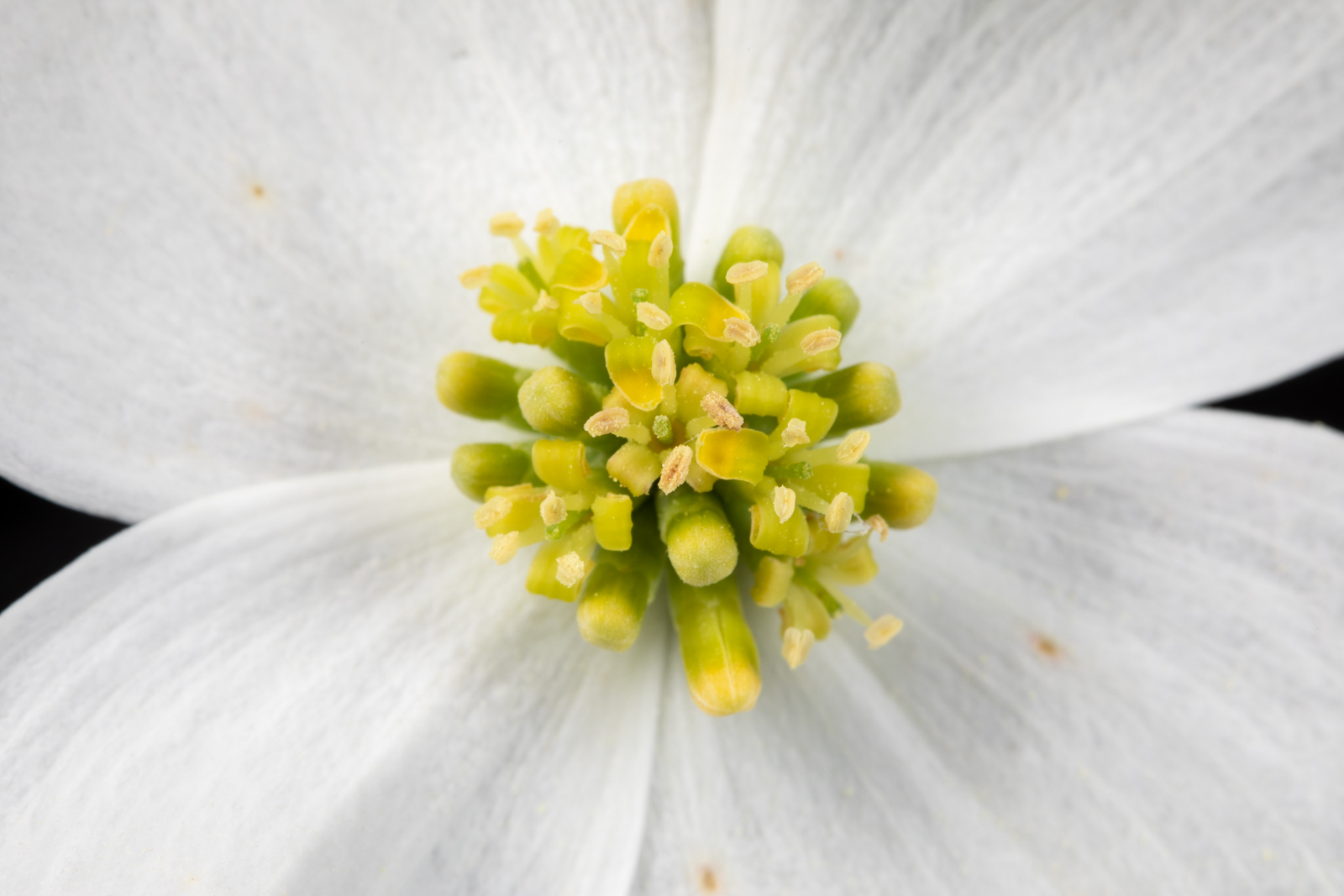
The dogwood does not have a simple flower. Instead, it has a cluster of tiny flowers (florets) in the center of the inflorescence.
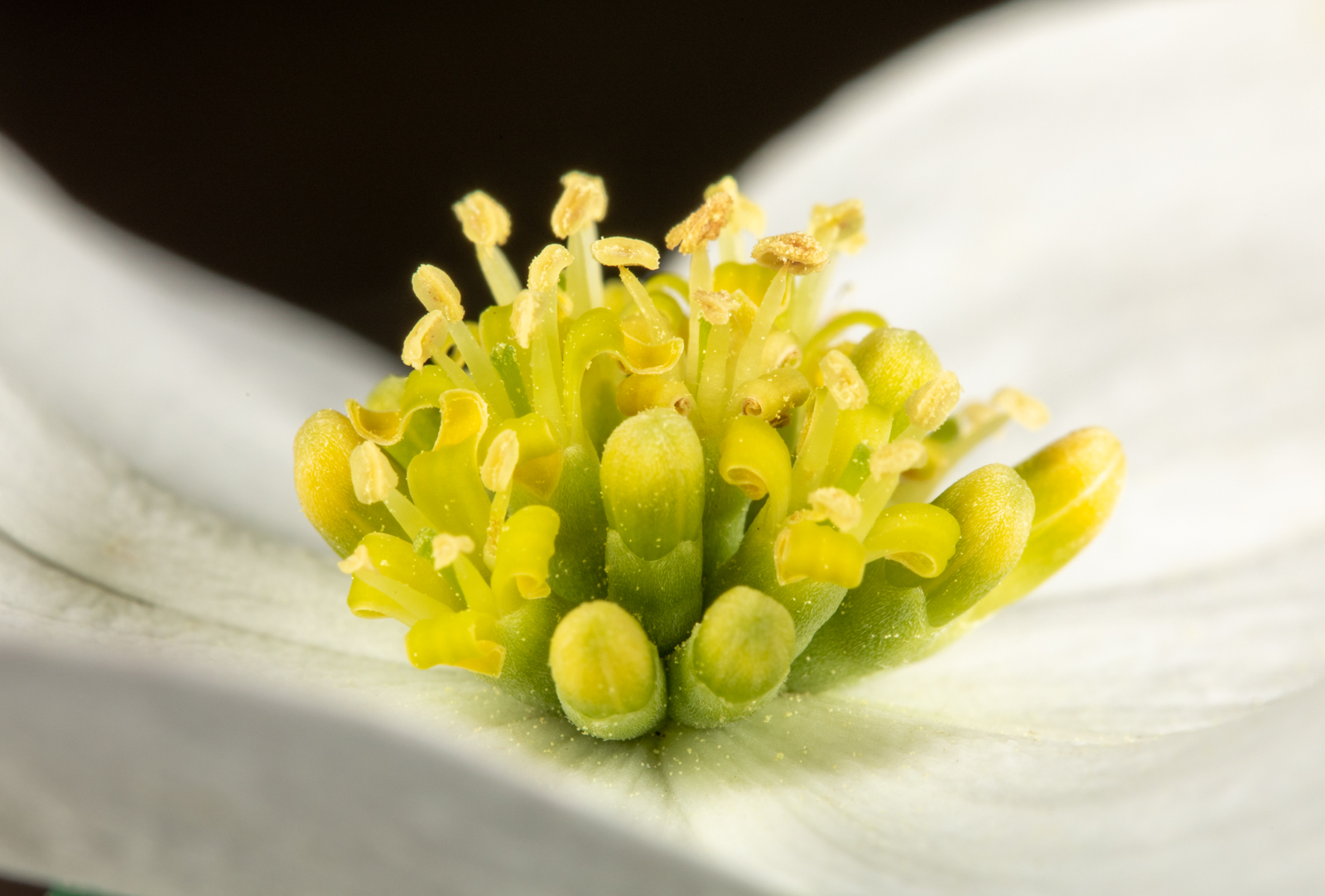
You can see in this image how some of the flowers are open, and others (notably the three right in front) are not yet open. Given my recent fascination with the parts of a flower, I couldn’t resist dissecting this flower to look more closely at it!

In the cross-section view, you can really begin to see the individual dogwood flowers. And on the flowers that I removed from the blossom, you can trace the development of the flowers as they open, and start noticing the flower parts.
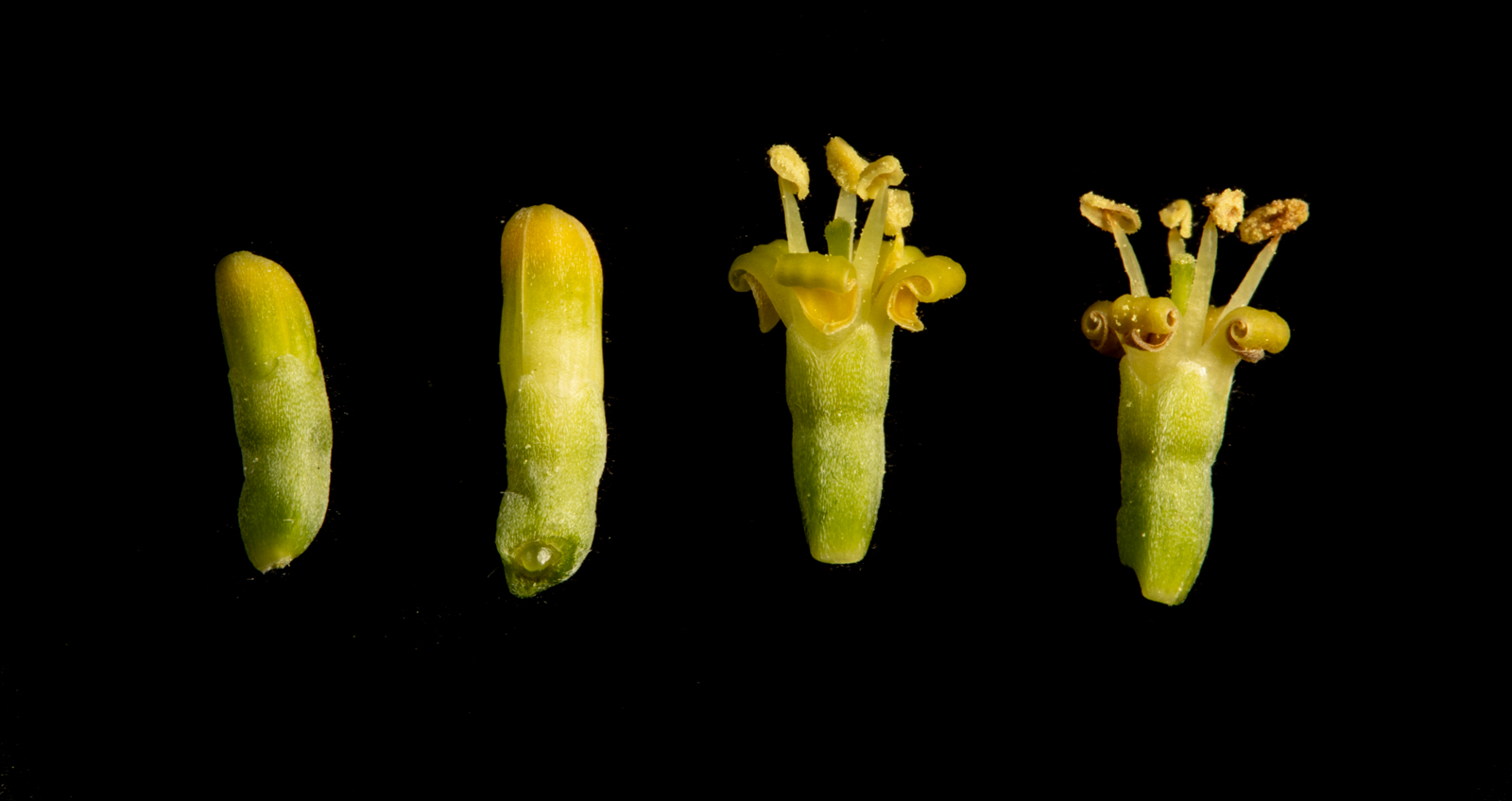
The petals curve back as they open, revealing 4 stamens and a greenish pistil in the center. But as I mentioned in my earlier flower parts post, I really enjoy the challenge of finding the sepals…
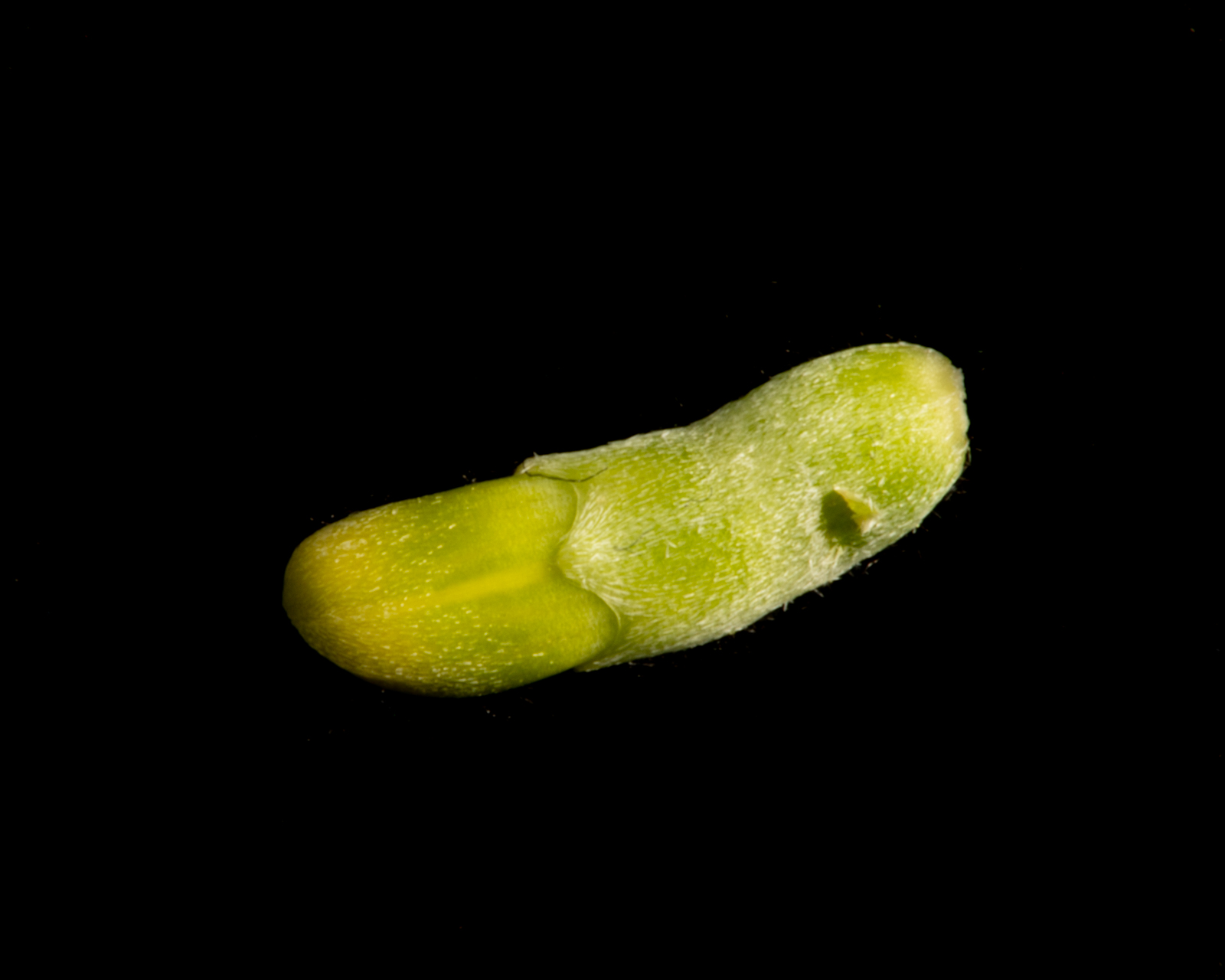
Getting even closer, you can see the downy green lip surrounding the unopened petals; I assume these are the sepals. I was very excited to notice this detail! (Yes, I am a nerd.)

Here we are, back where we started: an open dogwood flower. Getting this close allows you to see the four pollen-producing stamen surrounding the pistil. It even looks like this flower has been pollinated as it appears there is some pollen on the stigma (though I’d say there’s a decent chance I accidentally pollinated it while manipulating the flowers).
So there you have it – North Carolina’s state flower!


Leave a comment