
We are all naturally seekers of wonders. We travel far to see the majesty of old ruins, the venerable forms of the hoary mountains, great waterfalls, and galleries of art. And yet the world’s wonder is all around us; the wonder of setting suns, and evening stars, of the magic spring-time, the blossoming of the trees, the strange transformations of the moth…
~Albert Pike
We have a couple of species of native phlox (that I purchased at my last place of employment, the NC Botanical Garden) in our yard and this time of year it really puts on a show. It has also been attracting a few pollinators on these past few warm days. Most afternoons, the air space above our flowers is crowded with native bees, flies, butterflies, and other day-flyers.

Recently, the warmth brought out a different group of day-flyers…the day-flying moths. One afternoon, while sitting on the front porch, we saw a large, dark insect hovering at the phlox flowers and then zipping on to the next. It resembled a bee from a distance, but moved faster than the usual bumblebee. As I approached, I could see it was a species of day-flying moth, a Nessus Sphinx.
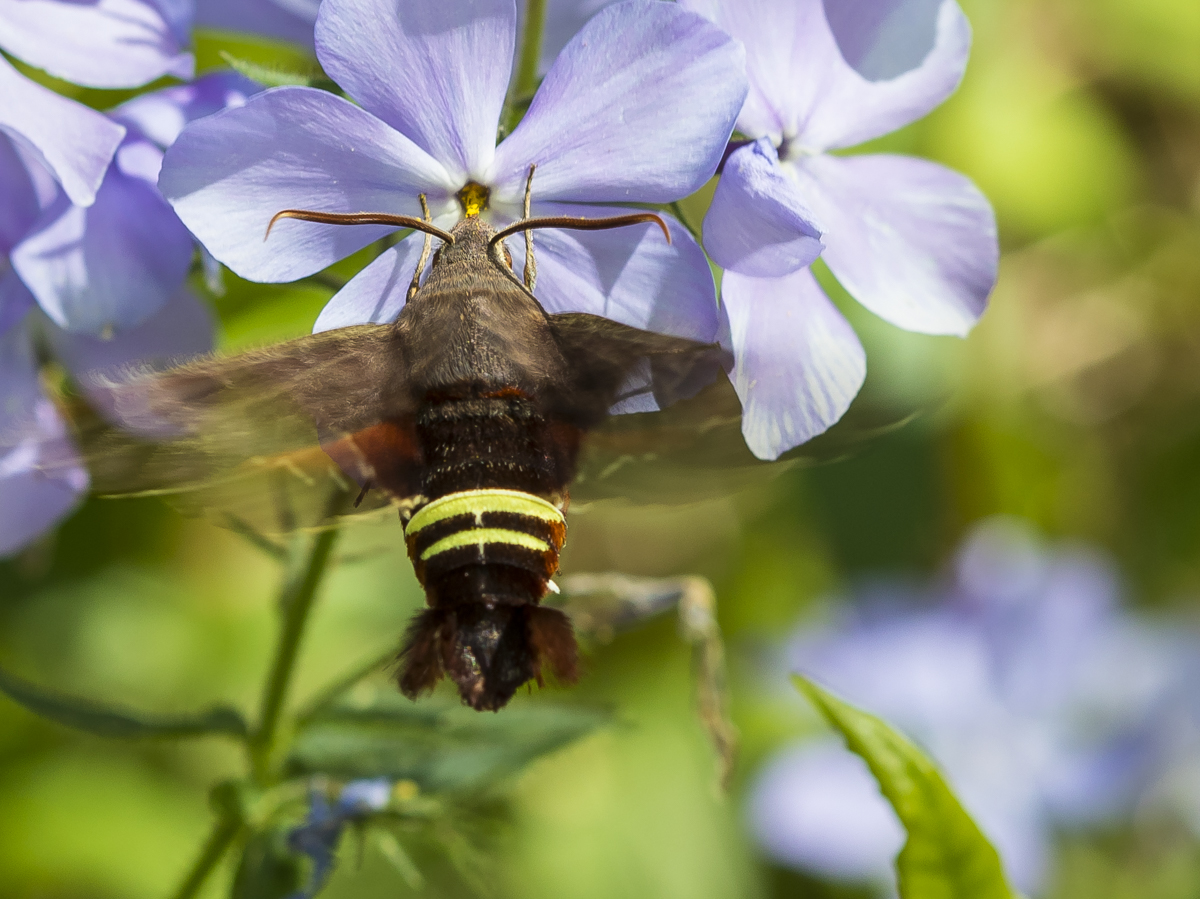
These rather robust moths are easily identified by their dark color and two bright yellow bands on their abdomen (which helps them look like a bee or wasp). Yesterday, I saw another one (same one?) hovering over the vegetation on our little slope of rock retaining wall that is a mish-mash of all sorts of vegetation, including two of this specie’s host plants – Virginia Creeper and Muscadine Grape. Here’s hoping for some larvae soon.

My favorite day-flyer of the week was a Hummingbird Clearwing Moth that had just eclosed (emerged from its pupa). Last September, I was collecting a few caterpillars (as always) for programs and this little guy started wandering off from its plant one day, so I placed it in a butterfly cage with a little tub of dirt. After a couple of days of wandering, it formed a pupa in the soil. It spent the winter (along with a few butterfly chrysalids and some other moth pupae) in our unheated workshop so as to have exposure to the cold temperatures. About once a week, I spritzed the container with water to keep them from drying out. This is the first of the crowd to emerge. I took it outside and set it on one of the phlox flowers to warm up. This is probably the most intense colors I have ever seen on one of these moths (because it is so fresh) and you can see why some people can mistake them for tiny hummingbirds as they hover around flowers. After a few minutes of sunbathing, the moth flew off. We have lots of their host plants (Coral Honeysuckle and species of Viburnum) in our yard, so I expect to find some caterpillars later this summer.


 Roads End Naturalist
Leave a reply to Lee Izlar Cancel reply