Roads End Naturalist

Exploring the natural world as we wander at the end of the road


Discoveries

·

The art of teaching is the art of assisting discovery.

~Mark Van Doren

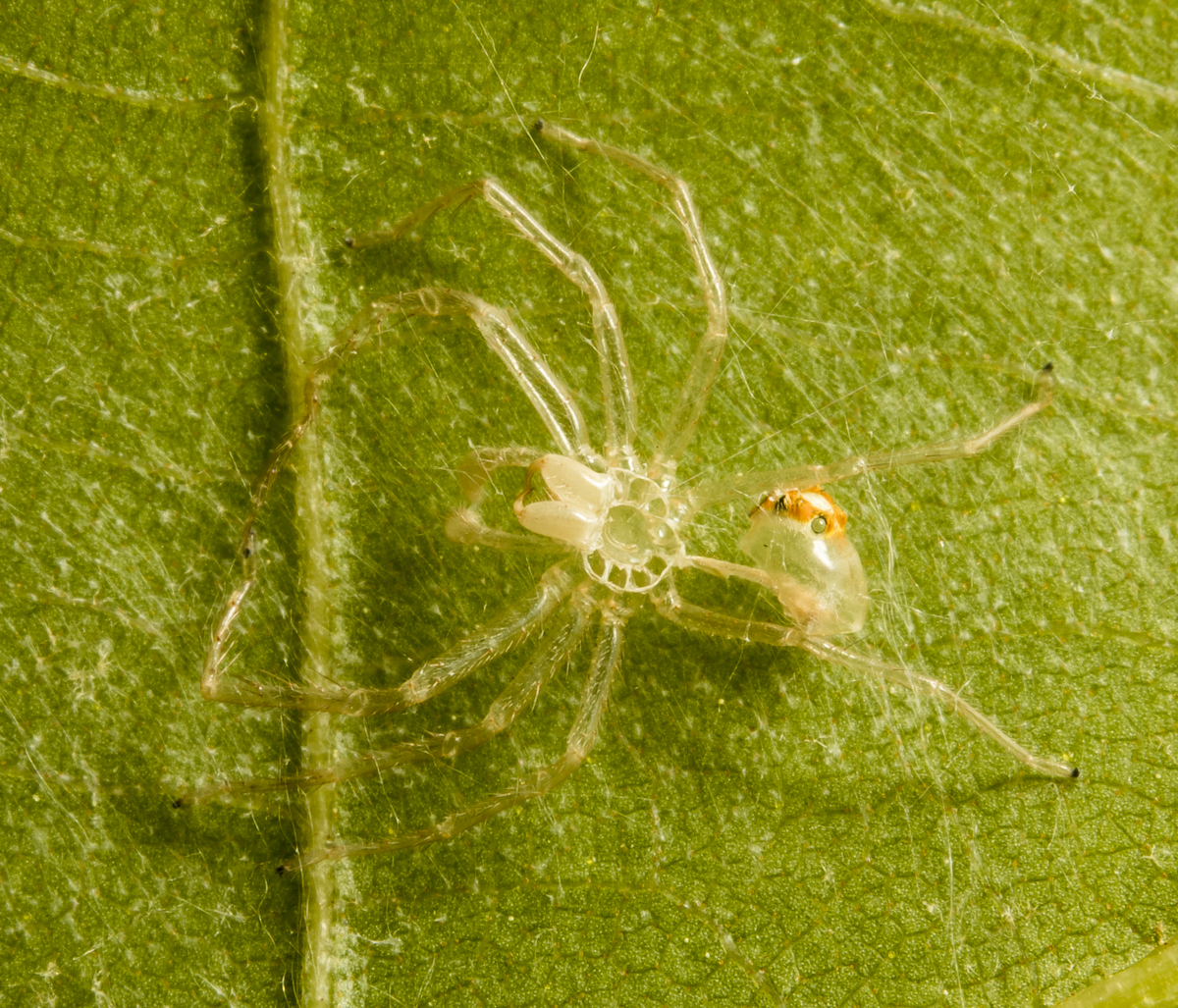
Melissa was producing a short video on trees as part of her museum educational offerings for teachers when she made a fascinating discovery. While filming the segment, she was encouraging folks to observe trees in their neighborhood and look for interesting things living on them. When she grabbed a hickory leaf and looked at it, she found one of my favorite spiders – a Magnolia Green Jumper (Lyssomanes viridis). We have a lot of these beautiful little jumping spiders in our yard and woods, but this was one even more exciting than usual as it has just molted.

Magnolia Green Jumper and shed 2
Magnolia Green Jumper next to its old shed exoskeleton (click photos to enlarge)
Magnolia Green Jumper shed
Recent shed of a Magnolia Green Jumper

I have posted on these amazing arthropods a couple of times in the past, But here was a spider shed and a freshly molted spider together on the leaf where this magic had just occurred. If you look closely, you can see how the spiders’ cephalothorax (the fused first two body parts) pops open during the molting process and the old legs split open. The spider is then able to pull itself out of its old skin as a larger version of itself. Some spiders hang from a silk thread when they do this, but it looks like this species makes a silk pad to anchor its old body, and then crawls out as a new spider.

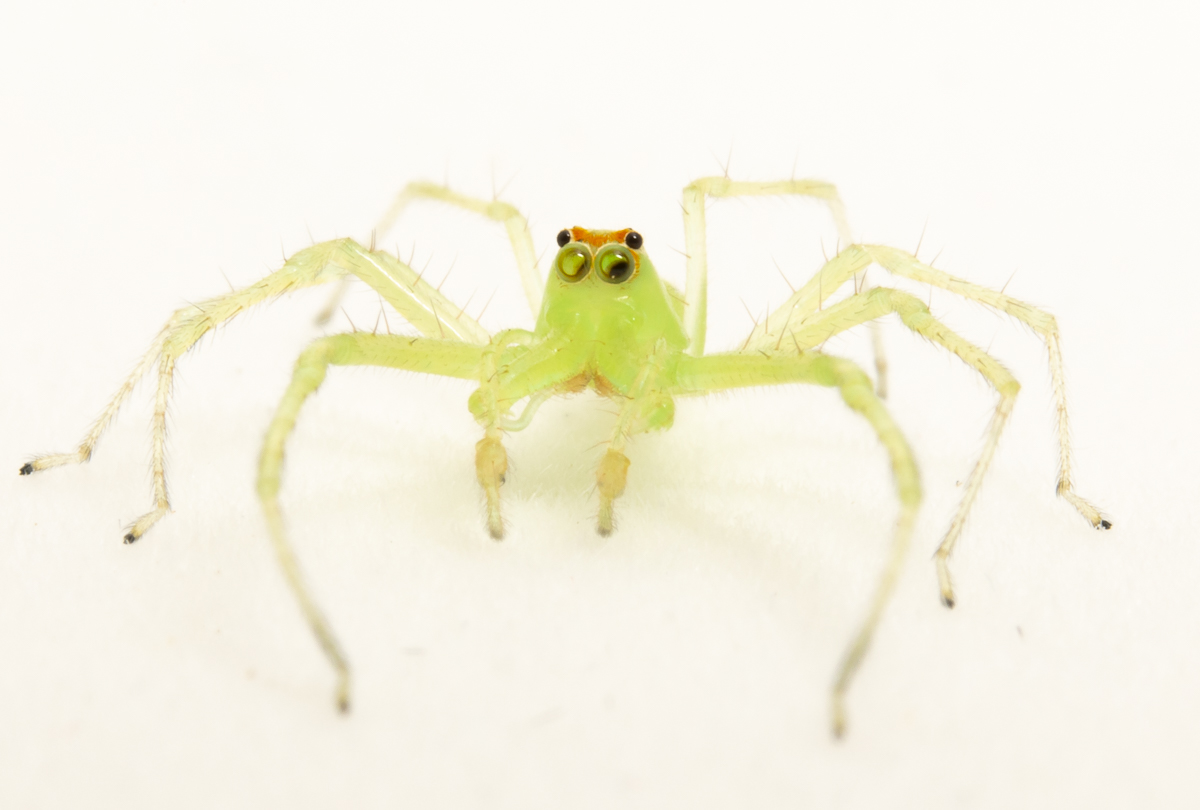
Magnolia Green Jumper on leaf
Freshly molted male Magnolia Green Jumper

This one is a male as you can see by the enlarged tips to its pedipalps (those appendages that look like two short legs right in front of its face). Male spiders typically have swollen tips (often described as boxing gloves) that they transfer their sperm to before mating. I guess it is safer to keep your distance during courtship if you are a male spider (especially since you are usually smaller than your ravenous mate). After a couple of shots, I brought the spider inside for a photo shoot in my collapsible white box. I’m still learning the tricks of photographing on white backgrounds, but it does often highlight details you may not otherwise notice.
Magnolia Green Jumper on white background
Magnolia Green Jumper posing inside a white box

One of the issues in a white box is the creatures don’t tend to take direction very well, but this little guy finally settled and looked straight at me for a couple of quick portraits.
Magnolia Green Jumper on white background close up
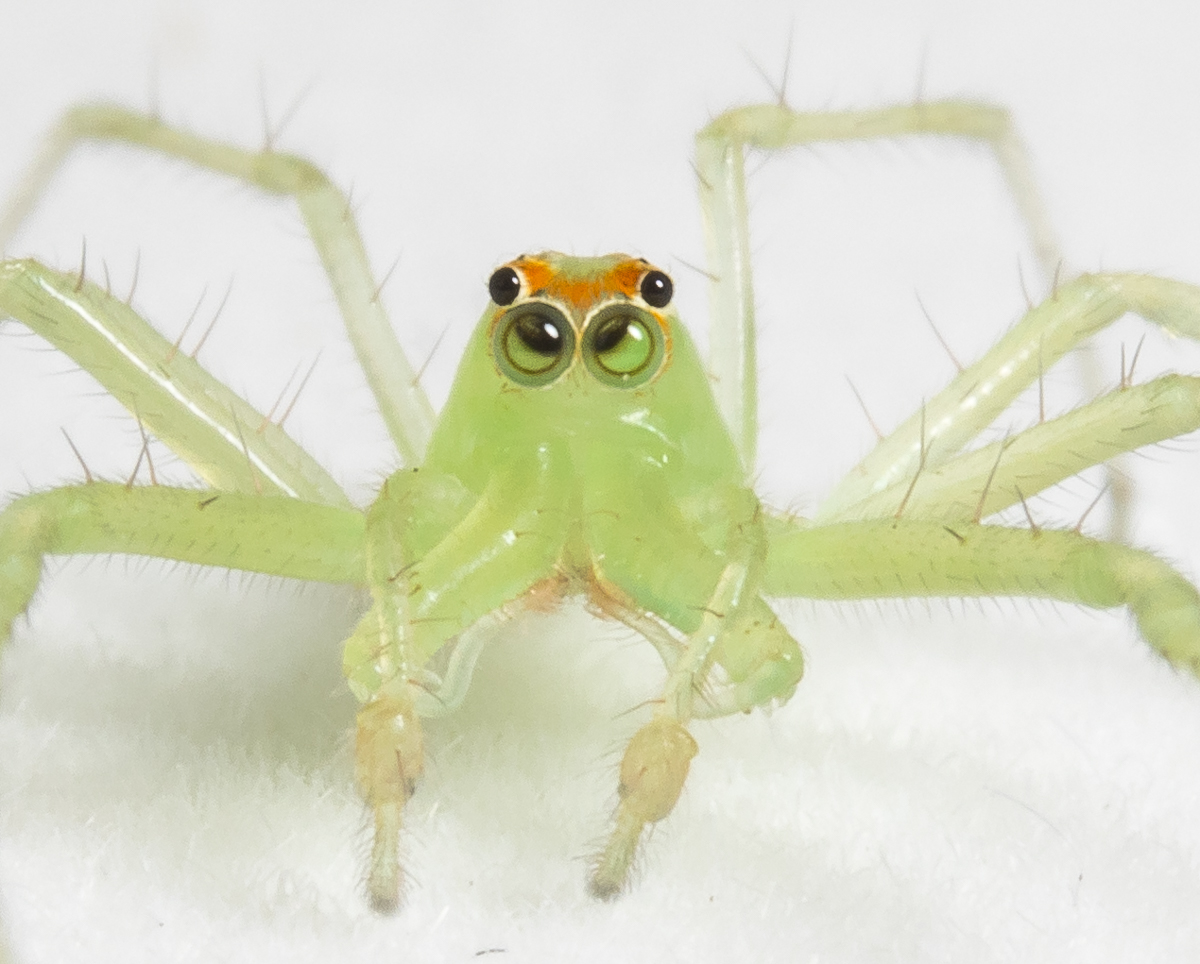
The impressively large anterior median eyes (those two large eyes on front) of a Magnolia Green Jumper

One of the things I love the most about these spiders is how it is really easy to see the retinas in the large eyes on front move around inside as they spider looks around (the lenses are fixed to the the carapace, but the retinas inside can be moved by tiny muscles). When the eyes become dark, the spider is looking directly at you (I think this guy is looking at my pandemic haircut). After a couple more shots, I took him back outside to patrol the yard in his new duds.


Comments

9 responses to “Discoveries”

  1. Misti Avatar

    Wow, nice macros of the spider! We too have this cute species around the yard but I’ve never caught a molt.

    1. roadsendnaturalist Avatar

      Thanks, Misti. That was a first for me as well for this species. They are just so cool.

  2. Barbara Driscoll Avatar
    Barbara Driscoll

    Very cool. Like the close up of the eyes.

    1. roadsendnaturalist Avatar

      Thanks, Barbara. Certainly one of my favorite jumpers.

  3. Carol Bloom Avatar
    Carol Bloom

    What is the function of the larger “hairs” on the legs?

    1. roadsendnaturalist Avatar

      Hi Carol:
      Generally, those setae serve a sensory function helping the spider to detect vibrations, air currents, sounds, and, in some cases, scents.

  4. Lucretia Avatar
    Lucretia

    This is a fascinating blog. I’ve always found it amazing and enviable that a creature can shed its outer layer and emerge as a fresh and larger creature. Studying this Magnolia Green Jumper’s exoskeleton and thinking back to your blog of 6 April, Nice Eyes, about a Canopy Jumper, brings me to a question about something I saw. A week or so after Nice Eyes, I was birding at a friends’ farm where on a fence by a back pasture was an old mailbox. I opened it, and lining the edges inside were many old silk sacs like the one of your Canopy Jumper. Then towards the front of the box a pinpoint of bright turquoise caught my attention. It appeared to be an eye. Surprised, I touched it gently with a grass stem and saw it was attached to what I thought was probably the exoskeleton of a jumping spider. However, looking at your photos of the Magnolia Green Jumper’s exoskeleton, I wonder just how reflective that outer covering of the eyes could be. Perhaps it would not reflect light after being shed. What do you think? Could what I saw more likely have been the corpse of a spider with whatever chemicals there are in the eyes that reflect light still reflecting it after the spider’s death? Whatever the answer, that bit of glowing turquoise has stayed in my memory as a beautiful find in a rusty mailbox.

    1. roadsendnaturalist Avatar

      Fascinating, Lucretia! Great observations. I have never seen a shed that had any color reflecting in the eye “lens caps”, but I have not seen that many jumping spider sheds, mainly larger orb weavers and wolf spiders. I am guessing yours might have been the remains of a recently demised spider, but I’ll keep looking!

  5. The Evolving Naturalist Avatar

    Very interesting article. Fascinating that you can see the retinas moving around behind the lenses. You did well to get the spider to hold still long enough for these shots. As I write this, I have a very tiny jumping spider in a tupperware container that I’m still trying to get a good shot of after 2 days. (It never holds still for more than a second.)

Leave a reply to Lucretia Cancel reply

Roads End Naturalist

Exploring the natural world as we wander at the end of the road

Copyright Mike Dunn and Melissa Dowland