
Nature will bear the closest inspection; she inspires us to lay our eye level with the smallest leaf, and take an insect view of its plain.
~Henry David Thoreau
The heat of summer is not my friend. It slows me down, saps me of energy, and makes me a little complacent I’m afraid. But, there is one saving grace – the abundance of minute life forms taking advantage of the green world that exists (in abundance I might add) outside our door. And, lucky for me, it doesn’t requite much effort to saunter around the yard, poking through the greenery, perusing the native plants, and looking for our tiny neighbors. I’ll most likely have several posts in the coming weeks that result from such forays into our yard jungle. Here are some recent discoveries…


Fall Webworms are a widespread moth caterpillar easily recognized by their often large silken tents covering leaves and the branches of many species of hardwood trees in late summer and Fall. In contrast, the Eastern Tent Caterpillar makes its silken hideaways in the forks of branches (of mainly wild cherry trees around here) in the spring. Females lay clusters of several hundred eggs on a leaf and the young larvae construct silk tents and feed on the leaves underneath, moving to new branches when they skeletonize one food source. When disturbed, they do a group fling and jerk dance to attempt to drive away any predators or parasitoids.


We often find these distinctive planthoppers along the stems of many of our native wildflowers. This is probably the most common planthopper in our yard and is easily identified by its pale green coloration and the right angle of the rear corner of the wings.
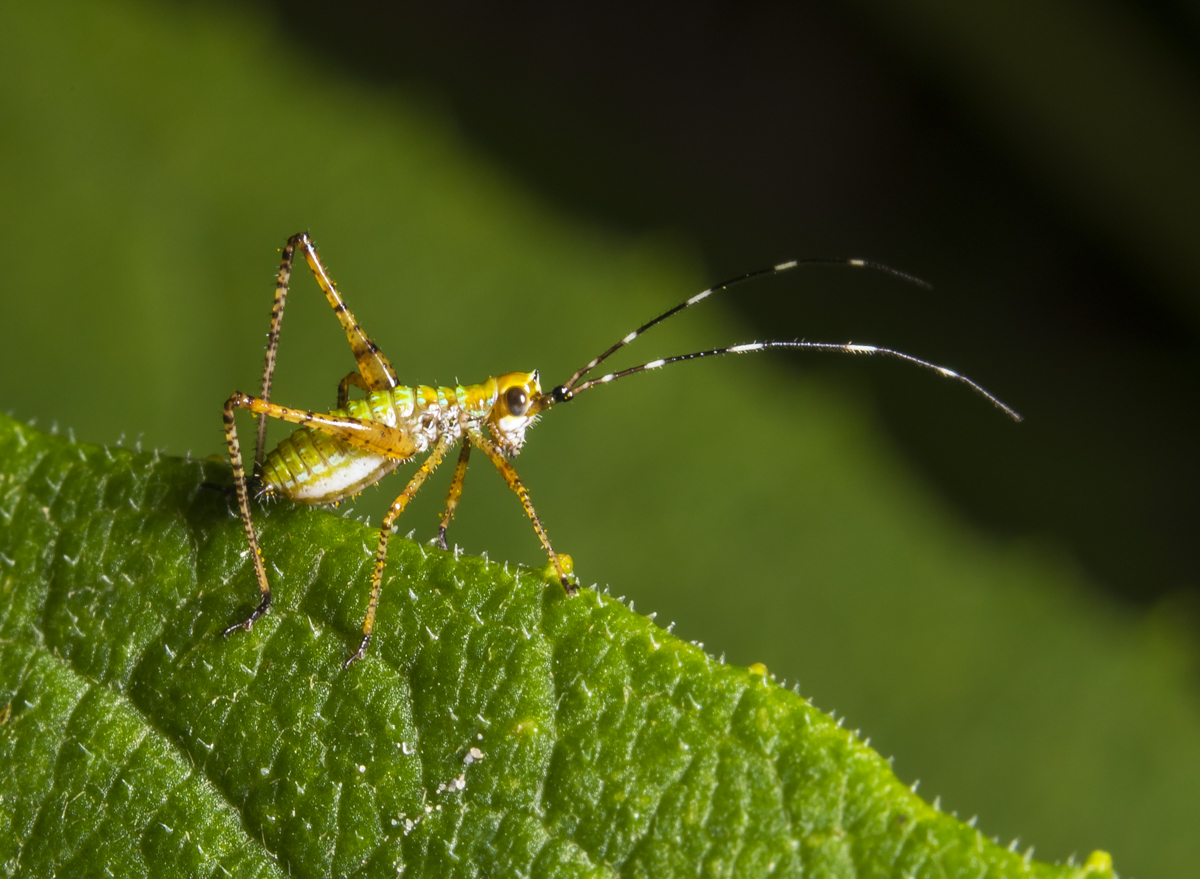
One of my favorite tiny neighbors is the nymph stage of Scudder’s Bush Katydid. They are both gangly and bold in their appearance, with banded antennae to top off their comical look.
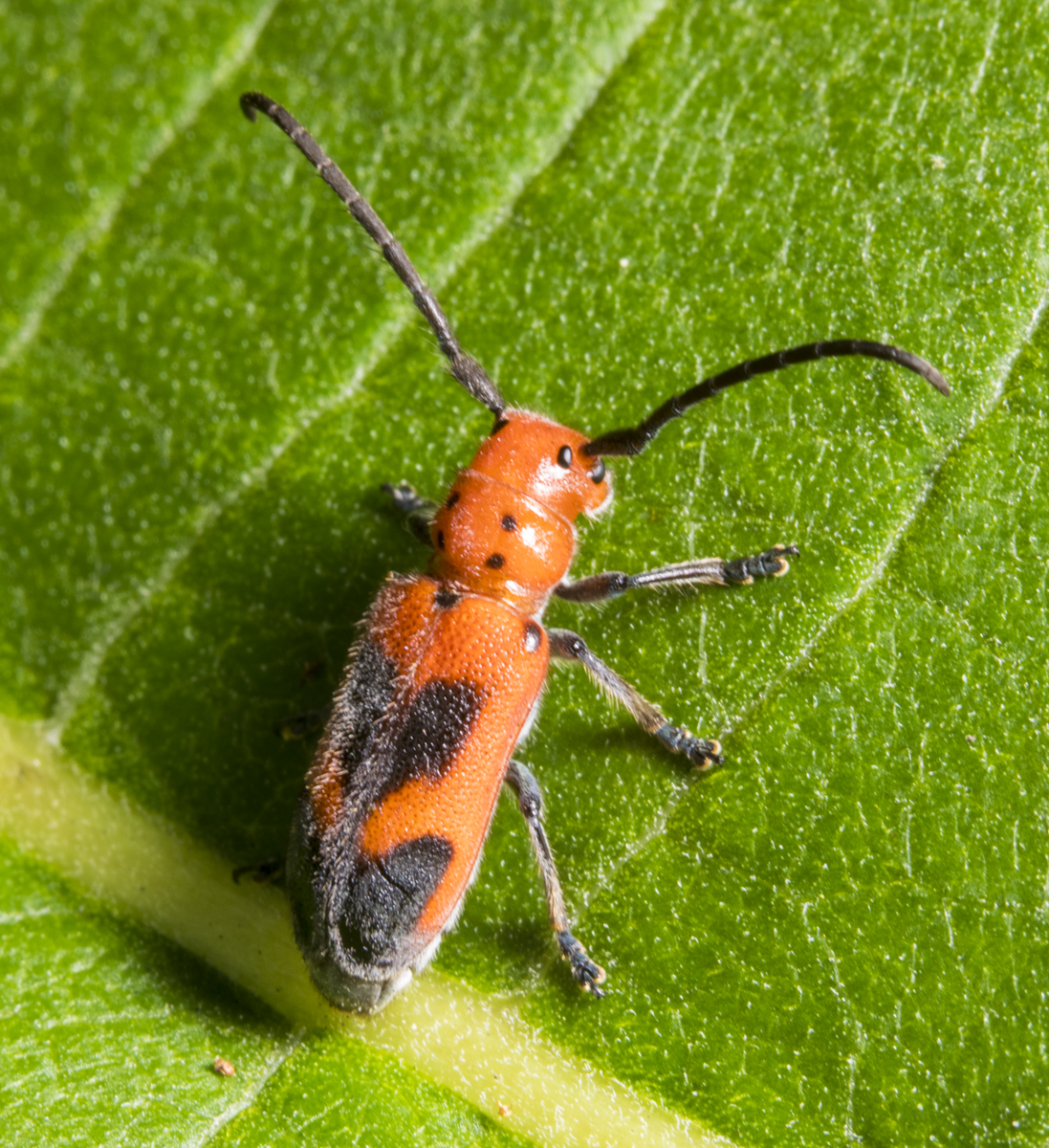
While checking out the milkweed patch, I spotted one of the many boldly marked insects that feed on this plant. It was a beetle with the bright warning coloration typical of insects that can feed on the toxins in milkweeds. This one had large, heart-shaped dark markings on its elytra (outer wings), identifying it as a Blackened Milkweed Beetle. When I looked up the scientific name, I discovered that the genus name, Tetraopes, means four eyes. This, and other members of the group of longhorn milkweed beetles, have compound eyes that are bisected by the base of their antennae (I could not find any explanation as to the possible benefits of this unusual eye arrangement). Every time I look closely at my little neighbors, I discover something new. Give it a try in your own nature neighborhood.


 Roads End Naturalist
Leave a comment