
The significance and joy in my science comes in those occasional moments of discovering something new…
~Henry F. Schaefer, III
Last night we had friends over for pizza and beer and …mothing (wait, what?, you mean you don’t have people over and put out a moth light when it is 90 degrees and 95% humidity?). We had some good moths, including a couple of large Tulip Tree Silk Moths and at least three Rhinoceros Beetles. But, my favorite find of the night was a strange creature that I can’t remember ever seeing before. When Melissa first saw it, she exclaimed, I’m not even sure which group of insects it belongs to…it looks like a tiny cicada. Well, that was certainly a good description.
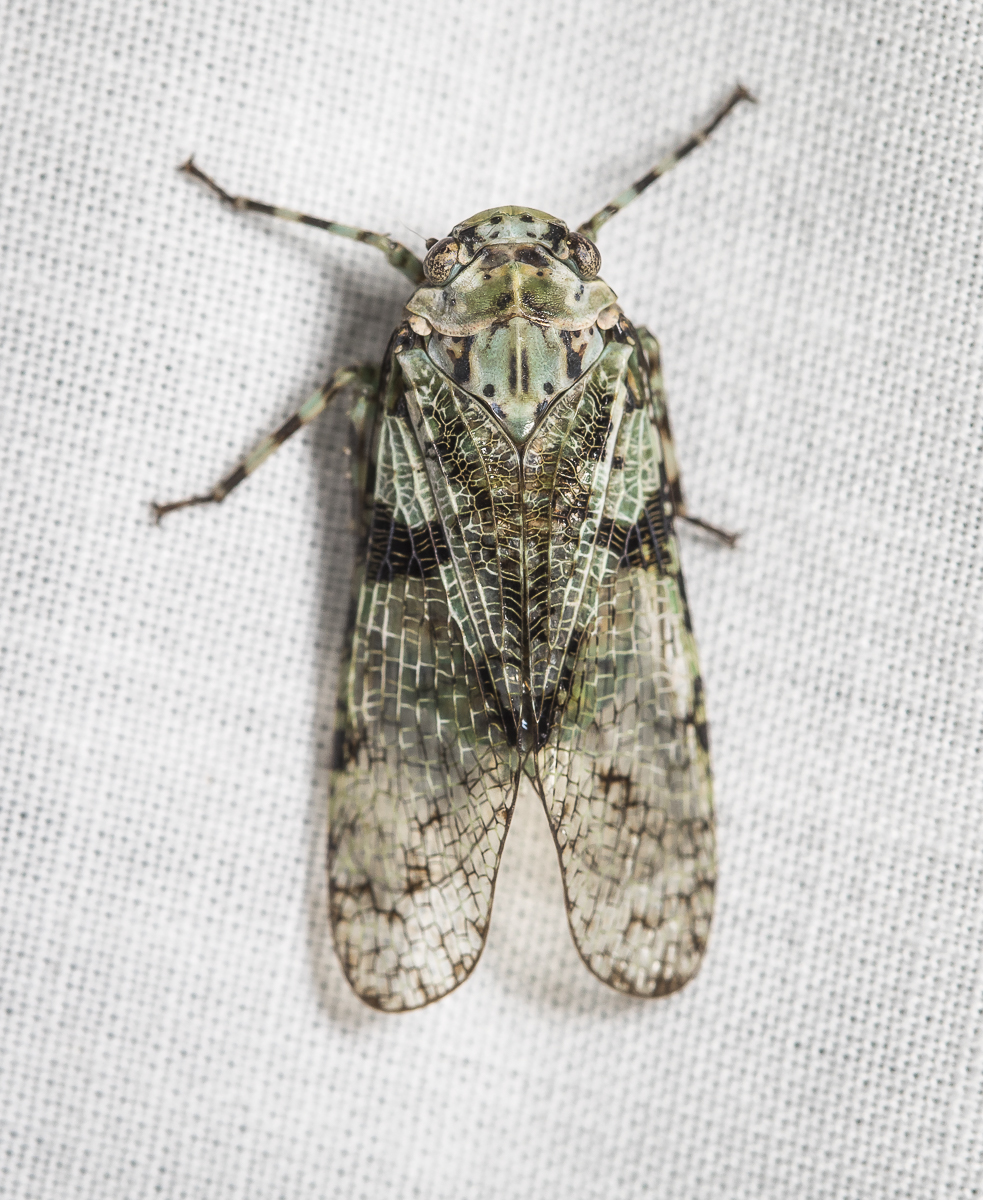
It does, indeed, have the body shape of a mini-cicada and is about an inch in length. The coloration reminded us of tree lichens. When I first approached it with the macro lens, it jumped, leading us to believe it was some sort of weird planthopper. The SEEK app identified it as a type of Fulgorid Planthopper (i.e. a planthopper in the family Fulgoridae). This morning I went to my laptop and searched the very helpful web site, Hoppers of North Carolina, browsed the Family Photo Gallery link and found a photo resembling our mystery critter. The heading for the matching image is Calyptoproctus marmoratus – No Common Name. The description says it is uncommon to rare, found in deciduous forests from VA to FL (it as been recorded in fewer than 20 of our state’s 100 counties). Searching online didn’t yield much more information other than little is known about its feeding habits or general life history. One scientific paper I found showed it being found in several museum and university insect collections and that almost all were collected at night when attracted to lights. It is always satisfying to see something new and wonder about where and how it lives. The No Common Name add-on to the nomenclature though seems unfit for such an interesting creature. I offer these possible solutions – Lichen-colored Mini-Cicada or perhaps the Lichen Cicadalet. I’m open to other suggestions in the comments. Keep looking out there, there is more to discover and ponder.


 Roads End Naturalist
Leave a comment