
Every act of communication is a miracle of translation.
~Ken Liu
I recognize a buck scrape in our woods when I see one. It is a bare patch of earth with lots of hoof scrapes and deer tracks under an overhanging low limb (usually an evergreen). One or more twigs are often broken from the buck thrashing about. This behavior and the commonly seen bark rubs on tree saplings are two important ways that bucks communicate with one another. It is like a bulletin board in a storefront, one loaded with local business cards. The bucks leave their calling card through various glands on the head and through marking and urinating on the now bare ground beneath the overhanging branch. While any deer passing the area may stop to check it out, most buck scrapes appear to be created and used primarily by male deer, and mainly in the time leading up to and during the rut.

– Bare ground under a low overhanging American Holly branch is a sure sign of a buck scrape (click photos to enlarge)
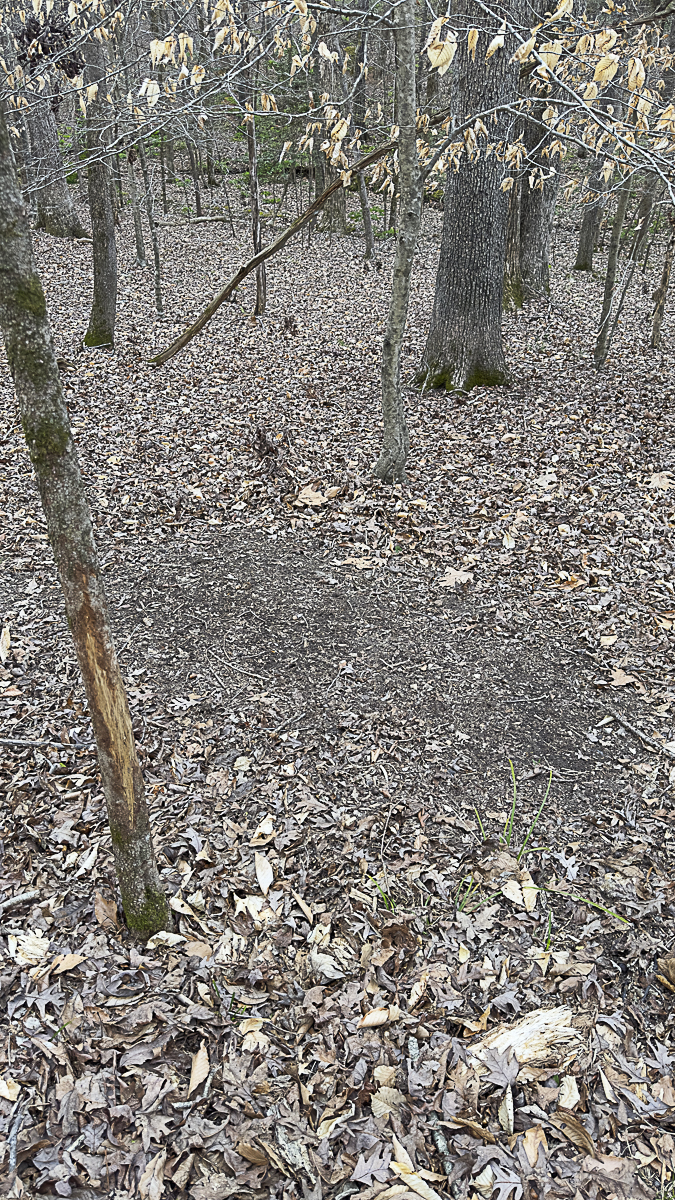
– The only scrape on our property not under a holly branch. This large patch of bare ground is under an American Beech branch and comes with a bark rub on a nearby sapling.
But now I have found something that may qualify as a so-called community scrape. This is a location that has significance to all the deer in an area and is a major communication sign post – a social media bulletin board for the deer. My first connection with this site was last year when I placed a trail camera on it. It is a part of our creek that is just upstream of a huge log jam created when a large hickory fell and took a few other trees with it. I recorded what I thought was an odd phenomenon of a doe pulling on holly leaves on a low branch. During the couple of weeks the camera was there it caught a few deer doing this same thing. I was puzzled because I didn’t think anything would eat those spiny leaves.
Last month, I put another camera in that same location and started seeing both bucks and does stopping and interacting with the same holly branch. But this time, I could tell they were mainly just rubbing their heads and faces on the branch, not trying to eat the leaves. Below are a few of the videos.
— A large buck rubs his scent on the overhanging holly branch
— Another buck checking in on holly media
It is hard to tell in these videos, but a behavior that is described in research is deer using the “licking branch”. They chew or lick a particular branch as part of the ritual. I certainly have seen a broken twig or two at these various scrapes and have seen photos of bucks using their tongue to touch branches at a scrape, but I can’t tell for sure if there is any of that going on here.
— Two bucks interact with the holly
— More checking in at the holly station
There were a couple of times that deer interacted with one another at the holly station. Here’s a quick clip of one.
— This is what happens when you send a mean tweet on deer social media
You may remember the crazy deer from an earlier post that ran around, jumping, twisting, and pawing in the creek. I think this last clip is that same deer. One reason I didn’t notice the significance of this holly branch is that it is over the creek, so there is not the usual sign of bare ground underneath (when the creek dries up it is just the dry ground line anywhere else along that stretch of stream bed). Here is that deer interacting with the holly several times and acting a bit goofy again. I wonder if part of the reason for its antics is the chemical messages at this site?
I stuck my nose into this branch to see if I can detect any odors, but it seems that I just don’t have the right receptors. It stands to reason that if I don’t understand some of my species’ social media messages, I wouldn’t understand those of our neighborhood deer. But I’ll keep watching and trying to figure out what they are saying.


 Roads End Naturalist
Leave a reply to amr-illustrations@nc.rr.com Cancel reply