Roads End Naturalist

Exploring the natural world as we wander at the end of the road


The Youth of Summer

And so with the sunshine and the great bursts of leaves growing on the trees, just as things grow in fast movies, I had that familiar conviction that life was beginning over again with the summer.

~F. Scott Fitzgerald, The Great Gatsby

Things have been relatively quiet on the trail cameras the past month. No coyote sightings in several weeks, and even the squirrels seem to be taking a vacation in our woods (though not the ones learning to get to our hanging bird feeder). But one thing has been showing up – young animals. June and July are the months when many young critters start to get out and follow their moms around to learn the ways of the woods. At our place that means White-tailed Deer fawns and Raccoon kits.

Here are a few clips of forest cuteness from our property…

–This mama Raccoon and her two young kits appeared on several cameras recently, but this one has the best audio (turn sound up).

The most common baby animal footage was of deer fawns. The well-known spots on baby deer help them blend into the sun-dappled forest floor. This is especially important when their mom leaves them in one place as she goes off to feed. Lying on the ground motionless, and virtually scentless, they are difficult for predators to find. Fawns typically lose their spots after 3 to 4 months. One online resource said the average number of spots on a fawn’s coat ranges from 272-342. And each spot is between about 1/4 to 1/2 inches in diameter…now you know.

–A fawn hanging out near the Raccoon den tree while mom browses in the distance

–The fawn tries to nurse but mom seems like she has things to do or places to go

–Some clips showed a doe with one fawn, typical of young mothers. Others had a doe with twins which is not unusual for older deer.

–A couple of clips showed two adult deer waking together, one with twins and one with one fawn. Then this clip had one doe with three fawns. At first, I assumed the other doe was somewhere near and these three fawns were just hanging out together. But I have seen two other clips with a single doe and three fawns. Research shows that somewhere around 10% of female deer will have triplets under favorable environmental conditions. And last year was a mast year for the oaks in our woods, so maybe these are indeed triplets.

In addition to the mammal babies, there are lots of insect and spider youngsters in our wildflower beds and the bluebirds have just laid another set of eggs. You gotta love the abundance of summer!
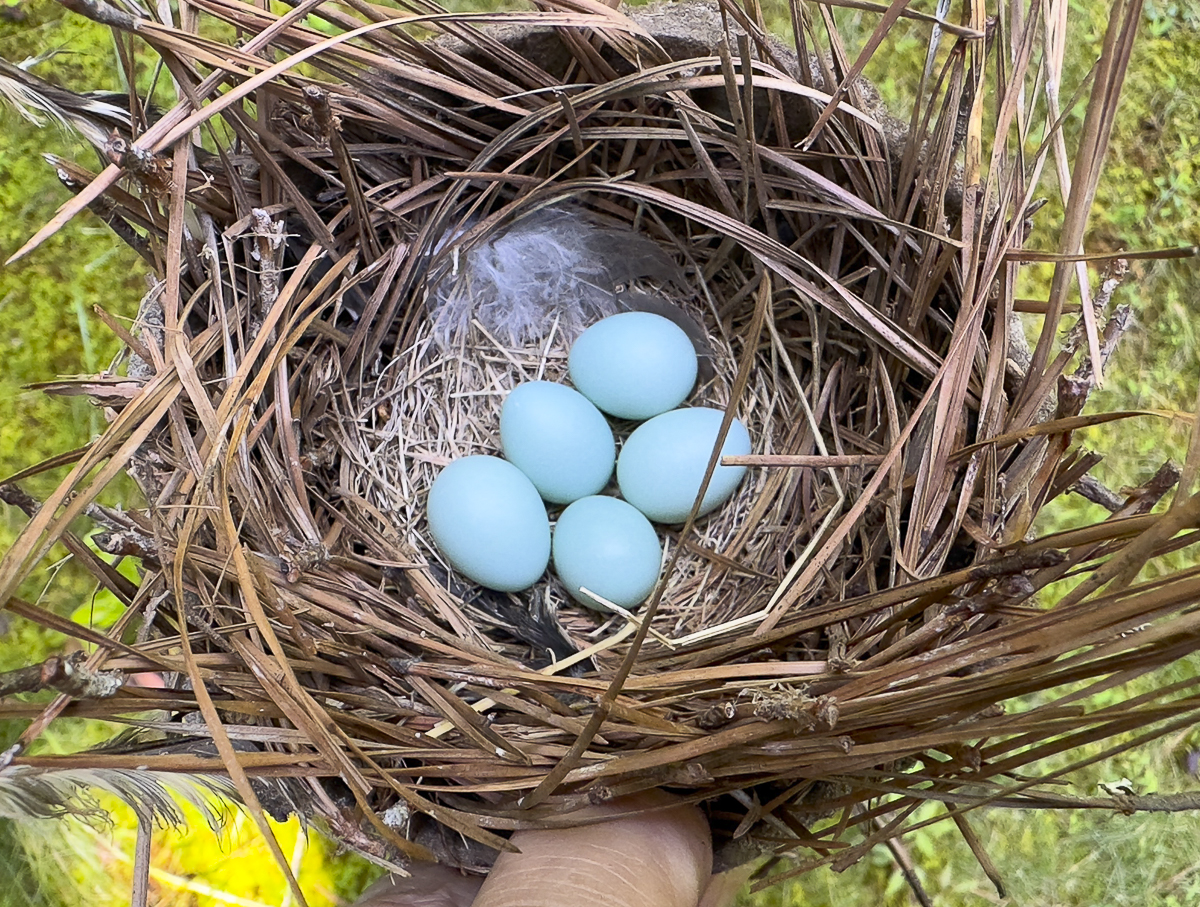
-This is the third bluebird nest this season in the box in our yard

Comments

4 responses to “The Youth of Summer”

  1. Elise Avatar
    Elise

    Thank you again for continuing with these wonderful posts and photos and video clips. Seeing your post is such a lovely way to start the day, and reminds us that there is more than one perspective in this world. You bring balance to the world of dreadful news. You are most appreciated!

    1. roadsendnaturalist Avatar

      Thank you Elise for your thoughtful comments (always). Observing the procession of life on our property helps me appreciate every day I have. Though I love traveling and seeing the diversity of life in other places, I find magic in the things that surround us here at home. Always learning something new about my wild neighbors.

  2. Mary Kay Coyle Avatar
    Mary Kay Coyle

    The videos are adorable – especially the triplets following mom! And 5 bluebird eggs!! Hooray for spring and summer!

Leave a reply to Mary Kay Coyle Cancel reply

Roads End Naturalist

Exploring the natural world as we wander at the end of the road

Copyright Mike Dunn and Melissa Dowland