
[The public lands represent] in a sense, the breathing space of the nation.
~Richard Nixon
After Melissa joined her group of educators, I had a few days in Yellowstone on my own. You shouldn’t be surprised that I wanted to spend as much as time as possible out in it, watching wildlife, staying away from the crowds, and feeling grateful for another chance to spend time in this magical place.
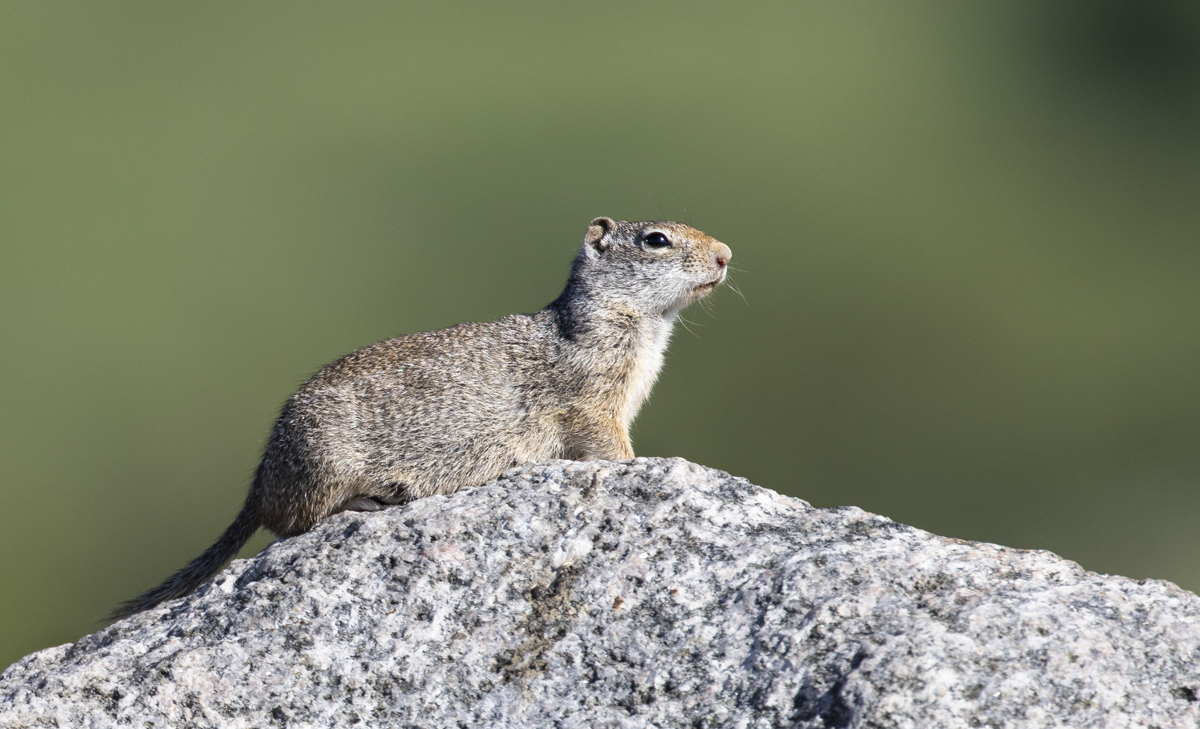
That afternoon, I stopped at the pullout for the Crystal Creek drainage and hiked up the trail along the creek. In past years we have seen a lot of birds in the willows along the creek as well as Pronghorn and other wildlife in the surrounding grasslands. There had been active beaver lodges and small dams along the creek, but this time it seems there were no active lodges and a couple of the pools were mainly mud flats with a small creek flowing through. My main companions were several Uinta Ground Squirrels which let their neighbors know of my presence with a series of high-pitched squeaks.
The next morning I drove through Lamar and decided to check out one of the ponds in Little America where I had seen some waterfowl the day before. Walking down to the pond edge, I slowly meandered in a zigzag path with frequent stops, so as to not alarm the birds. I finally positioned myself on a rock about 15 feet from the edge.
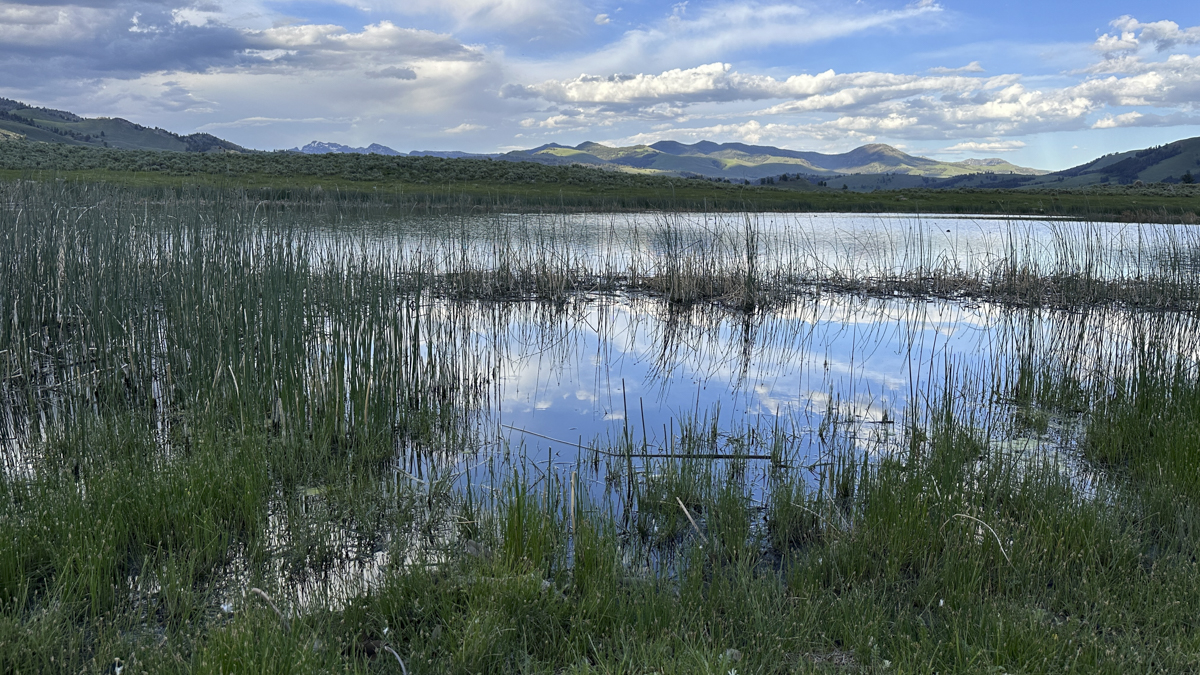
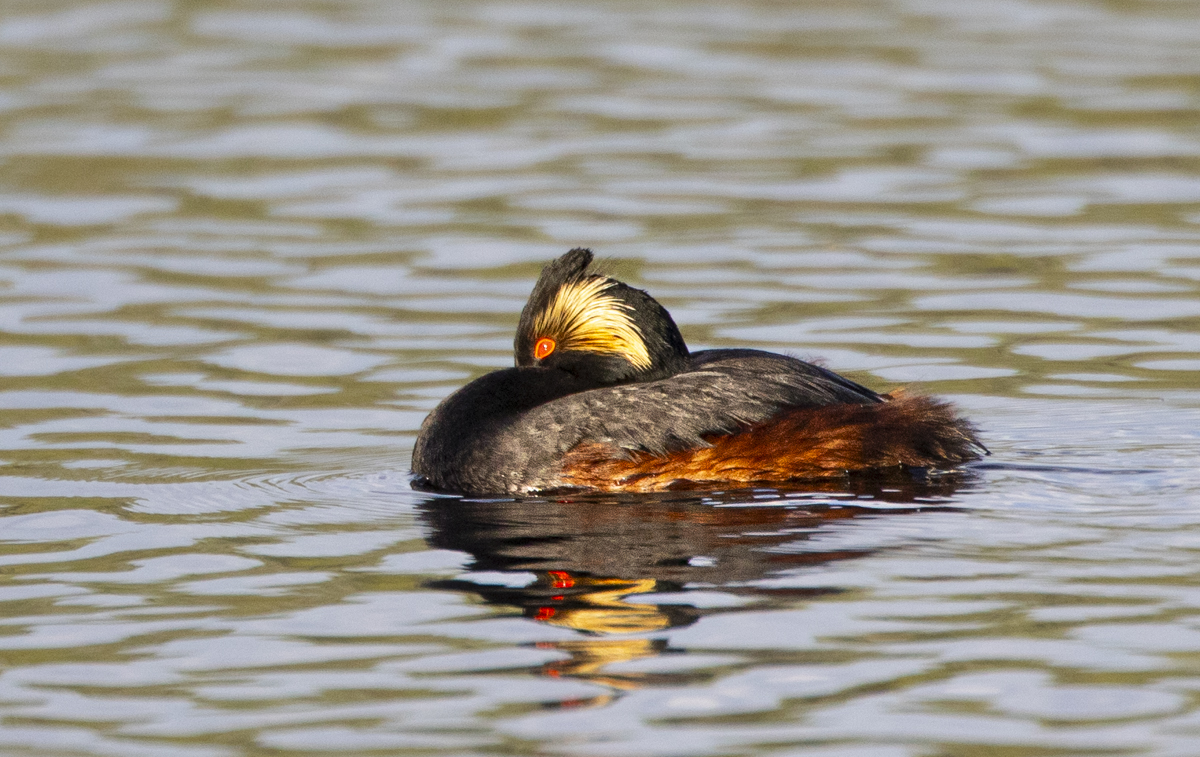
Several years ago, some Trumpeter Swans nested in this area and it was closed to walking, but that has not been the case for some time. There was a narrow gap in the pond vegetation through which I hoped to photograph the many Ruddy Ducks, Eared Grebes, and American Coot that were swimming and feeding along the shallows.
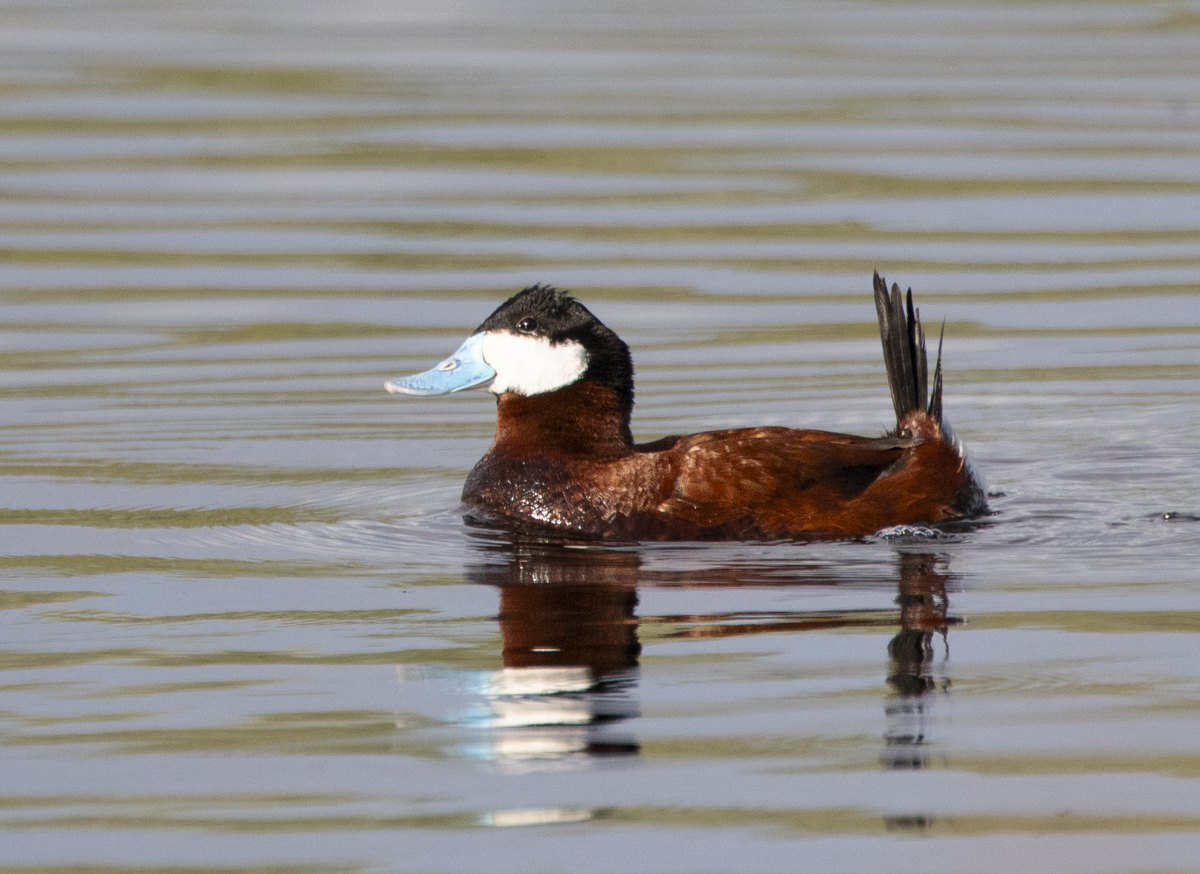
The male Ruddy Ducks were putting on a show, both visually and audibly, as they attempted to impress some nearby females. They hold their tails upright and rapidly beat their Cariolina-blue bill against their inflated breast, ending the display with a loud fart-like sound (a ruddy duck raspberry). I didn’t have a tripod for my telephoto (no room in the luggage) so was unable to do video, but maybe next year…
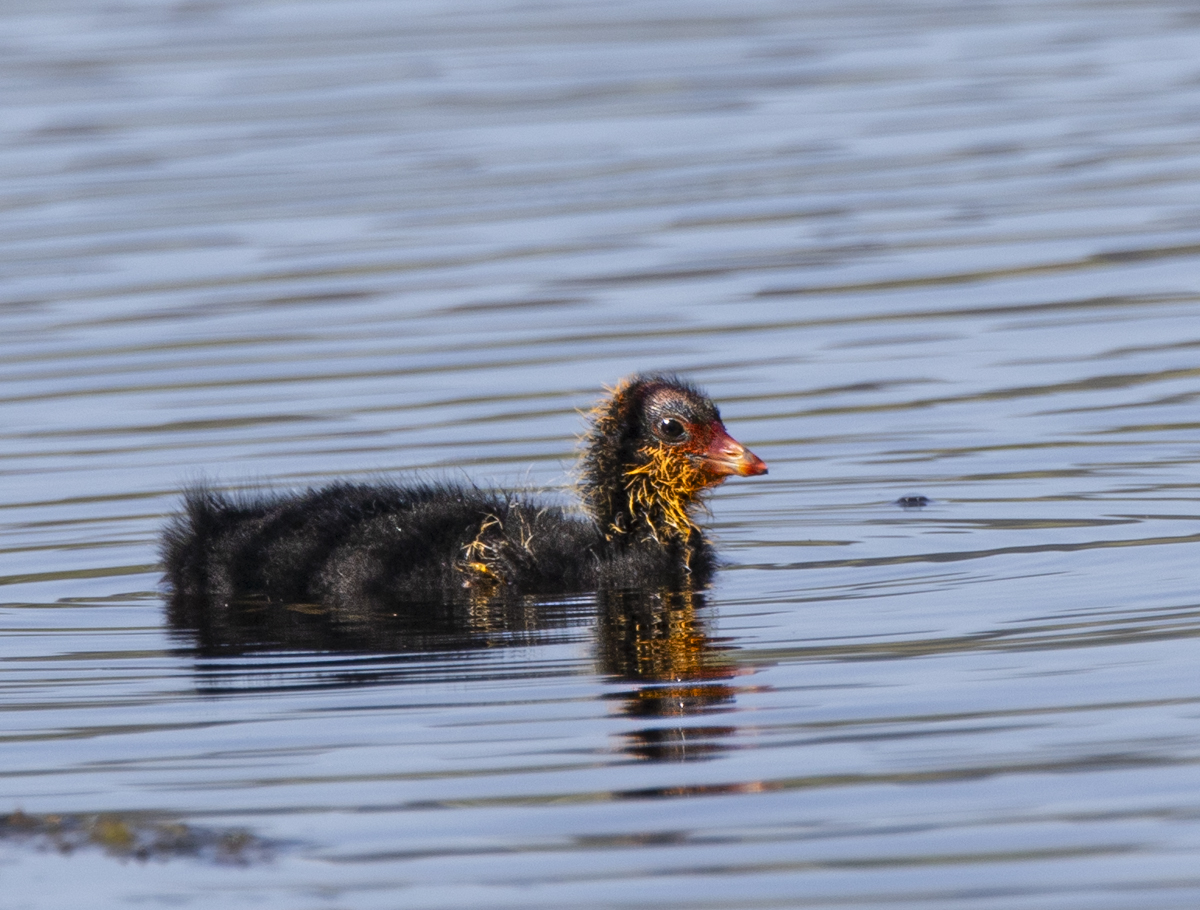
I was hoping to get some photos of baby American Coot that were abundant in the edges of the pond. They are so homely that they are actually cute! Most of the feeding action between parents and young was happening on the far end of the pond, but one duo finally swam close enough for a pic, though the adult was partially obscured by the grasses. Young coots lower their head in a twisted position when begging for food.
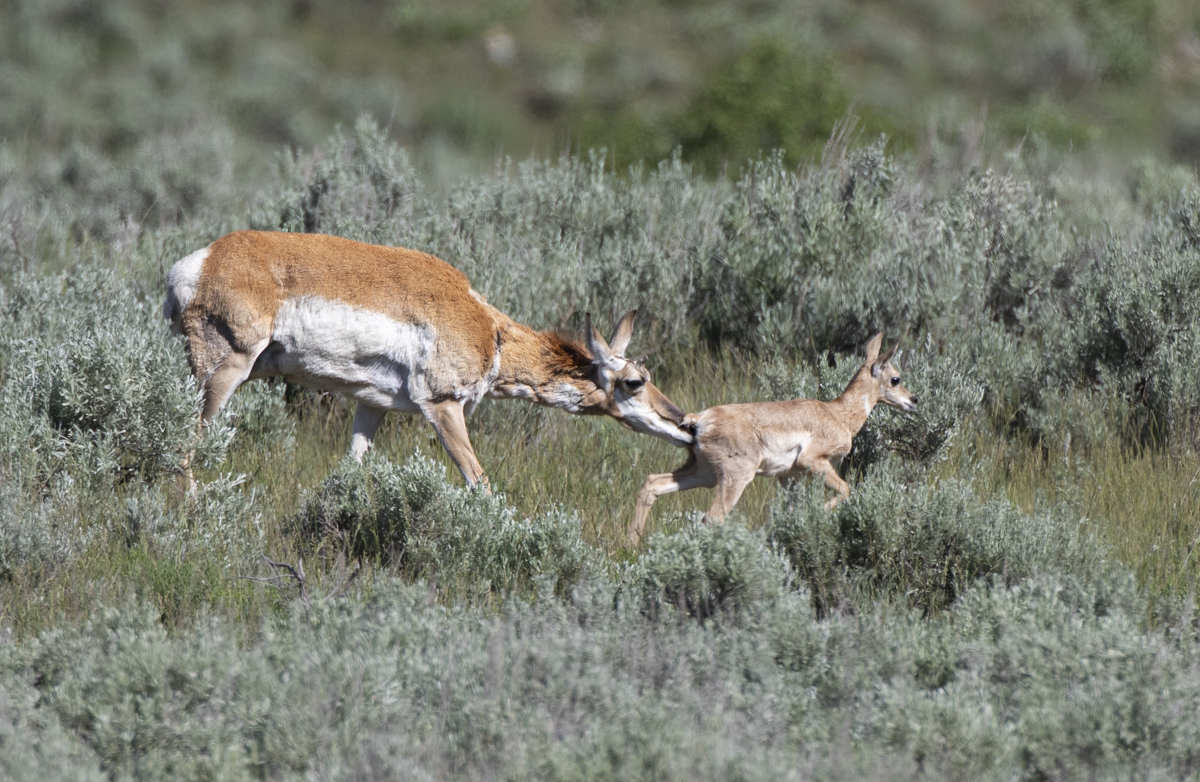
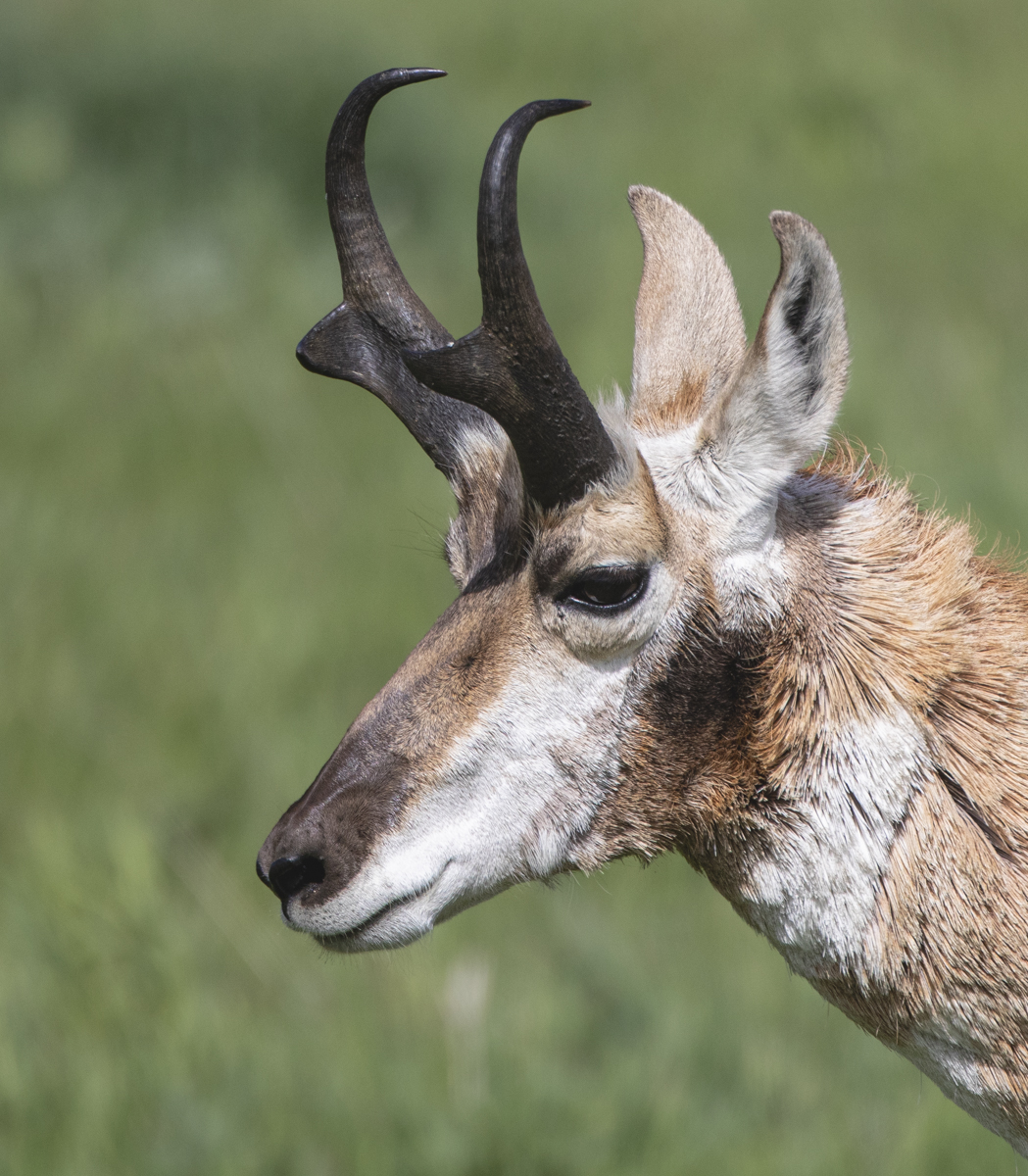
There seemed to be fewer Pronghorns out in Lamar and Little America than I have seen in some years but we did see several females with fawns.
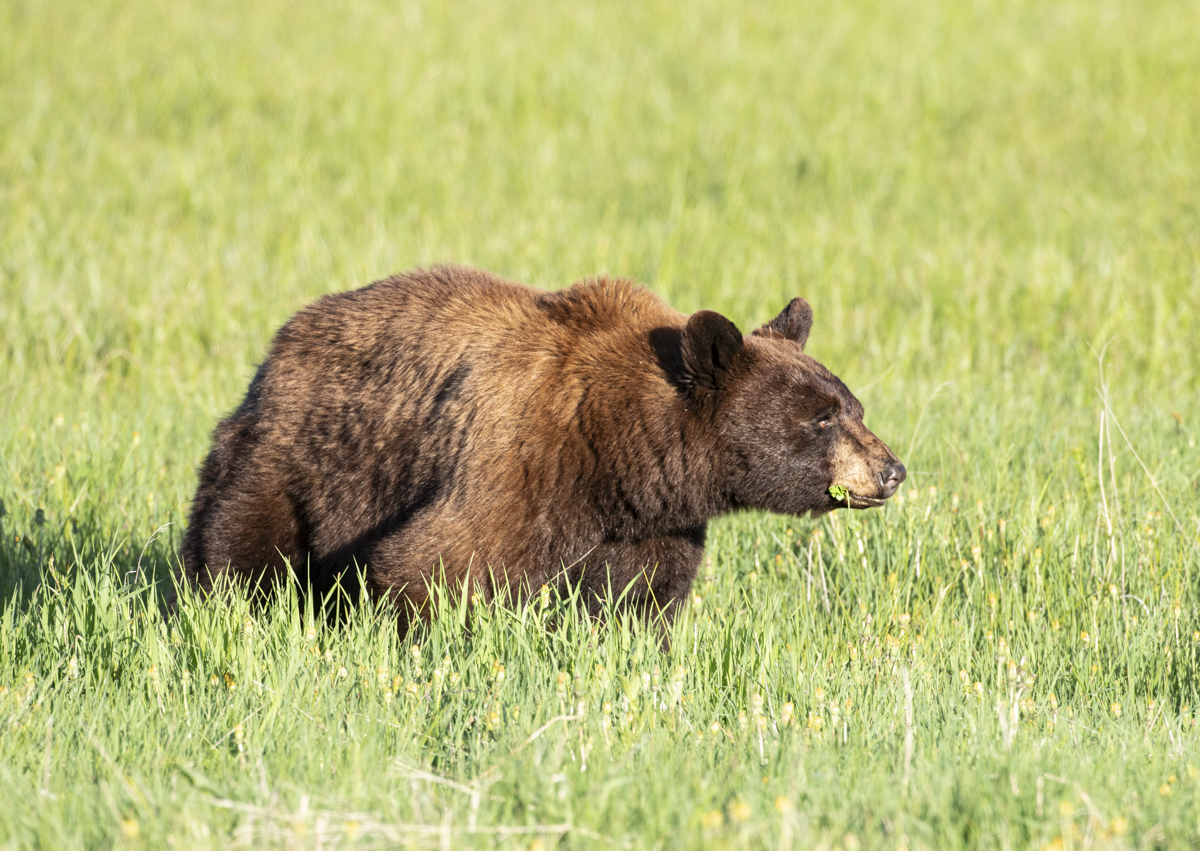
Bears were everywhere this trip, both Grizzlies and Black Bears. At Tower, I pulled into a crowded parking lot and spied a couple of volunteers standing near the back. They were wildlife volunteers whose duties included keeping people and wildlife a safe distance apart. They pointed to a somewhat problematic Black Bear sleeping in a tree at the end of the lot. Her one cub was apparently on the other side of the trunk out of sght. She has a habit of staying close to the roads and park facilities, almost always causing issues with traffic jams and crowds of visitors approaching her. The volunteers appreciated this nice break where very few of the hundreds of people passing through this spot even knew she was there.

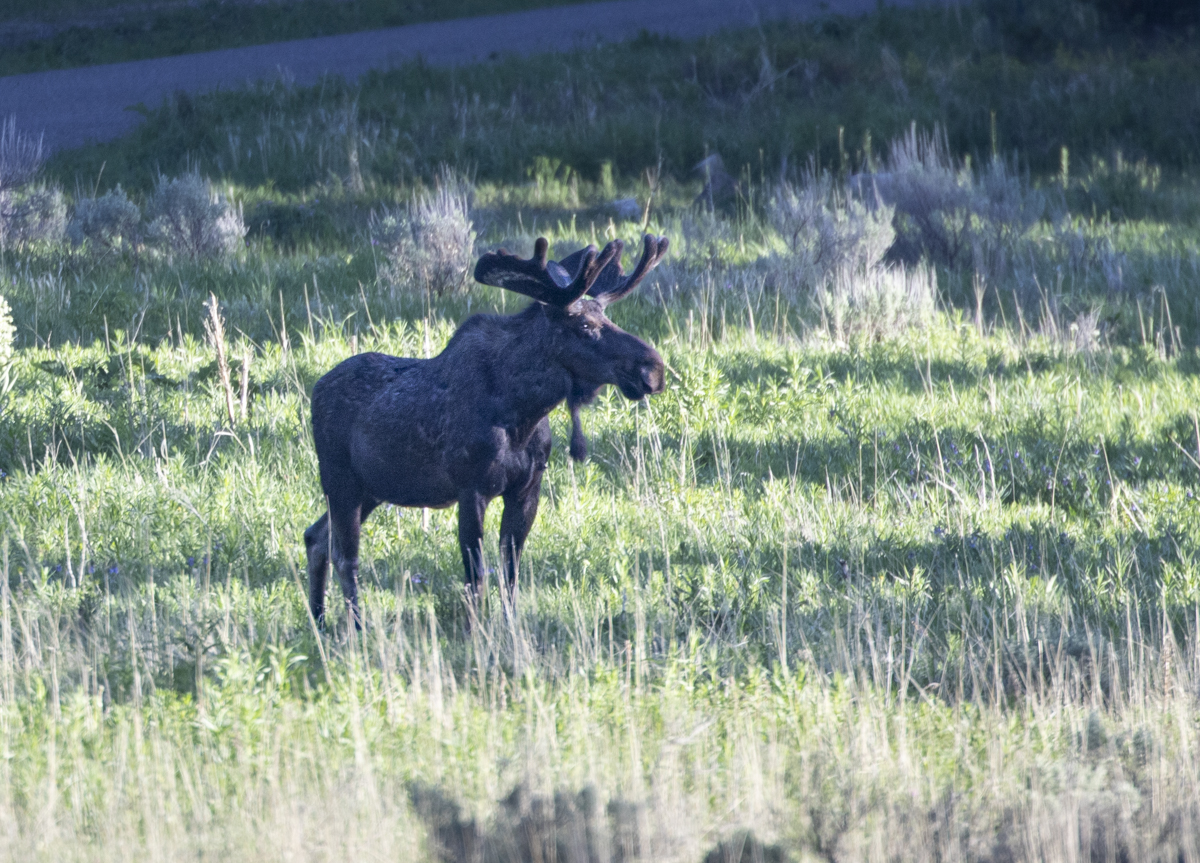
I saw Red Foxes mainly in the northeast part of the park between Lamar Valley and Silver Gate. Unfortunately, it is obvious at least a couple of the foxes have been rewarded with human food as they routinely approached visitors and vehicles to beg. I would shoo them away when they did that although they also seem to have a knack for recognizing the precursors to being fed and will veer away if you don’t show any signs. The fox below wandered close to some cars at a pullout but never got rewarded and then proceeded to snoop around looking for more natural prey.
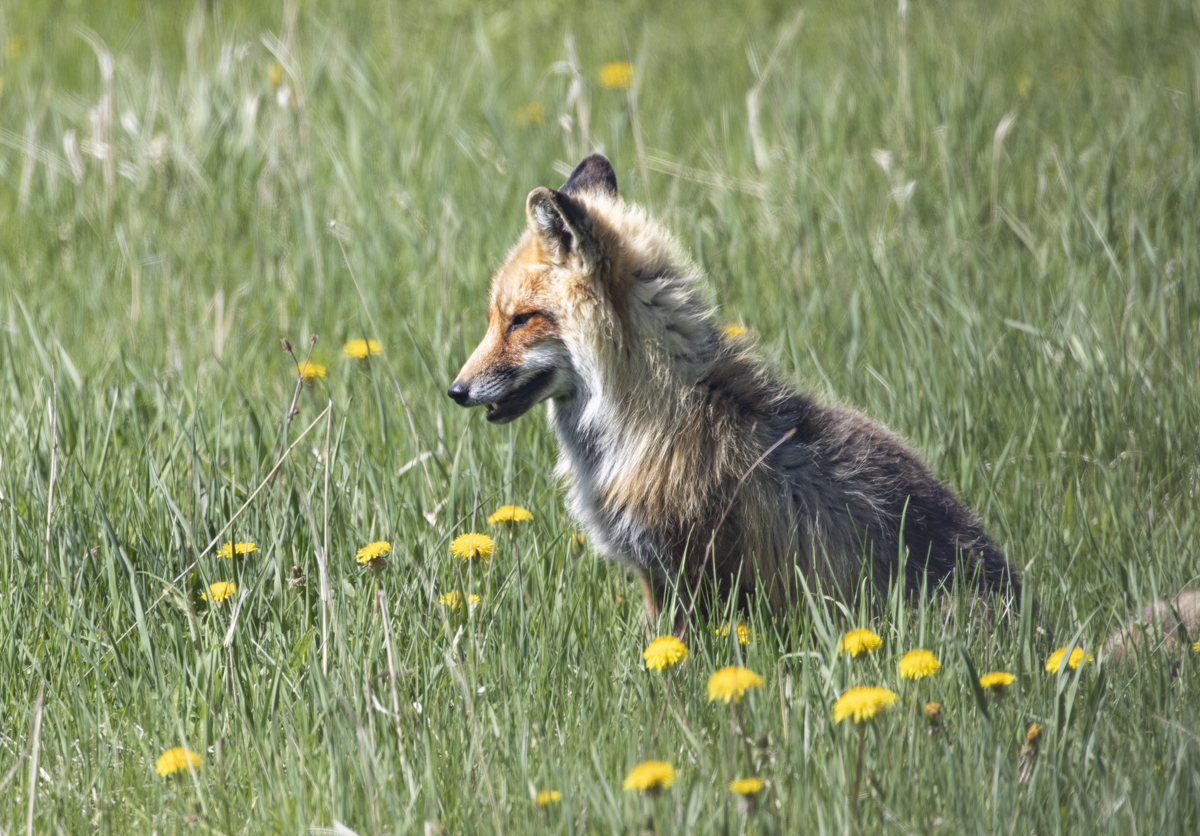
I saw one failed attempt at catching a small songbird in a shrub and then a successful pounce on a Northern Pocket Gopher.

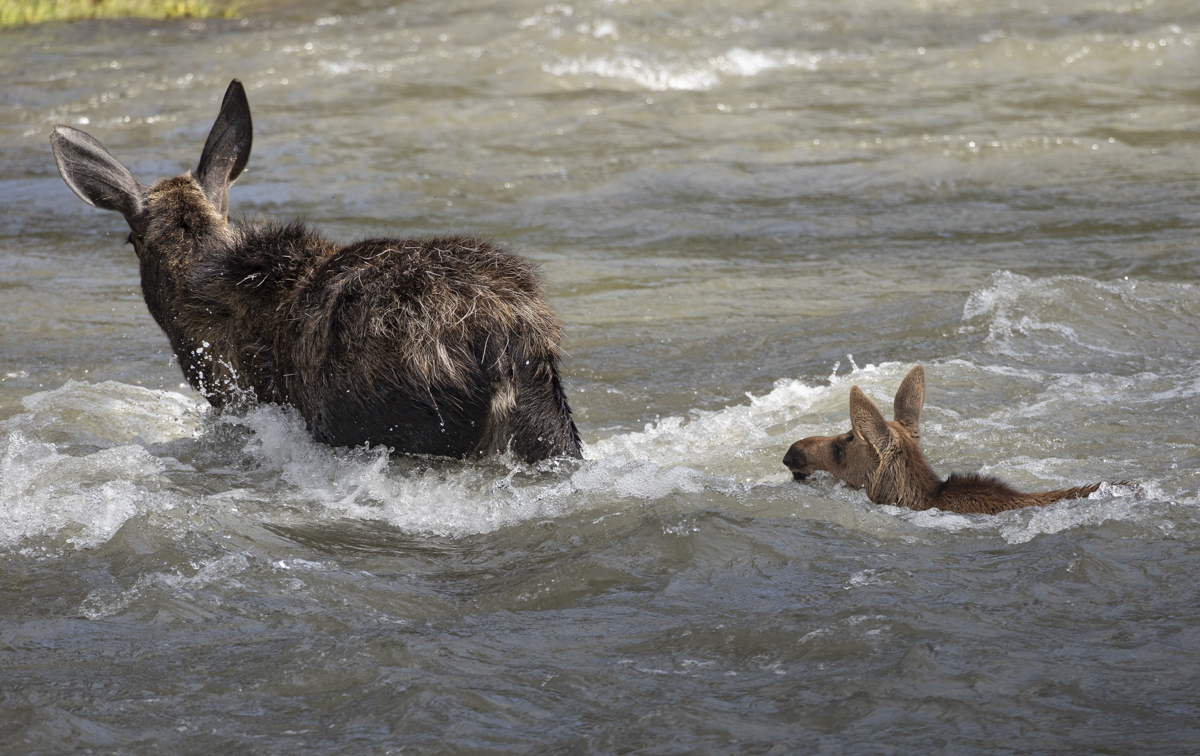
One morning as I approached the area where the moose and calf were hanging out, I saw a stopped car coming in the other direction. I saw the Moose and quickly stopped hoping to give them a buffer zone without any harassment (mine was the first car in my direction). The cow and calf attempted to cross the rushing waters, but the calf got swept downstream several feet and turned back to the rocky shore. This section of road was washed out in the 2022 flood and is now stabilized with large angular rocks).
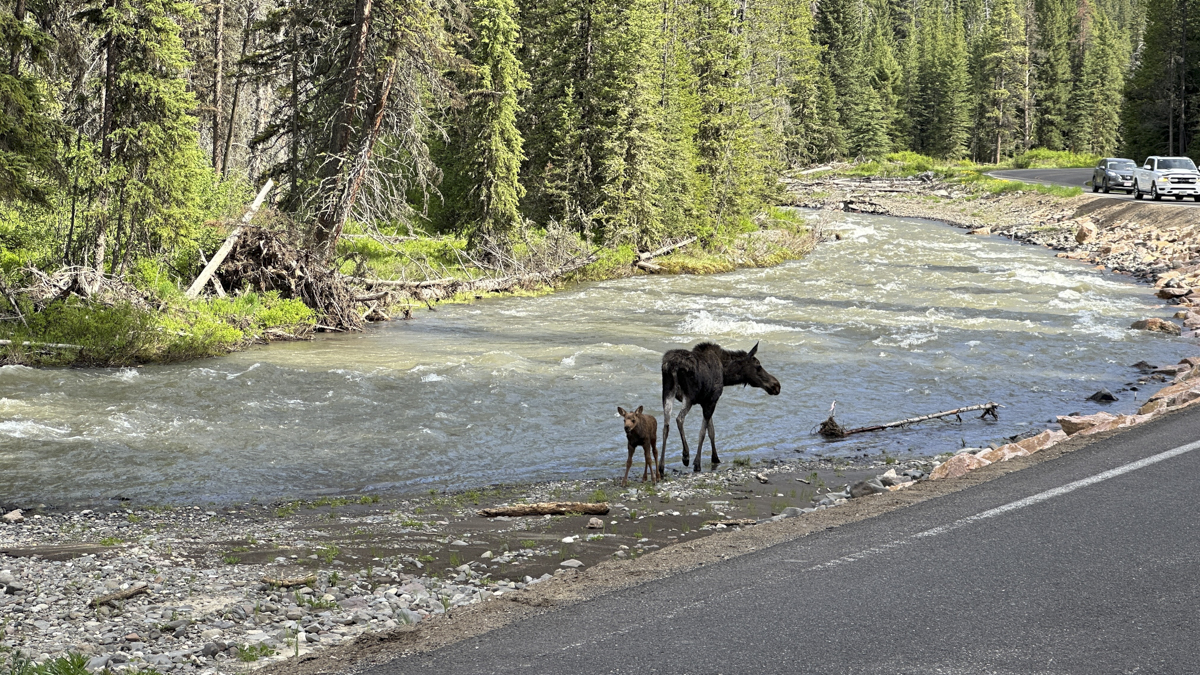
The cow came back across the creek to be with her calf. She then decided to try to cross the road to the safety of the trees. Meanwhile, a truck had driven around me and was now stopped in the middle of the road in the section that had been an opening for the Moose. The cow was obviously agitated now (hackles raised and stomping as she walked). The calf struggled trying to climb the rip rap wall (I was worried it might break a leg. The the cow came back down to the creek and they both walked upstream to try to get to dry ground. A growing number of people were now outside their vehicles and moving closer. I hollered to them to back up and give the Moose some room to get back on land. Some listened, others did not. Soon, the cow decided to cross the stream once again with her calf closely following.

On my next to last day, I was driving through Lamar and encountered one of many “Bison jams ” during the visit. It is not unusual for people to stop when a Bison is close to the road and stick a phone out the window for some photos. I get that, but there is a limit to how long you can sit in one place in the middle of the road once the Bison give you a gap. Cars in both directions had come to a stop even though the Bison were just milling along the side of the road. And then, when there was a clear space through the behemoths, nobody moved. So, I slowly eased my car past the next couple of photo-obsessed drivers and finally had a clear space to get through. Suddenly, it got more complicated…
–Just when I was about to squeeze by the Bison jam, this happens
This is just one reason why you always need to plan for extra time when driving through Yellowstone.
Our friends Dan and Cindy are owl experts and always seem to have an idea of where to find them. Dan told e about a place we might find a Pygmy Owl, a species I have never seen. I sent an email to see if we could go out the day before I was scheduled to leave but that wouldn’t work so they suggested I come over the morning of my departure. My flight from Bozeman (about 2 hours away at a minimum, depending on wildlife jams, etc.). I was hesitant at first, but, hey, it is for a Northern Pygmy Owl! So, I met Dan the next morning at 6:15 and we headed out.
We hiked into the conifers and waited. I must admit, when sitting quietly in Grizzly country, trying not to move, your mind begins to notice every little noise. When by myself, I have started wishing for a small parabolic mirror in front of me so I can see what is behind me without turning around. After about an hour an owl flew in and I managed a few shots.


That was a great way to end my stay (thanks Dan and Cindy) though I did miss what would have been an awesome pic of the owl with a prey item while I futzed with my camera and heavy telephoto lens. But, to see a species I have been after for years was worth it.
As always, time spent in Yellowstone is time well spent. And, besides, I’ll be back soon.


 Roads End Naturalist
Leave a reply to Dale Pittard Cancel reply