
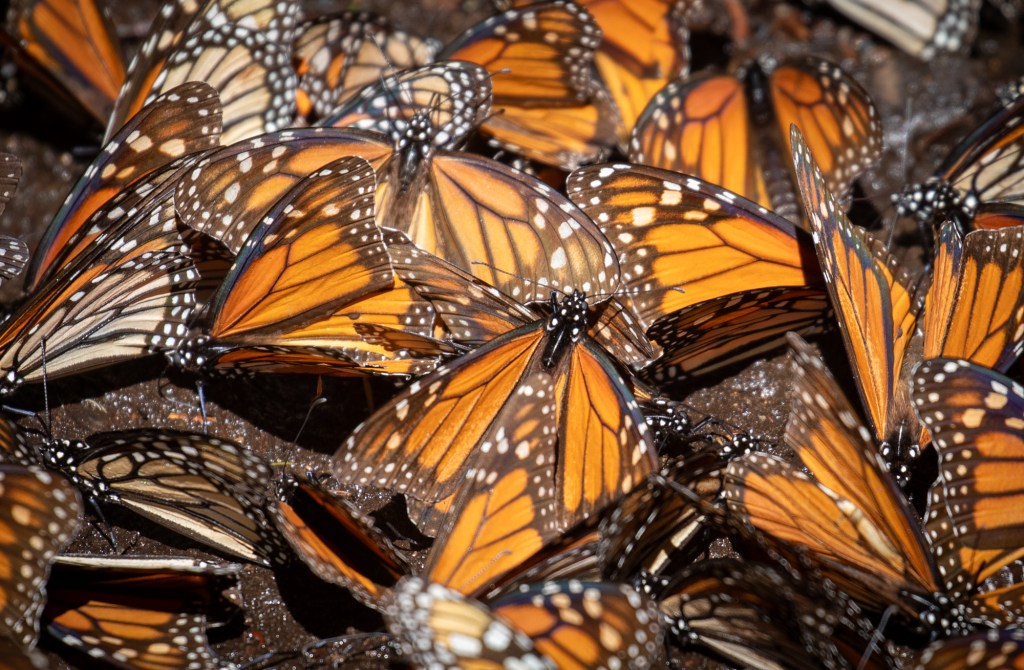
On many trips I’ve led, especially ones where we see large groups of wildlife, someone asks about the collective noun for whatever species we’re observing. Whether it’s a romp of otters or a symphony of swans, it’s always fun to look that up and/or make it up (because “symphony” is not the legit collective noun for swans, but I think it should be… it’s way better than flock or bevy or lamentation).
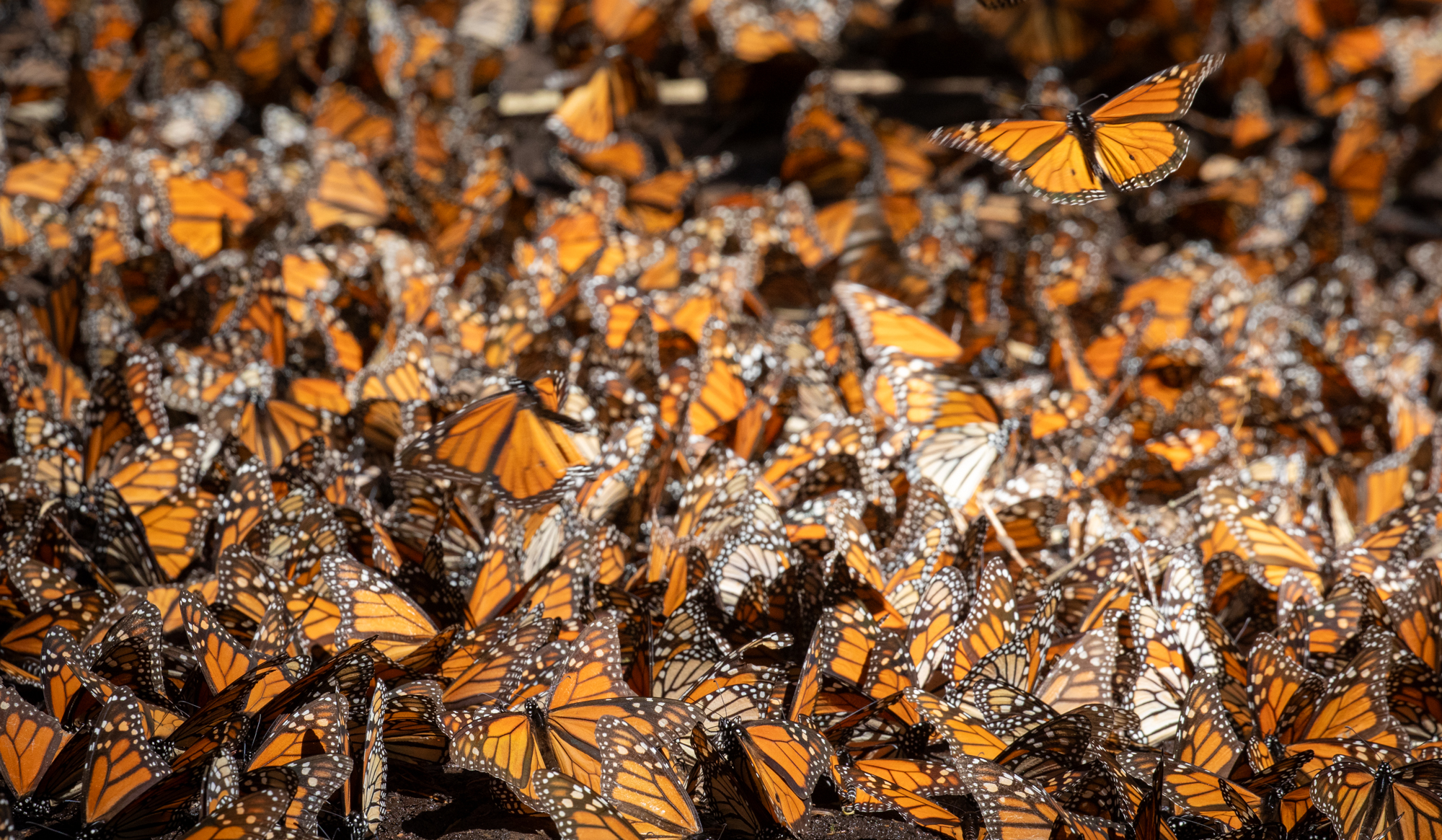
Apparently one of the options for a group of butterflies is a kaleidoscope. That word is quite fitting for the spectacle we witnessed on our visit to El Rosario Monarch Butterfly Sanctuary, our second and final spot to see the overwintering monarchs on our Mexico’s Magical Migrations Institute. El Rosario is the best known and most visited of the butterfly sanctuaries, and for the past few years at least, it has hosted the largest proportion of the monarch population overwintering in Mexico.
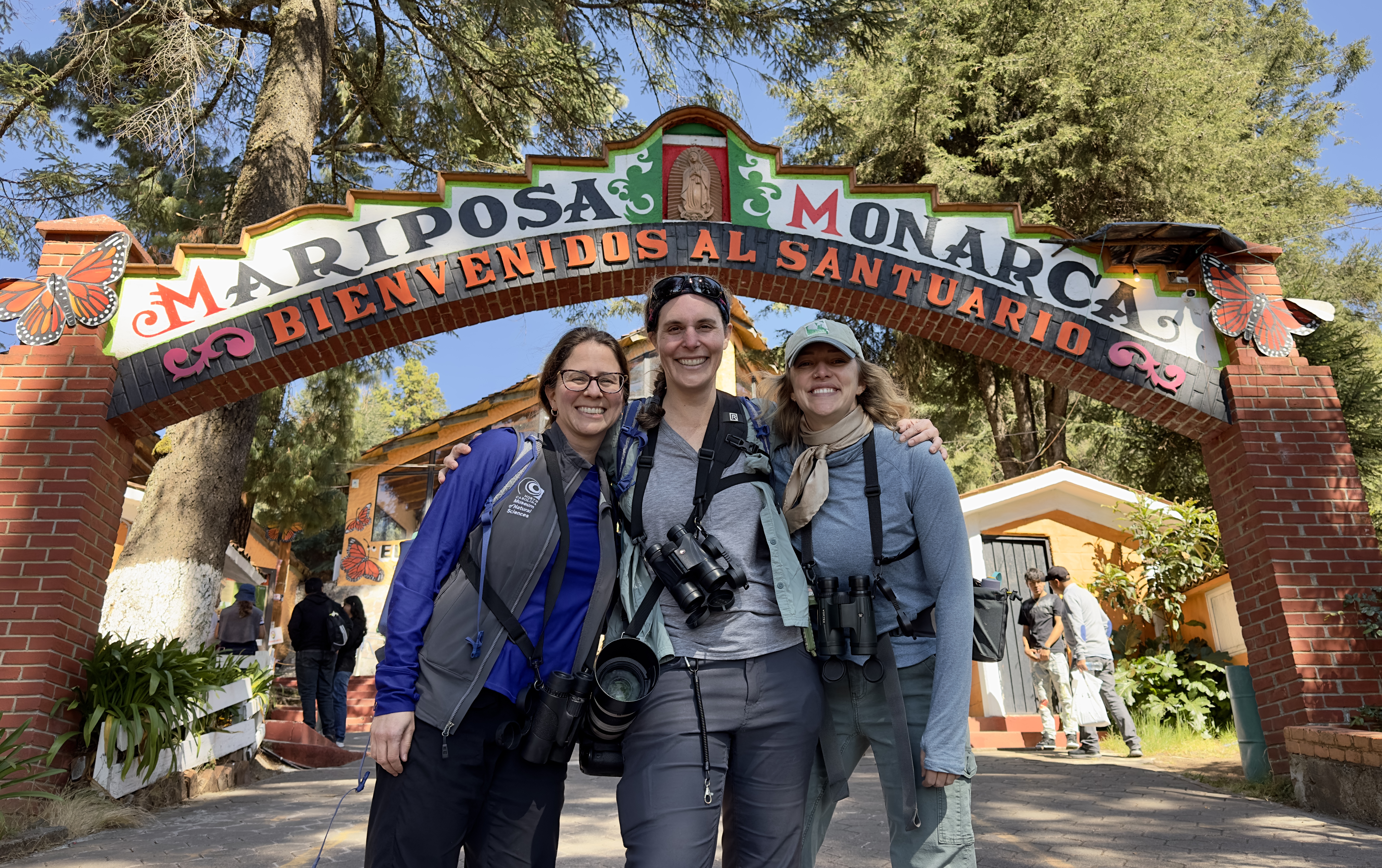
As we approached the parking area for the reserve, the sky was blue and cloudless, a good sign for more flying monarchs than we’d seen the day before at Sierra Chincua. We quickly moved past the numerous stalls selling all sorts of butterfly-themed souvenirs, climbed a short set of steps, and hopped onto the horses that would take up closer to the roosting area. The trail was steep, and a few of the horses had quite a bounce in their step. This wasn’t to the liking of all the riders in our group, but I loved the ride and enjoyed checking out more wildflowers that reminded me of home on the trailsides. Again, the final climb was on foot and at high elevation. As we approached the roosting area, we started seeing monarchs flying here and there under the blue sky, some hanging on flowers to nectar, a few landing at the edge of a small stream to drink and gather minerals.
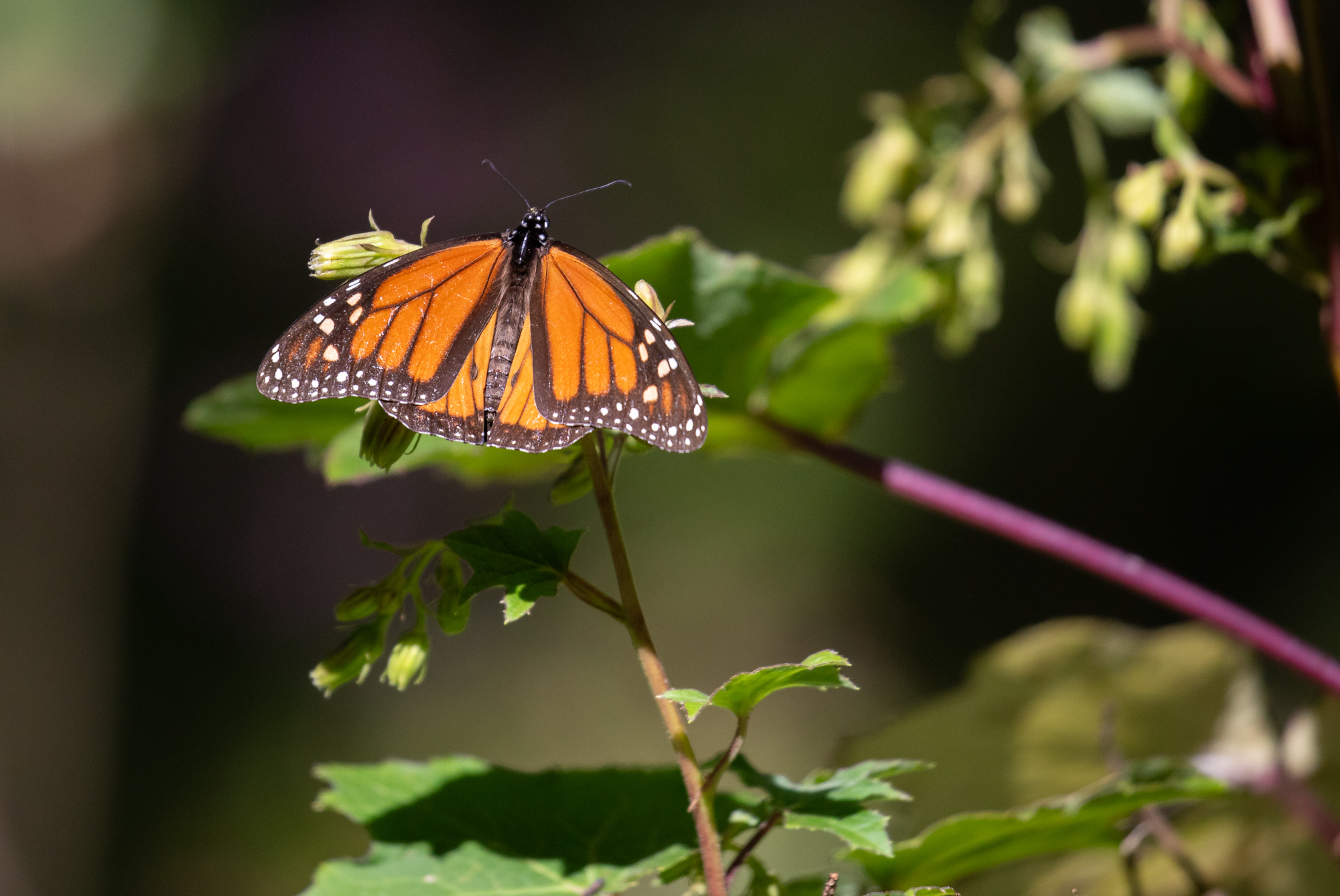
When we arrived at the area where the butterflies had clustered the previous night, the numbers flying over and around us crescendoed. In looking through my pictures and videos, though I took hundreds, so few of them really do justice to the spectacle we witnessed. Like at Chincua, there were branches of the oyamel fir trees just dripping with butterflies. And everywhere you looked there were butterflies in flight, some taking off from clusters, some returning. As the day continued to warm, there were more and more — low, high, among the branches, or landing on people and flowers and shrubs and the ground.
There were many more people visiting El Rosario than Cihincua. I assume this was in part due to the popularity of this reserve, but also because it was a Saturday and more locals were able to visit. But, if you turn the audio on in any of these videos, you will hear very little human-created sound. That’s because, once again, there was a huge level of respect for the spactacle we were witnessing, and people were nearly silent as we stood in awe with our heads tilted to the sky, trying to take in as much as we could.
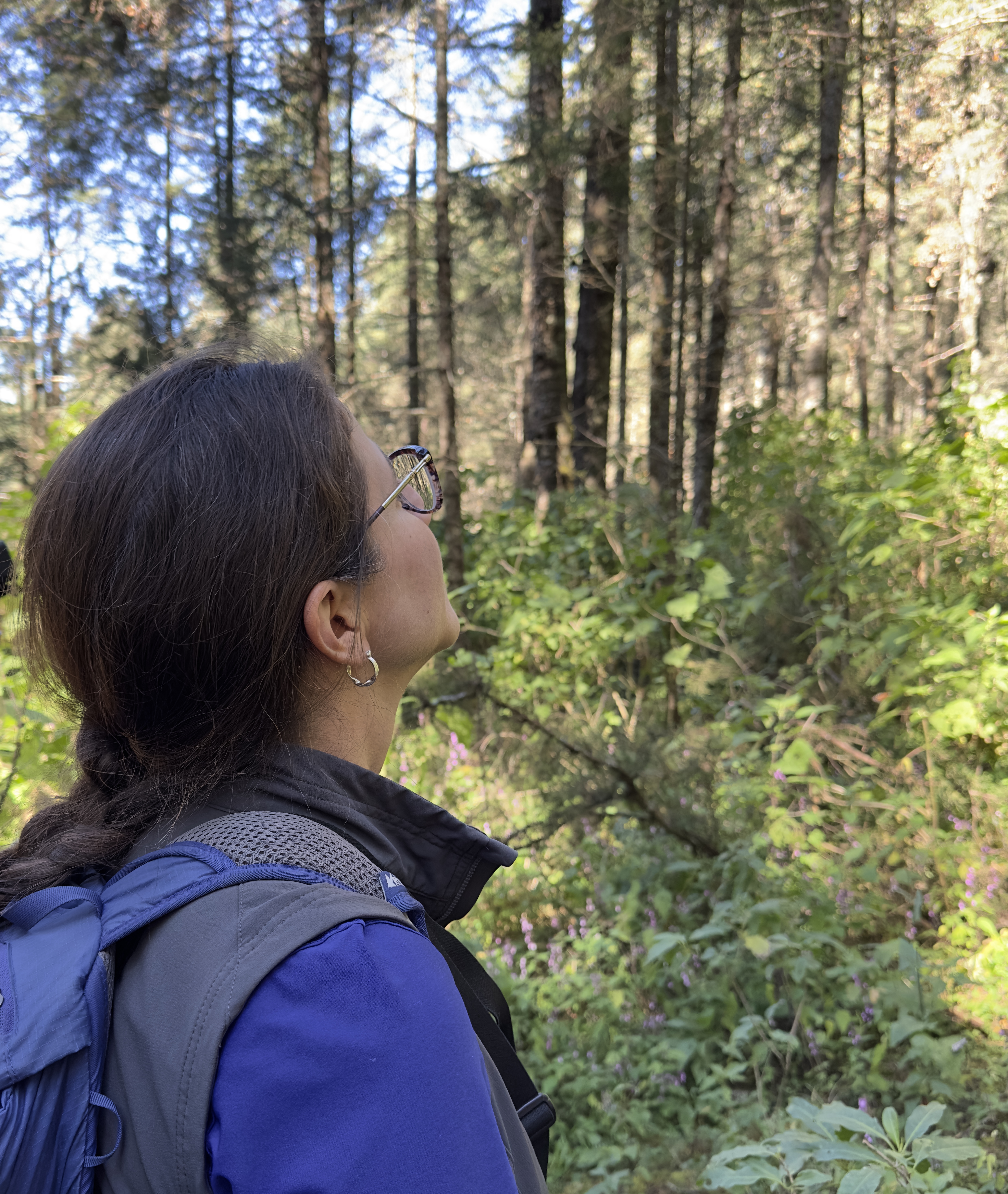
There were ropes around the area where most of the monarchs were, keeping people from getting to close to the main roost sites. A number of locals were working, keeping an eye on visitors and adjusting the location of the ropes as the butterflies formed new clumps. I spent much of my time as close as I could get to the roped off end of the trail, watching the butteflies come and go from the main roost trees. Eventually, it was time to head back down the mountain. Only then did I realize that there was so much more to see and experience behind me! As the butterflies had been taking off from their roosts, huge numbers of them had been seeking out sunny areas to rest and nectar just downslope.
Perhaps best of all, at the small stream where we had seen two or three monarchs drinking and gathering minerals on our way up, hundreds had gathered!

Of course, we all had to take selfies with the monarchs by the stream. This one is particularly special to me. I’m with Doug Clark, an elementary school teacher from Lincolnton. Just two and a half years into my career at the Museum, I had the opportunity to move into a role doing teacher education full-time (prior to that, I worked in the Naturalist Center and only helped with teacher workshops occassionally). Doug’s school was one of the first I ever visited in my new role as Teacher Education Specialist. I watched and learned alongside Doug as Mike taught the group of teachers about native plants and birds and monarch butterfiles, among other things. As part of the program, we helped establish a butterfly garden at the school. Doug has kept that garden up through the years (with some additional Museum help and new plants when it got herbicided at one point), and has tagged hundreds of monarchs with students and his own children over the years. As Mike likes to say, Doug is “doing it.” He’s doing the hard work, year after year. And he’s stuck with it, which is not easy to do with all the challenges facing teachers these days. Doug has been on a few local workshops with us over the years, but this was the first time he had applied to be part of one of our bigger Institutes. And what a perfect one to share with him. Thanks, Doug, for all you do for your students. You are inspiring the next generation to love the natural world, and that is one of the most important things anyone can do!
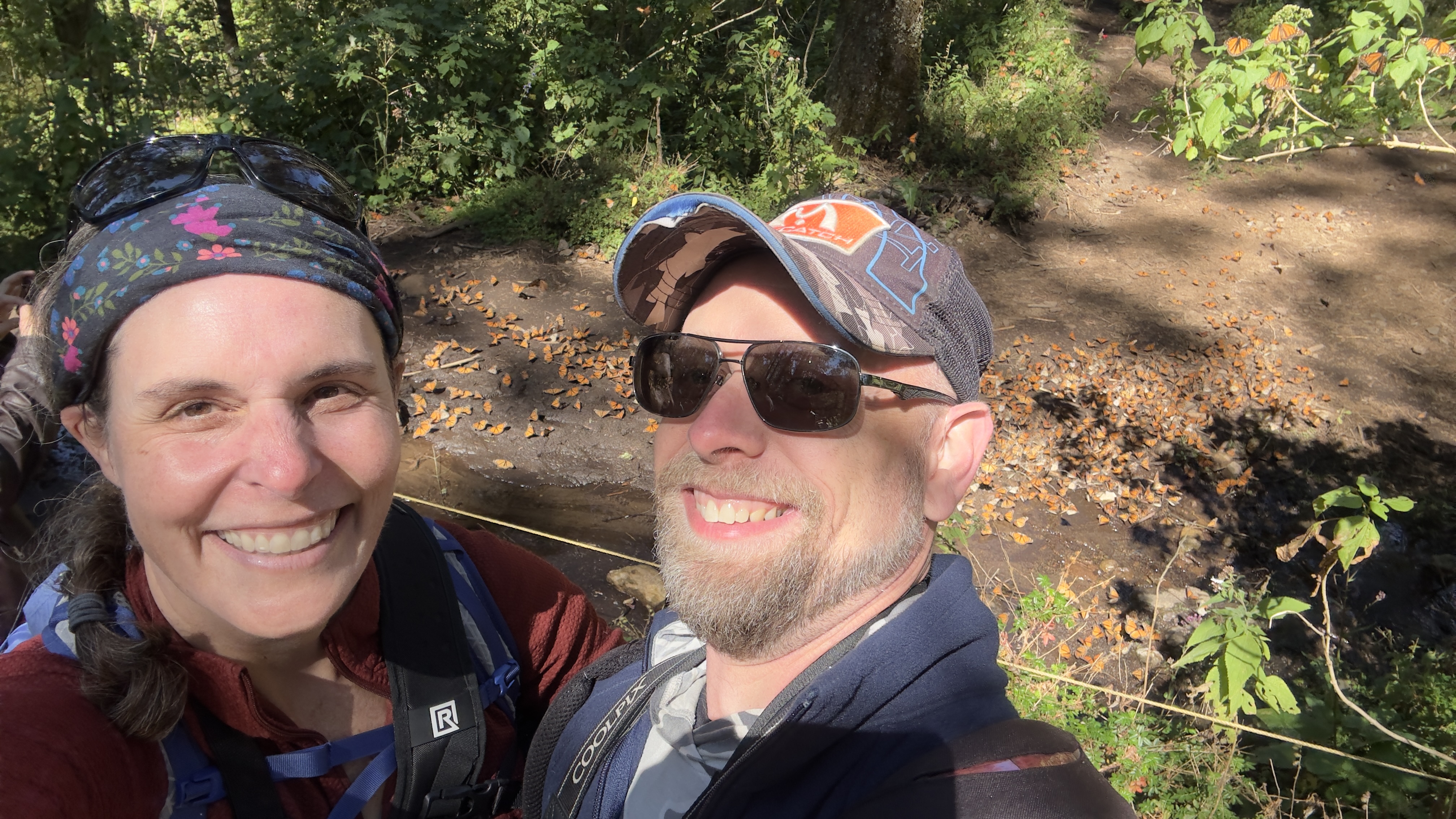
As my last weeks as a full-time Museum employee are upon me, I’m spending a lot of time reflecting on my 20 years there. As with everything, there’s good and bad, challenges and joys. It’s been a kaleidoscope of experiences, people, and places. But at the heart of it all is what this moment with Doug exemplifies: it has been a true privilege to share the natural world with educators who are making a difference in the lives of others.

 Roads End Naturalist
Leave a comment