
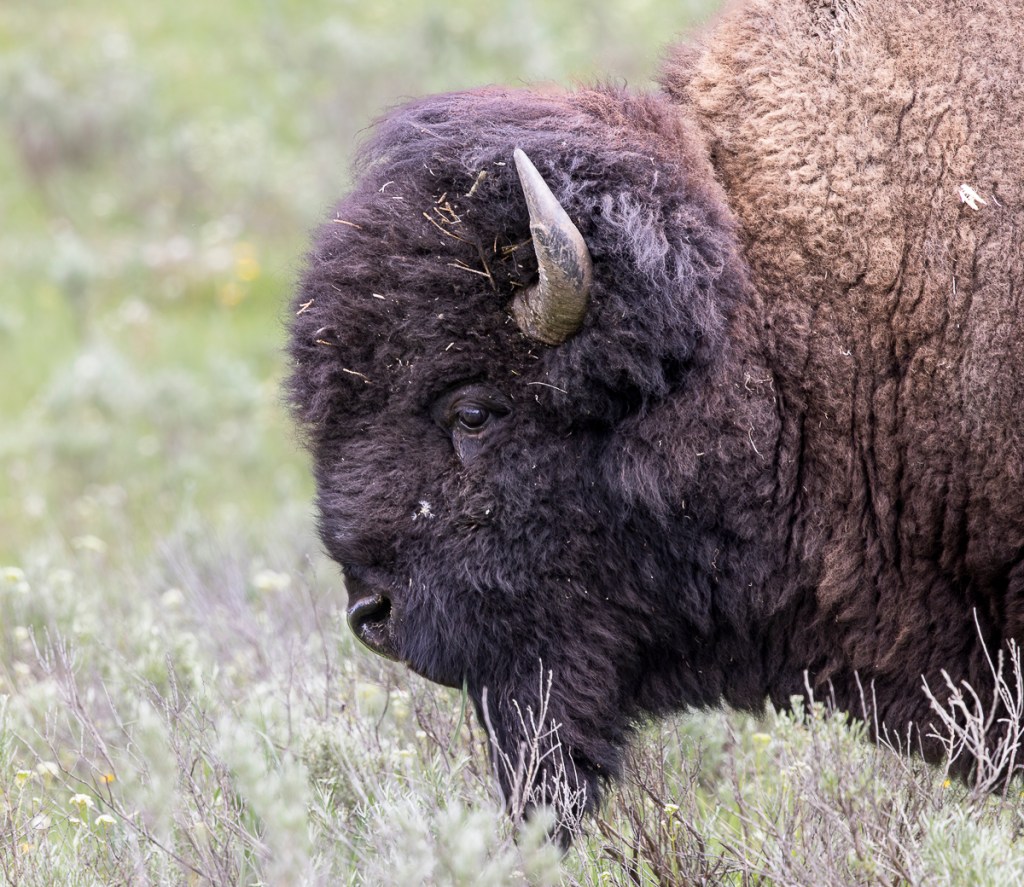
What must it be like to be a bison, to own nothing yet have everything.
~Donna Frider, N.C. teacher on one of the museum’s Yellowstone Institutes
I’ve probably used this quote on a previous post, but it seems to capture my thoughts and emotions when it comes to these incredible, almost mystical animals. Last week while Melissa was leading her teacher workshop, I took a couple of opportunities to go out after an early dinner and enjoy the park. Two of the trips were highlighted by bison, one of my favorite animals in Yellowstone. They are such majestic beasts – huge bulls can weigh 2000 pounds but have an air of serenity and calmness most of the time (but don’t let that fool you, two people have already been gored by bison this season). Bison are impressive any time of year but spring is the time of the calves with their reddish-toned fur and playful attitudes. They seem to either be zonked out or running and kicking and playing with their herd mates.
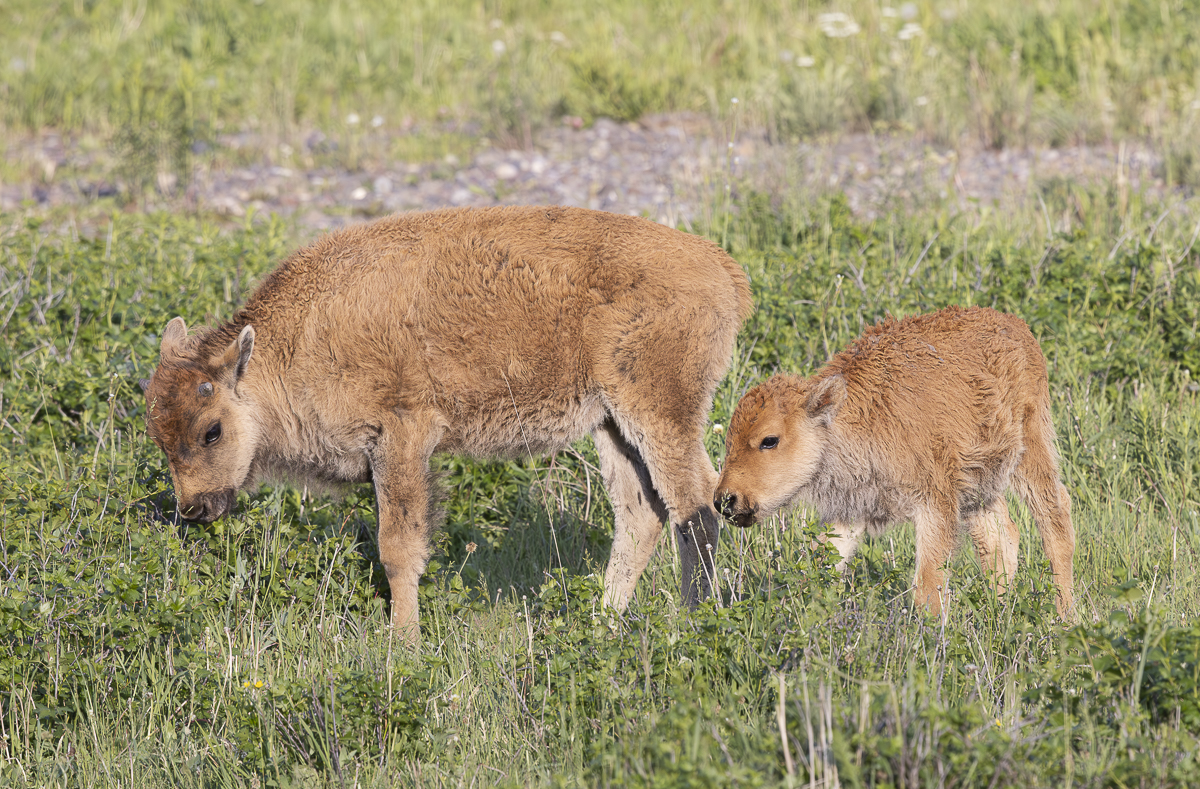
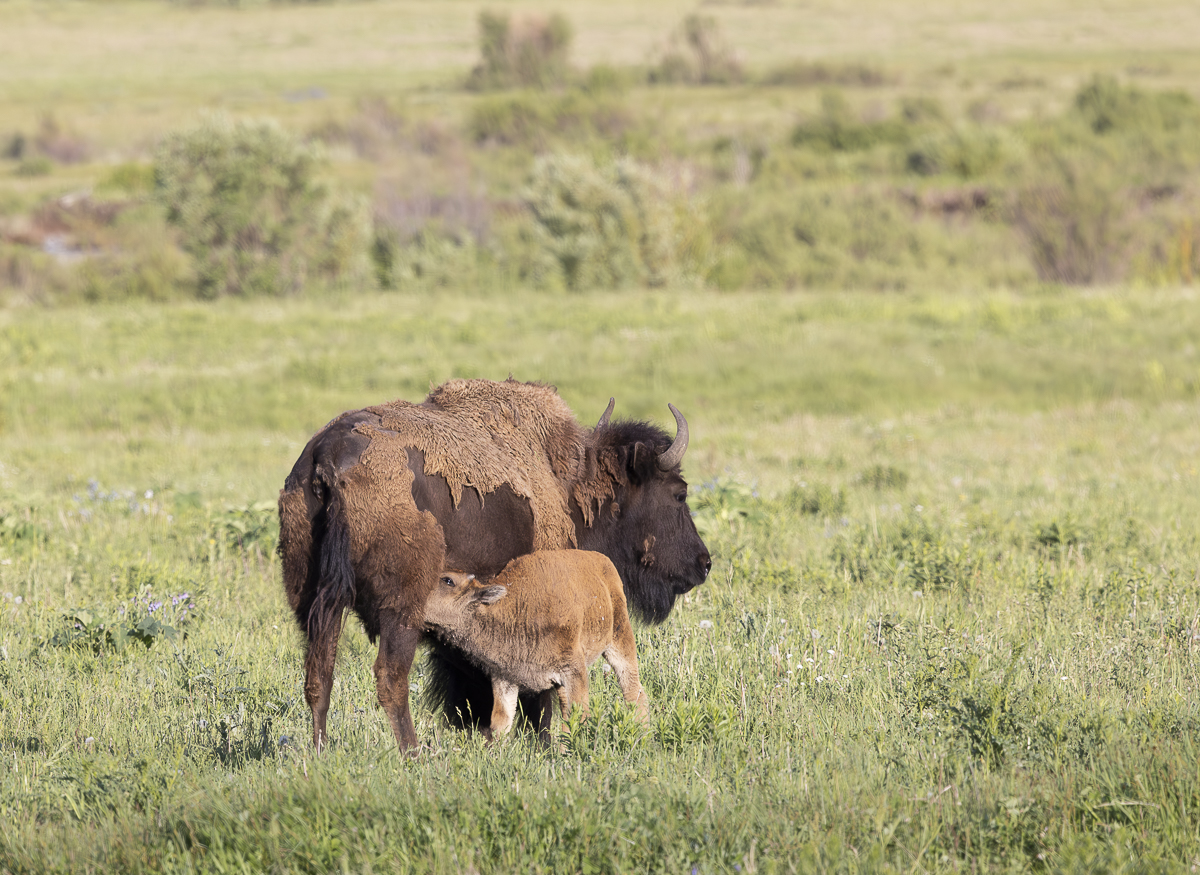
I really enjoy just sitting and watching bison be bison. They can be playful, protective (especially when predators threaten the calves), surprisingly fast when they want to be (a bison can run up to 35 miles per hour), energetic and agile (a bison can jump 6 vertical feet from a standing position), and are a true symbol of the American West. Herds are generally led by an experienced cow (you see several older cows with tracking collars as scientists try to learn more about their movements). Bison behavior can be fascinating and puzzling – one minute peacefully grazing, the next, they take off at a full run for no apparent reason.
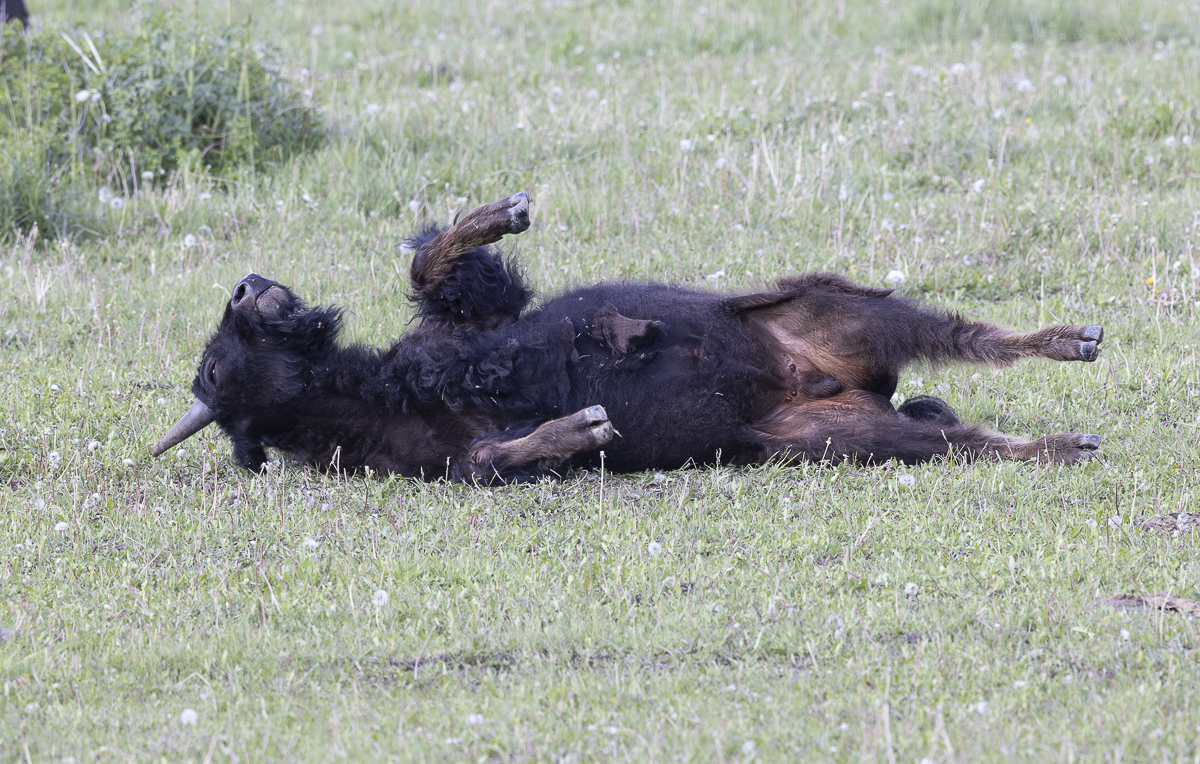
One of the fascinating things to observe is the behavior called wallowing where a bison lays on its side and rolls (but they are unable to roll over so must stand up and switch sides to get both sides done). This behavior may help rid them of shedding fur plus may help get rid of parasites and biting insects by coating their fur with a layer of dust or mud. You can see these shallow bowls of bare soil (called wallows) scattered across the landscape where bison frequently travel. And I admit to having demonstrated that behavior a time or two on workshops and one of our nephews did a very reasonable impression on their recent visit.
This time of year many of the old bulls are far from the large herds, often at higher elevations. Here they hang out with a few other elder statesmen, grazing unmolested until the start of the rut in July and August. Then things get testy and these titans put on some impressive shows of strength as they battle for mating rites. Last week I sat in my car with a couple of the behemoths in the northeastern section of the park and just watched and listened as they fed on the lush grasses and wildflowers.
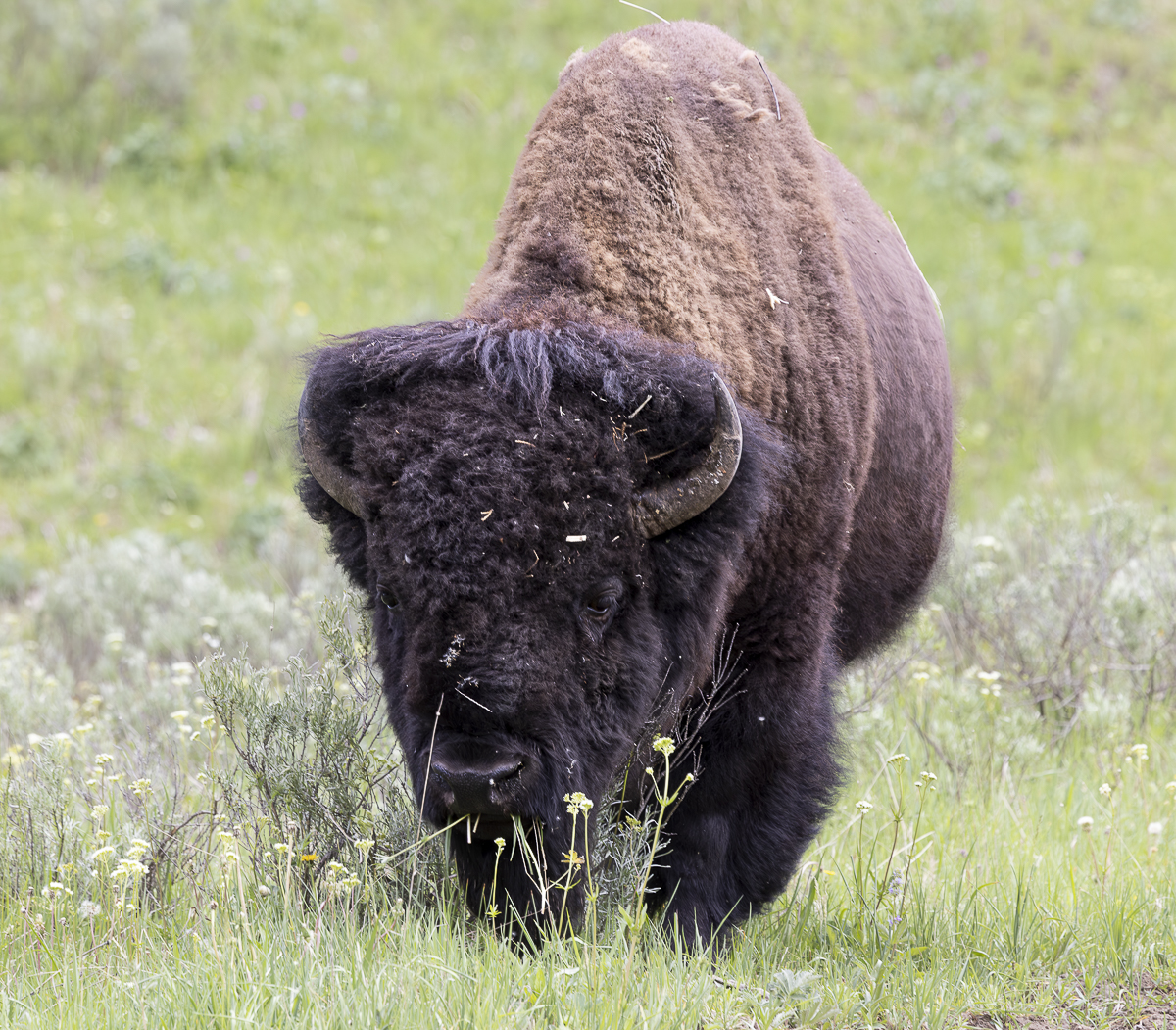
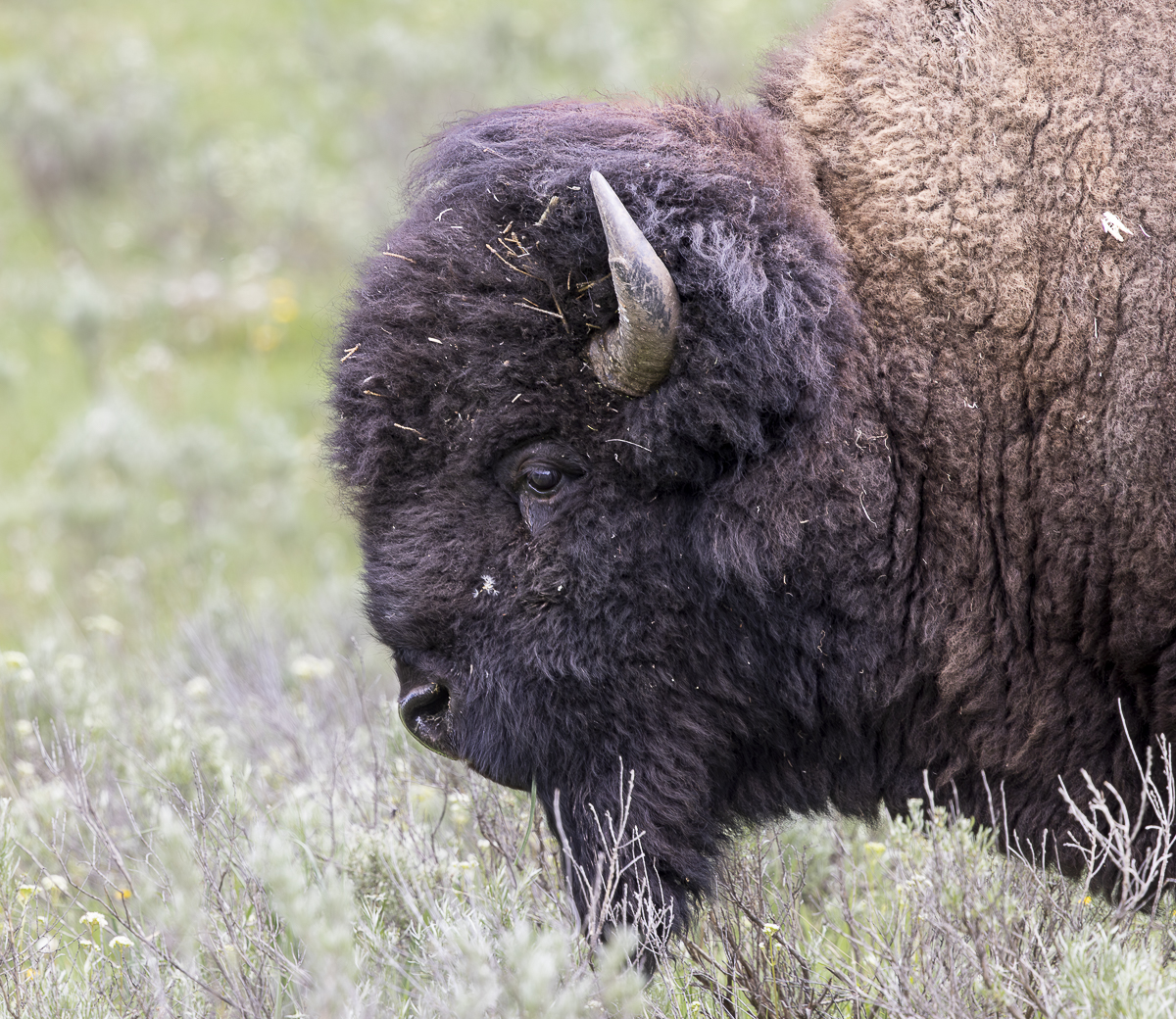
The herd on the northern range has been quite impressive in recent years with a population of around 4000 animals. They have been in large gatherings in Lamar Valley, Little America and Round Prairie this season giving a hint of what it might have been like before the campaign to eliminate them in the 1800’s. One evening I experienced one of the mot magical bison herds I have seen. It started in Lamar Valley with bison stretched out on the valley floor along the Lamar River. Many were in the large expanse of grasslands across from the Lamar Buffalo Ranch (where park staff actually ranched bison in the early years of the park in an attempt to increase their numbers). Another large herd was just east of there and across the river. I saw one large bull start to cross so I walked down to the river to watch. Soon, another bison waded the river and then the entire herd started to cross.
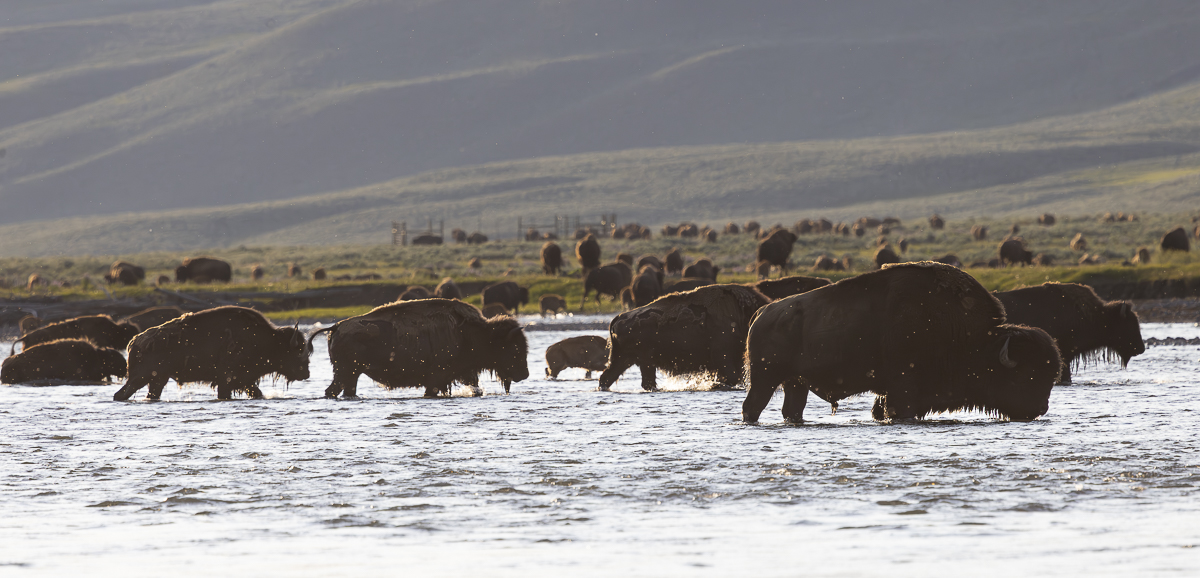
As they started to spread out on my side of the river, I walked back to my car and drove up to a viewpoint to watch the hundreds of bison out in the valley. They soon all seemed to get the message to move westward and the entire herd started walking my way. This video clip captures just a moment and a small portion of this epic sight. It also captures one of the things that makes this place so incredibly special – a connection to the land and its wildlife and a glimpse into the history of this wild landscape.
–Large bison herd moving through Lamar Valley at sunset
Each time I experience something like this, it reminds me how incredibly lucky we are to call this place home.


 Roads End Naturalist
Leave a reply to roadsendnaturalist Cancel reply