
The presence of a single bird can change everything for one who appreciates them.
~Julie Zickefoose
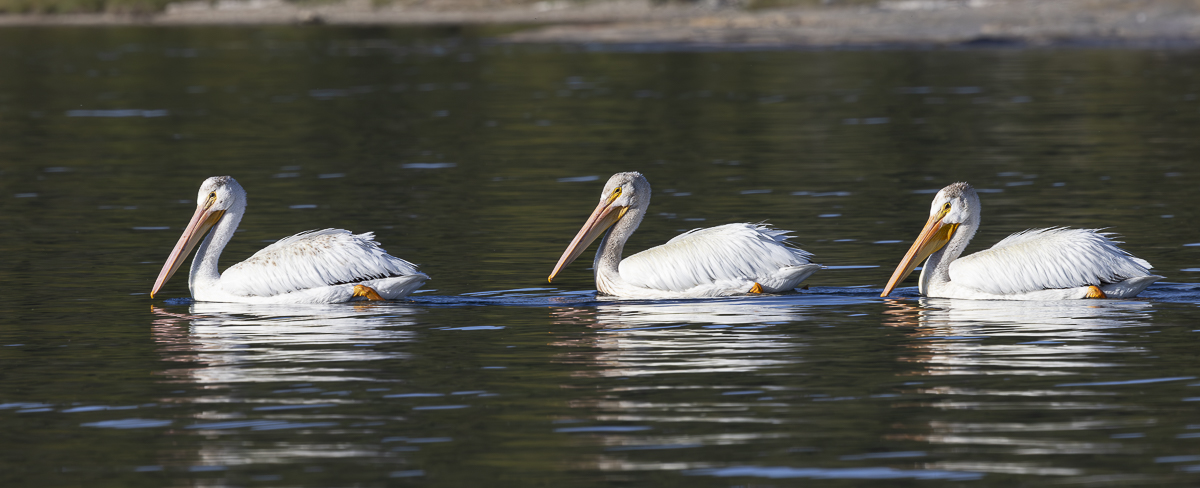
In her last post about our canoe camping trip to Shoshone Lake, Melissa mentioned how we enjoyed watching the common mergansers swim by our campsite. They were our companions over much of the 5 days on the water, both in the 3-mile stretch of the Lewis Channel and at our various campsites on the lake. But before sharing some merganser magic, I should say we did see some other species along the way. Our first birds were three white pelicans that drifted in over Lewis Lake as we paddled and then settled not far away as we made it to the northern shore.
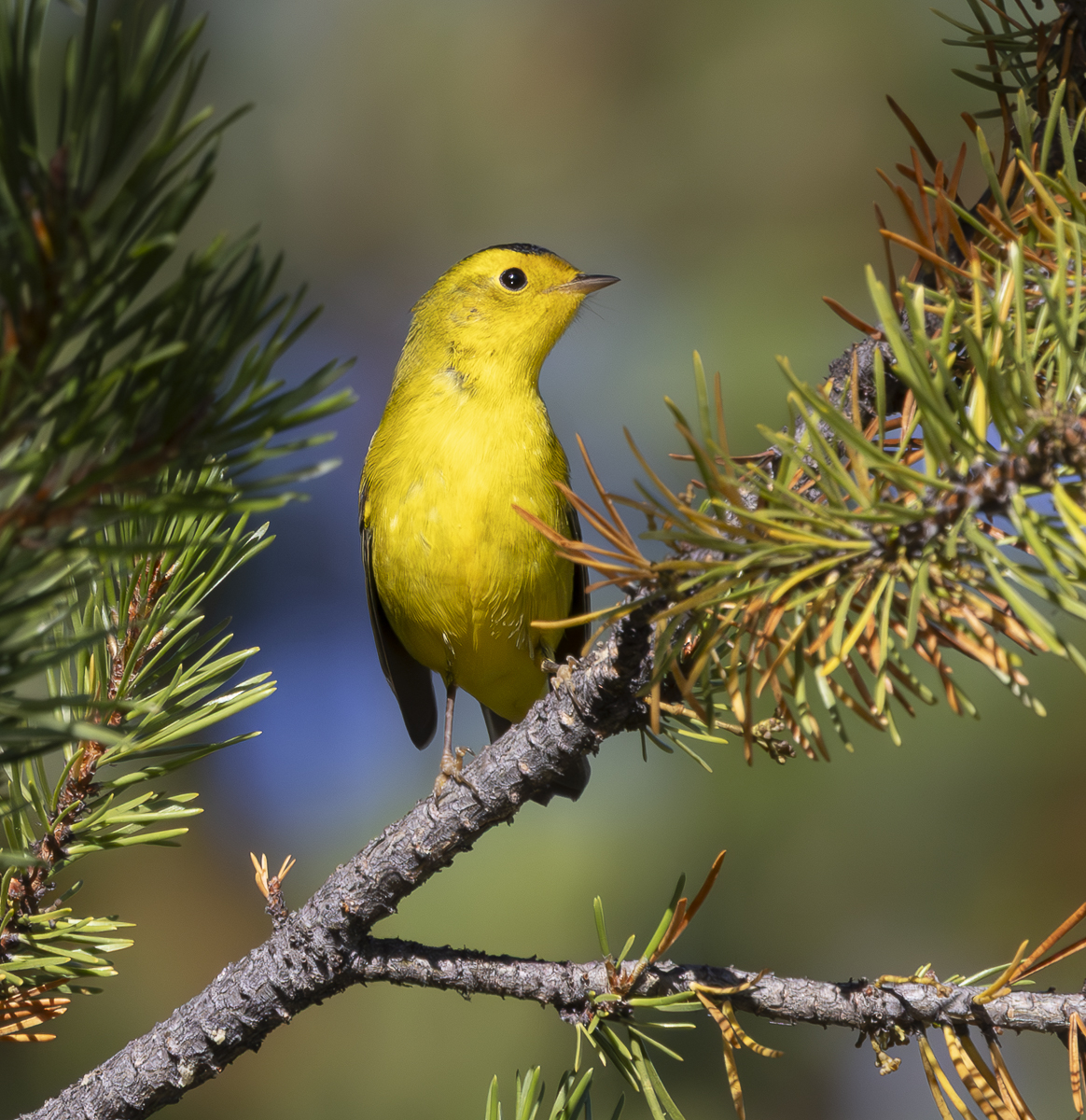
On entering the Lewis Channel we came across a calm stretch with lily pads and a conifer full of small birds – mountain chickadees, Audubon’s warblers, and a couple of Wilson’s warblers. After trying for several minutes, I finally managed a pic of a Wilson’s in its brief appearance in the sun.
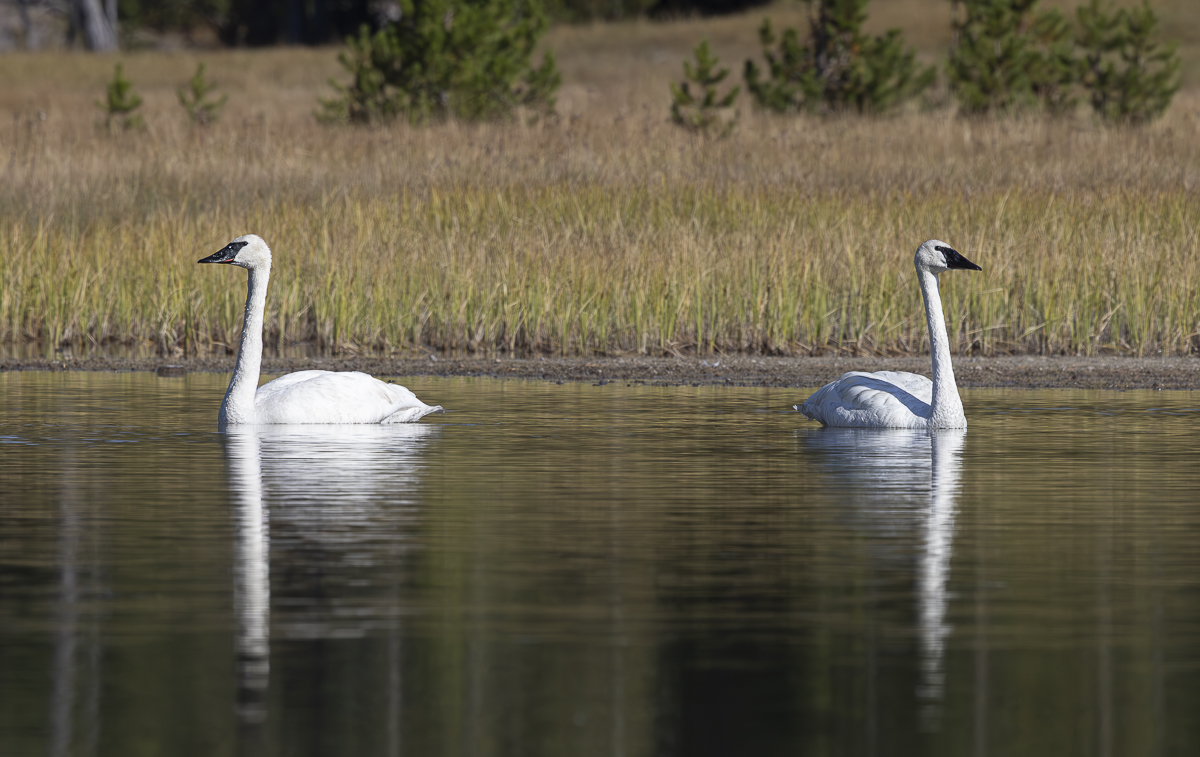
A little further up the channel, a pair of elegant trumpeter swans graced the still waters in a marshy bay.
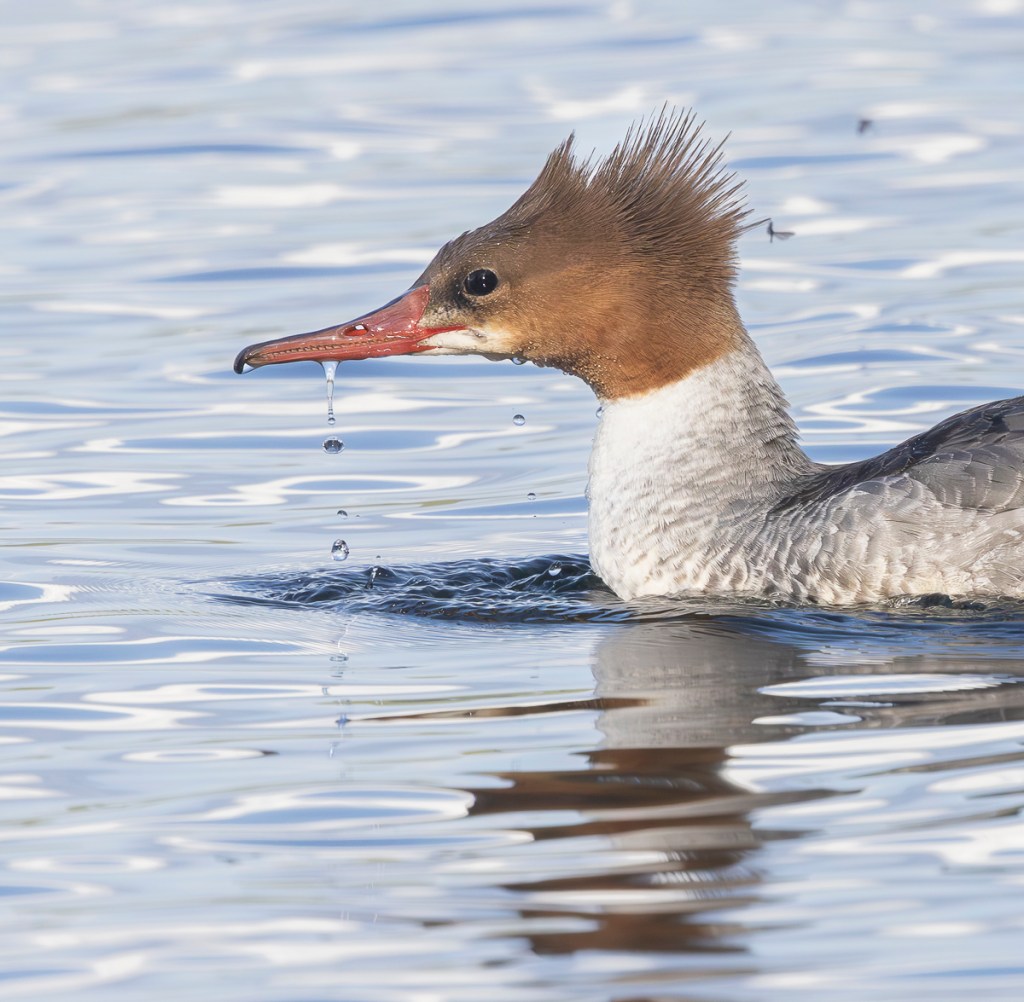
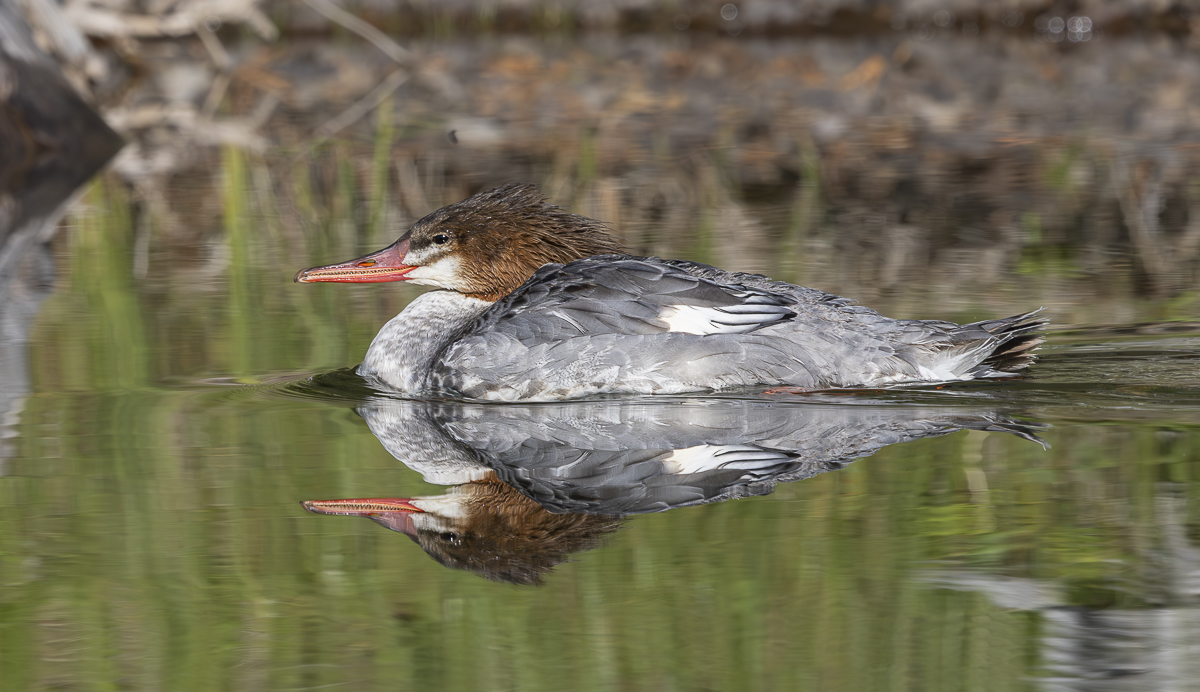
We soon had our first encounter with a merganser – a single bird placidly gliding near the shore of the channel, its bold feather pattern artistically reflected in the calm clear water.
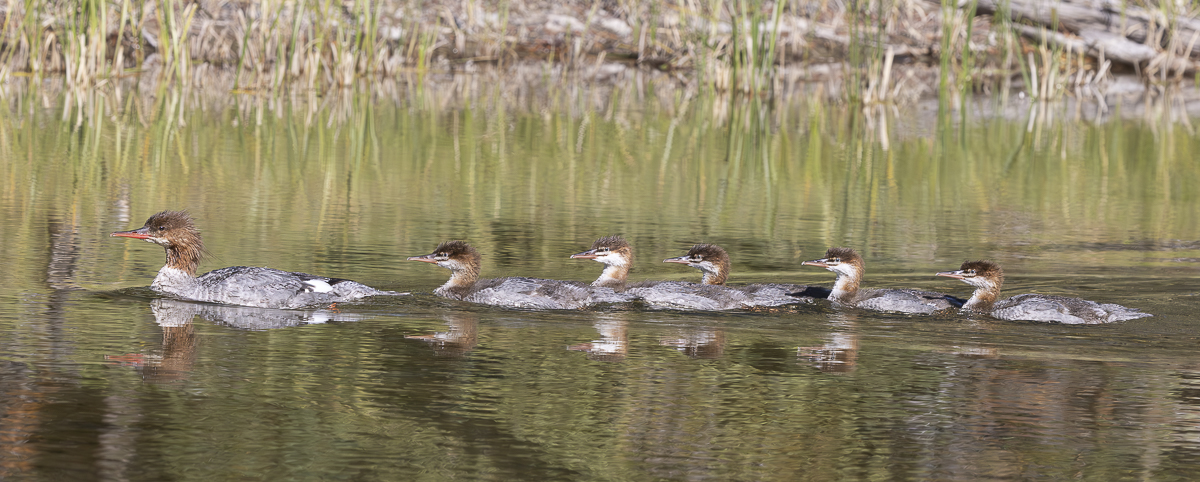
Then a group of merganser young led by a female swam by in formation. Somewhat surprisingly, common mergansers usually nest in hollow trees and only occasionally in crevices on rocky ledges. The young hatch in early summer. You may see females with large numbers of young trailing behind (records of up to 40+) . This is called brood amalgamation and is well documented in this species. Some suggest that aggressive females “kidnap” young from inexperienced mothers or that it may just be a case of confused young following the wrong female.
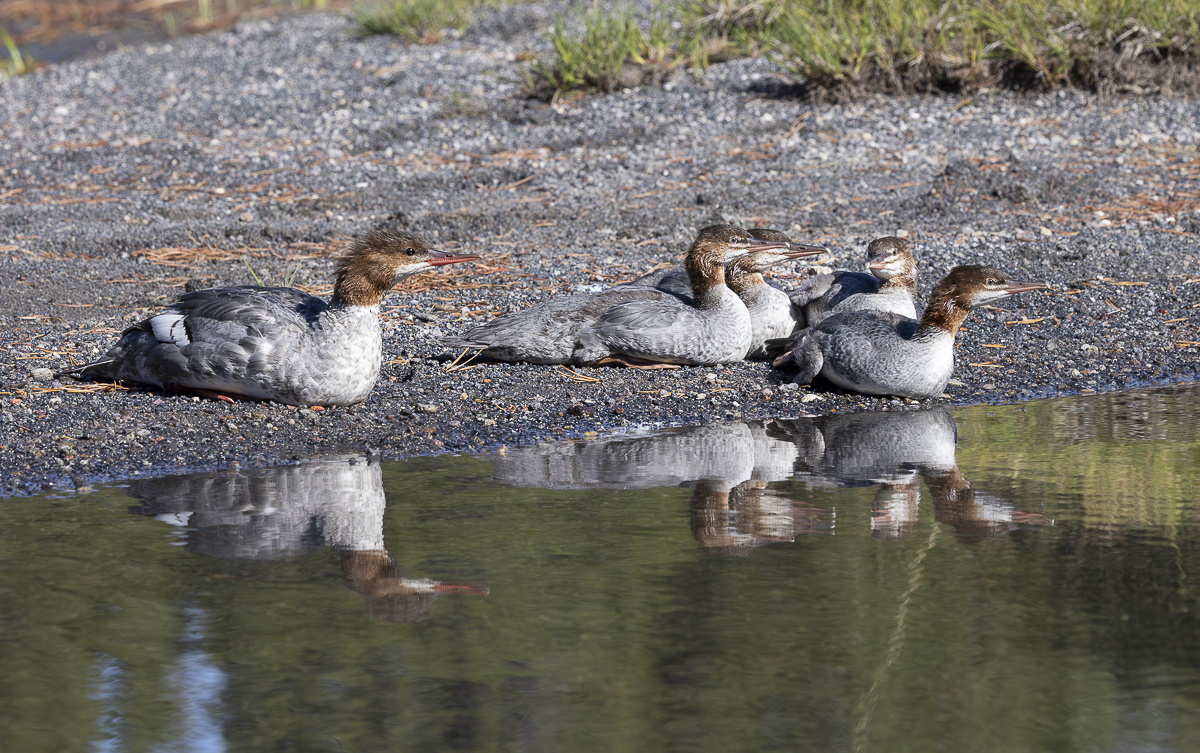
We saw many of the mergansers resting on shore as we paddled. They are built more for water than land with their legs placed well back on their bodies, but they seem to enjoy soaking up the sun on a sandy beach as much as the rest of us. This group eyed us as we paddled by and then decided to move on.
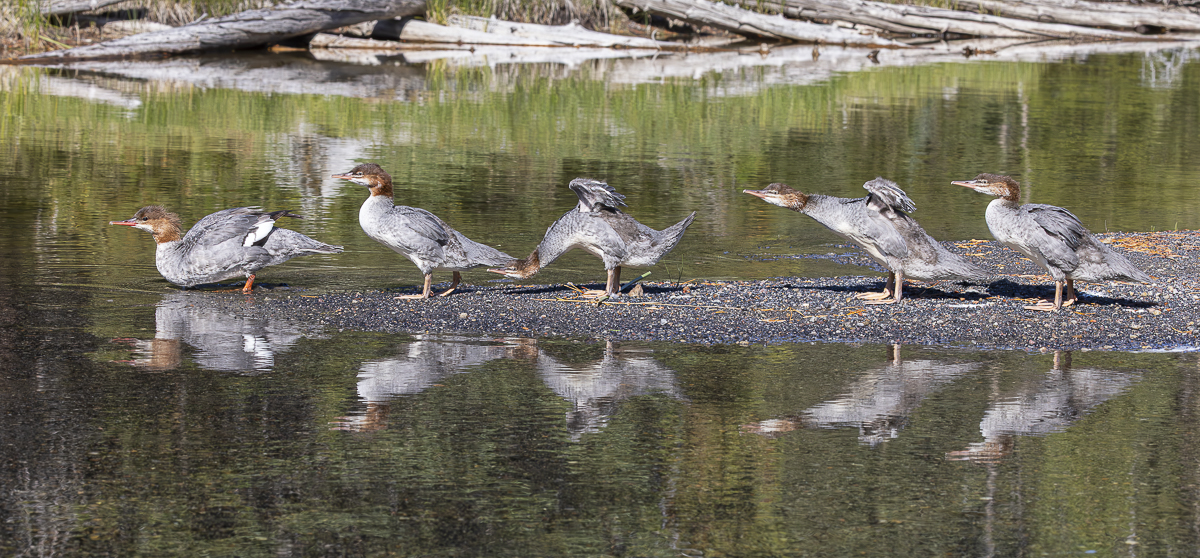
As we got alongside, the female must have signaled it was time to go and they all stood up, stretched, and waddled into the water.
The name merganser is from Latin and roughly translates to “diving goose”, an appropriate moniker for the largest of our three related diving ducks (the others being the hooded merganser and the red-breasted merganser). Other common names include sheldrake, sawbills, fish ducks, and goosanders. They mainly eat fish though we observed them picking off a few aquatic insects on the water surface. I love their hunting style of snorkeling along, eyes underwater, searching for prey. They often hunt in groups making it easier to herd and trap fish.
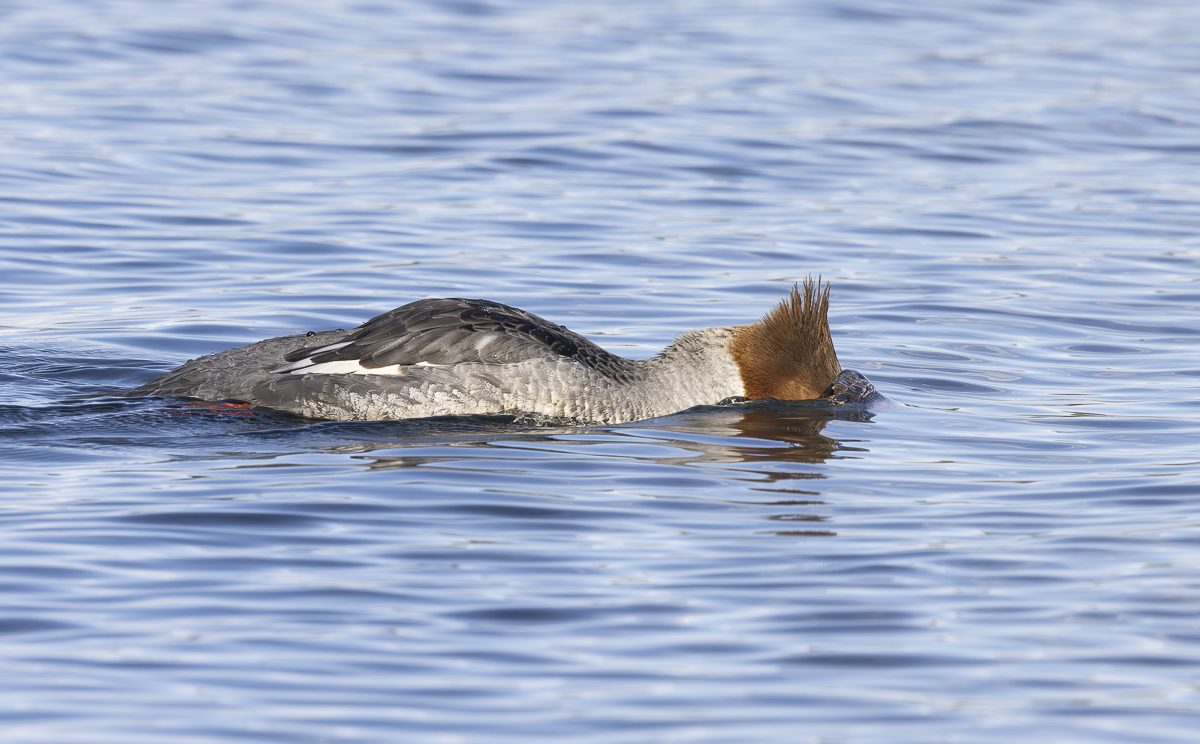
They were a frequent visitor as we sat on the shore at our various campsites, swimming by and searching for fish with their heads down in the water. We saw them most often early and late in the day. In breeding plumage, males are a striking combination of a dark green head and mostly bright white body with a red bill. This time of year they have molted and resemble females.
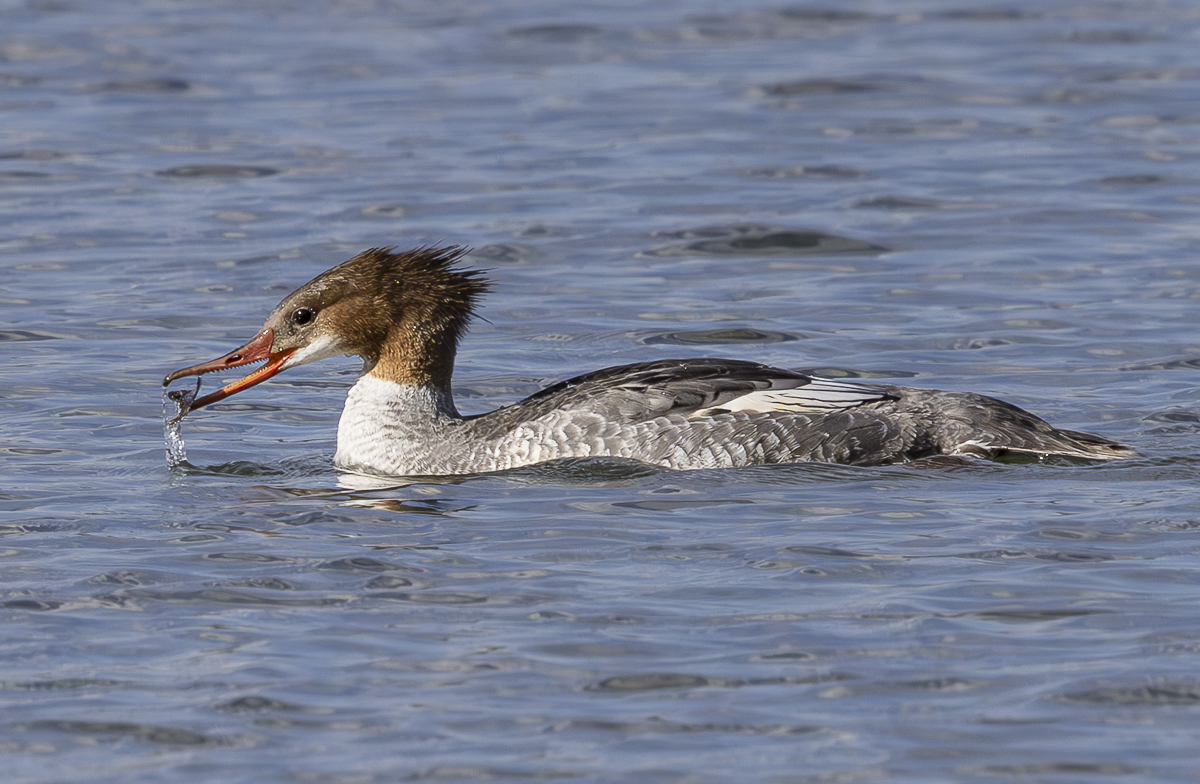
Common mergansers are well adapted to catching fish – they have a long pointed bill with serrations along the edges and a hooked tip, both features that are ideal for holding onto a slippery prey. They are considered the carnivores of the duck world and are fast swimmers underwater. We often saw them scurrying across the water, heads under, as they tried for fish in some of their favorite fishing spots. They often hunted at the same locations as they swam back and forth, usually where a small stream entered the lake or some logs stretched into the water from the shore. These are undoubtedly places where small fish gather for food and/or shelter.
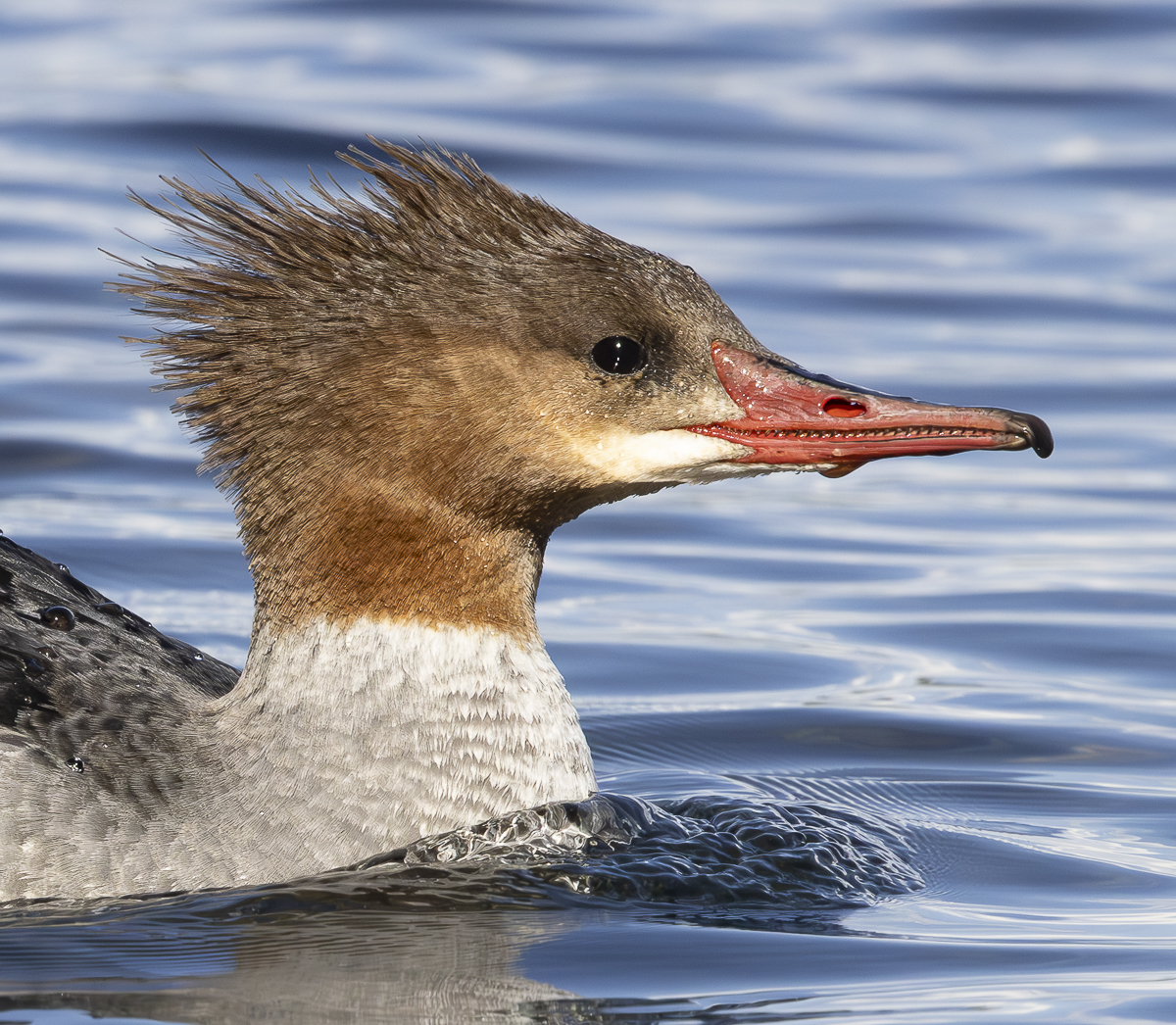
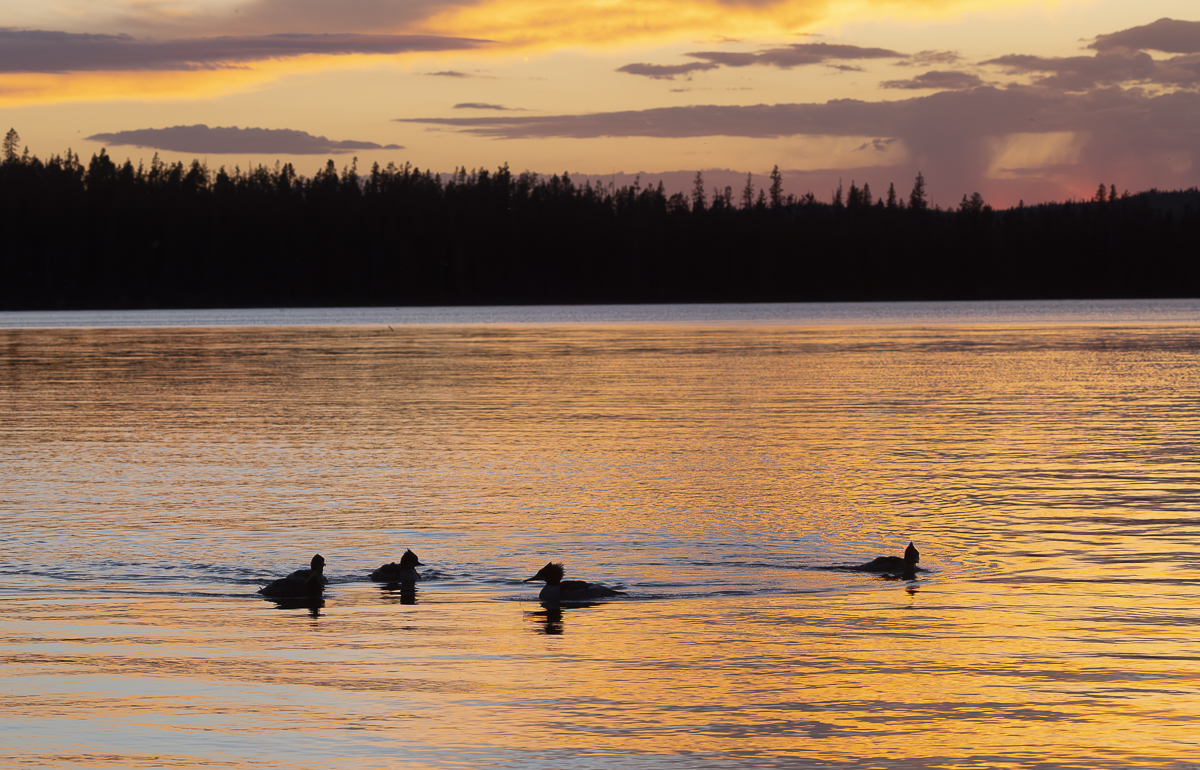
Each day we looked forward to the mergansers swimming by our campsite. They frequently swam directly toward us as they hunted. and seemed to accept us as long as we sat still. Time spent with the mergansers of Shoshone gave me a new appreciation for this species and of their world of cold clear mountain waters.


 Roads End Naturalist
Leave a reply to Mike Dunn Cancel reply