
The best way of being kind to bears is not to be very close to them.
~Margaret Atwood
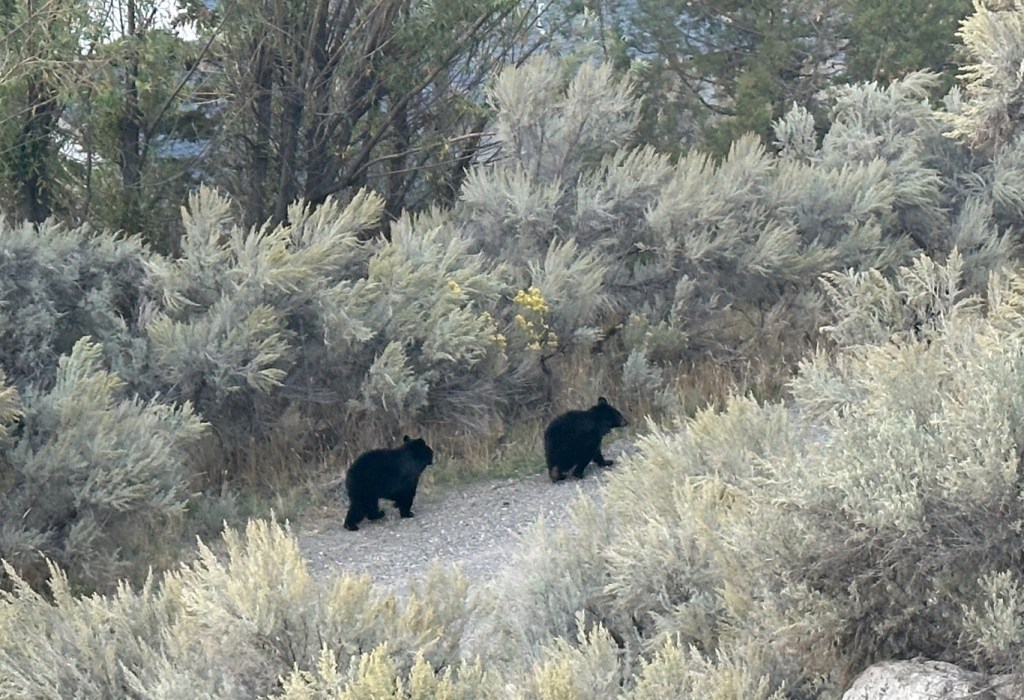
We have had a few posts lately about some of our backyard wildlife, including some black bear moms and cubs. I must admit, seeing bears on our trail camera from next to the house is kind of cool. And, up until this past week, they were only seen a couple of times and were either trying to get a few remaining apples on our neighbor’s tree (which have now all been picked) or getting a drink out of our tiny water hole designed to attract birds. There had been no interest in the abundant crab apple crop on our two trees. When the Bear Awareness representative stopped by a couple of weeks ago at my request to discuss the electric fence, he advised cutting down those trees as they could be a prime bear attractant (you know you are in Montana when you have a Bear Awareness organization in town). In fact, he looked around at the many fruit trees the previous owner had planted and thought they should all go. Though the electric fence out back might keep out elk and deer, it might not be a strong deterrent for bears if they sensed food beyond it. Plus, he pointed out there were other access points for bears through the wooden fence or even climbing up the steep boulder wall out front. I admit we hesitated because the trees were both part of the screening between houses and we had watched birds feeding on the fruit on our trip last November before we officially moved across country. We discussed the possibility of replacing the crab apples with a native tree species like aspens, but just weren’t sure how difficult that might be and how long it might take to fill in that space.
Well, events this past week helped us make a decision. For whatever reason (maybe the fruit is ripening?), the bears started eating the crab apples. And the first ones we saw were the sow and cub that had been relocated from town several weeks ago (she now has an ear tag to help identify her). I don’t know how far away she was taken but she was back in town after only a couple of weeks. She was in the large crab apple tree one morning when I came downstairs. After seeing me, she quickly moved away and left the yard by climbing down the steep boulder wall that frames our driveway. We did alert the neighbors so people would be aware and no one seemed to express major concern. Bears in town are a fact of life here. I will admit, it is thrilling to see a black bear just outside your window. And the fact that she had not done any damage or does not act in a threatening manner initially makes you think, well, they can just stay here and eat and we can enjoy watching them. But, a bear becoming accustomed to being near humans is probably not a good thing, for the humans or the bear.
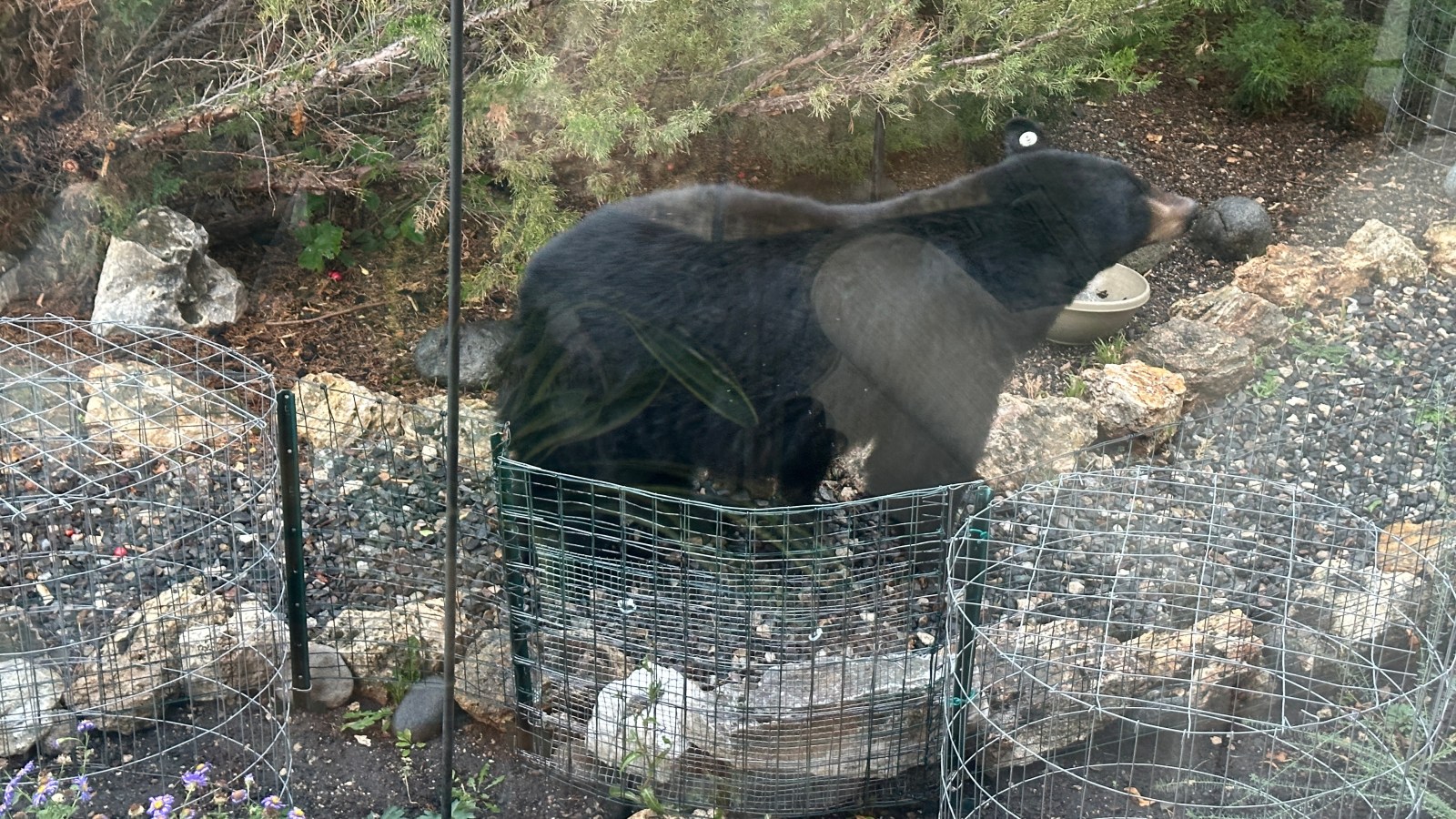
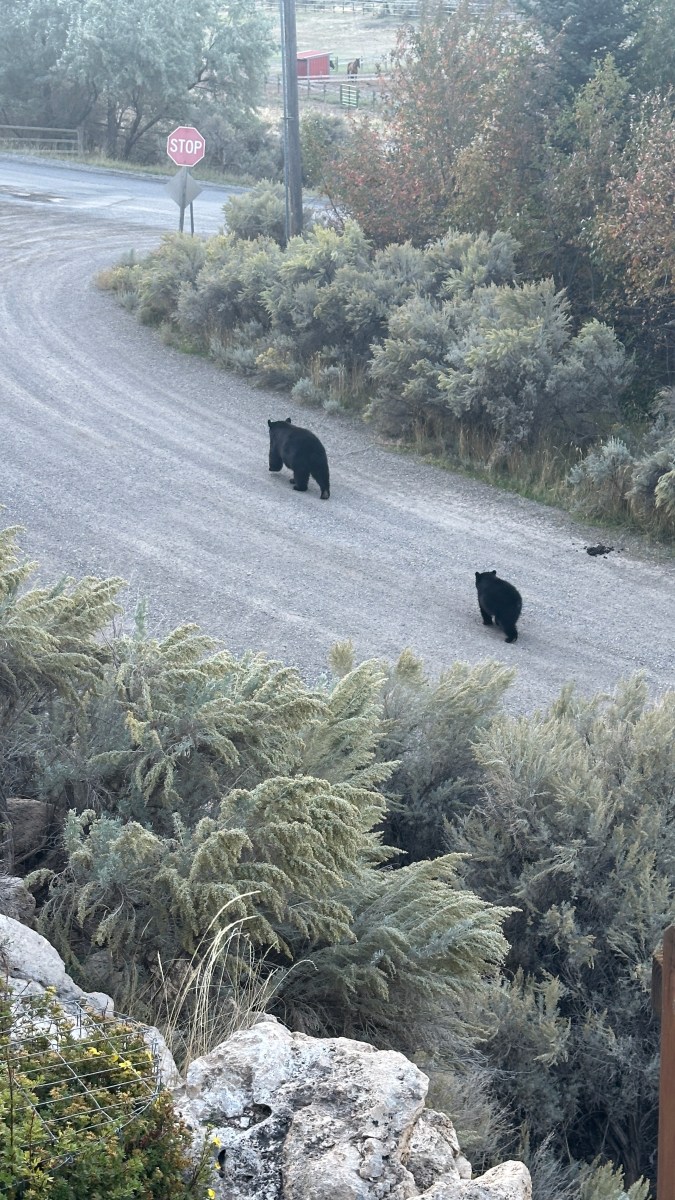
The next morning, a large bear was at the top of the crab apple eating and a cub was high in a tree next to my neighbor’s house. When I tried to get a photo from inside the house with my phone, she saw the light and came down. A minute or two later, she walked by an opening in the vegetation between the two houses and it was then I realized it wasn’t the same bear – this one had two cubs! Sure enough, a few minutes later she came back and I could see she had no ear tag. This bear and her cubs have also been seen all over town in recent weeks. She resumed eating but after several minutes gathered her cubs and went off down the road. I kept thinking this kind of scene would cause a major road jam if it were in the park and here ir was happening right in our small yard.
I checked the trail camera out by the water hole and was pleased to see it had captured some nice bear footage.
–The sow leans in for a long drink at the water hole (she kept this up for over a minute)
–Only one of her cubs came to get a drink
One bear had cone into the frame of the camera from the direction of our wooden fence that spans the short distance from the corner of our house to where the electric fence starts. I decided to place a trail camera looking at that fence to see if and how bears were getting through. It has wide gaps between the boards so it should be easy to crawl through or climb over (it is effective against deer and elk, but probably not much else). That provided some nice footage.
–A cub easily crawls between the fence boards
Based on the camera footage that night, there had been 5 different bears in our backyard. The next morning we discussed it with our neighbor, who, like us, doesn’t seem to mind the bears being here, but worries that it might lead to problems for them in the future if they get into any trouble in town. One amazing thing was the amount of scat in both of our yards, especially his, since access to the trees is easier from his side. I shoveled about 6 large scat piles from our walkways but he had close to 20 piles of bear scat in his side yard. And we learned they have been accessing someone’s apple tree in addition to our crab apple based on what we saw in their scat. It just shows that, as the Bear Awareness program strives to achieve, the entire community needs to help reduce bear attractants for it to be successful. And we are also reminded that what attracts black bears can also attract grizzlies and that potentially can become a much different issue in terms of both bear and human safety.
Looking up at the tremendous amount of fruit still on the trees, we realized these bears would just keep coming back until they went off to hibernate. The more they were in town, the more chance of them getting into trouble in trash cans or with chickens or any number of other possibilities. The bears had broken many of the branches on the trees and that helped me make the decision to start cutting the branches and removing as much of the fruit as we could. So, for the next couple of hours we cut out branches and picked fruit. It was all properly disposed of in the town dump where bears cannot get to it. Cutting back that tree will make it much easier to access the fruit in future years to remove it before it becomes a bear attractant (if , indeed, we don’t replace the tree with a species that is not attractive to bears). Living with wildlife, especially bears, demands that we act responsibly for our safety and that of the animals.


 Roads End Naturalist
Leave a reply to Tim Harlow Cancel reply