
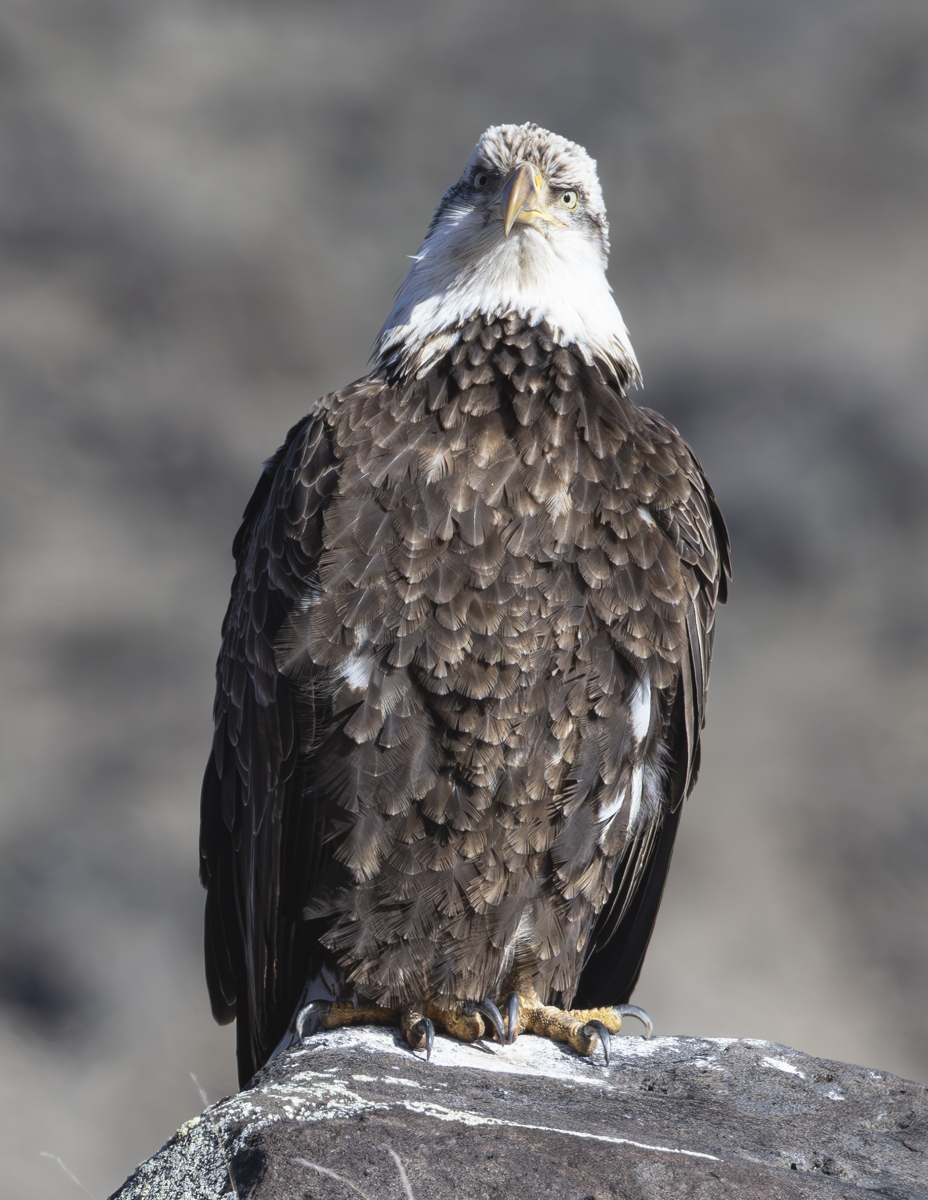
Eagles come in all shapes and sizes, but you will recognize them chiefly by their attitudes.
~E.F. Schumacher
We are having a very strange winter here. Yesterday (and this is early February mind you) we had a high of 53 degrees, very spring-like. It had me thinking about our home in North Carolina and the woods and abundant wildlife.on our 14 acres. To add to that, I received our copy of the new field guide to the Moths of Western North America in the mail. It is a beautiful book and I quickly paged through looking for some of our “old friends” from our mothing nights back East. I was disappointed to see that we may only have one slug moth in this region. The slug moths are one of our favorites, at least their caterpillars are. So many bizarre and beautiful larvae like saddlebacks, crown slugs, and spun glass slugs. It made me a bit sad thinking about all those creatures we no longer see on a regular basis.
But then I thought about the day I had just had. A typical day of doing chores and running errands. It included making the 10-minute run out to the dump/recycle center a few miles out of town. I often drive back along the Old Yellowstone Trail on the opposite side of the river just to see what I might see. Much of this gravel road runs along the boundary of the park and ends up at the Roosevelt Arch in Gardiner. In winter, you typically see groups of Rocky Mountain bighorn sheep and pronghorn antelope grazing in the flats along the road. That’s when I was reminded about what a special place this really is…I was driving past about 50 bighorn sheep and close to 75 pronghorns all within a couple of miles of our house (not to mention the mule deer and elk walking in the streets of town as I left the house).
As I was reflecting on this amazing landscape we now call home, I saw it – the silhouette of a large bird sitting on a rock on the hill ahead. I thought, no way, an eagle? I had brought my camera in hopes of seeing an eagle along the river as I drove out on the main highway but had come up empty. I had never seen an eagle along this stretch of road as there are no large trees and this road pulls away from the Yellowstone River shortly after you cross the bridge from the main highway. The drove up the hill and, sure enough, it was a bald eagle.
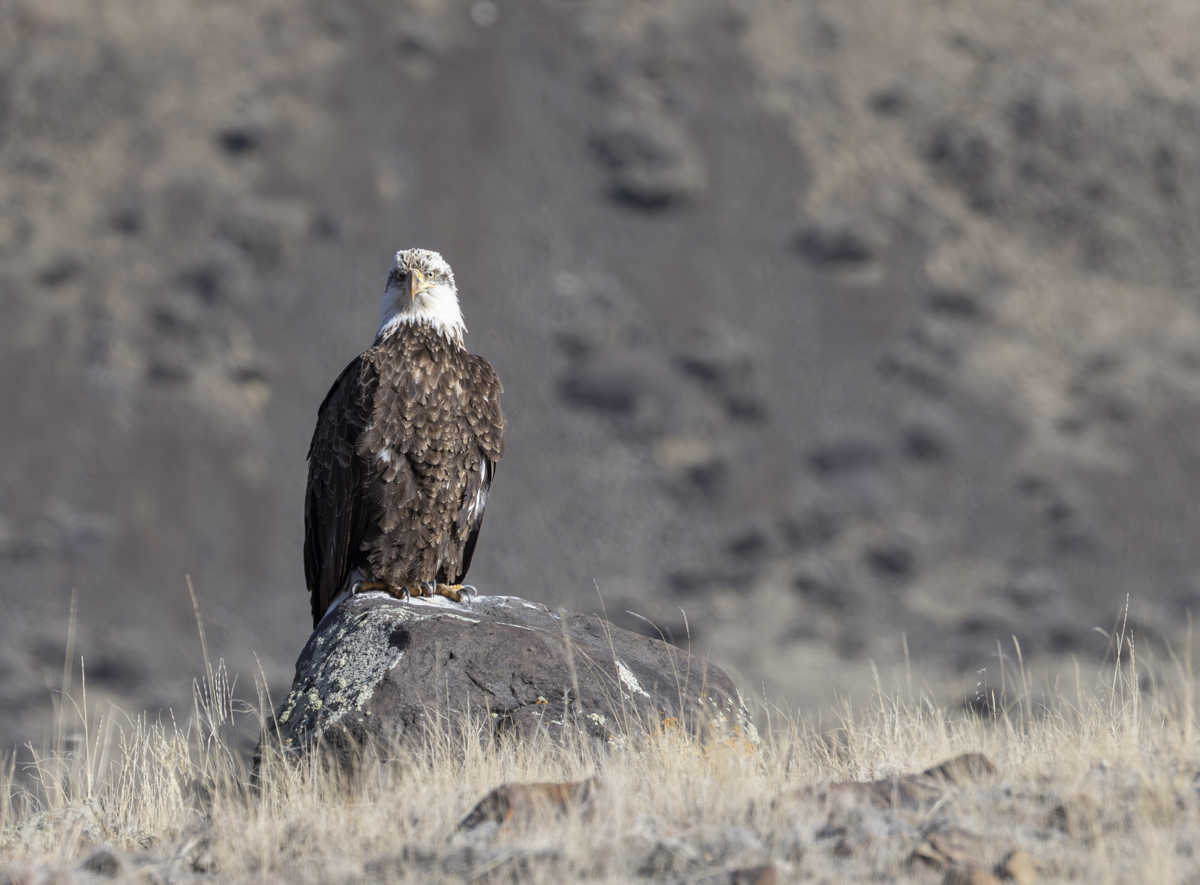
When I stopped, the eagle glared at me with those piercing eyes and then turned its head and ignored me satisfied that I wasn’t a threat (I stayed in my truck).
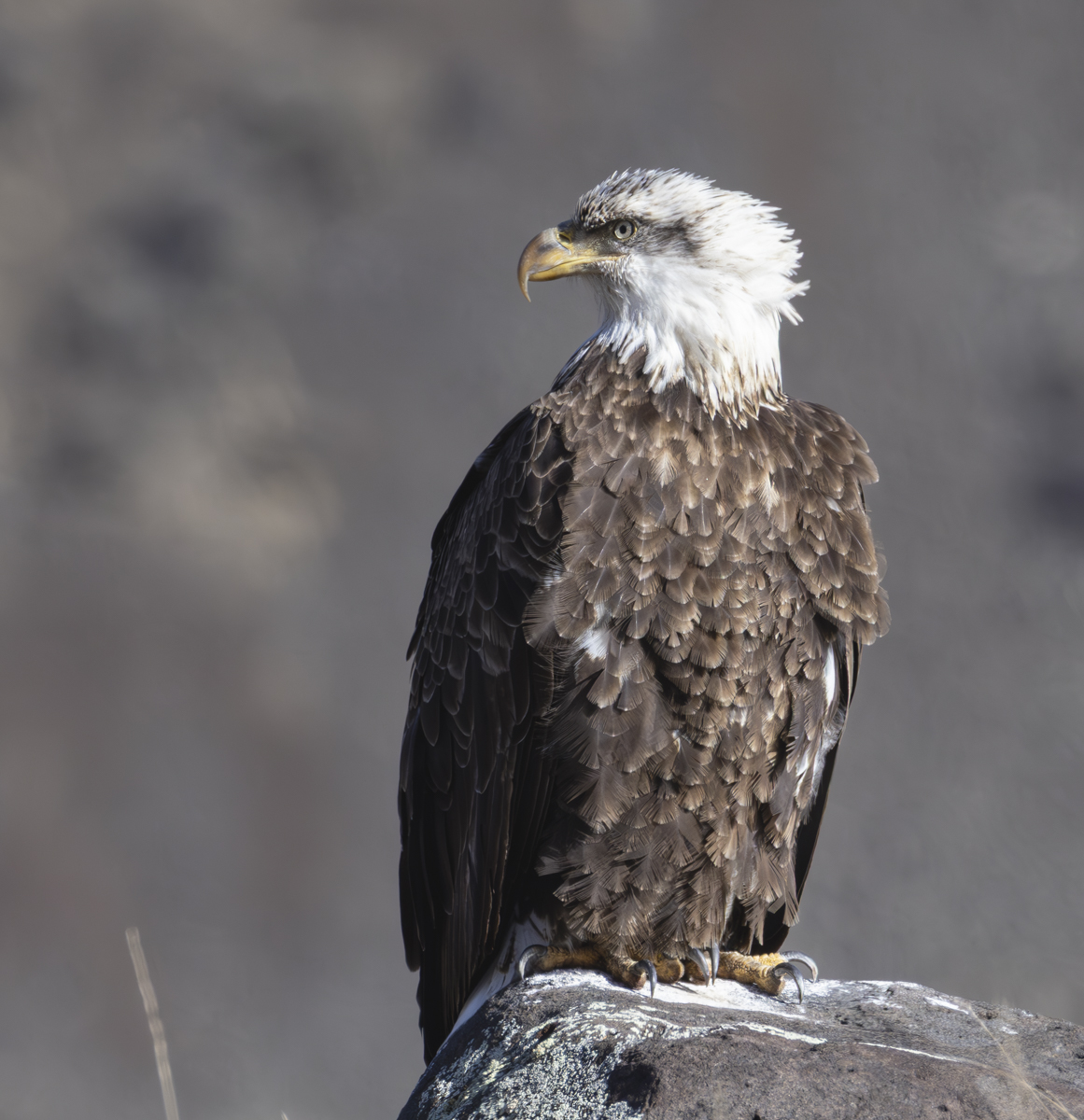
Mature bald eagles are widely recognized by their white heads (hence the name, bald) and tails. Males and females look similar though females are larger. (an average of 25% bigger than a male). Younger birds have quite variable plumage. First-year eagles are considered juveniles and have dark brown plumage up to about 1 1/2 years. After that, it can be variable though plumages do tend to follow a similar pattern until they reach full maturity at about 5 1/2 years of age. From 1 1/2 to 3 1/2 years they show blotches of white on their undersides. From 3 1/2 to 4 1/2 years of age they begin to acquire the white head and tail feathers.
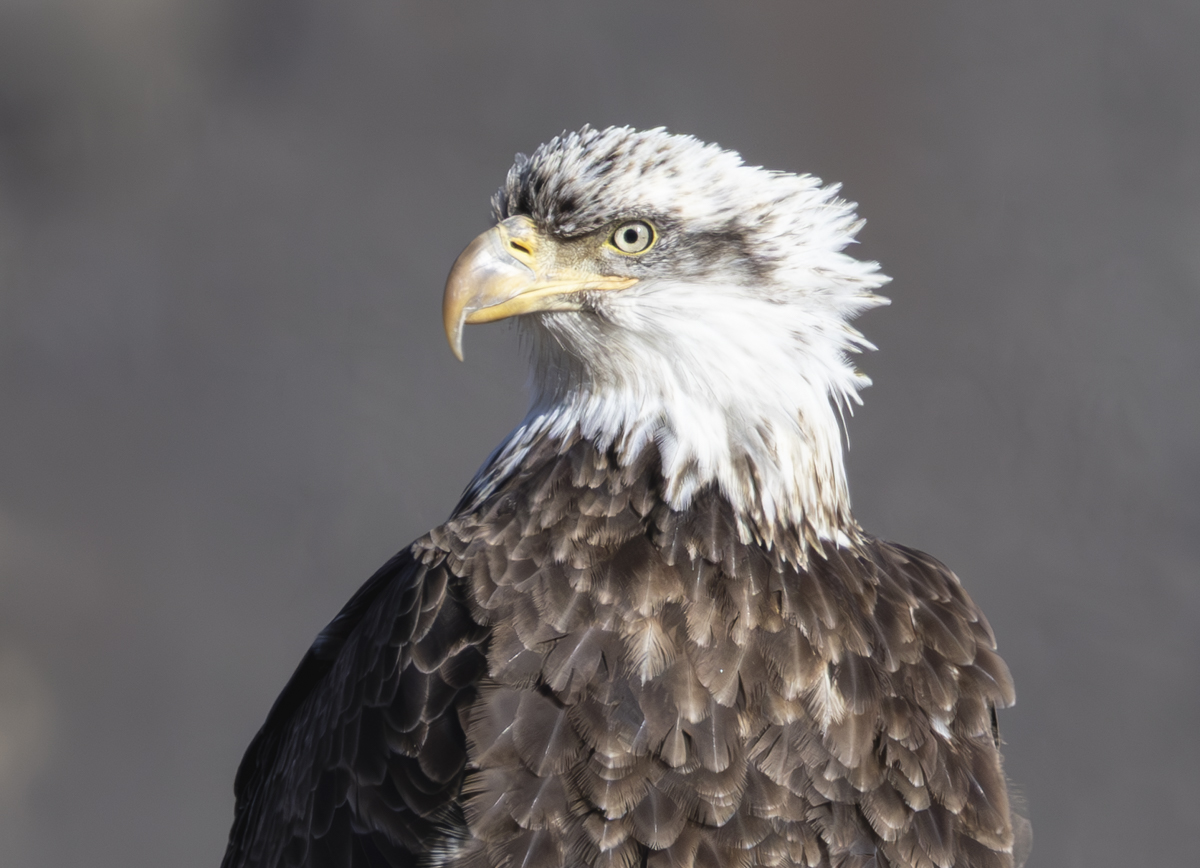
The dark patch through the eye and a few white blotches on the breast tell me this bird is about 4 years old. By next year it should have the definitive plumage of an all white head and tail that it will keep for the rest of its life (bald eagles can typically live 20 to 25 years in the wild).
Though we will miss seeing some of our beloved caterpillars here in this high desert climate, the habitat provides moments of magic if you just look (and get outside, even if you are just taking out the trash). And this year we hope to look more intentionally for the small creatures we share this new world with while still appreciating the abundant and majestic megafauna that surround us.


 Roads End Naturalist
Leave a reply to Deb Hanson Cancel reply