

I think Delaware got it wrong. The Blue Hen is the official state bird of this fine state, but in both color and species they have missed the boat. My vote would be for the Red-winged Blackbird. Displaying males are the most common species seen at Prime Hook and Bombay Hook National Wildlife Refuges. They are much easier to approach and identify than the other most common birds, a couple of species of shorebirds, which number in the thousands for the next couple of weeks.

Male Red-winged Blackbirds have jet-black bodies with a bright red shoulder patch (epaulet) bordered by a yellow stripe at the bottom. And to make it even easier to find them, the males are almost always displaying this time of year. The most noticeable display is the so-called song spread where a perched male arches forward, spreads its wings to the side and exposes his red epaulets while letting out his distinctive song (usually described by a variation on the phrase konk-a-ree!). This display is meant to defend his territory from rival males and attract a female.
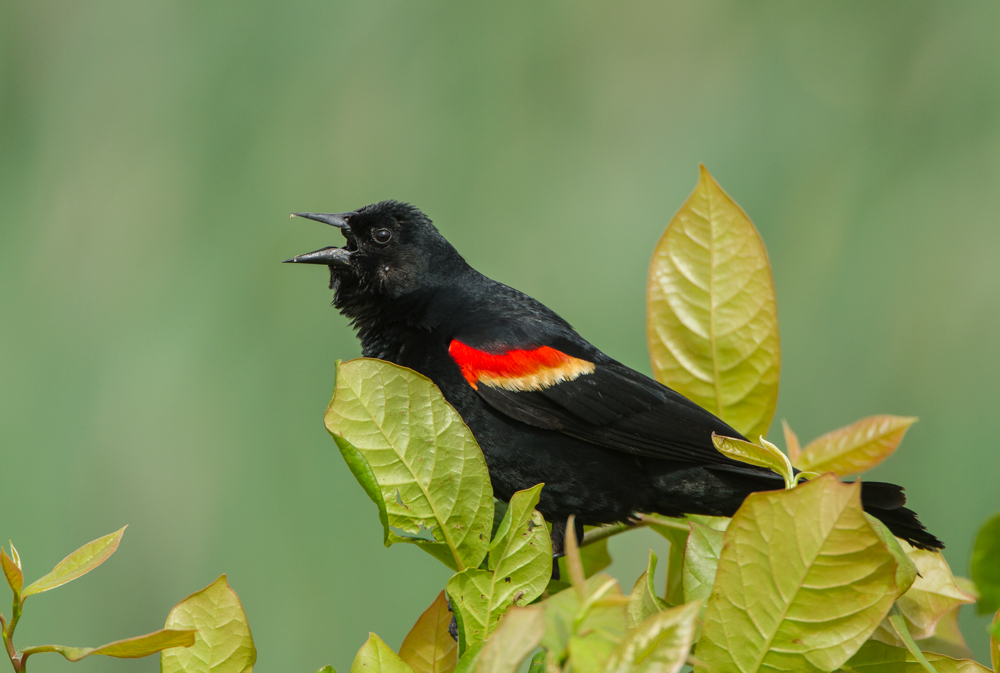
I was also able to watch some other interesting behaviors: the sexual chase where a female flies erratically while being pursued by one or more males – this serves to bond the female with her mate; and the song flight – a slow, stalling flight by the male with epaulets exposed, tail spread, accompanied by his song.

While displaying males were everywhere along the refuge roadsides, the females were much harder to find. They could be seen briefly darting across the roads pursued by males as described above. And occasionally you could spot one skulking about in the reeds beneath the watchful eyes of the resident male. Once they start feeding young in a few weeks, they will become much more visible as they tend to be the primary caregivers of the nestlings and will be coming and going to the nest with beaks full of bugs.

I now have an even greater appreciation of one of my highlight birds at my favorite North Carolina refuge, Pocosin Lakes, Each winter, Red-winged Blackbirds congregate on the refuge fields by the tens of thousands and put on an amazing display of synchronized take-offs and flights as they forage and elude the many raptors hunting the refuge. Now I know where at least some of those magnificent flyers get their training.


Leave a reply to A Month for Songs | Roads End Naturalist Cancel reply