
If all mankind were to disappear, the world would regenerate back to the rich state of equilibrium that existed ten thousand years ago. If insects were to vanish, the environment would collapse into chaos.
~ E. O. Wilson
Although my woods lack the charismatic fauna found in Yellowstone – wolves, elk, grizzlies – there is still plenty of drama to be found if you look for it. This morning I walked out the driveway and happened to notice something moving on a leaf.
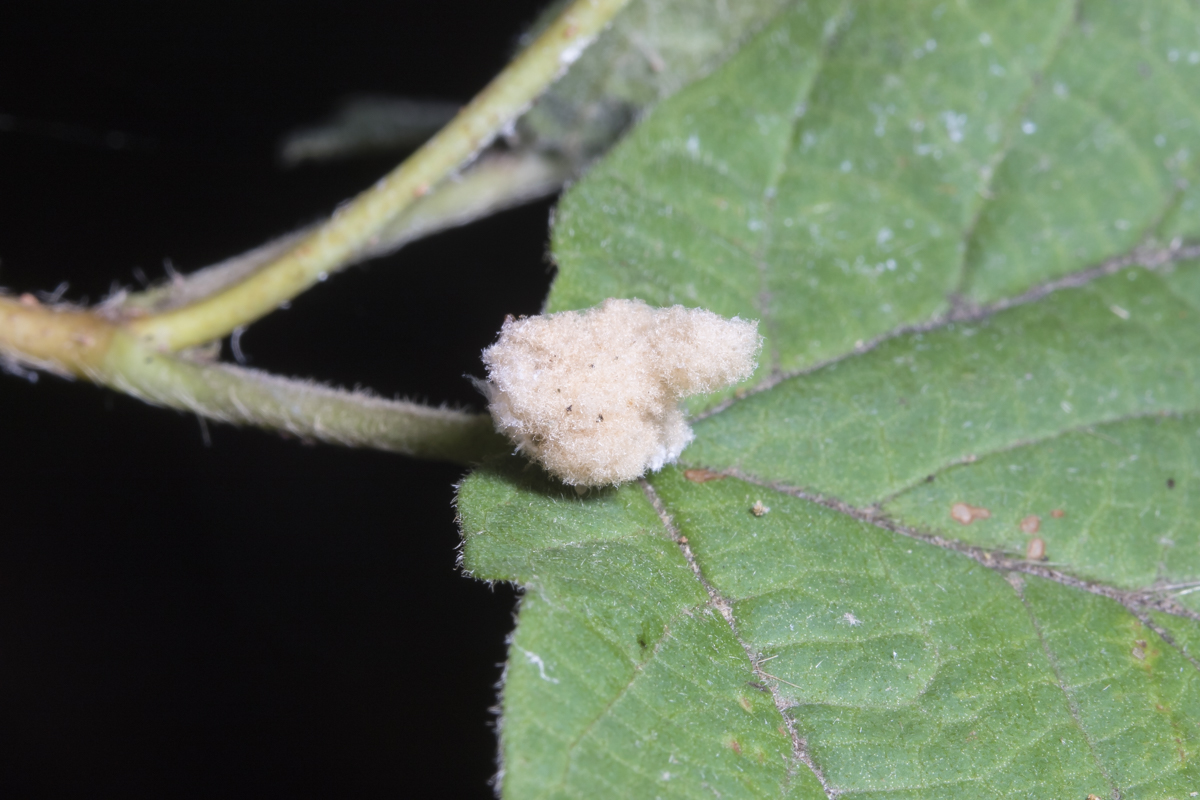
It wobbled as it moved, but, at first glance, looked more like a piece of fluff than anything alive. I recognized it as something other than fluff in the wind as I have seen many of these over the years. It is the cleverly camouflaged larva of a species of Green Lacewing. Adult Green Lacewings are common predatory insects with transparent wings, often seen flying weakly in the garden late in the day or coming to lights at night.

The larvae of certain species of Green Lacewings have the unusual habit of disguising themselves with debris collected from the environment – lichens, plant fibers, and often the discarded corpses of their victims.
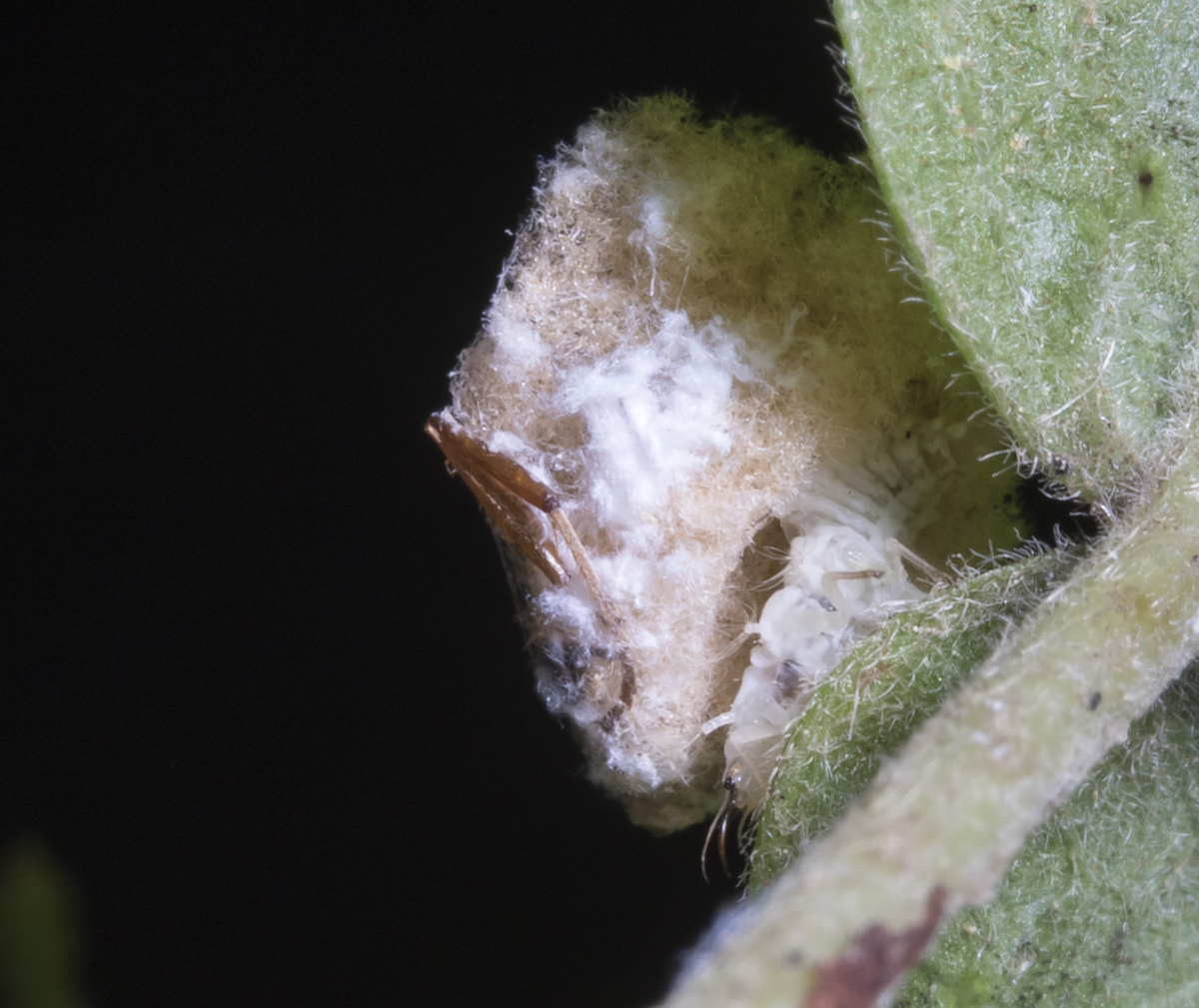
The larvae have bristles on their body which allows them to stick the debris on their dorsal surface, making it tough to see the larval body beneath. These predatory larvae capture their prey with long sickle-shaped jaws, suck the juices from them, and then stick the drained body on their back along with the other debris.
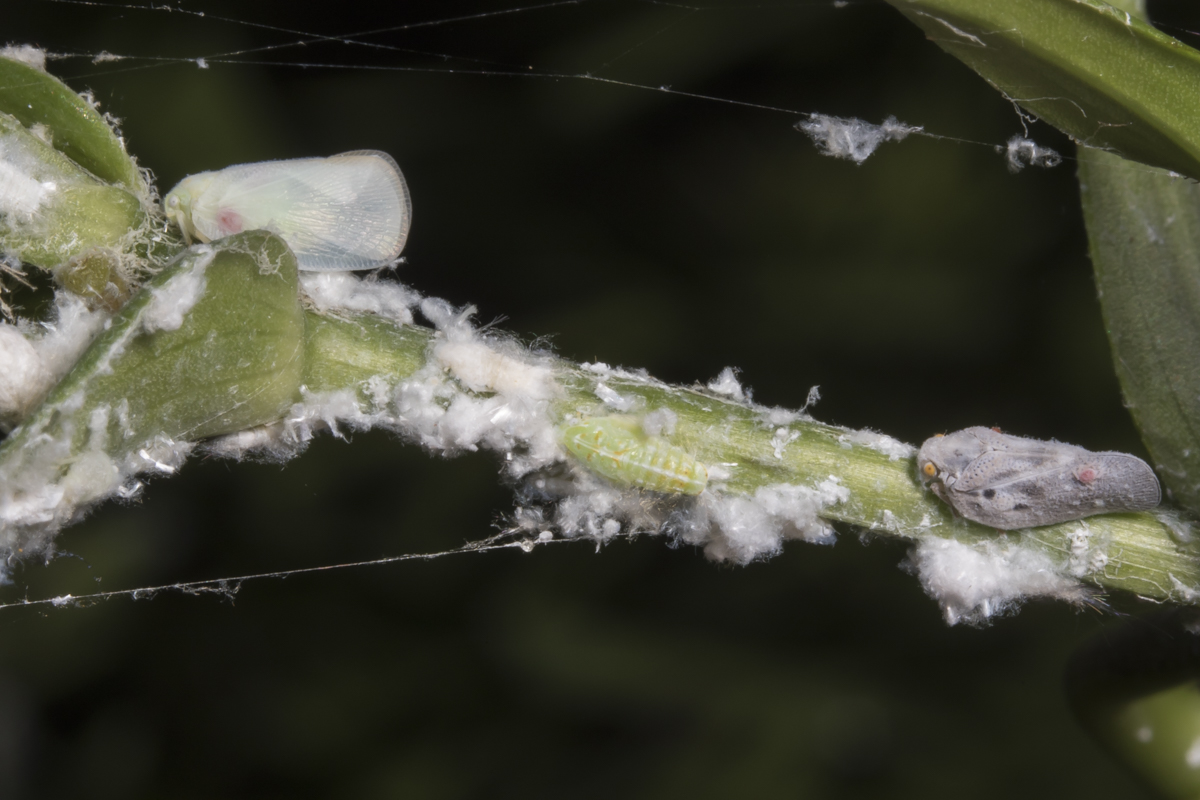
These debris-carrying critters seem particularly abundant right now, perhaps because there are large numbers of planthoppers on my wildflowers, and their larvae are a favorite prey item. The larvae of one species cover themselves in waxy filaments presumably as a defense mechanism. But, it apparently does not deter the lacewing larvae.
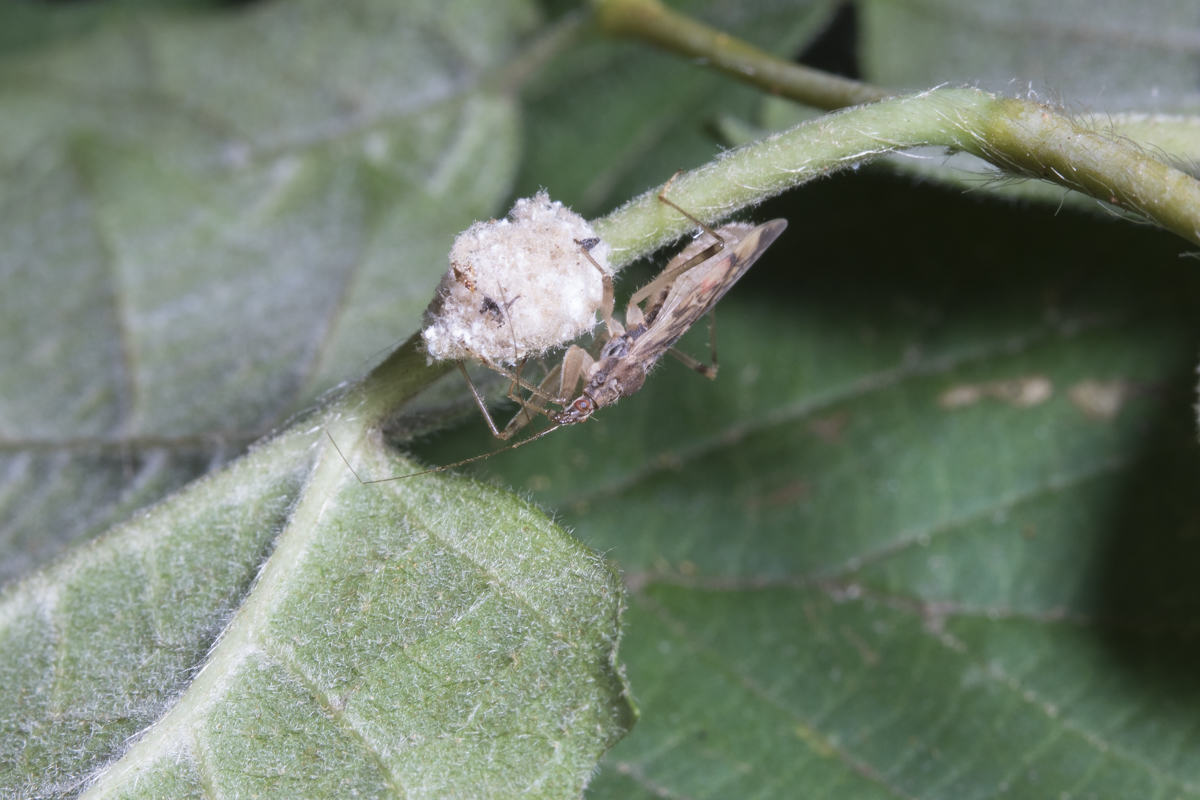
As I watched one of the waddling trash piles, I noticed another one on a nearby leaf. But this one had company, the kind you really don’t want stopping in for a visit. It was some sort of True Bug, one of the predatory Hemipterans, and it was feasting on the other lacewing larva.
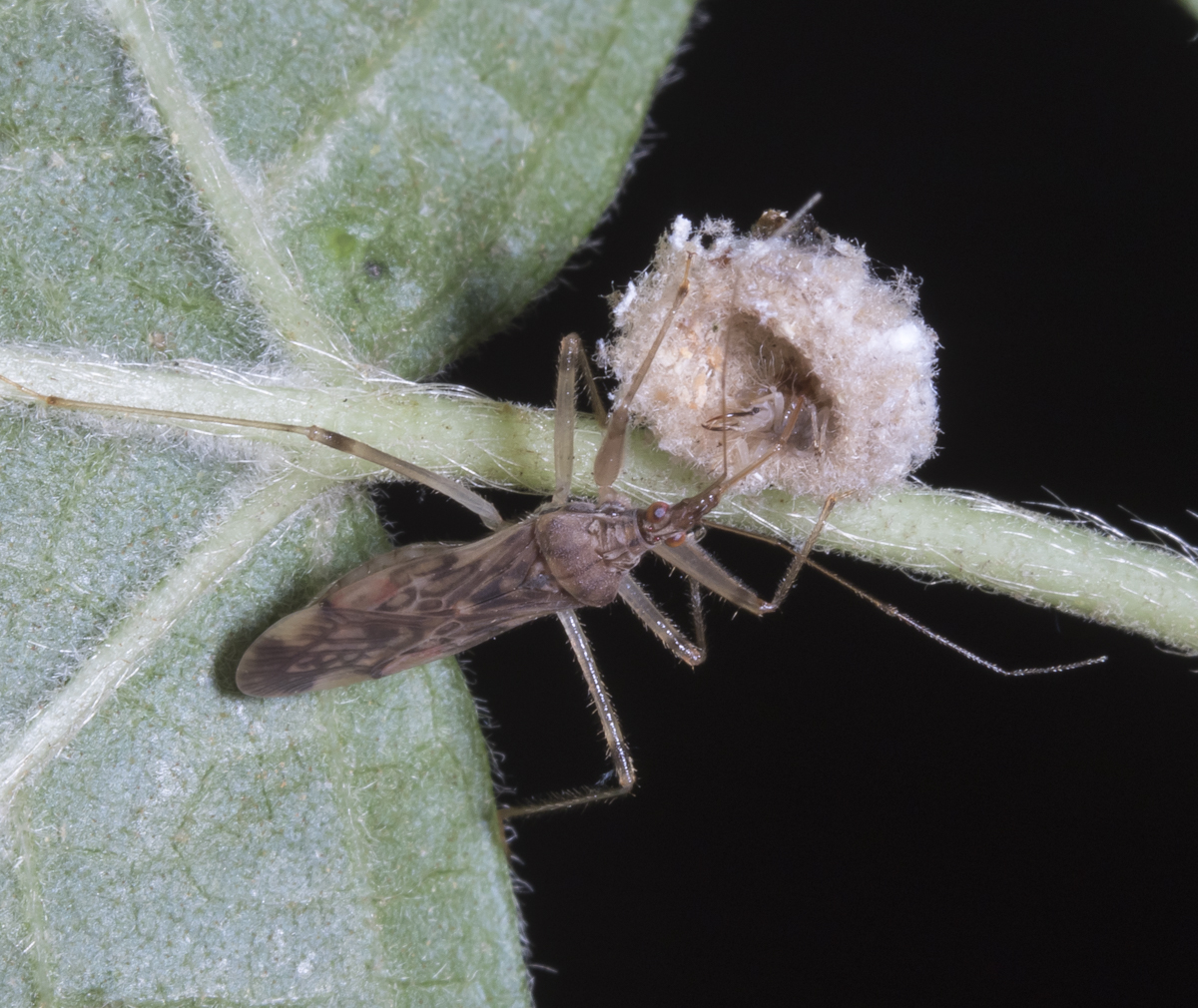
After looking through Bug Guide, I decided it is probably one of the so-called Damsel Bugs, Family Nabidae.
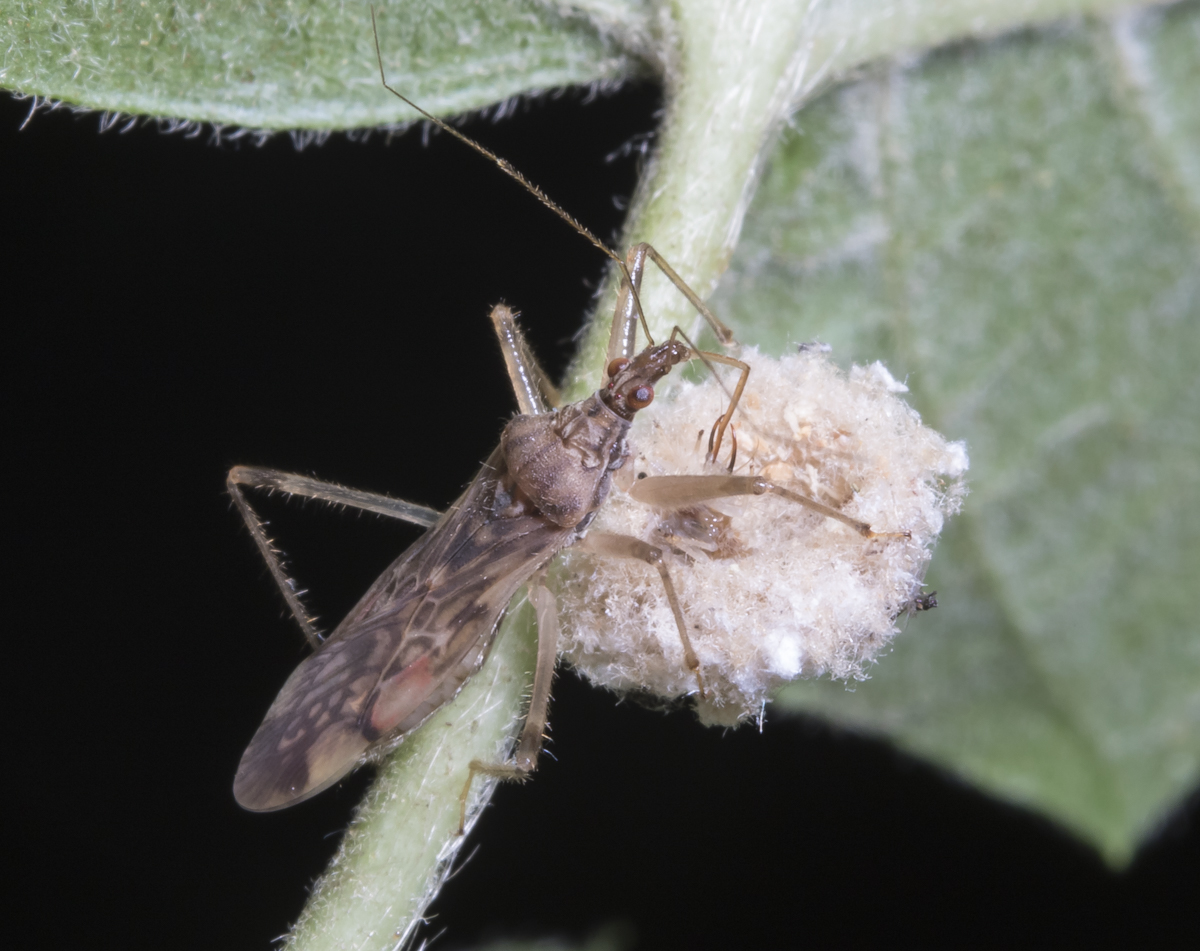
Like other predatory True Bugs, this one has a long beak that pierces its victim, injects a toxin with digestive enzymes, and then proceeds to suck the juices into its own body, much like the Green Lacewing larva does to its victims. The insect world that is all around us is every bit as dramatic as the predator-prey scenarios on the Northern Range of Yellowstone. It just takes a slower pace and attention to detail to take it all in. Good hunting.
 Roads End Naturalist
Leave a comment