
Birds are the last of the dinosaurs. Tiny velociraptors with wings. Devouring defenseless wiggly things and, and nuts, and fish, and, and other birds.
~Neil Gaiman
Picking up again on our May road trip…after Denver, we headed to Dinosaur National Monument in Colorado and Utah, a huge national monument at over 210,000 acres (and a new brown sign destination for us). I have never been much of a dinosaur guy, but the natural history descriptions were attractive and they had some camping available, so we headed there. To say I was impressed is a bit of an understatement. Not only was there plenty to see in terms of present-day flora and fauna (and geologic formations), but the recent and distant history of the place is fascinating.

-Melissa’s research as we drove snagged us the best site in this campground at Dinosaur NM (she’s really good at that). We were at a site (on the left side of this high view of the campground) screened by a shrub and tree border right next to the Green River. The huge patch of green on the right is a private in-holding in the monument (click photos to enlarge)

-One of the highlights is the unique building at what is called the Quarry Exhibit Hall. It sounds like it is primarily due to the incredible vision of the paleontologist who first discovered dinosaur bones at the site back in 1909. Many important fossils have been removed and placed in museums around the country, but he envisioned an exhibit of some of the bones in place in the rock formations in which they were found. To that end, NPS constructed a building adjacent to a slope of rock with 1500 dinosaur bones in it so visitors can view them (and even touch some). It really is one of the most unique exhibit halls I have ever seen. There is also a great visitor center not far from the quarry.
You can also immerse yourself into more recent history at the monument. There are several outstanding examples of petroglyphs that can be easily seen along some trails. These are believed to be handiwork of the Fremont people that lived in the area from about 200 AD to 1300 AD. Human figures in stone typically have trapezoidal bodies decorated with head dresses, earrings, and other adornments. Animal figures we saw included bighorn sheep, lizards, and birds.


-Petroglyphs of the Fremont people. Some of these figures are quite large and a few were high on the rock wall making me admire the artists even more

-Even more recent history is represented by the preserved cabin of Josie Bassett Morris who moved to the area alone in 1914 at the age of 40. She stayed here without electricity, plumbing, or neighbors for 50 years, living off the land, growing crops, and herding a few farm animals. I can see someone I know doing this…

-We hiked a short way up Box Canyon adjacent to Josie’s cabin. There were so many Yellow Warblers and White-throated Swifts here.

-Wildflowers like this Desert Paintbrush added splashes of color to the dry landscape
After leaving the monument and camping one night in a Forest Service Campground (what’s with all these campgrounds this trip?, but we were the only ones in it) Melissa charted a path into the Uinta Mountains where we had dispersed camped on a previous trip. But the heavy snows this winter altered our plans. As we drove along this nice 4-lane road I noticed a rather non-descript road sign saying “Road Closed 5 miles Ahead”. We thought, surely not this road…but, it turns out, they do not do winter road maintenance on this mountain pass. At about 8000 feet in elevation we ran into a snow-covered road, and we still had another 1000 feet in elevation to go to get across the pass. Change of plans…
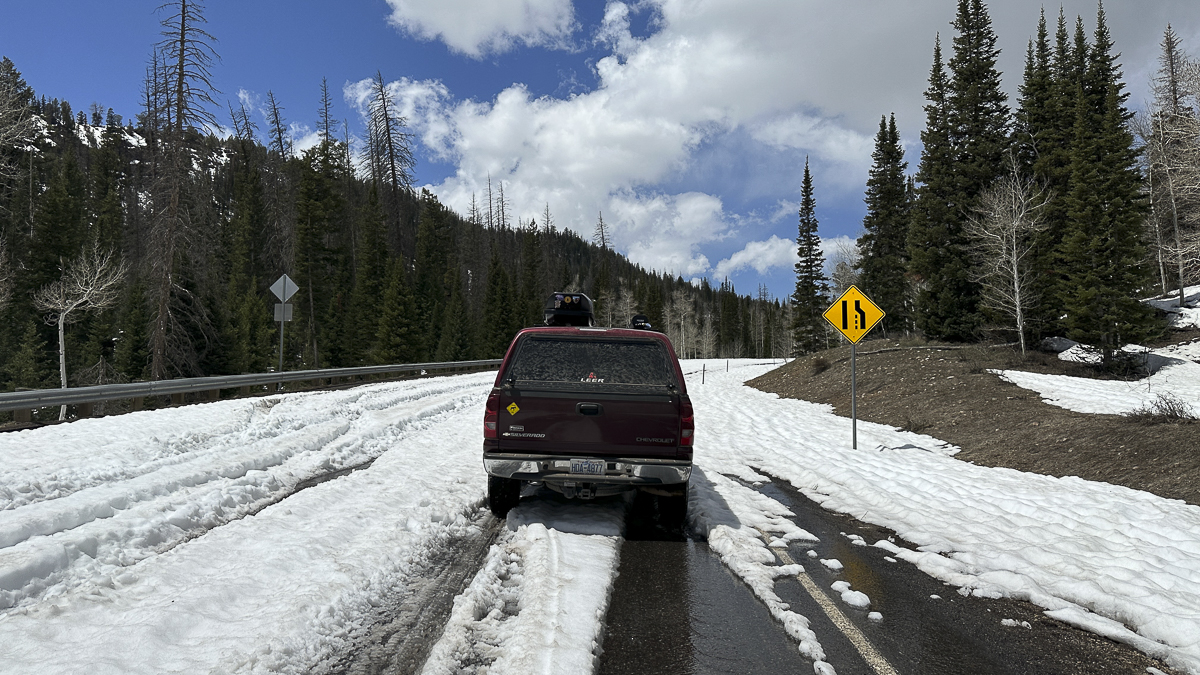
-Several inches of snow greeted us on the road and, as we had another 1000 feet in elevation to go to get over the mountain, we figured the snow might get a bit deep, so we turned around.
Melissa soon found another option not far down the road and we drove up a beautiful Forest Service road for two nights of camping surrounded by mountains, a roaring stream, and grassy meadows full of Spring Beauties, Uinta Ground Squirrels, and Pocket Gophers.
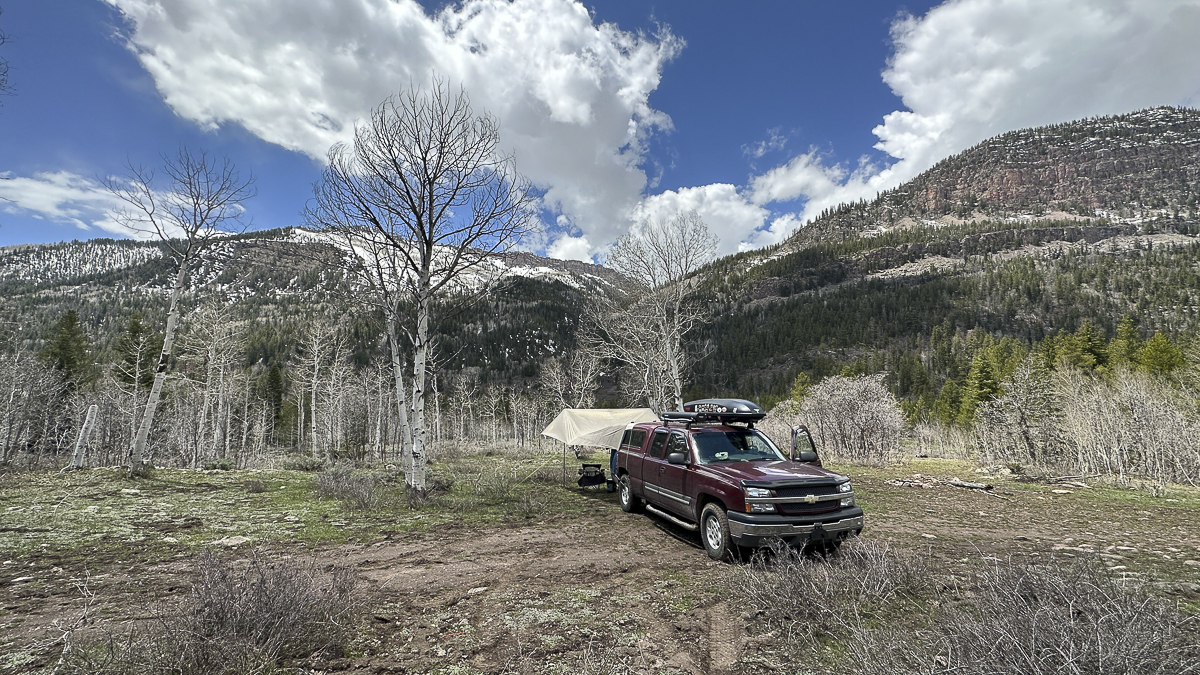
-Our dispersed campsite the second night in this location (we moved about a hundred yards uphill to be in the aspens) turned out to have more mosquitoes than we needed (weird that short a distance was so different). But a highlight was actually laying eyes on a Pocket Gopher, a critter we had never seen before (have seen plenty of their sign, but not the actual animal). Melissa said she would want to be a Pocket Gopher if she lived here (she really doesn’t like mosquitoes). There were also a lot of great birds up in this aspen grove including Mountain Chickadees, a Green-tailed Towhee, a Golden Eagle, a Black-headed Grosbeak, and a Broad-tailed Hummingbird that came face-to-face with both of us one morning.

-We followed this Black-headed Grosbeak for a bit as it went for one clump of trees to another before finally getting a decent look and photo.
Our next stop was a gift to me for our anniversary – two nights in an Airbnb near a fabulous national wildlife refuge we had visited on a previous trip – Bear River Migratory Bird Refuge, north of Salt Lake City (SLC). On the way, we made a stop at the Uinta Brewery in SLC (we also try to hit breweries on our route when it fits our schedule).

-Taking a break from the truck at the Uinta Brewery
Our Airbnb was a short drive from the refuge so we headed out early the next morning with the intention of spending the day observing and photographing birds. Recent rains and snow melt had water flowing across the main entrance road, but it didn’t seem to bother the birds.

-As we entered the refuge, we spotted a few Long-billed Curlews, Numenius americanus. This is America’s largest shorebird and with an incredibly long curved bill. The genus name comes from a Greek word meaning “of the new moon”, since the bills were thought to resemble a new moon crescent. It is adapted for probing sand and soft mud for worms, crabs, and other invertebrates, especially on their wintering grounds.

-In their summer breeding grounds of western grasslands, they feed more on insects, spiders, and the occasional nestling bird or other small vertebrate. Here, Melissa caught one grabbing a large sphinx moth. (photo by Melissa Dowland)
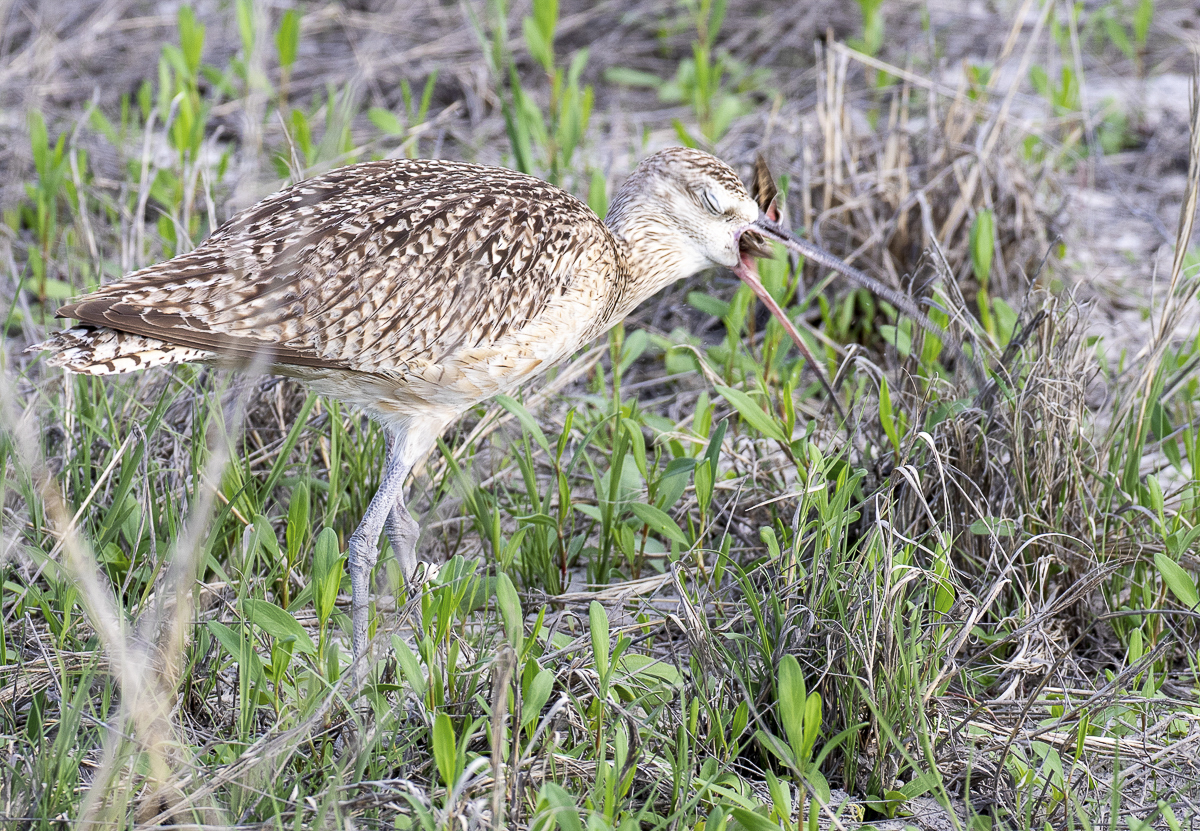
-A quick gulp and it was gone (photo by Melissa Dowland)

-There was one interesting addition to the refuge’s fauna – incredible clouds of midges in places (along with way fewer mosquitoes in a few spots) seen here swarming on our windshield. You could actually see columns of midges doing their aerial mating displays far down the road – they looked like smoke columns rising up from the marsh edges. Melissa was not a fan, but several species of birds were snagging them while in the air (Barn and Cliff Swallows) or perched (the blackbirds) or when on the ground (a bunch of gulls snatching at them while standing along the road).

-Once on the Auto Tour Road, we saw countless Red-winged and Yellow-headed Blackbirds vying for territory in the marsh grasses. Here, a male Red-winged Blackbird proclaims this section of marsh as his own.
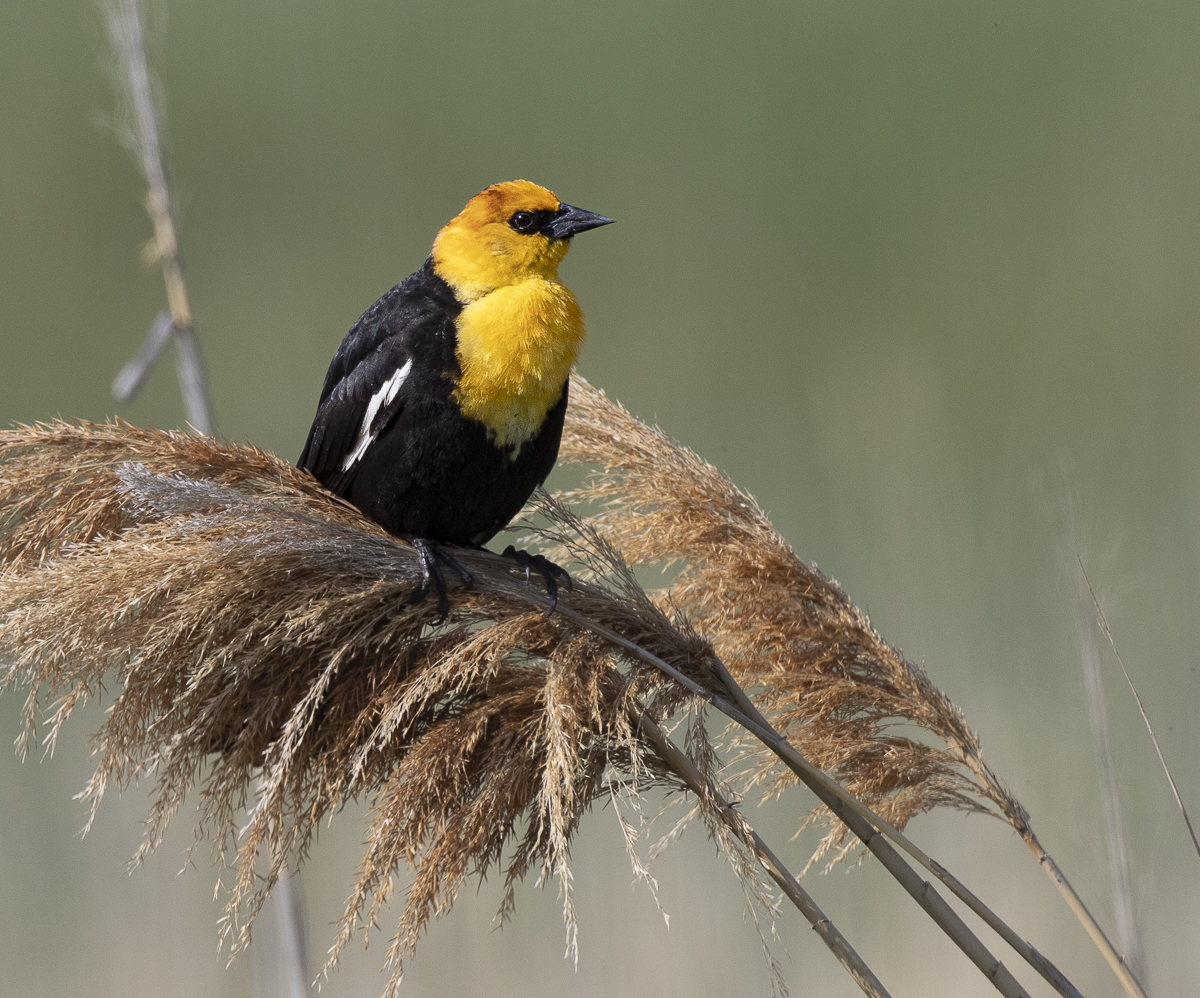
-Always a delight to see Yellow-headed Blackbirds (even it is on that darned Phragmites grass)

-The real stars of the refuge are two of my favorites (as I mentioned in the last post) – American Avocets and Black-necked Stilts…elegance in avian form.
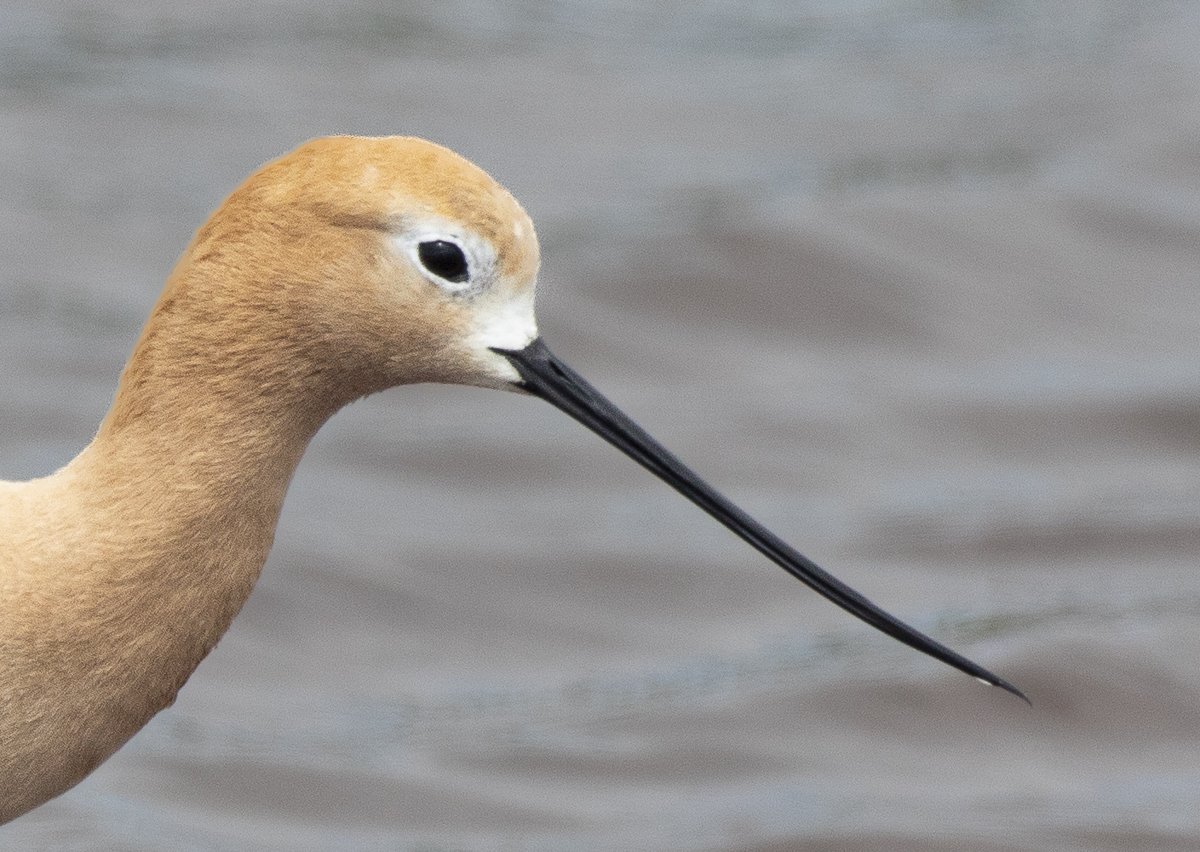

-In avocets, you can distinguish males from females by looking at their incredible bills – the male bill (on the left) is less curved than that of a female (right photo)

-One of the great things about this refuge is that we saw both species on nests. I only wish we could be there when the young hatch, as they are amazingly cute

-In many places along the Auto Tour Road, there were several individuals quite close, allowing us great views to watch their behavior and get some nice photos

-Occasional squabbles erupted over feeding or nest territory. Melissa caught this pair of stilts having a bit of a disagreement (photo by Melissa Dowland)
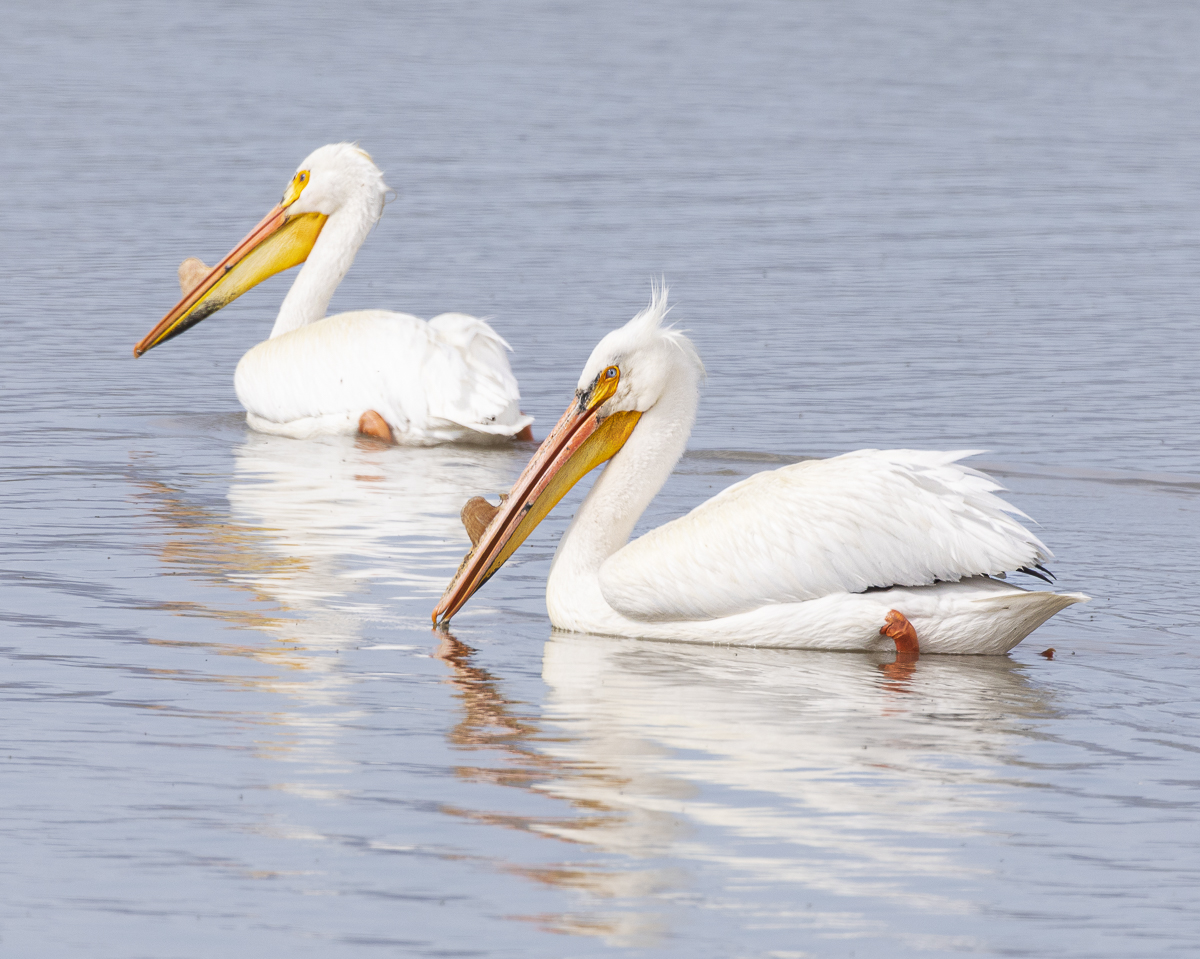
-American White Pelicans were also a highlight. The strange protrusion on the bill (some call it a caruncle, we call it the potato chip) occurs on both sexes during the breeding season. It may serve as an attractant to find a suitable mate. It drops off after mating and the eggs are laid.

-These are really big birds – they stand about 4 feet tall, weigh up to 30 pounds, and their 10-foot wingspan is second only to one other North American bird, the California Condor. Melissa got this shot of a pelican in flight with the distant mountains in the background (photo by Melissa Dowland)
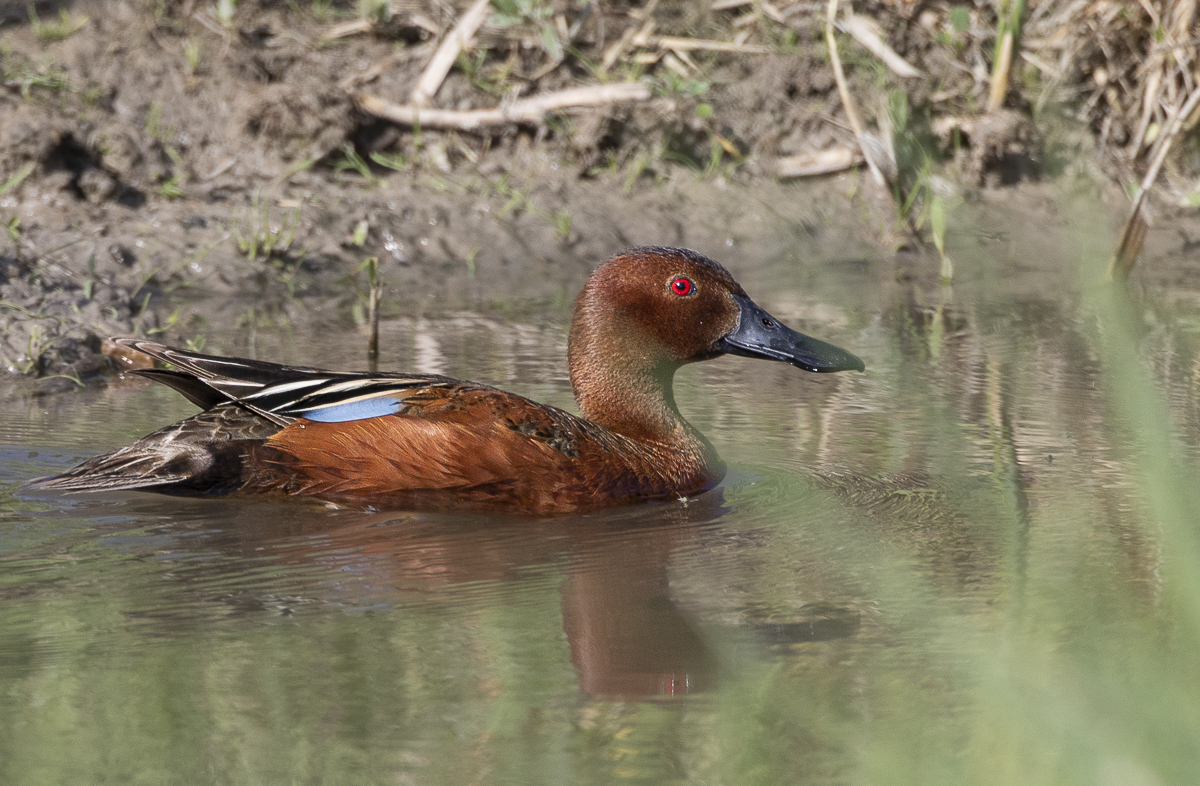
-The most common duck we saw on the refuge was the Cinnamon Teal (as you can see, the males are absolutely gorgeous)
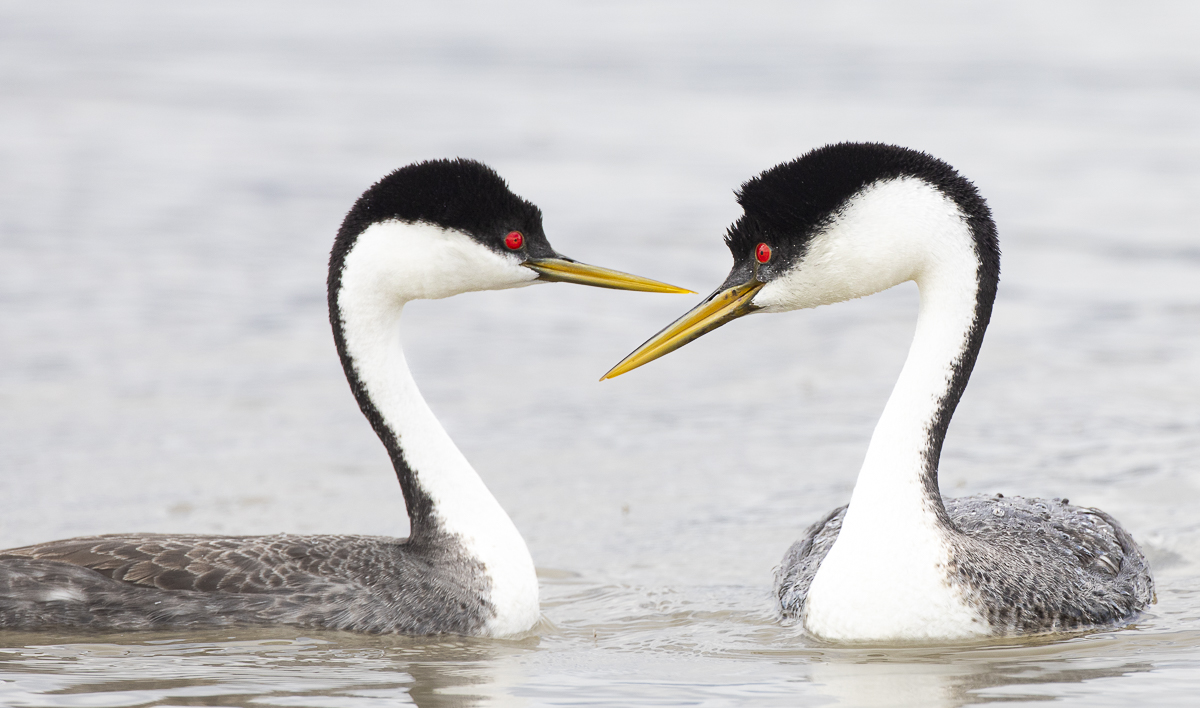
-Western Grebes are also abundant on the refuge and gave us good shows all along the roadway as they dove for fish and occasionally squabbled over a good spot. These two looked like they may have had something else in mind.


-Clark’s Grebes also occur here and are similar in appearance to Westerns, although they seem to have a bit more of an air of gracefulness than the Westerns in my opinion. You can separate them by looking at the placement of the eye – the red eye is below the black on top of the head in a Clark’s Grebe (left) and inside the larger black area on the head of a Western Grebe (right)

-Here is the eye trait I felt at the end of the day…after a long, amazing day at Bear River, we headed back to our Airbnb for a good night’s rest.
Next time, some more new brown signs and, you guessed it, more birds (and maybe some charismatic megafauna as well).


 Roads End Naturalist
Leave a reply to Ann Walter-Fromson Cancel reply