
A woodpecker’s drilling echoes to the mountain clouds.
~Dakotsu Iida
Melissa and I hiked a wonderful trail back in June that took us though several diverse habitats including rocky slopes, mature conifer forests, open grasslands, and a few beautiful aspen groves. We love aspen groves for their beauty and diversity of wildlife that call them home. Years ago, our friend Dan took us to a grove up in the Beartooths and showed us how valuable aspen trees are to a variety of wildlife, especially cavity nesting birds. I reported on this hike in an earlier post and mentioned how we discovered a three-toed woodpecker nest under construction.

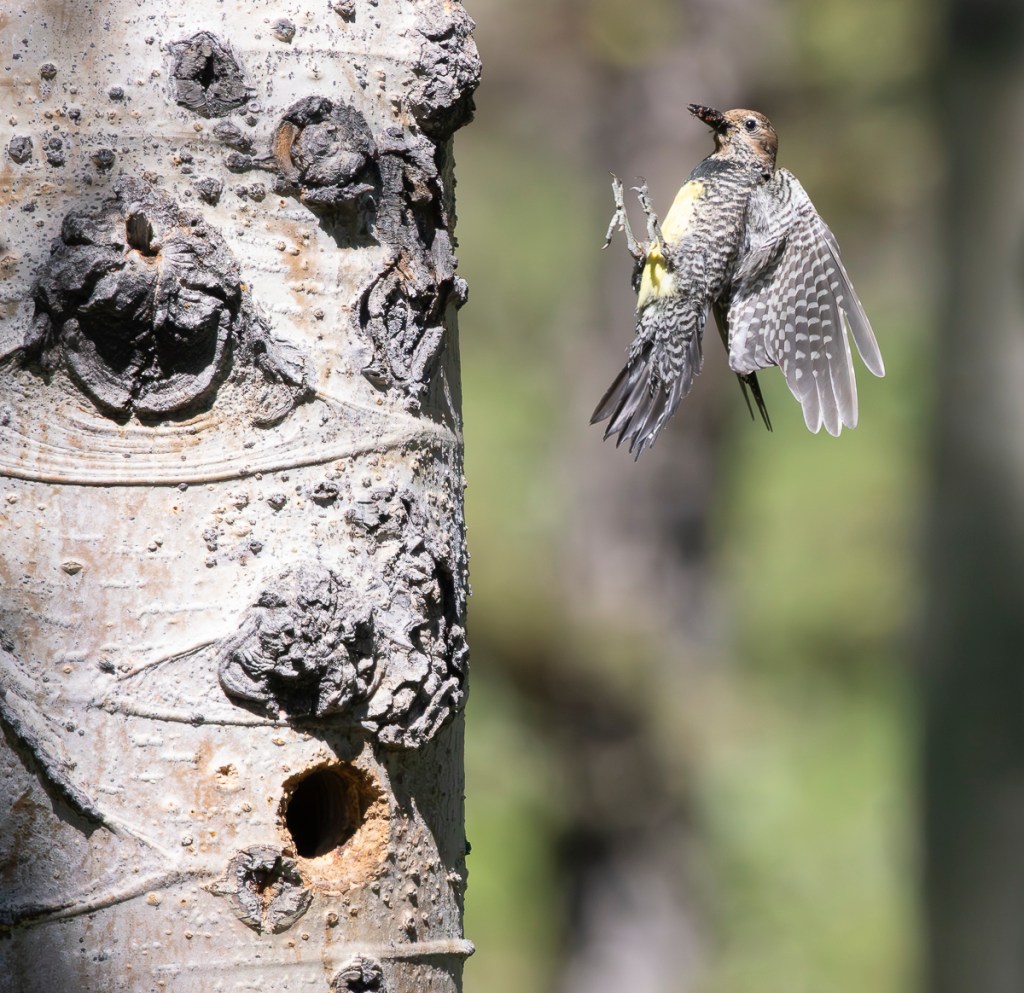
After some time with visiting family, I went back a couple of weeks later to check on the woodpecker’s progress. While watching the three-toed nest cavity, I saw another woodpecker fly through the grove and land on an aspen trunk about 100 feet away. It went into another nest hole! So, I slowly walked over and sat on the trail edge to watch, but before I got close, the bird flew out. This aspen was down in the grove proper but I had a vantage point from the trail which was up a steep slope from the nest tree giving me an almost eye level view of the cavity. Soon, another woodpecker came in calling and landed on a nearby aspen trunk, looked around and then flew to the nest cavity entrance. I could now see that this was a Williamson’s sapsucker nest.

It seems as though the sapsuckers had started their nesting activities before the nearby three-toed woodpeckers as they were already feeding their young. I decided to focus on the sapsucker nest since it was a better location for viewing the nest cavity from a distance far enough sway to limit any disturbance to the birds. This tree also had much better light on the nest cavity (at least about one and a half hours each morning). On my first visit I noted that the male and female were both feeding the young with an interval of only about 10-20 minutes between each feeding. For many years scientists thought that the males and females were two distinct species since they look so different from one another. The male is boldly patterned in black and white with a yellow belly and red throat patch. The female is more muted in brown and black and white stripes (but also has a yellow belly).

I made three trips to the aspen grove over the next several days and tried to photograph the comings and goings of the adults as they fed their very hungry young. The male had a pattern of landing on a tree trunk about 30 feet from the nest tree, looking around, and then flying over to the nest cavity. The female usually flew directly to the nest tree, calling as she flew in. I was hoping to get some photos of the birds flying in to the tree trunk with wings spread and feet outstretched but I discovered this was challenging. I generally use the mechanical shutter option in my camera which shoots at about 12 frames per second. That is generally plenty fast to capture moving subjects. But these birds came in so quickly I decided to switch to the electronic shutter which provides 20 frames pr second. That made all the difference in the world. As soon as I thought a bird was flying toward the nest tree I just pressed the shutter and held it. The up side was a series of photos showing different poses and wing beats as the woodpecker came in for a landing. The down side was it made for a crazy number of images to go through that were only slightly different from one another.
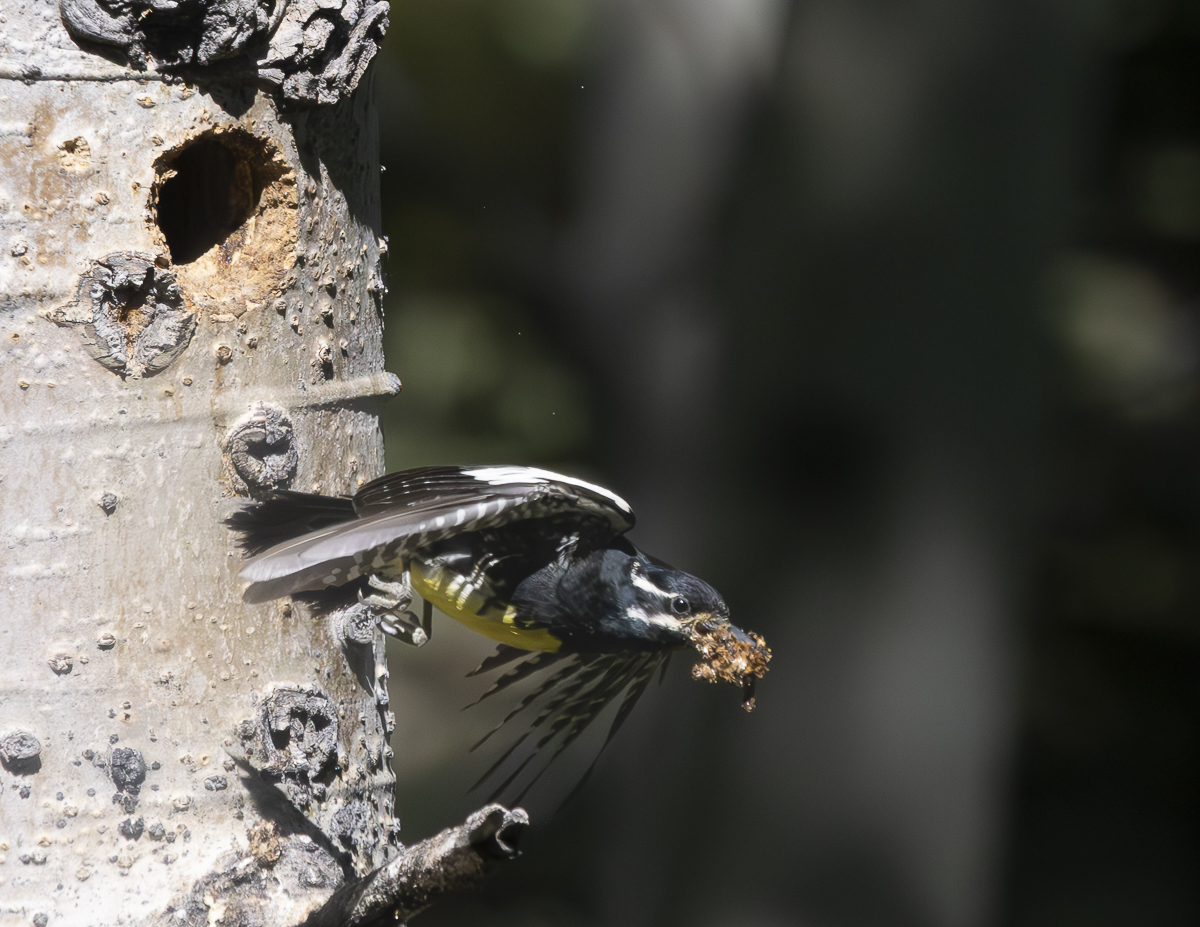
Here are a few of my favorites as the birds flew in to feed their young (these images are heavily cropped).

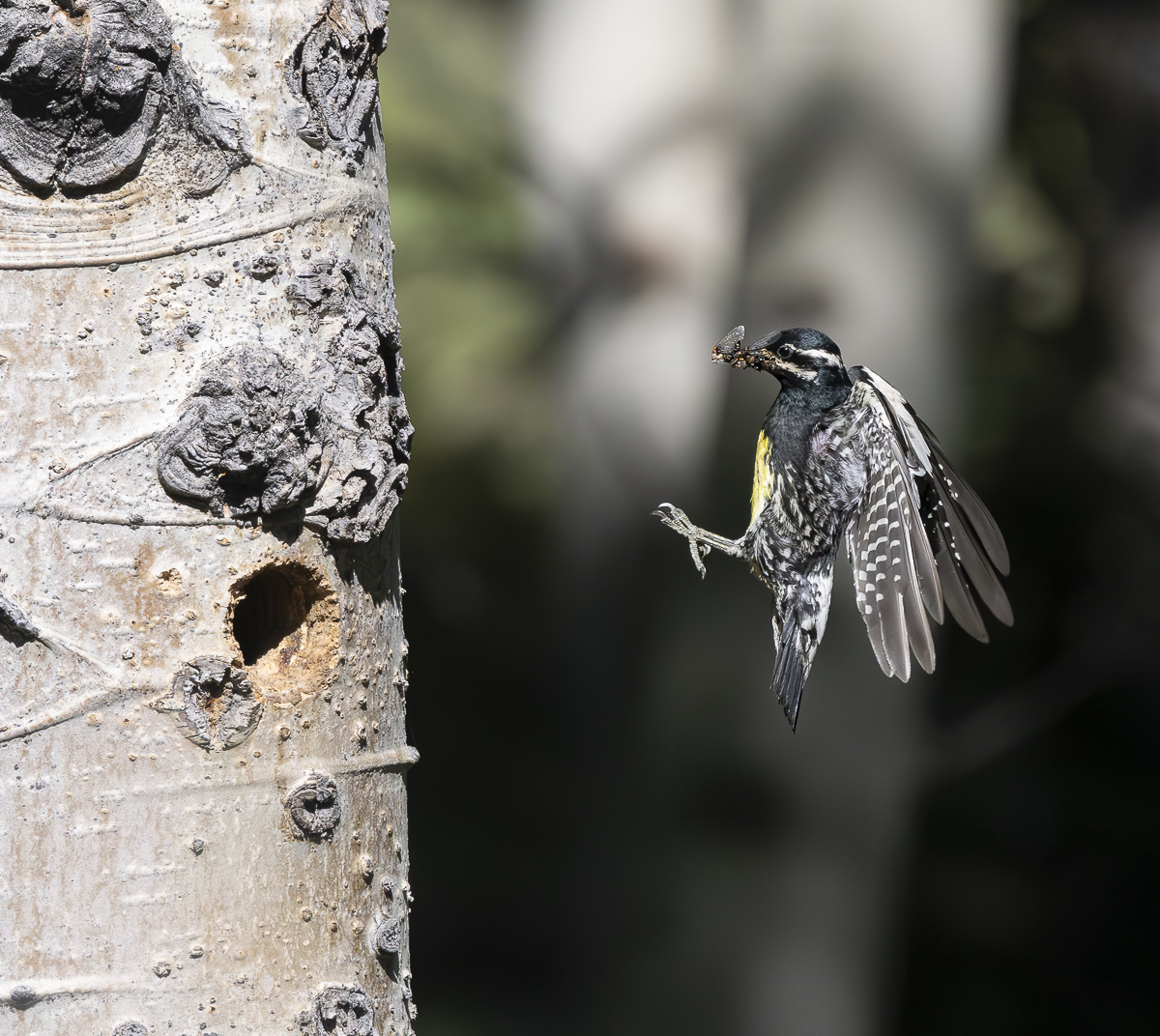
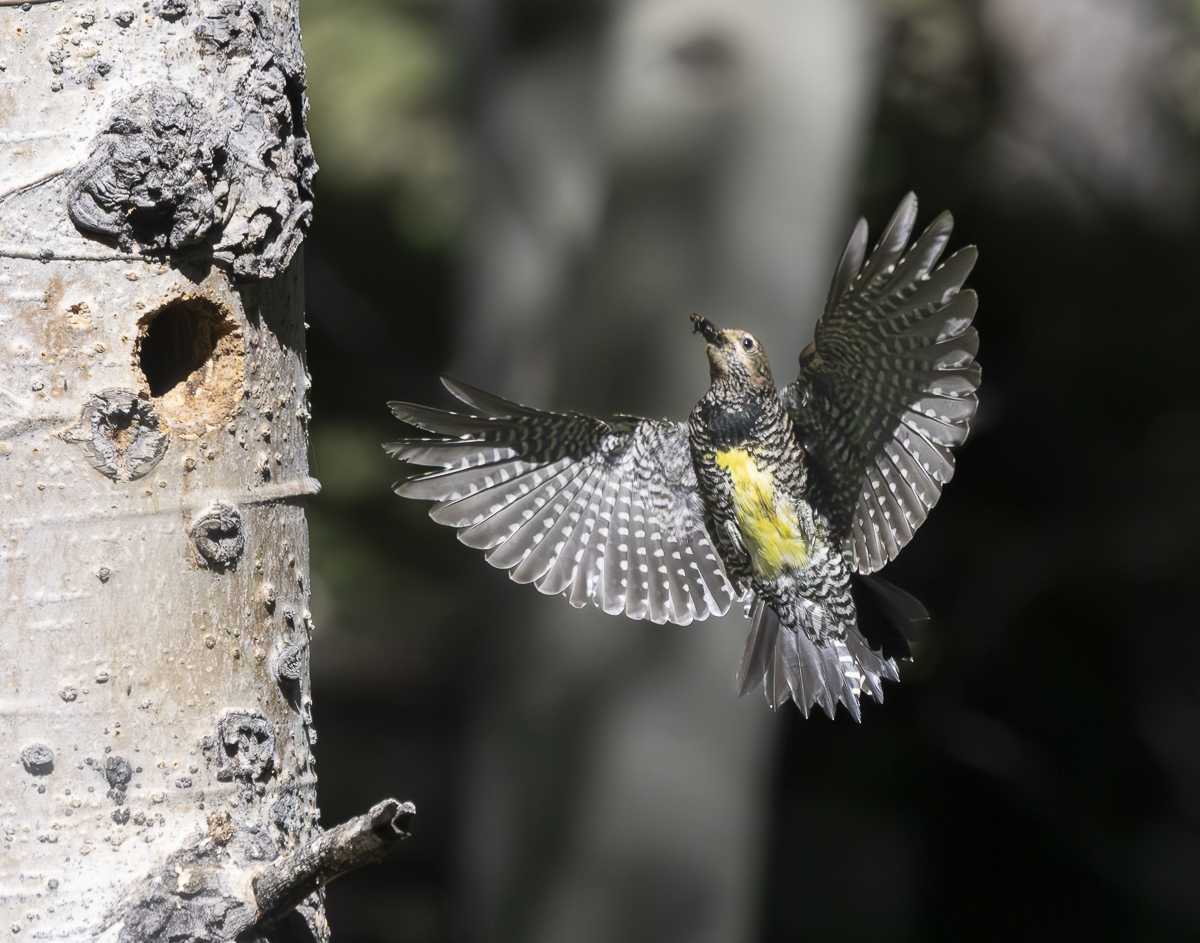

The pair of sapsuckers kept a fast pace of feeding trips. I couldn’t tell what they were bringing by looking through the binoculars, but when I started looking at the images I was amazed – they were feeding their young blobs of ants. I have since read that this is common for this species.

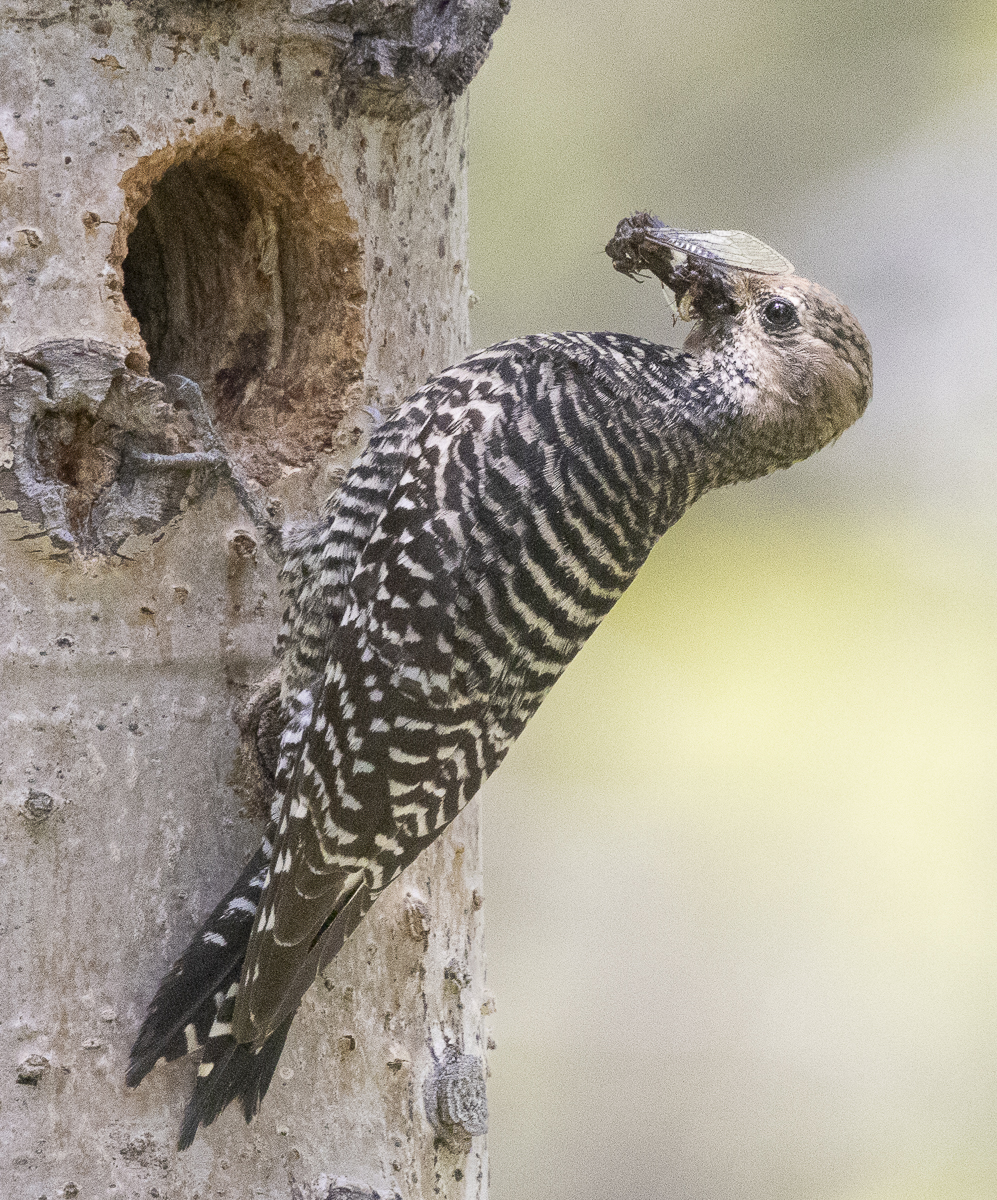
When leaving, the female often dropped down to a short branch below the nest cavity and sat there for a few moments before flying off.

I was surprised to see relatively few carries of fecal sacs from the nest. I have witnessed this many times with various species of cavity nesting birds when the adult goes into the nest after a feeding and flies out with a pre-packaged fecal sac that usually looks like a small white blob. They tend to fly some distance before dropping it. This probably helps remove scents that could help predators cue in on the nest. But I never saw the white blob when these sapsuckers came out of the nest. Instead, it looked like a large blob of wood chips and ants stuck together.
On my last trip to the grove, I took Melissa’s spotting scope and a newly arrived adapter for our cell phones. This combination provides excellent resolution for filming at a distance. And video is much more forgiving in low light than stills with my camera so I sat for a time at the three-toed woodpecker nest and captured this footage of a feeding.
The female brings in some insects to feed the young and then sits on the outside chirping, perhaps to the male. She then enters and flies out with a fecal sac.
I had hoped to witness the young birds leave the nest (or at least poke their heads out to be fed as they got bigger) but we had more family visiting shortly after these images were taken and by the time I got back to the aspens, the birds were all gone. I look forward to checking out this and other aspen groves next summer to see what a new year brings.


Leave a Reply