
I’m glad the Covid-19 shutdown began in March. April is the best month to be home. Twenty-five years of gardening – not the traditional type of gardening; Mike’s gardening is more like an attempt to create a mountain cove forest in the side yard – has led to a beautiful array of native wildflowers. April is the best because, living in the woods, spring ephemerals, those small-but-showy wildflowers that bloom before the trees leaf out, do much better than more traditional garden plants.
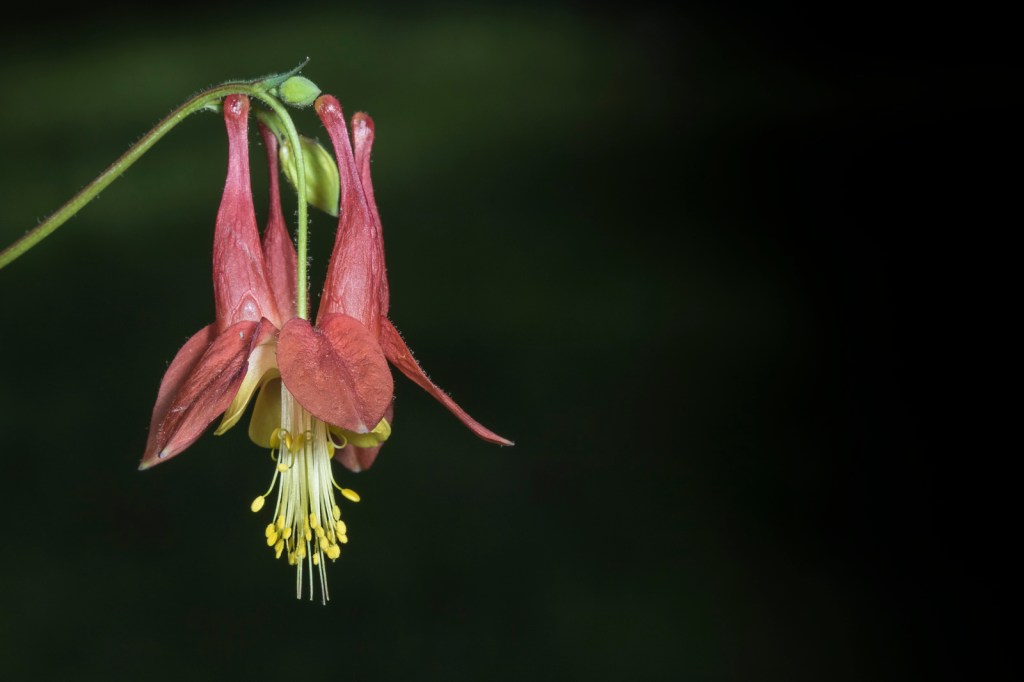
So when the world stopped and we all hunkered down at home, I found myself sitting on one of the larger rocks in the attempt-at-a-dry-streambed along the south side of our house observing wild columbine, Aquilegia canadensis.
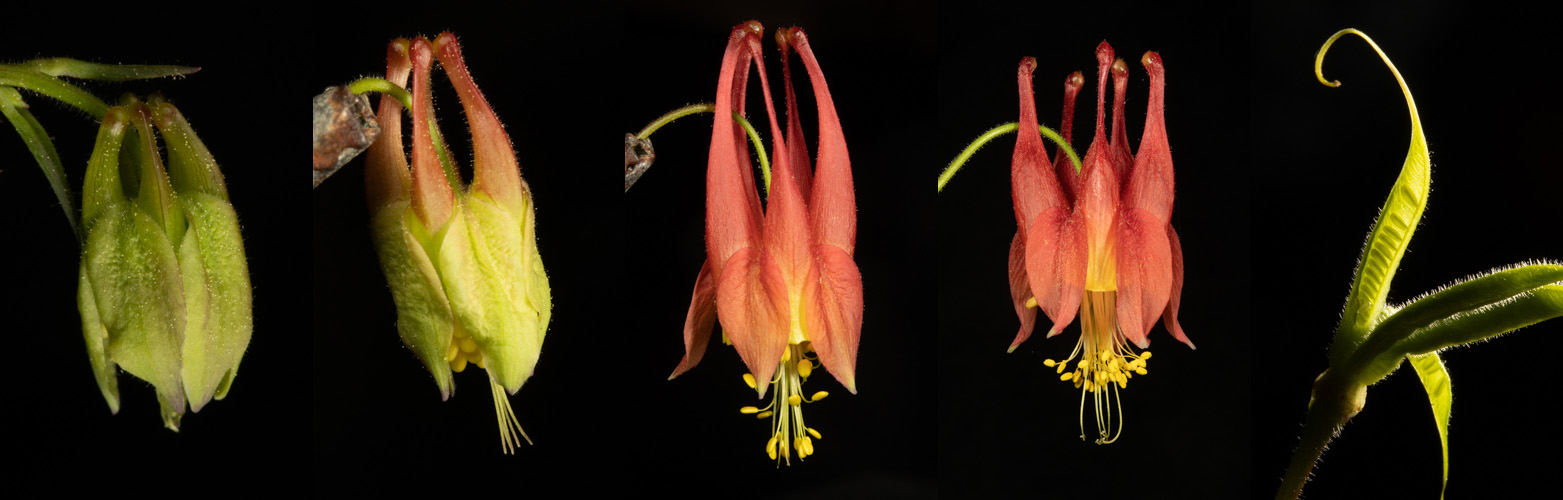
The drooping red flowers of our southeastern columbine almost seem to float above the ground, hanging from thin stems. They start as a nodding pale green bud, a bit smaller than your pinky nail. As they age, they expand and redden, and yellow pistils emerge from the tip of the flower, even before it is fully open. Bulbous, spurred petals extend upward as sepals open and stamens uncurl to release pollen. Spent flowers shed their sepals and petals, and the five ovaries, each tipped with a remnant style, rotate upright to eventually ripen into brown cups filled with poppy-like seeds.
Columbine is the reason we moved back to the house that Mike and his ex-wife built. That mist of red flowers, hovering above dots of blue phlox and spears of foamflower, the scent of pinxter azalea in the air, and the wheat-tee-oh call of a hooded warbler echoing up from the ravine – I just couldn’t bear that this was something Mike had had to give up.
It’s one thing to leave a house, even one you’ve designed to fit your style and wishes perfectly. It’s another to leave the living, breathing thing that is a garden. Especially when it’s filled with plants like trout lily and bloodroot that may take seven or more years to flower, and that now have spread with profusion through the yard, putting on a show to rival the wild places that it was meant to mimic. So when he had to leave, it broke my heart for him. And when the opportunity came to move back I didn’t hesitate, even though I knew it would never feel as much ours as his.
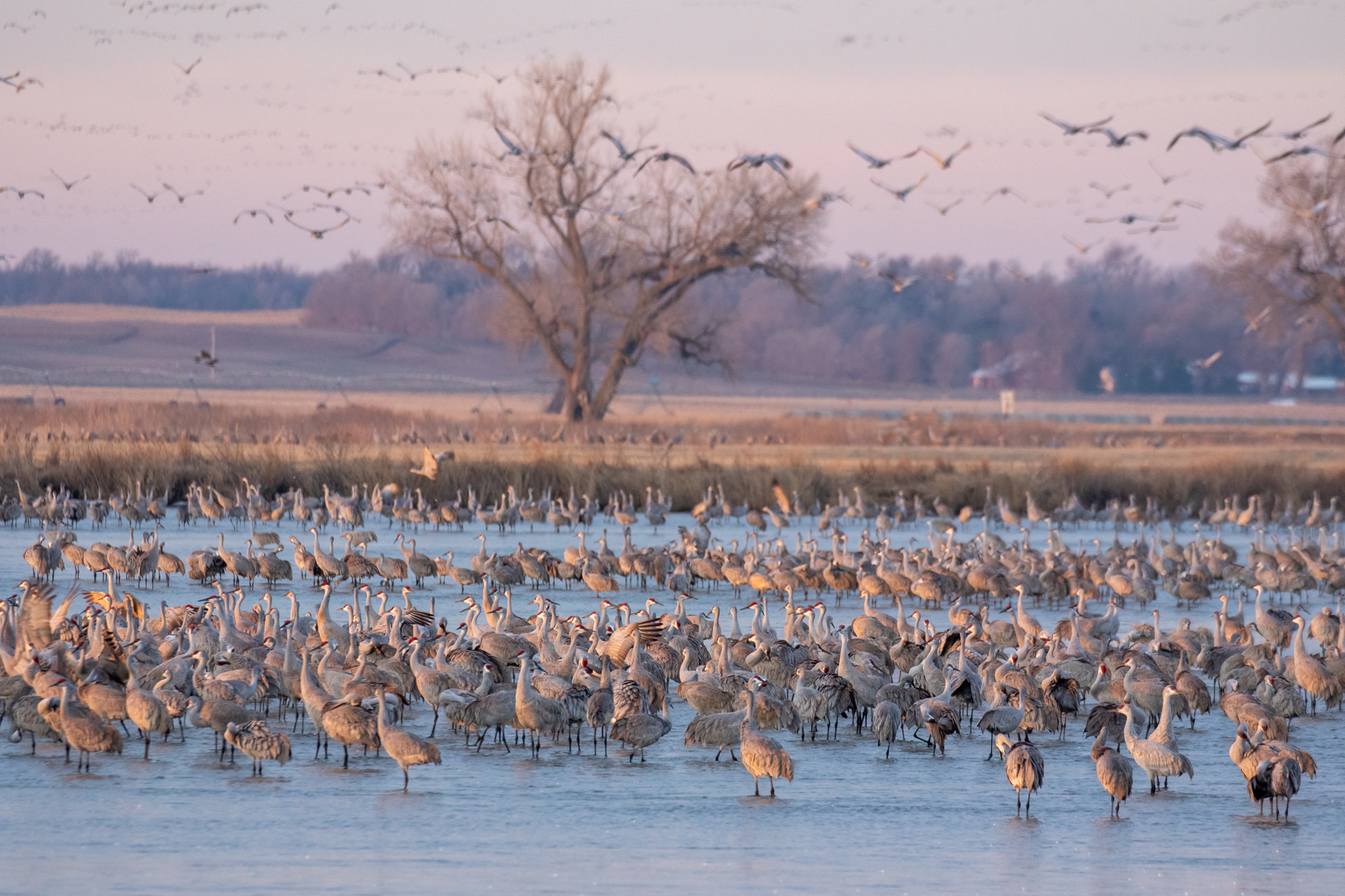
In March 2020, Mike and I had planned a long-anticipated trip to Nebraska. This may seem as unlikely destination at that time of year, but as naturalists and wildlife enthusiasts, it was a perfect spot for us. Each year, hundreds of thousands of sandhill cranes linger along the Platte River on their northward migration from wintering grounds in the southwest to breeding areas in the north. The shallow, braided river bordered by wet meadows and cornfields provides the respite they require on the long trip: a safe place to roost at night and plenty of insects to refuel.
For a period of three or four weeks, the evening skies are filled with the silhouettes of family groups of cranes, and the sound of their rattling calls echoes across the landscape. As they drop towards the river, they set their wings and kick their gangling legs beneath their body, resembling witches patrolling the skies on Halloween. Where one lands gently on the mud others follow suit until before long the river is teeming with birds calling to one another, jumping, and dancing. At times, they even seem to flow like the river as they seek a more favorable spot. They call through the night, settling a bit at times but never quieting, until at dawn, as the light of the rising sun highlights the red patch on their heads, they burst off the river with a crescendo of wingbeats and calls.
Of course, Mike and I put off our Nebraska trip when the pandemic hit and things around the world closed down, even the isolated two-person riverside blinds we had planned to spend the night in to view the cranes. It took four years to find the time to reschedule that trip, but we finally made it in late March 2024.
When we returned to North Carolina in the first week of April, we discovered that a tree limb had fallen on the deer fence that protects about an acre of our yard, the area that Mike had painstakingly planted and tended for so many years. It looked like someone had taken a weed-whacker to the garden. Almost every single columbine stem, emerging from winter dormancy and just beginning to bloom, had been eaten. We were sick at heart. One flower remained, floating on an elegant stem, hovering above the ruins of the garden. As the weeks of April went by, the columbine made an admirable effort, each plant putting on a few small blossoms. But the prolific display I had come to expect and love was not to be.
Mike and I are together because of Yellowstone National Park. Years spent crafting and leading trips for educators together deepened a love for that place and for each other. On our very first trip together, we sat into the late hours of the night at a picnic table in front of the Roosevelt General Store talking about everything from our views on abortion to office politics to our hopes and dreams of one day living in a place as wild as Yellowstone.
I’ve never quite been able to put my finger on what it is about Yellowstone, but it put its hooks into both of us. I think it’s something to do with the fact that we are just one small piece of the huge puzzle that is the Greater Yellowstone Ecosystem and, in fact, we are only visitors there. Yellowstone belongs to the wildlife; it belongs to itself.
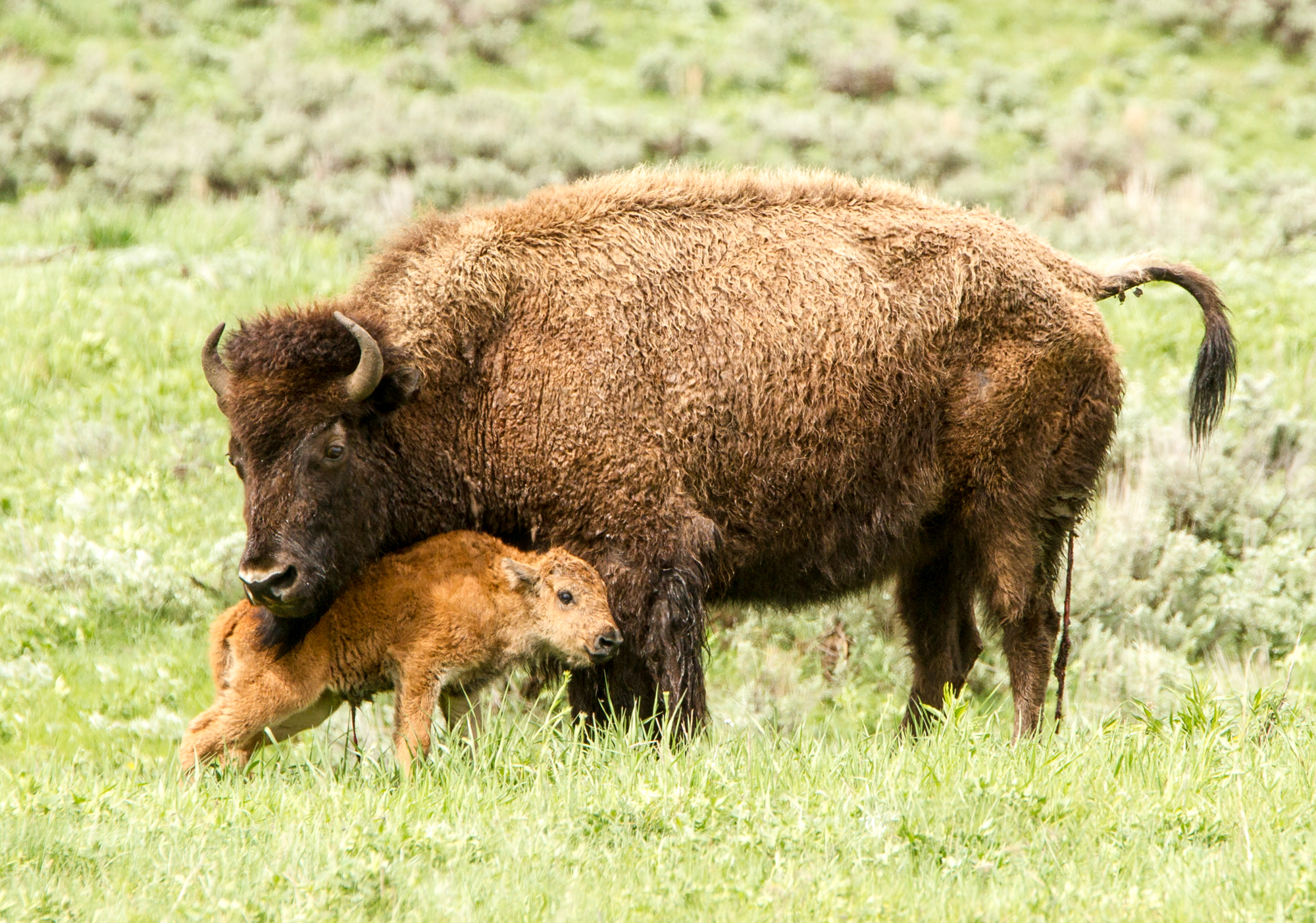
There’s nothing quite like sitting silently in the sagebrush, its pungent aroma permeating the senses, watching a cow bison lick clean its newborn orange calf, umbilical cord still hanging beneath its belly. Or, weeks later, watching an abandoned calf struggle for days in an open meadow until one morning, ravens and magpies marked the area where the calf had been. We hiked out to the site and found the remains of a cow. Nearby lay the baby’s carcass, its legs ending in tiny hooves. It’s not an easy place, Yellowstone; but its wildness pulls us.
And so, as we make plans pursue our longtime dream and move to Yellowstone, to see the subtle ways it shifts through the seasons with a depth our previous visits have not allowed, we will stay in North Carolina for one more columbine season. One more chance to see the clouds of red blossoms above divided leaves. One more hummingbird threading its long bill into the flower’s spurs, seeking the nectar reward deep within. One more chance to see the petals fall as the seeds ripen, then disperse.


 Roads End Naturalist
Leave a reply to Michael Sammut Cancel reply