

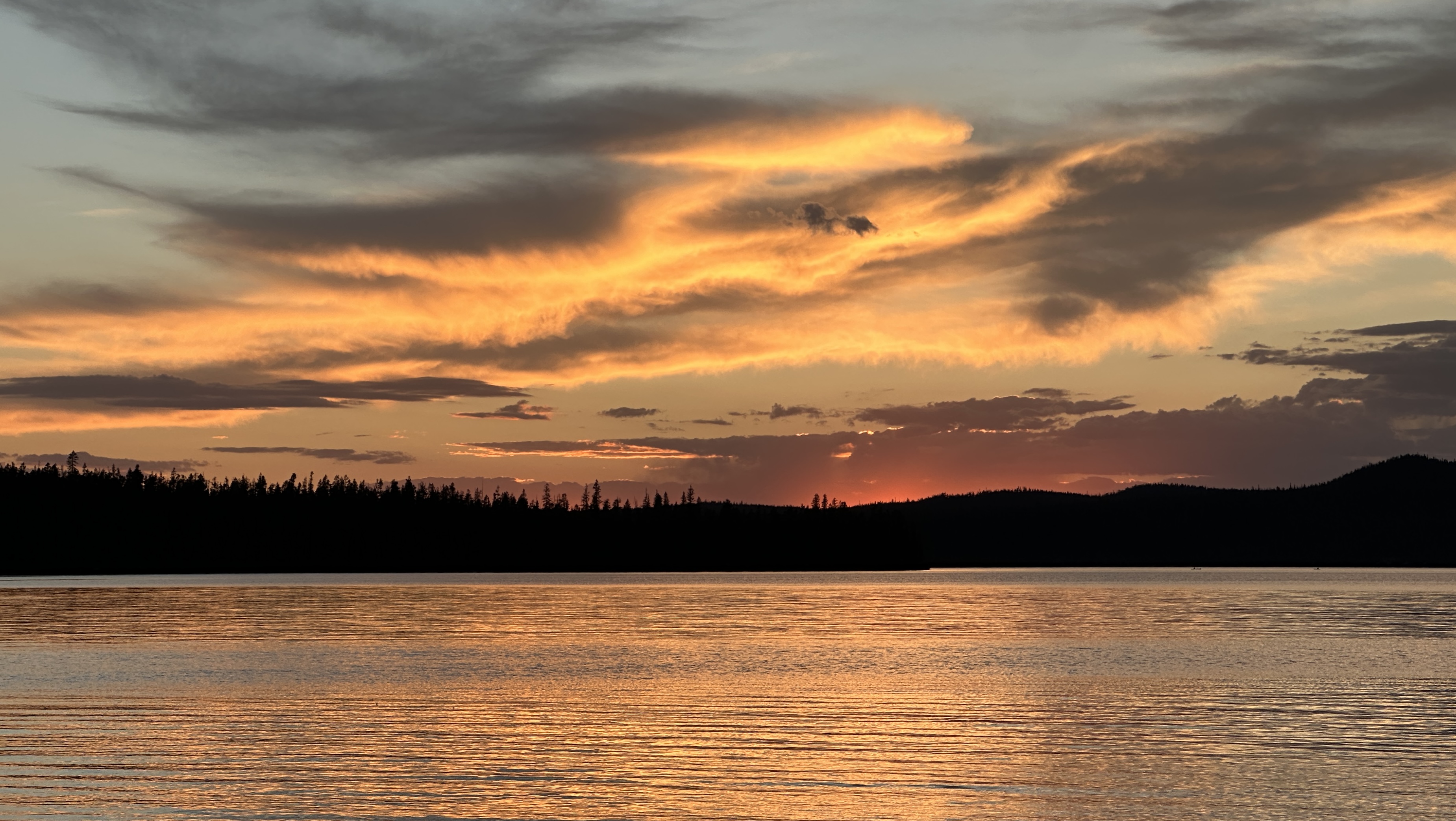
Last weekend we took a long awaited canoe-camping trip to Shoshone Lake in the southern part of Yellowstone. It’s touted as the largest backcountry lake in the lower 48 states. It can only be reached by foot or non-motorized boat. We chose that route: a paddle across Lewis Lake then up the three mile long Lewis Channel. The final 3/4 mile or more of the channel is shallow and rocky, and we had to drag the canoe through that section, especially with the low water levels of late summer. Nonetheless, the entire paddle was beautiful, and the serenity of spending four nights far from cars, computers, and civilization gave us a chance to quietly reflect.
Mary Oliver writes in her poem Spring, “There is only one question: how to love this world.” She writes of a black bear sow, just emerged from her den, hungry. Perhaps it is a young female; otherwise she would likely have cubs with her. I can perfectly imagine her dark frame, like the bears we’ve watched in eastern North Carolina or here in Yellowstone. She is silent, the signs of her presence are “flicking the gravel,” claw marks on trees, the ripples her “tongue / like red fire” leave on the cold water. In her “wordlessness” is “her perfect love” for this world.
As we paddle across Lewis Lake just after daybreak, the winds begin to give rise to the day’s waves. The water is crystal clear, and the underwater world seems accessible in a way it’s not most of the time. I am mesmerized by the ribbons of light moving across the lake bottom — light from the rising sun shattered by the waves, reflecting on the sand and rock. The patterns dance as I expect the northern lights do, never repeating, but without any sharp angles. Sinuous and loose. Golden light on the sandy bottom is shaded green by the water above. The shadow of our boat and the rhythm of our strokes both obscure and shape the light.
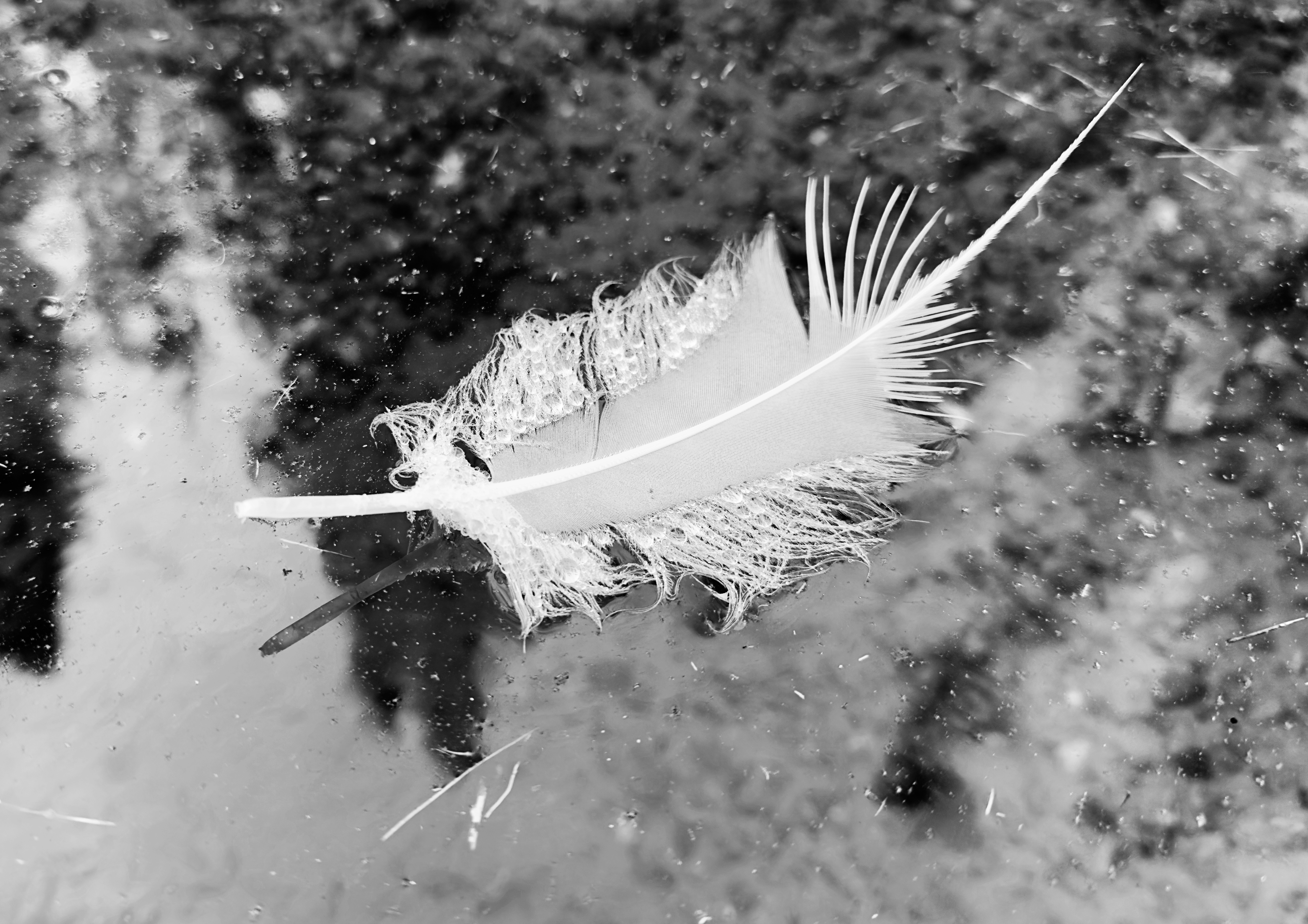
In the Lewis Channel the air sits still. A single white feather slides across the glassy surface. Below, a black sandy bottom dotted with broken twigs. As we glide closer, a third view appears — the reflection of spruce and fir trees, dark angles cutting the glare of reflected sky. White feather, black sand, white sky, black trees. Around the corner, the trumpeter swan pair waits, still and elegant as we silently pass.
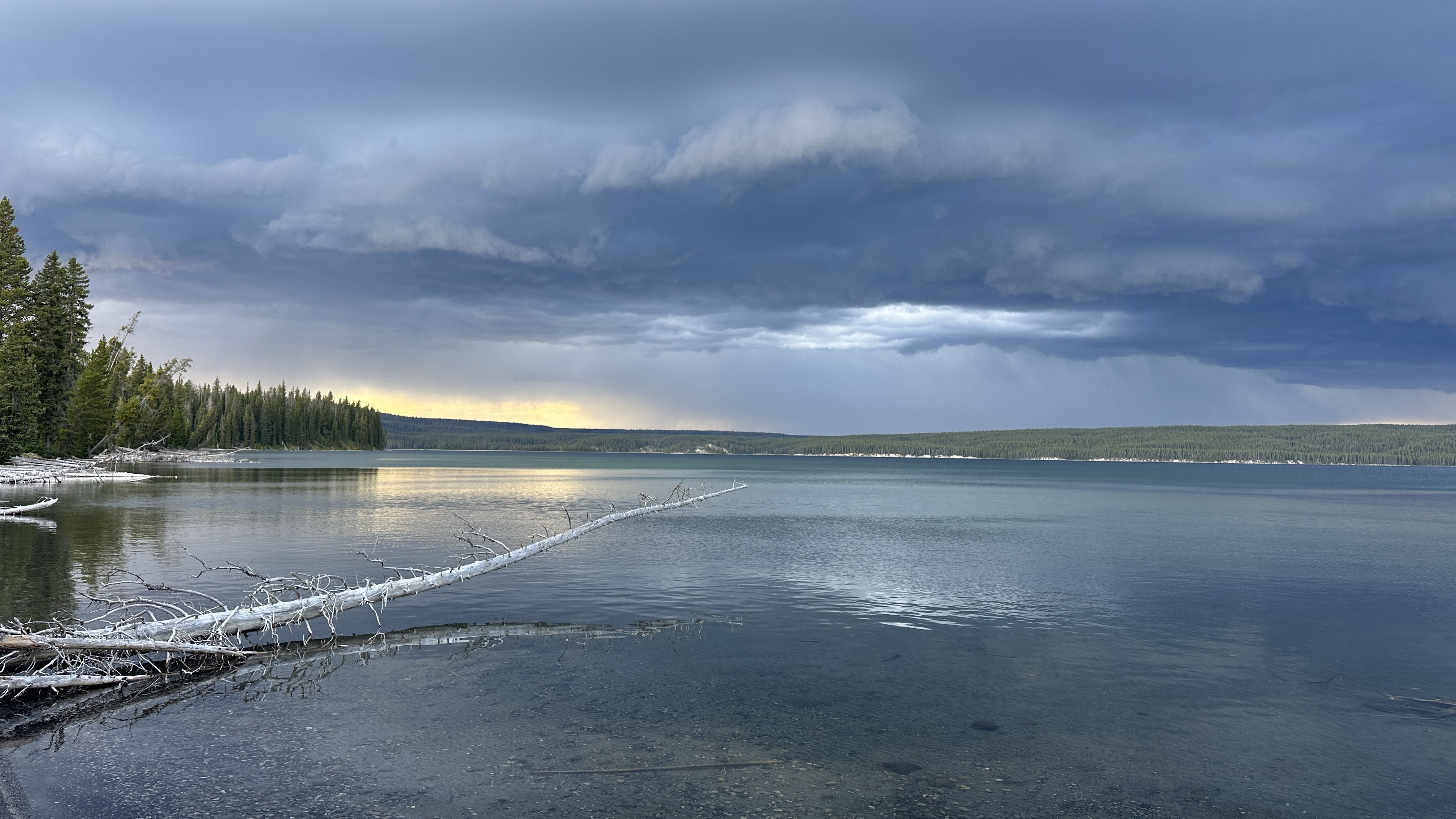
Dark clouds from the southwest stretch across the lake. They curl toward the northern shore, sweeping the sky. Below, a glimmer of golden late day light casts a glow across the green trees, black sand, bleached wood of downed trees. Lightening flickers in the distance. In the center, a white glow, as if the storm has a heart of ice.

In the late afternoon light a merganser passes by, again and again. Its vivid orange legs, perfectly matched to its bill, push it confidently through the water in spite of our presence on the beach. Head down, bill in water, snorkeling for prey. Head up, catching breath. Light glints on the water droplets in its crazy headdress, a spike of rusty feathers. A dive, a wing flap, rising off the surface to show a brilliant white belly, a flash of white on moving wings. A deep cluck in its throat; just the one note, repeated.
There’s nothing quite like a dip in cold water after many days in the wilderness. The temperature is a shock, even mildly painful if its frigid enough, causing a sharp inhale of breath as my I submerge my head and shoulders. But almost the moment I emerge, sun on cold skin, there’s a sensation of comfortable, tingling warmth. It’s a freshness quite unlike anything else, and I am more at home in my own skin than at any other time.
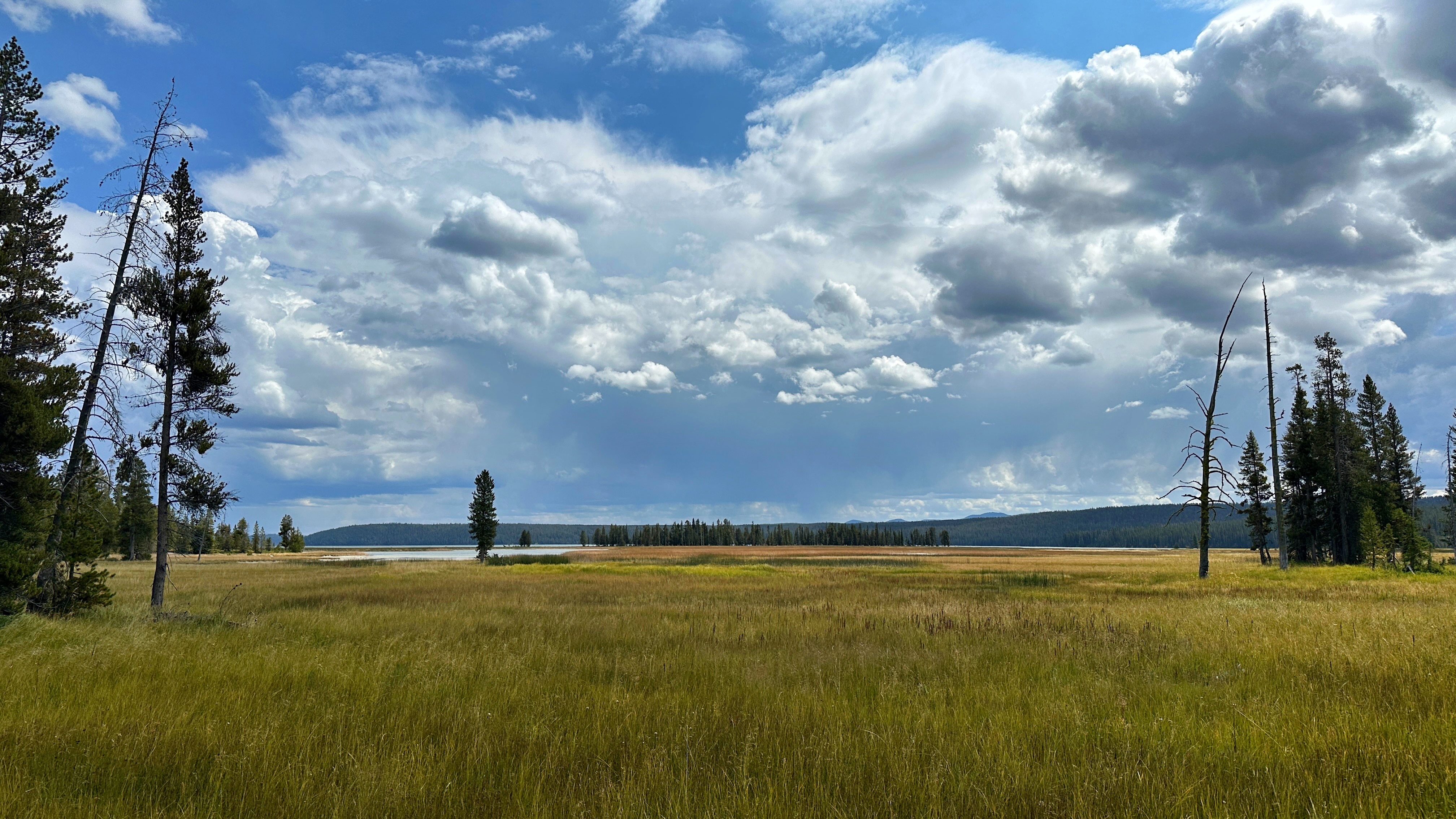
Midges floating above the still water look like diamond dust… but slightly more purposeful in their movement. Or like cottonwood seeds swirling in the breeze. The glassy lake surface is dotted with even more, like the first dusting of snow on frozen ground. Their tiny bodies are no larger than the tip of my pen, with just a hint of softness near the head: their feathery antennae. My mom wouldn’t tolerate their abundance well, and it is somewhat unsettling when one or two get a little to close to being inhaled. But their numbers are like a tiny miracle, a natural spectacle on a minute scale.
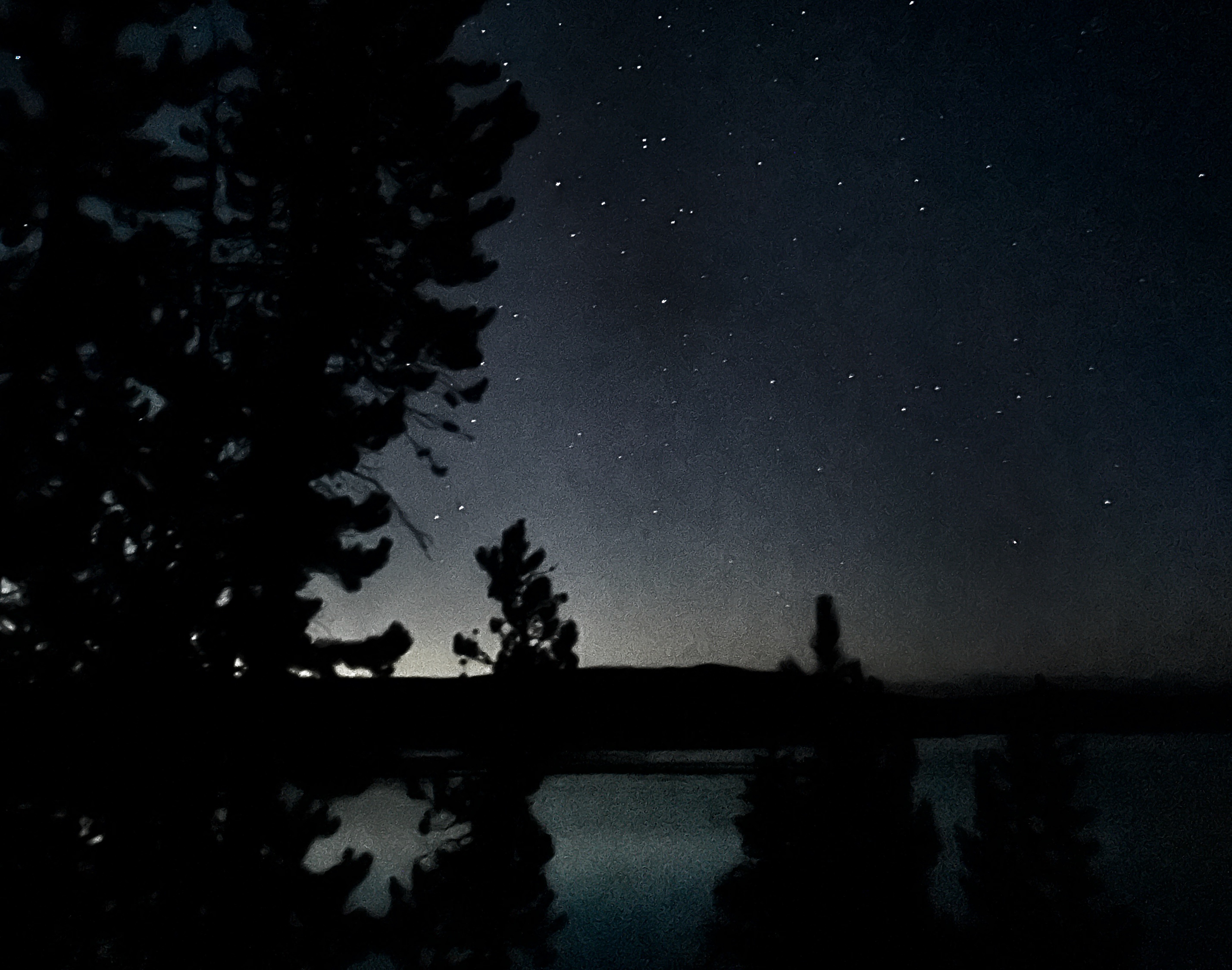
How do I love this world? I love this world most in places of solitude, quiet, beauty. When I am deep in it. When life is simplified to what fits in my boat or on my back. When I have time to sit in my hammock on a hillside, the sound of waves lapping a rocky beach, the sigh of the wind stirring lodgepole pine and subalpine fir needles, a view to distant hills above dark water when I lift my eyes from the page. And perhaps, somewhere nearby but out of sight, a silent black bear prepares herself for her winter slumber.


 Roads End Naturalist
Leave a reply to Joann Haggerty Cancel reply