
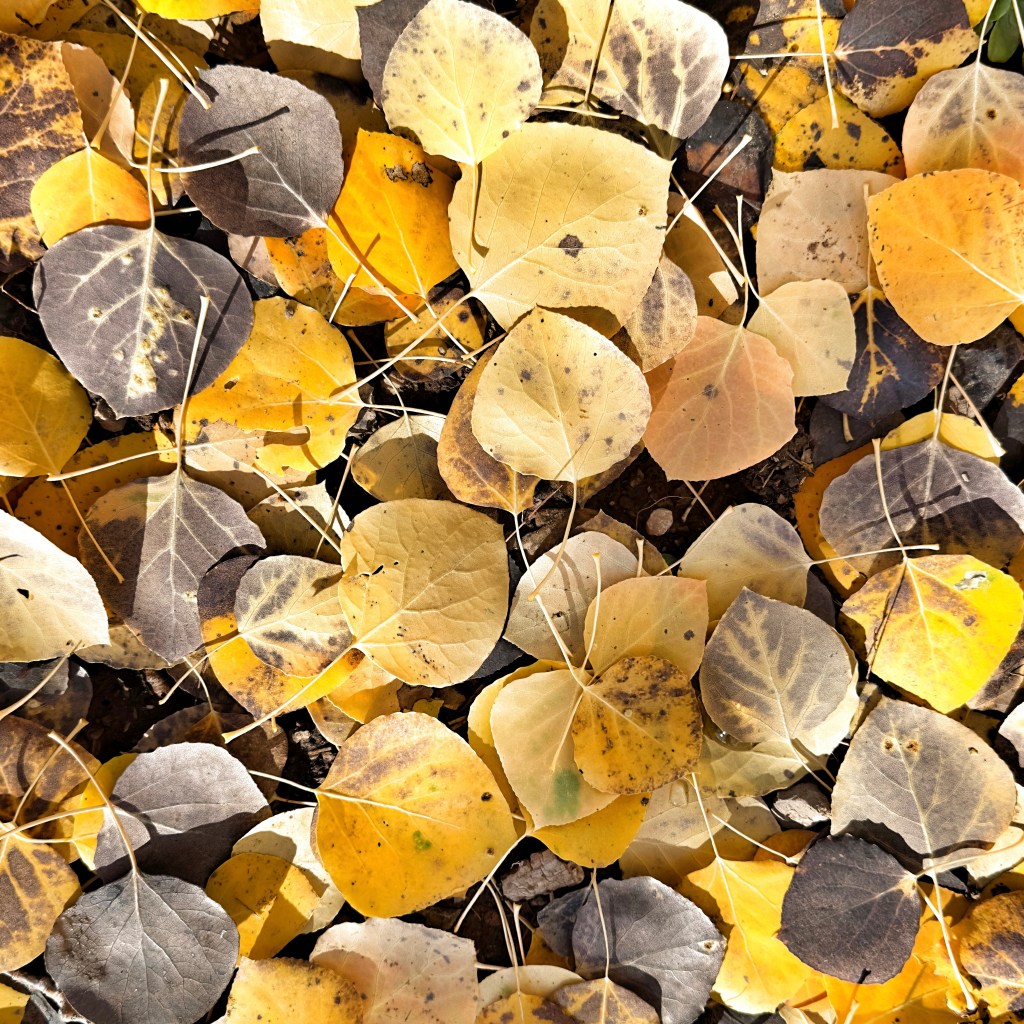
How about a blog post with some pretty landscape pictures?
~Jane Cardwell, my mother — this one’s for you!
Fall is a fleeting season. I’ve always loved it — the colors, the cooling weather, the promise of change. Here in the West, it seems to move even more quickly that it did back East.
The landscape around our new home in Gardiner has been brown for a while now. In this dry climate, it’s not heat or day length that seems to govern the fading of green. It’s the lack of water. This summer, the hummocks just inside Yellowstone that are visible from our living room had turned brown by mid-July. This is quite a change from the moisture of North Carolina that turns things green that aren’t supposed to be.
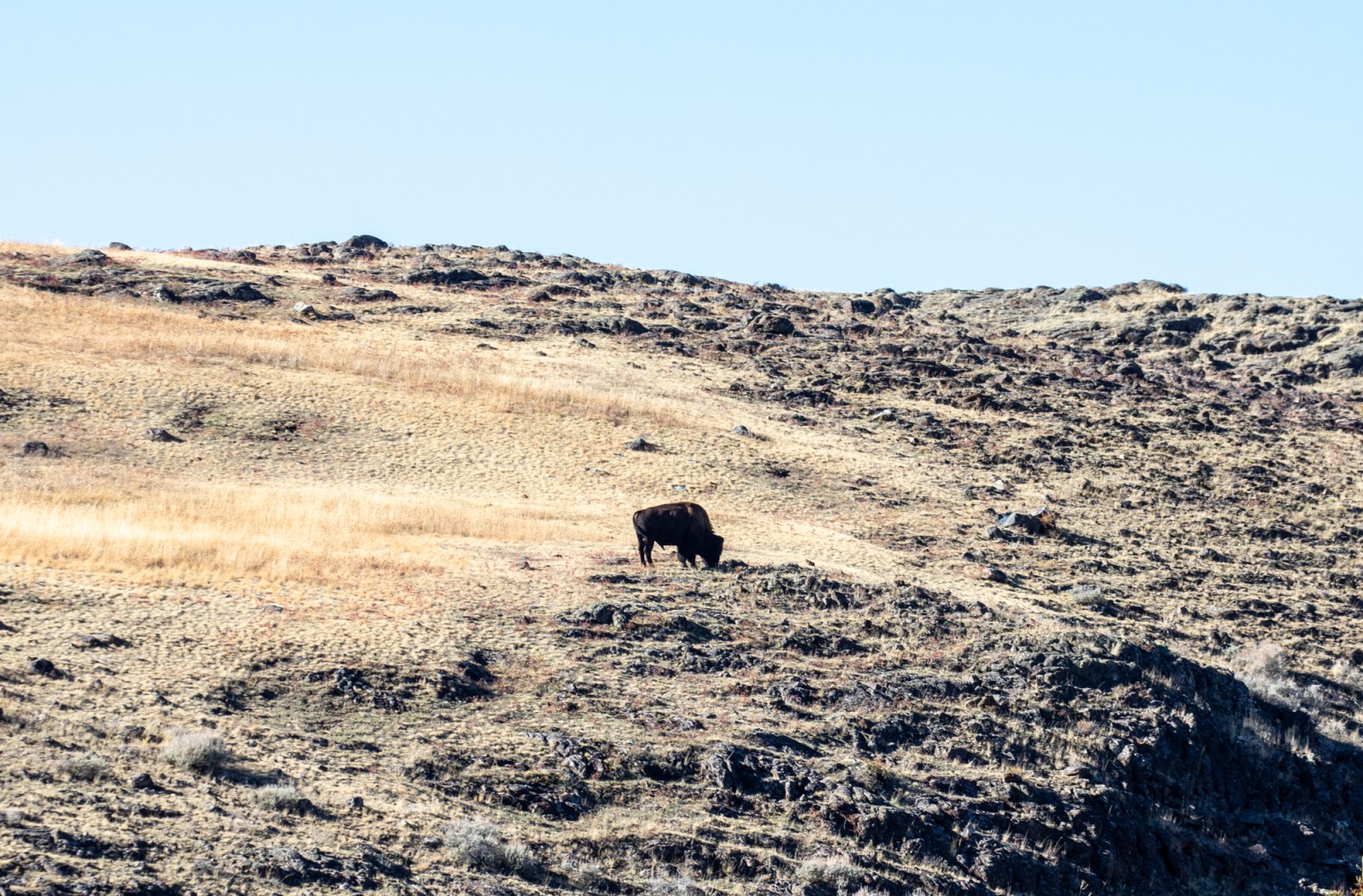
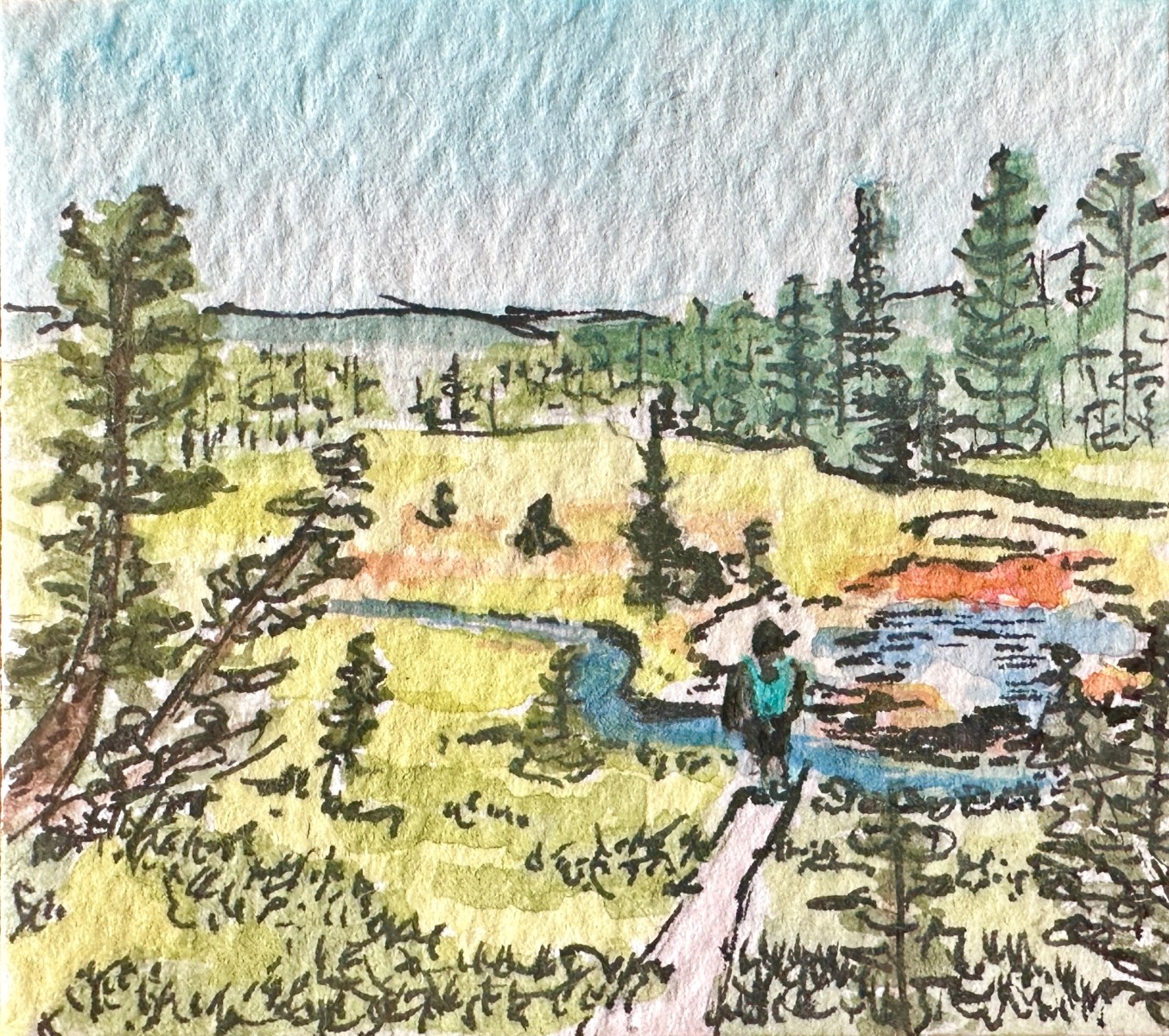
Since participating in a nature journaling conference in early September, I’ve been experimenting with watercolors and trying my hand at some small landscape paintings. It’s fun to try to match the colors I’m seeing on the landscape using just a few simple primary colors. But I think I need to discover a new vocabulary for shades of brown and yellow: Grass. Sand. Ochre. Bronze. Umber. Amber. Flax. Sienna. Sepia. Teak. Gamboge. Perhaps the naming will help me appreciate their variation more?
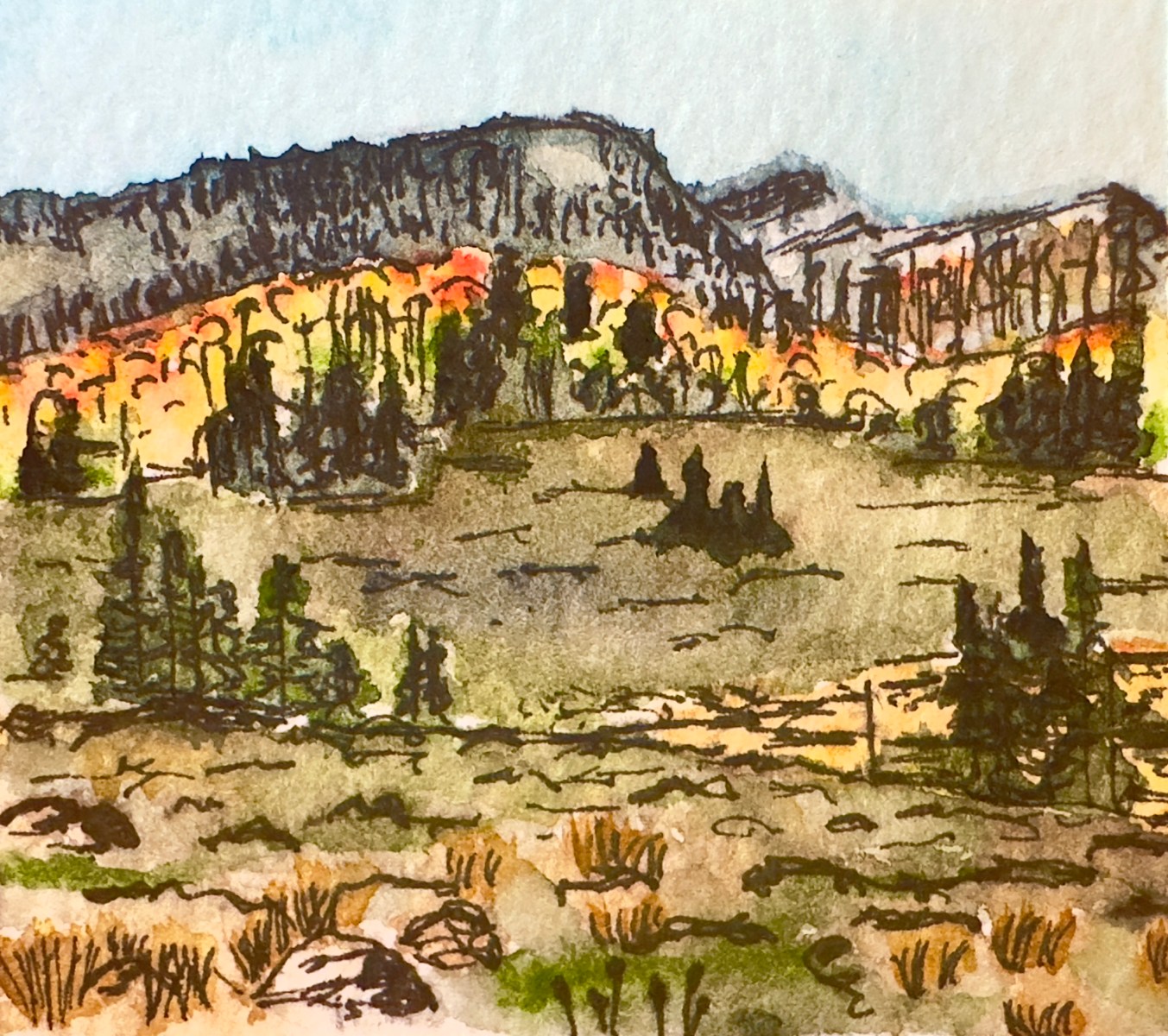
As September has waned and October begun, new colors have popped up on the landscape. The highlight of fall color here in the West is certainly quaking aspens. On past trips to Colorado, Mike and I have enjoyed their glowing yellow. Here in the Greater Yellowstone Ecosystem, or perhaps just this year (as it’s our first Rocky Mountain fall), there seems to be more variety in their color. While there is still a lot of the typical yellow, oranges and even colors verging on red blend in. In places where some of the aspens hold their green a bit longer, there’s been some beautiful “aspen rainbows” where a patch, or even a single tree, will showcase a spectrum from green to yellow to orange to red-orange.
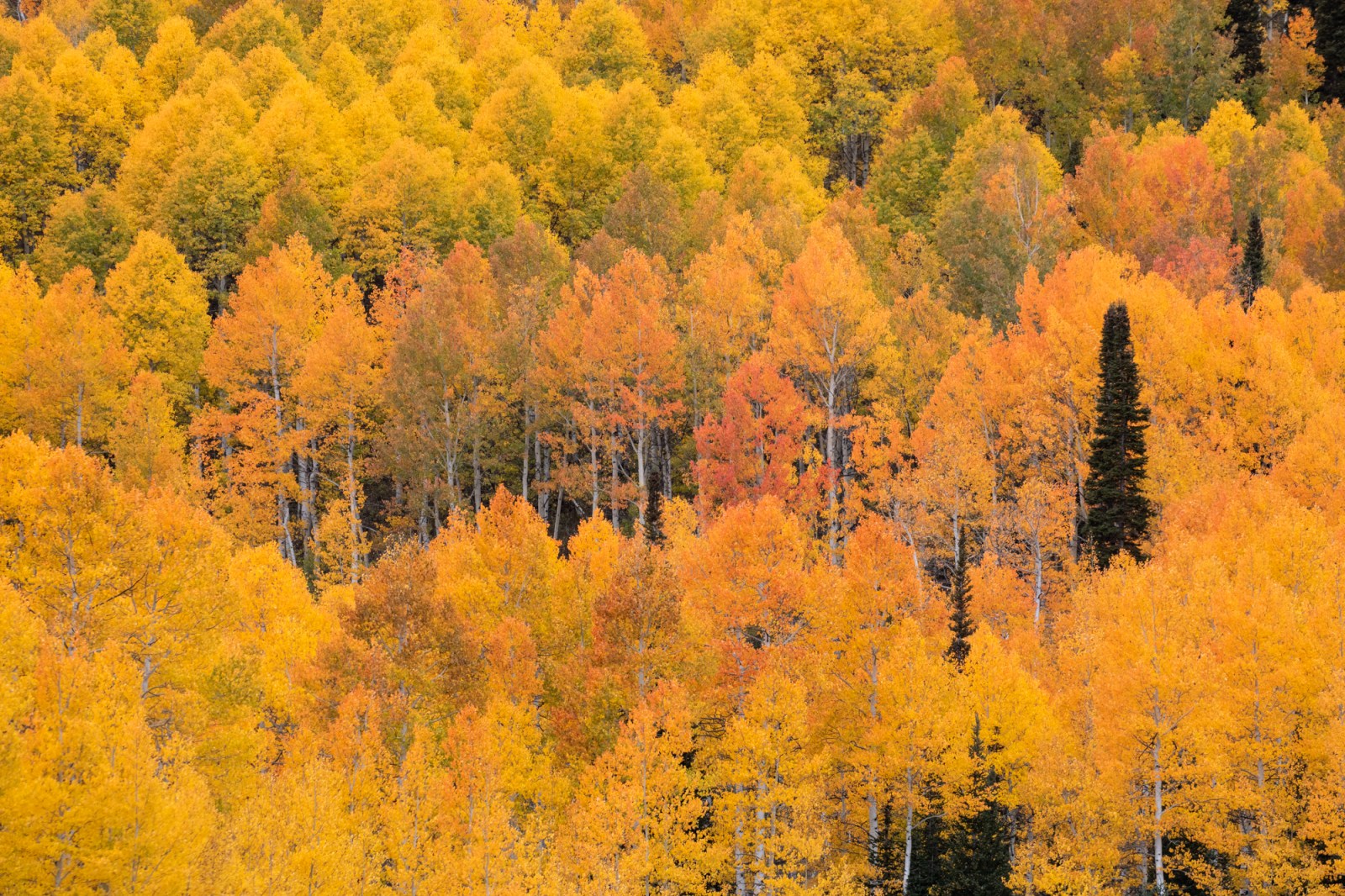
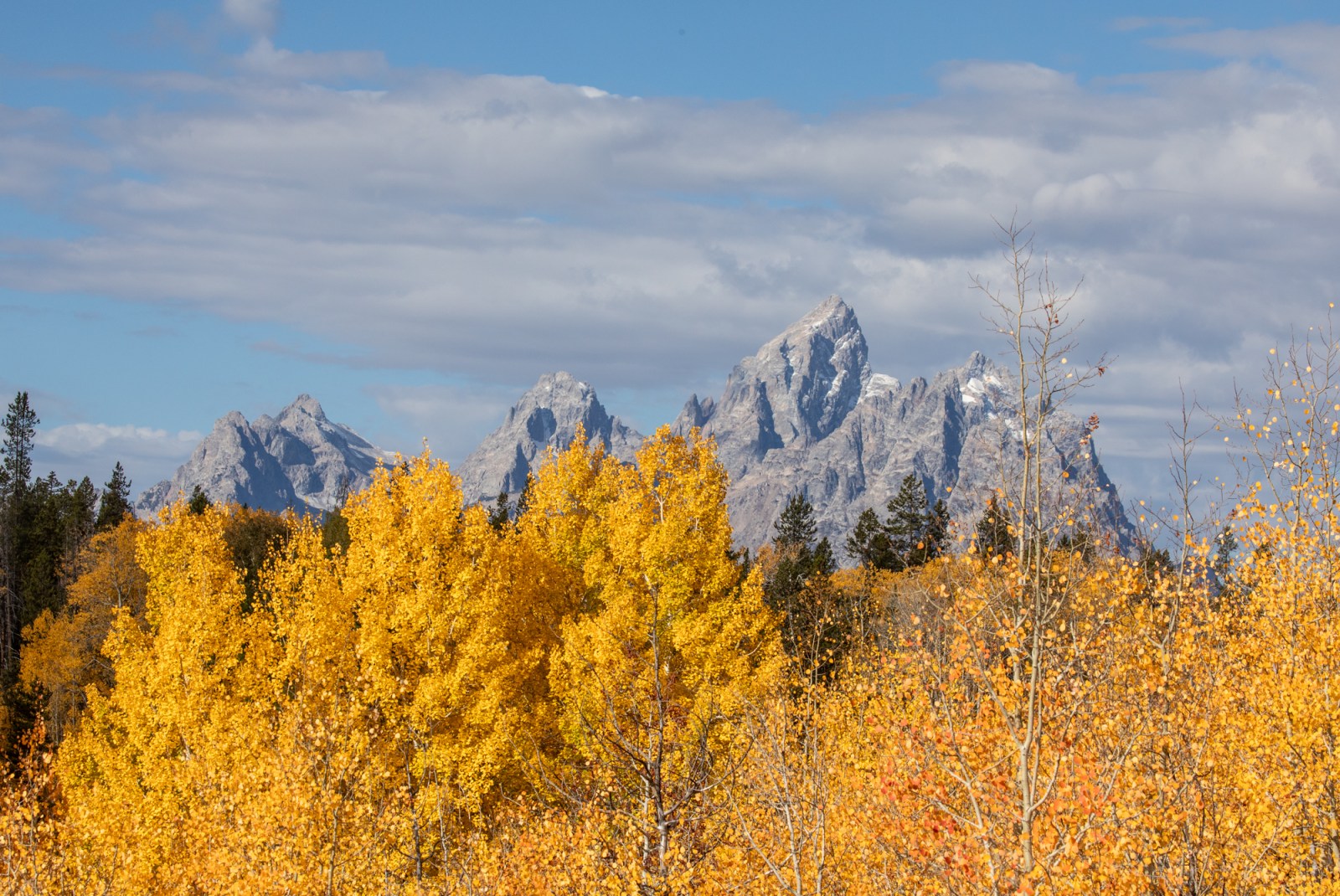
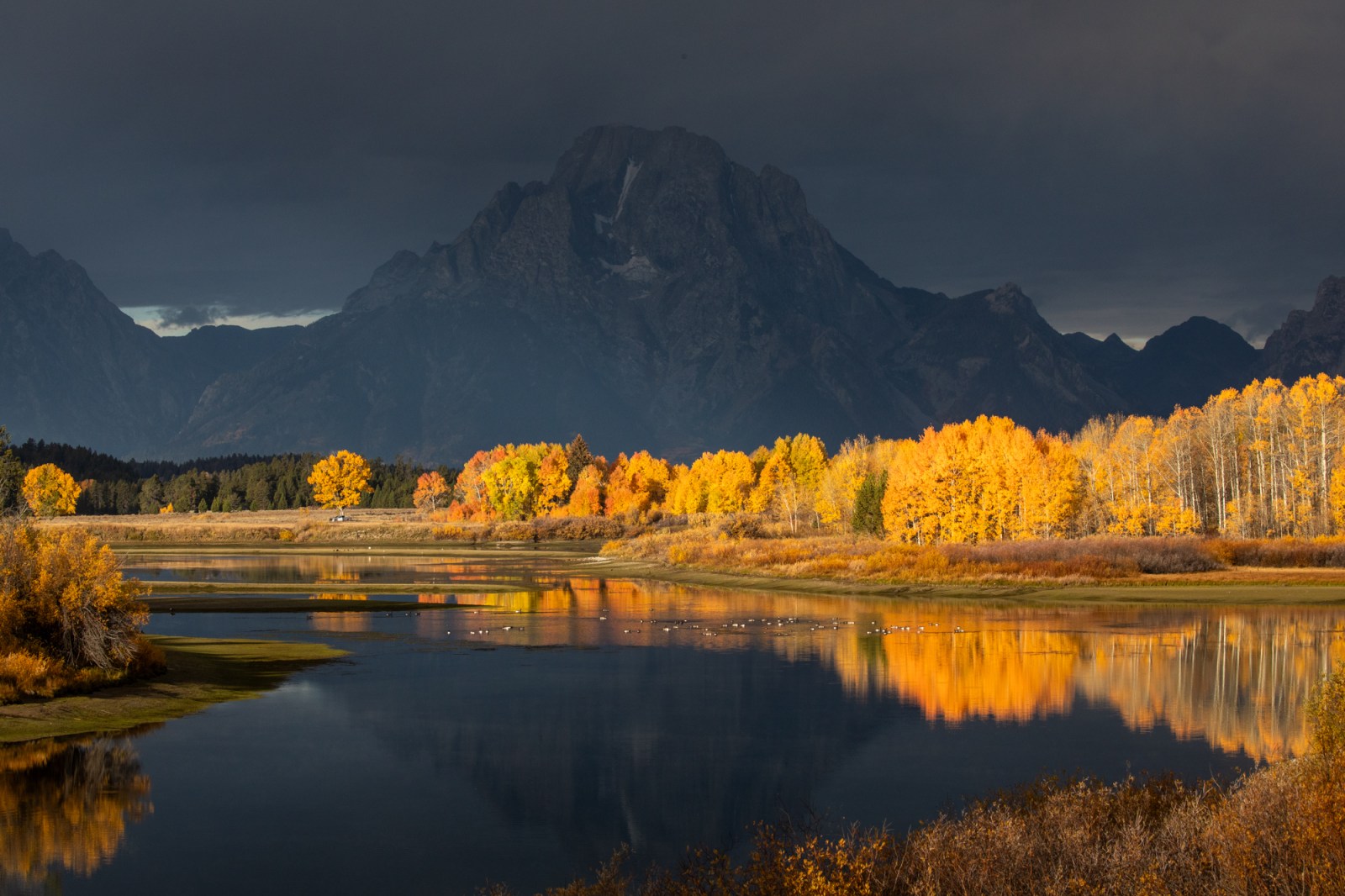
On a recent trip south (to go to the closest Ikea in Salt Lake City, of course), we were fortunate to hit peak fall color in the Tetons. There are many more aspens there than in Yellowstone, as well as many cottonwoods in wetter areas, which generally seem to turn a slightly more golden-brown (ochre?) shade. It was a spectacular fall color show. The looming mountains in the background didn’t hurt the scene either.
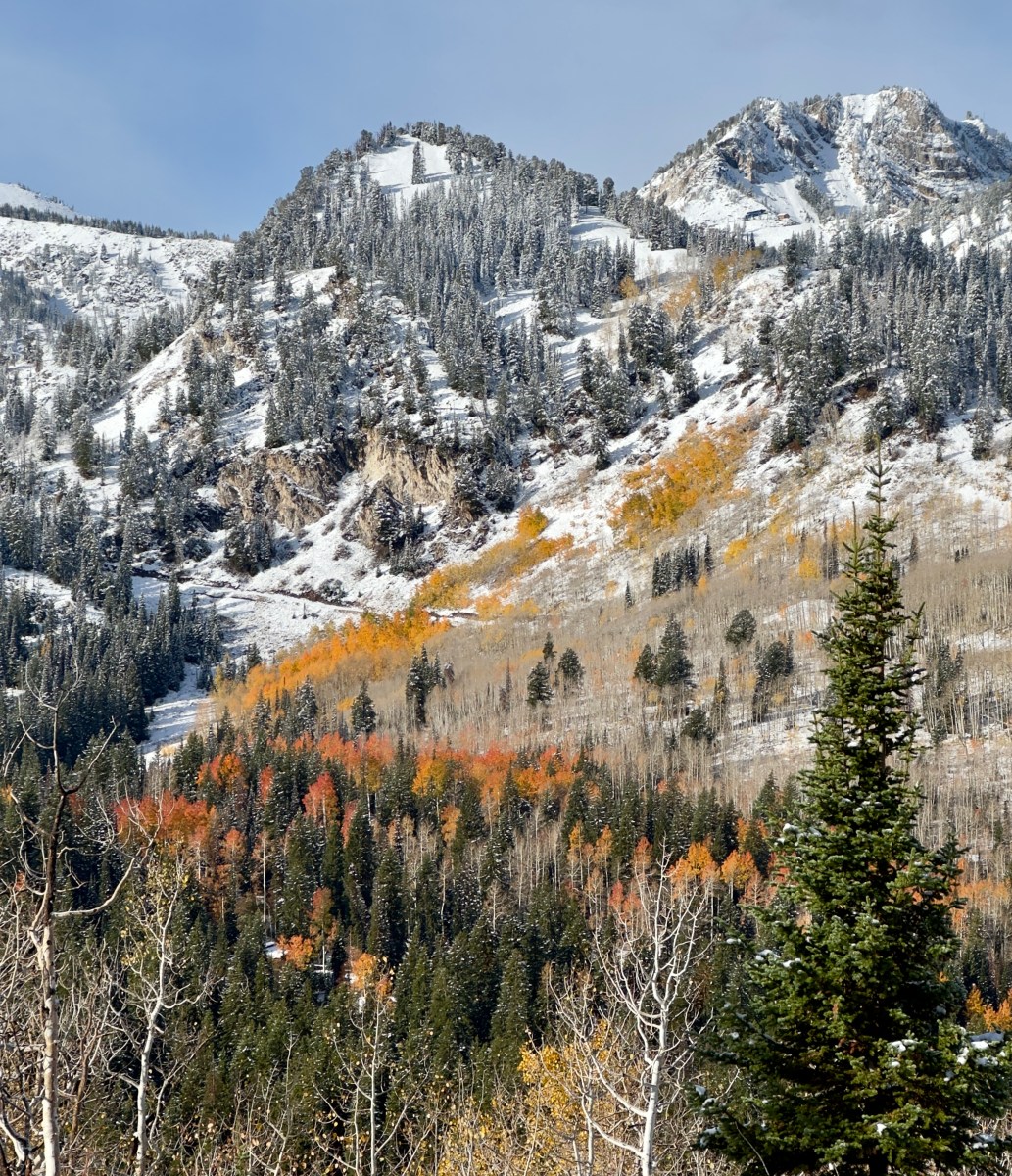
As we continued on to Utah, we ran into some wet weather that produced snow at high elevations. The mix of aspens in fall color just beneath the jagged, snow-covered peaks of the Wasatch mountains was stunning. Again, we saw a blend of oranges and reds. In a 1989 paper in Forestry Science, scientists observed variation in the color change of aspen leaves in certain groves from year to year (e.g. orange one year and yellow the next). They speculated that particular weather conditions might lead to the production of higher levels of anthocyanins (chemical compounds that cause the red colors in fall leaves), thus changing leaf color from year to year. However, other groves were always red or always yellow, so they hypothesized that color was influenced by a genetic component as well. No matter how or why, the addition of the reds into our recent leaf peeping trip was welcome, as I miss the brilliant red maples and scarlet oaks and black gums of the East.
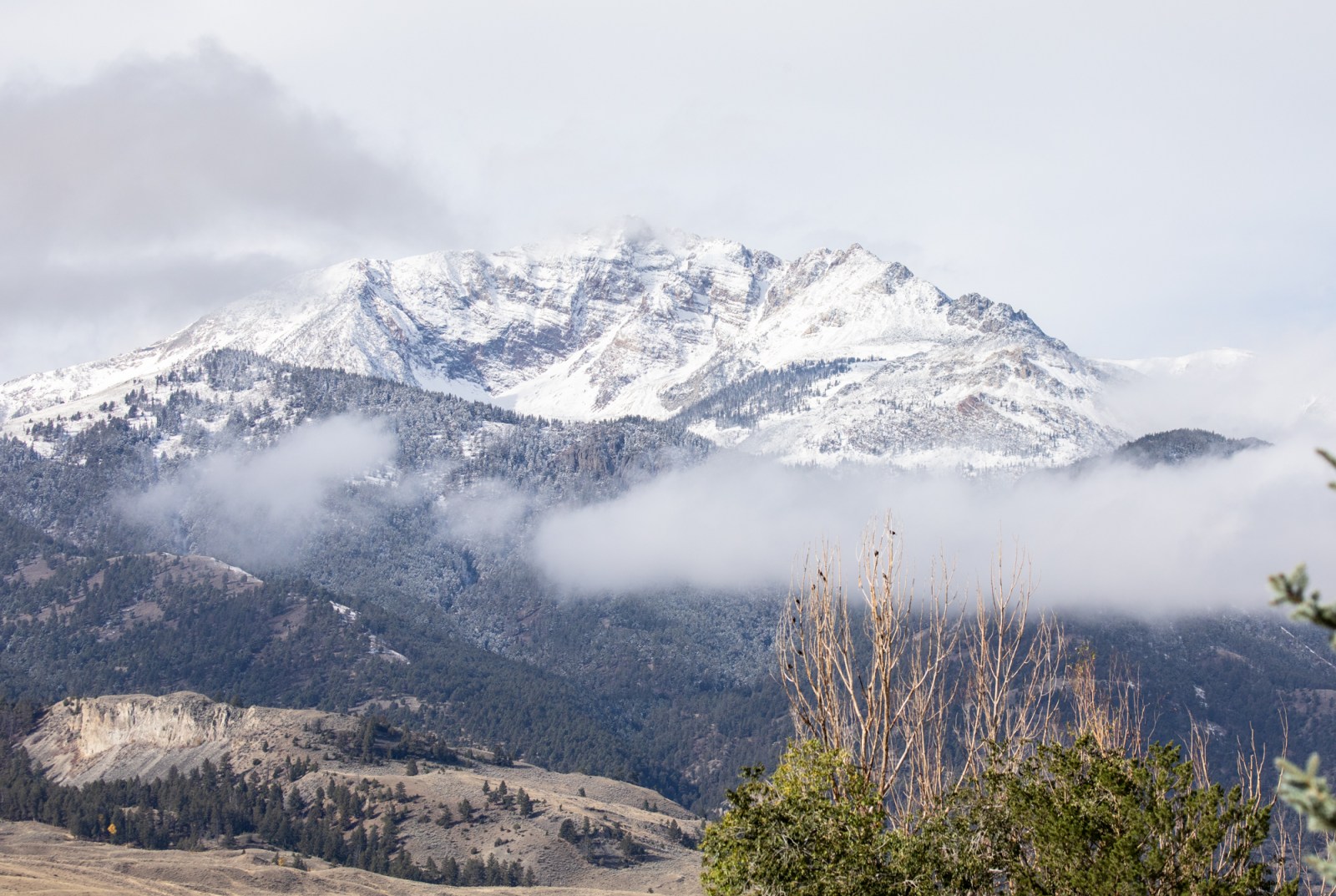
A few nights ago, we had our first snowfall of the season with a dusting around our house and much more on the mountains across the valley in the Park. We may have another week or two of some fall color at lower elevations, but the main show seems to be over as winter sets in. Perhaps it’s time to start working on my color vocabulary for whites and blues…


 Roads End Naturalist
Leave a reply to adairp16 Cancel reply