
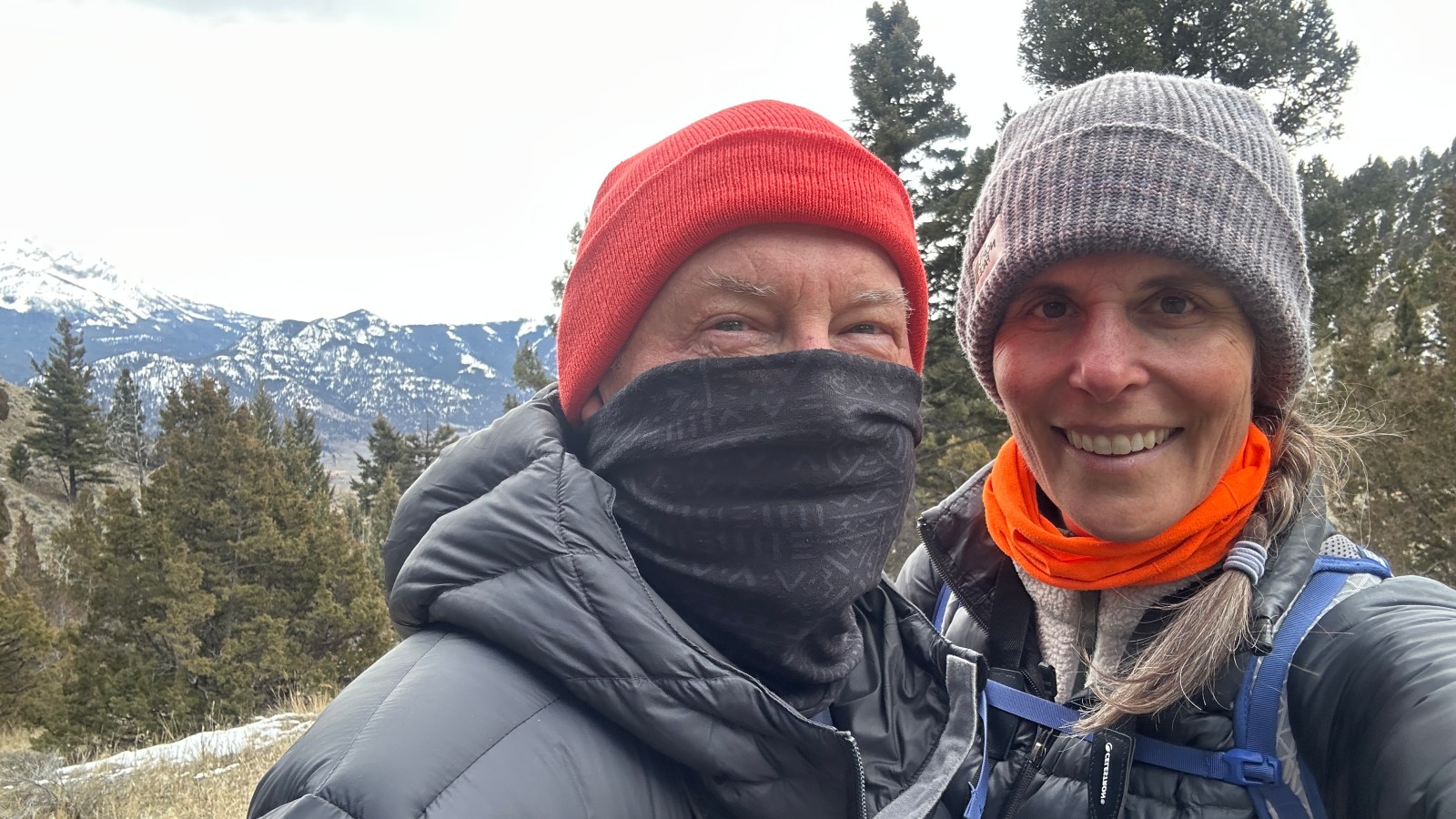
A couple days ago, Mike and I went for a hike in Custer-Gallatin National Forest not far from our house. The trail followed a small creek up a ravine dotted with large Douglas fir trees and limber pines. We were excited to see three species of deciduous trees as well: quaking aspen, Rocky Mountain maple, and alder. Most of the trail was snow-free, as this has been a mild and warm winter. However, the day of our hike was cold and windy, so at least the trail was frozen rather than muddy!
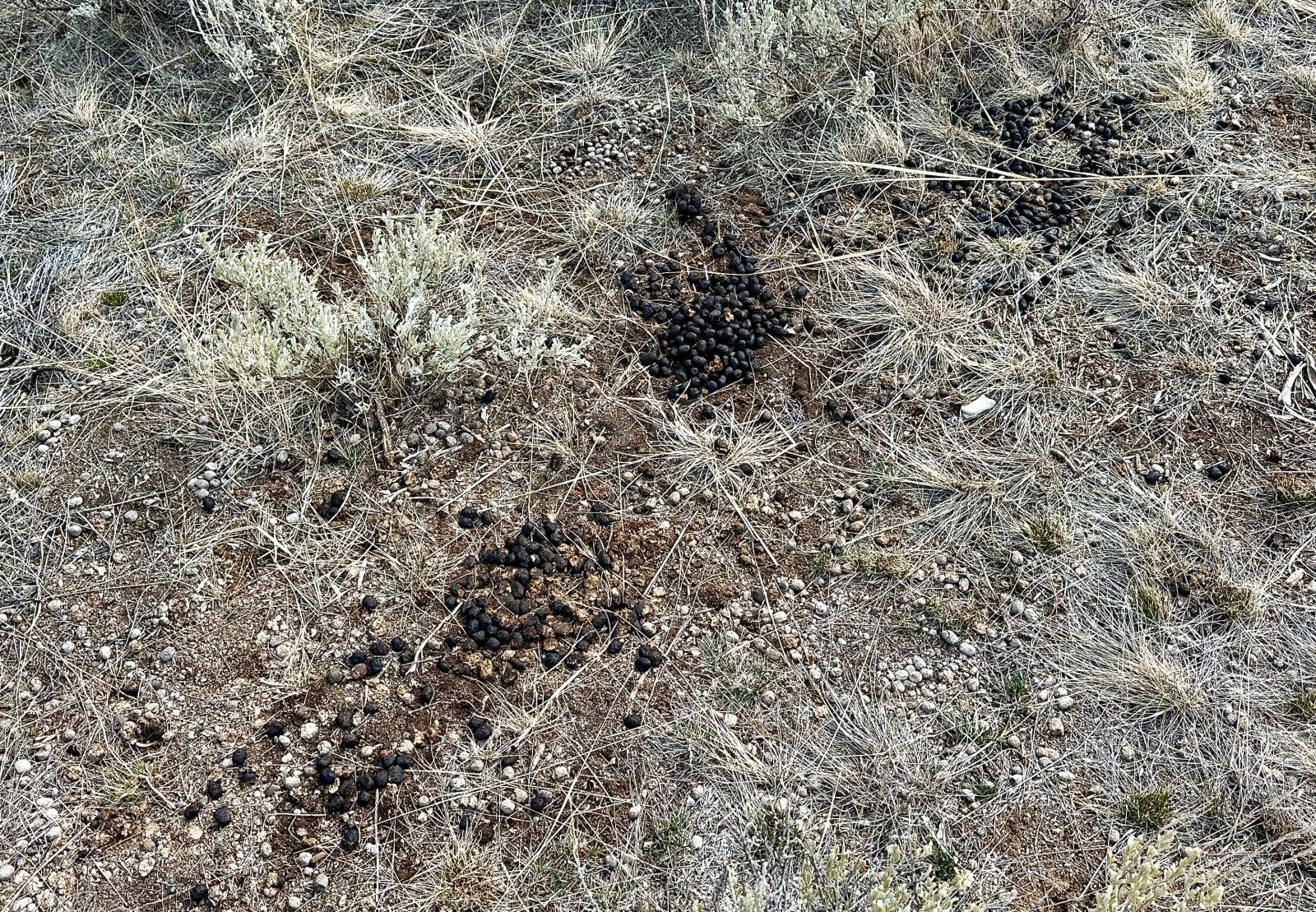
On our way down, we struck off through some sagebrush on a game trail to a flat hill overlooking the Yellowstone River valley and across to Electric Peak. The trail was dotted with piles and piles of elk scat, more than we’ve seen on pretty much any trail we’ve been on. As we reach a flat area and looked around us, I noticed a group of elk on the slope across the creek from us. It was a group of about 25 elk, all looking over at us. Outside of the national park, elk are hunted, so these animals were wary. I checked them out through my small, car binoculars (I had forgotten my real ones at home, duh!). Then, a bit to the left, I was shocked to notice an even larger herd of elk. They covered the open sagebrush slope. I counted tens through my binoculars. I think there were perhaps 200 total, including the 25 I had seen originally. It was quite an impressive sight. You might think that would have been the highlight of our hike… but wait…
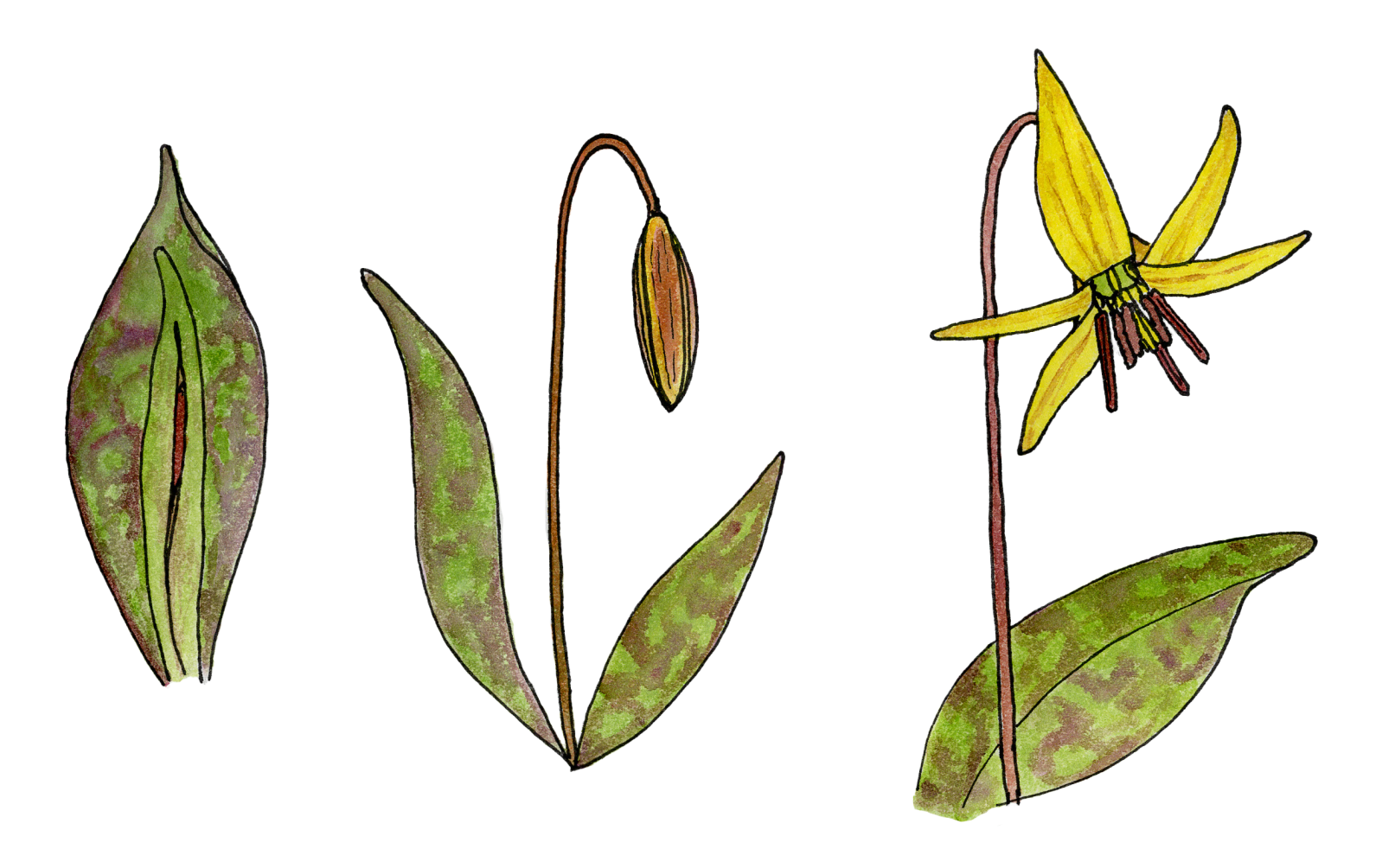
I’ve been seeing lots of pictures of trout lilies from folks in North Carolina lately. Usually, wildflowers in Yellowstone don’t start until much later, though of course, we’re still learning the phenological timeline here as we experience our first spring as residents of the Greater Yellowstone Ecosystem. Around the house, we’ve seen green rosettes of leaves that look like they’re starting to come to life as temperatures warm. But honestly, I’m not sure they’ve changed much. Plus, this has been a very odd winter, with much warmer temperatures than normal.
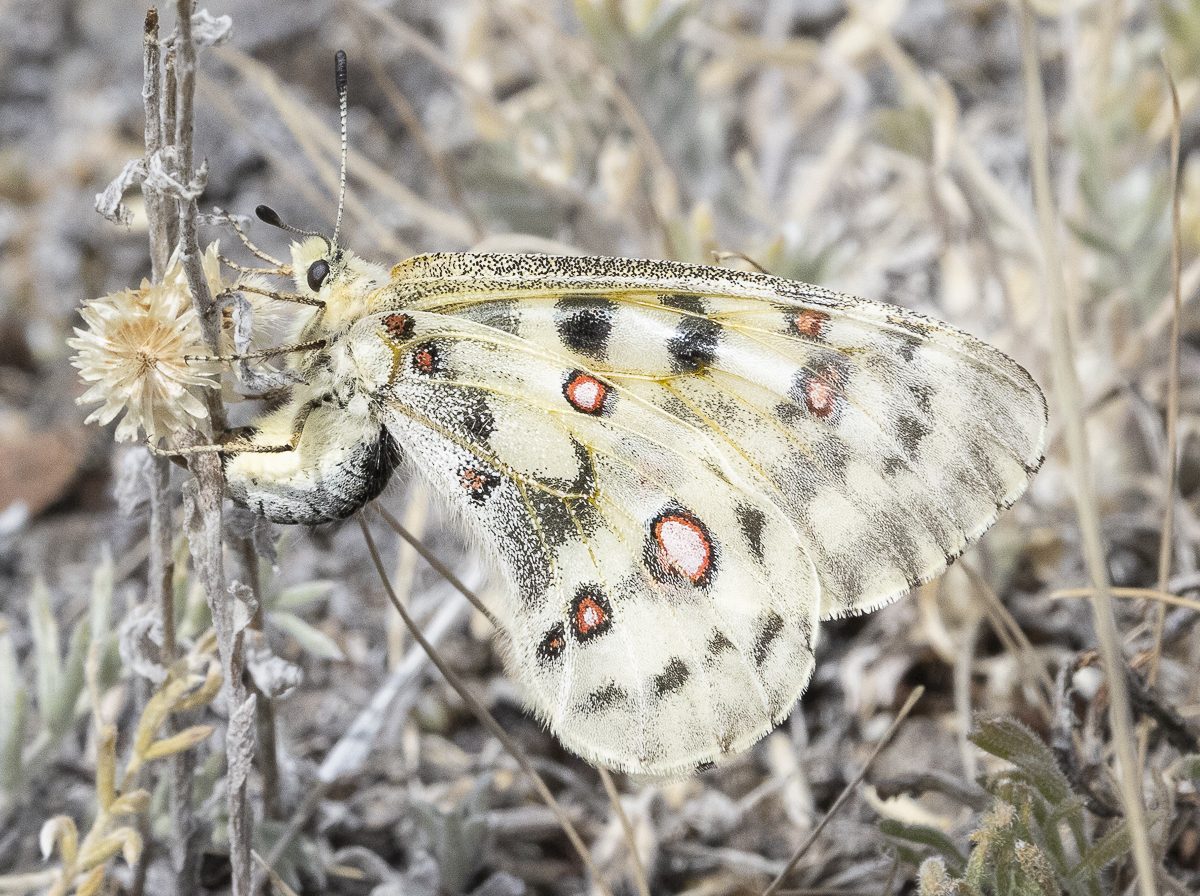
When I spotted a yellow flower hugging the ground near the rock I was sitting on, I was excited! It reminded me of the yellow stonecrop (lanceleaf stonecrop) that is abundant around here. In the summer, we had seen a Rocky Mountain parnassian butterfly laying eggs on and near stonecrop plants out in the park. I immediately thought of those butterfly eggs and wondered if they’d be hatching soon to munch on the spring stonecrop growth.
Seeing one yellow flower, I started to see more. They were dotting the hillside we were on! There seemed to be another flower about every four or five feet. Mike and I both took a number of pictures with our phones, thinking to share about our first wildflowers in March in Montana!
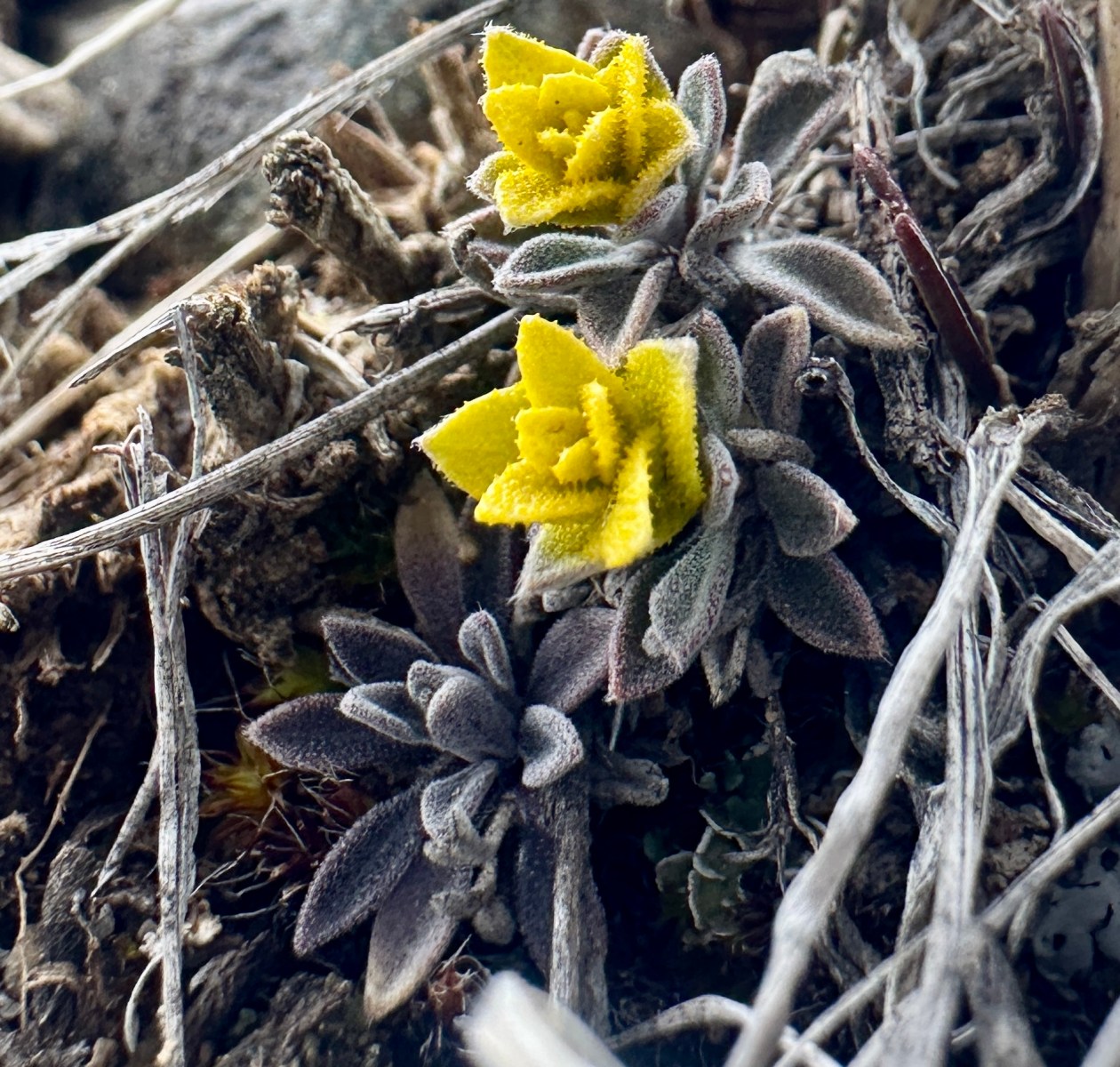
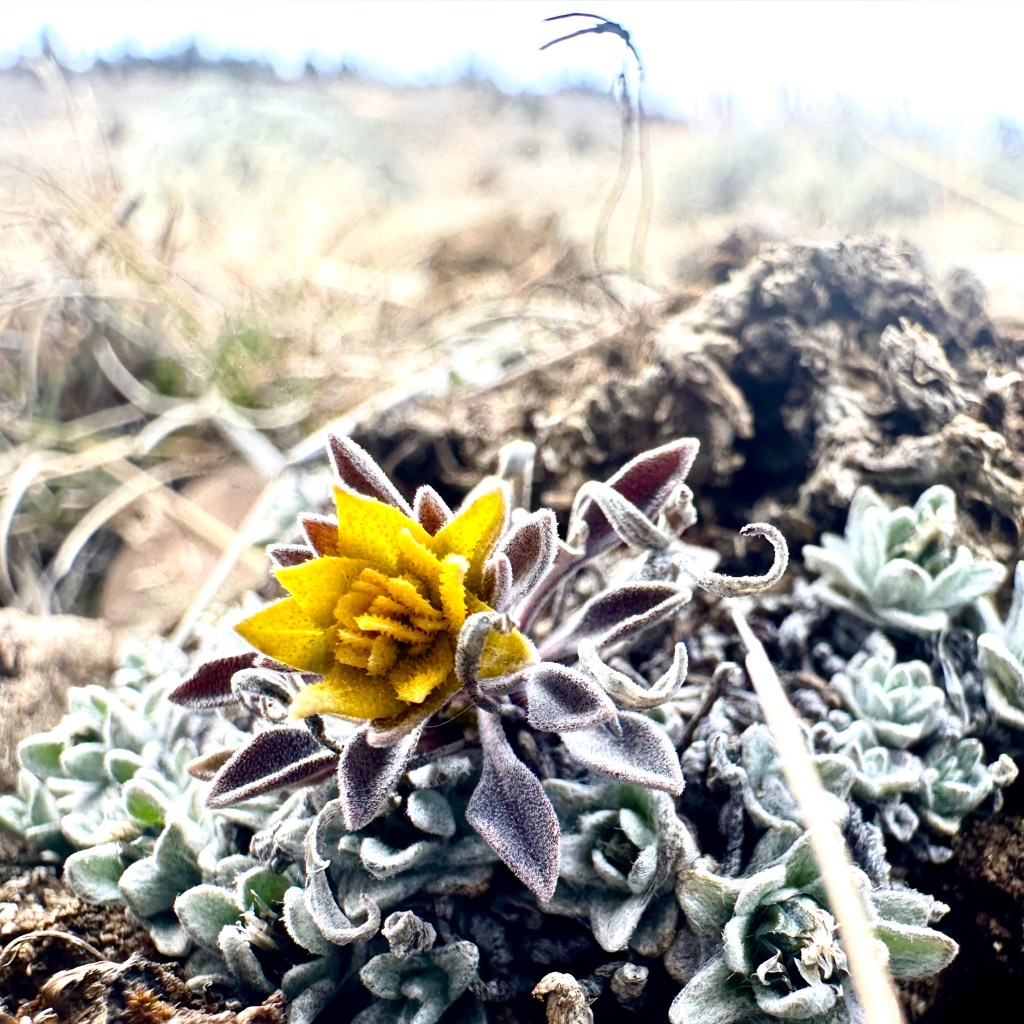
Fast forward a couple of days. I wanted to verify which stonecrop flower this was and look at its typical blooming season. I pulled our trusty “Flora of the Yellowstone” field guide. I flipped to the entry for stonecrop, of which there is apparently just one species. As I looked at the pictures, I realized they didn’t look very much like the yellow flowers we had seen on the trail. I pulled up my pictures to compare. Neither the flowers nor the leaves matched. Not a stonecrop! I flipped through the section of the field guide for yellow flowers. Nothing matched the flowers we had seen. When in doubt, there are resources for these things… so I plugged a photo of the flowers in my SEEK app. It immediately identified my “flower” as mustard flower rust, Puccinia monoica. I looked through the images of the species in the app… indeed, that’s exactly what Mike and I had seen. Not a flower at all!
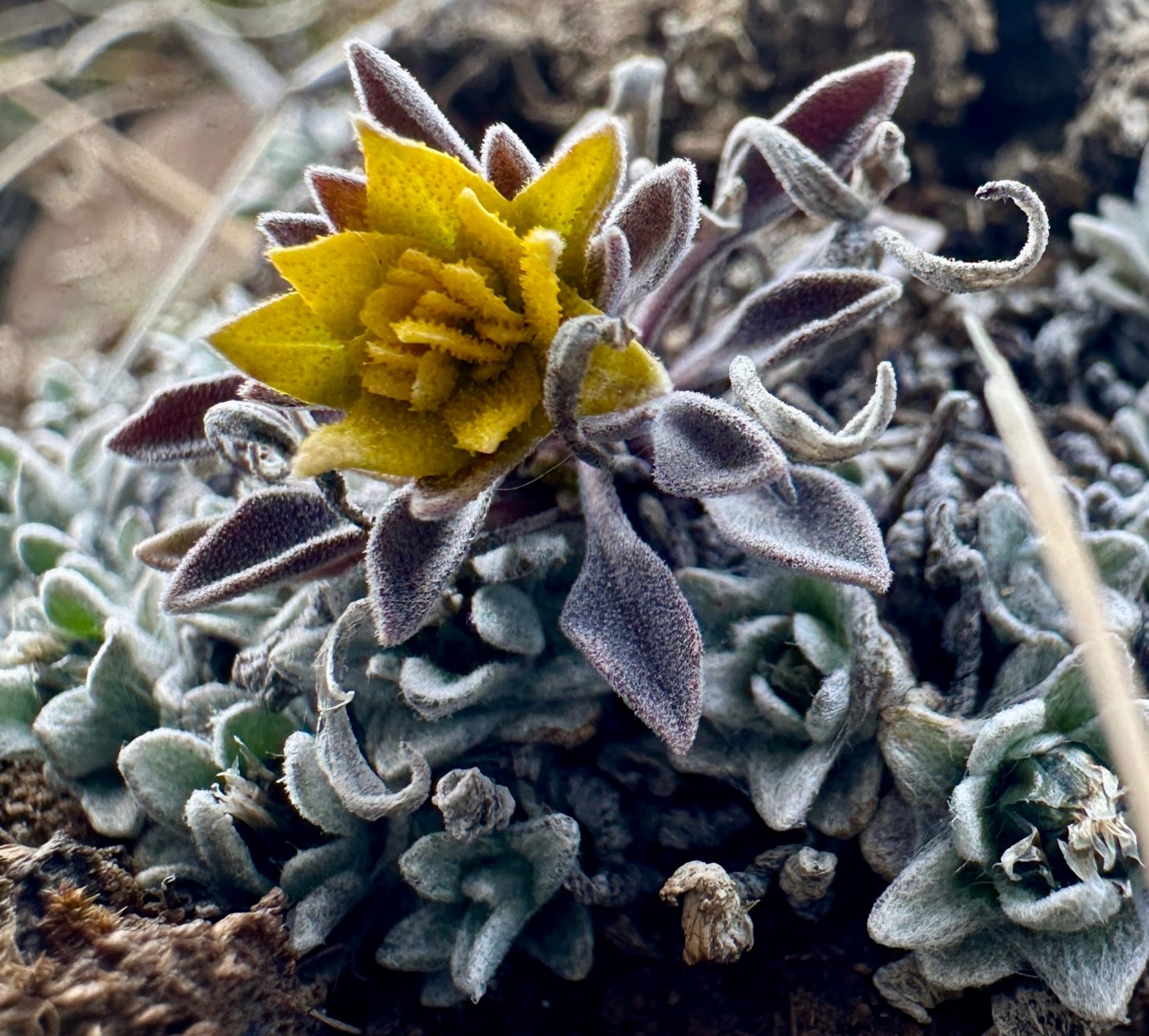
This discovery set us off on a huge google-fest to try to figure out what exactly was going on. Here’s the story, to the best of my ability to explain it. The rust is a fungi. Like many other rusts, it requires two host plants. The rust I was most familiar with in North Carolina was cedar apple rust that infected cedar and apple trees. Mustard flower rust uses a few species of grass as its primary host (where spores for sexual reproduction are produced) and plants in the mustard family as its alternate host (a second host needed for other parts of its life cycle). The plant we were seeing with its yellow “flowers” was a rock cress, which is in the mustard family, an alternate host for the mustard flower rust.
It turns out that the mustard flower rust is an example of a “zombie fungus.” It takes control of the plant to make it produce the yellow flower-mimic we were seeing all over the hillside. It starts when fungal spores land on the mustard plant. These spores are haploid (which I had to look up), meaning that they have only half the chromosomes of the plant. In the case of mammals, an analog would be eggs and sperm. However, these spores (basidiospores, if you want some new vocabulary to throw around at your next cocktail party) can do a lot more than just an egg or sperm cell can. They land on the mustard plant and immediately grow hyphae to tap into the rock cress’s nutrient flow. The fungus infiltrates multiple genes of the plant, triggering a number of different processes. The plant begins to produce smaller, rounded leaves that are more symmetrical than normal to make those leaves look more like a flower. The fungus also suppresses the development of real flowers so the leaves it is busy turning into fake-fungus-flowers will linger longer. It activates genes in the plant for the production of wax, which may keep the pseudoflowers from drying out. It increases sugar production in the plant to create a fake-fungus-nectar that is twenty times more sugary than normal nectar AND it has the plant synthesize fragrant compounds that smell good to pollinators!
Why does it do this, you might ask? Well, just like the flowers it is mimicking, the fungus needs to transfer genetic material to sexually reproduce. As the fungus grows into the host rock cress, it develops fungal structures known as spermatogonia. The spermatogonia are yellow dots covering the surface of the modified leaves, giving the pseudoflowers their yellow coloration, which can help attract pollinators (and fool naturalists), too! These structures produce spermatia spores (also haploid, like the basidiospores, because they haven’t met “the right one” just yet), the next phase of the fungus’s life cycle. Now, the fungus could just rely on the wind to spread those spores (and if you keep reading, you will find that it does, indeed, use the wind later in its super complicated life cycle). But this fungus selected for a different dispersal mechanism at this stage of its development. Pollinators including bees, flies, ants, and wasps are attracted by the scent, sweet nectar, and yellow coloration of the fake-fungus-flower. As they land to collect nectar, they also pick up the spermatia produced by the fungus. When they fly off to find another nice-smelling, super-sweet-treat fungus-flower, they carry the spores with them. Basically, the fungus hijacks the plant AND the local pollinators to reproduce.
Pretty crazy, right? And honestly, this is the heart of the story. But I couldn’t leave it there. I wanted to know the whole story, the rest of the rust’s life cycle. It was a deep dive into terms I have not heard since high school, but it’s fascinating. If you want to join me in this rabbit hole… keep reading.
When a pollinator covered in fungus spermatia lands on another rock cress that is also infected with the rust (because, of course, that rock cress has bright yellow, nice-smelling, nectar-producing psuedoflowers too), complementary spermatia join (love at first sight!). This is the first step in fungal sex. It is definitely not the last, because the haploid — remember, half the chromosomes — cell nuclei of the spermatia don’t join just yet; instead, they hang out together-but-separate within the same cell. (Need another vocab word for your next cocktail party? Try “dikaryotic.” Autocorrect just tried to change that to eukaryotic. You might remember eukaryotic, as I do, from high school biology class. Eukaryotic is the word for cells with a nucleus, as opposed to prokaryotic, which are cells like bacteria that don’t have a nucelus. Well, dikaryotic, a new word for me, means a cell with two haploid nuclei within the same cell. Never knew that was a thing. Anyway, enough biology for now.)
The new, friendly-but-not-totally-joined-yet spermatia work together to grow new “spermatogonial hyphae” into the plant. These trigger even more changes in that one poor rock cress. The yellow on the pseudoflowers fades to green, and cup-like structures called aecia develop. (As if the plant hasn’t had enough already, though at least it is allowed to stop producing the super-sweet nectar at this point.) And what do those aecia do? Make aeciospores, of course. Now you’re getting the hang of this, aren’t you! The aeciospores are still dikaryotic (two haploid nuclei just hanging together, remember?) and are sent off on the wind to find… some grass, which by this time of year is growing! Yup, we’ve finally made it to the primary host for the mustard flower rust!
Oh, but it’s not over yet… the aeciospores send hyphae into the grass to make uredinia which make urediniospores. Still dikayrotic, still just chilling with each other (are they ever going to get it together?!?!). Over the course of the summer, the urediniospores blow around in the wind and infect more grasses and make more urediniospores. This is the phases where the fungus can really make an impact and spread itself around, until… fall comes and the grasses begin dying back. The change of seasons triggers a change in the uredinia, which turn into telia. (Why not, right? We all grow and change… and if we’re lucky, the other haploid nucleus we’re hanging out with loves us anyway). Guess what the telia make? Teliosporses, of course! Teliospores have nice thick cell walls to get them through the cold, dry winter. Not dissimilar to what sometimes happens when two humans are holed up together for a long time, those two cell nuclei finally join up to make a diploid cell nucleus (aka, sex)! Woo hoo! A new baby fungus is born!
You thought that was it, didn’t you? Not quite. Because, come spring, the teliospores germinate and grow something called basidia (shall we call them teenage fungi?). Inside the basidia, meiosis occurs. (Had you forgotten that word from high school biology? Me too. Meiosis is when cells divide and also divide their chromosomes. It’s the process that makes sperm and eggs. We’re back to haploid, folks!) Anyway, you know where this is going… the basidia make these haploid basidiospores, and the wind carries the basidiospores to rock cress as it is just emerging in early spring, say in March on the slopes above a creek covered in elk turds just outside of Yellowstone. In case you missed it (because this is ridiculously complicated and therefore ridiculously long), this is where we started the story! The basidiospores grow hyphae in the rock cress that affect its genes and create pseudoflowers that are dotted with spermatogonia…. and the cycle continues.
It is truly amazing how complicated life is, particularly fungi. Fungi can do amazing (and creepy) things. And I would never have known about any of this if I hadn’t been really excited to see my first spring “wildflower” in my new home!
If you made it to this point, you must be really interested, so here’s a list of references that helped Mike and I piece together the crazy story of the mustard flower rust:
- Rusty Mustards from In Defense of Plants
- On pseudoflowers and parasites from Fine Flowers in the Valley – Bless you, Mr. Cheeseman, for explaining this crazy life cycle so well… and having a diagram!
- Fatal Fungi Force Host Plants to Make Fake Flowers from UC Davis – A summery of postdoctoral fellow Bitty Roy’s work in the 1990s describing this species and how it attracts pollinators.
- Pseudoflowers—Trick or Treat? from In the Company of Plants and Rocks – A great starting point for some of the genetic modifications to the rock cress
- Cano et al’s study: Major Transcriptome Reprogramming Underlies Floral Mimicry Induced by the Rust Fungus Puccinia monoica in Boechera stricta – Just wow. The work they did to decode the way the rust impacts gene expression in the rock cress is impressive and way over my head… but it is explained well enough that I could pull some amazing tidbits out about the process!
- Fungus Fact Friday’s blog #130: Order Pucciniales, the Rust Fungi – Excellent blog name plus another digestible explanation of the rust’s life cycle
Now, to see if we can watch the yellow “flower” turn green… or find the rust on some grasses in the area… a naturalist’s work is never done…


 Roads End Naturalist
Leave a comment