
A bird is safe in its nest — but that is not what its wings are made for.
~Amit Ray
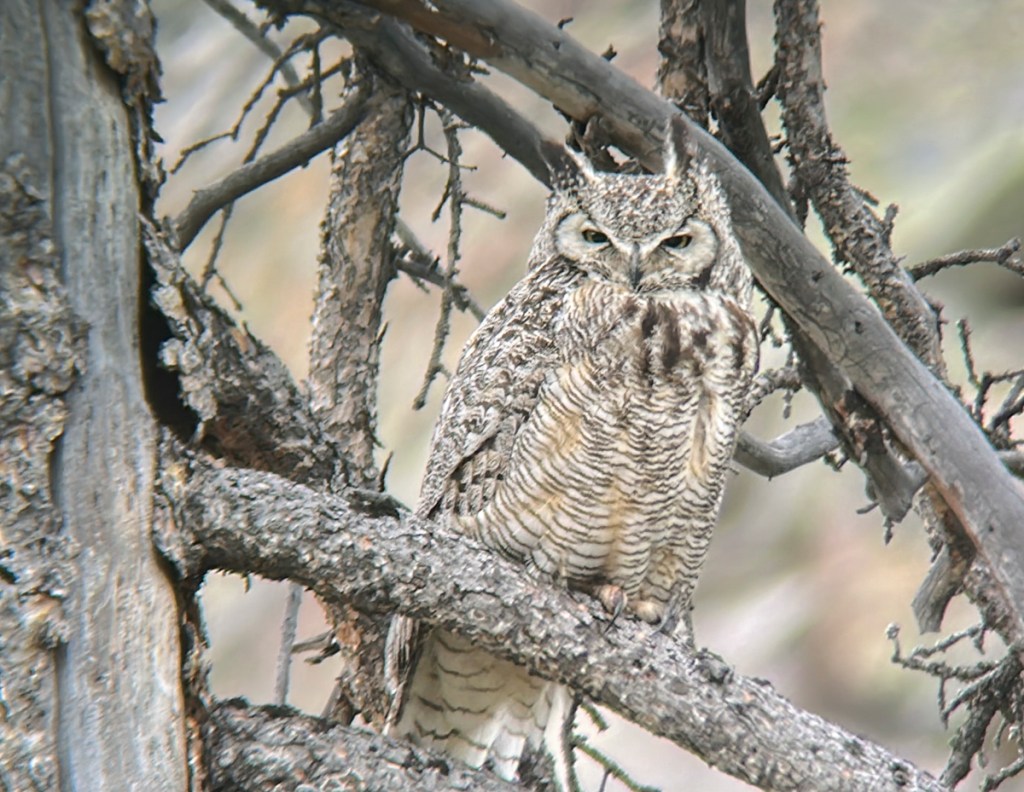
We checked on the raptor nests a couple of times this week and there have been some interesting developments. We drove up to see the great horned owl nest on Thursday and when I looked at the nest cavity I didn’t see the adult or the two owlets. I was disappointed and worried at first but after glassing around the area I saw the two owlets sitting in a dead tree about 50 feet from the nest tree. Then I spied the well-camouflaged adult perched below them.
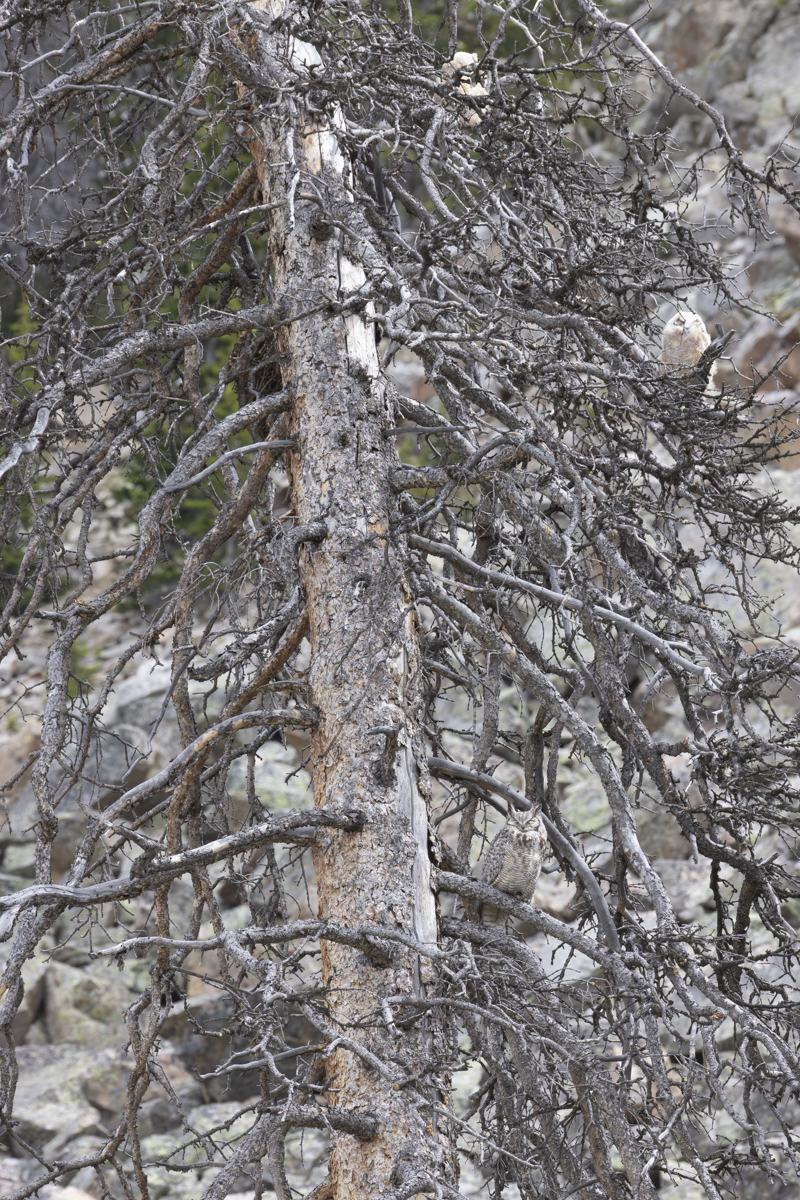
I think she may be glad they have departed what seemed to be cramped nesting quarters as she can now just sit on a branch without being jostled by the squirmy youngsters.
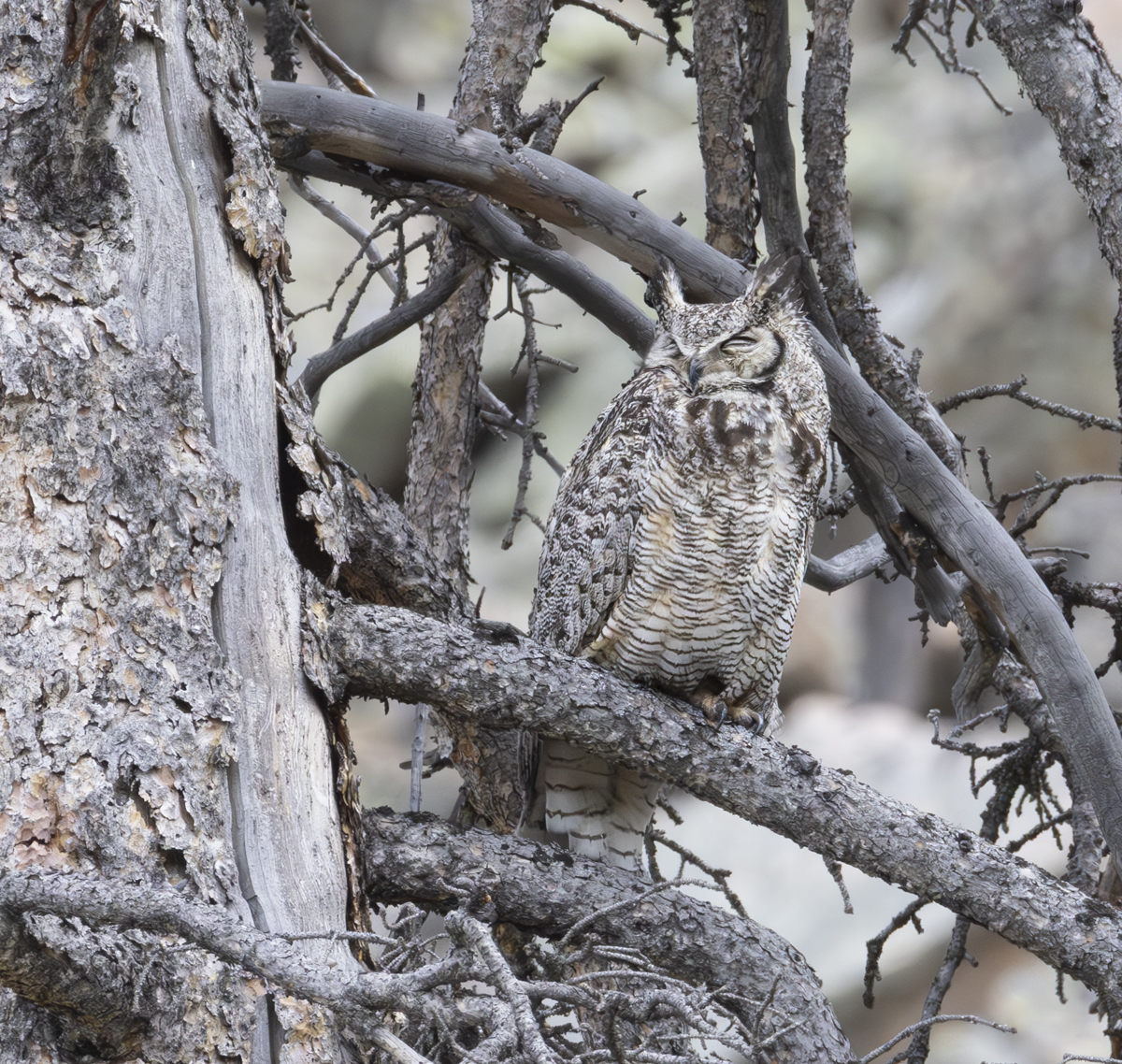
Great horned owl babies often leave the nest before they can fly, a process known as “branching”. They may jump or even fall out of the nest and then will try to climb off the ground on leaning trees (to be safer from most terrestrial predators). Since both owlets are in the same tree I am guessing they jumped and used their developing wings to clumsily fly over to that tree where they probably had a less than graceful landing. This behavior usually occurs at about 6 to 7 weeks after hatching. They will stay in this area for a few more weeks as the adults continue to bring their food. I may try to get up there one more time to see if I can find them to check in. Happy to see them make it this far.
Once again we set up the scopes and filmed a bit of the owl family. One owlet was behind a tangle of branches so Melissa just filmed the larger one. Here is a clip of that little dude (videos best viewed full screen).
–The larger of the two owlets doing some stretches
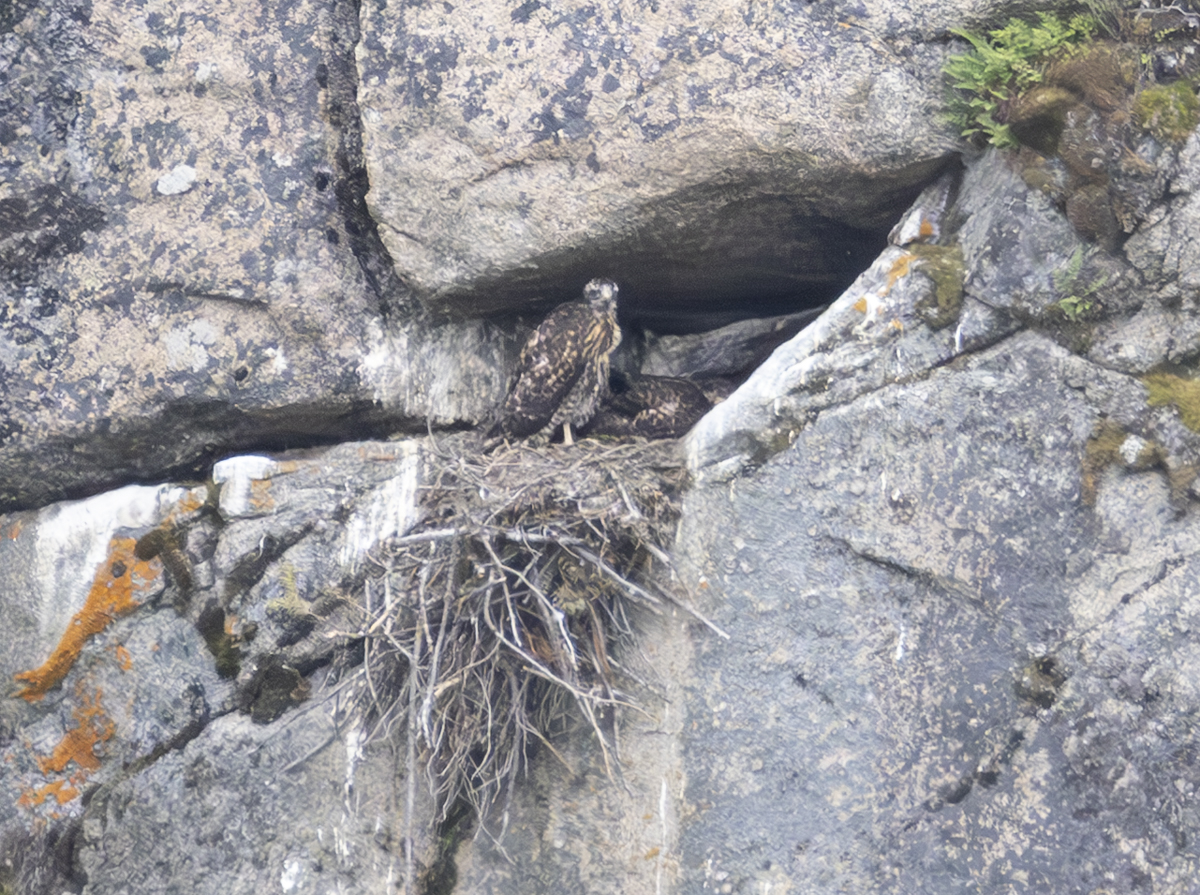
On the way out to the owls we stopped at the red-tailed hawk nest but it was so windy we couldn’t get any decent video. Here is a shot showing two of the three nestlings. They have really grown.
The osprey nest was occupied by the female adult but the young were hunkered down so we didn’t get any images. Our last stop was the peregrine nest. The three remaining young were visible and the adult was sitting in a favorite perch on our side of the canyon. We enjoyed sharing the scope views with a family who had hoped to see some birds on their visit. I saw the adult fly off the perch so we started looking to see what it might try to catch but we lost track of it in the deep canyon. Suddenly it flew into the nest and the young scrambled over each other to get the food. We were trying to see what it had brought when it picked up the prey and turned – a fish! Here is a somewhat long clip of the feeding frenzy. See if you agree with us that this fish looks a bit stiff so maybe she found a dead fish along the river? So, on our few visits where we have witnessed the adult bring in prey, the premier avian predator that is supposed to eat primarily birds has brought in two birds, a rodent, and a fish. I guess you bring in anyting you can find when the kids are hungry.
–The peregrine adult picking at a fish to feed the hungry chicks
After the adult leaves the chicks continued to peck at the fish and squabble a bit over it. One chick did some wing testing but that always made me nervous since one false step means a very long fall down to the river below.
–Still lots of action from the chicks after the adult leaves
We checked again a couple of days later and all three are still there though they were mainly hiding back in the crevice holes to escape the heat. That morning we also checked the red-tailed hawk nest and could see only one chick for sure. As we climbed the slope across the road from the nest for an off-trail hike with friends, I looked up and saw an adult red-tail flying with a juvenile. I’m pretty sure one of those young has left the nest and was getting lessons on how to use a thermal. Though I didn’t have a camera with me it is something I will have a memory of for a long time.
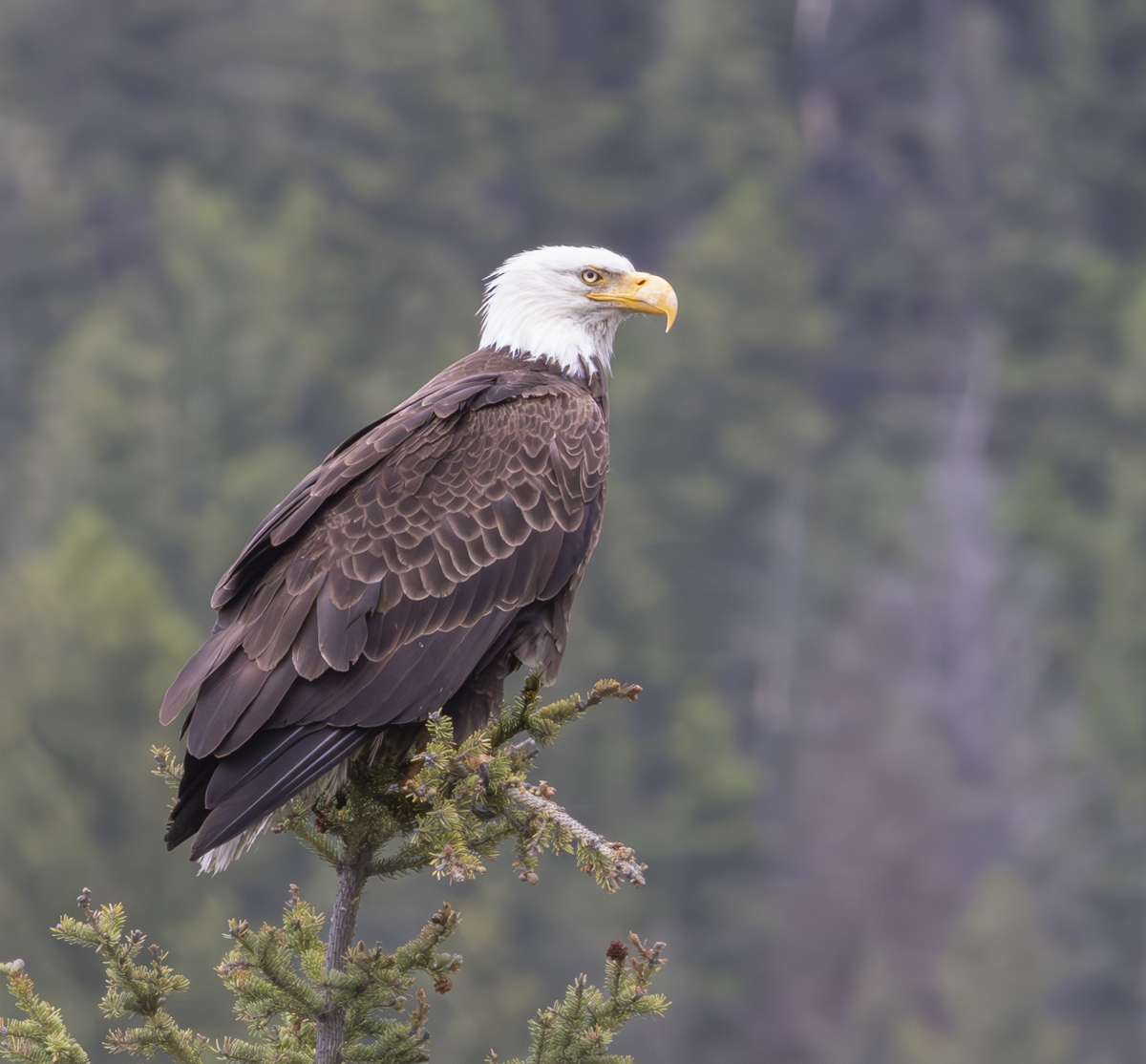
And here is one last raptor sighting we had recently. Though it isn’t a nest photo, this bald eagle was posing nicely on the tip of a tall conifer near a pullout in Round Prairie so I thought I would share.
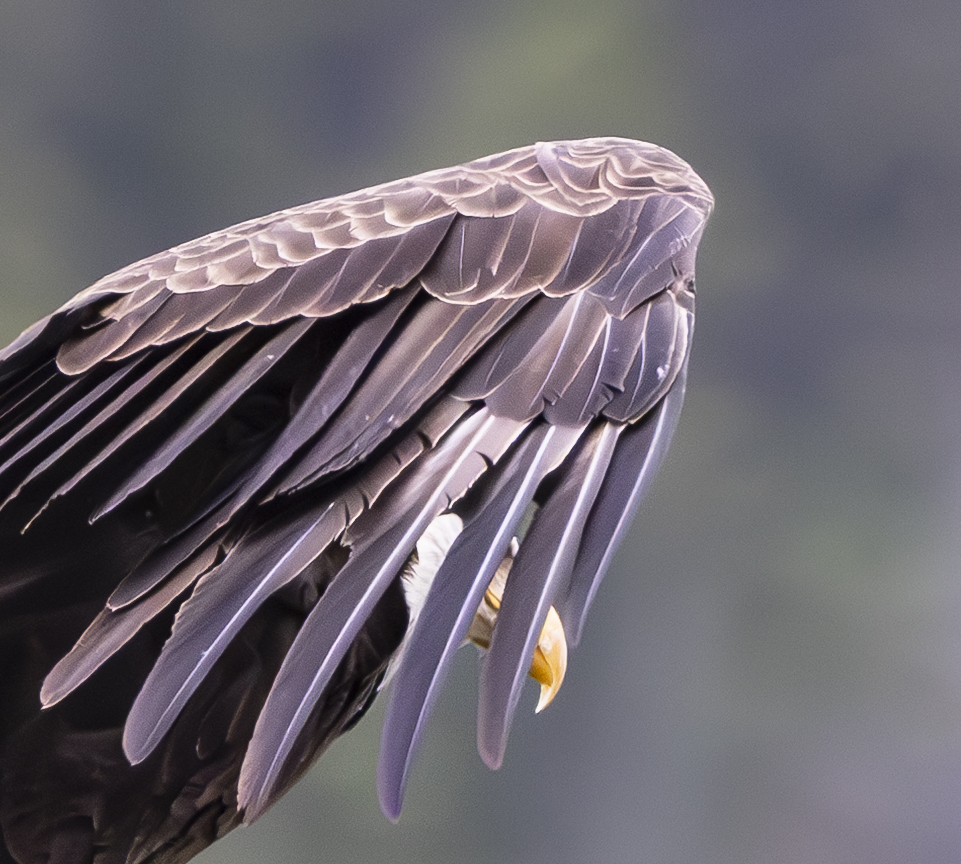
Though we remained in our car, I think the eagle decided to move on and when it did it provided us with a unique photo op.


Leave a Reply