
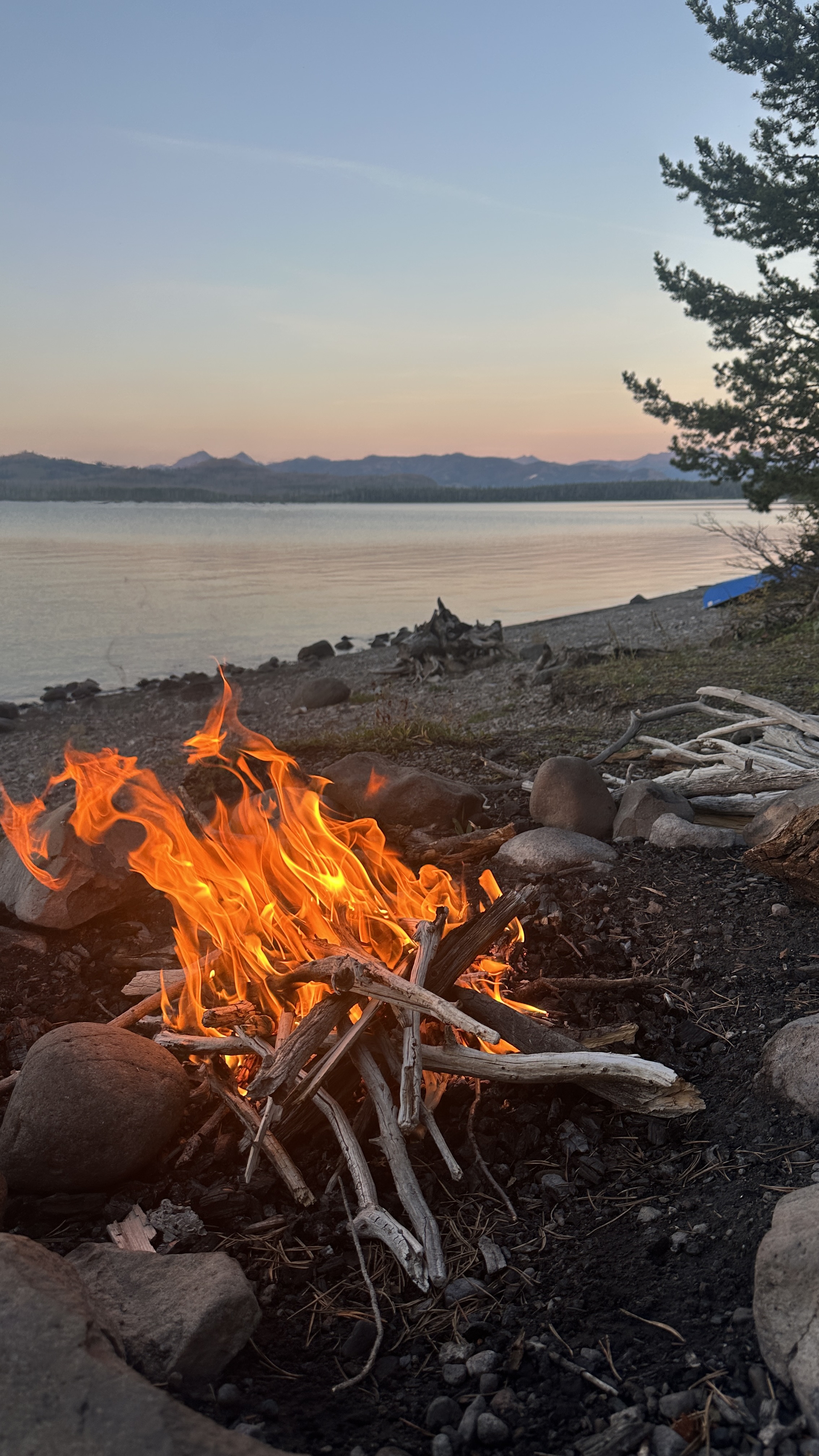
The still waters of a lake reflect the beauty around it.
~B.K.S Iyengar
This a brief follow-up to Melissa’s last post, her eloquent recounting of our lake visits this summer, especially our 11-day paddling adventure on Yellowstone Lake in August. We experienced lots of different kinds of weather though I believe we were fortunate to have mainly calm waters and clear skies. We would start paddling after breakfast and usually were in our next camp by early afternoon with plenty of time to relax after setting up camp. While we paddled we saw lots of birds, especially waterfowl and eagles.
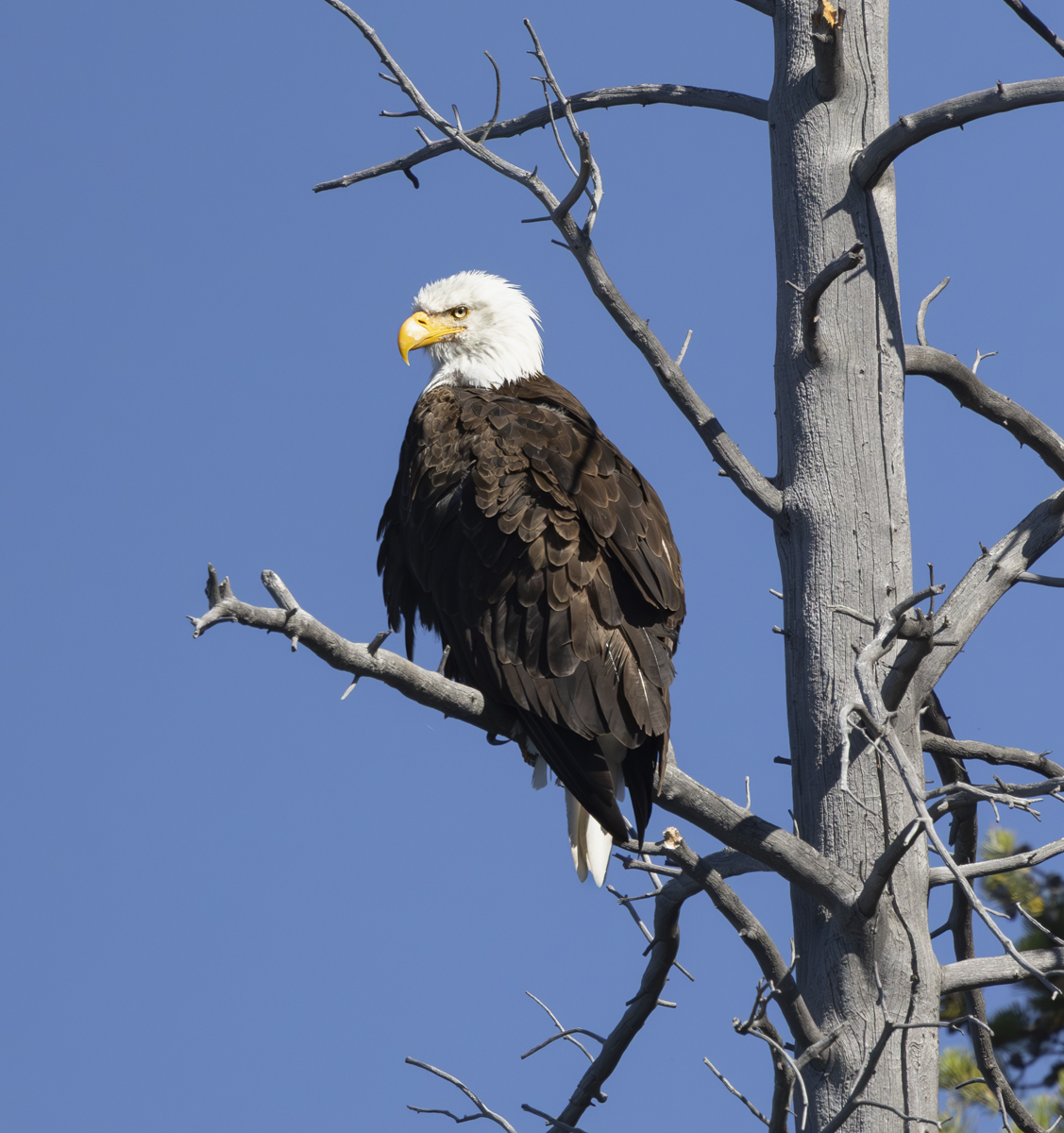
Regulations for paddling the backcountry of Yellowstone Lake recommend staying close to shore due to the cold waters and potential for sudden wind shifts, so we passed by quite a few bald eagles perched in picturesque snags along the way. It also meant we caused several to fly off their perch as we approached, often, as birds seem to do so frequently, to fly ahead and re-perch only to be flushed again as we paddled by.
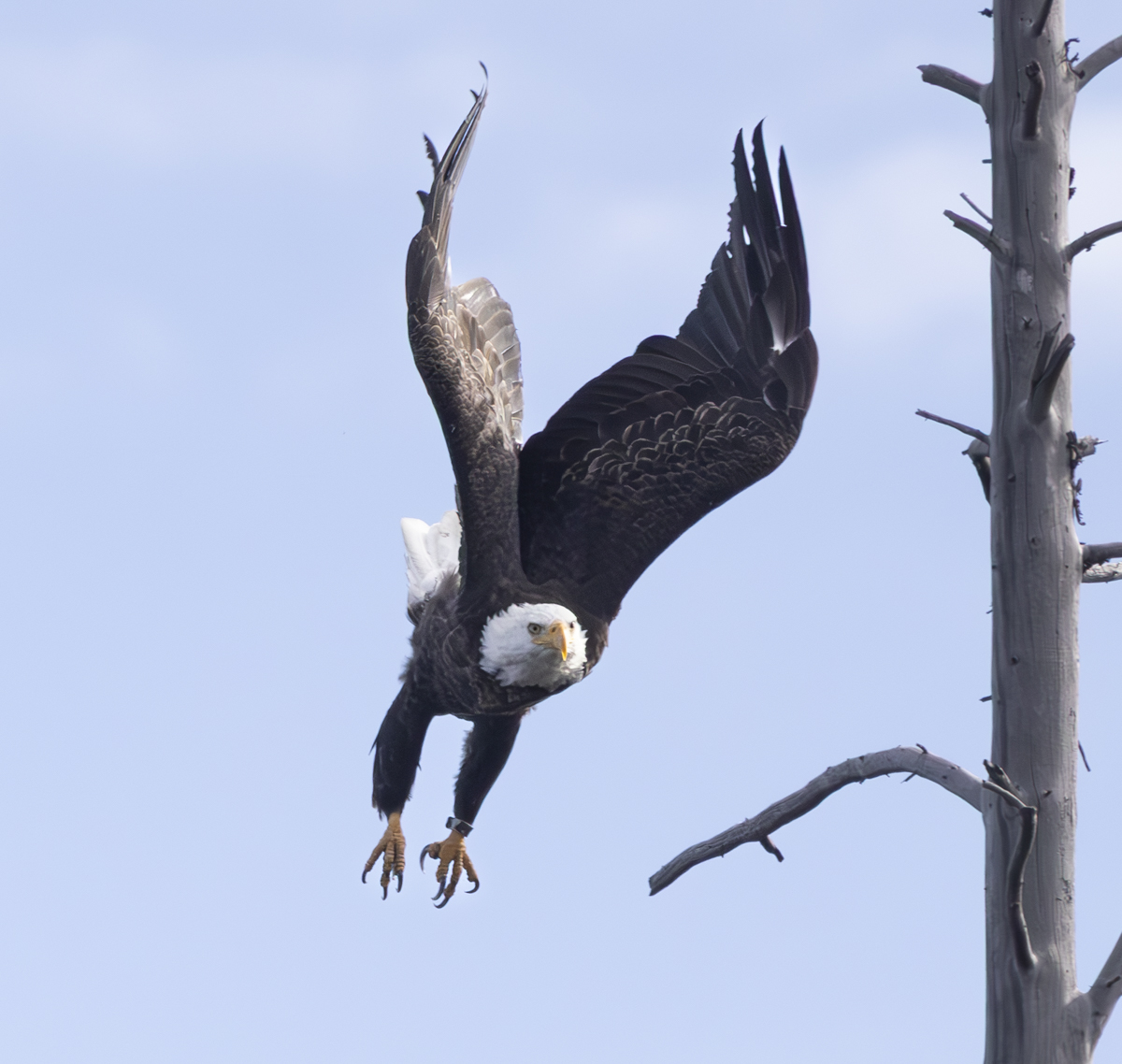
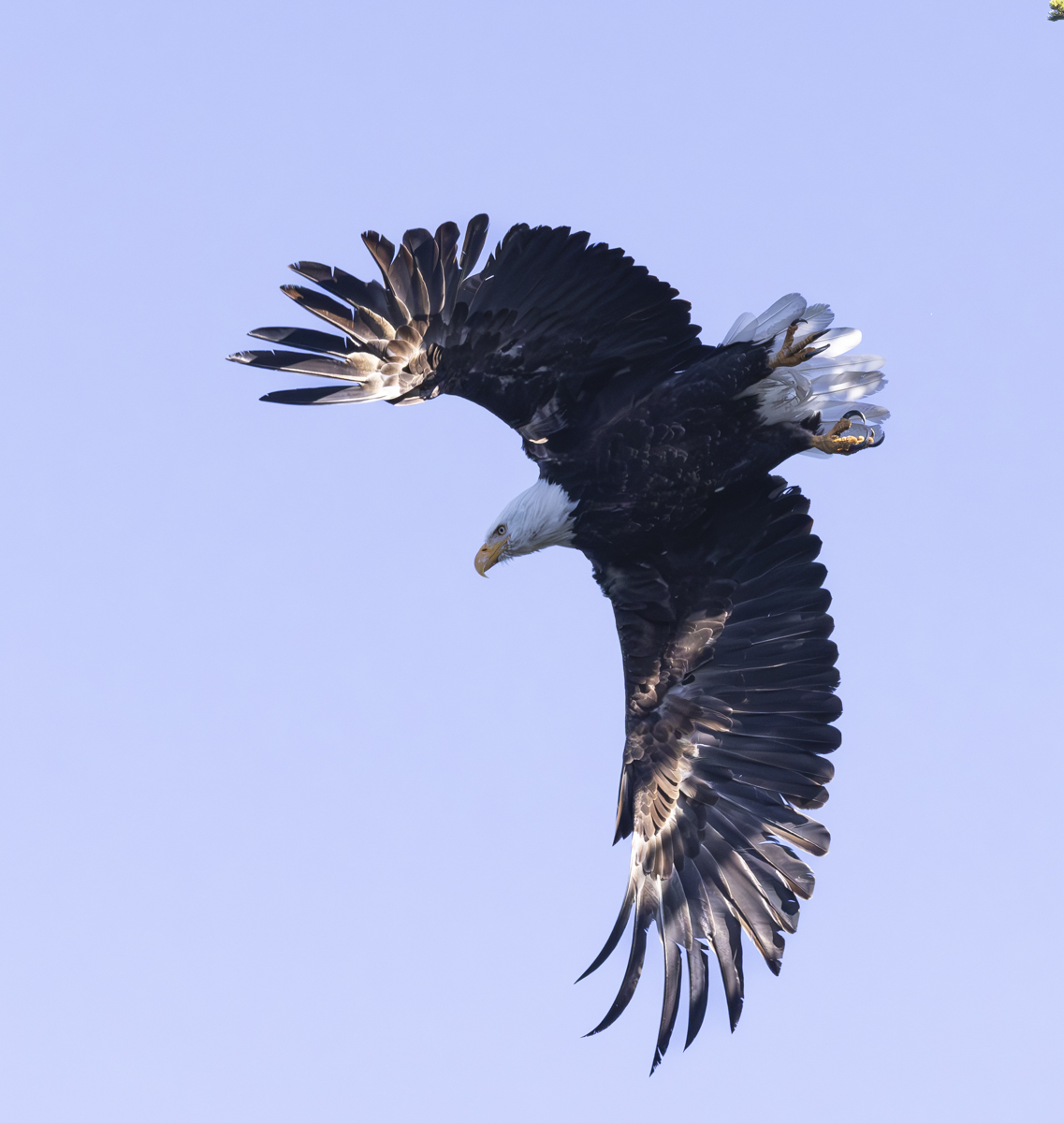
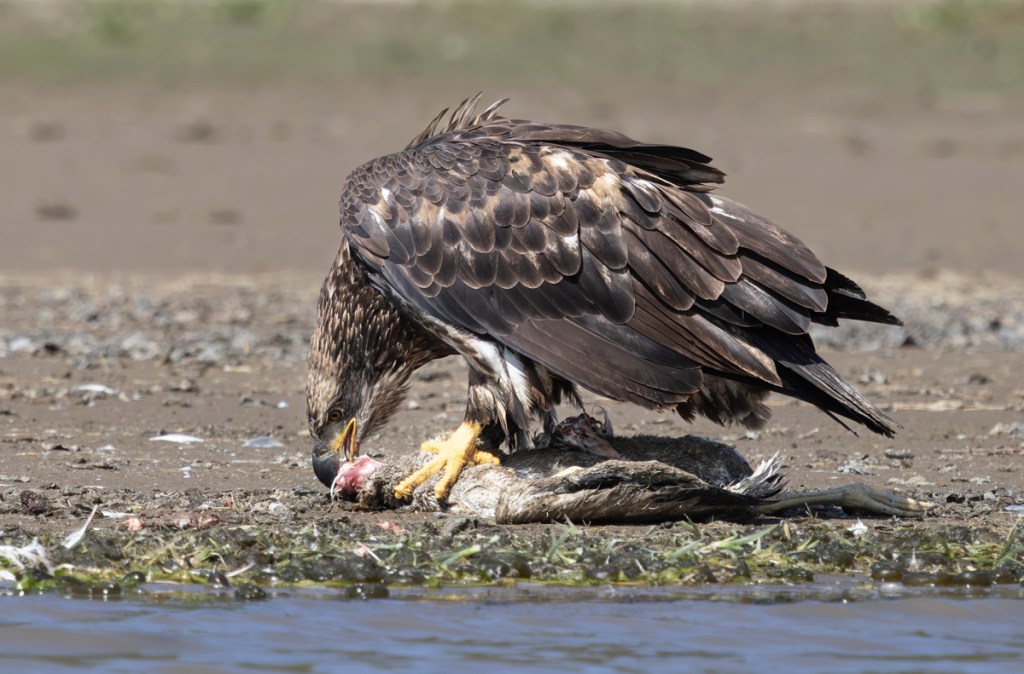
The majority of the eagles we saw were mature adults with the characteristic white head and tail. We finally saw about 4 immature birds on one of the south arms of the lake, with three of them being close together at a site with a bird carcass on the shore.
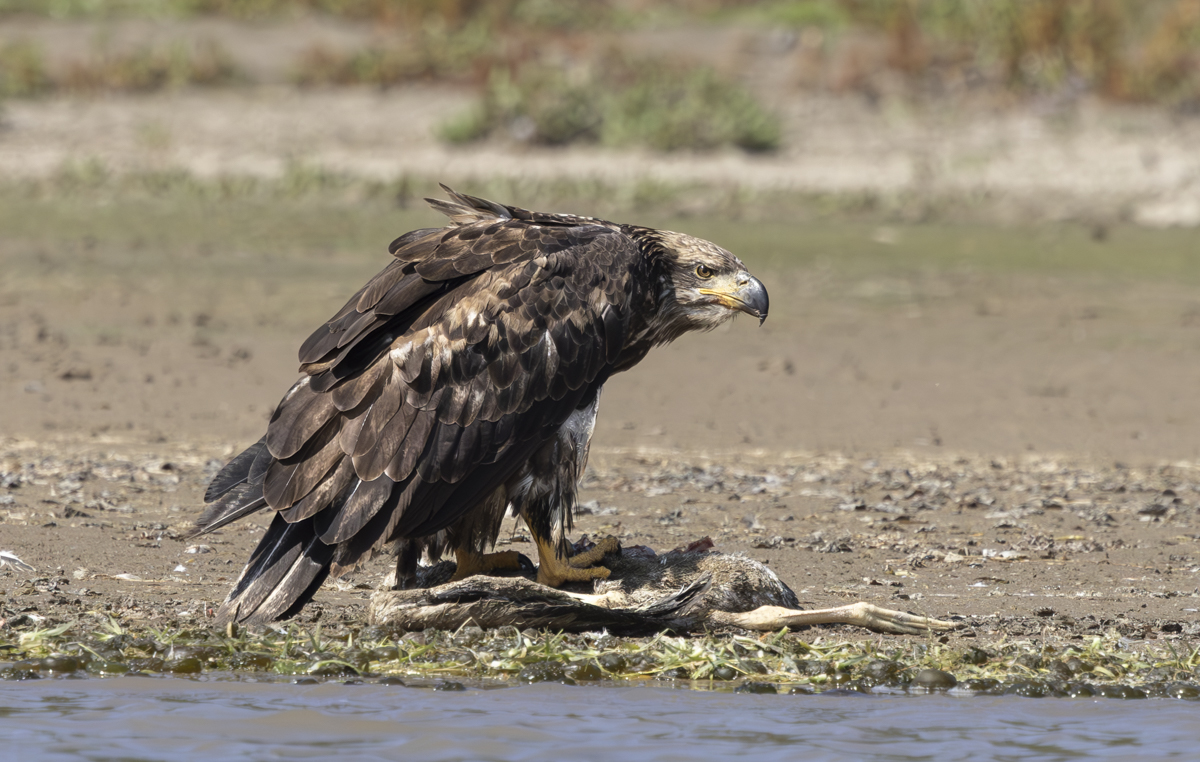
One eagle was jealously guarding a bird carcass on the shoreline with another sitting nearby and a third flying low overhead. At first I thought the eagle had killed one of the many gulls nearby but looking closely at the carcass, I think it may be something else, just not sure what.
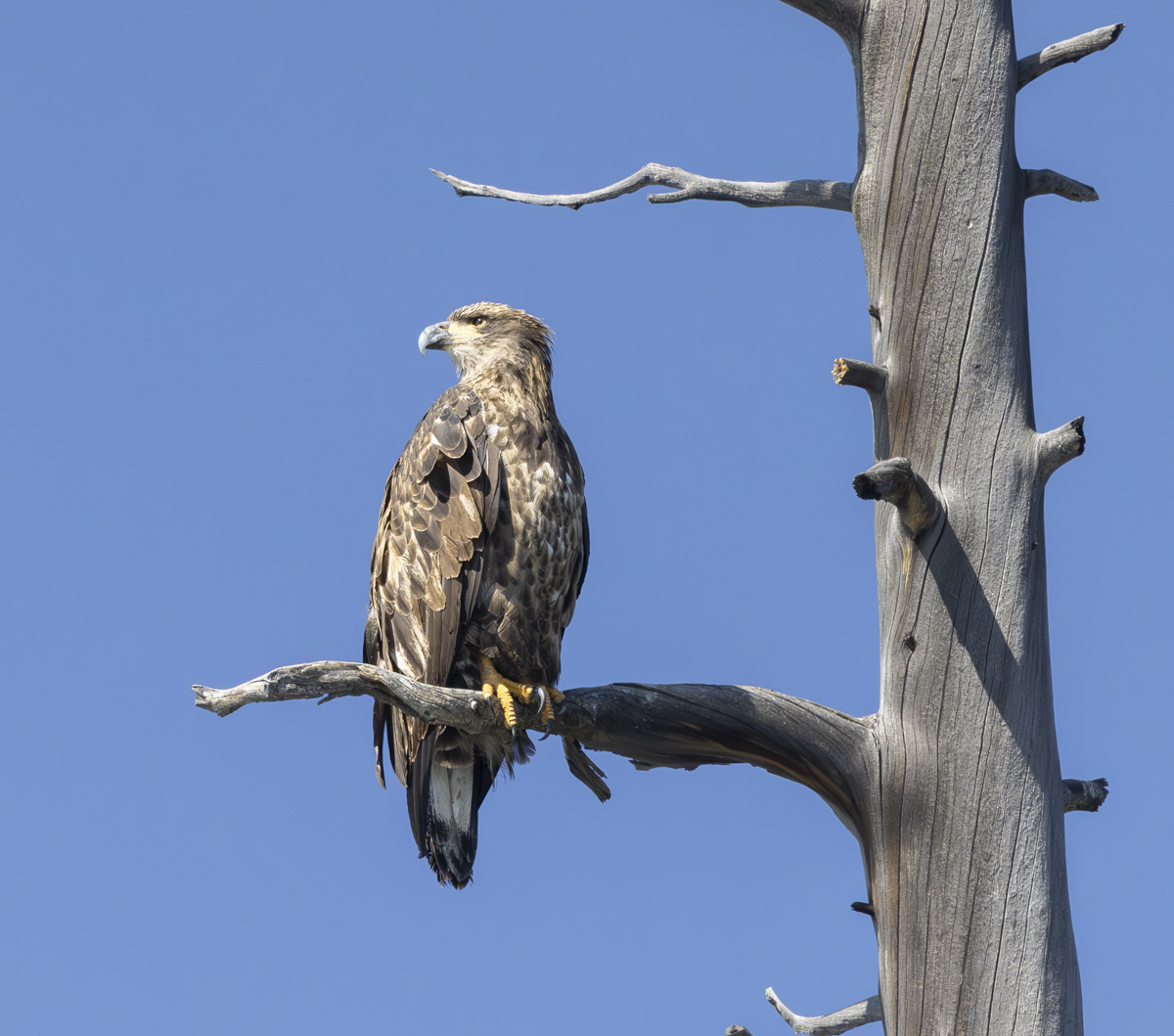
A very light-colored immature eagle had us wondering at first what species we were seeing through our binoculars. Compare this plumage with the much darker feathers of the previous eagle.
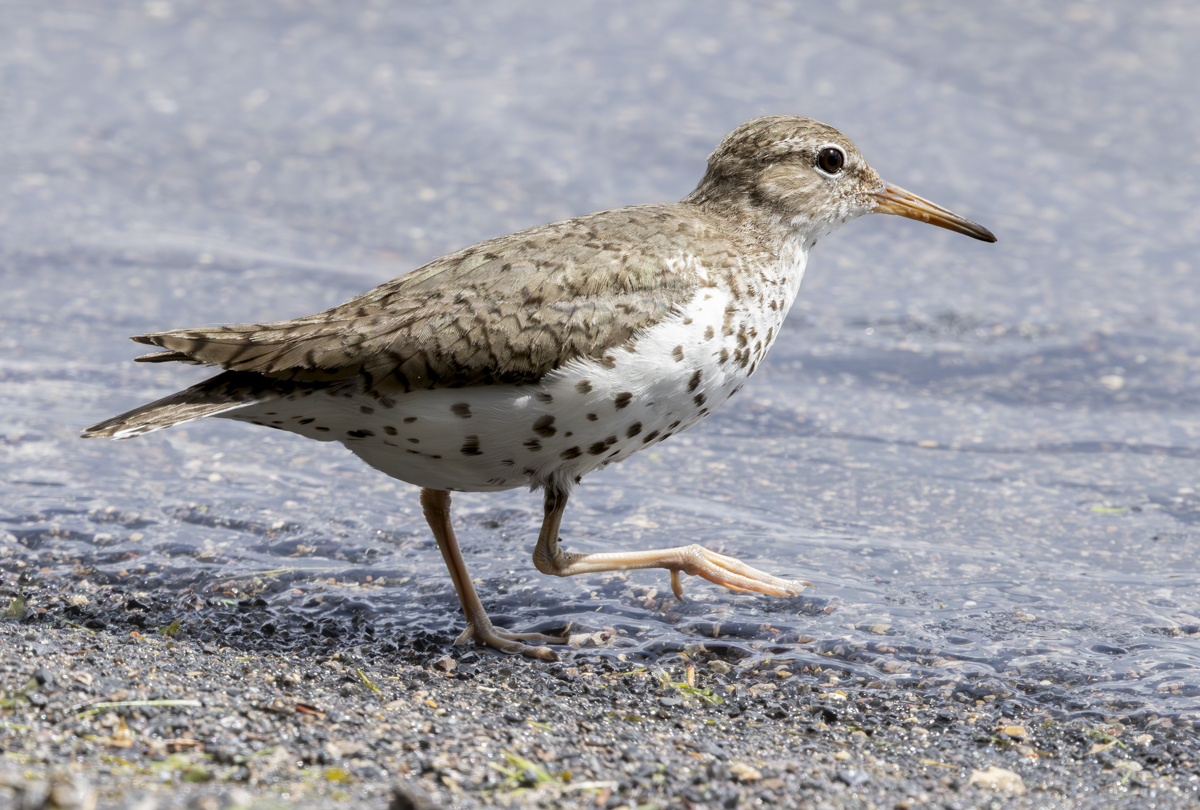
Melissa wrote about several of the birds we saw – the brown creeper infatuated with her hammock strap, the 90+ sandhill cranes in one marsh while canoeing on a sunset paddle, the lines of baby ducks, and the white pelicans. We also saw many shorebirds along the way with the lilting flight of the spotted sandpipers being the most common.
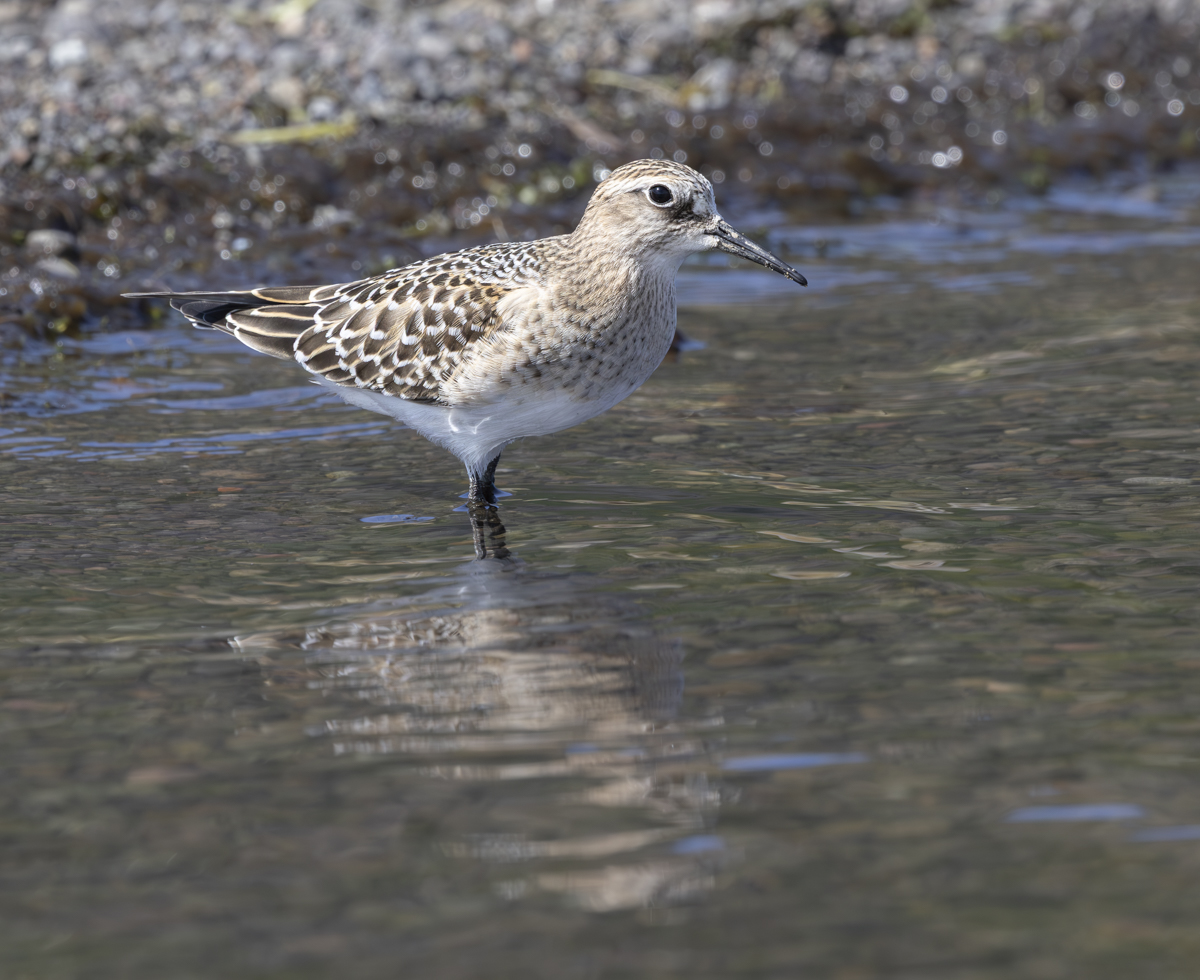
Shorebird migration is underway in the park and we encountered a flock of what we believe are Baird’s sandpipers along one mudflat.
We stayed two nights at two different campsites which allowed for extended periods of observation of nearby wildlife. At one site, the Audubon’s warblers (a regional subspecies of the Yellow-rumped warblers we knew back in NC) were hawking for mayflies and other flying insects. I took it as a personal challenge to attempt to capture their erratic flight with my camera and took way too may photos where a bird is only partially in the frame (or not at all) as they zipped back and forth along the shore.
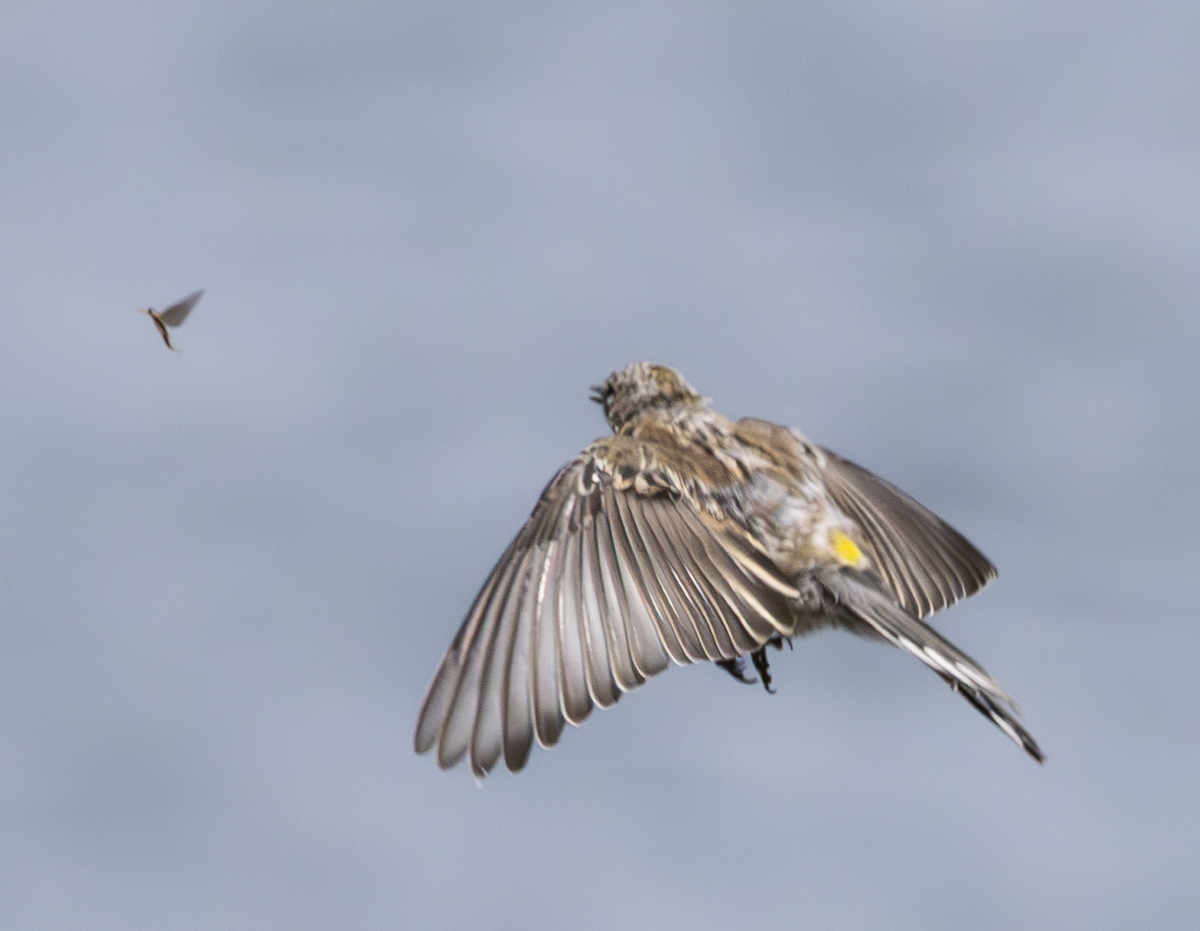
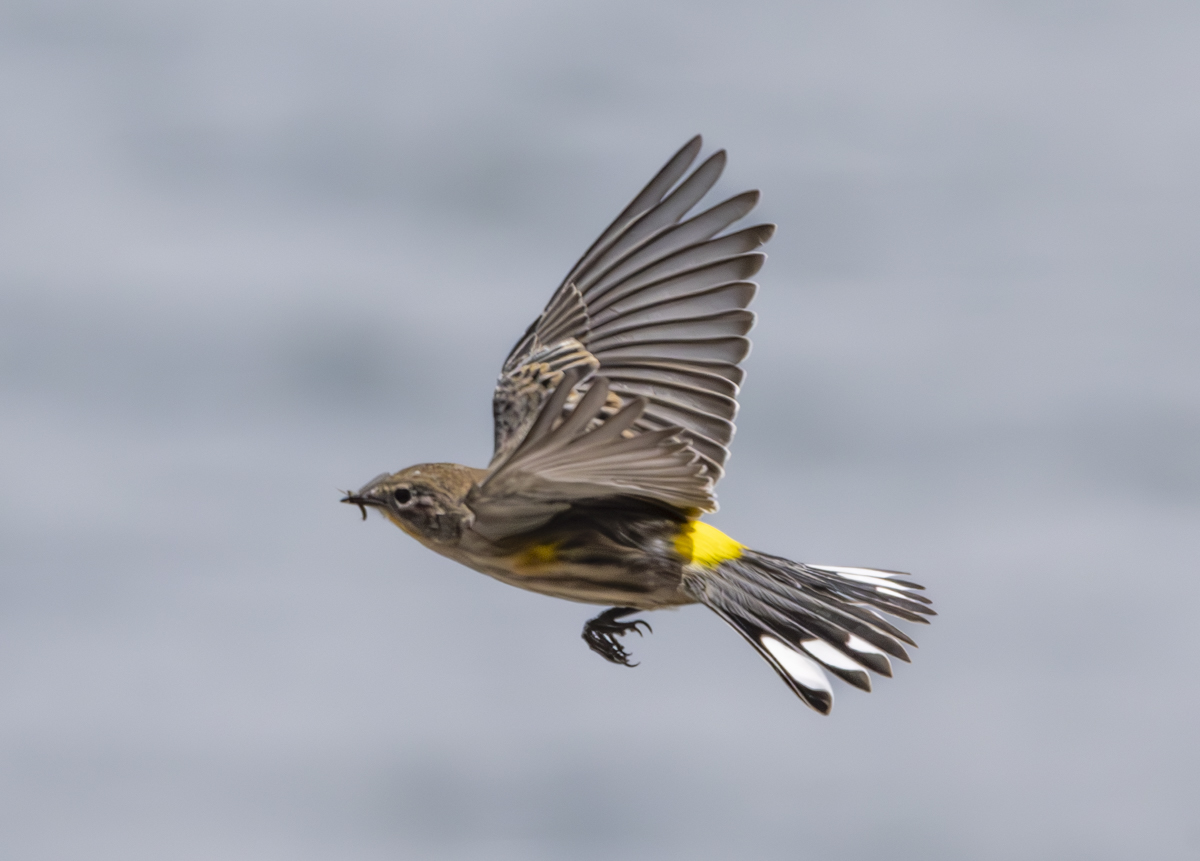
Of course, there were other flying creatures that caught my attention along the way.
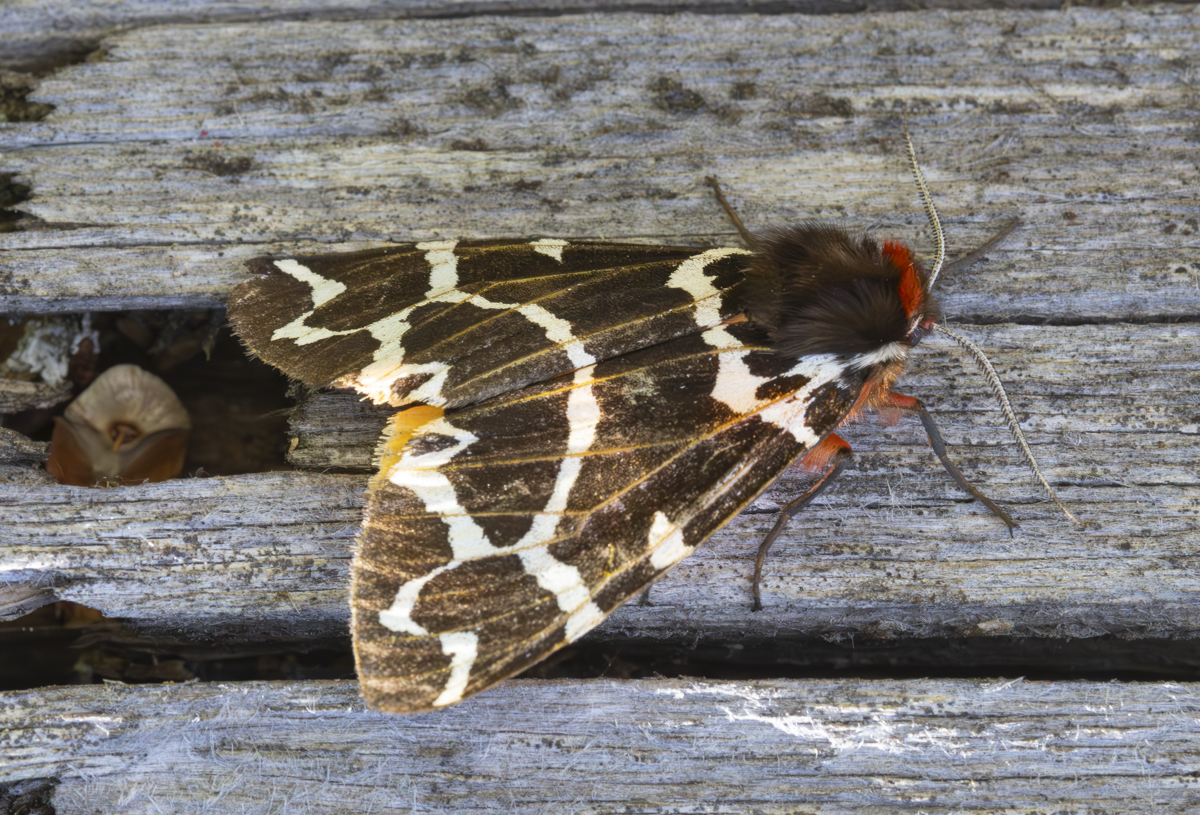
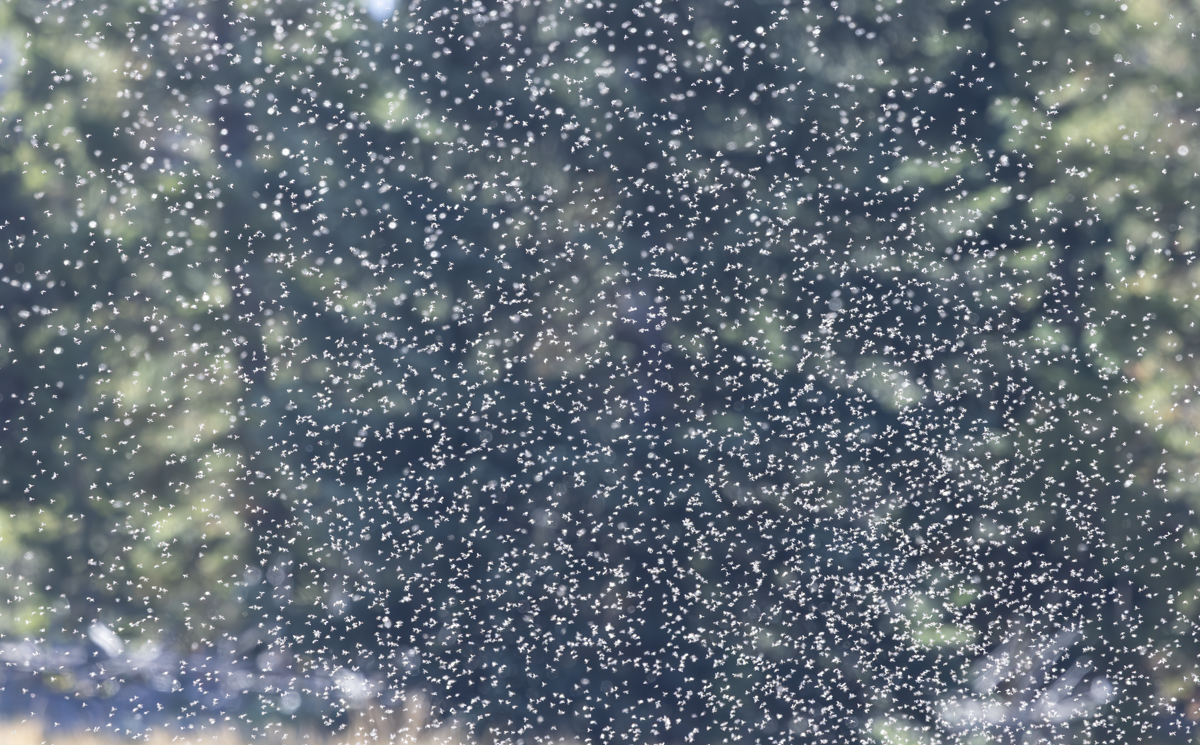
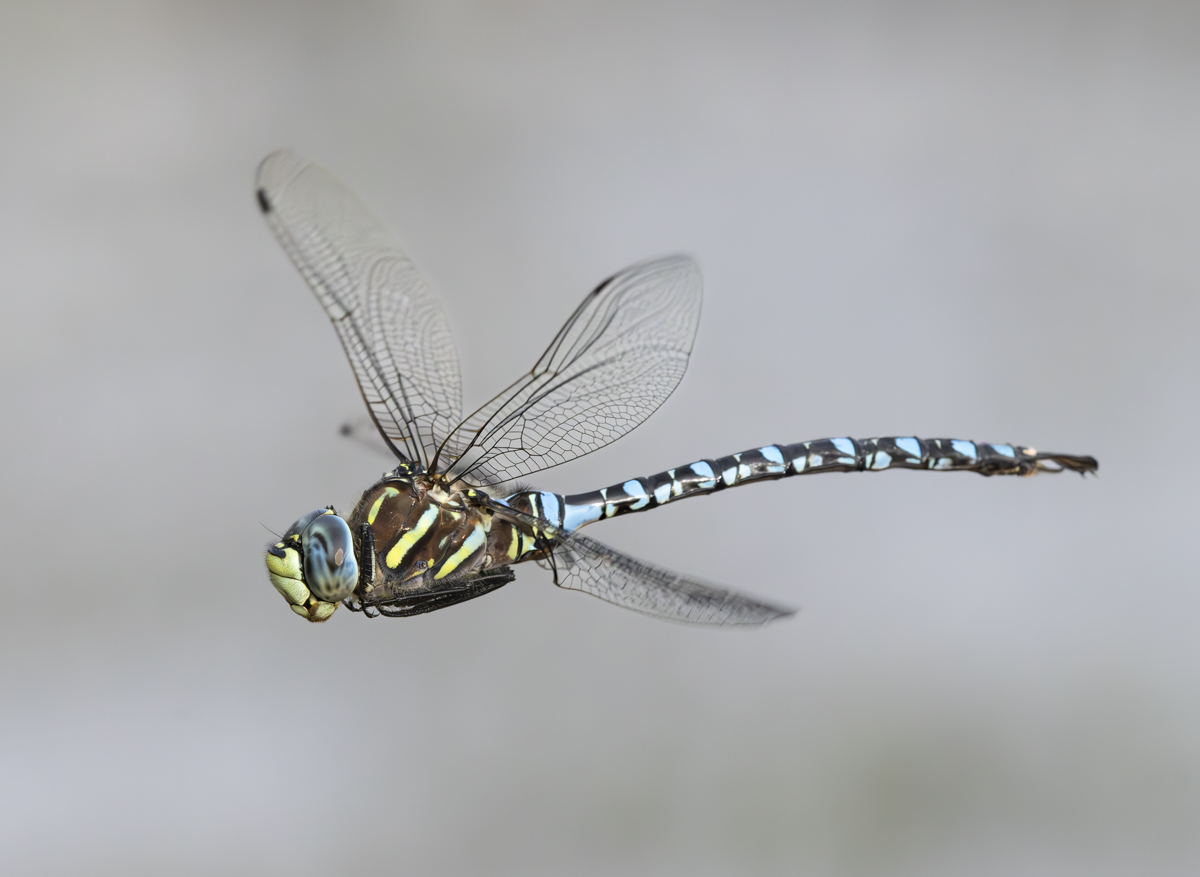
A few of the sites had small wetlands captured behind the shoreline which turned out to be a great place to sit and watch dragonflies, damselflies, and other aquatic insects (dragons and damsels have aquatic immature stages). Capturing the dragonflies in flight was very challenging as they rapidly zoomed through an area and would pause for only a couple of seconds while I desperately tried to focus on them.
Damselflies are characteristically easier to follow with their low slow flights. They also tend to perch on grasses periodically.
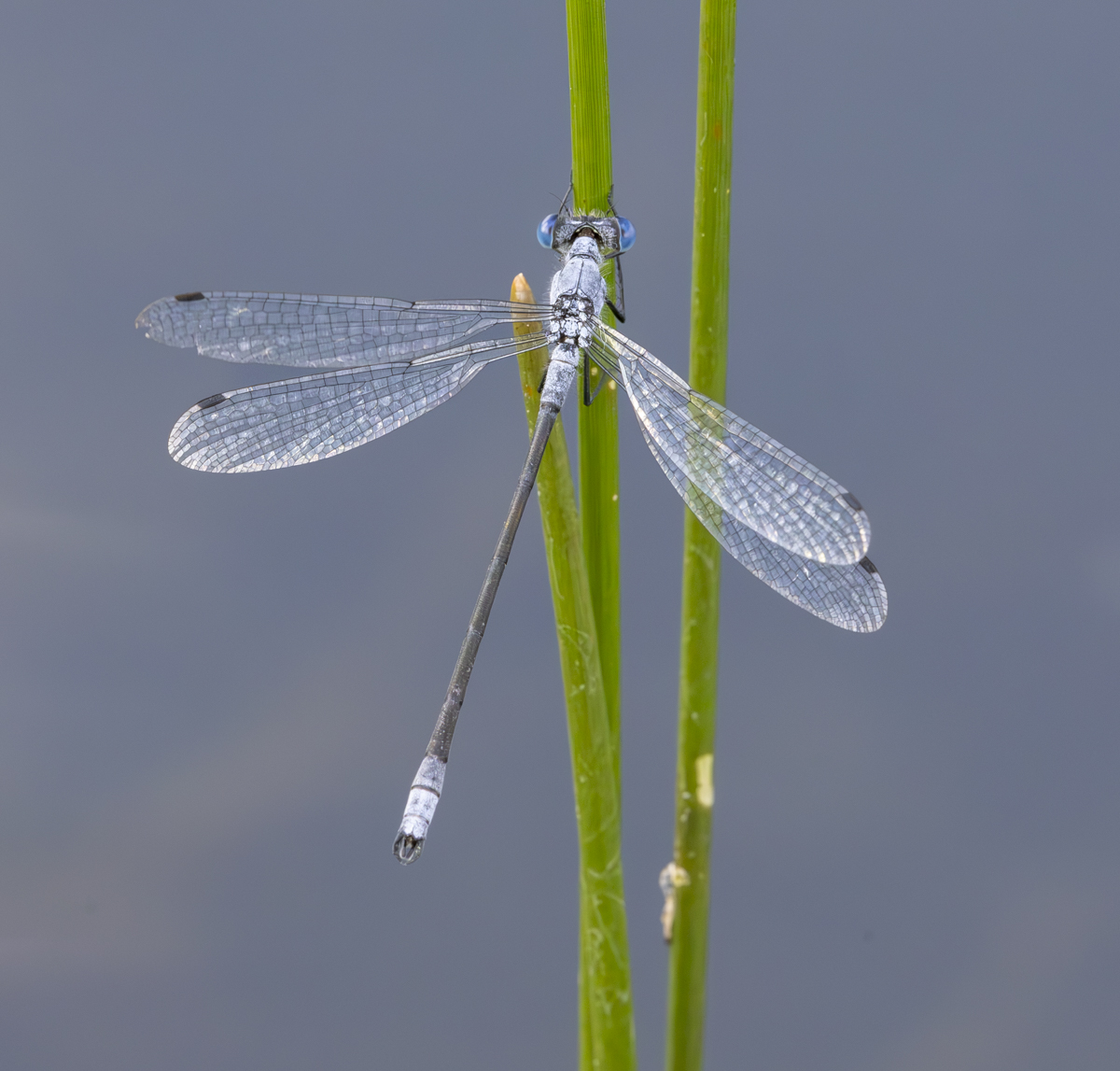
Many of the damsels were mating, with the male grabbing the female behind her head with a pair of claspers at the end of his abdomen. Once the sperm is transferred he will hang on and guard her from other males as she lays eggs in stems of vegetation. She has a knife-like appendage that cuts a slit in the plant where she deposits her eggs.
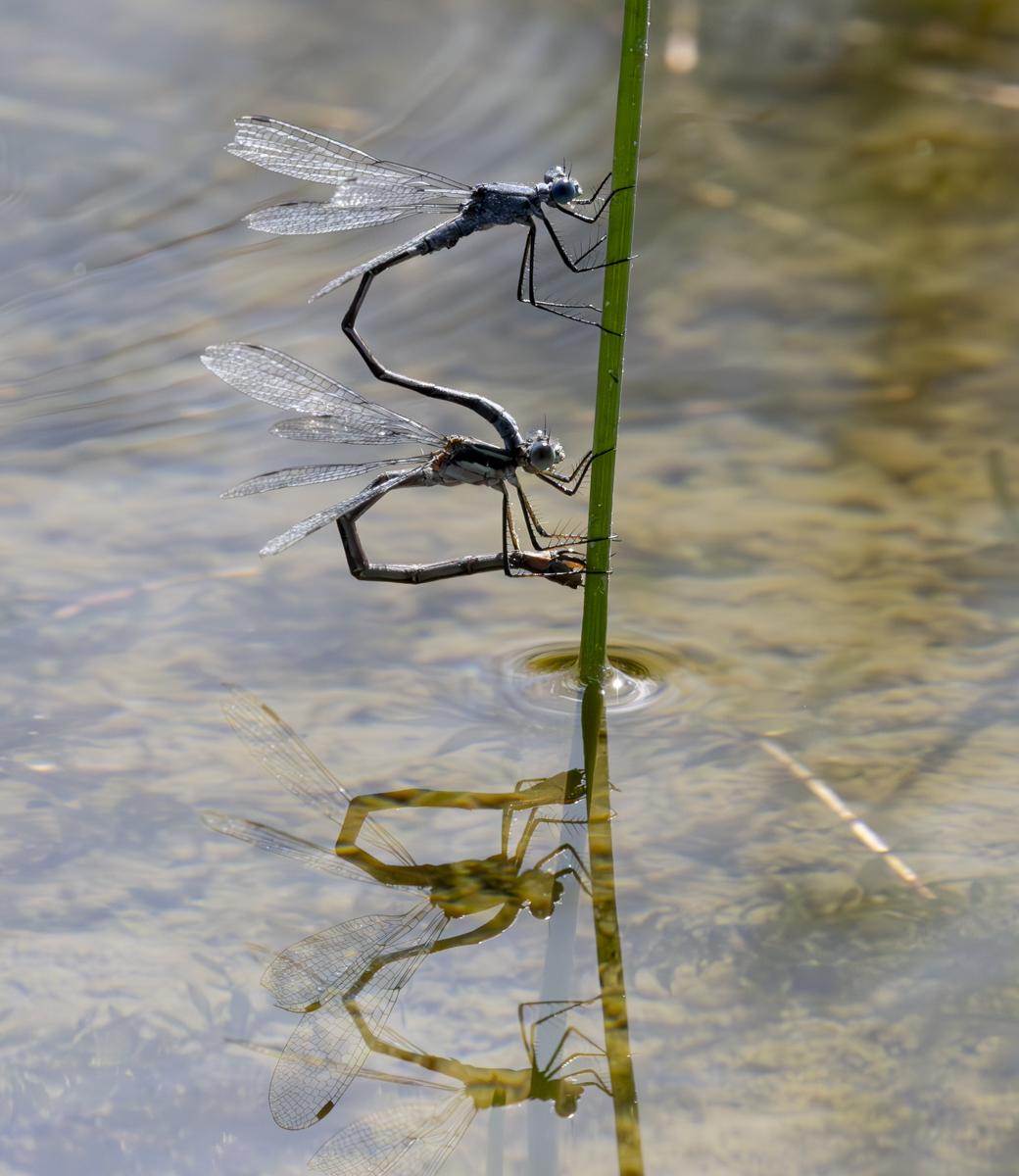
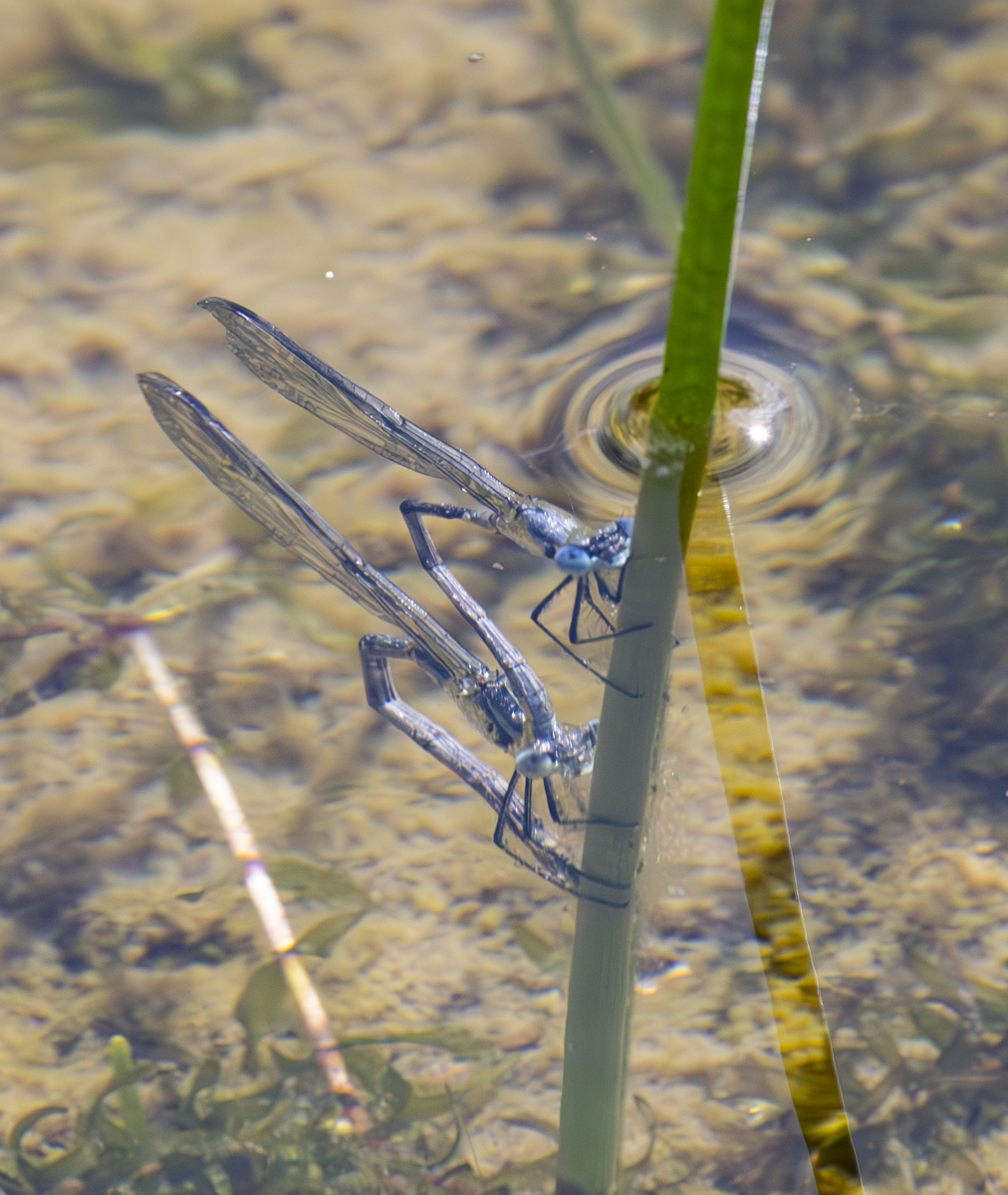
It can be a long egg-laying process and as I watched this pair, the female kept going lower on the stem laying eggs. Finally she went underwater, carrying the male with her. Amazingly, they were submerged for many seconds while she finished her job.
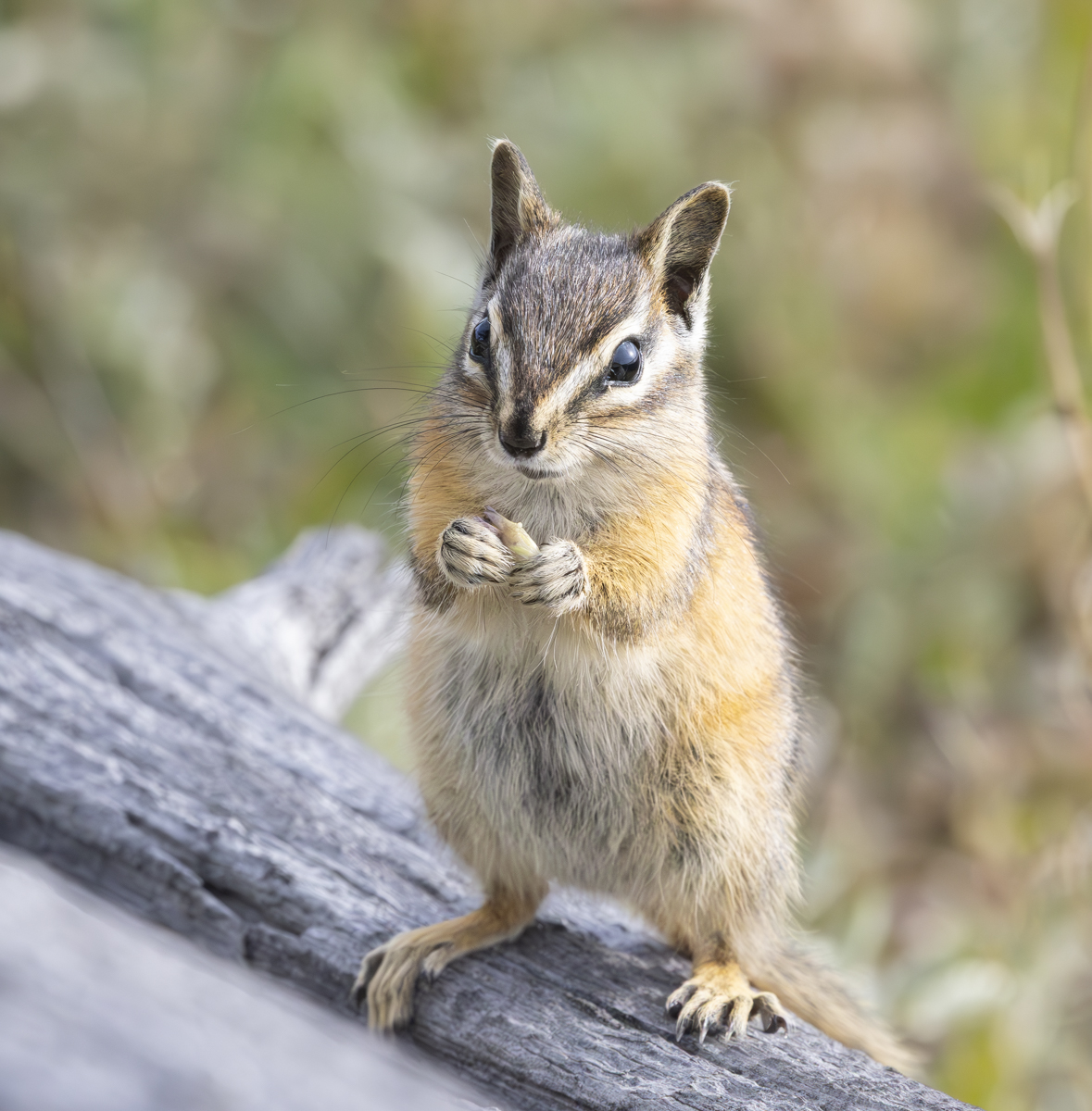
At our campsites we had the usual camp critters, with red squirrels and chipmunks being the stars.
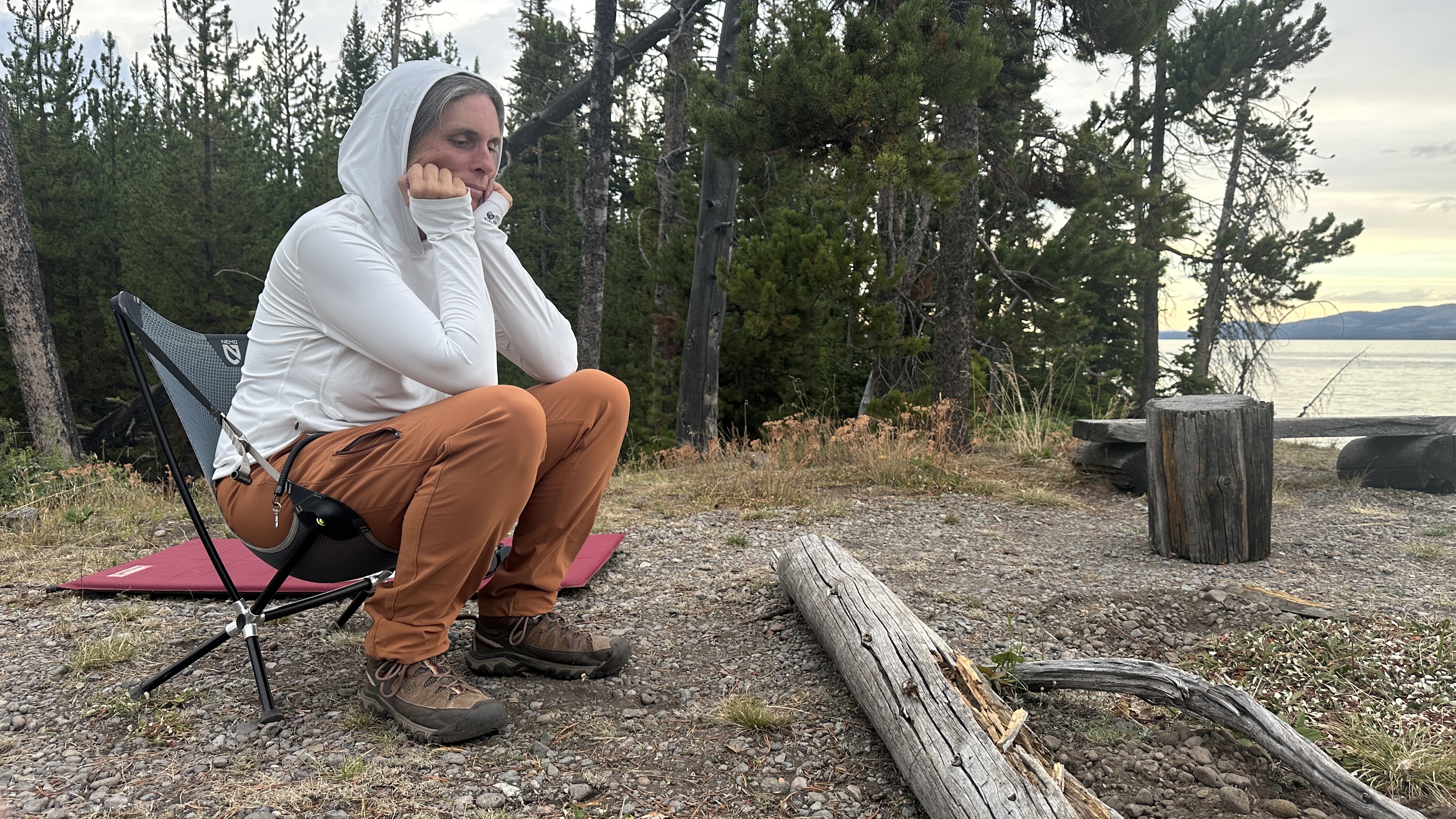
But the critter that got the most attention from us was a pocket gopher at one of our sites. We were camped on a bluff that had thin rocky soil. There were a few pocket gopher mounds scattered around and I remember thinking to myself that this guy could have picked a much more hospitable place to be digging. We were sitting in our camp chairs and I looked down and saw a small hole in a pile of rocky rubble and said, ” could that really be a pocket gopher hole”? Suddenly a gray streak of fur came out a few inches and then quickly darted back in…a pocket gopher! In all my time in Yellowstone, I have only seen two live pocket gophers above ground (actually, one was on a road trip outside the park) so, in spite of their obvious abundance, they are one of the most difficult creatures to see and especially photograph since they rarely make aboveground appearances. Well, we decided to wait for this little guy.
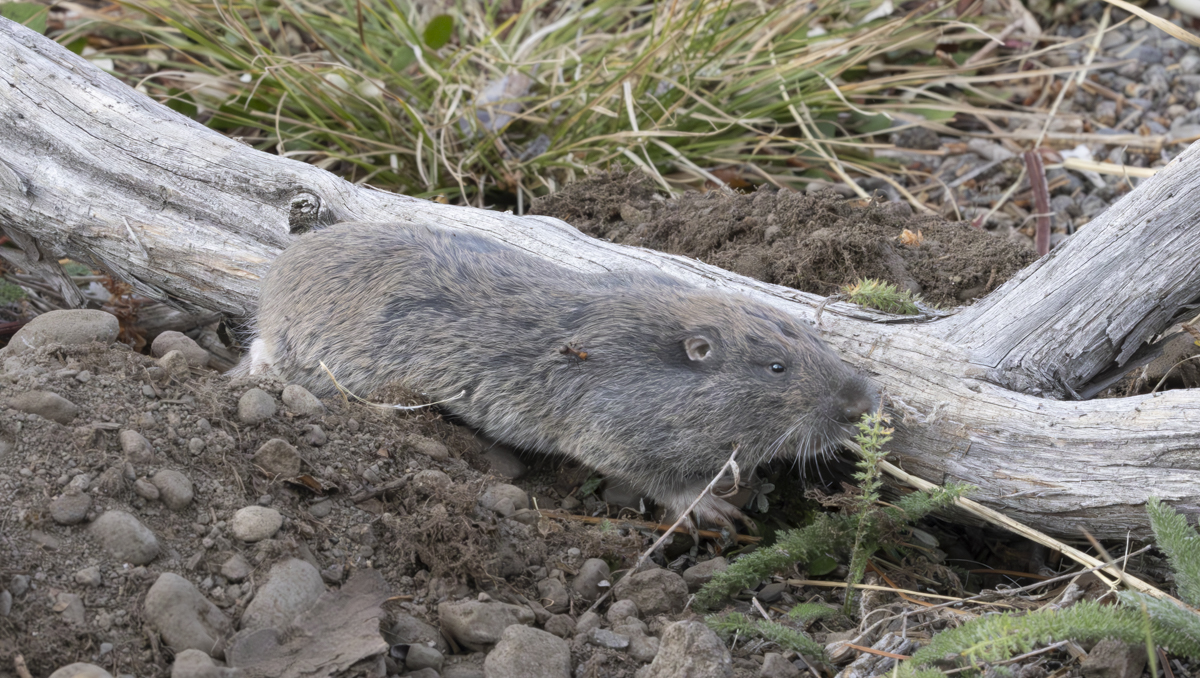
Luckily, the little rascal came out several more times giving us very quick glimpses of it pulling some vegetation into its hole and of it bulldozing some dirt and stones out of the hole.
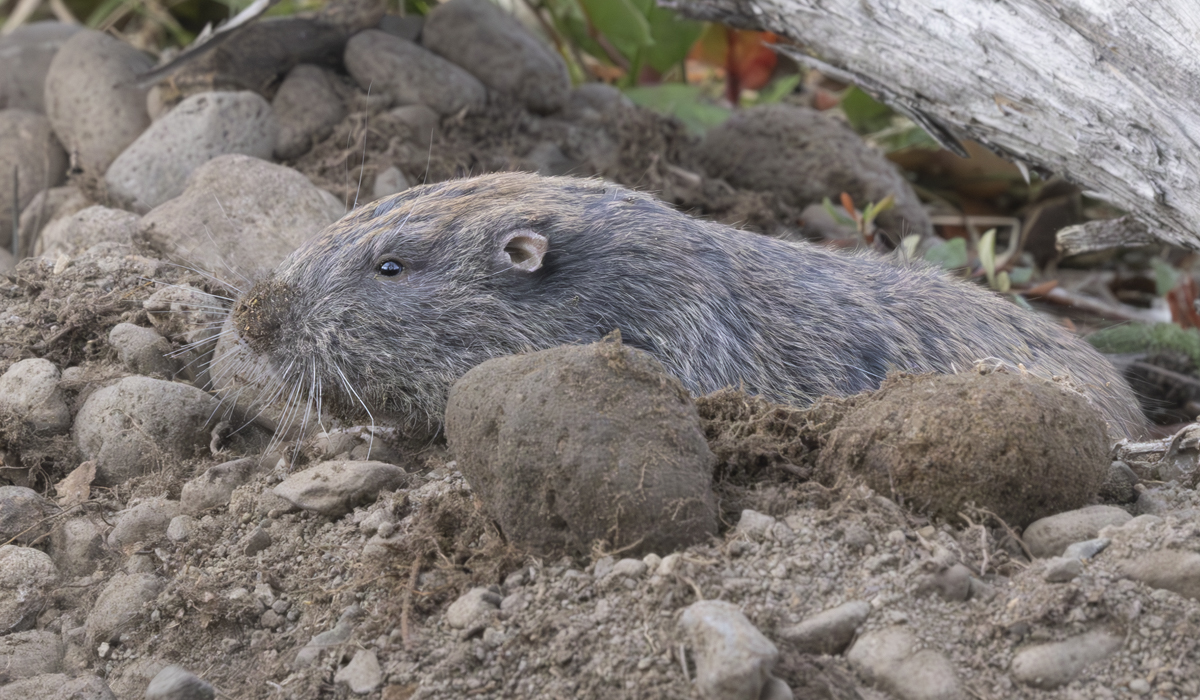
This one looked to be about 5 inches long. They have reduced eyes and ears and external fur-lined cheek pouches for carrying food.
The experience was a reminder of the vastness and diversity of this place we now call home. It gave us a new appreciation for the southern part of the park and for the beauty and power of this lake. The crystal clear waters, the gorgeous skies day and night, and the varied wildlife that depend on this habitat are all things we will carry with us until the next time we venture out seeking the solace and wonder this magical place brings.


Leave a comment