
I believe, every day, you should have at least one exquisite moment.
~Audrey Hepburn
NOTE – If you are bothered by the sight of dead animals, you may want to skip this post.
All photos and videos in this post were taken with either my 500mm or 800mm telephoto lenses or a Swarovski spotting scope with a Phone Skope adapter and my iPhone 18 Pro.
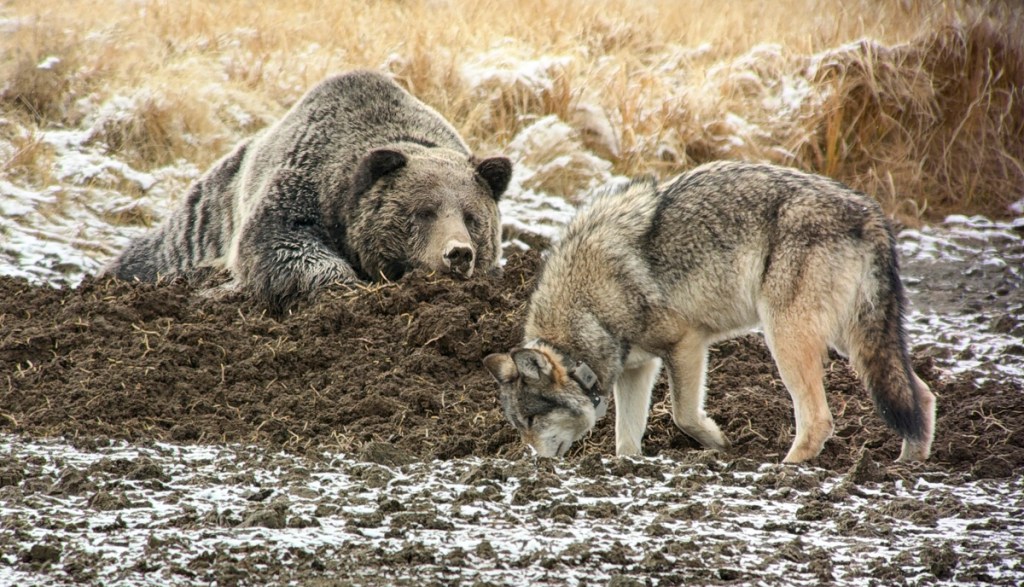
In my previous post I mentioned that one day last week I had an extraordinary experience in the interior of Yellowstone. It was one of those lucky moments in the wild you never forget. I was driving into Hayden Valley when I spotted several cars pulled off the road near Alum Creek. As I passed the double pullout, I could see a large grizzly and what looked like a wolf about 125+ yards off the road. There was no place along the road to pull off due to the number of cars so I drove to the next pullout about 200+ yards up the road. The wind was blowing steady at 15-20 mph and it was cold, and snowing pellets that were ricocheting off my coat and face. I grabbed my camera with the 100-500 telephoto and walked back. When I got to where I could see what was happening I was stunned. The grizzly was a big one and it was on a partially covered elk carcass and there were three wolves pacing the area. I learned that members of the Wapiti wolf pack had taken down an elk early that morning and fed for a bit before the grizzly came running down the slope and took over the kill. This is not an unusual occurrence as grizzlies, especially large ones, can dominate wolves even when the grizzly is outnumbered. And with it being close to hibernation for the bears, they are trying to get as many calories as possible and a fresh carcass is a great find worth fighting for. I was told that there had been seven wolves earlier but now I could see only three.
I took several quick photos but realized I wanted my larger telephoto and the spotting scope so I could get some pics and video with my phone as well. Here is a photo taken with the 500mm telephoto heavily cropped). It was so cool to see the wolves interacting and watch the bear guarding its stolen prize.
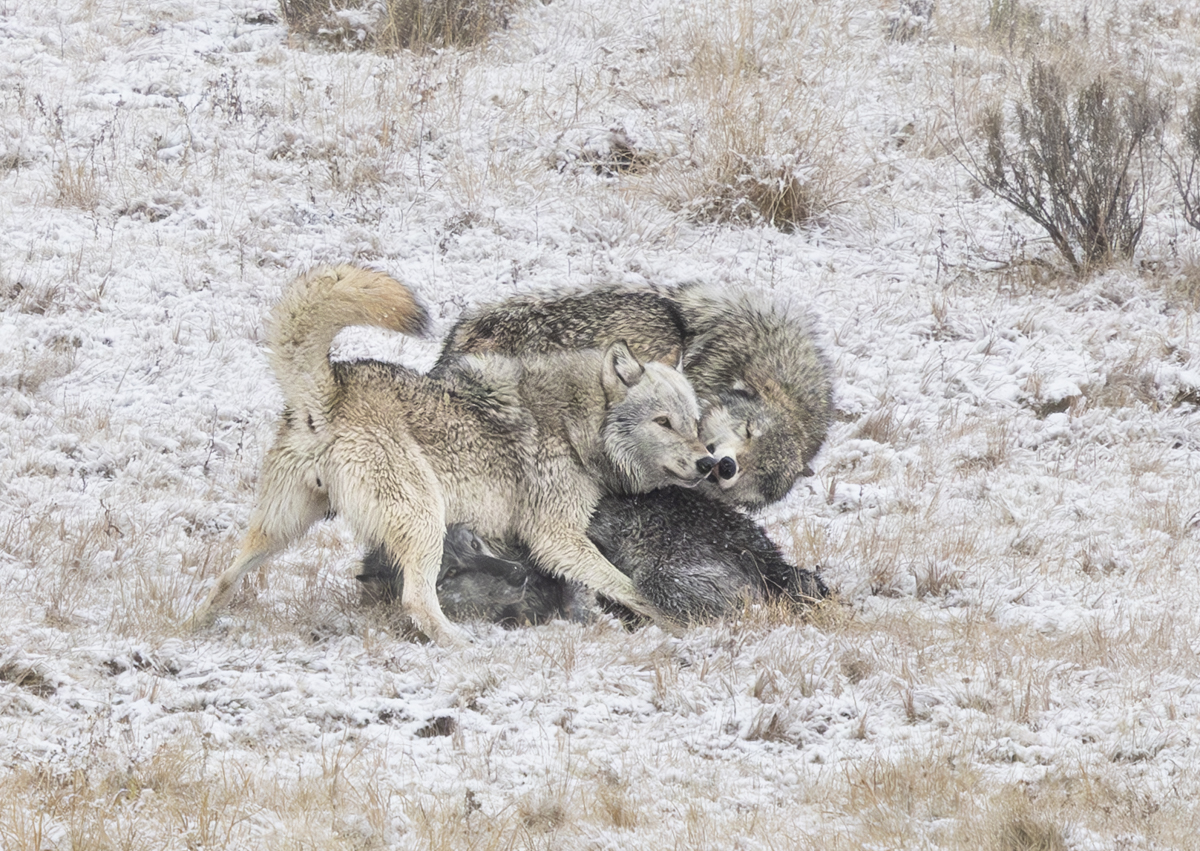
When I got back I quickly set up both my scope and phone combo and a tripod with my camera on it and just started taking images and watching this amazing event. The wolves were patrolling the area while the grizzly watched their movements. Ravens were near the carcass and over by the creek where I learned the carcass had originally been until the bear pulled it to its current location. Videos best viewed full frame.
–The two uncollared wolves walk by as the bear keeps a watchful eye on them.
Those two wolves went up over the hill and then another wolf, a large collared male I believe, walked over and got closer to the carcass. I think it was probably within ten feet or less of the bear. Look at the interaction as the brave wolf gets closer.
–A collared wolf approaches the carcass testing the bear’s resolve.
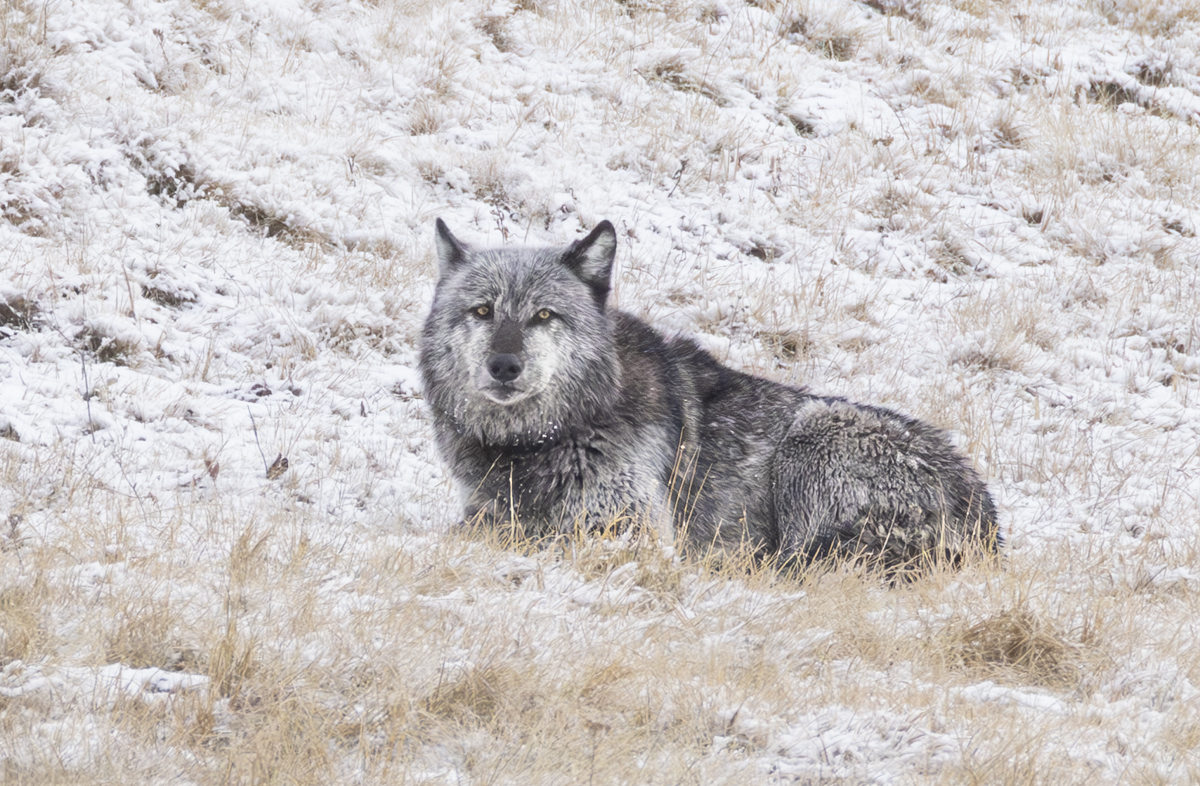
This same wolf came soon back again with the same result. It finally went up on the hill and laid down above the darker wolf that was resting about 50 feet from the bear. The darker silver-gray wolf was beautiful. It had crossed the creek when I first arrived and its belly fur was ice-covered.
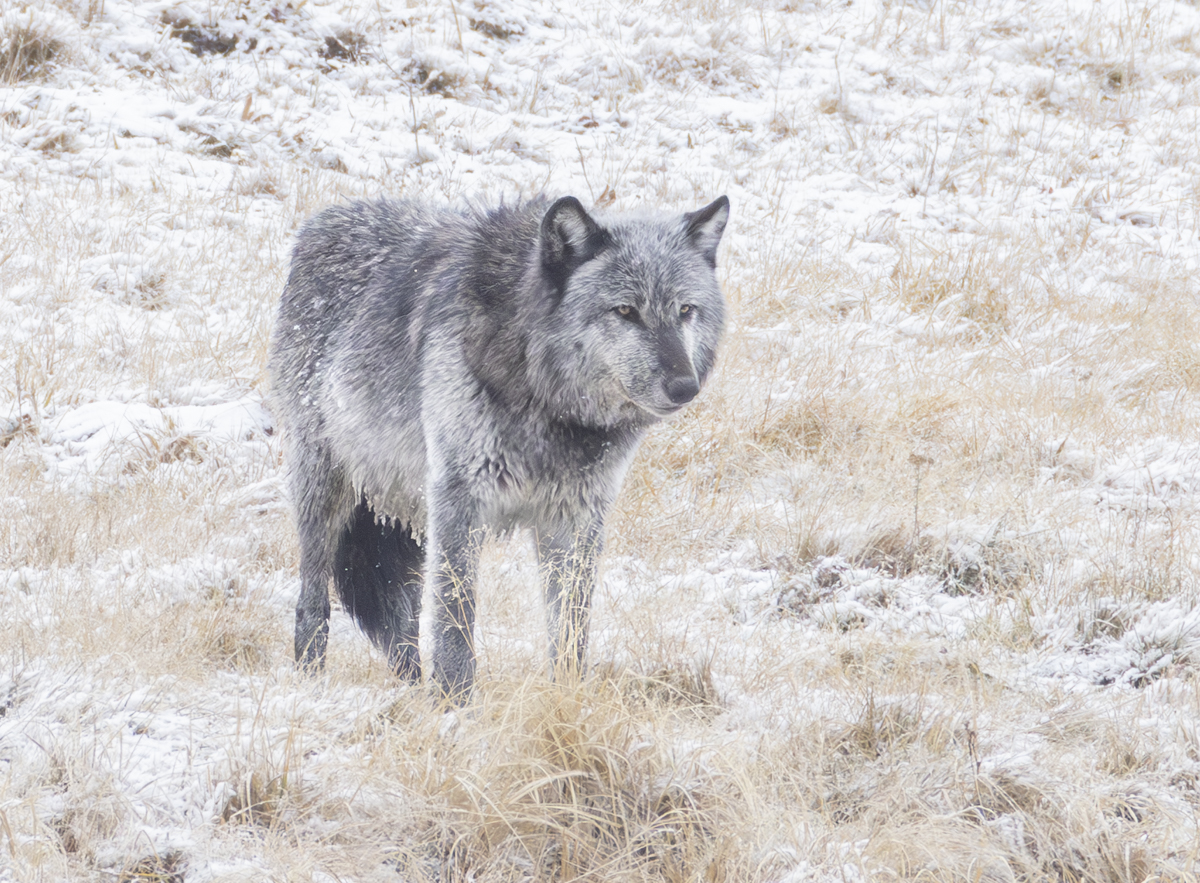
She would occasionally get up and walk towards the carcass but the bear wouldn’t move or would stand and resume covering the carcass with mud and grass. The wolf would eventually go back and lay down.
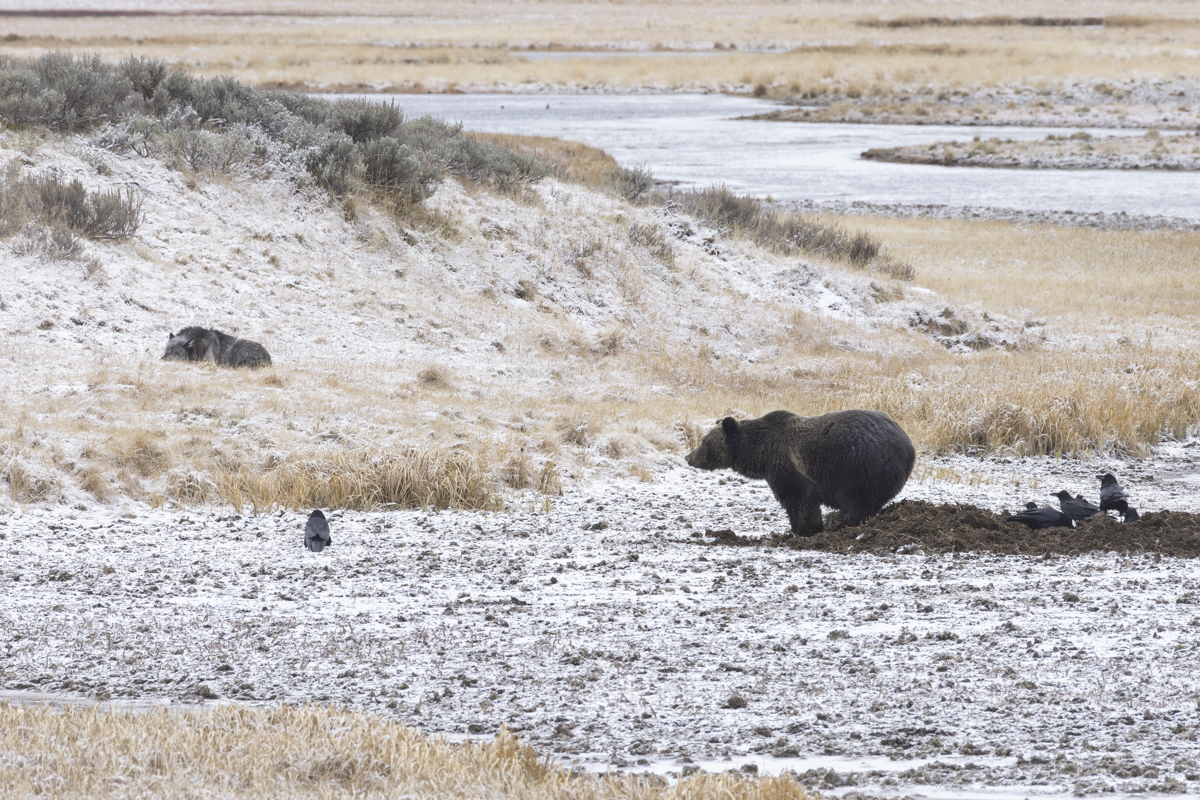
The bear spent a lot of time rearranging the carcass, taking a few bites, and then covering it back up. Predators such as bears and mountain lions frequently cache their carcass food supply by covering it with vegetation and soil to make it less available to scavengers such as ravens, eagles, and coyotes.
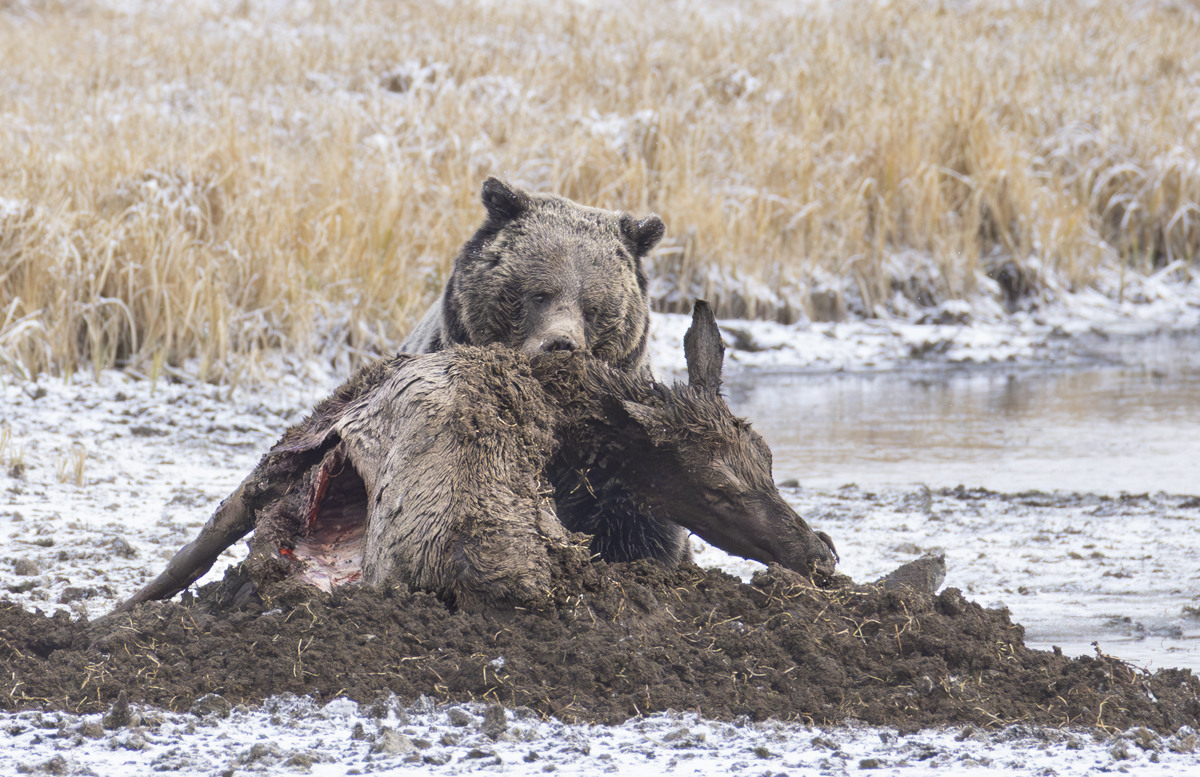
Here is a long video clip of the grizzly as it manipulates the carcass, briefly feeds on it, and then reburies it. An amazing scene to witness.
–The grizzly feeding on the elk carcass
As more and more people arrived, a few more park officials arrived on the scene to make sure things didn’t get out of hand. I will say that from what I saw (and I was in the closest location to the carcass activity), people were well-behaved and stayed along the roadside without approaching any closer. I was standing behind a parked van (I had asked the driver if I could do this) with my tripods just off the rear of the vehicle. This allowed me to get a little protection for myself (not the cameras or scope) from the 20 mph winds that were blowing directly at us from the carcass area. After a few hours of standing out in the cold I heard someone say they spotted another bear approaching. I started looking but didn’t see anything for a few minutes. Several tourists from around the world (Australia and the Netherlands) were standing near me and we quietly discussed what might occur if another bruin appeared. Sudden;y, there it was…approaching at a good pace and headed directly for the carcass. It was on a bench above the carcass and so couldn’t see it yet but the big bear down below started lifting its head as if it was smelling the oncoming intruder. When the second bear (a smaller and no doubt younger one) spotted the carcass with the larger bear, it took off running while looking back over its shoulder to make sure the big guy wasn’t chasing it. At that point I thought it was over, but within just a couple of minutes the second bear came over the hill near where I was standing. It kept walking back and forth, turning to look at the carcass and then moving away. It sat down several times and stared at the carcass area. It was obvious it wanted to go down for a meal but was afraid (and rightfully so I think) of the large bear laying on the carcass.
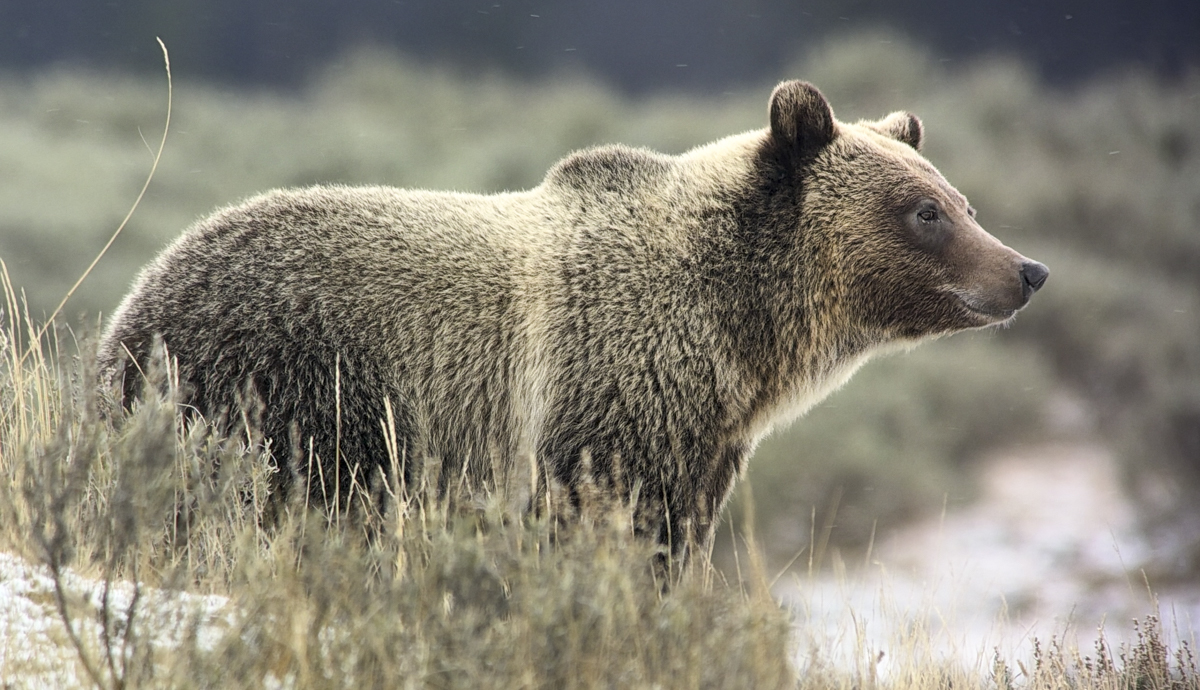
The new bear walked out of sight over the hill a couple of times and then would reappear even closer to the crowd watching from the road. At one point the bear stood up giving us the thrill of seeing all of this magnificent animal.
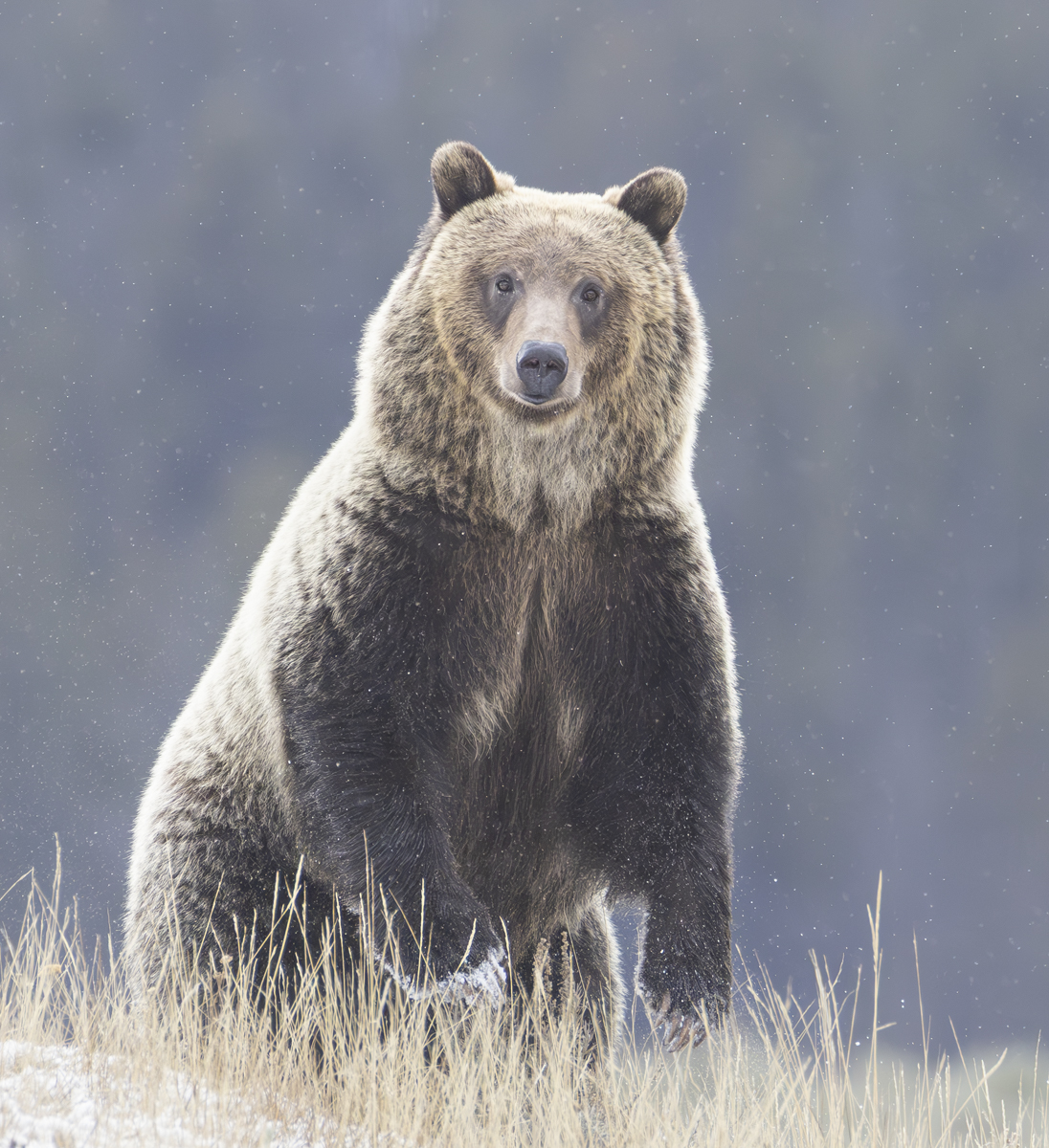
A park staff person came up next to me with a shotgun loaded for hazing the bear. I asked him how much closer before he acted and he answered, “not much”. The bear started to come towards us, still acting anxious. The wildlife management guy walked out toward the bear and shouted twice. The bear stopped but didn’t move away. It took another step and the man fired a cracker shell into the air which creates a loud bang. The bear and the two wolves laying near the carcass all took off running. The large bear didn’t seem fazed and kept laying on the carcass. After watching this scene for over 4 hours I decided it was the time to head back to the car and warm up as did several other people along the road. The park received some criticism about this decision to haze the bear away from the road but, while I was disappointed the bear and wolves ran off, I can understand why it was done. That bear had come to within less than 75 yards of a crowd of people. Though I didn’t feel I was in any danger, it is not a good idea for people and grizzlies to be in close proximity and there were a lot of people out there at that point.
Melissa was understandably disappointed she and her group of students and teachers from NC had missed this event. The next morning we all headed back in the hope a bear or wolves would return. I got there well before daylight figuring many people would already be parked along the road. Though there were cones now in place all along one side of the road, several cars had already parked there. I found the last available spot on the opposite side of the road from the carcass and pulled in. I was told the bear had been on the site right when you could start to see the area but had left. When I got there a single wolf was feeding. A ranger soon arrived and started walking along the opposite side of the road asking people to move their cars away from the areas they had placed the cones. This was the park trying to get a better handle on the situation today. When I had arrived the day before there were no park staff in the area so it quickly became a huge crowd of onlookers and photographers. After she got all the cars moved she came over to the handful of us parked on the other side where there were no cones and politely asked us to move as well stating that the entire area was closed to both cars and people. We could go down the road a bit to the pullouts where you could still see the carcass but would be further away from all the wildlife activity. It has to be a difficult job managing both people and wildlife (especially the people) but we all understood and relocated. It was still a decent view of the carcass area and while we all watched there were several ravens, a bald eagle, and finally two coyotes feeding.
Melissa’s crew arrived after we all had to over to the pullout and we watched for 30+ minutes hoping a wolf or bear would reappear but none did. But many people did get to see this incredible slice of the lives of these wild creatures and we were all in awe. This is why you get out as often as you can as you never know when you might be witness to a truly amazing spectacle. It is a humbling experience and one that somehow grounds me and makes me feel more alive to see nature in its purest form where nothing goes to waste. The death of one animal feeds so many others and eventually adds nutrients back into the soil. This is one huge benefit of living close to such a wild place. You may get lucky and have a life-changing encounter with the some of the amazing denizens of this extraordinary landscape.


Leave a Reply