If you want to look at the same place and see different things, look at the same place from different perspectives!
~Mehmet Murat ildan
While we were away over Thanksgiving, our good friends had family (their son and his fiancé) in town and he brought his drone. They flew it over their house and posted the video on social media. I apparently oohed and aahed over it in my reply, so they were kind enough to come over to our house in the woods and fly over our abode. Here is the wonderful video they shared (thank you, Kennedy!).
A short drone video showing our house surrounded by woods
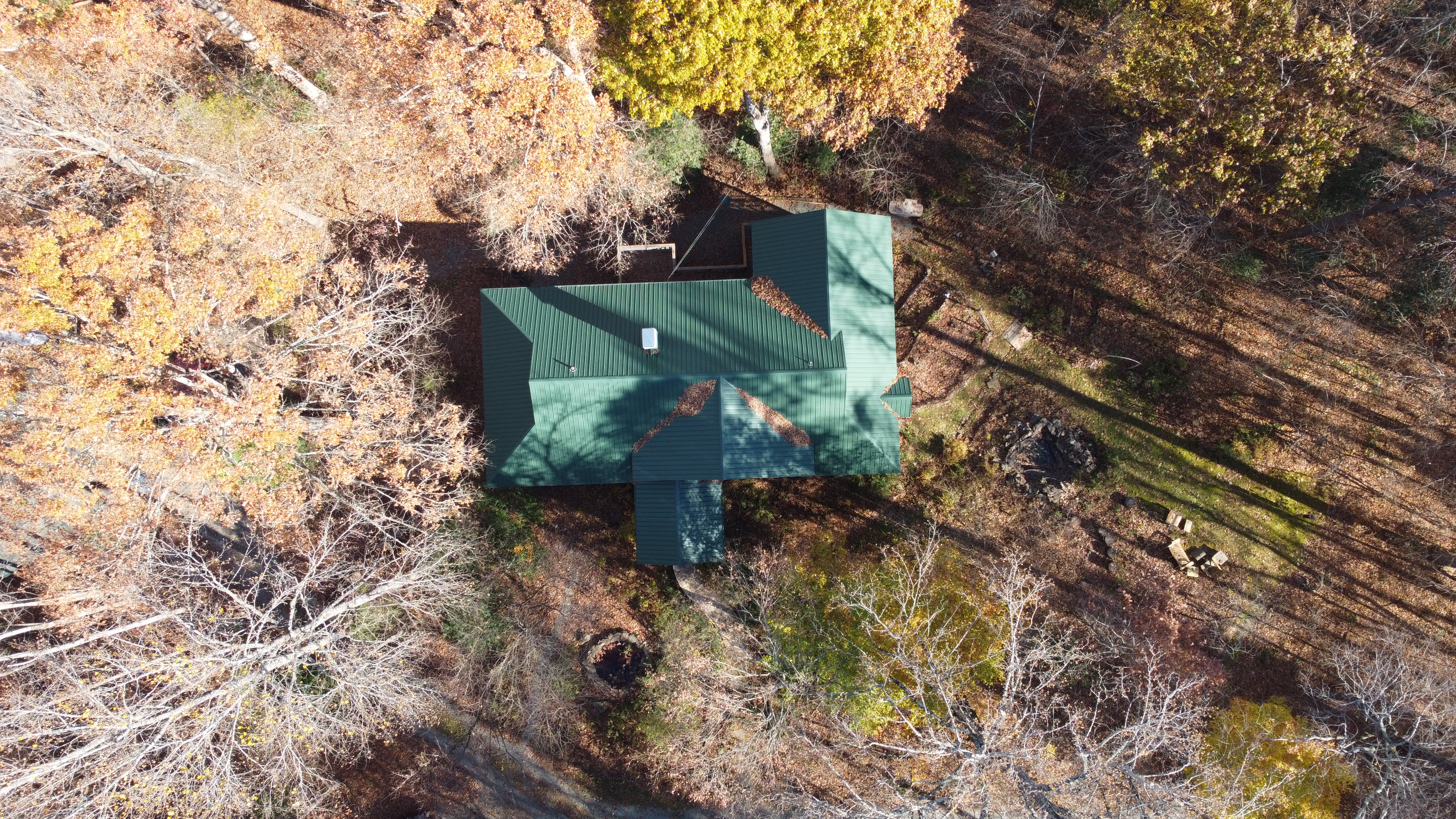
It is certainly interesting to view your sanctuary from this perspective. As you can see, we definitely live “in the woods”. The video doesn’t show the one house we can see from ours, a large brick house not far off the northwest corer of the video but you can see the expanse of large trees that surround our home. Below is a still from another video showing some of the landscape features we have added:
The two “circles” (one in front of the house, below it in this pic; and one off the lower right corner of the house) are amphibian pools. We have recently refurbished both of them (only one was completed when the image was taken) since the liners finally sprung leaks after 23+ years.
Still photo of the house and surroundings from another angle
2. There is minimal “yard” and much of the green you see to the right of the house is actually moss.
3. There are wildflower beds in what appear as brown ground cover inside the tree line, plus a small vegetable garden adjacent to the right of the house (you can see the curved line of the rabbit fence around the garden).
4. About an acre+ is surrounded by a deer fence. The other 13 acres, along with many acres of adjoining wooded lots, is for the deer and other large wildlife. Most of our property lies behind the house (beyond the top of this picture). On thing that is hard to see in the images is the steep terrain behind the house as it drops off over a hundred feet down to a wet weather stream before ascending to a comparable height on a very-looking different south-facing slope.
If you look fast, you may see the old stock tank we refurbished as an outdoor tub located just off the upper right corner of the house (the screen porch).
When the house was built 24 years ago, there was much more of an opening in the trees and more sunlight for the native plant gardens. I guess it may be time to limb up a few of the trees. The area around our house (and most of our property) is a mature hardwood forest. The dominant tree species are Tulip Poplar, White Oak, Northern Red Oak, a couple of species of hickory, some maples, and a variety of understory trees. Loblolly Pines appear here and there, especially in the few flatter sections along the ridge that were farmed up until about 75 years ago.
This is a great way to get a feel for the habitat you see in many of the blog posts about the plants and animals that are our wild neighbors. Of course, now I want to do this in every season.
The wild hawk stood with the down on his beak and stared with his foot on the prey.
~Lord Alfred Tennyson
One day last week as I was walking through the bedroom, I glanced out the back window and saw something on a tree trunk just beyond the deer fence. This tree has fallen to the point that the trunk is almost parallel to the ground. The critter was in the shade and was upright so there was not a lot of detail and I assumed it was a squirrel and started to look away. It then made a sudden move and I saw what looked like a wing go up on one side. I grabbed the binoculars (we have a pair at a window in every room, don’t you?) and looked – it was a Cooper’s Hawk! I went into the other room to get my camera and when I returned, the feathered blob on the trunk was gone, or so I thought. I then saw it on the ground below the tree, and it was pulling at something. When I got it in the binoculars again, I could see it had a large prey item and was tearing pieces and eating. But the bird had its back to me and its body blocked much of the view of what it had caught. I finally saw some fur and then a head as the hawk yanked on its prey – it was a Gray Squirrel.
Now, I must admit I have a love-hate (maybe mostly the latter) thing with the squirrels on our property as they love to dig up plants out of flower pots, raid the garden veggies at times (mainly tomatoes and peas), chew on our deck wood, chew on our Christmas light wires (I had to repair them 4 times last year), etc. So, I was somewhat pleased that this Cooper’s had made a successful kill. Last winter, we had a Cooper’s Hawk spend much of the season around our property, occasionally grabbing some birds near our feeders. Over a span of a few months, I documented two Mourning Doves, one Downy Woodpecker, and one male Northern Cardinal that fell victim to the stealth fighter hawk in our yard or just downhill in our woods.
Cooper’s Hawks and their smaller cousin, the Sharp-shinned Hawk, are primarily bird predators. Their rounded wings and long tail enable them to maneuver swiftly through the trees in pursuit of songbirds. They often use obstructions as cover to surprise their prey, zooming in low just above vegetation until close enough to strike. I even saw the one last year use our house as cover when it flew up and over our roof (coming straight down from the roof) to surprise birds at the feeder off our back deck. They will take other prey, including small mammals, reptiles and amphibians, and larger birds. I once saw one take down a Wood Duck that flew up from a roadside canal at Pocosin Lakes NWR.
I was anxious to get some photos of this bird and it seemed preoccupied with its meal, so I started shooting with my large telephoto. Hand-holding that lens and taking pictures through the bathroom window ( better angle than the bedroom), wasn’t giving me much in the way of sharp images.
A quick clip of the Cooper’s Hawk feeding on a squirrel
So, I decided to get the tripod from the basement and see if that would help (the bird was in deep shade and shooting through the window probably didn’t help). The hawk continued to feed as I set it up. I opted to do some video as that is sometimes more forgiving of low light than still shots (above is one of those clips). Perhaps I could open the window to get a better shot. I slowly cranked it open, only moving the window when the hawk bent over to pull meat off the squirrel. Once it was fully open, I turned back to position myself at the camera and when I looked through the viewfinder, the hawk was gone.
I waited, scanned the trees, thinking it might have seen me move inside the window and would come back to finish its meal. Nothing…so, after a few minutes I went down to the tree to take a look.
Bits of fur and blood on the leaning treeAll that remained was a small piece of squirrel fur
To my surprise, the hawk had flown off with the squirrel! That is a fairly large package for a Cooper’s Hawk to carry, but all that was left was a few spots of blood and a piece of squirrel hide about 4 inches across. I was bummed I had missed seeing the hawk flying off, but thrilled to witness such an adept predator in action. No doubt, it or another one will provide some other opportunities to appreciate their skills in the coming months.
On the river, time does not exist – only the sound of the rushing water, the cries of the wood thrush and crow and the sight of light dancing on the water.
~Ginny Masullo
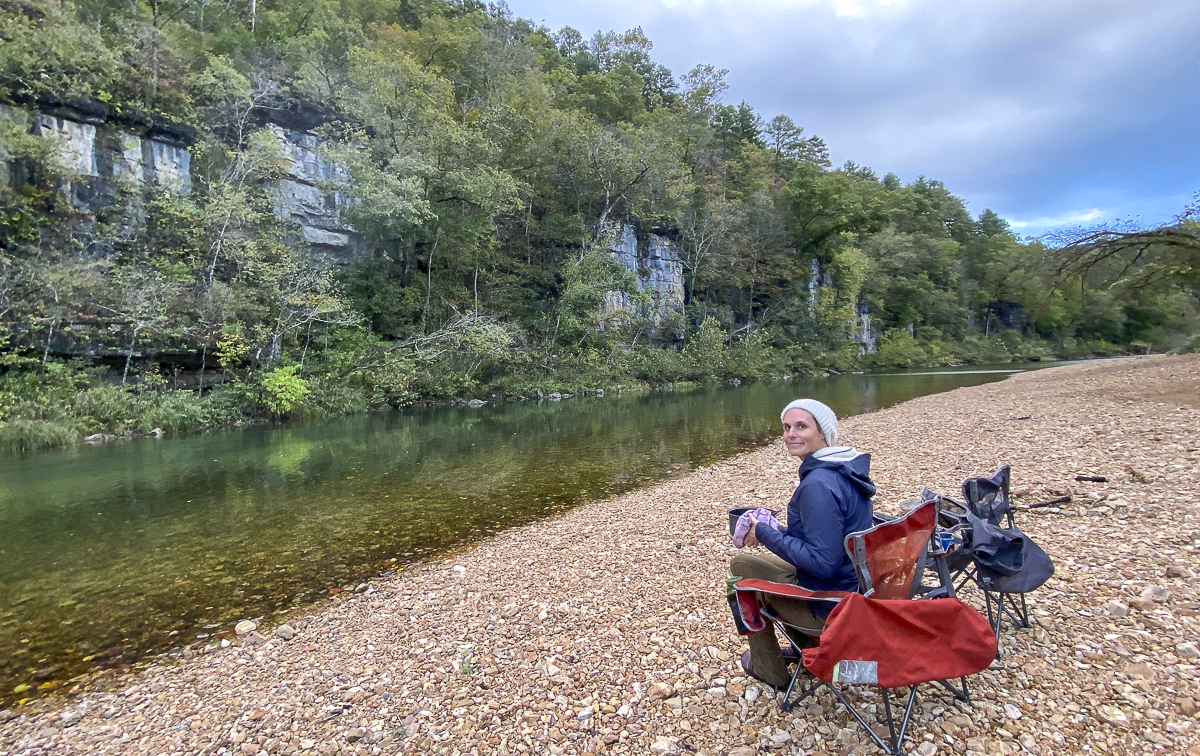
Our second paddle adventure back in October was on a section of the Buffalo National River in Arkansas. The Buffalo River was our nation’s first national river, designated as such in 1972. It flows over 135 miles and is one of the few remaining undammed rivers in the lower 48 states. Unlike the spring-fed Current River in Missouri, the Buffalo is largely rainfall dependent. This means paddlers must be very aware of possible changes in river levels due to storms, even those far upriver. When we stopped at Wild Bill’s Outfitters to arrange our shuttle, the staff mentioned the possibility of severe storms during our stay, with a chance for hail, possible tornadoes, etc. He added that these predicted storms often “amount to diddly-squat” as they tend to break up when they hit the mountains. But, he echoed the park literature advice and said we should “camp high” on the gravel bars since the river can jump over one foot in an hour under the right conditions. Melissa asked, how high is high? He said at least 4 feet, and make sure you have an escape route to higher ground, just in case. Well, four feet above the river level is not a common change in elevation on many of the gravel bars we encountered and on some that did have that, they dropped down as you approached the higher ground, so you could end up being on an island if the river rises, which is something that is not advised.
We decided to go ahead since the forecast called for good weather the rest of our 4-day window. We launched at Dillard’s Ferry and planned to take out 39 miles later at a private resort on the White River across from where the Buffalo joined it. We were particularly excited about paddling the Lower Buffalo River Wilderness Area, a 25-mile stretch that relatively few people paddle because, once you are in it, there is no place to take out until you get to the White River.
We paddled about 39 miles between Dillard’s Ferry and the juncture of the Buffalo and White Rivers, including the remote Lower Buffalo Wilderness (click photos to enlarge)
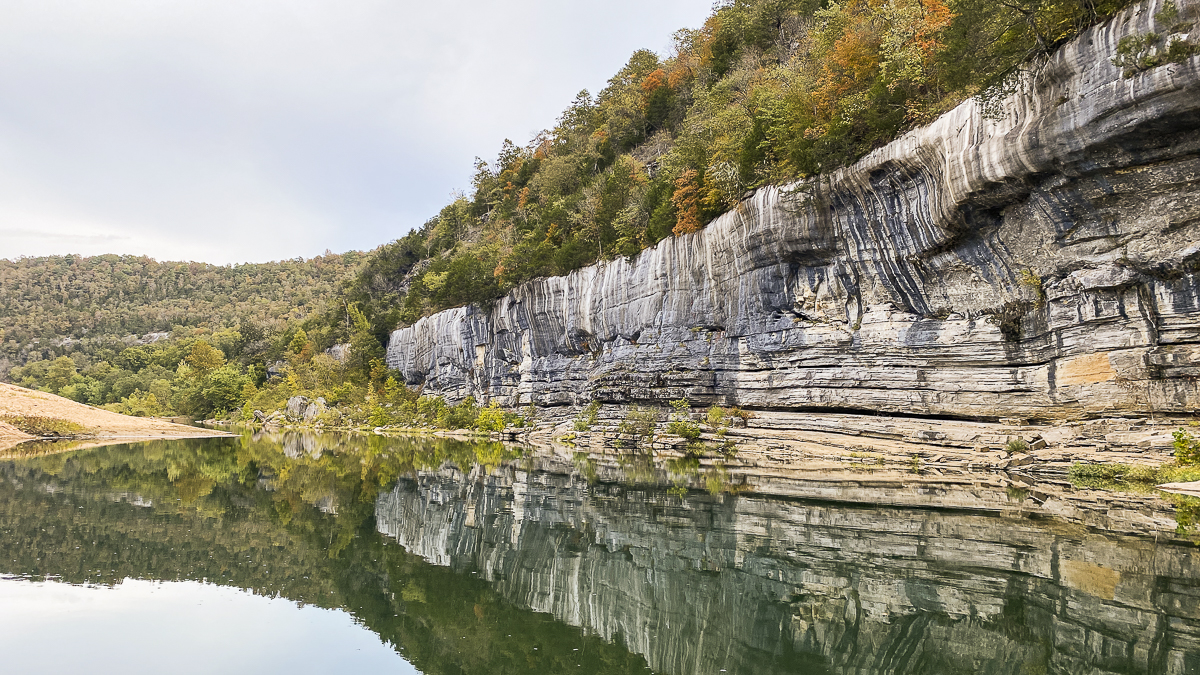
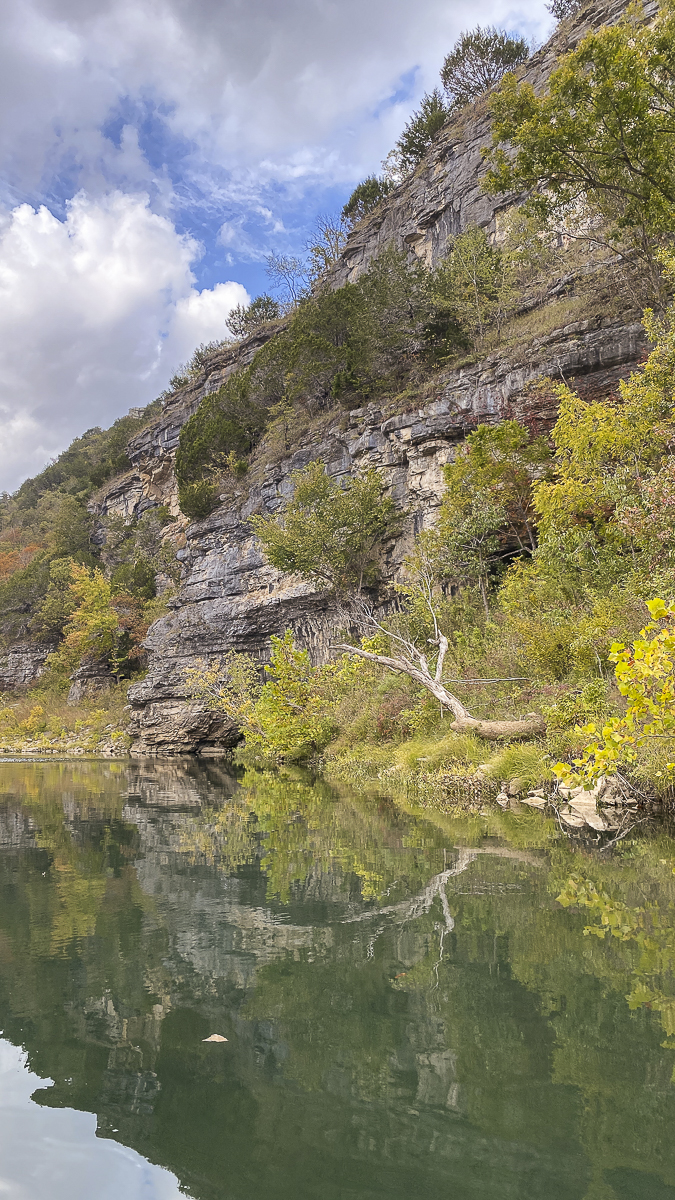
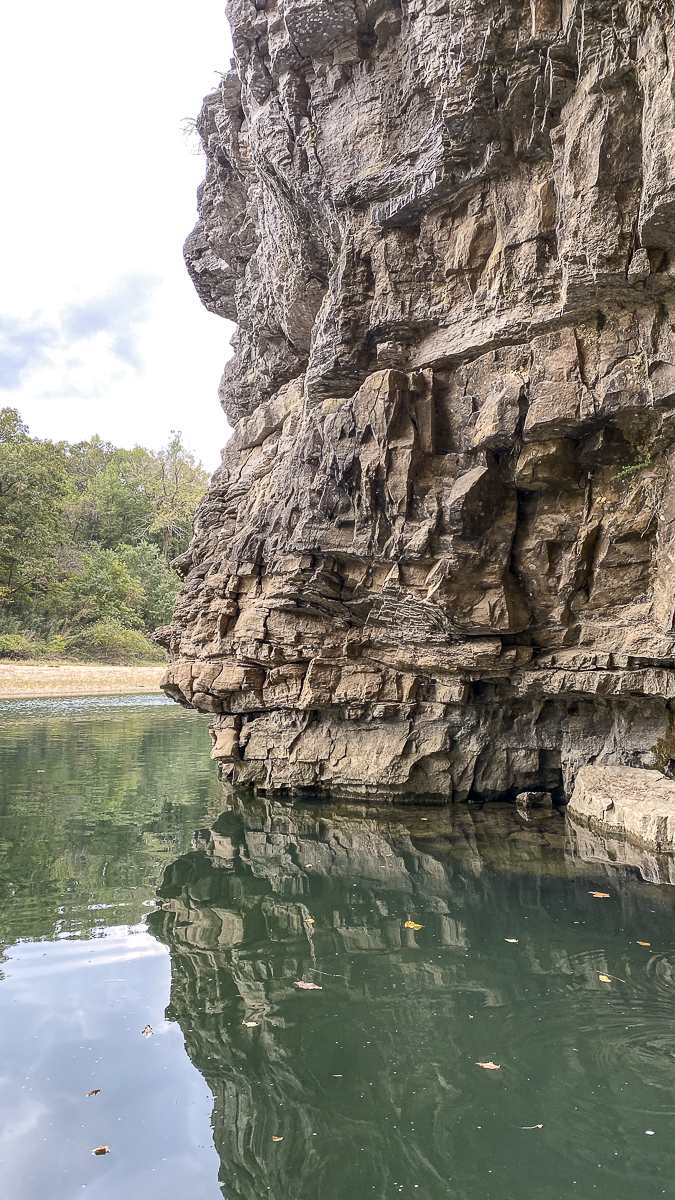
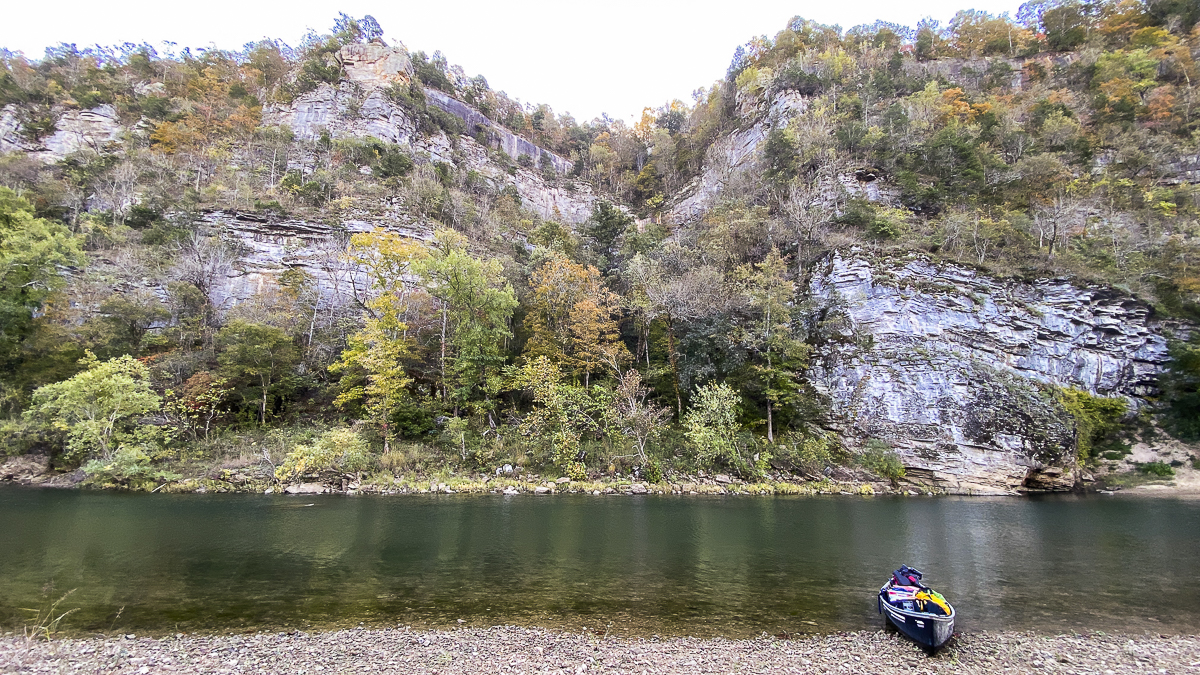
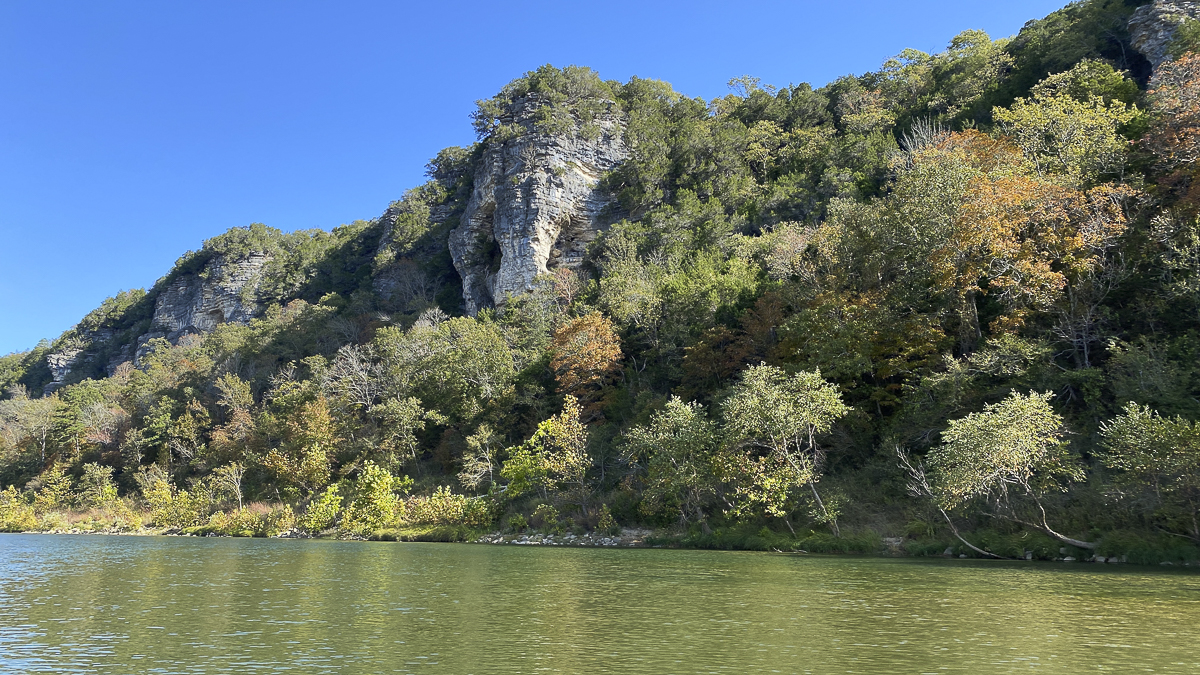
Right away, the Buffalo impresses you as being on a grander scale than the Current River – the bluffs are longer and much higher, soaring to about 500 feet above the crystal clear river in some areas. The cliffs are sandstone, limestone, and dolomite and add a dramatic backdrop to the beauty of the river. Fall color was just starting to paint the bluffs with red and yellow and many of the deeper hole in the river were that same aquamarine we had seen on our previous paddle.
Long bluff along the Buffalo RiverWe frequently scanned the high bluffs for wildlife and usually saw vultures, a few hawks, and an occasional Bald Eagle soaring above
On our first evening, we watched a beaver across the river, busily preening while sitting on a submerged rock ledge underneath an overhang of a bluff. Thirty seven vultures soared over and gradually settled in to roost. The white head and tail of an adult Bald Eagle glowed gold in the setting sun as it circled on a thermal and transformed into a mere speck in the sky above.
It is a dramatic juxtaposition when a bluff emerges directly out of the riverOne of our favorite campsitesA beautiful sunset over our gravel bar campsite
The next day we encountered some shallow riffles, requiring us to get out and pull the canoe for short distances. The wind was our constant companion and even had us paddling into white caps on some of the long straight stretches of the river (I don’t think I have ever paddled into white caps while going downstream on a river). Wildlife sightings included a couple of otter, two eagles, and some wood ducks.
Another beautiful scene along the river
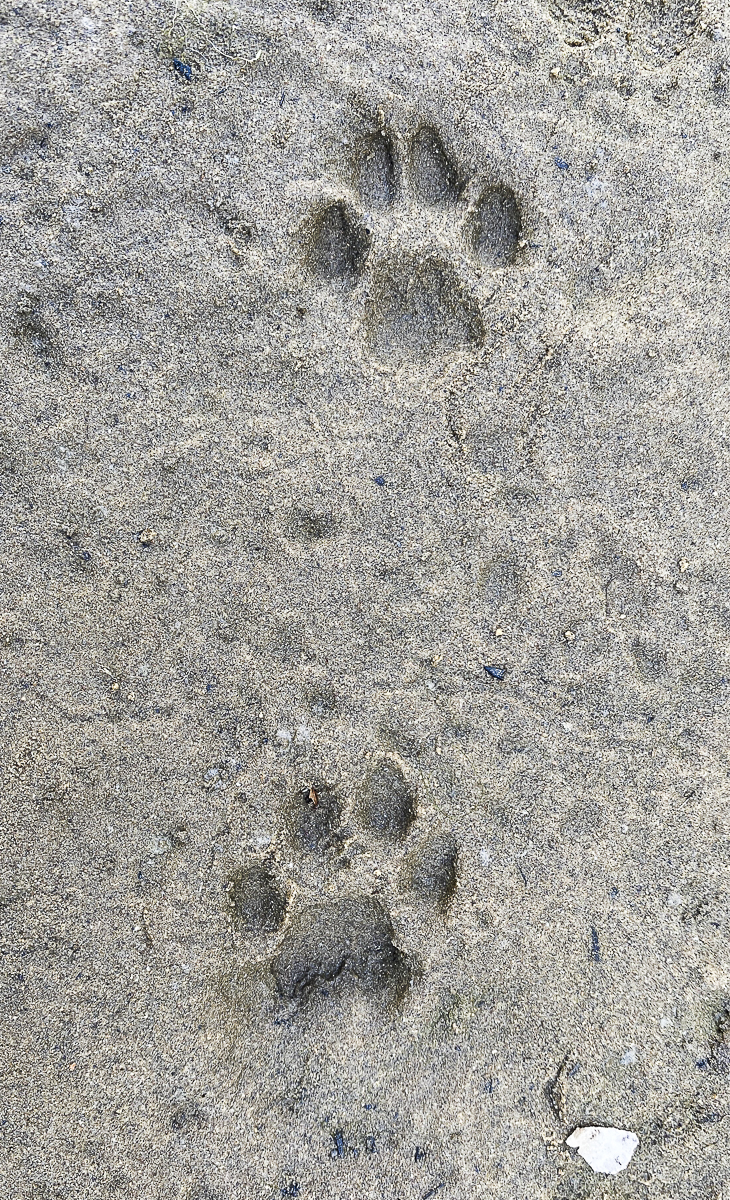
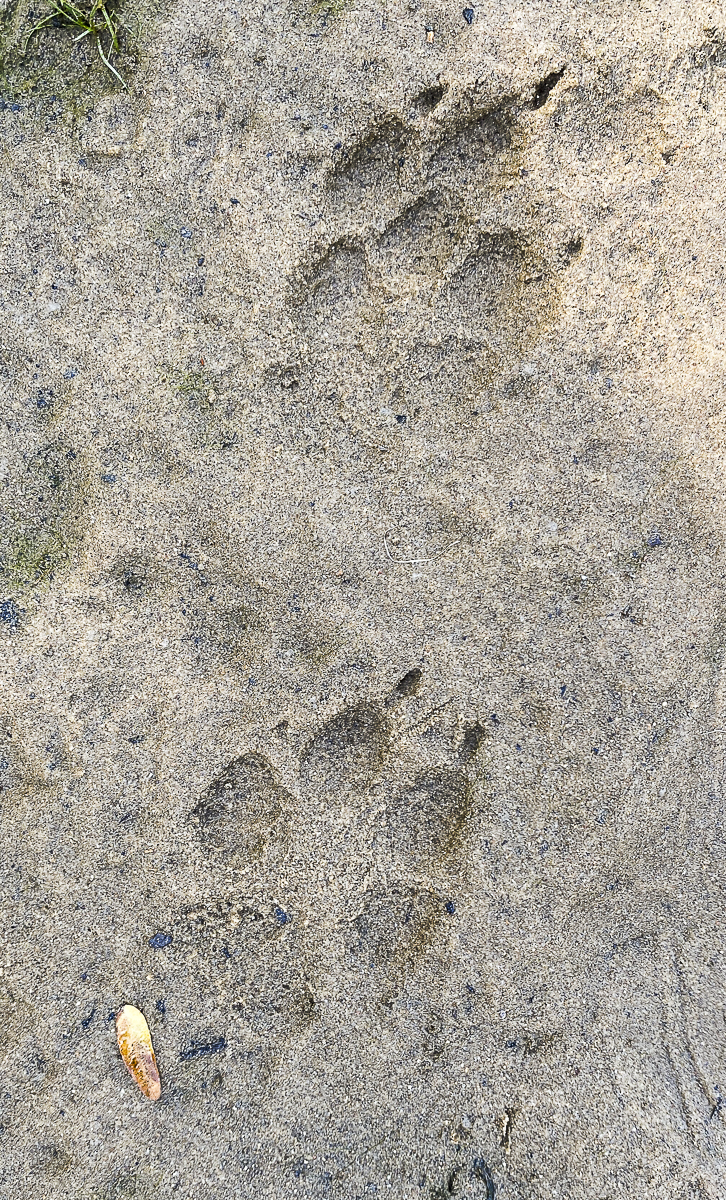
At one stop we found evidence of lots of other wildlife. See if you can guess who the track makers were (answers at bottom of post).
On the upper stretches of the Buffalo you may even encounter some elk, which were reintroduced to the region over 30 years ago. We did see deer a couple of times, but no elk.
An aptly named Bold Jumping Spider (Phidippus audax) greeted us on one gravel bar
On our second night, we searched for a campsite that was a few feet above the river level as this was the night for the predicted storms. We found a location about 4 feet in elevation, but it required dragging the canoe quite a distance (unloaded, of course). But we felt secure and had our backs to some higher ground, just in case. No storm materialized in our area that night, but at one point I looked out and could see near constant lightning far off to the west.
Our high and dry campsiteFall color along the riverAnother dramatic cliff face coming straight out of the water
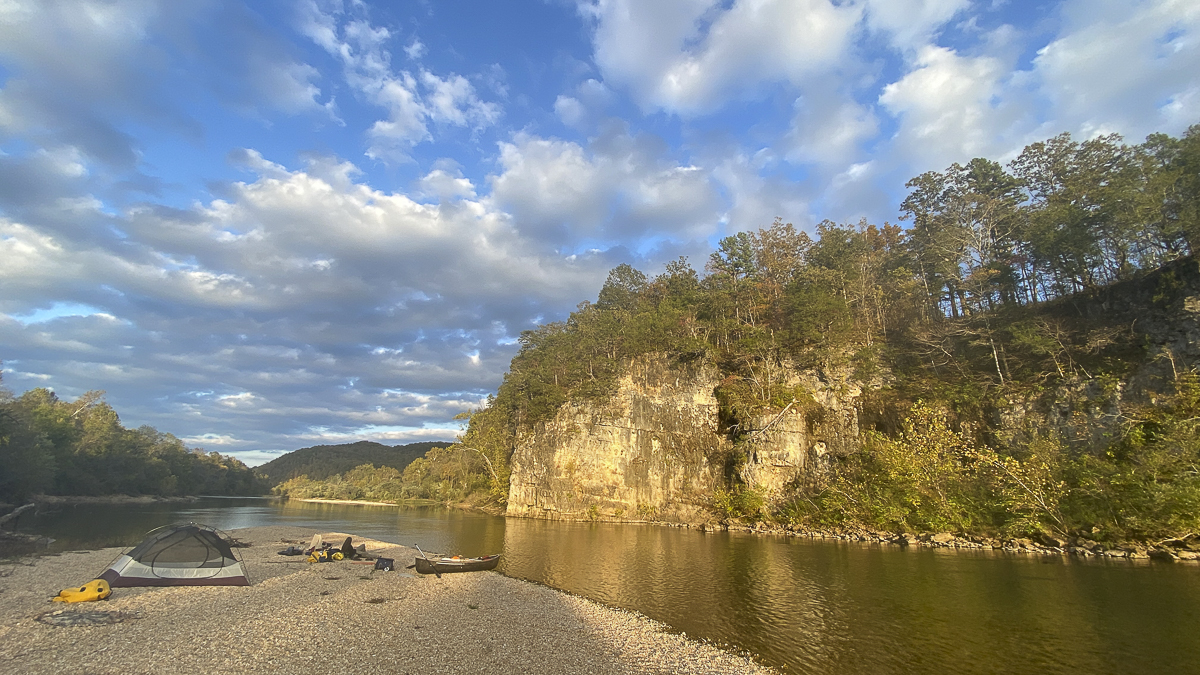
Our last campsite of the trip was on a beautiful, wide gravel bar across from another bluff. We had seen two more eagles that day, and another flew by as we were setting up camp. While exploring for firewood sticks, I found one eagle feather. This section of river had more eagles and more kingfishers than further upstream, no doubt due to the increase in smaller fish we were seeing.
Feather from a Bald Eagle (we left it on the beach after taking this photo)Another spectacular sunset was a great way to end our canoe camping adventure
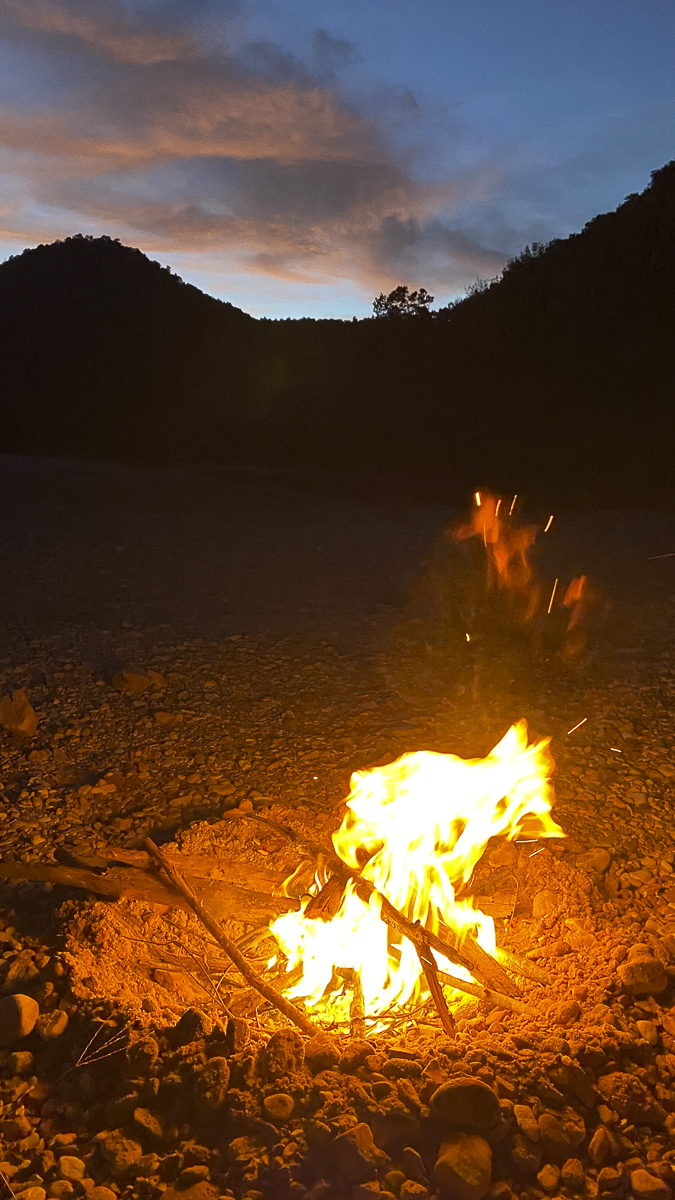
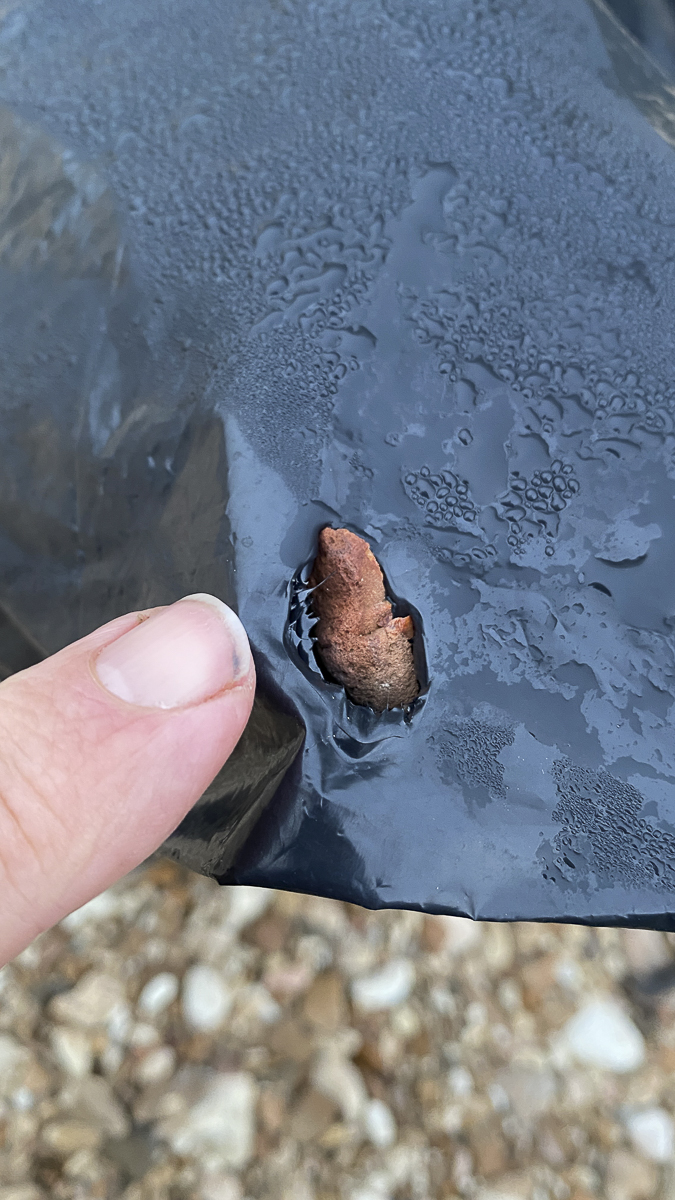
After a gorgeous sunset we settled in for a nice campfire and some star gazing. It wasn’t long before we experienced something new to us both – exploding rocks in the campfire. There was a particularly large burst of flame and sparks when I added some sticks to the fire early in the evening which caught us both by surprise. We thought it was something in the sticks I had added until we started hearing little whizzing sounds, similar to the sounds a flying bullet makes in cartoons. Suddenly, Melissa got hit in the forehead by a small pebble and we realized the rocks were exploding in the fire. This, our last night, was the first time on our entire trip we had experienced anything like this. It turns out, exploding campfire rocks is a thing caused by moisture trapped in certain rock types. When the rock gets heated high enough, the water vaporizes and can cause the rock to splinter, shooting rock fragments up to several feet. We scooted back away from the fire, and I stirred it, spreading out the ashes to reduce the heat. This soon stopped the rock fireworks. Melissa surmised that the cliff face near us was sandstone rather than the dominant limestone and dolomite bluffs we had encountered on most of our trip and this created this unusual phenomenon.
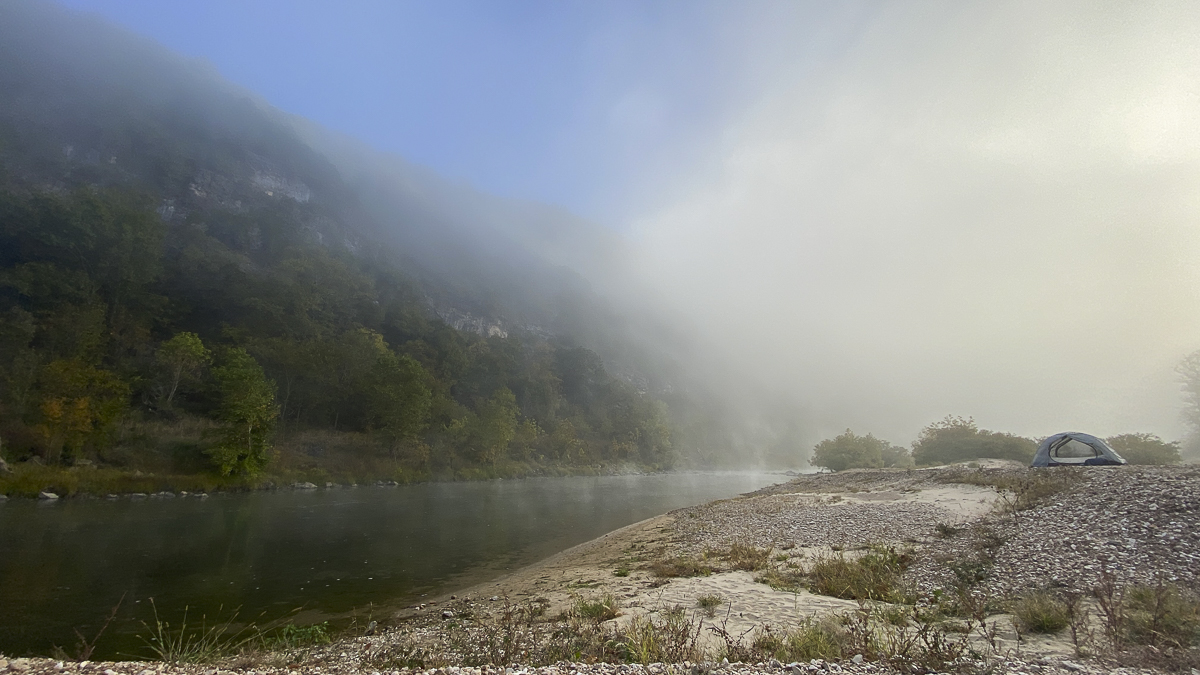
An exciting final night campfire complete with exploding rocksHere is a pebble that shot about 6 feet from the fire and embedded itself into a plastic bag with an audible thudOur final misty morning on the Buffalo RiverOne of the well-known landmarks on the lower Buffalo – Elephant Head RockThe end of our journey as the White River comes into view
On our final morning, we enjoyed another otter encounter and marveled at how one can disappear even when you are close enough to see its bubbles pass under your canoe. The river widened as we approached the confluence with the larger White River and it became harder to dodge the increasingly common huge boulders just below the surface. We had to pick our way through some boulder fields before hitting the fast flowing current of the White River. That river is controlled by a dam upstream and we were advised it can be difficult to paddle upstream when they release water. When we hit the confluence, it suddenly became almost impossible to paddle the short distance upstream we needed to in order to go around the island to our take out location just across the river. We ended up getting to the shore of the island and walking the canoe around the tip so we could then paddle with the current to the canoe landing. And, it turns out, this was normal flow (there was no release of water from the dam that day). I can’t imagine trying to paddle that stretch when water is being released.
Our adventure had ended and now we had a couple of days travel back home. What a trip – two beautiful crystal clear rivers, amazing scenery, beautiful weather, star-filled nights, and loads of wildlife. Now we are hooked on long distance canoe camping (we paddled about 100 miles on the two rivers). Up until this trip, most of our canoe camping has been on the Roanoke River and Merchants Millpond back home. We’ll be searching for other rivers for this type of experience, so if you have suggestions, let us know.
Rivers are places that renew our spirit, connect us with our past, and link us directly with the flow and rhythm of the natural world.
~Ted Turner
My only regret from our canoe camping trip last month was that I did not bring my usual camera gear to record some of the wonderful wildlife we encountered on both rivers. But, canoeing unfamiliar waters while toting large lenses has the potential for unforeseen (and unwanted) outcomes, so I am left with memories and a slew of iPhone photos (and some point and shoot pics underwater). On our first afternoon of paddling the Current River, we enjoyed the company of what would be our most frequent bird companions on the river – Belted Kingfishers, Pileated Woodpeckers, and Bald Eagles. It seemed there was a kingfisher rattling a sharp greeting around every bend in the river. It is no wonder since the clear water and abundant small fish make for a kingfisher buffet. Pileated Woodpeckers called from the forest edges and often flashed their bold black and white wing patterns as they flew overhead. And we probably saw 15 or more Bald Eagles on our journey, including a very sociable juvenile on our first full morning. Our first campsite on the Current River was a small gravel bar bordered by a bluff. We spotted the eagle flying toward us and it made a slight turn and landed in a dead treetop on the far bank. It sat for awhile, preening, surveying the scene. But one slight movement was too much for the dead branch perch and the startled eagle was suddenly airborne as a few feet of limb crashed into the river below. As if to say, I meant to do that, the eagle flew upstream, made a U-turn and landed in another tree not far away.
Juvenile Bald Eagle flew in and hung with us for awhile (click photos to enlarge)
Shorty after that, Melissa spotted a deer walking downstream toward us. I was standing, adding some sticks to the fire, so I froze, hoping the 8-point buck would continue our way. It kept walking in a straight line right at us, then hit a deeper section and began to swim across the river. It reached a shallow spot, started walking again, and then suddenly realized something was not quite right across the river, and he stopped.
This 8-point buck was headed straight toward us and then realized something was amiss
This is where I really wished I had my telephoto lens…it was a beautiful morning with a light mist clinging to the surface of the river. The buck was framed perfectly in the still water, looking directly at us. It stood that way for a few seconds and then bounded back across the river to the safety of the woods. A great way to start our day.
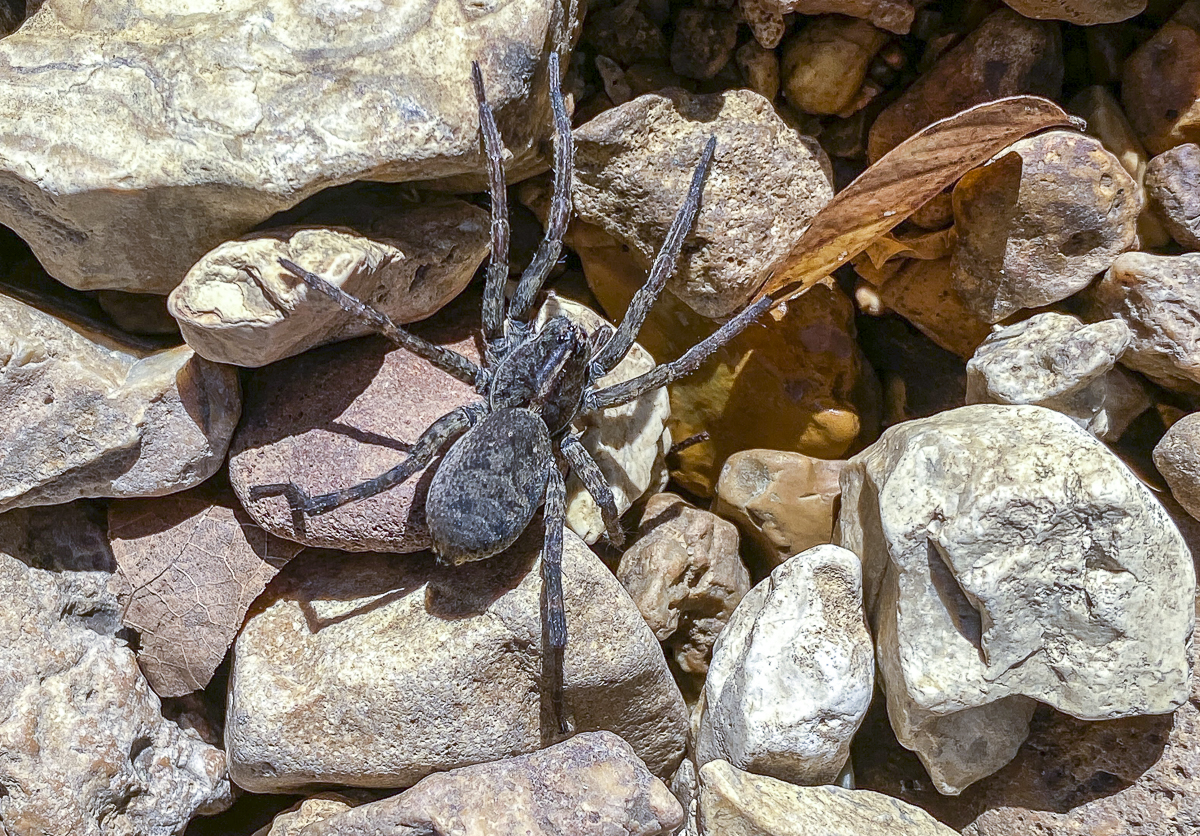
There is one potential positive about not having the big camera gear – I tend to focus more on the scene and the small life around me. And there was plenty to see, especially each time we landed on a gravel bar. A variety of wolf spiders greeted us at every stop, so many that at first it made you wonder about who might be sharing your campsite each night (but they were not a bother at all).
Spiders were everywhere on the gravel bars (most not as large as this one)
One beach area had a large number of one of my favorite stream-side insects – Toad Bugs. One resource indicated this species may be the Big-eyed Toad Bug, Gelastocoris oculatus. Toad Bugs do look and act a bit like tiny toads, slowly walking or hopping along the shoreline. They are well-camouflaged and kind of resemble a fat-headed stink bug.
Our first stop was a hangout for Toad Bugs
Their large eyes and raptorial front legs are useful in catching their prey (other insects). Early naturalists must have found them amusing as well, as the genus name means laughing or funny bug.
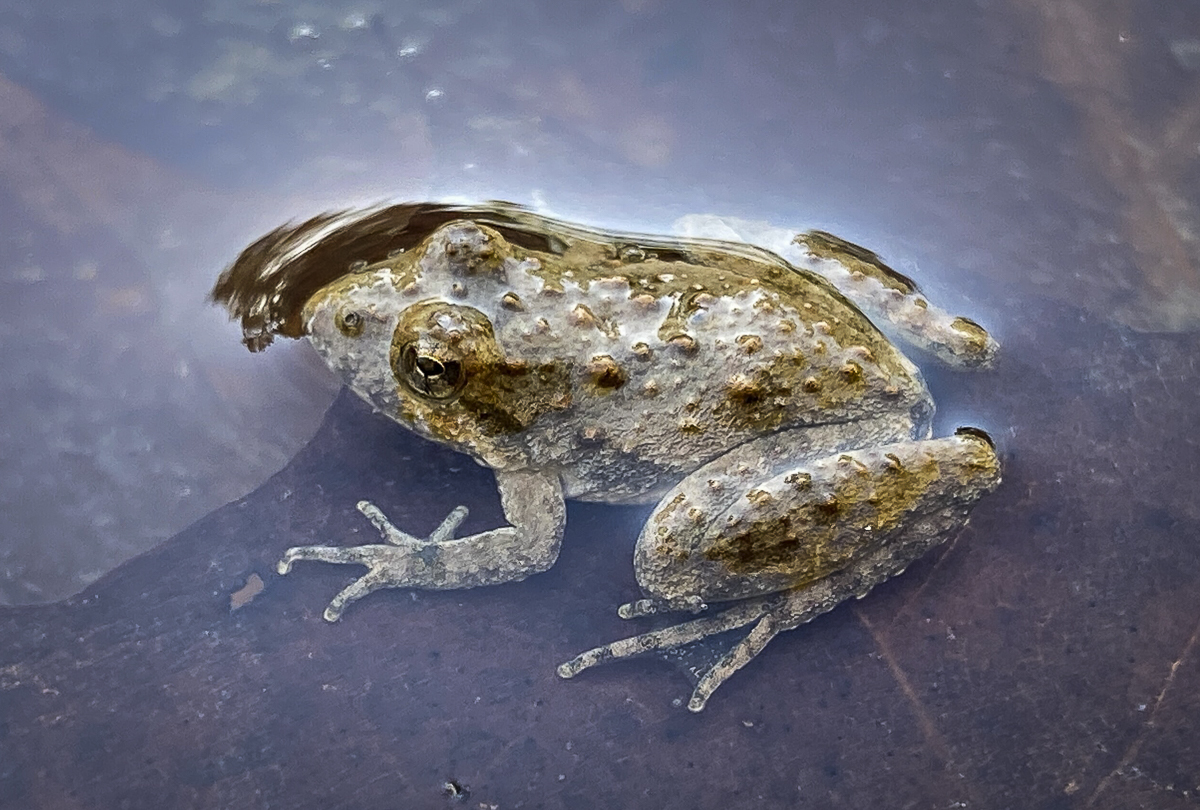
At a few stops we saw Northern Cricket Frogs, which always seem to jump into the leaf debris just underwater right when you lean down to get a photo. This one cooperated long enough for a quick portrait.
A Northern Cricket Frog along the river’s edge
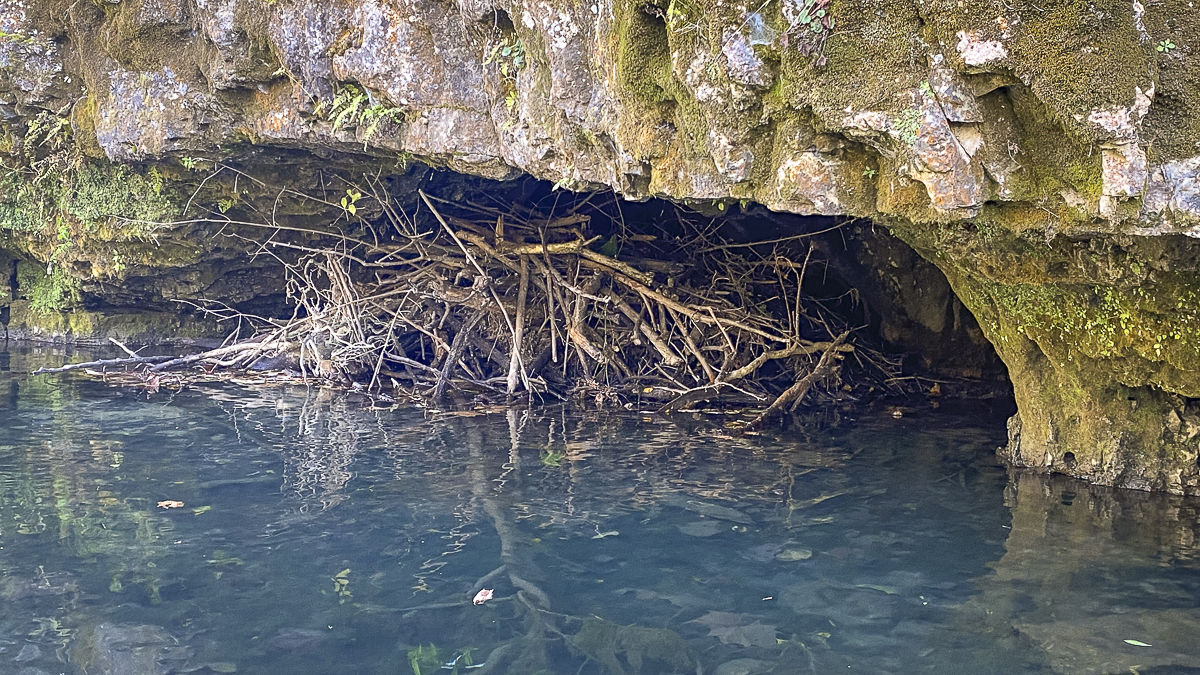
There was a lot of beaver activity along the banks and a few lodges where the shoreline was amenable. One beaver had a particularly creative location for its home – underneath an overhang on a bluff. Other mammals we encountered included a Muskrat and several River Otter (unfortunately, the latter were too elusive for an iPhone image).
Beaver lodge under a shallow overhang
One stop had several Question Mark butterflies seeking minerals at an abandoned fire pit. There were also many small yellow butterflies along the river (I assume they were Little Yellows) and a few migrating Monarchs.
Question Mark butterflies (named for the faint white question mark symbol on the underside of the wing) were common on many gravel bars
The clear waters of the Current River gave us a window into a wildlife world that we rarely experience – an abundance of freshwater fish (plus a few other surprises). A highlight was Melissa spotting a soft-shelled turtle swimming underneath us one day as we paddled. We stopped and drifted along with it, enjoying this rare treat. Soft-shelled turtles lack the hard bony scutes found on other turtles, giving them a more pliable shell, especially along the sides. They have long necks, and elongate, snorkel-like nostrils. There are three species of soft-shelled turtles in Missouri, and I am not positive which one this is.
Melissa spotted this soft-shelled turtle drifting downstream with us (video by Melissa Dowland)
Melissa is a cold water fanatic. She will swim in mountains streams and lakes at the drop of a hat. So paddling these clear waters was just too much of a temptation for her in spite of the chilly temperatures. She had packed our masks and snorkels and so she was in the water at a few of our stops checking out the underwater life (I finally joined her on a couple of swims). Along the edges we saw many large tadpoles, which I assume are American Bullfrogs (please drop me a note if you know for sure).
Our last campsite had numerous large tadpoles (Bullfrogs perhaps) in the shallows
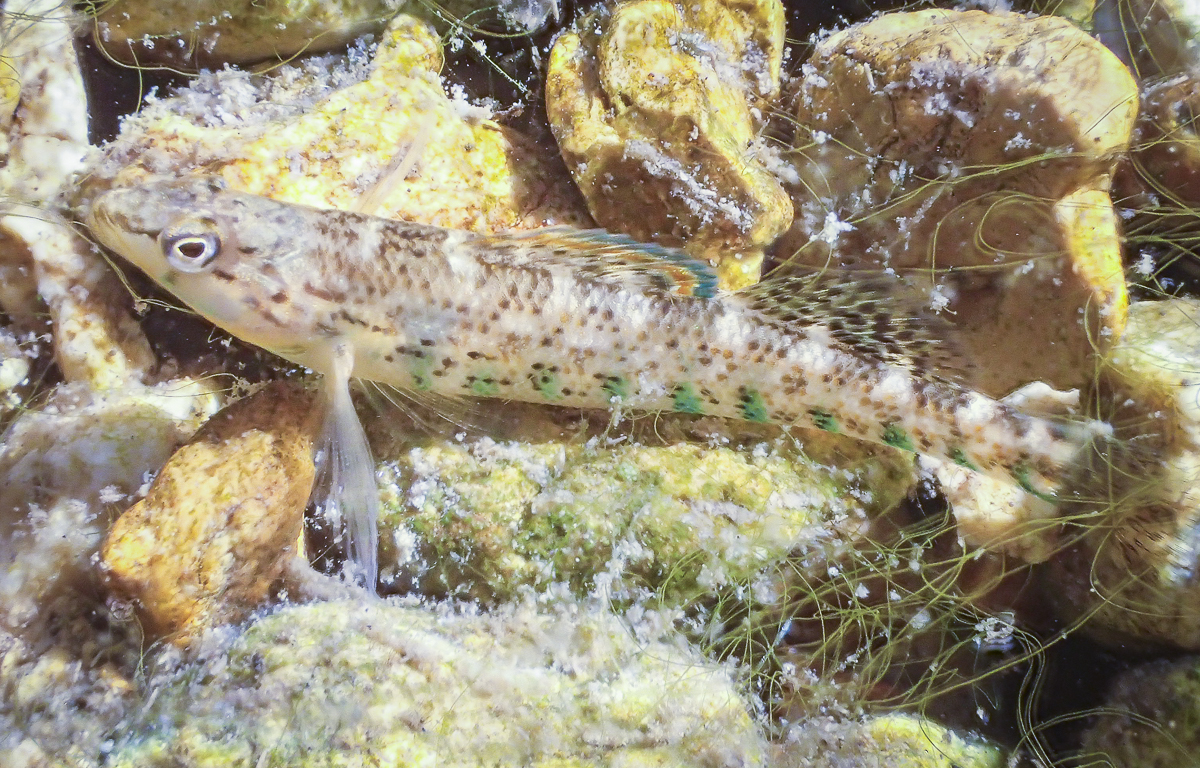
Another ubiquitous member of the shallows club was a species of darter that quickly dashed from one rock to another whenever we walked along the shore. There are 44 species of darters recorded in Missouri, so I’m not sure which one this is. It is post breeding season for these often incredibly colorful fish species so that makes it a bit harder to identify.
This colorful darter s a common species in the gravel along the river’s edge
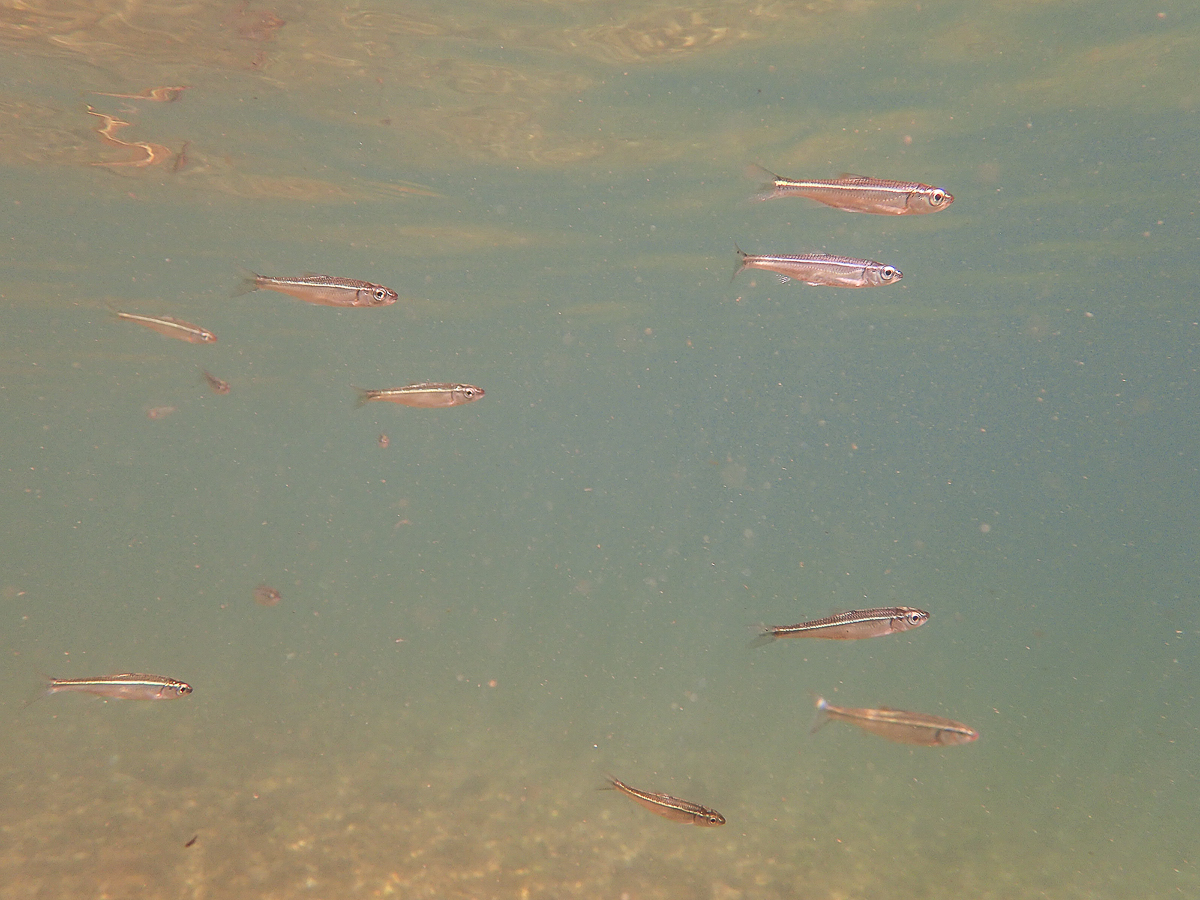
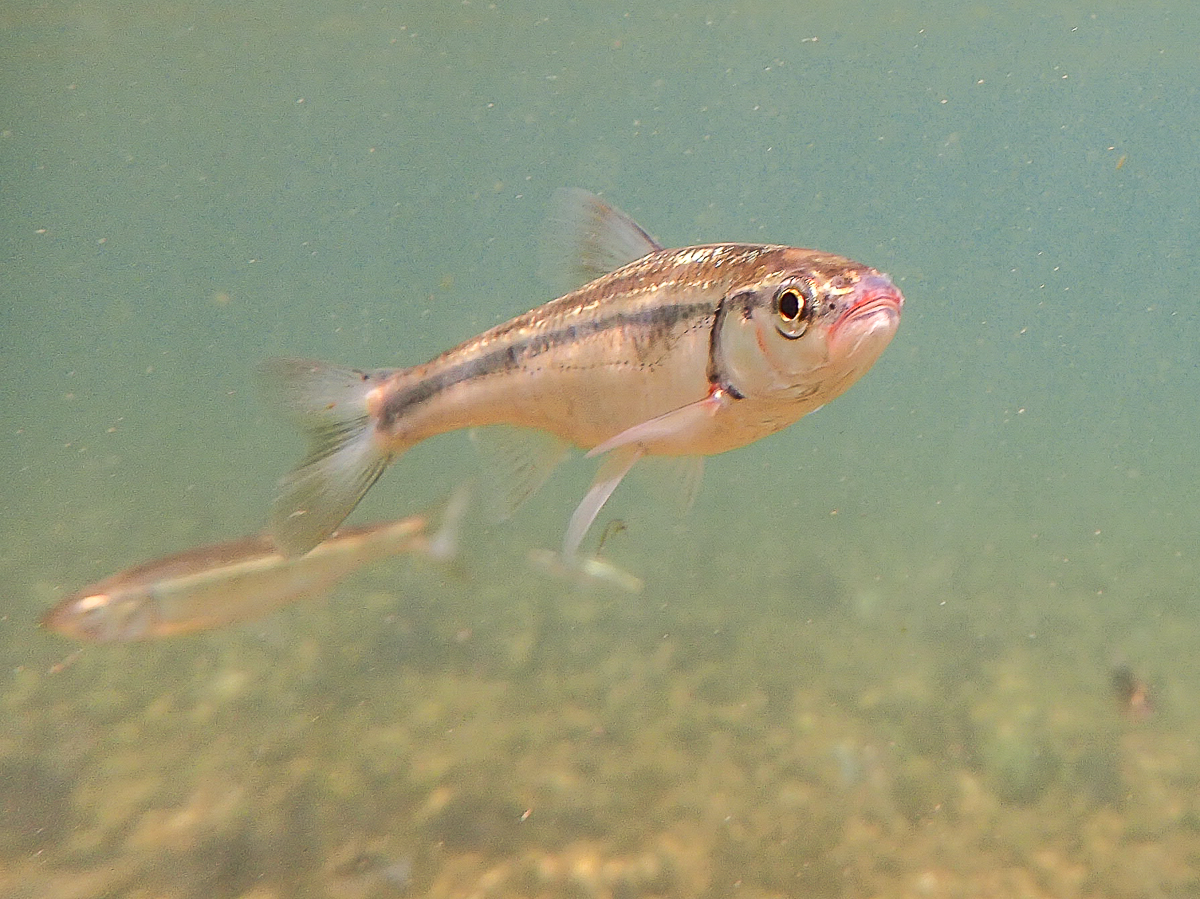
Melissa took our Olympus camera out on a few snorkels and managed to capture some of the many small fish swimming just off the shoreline. The cold water made for relatively quick drifts but she got some nice pics of a few species (again, we don’t know the identity of these guys, but it was fun seeing so many fish swimming with us).
A school of small fish swims in front of Melissa (photo by Melissa Dowland)These fish were about 4 inches or so in length and a few had hints of red (photo by Melissa Dowland)Red lips staring at Melissa (photo by Melissa Dowland)
The night we camped at Bee Bluff, we witnessed a surprising local custom. An hour or so before dark, two guys drove down a dirt road that ended in a beach just downriver from our campsite. They launched an aluminum motor boat and headed past us upstream. We were surprised anyone would maneuver an outboard motor through some of the riffles and shallows we had paddled, but I figured they would go upstream a bit and then drift back down to their launch site fishing along the way. But they didn’t return until well after dark, and when they did, they had huge lights on the front of the boat with one man standing on the front with a long pole. Were they gigging something or just poling through the shallows to avoid rocks? The next day I asked a local at one of the landings what was happening the night before. He said there is a gigging season for the “undesirables”, the suckers. We certainly had seen a bunch of large suckers of some sort as we paddled, but I had never heard of gigging for suckers. The next afternoon, a young man in a motor boat passed our campsite going upstream. But he was drift fishing, casting as he came back well before dark. He said he was fishing for Smallmouth Bass, but people do gig for suckers (we think many of the ones we saw were Northern Hog Suckers).
When we got home, I looked up gigging for suckers and found a wealth of articles describing the practice, which has apparently been going on for well over a hundred years on the Current River and other Ozark waterways. Originally, people used a wooden boat and illuminated the water with a basket hanging over the edge with a flaming pine knot or a lantern. Now, a flat bottom aluminum boat with a railed front deck is the choice and strong LED or halogen lights (or car headlights) and a generator light the way. The people up front have 12-16 foot long poles with barbed spears on the end and they try to spear the suckers as the driver moves the boat through the clear and often very shallow waters.
Our last night on the river was the best for this Ozark tradition. A boat with two men and two young boys went by and stopped just around the bend a few hundred yards downstream. We could hear the motor and generator going, the occasional laugh or yell, and see the light reflecting off the treetops downriver. They worked their way back upstream past our campsite and were apparently, based on their hooting and hollering, having a grand time gigging for suckers. The usual outing ends with a campfire and fried fish and other fixings for a late night dinner.
Gigging for suckers is a long held tradition on rivers in the Ozarks. This is the boat with lights coming upriver toward our campsite with the glow of our campfire in the foreground.The lights and sounds of the fishermen certainly added a surreal aspect to our canoe camping adventure
Later that night, under a full moon, our river trip ended with one last “wild things” mystery. I was awakened after midnight by loud sounds in the brush across the river. There was a steep bluff directly across from us, with a shallow edge of trees and shrubs adjoining the water. Whatever it was was making a lot of noise going through that vegetation. Melissa and I strained to see any motion and were perplexed at what could be over there and how it even got into that spot since a steep rock face soared above it. I finally remembered my binoculars were inside my dry bag just outside the tent so I rummaged through it and pulled them out just in time to catch a glimpse of something swimming across the river and disappearing upstream around the curve in our shoreline. No details were visible in the moonlight, just a blob in the river making a wake as it swam around the bend. We listened for a while longer, but heard nothing else. What was it? A beaver dragging some cut limbs? A bear? The next morning we paddled across and looked for any beaver sign (none) or anything other clue (none). It didn’t seem likely that something had climbed down the rock face and entered the water so where had it come from? I mentioned it to the folks at a local landing when we got off the river and they smiled and said, Sasquatch. Hmmm…where the wild things are, the Ozarks. And we hope to return before long to paddle this or another of the incredibly clear rivers. Next post – our paddle on the lower Buffalo River in Arkansas.
it has been a little over a month since our paddling adventure. I’m finally getting around to sharing some of the incredible memories from that trip. My knee has been causing some real problems these past few months so we agreed to try a paddling trip rather than a backpacking one (whew!). Based on a friend’s recommendation and our experience in Arkansas on our last trip, we looked at rivers in that state and adjoining Missouri and finally settled on two trips – the Current River in MO and the lower Buffalo River in AR. This time of year you have to choose your rivers carefully so as not to be dragging your canoe everywhere due to low water levels that are typical in Fall. The Current River fits the bill nicely as it is largely spring fed and so has relatively constant water flow. Melissa did the research and planned a 6-day trip totaling about 61 miles. We arranged a shuttle with one of the several park-approved vendors (both rivers are under National Park Service jurisdiction). We had delayed in the mountains of NC at the start of our trip enough that a storm front had passed by the time we arrived at our campsite on the Jacks Fork River (which feeds into the Current) the night before our launch. If that river was any indication of things to come, this was going to be an awesome trip…
Eating dinner on a gravel bar near our campsite along the Jacks Fork River the night before our launch on the Current River- all photos taken with iPhone unless otherwise noted (click photos to enlarge)Forest Service campsite on the river
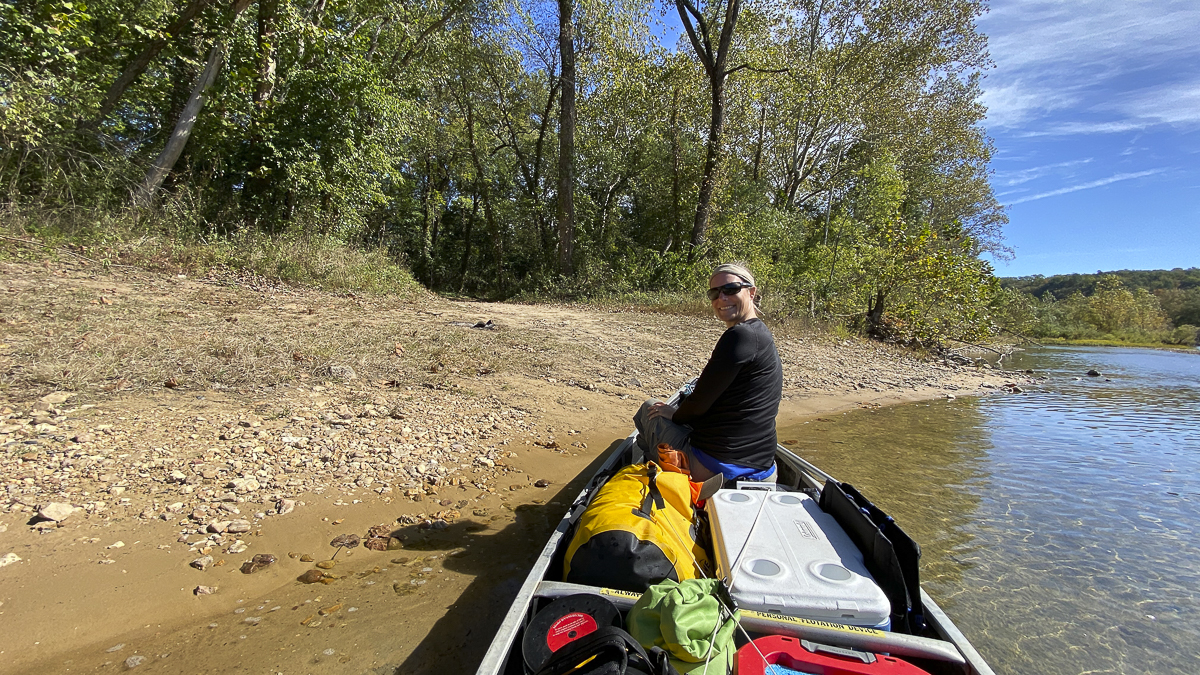
The next morning we arrived at our launch site (Cedar Grove) early and loaded down the canoe. As we were getting ready, an old school bus (the vehicle of choice for local outfitters) pulled up and unloaded a large group of teenagers. We hurried and put in the water to get ahead of the group and were instantly impressed by the clear water and the forested edges of the river.
Our route on the Current RiverAnd here we go, launching at Cedar Grove on the Current River
Due to their unique qualities and beauty, the Current and Jacks Fork Rivers were designated as the Ozark National Scenic Riverways in 1964, becoming the first rivers designated as National Riverways (a full four years before the Wild and Scenic River Act was enacted). The geology of the region is primarily soluble dolomite (limestone with some magnesium in it as well) giving rise to countless sinkholes, caves, and springs. Over 60% of the rivers’ flow comes from seven major and hundreds of smaller springs within the park. In fact, the park brochure states that the park is home to more first order springs (springs with a daily flow of more than 65 million gallons) in one area than anywhere else on Earth! The water is clear and cold, a fairly constant 58°F, undoubtedly making for a refreshing swim in summer, but a rather chilly one in October. The water clarity is striking, coming from the typically silty NC Piedmont rivers and streams back home. The other thing the Current has going for it is that it is an easy paddle (rated as Class I rapids) so even beginners can navigate it. Now, you still have to pay attention in the many rapids (especially with a heavily-laden canoe), but it is a great paddle on a beautiful waterway.
Our first major spring was Welch Spring, just a few miles from our launch site. An interpretive sign along the short trail from the river to the spring explained the site was initially owned by a man named Welch, who built a grist mill and store at the site. We were stunned to read that the average daily flow from the spring is 70 million gallons of water! As it joins the river, this discharge nearly doubles the flow of the river. And there are much larger springs along this river, including Big Spring (below where we took out at Log Yard). With a daily flow of about 286 million gallons, Big Spring is the largest spring in the Ozarks and one of the largest single spring outlets in the world.
Welch Spring
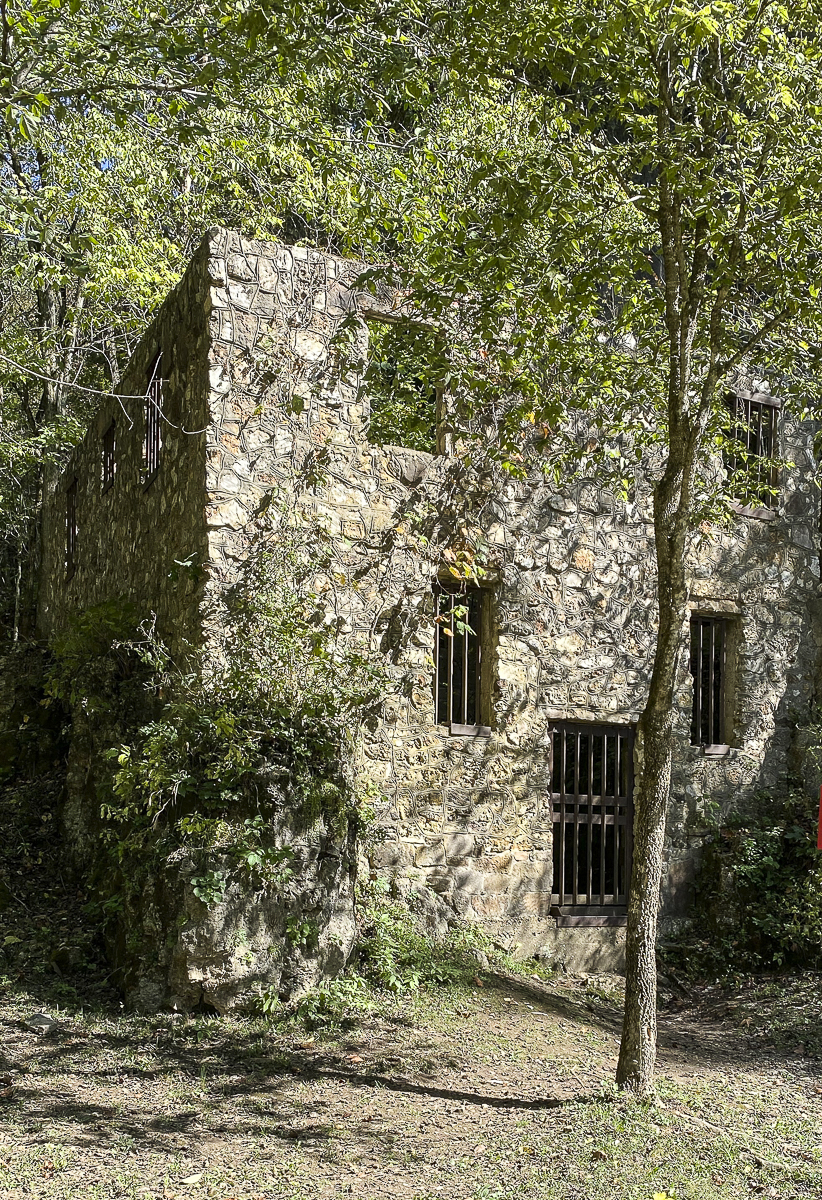
In 1913, Welch Spring was purchased by a doctor who created a health resort and a hospital on the site. He believed that asthma patients could benefit from breathing the moist, chilly, pollen-free air coming out of the cave. The resort failed after his death and the land was bought for a hunting and fishing lodge before being purchased as part of the park.
The old hospital at Welch Spring
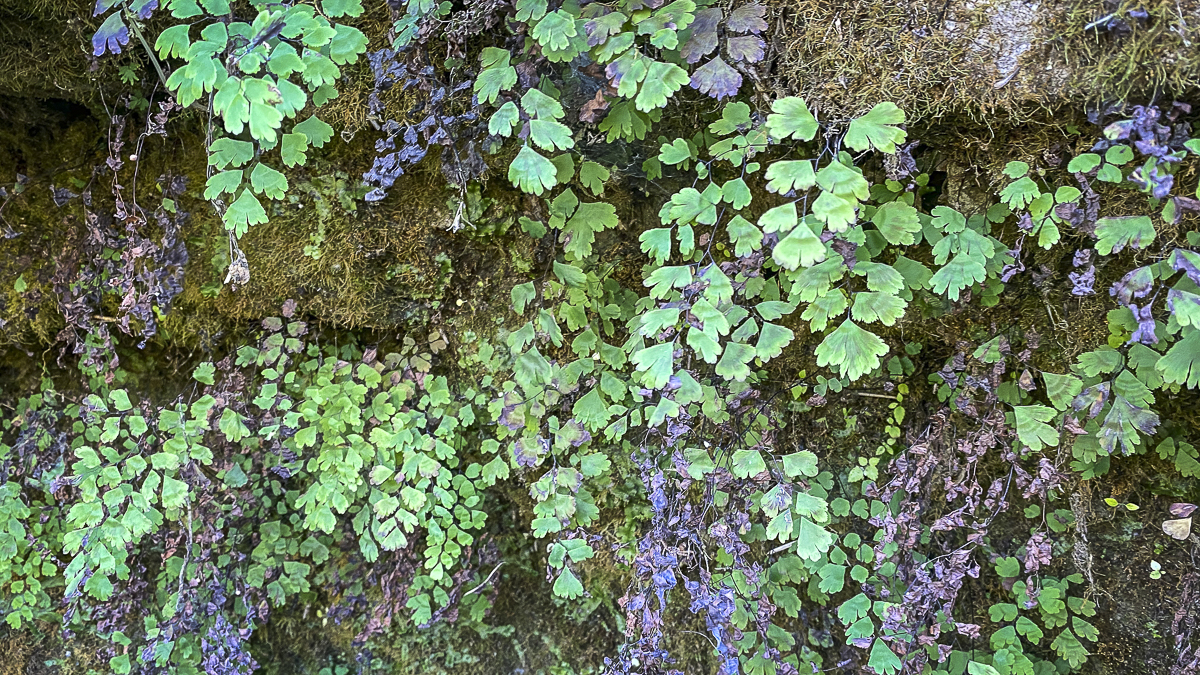
Back in the canoe, we passed numerous bluffs rising out of the river, many festooned with luxurious growths of a variety of plants. The whole scene reminded me of ads for scenes from a tropical paradise and yet here we were in Missouri.
Southern Maidenhair Ferns hanging from the bluff walls along the river
We chose a small gravel bar for our campsite the first night, in part because we figured no one else would want to squeeze into the site should they be following us down the river. It was an exquisite first night. We were serenaded by a pair of Barred Owls, an Eastern Screech Owl in the distance, and the faint sounds of what we later concluded were migrating waterfowl. Much more on the wildlife we encountered in the next post.
I imagine this river can be very crowded during the warmer months, but we encountered few paddlers during our trip. That lack of paddlers also meant we had plenty of dried sticks available on the gravel bars to gather for firewood each evening. Our daily ritual became get up early, eat breakfast by a small campfire, paddle, stop for short hikes to a spring, lunch in a scenic spot, paddle until 3 or 4 p.m., and then find a nice gravel bar for the night. Gather firewood, cook a nice meal, and sit by the fire until 8 or 9 p.m. and then hit the tent. Most of the time we had no cell phone service so no news, no email, just each other, the stars and the sounds of the river.
First night campsite on a narrow gravel bar
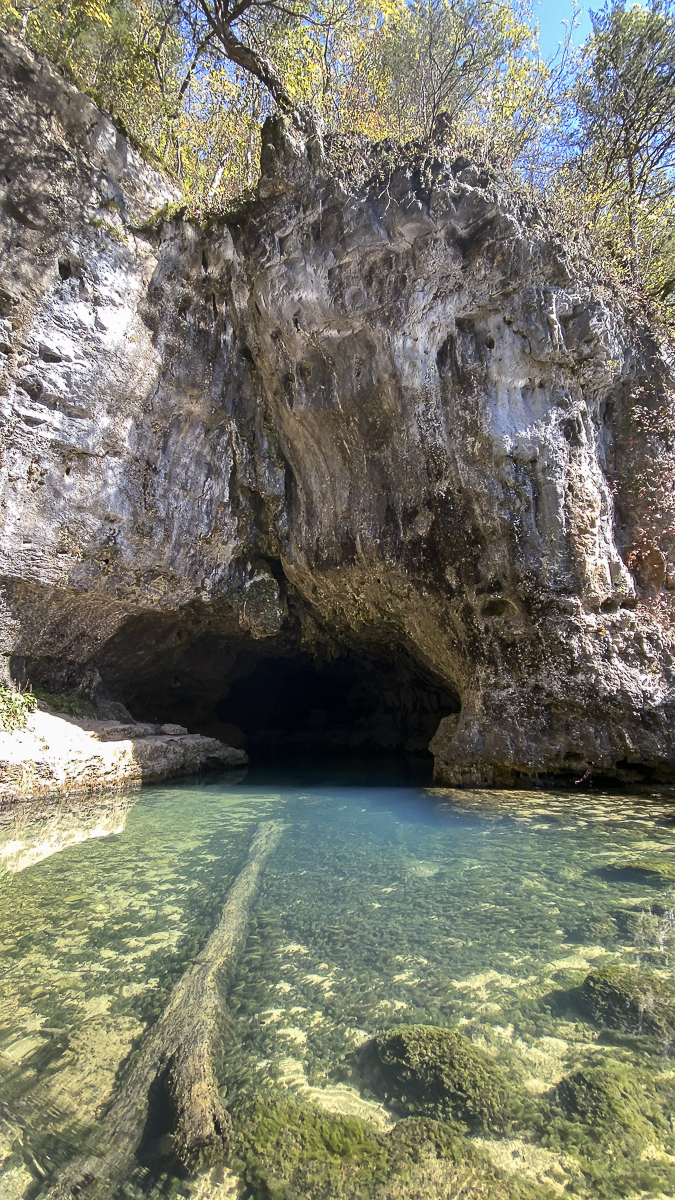
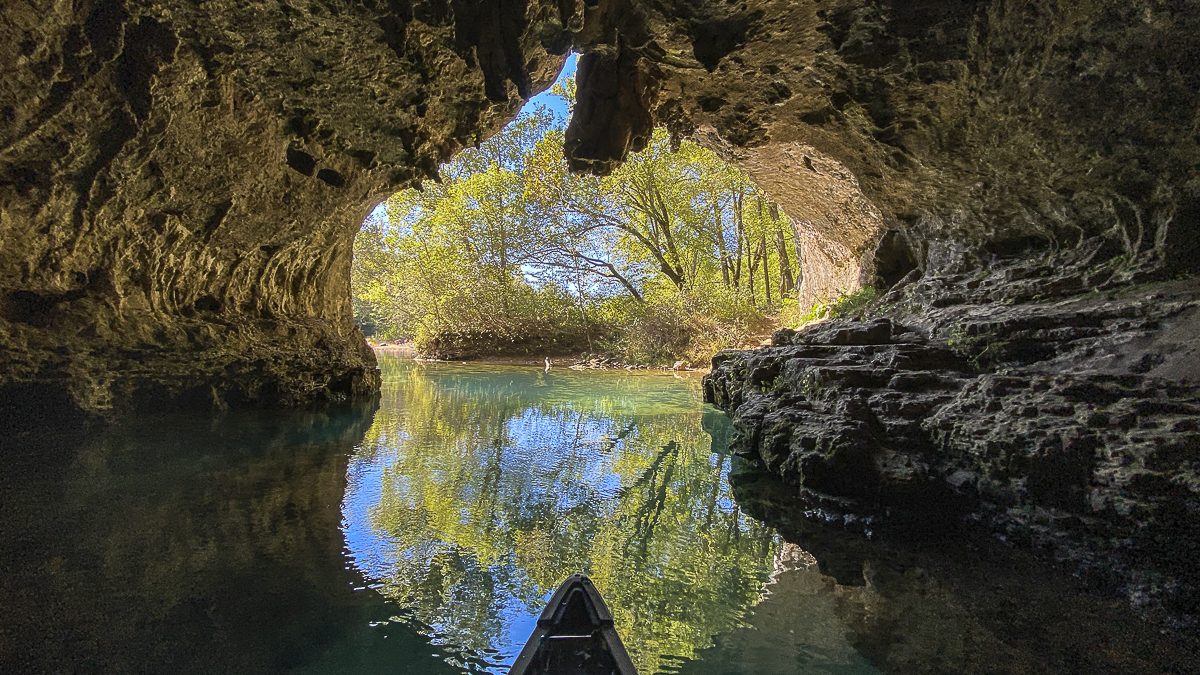
The next day we passed a couple more large springs. The first was Cave Spring, which is a large cave that you can paddle into.
Entrance to Cave Spring
The spring averages 32 million gallons of water per day, making it among the 20 largest springs in Missouri. The spring has a vertical shaft of about 140 feet. Nearby are two large underground reservoirs, Devils Well and Wallace Well. Devils Well is a public use area with a trail where visitors can descend a short distance into the mouth of the sinkhole and gaze upon an underground lake that is larger than a football field. Eventually, the water from these two reservoirs emerges at Cave Spring.
Some of the springs are home to unusual species such as cave crayfish and blind cave fishes. We didn’t spot any of these, but we did see one bat hanging from the cave ceiling. Due to the fragile nature of these springs, swimming, fishing, and diving in them is prohibited.
Looking out from the cave (photo by Melissa Dowland)
Downstream from Cave Spring is another large spring, Pulltite Spring, accessible by a short hike from the river’s edge. This is ranked as the thirteenth largest spring in Missouri, with a daily discharge of between 38 and 47 million gallons.
Pulltite Spring
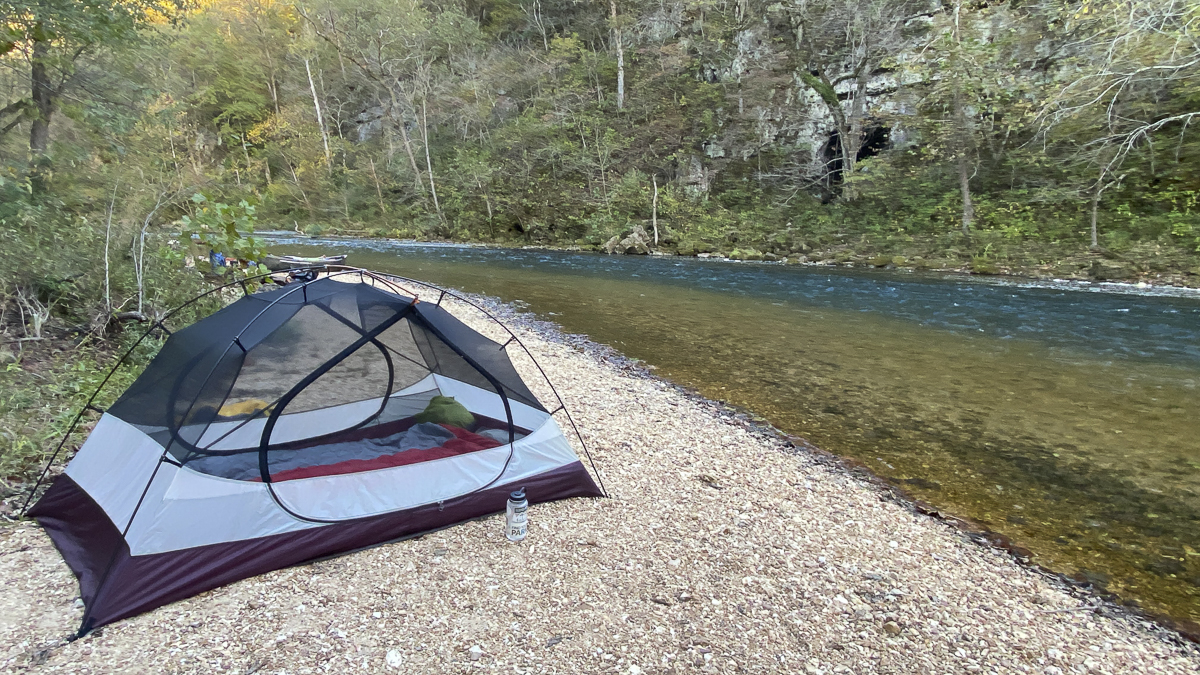
We camped that night on a gravel bar across from a terrestrial cave. Melissa did her first swim that afternoon, but I decided to wait until a time when the air temperature was a little warmer.
Campsite across from a cave along the river
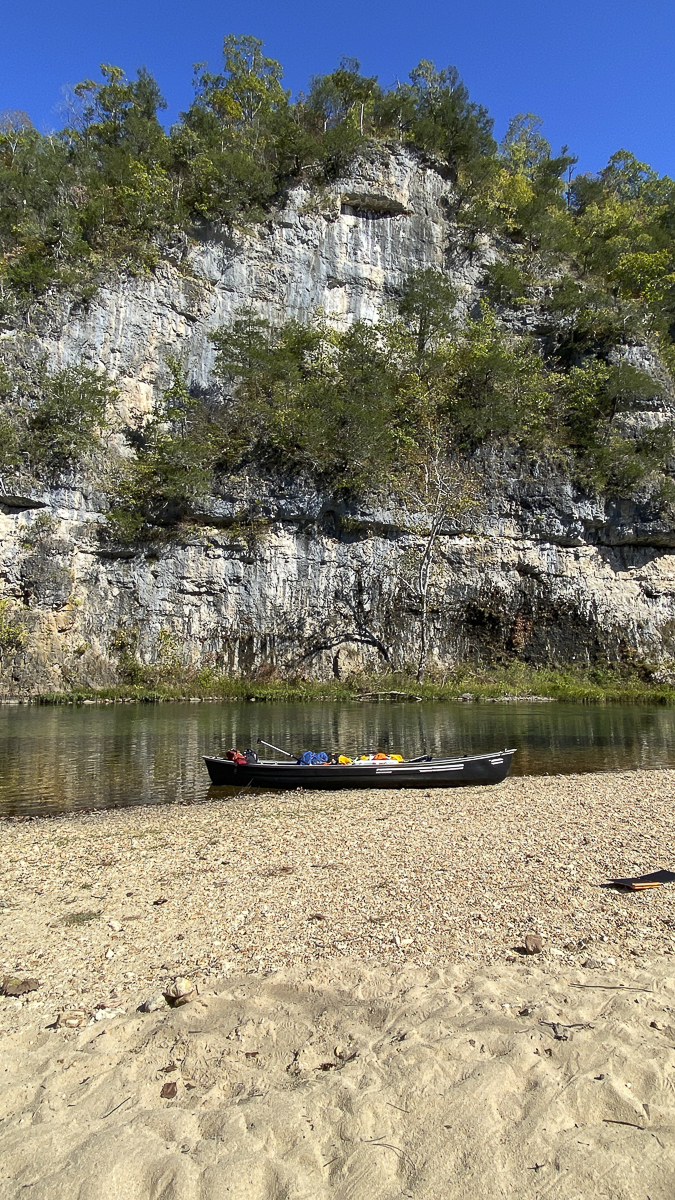
After another day of paddling, we pulled up to a gravel bar across from Bee Bluff which, at several hundred feet, was the highest bluff we encountered on our paddle. The name comes from the hives of honeybees that can sometimes be found in the holes on the bluff face.
Bee Buff campsite
The next day we passed more of the many so-called landings along the river, some with developed facilities, others with just a dirt boat launch at the end of what must be a long and bumpy gravel road. We tried to camp beyond any such sites to avoid the noises of “civilization”.
Owls Bend campsite
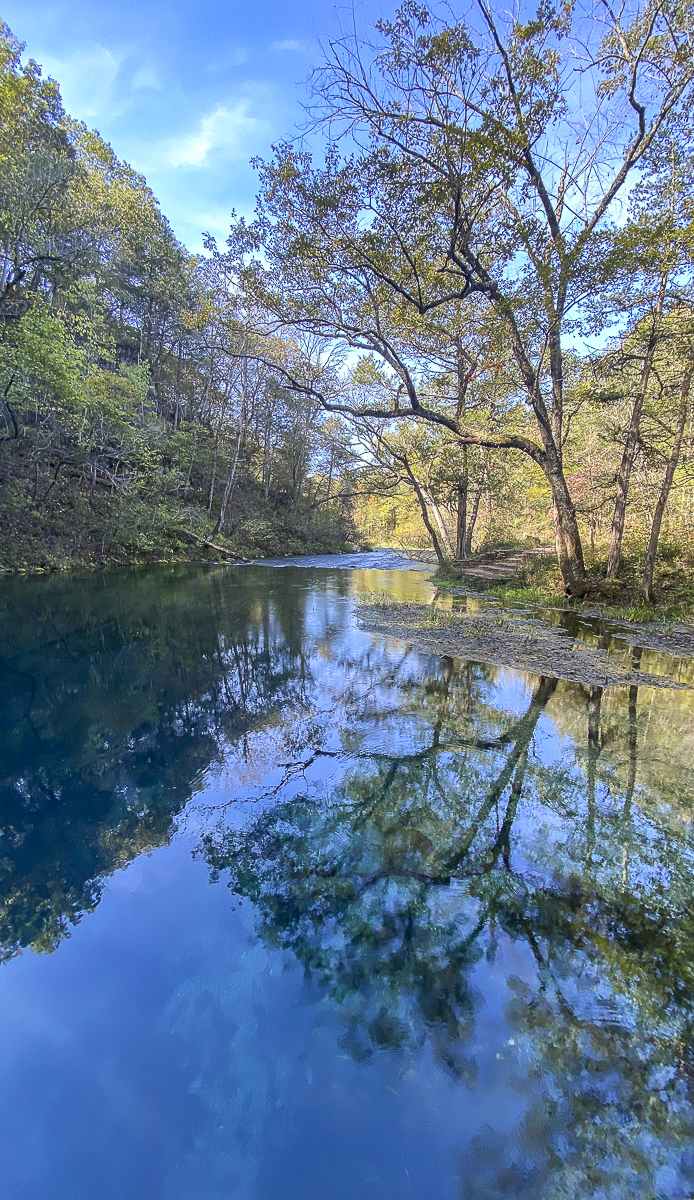
A long gravel bar at Owls Bend was a perfect spot to camp the next night. After a misty sunrise, we paddled to Blue Spring. A short hike revealed a true gem of a site, with water reminiscent of a tropical lagoon. This is the eighth largest spring in Missouri with an average daily flow of 87 million gallons.
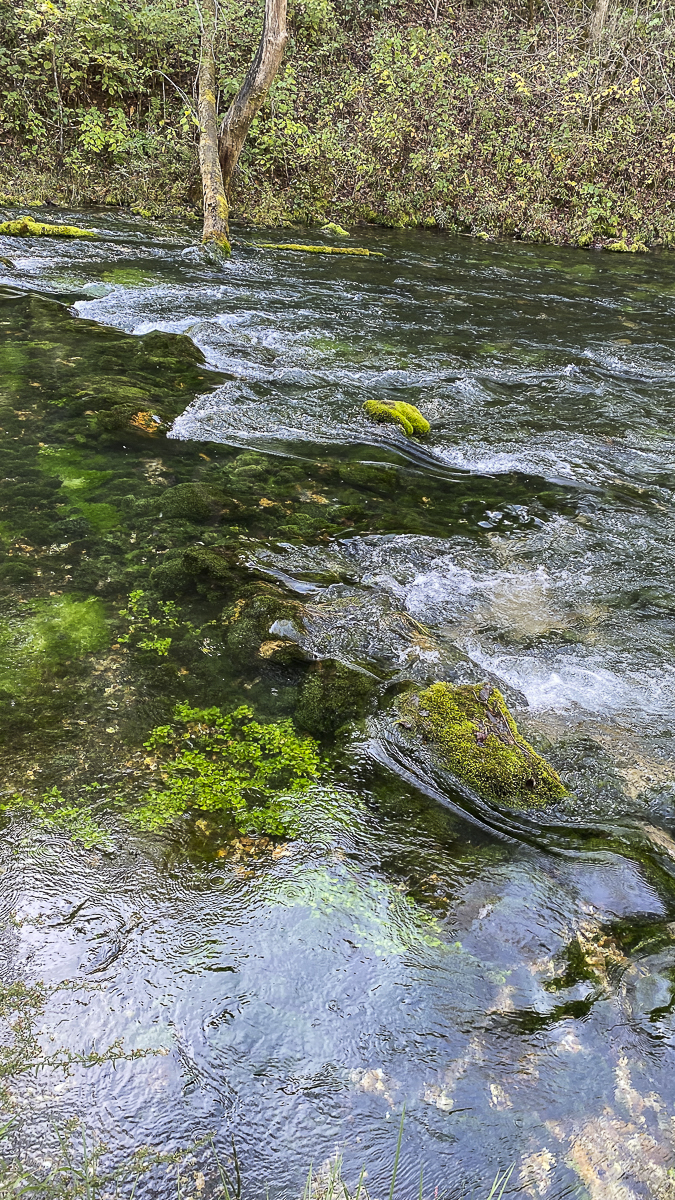
Blue Spring, with what is believed to be the deepest blue color of any of the other natural springs in MissouriLooking downstream at the outflow from Blue SpringThe rapids in the outflow from Blue Spring. As the case with the other springs with discharges flowing into the river, the rapids here were larger than most other rapids on the river proper
Our last campsite was our favorite – a large gravel bar across from a beautiful bluff. Small fish and tadpoles were abundant, the sun was out, and the air temperature was warm, so we both did some cold water snorkeling looking at the fish (more on this in the next post).
Our last night on the river at our favorite camspite
It was a magical last night on the river with some interesting surprises (again, more details next time). Our final morning was a relatively short paddle (about 5 miles). The take out was at a small landing called Log Yard, and, thankfully, there was our truck waiting for us safe and sound.
The end of our journey at Log Yard
It was an exceptional trip with beautiful scenery, amazing wildlife, serenity, wonderful campfires, a gorgeous night sky, and an amazing crystal clear waterway. We will definitely be back.
Shadows mutter, mist replies; darkness purrs as midnight sighs.
~ Rusty Fischer
The pause in posts was necessitated by another truck road trip and much less cell phone service than usual. This time, carrying our ancient (and heavy) black canoe (who has a black canoe anyway?) atop the truck to paddle some rivers in far-away lands (Missouri and Arkansas). But more on that part of the adventure in future posts. Today, due to the nature of the holiday upon us, I thought I’d focus of the things we saw at the start of the trip when we wee exploring our mountains and stalling for time so a storm system in the Midwest could move on. I hadn’t really realized how spooky it all was until I started looking at the photos this morning with so many thoughts of Halloween now surrounding us.
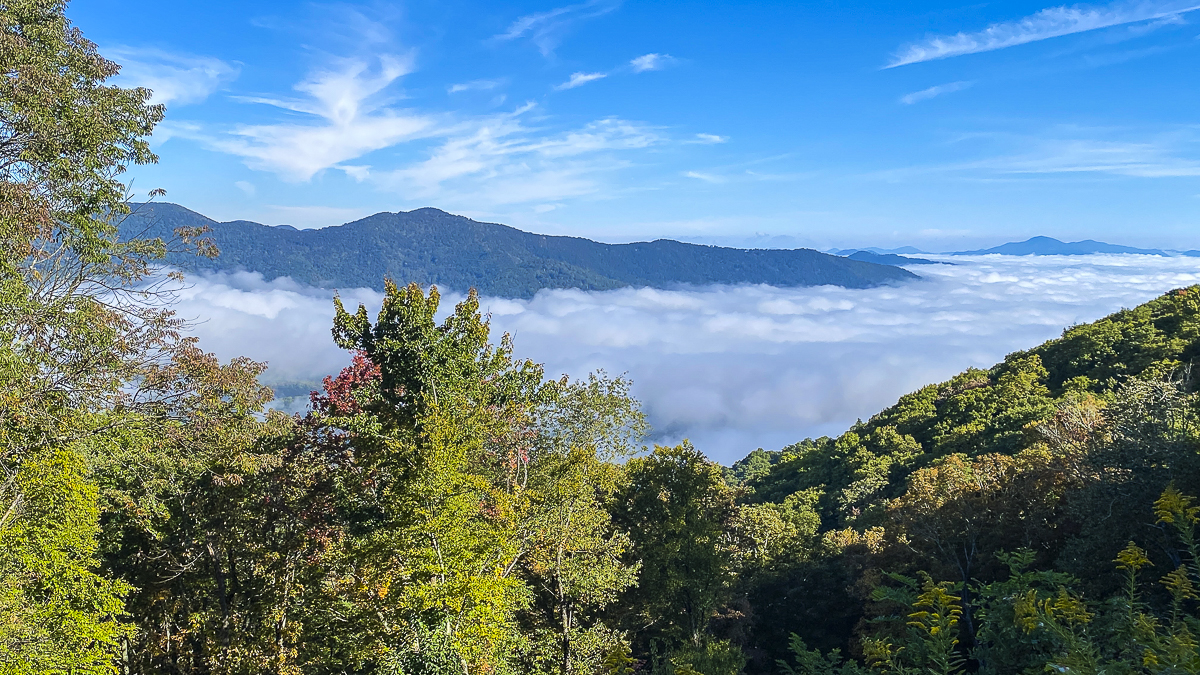
So, here are a few of the mysterious things encountered as we made our way across our mountains at the start of our latest adventure. It started innocently enough, a drive along the Blue Ridge Parkway, headed toward a campsite at the Pisgah campground near the Pisgah Inn. Leaf color was just beginning to change, so the crowds were not yet suffocating and the views were fantastic.
Scene along Blue Ridge Parkway (click photos to enlarge)
But, now, with Halloween upon us, I began to view these images in a different, darker light. Am I just imagining things, or were those first few days pretty creepy? Look at the photos, and tell me what you think…
A morning mist creeps through the valley below. We drove down into one such bank of clouds and the bright, sunny day suddenly turned dark…
On a hike to a fire tower near the Pisgah campground, we encountered a number of interesting (and looking back now,) potentially eerie plants. Here are just a few…
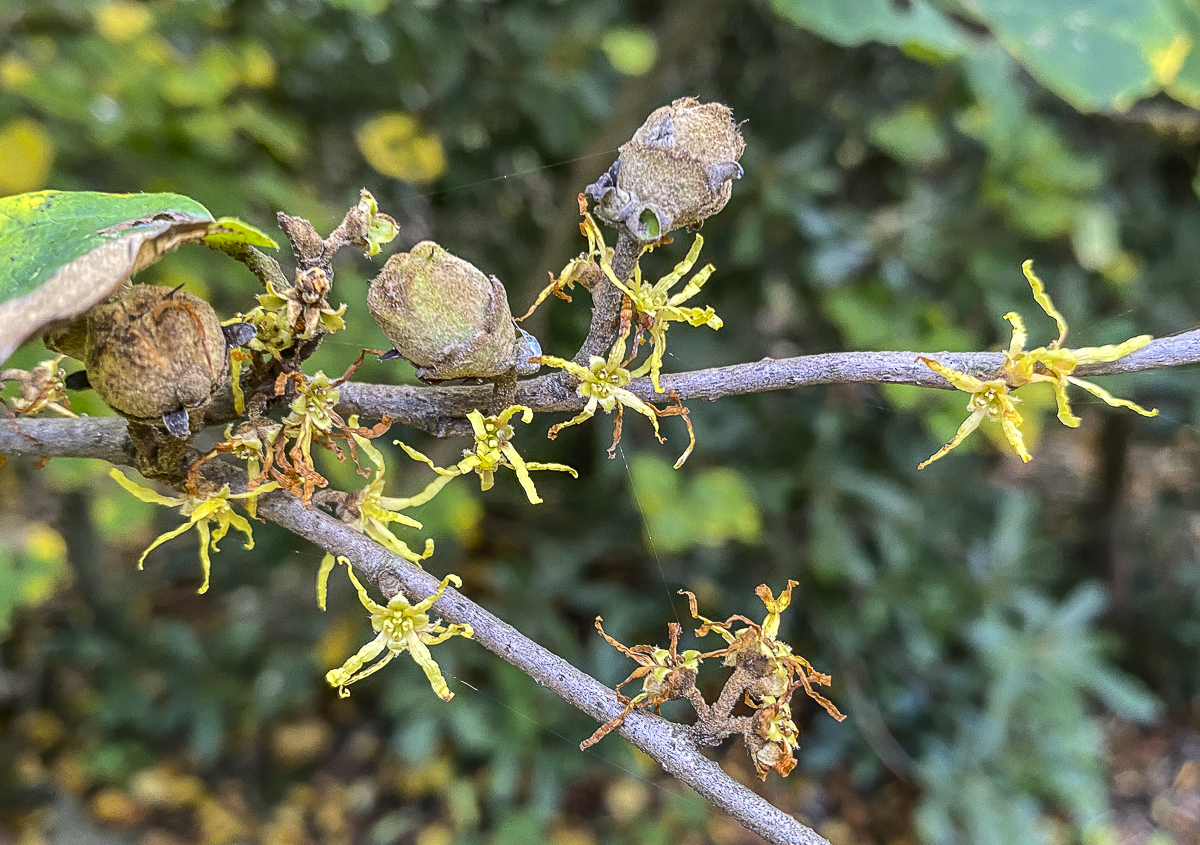
The oddly-shaped flowers and last year’s seed pods of American Witch-hazel, one of our latest blooming plants.
This late-blooming small tree is an odd plant indeed. Extracts from the leaves, bark, and twigs provide the aromatic salve called witch hazel, used as an astringent and an anti-inflammatory to soothe cuts and burns. In addition to its unusual name, another spooky trait is that forked branches of this tree have been favored for use as dowsing or divining rods. Early European settles observed Native Americans using American Witch-hazel to find underground sources of water (or other objects if interest such as minerals, buried treasure, graves, etc.). According to folklore, one fork is held in each hand with the palms upward. The bottom or butt end of the “Y” is pointed skyward at an angle of about 45 degrees. The dowser then walks back and forth over the area to be tested. When she/he passes over a source of water, the butt end of the stick is supposed to rotate or be attracted downward. I have tried this and actually felt the rod move in my hands…creepy!
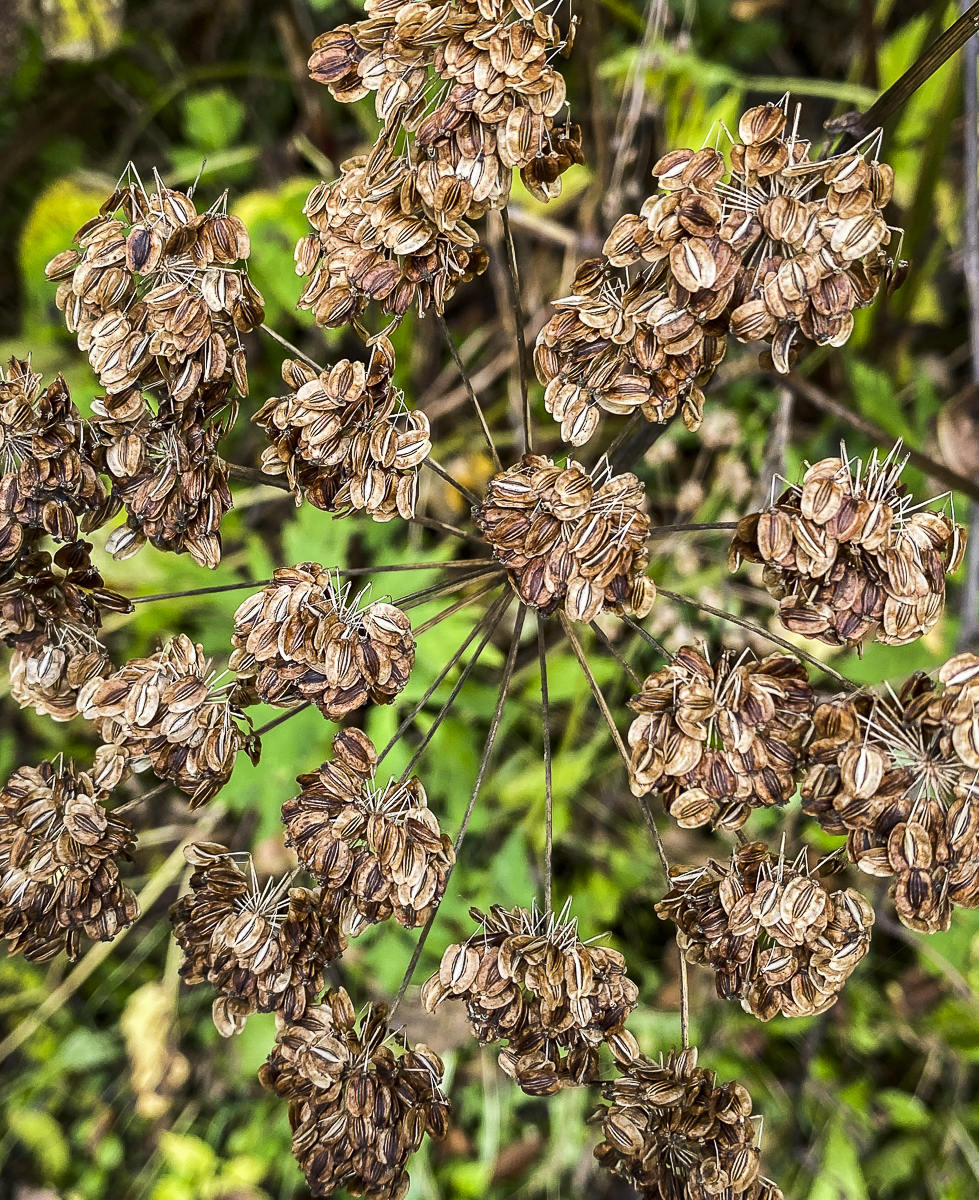
The globular fruiting cluster of Carrion Flower, an herbaceous greenbrier. Flowers give off an odor similar to carrion (the decaying flesh of dead animals) and attract a ghoulish group of pollinators such as beetles and flies that usually show up at corpses for their meals.The starburst shape of this seed group attracted my attention. It belongs to Filmy Angelica, a poisonous herb found at high elevations. Even the pollinators run the risk of becoming intoxicated by some unknown compound in the flowers’ nectar. Bees beware!
We headed to Joyce Kilmer Memorial Forest on our next day for a hike in the majestic forest of giant trees. It is one of my favorite tracts of woodland, but on this trip, there were a few strange encounters with otherworldly beings. See if you agree.
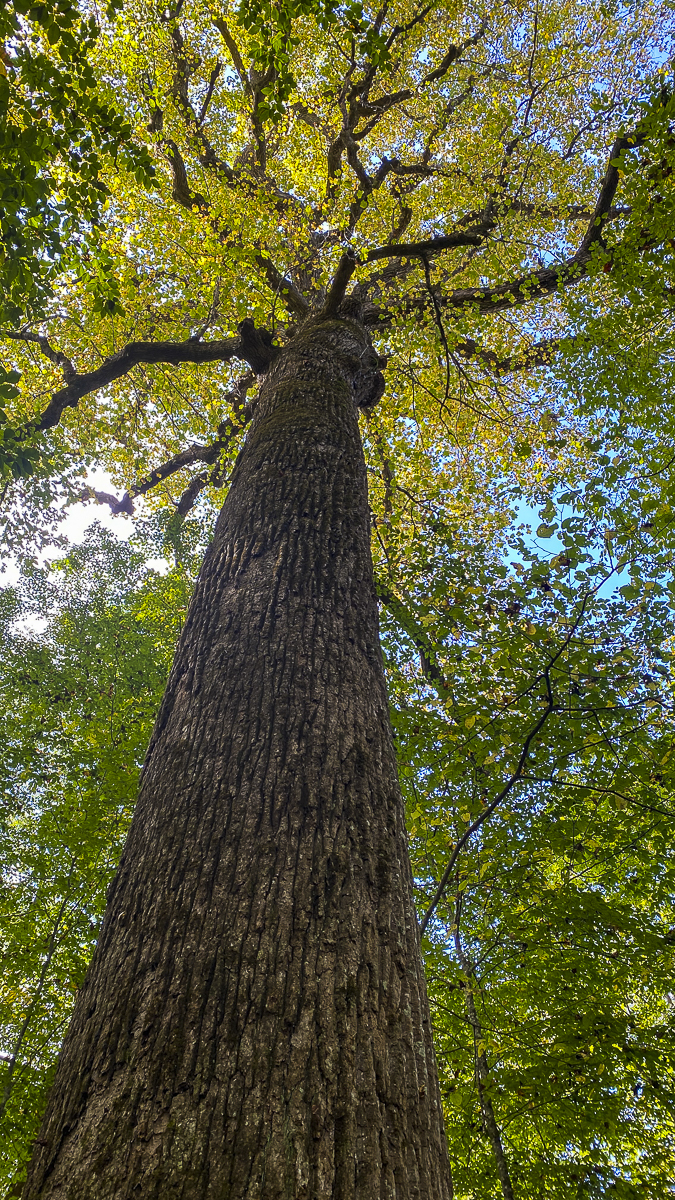
We hiked the loop trail through the famous Poplar Grove at Joyce Kilmer Memorial Forest. This tract is home to a virgin stand of trees, most notably the tremendous Tulip Poplars, some of which are estimated at over 400 years in age and diameters between 5 and 6 feet. As grand as they are, in looking back, I now see an unsettling resemblance to the Ents in Lord of the Rings. You see it too, don’t you?At first glance, these tiny fungi look like diminutive fingers poking up from a decaying log. They may actually be a type of fungus associated with green algal mats on logs named Muticlavula mucida.
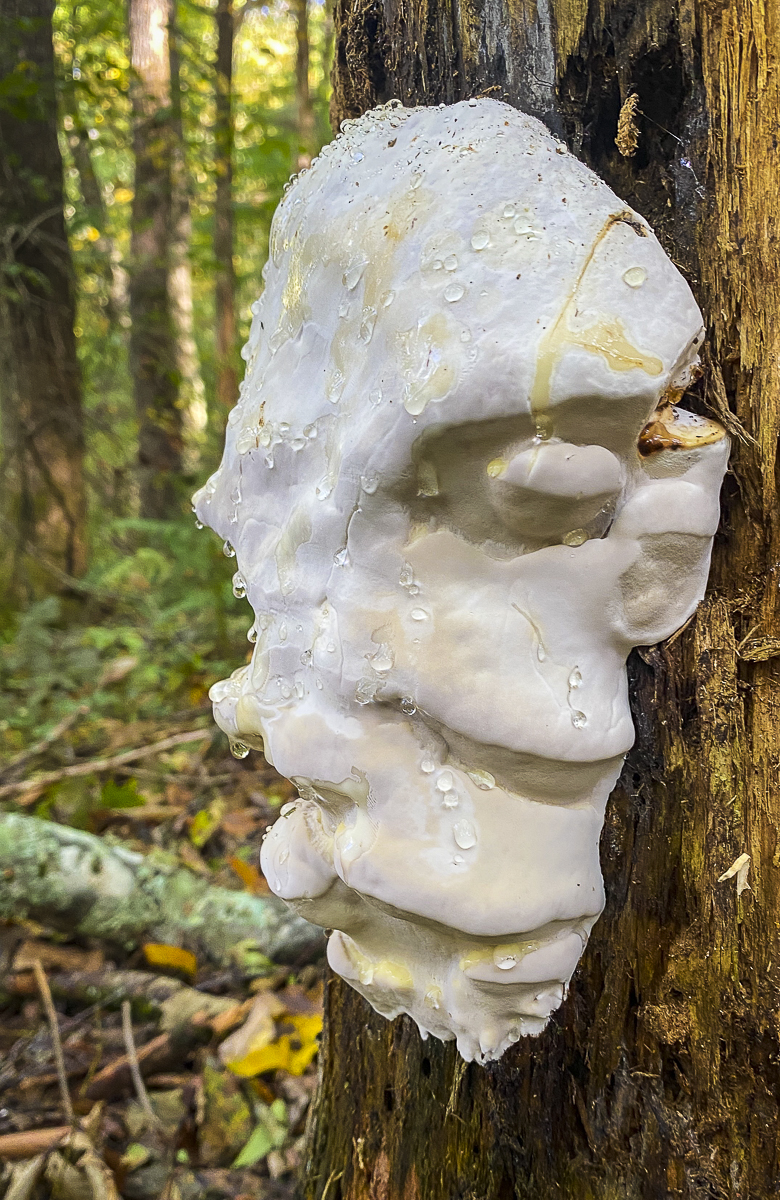
The most bizarre “creature” we encountered on our hike was a large fungus on a dead tree trunk. I glanced off the trail and saw it staring back at me with a strange misshapen face – mushroom man!
Mushroom man’s face measured roughly 12 inches tall and 8 inches wide. Side view highlighting the sweaty nature of mushroom man’s skin.
I have tried to find out what species this is, but so far without any luck. If anyone knows the identity of this creepy creature, please let me know. It certainly was one of the most Halloween-like encounters we had on our trip…well, other than the full moon night of Sasquatch sounds (more on that in a future post). Have a safe, sweets-filled, and suitably scary Halloween!
When we think of autumn, we often think of fall colors, specifically the onset of the kaleidoscope of colors created by the changing hues of tree leaves. But there are many other fall colors to enjoy that require looking down, not up. Here is a sampling from the past week or two here in the woods.
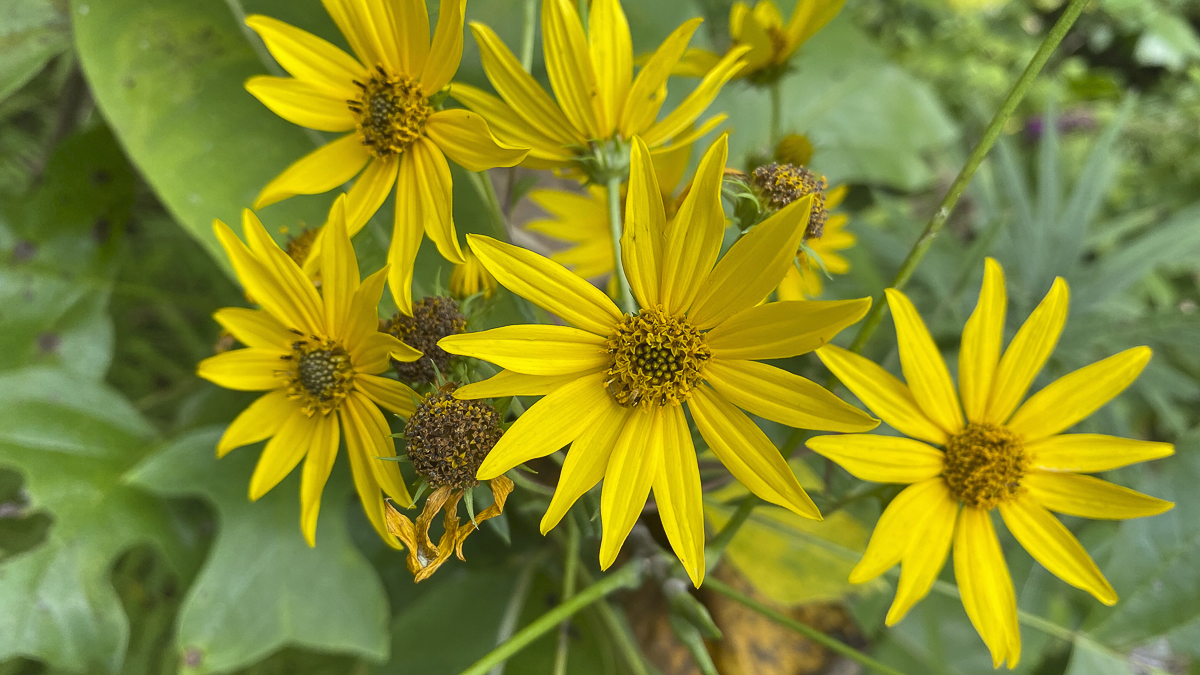
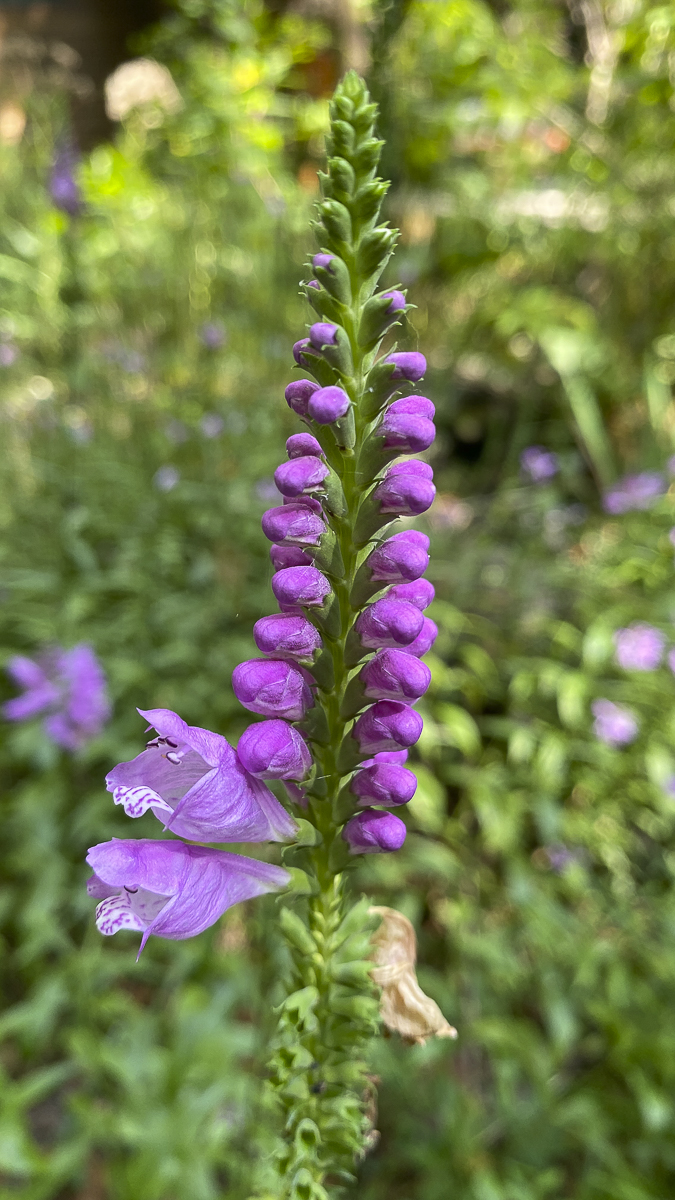
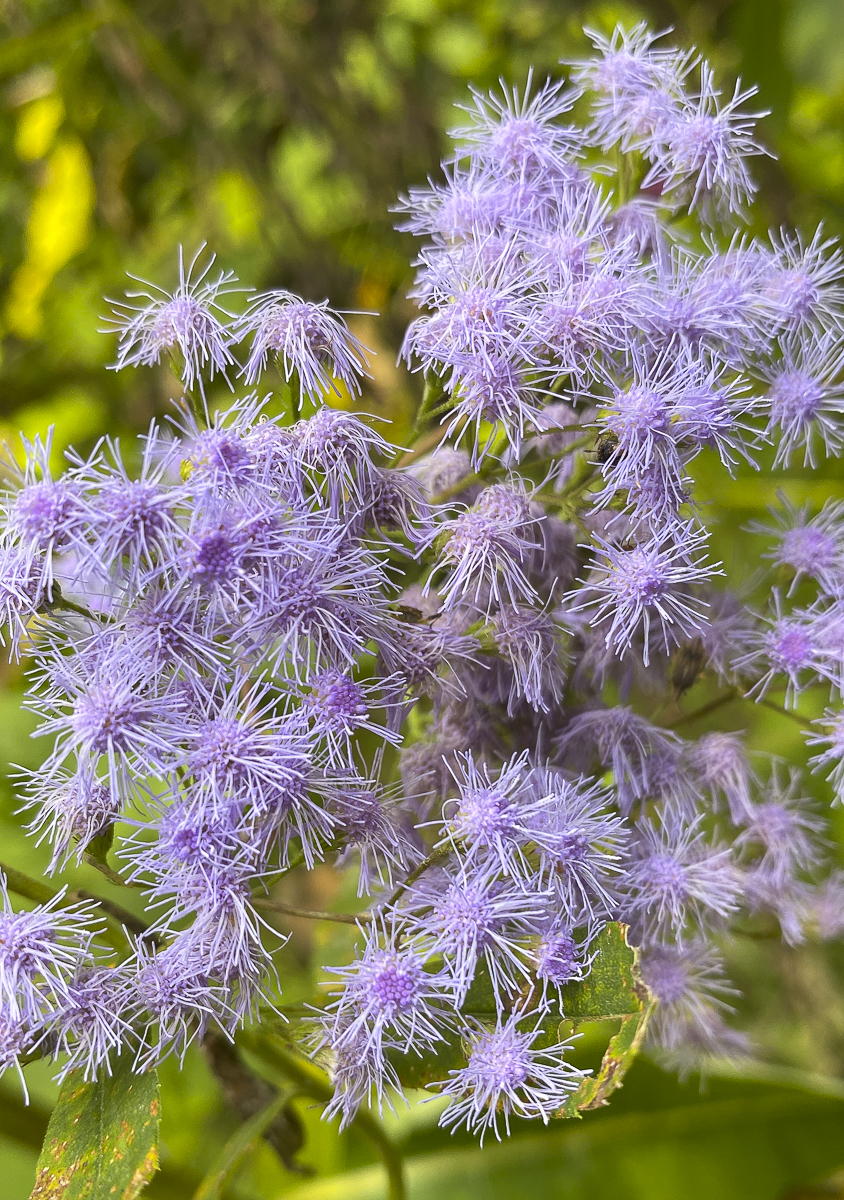
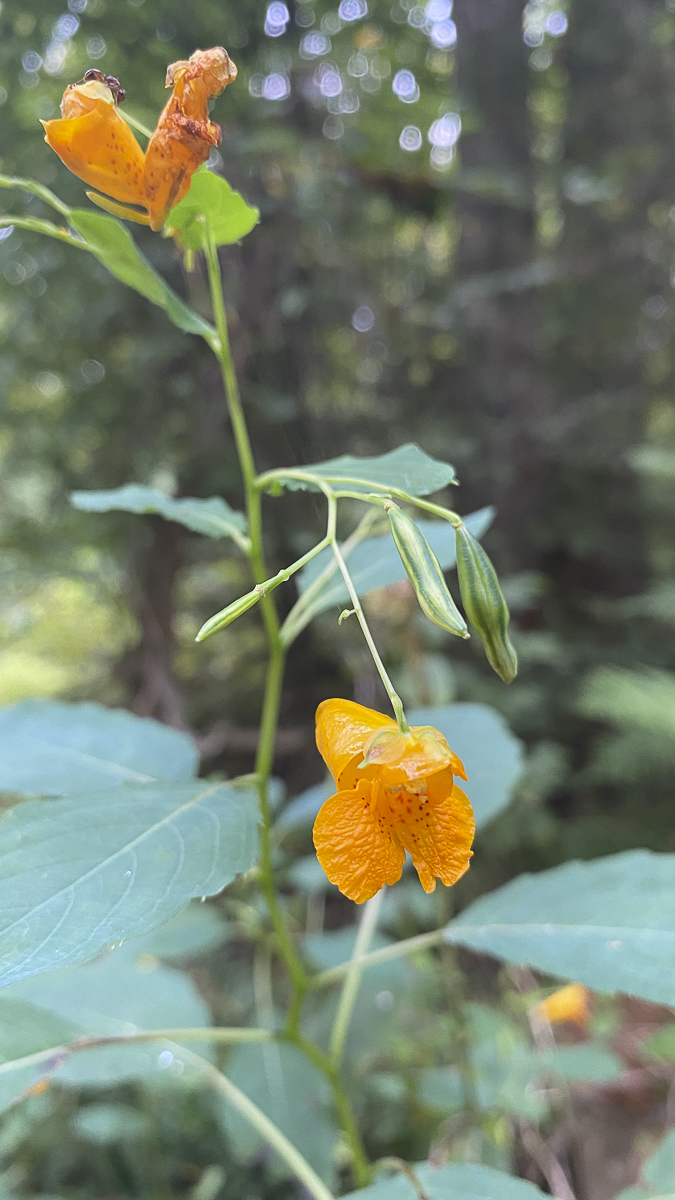
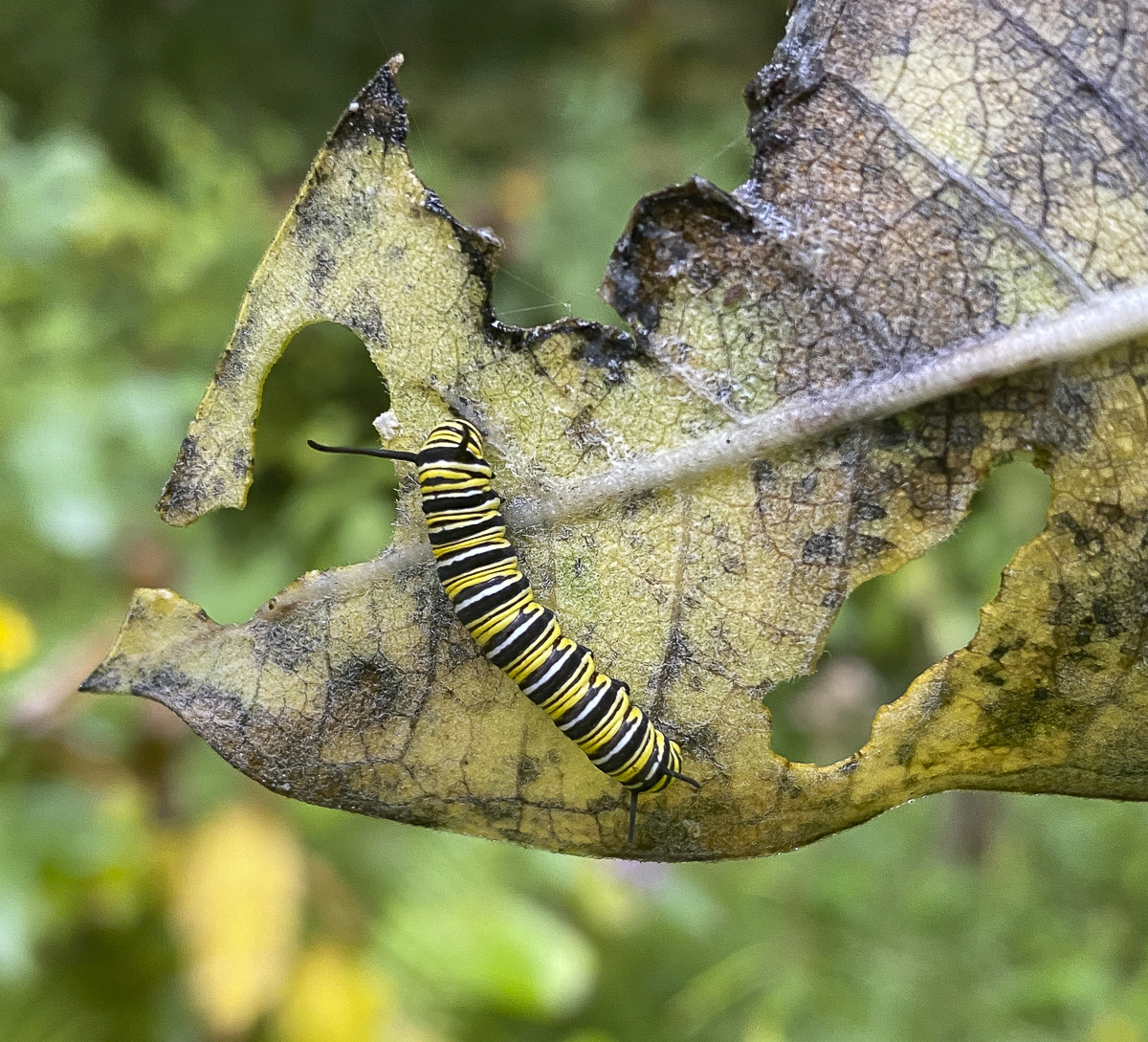
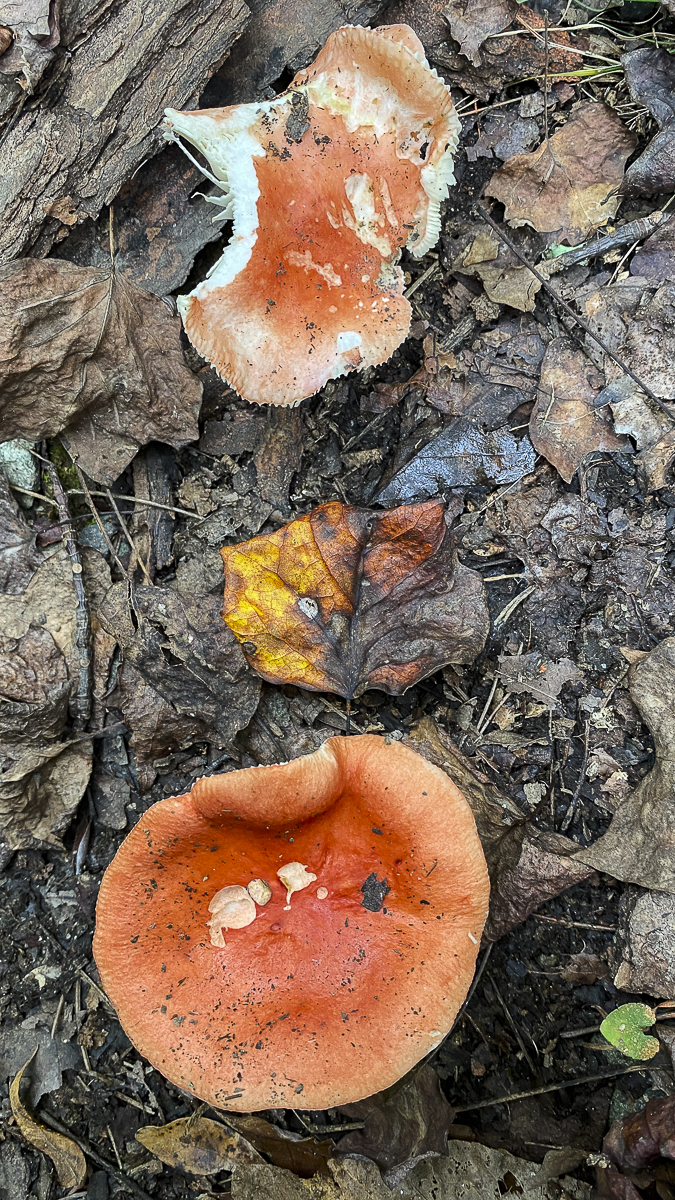
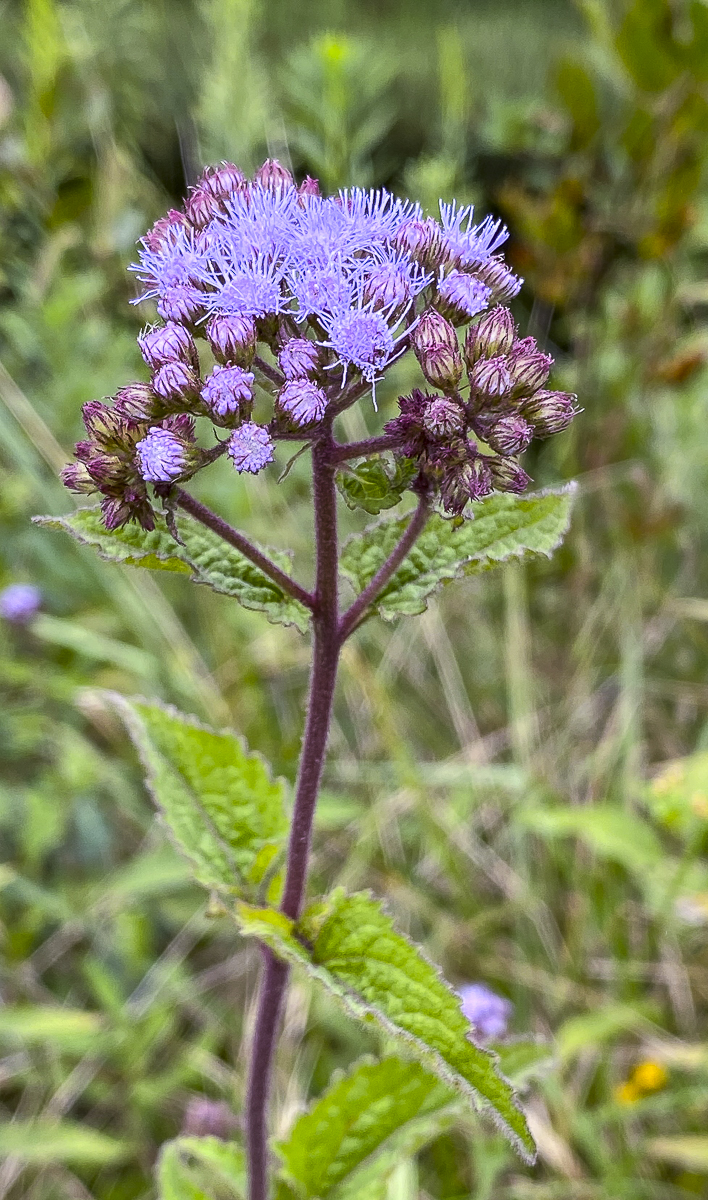
Swamp Sunflower exhibits one of the dominant flower colors of autumn – bright yellow (click photos to enlarge; all photos taken with iPhone)Obedient Plant shows the other fall color so common in our late wildflowers – purple. The combination of purple and yellow must be attractive to the late season bees.MistflowerThe rich brown of Painted Buckeye seeds on the forest floorJewelweed has had a very good fall in our garden and the hummingbirds loved it. The swollen seed pods shoot the seeds when touched giving the plant another common name, Touch-me-not.A very late season Monarch caterpillar on Common MilkweedThe beautiful orange, white, and black of a freshly emerged Monarch ButterflyOrange and black again, from?…these have been very active the past week or so.Mushrooms, like this Russula sp., have been popping up all over our woods and yard the past few daysMy favorite mushroom find was a few of these Carolina blue, Lactarius sp. milk cap mushrooms down in our woods
Nobody can conceive or imagine all the wonders there are unseen and unseeable in the world.
~ Francis Pharcellus Church
It had been over a week since I checked the three trail cameras, so I was anxious to see what had transpired in our patch of woods without us knowing. There has been a definite increase in deer activity and most of the video clips contain images of some of the many (probably too many for the health of our woods) White-tailed Deer going about their business. With acorns and hickory nuts falling, the deer are visiting certain spots under these trees more and slowly searching the ground for the nutritious morsels. It is also getting to be that time of year when the bucks are paying more attention to the does…it is the start of the rut. There are a few big bucks roaming the woods, often in each others’ company. The cameras have caught glimpses of two six-pointers, one eight-pointer, and a number of smaller males (plus many more females and a few young of the year). This clip shows a young buck rubbing his antlers against a Painted Buckeye shrub, no doubt thinking about what might lie ahead (if he is lucky). A doe and fawn are nearby.
Young buck briefly rubs his antlers on shrub
Another video from the south slope showed something I have never observed – some rather unsightly deer warts on two young bucks. At first, I thought they were a type of warble (lesion) that is caused by a botfly. Warbles are common on squirrels here in the Piedmont and the large skin deformations caused by the botfly larvae can be quite grotesque in appearance. But the bumps on these deer looked different. After searching online, I believe these are so-called deer warts, a type of cutaneous fibroma caused by a virus. There are many types of fibroma-causing viruses in nature but this one is specific to deer and cannot be spread to other wildlife or humans. Apparently, they are quite common in deer and can be transmitted when an area with broken skin comes in direct contact with an infected deer or with a surface that an infected deer rubbed against. Studies show that they occur more frequently in male deer, especially young bucks, and the wart-like growths occur most often on the head, neck and forelegs. Though they can be gross-looking, they typically do not harm the deer and they usually regress and vanish over time.
Two young bucks with cutaneous fibromas (deer warts)
The last video clip I’ll share is another thrilling one for us. Earlier this summer, a camera caught a Bobcat walking down our then dry creek bed. That was the first time we have ever had confirmation of these sleek feline predators on our property. Last week, just before sunrise, another Bobcat sighting was made on a trail in the ravine closer to the house. I’m assuming it is the same animal, but who knows! Whatever the case, we are super excited to know this species is roaming our woods. Now, to see one in person…
A Bobcat strolling through our woods just before sunrise last week
Bugs are not going to inherit the earth. They own it now. So we might as well make peace with the landlord.
~Thomas Eisner
If it is September, it must be time for BugFest, the premier annual special event of the North Carolina Museum of Natural Sciences. In years past, it has ranked as the largest festival of its kind in the nation, a huge event about all things invertebrate, covering a couple of blocks of downtown Raleigh plus the entire museum facility. Last years’ event was totally online due to Covid, and this year had both an online and an in-person component. We participated in the Pollination Celebration last Saturday held at the museum’s field station in Raleigh, the Prairie Ridge Ecostation. The plan was to have it all outdoors with proper safety protocols, and to expect a much reduced turnout of visitors. Once again, I helped with the Caterpillarology booth, which I started oh-so-many years ago and is now run by Melissa and her staff. We figured we probably wouldn’t need as many caterpillars this year with fewer visitors and less table space, so we didn’t start collecting in earnest until a few days before. It turns out it has been a slow year for larvae and we were having trouble finding much in our early searches. Luckily, we all put in some extra hours the two days (and one productive night hunt with a UV flashlight) before the event and wrangled an adequate supply to engage a few hundred visitors that perused our luxurious larvae. Below are some of the highlights (we collected several more that pupated before their photo was taken)…
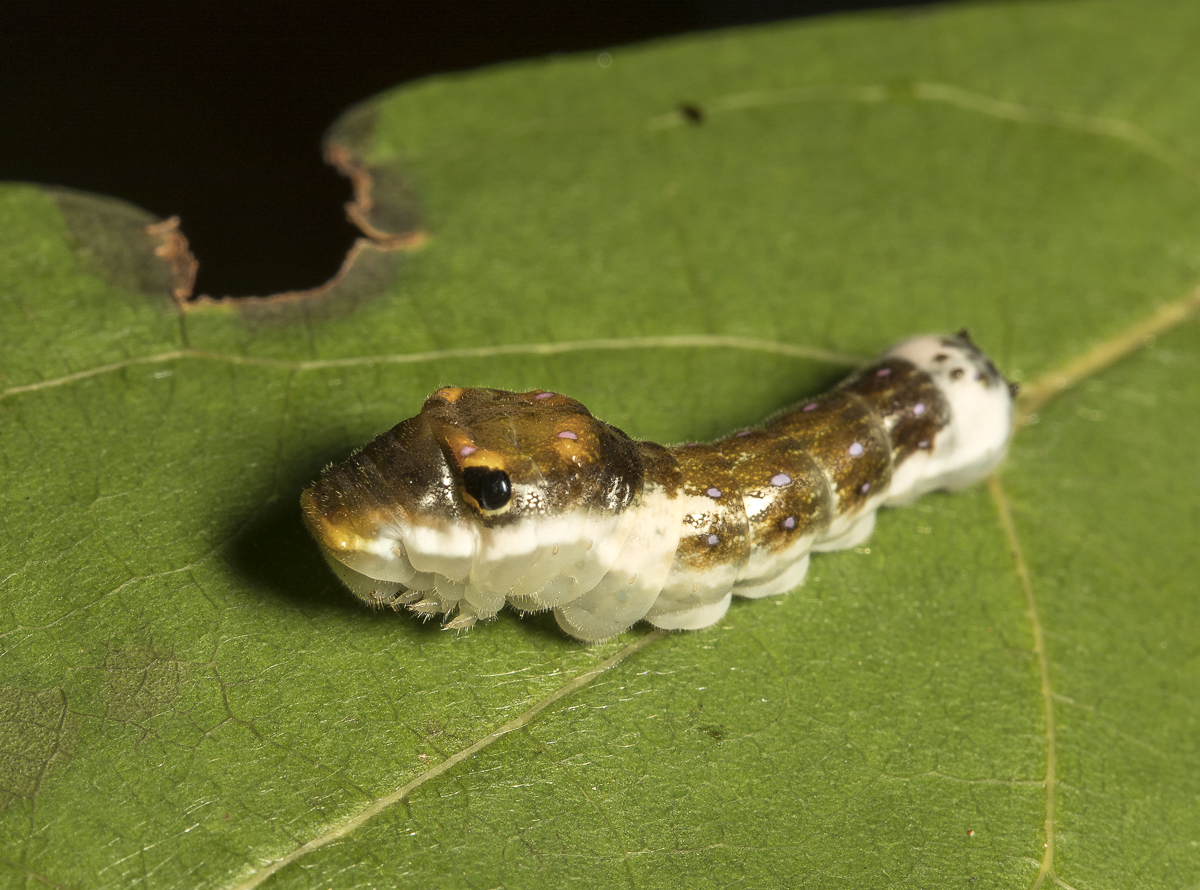
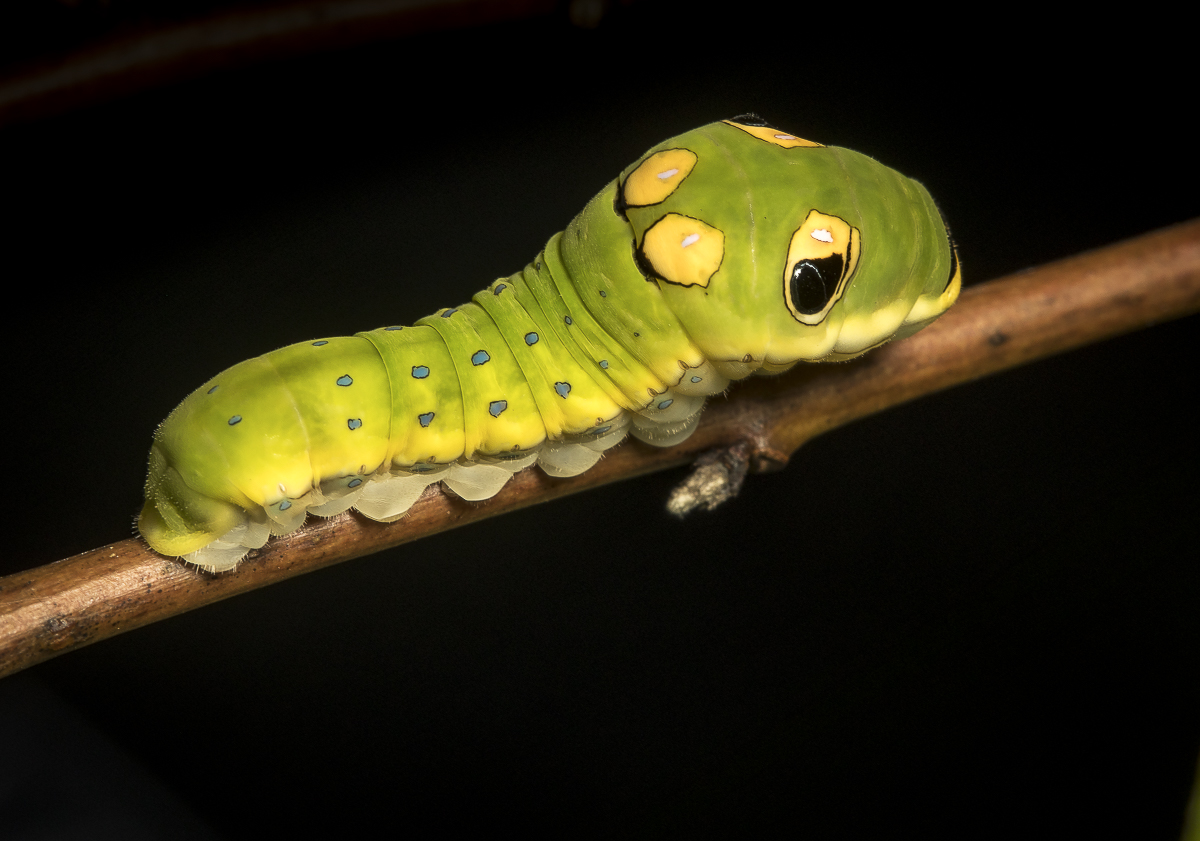
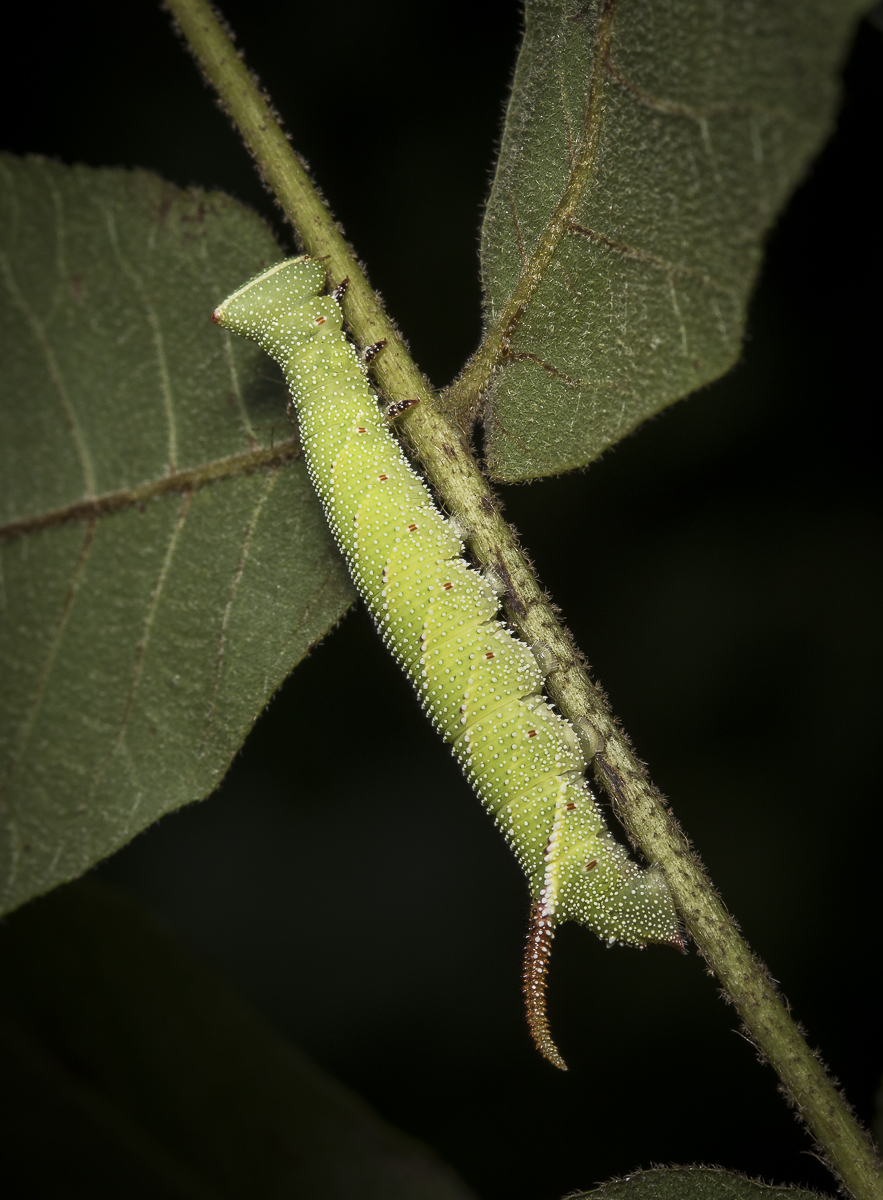
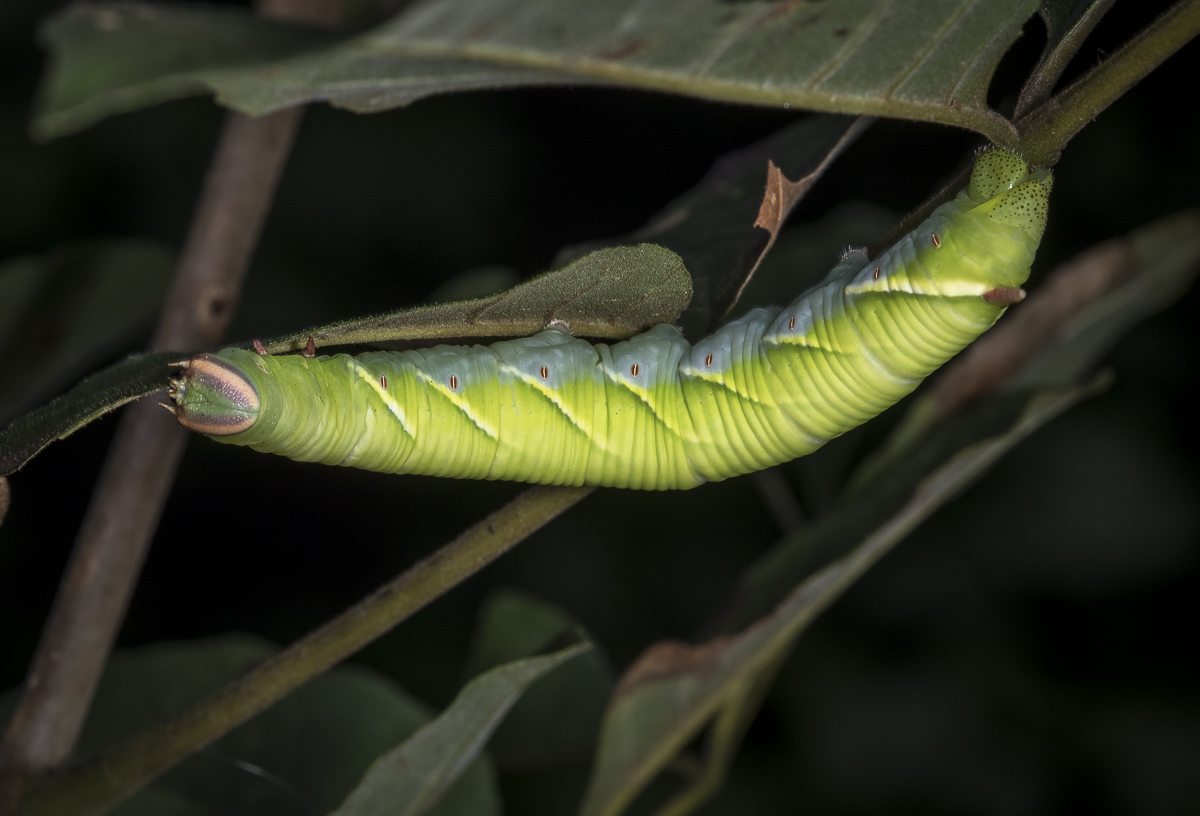
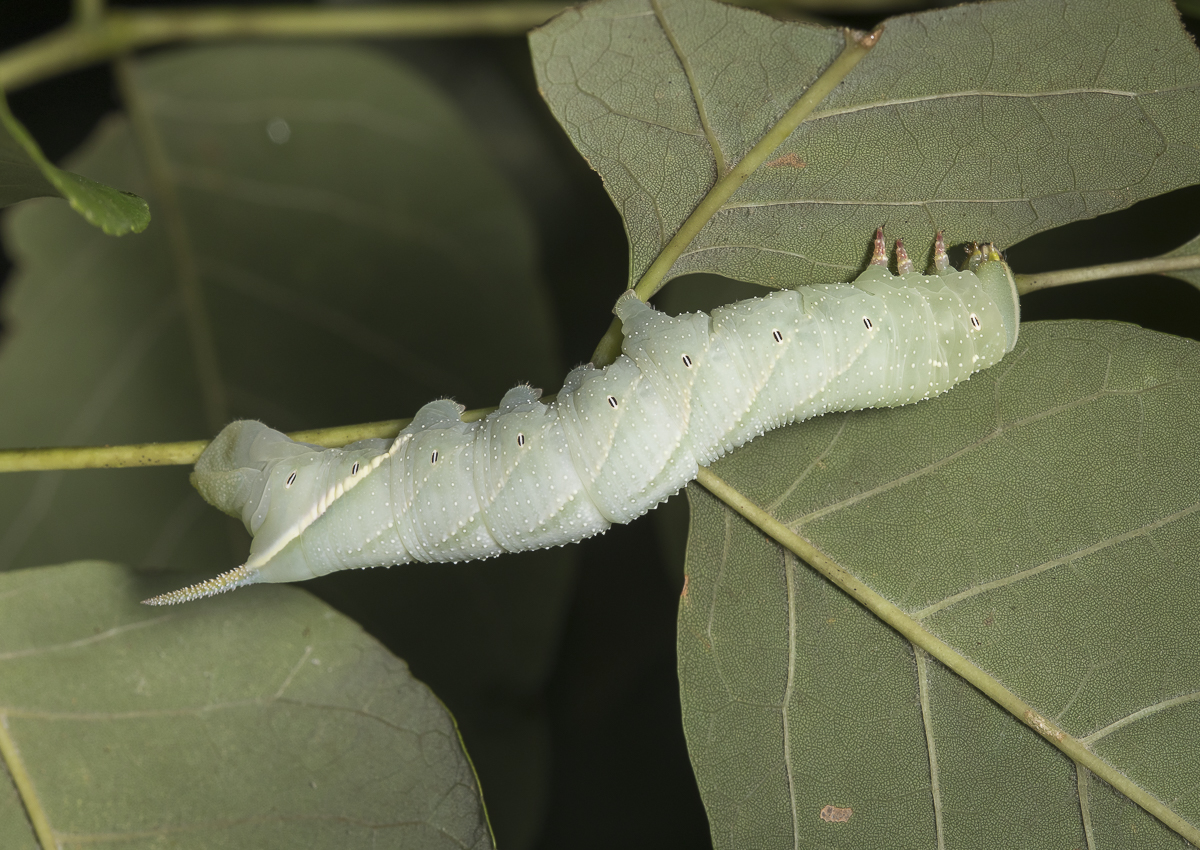
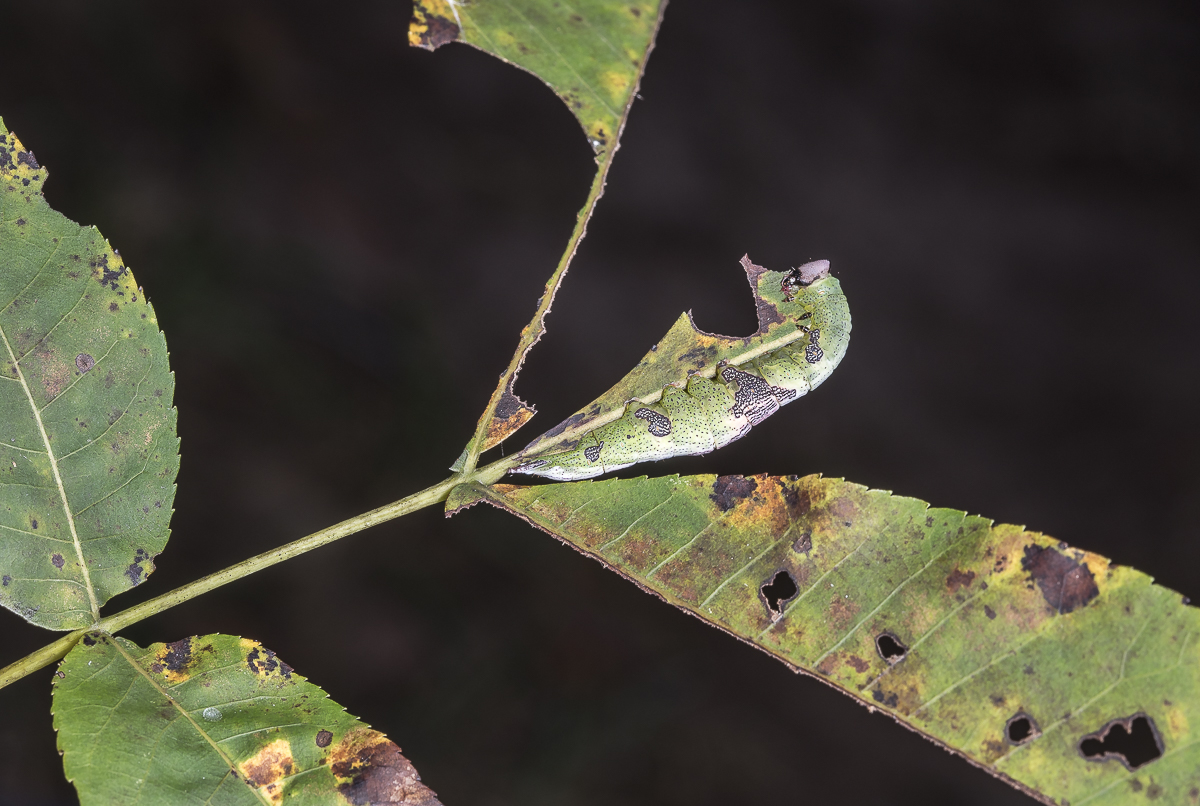
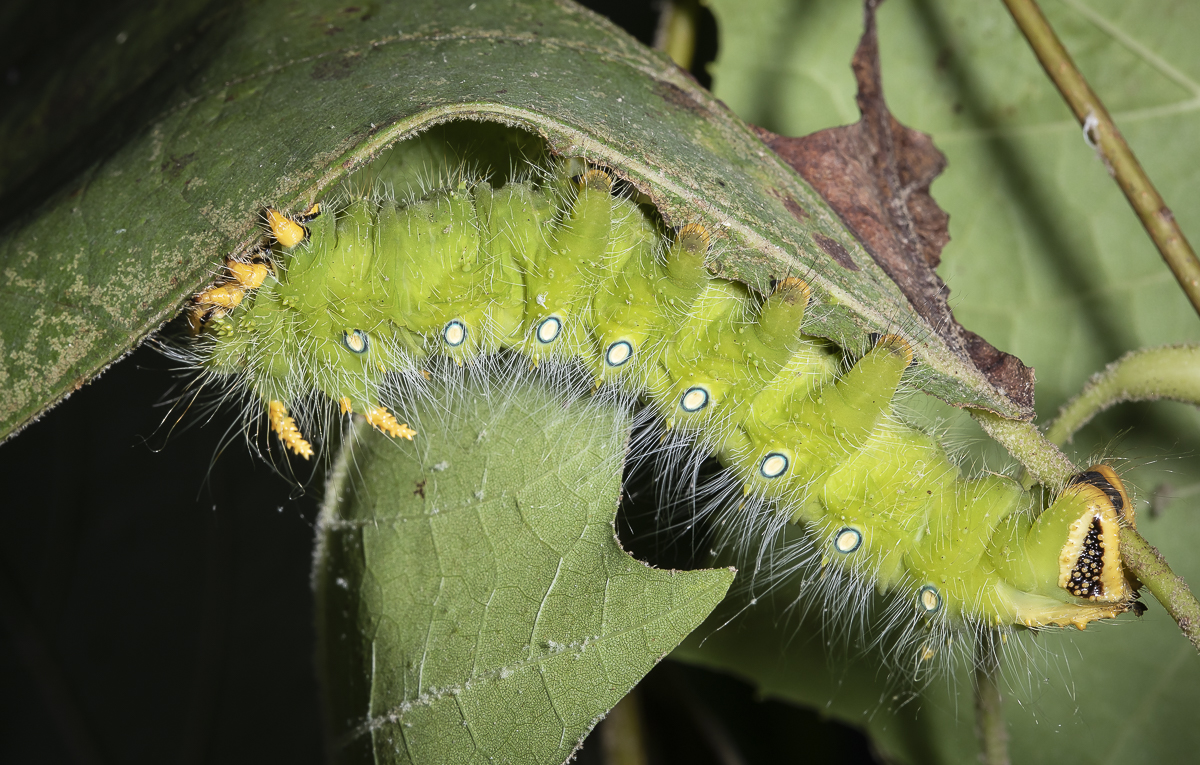
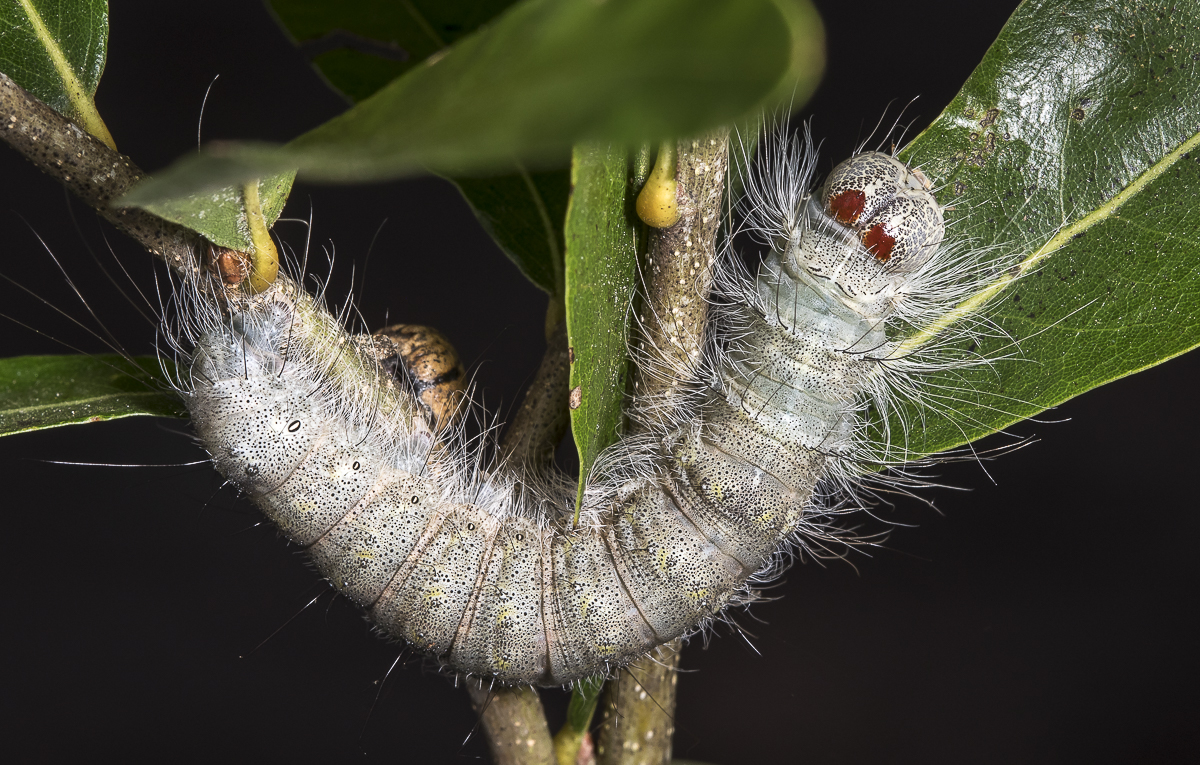
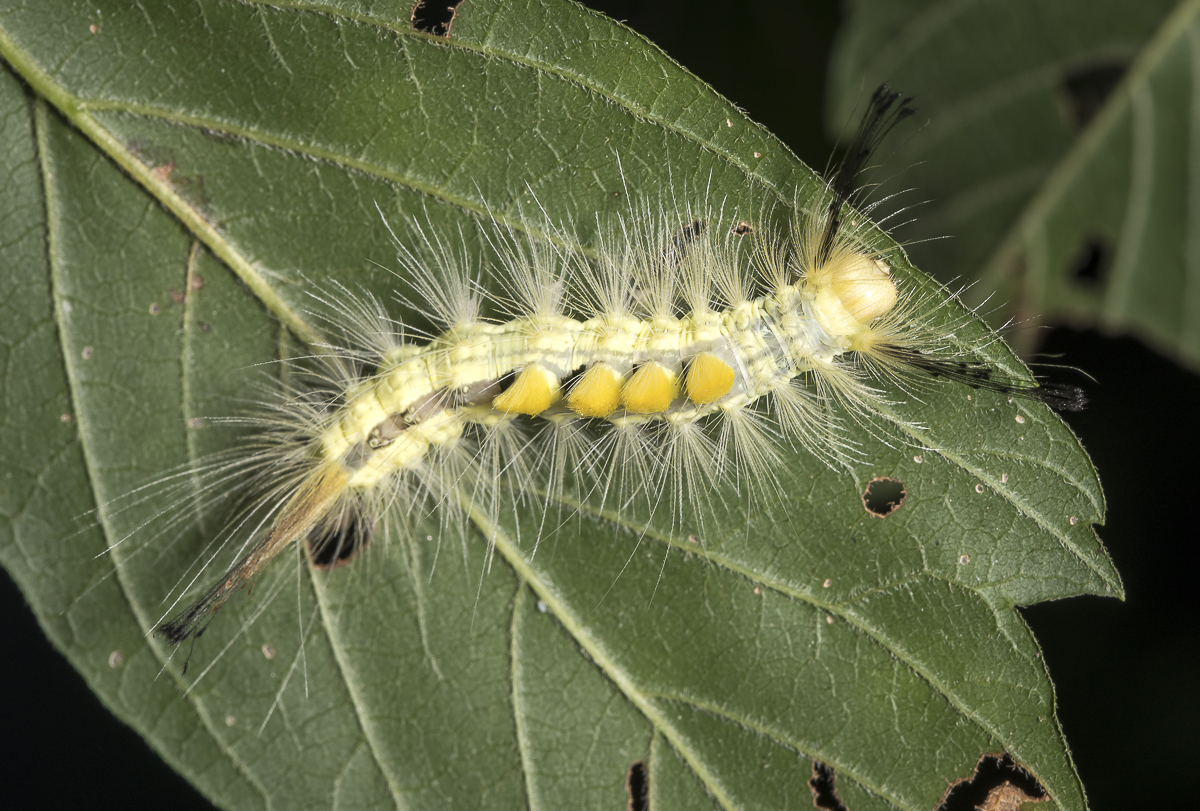
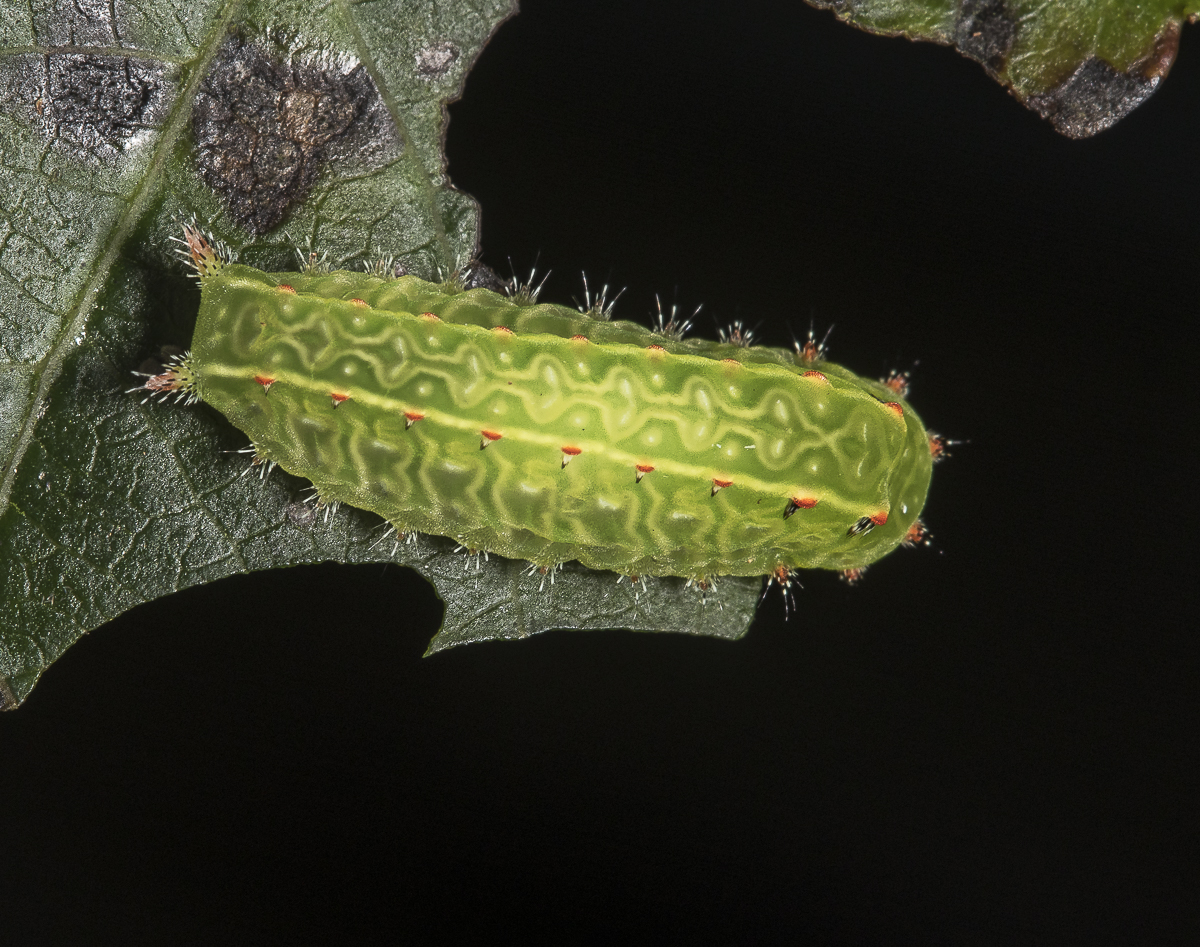
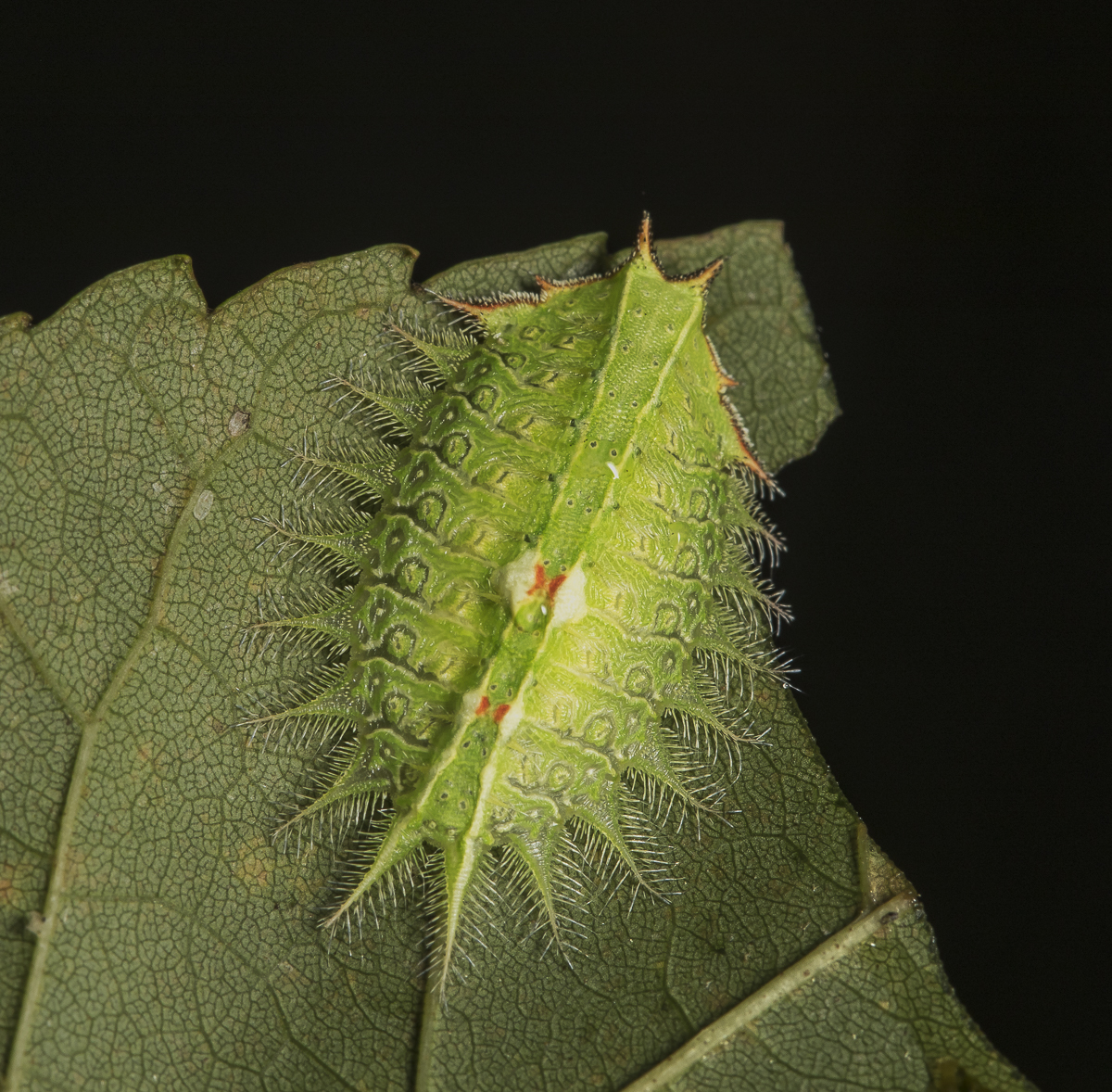
Our neighbor loaned us some of the many Monarch caterpillars that have found his milkweed garden in the woods (click photos to enlarge)Always a favorite at the booth, an early instar Spicebush Swallowtail, showing off its bird poop and snake mimic characteristicsA last instar Spicebush Swallowtail is all decked out to fool would-be predators that it is actually a snake (gotta love those big fake eyes)A Pipevine Swallowtail caterpillar with orange and black warning colors advertising its bad tasteA Hummingbird Clearwing Moth larva on ViburnumAnother sphinx moth caterpillar (so-called hornworms due to the tail spike), this Walnut Sphinx larva is the only species of caterpillar I know of that produces a sound. When disturbed, it thrashes violently and hisses by expelling air out its spiracles. I love the texture of this species.An elegant Hog Sphinx feeding on wild grapeThe subtle blue colors on this Waved Sphinx are beautiful.Although sparse for other types of larvae, it was a good year for sphinx moth caterpillars. They can be tricky to identify, but we think this is a Rustic Sphinx. Unfortunately, this one was parasitized and succumbed right after the event.A Great Ash Sphinx on ash.The camouflage of the leaf edge group of feeders, like this Wavy-lined Heterocampa, is quite impressive.We always hope to find some of the Giant Silk Moth larvae as they tend to be show-stoppers. Our Polyphemus Moth caterpillar was nice and plump for the event.We found several green color phase Imperial Moth larvae this year, but a couple were too high in the trees to collect. This was the largest caterpillar in this years’ program.One of the staff at Prairie Ridge showed me a Redbud tree with three of these American Dagger caterpillars.One of the more bizarre-looking larvae, this Lappet Moth (I think it is a Large Tolype Moth caterpillar) has fleshly appendages along its sides (lappets) that allow it to blend in very nicely with a twig. During most of the day, it hung head down on the twig of this plant and was barely visible to most viewers.This Smartweed Caterpillar (also called the Smeared Dagger) is one of the so-called stinging caterpillars. The tufts of spines have venom sacs that can produce a bee sting-like pain if touched.The Definite Tussock can supposedly cause skin irritation in sensitive people, but I have never had any issues with any of the tussocks crawling on my hand. This species is distinguished from the more common White-marked Tussock by its yellow tufts and head capsule.White-marked Tussock Moth larvae have a red head capsule. I think its common name should be the toothbrush caterpillar.This is the caterpillar you should definitely NOT touch. The Puss Moth caterpillar packs a powerful “sting” from tufts of spines hidden below the hair-like covering. These are generalist feeders on many hardwood tree species and pupate on tree branches, so most people never see this species, which is probably a good thing.The beautiful Nason’s Slug larva is another of the stinging caterpillars. I suspect it is a very mild sting due to its small size.The strange-looking Monkey Slug has numerous appendages that can break off as it matures. This early instar resembles a very hairy spider.Our most common stinging caterpillar, the Saddleback, is one of my favorites. I have been stung many times over the years as I accidentally brush up against one while weeding in the garden. They are generalist feeders on a variety of herbs and woody plants. The sting is like a bee sting but the pain tends to fade quickly (on me, at least)The rear end of a Saddleback sports a pair of fake eyes.One of the most beautiful caterpillars we find every September is the ornate Crowned Slug. These are tough to find (they feed on tree leaves) unless you use a UV flashlight at night.
It was another great year of sharing the wonders of caterpillars with enthusiastic visitors. One benefit of the half-day program this year was that all the caterpillars (and pupae) were released back to their collection sites by day’s end. The only remnant of the day is a cage full of Monarch chrysalids on our porch. When the butterflies emerge, we will send them off on their long journey to Mexico.
Summer isapromissory note signed in June, its long days spent and gone before you know it, and due to be repaid next January.
~Hal Borland
I headed down to Pocosin Lakes National Wildlife Refuge last week for an “end of summer” day trip (actually more of a “before hunting season begins”road trip). The refuge allows deer and small game hunting and archery season for deer begins next week. I was hoping for a post holiday weekend lull in visitation so I packed up and drove into the rising sun Tuesday morning. My goal was to spend some time with bears, but, as always, I knew there would be some natural highlights to observe, along with the joy of simply spending time in a wild place that I love.
There was a hint of crispness in the air, that sure-fire sign that summer is winding down. Nearing the refuge, I drove past fields where the corn had recently been harvested, which tells me the bears will be busy in the refuge fields harvesting their own share of the crop. The roadsides were showing signs of fall in other ways too, with swaths of autumn flowers growing along the canal edges. Yellows and purples seem to dominate the flower colors this time of year, a nice visual combination and another sign of the changing season.
The most abundant refuge roadside flower right now, Bitterweed or Sneezeweed (Helenium sp.) (click photos to enlarge)Blue Mistflower, Conoclinium coelestinum
I got out and walked along some of the grassy roads, looking for bears and observing the many wildflowers and butterflies. I saw several fresh-looking Monarchs, no doubt on their long journey to Mexico. The beautiful Three-nerved Joe-Pye-Weed was a favorite nectar stop for many species. I wonder if that species of Joe-Pye would do well in our yard? It blooms later, is shorter than the one we have by a couple of feet, and is a darker pink in color.
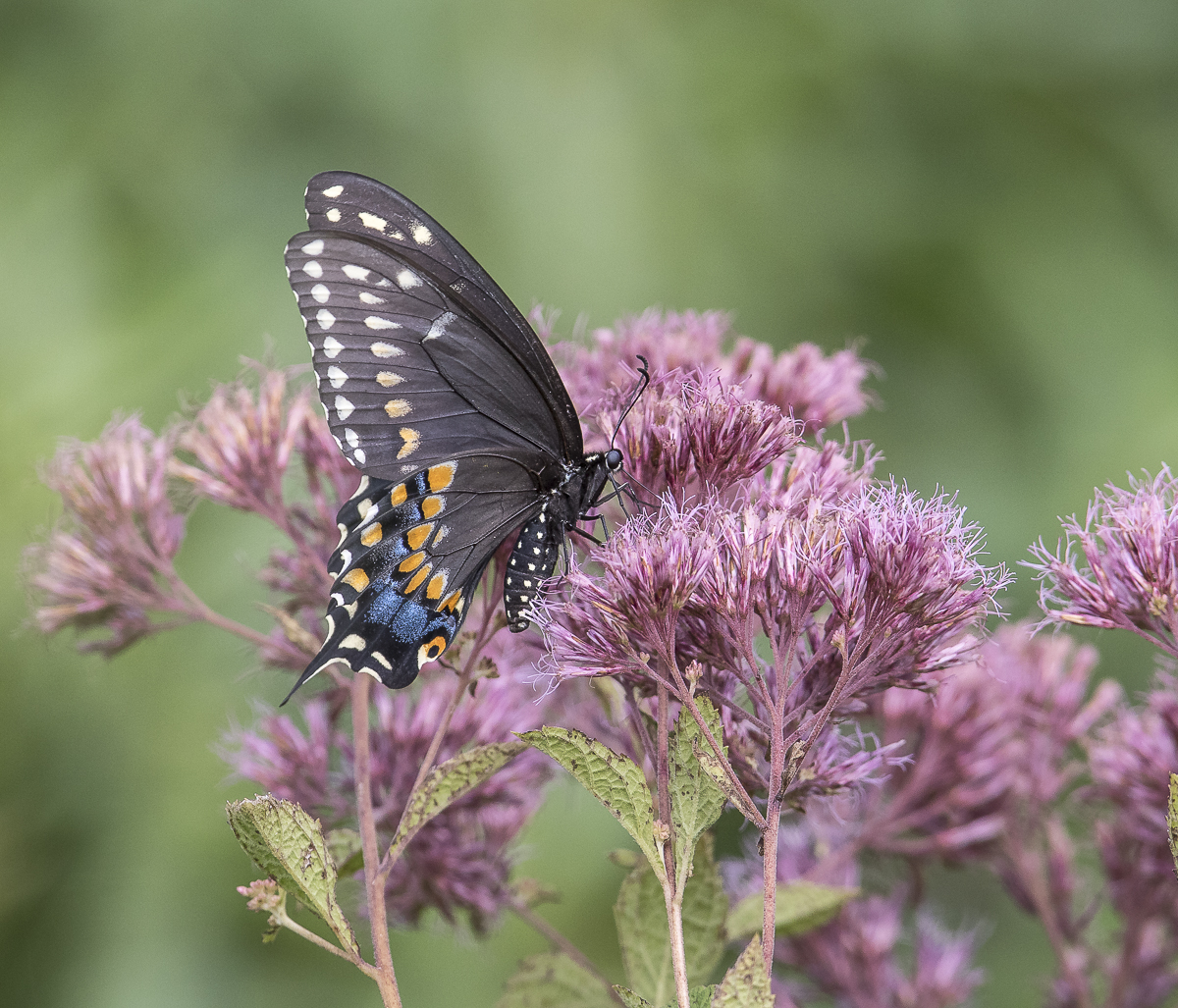
Monarch Butterfly on Three-nerved Joe-Pye-Weed (Eutrochium dubium)Black Swallowtail on Three-nerved Joe-Pye-Weed
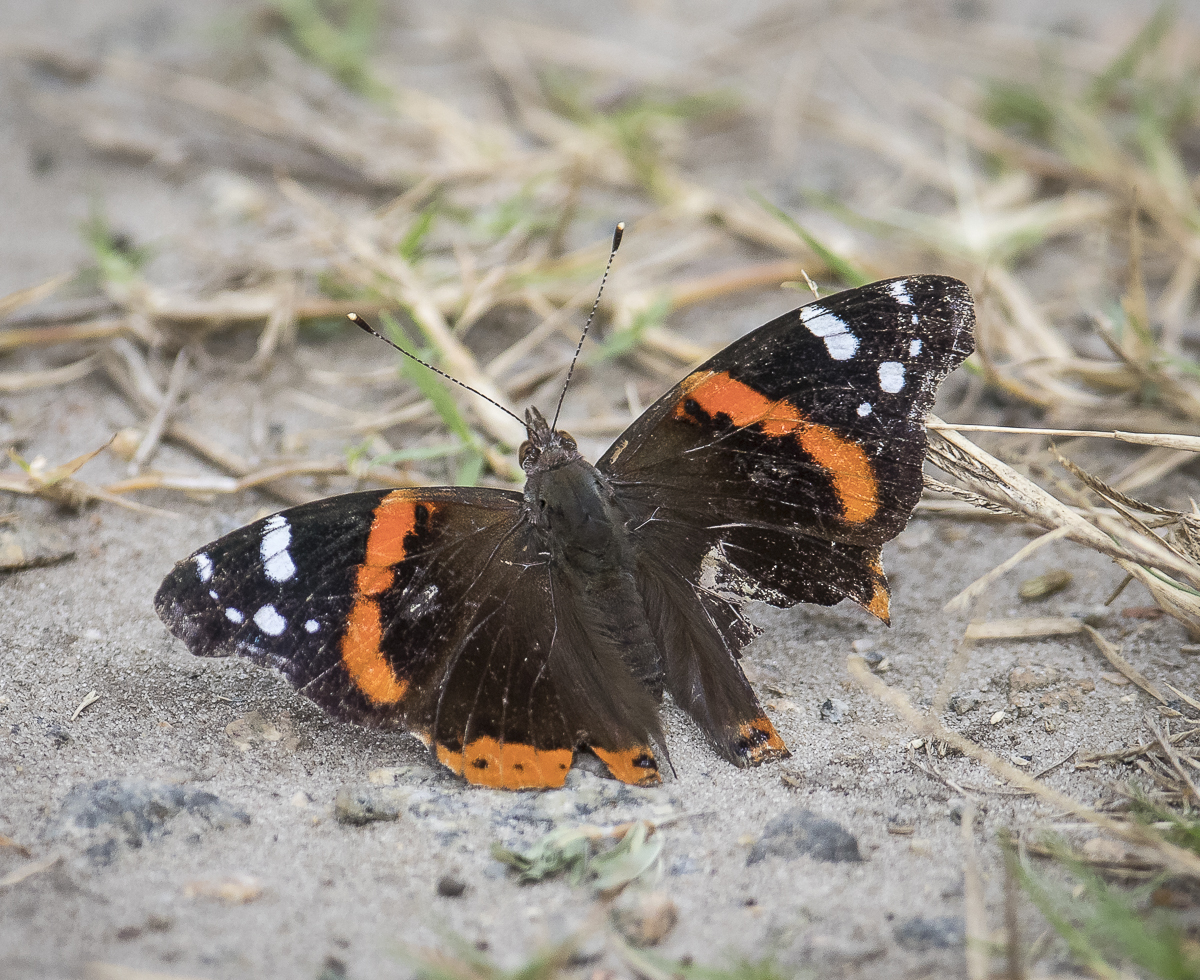
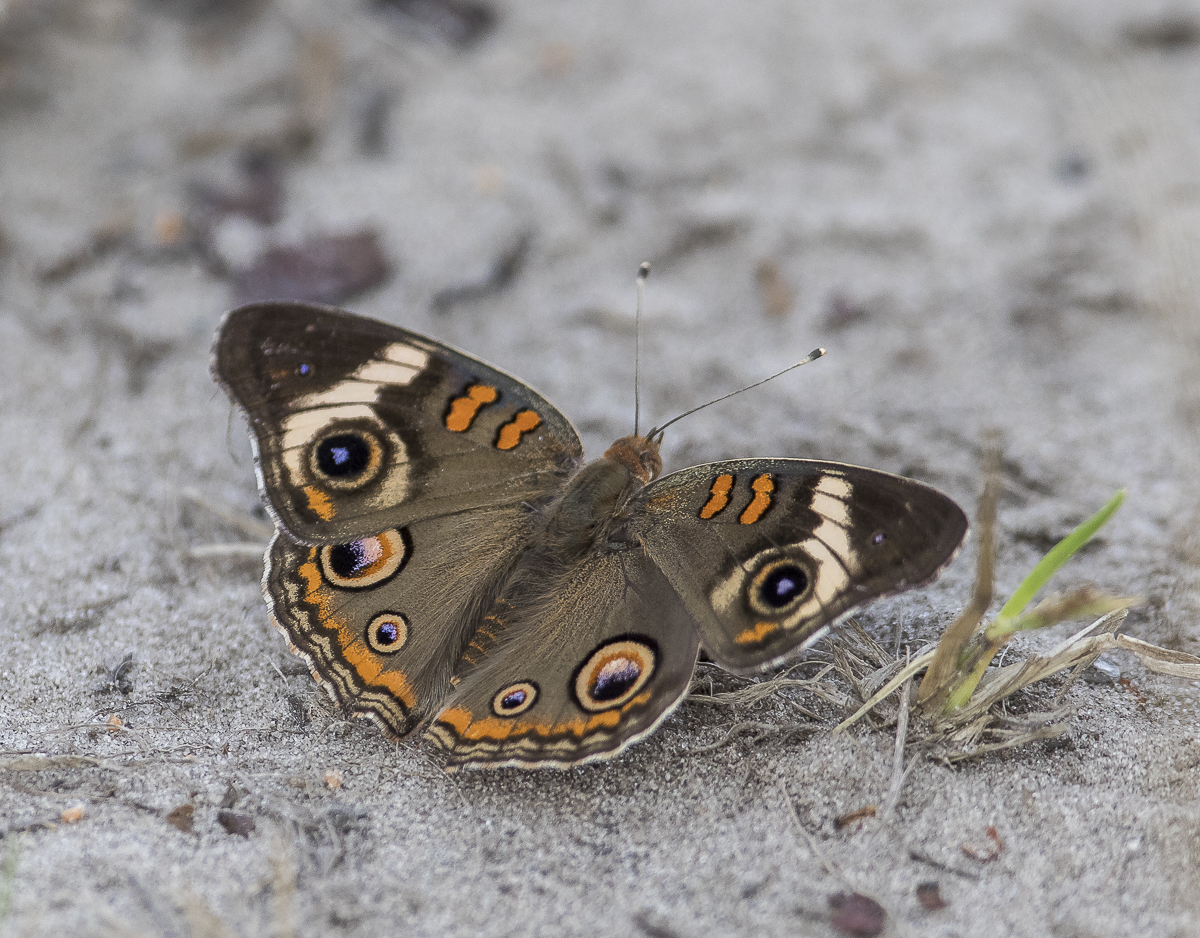
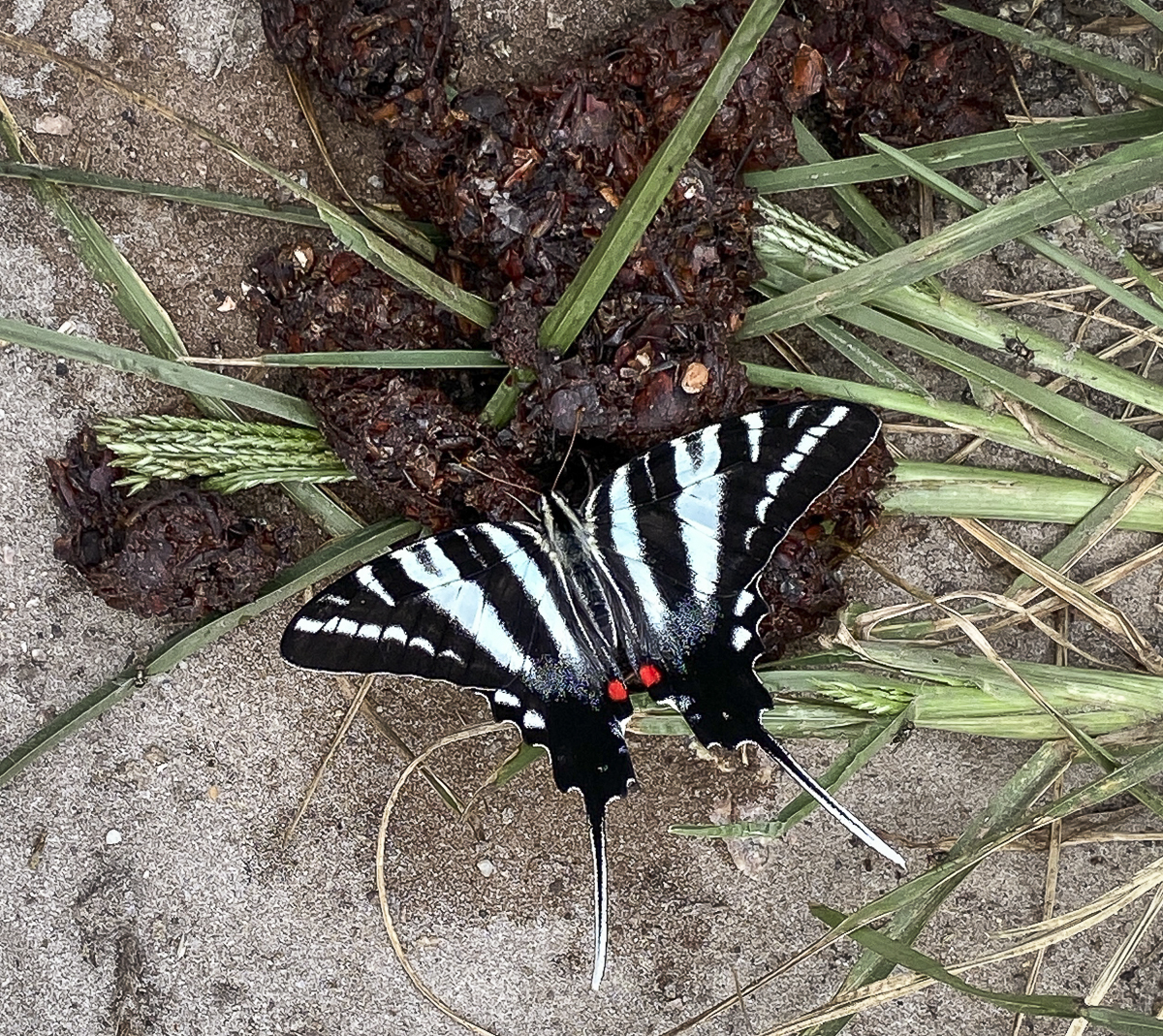
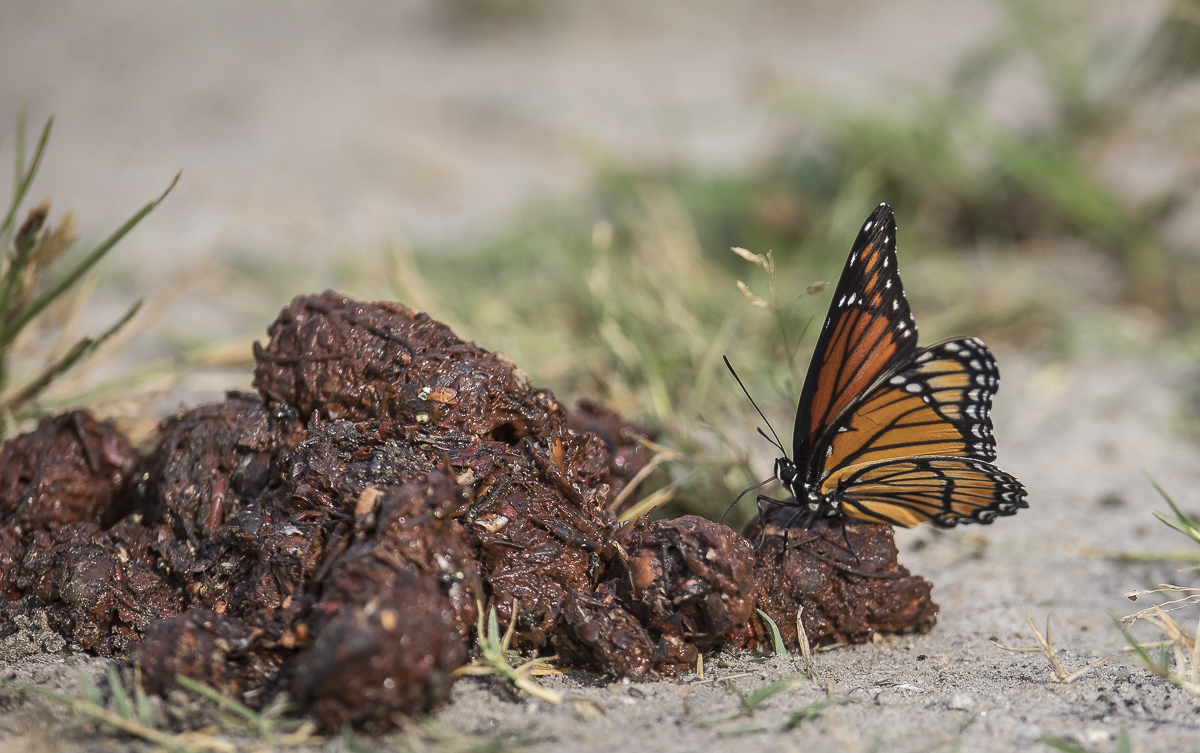
Along the now closed South Lake Road (I see they are working on it, so I hope it will be open by winter), I saw several butterflies stopping to sun in the open sandy spots, and a few were stopping at the local roadside diner to partake of the daily special – bear scat.
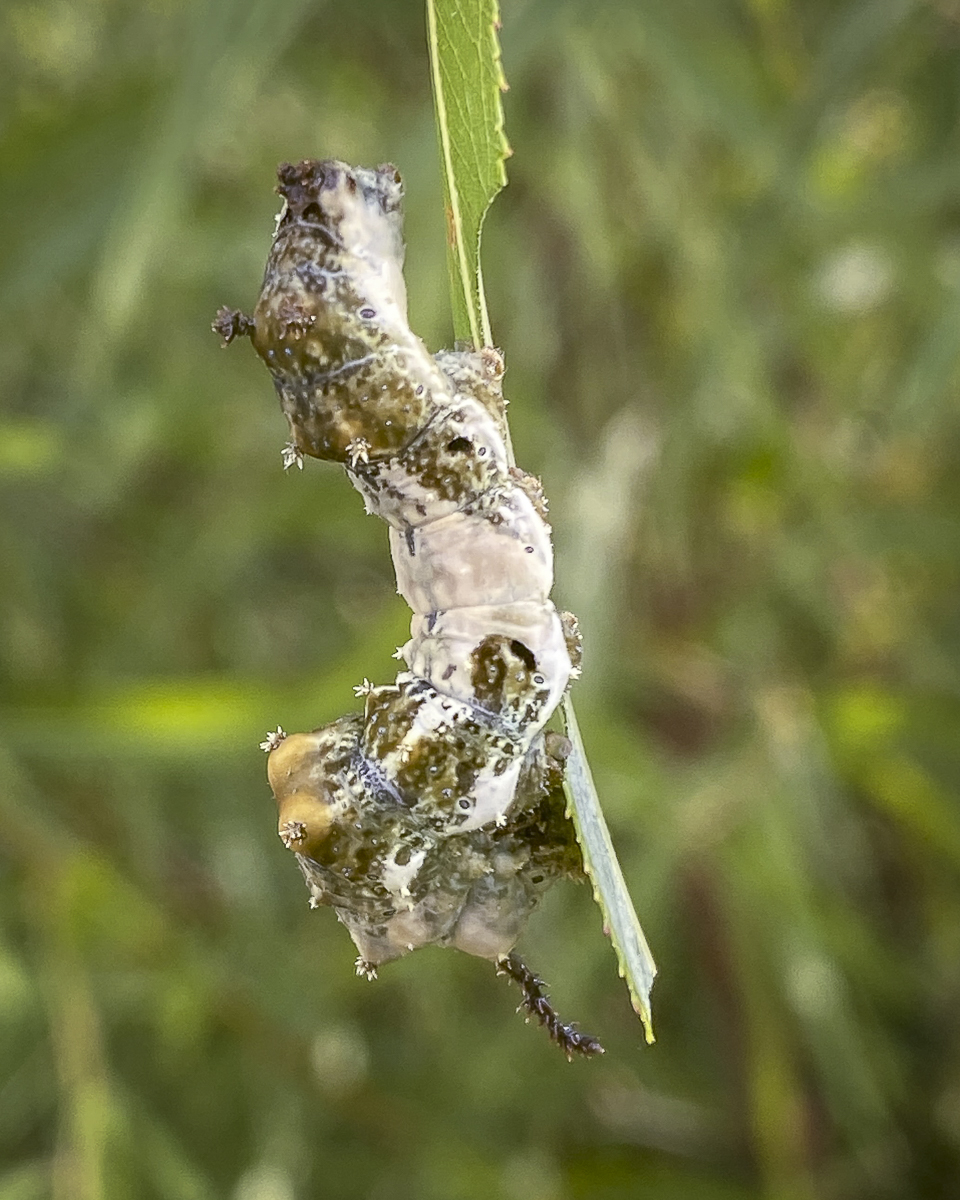
A Red Admiral that has probably had an encounter with a bird’s beakA Buckeye with its bold eyespot wing patternA fresh Zebra Swallowtail imbibing on some mineral-rich bear scatA Viceroy checking out the menu selection on another pile of bear pooA Viceroy caterpillar feeding on willow leaves
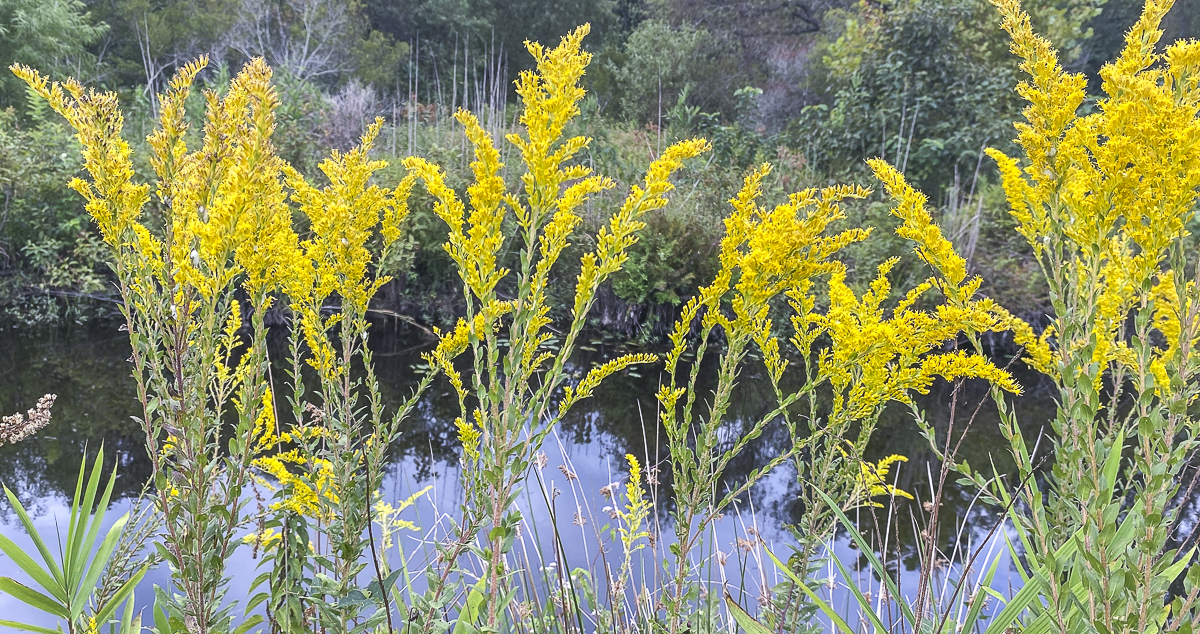
With my eyes trained on finding the small things hidden in the roadside vegetation, I spotted an otter trail going into the canal through some tall weeds, so I set my camera and telephoto lens down and walked a few feet to peer over the canal bank and photograph some of the goldenrod’s intense yellow flowers with my phone.
Goldenrod (Solidago sp.) flowers stand in bold contrast to the dark canal waters and green pocosin shrubs
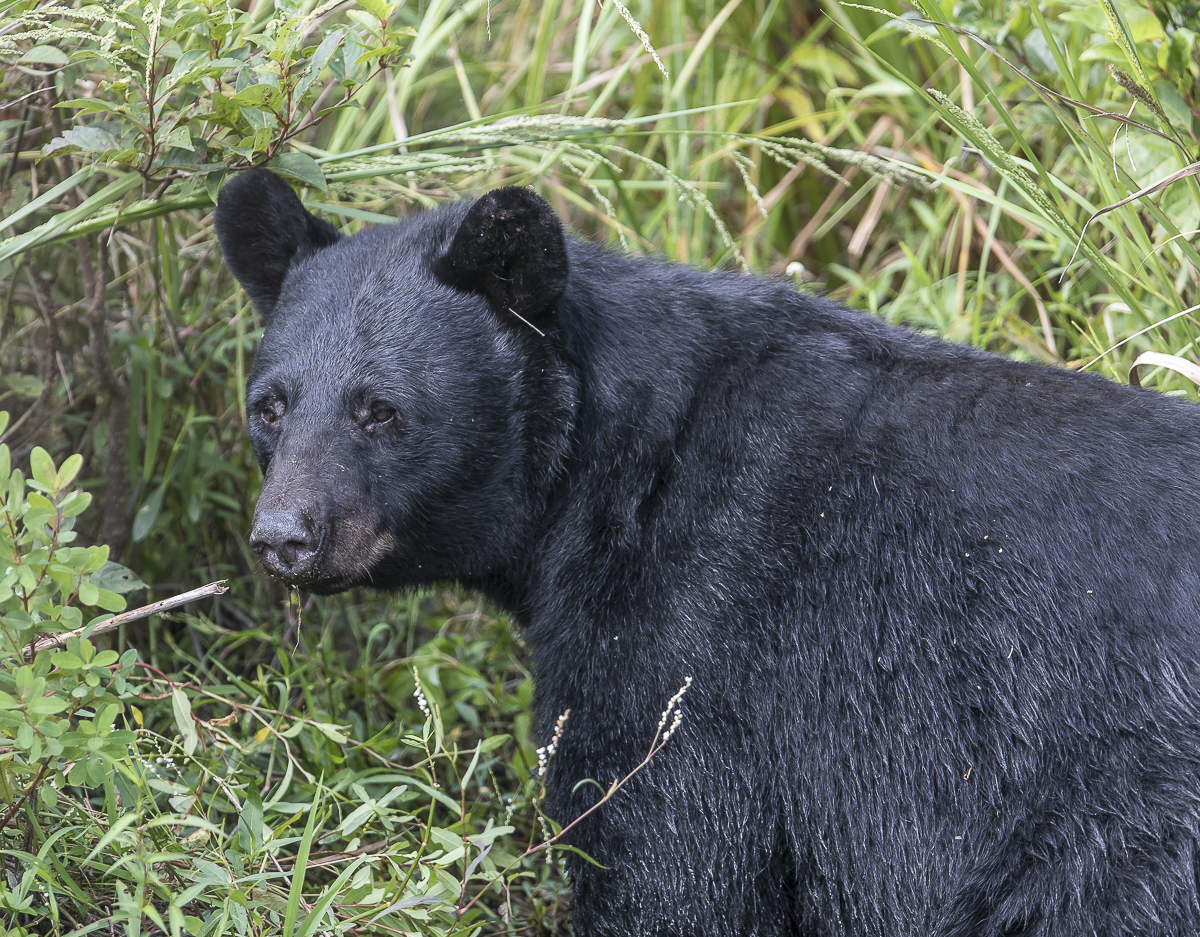
When I stepped through the vegetation, my eye caught movement on the opposite side of the canal. There were two of us surprised by this encounter…me (sans camera) and a very large boar Black Bear. I slowly moved back to retrieve my camera, and he grudgingly left the water and ambled back into the vegetation, giving me one glance before slinking off and disappearing into the thick greenery. That was bear #3 of the morning, but the closest by far.
This large bear was in shallow water at the edge of a canal when I accidentally surprised him (and me)
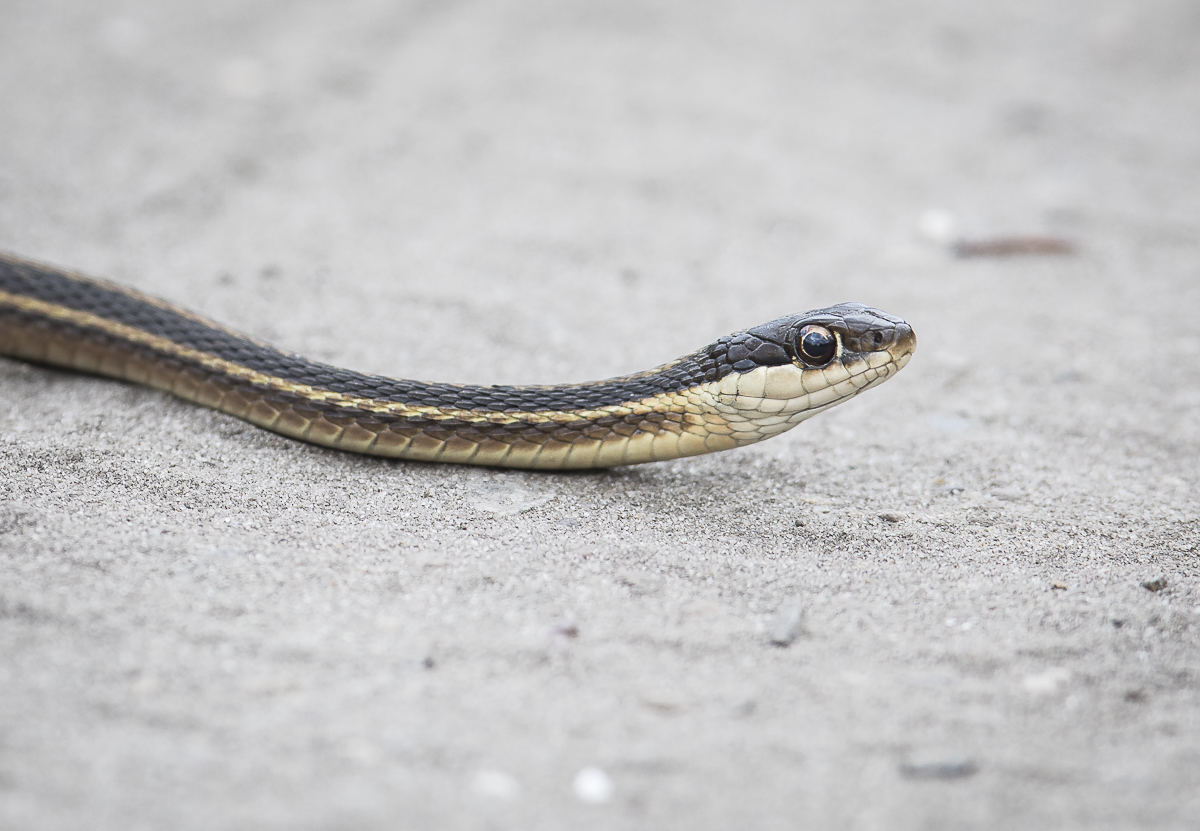
After the bruin hello, I continued on toward the north shore of Pungo Lake. This time of year I always stop the vehicle and scope far down the road ahead of me to see if I see any sticks moving in the road – snakes. As soon as I headed down West Lake Rd., I saw a skinny twig move. I rushed up to it and was pleased to see an Eastern Ribbon Snake. This species is usually found near water (this one was crossing from a canal to a large marshy area) and feed on small fish and amphibians.
Eastern Ribbon Snake (Thamnophis sauritus)
I hiked in to a small pond on the back side of a refuge crop field in hopes of seeing a bear cooling off, but there were none. However, I was rewarded with a couple of unusual robber flies flitting about in the tall grass. I could see they had very long, dangling legs. As I walked, they would fly off a few feet and land again in the grasses, hanging by one or two of their legs in the tangle of linear blades. One in particular caught my eye as it was carrying a prey item (I think some type of Digger Wasp). I had my telephoto lens so it was a challenge to get down and find a spot that wasn’t entirely blocked by crisscrossed grass blades.
One of the so-called Hanging-Thieves Robber Flies (probably Diogmites salutans), showing its typical posture when consuming prey – dangling by one or two legs and clinging to the prey with the others
When I looked it up back home, this group goes by the apt name of Hanging-Thieves. They usually prey on wasps and bees but are known to also take dragonflies and other robber flies.
Looking head-on as it shows its strength by hanging on with one leg
I soon headed over to my favorite location, “Bear Road”, to see if it had the usual array of parked cars at the gate. To my pleasant surprise, their was only one vehicle and I could see one person walking back toward his car. I decided this was my lucky day and I parked and headed down the road for the first time this season. My knee has been bothering me a lot lately so, instead of my usual habit of walking down the road and into the woods, I carried a camp chair and sat toward the far end of the corn field that lies across the canal from the grassy road. I have seen many photographers and bear watchers do this over the years (especially in the recent past) but I always hesitated. I especially don’t care for people sitting adjacent to major bear paths that run from the woods, across “Bear Road” and into the canals for access to the corn. I just think it may cause too much stress if the bears encounter a person up close as they emerge from the woods. If I am walking, the bears can usually see me at a distance, take action to avoid me by going into the woods until I pass, and then come back out to resume their trek to the food bank. After spending a couple of hours sitting along the road with no one else around, I decided I was correct in my concerns.
I spotted three bears crossing into or out of the field within 15 minutes of being there. Things settled down and I waited another half hour before a young sow and lone cub of the year (COY) appeared far down the road, walking my way. She was steadily moving toward me with the cub stopping, then scrambling to catch up. At one point she stood up briefly, looking my way, but probably unsure of what I was. I was sitting along the edge of the road but not in the tall grasses due to the abundance of poison ivy, so i wasn’t particularly hidden. I expected her to do what most bears (especially those with cubs) do, and head into the safety of the woods and either attempt to wait me out or go beyond me before coming back out into the road. But, she didn’t, she just kept coming.
Sow and cub of the year headed toward the corn field
I started talking to her, advising that she shouldn’t get any closer and hoping she would head off. She paused, the cub stood up, and she continued on. The cub then decided it wanted none of this strange thing and headed into the woods. Mom just walked past me, never even giving me a glance as she did. I will admit, that is the first time I have ever pulled my bear spray out of the holster, but I now think she is just so used to people being on that road and sitting just like I was, that she wasn’t spooked. And that gives me pause, as that probably is not in the best interest of her (or the people).
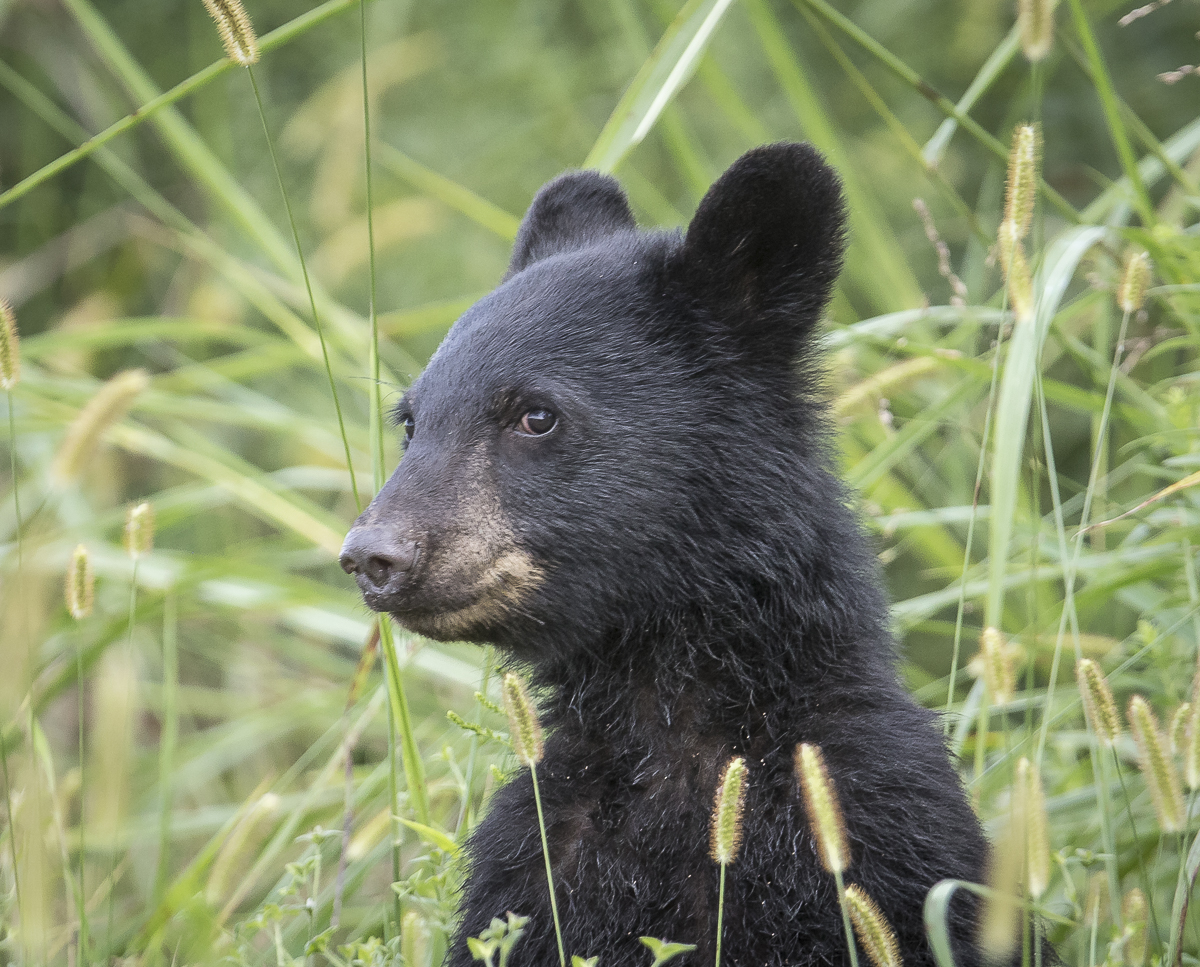
The cub gives me a wary side eye (cropped image with telephoto)
Once she was 100 feet or so beyond my location, the cub came racing out of the woods near her and they both continued to a crossing point, swam across the canal and headed into the corn.
A few minutes later, another sow and two cubs came walking down the road. This time, however, she noticed me from far down the road and began to stand up trying to ascertain what was ahead.
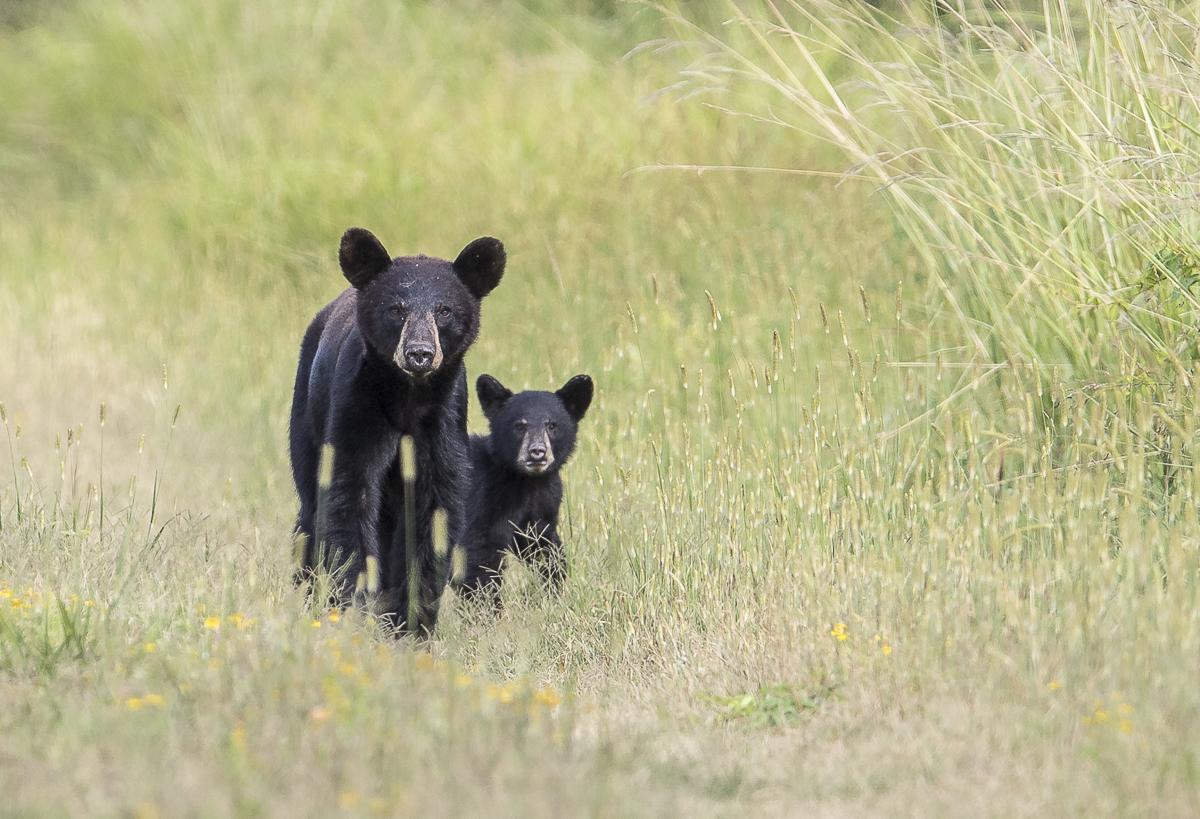
Another young female with two COYs (one is hidden behind mama in this pic)
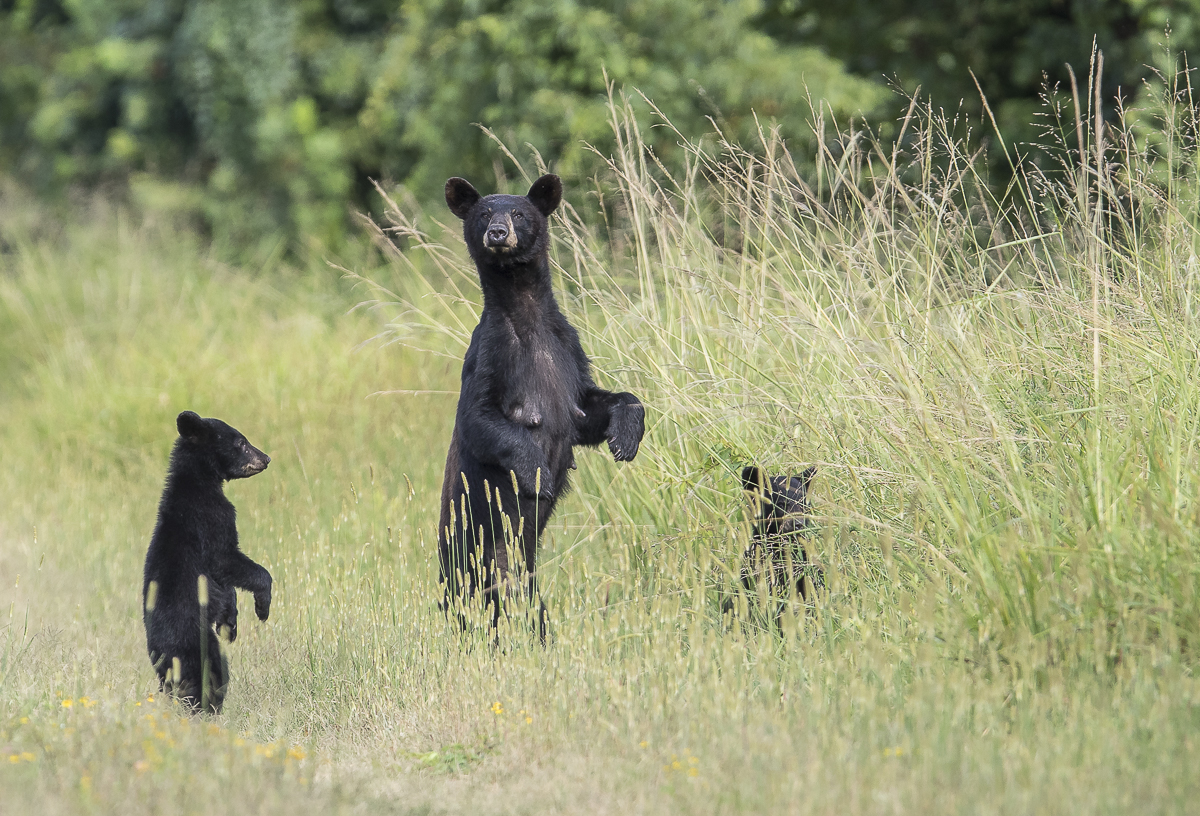
Black Bear and cubs walking down the road and she takes note of the strange object ahead (me)She stands up again and decides she wants no part of whatever that is ahead and takes her cubs into the woods
After getting within about 50 yards or so, she stands up one more time and then takes her young ones into the woods. A few minutes later, she and the cubs emerge far beyond where i am sitting. She looks back my way, and walks on toward a spot to cross the canal.
One of the cubs mimics its mama and looks back at the strange object that had been in their path
Some other bear watchers showed up and I soon found myself exchanging pleasantries with three people on E-bikes (the apparent new rage for wildlife photographers on the eastern refuges). Four other people hung back at the gate and watched. I decided it was time to move on, but another bear appeared far down the road before I could get packed up. It did something strange and came out of the woods, and walked around several times, sniffing, and then laid down in the road. It remained there for several minutes, yawned a few times, then got back up and moved across into the tall vegetation to swim the canal. As it disappeared into the tall grasses, two COYs came streaking out of the woods to join her.
A bear decides to chill in the middle of “Bear Road”
So, I left the refuge that day with a total of 18 different bear sightings (plus a couple of repeats of bears that crossed into and then back out of the corn field). A magical day to be sure, but one that left me wondering about my impact on the bears and how having so many people now on that road may be habituating some bears to humans With bear hunting season approaching in December, I worry that bears that become too used to us will not be as wary as needed to survive. Plus, it is never a good idea to have bears and humans become too complacent about each other. I probably won’t be sitting on that road in prime bear season in the future, but will continue with my former mode of slowly walking, letting the bears know way ahead of time that there is a human nearby. Not sure if it makes much difference, but it will make me feel better. I suppose the best approach is to watch bears from afar and photograph them from your vehicle whenever possible. Here’s hoping bears and humans continue to coexist on this and other refuges because there really is something special about seeing bears in the wild.













































 Roads End Naturalist