Welcome to our new website! We hope you like it. Please let us know if you notice something missing or that needs a correction. ~Mike & Melissa
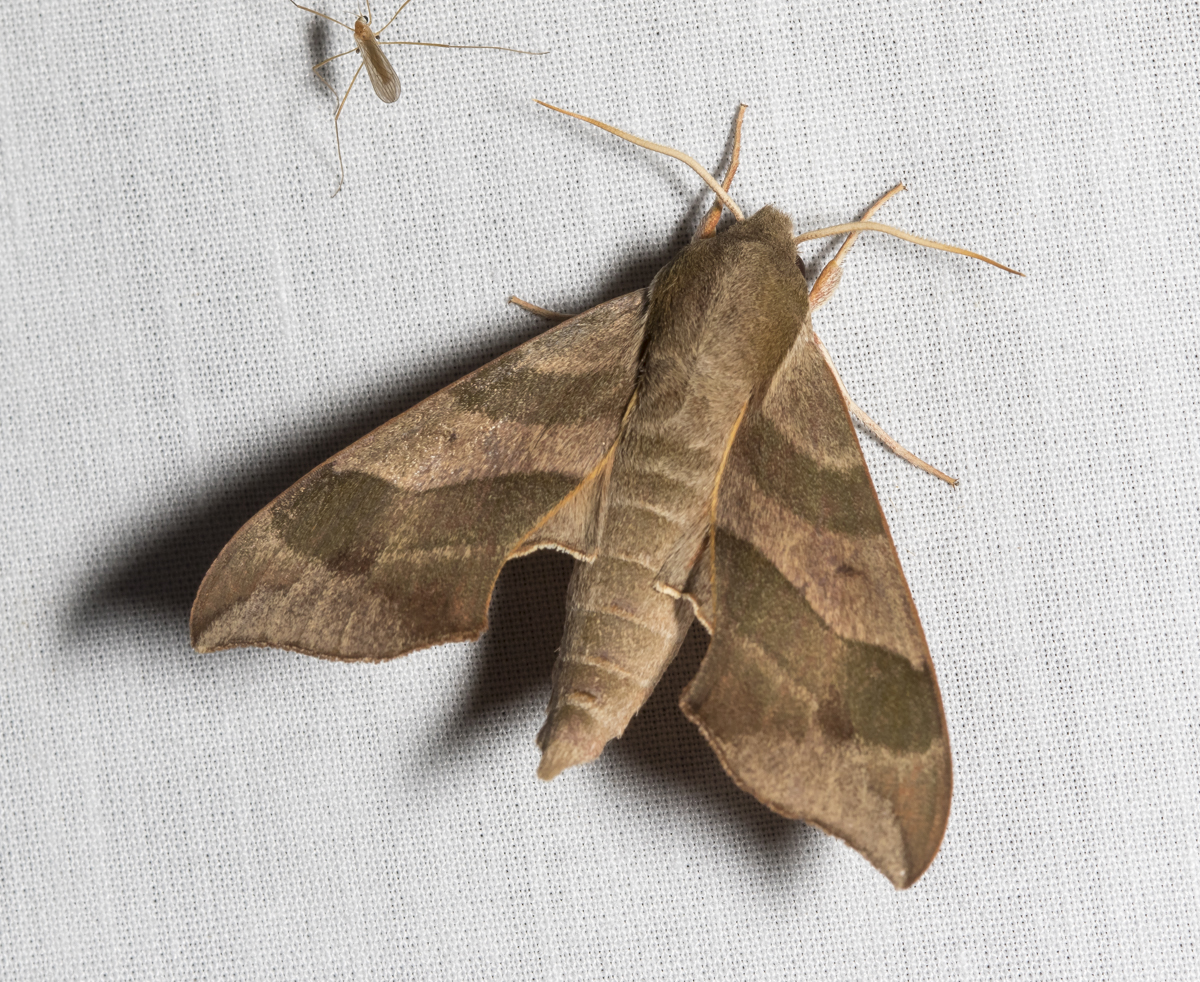
  • Discoveries

    The art of teaching is the art of assisting discovery.

    ~Mark Van Doren

    Melissa was producing a short video on trees as part of her museum educational offerings for teachers when she made a fascinating discovery. While filming the segment, she was encouraging folks to observe trees in their neighborhood and look for interesting things living on them. When she grabbed a hickory leaf and looked at it, she found one of my favorite spiders – a Magnolia Green Jumper (Lyssomanes viridis). We have a lot of these beautiful little jumping spiders in our yard and woods, but this was one even more exciting than usual as it has just molted.

    Magnolia Green Jumper and shed 2
    Magnolia Green Jumper next to its old shed exoskeleton (click photos to enlarge)
    Magnolia Green Jumper shed
    Recent shed of a Magnolia Green Jumper

    I have posted on these amazing arthropods a couple of times in the past, But here was a spider shed and a freshly molted spider together on the leaf where this magic had just occurred. If you look closely, you can see how the spiders’ cephalothorax (the fused first two body parts) pops open during the molting process and the old legs split open. The spider is then able to pull itself out of its old skin as a larger version of itself. Some spiders hang from a silk thread when they do this, but it looks like this species makes a silk pad to anchor its old body, and then crawls out as a new spider.

    Magnolia Green Jumper on leaf
    Freshly molted male Magnolia Green Jumper

    This one is a male as you can see by the enlarged tips to its pedipalps (those appendages that look like two short legs right in front of its face). Male spiders typically have swollen tips (often described as boxing gloves) that they transfer their sperm to before mating. I guess it is safer to keep your distance during courtship if you are a male spider (especially since you are usually smaller than your ravenous mate). After a couple of shots, I brought the spider inside for a photo shoot in my collapsible white box. I’m still learning the tricks of photographing on white backgrounds, but it does often highlight details you may not otherwise notice.

    Magnolia Green Jumper on white background
    Magnolia Green Jumper posing inside a white box

    One of the issues in a white box is the creatures don’t tend to take direction very well, but this little guy finally settled and looked straight at me for a couple of quick portraits.

    Magnolia Green Jumper on white background close up
    The impressively large anterior median eyes (those two large eyes on front) of a Magnolia Green Jumper

    One of the things I love the most about these spiders is how it is really easy to see the retinas in the large eyes on front move around inside as they spider looks around (the lenses are fixed to the the carapace, but the retinas inside can be moved by tiny muscles). When the eyes become dark, the spider is looking directly at you (I think this guy is looking at my pandemic haircut). After a couple more shots, I took him back outside to patrol the yard in his new duds.


  • Red and Black

    Without black, no color has any depth…

    ~Amy Grant

    A simple post this morning of something I rarely see, a top side view of a male Scarlet Tanager. They are still visiting the mulberry tree out back and have consumed all the easy to reach berries, so they are exhibiting some impressive acrobatics to snag the remaining fruit. This provides some great views of their amazing color scheme.

    Scarlet tanager male dorsal view
    Dorsal view of a male Scarlet Tanager (click photo to enlarge)
  • Still Hanging

    Red is the ultimate cure for sadness. 

    ~Bill Blass

    I’ve been working in the shop on a project and, as was the case last week, the tanagers are still at it, although the mulberry supply is dwindling fast. I am surprised at how tolerant they are as I walk to and from the shop door, but I am happy they allow me to take a break from my chores and admire their redness. Here are a couple of shots of a male Scarlet Tanager that was chowing down on the berries yesterday. By the way, I think I have now seen at least three separate males in this tree based on their slight differences in yellow patches.

    Scarlet tanager male in leaves
    Male Scarlet Tanager scoping the branches for fruit (click photos to enlarge)
    Scarlet tanager reaching for berry
    The berries that were easy to reach are mostly gone now, so it requires a little extra effort to grab one
    Scarlet tanager getting berry
    The birds are hanging upside down or flying up from underneath the branch to grab berries
    Scarlet tanager eating berry
    They usually pull off berry and stem and then perch nearby to chew up the berry and spit out the stem
  • Mulberry Moments

    Green gives and red receives. Nature is colour coded!
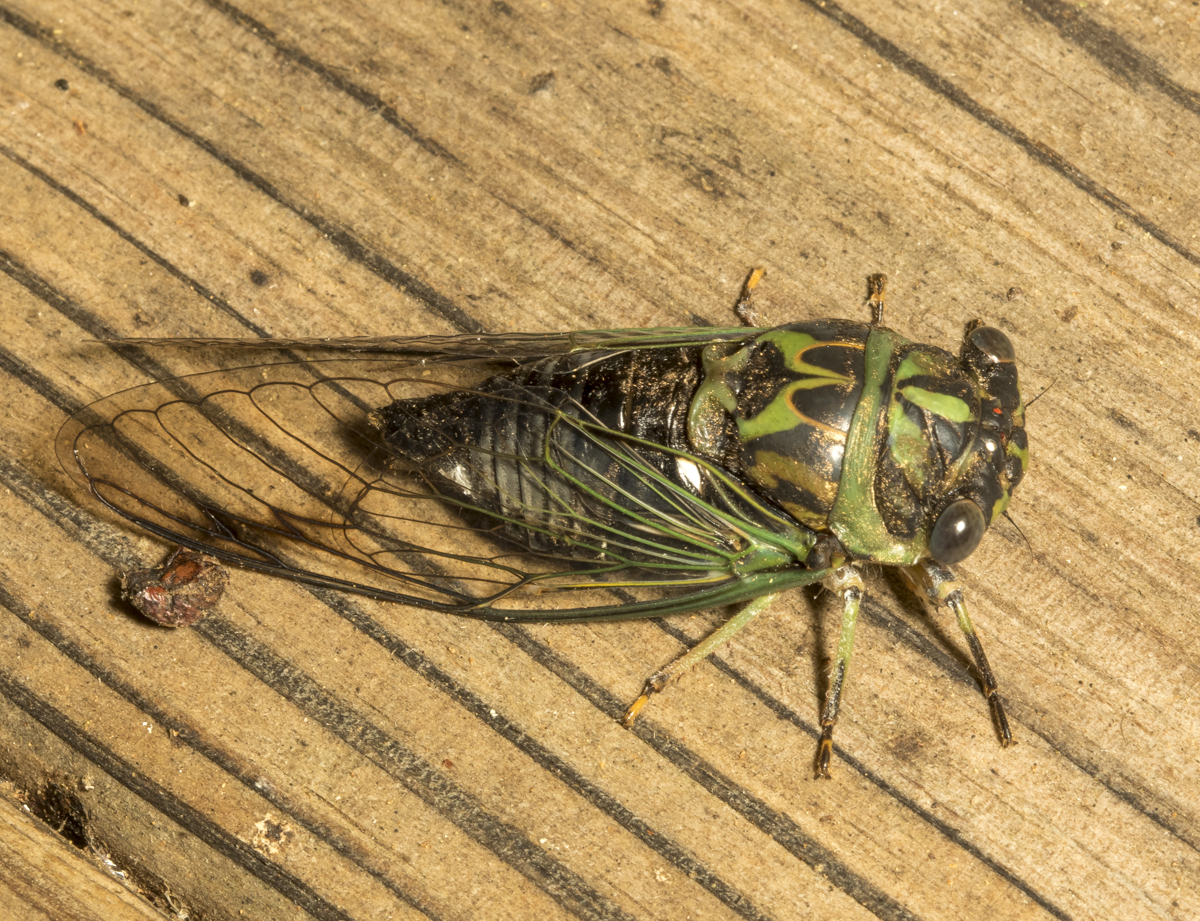
    ~Sonali Mohan

    Some of you may have known him, and, even if you didn’t, you may have one of his bluebird boxes in your yard. Jack Finch started a non-profit, Homes For Bluebirds, to help restore his beloved Eastern Bluebird to the skies of the southeast. He built thousands of quality bluebird nest boxes and was tireless in his efforts to promote ways to enhance bluebird populations. When I worked at the museum, I made frequent trips out to his farm to purchase nest boxes for schools and to talk about bluebirds. He was always experimenting with ways to provide more food for bluebirds from raising mealworms to selecting for late blooming dogwoods that would produce berries later into the season. For awhile, he promoted mulberry trees as a food source, and that is how I ended up with a sapling many years ago.  I planted it in what was then a sunny spot near my shop, and now, the tree produces berries every spring for the local wildlife. I hope Jack would not be disappointed that his tree has more green and red than blue.

    It turns out that Scarlet Tanagers are frequent visitors and berry pickers in this tree every spring. This week, as I was going in and out of the shop while tinkering on some woodworking projects, I kept seeing tanagers feeding. So, I brought out the camera, set up the tripod at the door, got comfortable in a chair, and waited.

    Male scarlet tanager with berry
    Male Scarlet Tanager eating a mulberry (click photos to enlarge)
    Scarlet tanager female reaching for berry
    Female Scarlet Tanager reaching for a berry
    Female scarlet tanager
    Female Scarlet Tanager in a rare spot of sunlight in the branches

    The tree leans out over the driveway and has one branch down low at eye level. There are only a few spots where a bird can perch that present a clear shot through the branches and leaves, but it was great fun watching them come and go. They are active feeders in that they often have to flutter their wings to maintain their balance while reaching out to the twig tips for berries, adding to the photography challenges.

    male scarlet tanager 1
    This male landed in spot where the green background provided a nice contrast to his brilliant red plumage

    At first, I was usually seeing a pair, a male and female, coming together. On one visit, another male showed up! And a few seconds later, a male Summer Tanager flew in (but avoided having his picture taken), along with what I first thought was an immature male Summer Tanager. It had a lot of yellow coloration mixed with the red. In reading online, it seems that some older females may have a lot of red overtones (females are usually yellow), and this one’s colors are more blended than patchy. I’m not exactly sure which sex this one is, but now I’m leaning towards a female, as the immature males I have seen in the past were more splotchy.

    Immature male tanager
    A Summer Tanager with a lot of red and yellow coloration

    That certainly was a highlight of my mulberry viewing – five tanagers at once! In between tanager feedings, I saw a lot of other species going about their daily routines.
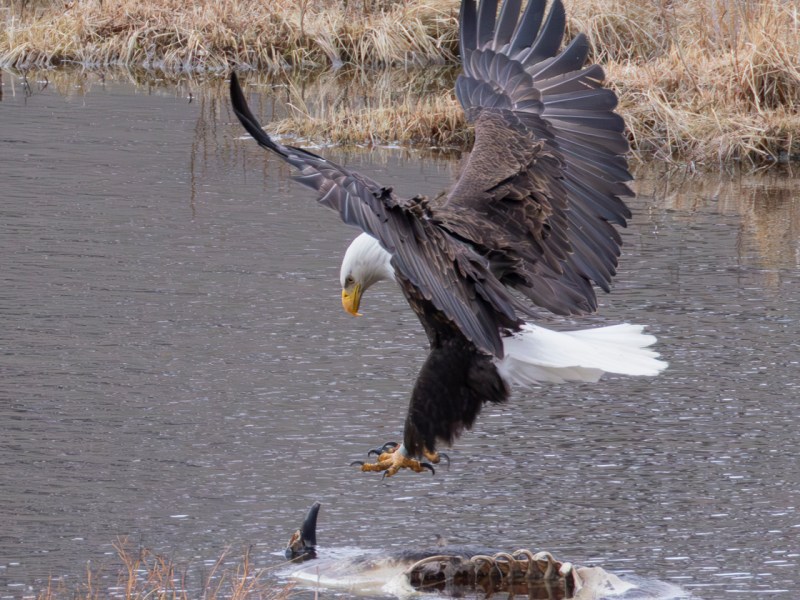
    female cardinal
    This female Northern Cardinal stopped in for a quick visit
    Swainson's thrush
    A Swainson’s Thrush was feeding on the few remaining American Holly berries on a nearby tree
    Wood thrush
    A pair of Wood Thrush made regular foraging trips to the area just outside the shop
    ovenbird
    An Ovenbird calling nearby finally came for a quick visit
    Chipmunk watching me
    An Eastern Chipmunk, with both cheeks full, sat and watched me for about 5 minutes before deciding I was safe and moving on

    A few notables that I saw but didn’t get photos for included Chipping Sparrows, Carolina Chickadees, Tufted Titmice, the family of Carolina Wrens that fledged from inside my shop, Rose-breasted Grosbeaks, Blue Jays, a Red-tailed Hawk, and a Black-throated Blue Warbler. But, the stars of the show are definitely the male Scarlet Tanagers.

    side view male scarlet tanager
    The red is so intense on a male Scarlet Tanager that it makes a cardinal almost seem pale

    I think Thoreau summed it up nicely in his description of a male Scarlet Tanager…

    The tanager flies through the green foliage as if it would ignite the leaves.


  • Transformation

    We delight in the beauty of a butterfly, but rarely admit the changes it has gone through to achieve that beauty.

    ~Maya Angelou

    Remember how excited I was to finally photograph a chrysalis of a Falcate Orangetip butterfly in that post a few days ago? Well, I kept watch on the remaining caterpillars, hoping to catch one in the act of transformation, and got lucky again. One morning when I checked on the larvae, I found one in its prepupa stage. That is the stage between a free-living caterpillar and its pupa (chrysalis). A butterfly larva usually finds a sheltered spot and attaches itself to a twig or leaf (or whatever it usually forms its chrysalis on) with silk. In many groups, the prepupa hangs down below something (like a monarch in its J-shaped prepupa). For this species (and swallowtails), it attaches itself at the rear end with silk and then forms a loop of silk that it slips its head through. The position reminds me of a telephone line worker attached to a pole with a safety harness. The prepupa stage usually lasts about 24 hours for the species I have observed, so I set up a photo chamber with the prepupa in it, and waited.

    photo chamber
    My dining room macro studio with light box, LED light for video, camera and flash for stills (click photos to enlarge)

    By the way, I want to thank Sam Jaffe of The Caterpillar Lab for his suggestion of the Folio brand portable light box as a tool for photographing insects. It has its own LED light strips and changeable background colors. And it looks good on a dining room table in times when no one can come to dinner.

    The prepupa had formed during the night, so I anticipated it would be the next morning before it transformed. The first one managed to transform during the early morning hours before even I get up. This one was more obliging, and the next morning was still a prepupa, but starting to move slightly. I got some coffee and waited…for the next 30 minutes or so it just made slight wriggles. Then the C-shape started to straighten out, and I knew, from watching swallowtail prepupa do this, that things were about to happen. The video clip below shortens what took about 15 minutes to occur into 1 minute. The footage is at 5X the actual speed and I edited out clips to shorten it. I’ll let this amazing act speak for itself…

  • Flower Parts: The Iris’ Have It

    In the Spring a fuller crimson comes upon the robin’s breast;
    In the Spring the wanton lapwing gets himself another crest;

    In the Spring a livelier iris changes on the burnish’d dove;
    In the Spring a young man’s fancy lightly turns to thoughts of love.

    ~Alfred, Lord Tennyson
    Siberian iris, Iris siberica

    I’ve been meaning to take a look at this more common backyard flower for a couple weeks now, ever since the Siberian iris (Iris siberica) began blooming in our yard. It’s almost done now, but the native blue flag iris (Iris virginica) is just beginning to open up in big numbers in our pond, so we should have irises around for a number of weeks yet.

    Iris is one of those flowers that a lot of people have in their yard, so it might be a little more accessible to some to take a closer look at than wood poppy or Jack-in-the-pulpit. And it has large parts that are fairly easy to see… but they’re a little bit complicated, and figuring out which parts are which was more challenging than I expected!
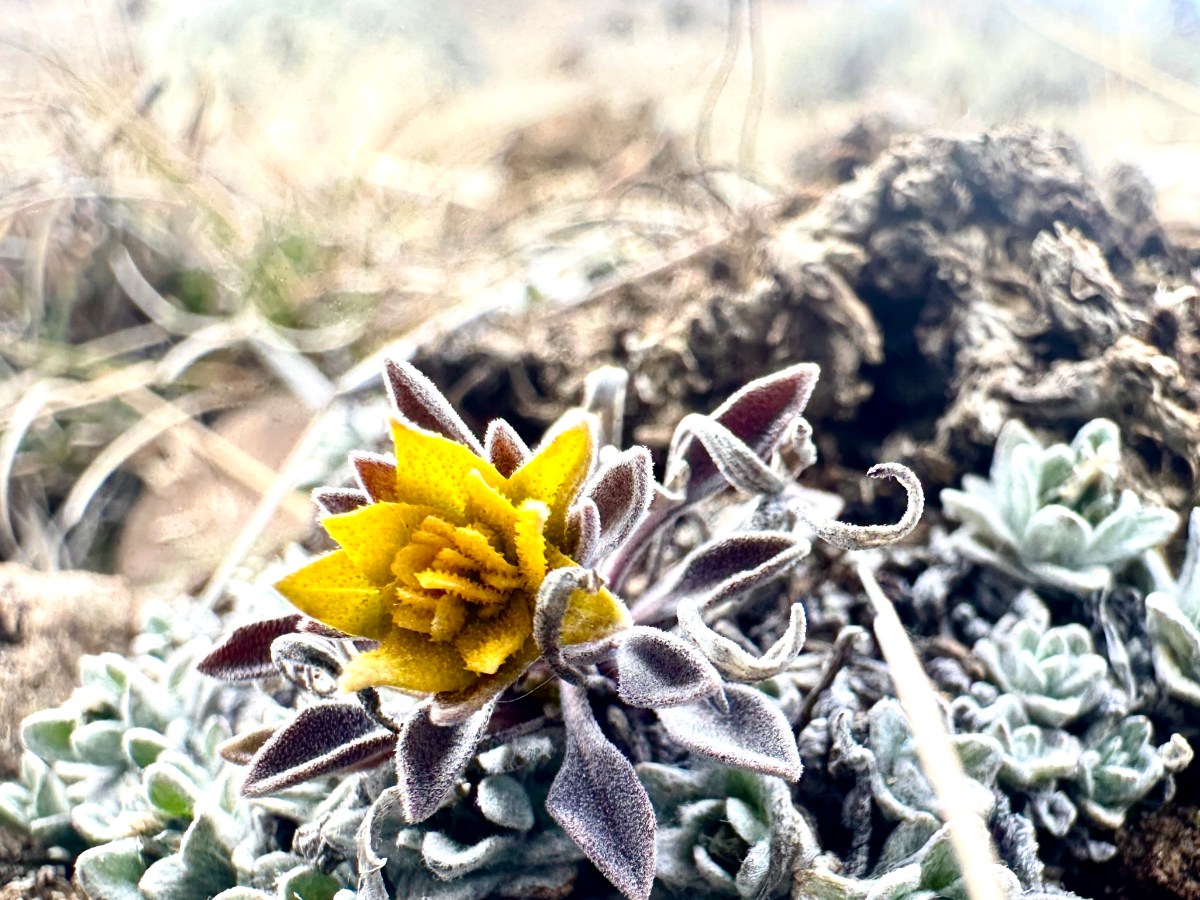
    As usual, I started with a hunt for the sepals. But my typical sepal-finding technique, seeing which parts enclosed the flower before opening, didn’t work quite as well as it has for some of the others flowers I’ve examined. The iris flower emerges from a swollen fold in the leaves of the plant (there’s probably a proper botanical term for this but I don’t know what it is!).

    Opening iris bloom

    I was pretty sure that the green around the flower was leaf and not sepal. So I had to refer back to the real definition of a sepal, which is the outer whorl of the corolla (petals + sepals). Here’s the base of the flower where the sepals and petals join the stem:

    Base of iris flower

    This was still confounding, as it looks like all six parts of the corolla are attached at the same level on the stem. Finally, I had to give in and check out a favorite flower reference, A Guide to Enjoying Wildflowers by Donald and Lillian Stokes. According to Stokes, the three larger and frillier parts are the sepals and the smaller, more upright ones are the petals.

    The lowest part is this photo is the sepal. Two of the petals are to the right and left of the sepal. Ignore the bit in the middle, directly above the sepal, for the moment…

    So with an iris, it seems the showiest “petals” are actually sepals! I found another good botanical word to describe this: the sepals are “petaloid.” The three petals are the slightly more modest, plainer parts situated between the sepals (you can see them well in the very first picture).

    I felt like I needed a little more proof to help me understand this all better, so I went out for a look at our blue flag iris, which is just beginning to open up and had a better variety of flower buds.

    On this larger flower bud, note the green color at the base of the sepals. If you refer back to the photo of the base of the flower, you can see how there is some green at the outside base of the sepals that is lacking on the petals. This is the case on the open blue flag iris flowers as well. This helped me feel more confident in what I read in the Stokes guide – that the larger, showier petal-like structures are the sepals. Phew. Sepals are definitely the toughest!

    The reproductive structures in an iris are also a bit different from some of the other flowers I’ve looked at. The stamen has the fairly typically eye shadow applicator appearance, but it hides under another petal-like structure. It starts out fairly elongated and smooth, but shrinks and shrivels as it produces its white pollen (see below).

    The white, pollen-covered anther at the tip of the stamen hides under another petal-like structure.

    So what’s the petal-like part above the stamen? It turns out that’s the pistil. Or more technically, applying my new vocabulary, a petaloid pistil. The curved lip directly above the anther (pollen-producing part of the stamen) is actually the stigma. The feathery bit above the stigma (the end of the petaloid part) is part of the style (the part that connects the stigma to the ovary). As a pollinator crawls down the “throat” of the flower, following the striped nectar guides on the sepal, any pollen it’s carrying on its back is scraped off by the stigma. Then it hits the anther and picks up more pollen to carry on to the next flower. Mike described this process well in a post about one of our native iris species, the crested dwarf iris, in a post from a few years ago. In both the crested dwarf iris and the blue flag iris, the pistil lays tightly against the sepal, so a pollinator really has to force its way in. On the Siberian iris, the pistil is more upright, providing easier access to the stigma and anther, but perhaps it is less efficient at ensuring pollination?

    If all goes well, the flower is pollinated and a pollen tube grows down the petal-like style to the ovary. In our yard, many of those ovaries are already beginning to swell.

    Ripening ovary; the shriveled brown bit attached at the tip is the former flower!

    Inside, the ovules are developing, getting ready to seed in the next round of iris.

    Dissected ovary with developing seeds.

    Of course, this species tends to spread more easily via underground rhizomes, making it a prolific perennial in our yard!

  • Success

    To pay attention, this is our endless and proper work.

    ~Mary Oliver

    twig with chrysalis
    This is what I am very excited about (read on) (click photos to enlarge)

    I imagine many of you already suspect me to be, shall we say, a nature nerd. This post probably will prove that beyond a shadow of a doubt. You may recall a post a few weeks back where I photographed a pair of one of my favorite spring butterflies, the Falcate Orangetip, doing some courtship flights, and, later, finding where a female had laid eggs.

    Falcate orangetip butterflies mating behavior 1
    Courting pair of Falcate Orangetip butterflies from late March

    I mentioned I have always wanted to find and photograph one of their unusual chrsyalids, but, in spite of searching for them near some of their host plants (the wild version is Cutleaf Toothwort) on our property most springs, I had yet to succeed. So, when I found a female laying eggs back in March, I dutifully collected a couple of their weedy version of host plant (Hairy Bittercress) containing eggs, potted up the plants, and brought them inside to observe. Finally, on March 30, the first of what I thought were two collected eggs, hatched. Here is that post. What I learned over the next few weeks is that these guys are very slow eaters, and that the bittercress starts to dry up in the pots and yard before the caterpillars seemingly have time to complete their cycle.

    Falcate Orange-tip caterpillar late stages on white background
    Falcate Orangetip caterpillar, two weeks after hatching

    So, I started collecting bittercress plants from the yard and putting them in floral tubes with water as a food source for what I soon discovered were five larvae. The two eggs I had originally collected hatched first, but there were some unseen eggs that hatched later, perhaps on plants I brought in as food.

    Falcate Orange-tip caterpillar late stages
    They fed for another two weeks and then…

    The two large larvae kept feeding and growing and I was worried I would run out of decent bittercress plants as a food source. Then, on April 29, I checked the plants and found one of the large larvae had formed a prepupa (the stage between a caterpillar and a chrysalis). It was in a pose similar to a swallowtail prepupa, with the rear attached to a silk pad, the front of the caterpillar passing through another silk loop, and the whole body curled in a C-shape (or maybe more like an apostrophe)..

    Falcate Orange-tip prepupa
    On April 29, I found one caterpillar had made a prepupa

    Over my years of raising caterpillars for programs, I have witnessed many prepupa transform to the chrysalis (it is really magical to watch). The prepupa stage usually lasts about 24 hours, so I Imagined it would transform overnight or early the next morning. I photographed it and left it sitting out on our dining room table/macro studio, hoping to catch it in the act of transforming. I checked on it once in the middle of the night, but it was still in the same position. Close to the time they shed the last caterpillar skin to reveal the newly formed chrysalis underneath, the prepupa starts to shudder and then straighten out. Then it happens quickly, usually within a matter of minutes. As it turned out, this prepupa decided to complete its performance sometime in the wee hours of the morning, so when I awoke and checked on it about 7 a.m., the chrysalis was already there.

    Falcate Orange-tip chrysalis
    When I woke up the next morning, success!

    But, I had finally succeeded in seeing one of their strange thorn-mimic chrysalids. No wonder I have never found one. Look at the first photo in this blog again and you can see how well this chrysalis blends in to a tree trunk or twig, the usual places in the forest where it is formed.

    Falcate OrangeTip chrysalis with pencil eraser for scale
    The chrysalis with a pencil eraser for scale

    Plus, it is a pretty small, cryptically-colored chrysalis, making it even more challenging. Needless to say, I was geeking out when Melissa came into the dining room (the things she puts up with…although she thought it was pretty cool as well). With a few larvae still feeding, I might have a shot at witnessing the transformation, I’ll keep checking and building my nerd street cred.

  • Beginning as Poop

    Question: What is the white stuff in bird poop?

    Answer: That is bird poop, too.

    ~Kurt Vonnegut

    This is an update to an image I posted a week or so ago about new beginnings in the yard this spring. I found and photographed an egg of an Eastern Tiger Swallowtail on a Tulip Poplar leaf (their most common host plant in our woods)…

    eastern tiger swallowtail egg on tulip poplar
    Eastern Tiger Swallowtail egg laid on Tulip Poplar leaf on April 12 (click photos to enlarge)

    I was surprised how long it took for the egg to hatch, but hatch it did on April 28. It turned dark a day or two before hatching. I went out this morning to check on the larva and it has spun a tiny silk pad on top of the leaf where it stays put much of the day. You can see from the picture that it crawled off an inch or so to feed.

    Eastern tiger swallowtail first instar larva
    This little larva is now 3 -days old

    The larva is currently about the size of a pencil point and has the characteristic black and white markings of early instar swallowtail caterpillars. This is believed to be a bird poop mimic coloration. By sitting still most of the day, they really do look like a little bird turd (and what self-respecting bird would want to eat that?).

    Over the next couple of weeks, if all goes well, the caterpillar will dine at the Tulip Tree Cafe, molt a few times, and grow up to be a snake mimic larva with small fake eye spots.

    Eastern Tiger Swallowtail larva late instar swelling anterior po
    Late instar larva changes from being bird poop to a snake mimic


  • Singing in the Rain

    I’m happy again
    I’m singin’ and dancing in the rain
    I’m dancing and singin’ in the rain

    ~Lyrics from Singing in the Rain by Arthur Freed & Nacio Herb Brown

    I will admit to not quite feeling that happy to wake up to the downpour this morning, but somebody did. At least, they seemed happy right after the deluge stopped. I looked out the kitchen door to check on our little vegetable garden (one of the few down sides of living in our woods is a lack of sun for vegetables, so the garden is small) and spotted something on one of the fence posts.

    Garden
    Our veggie garden as seen from the kitchen door (click photos to enlarge)

    It was our resident male Carolina Wren singing his little heart out. He looked a bit ruffled after all the rain, but he was determined to let everything know he was in good spirits. I grabbed the camera with the telephoto on it and eased out onto the side porch. The only view of him I had was through a small circular gap in the pea plants growing on the line trellis. He serenaded the world for a couple of minutes, dancing his way around the fence top to make sure no matter where you were in the yard, you could hear his loud tea- kettle, tea-kettle, tea-kettle lyrics. So, here is Mr. Wren, singin’ and dancing in the rain…

    Carolina wren singing right
    Carolina Wren in full song mode

    Carolina wren singing right 1
    After a brief shake (in which he lost a feather), the song resumes

    Carolina wren singing
    Here’s looking at you

    Carolina wren singing left
    Okay, I can move on now


  • Suet Sampler

    I don’t feed the birds because they need me; I feed the birds because I need them.

    ~Kathi Hutton

    Sunday was a gray, chilly day here in the woods and the birds were quite active at the feeders. One group of birds, in particular, had my attention, the gorgeous Rose-breasted Grosbeaks. The Rose-breasted Grosbeaks have been back about two weeks. They make a stop of a few weeks every spring on their way to their breeding grounds further north (and in our mountains), and then again in the fall as they head to their wintering grounds in Central and South America. I decided to set up the camera and tripod in our bedroom, open the door to the deck, and record who came to visit the suet feeder mounted on the deck rail. I did something similar a few years back and shared images in another post. This time, I sat for a little over an hour, and tried to take pictures of everything that came in to the feeder. Enjoy the view from our deck…

    Rose-breasted grosbeak male
    Male Rose-breasted Grosbeak (click photos to enlarge)

    It started with a single male and we are now up to our usual number of 9 grosbeaks visiting the feeders – 7 males and 2 females. They tend to come in all at once and spread out between our two feeding stations. Their favorite treat seems to be the sunflower seeds at the platform feeders (they have trouble balancing on the tube feeder). But they are also frequent the suet feeders as well, especially the one on the deck which has a branch underneath where birds can perch and reach up to the suet. Because of our superabundance of squirrels, we use only hot pepper suet, which is a deterrent to mammals, but not birds.

    Rose-breasted grosbeak males at feeder
    Lining up at the suet.
    Rose-breasted grosbeak female
    Female Rose-breasted Grosbeaks are brown with striping and a bold eye stripe.
    Blue jay
    The undisputed piggies at the suet are the Blue Jays. They can quickly take chunks away, but they are a bit skittish, and flush easily if we are outside or walking near widows inside.
    Red-bellied woodpecker female
    A pair of Red-bellied Woodpeckers (this is the female which lacks a full red head) are regular year-round visitors to the suet.
    Downy and chippie
    Downy woodpeckers are also regular visitors, but this spring we also have a pair of Chipping Sparrows feeding in the yard.
    White-breasted nuthatch
    White-breasted Nuthatch.
    Tufted titmouse
    We have a gang of Tufted Titmice that make regular rounds throughout the yard.
    Carolina chickadee
    Carolina Chickadees are with us all year.
    Northern cardinal 1
    A pair of Northern Cardinals visit the feeders every day, but it is mainly the male that feeds on suet.
    Summer tanager
    Another of our special suet visitors is a pair of Summer Tanagers (we have only seen the male thus far).
    Pine warbler with caterpillar
    Pine Warblers are common at our suet in winter but not this time of year. This one stopped by his old diner with a side dish of caterpillar.

    I missed photos of two other birds that eat the suet this time of year – American Crows (who are too savvy to come in while I’m sitting there), and our local pair of Carolina Wrens. They are busy feeding their newly fledged young and don’t have time for an appearance.

    There have been some other good bird finds this week away from the feeders as spring migration is in full swing and our newly arrived breeding birds are setting up territories or starting to nest. I stumbled across an Ovenbird nest with eggs down in our woods while clearing some invasive shrubs (the dreaded Eleagnus). She flew out of her dome-shaped ground nest doing the broken wing act to lure me away. And we have seen and heard a variety of migrants all week long, some that will stay with us through the summer…

    Red-eyed vireo
    A bonus visitor just off the deck – a Red-eyed Vireo, foraging for insects.
    Scarlet tanager
    This is the best I could do with one of my favorite summer species, the vibrant Scarlet Tanager. They tend to be up high in the canopy but should come down lower in a few weeks when the mulberries ripen (a treat for both species of tanagers in our woods).
    Yellow-throated warbler in yard
    Remember how excited we were to see the Yellow-throated Warbler down low along the Roanoke River? Well, the other day one was hopping around in our garden. While this was happening we saw and heard American Redstarts, a Black-and-white Warbler, a Hooded Warbler, and Black-throated Blues. Ah, spring!

Search the Archives

Due to our site update, photos on older posts may not display correctly. Sorry for any inconvenience.


Recent Posts