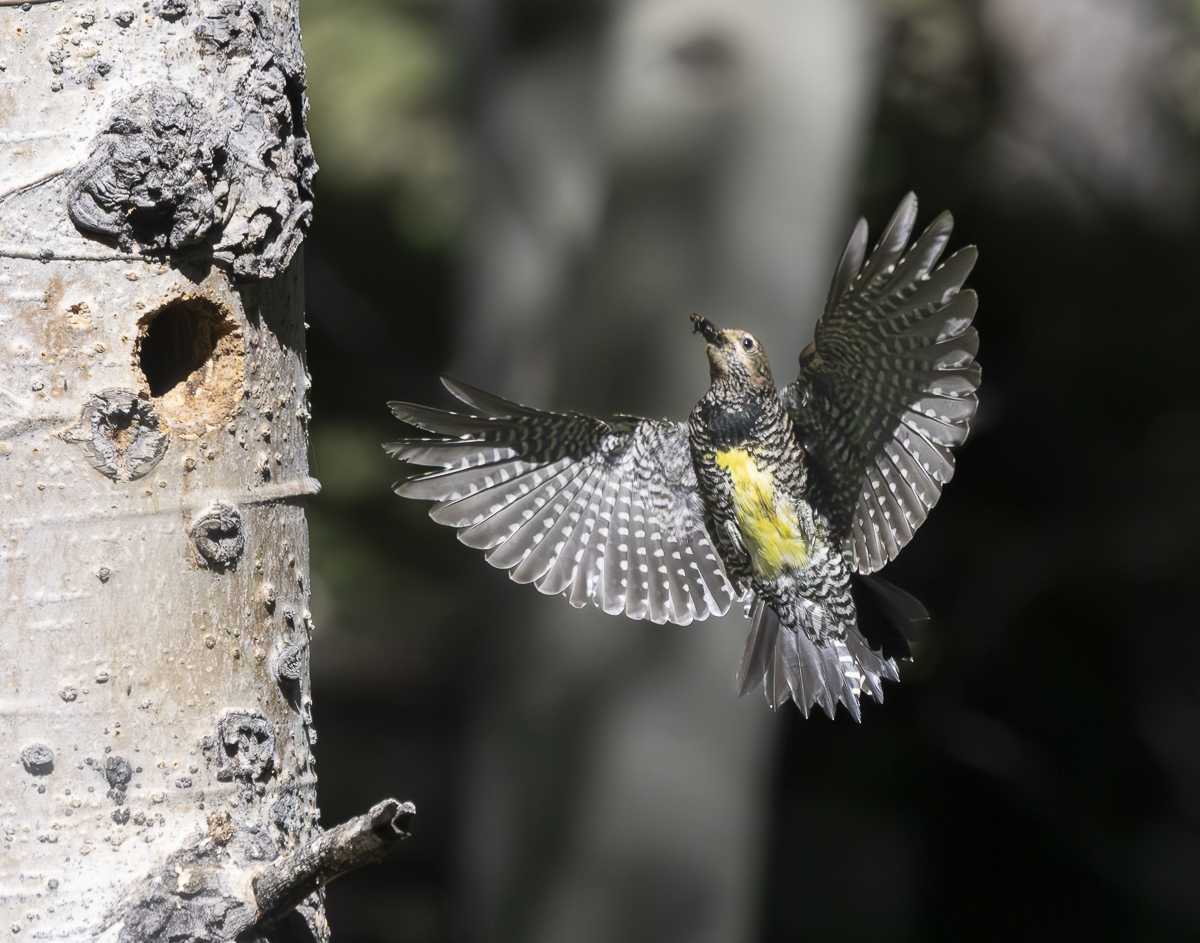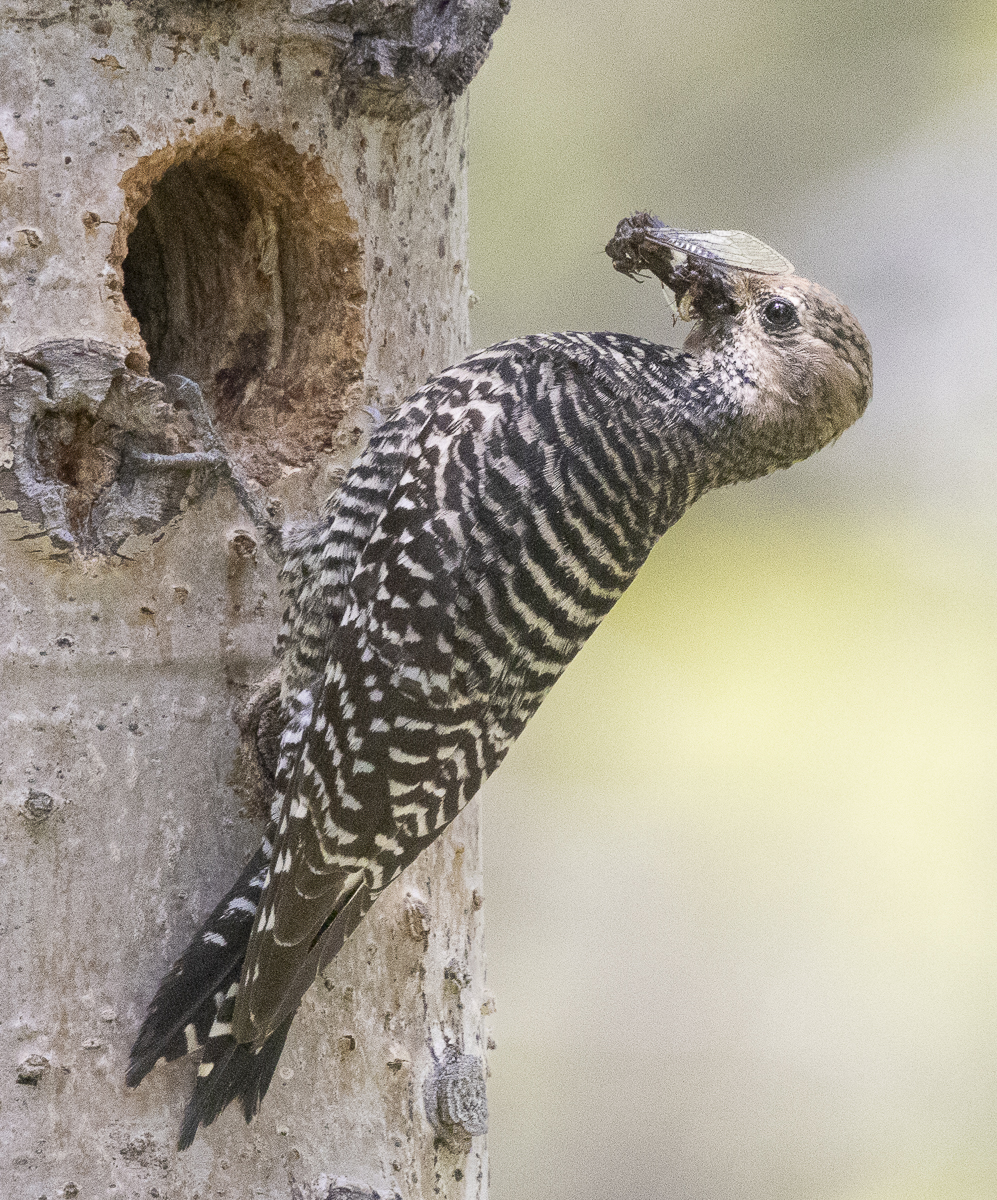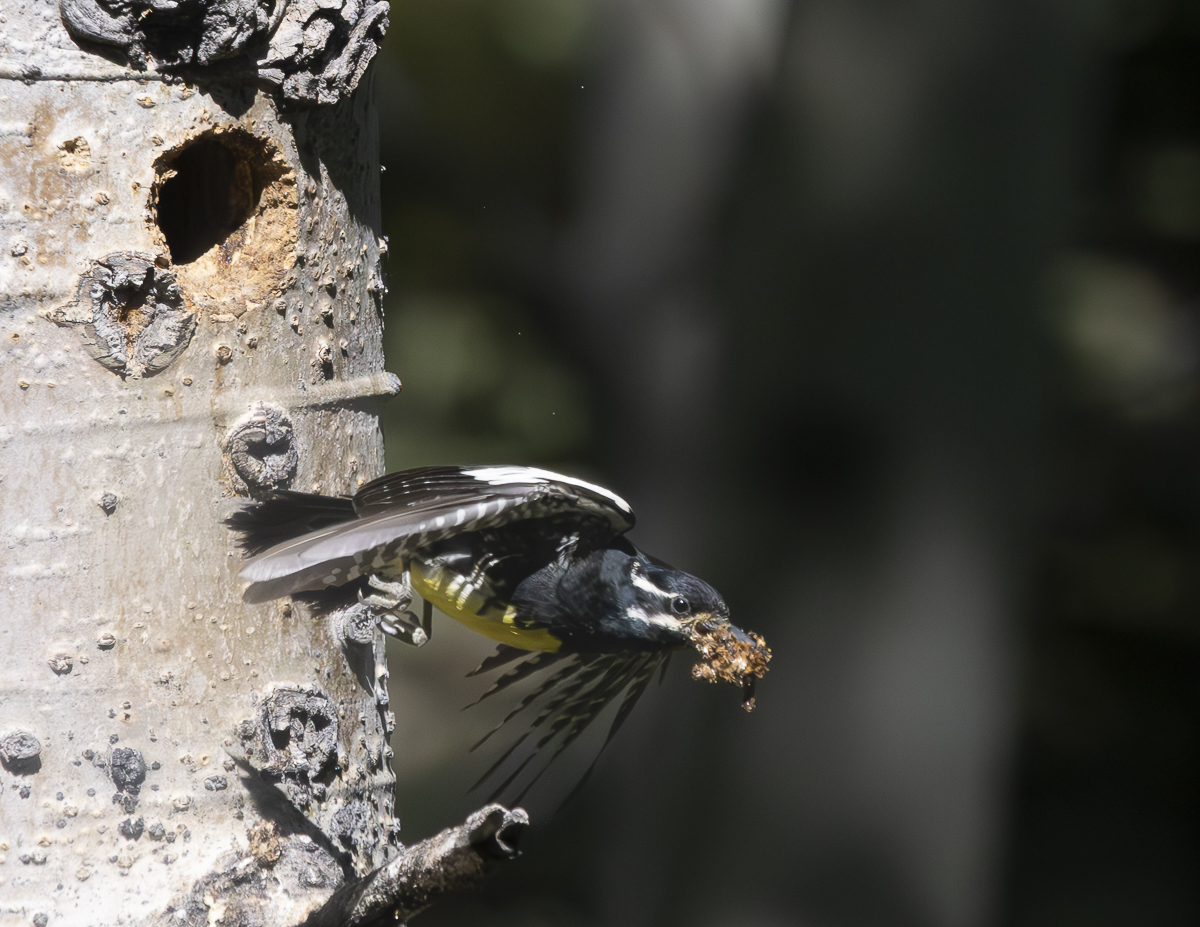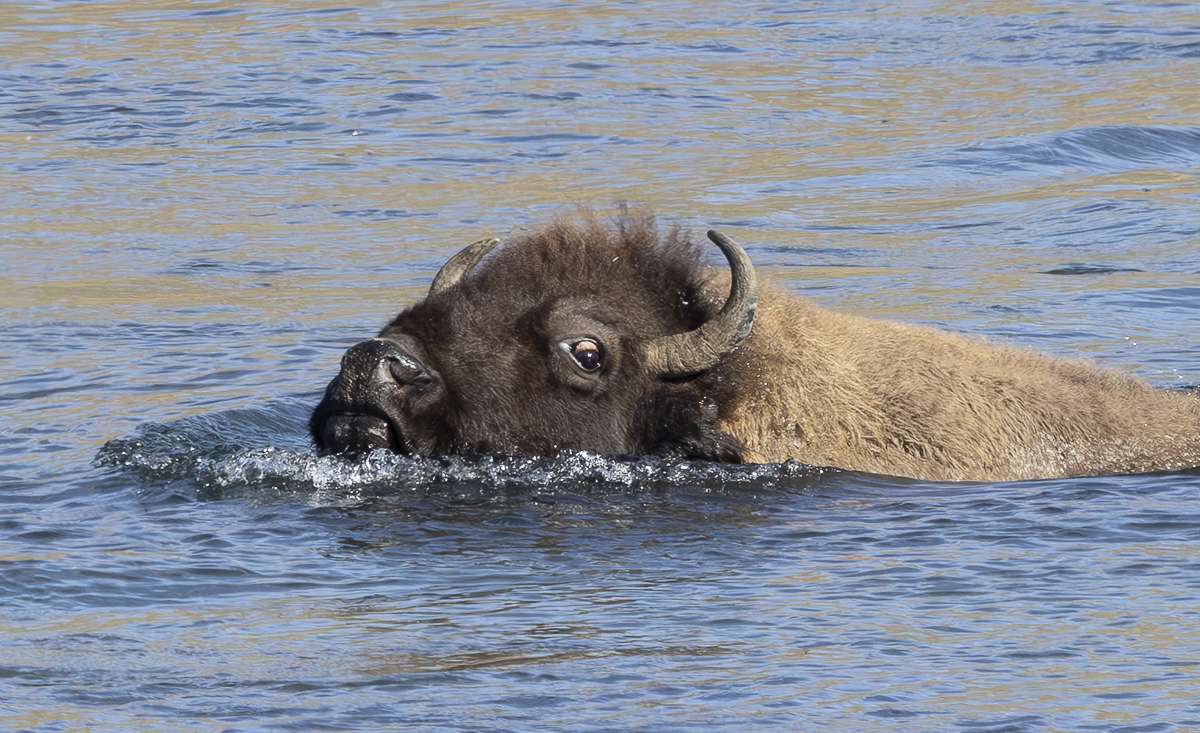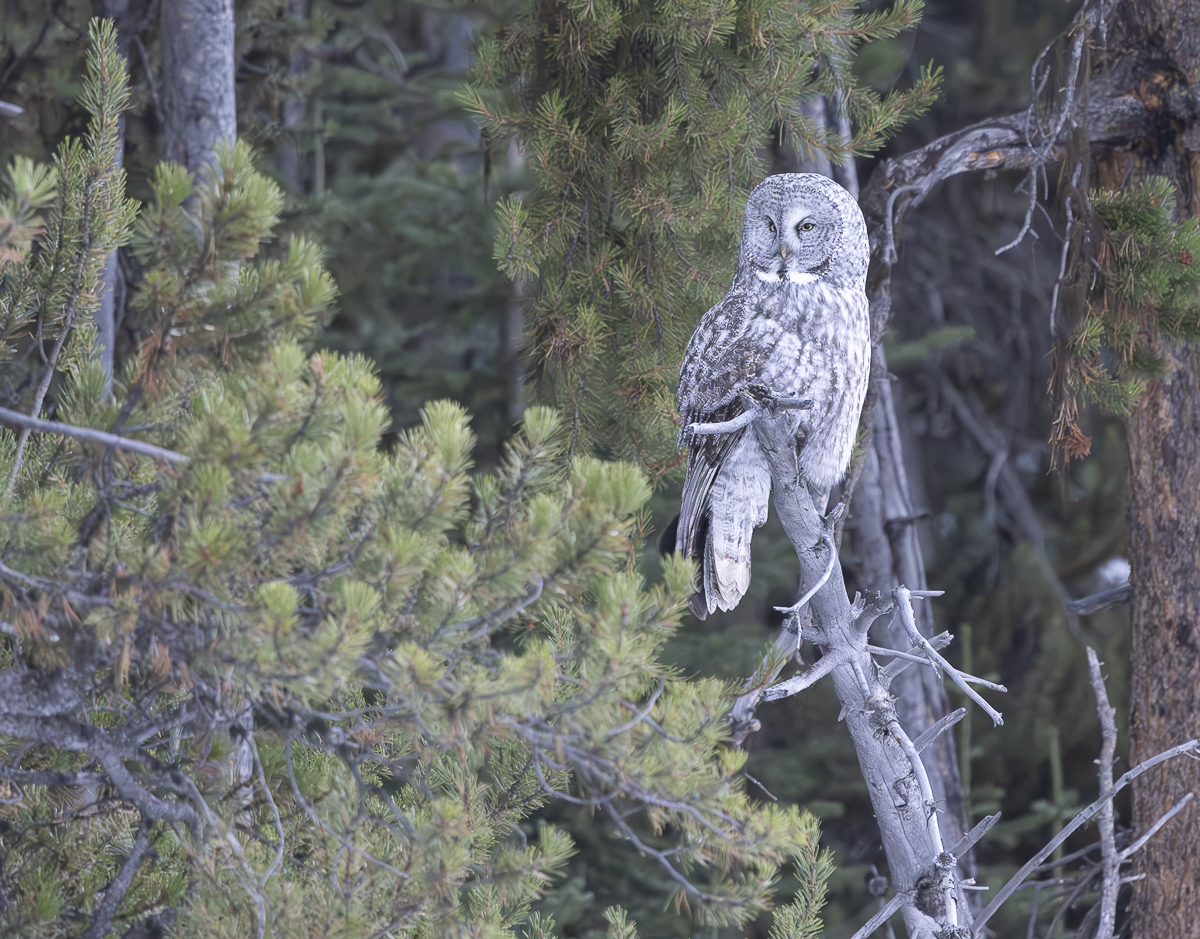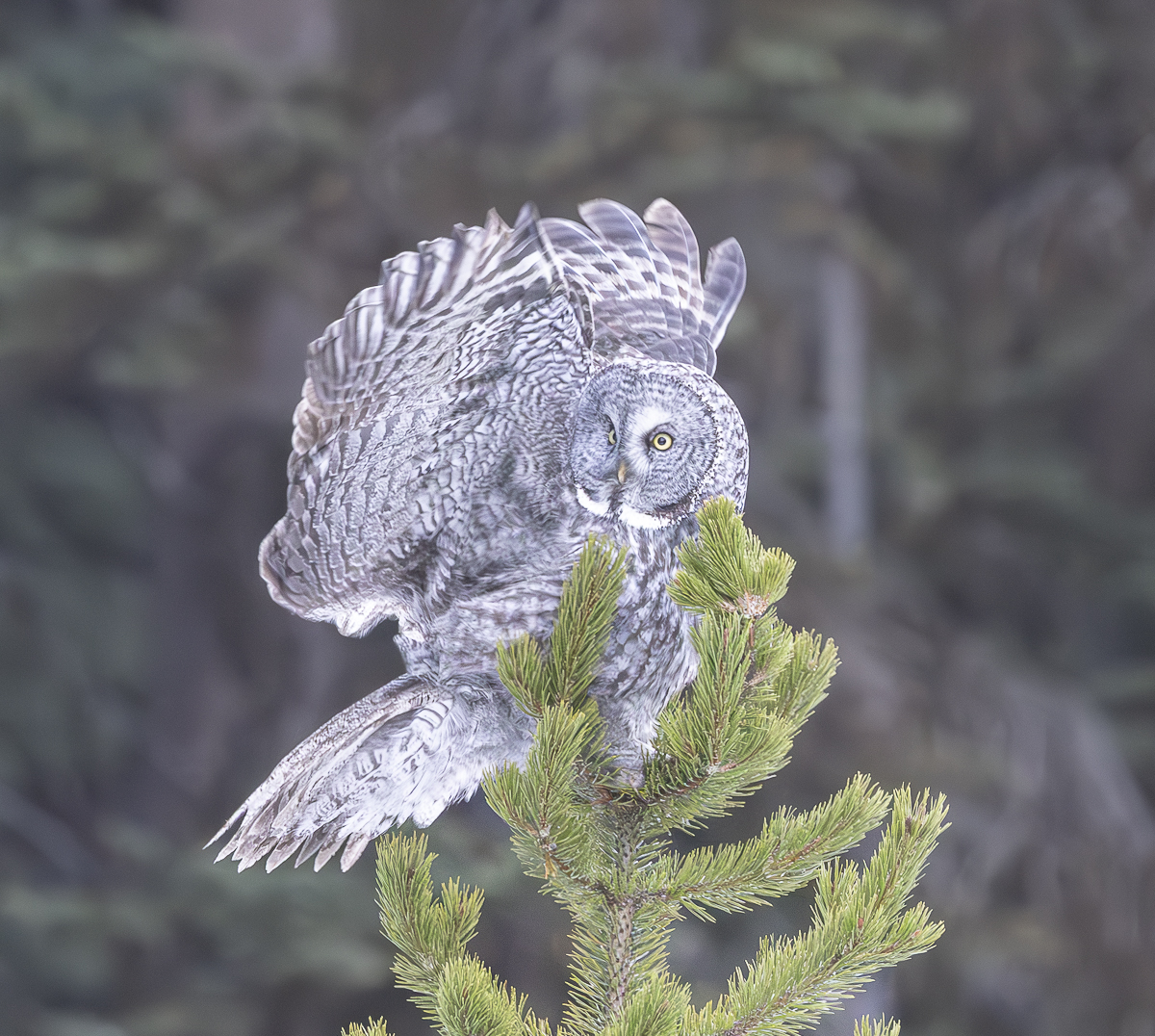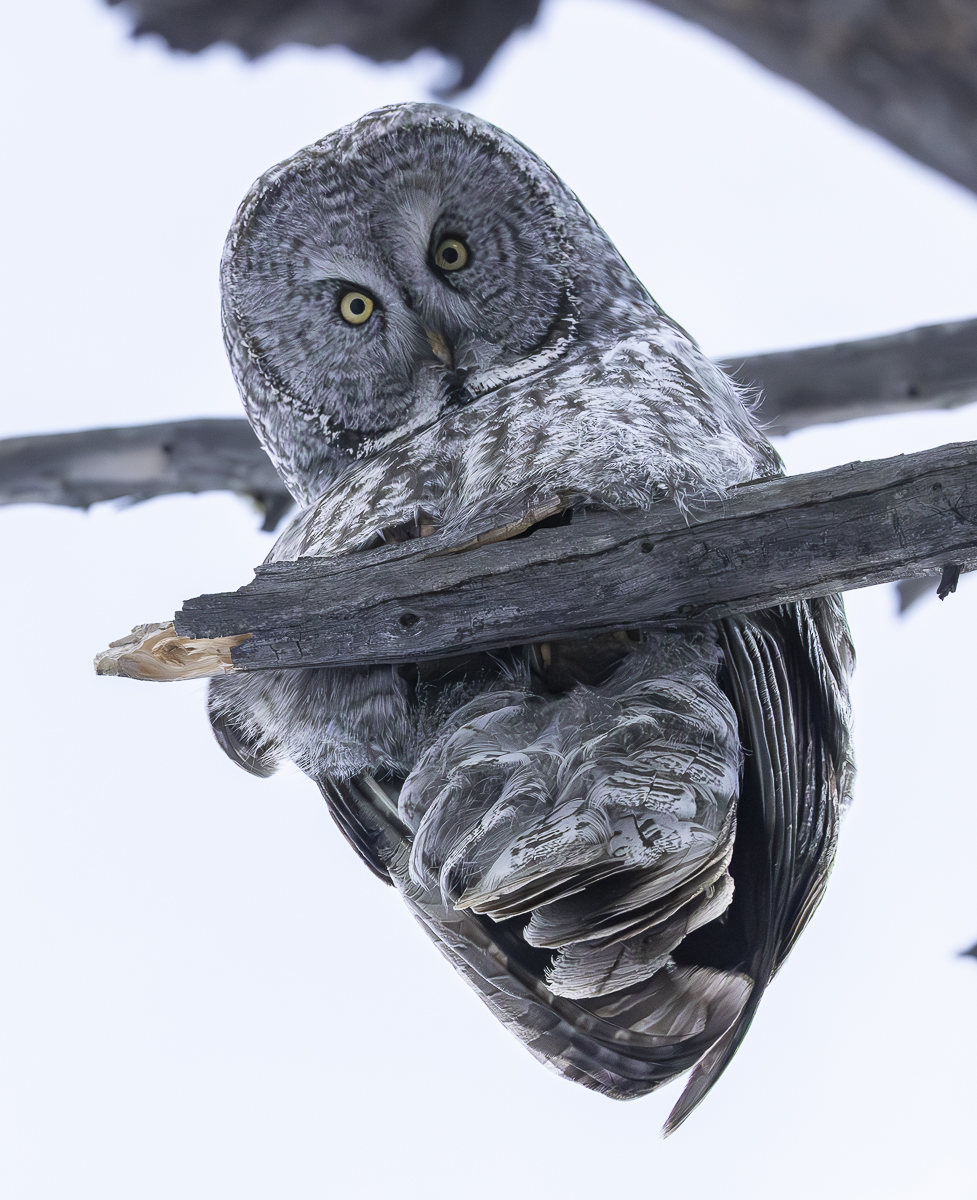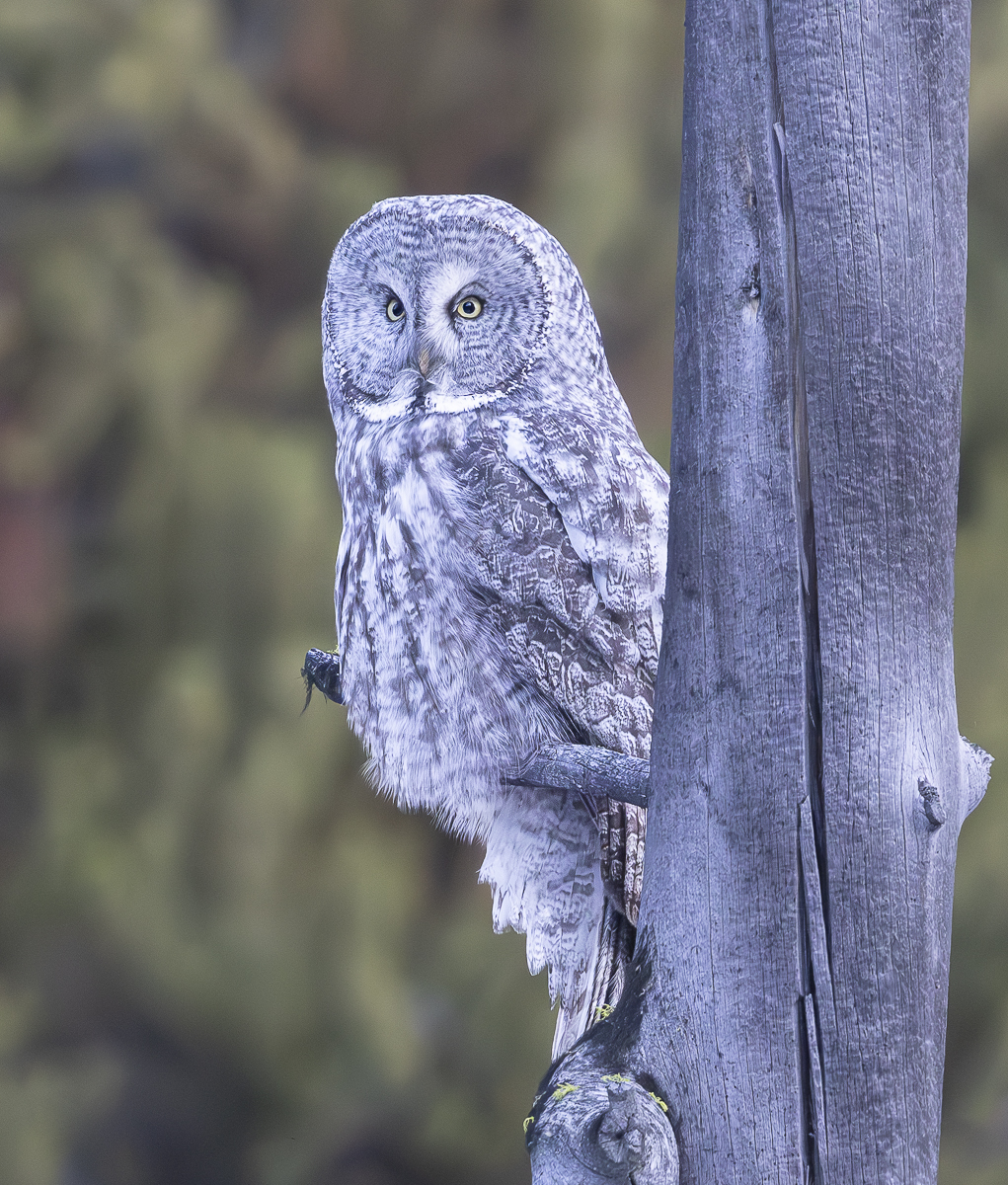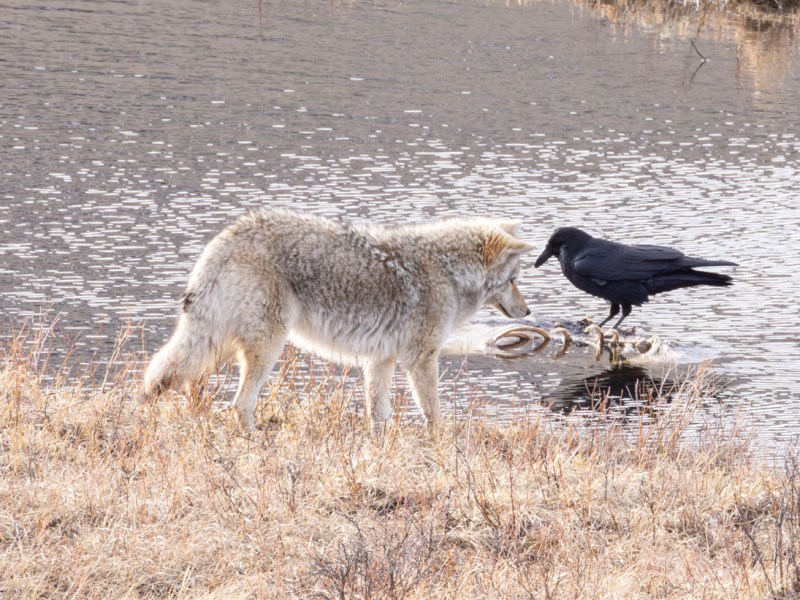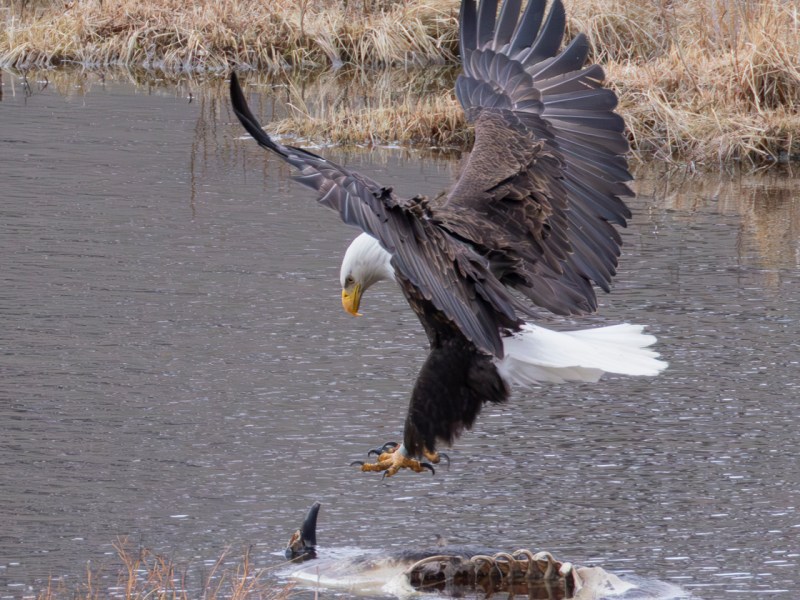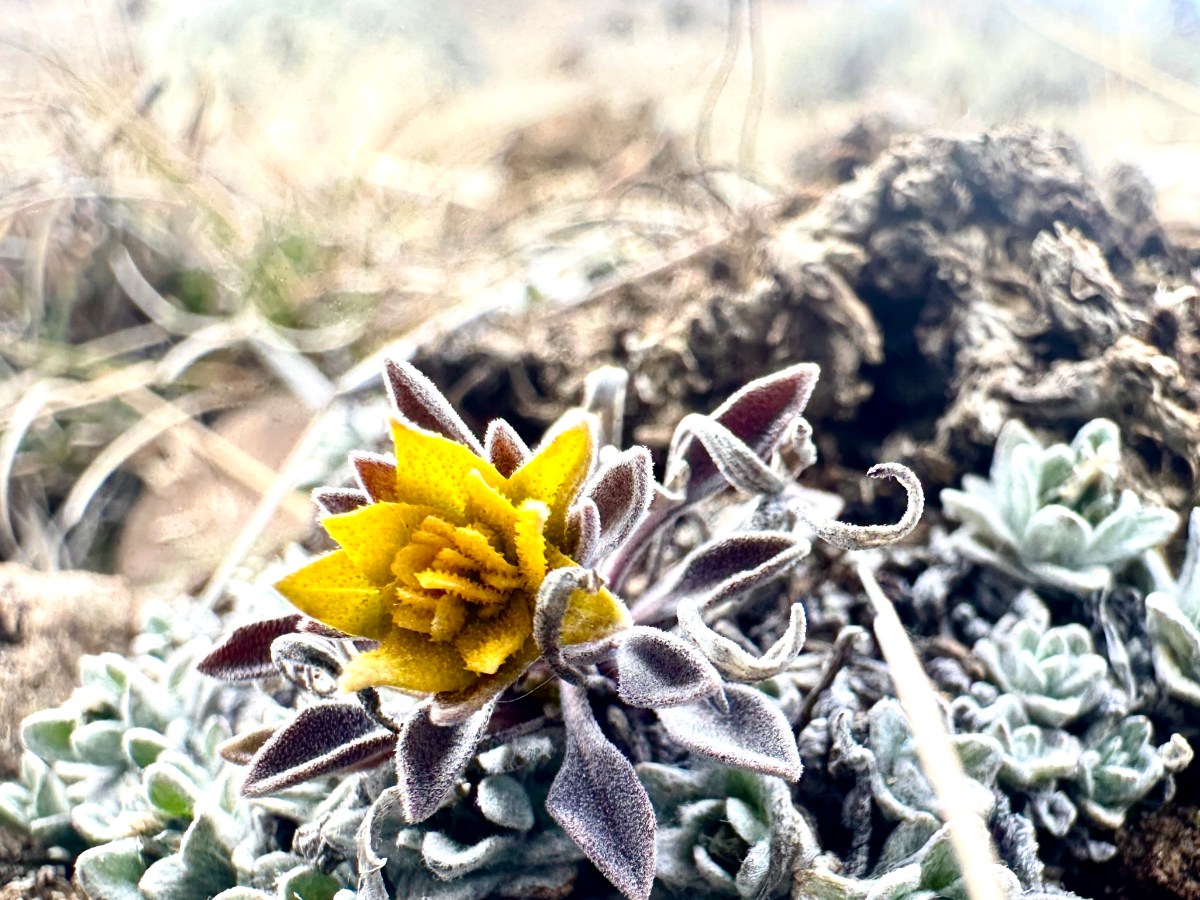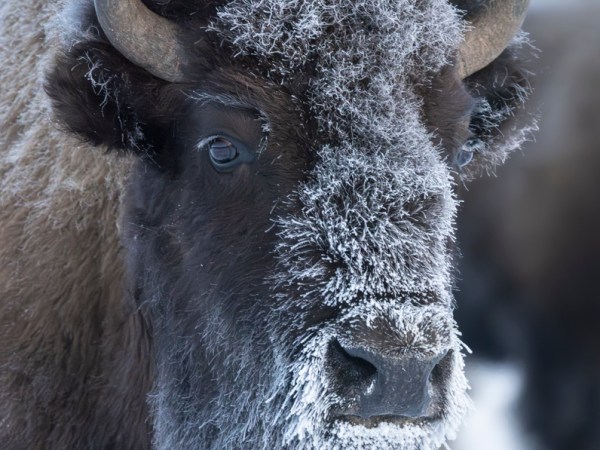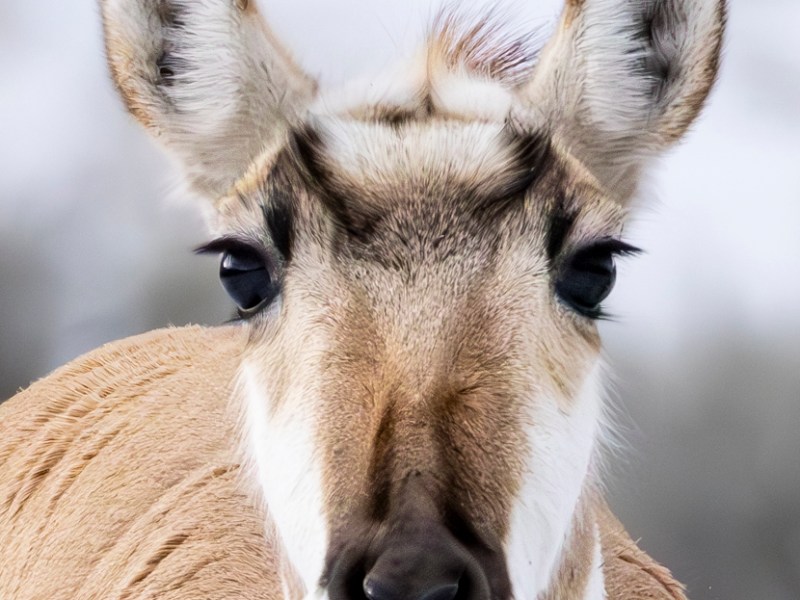
What must it be like to be a bison, to own nothing yet have everything.
~Donna Frider, N.C. teacher on one of the museum’s Yellowstone Institutes
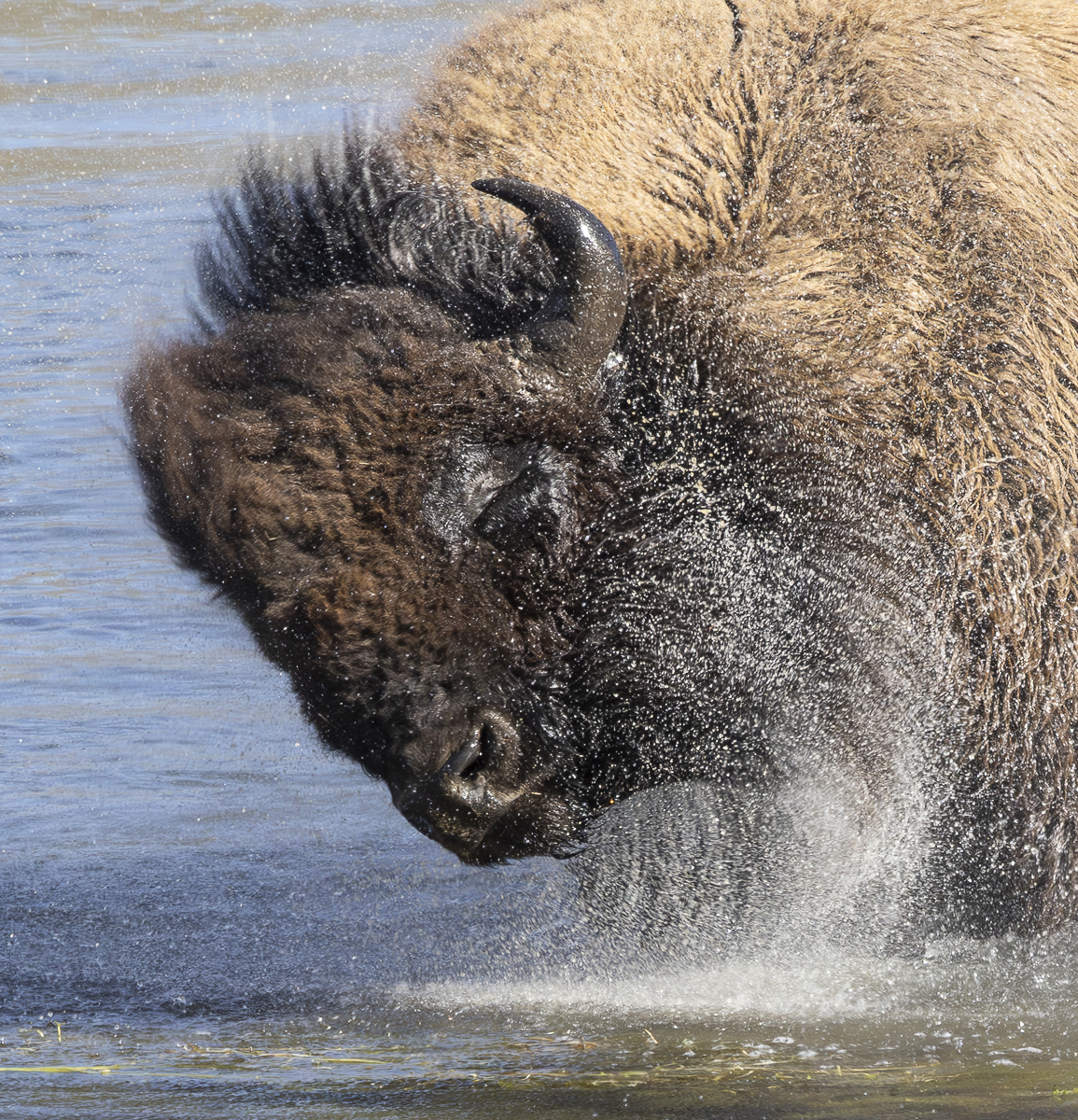
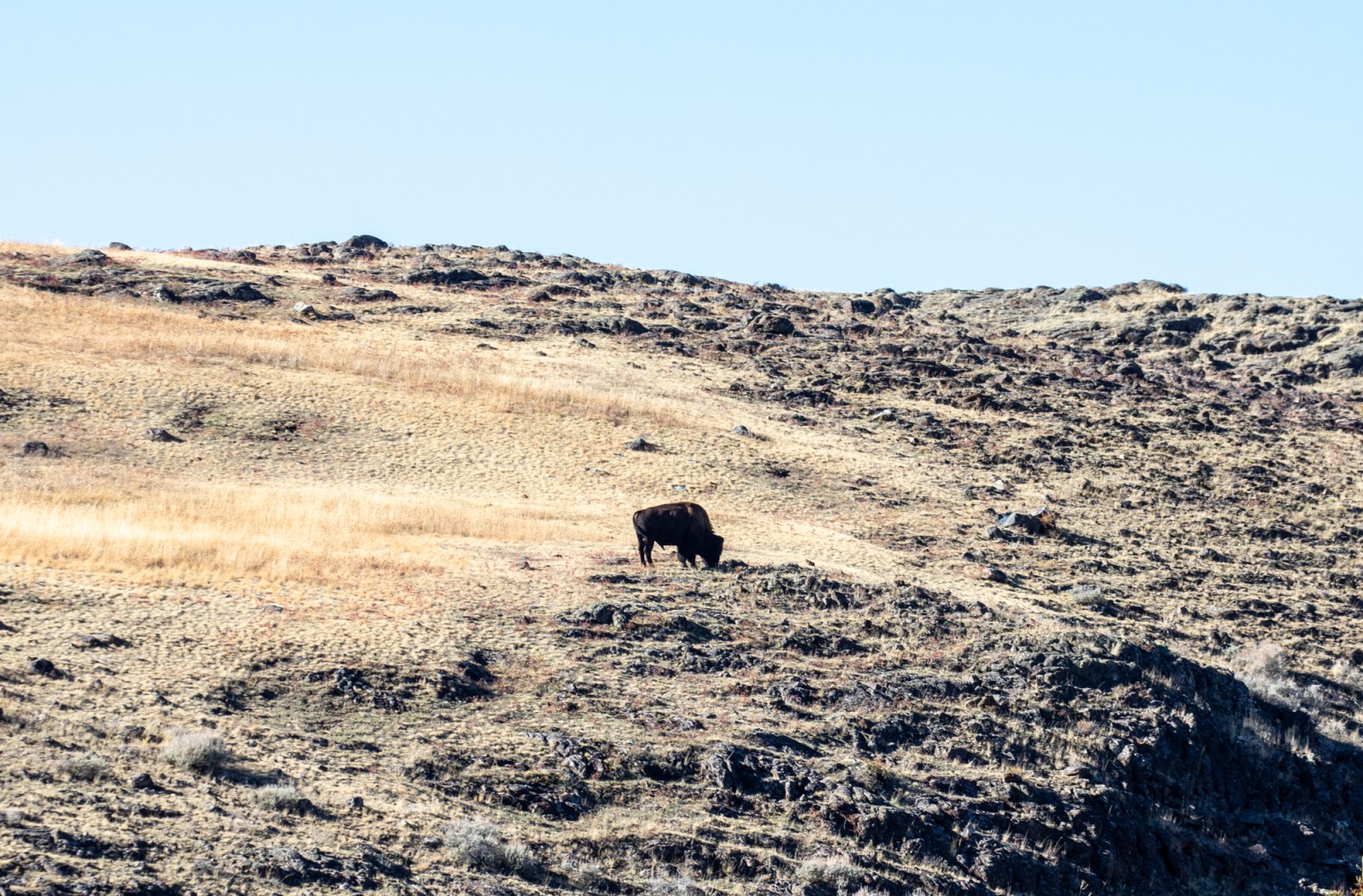
I’ve probably used this quote on a previous post, but it seems to capture my thoughts and emotions when it comes to these incredible, almost mystical animals. Last week while Melissa was leading her teacher workshop, I took a couple of opportunities to go out after an early dinner and enjoy the park. Two of the trips were highlighted by bison, one of my favorite animals in Yellowstone. They are such majestic beasts – huge bulls can weigh 2000 pounds but have an air of serenity and calmness most of the time (but don’t let that fool you, two people have already been gored by bison this season). Bison are impressive any time of year but spring is the time of the calves with their reddish-toned fur and playful attitudes. They seem to either be zonked out or running and kicking and playing with their herd mates.
Pair of bison calves in Round Prairie where a large herd of bison has been spending the past several days (click photos to enlarge)Bison calf nursing
I really enjoy just sitting and watching bison be bison. They can be playful, protective (especially when predators threaten the calves), surprisingly fast when they want to be (a bison can run up to 35 miles per hour), energetic and agile (a bison can jump 6 vertical feet from a standing position), and are a true symbol of the American West. Herds are generally led by an experienced cow (you see several older cows with tracking collars as scientists try to learn more about their movements). Bison behavior can be fascinating and puzzling – one minute peacefully grazing, the next, they take off at a full run for no apparent reason.
One of the fascinating things to observe is the behavior called wallowing where a bison lays on its side and rolls (but they are unable to roll over so must stand up and switch sides to get both sides done). This behavior may help rid them of shedding fur plus may help get rid of parasites and biting insects by coating their fur with a layer of dust or mud. You can see these shallow bowls of bare soil (called wallows) scattered across the landscape where bison frequently travel. And I admit to having demonstrated that behavior a time or two on workshops and one of our nephews did a very reasonable impression on their recent visit.
Bison rolling in a wallow
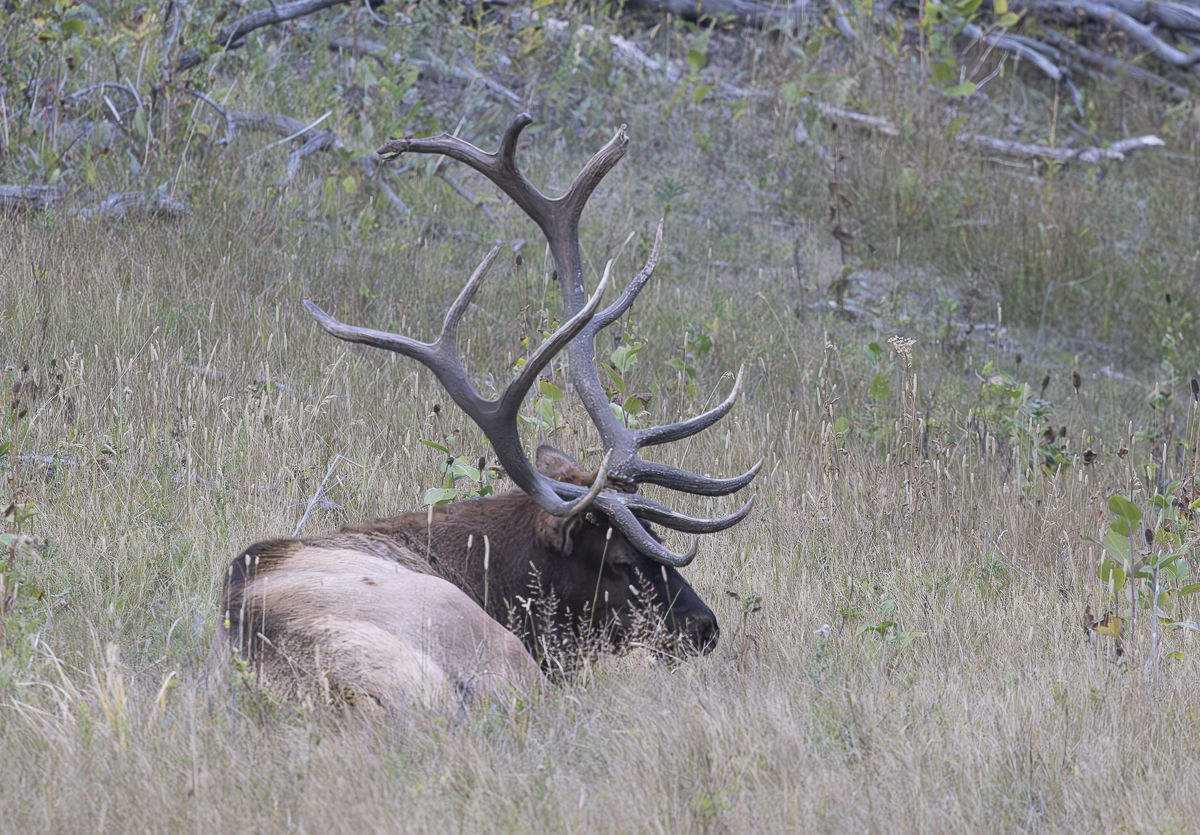
This time of year many of the old bulls are far from the large herds, often at higher elevations. Here they hang out with a few other elder statesmen, grazing unmolested until the start of the rut in July and August. Then things get testy and these titans put on some impressive shows of strength as they battle for mating rites. Last week I sat in my car with a couple of the behemoths in the northeastern section of the park and just watched and listened as they fed on the lush grasses and wildflowers.
Massive bull bisonA mature bull may be 6 feet high at the hump and stretch out to a length of 10 or 11 feet
The herd on the northern range has been quite impressive in recent years with a population of around 4000 animals. They have been in large gatherings in Lamar Valley, Little America and Round Prairie this season giving a hint of what it might have been like before the campaign to eliminate them in the 1800’s. One evening I experienced one of the mot magical bison herds I have seen. It started in Lamar Valley with bison stretched out on the valley floor along the Lamar River. Many were in the large expanse of grasslands across from the Lamar Buffalo Ranch (where park staff actually ranched bison in the early years of the park in an attempt to increase their numbers). Another large herd was just east of there and across the river. I saw one large bull start to cross so I walked down to the river to watch. Soon, another bison waded the river and then the entire herd started to cross.
Bison herd crossing the Lamar River
As they started to spread out on my side of the river, I walked back to my car and drove up to a viewpoint to watch the hundreds of bison out in the valley. They soon all seemed to get the message to move westward and the entire herd started walking my way. This video clip captures just a moment and a small portion of this epic sight. It also captures one of the things that makes this place so incredibly special – a connection to the land and its wildlife and a glimpse into the history of this wild landscape.
Because in the end, you won’t remember the time you spent in the office or mowing your lawn.
~Jack Kerouac
Two years ago we started planning a summer vacation trip to Yellowstone with Melissa’s brother’s family. Melissa made reservations over a year ago and we planned on dong a trip itinerary similar to what we have done with educators for so many years. Then something changed…we bought a house in Gardiner and moved! The trip was still on but we decided to stay the first couple of nights in our home and then travel the park with them and stay in park lodging to get the full experience. So, a couple of weeks ago the family arrived, shopped for food on the way to Gardiner and we began the adventure. Here are some of the highlights of our family vacation.
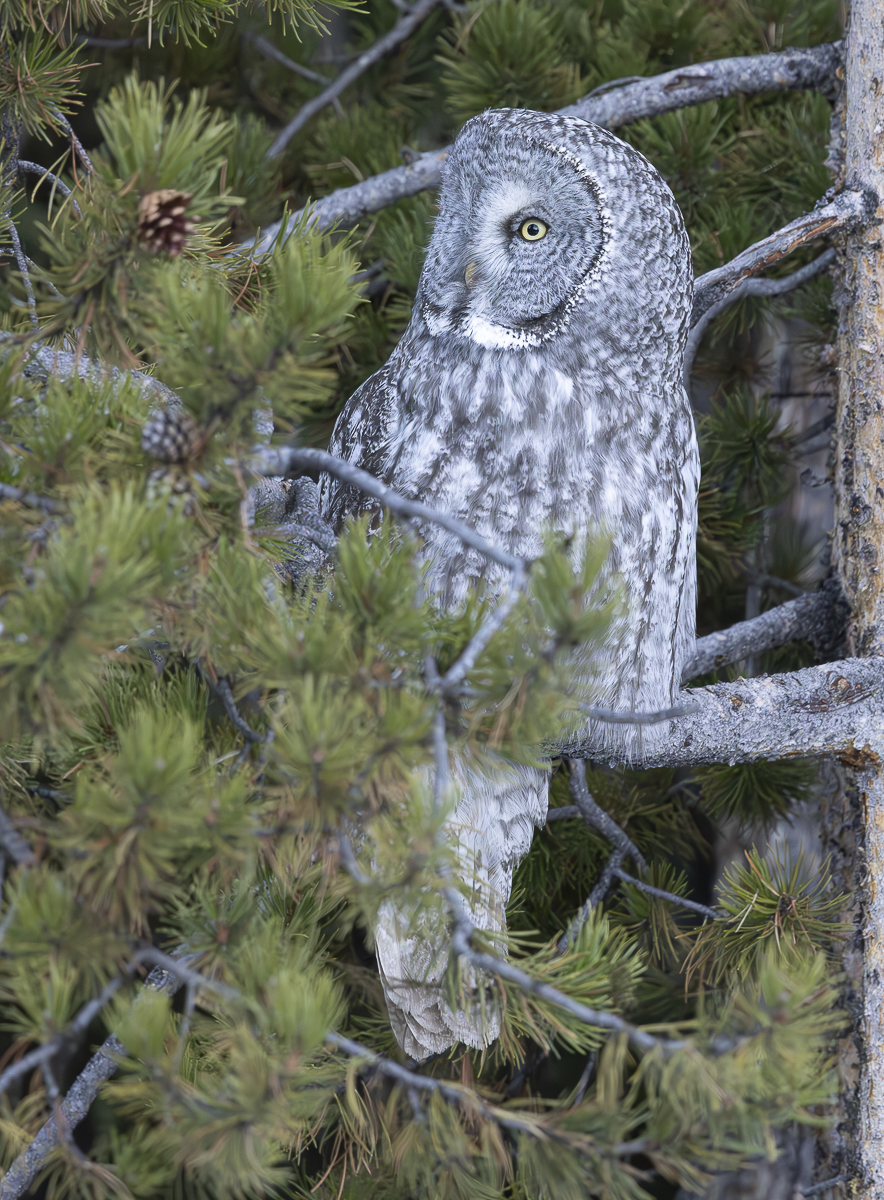
We started at the park headquarters in Mammoth where the nephews could pick up their junior ranger booklets and get a quick overview of the park at the visitor center. As has been the case for as long as I can remember, a pair of great horned owls was nesting in a tree next to one of the houses in historic Fort Yellowstone. A small crowd of onlookers cued us to the presence of one of the birds. It turned out to be one of two fledglings from the nest.
A great horned owl fledgling flew from a tree to the roof of one of the houses while we watched. Check out those talons! (click photos to enlarge)The squawking of a robin with a nest nearby gave away the presence of one of the adult owls in a nearby tree.
Melissa had planned a number of outings and the first couple of days were spent in the northern range looking for wildlife and doing a couple of hikes.
A Clark’s nutcracker gave us a nice pose at Undine Falls.We drove up to see our friends in Silver Gate and this red fox put on a nice show along the roadside (thankfully not begging for human food as many do these days due to careless human behavior).
One of our favorite hikes (and apparently everyone else’s since it is now very tough to get a parking space at the trailhead) is Trout Lake. The short hike stars steep but then you reach the top and look out over an absolutely gorgeous scene of a lake surrounded by beautiful mountains. The cutthroat trout are beginning to spawn at the creek feeding the lake and several ducks were gracing the still waters with their beauty.
A drake Barrow’s goldeneye showing off his purple headThis female goldeneye seemed to have no fear and kept coming closer as I sat by the shore. She repeatedly dove and was obviously catching something in the shallows for a meal. This species feeds on a variety of aquatic invertebrates, crustaceans, and small amounts of seeds and other plant material. I am guessing she was feeding on caddisfly larvae and fairy shrimp, both of which occurred in large numbers in the lake.
We stayed two nights at the aptly named Rough Rider cabins at Roosevelt (always an interesting experience). We had to run back to the house after our first night to get something and along the way we encountered several bear jams including a courting pair of black bears feeding along the roadside.
Female black bear of the courting pair. The male was a cinnamon colored bear.
We saw another, smaller black bear start digging into a rotten log and it quickly was swarmed by angry ants. After swiping many of the ants off its face, the bear hurried off.
Young black bear with ants all over its head
The next day we hiked a wonderful 4-mile trail at Canyon. The trail passes through varied habitats and gives you a much less crowded view of some of the spectacular scenery of the Grand Canyon of the Yellowstone.
View looking down the canyon below the Lower Falls
After our hike we headed toward Old Faithful, passing through Hayden Valley. I always like stopping at some of the creeks feeding into the river to look for waterfowl. Plus, this year, the Wapiti wolf pack has a den a couple of miles out from the road near Alum Creek. We had seen them a few days before the family arrived, but it is a long view and heat wave interference makes the viewing less than ideal,. But this trip proved much different as the wolves had made a kill just across the river from the road. None were visible when we first stopped, but one soon came out and thrilled the many onlookers. Though the lighting was harsh, it was a great opportunity for observing the wolves. As we watched, one wolf came down to the river for a drink, then walked back into the trees, then back out. It laid down for several minutes as a couple of other wolves appeared. One was a large collared wolf, perhaps one of the alphas. We stayed quite a while watching and enjoying this somewhat rare opportunity for close views.
This wolf walked along the shore for several minutes and came to the river’s edge a couple of times for a drink. It also jumped in at one point either after some ducks or a fish (observers later reported online that one of the wolves caught a fish). This large collared wolf came in to the scene and briefly chased a brave coyote that sneaked in and found a scrap of meat out in the flats.This black wolf came into the trees and apparently fed for a bit, then swam the river and crossed the road, presumably heading back to the den a couple of miles away.This is the main wolf we observed and here it is walking along the shoreline and occasionally glancing over to keep an eye on the crowd gathered across the river.
After the excellent wolf watching, we continued on to Old Faithful. As has happened so often in the past, Old Faithful erupted shortly after we arrived. I’ve been spoiled over the years by getting to view this iconic geyser early in the morning with relatively few other people around. That was not the case on this afternoon as the seats surrounding Old Faithful were full of hundreds of happy tourists. Melissa had managed to get our group a couple of rooms in the historic portion of the Inn (perhaps my all-time favorite building) and we were pleasantly surprised when we got our room assignments on the third floor. It turns out our room was a corner room with an extra special perk…we could sit in the room and view Old Faithful erupting! This may be the only room in the old portion of the Inn with this excellent view.
We had windows looking out at Old Faithful and another set looking down the Upper Geyser Basin. Melissa was in the rocking chair to my left had an even clearer view of the geyser.
I am not a fan of the huge crowds you typically encounter in the thermal basins, but that room added a really nice touch to this trip. One of my favorite thermal areas is Fountain Paint Pots. The short trail passes by all four types of thermal features – geysers, fumaroles (steam vents), hot springs, and mud pots. I have a weakness for the mud pots and cannot walk by them without stopping and trying to capture some of their interesting and often bizarre shapes with my camera.
Mud pot bubble bursting“How the Earth was formed” mud pot bubble
Melissa wanted to check out the Fairy Falls trail on this trip to see if it was worth taking her teacher group on the following week. It is about a 3 mile round trip to the 200 foot tall falls. You start on an old freight road that goes by the overlook for Grand Prismatic Spring, the largest hot spring in the park and third largest in the world. The overlook is worth the hike as it gives you a great perspective on the size (~370 feet in diameter and 121 feet deep) and colors of this incredible thermal feature. Our neighbor works for the park and he told us this week that recently a bison was walking along the edge of Grand Prismatic and broke through the crust and fell into the spring and died in the 160 degree water. This is a rare example of a misstep by an animal in a thermal area and a cautionary tale for everyone visiting the park.
View of Grad Prismatic from the overlook along the Fairy Falls Trail
After the overlook, much of the trail is through a young lodgepole pine forest without much to see and we had one particularly challenging issue in the forest – the mosquitoes were the worst I have ever encountered in Yellowstone. Once we reached the falls, the breeze kept the pesky biters at bay for the most part.
Fairy Falls is a spectacular waterfall near Grand Prismatic.
After a couple of nights at the Inn, we headed to our last stop, Colter Bay in Grand Teton National Park. The highlight for me was a 10-mile raft trip through the park on the Snake River. I had arranged a morning trip in hopes of seeing some moose but we missed out on the big ungulates. However, we did enjoy spotting some bald eagles and waterfowl, and plenty of incredible scenery.
Melissa on the raft with the Tetons in the background
Her brother’s family stayed two nights at Colter Bay but we headed home after one night so Melissa could get ready for her teacher group arriving in two days. These photos are just a small sampling of what we experienced on our trip and I think everyone left loving this special place. When asked about their highlights, most thought the time spent with the wolves in Hayden was something extra special. The trip was a good reminder of the power and magic of Yellowstone and why we love sharing this place we are lucky enough to now call home.
Mike gets up much earlier than me, and that’s his blogging time. By the time I’m ready to face the world, he’s already shared our adventures! However, with a bit more time on my hands these days, I’m looking forward to contributing more to the blog. Here’s my take on some of our early adventures in Yellowstone…
On May 23, the Dunraven Pass opened, the final road in Yellowstone to open for the summer season. I was excited to check it out on opening day, so we took advantage of the opportunity to head deeper into the park. The pass at over 10,000 feet was still mostly snow-covered, but the browns of bare soil showed in exposed areas.
A selfie from the slopes of Mount Washburn
We paused at Canyon Village for our traditional ice cream stop. Then, since a close parking spot was available, we paid a quick visit to Artist Point. We continued on through Hayden Valley, which was just starting to green up for spring, and headed on to Lake. I was hoping Yellowstone Lake would still have ice, since some years it doesn’t break up until June, but our first view of the lake confirmed that this has been a warm spring — there was no ice left at all. We took a short walk out the Pelican Creek trail to a favorite spot where we’ve spent many hours in quiet reflection with groups of educators over the years. I shared a couple poems I’ve written there over the years with Mike, one that is particularly poignent given our move to Gardiner.
The Return
Knots in the thread of my life Tie me to this place— To the sandy lake’s shore, To the unmarked trail through a meadow of wildflowers, To the owl’s nest in a tall fir To the small rise where bison, wolves also tread.
Moments spent here— Moments of reflection— Moments shared— Accumulate to tell but also to shape my life’s tale.
I return here as often as I can To tie a new knot, to tie my spirit ever tighter To this place, And to myself.
Looks like there will be a few knots tied closer together in as we revisit the shore of the lake in the coming years.
As we headed back home, we pulled over now and then for quick stops. At one, we were delighted to find the western analogs of some of the harbingers of spring we’ve always loved in North Carolina.
Glacier lily is in the same genus as our trout lilies back in North Carolina, Erythronium. It’s structure is very similar with six upcurved petals and sepals (three of each) and six drooping maroon stamens, though some of our eastern trout lilies have yellow stamens.Western spring beauty is in the genus Claytonia, the same as our eastern species. It even has the same bright pink pollen on its five stamens!
Mike’s most recent blog described our walk yesterday to an aspen grove above Mammoth. I’ll refer you to that for all of the details, but I wanted to add a couple pictures of mine from our quiet time sitting there. I had the Merlin bird app running off and on to try to work on my western bird calls, and after it told me a Hammond’s flycatcher was calling incessently, I was fortunate to spot one moving between perches.
Hammond’s flycatcher on a dead aspen branch.
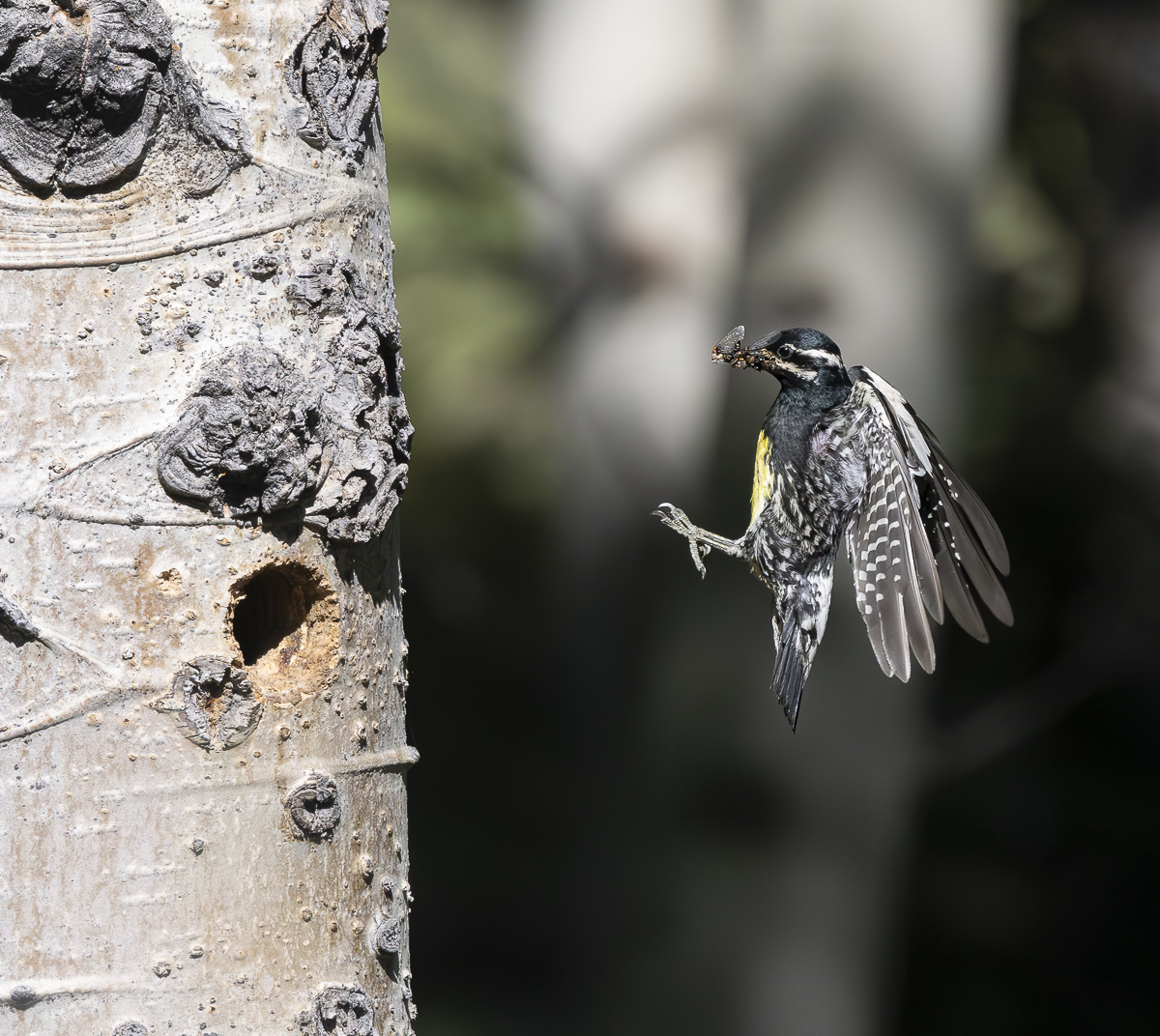
Mike also described how he discovered a three-toed woodpecker pair carving out a nest cavity. He had missed the exchange when the male flew up and took over for the female, so I’ll add it here:
“Who’s that coming to my hole?”“Excellent! Break time! I’m outta here…”In this one I just particularly like the symmetry of the aspen branch in the background and also the halo of wood chips around the woodpecker’s head!
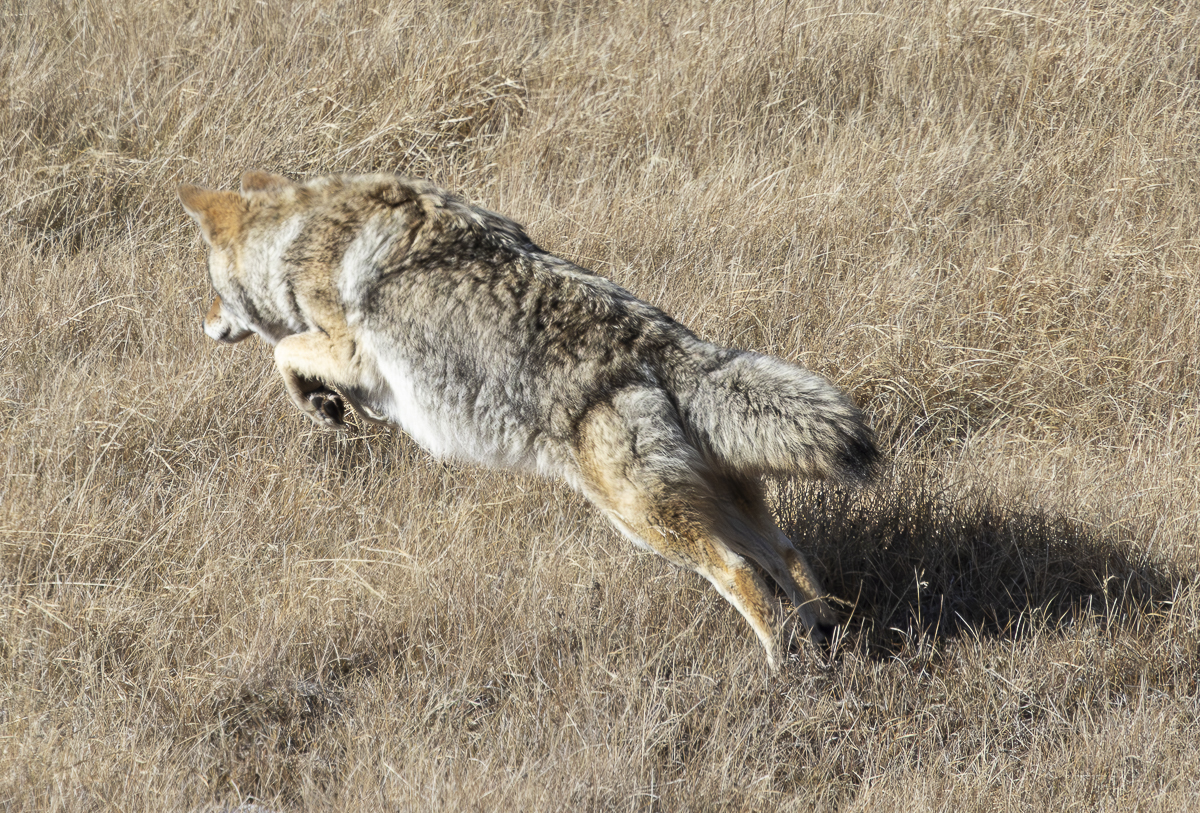
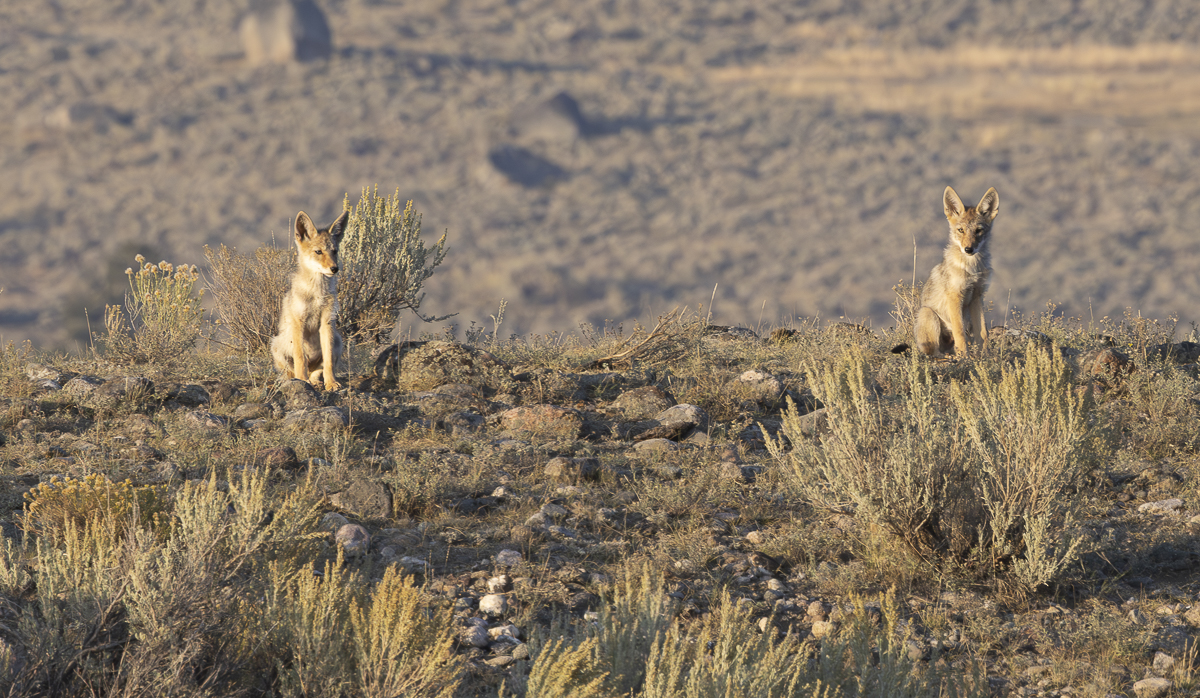
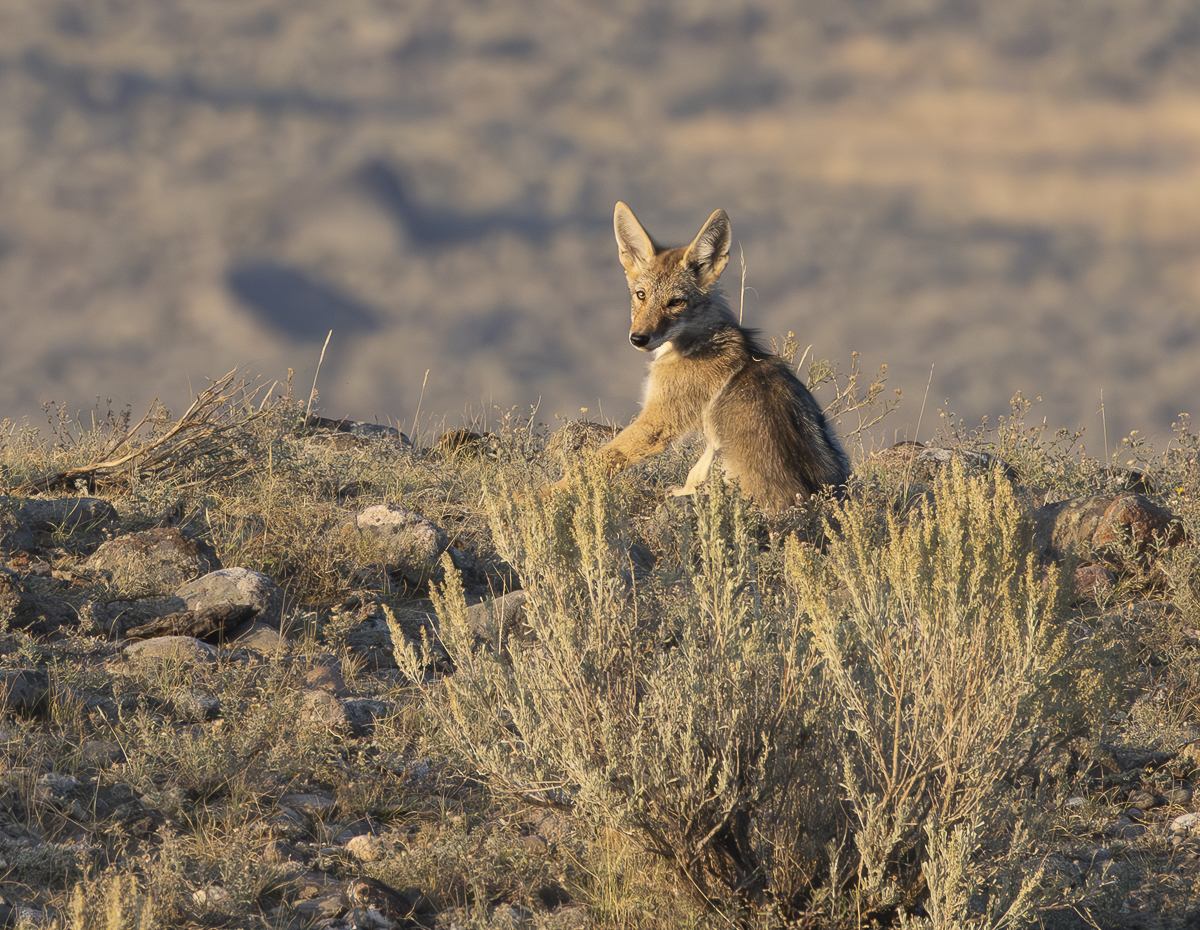
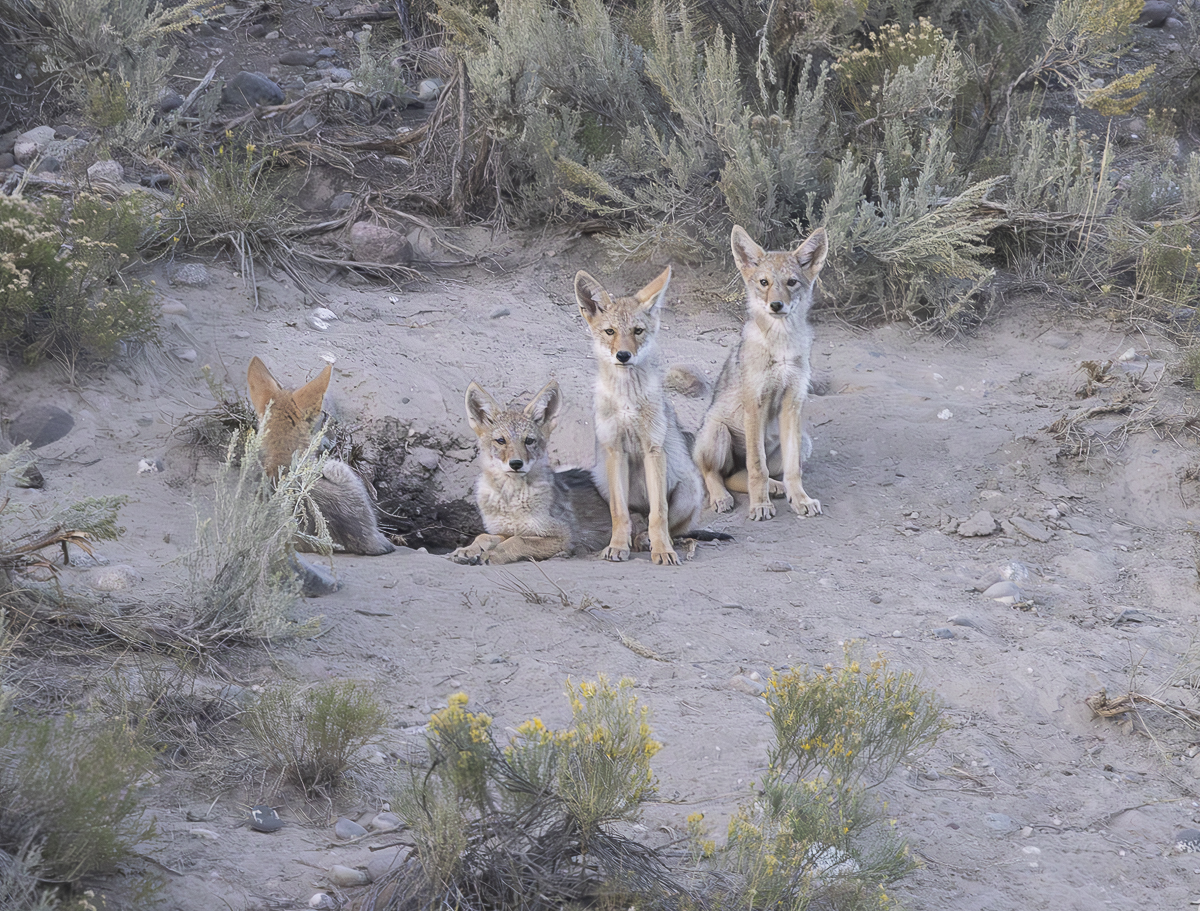
Last night, we took an evening drive out into the park after dinner (a lovely thing to be able to do, and something we hope to continue to do regularly). It was a quiet night, with fewer visitors than we’ve experienced on most of our other trips. We had a lovely semi-private moment with a black bear munching on grass and watched a beautiful scene form as a few bison and calves crossed the river at the western end of Lamar Valley. But the highlight was a stop at a site where coyotes had denned in previous years when we saw a number of folks looking that way. The family is back, and we were fortunate to watch five pups and three adults playing, digging, wrestling, and feeding in the glow of the setting sun.
Interactions between 3 adults and 5 pups at the coyote den. The third adult had just arrived, and it looks like the pups with poking at its mouth hoping it would regurgitate a meal.
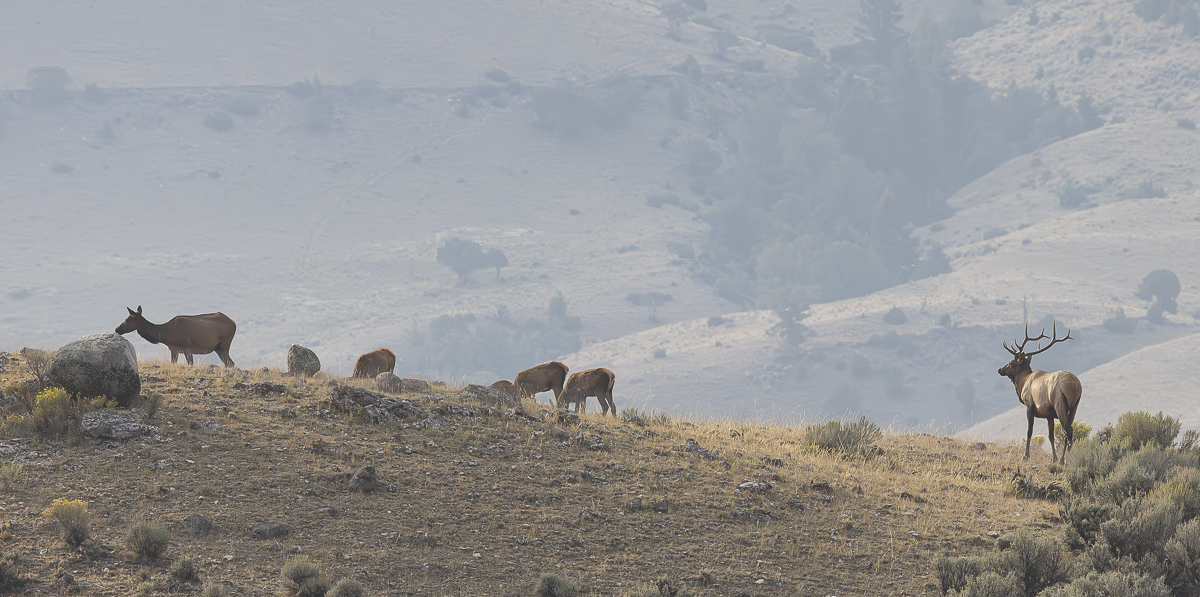
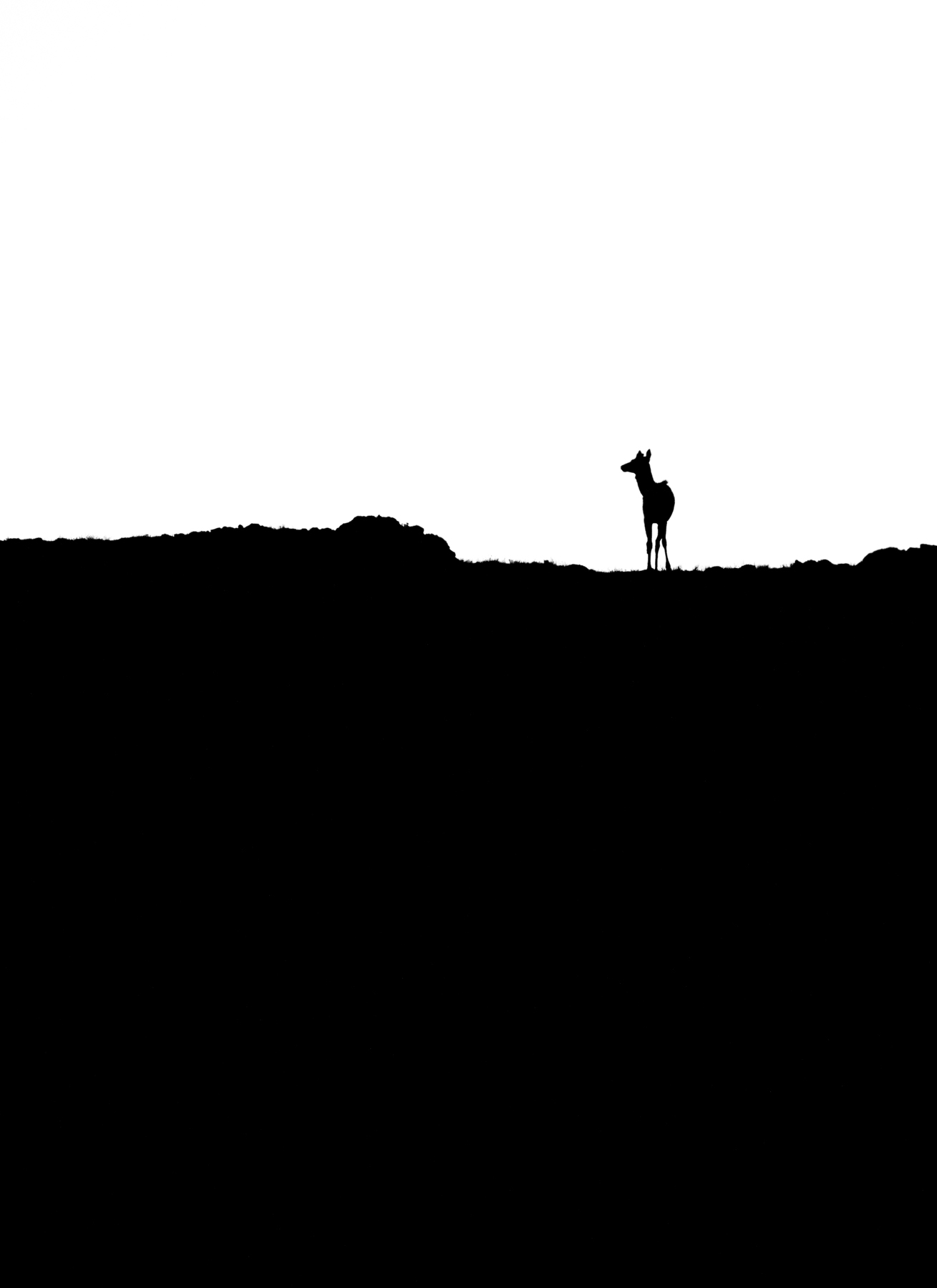
I’ll close with a promise to share more of our adventures and a favorite image from an earlier evening drive into the park of a cow elk silhouetted on a ridgeline.
Between every two pines there is a doorway to a new world.
~John Muir
A few days ago Melissa and I took our first long-ish hike in the park since we moved in. This is a follow-up to her earlier Facebook post about the hike. The original plan was to scope out an area for her upcoming educator trek that neither of us had hiked before. I was thinking maybe a mile or two to see how my back/knee issue would handle it after stressing all those parts during the move. We drove into the park a couple of miles and started at a trailhead above Mammoth.
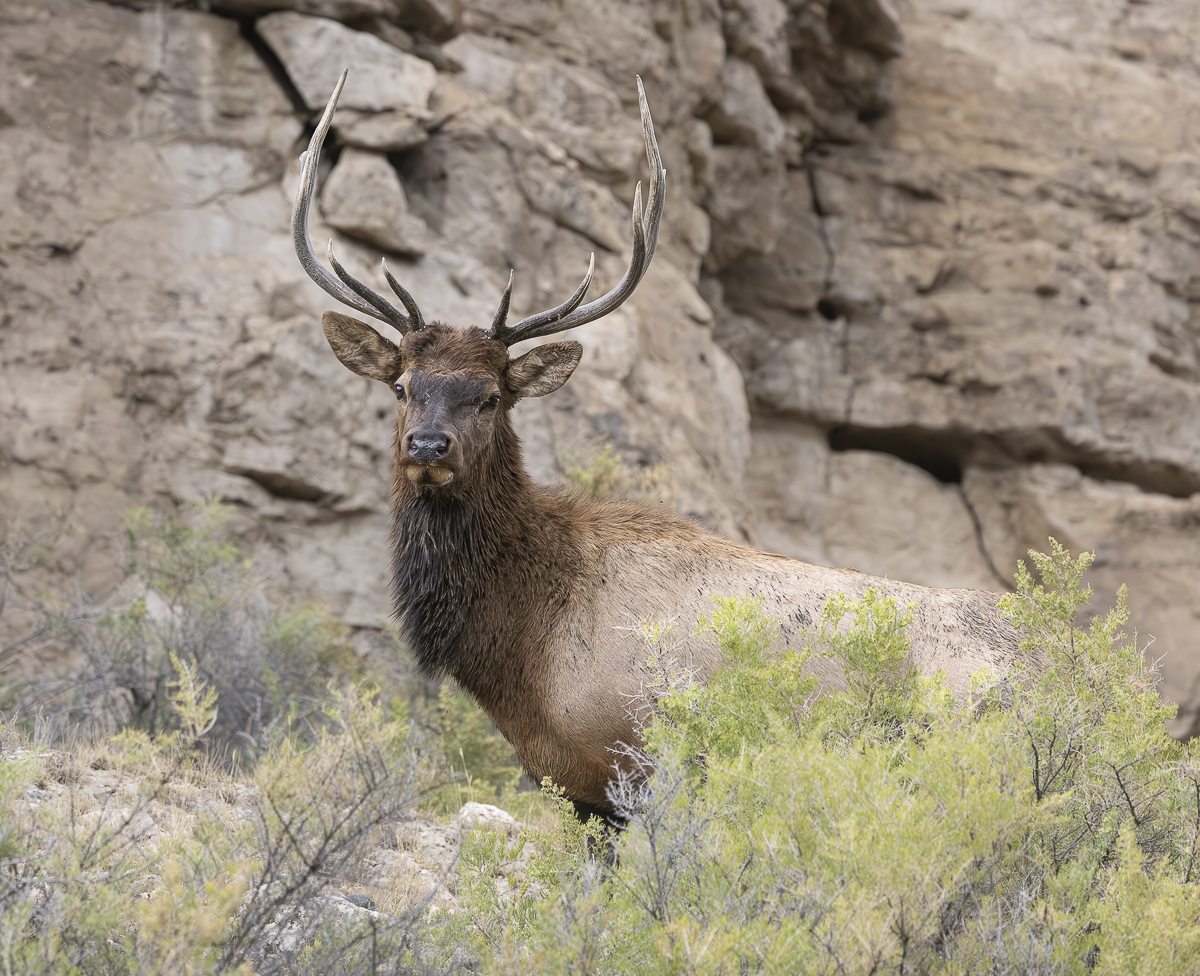
The start of our hike through sagebrush flats with pockets of forest and a backdrop of mountains and a bull elk (click photos to enlarge)
Right away, Melissa spotted a few bull elk scattered on distant hillsides. I was busy keeping an eye out for interesting insects as we sauntered along taking it all in. The invertebrate photos were added to iNaturalist when I got home to start a record of what amazing small things can be found in this majestic landscape. Here are a few of my favorites (note – identifications on many species of plants and animals in the coming weeks/months may be tentative as we learn more about the diversity of our new surroundings).
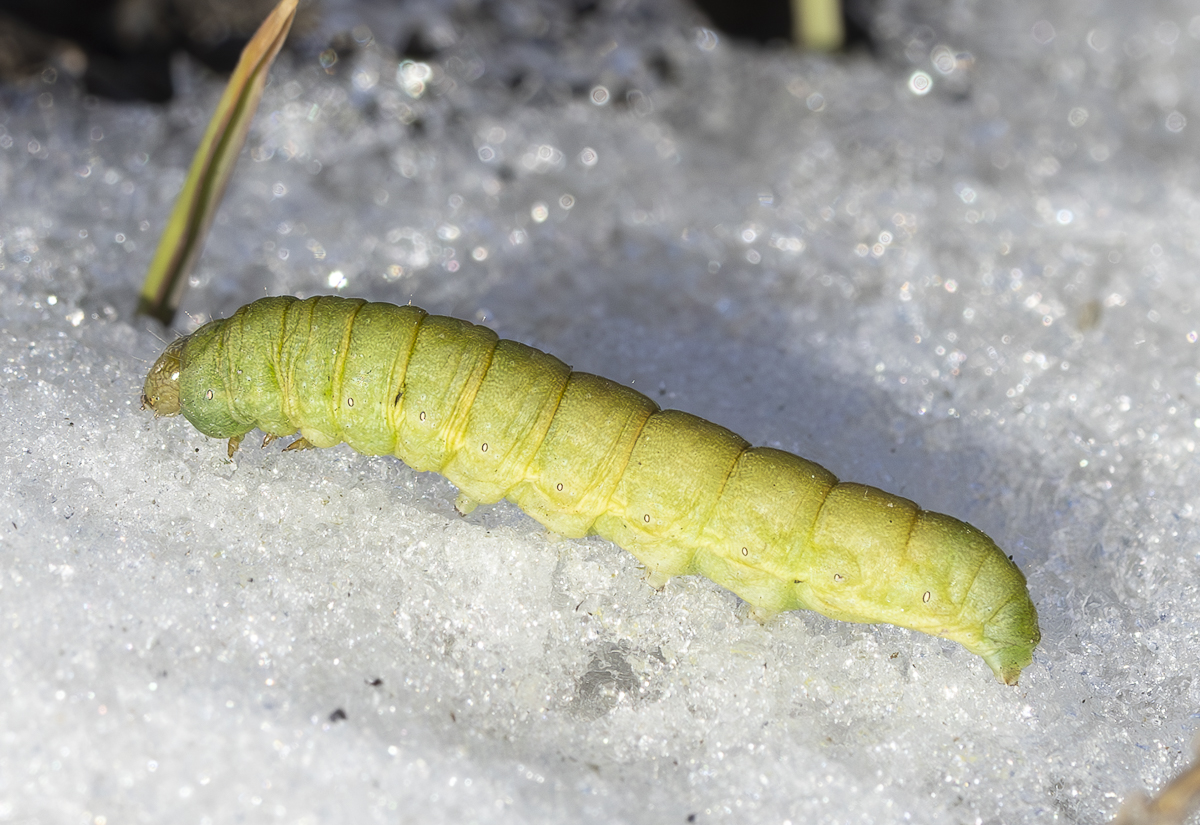
Yellow-fronted bumblebeeGoldenrod crab spider with bumblebee preyRocky Mountain Parnassian butterfly caterpillar on stonecropRelict frittilaryEdith’s checkerspotFlame skimmer
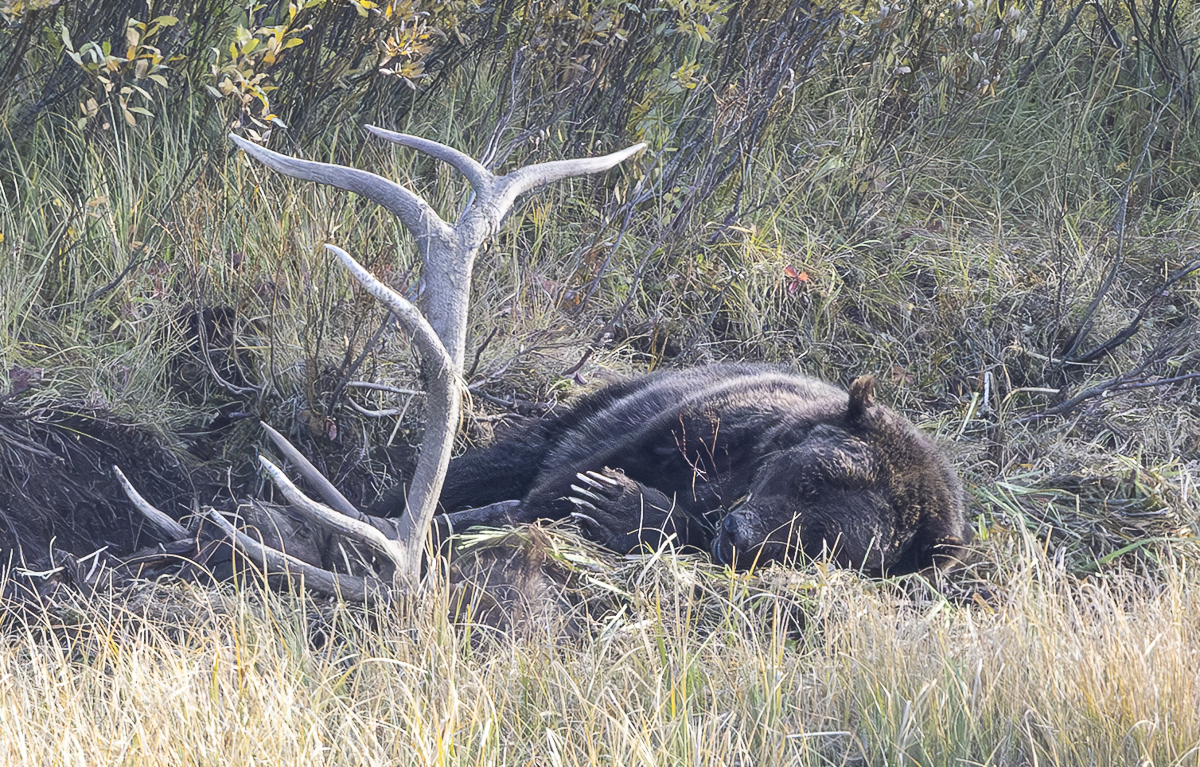
We encountered a few people not far into the trail including a couple of hikers and two groups of horseback riders with outfitters. But for the most part it was just us and the scenery. We did run across a bull elk carcass that looked as though it might have been from this past spring/winter (still hair on the carcass, the contents of the rumen was scattered nearby and there are still insect larvae on the skeleton). It was an impressive animal.
Carcass of a bull elk along the trail
At this point, we wanted to creep up over the next hill for the view and so one thing led to another and we just kept going. We made it a loop hike of about 6 miles that took us most of the afternoon and it was glorious.
A view along our hikeA beautiful aspen grove
We both love aspen groves and so we were thrilled to come upon a small stand of tall aspens. Our friend, Dan, taught us long ago that aspens are hot spots for wildlife activity, especially cavity nesting birds. We did spot a woodpecker in the trees but weren’t sure which species. More on that later.
The trail passed through so many different habitat types and the cool shade of the trees was welcome as the afternoon wore on. As we walked along a sloping ridge dotted with Douglas fir and sagebrush, Melissa saw something move as I passed a shrub. We stopped and I spotted a dusky grouse!
Female dusky grouse
These birds are very tolerant of humans so I eased a bit closer to get a better view and just watched as she pecked at grass seeds and other bits of vegetation. Meanwhile, Melissa excitedly whispered that she had spotted our first elk calf of the season (this was the day before the one we saw behind our house from the last post). I looked and was once again amazed at her spotting ability. The calf had been hidden by her mamma in a tangle of shrubs while she went off to feed (elk calves stay hidden until their mother returns). But this little guy flicked its ears a couple of times and that gave its position away to eagle-eyed Melissa.
Melissa journaling about the elk calf she had spotted down near that isolated conifer sapling to the right of the center of this photoThe elk calf in a cropped image taken with my 500mm telephoto Hiking out of the Hoodoos
The last stretch of trail was along a ridge line with great views of the surrounding mountains. When we got back to the car, we took a moment to reflect on what a great hike we had just had only minutes from home and how lucky we are to be in our happy place. And it reminded us of how much we love to just walk in the woods (or fields or mountains…) and observe. If you get out of your car and take a stroll, you never know what you might see but we know you will feel the magic of this place.
Two days later we decided to do a short hike and go back to the aspen grove via a shorter section of trail that came off the loop we had hiked earlier. We walked in and sat down amongst the towering white trunks and embraced the silence broken only occasionally by the wind rustling the leaves and the sounds of insects and birds. We heard house wrens, ruby-crowned kinglets, and a pair of Cooper’s hawks. I started hearing some faint tapping so i looked around for a woodpecker at the edge of the grove since it sounded somewhat distant. I saw no movement but kept hearing the occasional tapping. At one point we spotted a woodpecker on the side of a trunk and it seemed to disappear.
A woodpecker makes an appearance
I eased closer and could hear tapping and realized it was coming from inside the tree! The woodpecker was hollowing out a nest cavity making it sound like it was farther away.
The woodpecker stopped tapping and started throwing out wood chips
Another woodpecker soon came into view and there was a change of duties. The first bird flew out and the second, the male, went in to add to the house cleaning routine.
With one of the birds outside the cavity we identified them as American three-toed woodpeckers. This one is the male with the yellow cap on its head.Both the American three-toed and its close relative, the Black-backed woodpecker, have the unusual trait of having only three toes on each foot compared to four toes on all other woodpeckers in North America. It is believe this gives these birds extra force for drilling power by allowing them to position themselves slightly farther from the tree trunk when hammering. Zoom in and you can see the foot has only three toes
Before leaving, I took a few video clips of this woodpecker cleaning house. I look forward to returning in a couple of weeks to see what they feed their young.
It seems to me that the natural world is the greatest source of excitement…
~Sir David Attenborough
I was awakened this morning about 5:30 a.m. by an elk call that sounded close to the house. I said something and that woke up Melissa who looked out and spotted an alert elk at the base of the cliff behind our house. I walked into the bathroom and saw a gathering of black-billed magpies which is often a sign of a carcass. As I watched, magpies continued to fly in and perch at the top of the cliff. Melissa then spotted two mammals crawling along a ledge on the cliff face – raccoons! I have never seen a raccoon in the park but I had heard they are in town. Having seen many raccoons back east in the woods and along roadsides, it was indeed odd seeing them on the face of a cliff.
I went out on the deck, camera in hand and could only see one raccoon who quickly spotted me and started moving along the ledge. It then did an impressive scramble down the steep face and disappeared into a crevice in the cliff.
A raccoon climbing down the cliff face this morning (click photos to enlarge)
As for the magpies, they quickly dispersed. I suppose it was just them checking in on these two potential predators in their neighborhood. The magpie nest across the street has fledged its young (we counted 5 young the other day squawking noisily in the willows in front of the house).
The cow elk had turned around, still looking up and around and suddenly we knew the reason why…her calf appeared! This is only the second elk calf we have seen this season (more on the first encounter in the next post) and by far the closest.
Cow and calf elk behind the house
You dare not get close to an elk calf as the mothers are very protective. Just last week we had hiked up that same path to the base of that cliff and put out two trail cameras. I think those will now remain unchecked for a couple more weeks. Mother elk stash their young in bushy areas or other hiding places where the calves remain until she comes back to nurse them. And you don’t want to be the thing that disturbs the calf if the cow is anywhere nearby.
We watched this cutie for several minutes as it maneuvered on the slippery slope. The cow was down in a depression but the youngster came up on a small ridge and gave us some great views before they both headed off behind the neighbor’s houses. I’ll be sure to let our neighbors know to be on the lookout and a bit cautious for the next week or so.
Everyone needs a good scratch when you first wake upThe elk calf looking at me standing on my deck in my PJs thinking that guy is going to freeze out here…it’s only 35 degrees this morning!The cow and calf head down slope and soon disappear
Go confidently in the direction of your dreams. Live the life you have imagined.
~Henry David Thoreau
We’ve been in our new home a little over three weeks now and we are starting to feel settled. It is a different world to be sure. As I started writing this yesterday, it was 4:30 a.m, Mountain Time and the robins had been singing for about 15 minutes. The brilliant stars start to fade about 4 a.m. as light illuminates the line of the cliff top above our house. Unlike the almost complete darkness of the pre-dawn of our woodland home in North Carolina, here the sky is the thing that signals each morning along with the sharp lines of the mountains that reach up to meet it.
Our days have been filled with getting things arranged in the house and the yard with the occasional outing into the park. We made a trip to Livingston this week (about 50 minutes away) to buy groceries and get some plants (herbs, garden veggies, and pollinator plants). Our nights, well, it doesn’t get dark dark until 9:45 p.m.or so, so we are usually headed to bed by 10-ish.
We have started keeping tabs on the wildlife around the house and have now seen 34 species of birds. The most exciting for us has been a pair of lazuli buntings that move through the vegetation around our house and the neighbor’s. The male is such a beautiful bird and I am anxious to get a photo of him soon. A house wren is a common visitor and sings almost daily from perches around and on the house. One somewhat embarrassing moment came when we thought we spotted the rare crested caracara that has been seen in the park recently soaring high above town. It appeared as a large black bird with a whitish beak. Melissa ran next door to alert the neighbors (who were in the midst of eating dinner). By the time they came over we realized it was a raven with something (maybe a hamburger or hot dog bun) in its beak. So much for proving our naturalist skills:). At the end of this post is a list of bird species we actually have seen at the house or in town thus far.
Male house wren singing (photo by Melissa Dowland) (click photos to enlarge)
We created a water drip feature that we turn on for short periods each day to attract birds and the black-billed magpies have found it and come frequently for a drink. They have a nest in a conifer across the street so we see and hear them often. Unfortunately, we have had two window kills already – an orange-crowned warbler and an evening grosbeak. I have never seen either of these species here in all my years of visiting the park (but I have seen more evening grosbeaks since in nearby trees and at our feeder). We purchased some UV window stickers online and just installed them so we hope that helps.
I placed the dead warbler out in one of our small garden beds and noticed it was gone on the second morning. So when the grosbeak died, I put it in the same spot and put up a trail camera to see what happened. That night, we caught this red fox coming by for an easy snack.
A week later, we found a dead bunny next to the house inside a garden fence. A trail camera revealed visits by a magpie and a red fox before the corpse mysteriously disappeared without the camera catching the perpetrator.
Sagebrush lizards resemble and act like the Eastern fence lizards we saw in NC
Other critters we have seen around the house include an abundance of sagebrush lizards, several mountain cottontails, an unidentified species of mouse, Uinta ground squirrels, mule deer, and our “yard elk” (one likes to nap between our house and a neighbor’s in the shade during the heat of the day). I’m just starting an iNaturalist list of invertebrates we see but have only been able to identify for certain two of the several species of butterflies flitting about (they never seem to land). We did have our first caterpillar this week so we think this place will probably be okay:)
Our first caterpillar was a mourning cloak
We have only made two day-long trips into the park but that should increase now that most of the settling in chores are complete (don’t get me wrong, there are still plenty of things we want to accomplish but most can wait until time and $ are more in sync). We also did a brief side trip to the Beartooth Highway a couple of days after it opened for the season. The Beartooths are a majestic mountain range out the northeast entrance to the park and the road reaches elevations of over 10,000 feet. Due to heavy snow the road usually doesn’t open until mid to late May. This quick video clip shows some of the high snow banks still bordering the highway.
We have also done a couple of post-dinner drives out to Lamar in the beautiful late day light and that is a habit I think we will continue. Here are some of the park highlights…
Young coyote in early morning light
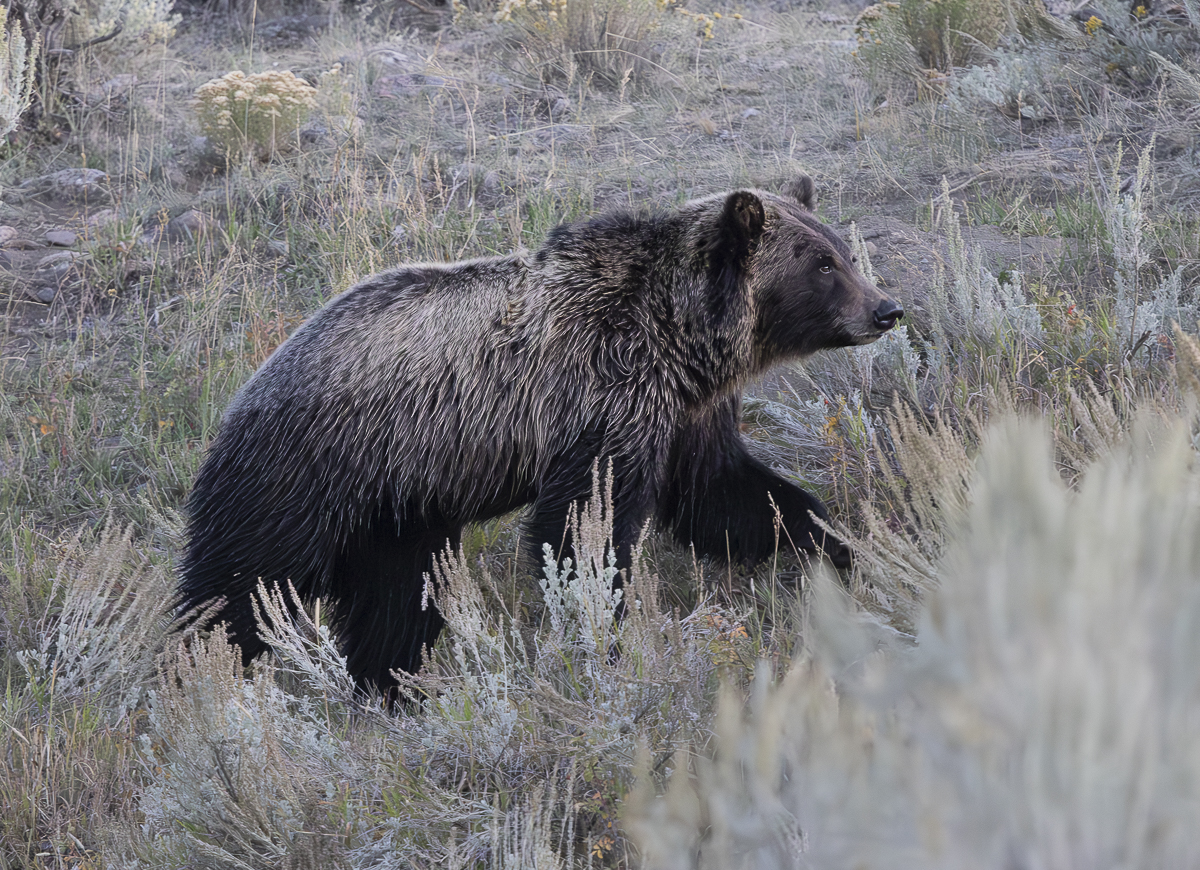
On one morning trip we passed by a few vehicles all looking in one direction so we slowed and Melissa spotted a bear in the distance. One bear soon turned into two grizzly bears near the shores of the Blacktail Ponds.
One of two sub-adult grizzlies at Blacktail PondsRed-tailed hawkMale cinnamon teal in a pond near Slough Creek
The past couple of nights we have eaten an early dinner and then gone into the park out to Lamar Valley (often called the Serengeti of North America for its abundant wildlife). There is a sandhill crane nest just off the road on the way out that usually has several cars of photographers at it (many of them get too close to the nest unfortunately). One evening when I went by there was no one there so I got out and took a few pics from the far side of the road. Most of the pics I post are taken with my 500mm telephoto and a 1.4x teleconverter and then cropped.
Sandhill crane sitting on the nest The nictitating membrane common in bird eyes is visible in this photo. It acts like a protective shield or goggle to protect the eye.
There is a another nesting pair of cranes as you enter Little America. I had stopped to observe them a couple of times but last night they were both out in the short grass around their marsh and they had one colt following them around (colt is the term used for baby sandhill cranes supposedly because they can run within 24 hours after hatching – but this little guy did a couple of face plants in the tall grass as we watched it trying to keep up with its long-legged parents).
Sandhill crane familyWhen one parent and the colt wandered away, the other parent did a short flight to rejoin them.
But what Lamar is really about this time of year are the bison and their babies (called “red dogs”). There are hundreds of them out there now grazing on the lush green grass in the valley along the river. They are causing massive bison jams on the road where you just have to be patient and enjoy the sights and sounds until they decide to cross in front of you. I just love watching these beautiful beasts and the late day light makes it all the more rewarding.
Bison calf portraitBison cow and calf wading the shallows along the Lamar RiverLast night’s view of some of the bison in Lamar Valley
Tonight and Monday night forecasters are predicting a high probability of northern lights in this area so I guess we will be out again enjoying the perks of our new home.
Bird species observed on or from (flying by) our property these first few weeks:
bald eagle, osprey, sharp-shinned hawk, Cooper’s hawk (in town), American kestrel, red-tailed hawk, sandhill crane, Canada goose, turkey vulture, common raven, black-billed magpie, European starling, red-winged blackbird (just down the street), Brewer’s blackbird (in town), Northern flicker, pinyon jay (in November), house wren, Cassin’s finch, lazuli bunting, evening grosbeak, tree swallow, violet-green swallow, orange-crowned warbler, Wilson’s warbler, yellow warbler, Western tanager, American robin, rock dove, Eurasian collared dove, chipping sparrow, spotted towhee, Western kingbird, rock wren, pine siskin
It has been a little over a week in this journey from our beloved woods in North Carolina to a small town at the edge of a place we love – Yellowstone. It has been a very busy several days with us driving two vehicles across country in 4 days and a tractor trailer with all our possessions arriving the next day. The team from TROSA in Durham did a great job loading and unloading our belongings. After they finished, they moved their truck back to the hotel here in Gardiner and we took them on a 6-hour tour of the northern range of Yellowstone. And the park did not disappoint. The guys wanted to see wildlife, and that we did. We saw moose, wolves, grizzly and black bears, coyote, red fox, elk, bison, bighorn sheep, mountain goats, mule deer and more. Beginning the next day, we started the arduous task of unpacking and trying to arrange all the stuff in our new world. A few days later, Melissa’s sister, Stephanie, arrived and the two of the have been on a tear getting things set up and now the house looks like we have been here for months instead of just a few days. Yesterday morning, we wanted to share some sights of the park with Stephanie so we got up at 5 a.m. and headed into the park for our second time since arriving. Once again, the park delivered in spite of the cloudy skies and occasional brief bouts of rain and even some frozen precipitation. In between those two trips into the park, we have even managed to connect with the wildlife of the region from our living room. So, here is a quick summary of our first several days in wonderland.
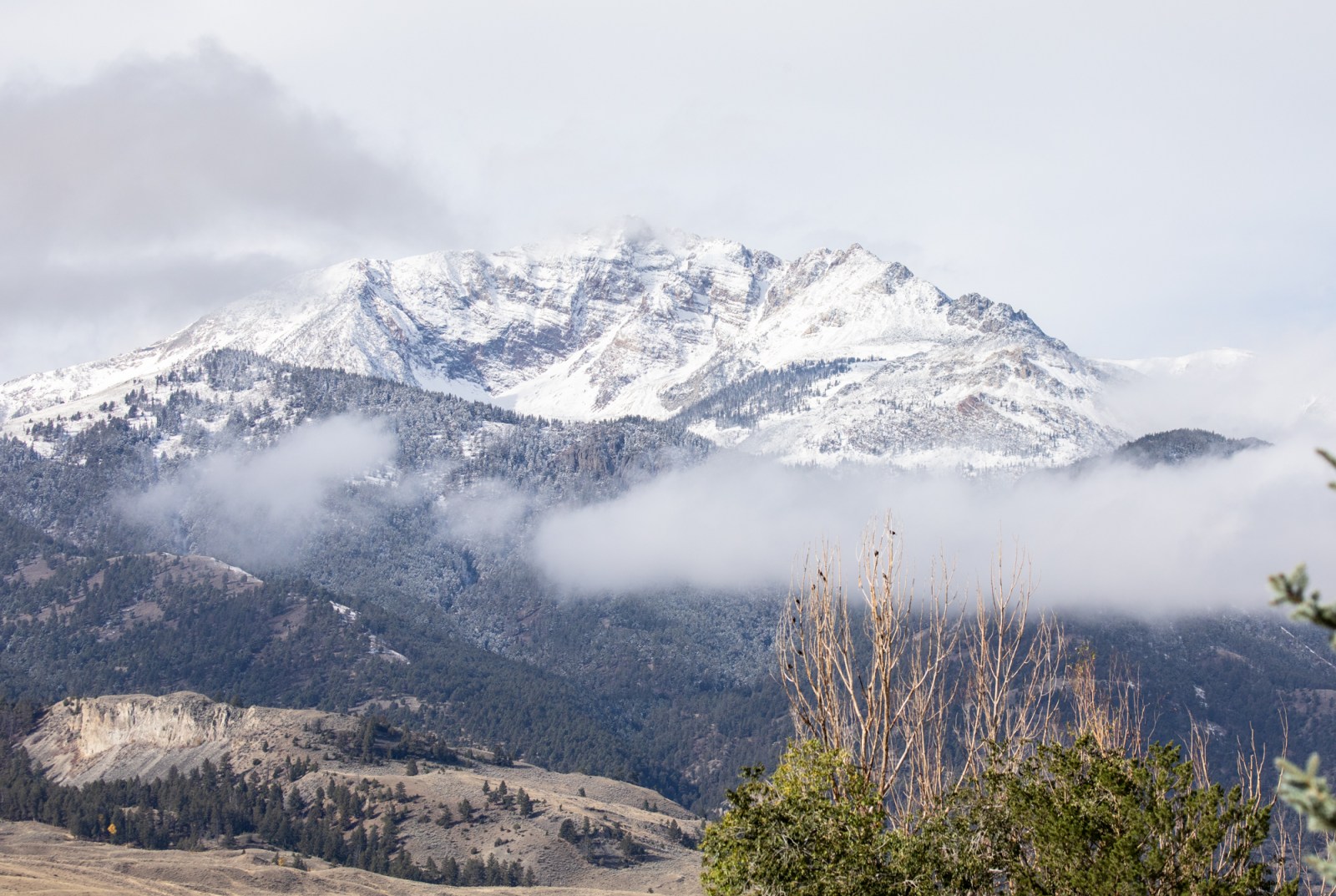
We don’t need to go far to see wildlife…this cow elk has been spending time right outside one of our living room windows along with an occasional mule deer (click photos to enlarge)A scene from our main living room windows – a herd of elk keeping a wary eye on a grizzly family. We can scan the hillsides near the park entrance from our house and one morning last week I spotted a grizzly sow with two cubs from last year digging for food. At one point she nursed the cubs while lying on her back. This is a heavily cropped image taken from a distance of about a mile.We saw that trio three mornings in a row. One day Melissa spotted one of the cubs climbing a tree. It climbed way up into the tree and then the other cub started to climb but stopped a few feet off the ground (note the second grizzly cub clinging to the tree trunk). Eventually both cubs came down and the family sauntered off. Lesson here – grizzlies can climb, probably not as well or certainly not as often as black bears, but they can. (photo by Melissa Dowland)Our trip yesterday started with some bison and then this black wolf trotting briskly a hundred yards or so off the road.We stopped for some bison watching and then saw some cars lined up along the road in Lamar Valley. We soon spotted a group of 6 wolves of the Mollie’s pack. The Mollie’s are the only pack named for a person (most wolf packs are named for the areas where they establish territories). This pack was named in honor of the late Mollie Beattie, Director of the US Fish and Wildlife Service during the wolf reintroduction.
The Mollie’s typically spend their time in Pelican Valley, where they learned to hunt the primary prey available in the harsh winters there – bison. They have made occasional forays into Lamar Valley over the years, but locals think they now may have a den somewhere near Lamar Valley. They are noticeably large wolves and are known to be efficient hunters. We saw six of the Mollie’s walking on the far side of the river and suddenly start trotting towards a pair of bison. One wolf strayed from the group and five moved in and surrounded the behemoths.The bison responded with tails up and turned to face the wolves. The encounter lasted several minutes with most of the wolves soon realizing these two healthy bison would not be an easy target. The wolves finaly moved off and found their wandering pack mate who had discovered an apparently lifeless bison calf. The group quickly moved in and started feeding while we watched through a spotting scope.
The bison pair came back to investigate while the wolves fed, stopping only a few feet away before turning and walking off. Note the gathering of ravens waiting their turn at the carcass.
We headed off and saw a lot more wildlife including bears and mountain goats, but no moose (the one big critter Stephanie had not yet seen). Back at home we continued setting up the house by hanging artwork and making everything look just right. As we were finishing dinner, our neighbor, Bob, texted that a grizzly sow with two cubs was seen near the park entrance gate and it might be the ones we had seen last week from our house. Though we were pretty tired, we drove to the entrance station (less than 5 minutes form the house!) and spotted the bear which was barely visible through the sagebrush. She was apparently napping and all you could see was a thin line of dark brown indicating her back. After several minutes standing out in the cold we saw heads up…
The sow and one cub look up for their sage bed. They were only about 100 yards off the road but the fading light made it almost impossible to get a sharp photo.The sow starts to lay back to nurse the cubs. This is definitely the same trio of bears we saw last week from our living room but this time they were just a few hundred yards from the edge of town. Here’s hoping they stay healthy and wild.After nursing, one cub rolled around on its back, feet in the air.
I’m typing this in the early hours as I look out at the park with the moon peeking through the breaking clouds. My thoughts are drifting between wondering where those bears are this morning and what’s for breakfast for us. I must admit, that is a nice way to start a day.
Yesterday morning we took what may be our final stroll through our property. Our home is on a little over 14 acres of rolling landscape with big hardwoods, mostly white oak and tulip poplar with some northern red oak and various hickories making up the largest trees. As we walked, I noticed we were both stopping to admire and sometimes touch some of our favorites as a way of giving thanks to their presence.
Melissa admiring the huge white oak on our south slope (click photos to enlarge)
We visited each bench we have placed in the woods over the years and watched and listened for a few minutes before moving on. A variety of migrating songbirds have dropped in these past few days and we heard the songs of many species. Two days ago my list of songsters (aided by the Merlin app) included wood thrush, red-eyed vireo, scarlet tanager, summer tanager, ovenbird, eastern bluebird, black-throated blue warbler, great crested flycatcher, pileated woodpecker, red-bellied woodpecker, Carolina chickadee, black-and-white warbler, American crow, Carolina wren, blue-gray gnatcatcher, hooded warbler, American redstart, tufted titmouse, white-breasted nuthatch, and northern cardinal. Yesterday we heard many of the same species and added a veery and rose-breasted grosbeak. Spring in these woods is a magical time.
First of the year red-spotted purple butterfly
At one spot along the now dry creek, Melissa saw the bright blue flash of a red-spotted purple butterfly, the first one of the season for us. It was sitting in a sunny spot on the creek bottom slowly opening and closing its wings to soak up the warmth. You can’t help but smile when you see such a brilliant blue.
As we approached the back deer fence gate, Melissa touched my arm and showed me a pileated woodpecker that had just flown up off the ground about 50 feet away. We stood there watching this magnificent bird as it hopped from one tree trunk to another and then down onto the ground. Though the bird was largely hidden from view below the downward slope we could see the leaf litter and bark it was throwing up into the air as it searched for a meal.
This female pileated woodpecker spent several minutes with us on our last walkShe takes off to another piece of wood on the ground to search for food
We watched her for at least 10 minutes as she kept hopping from log to tree trunk and finally landed on a series of tree cookies we had laid down years ago to aid in crossing a muddy spot on our trail. They have started to decay and the woodpecker seemed compelled to help that process along, tapping and probing each insect hole in the wood with her long barbed tongue.
Probing the wood for insects
As we watched, she kept coming closer and closer giving us a great view of her feeding behavior. She finally starting moving away from us and eventually flew off toward the creek bottom. Melissa said that, at first, the walk made her sad, sad to be leaving such a beautiful place that we know so well. But our time with the woodpecker had lifted her spirit and reminded us both of what it is we love to do – to be outside and observe nature, especially when that world goes about its business and allows us to feel we are part of it, that we belong. We both realize that our new home is sure to provide countless moments like this and we are excited for the new experiences we will share. And we are thankful for the many special memories our woods have given us over the years including these most recent gifts from a butterfly and a bird.
…I seek the darkest wood, the thickest and most impenetrable and to the citizen, most dismal, swamp. I enter a swamp as a sacred place…I seemed to have reached a new world, so wild a place…far away from human society.
~Henry David Thoreau
My last trips to the magical swamps of the Roanoke River happened these past few weeks. The title of this post is another excerpt from the writings of Thoreau about his fondness for swamps. No doubt, his swamp at Walden Pond was quite different from what we have been experiencing as he was walking and we are paddling for miles through flooded swamp tupelo and bald cypress trees. But the feelings these underappreciated environments evoke are the same – wildness, serenity, and a connection to nature. So, in spite of (or maybe because of) the looming deadline of our move across country, we have spent many recent days soaking in the solitude of this place. This post covers two more recent trips – one with just the swamp queen and myself on the Cashie River and the other with our good friend, Meghan, that went from Williamston to Jamesville.
On our first trip, we camped one night on the Lost Boat platform on the Cashie and explored some side creeks up the river. The wind seemed to be testing us on this trip as we paddled into its gusts much of the two days. But sunset saw a settling and that quiet beauty you can get in such a place.
Moon rise on the Cashie River near the Lost Boat platform (click photos to enlarge)
As usual, the barred owls gave us a nice symphony at our platform through the night. The next morning other birds took the stage with a great crested flycatcher being particularly loud over our tent.
Our first great crested flycatcher of the year
We headed upriver a few miles with an empty canoe to do some exploring (Melissa loves to explore side creeks). Ospreys were quite active and vocal, especially one pair when we paddled past their huge nest that has been there a number of years.
Huge osprey nest on the Cashie
As often happens, we soon spotted a bald eagle in hot pursuit of an osprey carrying a fish. The aerial display of speed and agility was amazing. It went on for quite awhile with the osprey trying every move in the book. The eagle would occasionally fall off a bit but would then kick it into overdrive and get right back on the ospreys tail.
Eagle in hot pursuit of an osprey and its catchThe eagle mirrored every twist and turn made by the osprey
They flew out over the treeline and through the branches we saw the osprey drop its catch with the eagle quickly diving and snagging it mid-air. That’s got to be frustrating for the ospreys!
Of course, there was lots of other bird action as we paddled including double-crested cormorants, a few anhinga, and the sights and sounds of the swamp warblers arriving for the spring breeding season.
The typical cross-like pattern of an anhinga in flightSeveral male prothonotary warblers added splashes of brilliant color to the swamp shorelines as we paddled
Our slow paddle pace allows us to take in the details of the swamp, to appreciate the greening up of this amazing habitat, and to pick out the textures and colors of this magical world.
The resurrection ferns were vibrant after recent rains and adorned so many of the swamp tree trunks and branchesCrossvine blooms were everywhere as we paddled making this the most abundant display of this species I have ever seen
The forecast called for heavy rains on that Friday so off we went for a one night respite at home before returning on Saturday, accompanied by our good friend, Meghan, a newbie to the wonders of the swamp.
The plan was to put in at Williamston and paddle with the current through Devil’s Gut, camping at two platforms before taking out at Jamesville on Monday. We drove two vehicles, and shuttled them so we had a car waiting at the NC Wildlife boat ramp in Jamesville. The current was very fast so our first few miles went quickly. We soon pulled into a side creek and beached ourselves on a floating mud mat against the shore to eat our lunch. We hadn’t been there long when a white-eyed vireo appeared and flitted into its nest under construction on a low limb at the tip of our boats! We watched it come and go adding all sorts of material to its nest. Their nests are typically placed low in a small tree or shrub and are suspended between a small fork in the branches. The nest is made up of fine bark, leaves, roots, paper, and is held together with spider silk and decorated on the outside with lichens, leaves, and moss.
White-eyed vireo with a beak full of nesting material on one of its many trips during our lunchtime stopPlacing the material in the nest with careAs we finished our lunch, the bird gave us the look telling us it was now time to leave.
We quietly paddled down Devil’s Gut observing the army of cypress knees along the edges and and listening to the many sounds of the swamp. There were critters too – a couple of wild turkeys took flight up a side channel, a startled beaver did a belly flop into the water as we came around a bend, and a muskrat didn’t see us until we were on it and then hurried into the water only to the swim right next to our canoe in its escape.
Meghan paddling by a huge bald cypress on one of our side channel explorations along Devil’s GutA muskrat making good its escape
We reached the creek entrance to our first platform in what seemed like record time in spite of our exploring. It had been a chilly day so not much to see in terms of reptiles…tomorrow would tell a different story.
I was the first one awake and was sitting out by the stove with coffee when Melissa walked out of the tent and exclaimed “there’s a raccoon in that tree”. I couldn’t see it from my seat but somehow I had missed it when I first got up (she always seems to spot things now that I miss:). Sure enough, nestled in between three trunks coming up off a tupelo gum stump that had probably been cut decades ago was a curled up ball of fur.
The sleeping raccoon about 40 feet off our camping platform.
We all took way too many photos of this cutie while we sat and ate breakfast and talked about our trip. Every now and then the raccoon would curl up a bit tighter, presumably trying to shut out the sounds from its noisy neighbors. Once in a while it lazily looked over and we all grabbed cameras to get a portrait.
When will those guys be quiet, I’m trying to sleep here…Finally, after about an hour of us getting ready for our day, the raccoon slowly climbed down the trunk and swam off into the swamp to find a more peaceful bedroom.
Meghan said she thought she had heard something scurrying around during the night, but our hanging trash had not been disturbed and we have never had any issues with critters on the platforms in all our years of visiting. But when we got home and were unpacking, I noticed paw prints on our plastic tub that contained our camp kitchen supplies. That little rascal had definitely been on the platform and checked things out but had thankfully not gotten into anything.
Our last day was much sunnier and warmer and that changed the activity on the water…especially the birds, turtles, and snakes. We headed downstream to the Barred Owl platform and were greeted by a large number of the self-proclaimed guardians of logs and stumps, the brown watersnakes, Nerodia taxispilota.
A huge brown watersnake posing on a stumpBest Instagram pose of the day
It is mating season for these common snakes and we started seeing what we called “snake wads” on several logs. More correctly called mating aggregations, these were groups of snakes, often 7 or 8 together, intertwined in one spot. There was usually one large female with several small males in attendance. We started counting snakes along Lower Deadwater Creek and came up with 38 brown watersnakes in a little over a half mile of creek. Impressive!
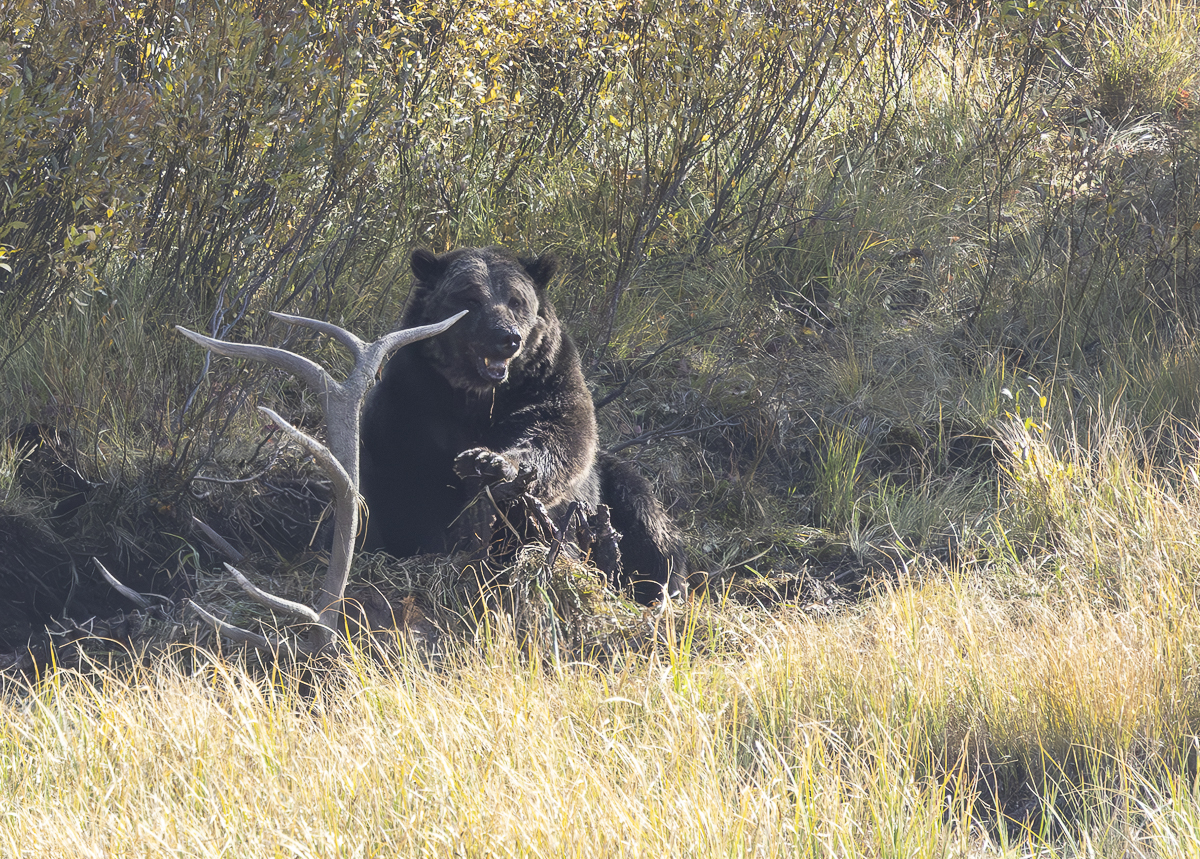
A snake wad of brown water snakes
All day long we heard warblers and other birds calling from the trees and all day they managed to stay out of reach of my camera. Finally, as the sun was setting and the swamp was turning into its evening shades of grays and browns, a brilliant flash of yellow arrived next to the platform – a male prothonotary warbler. Turns out there were two vying for territory and this one guy chased and sang and then sat on a cypress knee for several minutes, affording me the opportunity to try to get an in focus shot in the dimming light.
Guarding his turf, he kept a sharp eye out for the other intruding maleWhen the other bird showed itself, our guy would fly after it flashing its tail to show his displeasure.
One other critter that was with us on both platforms was the forest tent caterpillar. This is an insect we have seen most springs on the Roanoke and one that can be incredibly abundant. It is a close relative of the Eastern tent caterpillars we see elsewhere in the state in early spring that build the silken webbings in the forks of trees such as wild cherry. This swamp species does not build the tents but is a free-roamer and tends to occur in large clusters, especially on the swamp tupelo trees. Everywhere we went we saw them climbing any vertical surface (including all the corner posts on the platforms) and dropping down from the treetops on silken strands onto everything. I saw hundreds of them just on and around the platform on our last morning. I can’t imagine how many are just in this section of Devi’s Gut but it has to be hundreds of thousands and they can and do defoliate entire sections of the swamp. We wonder what long-term effects this may have on the trees, but I’m sure the caterpillar buffet provides a bounty of food for fish, birds, and other swamp wildlife.
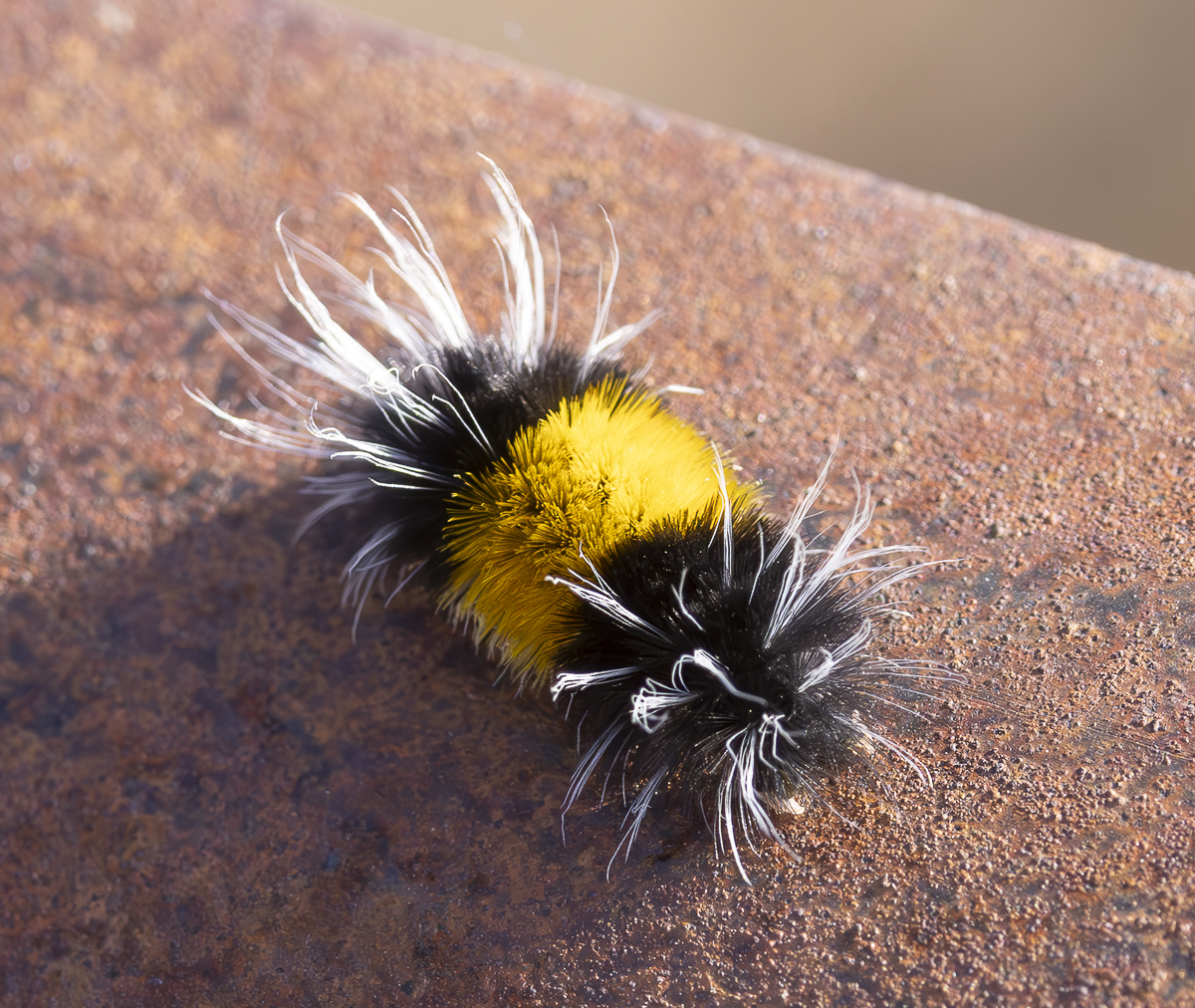
A brown watersnake with a forest tent caterpillar on its nose (photo by Melissa Dowland)
On our last section of Devil’s Gut before hitting the river proper, we were trying to find a barred owl nest cavity that was spotted a few years ago. We stopped and looked for cavity trees in several locations and Melissa finally saw an owl staring down into the shallow waters off a side channel. The bird dropped down and then flew up to a branch and started eating. We weren’t sure what it caught until we looked at blown up images on our cameras – it was a large crayfish.
Barred owl crunching a crayfish
It then flew off. We sat for a few seconds and Meghan saw the bird fly back and appear to disappear. We paddled back in and eventually saw feathers in a hole in a tree. It was tough to tell what was going on but it seems as though the owl was sitting on a nest inside that hollow but had very little room to maneuver. On her next trip with friends a few days later, Melissa confirmed the owl was still there and had two chicks.
Barred owl sitting on nest inside hollow tree with just her wing showing
From there, it was a short paddle out into the Roanoke and down to the boat ramp. We loaded up after doing the return shuttle of vehicles and headed home. Meghan had spotted an owl perched in a roadside swamp during the shuttle so we stopped and took a few pics as we passed by…a fitting end to our trip.
Barred owl sitting low in some young cypress along the boat ramp road
It was both a wonderful and a sad trip for me as it would be my last. We had plans to go with friends one last time but I had pulled a muscle in my back so I opted out and stayed at home. Melissa went back a few days later and I’m glad she did..she is the swamp queen after all:) It is hard to put into words what the swamps along the Roanoke River mean to us. The platforms afford you a unique opportunity to experience the beauty and wildlife of a place that few of us have access to otherwise. Paddling provides the perfect pace to take in the scenery and the feel of the swamp and makes it much easier to hear the sounds and catch glimpses of the many animals that call this place home. I am so glad that years ago I decided to start doing educator workshops with the museum to this incredible part of our state. It has become a beloved part of our many years in North Carolina. We are pleased that it looks to be in good hands with the Roanoke River Partners and the many volunteers that help keep up the platforms as well as the many conservation agencies that are preserving large tracts along these waterways. It has become our favorite camping adventure and we will sorely miss our time in this majestic temple of the swamp.
The beauty of the swamp will stay with us forever (and just may call us back from time to time)
The temple of truth has never suffered so much from woodpeckers on the outside as from termites within.
~Vance Havner
Melissa spotted a pair of pileated woodpeckers out front the other day and we grabbed the scope to take a closer look. They were both pounding on a couple of hickory stumps that we had used several years ago as legs for our campfire ring benches. When they started to decay, I rolled most of them out the side gate where they have served as home for countless critters and as a food source for the woodpeckers. I rolled two into the patch of trees out a front window so we could hopefully see woodpeckers doing just what we watched this week – hammering away looking for bugs. Melissa is much better at hand-holding a phone up to a scope for video so she recorded a few segments of the woodpeckers searching for food.
I slowed the next clip down so you can see the bird’s tongue flicking in and out as it chipped wood away. As we watched, we occasionally saw termites crawl out of the holes made by the woodpecker so we assume that was the main food it was gathering from this effort.