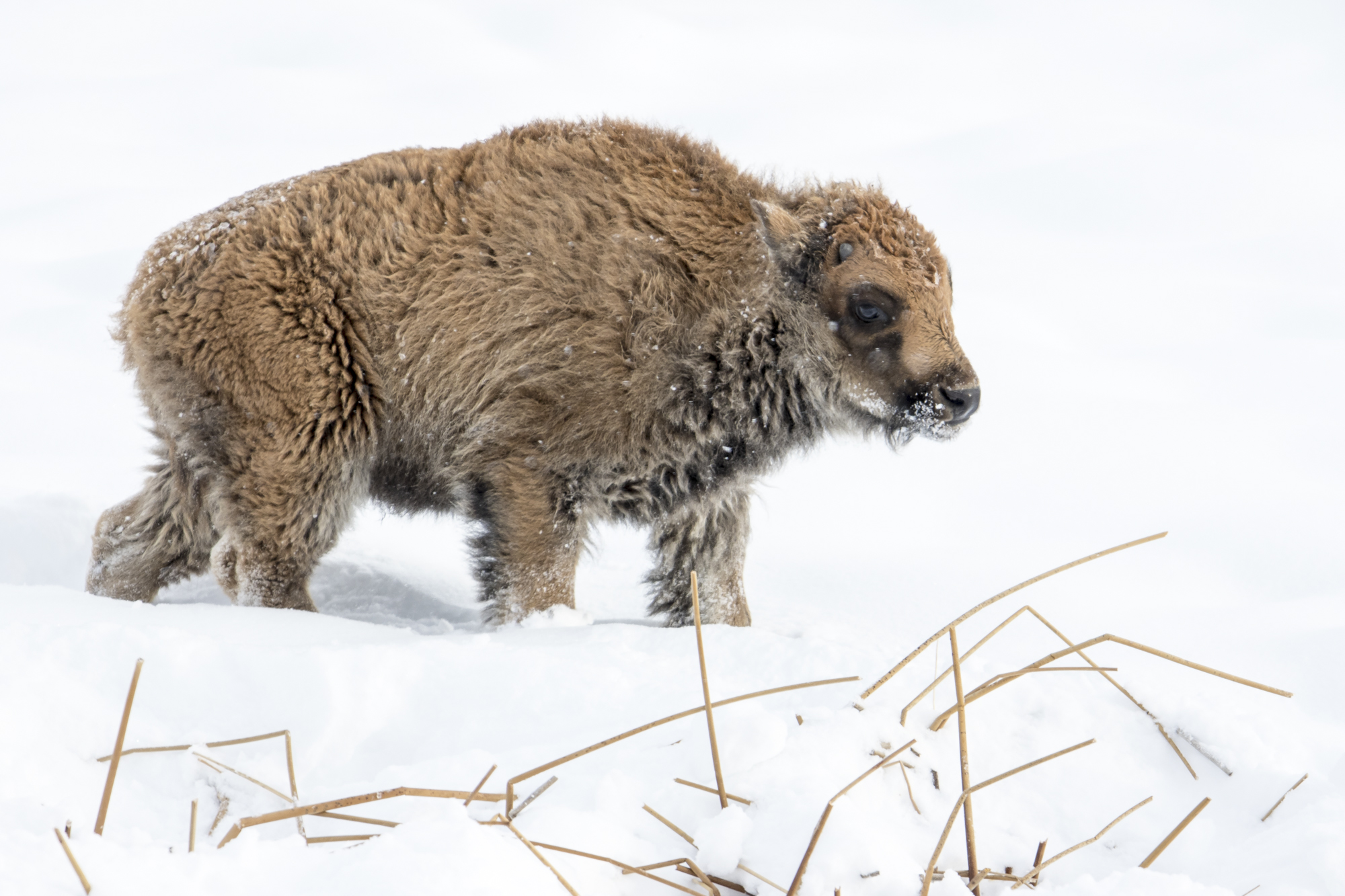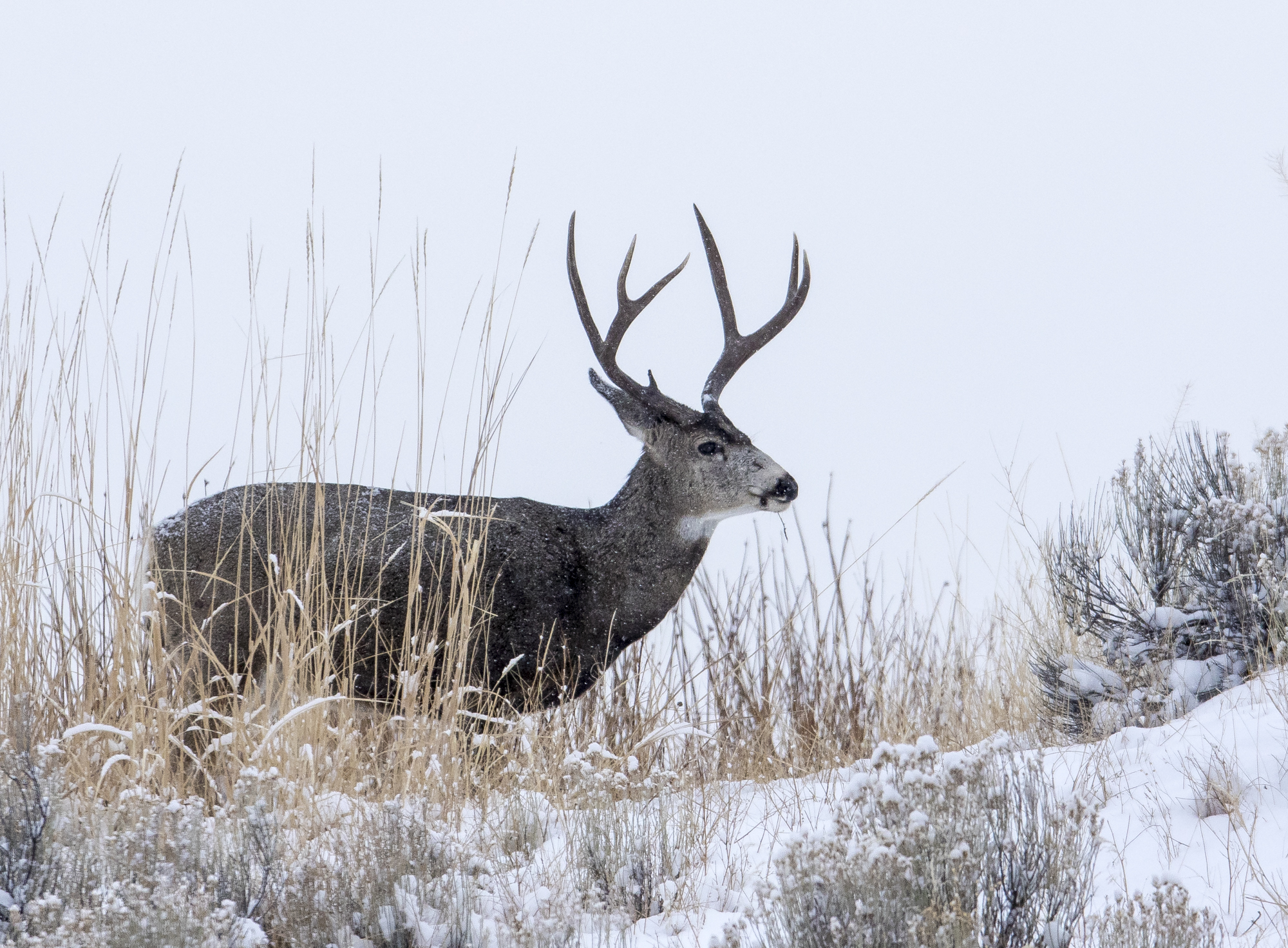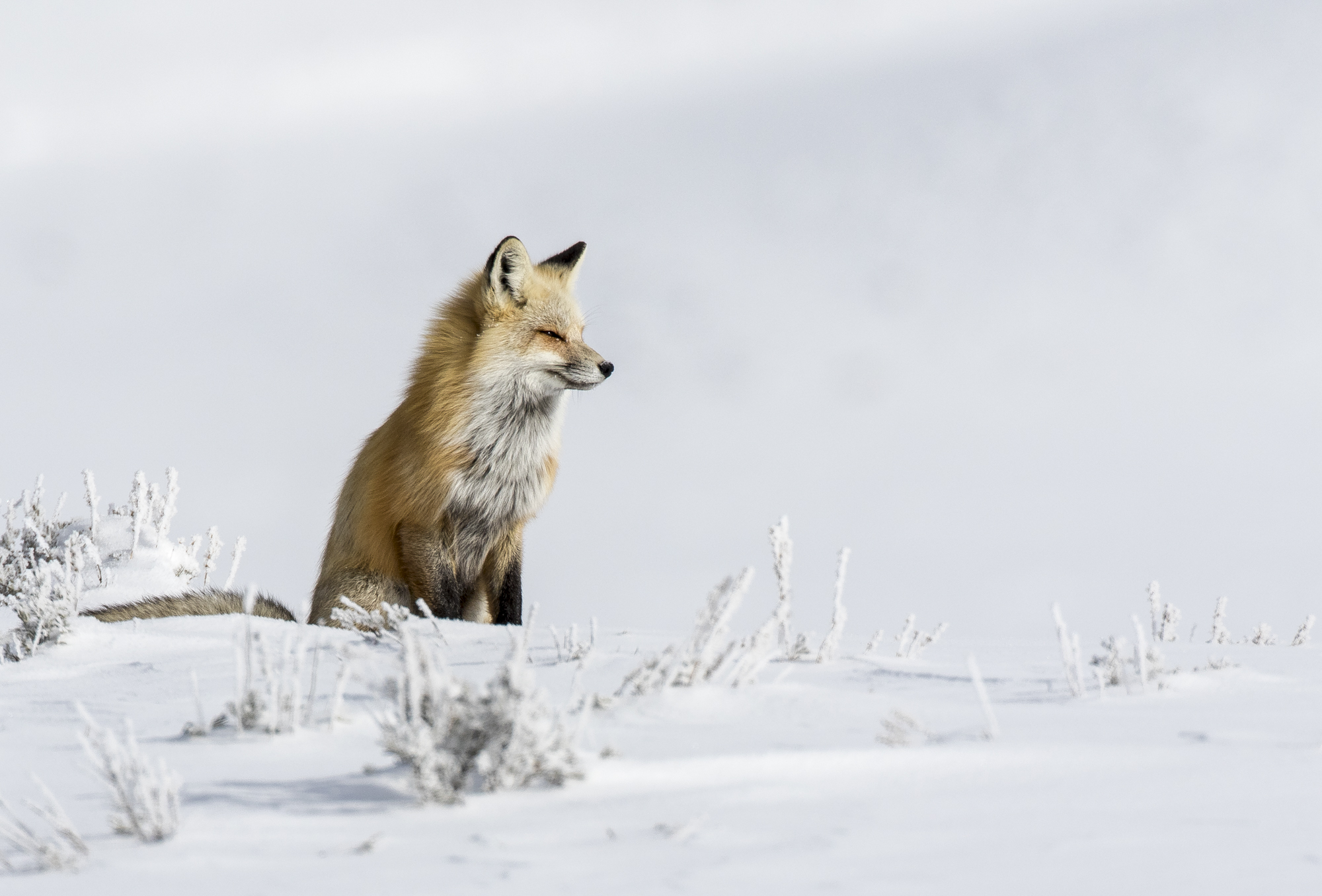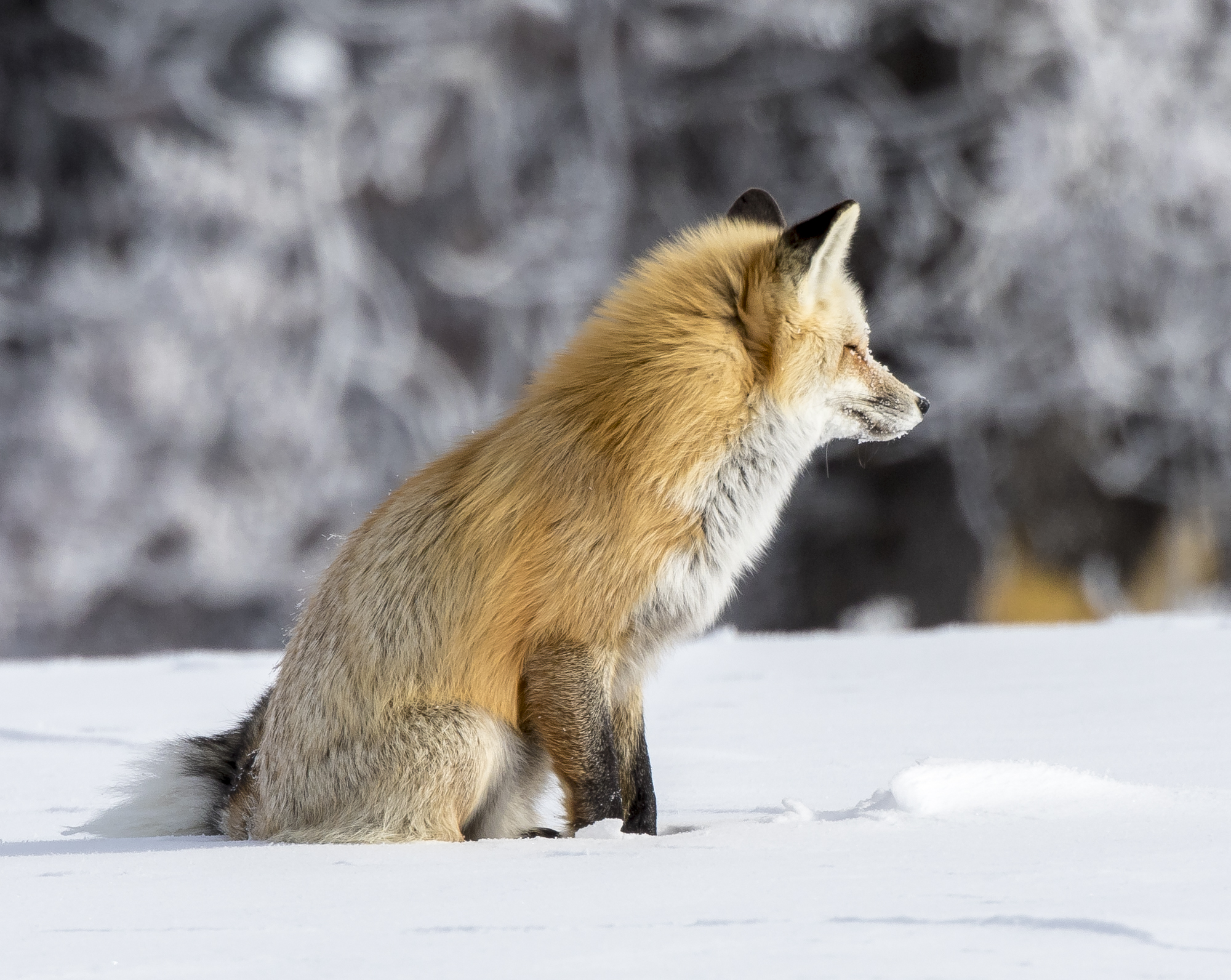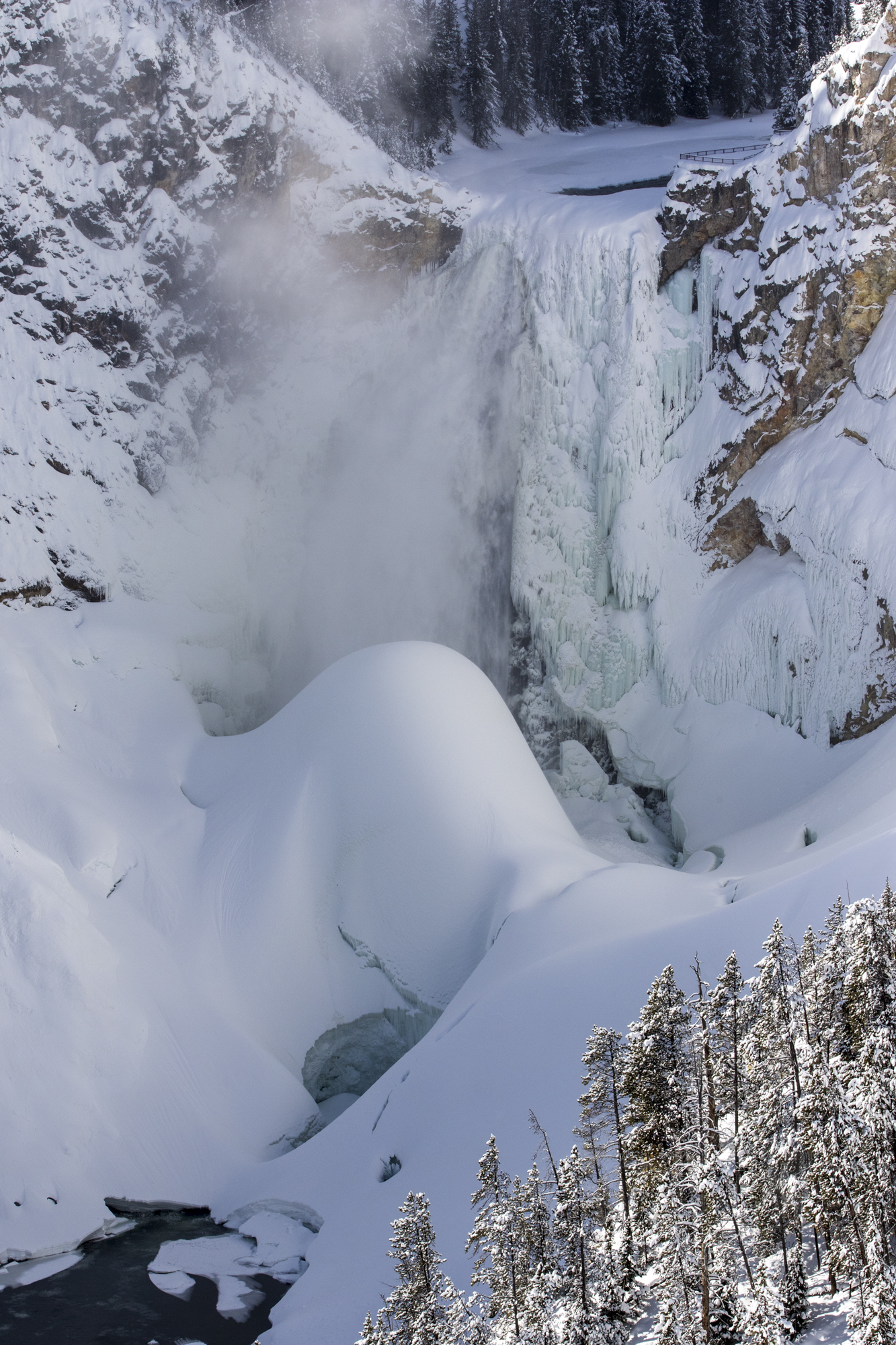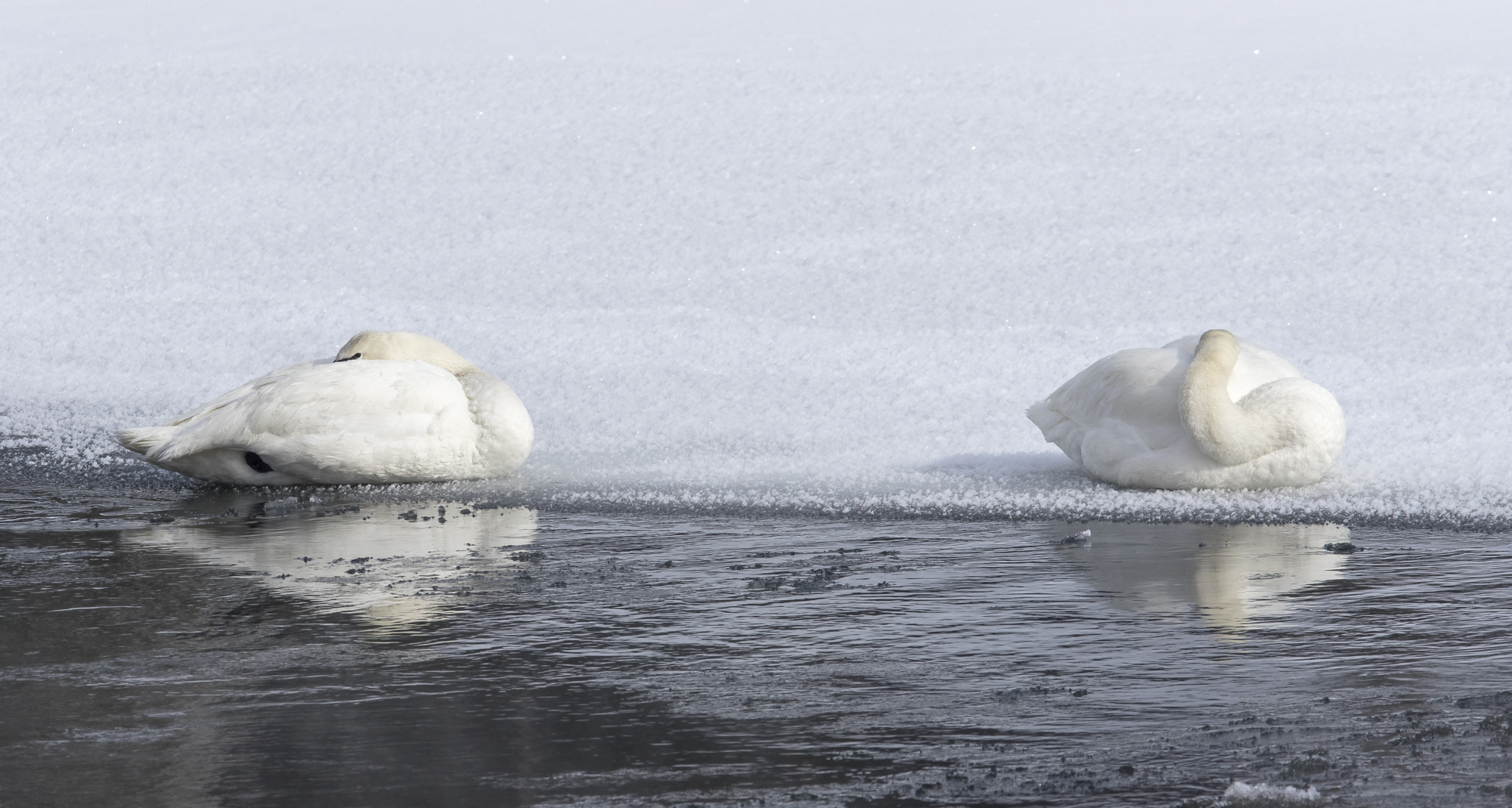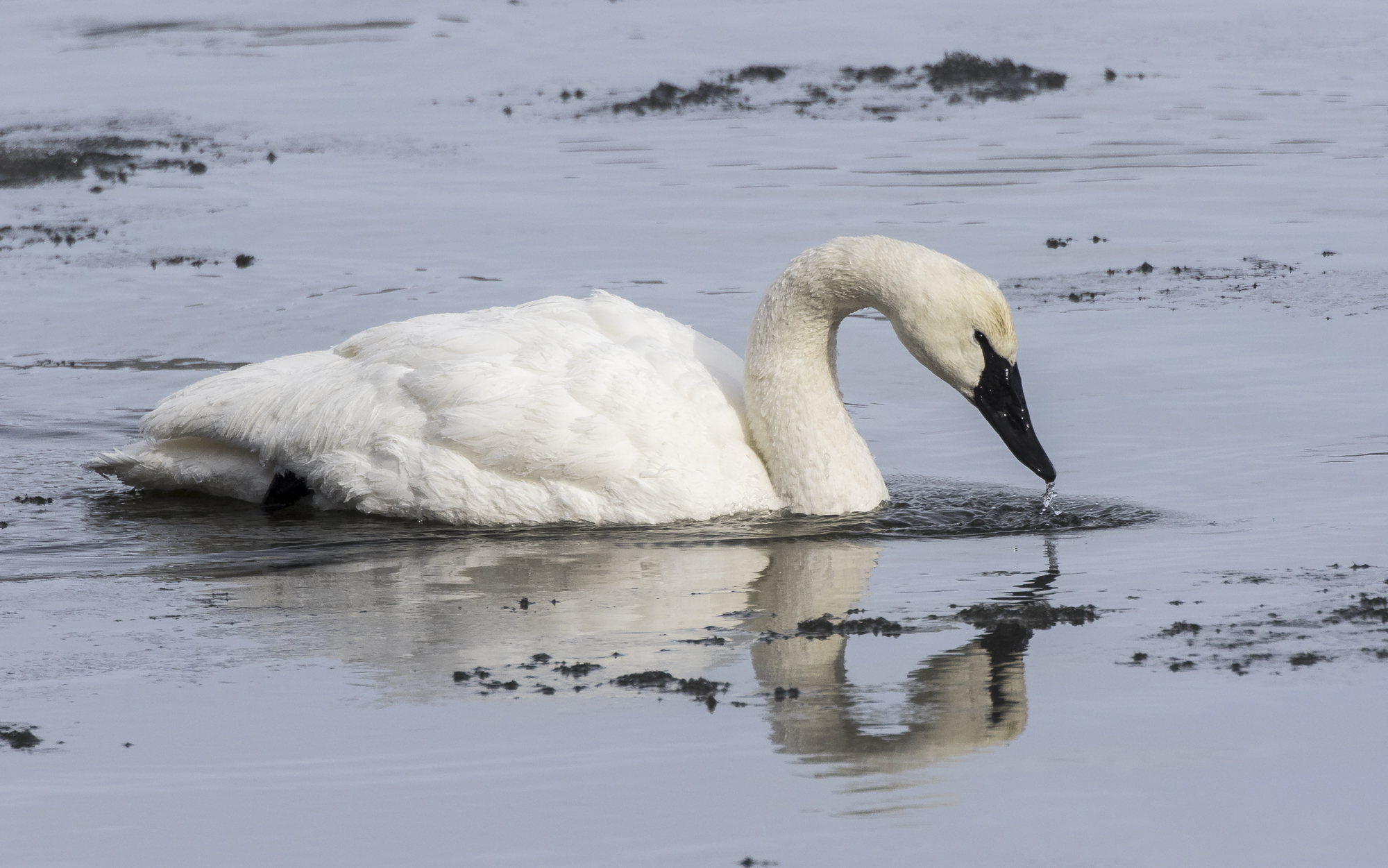
• Our Yellowstone

    In such surroundings – occasional as our visits may be – we can achieve that kind of physical and spiritual renewal that comes alone from the wonder of the natural world.

    ~Laurence Rockefeller

    To celebrate our wedding, Melissa and I did something we have never done – went to our favorite place, without a group. While we have had a day or two to ourselves here and there over the years, we were always prepping for a group’s arrival. This time, it was just us, and we were going to do another first – camp and backpack in Yellowstone. Even though I have been there over 40 times, I had never camped in the park or backpacked. So, this was going to be something special…except the weather decided maybe we needed a reminder of our inability to control things in this amazing landscape. It decided to rain, and rain, and rain a bit more. An entire day of rain on our first full day in the park and that was something I had never experienced in all my trips. But, it turned out to be just fine as we had a chance to spend time with friends and relax a bit, which has always been tough when leading a group.

    Here are a few of the highlights of our time in our shared paradise (oh, and I just returned from dropping Melissa off at 4 a.m. at the airport so she can lead a trip to Yellowstone with a youth group from the museum, lucky her)…

    eagle nest cliff
    The Slough Creek cliffs held a special treat again this year (click photos to enlarge)
    Golden eagle in nest
    Golden eagle nest on cliff face

    It was a great trip for birds…

    Swainson's hawk with snake
    Swainson’s hawk carrying a snake
    White-faced ibis
    White-faced ibis
    Yellow warbler
    Yellow warbler at the beaver pond
    Cliff swallows in rain
    The cliff swallows had just returned and did not seem to appreciate the rain either
    Tree swallow
    Tree swallow eyeing the camera
    Mountain bluebird male
    A male mountain bluebird looking fine
    Peregrine on nest close view
    Peregrine falcon on her precarious nest on the edge of a cliff
    peregrine nest
    Peregrine nest location from overlook near Calcite Springs
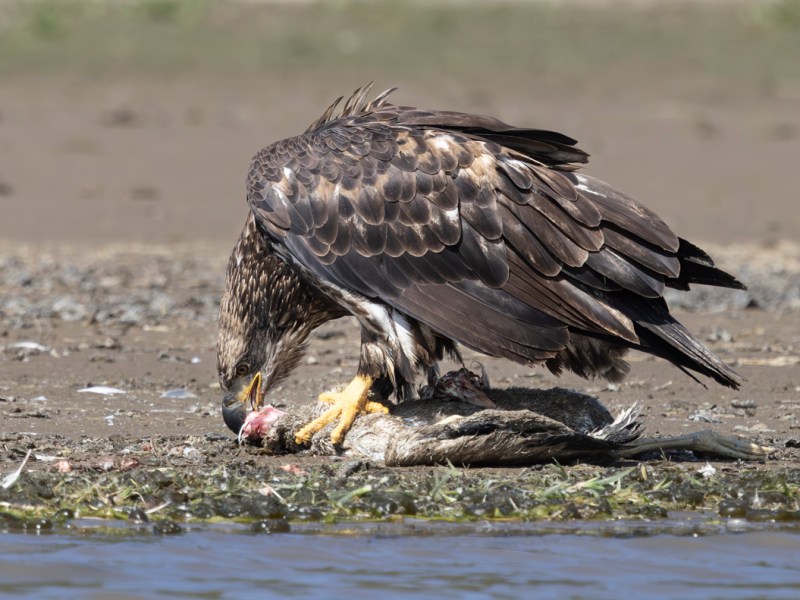
    immature bald eagle
    Immature bald eagle
    elk carcass and birds
    Bald eagles and ravens on elk carcass in Soda Butte Creek

    Other wildlife made an appearance as well…

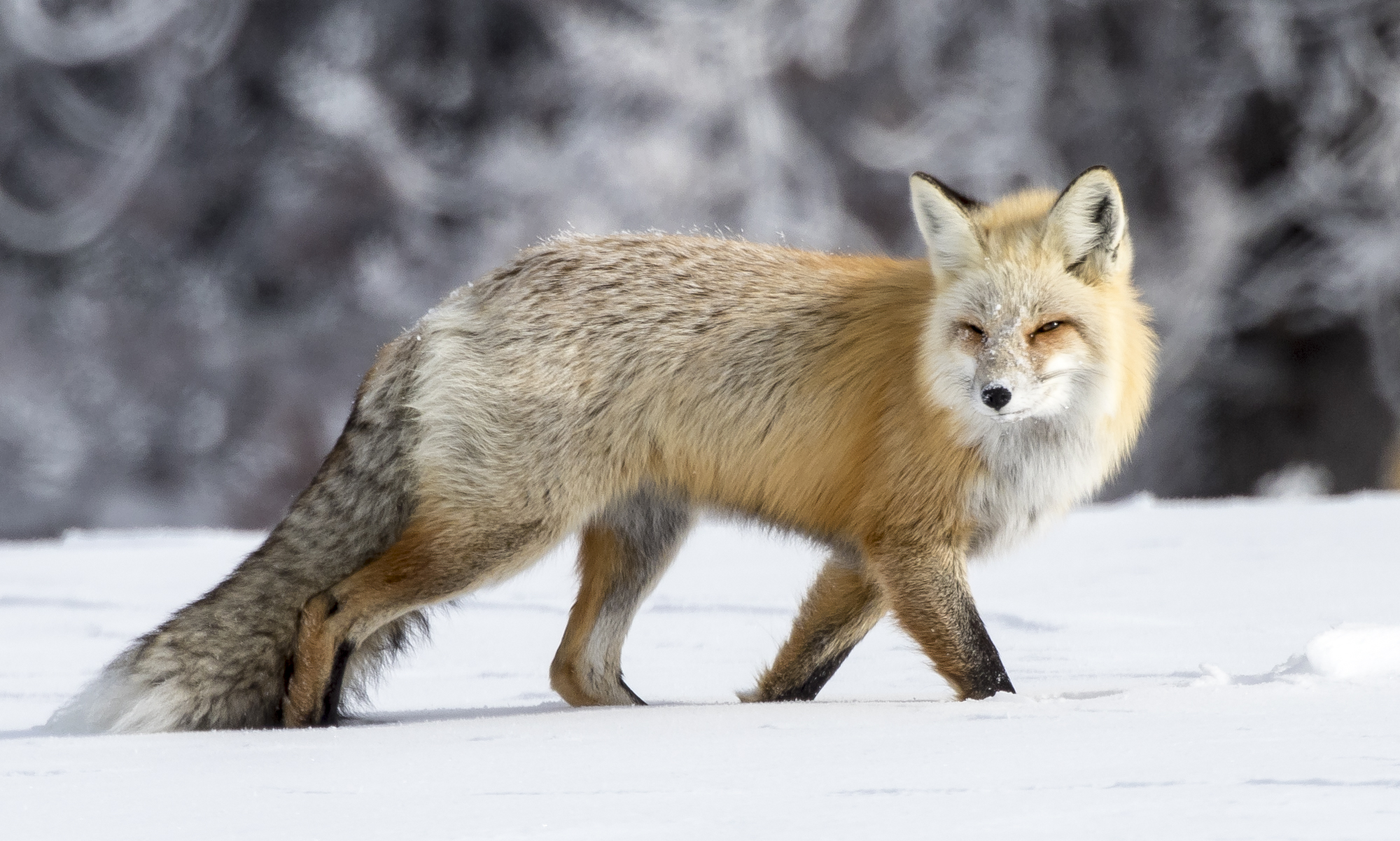
    red fox on snow 1
    Red fox on snow field at Dunraven Pass
    Pronghorn buck
    Pronghorn buck surveying his domain
    Pronghorn eyes from behind close up
    Pronghorns can even survey the scene behind them due to the placement of their large eyes
    coyote
    Coyote on the prowl
    bison and person
    Sometimes signs are not enough
    bison cown and calf
    Newborn bison calf gets cleaned by mom
    Black bear and cub in tree
    This mom finally had to climb the tree to retrieve her baby
    Black bear and cub
    A discussion on tree-climbing behavior once they were back on the ground

    And, as usual, the scenery was fantastic…

    snow from Dunraven
    Late season snow at Dunraven Pass
    Daisy geyser and rainbow
    Daisy geyser erupts creating a rainbow in the mist
    bison and reflection
    Reflections near Junction Butte
    Rainbow at soda butte
    Double rainbow along Soda Butte Creek
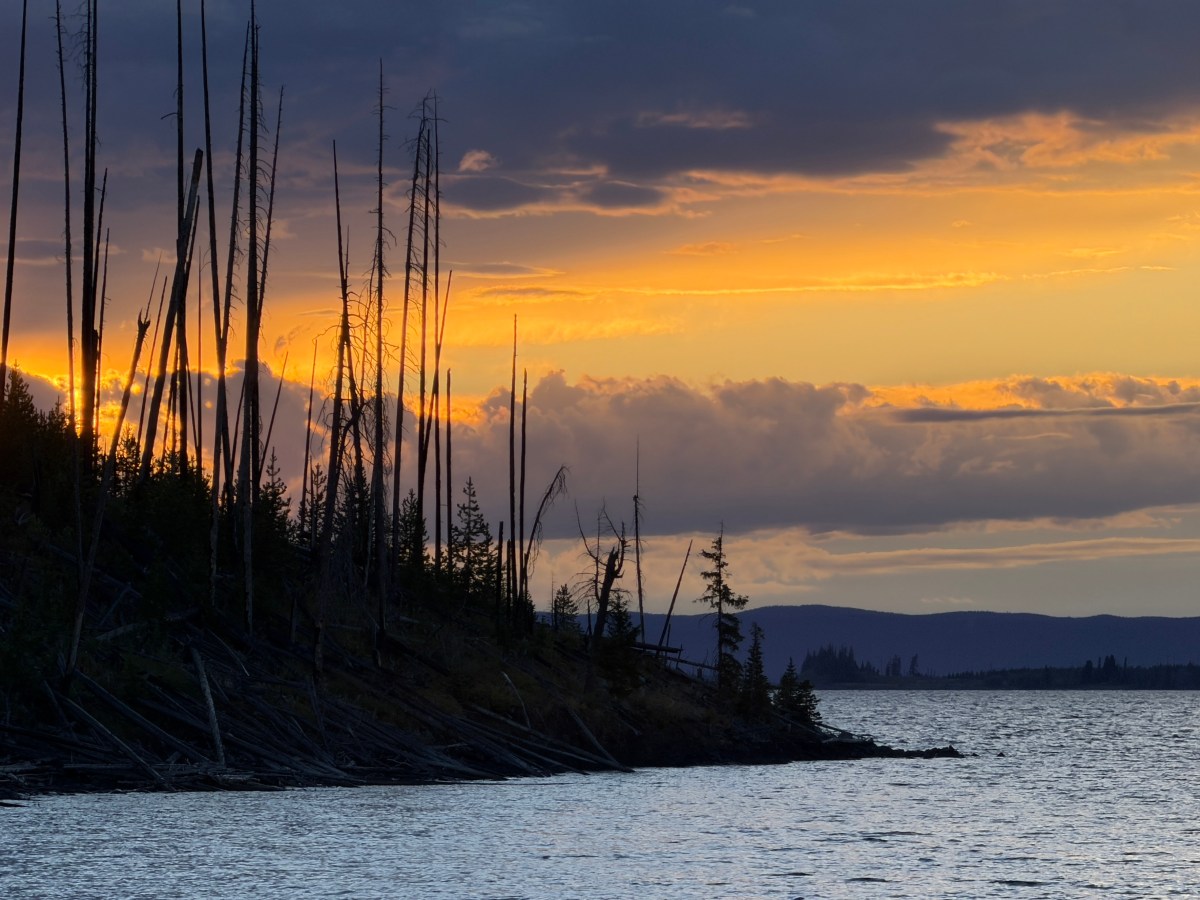
    sunset along Lamar River
    Sunset along the Lamar River
    Full moon seting in Lamar Valleygg
    Full moon setting in Lamar Valley
  • Guilty, or Not

    Things are not always what they seem; the first appearance deceives many…

    ~Phaedrus

    You may have noticed some long lapses in my blog posts. These past few weeks have been busier than usual, not so much for work, but for personal reasons – a wedding and honeymoon trip to Yellowstone (more on that soon). This post hails back to the couple of days after our wedding and the day before we headed to our favorite place (that “Y” park). One of the joys of living out here in the woods is being able to watch all sorts of wildlife in the yard. Chipmunks are a favorite of mine, so I was distressed when I went out one morning and saw a dead one lying on the walkway to the front door. I immediately blamed the neighbor’s cats (someone down the road has 4 or 5 outdoor cats that have been seen here in the yard a few times). I went over and inspected the victim – no obvious chew marks or injuries, but when I picked it up (I was wearing work gloves) I noticed some fur slid off quite easily, exposing a patch of skin. I told Melissa about it, fuming over the harm to wildlife done by outdoor cats, but speculated that another possibility was that a copperhead had bitten the chipmunk and was waiting for it to die before trailing it to dine.

    I tossed the dead chipmunk over in the woods, determined to discuss this with the neighbor. A few minutes later, I was walking down the driveway, looked over, and saw a copperhead on the walkway where the chipmunk had been. I usually try to move copperheads from inside our deer fence (they seem to like to lie on our walkway, unfortunately) but this one quickly scurried into the thick vegetation when I tried to lift it with my homemade snake stick. Hoping to lure the snake back out, I retrieved the chipmunk and placed it back on the walkway. About 10 minutes later, I walked by and noticed the chipmunk was gone!

    I walked over and saw a slight movement in the vegetation along the walkway…there was the copperhead starting to swallow its prey.

    copperhead with chipmunk
    Copperhead beginning to swallow an Eastern chipmunk (click photos to enlarge)
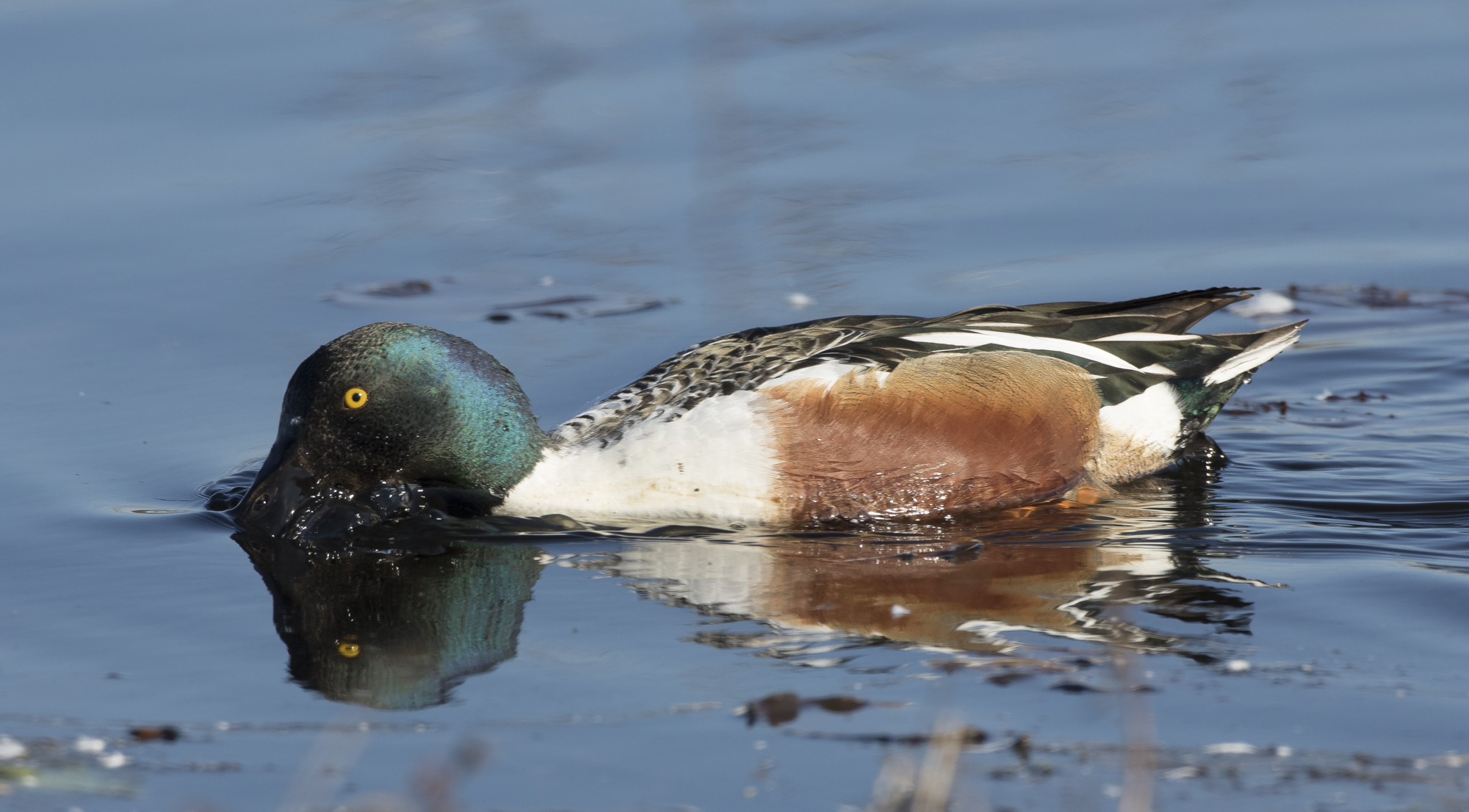
    copperhead with chipmunk 3
    Eye level view of copperhead lunch
    copperhead with chipmunk 2
    Note the flies on the carcass

    Our friend, Jeff Beane (Museum herpetologist), discussed copperhead behavior in an article for Live Science back in 2014. In it, he described copperheads as being “mobile ambush predators.” Mostly, they get their prey by “sit-and-wait ambush”; however, they sometimes do hunt, using their heat-sensing pits to find prey. Primary prey includes mice and other small rodents, birds, lizards, small snakes, frogs, salamanders and certain large insects (especially cicadas and large caterpillars).

    For small prey, copperheads will strike and hold the victim until it dies, and then swallow. For prey that presents a possible danger to the snake (like a rodent that could bite or scratch), it will strike, inject venom, and recoil quickly, allowing the victim to wander off. The venom breaks down blood cells and leads to circulatory collapse. The snake then trails the prey using a behavior known as SICS (strike-induced chemosensory searching). This involves searching movements of the snake’s head coupled with an elevated rate of tongue-flicking. A snake’s tongue collects particles in the air, and inserts them into its Jacobson’s organ in the roof of its mouth. Receptors then send a sensory message to the reptile’s brain. Research suggests that copperheads primarily track the scent of the envenomated tissues after a strike rather than just the scent of the prey itself.  I managed only a few photos before the snake pulled its meal back into the cover of the plants. I was amazed to see what I assume were several blowflies already on the carcass in way less than an hour from when I assume the chipmunk died. These flies seek out dead animals to lay their eggs on, where their larvae serve as important decomposers. A lot can happen just outside your door when you live in the woods!


  • Plants That Bite Back – Part 2

    It commonly chances that I make my most interesting botanical discoveries when I am in a thrilled and expectant mood…some rare plant which for some reason has occupied a strangely prominent place in my thoughts for some time will present itself. My expectation ripens to discovery. I am prepared for strange things.

    ~Henry David Thoreau, 1856

    The strange and miraculous Venus flytrap was the subject of the last post. But, North Carolina is home to a variety of other carnivorous plants, and we saw many of them on our recent trips to the Green Swamp and Holly Shelter. Here is a quick summary of some of these amazing insect-eating flora…

    Butterwort flower and leaves
    Butterwort flower and leaves (click photos to enlarge)

    Butterworts – Pinguicula sp.- Latin, pinguis, means fat. Common name refers to glistening leaves. Three species of this plant equivalent of flypaper are found in NC.

    Purple butterwort  flower and base
    Blue butterwort, Pinguicula caerulea
    Pinguicula lutea flower
    Yellow butterwort, P. lutea
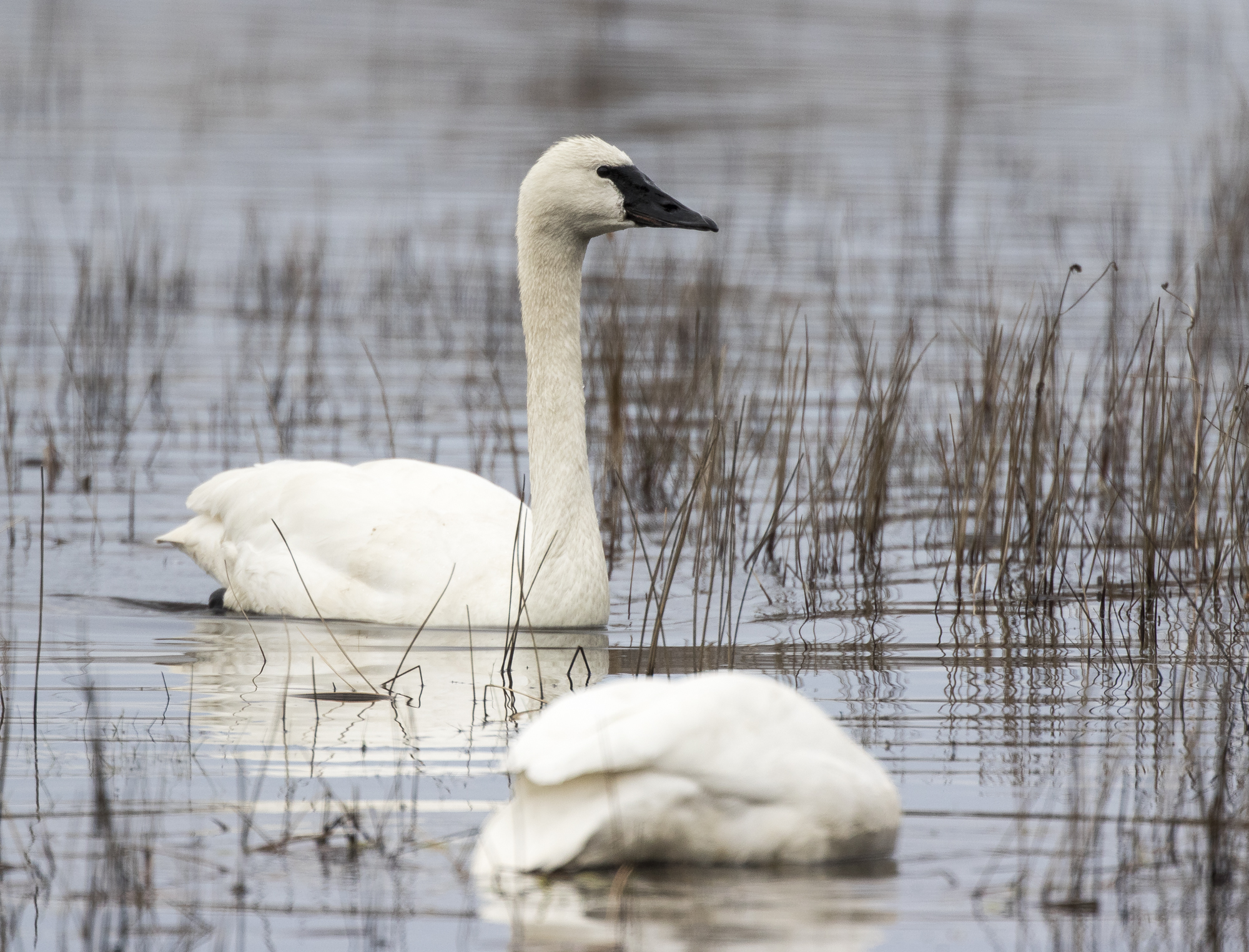
    _-5
    Small butterwort, P. pumila
    _-9
    Basal rosette of butterwort leaves act like flypaper

    The leaves of butterwort use two specialized glands, scattered across the leaf surface, for prey capture and digestion:

    _-8
    Close-up of butterwort leaves

    1) a peduncular gland, consisting of a few secretory cells on top of a single stalk that produce a mucilaginous secretion that traps insects; 2) sessile glands, which lie flat on the leaf surface and release enzymes that digest soft parts of the insect body. These fluids are then absorbed back into the leaf surface through holes. Butterworts produce a strong bactericide which prevents insects from rotting while they lay exposed on the leaves and are being digested. This property has long been known by northern Europeans, who applied butterwort leaves to the sores of cattle to promote healing.

    Bladderwort mass
    An aquatic species of bladderwort

    Bladderworts – Utricularia sp. – Latin, utriculus, meaning wine flask, leather bottle, bladder, small womb, or bagpipe; refers to the shape of the trapping mechanism.

    Bladderwort traps
    Bladderwort traps are small pouches attached to stolons

    Bladderworts are the largest genus of carnivorous plants with over 200 species worldwide. About 16 species are found in NC with most found in the Coastal Plain. Most are aquatic or occur in wet soils. They lack roots, but they do have underground or underwater stolons (creeping plant stems) that behave as roots.

    _-6
    The most common bladderwort we saw was the tiny terrestrial species, U. subulata, that grows in wet sand

    Bladders are scattered along the length of the plant under water (or wet soil) suspended from small stalks. Each is concave, under pressure, and sealed by a trapdoor kept watertight by a mucilaginous sealant. One touch of the tiny trapdoor trigger hairs, and the door swings open sucking prey and surrounding water into the low-pressure trap. Their traps suck in prey in less than one one-hundredth of a second, making this one of the speediest movements in the plant world. Once the prey is inside, a swirl of water pushes the door back again and the prey is trapped. Glands on the the inside of the bladder secrete enzymes that dissolve soft-bodied prey within hours. Other cells transport water back out of the trap, and it is reset.

    _
    Sundews in a roadside ditch

    Sundews – Drosera sp. – Greek for dewy. One of the most abundant groups of carnivorous plants with over 160 species worldwide. There are five species in NC.

    _-4
    Close-up of a leaf of D. intermedia

    Leaves lure, capture, and digest insects using stalked mucilaginous glands covering their leaf surfaces. These hairs trap insects in the sticky “goo”, and then proceed to digest them.

    sundew with prey
    Leaves often curl to help pool the released enzymes and nutrients

    Sundews move their tentacles toward their prey, causing them to get even more stuck.

    sundew flower stalk with insects 1
    Even the flower stalks and buds of D. brevifolia seem to trap small flying insects

    Enzymes dissolve the prey and released nutrients are then absorbed through the leaf surface.

    Holly Shelter oitcher plants
    Yellow pitcher plants at Holly Shelter Game Lands

    Pitcher plants – Sarracenia sp. – After Michel Sarrazin (1659–1735), the first naturalist to send pitcher plants to Europe for study. Pitcher plants are passive pitfall traps (they don’t move). Pitchers are modified leaves and many species have lids or hoods which keep out rainwater.

    unopened S flava leaf
    Yellow pitcher plant leaf before the trap tube opens

    Prey are lured by nectar and colors/patterns on the pitcher that mimic a flower. At least one species, S. flava, has a toxic alkaloid in the nectar that may intoxicate prey.

    cut pitcher plant
    Dissected pitcher showing downward pointing hairs and prey

    Prey fall into the trap due to the slippery inner wall of the upper section. Narrowing diameter of the tube and downward pointing hairs in lower portions further inhibit escape. Digestive enzymes are secreted and nutrients are absorbed by the plant tissues.

    Sarracenia purpure
    Purple pitcher plants lack a lid and collects rainwater

    Prey are believed to drown in the open pitcher of purple pitcher plants, S. purpurea. Microorganisms living inside the pitchers contribute to decomposition and nutrient uptake by the plant. If you look inside one of these pitchers, you may see things swimming in what you would think would be a deadly soup. We pulled a turkey baster full of liquid out of one pitcher and found both prey remains and living organisms that use it as a home.

    Picture
    The material siphoned out of a purple pitcher plant pitcher…yellow lines indicate a live mosquito larva and pupa; the blue line is a live midge larva
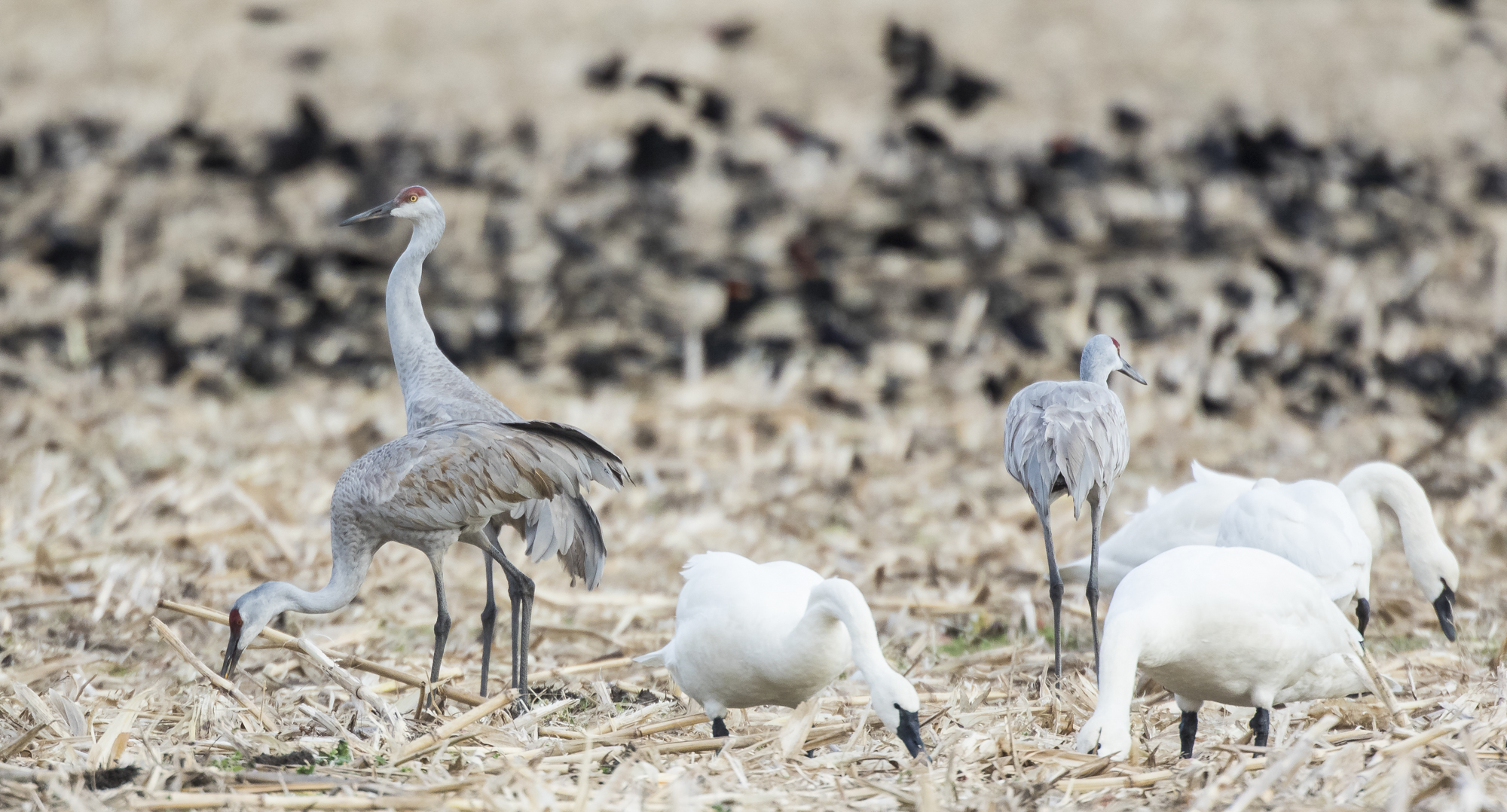
    The larvae of a small, non-biting mosquito (Wyeomyia smithii) and a midge (Metriocnemus knabi) live in the liquid in the pitcher, somehow withstanding the digestive enzymes that kill other insects.

    This has been a quick glimpse into the lives of these strange and wonderful plants. I have so much more to learn about these amazing plants and their specialized adaptations for surviving in nutrient poor soils in these intriguing habitats.

  • Plants That Bite Back

    The great wonder of the vegetable kingdom is a very curious unknown species of Sensitive. It is a dwarf plant. The leaves are like a narrow segment of a sphere, consisting of two parts, like the cap of a spring purse, the concave part outwards, each of which falls back with indented edges (like an iron spring fox-trap); upon anything touching the leaves, or falling between them, they instantly close like a spring trap, and confine any insect or anything that falls between them. It bears a white flower. To this surprising plant I have given the name of Fly trap Sensitive.

    ~Arthur Dobbs, colonial governor of North Carolina, 1760

    looking at flytraps
    Educators taking a closer look at Venus flytraps (click photos to enlarge)

    A couple of weeks ago I posted this image from an Educator Trek to Holly Shelter Game Lands and asked you to consider what these people were studying. It was one of the highlights of our session – examining the amazing carnivorous plant, the Venus flytrap, Dionaea muscipula.

    Venus flytrap cluster
    Large Venus flytraps at Holly Shelter Game Lands

    Earlier posts on this plant (The Most Wonderful Plant in the World and Where Insects Fear to Tread) gave some of the details of how it traps its prey, but here is another quick pictorial overview:

    Venus flytrap plus developing flower stalk
    The traps are highly modified leaves (note flower stalk emerging from center). These plants grow in moist, nutrient-poor soils, only within about a 75-mile radius around Wilmington, NC. The carnivorous habits are an adaptation to secure needed nitrogen from their invertebrate prey.
    single flytrap trapo
    Each trap consists of two hinged lobes with a fringe of fleshy “teeth”.
    vft triggers
    On the inner surfaces of the lobes are trigger hair projections, called trichomes, that cause the lobes to snap shut when prey comes in contact with them.
    Venus flytrap partially closed
    Two trigger hairs must be touched by prey within 20 seconds (or one hair twice). The trap shuts rapidly (in less than a second).

    When a non-prey object, like raindrops or a human with a pine needle, causes the trap to shut, it typically is loosely closed as in the photo above. If no other disturbance occurs to the trigger hairs, the trap will reopen within several hours. If, however, a prey item is caught, and is struggling and continues to hit the trigger hairs 4 or 5 more times, the trap shuts tightly and begins to release digestive enzymes. The enzymes gradually digest the soft parts of the prey. The nitrogen (and other nutrients) released are then absorbed by the lobes and the trap will reopen after several days. Each trap can open and close 4 or 5 times before that trap dies. New leaves with traps are then produced from underground stems.

    Venus flytrap
    A trap ready for a snack.

    A recent publication on flytraps provides results of a collaboration between researchers at the NC Botanical Garden, NC State University, and the US Fish and Wildlife Service. They examined the diet of flytraps in the field to investigate if there is any overlap between their prey and their pollinators (which seems like a bad idea from the plants’ perspective).  We decided to look for ourselves and see what we could find in a few of the traps.

    Flytrap prey
    We gently opened a few traps to see what they had eaten.
    Spider as flytrap prey
    A spider (probably some sort of wolf spider) as prey in one trap.

    Our limited results were in line with what the scientists found – 40% of the prey they found in traps were spiders. The second largest group of prey were ants. In other words, Venus flytraps seem to specialize in eating crawling invertebrates, whereas the pollinators they found were primarily flying insects (bees and beetles). This makes sense when you look at the architecture of this plant. Traps are low to the ground, rarely rising more than an inch or two off the substrate. In contrast, the small white flowers are borne on stalks rising about 12 inches above the traps, helping to ensure that the plant minimizes the risk to its flying pollinators. Perhaps a more appropriate name for this wonder would be “Venus spidertrap”.

    VFT sign
    Poaching Venus flytraps is now a felony in North Carolina.

    After observing these botanical marvels, we can appreciate why Charles Darwin called them “the most wonderful plant in the world”. In recognition of its limited global range (primarily in NC) and concern over its conservation, North Carolina designated the Venus flytrap as the official state carnivorous plant in 2005. And, as of 2014, Venus flytraps are protected from poaching by a law that makes it a felony to dig them up in the wild. If you would like to learn more, and see some flytraps (and other insect-eating plants) up close, you can visit the carnivorous plant collection at the North Carolina Botanical Garden. They should be blooming soon!


  • Bears and Butterflies

    Twenty years from now you will be more disappointed by the things that you didn’t do than by the ones you did do…  Explore.  Dream.  Discover.

    ~Mark Twain

    I think that sentiment is one of Melissa’s primary views of how to live a life. But, even she was a bit reluctant to head out early Saturday morning for a day trip to Pungo. We have both had full schedules at work these past few months with no let up in sight. We had planned this trip as a weekend get-away to meet our friend, Petra, and a couple from the Netherlands that had been clients a few years ago. Plans changed, and we decided not to camp and just do a day trip. We left about 7 a.m., arriving a little after 10 a.m., and found our friends alongside the road after having seen one large bear out in a field. But, they anticipated more now that the ‘bear whisperers” were here (no pressure there). So, off we went, and, luckily, there they were – a family of four bears just down the road.

    bears in field
    Family of black bears in one of the fields at Pungo (click photos to enlarge)

    It turned out to be a rather slow day at Pungo, but we had a great time in absolutely beautiful weather – walking, talking, laughing with friends, discussing the state of the world from another country’s perspective, and getting glimpses of nature. Butterflies were very active, especially the palamedes swallowtails and zebra swallowtails.

    palamedes swallowtail on thistle
    Palamedes swallowtail feeding on a roadside thistle
    palamedes swallowtail mating dance
    Palamedes swallowtail mating dance
    monarch on vetch
    Monarch foraging on vetch

    We even had two monarchs nectaring on small wildflowers along Bear Road. Birds were abundant as well – a pair of adult bald eagles, wild turkeys, a green heron, and lots of warblers (prairie, black-throated blue, black and white, prothonotary).

    bear in thicket
    Our last bear of the day

    But the day belonged to the bears, 14 in all. The last one was the closest, just across a roadside canal, low in the brush, nibbling on various leaves. It was a glorious day that ended with a wonderful dinner in Belhaven, and a late night return for us. But it was all worth it – seeing our Dutch friends, being outside on a beautiful day, watching those bears – and I’m glad we did it. Next….

  • Green Shelters

    The distinctive roar of the longleaf was the sound the evening breeze made, and the odor of pine resin was the smell of the countryside…It was so much a part of their lives, so wound up with everything it meant to be southern, that it was as impossible to discern its influence as it was to imagine a world without it. Only when it was reduced, almost entirely, to a sea of stumps could we begin to get our arms around it.

    ~~Bill Finch in Longleaf, Far as the Eye Can See

    These past few weeks have flown by with so much happening both at work and home. Highlights have included a couple of trips to a region of North Carolina that is quickly becoming a favorite, and is home to extensive longleaf pine savannas and their associated diversity of plants. The place is southeastern North Carolina, and the destinations are the Green Swamp Preserve and Holly Shelter Game Lands. One trip was with some of our trained volunteers from the NC Botanical Garden. The other was an educator trek highlighting the carnivorous plants of the region. Both were in collaboration with the NC Museum of Natural Sciences. Compared to our home here in the Piedmont, this land of longleaf really is a different world in the way it looks, feels, and sounds.Here are a few highlights from those trips (spoiler alert…more to come in future posts)…

    Longleaf pine savanna
    Longleaf pine and wiregrass along a road in Holly Shelter Game Lands (click photos to enlarge)

    The classic longleaf savanna has a dense understory of wiregrass and a host of other herbaceous species under a canopy of tall longleaf pines. Variations of this conifer-dominated community once covered 90 million acres along the Atlantic and Gulf Coasts. Logging, the naval stores industry, land conversion, and fire suppression have reduced this once dominant plant community by 97%. Land managers are working to restore this treasure by using a tool that helped shape this diverse landscape – fire.

    Grass stage of longleaf pine
    Grass stage of longleaf pine following a prescribed burn

    Scientists estimate natural lightning-caused fires once occurred on average every 3 to 7 years in much of the Coastal Plain. Years of fire suppression shifted the balance in plant communities to favor more deciduous species like turkey oaks at the expense of longleaf pines and the associated savanna species. Regular burns are helping turn this around, allowing the fire-adapted species to once again thrive. At both sites, we saw evidence of the adaptability of the many growth stages of longleaf to the effects of fire (see Melissa’s post from last year on longleaf). Plenty of singed needles, but the majority of growth tips survived, helping create a patchwork of green in the charred landscape.

    Bottlebrush stage of longleaf after fire
    Bottlebrsush stage after a fire
    Looking down on growing tip of bottlebrush stage of longleaf aft
    Growth tip of a longleaf pine in the bottlebrush stage

    Bring the plants back and you start to bring back the animals as well.

    Red-cockaded woodpecker nest cavity
    Red-cockaded woodpecker nest cavity surrounded by sap flow

    The federally endangered red-cockaded woodpecker depends on mature longleaf pine forests for its nesting cavities. They are the only woodpecker that regularly excavates cavities in living trees. As such, they are considered a ‘keystone’ species, because use of their cavities (either for roosting or nesting) by at least 27 other species of vertebrates contributes to the species richness of the pine forest. We saw numerous cavity trees scattered about the savannas. Most are marked in two ways – one human, one avian. Researchers monitoring the birds’ population regularly mark nest trees with two bands of white paint around the trunk of the tree. The birds drill numerous holes above and below the nest entrance, creating a sap flow that dries a whitish color and is visible at considerable distances. The sap is believed to help reduce the threat to eggs and nestlings from predators such as rat snakes.

    _-5
    Dwarf azalea in pine savanna
    Flower buds of dwarf azalea
    Dwarf azalea flower buds
    Dwarf azalea
    Dwarf azalea blossom

    At our last stop in Holly Shelter, we enjoyed the beauty and fragrance of dwarf azaleas, Rhododendron atlanticum. This low-growing shrub makes an eye-popping display in the sea of wiregrass. A closer look revealed some other striking flowers under the pines.

    Iris verna
    Dwarf iris, Iris verna, in the Green Swamp
    grass pink orchid flower
    Grass pink orchid

    The pine savannas are known for their unusual plants, including a host of native orchids. Early in the season, the grass pink orchids, Calopogon sp., dominate. The genus name is Greek for “beautiful beard”, referring to the cluster of yellowish hairs on the upper lip of the flower. This flower produces no nectar, but the bushy hairs resemble the pollen-bearing anthers of other flowers, thus fooling insects to land for a snack.

    grass pink orchid flower showing hinged upper lip
    What happens when a bee lands on the fake anthers of a grass pink orchid flower

    The upper lip of the orchid is hinged at the base. When an insect lands on it, the lip drops, flopping the insect onto the reproductive parts of the flower (called a column) hopefully leading to pollination. In the photo above, the twig pushing down on the lip shows what happens when an insect, such as a bumblebee, lands on the yellow hairs – it is dropped down onto the column.

    Fly on meadow beauty seed vessels
    Fly resting on old seed pod of meadow beauty

    We also saw a lot of other insects in the savanna including many Palamedes swallowtail butterflies. And where there are insects, there will be spiders, waiting…

    Crab spider on flower
    Crab spider awaiting its next meal
    wolf spider with babies
    Wolf spider with babies and egg sac

    This mother wolf spider is carrying her egg sac on the tip of her abdomen while the spiderlings hatch and crawl onto her back. They will cling to her for a few days until their first molt.

    wolf spider with babies close up
    Hitching a ride with mom

    Our savanna time was well spent and we all came away with a new appreciation of the magic of this habitat. The gentle roar of the wind in the pines is definitely a soothing sound.

    Longleaf pines and sunlight
    Longleaf pine canopy in the Green Swamp Preserve

    And, if you take the time to stoop down and look closely, there are many marvels to see…

    looking at flytraps
    What are they looking at?

    Stay tuned…


  • Grass Toters

    Let us turn elsewhere, to the wasps and bees, who unquestionably come first in the laying up of a heritage for their offspring.

    ~Jean-Henri Fabre, entomologist, 1823-1915

    They’re back…the wasps flying inside my office window like they did last year about this time. Except now, I knew to expect them and why they are there. Last year, I was puzzled when one, then two, then several small black wasps appeared in my office over a few days in April. After catching and releasing them, I noticed they were all alike, and not the typical paper wasp that occasionally gets inside to overwinter. These wasps had an extended thread-like waist. I soon guessed they must be coming from the dried pitcher plant leaves (pitchers) I had stored in my office. Garden staff collect these old leaves every winter and we use them in educational programming. When you cut open an old pitcher, you can observe the variety of insects that the pitcher plant consumed by examining the dried remains of their exoskeletons (the soft parts are dissolved by digestive enzymes from the plant, leaving behind the hard parts of the bugs like legs and wings). Of course, as has always been the case in my work life, storage is an issue, so I naturally have several bags of these pitchers sitting on a shelf in my office. And that is where the wasps are coming from.

    Grass-carrying wasp 1
    Grass-carrying wasp, Isodontia sp., in my office (click photos to enlarge)

    After finding the wasps last year, I did a little research and found out my office mates belong to a group of wasps, known as grass-carrying wasps, that use hollow spaces (like the tubes of pitcher plants) for building their nests. They are members of the wasp family, Sphecidae, the thread-waisted hunting wasps, which provision their nests with prey ranging from spiders to caterpillars (depending on the wasp species). The familiar mud daubers are a relative of the grass-carriers.
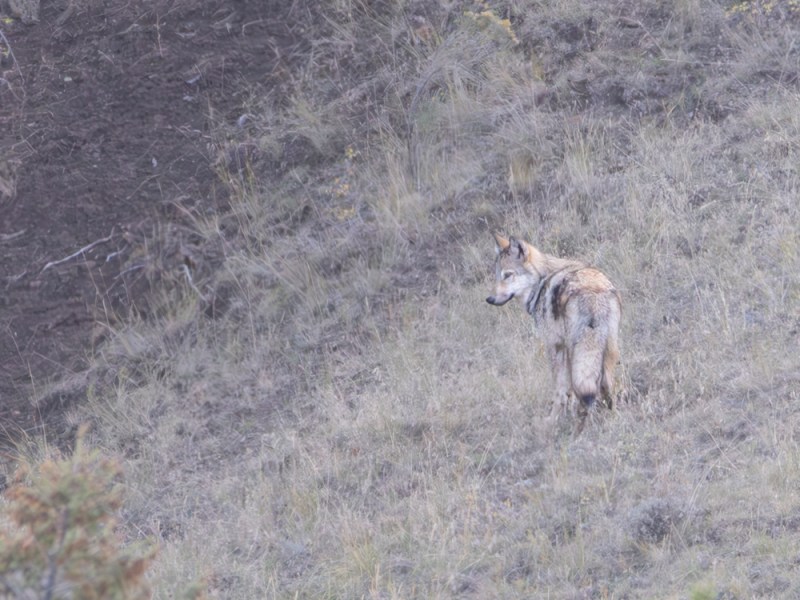
    Grass-carrying wasp
    Grass-carrying wasp on outside of dried pitcher plant in my office

    In one of our school field trips this spring, a student showed me what she found when dissecting one of the dried pitcher plants – a wad of grass and a little “mummy”.

    Grass-carrying wasp pupa
    Wasp pupa with pupal case removed

    I think she had accidentally pulled the wasp pupa out of its case as she tugged at the debris inside the pitcher plant. The grass is what these wasps use to construct their nest. The females collect grass stems and stuff them inside hollow spaces (pitcher plant leaves, old carpenter bee holes, or even the tracks of storm windows), creating a nest chamber. She then hunts for a prey item, usually a tree cricket, stings it in just the right spot to paralyze it, and brings it back to the nest. After securing it in the grass chamber, she lays one egg on the cricket, then seals off the nest with more grass. After the egg hatches, the wasp larvae eats the cricket and forms a pupa in the grass chamber. The adult wasp emerges and chews its way out of the nest (there are probably two generations per year in our area). They spend the winter as a pupa, emerging in spring (often, inside my office it seems). Not to worry, this species is non-aggressive, and would not sting unless you grab it, so they are easy to catch in a jar and release.
    Grass-carrying wasp nest entrance hole plug
    Grass plug sticking out of hole chewed in pitcher plant by a grass-carrying wasp

    Last fall, I was leading a program when I spotted a blade of grass flying through the garden in the carnivorous plant collection. It was a female wasp carrying a 6-inch piece of dried grass to her nest. We watched as she landed on a pitcher plant and dragged the grass into it through a hole on the side. The next day I went back and photographed her handiwork, with several strands of grass poking out the side of the plant. A goal for this year is to get lucky and grab a photo of a wasp carrying a long strand of grass back to her nest.

    Grass-carrying wasp grass plug in Sarracenia
    Grass plug in an old pitcher plant tube in the Green Swamp

    On a recent trip to the Nature Conservancy’s Green Swamp, I found an old yellow pitcher plant tube with a grass plug exposed where the pitcher had split. I gently pulled it out, hoping to find a pupa.
    Grass-carrying wasp nest - plug? 1
    The plug was densely packed into the tube
    Grass-carrying wasp nest plug in hand
    Grass plug in hand

    I teased the grass plug apart, but found it empty.

    Grass-carrying wasp pupa in pitcher plant?
    What looks like an old pupal case below the grass plug

    Just below the plug, I found what looks like an open pupal case. Perhaps the wasp had already emerged. As I read more about these wasps, I learned that they will create a dense plug of grass in the hollow space as a plug to seal off their nest chamber and protect the developing young. I suppose that is what I found as the tight wad of grass. But, based on the presence of a couple of small flies at my office window last week, it appears that the grass-carrying wasp is itself occasionally parasitized by other species, much like its cousin, the mud dauber. I imagine it happens during the nest construction, with a parasitic fly sneaking in and laying her egg in the chamber while the female wasp is out gathering more grass or her tree cricket prey.

    Grass-carrying wasp 3
    Hoping to photograph more of the life story of this beautiful wasp this year

    Once again, a closer look at some odd incident has revealed a fascinating story of behavior and interconnections in the invertebrate world just outside my door (and inside my window). Hoping to see and photograph more aspects of this interesting insect thus coming year…stay tuned.

  • Crispy Cocoon

    That which does not kill us makes us stronger.

    ~Friedrich Nietzche

    Last weekend we once again camped at Jones Lake State Park as part of an exploratory trip to the Green Swamp and surroundings. As we drove in, the campground looked quite different from last year at this time – it had been burned. The park staff do periodic prescribed burns to mimic the natural occurrence of lightning-caused fire in these habitats. After setting up camp we walked over to the canoe access area to check out the lake. On our way back, I noticed a speck of bright green in the brown and black landscape resulting from a January prescribed burn.

    Luna moth in burned area at Jones Lake
    Luna moth, Actias luna, that has just emerged (click photos to enlarge)

    A freshly emerged luna moth! Our first sighting of this beautiful moth of this season. It was hanging still, no doubt getting ready for its first flight.

    Luna moth freshly emerged  side view
    Side view of the luna moth

    I ran to get our cameras and we spent the next 30 minutes observing and photographing this beautiful creature. The long tails are a gorgeous and diagnostic feature of this species. And, according to recent research, they serve a potentially life-saving function for these giant silk moths. When flying, the fluttering tails appear to create an acoustic signal that causes hungry bats to zero in on the moths’ tails, missing the vital body parts, and allowing many moths to escape.

    luna moth head close up
    Close-up of the front of a luna moth

    When you only live a week or so as an adult, every miss from a predator seems to have added importance for your reproductive success. Female luna moths scatter their couple of hundred eggs on host plants such as sweetgum (the dominant in our area), persimmon, and hickories over the few nights of their active flight. There are generally at least two generations per year in our area with the Fall generation overwintering as a cocoon. The Fall caterpillars wrap themselves in leaves and silk and are usually hidden in the leaf litter until they emerge in spring. And that is what piqued our curiosity with this particular moth. How had it survived the ground fire just a couple of months ago?

    luna moth cocoon in burned area
    The moth’s cocoon

    I started searching the area around the moth, figuring it had climbed the first vertical object it encountered after emergence. They climb in order to fully expand their wings by pumping fluid from their abdomen through the veins of their wings. Moths that don’t hang from something (like those placed in a glass container as cocoons) may develop deformed wings and cannot fly. After just a minute of looking, I found the cocoon laying on the now almost bare ground about 3 feet from the sapling the adult had climbed.

    luna moth cocoon half in hand
    Half of the cocoon was missing

    When I picked up the cocoon, I was stunned to find that half of it was missing, presumably consumed by the fire (note the seared edge). We can only guess that the pupa inside the cocoon somehow managed to escape the fire that consumed half of its covering. It then lay there for a couple of months, lucky to escape foraging insects, mice, and other pupa predators. Truly amazing. An equally amazing thing is how an adult luna moth normally escapes its silken cocoon. You usually find a spent cocoon with a single hole in one end. The adult moth wriggles out using a secreted enzyme (called cocoonase) that helps dissolve the glue (called sericin) binding the silk in the cocoon. The moths also have shortened spurs along the base of the fore-wing that are used to help tear through the cocoon covering.

    Luna moth freshly emerged front view
    Top view of adult luna moth 

    As we moved around it taking pictures, I accidentally touched the sapling, causing the moth to raise its wings, exposing the stunning eye spots on the hind wings. It also started to quiver slightly.

    Luno moth with wings spread
    Luna moth with outstretched wings

    These shivering motions are generally a precursor to flight, but it quickly settled back to a resting position and we moved on.  When we checked the next morning, the moth was gone, hopefully to live long enough to ensure a new generation of these magnificent insects.

  • Bee-autiful and Bee-zarre

    …even the insects in my path are not loafers, but have their special errands.

    ~Henry David Thoreau

    About two weeks ago, we took a hike at one of our favorite springtime destinations, Johnston Mill Nature Preserve, one of the many wonderful properties owned and managed by the Triangle Land Conservancy. We have been impressed and amazed by the variety and abundance of spring wildflowers that carpet the ground here and were hoping to catch the flowers at their peak. This year, we were lucky, and hit the trout lilies at their height of bloom. While Melissa and her sister went off for some exercise with a brisk hike along the trail, I did my usual snails pace walk/crawl, camera in hand, looking for anything interesting along the way.

    _
    Windflower, Thalictrum thalictroides (click photos to enlarge)

    Many flowers (especially the spring beauties and trout lilies) were still closed due to the chilly temperatures and overcast skies. But the windflowers were doing their thing, quivering in the slightest breeze, flowers (with their white sepals, no petals) facing skyward.

    hepatica entire plant
    I found a few hepatica, Anemone americana, with their newly emerging fuzzy leaves
    spring beauty bee?
    Spring beauties, Claytonia virginica, opened up as the day warmed
    Trout lilies in bloom
    Trout lilies, Erythronium umbilicatum, with their dappled leaves (resembling the pattern of a trout)

    After an hour or so, the sun started to shine and the flowers opened, beckoning the early season pollinators.

    honeybee on trout lily
    Honeybee visiting a trout lily

    I was hoping to observe and photograph some of the elusive pollinators, so I was alert for any movement near the open blossoms as I eased along the trail.

    native bee visiting spring beauty in Piedmont of NC
    Small native bee on spring beauty

    I searched for spring beauty bees, a specialist on their namesake spring ephemerals with pink pollen. I did capture one photo of what I think is a spring beauty bee (see the first photo of spring beauty above), but the bee on this plant looked different.


    native bee collecting pollen from trout lily in NC Piedmont fore
    A small native bee with a full pollen load

    I started seeing this bee on many plants, especially the abundant trout lilies.

    native bee visiting spring wildflowers in Piedmont of NC
    We found a group of bees flying low over the ground near the trail juncture

    At one point along the trail, we noticed a concentration of these bees flying low over the ground. I knelt down to photograph one on the leaf litter, and as I focused for another shot, it disappeared into the leaves. That’s when I noticed a nearby mound of soil with a pencil-sized hole and a pair of large eyes peering out at me.

    native bee at entrance to nest tunnel in sandy soil near creek w
    Bee looking out of its burrow entrance

    And this is where my photos of this amazing creature end, but its fascinating story begins. We watched these bees for quite awhile and discovered what looked like a colony scattered over a large swath of ground in the floodplain of the creek. Many of the entrance mounds to their burrows were partially hidden in the leaf litter, but all were about the size of a golf ball with one hole near the top. The bees appeared to be going in laden with pollen and then exiting free of that cargo, presumably having stored it for their soon to be developing young. That night, after trying to identify the bees with various online resources, I uploaded a few images to Bug Guide and heard back the next day from a couple of their helpful experts. These are a type of plasterer bee (also called cellophane bees) – the experts best guess is this one is Colletes inaequalis, the unequal cellophane bee. The reason for their groups’ unusual common name is that females produce a secretion from their abdomen that is a type of polyester which becomes the brood cell for their young. Though these bees are solitary (a female digs her own burrow and tends it herself), they tend to nest in aggregations (sometimes in groups of hundreds or more nests), especially in sandy soil on south-facing slopes. She creates several brood cells that resemble small plastic bags in side chambers of her one-foot deep tunnel, stocks them with a liquid pollen and nectar mix, and then suspends one egg above the food larder in each cell. The more I learned about this species, the more fascinating it became. Some researchers are studying the brood cell material to see if it can be synthesized for a biodegradable plastic! To learn more about the biology of this fascinating bee (and to see some amazing photos of an excavated nest chamber and brood cell) visit these two links – Polyester bees: Born in a Plastic bag and Nature Posts: Bees That Dig Holes in the Ground.

    native bee at entrance to nest tunnel in sandy soil near creek
    Closer view of a docile cellophane bee

    There were quite a few references to people being alarmed at finding aggregations of these bees in their yards, but there is no need to be concerned about them as they tend to be quite docile. They are among the earliest bees to be(e) active and then only for a few weeks before the entire colony is reduced to the developing larvae and pupae being underground until the following spring. Plus, they are important pollinators of early spring wildflowers, so let them be(e). One other interesting note, and an indicator of how climate change is impacting species large and small – researchers using historical museum datasets and more recent bee-monitoring data looked at the timing of spring emergence of this (and several others) species of native bees. Over the past 130 years there has been a significant shift toward earlier spring time emergence with an average ten days earlier now than in the late 1800s. That trend has been most pronounced in the last 40 years. With all these bees are doing for us (pollination services), telling us about our changing climate, and the possibility of synthesizing their unique polyester secretions, we should appreciate these fascinating master burrowers and protect them and their kin.


  • Another Milestone – #500

    Nature does not hurry, yet everything is accomplished.

    ~Lao Tzu

    Nature may not hurry, but this past year sure seems to have flown by. My personal life has been a blur these past many months, and the blogging  has slowed a bit (you may have noticed). I blame it on that thing called work.  I have been back at work a little over a year now and time for writing and photography has dropped off a bit. In spite of that, I have reached another milestone in the history of this effort to educate myself about nature – my last post was the 500th since I started just after retirement in 2013. Although it took a little longer to pass this last one hundred posts, in looking back, it looks as though things have been far from dull with the return to work. In fact, being at the NC Botanical Garden has  created a lot of new opportunities for learning about the natural world, especially with regards to plants. Here is a short series of highlights from this past one hundred posts of Roads End Naturalist…

    campsite
    Campsite, Boundary Waters Canoe Area, 2016 (click photos to enlarge)

    Before returning to work, we had a great week-long camping trip (with beautiful weather) in the Boundary Waters Canoe Area of Minnesota in the Fall of 2016. What an experience! And camping seems to have been a theme these past many months (I am with the “camping queen” after all)…

    boulder on Wilburn Ridge
    Hiking and camping in Grayson Highlands State Park, VA
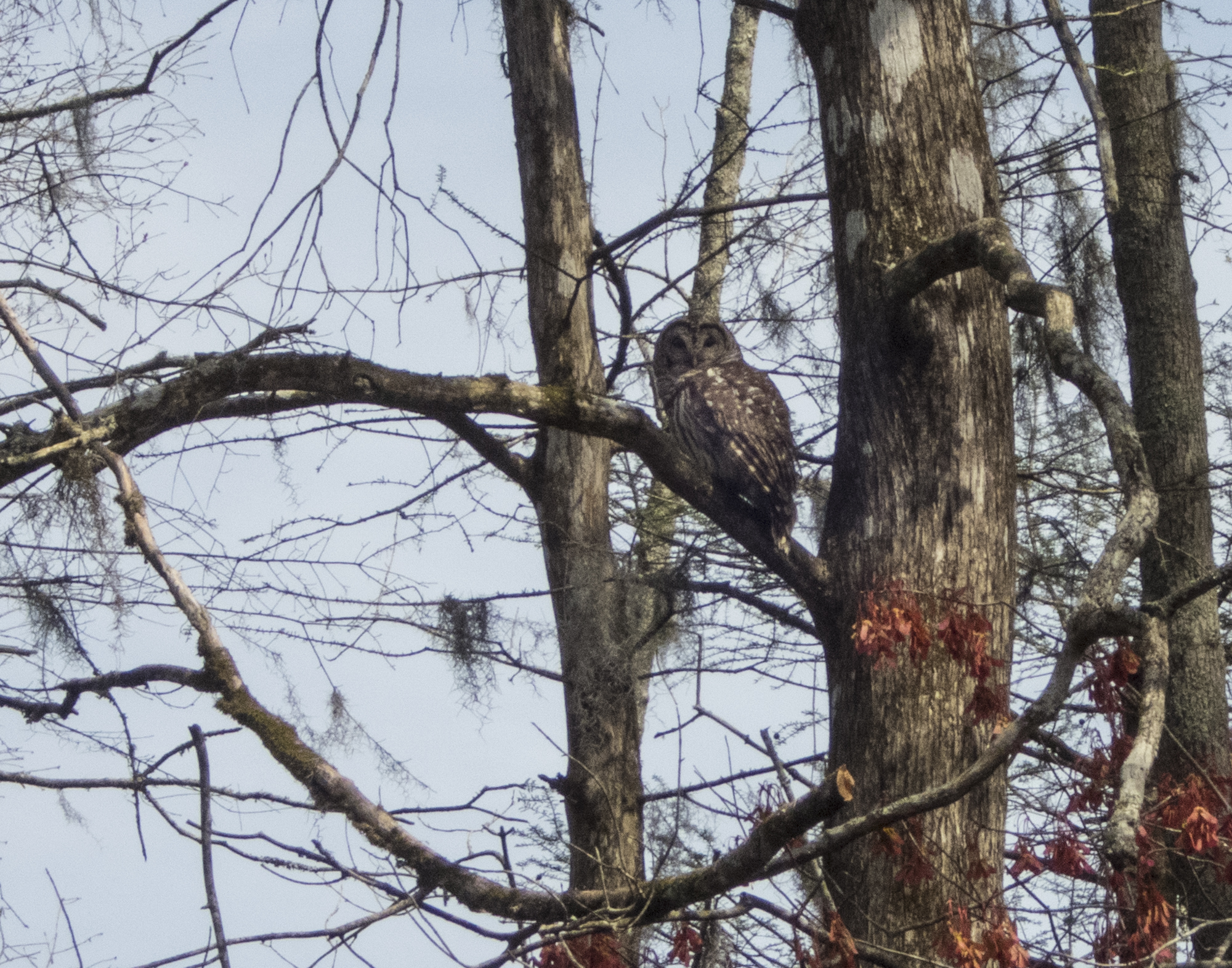
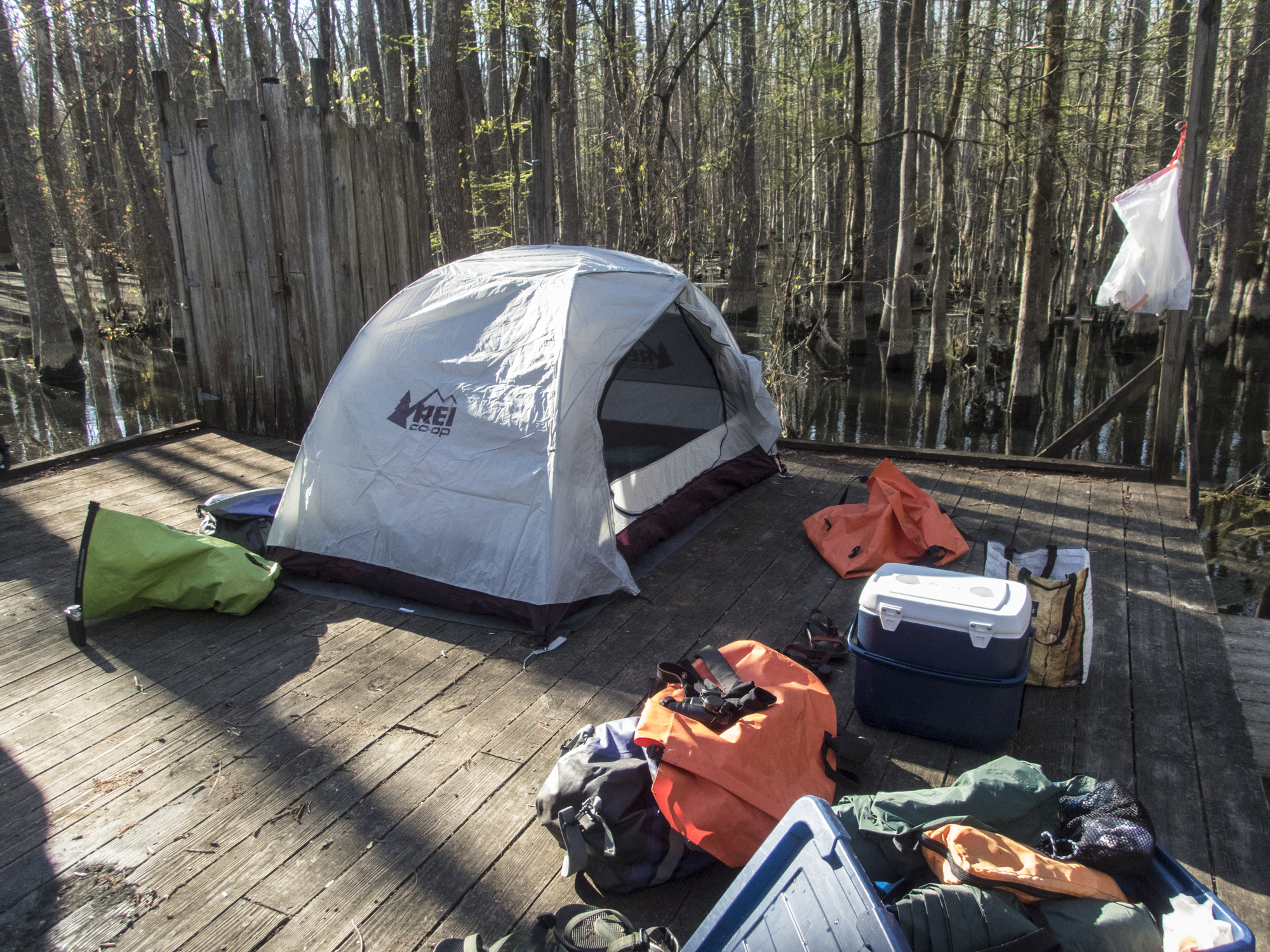
    Barred Owl Roost platform
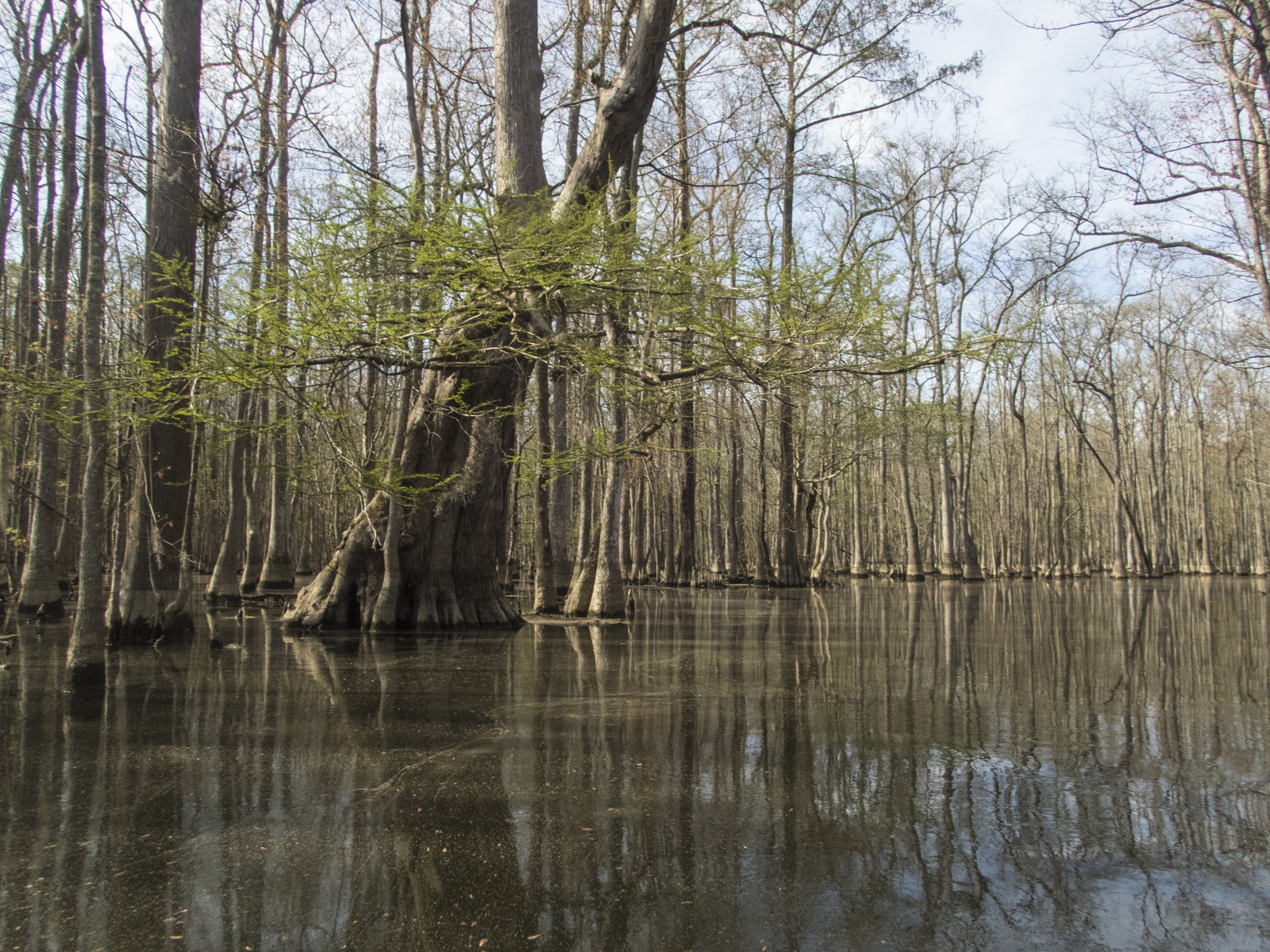
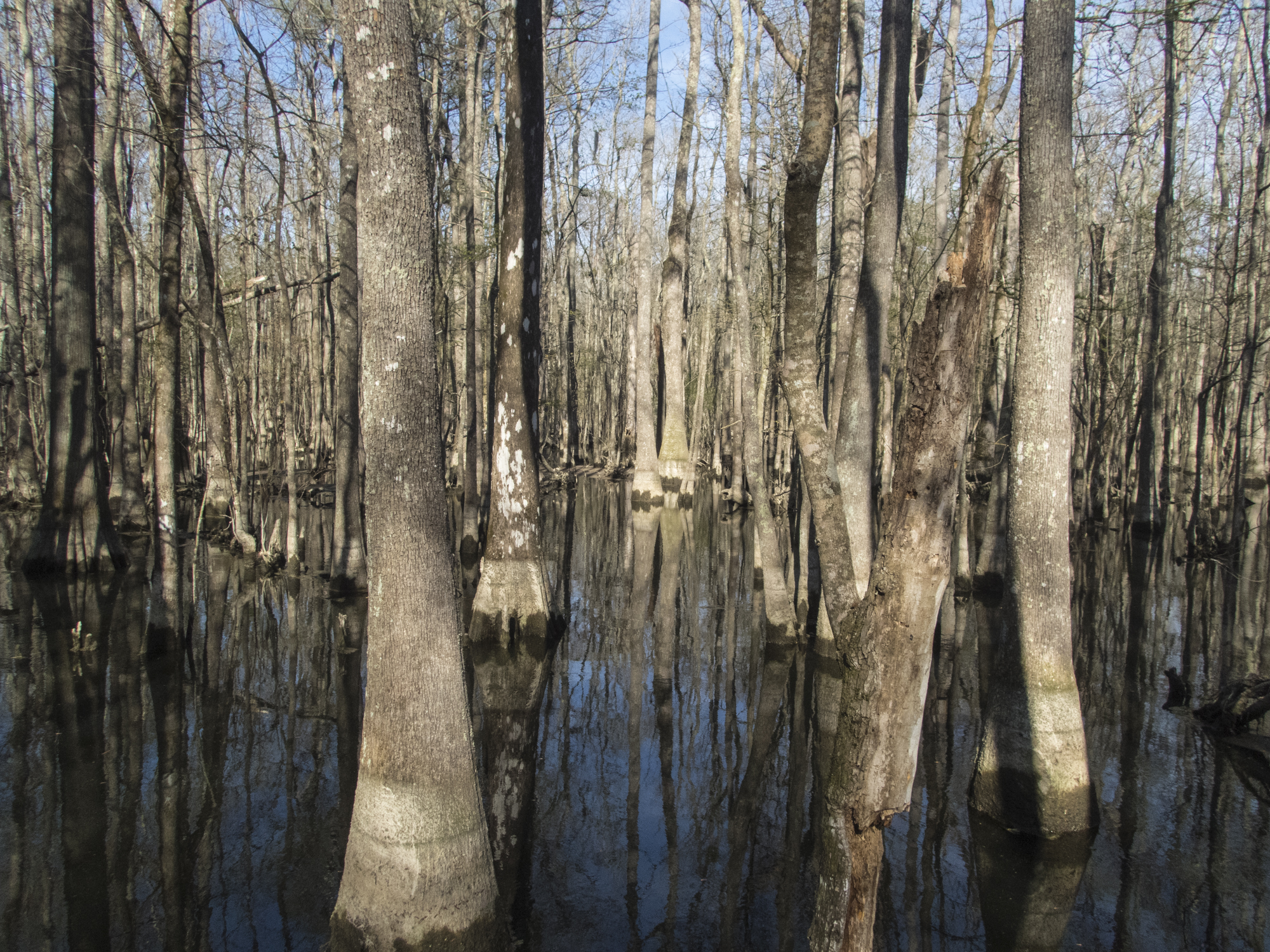
    Camping on a platform in the swamp along the Roanoke River

    Looking back, it seems that even after starting back to work, camping kept us busy, and in some beautiful places…

    Jones Lake sunset 1
    Jones Lake State Park at sunset
    Holly Shelter oitcher plants
    Yellow pitcher plants galore at Holly Shelter Game Lands

    We even finally made it to the other Y park

    Cathedral Peak 1
    Cathedral Peak, Yosemite National Park
    Huge sequoia
    Giant sequoia, Kings Canyon National Park

    Luckily, I managed another trip to Yellowstone, always a highlight.

    Baby bison head in flowers
    Bison calf, Yellowstone National Park

    Of course, I had many trips to my favorite home state destination, Pocosin Lakes National Wildlife Refuge. I even managed to finally visit the Black Bear Festival that is now a regular thing in June in nearby Plymouth, N.C.

    Large black bear at sunrise in soybeans
    Black bear at sunrise, Pocosin Lakes National Wildlife Refuge

    Winter is still my favorite season at this amazing wild place…

    Swan wing flap
    Tundra swan putting on a show at Pungo

    And that nearby refuge, Mattamuskeet, offered some nice surprises, as always.

    eye to eye
    Fish dinner (almost) at Mattamuskeet

    We had a wonderful experience of culture, food, and wildlife in Austin last summer. That experience was capped by one of the great wildlife spectacles in North America – 20 million+  Mexican free-tailed bats exiting Bracken Cave at sunset.

    Mexican free-tailed bats flying out of Bracke Cave
    Bats streaming away from the entrance to Bracken Cave for a night of foraging

    But, as is almost always the case, most of my posts were about those miracles of nature close to home, either in our own woodland yard or the beautiful native plant habitats at work. Here are just a few of those highlights:

    Pair of pitcher plants
    A frosty morning at the carnivorous plant collection at the NC Botanical Garden
    Cope's Gray Treefrog calling front view
    Cope’s gray treefrog calling on our walkway
    leafcutter bee bringing in leaf fragment
    Leafcutter bee carrying a slice of redbud leaf back to her nest chamber

    Nature, close to home, had a lot of beautiful things to see…

    Columbine flower
    Wild columbine flower in the yard
    bloodroot flower in snow
    Bloodroot flower bud poking up through a recent March snow

    And, as usual, there was a bit (sometimes more) of the bizarre that nature has to offer…

    Slug sex 3
    Leopard slugs mating

    Anytime you think beautiful and bizarre, you should also think about one of my favorite photographic subjects – caterpillars!

    Crowned slug
    Crowned slug caterpillar

    I just checked on some of last Fall’s crop of caterpillars that pupated during the museum’s BugFest event last Spetember. They are all doing fine, and will be ready to emerge over the next few months. Maybe that will elicit a few pictures and words when they do. Hope you will stick around with me to find out.

    Pupae from Bugfest
    A variety of moth pupae from caterpillars we showcased at BugFest last year


Search the Archives

Due to our site update, photos on older posts may not display correctly. Sorry for any inconvenience.


Recent Posts