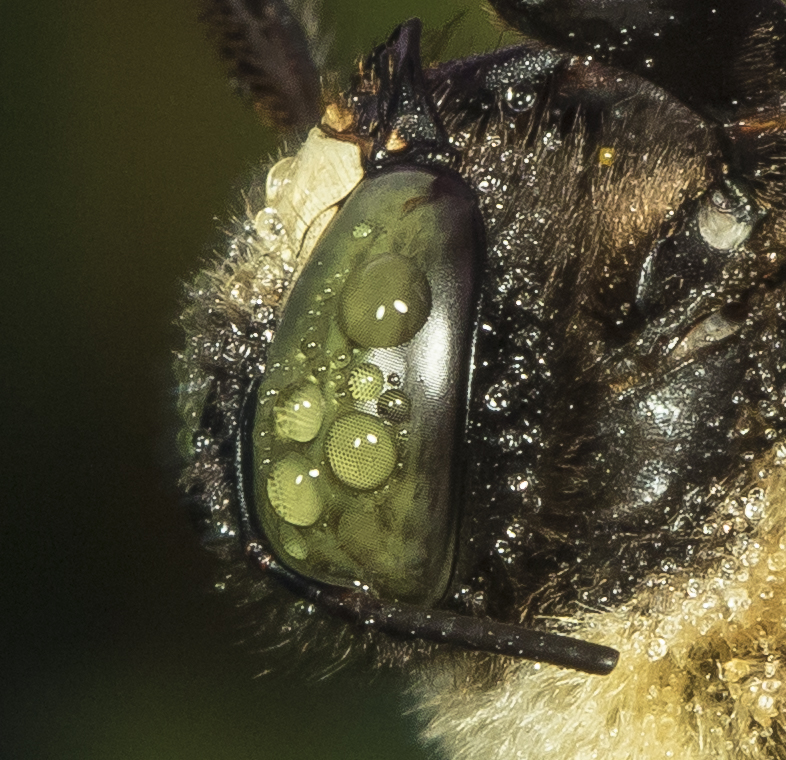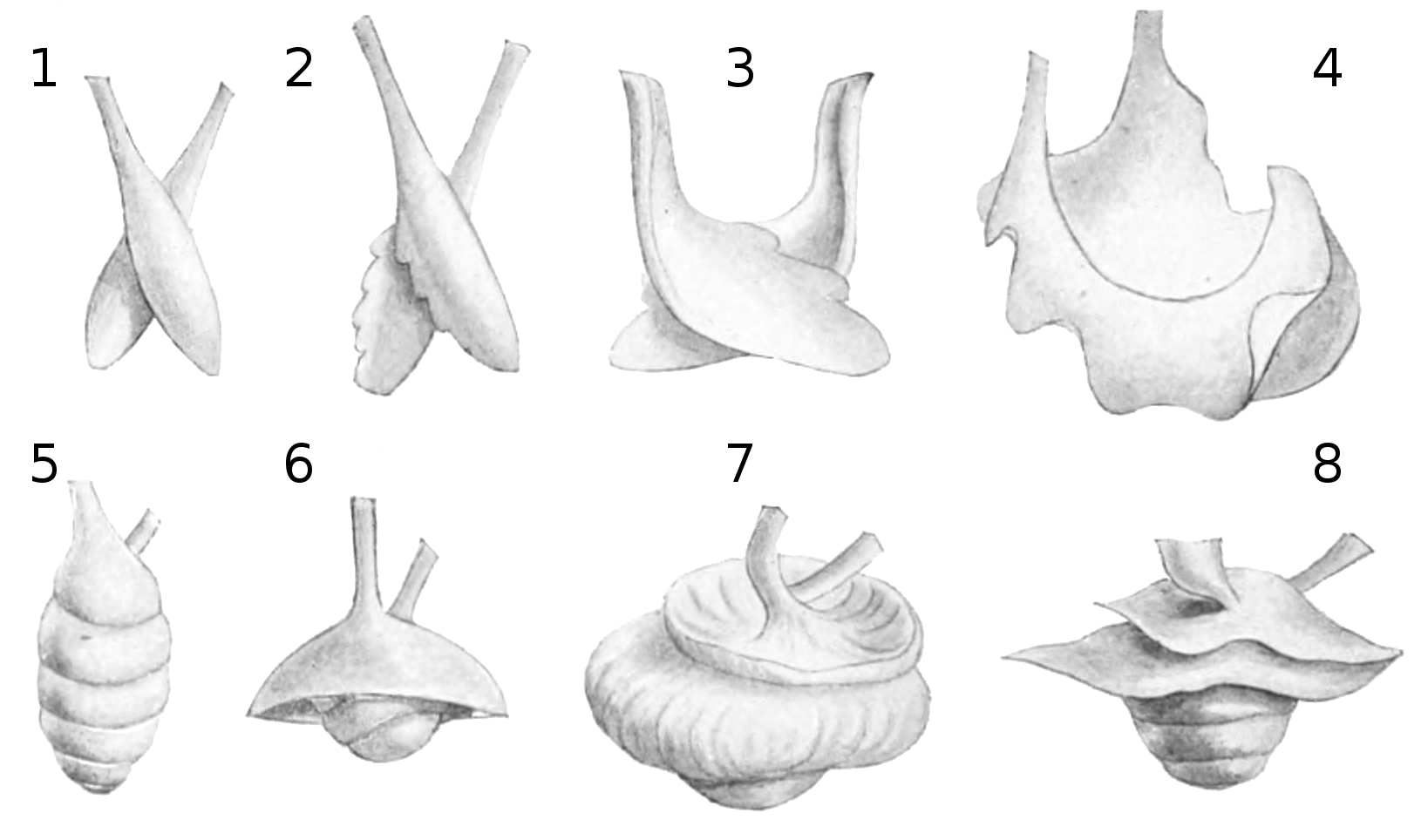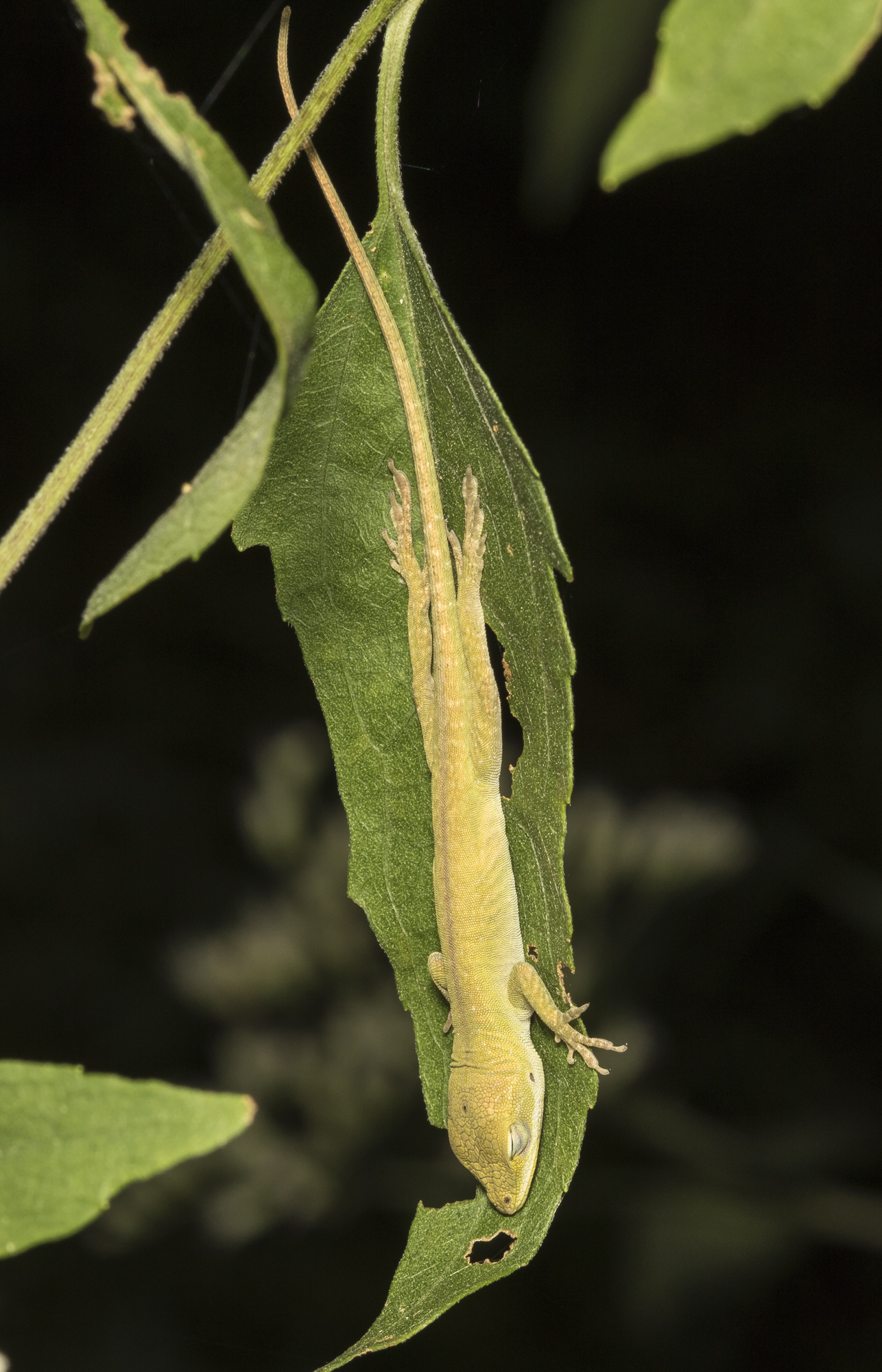
• Catching Up

    You are surrounded by gifts every living moment of every day. Let yourself feel appreciation for their presence in your life and take the time to acknowledge their splendor.

    ~Lou G. Nungesser

    It has been a whirlwind summer thus far with work keeping me a little busier than I care to be at times. I have had several opportunities to carry a camera but not as much time as I like to post things or learn more about the many plants and critters I have encountered. So, here is a rambling collection of things I have seen in recent weeks. It is truly amazing how much beauty and wonder surrounds us.

    Nessus sphinx moth egg on VA Creeper
    Nessus sphinx moth (Amphion floridensis) egg (click photos to enlarge)

    One morning during summer camp, I spotted a beautiful Nessus sphinx moth hovering near some Virginia creeper leaves, one of their host plants. The gathered summer campers were able to witness her laying three eggs. I collected one to raise since one egg had only one leaf for the future larva to consume.

    Nessus sphinx larva about 2 days after hatching
    Nessus sphinx larva two days after hatching
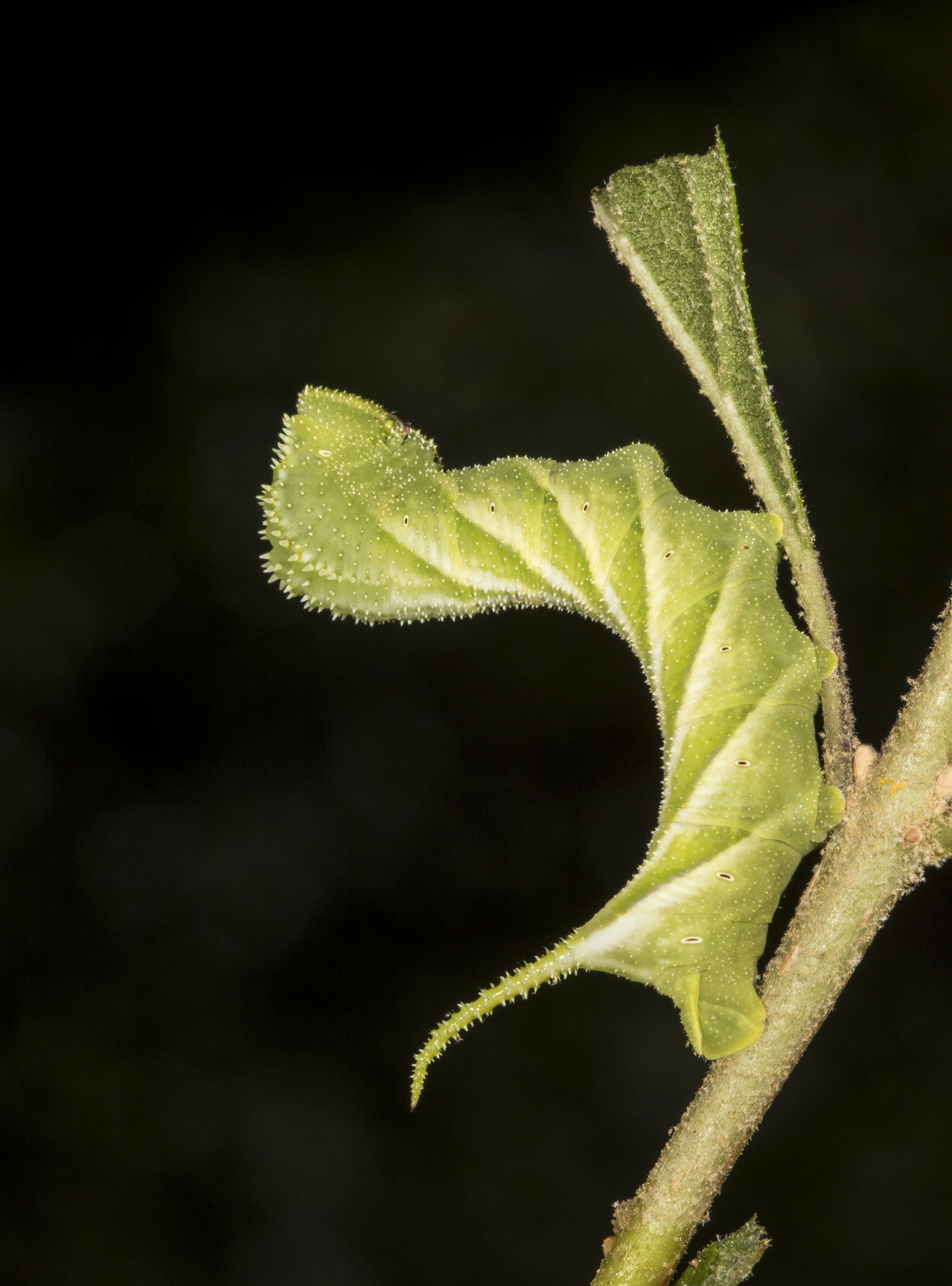
    Nessus sphinx larva
    Six days later it looks like this…still a long way to go
    Walnut sphinx moth just after emergence
    Walnut sphinx moth (Amorpha juglandis)

    The pupa I shared in an earlier post produced this beautiful walnut sphinx moth about two weeks after the pupa formed.

    Swamp milkweed
    Swamp milkweed (Asclepias incarnata)
    Hibiscus flower buds
    Rose mallow (Hibiscus moscheutos) flower buds
    American lotus flower
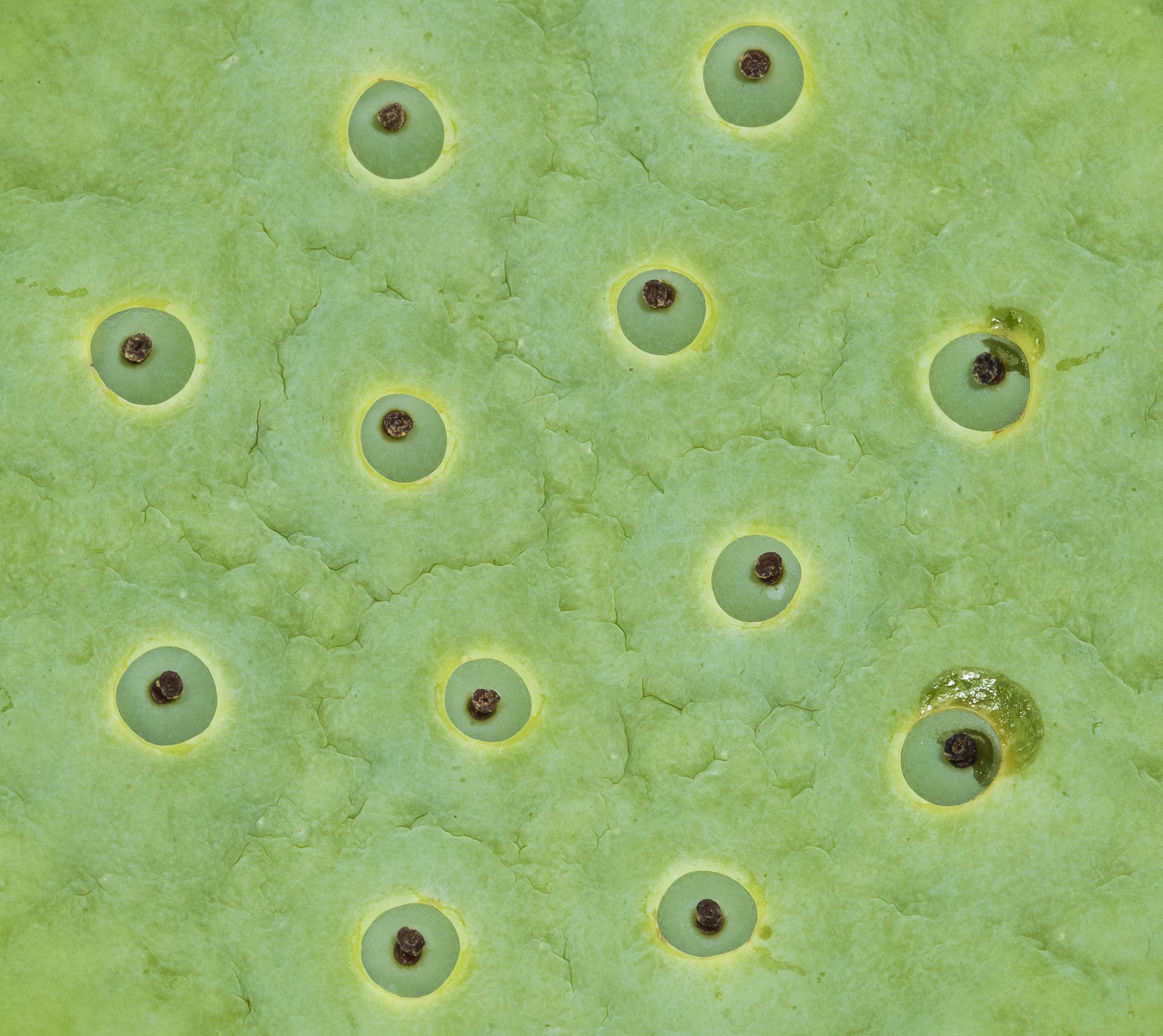
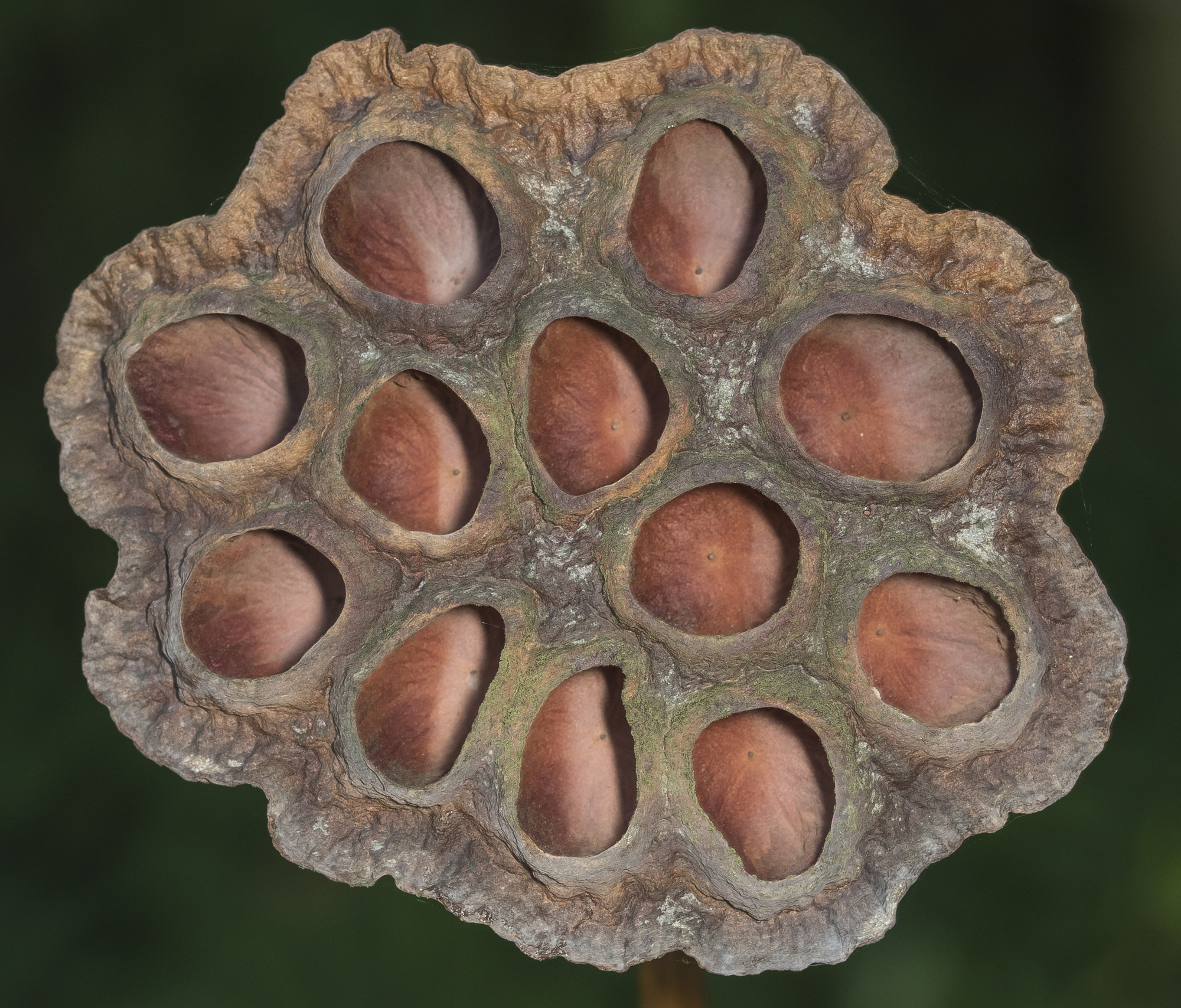
    American lotus flower (Nelumbo lutea)
    Cardinal flower
    Cardinal flower (Lobelia cardinalis)
    Cranefly orchid
    Cranefly orchid (Tipularia discolor) – the delicate flower stalk appears in late summer, long after the single leaf disappears

    I need to spend more time appreciating the incredible flowers that surround me every day…after all, I do work at a botanical garden!

    Southern flannel moth
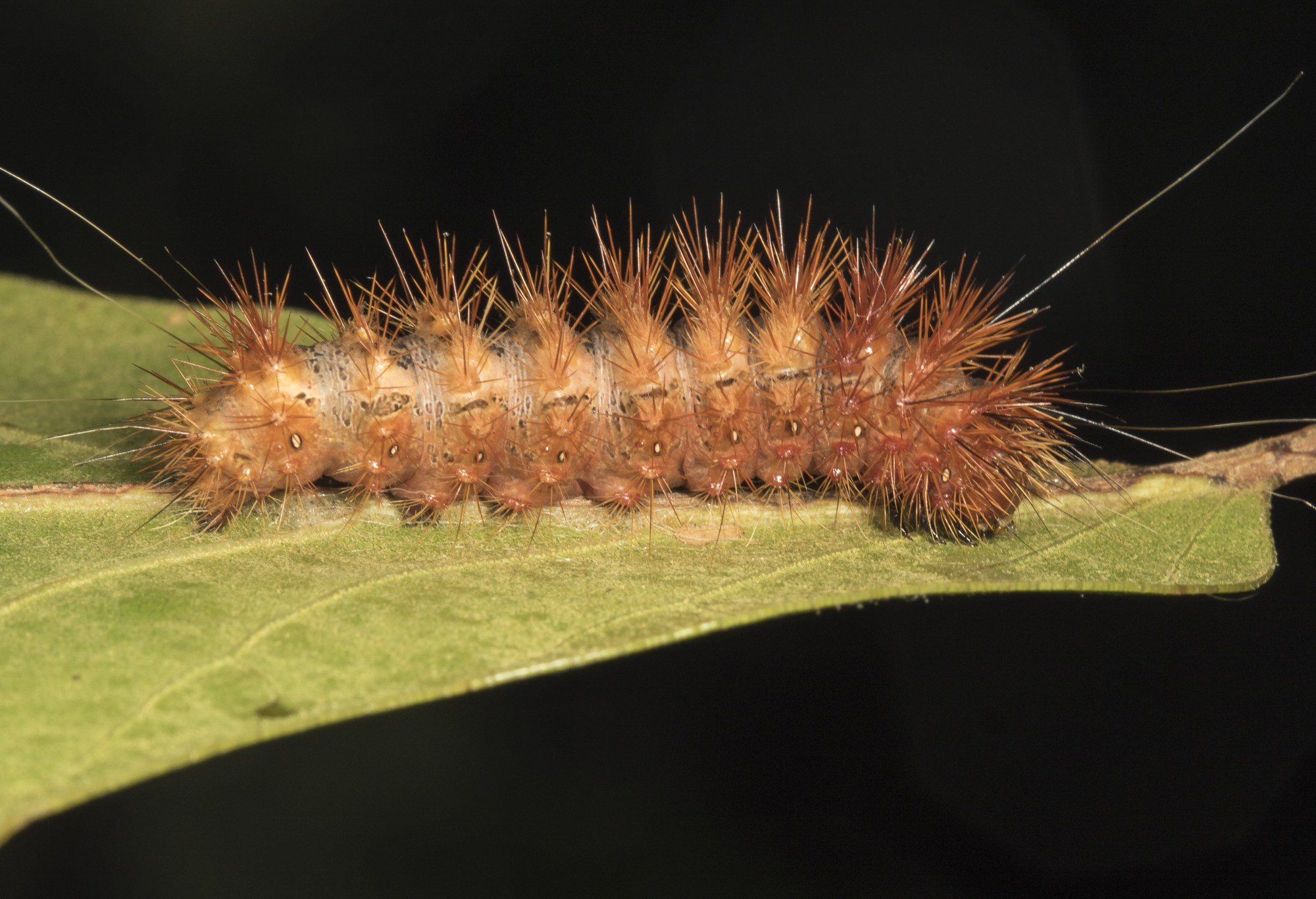
    Southern flannel moth (Megalopyge opercularis), the adult of a bizarre, so-called stinging caterpillar, the puss caterpillar (or asp)
    Rosy maple moth
    A strikingly beautiful rosy maple moth (Dryocampa rubicunda)
    Clymene moth
    Clymene moth (Haploa clymene)

    We set out moth lights on a couple of nights the past few weeks and were rewarded with a variety of nocturnal visitors. Shown above are a few of my favorites.

    small hellgrammite
    Small Eastern dobsonfly (Corydalus cornutus) larva (also called a hellgrammite) found under a rock in the swift waters of Morgan Creek
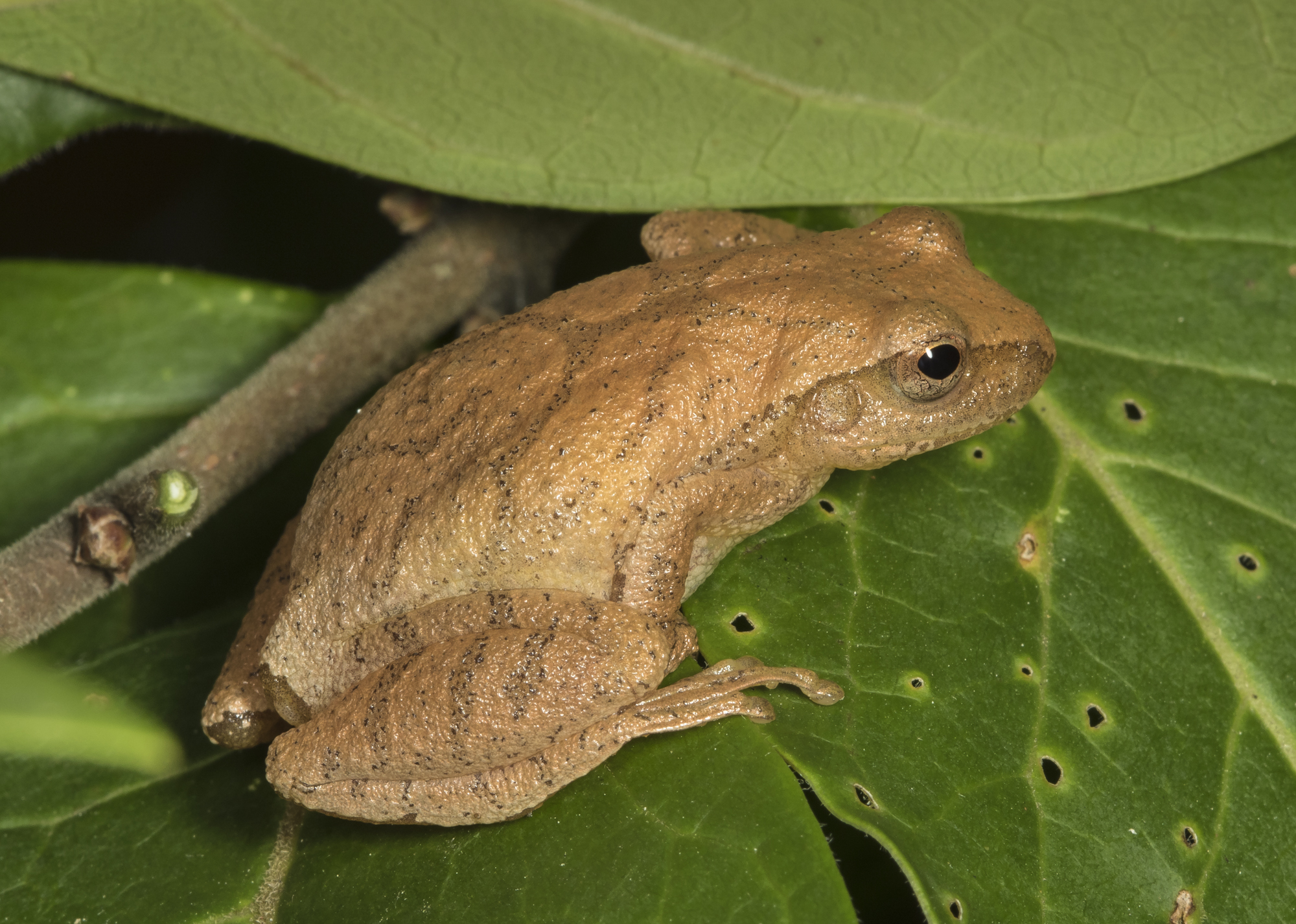
    Pickerel frog
    Pickerel frog (Lithobates palustris)
    Powdered dancer damselfly, male
    Powdered dancer damselfly (Argia moesta), male
    Margined Madtom 1
    Margined madtom, Noturus insignis, a small (~5 inches) catfish found in swift waters like Morgan Creek

    One of our favorite summer camp activities is a hike out to Morgan Creek, where we sample a riffle area in this surprisingly pristine Piedmont stream. We always manage to see a variety of interesting creatures including hellgrammites, caddisfly larvae, mayflies, crayfish, and a few species of fish.

    Robber fly and moth victim
    Robber fly with moth victim
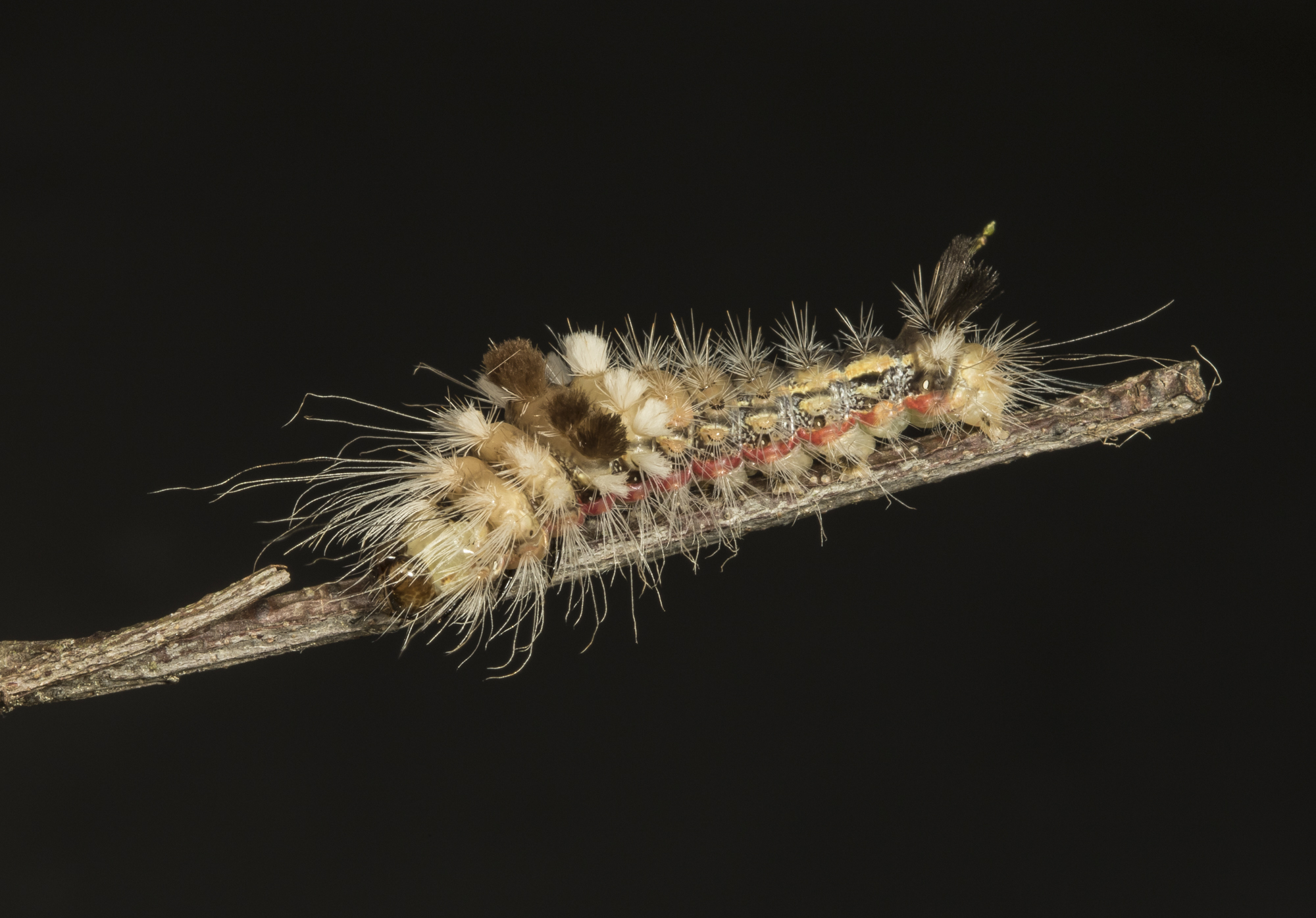
    Walnut caterpillar
    Walnut caterpillars (Datana integerrima) feeding on hickory leaves
    Resident bullfrog
    Huge male American bullfrog (Lithobates catesbeianus)
    Argiope spiders
    A pair of female black and yellow argiope spiders (Argiope aurantia) – they are also commonly called writing spiders and garden spiders

    Any stroll through the Garden produces a rich variety of sights and sounds. The key is, you have to be out there to enjoy them. So, get outside and see what you can find.


  • Plight of the Polistes

    Let us turn elsewhere, to the wasps and bees, who unquestionably come first in the laying up of a heritage for their offspring.

    ~Jean-Henri Fabre, entomologist, 1823-1915

    We had a wasp sting two weeks ago at summer camp. The wasps had a nest inside the locking mechanism for one of our pedestrian gates, and when the gate clanged shut, an angry wasp flew out and stung the closest person. Then, last week, a wasp stung a co-worker as she tidied up the small fairy house we have in the children’ garden. Since that area is used by many visitors, especially children, I went out to check on it, and found a wasp nest inside, which I removed. We later stuffed something in the crack where the wasp probably entered, so hopefully that will take care of the situation.

    paper wasp nest
    Paper wasp nest under the eaves of my office building (click photos to enlarge)

    We have plenty of these paper wasps (Polistes sp., maybe P. metricus?) under the eaves of our buildings (and I have in them at home) and we all manage to get along just fine most of the time. It is usually just when the nest is down low that problems may arise. So it was, with the nest I removed. I don’t like doing that, but, after the deed was done, I decided to look more closely at that nest and the ones under the eaves. First on the list of amazing things about these creatures is that the nest is paper! Wasps scrape wood from surfaces, mix it with their saliva, and slowly create the hexagonal shapes that become cells for their eggs and developing young. The nest is suspended from a pedicel under a protected area like the eaves of a building, inside a bird house, or some other sheltered location.

    Paper wasp nest close up
    Closer view of the nest showing different life stages being tended by worker females

    The first nests of spring are started by a mated female queen wasp that overwintered in some protected spot. She constructs that first nest by herself or with some subordinate females (usually sisters) that may have overwintered as well. Her first fertilized eggs are all female and are destined to become workers. Once they emerge, they take over the duties of caring and feeding new larvae. Workers forage for caterpillars and other soft-bodied insects that they chew up and feed to the larvae. Adult paper wasps feed on rotting fruit and nectar, so wasps are important pollinators and biological controls of plant-eating insects.. The photo above shows a worker female tending some of the brood cells. Eggs, in various stages of development, can be seen in some cells. The fat, white larvae with grayish heads, can be seen in others. Cells with paper coverings contain pupae.

    paper wasp egg
    Close up of a paper wasp egg

    I gently tore open the nest I had removed and examined its contents. Eggs are small, somewhat oval in shape, and attached on the side walls of the cells.

    paper wasp pupa
    An early stage wasp pupa

    As I was teasing apart one of the cells, a pupa fell out (above). I am guessing this is still a female this time of year. Toward the end of summer, the queen (also called the foundress) lays a series of unfertilized eggs, which become males. Some of her fertilized eggs will receive additional care and nutrients and may become future queens that will mate and overwinter. At the start of cooler weather, the males, female workers, and original queen all die, leaving the new batch of potential queens to overwinter.

    Paper wasp larva and pupa
    Paper wasp larva and late stage pupa

    I placed the pupae from this nest in a container and will watch to see if they emerge. What started out as an effort to rid a space of a stinging threat has turned into a greater appreciation of a common species that I have tended to overlook all these years.
  • Summer Details

    The beauty of the natural world lies in the details.

    ~ Natalie Angier

    It has been a hectic few weeks at work with summer camp. One good thing is I am out in the Garden daily, and, anytime you are out in a place with that much diversity, there are plenty of things to see. I managed to take the camera out a few days before and after camp, and found some interesting subjects. Here are a few of the recent highlights…

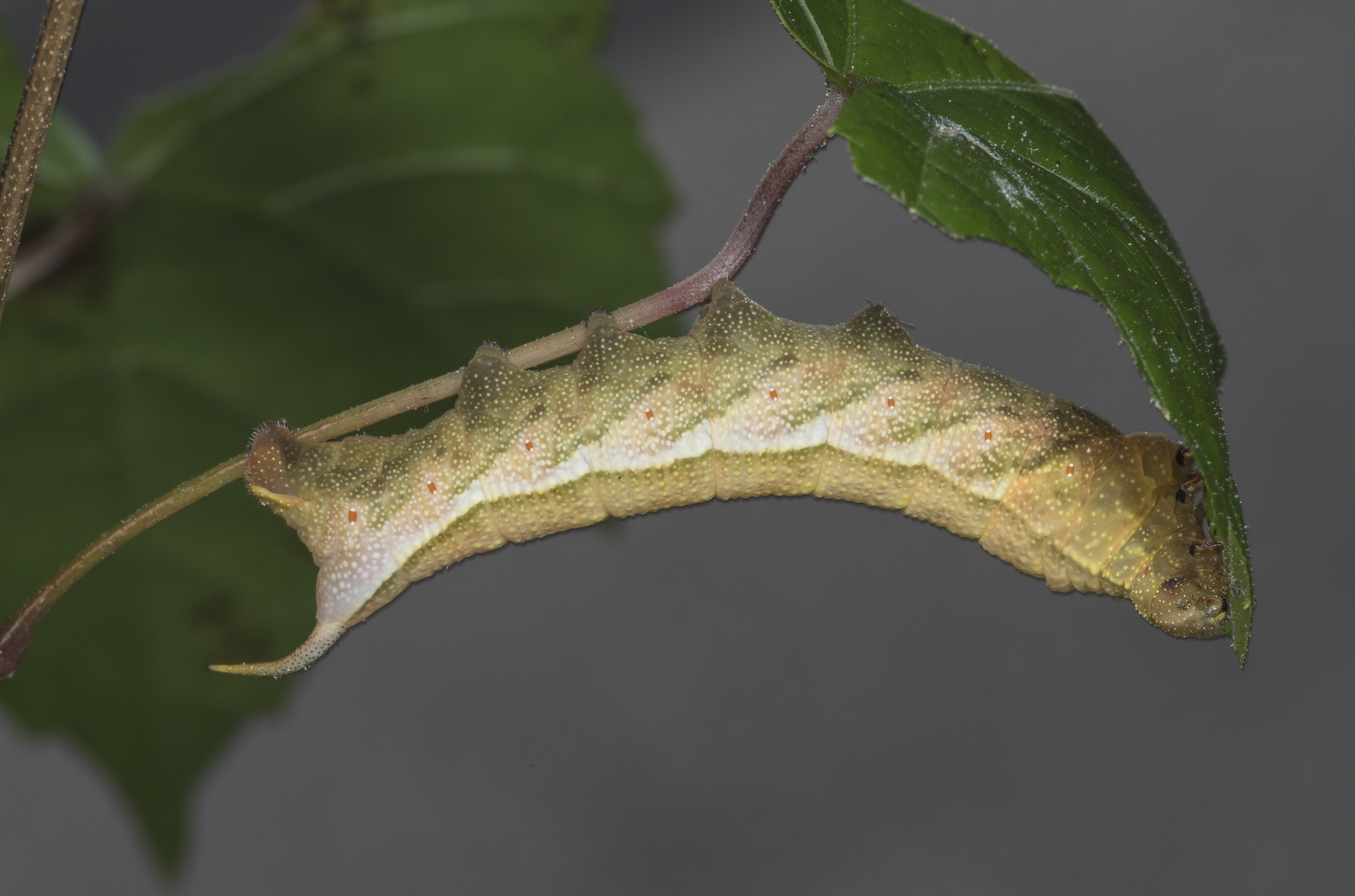
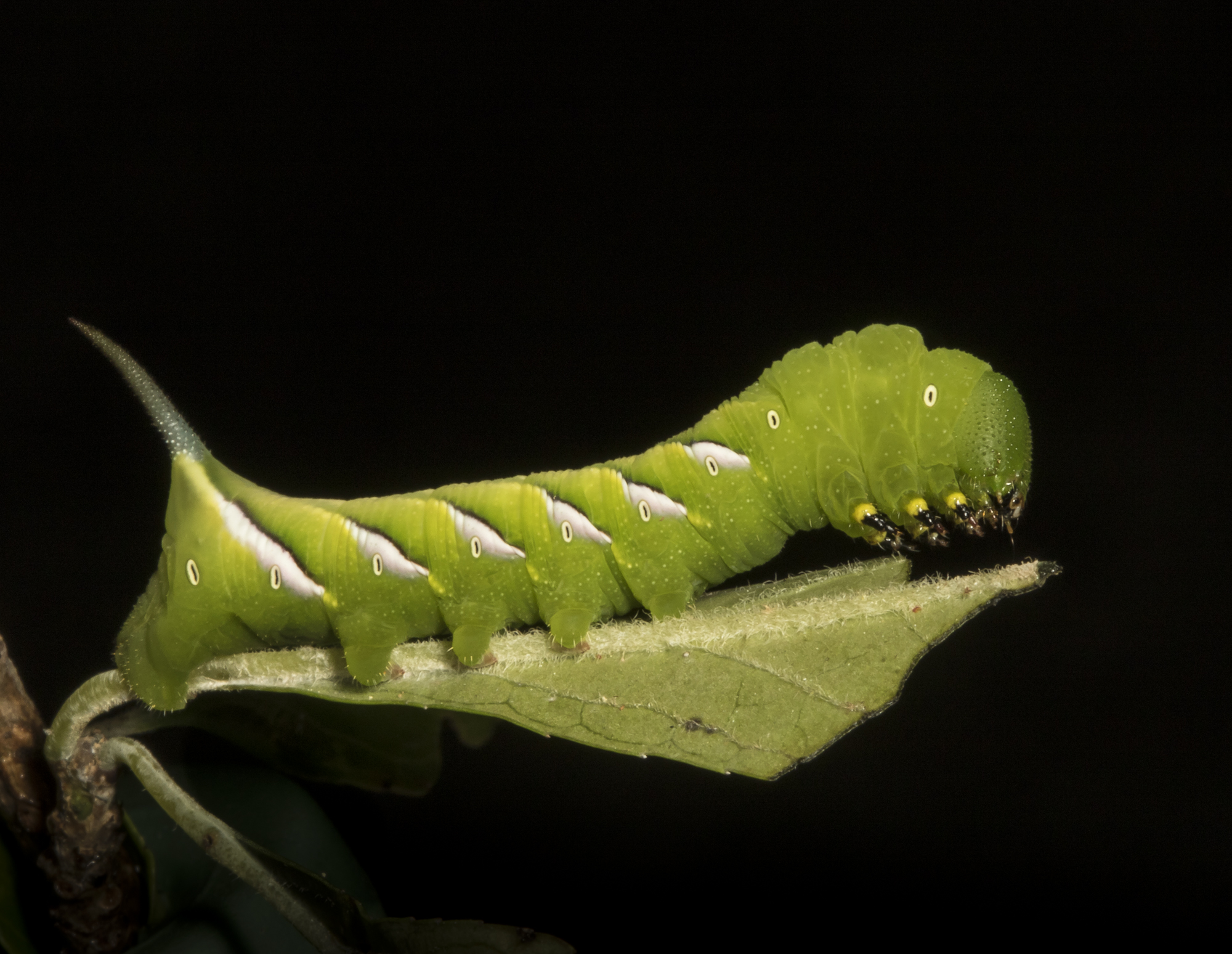
    Waved sphinx larva
    Waved sphinx moth larva feeding on fringetree (click photos to enlarge)

    Walnut sphinx pupa
    The mummy-like pupa of a walnut sphinx moth (the antennae of the future moth can be seen outlined in the pupa as they curl down from the top into a point just above my finger)

    Snowy Tree Cricket
    Snowy tree cricket  (Oecanthus fultoni), male – this is the so-called thermometer cricket. The frequency of the chirps made by this species (made by the males as they rub their wings together) is considered a fairly reliable estimate of the air temperature. In the Eastern U.S., Fahrenheit temperature can be estimated by counting the chirps in 13 sec. and adding 40.

    Yellow jackets on caterpillar
    Yellow jackets dispatch a pink-striped oakworm to feed to their larvae

    Rabbit running in Garden
    One of the many bunnies that reside at the Garden (quite happily, I presume)

    Black-spotted prominent
    Gardener’s friend – a black-spotted prominent larva feeding on lespedeza

    Black-spotted prominent rear end
    This caterpillar practices deceit with its back end looking like a front end

    Sassafras berries
    The beautiful and wildlife-friendly berries of a sassafras tree

    Handsome Trig 1
    A handsome trig (also called a red-headed bush cricket). This one is a male. The handsome part is self-evident; the trig part refers to the family Trigonidiinae, or Winged Bush Crickets.

    Handsome Trig nymph
    Handsome trig nymph (wings are still developing)

    Dogbane Leaf Beetle
    Dogbane leaf beetle, an iridescent beauty

    Planthopper - Rhyncomitra microrhina
    A very pointy-headed planthopper (Rhyncomitra microrhina) that we caught while sweep-netting

    Planthopper - Rhyncomitra microrhina, top view
    Dorsal view of same planthopper

    Rear end of tulip tree silk moth cayerpillar
    All is well that ends well…the rear end of a tuliptree silk moth caterpillar. Eggs were laid by a female on 5/18/17, hatched on 5/30; caterpillars had all pupated by 6/29; first adult moth of this summer’s second generation emerged on 7/20. This new generation will overwinter as pupae.


  • Ambushed

    We are not afraid of predators, we are transfixed by them, prone to weave stories and fables and chatter endlessly about them, because fascination creates preparedness, and preparedness, survival. In a deeply tribal way, we love our monsters…

    ~Ecologist, E.O. Wilson

    I took a stroll through the Garden after work one day this week, looking for some flowers to photograph as a backdrop for a needed poster. I wanted a flower off to one side, with black background for the lettering.
    Ironweed, which sp?
    Ironweed (click photos to enlarge)

    I stopped at an ironweed plant, a great nectar source for all sort sorts insects, and took a few quick shots. I saw some movement on another plant, and went over to grab a pic of a pollinator…

    Silver-spotted skipper on ironweed
    Silver-spotted skipper on ironweed

    The skipper was moving from flower to flower, probing for nectar. I moved to get another angle, and noticed something odd dangling below another flower…
    Silver-spotted skipper hanging from Ironweed
    Silver-spotted skipper dangling below a flower – look closely at the flower

    It was another silver-spotted skipper, apparently hanging by its proboscis. How did that happen? As I bent down to look, I noticed something on the underside of the ironweed flower – a small insect – a jagged ambush bug, genus Phymata. This is one of the sit-and-wait predators often seen lurking on flowers, waiting for an unsuspecting pollinator to get too close. Most predators of this sort are camouflaged to help conceal them while they wait. This one appears to look more like the developing seeds in the flower to the right in this picture, than the bright purple of the flower itself, so I am guessing it waited on the underside and grabbed the much larger skipper when it landed. I gently touched this tiny tiger to get it to move up for a better look.
    Jagged ambush bug close up
    Jagged ambush bug close up

    Ambush bugs are stout-bodied predators with enlarged, raptorial front legs, somewhat resembling those of a praying mantis. They look like some sort of alien tank out of a science fiction movie to me.

    Jagged ambush bug beak
    Powerful beak of an ambush bug can be seen here tucked under its head

    When a prey gets close enough, they lash out and grab it with those legs and stab it with their powerful beak, injecting toxic saliva with digestive enzymes. As the insides of their prey dissolve, the ambush bug sucks up the nutrients, leaving an empty shell of its victim behind. I am guessing this skipper had just settled in for a nice sip of nectar when terror struck, leaving its proboscis stuck down in a flower tube which led to the scene I discovered.

    Ambush Bug
    Jagged ambush bug

    The bug soon walked out onto the stem for an better view, so I snapped a few more images, When I looked at them on my laptop this morning, I noticed something else…

    Hitchhiker on ambush bug
    Another insect hitching a ride on the ambush bug

    During the entire sequence of shots of the ambush bug, it had another insect (or perhaps an insect larva) crawling around its body. Was it a harmless hitchhiker, or some parasite? A quick web search showed another image of an ambush bug with what looks like a small lacewing larva hitching a ride, and my somewhat fuzzy image looks similar. Coincidence or collaboration? I guess I will try to find this little guy again next week and see if I can get a better image of the hitchhiker for identification and clarification of this mystery.


  • Baby Spiders

    Once you begin watching spiders, you haven’t time for much else.

    ~E.B. White

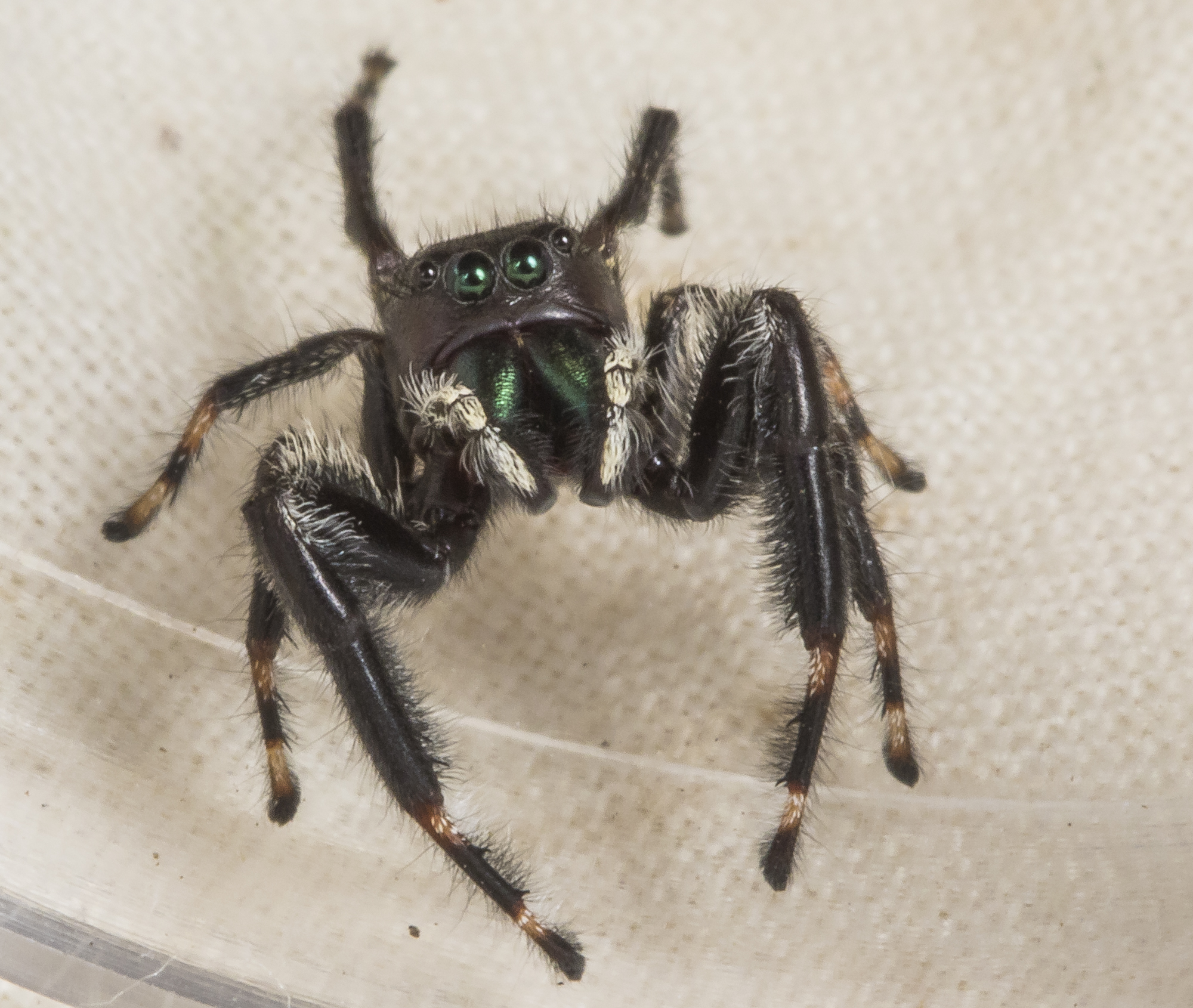
    I have been raising some tulip-tree silk moth larvae at home and at work which has necessitated the periodic collecting of small branches of tulip poplar. Last week, when I cut one and brought it in I noticed one of my favorite spiders sitting on the underside of one of the leaves.

    Magnolia Green Jumper female
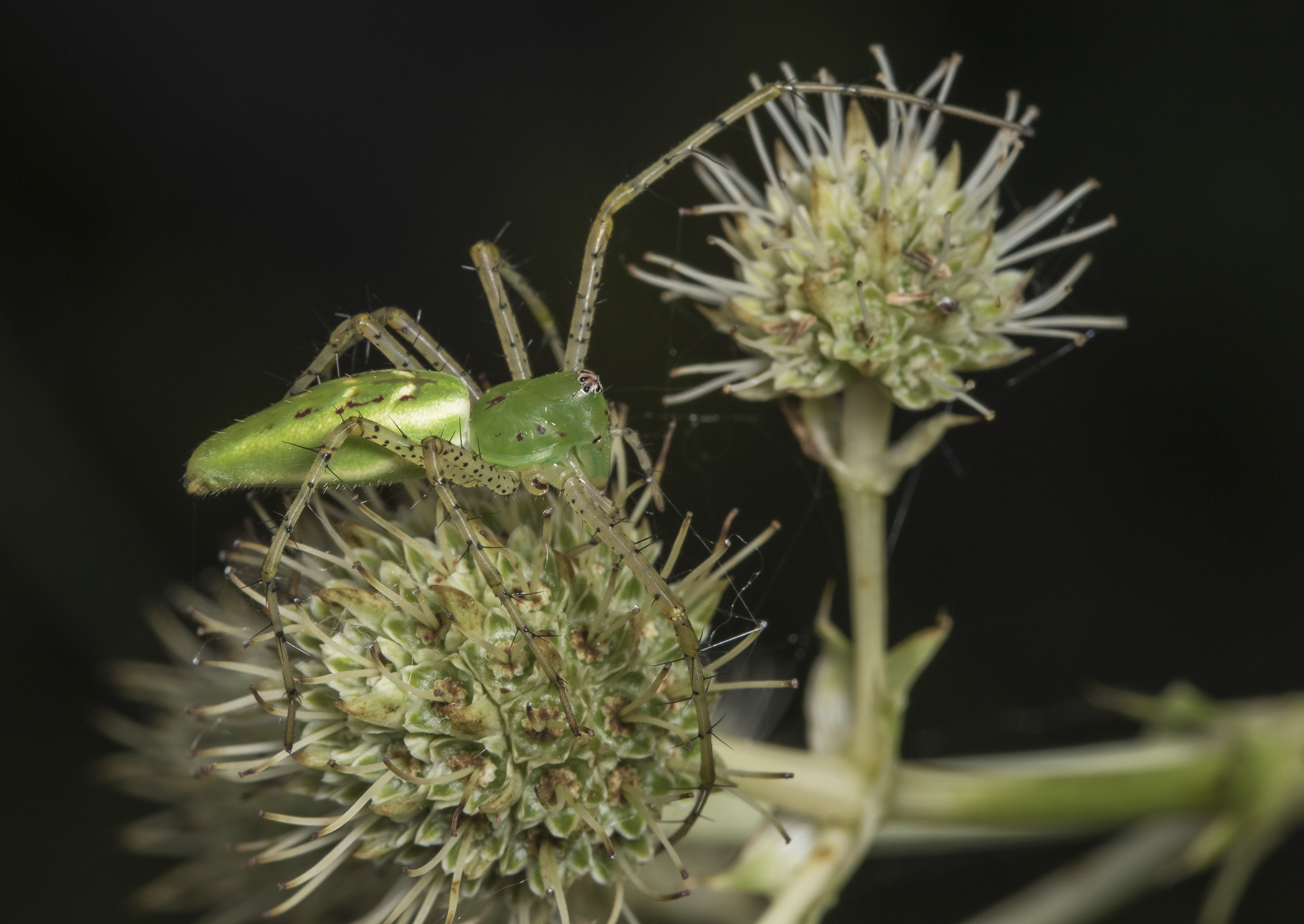
    Magnolia green jumper looking up at the camera (click photos to enlarge)

    It was a female magnolia green jumper. I recently did a post about the males of this species when I found a couple on some pawpaw trees at the house. But this was a female (distinguished by the lack of swellings near the tips of her pedipalps) and she was apparently guarding something very precious…

    Magnolia green jumper eggs
    Eggs of a magnolia green jumper

    …a cluster of eggs in a loosely spun silken case on the underside of a tulip poplar leaf. They did not resemble the usual spider egg case, which tends to be enclosed in a globular silken egg sac. These were loosely dispersed beneath a sheet of silk as individual eggs. I checked online just to make sure and found some other images that confirmed these were indeed her eggs. Since I had already cut the branch, I decided to keep them and watch what happened.

    Magnolia green jumper seggs hatching close up
    Spiderlings just after hatching

    Three days after I collected the leaf with the eggs, I noticed a change. There appeared to be spider-like blobs poking off the green eggs. I must admit, I just could not figure out how this worked. Was this thing with leg-like appendages the spider emerging from the egg? The more I looked at it, I decided that the old egg shell is actually the whitish crumpled blob you can see next to each green orb in the photo, and that the roundish green thing is the abdomen of the a new spider.

    Magnolia green jumper spiderlings group
    Cluster of magnolia green jumper spiderlings

    This was confirmed over the next couple of days as I watched the spiderlings unfold their legs (this occurred on day 5 after I collected the eggs and two days after the previous photo was taken).

    Magnolia green jumper spiderlings close up
    Three days after I first saw the baby spider legs appearing to unfold from the eggs

    Magnolia green jumper spiderlings
    Magnolia green jumpers three days after hatching

    The young spiderlings have continued to develop as I watch them each day, their eyes appearing larger and darker in color, and they seem to be moving more, albeit still inside the silken covering laid down by their mother. Today, I will probably go ahead and clip their leaf to a tulip poplar branch and watch to see when (and how) they manage to leave this protective lair. I imagine, somewhere nearby, their mother is looking on with proud eyes (all 8 of them)…

    Magnolia green jumper female close up
    Magnolia green jumper female


  • Spittlebugs

    In the spring, the eastern half of North America turns into one big spittoon…

    ~Amy Breau

    They have always fascinated me, these little blobs of “spit” on vegetation. Must be the leftover 4th grade boy that still resides in one corner of my brain.

    spittlebug spit
    Spittle (click photos to enlarge)

    Once or twice a year, I can’t resist the urge to touch one of the the little balls of spit, gently brushing away the foam to see what lies beneath. It is usually the same little green blob of an insect that greets me.

    Spittlebug nymphs
    A pair of spittlebugs revealed

    Usually there is only one, but this year, after reading there are often multiples hidden beneath the bubbles, I actually found two spittlebug nymphs in one of the frothy masses.

    spittlebug
    Close-up of spittlebug

    The aptly-named spittlebugs are related to other plant-suckers like aphids and cicadas.. The immature stage, or nymph, is the one that creates the spittle (it has also been called frog spit or snake spit) as both a protection from predators, and as the ideal humidity and temperature control chamber that helps them keep from drying out in warm temperatures. The nymph sucks on plant juices while facing head-down on a stem, and uses anal appendages to froth up the excess liquid exuded as a by-product of its feeding habits. The bubbles flow downward with gravity and eventually envelope the nymph. Interestingly, the bubbly mass has good staying power (the bubbles may last several days), which makes me wonder if there might not be some commercial use for whatever it is they use to give their bubbly cover such longevity. Another oddity about this critter is that, unlike most sap-sucking insects, this one tends to tap the xylem, the tissue that transports water from the roots to the shoots. Most other sap feeders use the phloem, the tissue that transports food from the leaves down to the roots as it is generally more nutrient-rich. This may explain why they must process large quantities of fluid (they pump 200+ times their body weight in fluid every day) to sustain themselves.

    Two-lined Froghopper
    Adult form of one species – the two-lined froghopper

    Adult spittlebugs also feed on sap, and some are considered agricultural pests. Many are known by the common name, froghopper, due to their incredible jumping ability. A few resources state they may be the all-time champion jumpers, worthy of superhero power status, as some froghoppers can leap up over 100 times their body length, the equivalent of a six-foot tall human jumping the height of two football fields!

    I am beginning to see some small frothy masses appear again on vegetation at the Garden and references state that, for many species, there are two generations per year. So, you still have time to get out and rub some spittle to see what’s underneath. Just make sure there are no 4th grade boys around.


  • King of the Marsh

    Wherever there are extensive marshes by the sides of sluggish streams, where the bellowings of the alligator are heard at intervals, and the pipings of myriads of frogs fill the air, there is found the Fresh-water Marsh-hen…

    ~John James Audubon, as described by his friend, John Bachman, 1840

    This post should have been written a month ago, when I made these observations. But, one thing leads to another these days, so it is a bit late in getting on the blog. It started as I was searching for bears at my favorite haunt, Pocosin Lakes National Wildlife Refuge. I paused to look for bears in trees at a spot I had seen them the day before, when suddenly, something ran out into the dirt road ahead of me. It was a King Rail! I fired a couple of quick frames, but blew the shots, as the rail moved quickly into the tall grasses between the road and the canal. As I was searching the vegetation, my eye caught another movement out in the open…

    king rail chick
    Juvenile King Rail pauses at the edge of the dirt road before disappearing into the grass (click photo to enlarge)

    I was thrilled! I had only seen adult King Rails, and only three times over my many years of traipsing these haunts. I had heard their distinctive calls on many trips, but they tend to be an elusive critter and blend in very well in the dense vegetation of their marshy homes. The little one quickly disappeared, probably trailing its mom. I moved the car toward the edge of the canal, hoping to see the birds if they crossed.

    king rail and reflection
    Adult King Rail crossing a log on the canal

    She suddenly appeared on a log sticking out into the canal, turning briefly to look back toward where the young bird had been, then walking across and onto the far bank. I looked up from the camera, and saw five tiny black forms swimming across the canal, all partially obscured by some tall grasses.

    king rail chick struggling on log
    Young rail clawing its way up onto a log

    I quickly moved the car forward and managed to get one shot of the straggler as it struggled to climb up onto the log where its mom had been moments before. I could see the little gang of rails following the adult as she wound her way through the vegetation and back into the dense shrubs. These things can happen fast, and I guess I was lucky to have managed a few images, but I was thankful for the chance to see this family at all. I waited for a few minutes, but imagine she had ushered her brood far away from the road. So, I started to drive on, and then…

    King Rail
    Another rail feeding next to the canal, just a few yards down the road

    There was another rail, just across the canal from me. This one was just threading its way through the vegetation along the canal, probing and feeding. King rails feed on a variety of invertebrates including aquatic insects, crayfish, and other small critters like frogs and fish.

    King rail in alligator weed
    I spent about 45 minutes with this cooperative bird

    I ended up spending quite a bit of time following this bird as it moved back and forth along the canal bank, seemingly unconcerned about the car inching along on the opposite bank. This was when another vehicle pulled up, realized I was watching “just a bird” and drove off. I reported on what I saw when I turned back around to look at the rail in an earlier post.

    king rail showing feet
    Check out those feet

    On two occasions, the rail stopped to stretch and preen. At one point it came out onto a mud bank where its huge feet were clearly visible, a great adaptation for walking on the top of marsh vegetation.

    king rail calling
    The rail graced me with a few calls while I watched

    But, the highlight for me was when the rail let loose with its distinctive, harsh and loud kik-kik-kik call. As I mentioned, I have heard this call many times and tried more often than I can count to find the caller, and here was on out in the open, with just me as an observer. Life is good!

    And here is a very brief clip for you to enjoy…


  • Tiny Dancers

    Some people look at big things, and other people look at very small things, but in a sense, we’re all trying to understand the world around us.

    ~Roderick MacKinnon

    Yesterday we hiked over to Morgan Creek at work to prepare for some upcoming trips with summer campers where we will sample the stream for macro-invertebrates. I am pleasantly surprised at the diversity of critters that still exist in this Piedmont stream.

    Dusky Dancer damseflies
    Damselflies on a rock along Morgan Creek (click photos to enlarge)

    One of the first things to catch my eye was a pair of damselflies in tandem. That is where the male has a clasp on the female’s neck using special abdominal appendages. This is a precursor to their unusual mating behavior, and, in some species, is also carried on through the egg-laying process, with the male staying with the female to protect his interests. In the photo above, the male is the one perched upright and the female is perched on the rock.

    Dusky Dancer damselflies in tandem
    A pair of Dusky Dancer damselflies in tandem

    The male is a particularly dark damselfly with only thin blue rings along most of the abdomen. This is characteristic of the Dusky Dancer, Argia translata. This is a widespread species inhabiting streams, rivers, and large lakes from Ontario to Argentina. They are found throughout much of the Piedmont and Mountains of North Carolina, but are generally not considered abundant in any location. I wanted to get some better images, so I kept stalking the pair, and laying down on the gravel bar to try to get a low angle image.

    Dusky Dancer damselflies, Argia translata
    The classic in tandem pose for this species

    After several unsuccessful attempts, they finally stayed put long enough for a couple of shots. This morning, I looked them up in my field guides to confirm their identifiction, and as I was zooming in to see diagnostic features of the abdomen, I discovered something I had not noticed in the field…

    Dusky Dancer with possible egg parasitoid
    A tiny wasp on one of the damselflies (zoomed in to see the wasp)

    …a tiny hitchhiker on the abdomen of the male. In most of the photos, the critter had been camera shy and mostly hidden on the back side. But in this last set, it was visible and I tentatively identified it as a potential parasitic wasp. In searching the web, I found that there are a few species of parasitic wasps (most in the genus, Hydrophylita) that are egg parasitoids on damselflies. If this is one of them, when the damselfly lays her eggs underwater, the wasps crawls down the abdomen, into the water, and lays eggs within the eggs of the damselfly. The wasp larvae then hatch and consume the eggs of the host. Whoa, the more I learn, the stranger it all becomes!

  • Land Shark

    But somewhere, beyond Space and Time, is wetter water, slimier slime!

    ~Rupert Brooke

    I remember the first time I found one, years ago, I wasn’t sure what it was…some sort of alien creature? What impressed me was how long it was, and how slimy. And that head, that strange, oddly-moving head!

    Terrestrial flatworm
    Terrestrial planarian (click photos to enlarge)

    Turns out they are a terrestrial flatworm, or planarium. I have seen them off and on over the years, usually under a log that I rolled, but now I am finding them with more frequency in the plant beds and woods at work. A few weeks ago, one of the horticulture staff asked me to come out and look at a strange “thing” they had found when moving some rocks in the children’s area, and that started a series of discoveries of these bizarre creatures that also go by the common name of hammerhead worms.

    Terrestrial flatworm head
    The head of a hammerhead worm resembles the rounded outline of a hammerhead shark head or a garden spade

    Photographing these little slimy beasts is not particularly easy as they are often just one giant twisted and striped slime ball. The leading edge of the spade-shaped head ripples as the head swings back and forth (there will be a video of these guys in my future). These critters are believed to have come from Southeast Asia and were probably imported into this country on nursery stock.

    Hammerhead worm
    I think this species is Bipalium kewense

    These odd-looking flatworms have an equally strange life history. They are hermaphroditic (both sexes in one).  Although eggs and cocoons are known, the usual mode of reproduction is asexual – by fragmentation. A small portion of the worm’s rear end will pinch off, and “stay behind” as the worm moves forward. The head starts to form a few days afterward. They are predators, mainly on earthworms, which are digested externally (there are reports of them also feeding on slugs and some immature insects). The flatworm first subdues its prey with a toxin and copious amounts of slime. Then it extrudes its pharynx from its mouth (which is located on its underside about mid-way down the body) and secretes digestive enzymes which basically dissolve the earthworm. This goo is then sucked back into the flatworm.

    Terretrial flatworm next to boot
    Hammerhead worm next to my boot toe for scale

    Hammerhead worms can be quite long when stretched out as they crawl (or slide) across the dirt, often approaching lengths of 12 inches. Apparently, little is known about the ecology of these terrestrial flatworms…how long do they live?; who eats them (their mucus probably deters most predators, but they are reported to be cannibalistic)?; and what impact do they have on native species? Maybe I will collect a few and keep them in containers for observation…but, then again…

  • Just a Bird…

    Spend time every day looking and listening without any ulterior motive whatsoever. Look not as a writer, or as a philosopher, not even as a scientist or artist—look and listen, simply, like a child, for enjoyment, because the world is interesting and beautiful. Let in nature without the vast and complicated apparatus of duty, ambition, habit, morals, profession—look and listen like a child to the robin in the tree.

    ~David Grayson

    Much of my time outdoors is spent wandering, not for something in particular, but just wandering and being open to whatever I discover. Even in a place like Yellowstone, known to wildlife-watchers as one of the premier places in North America to observe charismatic megafauna like bison, bears elk, and wolves, there are many treasures that await those who are open to them.

    Western tanager
    Western tanager male (click photos to enlarge)

    Before my guests arrived, I stopped at a pullout in Lamar Canyon to scan the far ridges for some of those magafauna I mentioned, but what caught my eye was brilliant flash of yellow and orange in a nearby conifer. A male Western tanager, one of the most beautiful birds in Yellowstone! Suddenly, there was another, and then another. I raced over to the van for my camera, long lens, and tripod, and that caught the attention of a passing motorist. The common refrain when someone sees a spotting scope or long lens pointing at something is “Whaddya have?” or something similar. I responded with “a  couple of Western tanagers”, and got that look, the one I often get when I am photographing a bird, insect, or something besides one of the big mammals. It is even sometimes accompanied by that phrase, “It’s just a bird”, and then they drive off. Well, I have had many memorable just a bird moments over the years, too many to recall really, and that goes for birds in Yellowstone as well. And a few Western tanagers are sure to catch my attention anytime. A couple of other park visitors even came over to try to photograph them once I pointed them out.

    Below are a few more of those moments from this trip.

    Hawk attacking eagle
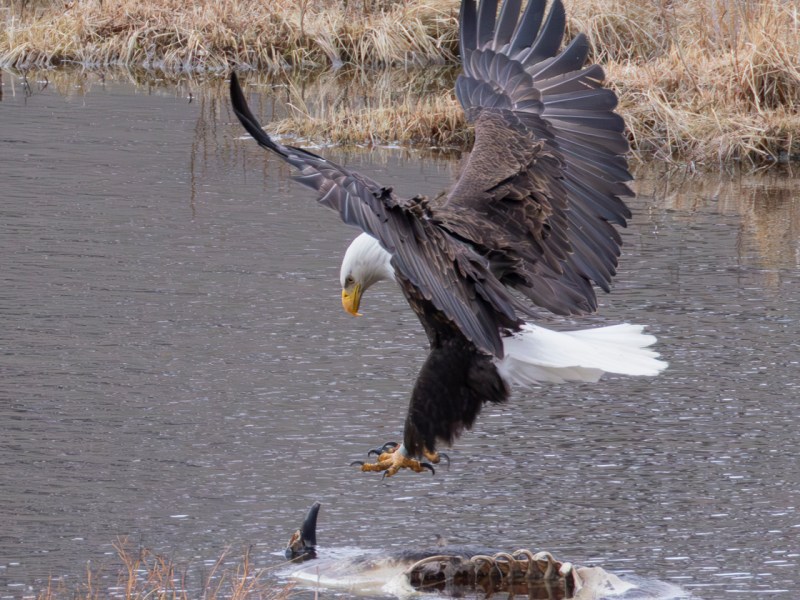
    A hawk dive bombs a bald eagle that was flying too close to its nest

    sparrow nest 1
    The ground nest of a vesper sparrow that we accidentally flushed while walking through the sagebrush

    Fledgling American robin
    A fledgling American robin near my cabin in Silver Gate

    Red-naped sapsucker in hole
    A red-naped sapsucker peers out of its nest cavity in an aspen tree

    Flicker male at nest 1
    A male Northern flicker at its nest cavity after feeding a young bird

    Flicker at nest
    Female Northern flicker feeding young

    American avocets
    American avocets feeding in Floating Island Lake

    American avocet
    American avocet

    Osprey at nest
    Osprey nest with one bird  sitting on eggs, and the mate sitting nearby

    Osprey coming in for fish
    Osprey making a strafing run on cutthroat trout spawning in the creek at Trout Lake

    Osprey catching trout
    Osprey snags a trout just behind the tall grass along the creek

    Osprey catching trout close up
    It looks like the fish is caught by only one talon

    Osprey catching trout 1
    The osprey tried to lift off with its struggling prey

    Osprey flying off with trout
    Right after this photo was taken, the trout wriggled free and fell back onto the water

    Bird species observed in and around Yellowstone National Park – June 10-18, 2017

    60 species:

    Trumpeter Swan; Canada Goose; American Wigeon; Mallard; Cinnamon Teal; Green-winged Teal; Northern Shoveler; Ring-necked Duck; Lesser Scaup; Bufflehead; Barrow’s Goldeneye; Common Merganser; Ruddy Duck; Ruffed Grouse; Western Grebe; American White Pelican; Osprey; Bald Eagle; Red-tailed Hawk; American Coot; Sandhill Crane; Killdeer; American Avocet; Wilson’s Snipe (heard); Wilson’s Phalarope; California Gull; Rock Pigeon; Great Horned Owl; Williamson’s Sapsucker; Red-naped Sapsucker; Northern Flicker; American Kestrel; Peregrine Falcon; Gray Jay; Stellar’s Jay; Black-billed Magpie; Common Raven; Tree Swallow; Violet-green Swallow; Cliff Swallow; Barn Swallow; Mountain Chickadee; House Wren; American Dipper; Mountain Bluebird; American Robin; European Starling; Yellow-rumped Warbler; Chipping Sparrow; Vesper Sparrow; White-crowned Sparrow; Dark-eyed Junco; Western Tanager; Red-winged Blackbird; Western Meadowlark; Yellow-headed Blackbird; Brewer’s Blackbird; Brown-headed Cowbird; Cassin’s Finch; Pine Siskin

Search the Archives

Due to our site update, photos on older posts may not display correctly. Sorry for any inconvenience.


Recent Posts