[W]hat a severe yet master artist old Winter is…. No longer the canvas and the pigments, but the marble and the chisel.
~John Burroughs, 1866
Yesterday’s post shared some of the intricate beauties of a frosty morning – objects adorned with tiny crystals that reveal new patterns and create sculpted coats on everything in the landscape. One of my coworkers saw me out taking photos and asked if I had seen any frost flowers. He then went on to explain they usually occur on a couple of species of plants (he threw the Latin names out and they escaped me) in the garden, but he couldn’t remember exactly where they were. I replied I had not seen any, all the while searching my memory bank for an image of what a frost flower looked like. We parted and I put the camera away and went out to fill the feeders in the bird blind. As I was walking back, something caught my eye in one of the garden beds…
My first frost flower (click photos to enlarge)
That has to be one – a frost flower! I ran and got the camera and told our communications assistant about it so she could get some photos as well. The sun was hitting that area so it would not last long. There were two plants with these unusual structures. A quick web search helped explain this bizarre phenomenon.
An ice flower with a pen for scale
More commonly called ice flowers, these structures go by a variety of other local names – frost flowers, ice ribbons, and rabbit ice to name a few. Several resources mentioned that although they are often called “frost flowers”, these formations are not a type of frost. It seems as though these beautiful creations are caused by a process called ice segregation. Under certain conditions of temperature and humidity in late autumn and early winter, super cold water moves through a medium toward ice, freezes at the interface, and adds to the ice.
Ice flowers typically have curved “petals”
At this time of year in some species, water is still being brought up from the soil by the roots or through capillary action. When conditions are right, the water expands in the dried stems, fracturing thin slits in the stem wall. Water squeezes from cracks in the stem and becomes ice, pushing the previous ice further out. Ice crystals on the outside of the stem may be a prerequisite for the formation of ice flowers. There are quite a few resources online with many beautiful photos of this phenomenon – see Ice Flowers and Find an Ice Flower Before it Melts for samples. For reasons that are not fully understood, this has been found in relatively few species of plants. I hope to get some help identifying this one by its basal leaves when I get back to the office. And now that I have seen my first ice flowers, I will definitely be keeping an eye out for these delicate, ephemeral beauties on cold frosty mornings in the future.
It is the life of the crystal, the architect of the flake, the fire of the frost, the soul of the sunbeam. This crisp winter air is full of it.
~John Burroughs
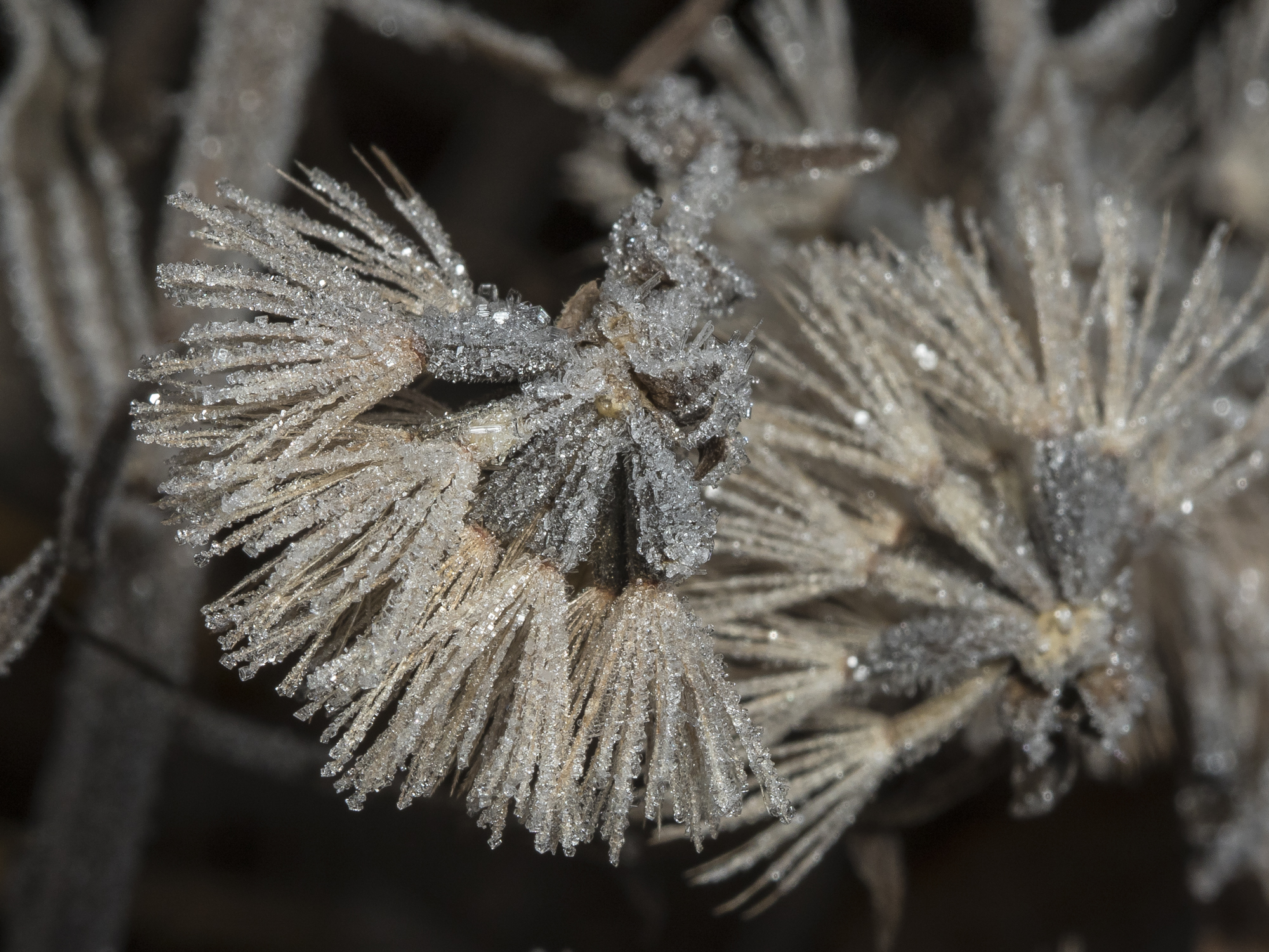
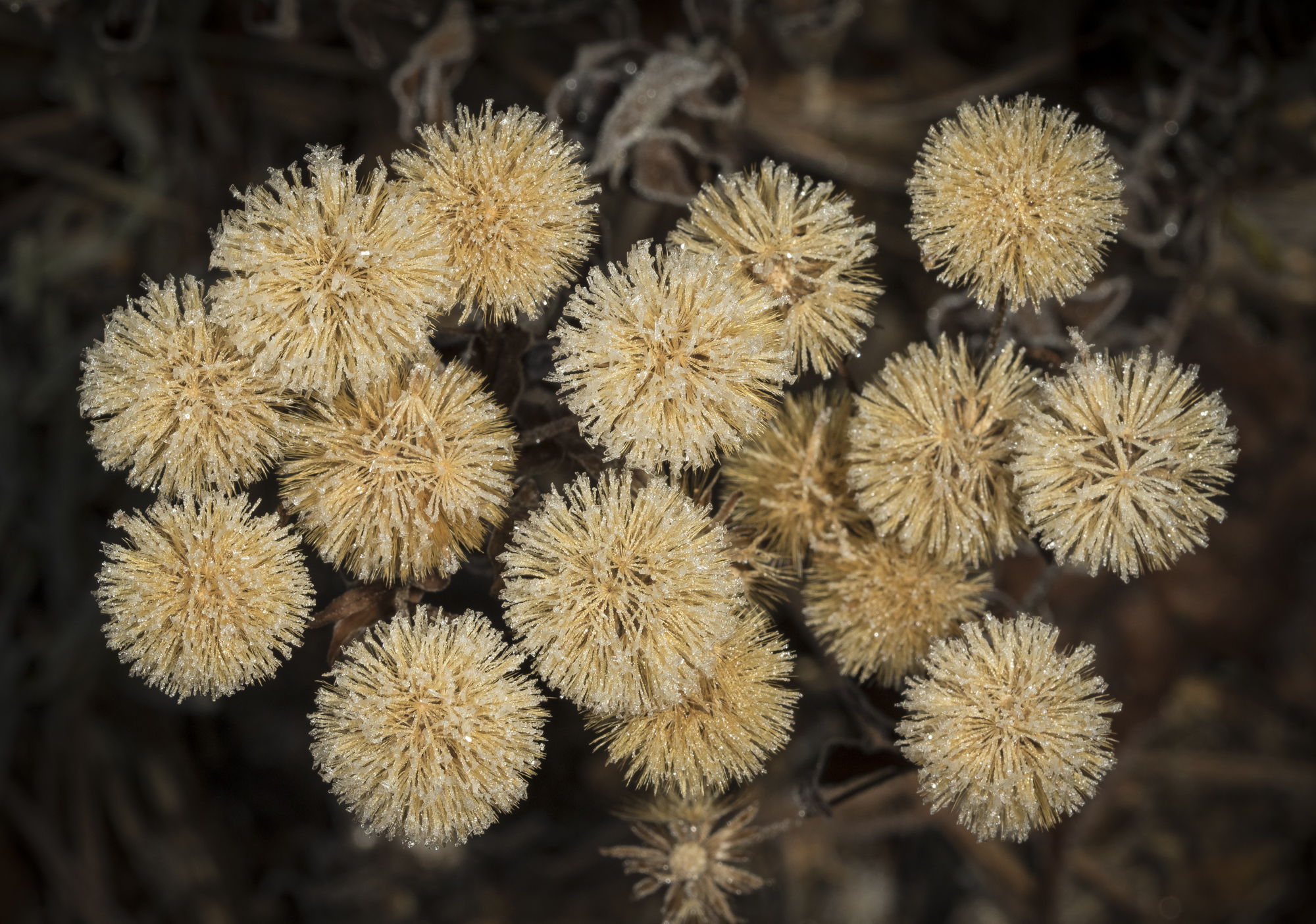
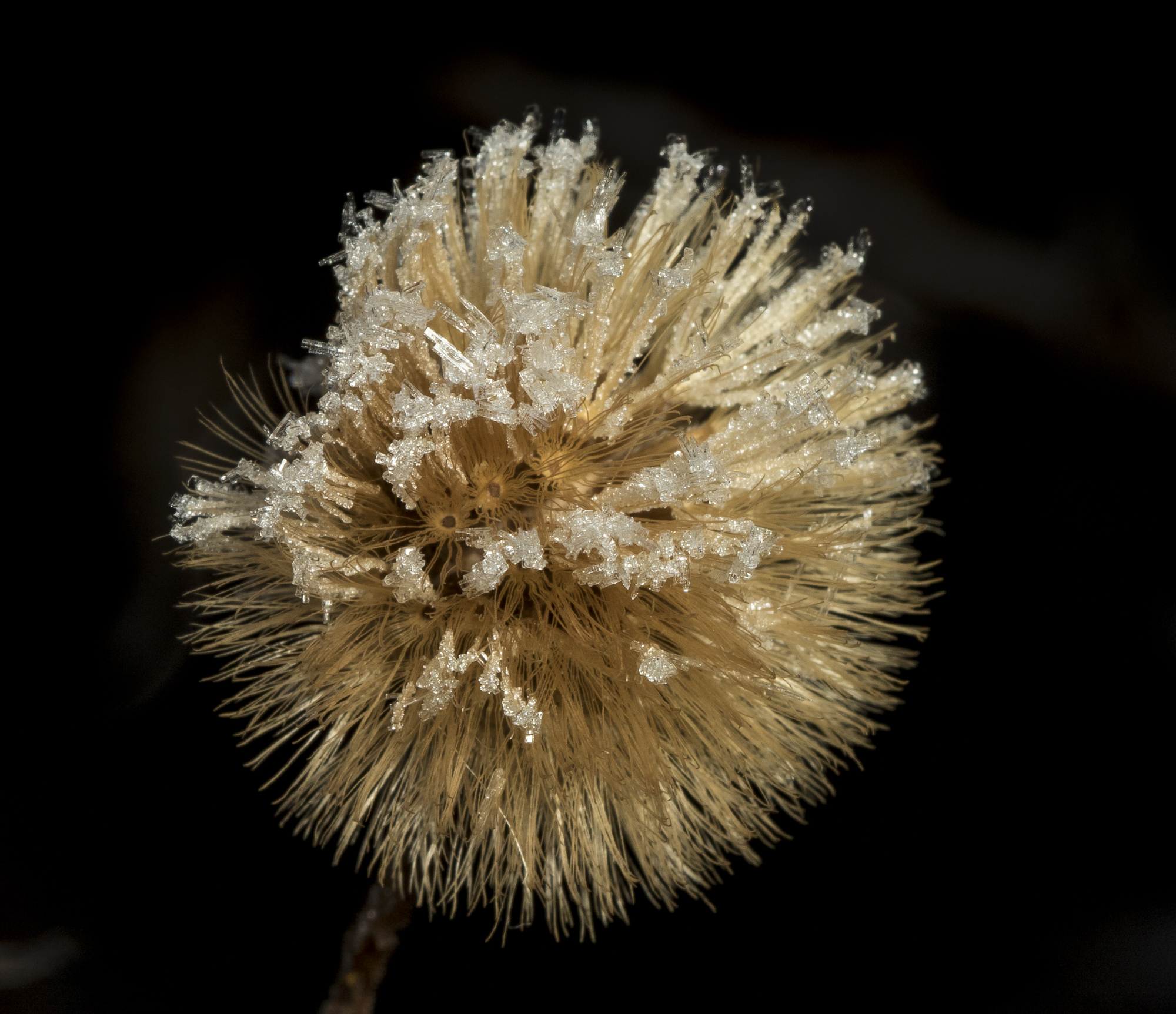
It has finally turned cold, the true feeling of winter is now in the air. Walking in to to my office yesterday morning I could see the early hour handiwork of an special artist whose work is only available certain months of the year. Everything within a few feet of the ground was delicately sculpted with miniature pillars of ice – a heavy frost covered the plants and ground, painting the world with a crystalline white palette. I couldn’t resist and grabbed my camera for a walk-about to see the frosty splendor. Below are some of my favorites from a stroll through a temporary world of frozen masterpieces.
A native blueberry shrub with one frozen leaf (click photos to enlarge)Southern maidenhair fernThe last delicate phlox flowers of the seasonThe tiny leaves of what I think is a creeping blueberryThe last leaf on an American lotus droops over towards the waterGrass seeds
There are so many interesting seed heads now and they were all covered by ice crystals, adding another layer of beauty to these minute botanical sculptures.
The frosty detail of a single stem of horse tail is simple, yet elegant.
Horse tail (scouring rush)
My favorite icy hosts were the pitcher plants. Their unusual shapes and colors seem an unlikely companion to a coating of ice crystals, but they manage to pull it off.
Large crystals formed on the top of pitcher plants that have “lids”The hooded pitcher plants developed a “spinal column” of tiny frost crystalsThe ice enhances the details on this hybrid pitcher plant
The hooded pitcher plants have such artistic formsA shape that could make a sculptor enviousIf plants huddle for warmth, this was a day to do it
But the most unusual ice feature of the morning is one I had never seen before…I will share that mystery with you in the next post.
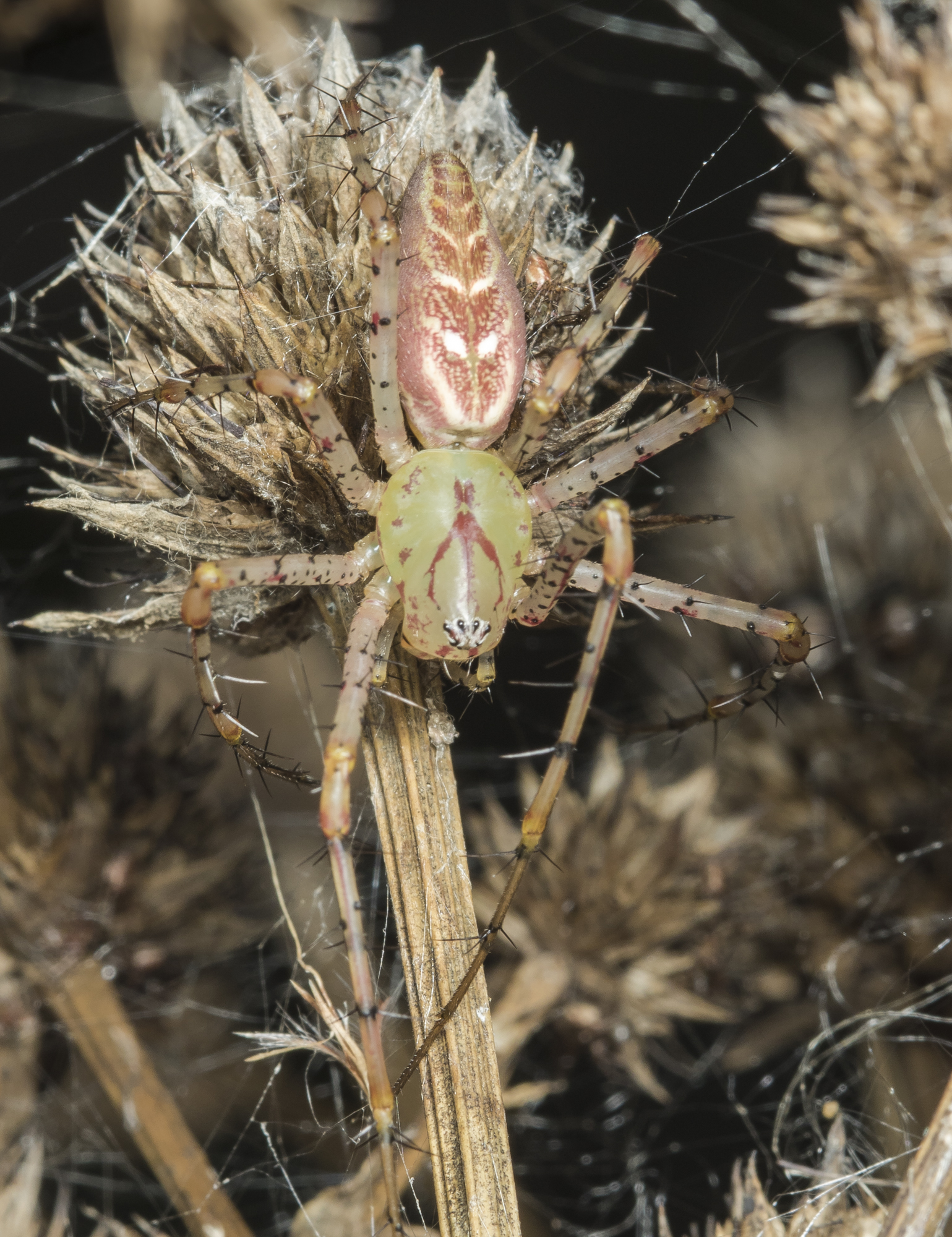
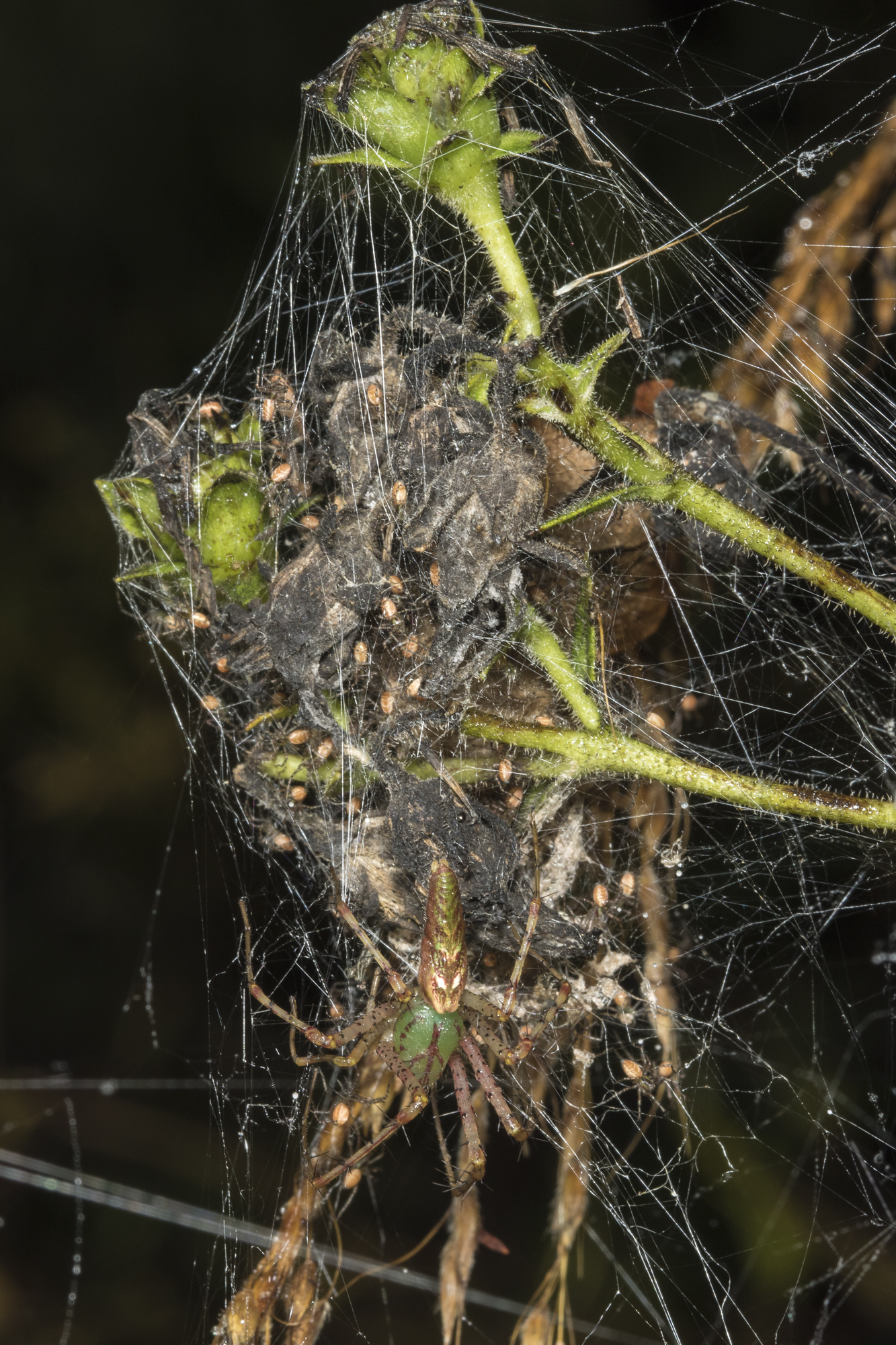
It has been a good few months for new mothers at work with several new babies among the staff. So, it seems only appropriate that I share a couple of extraordinary mothers from the Garden’s animal kingdom as well. First, an update on the amazing green lynx spider that I wrote about last time. You may recall she had been sitting with her egg case for a couple of months in the top of some rattlesnake master seed heads in our Piedmont Habitat. Her spiderlings emerged around October 20 after having their egg sac already guarded for about a month by their attentive mom.
Green lynx spider with a meal of yellow jacket last week (click photos to enlarge)
I have been keeping an eye on her off and on since the eggs hatched and am amazed at her site fidelity, even after most of her offspring had seemingly dispersed. Last week she caught a yellow jacket on one of the warm days when flying insects were out and about. This is the first prey I have seen her capture in all this time, although I heard from some other staff that she had caught a couple of other insects during her ordeal.
She is still at it on on December 1…amazing!
I made a special visit to see her last Friday, on December 1, to confirm that she had made it into another month. She is still at it and to my surprise, when I checked my photos, I saw one of her offspring sitting next to her on the egg sac (zoom in on the photo above). It looks like it has molted at least once since I photographed the group in October because the shape and color pattern now more closely resembles the adult female. I plan to keep tabs on this dedicated mom, but I don’t expect her to last much longer, with another wave of freezing temperatures headed our way later this week. She has been guarding this egg sac since late September, a truly amazing feat of motherhood.
The salamander pool was high and dry last week
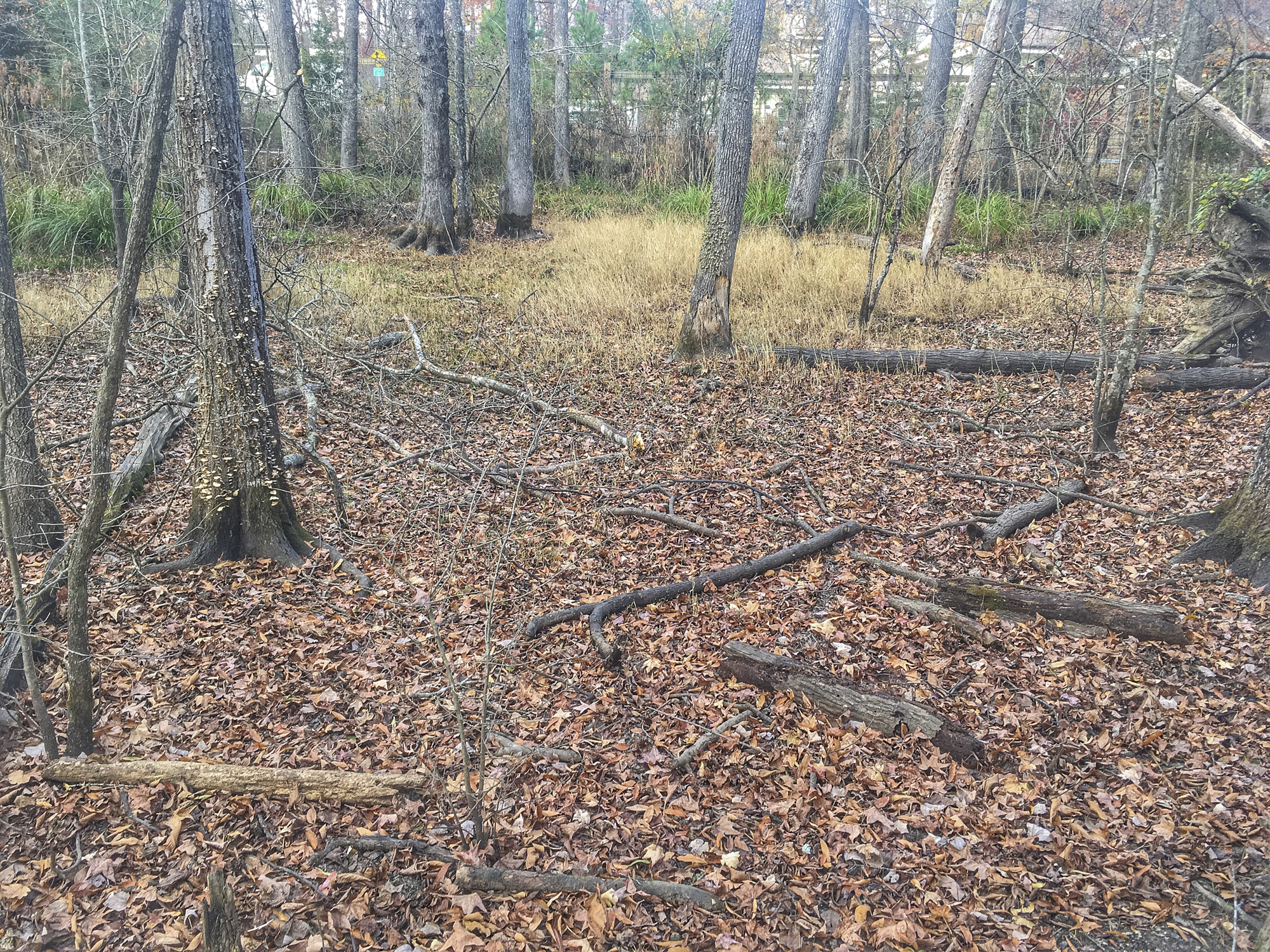
While looking for some trees to use in an upcoming activity last week, I decided to check out the salamander pool in the woods near my office. When I started work last winter its water surface was probably 5o feet across and was a hotbed of activity of animal life, shifting from spotted salamanders and upland chorus frogs in winter to American toads and dragonflies as the seasons progressed. With the lack of rainfall this fall, it was no surprise to see it totally dry last week. This is typical for many vernal pools, and is one reason they are such hot spots for breeding amphibians (due to the lack of fish). I gently lifted a few of the smaller logs lying in what had been the water-filled area this summer, hoping to find some salamanders.
Marbled salamander eggs under a log
After turning a few, I found part of what I was looking for – an egg mass of a marbled salamander, but minus the attending adult female. Females typically lay their eggs in September and October in these parts, usually under a log near the edge of a low-lying area that fills with water in the winter and spring. She stays with her eggs until rains begin to fill the pool and cover them (usually late October to December) and then she heads back to her woodland home nearby, leaving the eggs to hatch with hours or days of being inundated. If the rains don’t come, she may head back to the woods before they hatch. I wrote about this interesting species in a post a couple of years ago when we found a very late clutch of eggs (in March) that was finally about to be covered by water. I think the thing that surprised me the most that day was how quickly one of the eggs hatched after I placed it in a small container of water. It hatched within just a few minutes! As reported in my bible of salamander biology (Salamanders of the United States and Canada by James W. Petranka), this is caused by the release of digestive enzymes (from hatching glands on the snout) that dissolve the egg capsule and allow the embryo to escape.
An adult female marbled salamander guarding her eggs under a different log
Turning over a nearby log, i found a large female marbled salamander curled up around her egg mass. Studies have shown that egg clutches where the female remains with them until they are covered by water have a higher offspring survival, perhaps because she helps protect them from predation or getting too dry. I carefully laid the log back in place, and wished her well and for rains to soon fill this pool. Another case of a dedicated mother.
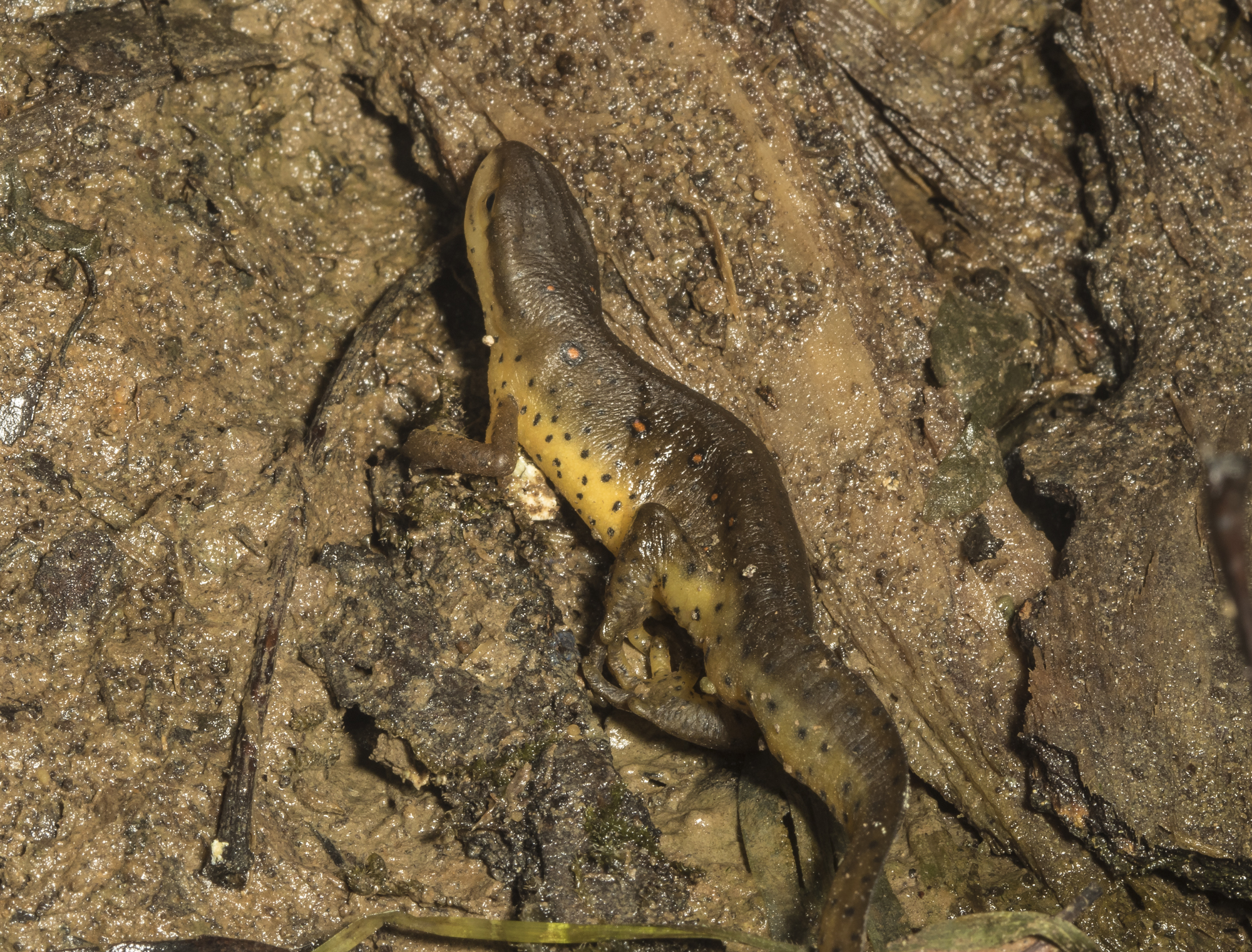
Red-spotted newt under another log
Lastly, on a non-motherly note…the last log I looked under had a somewhat crumpled-looking red-spotted newt laying under it. At first, I thought it was dead, but looking a bit closer, its eyes were open, so I presume it is just lying in a protected spot, waiting for the waters to rise. Let the rains begin…
Venom spitting spiders hatching out all over Alabama make great mothers.
~Ben Raines, title of article in Real Time News from AL.com
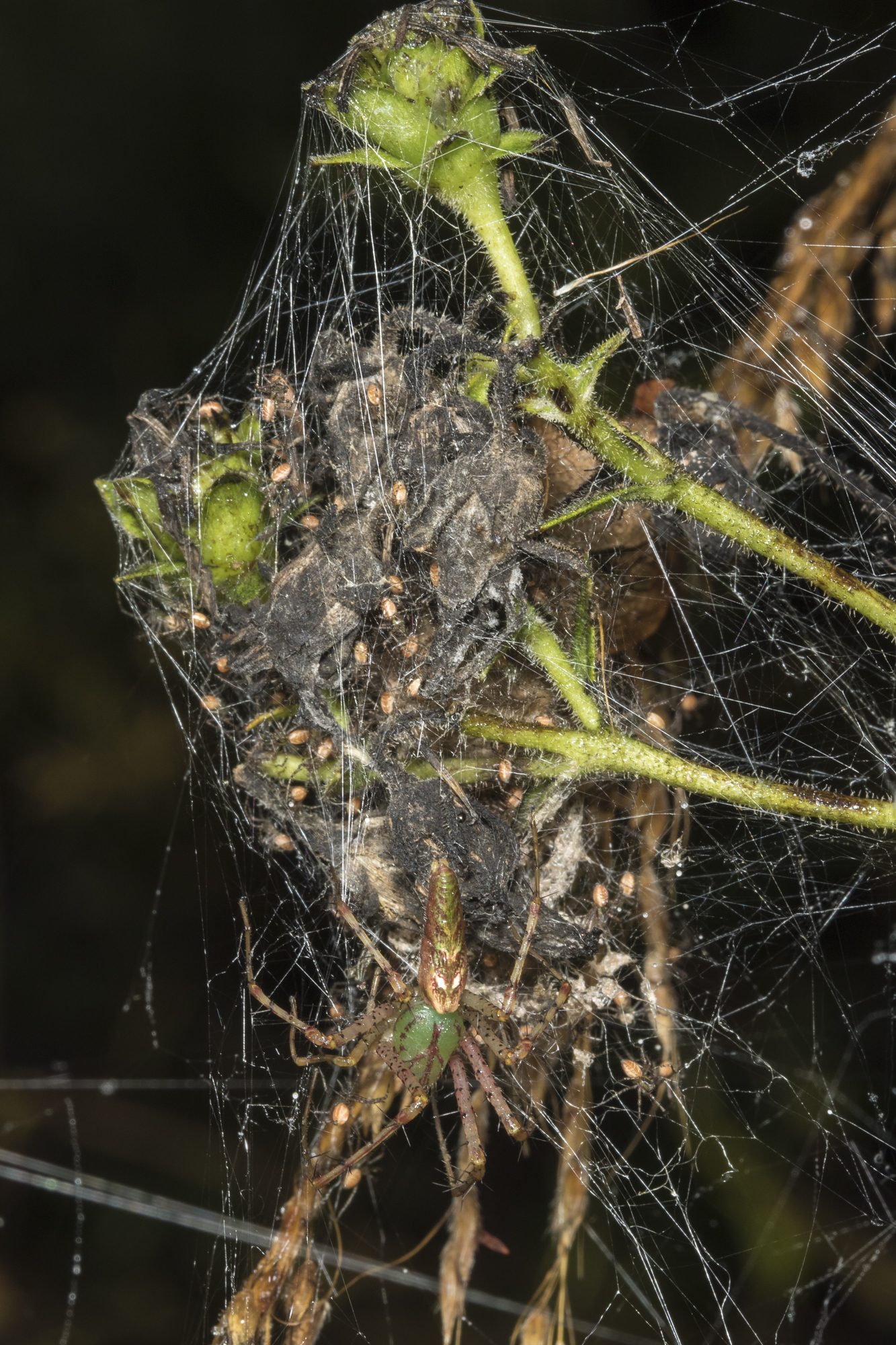
Green lynx spider and recently hatched spiderlings (click photo to enlarge)
You may remember this photo from about a month ago in another post. It is a female green lynx spider perched near her recently hatched egg case, with many spiderlings visible in the surrounding web mesh.
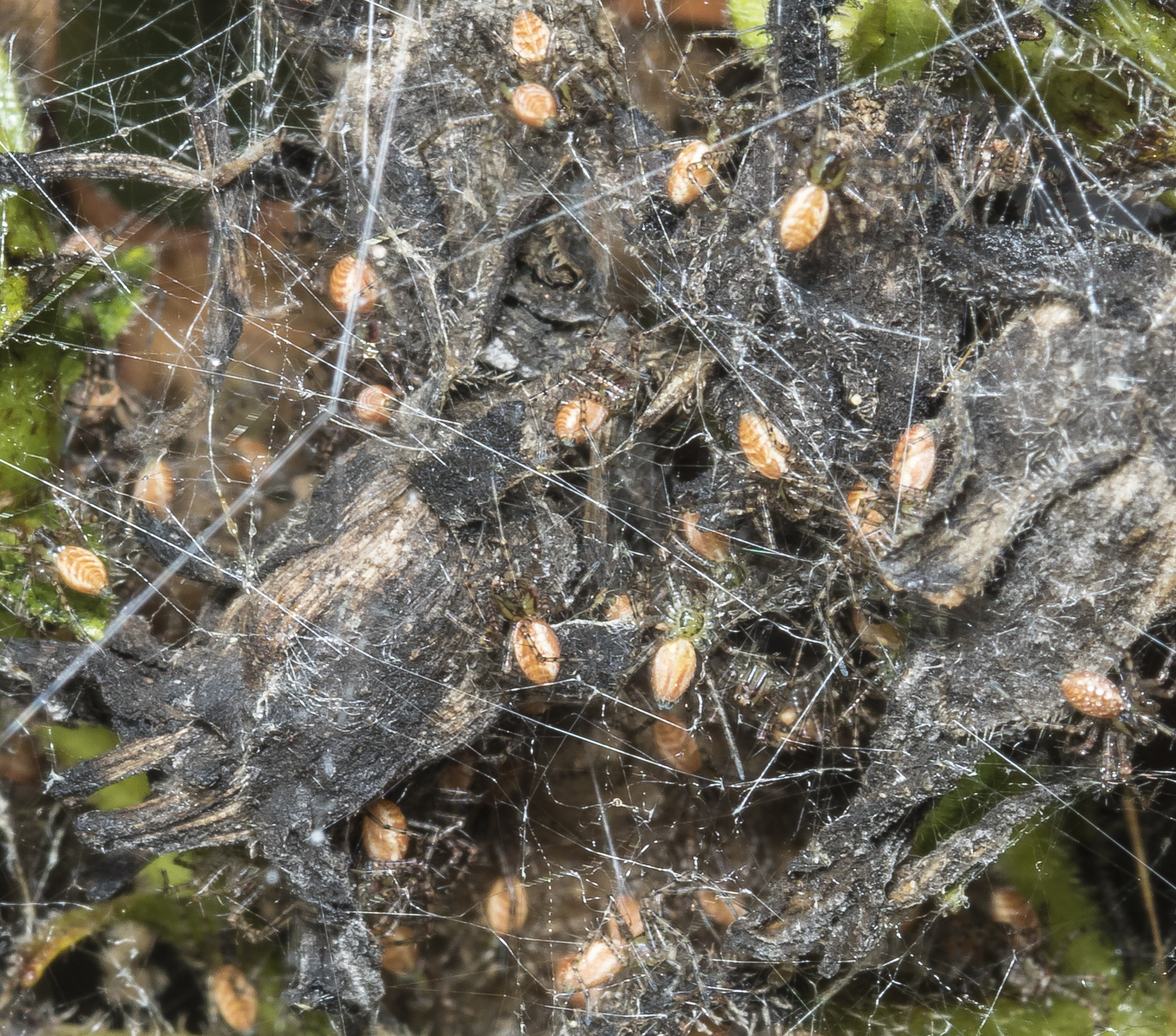
Close-up of spiderlings
Their egg cases (usually only one per female per season) contain anywhere from 50 up to 600 eggs. Mating occurs in late summer and egg are laid in September or October.
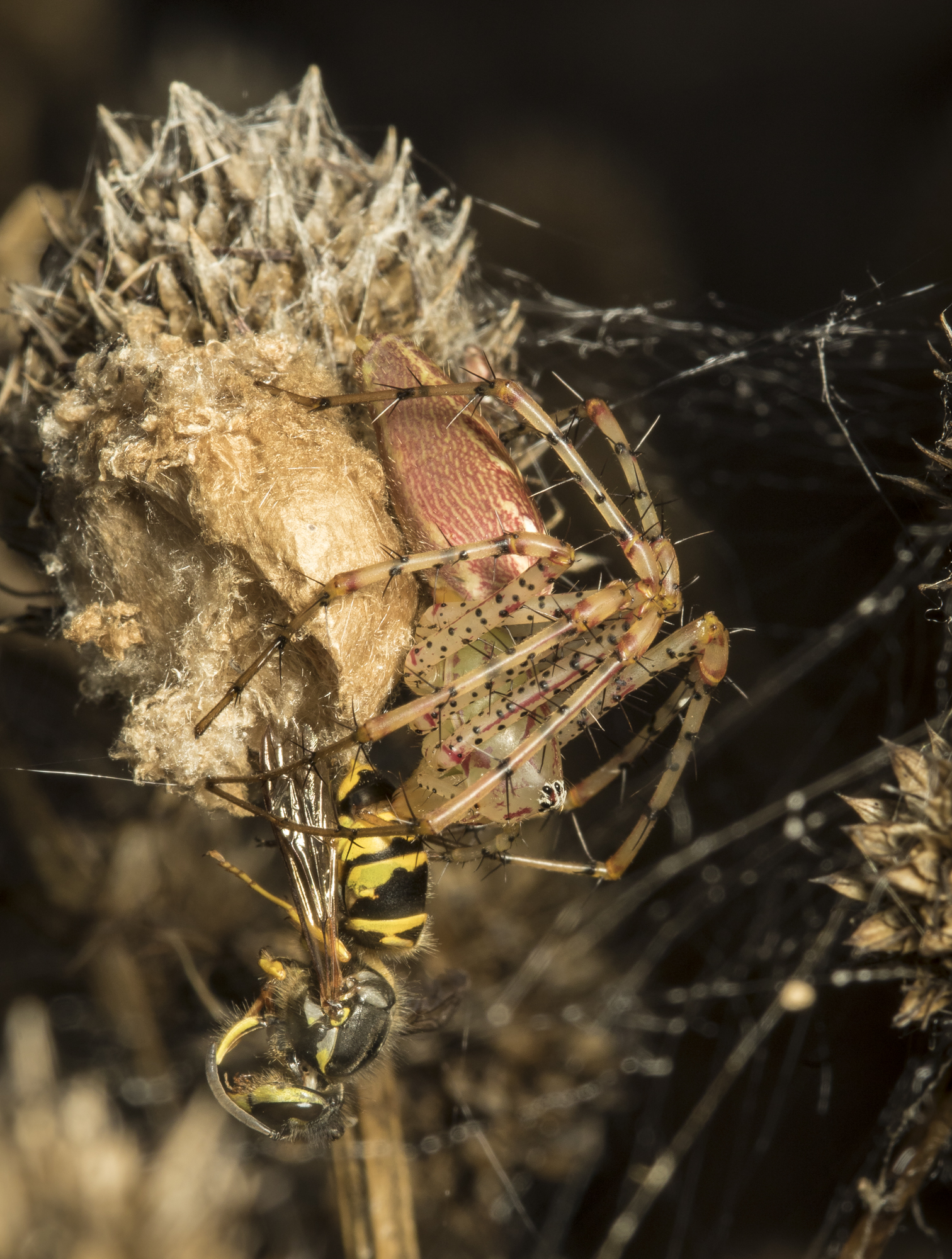
Green lynx spider with one of their favorite prey, a wasp (note the small flies clinging to the wasp, most likely members of the so-called free-loader fly group that steals a meal from a large predator while it feeds)
Green lynx spiders are named for their bright green color and their stealthy hunting technique, much like a big cat. They do not make webs for capturing prey, but rather tend to stalk around flowers and then leap on their victims (often taking fairly large wasps and bees). These are one of our most recognizable spiders, females being large (3/4+ inch body length) with long legs adorned with stiff black spines. They have a distinctive hexagon-shaped whitish eye patch with eight keen eyes.
A late season female has changed color and has one lone spiderling clinging to the seed head just to the right of her abdomen
Late in the season, they often change color, gradually losing the bright green and slowly blending more into the fall colors of the wildflower stalks where they usually place their egg case. This species is well known for guarding their eggs, and this female was no exception. She first spins a loose irregular web in the top of wildflower stalk or small shrub, and then lays her eggs, protected by a somewhat flattened egg case having several irregular projections. She then takes up a nearby position and guards her eggs, aggressively taking on any would be egg-eaters like ants or egg parasitoids. Eggs hatch into postembryos within about 2 weeks. After another 2 weeks, the postembryos molt and the now fully formed spiderlings soon emerge. The female often assists their emergence by tearing open the egg sac. Most of the young spiders disperse after a few days, but the mother continues to stay in the vicinity in “guard mode”. Perhaps it is to protect any stragglers (look for the one spiderling hiding on the seed head to the right of her abdomen in the photo above).
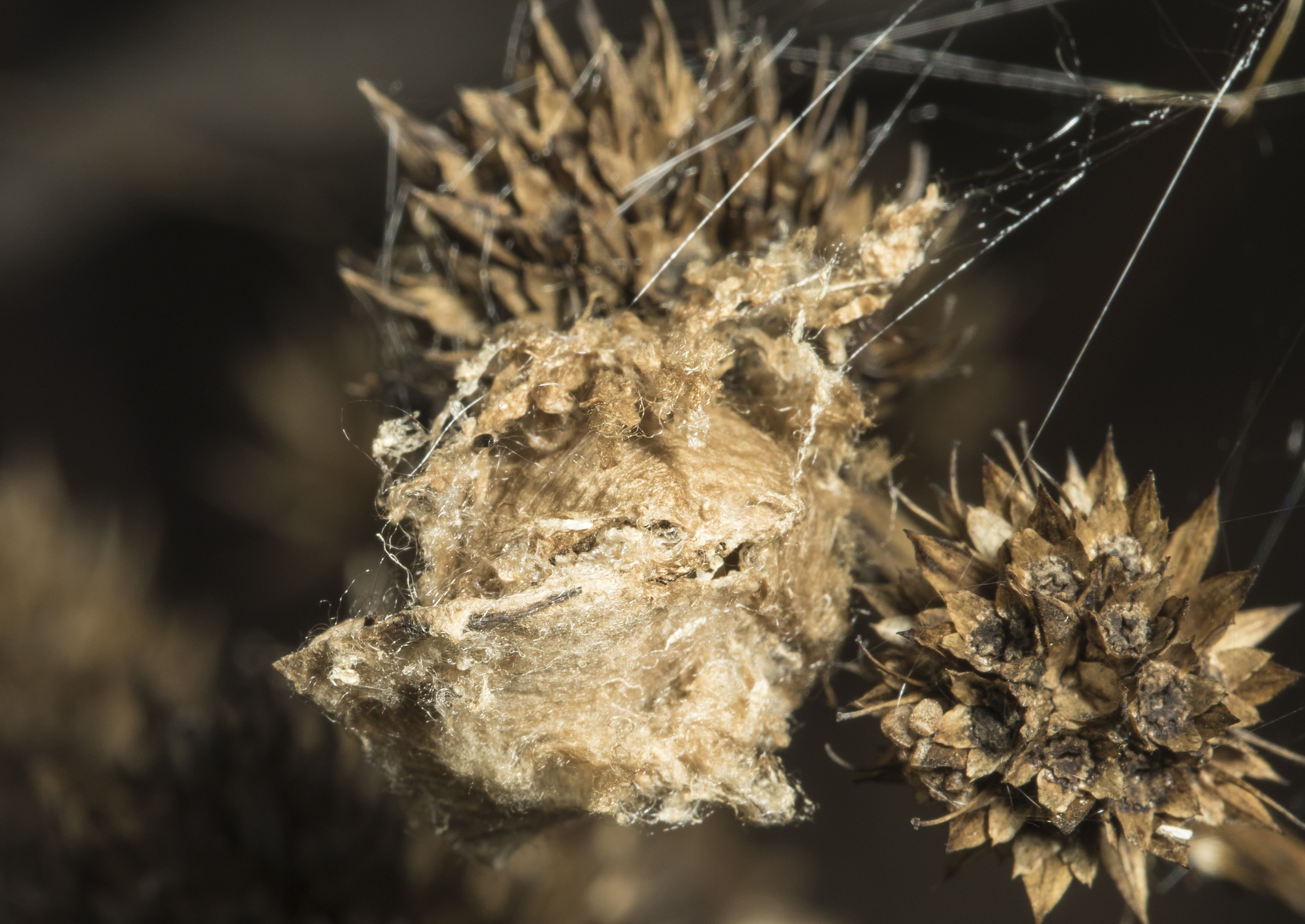
Spider egg case weeks after the hatch
This particular spider has been a frequent stop on my tours this fall as she was right next to a path, and quite visible if you knew where to look. The amazing thing to me is how long she stayed with her eggs. The first photo was taken on October 20, a day after the eggs hatched. She had already been guarding her egg sac for at least 3 weeks at that point. I would check on her every time I walked past. On November 14, I noticed the egg case, and the female, were not in their usual place. I found the egg sac a few inches outside the web mesh, probably dislodged by wind or rain. The female had simply moved to the back side of the rattlesnake master seed heads.
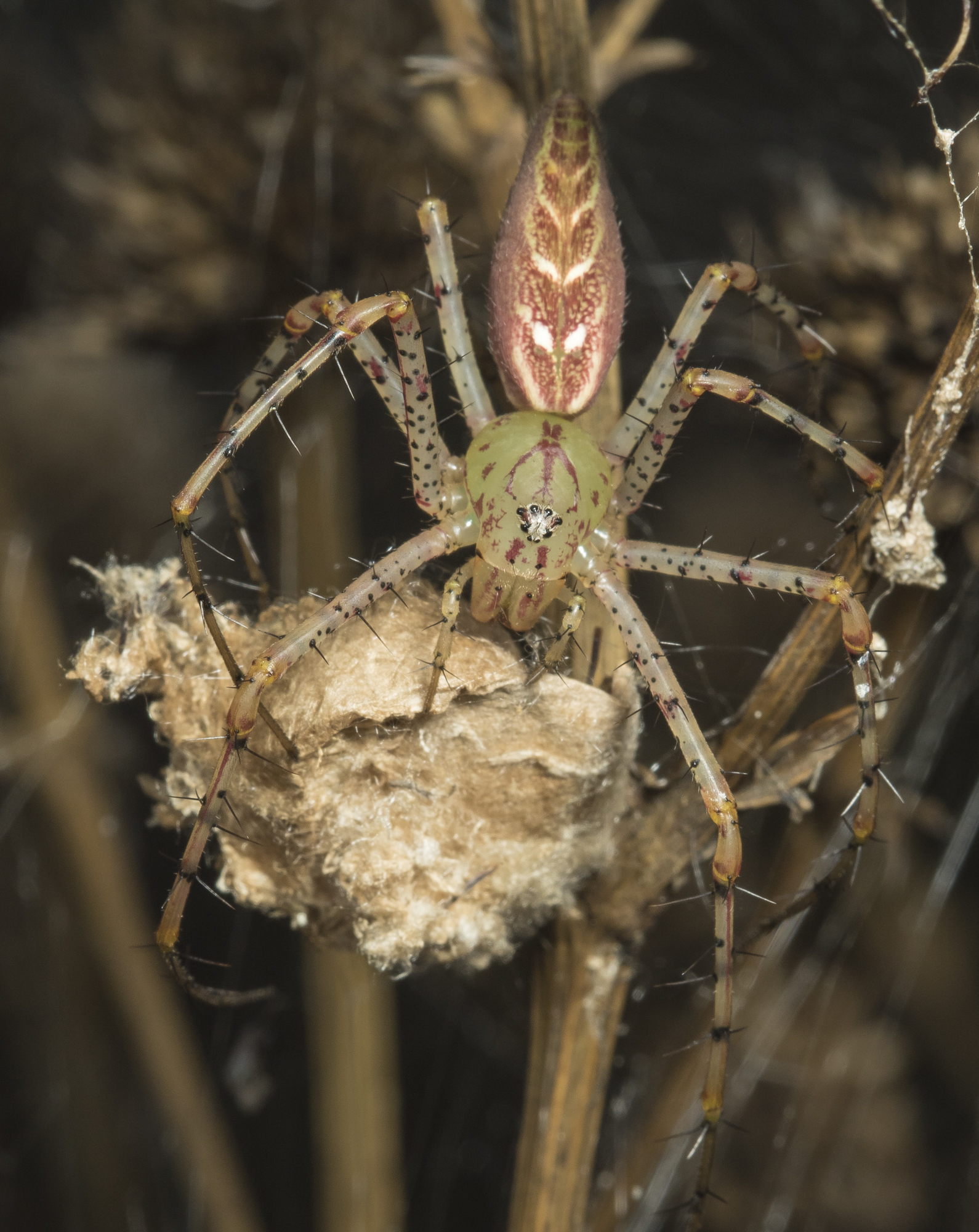
The female holding her egg sac after I retrieved it
After taking photos of both the egg case and the female, I decided to move the egg sac back over to its former position. She stretched out one of her legs as I pushed the sac through the silk lines, and then gingerly pulled the egg sac from my fingertip, and clung to it again as she had for the past several weeks. A couple of days later, I showed some coworkers how she would take it from my hands and we all looked at her through magnifiers, admiring her markings and her motherly instincts. We discussed some aspects of the life history of this species and I wanted to find out more, so I did a web search when I returned to the office. That was when I stumbled across the article title used in the quote at the start of this post. It turns out this species has the unusual ability to squirt venom a distance up to several inches as part of her defensive strategy while guarding her eggs! A good mother, indeed. The venom is reportedly an eye irritant in humans, but it appears as though we were all lucky as we moved in for a closer look (I think my coworkers have forgiven me). I have never noticed this behavior when photographing this species, but I have only been close to a couple at their egg sacs over the years. Of course, now I want to test this next year and see for myself (with a clear piece of plastic rather than my eyes). I also want to see how much longer this female stays in this spot (she has been there almost 2 months at this point!). She will soon succumb to the freezing temperatures, but her young will overwinter, hidden in protected spots in the vegetation, and will repeat this amazing life story next year. Once again, I am amazed what I learn every time I wander outside and take the time to observe and ponder.
Visit the only bald cypress blackwater swamp habitat in Wake County and you will feel like you’ve stepped back through the ages.
~from Robertson Millpond Preserve brochure, Wake County Parks and Recreation
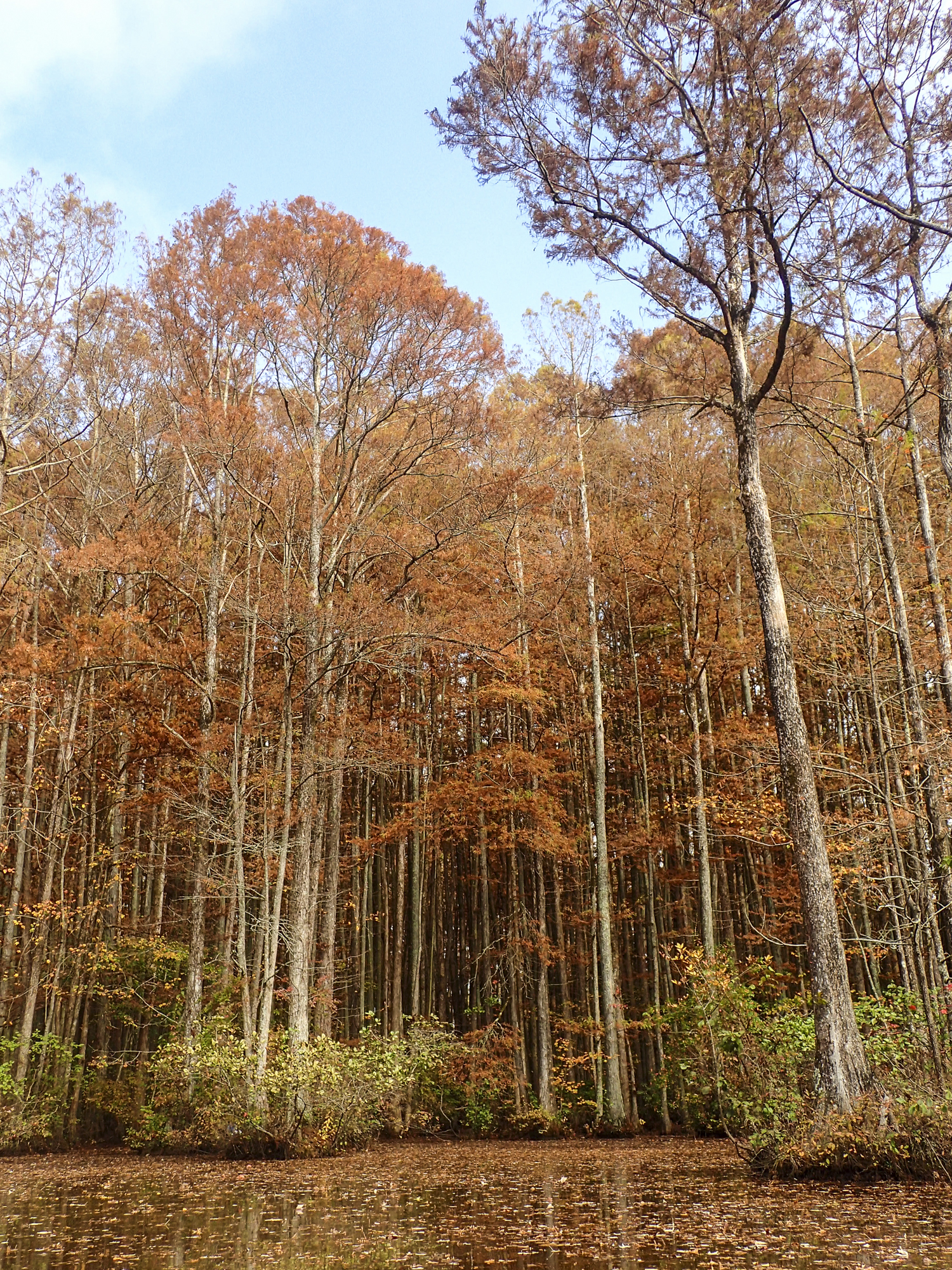
I finally had a weekend “off” and was able to join Melissa and Megan on a Museum educator workshop, Find Your Muse on the Millpond. It was a collaboration with the 2017 Piedmont Poet Laureate, Mimi Herman, with a focus on experiencing nature and writing poetry in a beautiful setting, Robertson Millpond Preserve. The millpond was created in the 1820’s to run a grist mill that stayed in operation for over a hundred years. Though the mill was demolished in the 1970’s. the dam remains intact. It was built on Buffalo Creek, so named for herds of bison that once roamed the area. Wake County purchased the millpond and some surrounding land (85 acres total) in 2013 for a nature preserve due to its unique flora – it is the only bald cypress habitat in Wake County and is more similar in species composition to a Coastal Plain habitat than one in the Piedmont.
Robertson Millpond with fall colors tinting the swamp in reddish brown bald cypress (Taxodium distichum) needles (click photos to enlarge)
If you know us, you know that Melissa is the poet in the family, not me. But I thought this would be an opportunity to take some time and try to write, and, hopefully, get some tips on the craft. And it certainly is a beautiful place, so what’s to lose??
Part of the group of educators on the workshop at the millpond
It was a hearty group of folks that assembled Saturday afternoon, ready to paddle into the swamp on what turned out to be a very brisk day (highs only in the 40’s). The marked paddle trail winds through the cypress trees for a little over a mile, with a nice change of view from sections of narrow, twisting trail, to small openings or “rooms” in the otherwise heavily forested swamp. I had helped Melissa lay out some signage in the swamp for use during the workshop before everyone arrived and was struck by the diversity of plants growing on the small cypress islands.
The swamp consists of numerous cypress islands, most with one or two bald cypress trees and a host of shrubs and herbaceous plants underneath
As our line of kayaks snaked through the swamp, I enjoyed the fact that I was a participant, not in charge. It gave me time to observe and help others as they pondered some natural history mysteries.
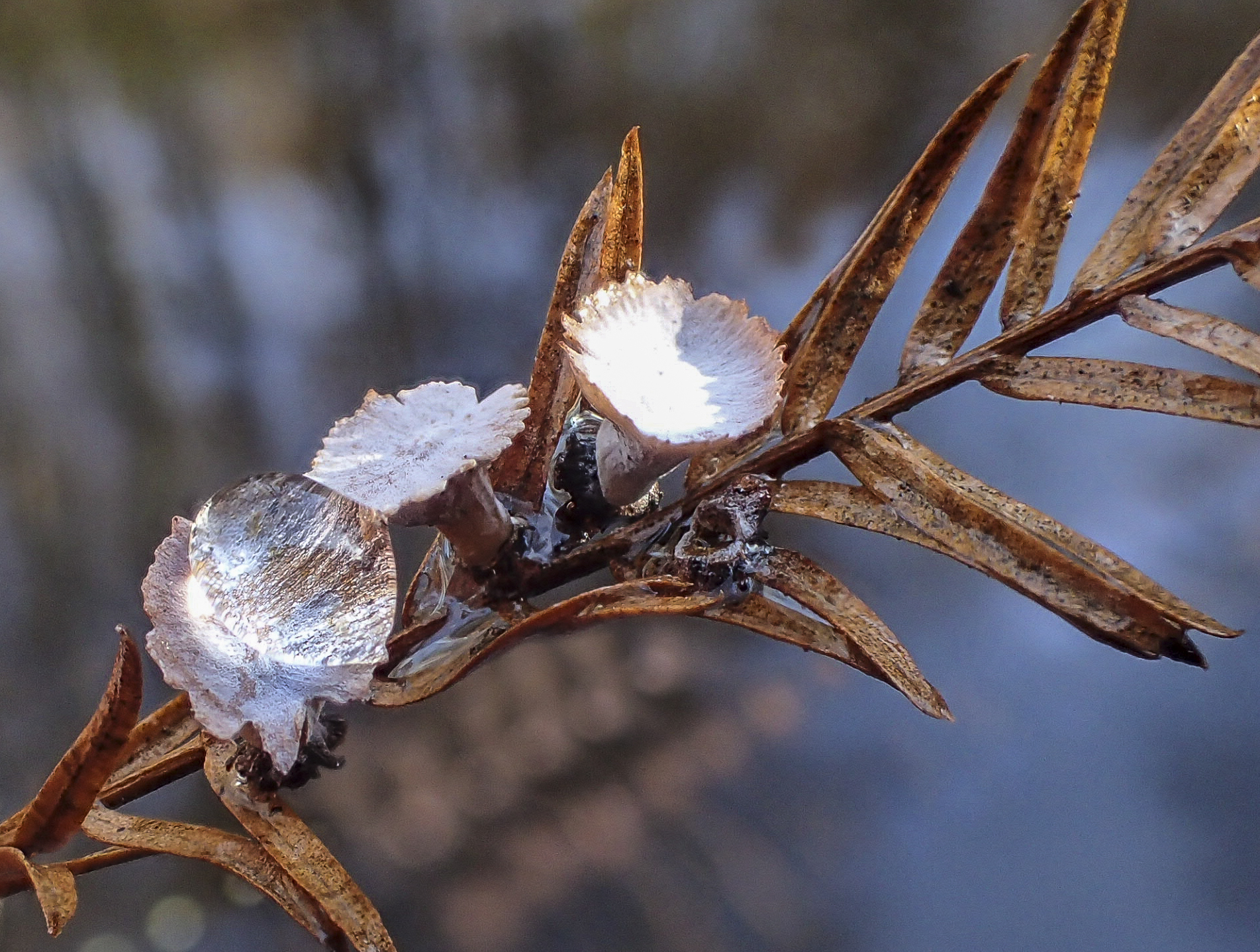
A beautiful egg mass of a wheel bug provided a nice surprise on one alder trunk
We paired up at one point and took some time to observe the communities on several cypress islands. One team found a fascinating mini-sculpture of a wheel bug egg mass.
Cypress flower midge galls
Something else we saw as we examined the tangle of life on the islands were hundreds of tiny whitish, vase-shaped structures scattered among they fallen cypress needles. At first glance, they resemble a tiny fungus, but they are actually caused by the larvae of a gall midge fly classified as Taxodiomyia cupressi. Galls are formed in response to chemicals injected by the adults at the time of egg laying, or produced by the developing larvae and are characteristic shapes on specific areas of certain plants. Each type of gall insect creates a unique structure on a particular species it favors. It would be like living in our refrigerator – a nice, relatively safe home, with plenty to eat.
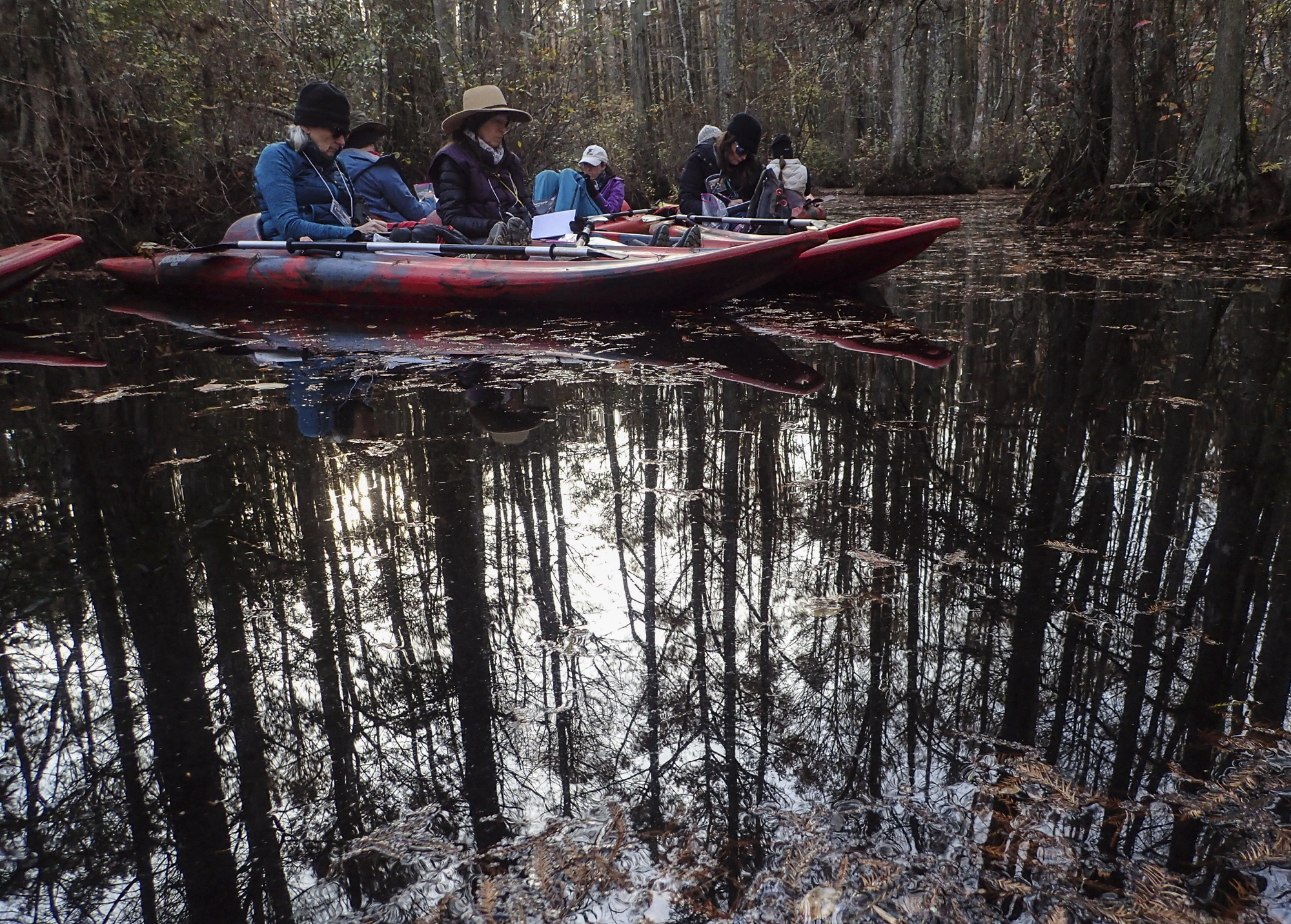
Writing our poems with the darkening sky reflected in the blackwater swamp of Robertson Millpond Preserve
After paddling, stopping, observing, and writing for a few hours, I finally came up with a poem. Mimi instructs her students to not have any disclaimers about your poetry (this isn’t very good, I am not that pleased with it, I’m not really a poet, etc.), so I’ll leave all that off (sort of)…here goes:
Cypress Cities
Paddling on this glassy highway, through a city of islands
Taxodium towers, gray-trunked skyscrapers
Sentinels, watching over their tangle of tenants
Crowded storefronts with strange names, hawking their winter wares.
Dodder has braided bracelets.
Alder, catkins and cones.
Titi, with patches of red and green.
And dried flower bouquets from Itea.
Beneath each tower, a rust-colored carpet, soft and spongy,
A welcome mat and refuge for weary drifters
Traveling with me on this highway of wind and water, all seeking sanctuary
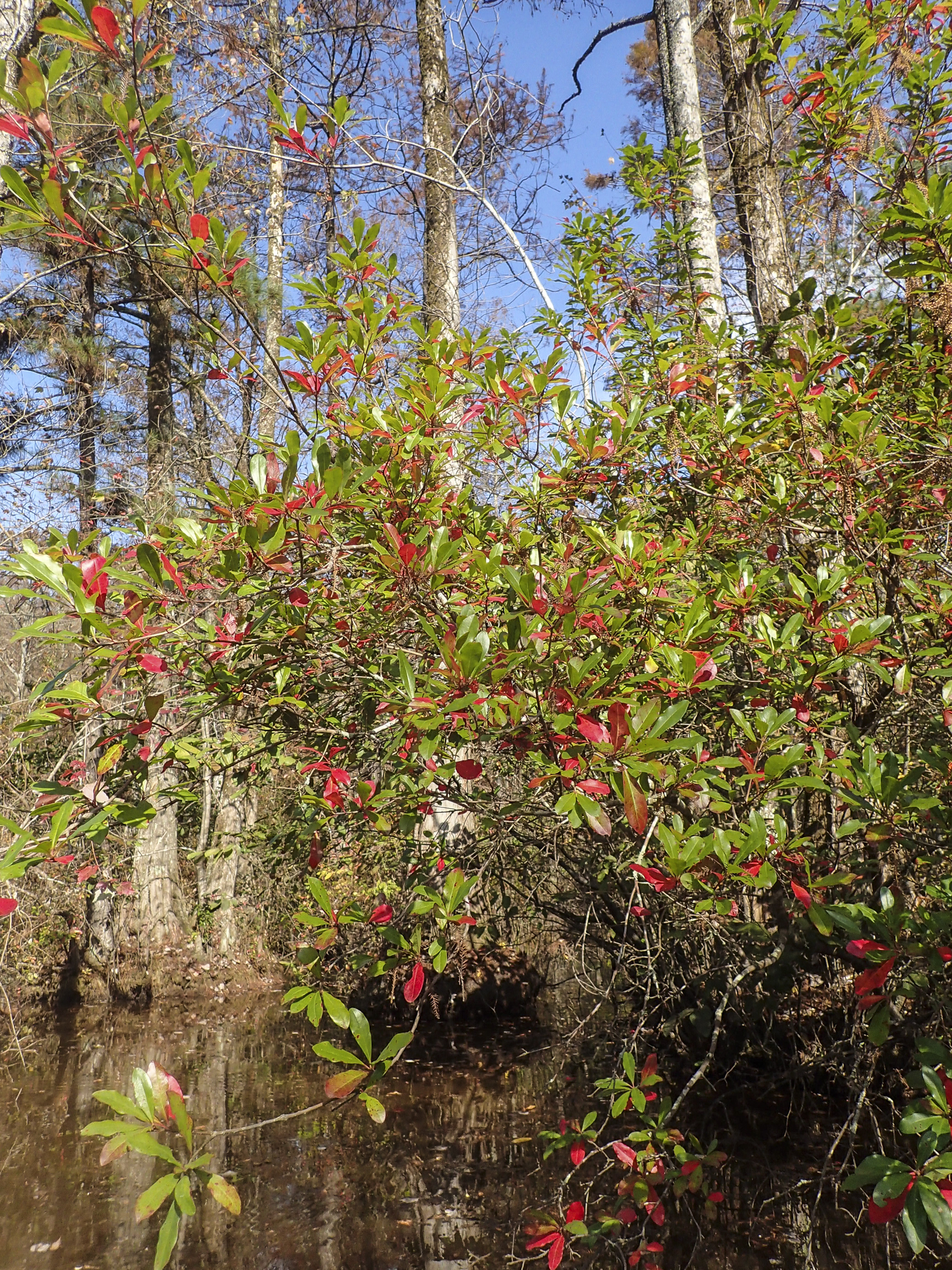
Titi, Cyrilla racemiflora, in brilliant fall colors
The difference between utility and utility plus beauty is the difference between telephone wires and the spider web.
~Edwin Way Teale
Marbled orbweaver hanging in her web (click photos to enlarge)
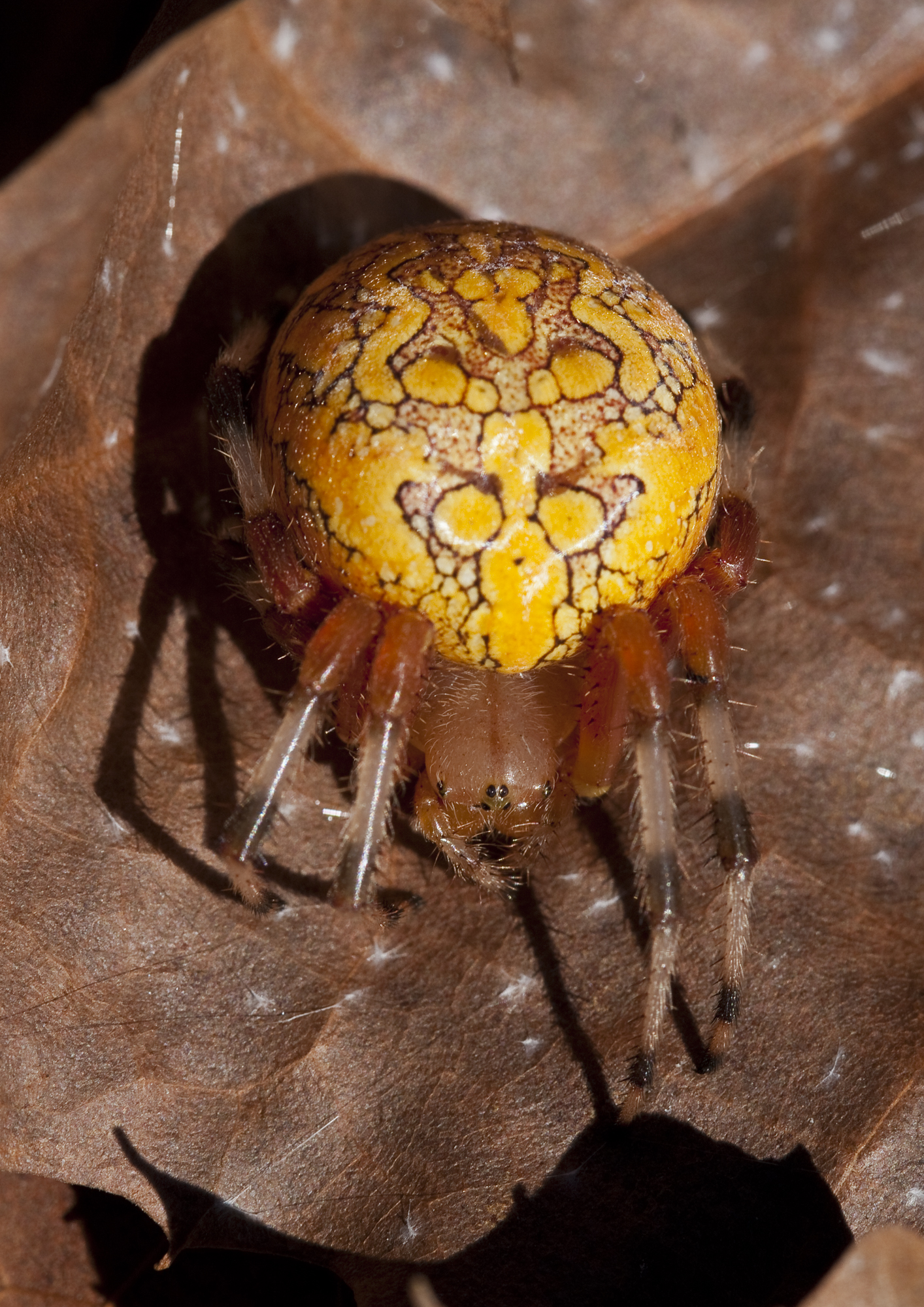
Every year about this time I run into (sometimes literally) one of my favorite spiders, the striking Marbled Orbweaver, Araneus marmoreus. This widespread beauty is usually seen in late summer and fall, hanging out in her large circular web, or, as is often the case, hiding nearby.
Hiding in her rolled leaf retreat
This species generally has a hiding place just off to the side of her web, usually in a curled leaf. She keeps up with the goings-on in her web by means of a connecting strand of silk that acts as an alarm when something hits her silken trap. When an insect is caught, she will run out and engage it, wrapping it in silk and injecting venom which will subdue the prey and set the stage for her dining pleasure.
You can see why they are called the Halloween spider
Their dorsal view is spectacular, usually with a bright yellow background with some interesting ghoulish dark patterning. They can vary in color but I have read that they tend to turn darker with age and often appear more orange than yellow just in time for our pumpkin-spiced holiday. The picture above is from the archives of one I photographed several years ago in early November in Great Smoky Mountains National Park.
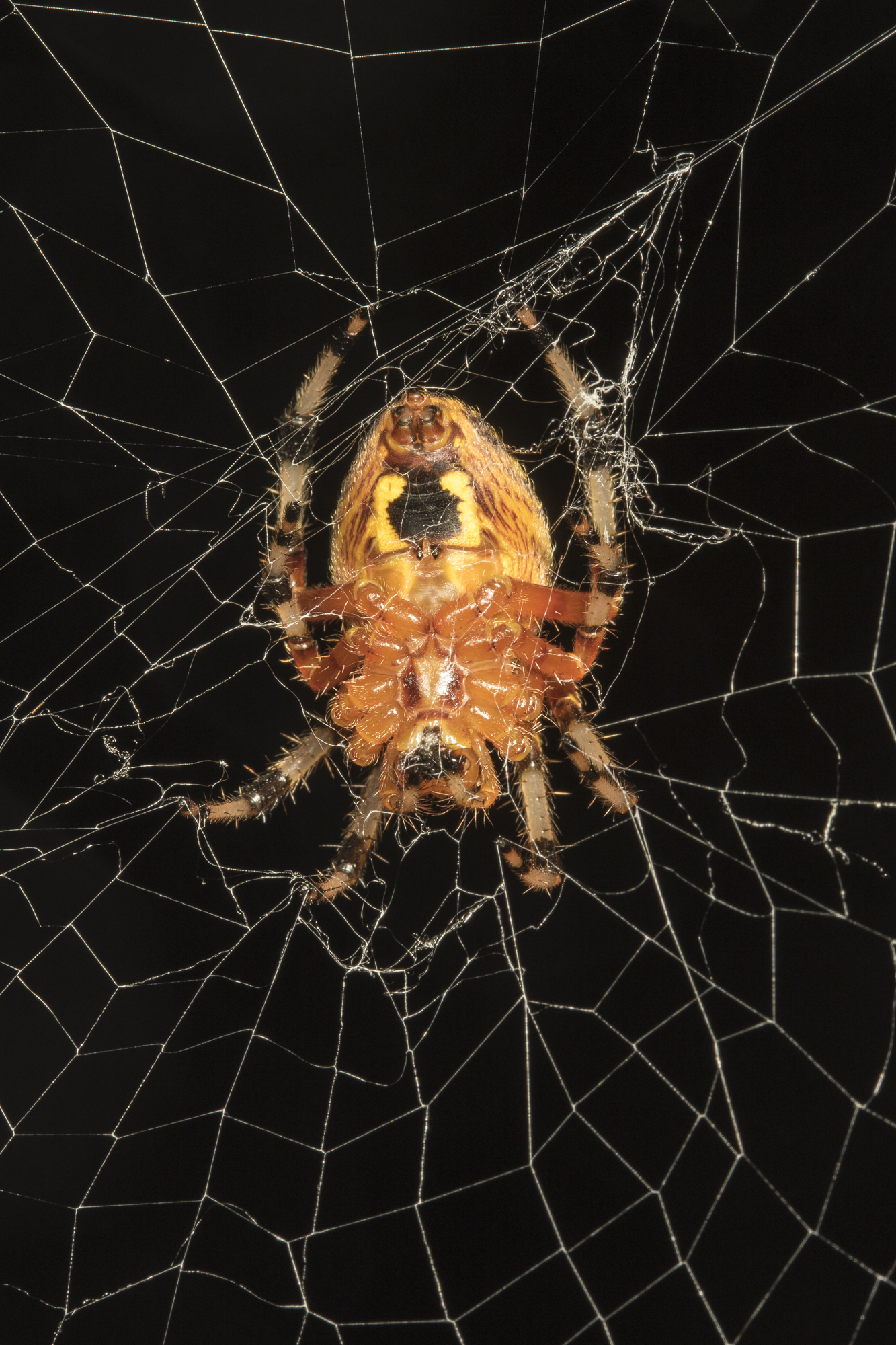
A ventral view
Underneath, they are less striking, but colorful nonetheless. You can also appreciate the black bands on the legs a bit better when not distracted by the bright colors of their top side.
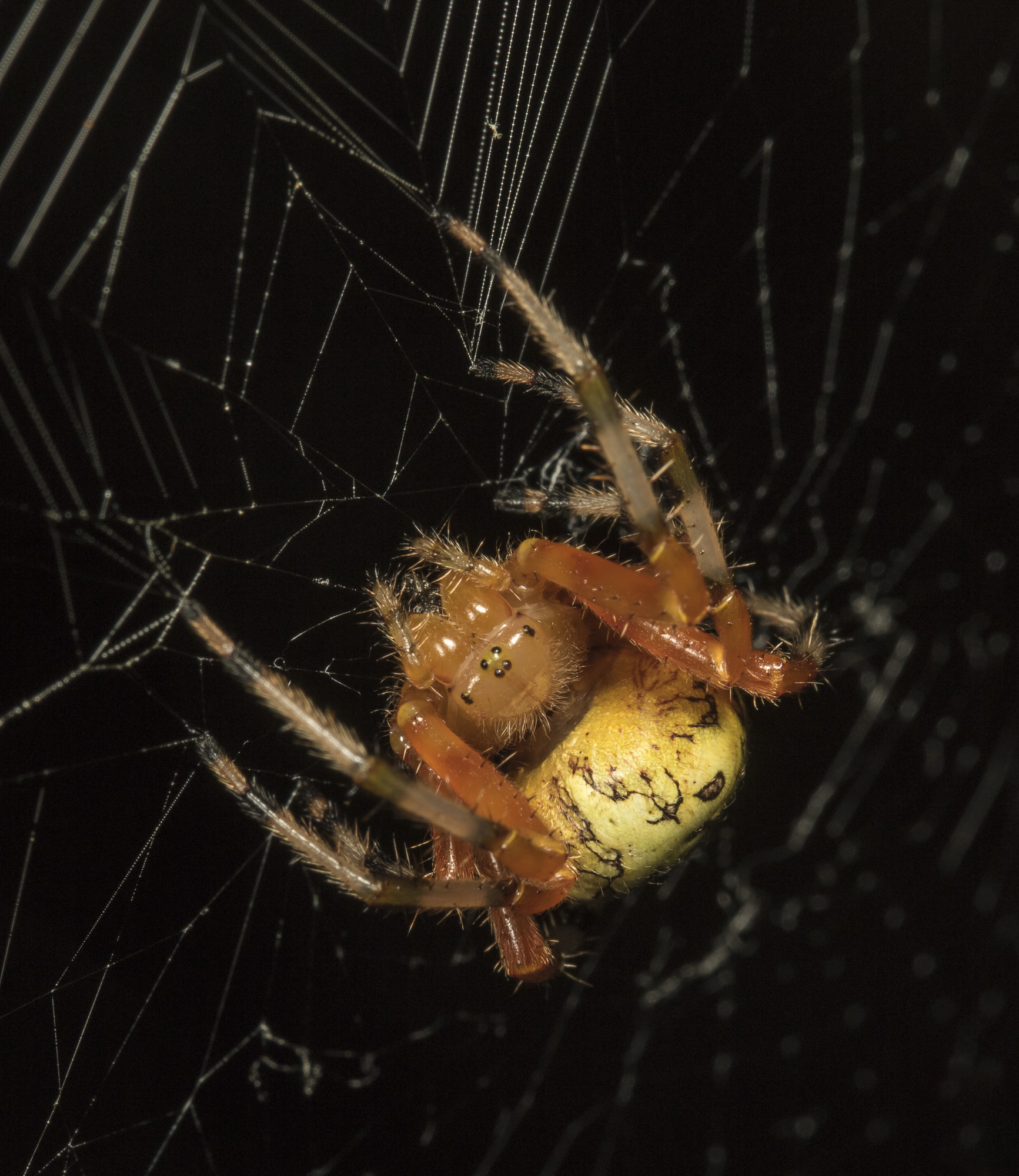
Side view of a female Marbled Orbweaver in her web
I stumbled into this particular web this past weekend while looking for seeds for a program at work. Luckily, I only brushed against the web before realizing my mistake and was able to pull back without ruining her day’s work. As with many orbweavers, this species often makes a new web every evening.
Here’s looking at you…
In spite of their association with spooky themes like this special holiday, I find these spiders particularly beautiful and a welcome addition to our woods.
Last weekend was one filled chores around the house. It seems many things have gone undone this fall with our hectic schedules. In putting away various caterpillar cages, floral tubes, plastic bags, and other gear associated with our many caterpillar programs last month, Melissa decided to look in the soil-filled plastic box we dubbed the pupation chamber. Every year at BugFest, we end up with several of our program specimens (often the stars of the show) deciding it is time to begin their long winter “sleep” where they form a pupa. Caterpillars tend to enter a “crawl-about” phase for several hours when they get ready to pupate and, if you don’t contain them, they will wander off their host plant (not a good thing if there are thousands of human feet attending an event). Most of our common species of butterflies and moths spend the winter in this life stage and usually emerge sometime next spring or summer, depending on the species.
Contents of our pupation chamber from BugFest (click photos to enlarge)
We were pleasantly surprised at the number and variety of pupae in the soil-filled box. Before looking more closely at these pupae, a quick review of the terminology associated with the pupae of butterflies and moths. A pupa (Latin for doll) is a life stage of some insects. It is found only in insects that undergo complete metamorphosis – those that go from egg to larva to pupa to adult. The pupa is a non-feeding, usually stationary stage (although many pupae will move or twitch when disturbed). During pupation the adult structures of the insect are formed while the larval structures are broken down. While use of the word pupa is correct for any insect with this life stage, there are some special terms often used for the pupal stages of different groups of butterflies and moths.
Variegated fritillary chrysalis surrounded by loose silk spun by the caterpillar
A chrysalis is the “naked” pupal stage of butterflies. The word is derived from the Greek word, chrysos, for gold, and refers to the metallic gold coloration found in some types of chrysalises. The chrysalises of most butterfly species are attached to a substrate by a single silk pad.
Spicebush swallowtail butterfly chrysalis
Members of a few butterfly families use two attachment points for their pupae – the silk pad at the posterior end, and a silken girdle that suspends the chrysalis off of a substrate (looking much like a telephone repairman’s safety harness).
Luna moth cocoon
A cocoon is a pupa wrapped in an outer casing of silk (and often other materials) that acts as a protective covering. Many of the giant silk moths, such as a luna moth, incorporate leaves into their cocoon. The last instar of the caterpillar wraps some leaves around itself using silk, and then molts one last time on the inside of this chamber to form the pupa.
Luna moth cocoon with outer covering gently cut open to reveal pupa inside and silk fibers
If you look inside a cocoon, you will see the familiar brown or reddish-brown cylinder-shape of a pupa (if done gently, the adult moth can still successfully emerge from an opened cocoon). The silk from a giant silk moth cocoon can be unraveled to harvest silk fibers on a very small scale (commercial silk production uses the cocoons of the domesticated mulberry silkworm moth). If you are an insect that creates a cocoon, you need to have a way to escape from it as an adult. Most species do this by either cutting their way out or by secreting enzymes that soften the cocoon. Some cocoons are constructed with one-way escape holes or with lines of weakness that allow easier escape from the inside.
Pupa of a hickory horned devil caterpillar (royal walnut moth)
The classic pupa is “naked” and is formed by a moth caterpillar in an underground chamber or some partially hidden location (under a log or rock, in loose soil, etc.). They are often encountered while digging in your garden and resemble little cigar butts. In a nod to this month’s unique holiday of all things scary, moth pupae also remind me of miniature mummies. The size of the pupa and associated structures can help you identify these mystery creatures. Large pupae (greater than 1.5 inches) usually belong to either the sphinx moth family or are one of the giant silk moths. The largest (about 2+ inches) we encounter are those of the fantastical hickory horned devil. The last instar caterpillar burrows into the soil and forms a crusty chamber around itself before pupating. The pupa is shiny dark brown and has a couple of dark circles on the back of its head that give it a Darth Vader appearance.
Imperial moth pupa
This pupa had the characteristic double-tipped projection at the end of the abdomen indicating it is an imperial moth.
Mystery pupa
The identity of one of the pupae remains a mystery as it is tough to remember which species were added to the chamber on a busy day of programming.
Tobacco hornworm pupa
Sphinx moth pupae generally have a distinctive “handle” on their heads.
The head region of a tobacco hornworm pupa
This fishhook-looking apparatus is actually a sheath that contains the moth’s developing proboscis (tongue). You can also clearly see the developing eyes and antennae of the adult moth in the pupal covering.
A different sphinx moth pupa
We found another sphinx moth pupa in the chamber that differed from the tobacco hornworm in that the proboscis sheath did not arch out away from the moth body but rather was laid flat against it. We had many species of hornworms this year, so we will just have to wait and see which one emerges.
Unidentified fly puparia
Our smallest discovery was one we weren’t very happy about – some fly puparia. These are probably a species of tachinid fly that are parsitoids on the larvae or pupae of butterflies and moths. We placed these is a separate container to see what emerges. Observing the life cycles of our wild neighbors always leads to additional stories and connections that continue to amaze and delight. Can’t wait to see what happens next spring and summer.
You are an ocean of knowledge hidden in a dew drop.
~Rumi
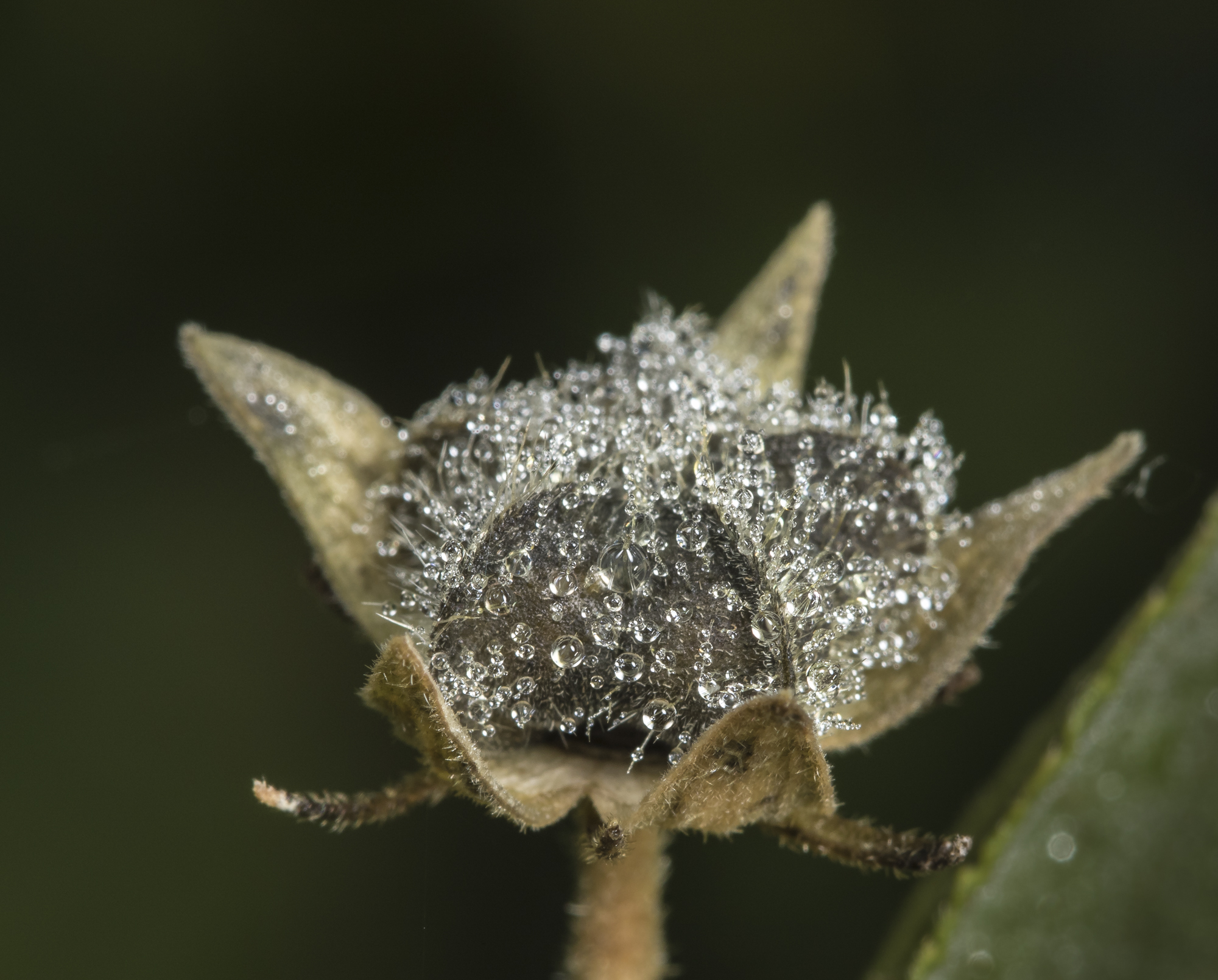
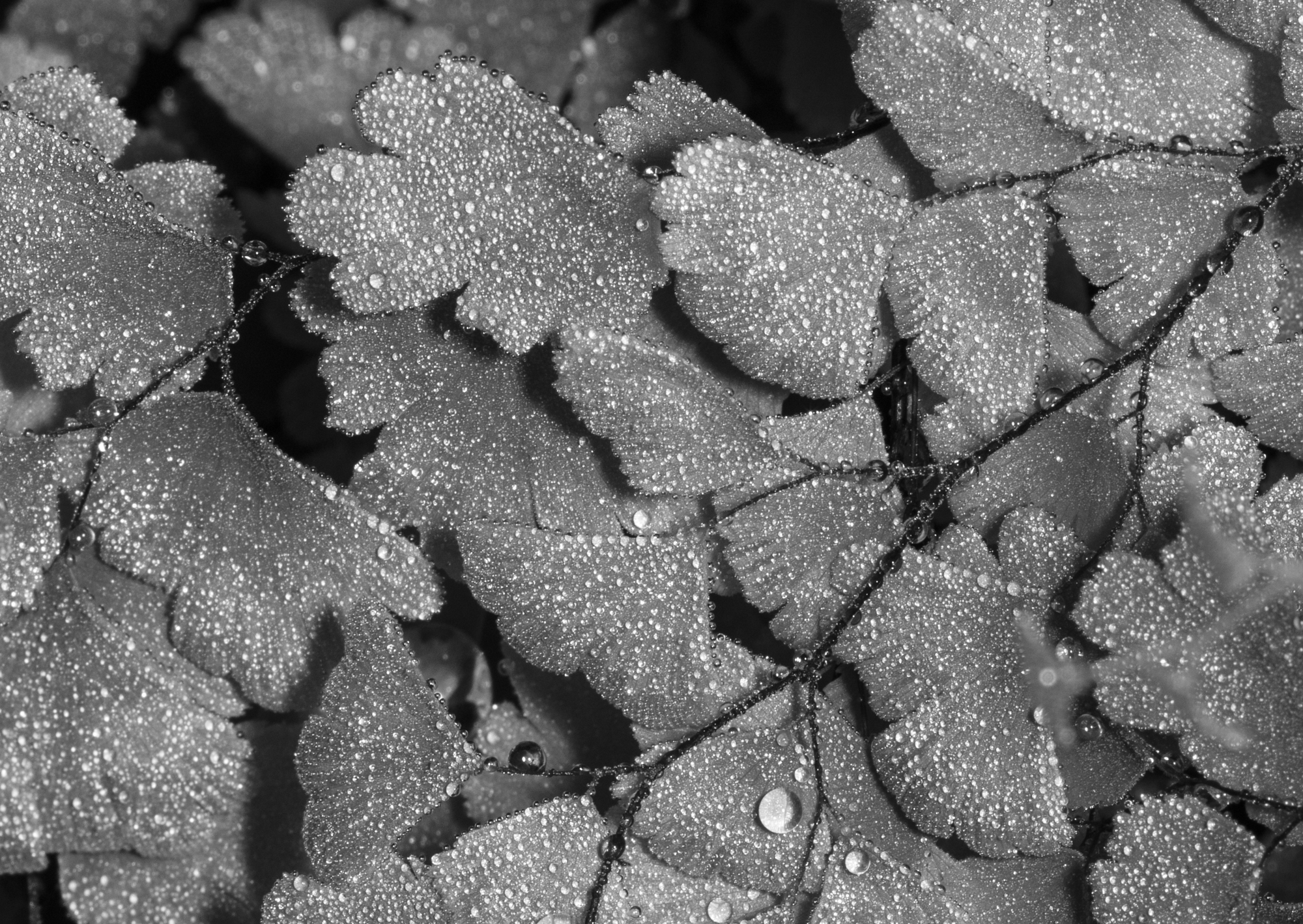
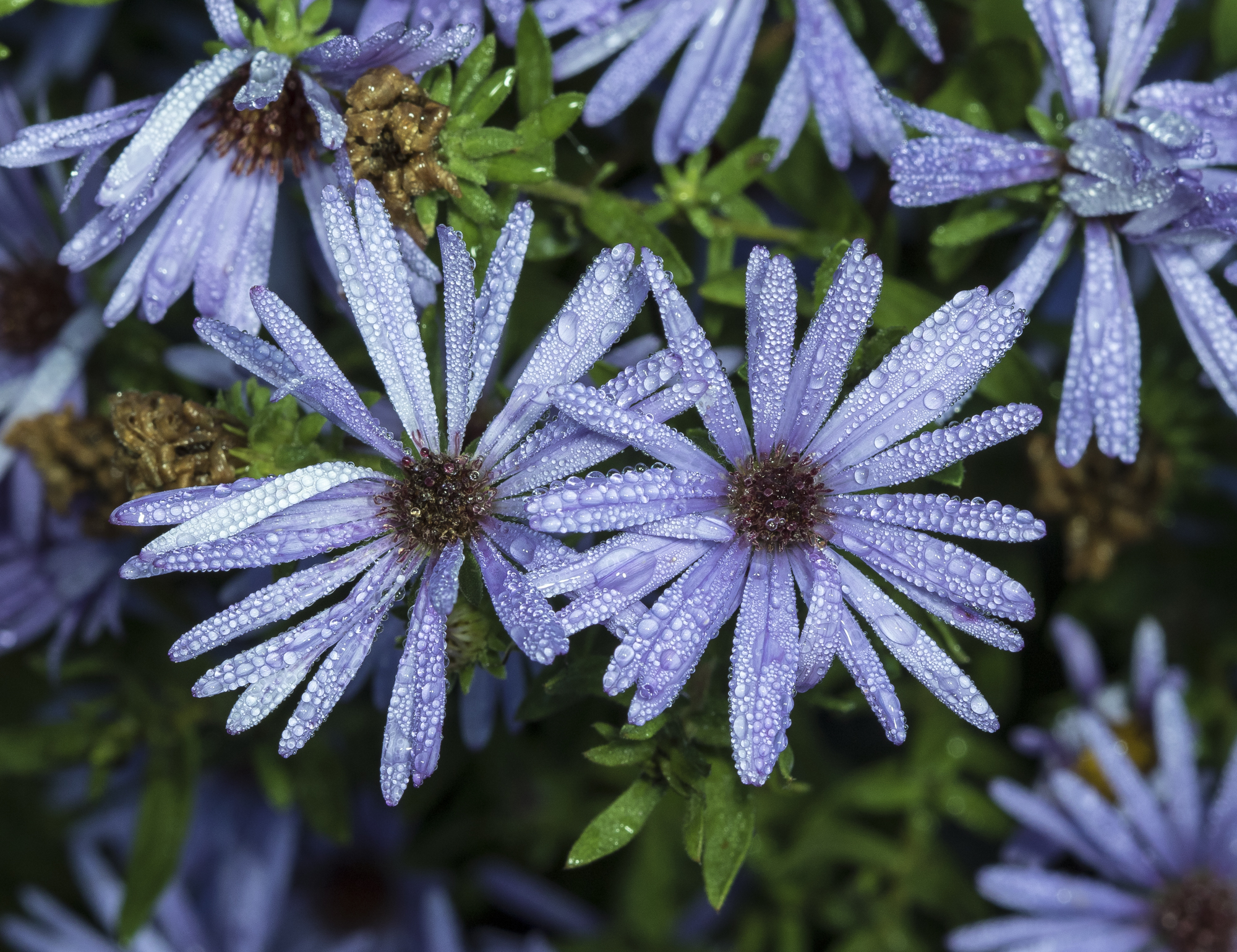
The chilly nights this time of year lead to dewy mornings, and the world is decorated for a time each day with droplets of glass pearls. One morning last week I took a short stroll through the gardens at work searching for jewels. Here are a few of my finds…
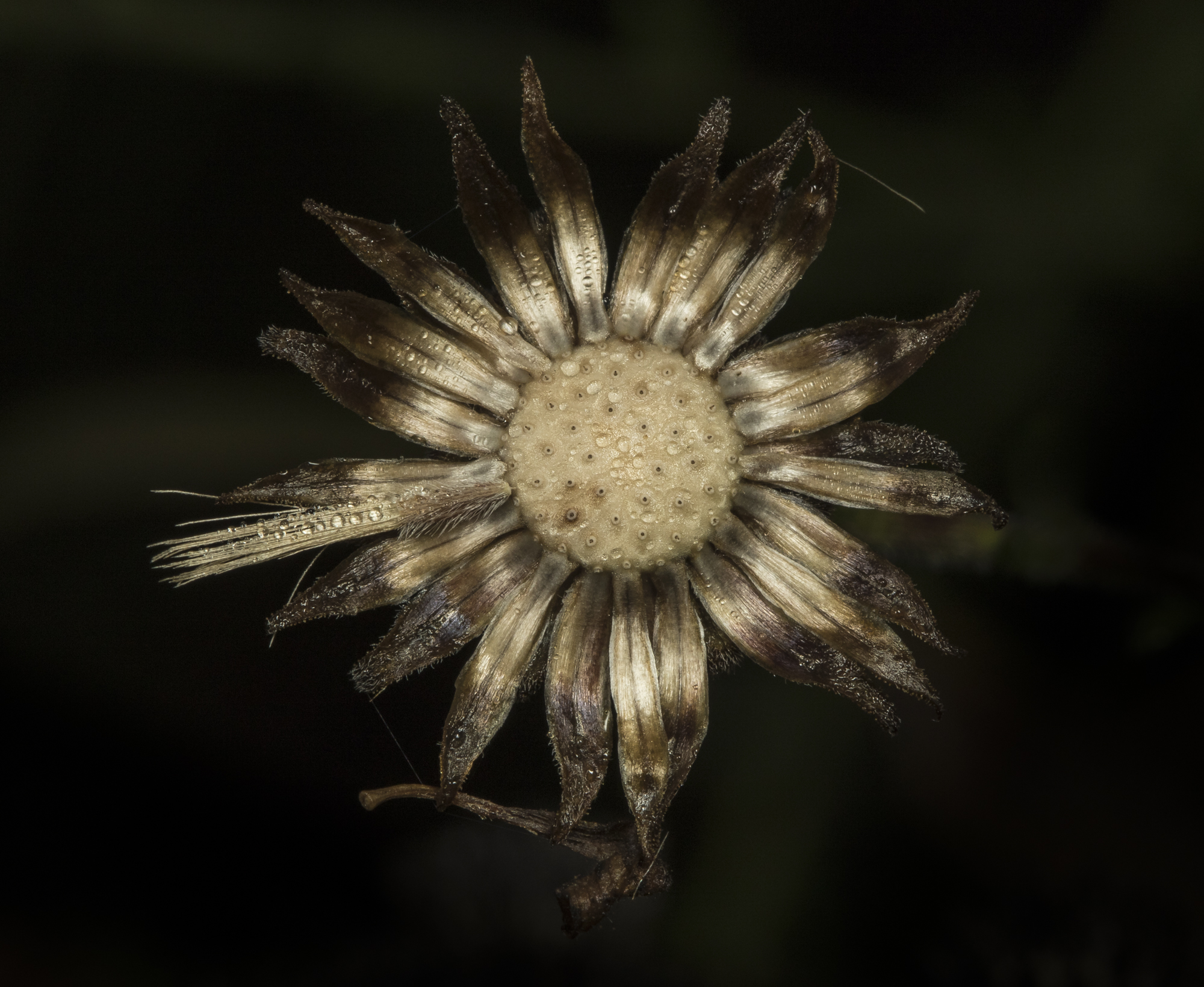
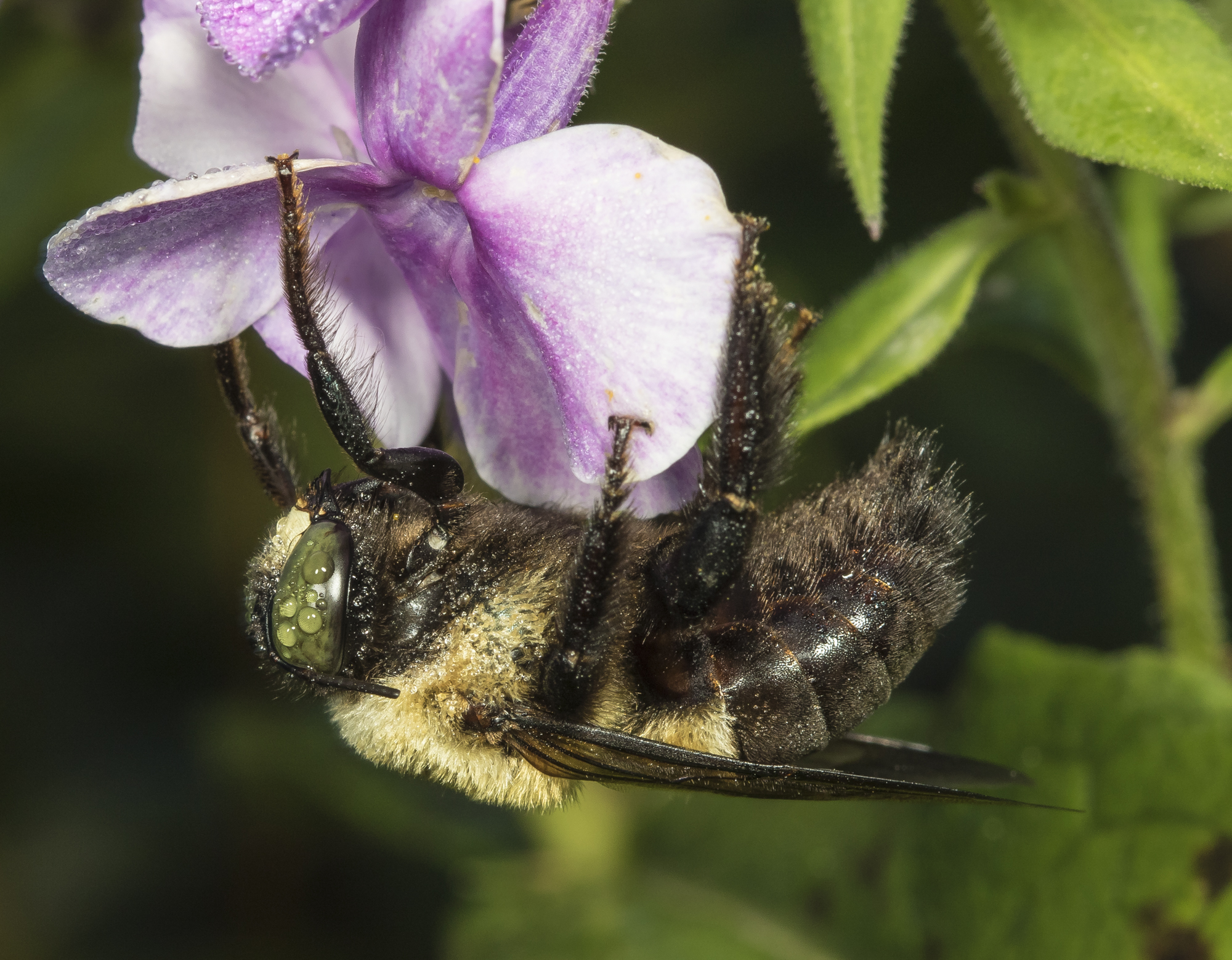
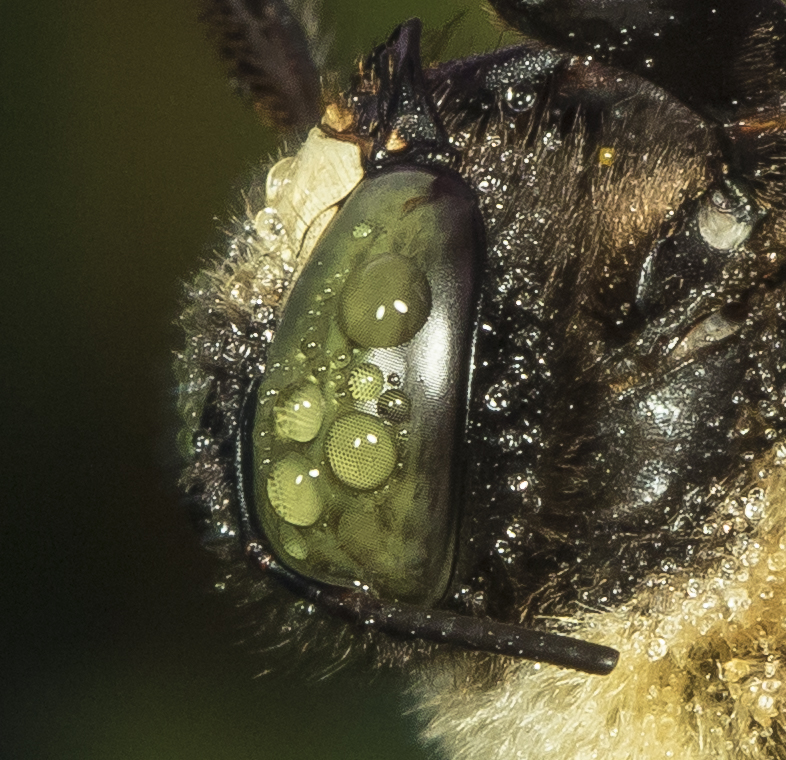
Seashore mallow seed pod (click photos to enlarge)Maidenhair fernsWildflower seed headAstersFemale green lynx spider with recently hatched youngWildflower seed headMale carpenter bee hanging onto phlox flowerCloseup of carpenter bee head covered in dew
Forget your trouble Try to be Just like the cheerful chickadee And whistle while you work
~Alternative lyrics to the Disney song from Snow White and the Seven Dwarfs
A brief post today to share a remarkable scientific study on an unusual caterpillar behavior. In an earlier blog, I mentioned the unique sound-producing capabilities of the beautiful walnut sphinx caterpillar. What I had read is that the sound was produced to startle would-be predators. New research has refined this explanation. As reported in The Scientist (check it out to hear the caterpillar), a new study has shown the loud sound, created by the forcible expulsion of air from specialized holes along the side of the larva, is now believed to mimic the alarm call of birds. Some birds, such as black-capped chickadees, make special vocalizations when they see a potential predator. Other birds react by diving for cover. When this caterpillar is threatened, it emits a similar sound that can fool a hungry bird into thinking there is danger nearby, thus breaking off the birds’ attack on the larva. Amazing!
The mating of the leopard slug is one of the most sensuous film sequences you’ll ever see in your life.
~ Sir David Attenborough
The bizarre happenings just outside our door continue to astonish me. As is often the case, this discovery came while I was out on a completely different mission. I had several programs in a row last month on one of my favorite topics, caterpillars, and was out hunting at one of the best times for spotting these masters of camouflage – after dark. I was sweeping my UV flashlight back and forth among the tree saplings in the yard, hoping to catch the glow of a sphinx moth larva or one of the so-called slug caterpillars, when I saw something strange on a tree trunk. Not a slug caterpillar, but verbally close – two leopard slugs caught in the act of their bizarre mating ritual.
Early stages of leopard slug sex (click photos to enlarge)
First, a little background on these slimy stars. Leopard slugs, Limax maximus, have been accidentally introduced into many parts of the world from their native Europe. They are large (up to 8 inches) slugs which have a small rudimentary shell hidden under the skin on their back. They are loathed by most homeowners since they may feast on garden vegetables, although much of their diet is decaying organic material and fungi. They are also carnivores, racing after and devouring other slugs at the break-neck speed of up to 6 inches per minute. You will also never forget them if you are unlucky enough to step outside one evening without shoes and suddenly feel a slimy blob underfoot. In addition to locomotion and protection, that slime serves another function – communicating readiness to mate. And this is what this species is most famous for – its very unusual reproductive habits. Leopard slugs are hermaphrodites – they possess both male and female reproductive organs. They can self-fertilize, but what’s the fun in that?
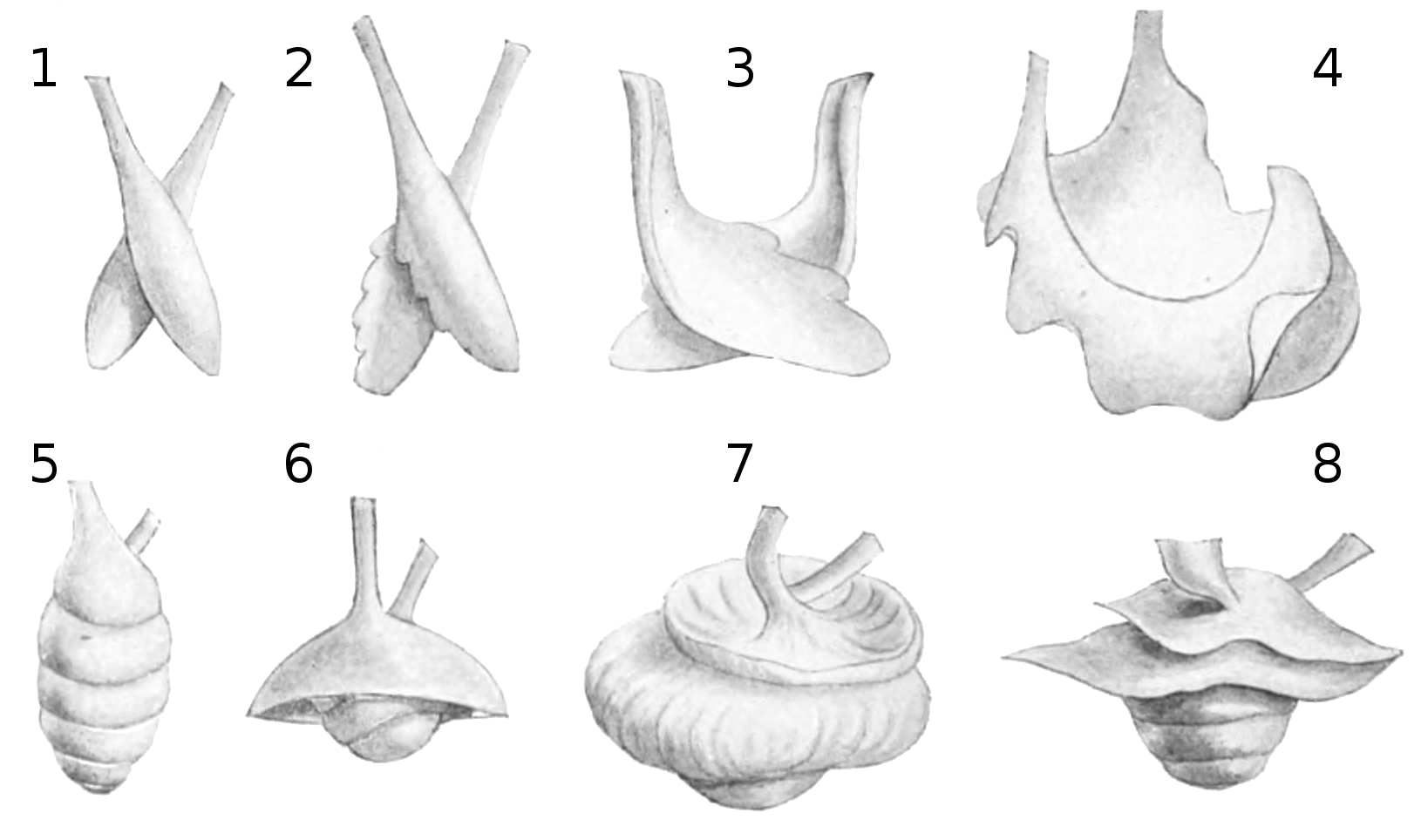
Long before I saw them that evening, these two slugs were already engaged in their unorthodox breeding sequence. When the time is right (it takes two years for this species to reach sexual maturity), one slug leaves a chemical trail in its slime signaling its readiness. Another slug may pick up that trail, following the first. There is then a long bout of slug foreplay involving circling one another, nibbling, and whispering sweet nothings. At some point they both climb a nearby vertical surface and entwine their bodies, dropping down on a mucus string they create just for this strange mating dance. They slowly rotate and extend their bright blue male organs out the right side of their heads (from a hole called a gonopore, just behind the tentacles). This is when I first encountered them. The photo above shows their male organs being extruded.
Their bodies and their male organs intertwine as they mate
The blue organs entwine and change shape into a translucent cerulean chandelier over the next hour or so and exchange sperm. There is even a scientific treatise (Taylor, J.W., 1894, Monograph of the land and freshwater Mollusca of the British Isles) that details how these blue extensions change shape through the mating sequence…
I found myself transfixed by this strange behavior, and sat out there watching it for over an hour (I know what you’re thinking…). My only regret was that I had left my camera at work and so was only able to record this otherworldly occasion with my iPhone.
Changing shape as they exchange spermNearing the end of their romantic encounter (you can see the mucus string in this photo)
When they finished, they slowly became untangled, one slug crawling off on the tree trunk (one often just drops to the ground), and the other slowly climbed the mucus love rope, consuming it as it went. Both presumably wandered off to lay a couple of hundred gelatinous eggs. I don’t know about them, but I was exhausted after all that. If you are up to it, you can google David Attenborough Leopard Slug Mating and find several YouTube clips online from his BBC series, Life in the Undergrowth. Hearing Sir David explain it all adds a certain elegance, lacking in my prose, to this most unusual backyard event.




























 Roads End Naturalist