Welcome to our new website! We hope you like it. Please let us know if you notice something missing or that needs a correction. ~Mike & Melissa

  • Eye Shadow

    They are of a most glorious Green, and very tame. There are several other Colours of these Lizards; but none so beautiful as the green ones are.

    ~John Lawson, in A New Voyage to Carolina, 1709

    I went for a walk in the yard earlier this week, looking for anything that might be out and about in this wet and warm weather. There are still a lot of insects and spiders that are hanging on as we have not had a truly killing frost as yet. Brushing up against some hickory saplings growing inside the deer fence (there are none outside the fence), I caught a slight movement.

    Carolina Anole in rain whole body
    Green Anole on a misty day in autumn (click photos to enlarge)

    It was a Green Anole, Anolis carolinensis. Well, in name it is green, but that day, it was brown. As you probably are aware, the Green Anole has the ability to completely change colors in just a few minutes. You may hear that it is so they can match their green or brown background. And many people call them “chameleons”. But, they are not a true chameleon and are more closely related to iguanas. And, their color changing behavior is much more complex than simple camouflage.

    Green anole
    Green Anoles can vary in color from brown to green

    I found an older photo of an anole from the summer months and posted it above to show how bright green they can appear.

    Carolina Anole in rain 1
    The anole was mostly brown with some lighter colors around the eyes

    The one this week was almost all brown, except for the scales around its eyes. It was a misty morning with temperatures in the 60’s, but the dampness made it seem cooler, so I was a little surprised to see one out. Even so, this one was moving slowly.

    Carolina Anole in rain
    Water droplets on the back of an anole

    As it climbed over the top of some yellow leaves, I could see the tiny jewel-like water droplets beaded up on its back.

    Carolina Anole in rain head shot

    It moved to another leaf, which bent down with the weight of the tiny dinosaur, before the lizard popped its head back up to make sure I wasn’t getting any closer. That’s when the eye shadow really struck me.

    Carolina Anole in rain head shot from side close up

    Though subtle, the blues, greens, and yellows stood out against the soft brown of the other scales on the head.

    Carolina Anole in rain head shot with yellow leaves close up
    As I watched, the colors around the eye slowly faded

    The photo above was taken about 6 minutes after the previous one. I have observed in the past a similar color change in the entire body of a Green Anole. This rapid color change has fascinated the public and scientists for a long time. Perhaps, because of this interest, and the relative ease of keeping this species in the lab, physiological color change has apparently been studied more thoroughly in Anolis carolinensis than in any other vertebrate. So, how do they do it, and why? That turns out to be a bit complicated, at least as far as I can comprehend.

    Carolina Anole in rain head shot looking straight on
    Color change is complicated

    After reading several online resources, the best I can come up with is that the color change arises from light reflecting through the epidermis onto three layers of pigmented cells, called chromatophores, with each layer having a different name and being responsible for different color variations. From nearest the skin surface moving downward, the layers are one for blue (which technically has stacks of platelets that reflect blue-green light, instead of blue pigments), one for yellow (yellow and blue equals green), and one for brown. The lizards are able to change color in response to many factors including temperature, stress, and various other behavioral (especially social interactions) and environmental factors. Cooler temperatures, or more stressful conditions, lead to brown colors whereas warm temperatures and the lack of stress leads to the lizard’s being green. If I understand it correctly, this rapid color change is controlled by hormones released by the pituitary gland. When stressed, production of a hormone moves brown pigment granules to the surface, obscuring the blues and yellows beneath, and changing the overall color from green to brown.

    I attempted to gather this information from a variety of online resources, but invariably got bogged down in scientific nomenclature like the following sentence: In this species, dermal chromatophores are known to be free of sympathetic innervation, leaving body color subject only to the influence of circulating chromo-active hormones: epinephrine (EPI), norepinephrine (NE) and melanotropin (MSH). I’m sure that is meaningful if you study such things, but I was getting lost. Then, I discovered an amazingly comprehensive community blog entitled, Anole Annals, written and edited by scientists who study Anolis lizards. They did a good job of synthesizing information in a more palatable form. I am constantly amazed (and impressed) by the availability of information and by the dedication and passion of those responsible for researching it and posting it on the web. I did not know until reading this site that the Carolina Anole is the first reptile to have had its genome sequenced. It seems that this species is one of the most studied reptiles in the world in a wide range of disciplines including physiology, behavior, ecology, and other subjects. Many of the studies have implications for human health and behavior.. There is even a citizen scientist page on that site so you can contribute your personal anole observations.

    Carolina Anole in rain head shot with yellow leaves eyes closed
    My anole finally tires of the photo session

    No wonder my little anole started to doze off after several minutes of our photo session. She and her kind have been subjected to scientific research and public fascination for a very long time. She may need the rest. And, it seems like there is still a lot of research to be done.

    I’ve spent my entire professional career studying anoles and have discovered that the more I learn about anoles, the more I realize I don’t know.

    ~Jonathan Losos, Anole Annals

    By the way, if you didn’t do it as you read through, you really should go back and click on a few of the photos, especially the close ups of the head, in order to really appreciate the subtle colors. And check out that ear opening while you are at it.

  • What, There are More of Them?

    There is no story that can’t be improved by adding zombies.

    ~Kelley Armstrong

    Walking down the driveway this morning I noticed something on a twig that was propped up against a tree trunk. When I leaned in for a closer look, I said to myself, “you gotta be kidding me, another one?”

    Cordceps fungus on unknown insect
    Cordyceps fungus on unknown insect (click photos to enlarge)

    It looked like another fungus-stricken cricket similar to the one I described in yesterday’s post. But, the more I looked, I realized I couldn’t quite tell exactly what was under those fungal stalks. As I was trying to figure this out, I detected something else about two feet away on the stem of a sapling.

    Carolina Leaf Roller with fungus
    Another Carolina Leaf-roller infected by the Zombie Fungus

    This time there was no doubt…another cricket infected by the Zombie Fungus. Unlike the one yesterday, this one is obviously a female because of the presence of an ovipositor (sword-like structure for laying eggs) on the rear. I suppose the first thing I saw on the nearby twig is also a fungus-infected cricket, just one that has deteriorated to a greater degree. What’s going on in this yard? A Zombie Apocalypse? A Zombie Cricket Apocalypse? That doesn’t sound right. Since I am unschooled in the world of zombie vocabulary, I went inside and looked up what you call a group of them. Who knew there were so many resources on the internet for such things? One reference laid it out in great detail. If only a small area, like a building, or a graveyard, has a group of zombies, it is called an infestation. If a few acres are involved, it is a horde. If an entire community has them, it is called a plague. If an entire country or continent has zombies, it would be called a pandemic. And, if the entire world is overrun with zombies, then it is a Zombie Apocalypse. So, what do you call a group of crickets (a stretch of rainy days does strange things to me apparently)? The answer – an orchestra. That means the technical term for what is happening in the yard is an orchestra infestation. That doesn’t sound quite as bad I suppose.

  • Zombie Fungus

    Of course life is bizarre, the more bizarre it gets, the more interesting it is. The only way to approach it is to make yourself some popcorn and enjoy the show.

    ~David Gerrold

    I have a program coming up in a couple of weeks on things to look for in nature as winter approaches. So, this past Saturday, I decided to walk around the property and see what might inspire me. My Halloween hike turned out to be very productive and appropriately bizarre. I hadn’t even made it out of the yard when something caught my eye – a shape on the underside of a small Redbud sapling. I moved over for a closer look…whoa, spooky indeed.

    Zombie fungus on cricket 1
    A bizarre-looking bug caught my eye (click photos to enlarge)

    I have encountered creepy critters like this a few times in the past, so I knew a little something about this phenomenon. My first thought was this was some sort of cricket or grasshopper that had been killed by a parasitic fungus. I reported on these entomopathogenic fungi in an earlier post on Soldier Beetles. The fungus on this cricket has a very different appearance, so I took a few photos and went inside to see what I could find on the internet.

    Zombie fungus on cricket 3
    Zombie fungus on Carolina Leaf-Roller Cricket

    After searching the web and Google images on parasitic fungi on crickets, I think my little corpse is a Carolina Leaf-Roller, Camptonotus carolinensis, a type of wingless cricket. And, if that is the case, then this fungus is probably a species of Cordyceps (or perhaps Ophiocordyceps), a group of fungi that attack various insects. These insect-eating fungi have been collectively called Zombie Fungi, for the way they infect, and, ultimately kill, their hosts. They have received a lot of media attention since they were featured in a clip on ant-killing fungi on David Attenborough’s nature masterpiece, Planet Earth, a few years ago. It is well worth the couple of minutes it takes to be horrified by nature’s strangeness.

    Zombie fungus on cricket 2
    Fungal structures burst through weak points (joints) in the victims’ exoskeleton

    Research is uncovering more about how these entomophagous fungi function. The basic pattern is as follows: a passing insect encounters a fungal spore in its wanderings that gets attached to the outside of the insect’s body, where it germinates. The fungus then enters the exoskeleton. It may use enzymes to penetrate the tough outer layer or it may enter, as one research paper indicated, by use of a specialized pressing structure called an appressorium. This organ forms a needle-like peg that presses against the cuticle and punctures it. Once inside, the fungus starts to grow mycelia (the vegetative part of a fungus that is made up of hair-like hyphae). The fungus can then absorb nutrients from its host and grow. Now things start to get really weird…

    Zombie fungus on cricket
    Fungal hyphae burst through the insect’s body and attach the victim to its perch

    Within a few days after infection, the host insect begins to behave differently due to chemicals secreted into its brain by the invading fungus. Studies have shown that ants infected by one species of zombie fungus tend to crawl up on vegetation and lock onto a leaf with their mandibles. They soon die and stalk-like structures grow out of the ant to release spores. By altering the behavior of the ant, by making it climb up off the ground and attach its soon-to-be-dead body to the vegetation, the fungus ensures its spores are released in an environment favorable to their dispersal. The same is probably true of my dead cricket. It has been manipulated into a good spore-release position on the underside of a twig a couple of feet above the ground. The cricket appears to be fixed in place by another mechanism seen in body-snatching fungi. Specialized hyphae burst through the legs and and other body parts to anchor the hapless host to the twig.

    Zombie fungus on cricket 5
    The zombie effect is real

    As I read more, it just kept getting stranger. For example, there seems to be a killer fungus in the tropics that attacks the zombie ant fungus, essentially covering it up and preventing it from releasing spores. And, Studies at Penn State, have revealed that one species of ant-killing fungus associated with a species of Carpenter Ant in South Carolina is capable of killing other species of ants, but not manipulating their behavior. The scientists conducted a series of experiments exposing the brains from several different species of ants (including the host for this fungal species) to the fungi. The fungus behaved differently (secreting a host of chemicals that are known to alter brain function) when in association with their usual host ant species, but not when confronted with the brains of the others. One researcher stated “it is impressive that these fungi seem to ‘know’ when they are beside the brain of their regular host and behave accordingly.” My favorite quote from the article about their research was this summary of this seemingly otherworldly behavior – “This is one of the most complex examples of parasites controlling animal behavior because it is a microbe controlling an animal — the one without the brain controls the one with the brain“. Something else that interested me about their latest research is that it is the first time a species of North American ant with its parasitic fungus has been studied (all others have been tropical). They credited an amateur naturalist in South Carolina with bringing attention to this species through her incredible macro-photographs posted on her Flickr site. It shows, once again, the value of citizen science and natural history observations.

    Zombie fungus on cricket 4
    Bizarre is as bizarre does

    As if all this seemingly alien biology isn’t strange enough, I also came across some cultural references to this phenomenon. One item mentioned the medicinal value of a Cordyceps fungus from high elevations of the Tibetan Plateau in Asia. C. sinensis has been used for centuries in Chinese medicine for conditions ranging from fatigue to ailments of various organs such as the kidney, heart, and lungs. It is one of the rarest and most expensive forms of Oriental medicine because of its highly specific growth environment and restricted geographical range. The fungus grows from the head of one species of infected caterpillar that burrows into the soil in these alpine environments. I was puzzled as to how it could be collected for medicinal use until I saw some photos online. Unlike my cricket’s thread-like projections, C. sinensis grows to lengths of a few inches and looks more like your little finger in overall size. Wild collected fungi sold in 2008 for as much as $30,000 per pound in places like San Francisco. There are now means of artificially cultivating the fungus and research is underway to verify its value for treating many diseases, including some forms of cancer.
    And, lastly, as I was wrapping up my reading, I came across something befitting the day of my discovery. Reading the moniker, “zombie fungus”, on Halloween of all days, started me thinking about the what ifs of this ghastly group. It turns out these fungi have also served as an inspiration for one of the most popular and award-winning video games in recent years. The action-adventure game, The Last of Us, was inspired, in part, by the Planet Earth video clip I mentioned at the beginning of this post. The game’s plot explores the concept of the Cordyceps fungus evolving and infecting humans, and the results of an outbreak of this infection. Wow, a classic case of truth being stranger than (or at least inspiring) fiction.

    That’s probably enough bizarre stuff for one Halloween hike. I think I’ll go have some popcorn…

  • Strange Beauty

    There is no exquisite beauty…without some strangeness…

    ~Edgar Allan Poe

    I came across this strange spider the other day as I walked through the back gate. I noticed its striking white abdomen moving slowly around its web with a small up and down motion, accompanying a slight twist of the body as it moved. The spider was making its web, an orb web, and the motion I saw was it anchoring the spiral, sticky threads to the “spokes of the wheel” foundation threads (non-sticky) as it circled around and around. I went inside and grabbed my camera, but when I returned, the spider had stopped moving and was obviously feeding on a tiny prey that had blundered into the web in my absence.

    Spinybacked Orbweaver 2
    The black background created by using my flash made it hard to see details of this unusual spider (click photos to enlarge)

    My first photo was less than satisfying – the black and white pattern and odd shape did not translate very well in my flash photo. The black spines adorning the spider’s abdomen tended to vanish into the black background created by the flash.

    Spinybacked Orbweaver 3
    When I got back with my camera, the spider was feeding on something it had caught in its web

    So, I went inside and grabbed a piece of white foam core, clamped it to a tripod and set it up behind the spider so the spider was now outlined in a light background color through my viewfinder. I took a few more shots and went back inside to confirm the identification of this odd-looking species.

    Spinybacked Orbweaver 1
    Spinybacked Orbweaver

    My unusual spider is a Spinybacked Orbweaver, Gasterocantha cancriformis. The scientific name says it all – gaster = belly, acantha = thorn; cancer = crab, forma = shape. Another common name for this species, especially in Florida, is the Crab Spider (although it is not related at all to the familiar Crab Spiders, Family Thomisidae, that are the sit-and-wait hunters we often see on flowers). Although this female is quite small (about 1/2 inch in width), her circular web can be quite large, up to a couple of feet in diameter. They can vary in color (yellowish abdomens and black or red thorns) throughout their range, although the few I have seen here in the Piedmont were all this black and white pattern. The spines are quite stiff and are presumably a defense against certain predators like birds. And the bizarre shape and pattern of this strange beauty is a fitting addition to the season as it almost looks like some sort of scary mask with multiple eyes. Perhaps a costume idea for the future…

  • Cute Jumper

    I always like jumping spiders. They’re just so darn cute.

    ~Cheryl Hayashi

    As I neared the end of my hike along the Haw River last week, I noticed a slight movement on a tree trunk along the trail. I stopped and looked, and, at first, saw nothing. So, I placed my hand on the trunk, and something moved again. It was gray-brown and blended very well with the tree bark.

    Tan Jumper 1
    Tan Jumping Spider blends well with tree bark (click photos to enlarge)

    It was a Tan Jumping Spider, Platycryptus undatus. I recognized it from research I did on another fall spider post from a couple of years ago. The scientific name is a good descriptor for this common species of jumping spider. Platy means “broad and flat” referring to the flattened body profile which allows this species to edge into crevices in tree bark or other tight spaces. Cryptus means “hidden” and refers to their ability to blend in with many natural backgrounds, The specific name undatus means “wavy” and refers to the wavy or scalloped pattern on top of the abdomen, which helps them hide on mottled backgrounds like tree bark.

    Jumping spider along Haw
    After looking at my camera screen, I could see this spider was eating another, much smaller, spider

    This species, like many jumping spiders, is relatively easy to observe. In fact, they oftentimes seem almost curious about us, and will approach or jump onto you or your camera as you try to get close for a photo. This little female (about 1/2 inch in length) was quite cooperative and I was able to herd her into a position for a few images. I finally realized that one reason she might have been so still is that she was busy feeding on a smaller spider.

    Jumping spider along Haw 3
    Their large eyes, and tendency to orient toward us when we get close, may explain why many people think jumping spiders are so cute

    Their large eyes help make jumping spiders one of the most appealing groups of spiders. I had a tough time getting a good angle on this one because it was so focused on its food. I finally eased the camera close and shot a short video clip as she manipulated the remains of her prey.

    She finally dropped the spider carcass and started to move about. I tried corralling her with one had while getting the camera close with the other, but she wasn’t interested.

    Jumping spider along Haw 2
    The last image taken before she jumped on my camera and then dropped into the leaf litter below

    The last thing I saw on the camera screen was the spider raising up, those large eyes looking up at me. She then leaped onto the top of the camera and quickly dropped down into the leaf litter at the base of the tree. Ironically, the next day, I was out back photographing another spider and as I went into the basement door, there was a slight movement on the window – another Tan Jumping Spider staring up at me. It must be their season.

  • Hiking the Haw

    A river is the most human and companionable of all inanimate things. It has a life, a character, a voice of its own, and is as full of good fellowship as a sugar maple is of sap.

    ~Henry Van Dyke

    Haw River reflections 1
    Autumn reflections along the Haw River (click photos to enlarge)

    Fall color is starting to peak here in the Piedmont of North Carolina so I thought it would be a good time to hike along the nearby Haw River. The Haw is part of the Cape Fear River basin and the stretch that runs through this area is gorgeous, especially in early morning or late afternoon light. Last Friday, I got a ride down to the Hwy 64 bridge and hiked upriver a couple of miles to our neighborhood. I traveled light – the usual binoculars, a hiking pole to clear the path of spider webs, and my new Olympus Tough TG-4.

    Haw River reflections
    Haw River reflections

    The early morning light accentuated the arboreal palette and made me wonder why I had waited so long to enjoy this beautiful hike. A few years ago, about 1000+ acres along both banks of this stretch of the Haw were acquired by the state as the Lower Haw River State Natural Area. The actual trail lies along a little over 4 miles of the east bank, from the Hwy 64 bridge to Bynum. For a couple of miles it runs along the boundary of our community, making for easy access to enjoy the sights and sounds of the river.

    Haw River reflections 4
    Morning sun peeking over the treetops in a reflecting pool along the Haw

    The path is narrow, occasionally littered near its start by thoughtless bank fishermen, but you soon leave that and the road noise behind and are accompanied by the gurgling sounds of water over rocks.

    Haw River reflections 3
    The Haw has many moods, from quiet and reflective, to roaring and dangerous at high water

    On this day, the river flowed gently over, and between, the many rocks that line its corridor.

    Haw River reflections 2
    The river level gave rise to many boulder-shrouded pools where waters were still

    Evidence of recent high water is suspended in the shrubs and trees along the bank, but now I can step out into the river on the many exposed boulders that frame quiet pools. There still is enough flowing water to muffle many of the sounds of the forest along the trail, but I did hear the unmistakable chirping of a Bald Eagle at one point, before realizing it was perched in a tree right next to me. As I slowly eased toward the river bank, it flew across and perched in a large Sycamore, so I moved on, leaving it in peace. I saw a few other birds along the way, plus a lot of animal sign like Beaver chew marks and the tracks of Raccoon and White-tailed Deer. And, since it was a warm and sunny morning, there were plenty of insects and spiders out and about. A hatch of caddisflies was happening on the river, and several of these tent-winged insects landed on me as they began their aerial existence from what has been their aquatic home. I also encountered more than my share of spider webs strung across the trail (always a good sign that you are the first person to hike a trail that day). After scrambling up the bank at the main creek crossing along this section of trail (there are no bridges for the side creeks feeding into the Haw), I saw one of my favorite autumn arachnids.

    Marbled Orb Weaver
    Marbled Orb Weaver

    Marbled Orbweavers, Araneus marmoreus, are large, brightly colored spiders, most often seen in late summer and fall. This one is a female, much larger than the males as is so often the case in the world of spiders. She was hiding in her daytime retreat, a curled leaf, off to the side of her large circular web. She pulls the leaf into a curl with silk and then hides in the safety of the retreat awaiting a signal from a struggling prey. She is able to feel their floundering via a strand of silk, a signal line, that runs from the center of the web to her hide.

    Marbled Orb Weaver leaf retreat
    The leaf retreat of another Marbled Orbweaver just a few feet away (look closely and you can see the spider inside)

    Unfortunately, I had stumbled into her web as I climbed over a log, and pulled open her retreat. She posed for a few photos in the morning sun, and then I placed her back on the limb where some of her web remained. Just a few feet from that limb was another large web, and, sure enough, another spider hiding in a leaf retreat.

    Marbled Orb Weaver 2
    My spider had a glob of some sort of prey in her mouth parts that she continued to hold during the photo session

    The colorful abdomens of these spiders tend to darken with age, so many appear bright orange by late October. This has given rise to another of their common names, the Halloween Spider.

    Marbled Orb Weaver shadow
    I caught her shadow on a branch below as she returned to her remaining web

    Perhaps this species is one of the reasons spiders are often associated with this spooky holiday. Several scientists even started a spider awareness campaign on Twitter for the month of October to take advantage of this perceived connection – #Arachtober. They have some incredible photos and fascinating information about this too-often misunderstood group of invertebrates. In honor of their efforts and the important role that spiders play in our world, I will try to post a few more spider topics this week.

  • Leaves Aren’t The Only Fall Colors

    Now is the time of the illuminated woods…when every leaf glows like a tiny lamp.

    ~John Burroughs

    Autumn creeps into these woods slowly. I notice it more at sunset, when the light streaming across the ridge now has a distinct yellow tint that it lacks in the heat of summer.

    Maple leaf backlit 1
    Autumn maple leaf back lit by afternoon sun (click photos to enlarge)

    On still afternoons, a close look at a leaf in its final days, reveals a world of intricate detail and beauty. But, there is more than leaf color waiting to be appreciated if you look closely. I walked around the yard yesterday, no particular purpose in mind, just looking closely at the changing landscape. Two weeks ago, I posted about a surprise discovery of what I thought might be my last larva of the waning warm season. I was wrong.

    Red-humped Oakworm 1
    Red-humped Oakworm

    Not sure why I saw it as it was on the underside of a small sapling oak, but see it I did…another late season larva. It looked dressed for the season in a kaleidoscope of color and pattern. It also looked familiar, but I had to spend a few minutes paging through my worn copy of Wagner’s Caterpillars of Eastern North America before I found what I think it is – a Red-humped Oakworm, Symmerista canicosta.

    Red-humped Oakworm 2
    Colors befitting the season for this beautiful caterpillar

    Apparently, this species is almost identical to another, the White-headed Prominent, S. albifrons, which shares this part of their ranges. I later learned that it may be possible to separate the two based on the relative widths of the black and white lines on their dorsal surface, which, of course, I didn’t manage to capture in my photos.

    Red-humped Oakworm
    A real beauty, whichever species it may be

    These caterpillars start life as gregarious feeders and become solitary in later instars. They can also apparently cause widespread defoliation of oaks, especially in the northeast. When disturbed, they assume a curved position that makes it tougher to discern which end is which. I don’t know if there is an unpleasant surprise awaiting any predator that attempts to feast on either end, but many species with this behavior secrete noxious chemicals at both ends to deter would-be diners. In any case, whether I learn its true identity ,or why it behaves the way it does, this little guy brought some color and amazement to my stroll outside, and you can’t ask for more than that, at any time of year.

  • The Lost Coast

    The edge of the sea is a strange and beautiful place. All through the long history of Earth it has been an area of unrest where waves have broken heavily against the land, where the tides have pressed forward over the continents, receded, and then returned… The shore has a dual nature, changing with the swing of the tides, belonging now to the land, now to the sea…

    ~Rachel Carson

    The trip was originally planned to be in the Sierras – Yosemite (the other “Y” park), Kings Canyon, Sequoia. But fires, lingering smoke, closures, and little water in the streams for backpacking led to Plan B, the coast. The first part was in the redwood forests – mesmerizing, spellbinding, otherworldly. The last part was more challenging, a multi-day backpacking trip along the Lost Coast Trail (LCT). The trail runs through portions of the King Range National Conservation Area in Humboldt and Mendocino Counties in northern California. Due to the rugged terrain and unstable geology of the King Range, California’s famed coastal Highway 1, which hugs much of the state’s beautiful coastline, cuts inland  along the Lost Coast, leaving an 80 mile stretch of coastline with no major roads. The area is sparsely populated and the roads are steep and winding as we found out on our early morning shuttle ride from Shelter Cove (on the south end of our trail section) to the starting point up north at Mattole Beach. Even though the straight line distance is only 25 miles, it takes about an hour and a half by car. But, the shuttle is worth the pricey cost. You have your car waiting for you at the end of your hike plus you get a lot of good local information from the driver on the way.

    LCT start
    The start of the Lost Coast Trail, northern section (click photos to enlarge)

    Our shuttle ride began in the predawn darkness at 6:30 a.m. so we could get an early start at the Mattole Beach trail head. Most people walk this section of trail north to south, like we were doing, because the oftentimes strong coastal winds will generally be at your back in this direction…generally. Our day started with a steady 15+ mph wind in our face. And it stayed that way all day and into the night, with occasional gusts much higher. At least it made for cooler hiking. One reason for our early start was that hikers must pay close attention to the tides on this stretch of the LCT because there are a few stretches along the 25-mile hike that are impassable at high tide. Two of the impassable stretches are each about 4 miles in length, so you need to plan your hike to ensure you can either get through them before the tide starts coming in, or you reach one of the campsites (along the many creeks that run into the ocean) inside the impassable zone. By starting early that day, we would be hiking much of the day before the tide reached a level that would halt our progress.

    Sea Lions
    Stellar Sea Lions hauled out at low tide

    The first couple of miles were pretty easy, except for the steady wind. As we neared the Punta Gorda Lighthouse (no longer active) we saw our first person on the trail. She was a day-hiker and was watching a group of over 50 Stellar Sea Lions that were hauling out on the beach. There are apparently some places that are better than others if you are hauled out, as there was a lot of pushing and chest bumping going on, along with their loud barking sounds. We were a respectable distance from the beach and on high ground, so we sat and watched the activity for about 30 minutes before seeking shelter from the wind in the aging lighthouse. After lunch, we pushed off again, hoping to get to a campsite inside the impassable zone before the tide came in too far.

    Dead whale
    Dead Gray Whale calf washed up in Cooskie Creek

    We reached our destination, Cooskie Creek, late in the afternoon. Our shuttle driver had told us about a dead whale calf washed into the mouth of the creek so we knew we were at the right spot as soon as we spotted it in a pool of the creek near the beach. The Bureau of Land Management (BLM) manages the Lost Creek Trail and encourages campers to use campsites that have obviously been used in the past in order to minimize damage to the habitat. We found one upstream that was perfect, including a nice pool in the creek for bathing (in the ice cold water). As the tide reached the high tide mark and no one else had hiked in, we knew we would have the spot to ourselves for the night. We settled in for our first of several freeze-dried meals (boy, have they improved over the years) and waited for another sunset over the Pacific.

    first sunset on LCT
    One of the perks of hiking the LCT are beautiful ocean sunsets

    The next morning we waited until the tide started falling and headed out. Hiking conditions varied along the trail from deep sand (the worst from my point of view), to boulder fields, to the wonderful solid ground of the so-called flats.
    hiking LCT
    Round cobblestones were easier to navigate than deep sand but required taking careful steps
    Hiing the flats LCT
    We made the best time on the flats

    I strongly advise that anyone attempting this hike have at least one trekking pole. They are invaluable when hiking through the long stretches of rounded rocks on the beach. The flats are the easiest places to hike on the trip and were also the best for seeing wildflowers and wildlife (although the creek side campsites were also good for this).

    Black-til Deer on Miller Flats
    Black-tailed Deer on Miller Flats

    Since we were hiking and backpacking on this trip, I left my usual camera gear at home and brought my new (birthday gift) Olympus Tough TG-4. It is a compact, waterproof point-and-shoot that has a great macro and shoots RAW files in certain modes. I didn’t think we would see all that much wildlife to shoot, but that turned out not to be true. We saw a lot of Black-tailed Deer along the trail, as well as Stellar Sea Lions, Harbor Seals, lots of birds (including American Dippers along the creeks and a flock of Wild Turkeys at Miller Flats), two live whales, and several River Otter.
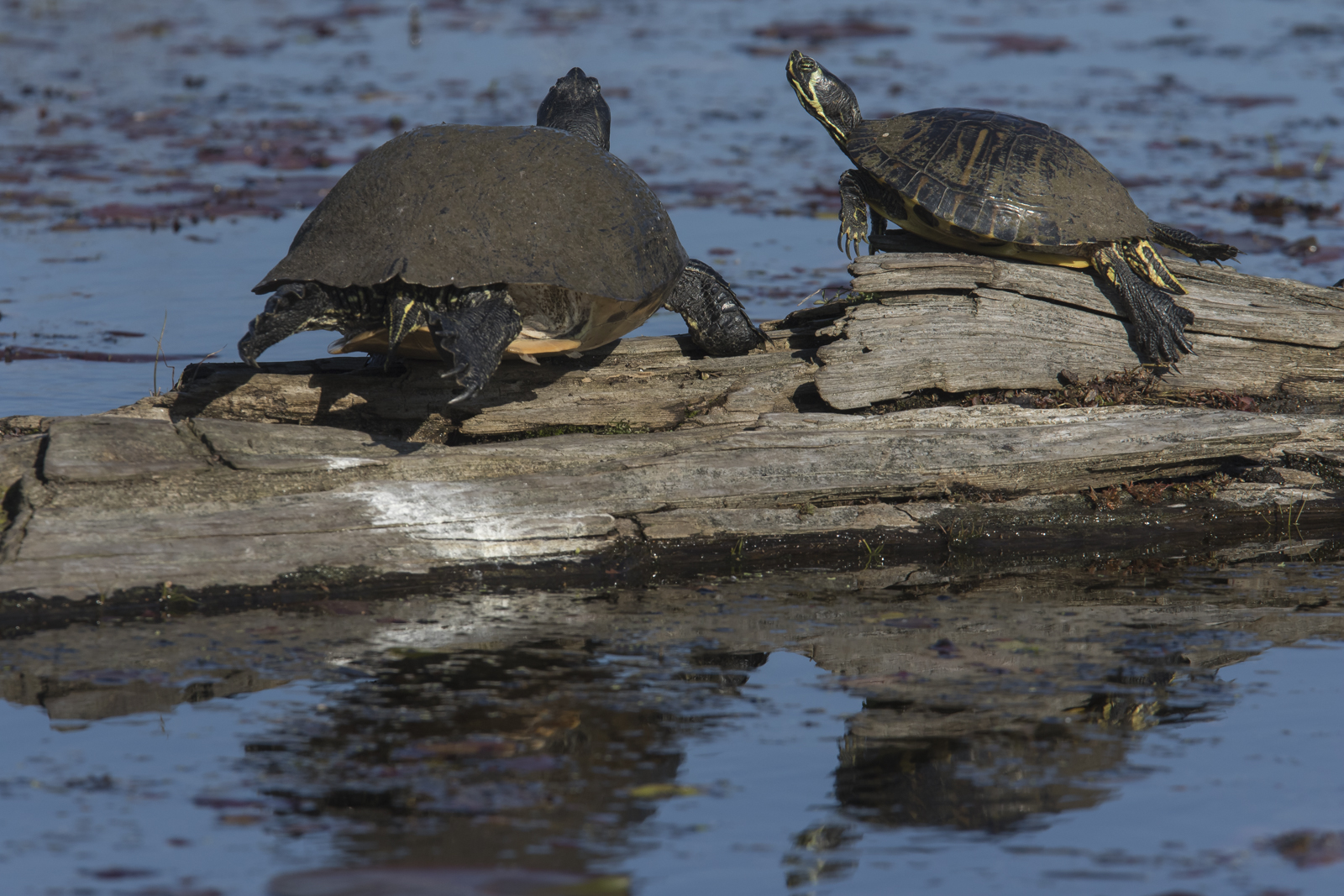
    Stranded Blacktail Deer
    A young deer appeared to have been stranded on the beach at high tide

    On one of the impassable at high tide stretches, we came across a small deer that must have been trapped on the beach in the last tide cycle. The obviously shaken (and wet and shaking) animal was in a location with steep cliffs bordering the beach making it next to impossible to climb to safety. It was quite a way back to the flats and I was unsure what was ahead, so we were hesitant to try to drive the animal out ahead of us. I moved closer to make sure it was not stuck in the rocks (it wasn’t) and we decided to leave it and hope it found its way out. That was a tough decision, but a group following us that we encountered the next day had not seen it on the beach when they passed, so it hopefully made its way to dry ground.

    Bear tracks on beach
    Black Bear tracks were a common sight along some stretches of the LCT

    One of the wildlife surprises was the abundance of bear tracks along the beach. They were spread out over a large stretch of the trail and at one point there were two distinct sets of tracks, including one from a fairly large animal. It would have been great to see one out on the beach, but I am thankful we had no issues with them at our campsites. I see now why the BLM requires hikers to carry a bear canister with them for overnight trips (they can be rented locally).

    campsite LCT
    The campsite with the best swimming hole was at Big Creek (note required bear canister in foreground – we had two)
    Sunrise on LCT
    Sunrise at Big Creek

    Many people do this trip in three days, but we had decided to take our time and enjoy the journey, so we planned on a five day trip. That also gave us a lot of flexibility in terms of campsite selection, and we managed to have the creeks all to ourselves each night. That probably doesn’t happen very often in the busier seasons.

    lef on beach
    Taking our time allowed for enjoying the small wonders along the trail
    sunrise at campsite LCT 1
    Misty sunrise at camp

    On our fourth morning, we awoke to some light fog moving in off the ocean, creating a magical, misty landscape for our breakfast. We debated staying the extra night, but our last camp was in a setting more reminiscent of a NC mountain scene than something less than a hundred yards from the Pacific surf, so we stayed.

    campsite LCT 1
    Our last campsite was along a crystal clear stream like you would find in the mountains at home

    To make it even more special, a family of four River Otters were holed up in a log pile near the mouth of the creek, allowing us a few close up views as they settled in for the night. We ate dinner out on the beach and watched the sea and sky perform one last time – what a beautiful way to end a trip.

    sunset LCT
    Beginning of another beautiful Pacific Coast sunset
    sunset LCT 1
    The seas were calm and the sky radiant on our last evening on the LCT
    sunset LCT 2
    Pink clouds reflected in the freshwater pool from Gitchell Creek
    sunset LCT 3
    A fitting way to end a wonderful hike

    The last morning we had to wait until the tide started dropping and we packed up one last time and headed out. The black sands in the final couple of miles were challenging at times, but we could see scattered houses on the slopes of Shelter Cove and that was incentive enough to finish our trek. It had been a relaxing, occasionally challenging, hike along an incredibly scenic coastline. The weather had been perfect – cool, cloudy when it needed to be to shelter us from the sun, and full of beautiful sunrises and sunsets. And the pace was such that we could appreciate the wildlife and small wonders along the way. Not a bad Plan B after all.

    A few more shots from our hike along the Lost Coast Trail.

    private property along LCT
    There are a half dozen or so pieces of private property along the trail, some with nice cabins, and one with a beautiful home and grassy air strip.
    CA Popgpy
    California Poppies brightened our way, especially along the flats.
    giant log on beach
    This giant stump is near the end of the trail.
    Sea Urchin on the beach
    We found several species washed up on the beach along the LCT – sea urchins, chitons, a dead sea lion, and two dead whales.
    OLYMPUS DIGITAL CAMERA
    I had thought we were doing well and being tough on our 25-mile hike. Then we met these guys hiking in to Miller Flats (about a 10-mile hike from the south) to catch some waves. On our return, I also read that John Muir considered 25 miles a nice day hike…oh well.
    shelter on LCT
    There are a lot of driftwood shelters that hikers have created at campsites along the trail. The BLM discourages this type of disturbance to the natural landscape.
    Dried Kelp strands on the beach
    Piles of dried kelp made striking patterns along the trail…
    Substrate
    So do the rocks you struggle to walk over.
    Western Fence Lizard
    Western Fence Lizards were a constant companion along the LCT
    tsunami sign
    Things you don’t have to think about when you hike the East Coast beaches.
    feather on beach
    A gull feather on the beach.
    sunset LCT 4
    The final sunset on our hike.
  • Fern Canyon

    Only spread a fern-frond over a man’s head and worldly cares are cast out, and freedom and beauty and peace come in.

    ~John Muir

    The first campground on our recent trip to the redwood forests was at Gold Bluffs Beach in Prairie Creek Redwoods State Park.

    Gold Bluffs Beach
    Gold Buffs Beach campground (click photos to enlarge)

    It is a beautiful setting on the beach with a backdrop of high, gold-colored cliffs. The setting sun showcases the yellow-gold color that gave these bluffs along this stretch of the coast their name. And, it turns out, there really is gold in them thar hills. There was a gold mining operation in the area, off and on, from the 1850’s to the early 1900’s, with many attempts to extract the extremely fine gold dust embedded in the hillsides along the coast. Eventually, the operation ceased and land was donated to the Save the Redwoods League in an effort to preserve the adjacent coastal forests.

    OLYMPUS DIGITAL CAMERA
    Bull Elk on beach

    This park is home to a large herd of Roosevelt Elk. They can be found in an inland prairie area, in the forests (where they look tiny in the setting of the huge Redwoods), and, surprisingly, along the beach. We started our morning at Gold Bluffs Beach by hiking down the gravel road to the trail head for Fern Canyon. A couple of hormonal-charged bull Elk greeted us as they made their way along the dune line, thrashing the bushes with their antlers in preparation for a possible duel. We let them pass and then headed out on the trail.

    OLYMPUS DIGITAL CAMERA
    Fern Canyon

    Our 10-mile hike started at one of the more popular sites in the park, Fern Canyon. I had seen photos of the site, but they don’t really prepare you for the magical nature of the place. We were lucky as there was no one else in the canyon when we entered, giving us a chance to walk in silence and to try to absorb the beauty of this place.

    OLYMPUS DIGITAL CAMERA
    Five-fingered Ferns cover the walls

    Fern Canyon is a narrow, long, canyon cut by the weathering action of Home Creek through the soft sedimentary rock. The walls rise straight above the flat creek bed for 50 to 80 feet and are festooned with a carpet of green – ferns, mosses, and small shrubs. As you stroll through, you can hear the water gurgling in the crystal clear creek waters, and you can catch the dripping sounds of water trickling down the canyon walls.

    OLYMPUS DIGITAL CAMERA
    Several species of ferns adorn the canyon sides

    There are at least seven species of ferns forming a living wallpaper, the most common being the Five-Fingered Fern, a relative of our Maidenhair Fern.

    OLYMPUS DIGITAL CAMERA
    Pacific Chorus Frog (aka Pacific Tree Frog)

    The canyon is also home to some interesting amphibians including the Coastal Giant Salamander and the Pacific Chorus Frog. While we missed seeing any salamanders, we did find a chilled chorus frog slowly climbing a moss-covered trunk at the base of the canyon.

    OLYMPUS DIGITAL CAMERA
    A magical place

    Fern Canyon is certainly a place you could revisit many times, in many seasons (be prepared to get your feet wet in all but the driest months). I would love to go back at different times of day to witness the play of light on the canyon walls. No wonder it was chosen as one of the backdrops for the movie, The Lost World: Jurassic Park, and a couple of other dinosaur-related films. It does make you feel as if you are in a different place, a different time, a world with the green filter turned all the way up.

  • Land of the Giants

    Come to the woods, for here is rest. There is no repose like that of the green deep woods.

    ~John Muir

    The original plan for the recent California trip was destination Yosemite, Kings Canyon, and Sequoia National Parks, in part to see the Giant Sequoia trees. With the fires, partial closures, and air quality issues, we changed plans and headed for the other big trees, the Redwoods. I had seen Redwoods once before on a visit to Muir Woods, just north of San Francisco. They are mesmerizing. But we wanted to see more, to walk without crowds in the company of these giants. So, the first part of the trip we headed north, up the Redwood Highway (Rt. 101).

    OLYMPUS DIGITAL CAMERA
    Avenue of the Giants (click photos to enlarge)

    One of the highlights that is easy for anyone traveling north on 101 is a slight detour onto the Avenue of the Giants, a 31-mile side road that runs through magnificent groves of Redwoods. It is hard to imagine how tall these coastal Redwoods really are unless you have something for scale. As you drive through the towering trees, the road ahead looks more like a paved path than a highway.

    OLYMPUS DIGITAL CAMERA
    Redwood forest in Humboldt Redwoods State Park

    Avenue of the Giants passes through Humboldt Redwoods State Park, home to the largest continuous old growth Redwood forest in the world. Redwoods, Sequoia sempervirens, are an ancient tree and were once found throughout much of North America. They are now restricted to a narrow band (varying from 5 to 20 miles in width) that stretches about 450 miles from from just north of the Oregon state line to the Santa Lucia Mountains south of Monterey, California. Until this trip, I had not realized how close we came to losing these magnificent forests. As soon as they were discovered by Europeans, the Redwoods were being cut for timber. And no wonder – the wood is very rot resistant, a beautiful reddish color, and one tree can supply an incredible amount of lumber. In fact, Santa Rosa is home to the Church of One Tree, a church built in 1873 entirely from the wood from one Redwood tree (275 feet tall and 18 feet in diameter). And a single tree in Humboldt County has an estimated 361,336 board feet, enough to build 22 five room houses. It was primarily through the efforts of private citizens, especially the Save the Redwoods League (created in 1918), that the coastal Redwood forests were saved from destruction. Of the estimated original 2 million acres of old growth Redwoods in California at the time of European discovery, only about 5% (120,000 acres) remains today.

    Redwood log
    Redwood log display at Humboldt Redwoods State Park Visitor Center

    The more I learn about these trees, the more I understand how magical they truly are. This log that fell in 2006 at Humboldt Redwoods State Park, is about 6 feet in diameter. The cut was made at a point on the tree 70 feet above the ground, and the center ring is dated 912 A.D., making it 1,094 years old.

    Below is a quick summary of some of the amazing facts about Redwoods:

    Coast Redwoods are the world’s tallest living things – the current record tree is 379 feet tall

    They can live to be over 2000 years old

    They can be up to 27 feet wide (Giant Sequoias are somewhat shorter, but can be wider)

    Redwoods can usually survive natural forest fires because of their thick (up to 12 inches), protective bark

    A single old growth Redwood is capable of producing an estimated 10 million seeds in one year, but only a small fraction survive to germinate

    A fallen log may take several hundred years to decay, but may support a few thousand species of organisms over that time

    A single, large tree may weigh over 1 million pounds

    The greatest accumulation of plant biomass ever recorded on Earth was in a Redwood stand in Humboldt Redwoods State Park (1400 metric tons of biomass per acre)

    OLYMPUS DIGITAL CAMERA
    The Dyerville Giant, a former world champion Redwood, that fell in 1991 (note the two people walking next to the tree far off in the distance)

    But, beyond the factoids that boggle the mind in the Redwoods, there is a feeling you get when standing among the giants, a feeling that is hard to express, perhaps because I have never experienced anything quite like this before. But others have said it well…

    But more impressive than the facts and figures as to height, width, age, etc., are the entrancing beauty and tranquility that pervade the forest, the feelings of peace, awe and reverence that it inspires. ~George McDonald

    Trees are the earth’s endless effort to speak to the listening heaven. ~Rabindranath Tagore

    The clearest way into the Universe is through a forest wilderness. ~John Muir

    It is not so much for its beauty that the forest makes a claim upon men’s hearts, as for that subtle something, that quality of air that emanates from old trees, that so wonderfully changes and renews a weary spirit. ~Robert Louis Stevenson

    So, I leave you with some images from the land of the giants, images which cannot convey the majesty of these forests. For that, you must walk among them…

    OLYMPUS DIGITAL CAMERA
    Redwood bark

    OLYMPUS DIGITAL CAMERA
    Though this tree has been through many fires, it continues to live

    OLYMPUS DIGITAL CAMERA
    Sword Ferns are a common understory species in the Redwood forest

    OLYMPUS DIGITAL CAMERA
    Looking up through a burned out stump

    OLYMPUS DIGITAL CAMERA
    Old and fresh shade needles and cones from a Redwood tree

    OLYMPUS DIGITAL CAMERA
    Trail through the Redwood forest at Prairie Creek Redwoods State Park

    OLYMPUS DIGITAL CAMERA
    Trunk sprout

    OLYMPUS DIGITAL CAMERA
    Sunlight streams through the giant trees at Prairie Creek Redwoods State Park

Search the Archives

Due to our site update, photos on older posts may not display correctly. Sorry for any inconvenience.


Recent Posts