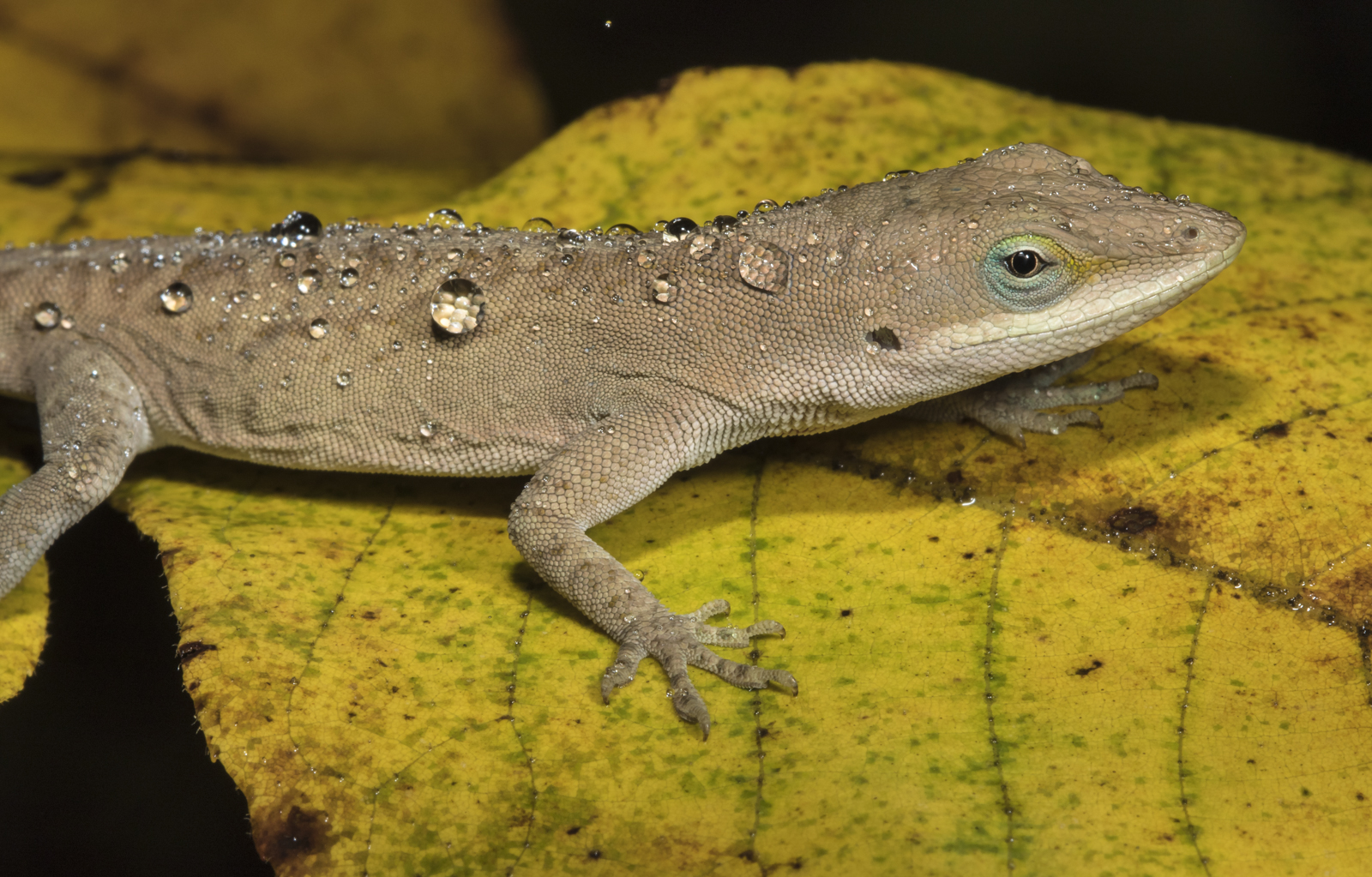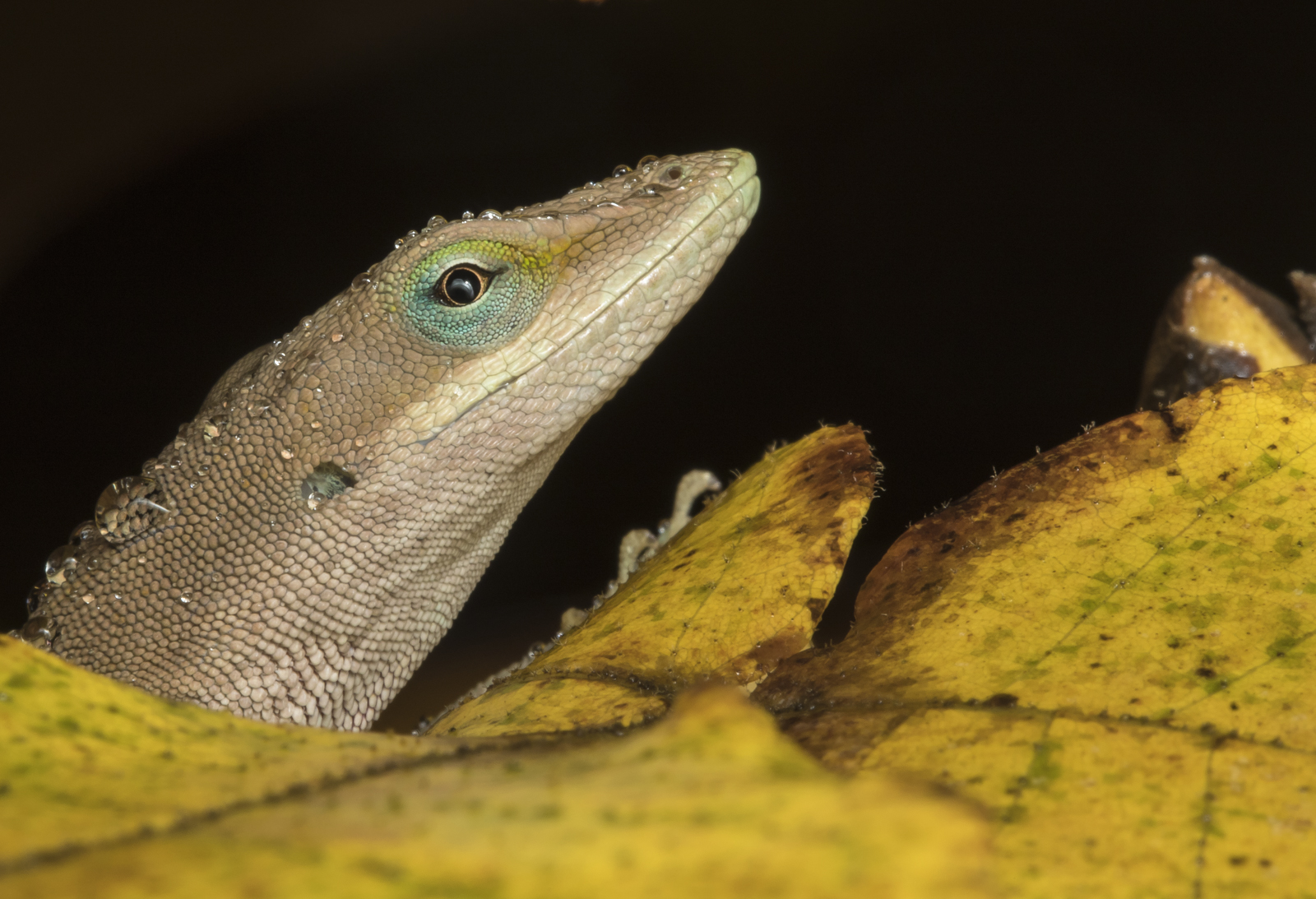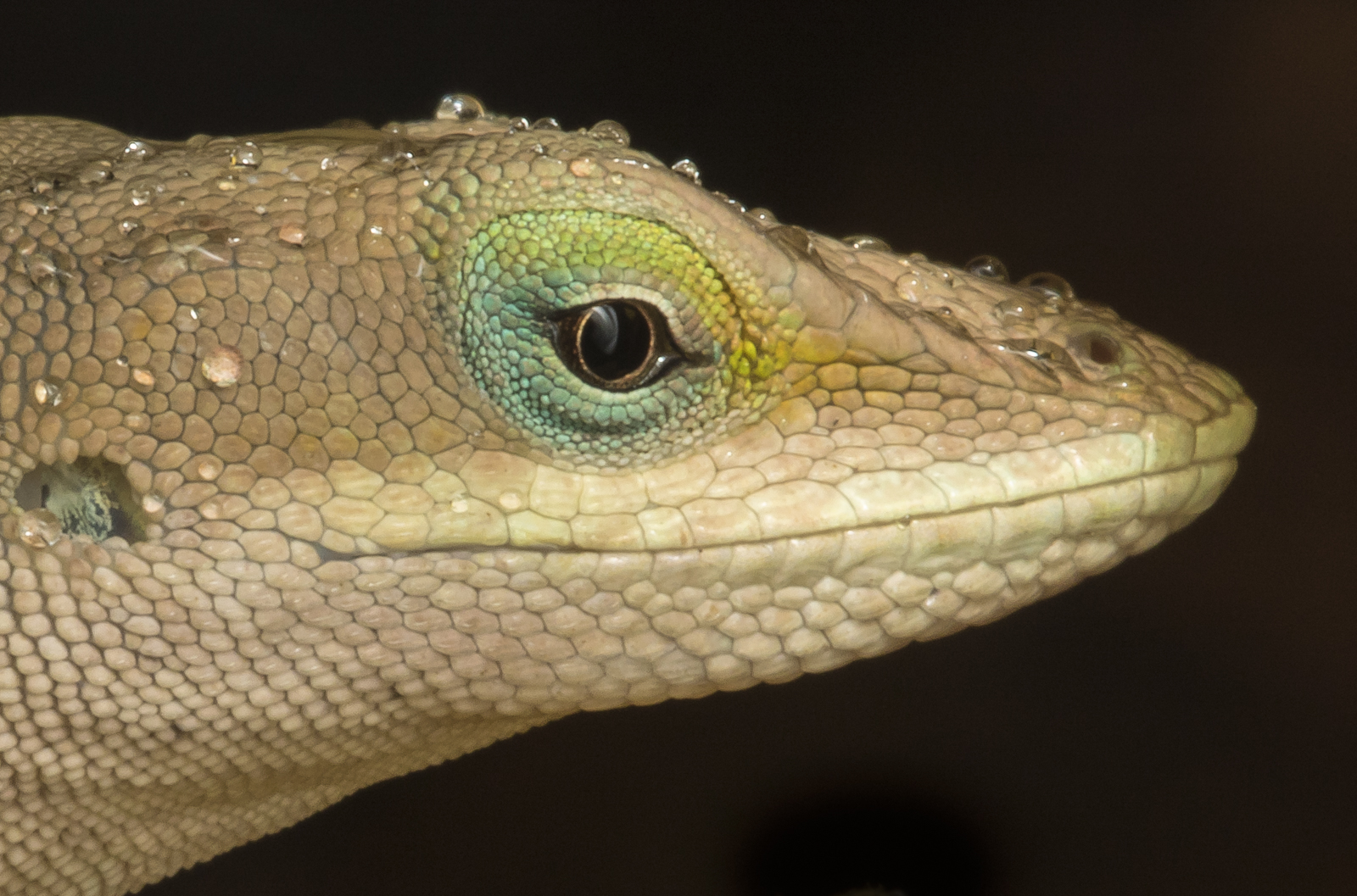
…one’s first impression might be that this creature has somehow lost its way out of an Amazonian jungle.
~David L. Wagner, describing the Crowned Slug caterpillar in Caterpillars of Eastern North America
When I returned from our California trip, I looked around the yard and saw what lies ahead – lots of yard work. Seems as though autumn had arrived while we were away – leaves changing colors and dropping, branches and twigs littering the ground, and an accumulation of acorns on the back deck. This is apparently a good year for the mast crop (acorns and hickory nuts). So, I began by sweeping off the walkway and deck.
Cleaning up the acorns on the deck (click photos to enlarge)
The two large oaks out back drop an impressive number of acorns every few years (usually with a resounding clang on the metal roof and deck). I swept up almost a 5-gallon bucket of nuts that had fallen in a week and a half.
Crowned Slug caterpillar
As I finished sweeping up, I noticed a splash of color on one of the fallen oak leaves – a caterpillar. And not just any caterpillar, one of my favorites, the Crowned Slug (Isa textula). This is one of the more bizarre-looking of the “stinging” caterpillars.
Close up of stinging spines
This unusual species is characterized by a series of lobes projecting from the sides of the body, each lobe containing an array of long, stinging spines. Additional stinging spines are found in clusters near the middle of the dorsal surface. The head region is marked by two elongate projections edged in red.
Crowned Slug feeding on dried oak leaf
I was initially surprised to find one so late in the season, and to see it feeding on an obviously dry fallen leaf. But when I looked it up in Caterpillars of Eastern North America, the author said these caterpillars may be active very late in the season, sometimes dropping down with autumn rains and wind. So, I guess it is not so unusual after all.
A beautiful way to finish another great caterpillar season
After spending a few minutes photographing it, I placed this late larva on a fresh oak leaf out back. If this is the last larva of the season, it is a memorable one…slug royalty. I’m already looking forward to next year…
Things have been quiet on the blog as I have been on an 11 day trip to the coast of California (end it turns out there was almost no cell service in most of the places I visited).
This was the sunset last night on the way back to San Francisco for the flight home today. I’ll post a couple of the highlights later this week.
A caterpillar is basically a flexible tube…it is designed purely for eating and growing.
~Michael Chinery, in Butterflies and Day-flying Moths of Britain and Europe
Eat, poop, eat, poop…such is the life of a caterpillar. After BugFest, I kept a few of the specimens for a couple of days before releasing them back into the wild (where they were found) in order to observe and photograph them. The tough part of rearing caterpillars is providing them with enough of the right kind of food. It can get to be a full-time job if you have too many larvae living with you.
Spicebush Swallowtail larva feeding on Spicebush leaf (click photo to enlarge)
Some are picky eaters, like the Spicebush Swallowtail larva above (eats Spicebush and Sassasfras in our area), and feed on only one or two species of plant. Others are generalists, and can be found on a wide variety of plants, but some may prefer whichever plant species they were originally eating.
Whatever the diet, they tend to eat relatively little when small (first couple of instars). But, as they grow and molt, they really become eating machines. It is tough to find data on how many leaves one caterpillar can eat but one reference on monarchs estimated a single larva could consume all the leaves on a Common Milkweed plant by the time it was ready to pupate. Certainly, the last instar of a Monarch larva can consume 4 or 5 of the large leaves before forming a chrysalis. That’s a lot of food!
I love watching them munch through leaves. You can even hear larger caterpillars eating. So, in honor of the ending of another caterpillar season, I present a few short clips of caterpillars chomping on their larval lunches…
…the repulsive larva, tissue by tissue, is transformed into the superlative beauty of the adult moth. Beauty will come from beauty in disguise.
~Edwin Way Teale, on caterpillar transformation
Monkey Slug caterpillar (click photos to enlarge)
This was a good year for some unusual caterpillars. For some reason, while looking for larvae a couple of weeks ago, we managed to find several of one of the strangest larval forms to be found in these parts, the Monkey Slug caterpillar, Phobetron pithecium. As if Monkey Slug wasn’t weird enough, this well-disguised creature also goes by the moniker of Hag Moth larva. You can read more about these cryptic critters in a previous post from last year’s BugFest outing.
Monkey Slug larvae can be various shades of color from tan to rust
These guys can be difficult to spot as they tend to look like a piece of dried leaf edge. They are generalist feeders which means you can’t search just a few types of plants for them. It’s more a matter of developing a search image and just plain luck. This year we found them on an elm, a multi-flora rose, and a hickory.
Before returning the larvae to their former haunts, I kept them for a couple of days to observe their behavior. Turns out they fit the family name, Slug Moth caterpillars (Limacodidae), and are quite sluggish in their feeding and movement. Here is a short clip of one feeding when viewed from below.
It reminds me of an odd-shaped, fuzzy mitten trying to gnaw the edge of a leaf. The larva tends to keep its head tucked much of the time.
Monkey Slug from below
These are listed as one of the “stinging” caterpillars with various references saying they have urticating spines hidden in the “hairs” of the lateral processes (wavy arms), and perhaps elsewhere on their body. I wonder if those whitish tufts visible along the sides, when viewed from below, are also clusters of stinging spines?
This individual was fairly active on its host twig and I managed to twist the twig around to watch its locomotion skills. Another short video clip clearly shows why this group has the word slug in its family name.
While somewhat slow, and definitely bizarre, these caterpillars are one of my favorites. Now, I just need to find an adult moth at my moth light next year.
It provides strength to the armor plate of the beetle, keenness to the lancet of the mosquito, endurance to the rasping fiddle and bow of the cricket and the katydid.
~Edwin Way Teale, on the properties of chitin
Late summer and early fall are a time of abundance of many types of invertebrates in our woods. Many are reaching their maximum size and activity levels in preparation for however they spend the winter (most as eggs or pupae).
A species of katydid out in the yard (click photos to enlarge)
Last week, I noticed a particularly large katydid on a shrub in the front yard. The songs of katydids reverberate through the treetops here most of the summer, but the onset of cooler weather has quieted them somewhat. They make their sounds by stridulation – rubbing one body part against another. In the case of katydids, they rub the base of the front edge of one forewing against a bumpy ridge at the base of the opposite wing.
Eardrum on front leg of katydid
Other katydids hear these sounds by means of oval-shaped tympana, or eardrums, located on each front leg.
Katydid from above
There are several species of katydids in our area and I have not yet learned how to accurately identify most. I think this one may be one of the Angle-wing species, perhaps the Greater Angle-wing Katydid, Microcentrum rhombifolium, but I can’t swear by it. Looking from above, I can see why this group might be called Angle-wings.
Katydid wings are great leaf mimics
And it is the wings that draw your attention to these beautiful insects once you are lucky enough to find them. The wings help make these katydids excellent leaf mimics, which comes in handy when you spend most of your time feeding on tree leaves.
Detail of katydid wing showing venation
The closer you look, the more amazing the detail becomes. While looking for caterpillars this time of year, I have been surprised on many occasions to suddenly come face to face with a pair of katydid eyes staring back at me when I grab a tree branch. This disguise can be quite effective, an important trait when you represent a large tasty meal to many other forest-dwellers from birds to mice to predatory insects and spiders. But, blending in isn’t always effective, especially when you take flight, or simply fall from your feeding perch.
Katydid caught in spider web outside my window
This is especially true around houses, where katydids are often attracted to lights at night. And, unfortunately for them and many other night-flying species (and the unwary person exiting a doorway), a variety of spiders also seem to like the windows and doors of woodland houses as sites for their large sticky webs. One night last week, a large katydid was entangled in the web of an orb weaver spider just outside the kitchen door. Too bad for her that KatyDid what she did in this case.
The grace and elegance of every adult butterfly and moth, as it flits about on wings radiant with color, are counterbalanced by the grossness and ugliness of the immature insect.
~Edwin Way Teale
As you probably know, if you are a reader of this blog, I don’t agree with this somewhat surprising view held by the great naturalist, Edwin Way Teale. Perhaps he was simply remarking on the belief held by many in the general population that caterpillars are nasty, ugly worms, that do nothing but damage our plants. In contrast, I find caterpillars to be one of the most fascinating groups of critters we have around us – so diverse, beautiful, and bizarre. And, people are fascinated by them, once they get to know them. That was proven once again this past weekend at the NC Museum of Natural Sciences’ annual BugFest event. Total attendance at this year’s BugFest was estimated at over 31,000 visitors, and I feel like those of us in the Caterpillar booth may have talked to most of them.
This Imperial Moth caterpillar was the largest larva at our booth this year at BugFest (click photos to enlarge)
It was a tough year for finding many of the larger caterpillars that are often the show-stoppers, although we did manage one nice Imperial Moth, Eacles imperialis, that managed to stay a caterpillar until the day after BugFest.
Puss Moth larva
But it was a very good year for some of the more unusual caterpillars. One of them, the Puss Moth Caterpillar, Megalopyge opercularis, is almost as fascinating to people as the larger, showier species. This small fuzz ball goes by many other names – the Possum Bug, Woolly Slug, Perrito (Spanish, for little dog), and Asp (the latter is the better-known common name in Texas). The adult moth is known as the Southern Flannel Moth (see images on the Moth Photographers Group web site).
Late instar of a Puss Caterpillar from last year’s BugFest
Last year we were lucky enough to find one Puss Moth larva. It was an earlier instar, and was somewhat orange in color, giving it a strong resemblance (some would say) to a certain political figure’s noticeable hair-do. This year, we found tree of the larvae, feeding on Wild Cherry and an Oak. Oaks are generally the preferred host, but they are found on a variety of other tree species.
Last instar of Puss Moth caterpillar
The larvae this year were all last instar larvae, being a darker gray-brown and having the noticeable white curly tufts on each side. These critters don’t look much like a caterpillar. They are covered in fur-like setae and appear to have a tail in later instars.
Puss Moth Caterpillar underside
And, unlike most caterpillars, they have two sets of accessory abdominal prolegs. Their head capsules are generally hidden by the “fur” and they appear to more or less glide over leaf surfaces when they move, but are not members of the Slug Caterpillars, Family Limacodidae.
Close up of larva showing spines underneath
But, like many in that family, these cute little fluffs of fur can also inflict a painful “sting” from urticating spines hidden beneath their fuzzy appearance. They have bumps along their body armed with hollow spines with a venom gland that inject a toxin into anything that touches them. All stages of the larvae are armed, but the toxicity (and pain) increases with increasing size of the larvae. This species is considered the most venomous caterpillar in the United States and has been responsible for many painful visits to a hospital, especially in Texas, where the species is much more common. A research paper describing the symptoms of the painful encounters with this species chronicles burning pain, nausea, swelling, and itching. During programs, we house our specimens in clear plastic containers for safe visibility, and are careful when adding new food. Most people will probably never see one of these unusual larvae since they both feed and pupate in trees. And, even though this species can be painful, the vast majority of caterpillars are harmless to humans.
Puss Moth cocoon under construction (note the front of the larva visible on the right – white and holding onto twig with a pair of legs)
On Saturday, one of the visitors saw something moving on one of the larvae and asked what it was. I looked and could see something just under the skin going back and forth. My first thought was some sort of parasite that was about ready to erupt. I did notice some silk strands attaching the larva to a twig, but reasoned that maybe the parasite had hijacked the larva’s behavior. As the afternoon wore on, it became apparent it was not a parasite, but rather the larva constructing its cocoon and incorporating that furry exterior into the project.
Puss Moth cocoon day 1
By the end of the day, the developing cocoon looked like an elongate, silk-covered version of what I have found on twigs in the past (see below). Some of the venomous spines are supposedly incorporated into this outer covering, although the larva retains most of them on its body. An excellent summary of the life history of this species with amazing images can be found on the University of Florida’s Featured Creatures web site.
Puss Moth cocoon day 3
By Monday, the cocoon construction had progressed and the shape was beginning to look more familiar.
Puss Moth cocoon day 4
The next day, the distinctive dorsal hump (packed with the soft hairs from the caterpillar’s body) was visible. I could also see the operculum on one end that gives this fascinating creature its species name, opercularis (right side in image, before the long taper of silk). There are probably two generations per year with this one overwintering as a larva inside the cocoon and then pupating in the spring.
A weathered cocoon reminds me of a mini-mailbox, complete with a door (partially opened on right)
The Featured Creatures page mentioned another peculiar aspect of the life history of this unusual species – it has a pre-adult phase called a pharate adult. This is the phase that pushes open the operculum when the moth is ready to emerge. After the pharate adult gets the “mailbox door” open, the adult moth will then emerge from the pupal skin and fly off. Bizarre indeed.
Parasitic wasp larva on orbweaver spider (click photos to enlarge)
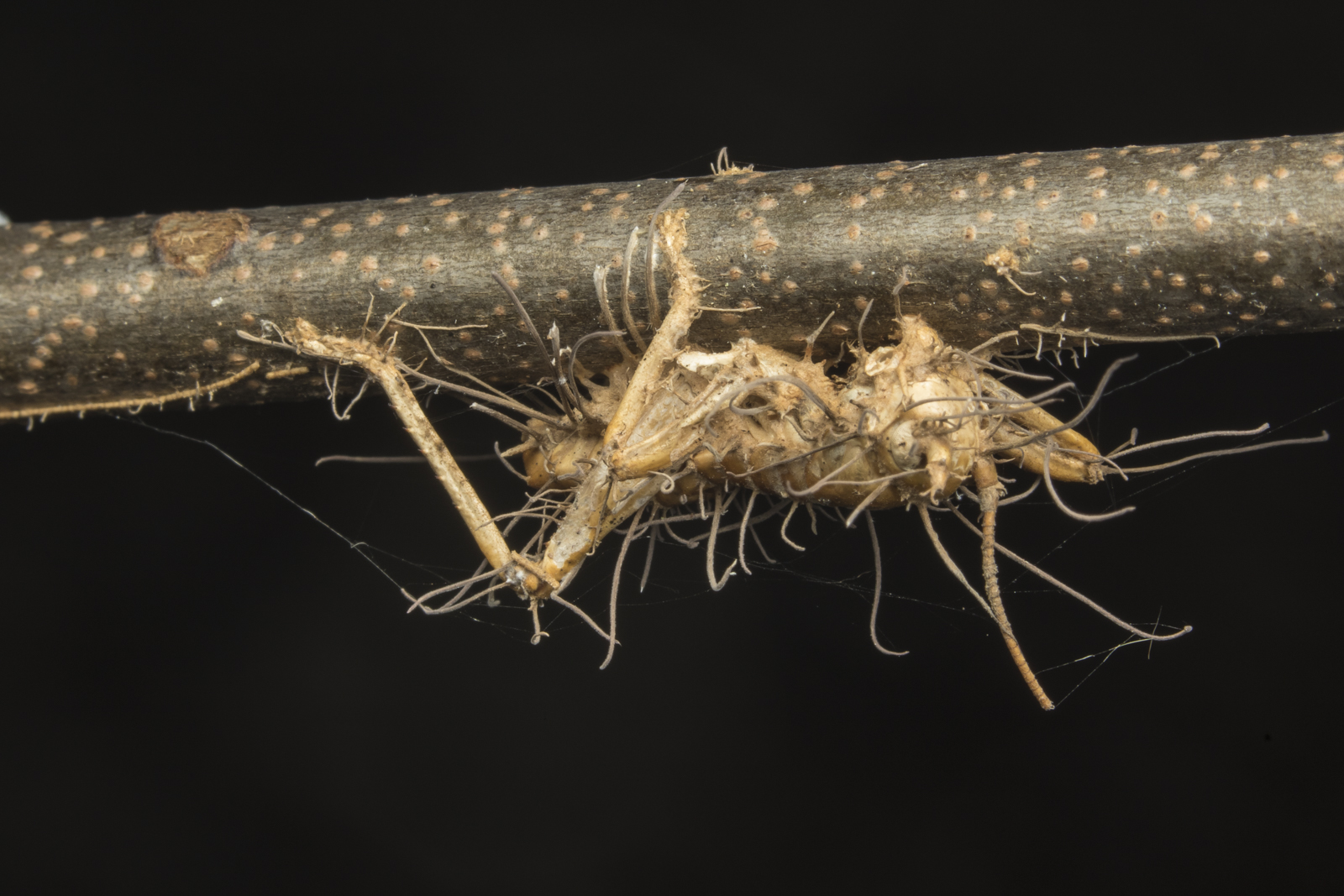
A friend had spotted an odd-looking spider that had spun a web on her car. Closer inspection revealed the spider had a hitch-hiker, a parasitic wasp larva. I watched the spider over the next few days until one morning, it was no longer in a web, but was lying on the ground, shriveled and dead.
Wasp larva spinning cocoon, suspended in a special web made by its spider victimCompleted cocoon
The wasp larva was now much larger and was constructing a cocoon in a small sturdy web that had been made by the spider before its demise. I found references online where scientists speculated that the parasite somehow managed to coerce the spider into making an alternate style web before it was totally drained by the feeding larva.
Studies reveal the wasp larva hijacks the behavior of the spider
A recent study published in the Journal of Experimental Biology (and reported in the New York Times a little over a week ago) now reveals that these wasp larvae (or at least similar species to the ones I photographed) incapacitate their hapless victims by taking control of their nervous systems and turning them into zombies. How cool is that? The spider’s final act is to construct a small, tough web that helps support and protect the cocoon spun by the wasp larva as it readies itself to pupate. The researchers found that this last web made by the hapless spider was similar to one they make as a resting or molting site web. In other words, this design is something already in their web-building repertoire, but the wasp larva hijacks that genetically programmed behavior for its own purpose before killing the spider. They also found this last cocoon web was a beefed-up version of the resting web usually made by the spider, which means it probably offers even more protection for the master wasp larva. The scientists suspect the spider’s behavior is triggered by a substance similar to the spider’s molting hormone injected into the spider by the larva. Zombies…fact or fiction? You be the judge.
That sort of sums up my last trip to Pocosin Lakes and Mattamuskeet National Wildlife Refuges. It was beautiful, but difficult. Made so by the intense heat and humidity on the day of my tour last week. The heat was stifling, but, my clients and I managed to survive, and see some interesting wildlife as well. My friend, Petra, had once again helped arrange a tour for some folks from the Netherlands (this is the fourth trip I have guided for wonderful guests from the Netherlands). And, like the others, they wanted to see bears, so I met them in Plymouth early Thursday morning for a trip over to the Pungo Unit of Pocosin Lakes NWR. After driving through the refuge and seeing mainly butterflies and a few birds, we parked and walked down one of my favorite dirt roads, hoping for bears. Tracks in the mud showed they were around, but none showed themselves as we strolled and sweated a mile down the road. We did have a couple of Bald Eagles, some woodpeckers, toads, lizards, and more butterflies, but no bears for the first part of the walk. After reminding folks that you should always look behind you, one of my clients did just that, and spotted a bear. Of course, it was only a hundred yards or so from our parked car and here we were about a mile away. The grasses and weeds had grown up in most of the side paths, so we skipped those and headed back, spotting a couple of more distant bears along the way. Closer to the car, a large bear was ambling along the edge of the crop field on the other side of the canal, headed in the same direction we were walking. As we got closer, I saw it suddenly turn around and start walking in our direction, so we stopped.
Large Black Bear passes by across the canal (click photos to enlarge)
He passed by on the other side of the canal, partially obscured by the tall weeds. He was a big guy, maybe 300+ pounds, I am guessing. And it looked as though he has seen his share of scuffles with other bears, from the look of his ears and coat.
The bear swam across the canal after moving past us
The wind was in our favor but I think he heard our loud camera shutters and picked up the pace, running down the far side of the canal about one hundred yards, where he swam across and stood in the road looking back at us. Needless to say, that was quite a thrill for us all. The morning turned out pretty good for bears with twelve sightings for most of us (one person saw one more run across a road that the rest of us missed). The highlights were the big guy across the canal and two sightings of bears in trees – a mother with two cubs in one tree, and a lone cub lounging in the shade of another tall tree. We all agreed that cub had the right idea for such a hot day – get in the shade up where there was some breeze, drape your legs over a large limb, and chill out. A good spotting scope really helps you appreciate the behaviors of wildlife in these types of situations.
The short boardwalk loop through the swamp is one of my favorite stops
We decided to run over to nearby Mattamuskeet NWR to see what else we could see. There were the usual waders, Great Egrets and Great Blue Herons, plus lots of turtles in the canals. People were catching Blue Crabs in several places (a very popular summer activity at this refuge). But, after driving the length of Wildlife Drive, no foxes or other wildlife were seen. We stopped to walk the short boardwalk through the swamp as it is one of my favorite hikes at Mattamuskeet. It was made more appealing on this afternoon due to the shade. As is often the case when I am leading a group, I left my camera in the car. My goal is to find things for the clients to observe and photograph, plus I always joke that by leaving my camera behind, it increases our chances of seeing something interesting. Well, it did not disappoint.
Golden Orb Weaver (photo by Petra Glorie)
I spotted a huge web of a Golden Silk Orbweaver, Nephila clavipes (also called the Golden Silk Spider and the Banana Spider) . This female provided a great photo opportunity in the late day sun, and I thank Petra for the use of one of her excellent images. This is one of our largest spiders, the female being up to 1.5 to 2 inches in body length, with a leg span of up to 4 inches. Males are tiny, averaging only a little over one-quarter of an inch in body length. The spider is named for the unusual gold-colored silk in its web. And the web is huge, spanning a few feet across the swamp. I don’t remember seeing them at Mattamuskeet before, but I am not down there as often in the summer. Records have shown a range expansion for this species, especially in the past two decades. I remember seeing them in the Wilmington area fifteen or twenty years ago, and then seeing them gradually move northward and inland. They are now found from North Carolina (primarily the Coastal Plain) south to Texas. And for those of you cringing at the thought of this huge spider moving into your neighborhood in the near future as range expansion continues with climate change, at least we can be thankful it is such a beautiful species.
…from so simple a beginning endless forms most beautiful and most wonderful have been, and are being, evolved.
~ Charles Darwin
Spiders are everywhere in these woods now, so I decided I should probably photograph some and write a few observations to share. The other day I went downstairs to observe one that has repeatedly strung a web across the basement door, requiring me to duck or sweep a hand every time I want to go out to fill the bird feeders. But, as often happens in my wanderings, something else extraordinary caught me eye. It must have flown inside while I had the door open gawking at the spider dangling just outside. I saw it creeping along the inside glass on the door and immediately forgot all about the spider. This was a critter that I had seen only a few times, and never photographed, and here it was, and me with camera in hand. Unfortunately, it was in a strange location for a picture, waist-high on the inside of a double-pane glass door. But, my motto is always take the photo, and try to get a better one later.
First attempt at a photo of my mystery bug (click photos to enlarge)
Okay, so maybe this pic doesn’t scream, really cool insect!! I moved closer, took a few more, and, in Lightroom, wiped out the second of the two reflections of the bug caused by the door glass.
Green Mantisfly and reflection on door glass
Now, maybe you can see why I was so excited. This is a Green Mantisfly, Zeugomantispa minuta. It is only a little over a half inch in length, and is definitely distinctive in its design.
Close up of head and front legs
It has raptorial front legs, complete with spines for holding its prey. Those, along with the head and large eyes, make this look like a close relative of some sort of mantid.
The Green Mantisfly looks like a cross between a lacewing and a mantid
But, the rest of the body looks more like a Green Lacewing. In the wonderful reference, Kauffman Field Guide to the Insects of North America, the Green Mantisfly is described as resembling a science experiment gone horribly wrong. I couldn’t agree more. And then I read about its life history, and it took on a whole new level of weirdness.
The Green Mantisfly has an unusual life history
While the adult feeds on a variety of small insects (as you might suspect, given its mantid-like front half), their larval habits are more surreal. Larvae consume spider eggs inside the egg sacs. There are a few species of mantisfly in our region, including one whose rear half resembles a wasp. Depending on the species, the larvae may actively seek out spider egg sacs and then enter them, or it may hitch a ride with a female spider. When she starts constructing an egg sac, the mantisfly larva will enter it and dine on the eggs. Some have reported that, if the larva instead grabs onto a male spider, it will wait and transfer to a female when the spiders mate. The well-fed larva then pupates inside the spider egg sac and later emerges from it as an adult. Once again, I am astounded by the complexities and surprises found right outside (or, in this case, inside) my door.
There will always be scary predator eyes looking out at us from the bushes – it’s just that most of the time they are mounted on the rear end of a happily munching caterpillar.
~The Caterpillar Lab, Sam Jaffe, Director
On a walk at Yates Mill Park the other day, I came across one of my favorite caterpillars. My first glimpse was of a darkened blob on a leaf as I walked past a fence. The leaf was on a climbing vine of a Greenbriar, Smilax rotundifolia.
Turbulent Phosphila larvae on Greenbriar leaf (click photos to enlarge)
When I stepped closer, I knew what the blob was…a group of tightly packed caterpillars! These striking larvae go by the unusual name of Turbulent Phosphila, Phosphila turbulenta. I discussed this species in an earlier post and am always delighted to find them. The name intrigues me…I understand the turbulent (characterized by conflict, disorder, or confusion) part…they are gregarious feeders in their early stages and can appear quite confusing when seen in a mass on the underside of a Smilax leaf (their only host plant). Sam Jaffe, an incredible photographer and educator on the subject of caterpillars, described them as looking like a mass appearing more like some strange outdoor QR code than biological life. Well said, Sam. It is the Phosphila part that has me baffled. If you break it down into its Greek roots, it means “phos” = Light, and “phila” = loving….light loving.
Turbulent Phosphila on Greenbriar stem
These guys usually hide on the underside of leaves as larvae or are clustered along a stem, hardly the behavior of a light-lover. Perhaps the adult moth is especially attracted to light? I don’t know. Perhaps the bright white spots on the rear of the caterpillar resemble bright points of light to someone? Not sure. Those spots are believed to function as fake eyes, and are more prominent and numerous than the eye spots on the anterior end of this species, making it tough to tell which end is which.
Turbulent Phosphila larvae, head downward, on Greenbriar stem
Whether the fake eye spots on the rear create a distraction for would-be predators away from the more vital head portion of the caterpillar, or they just serve as a startle and potential threat factor when seen in a grouping, the impact is one of confusion when you first look at these larvae. David Wagner, in his excellent reference, Caterpillars of Eastern North America, states that both the coloration and behavior suggest that these caterpillars are chemically protected. Whatever the case, they provide me with a wonderful visual treat every time I encounter them.