Our desire to document is bringing us closer to nature and to animals.
~Ruxandra Guidi
It seems as though the cameras are catching more clips of extended behavior than in the past with our woodland neighbors pausing or maximizing their routes by the cameras so we catch just a little more of how they behave.
In my last post, we saw lots of deer behavior. I thought I was finished sharing that for a bit, but this week, two nice bucks decided to spar right in front of a camera. This behavior is common right now and I have many clips showing bucks of different sizes testing each other. When it is a mismatch in antlers, it is usually a brief match. These two went after each other a while longer but moved away from the camera in many of their bouts.
The cameras continue to catch our Coyotes going to and fro and I have often wondered whether some of the scenes of deer running or Coyotes seemingly chasing something were interactions between these two species. One camera finally caught a brief scene that gives an interesting insight into what may happen when they meet.
Studies have shown no significant impact on deer populations in areas colonized by Coyotes. Coyotes probably do have an impact on fawn recruitment, but are not big predators on adult deer. However, the presence of Coyotes may alter the behavior and foraging patterns of deer and keep deer moving more within their home range, which could have a positive impact on the plant community and other groups of organisms that depend on these habitats.
We caught the adult female Coyote I call One-ear doing something you probably have seen a dog do – scraping the ground vigorously after urinating. This is called “scrape behavior” and is believed to help mark a Coyote’s territory by spreading the urine scent. Canids also have scent glands in their paws which most likely adds additional scent to the scraped area. The scraped area may also be a visual sign to indicate a Coyote’s presence on the landscape.
Several clips showed one or two of the pups in One-ear’s clan. They still look scrawny with their thin summer coats on though that should start to change this month as their longer winter fur comes in.
Always glad to see an opossum on the trail cameras. I think the Coyotes may be having an impact on the ‘possum population as I am not seeing quite as many as in the past. This one is preparing a den by carrying leaves (and perhaps an unintentional stick) with its tail. This camera is near the large Tulip Poplar that houses some Raccoons and Gray Squirrels, so this Virginia Opossum may be moving into that productive wildlife condo.
Our intermittent stream has been flowing more this month with all the heavy rains. I shared a clip last time of a deer playing in a pool and it seems the local Raccoons also enjoy a playful dip.
It looks like a stretch of nice weather is finally headed our way over the next week or so. Looking forward to seeing what the cameras catch next time.
Now and then we hear the wilder voices of the wilderness, from animals that in the hours of darkness do not fear the neighborhood of man: the coyotes wail like dismal ventriloquists, or the silence may be broken by the snorting and stamping of a deer.
~Theodore Roosevelt
Signs of the approach of Fall ar now in full swing here in the woods in spite of the still warm temperatures. Yellowed Tulip Poplar leaves are drifting down on our walkway and the sound of this year’s abundant acorn crop thumping on our roof and deck are increasing. The trail cameras are also showing changes, especially in the resident deer herd.
With the Fall molt, their color changes from the reddish brown fur of summer to the gray brown of winter. The summer coat has no underfur and only thin, short, and solid guard hairs. In winter, the guard hairs are almost twice as long, thicker, and are also hollow. There is also a thick underfur. The trapped air provides excellent insulation. The darker color absorbs more solar energy and makes them much harder to see in the drab colors of the winter woods.
Another noticeable change occurs in the male deer. Bucks have been regrowing their antlers all spring and summer when they were covered in a soft velvet. The velvet allows oxygen-rich blood to reach the growing antlers, which, in white-tails, can grow as much as 1/4 inch or more per day. With changing day-length that growth stops and the velvet begins to peel off and get rubbed off in September. Bucks can usually rid their antlers of velvet in a day or two. When this big guy walked by a camera, I felt lucky to have captured that look..
Bucks rub their antlers on trees and shrubs to remove the velvet and mark their territory. Scent glands on their head deposit oils that help claim their turf and dominance.
Another sign of Fall is the change in diet for our local deer. The White Oaks and hickories produced an abundant crop of nuts this year and the deer, squirrels, chipmunks, and other wildlife are cashing in on this nutrient-rich food source. For deer, it is a noisy meal.
This has been a very wet September with heavy rainfalls on several days. One thing I love about the trail cameras is they catch moments of just deer (and other animals) doing what they do that we normally miss seeing.
Coyotes have the gift of seldom being seen; they keep to the edge of vision and beyond…
~N. Scott Momaday
On our last round of trail camera videos, we caught members of the local coyote clan in several places, often alone, and on a few occasions, as a group
This clip shows two adult Coyotes (based on their fur quality compared to that of the pups I have seen recently). Neither is the one called One-ear. This footage was captured at about 3 a.m. on September 8.
Two minutes after this action, a lone Coyote pup runs through in the same direction. Two more minutes lapse and then three pups go through on the same path.
So, what just happened? Over the last few weeks, the cameras have caught One-ear’s clan of her, her mate, and 4 pups. But, unless one of the Coyotes doubled back, the chase and follow ups show a total of 7 Coyotes (the 3 in the chase scene, the one trailing pup I mentioned, and the 3 trailing pups from the video). What were they chasing? I assume that, if it was prey, they did not catch it. My guess is they might have been chasing the two adults shown in the earlier night-time video. And perhaps the Coyote seen running in the background of the initial chase scene is not a member of One-ear’s pack, but is, instead, one of the interlopers.
Let me know if you have any other thoughts. It is always interesting to see what the trail cameras observe.
Life starts all over again when it gets crisp in the fall.
~F. Scott Fitzgerald
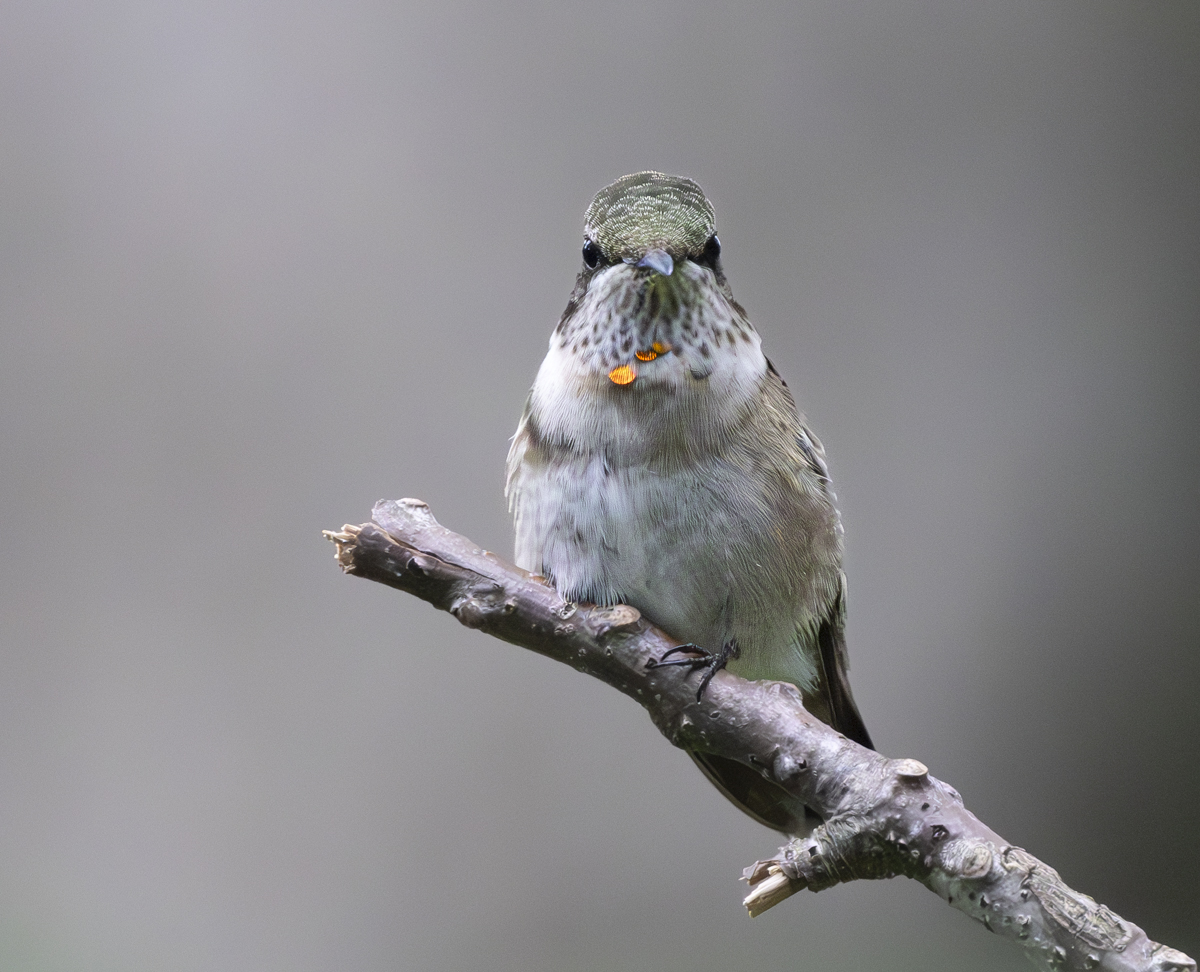
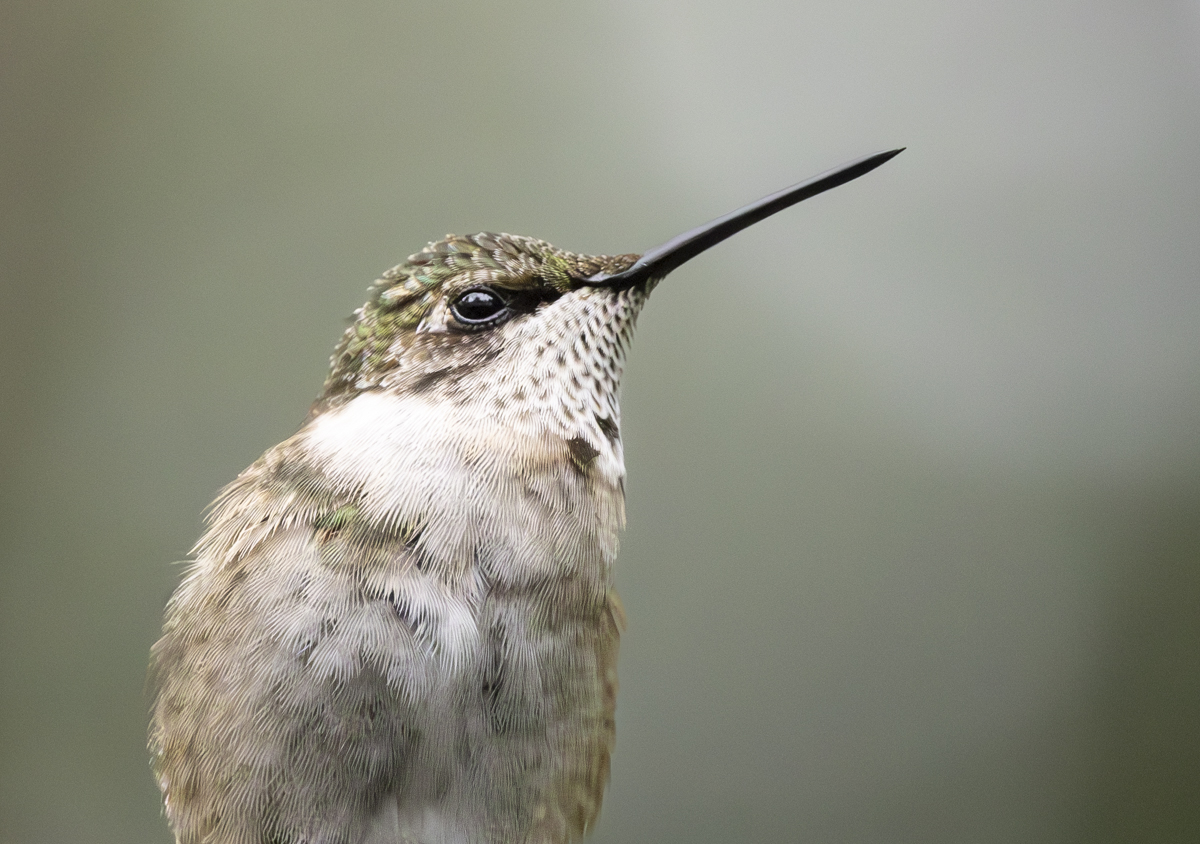
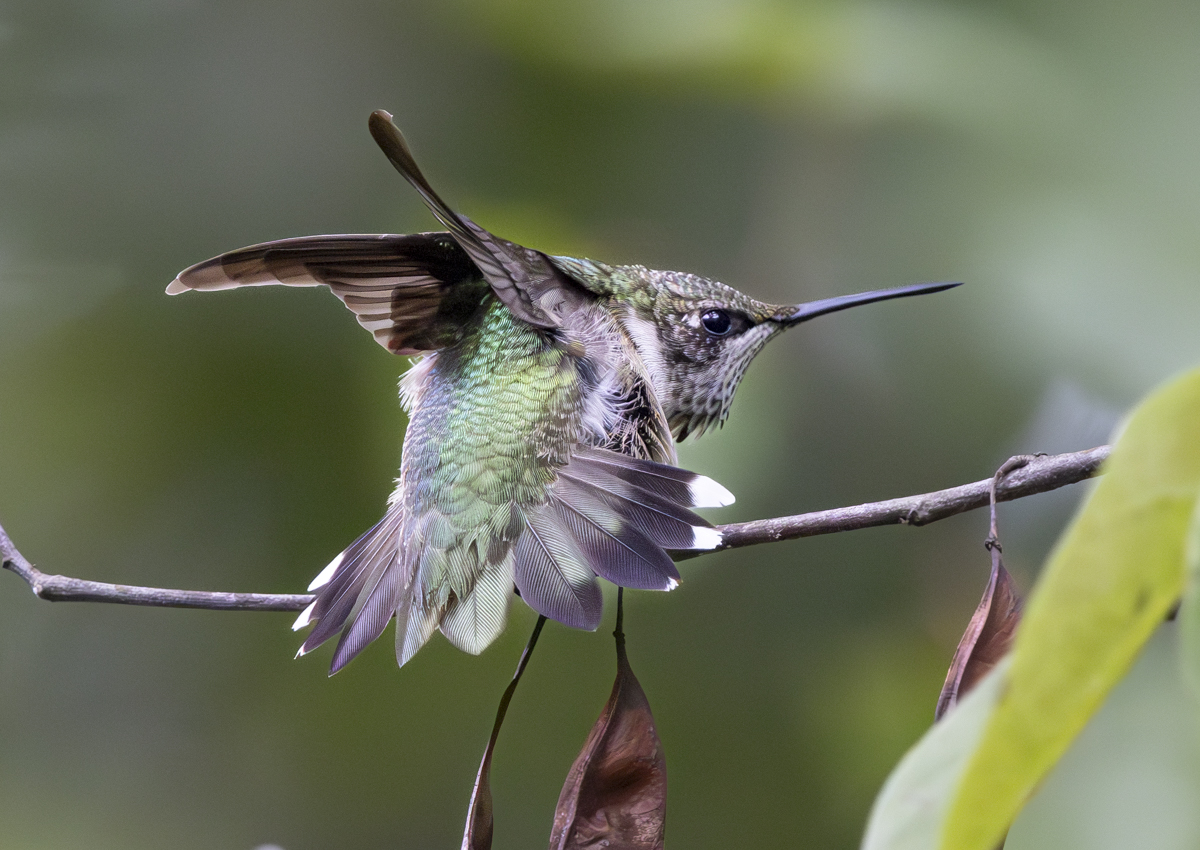
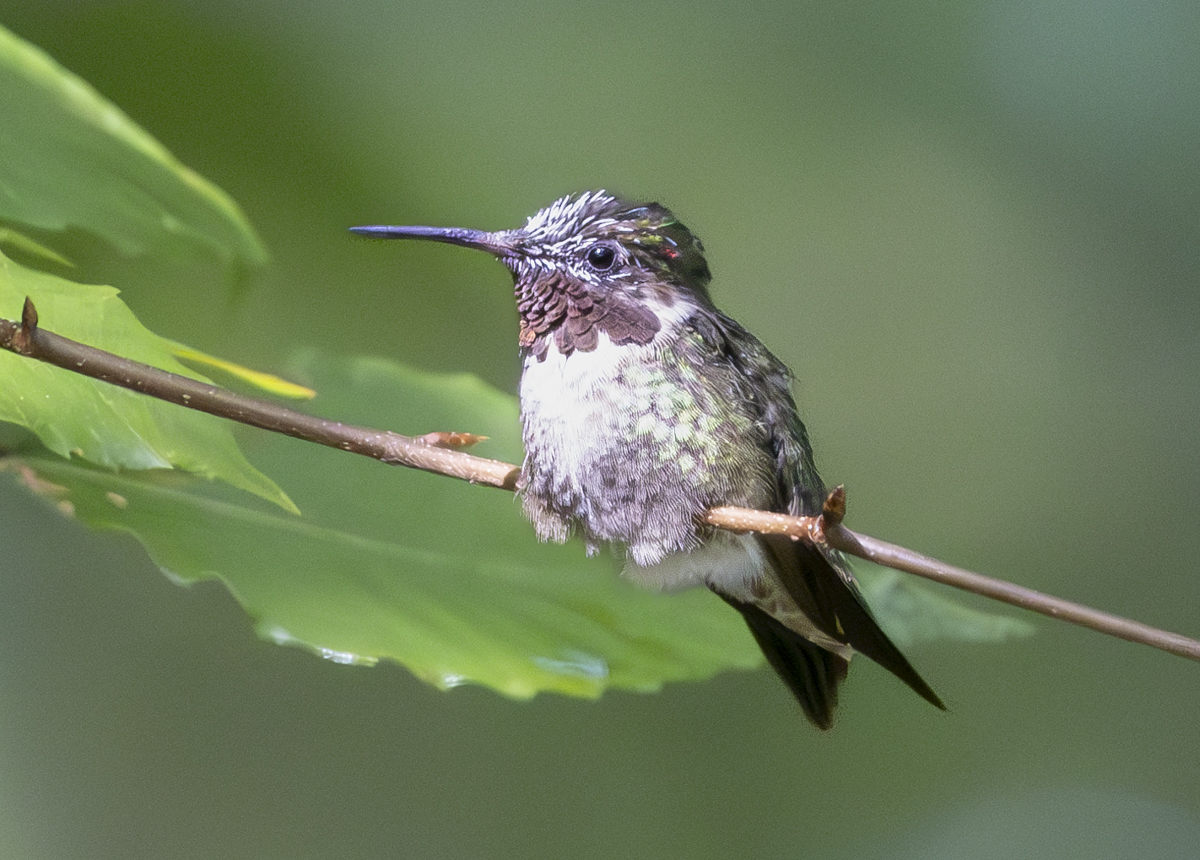
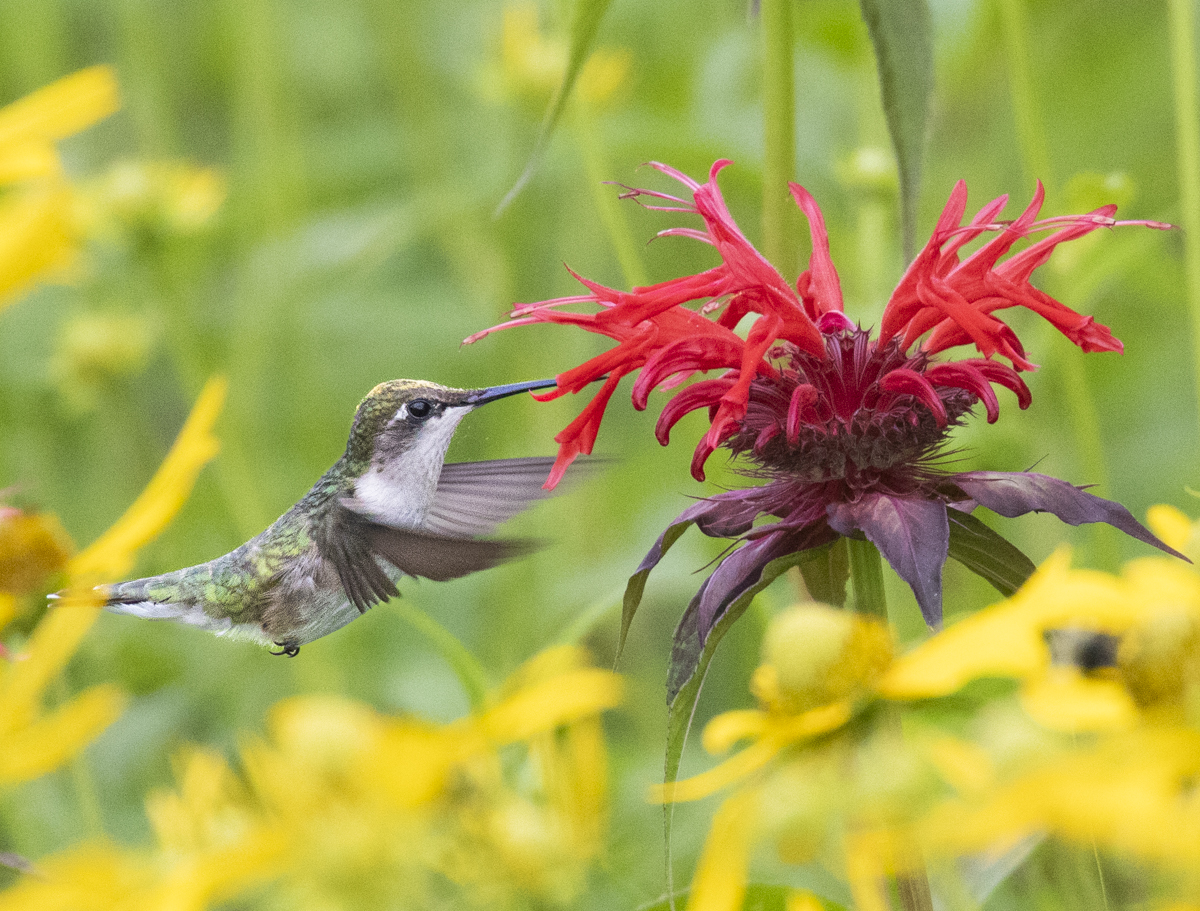
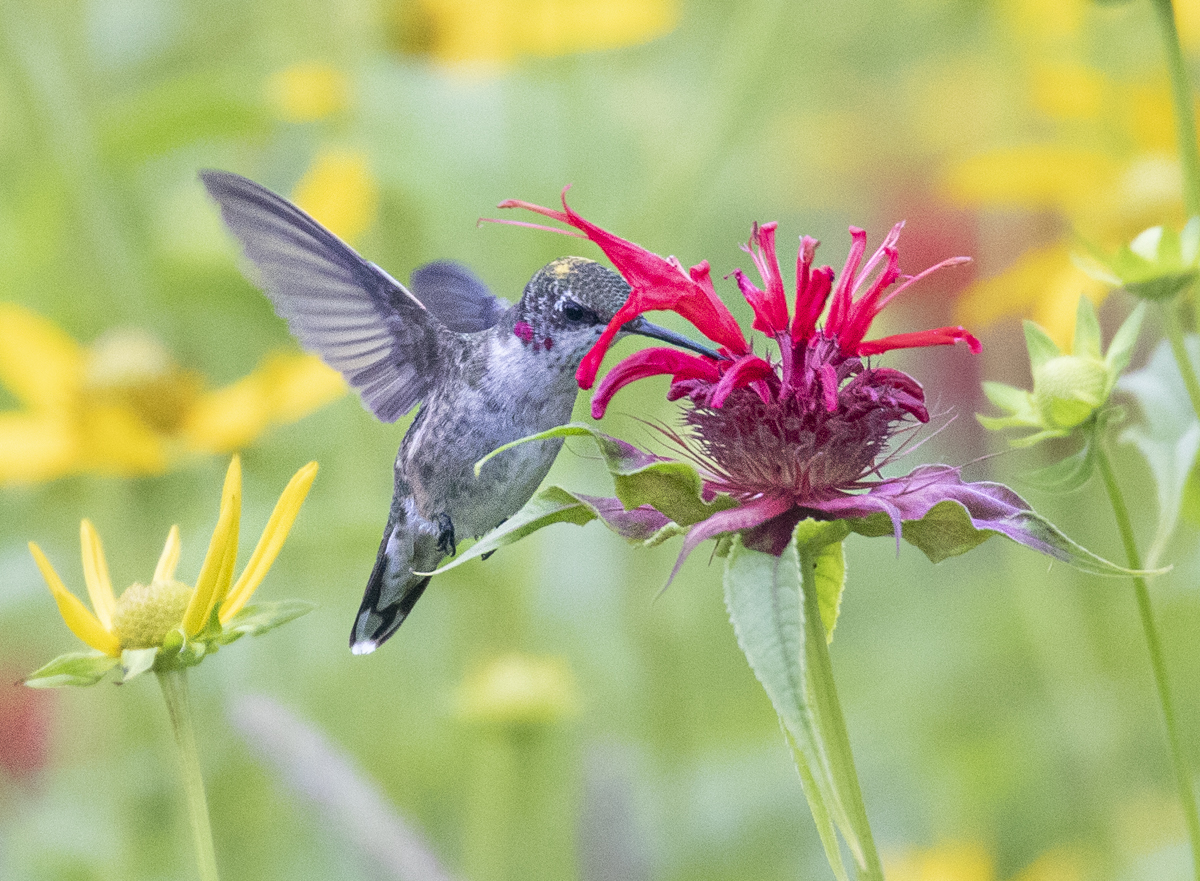
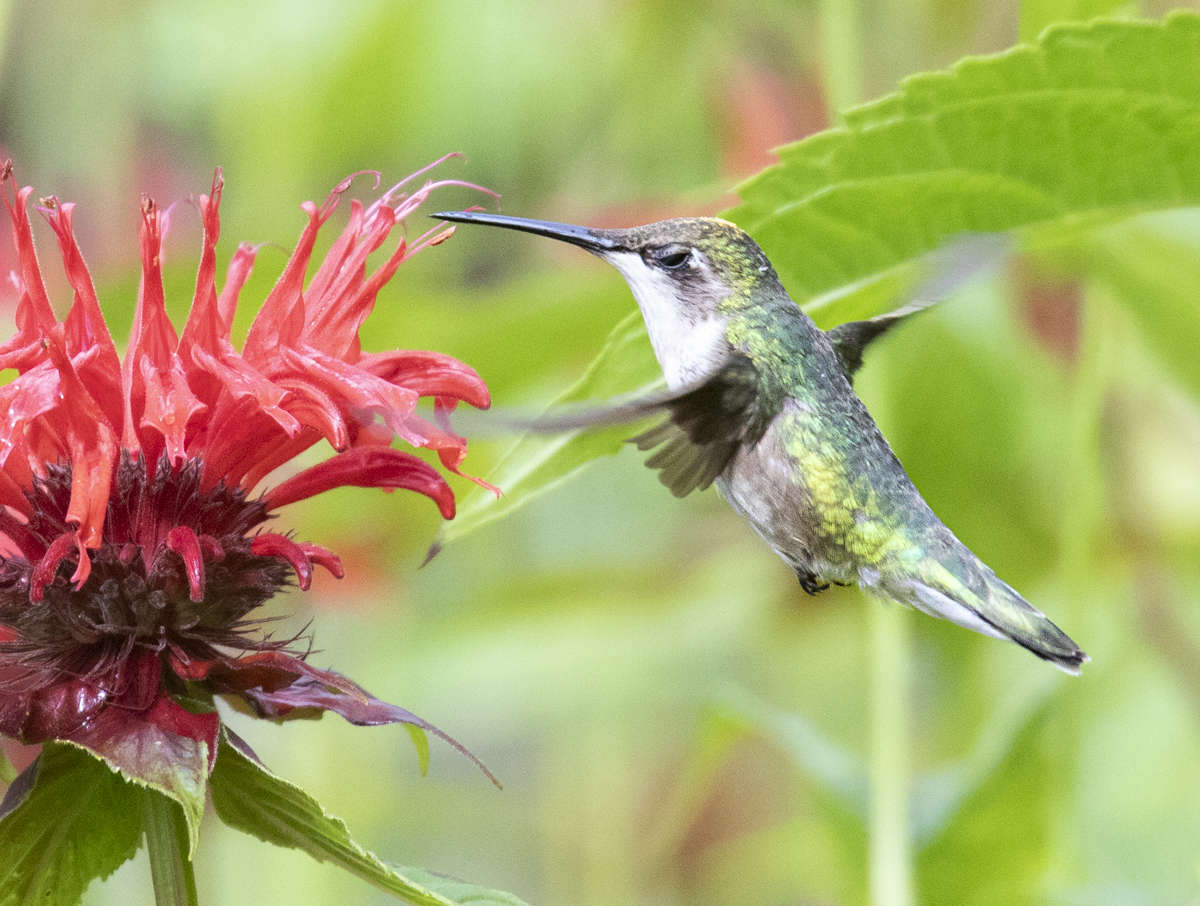
The change is happening…we have longed for it, and it is starting to tease us with the possibility of cooler nights and sunny, comfortable days. I see it in our woods as well in the plants and critters. New activity as the hummingbirds prepare to depart. More birds at the feeders on the cool mornings. Hints of the future arboreal hues as yellow Tulip Poplar and bright red Black Gum leaves create a pop of color against a sea of green. And in me having a renewed desire to get outside with a camera to see what I can find. My good friend, Art, has loaned me his mirrorless camera and lens as I try to figure out if that’s the way I want to go (it sure s light weight compared to my big old lenses). I practiced with it a bit this week on a juvenile male Ruby-throated Hummingbird that dominates the feeder out back (we have three hummingbird feeders out now that there are more of the tiny fighter jets out and about). A cloudy day gave me a chance to test the low light limits of this camera and lens combo.
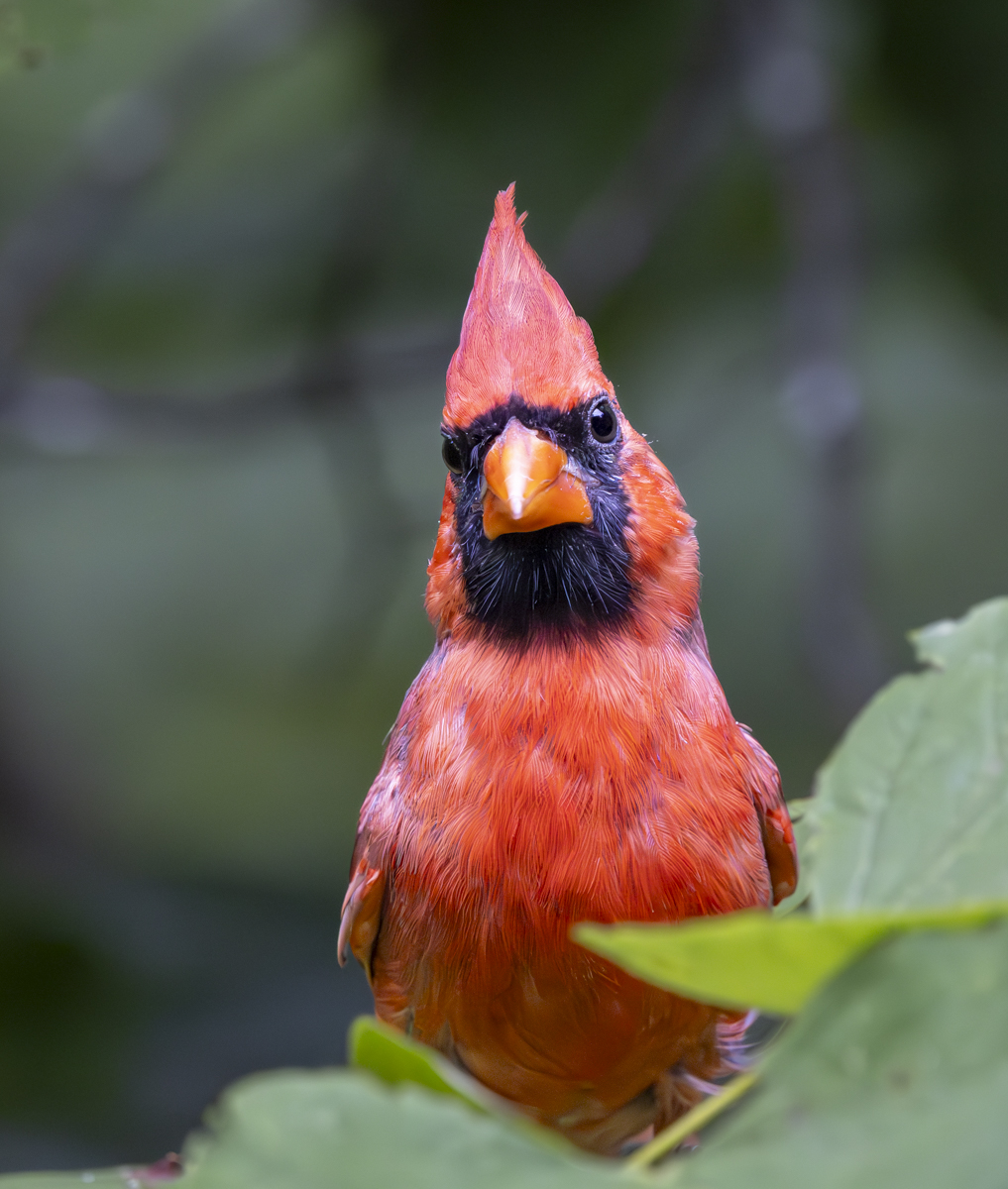
A juvenile male hummingbird with a couple of his gorget feathers in place. He will get his full red gorget this winter. (click photos to enlarge)Young males also typically have heavy streaking of dark patches on their throatsAfter defending his feeder all day, the young male needed a few stretches to loosen upMeanwhile, a male Northern Cardinal is wondering, “hey, what about me?”
Out in the woods, the trail cameras are catching the usual suspects – lots of deer (with this year’s fawns starting to lose their spots); squirrels busy with the heavy acorn and hickory nut crop; and the resident coyote clan making their rounds.
Now came the dog days – day after day of hot, still summer, when for hours at a time light seemed the only thing that moved…
~Richard Adams
The last week has provided a nice break from the typical heat and humidity of this time of year, the so-called dog days of August. Historically, the term was associated with the rising of the star system, Sirius (known as the Dog Star), in late July. It is traditionally one of the hottest parts of the summer and nature seems to heed the call and move at a slower pace (as do we all). But, if you look closely, there is still magic to be found. Here are a few of the high points of these past few weeks here in our woods that the cameras captured.
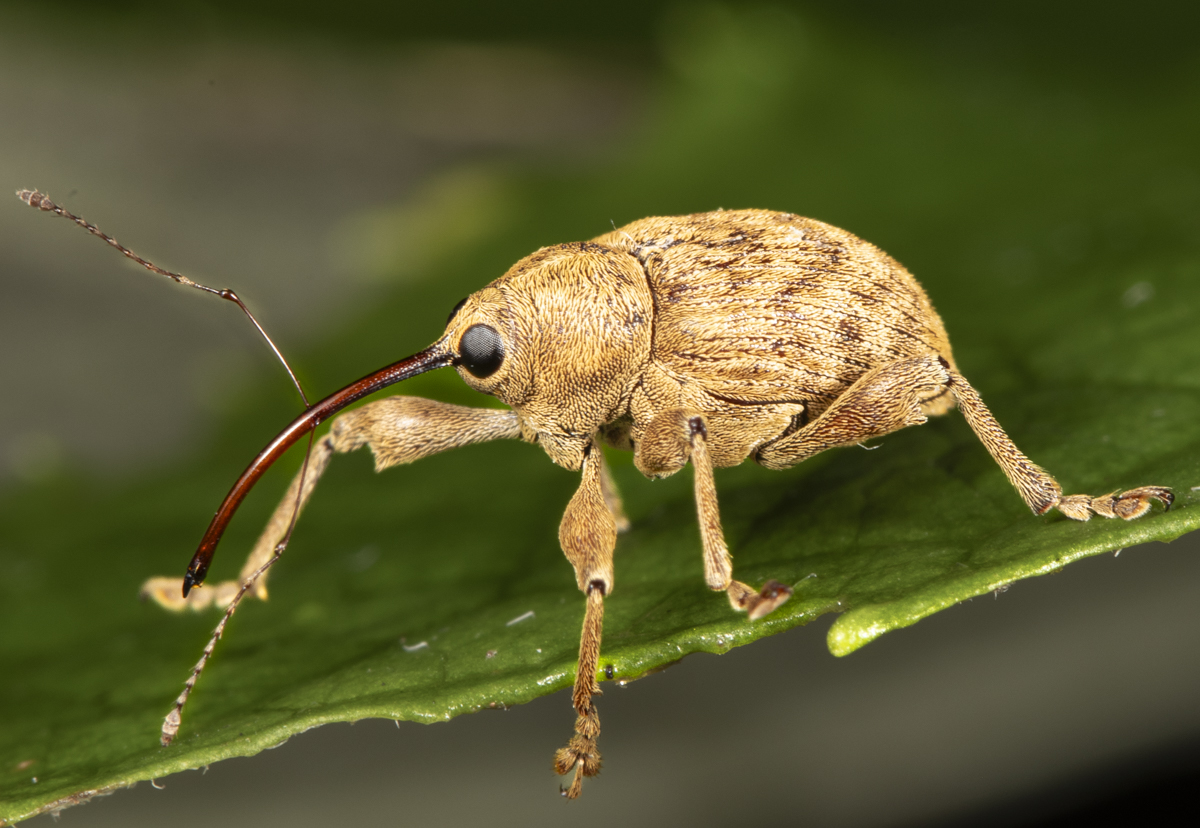
One of my favorite insects, the odd-looking Acorn Weevil. Females lay eggs in developing acorns where the larvae feed on the nut meat and then gnaw their way out of the acorn when it falls. They pupate underground (click photos to enlarge)
My good friend, Art, has loaned me his mirrorless camera for a few weeks while he is at sea so I am shooting some things using that and the amazing Canon 100-500mm telephoto. Here are some of the first images.
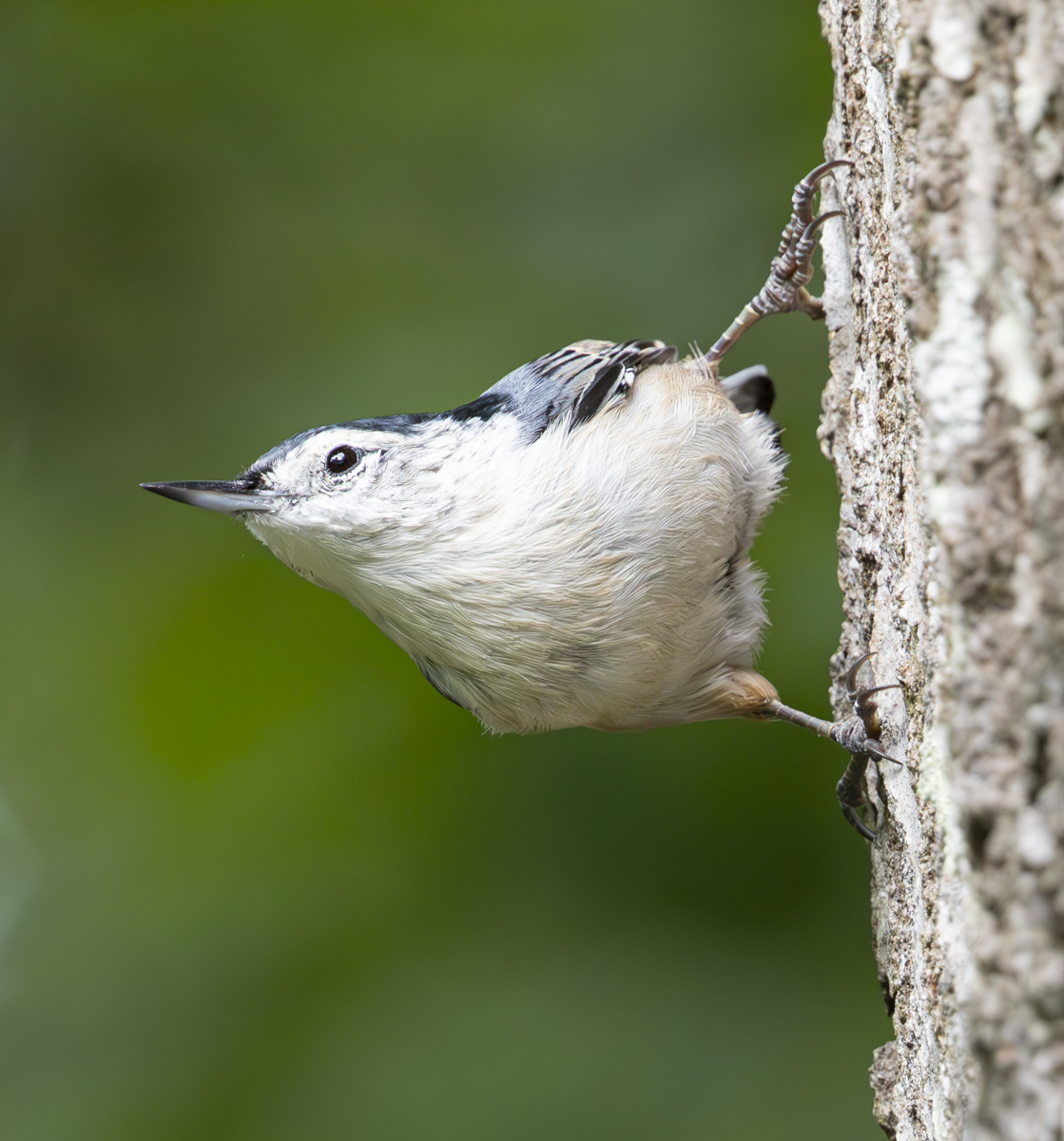
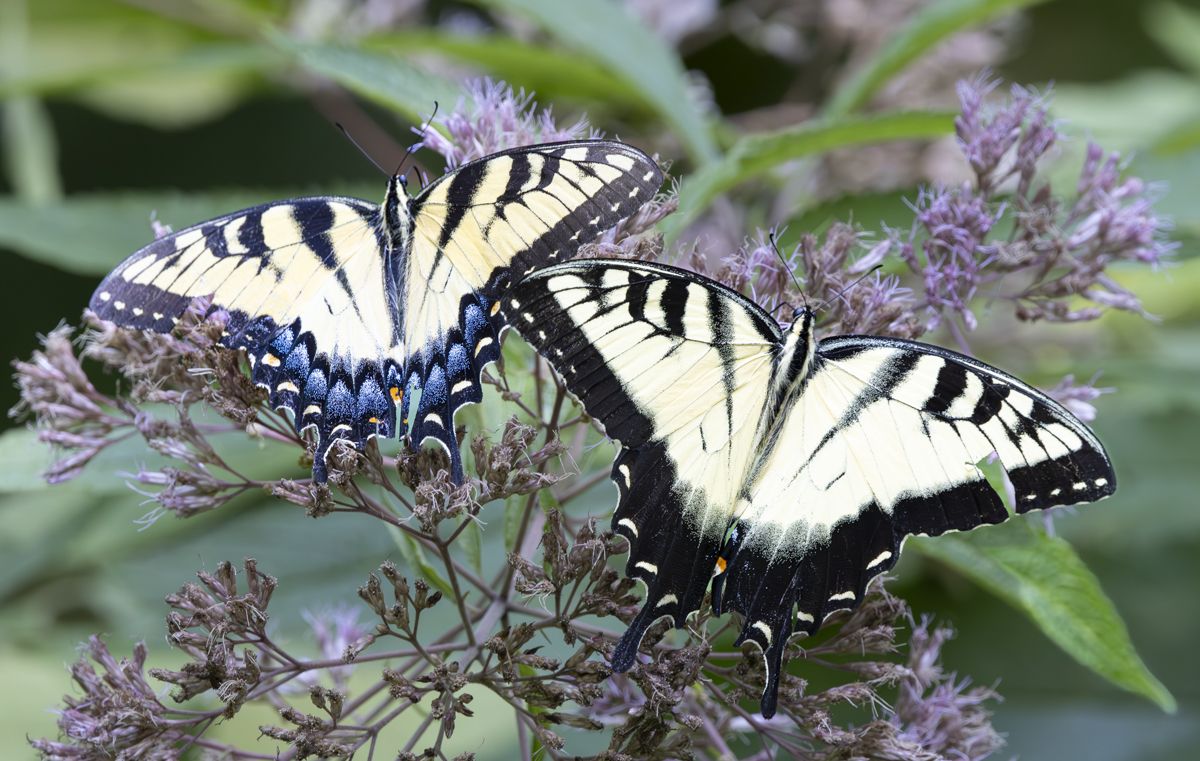
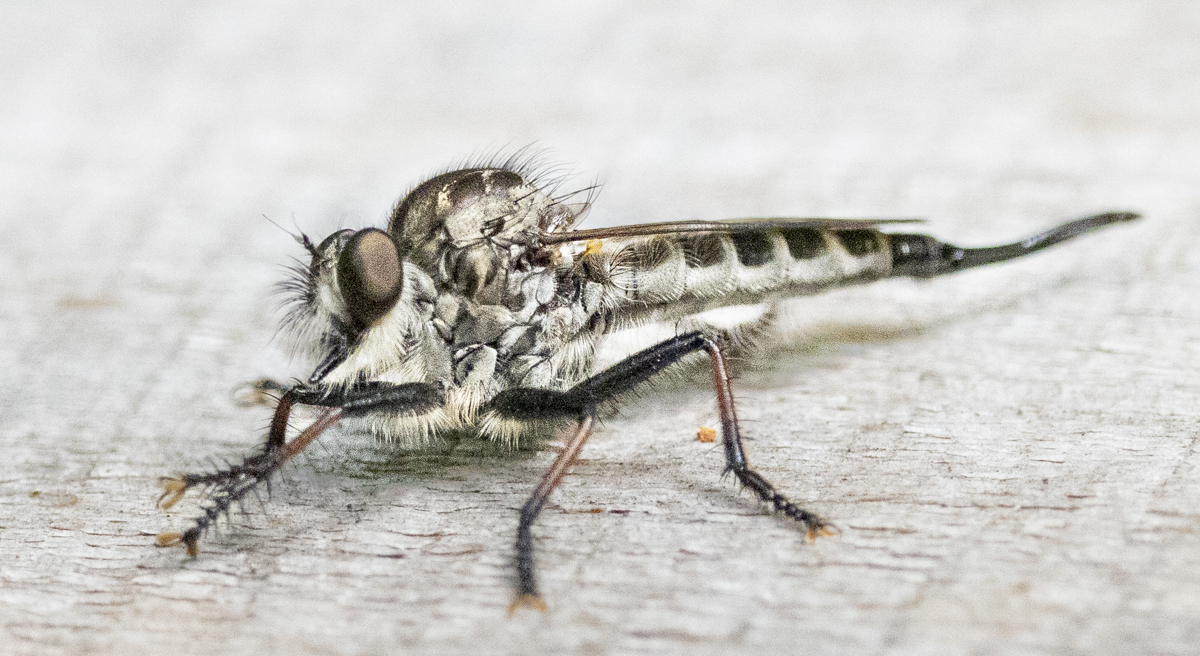
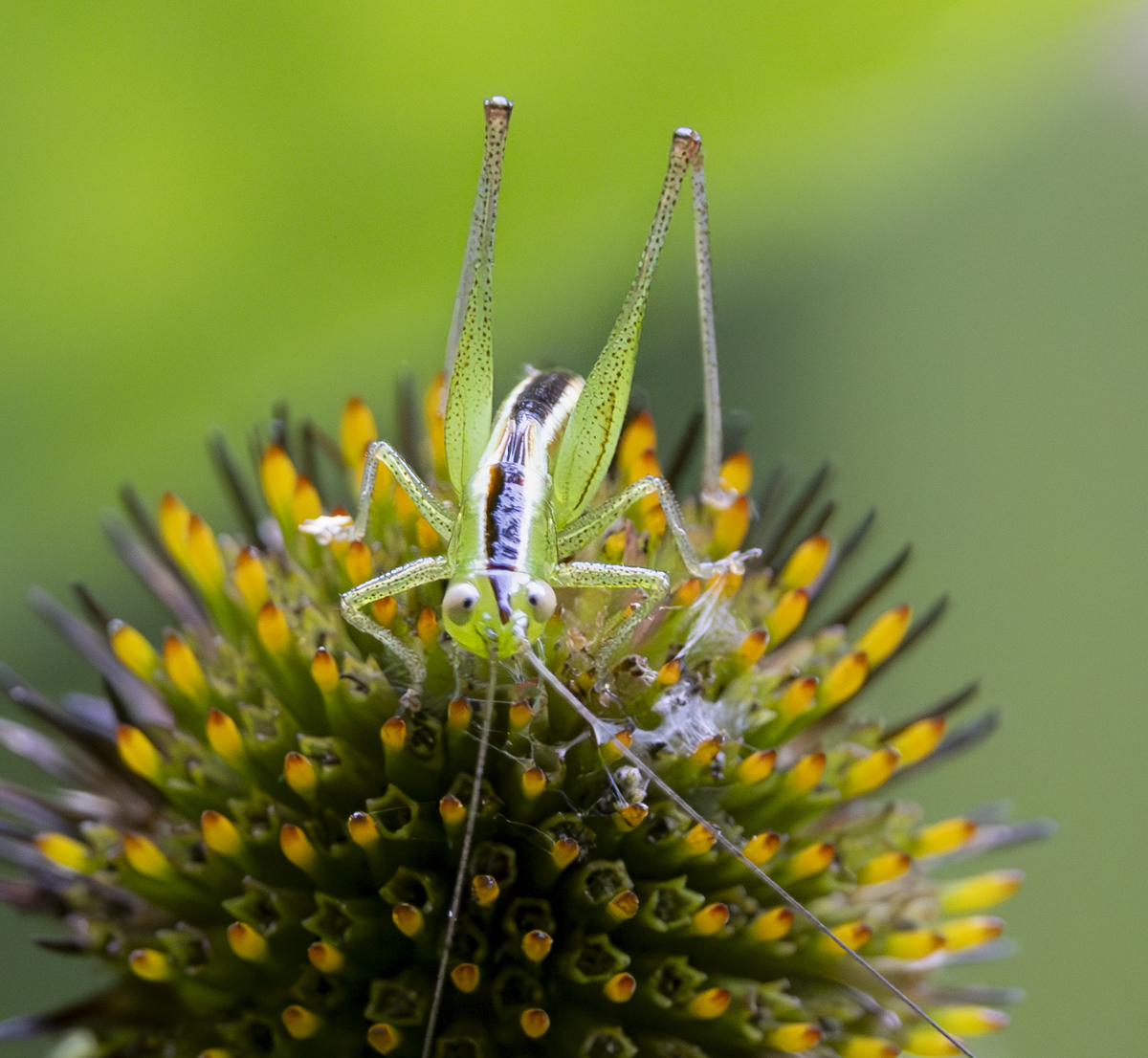
A male Ruby-throated Hummingbird in summer moltA White-breasted Nuthatch checking me out as it approaches the feederAfter a breach in the fence allowed the deer to eat most of our wildflowers, it has been slim pickings for our usual cast of pollinators. The butterflies were glad to see the Joe Pye weed start to bloom this month. Here are a female (left) and male (right) Eastern Tiger Swallowtail on a flower head.A large Robber Fly ready to strike terror into any careless passing insectThis Straight-lanced Meadow Katydid is eyeing me as I approach
The trail cameras also captured some dog day activity, but we’ll start with some cat capers.
The resident Coyotes made several appearances. Most are just brief glimpses as they trot through the field of view at a brisk pace, but sometimes they linger.
There is something to be said for the night. The darkness holds a sense of promise, as if anything could happen.
~Meg Collett
The frequent evening storms have kept me from setting up my moth lights, so with a break in the rain earlier this week, I jumped at the opportunity. I was feeling a bit lazy as I just set out one on the back deck with a sheet tacked to the exterior of the house. I usually also turn on our two deck lights, much to the delight, no doubt, of the resident orb weavers that tend to spin their webs nearby. I checked the sheet every half hour or so until a little past midnight. Here are some of the highlights.
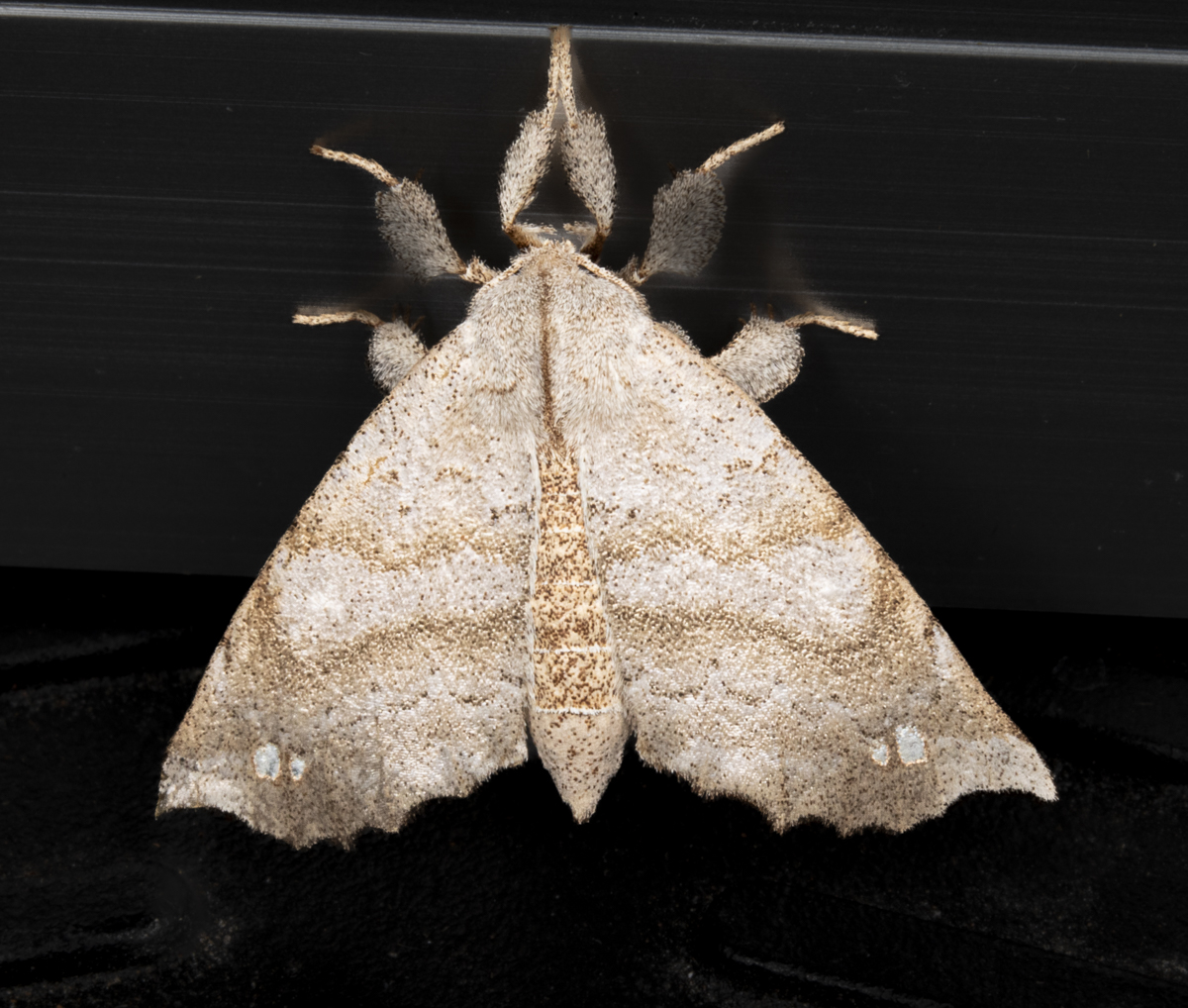
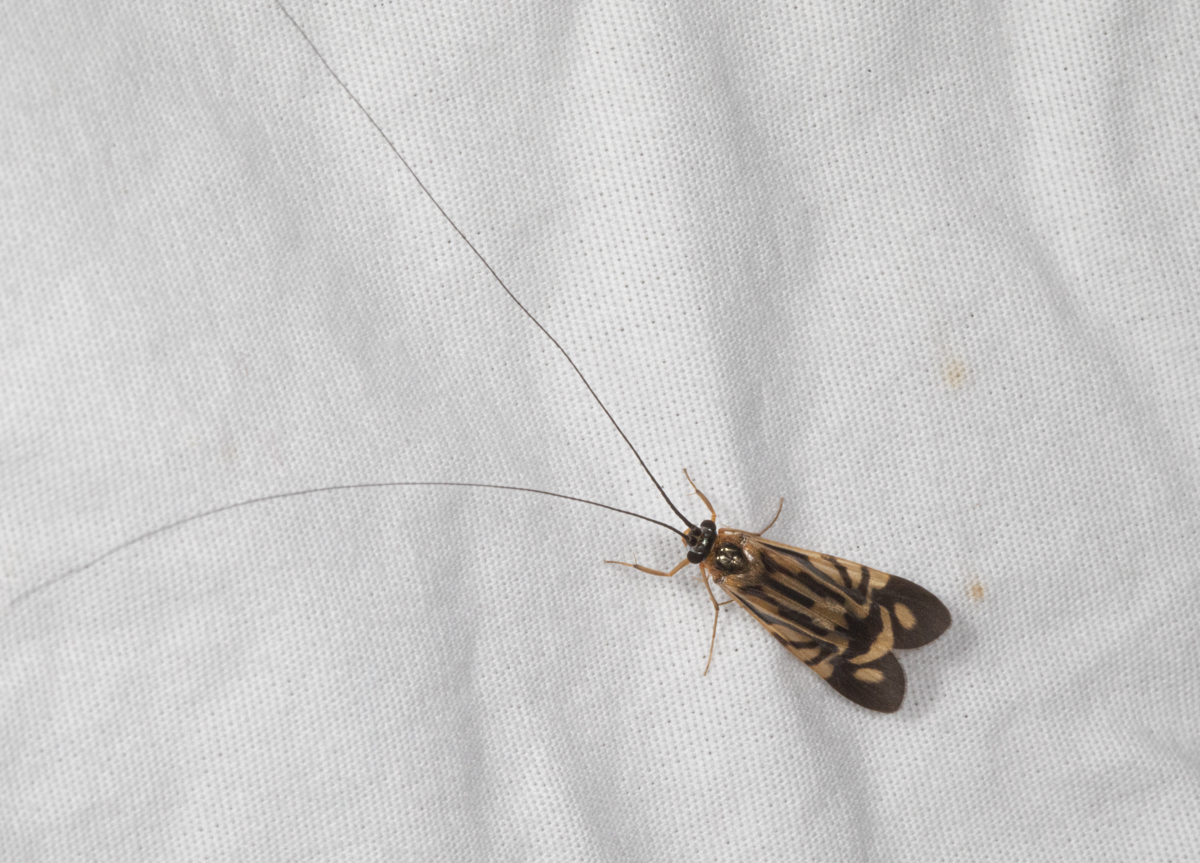
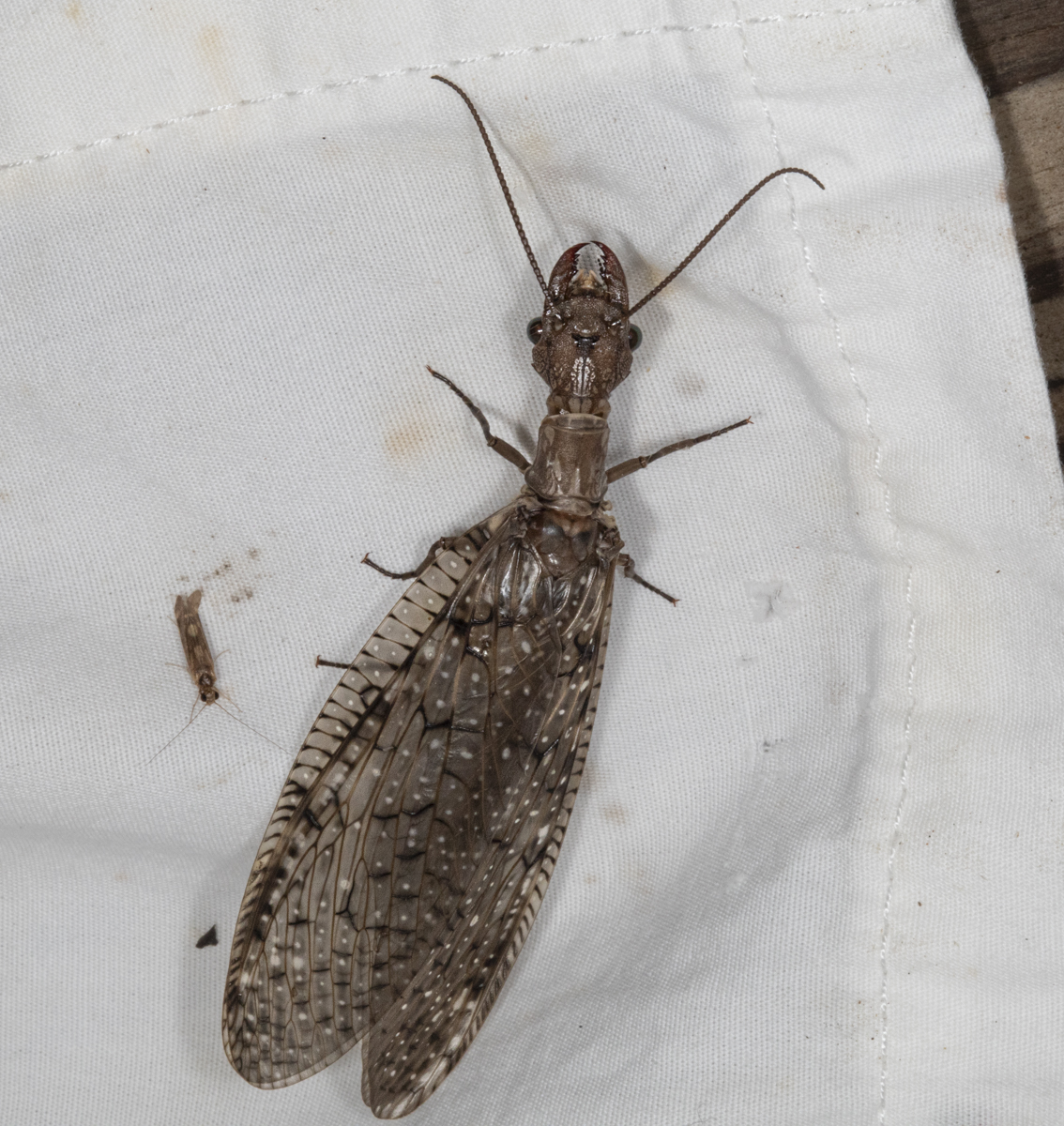
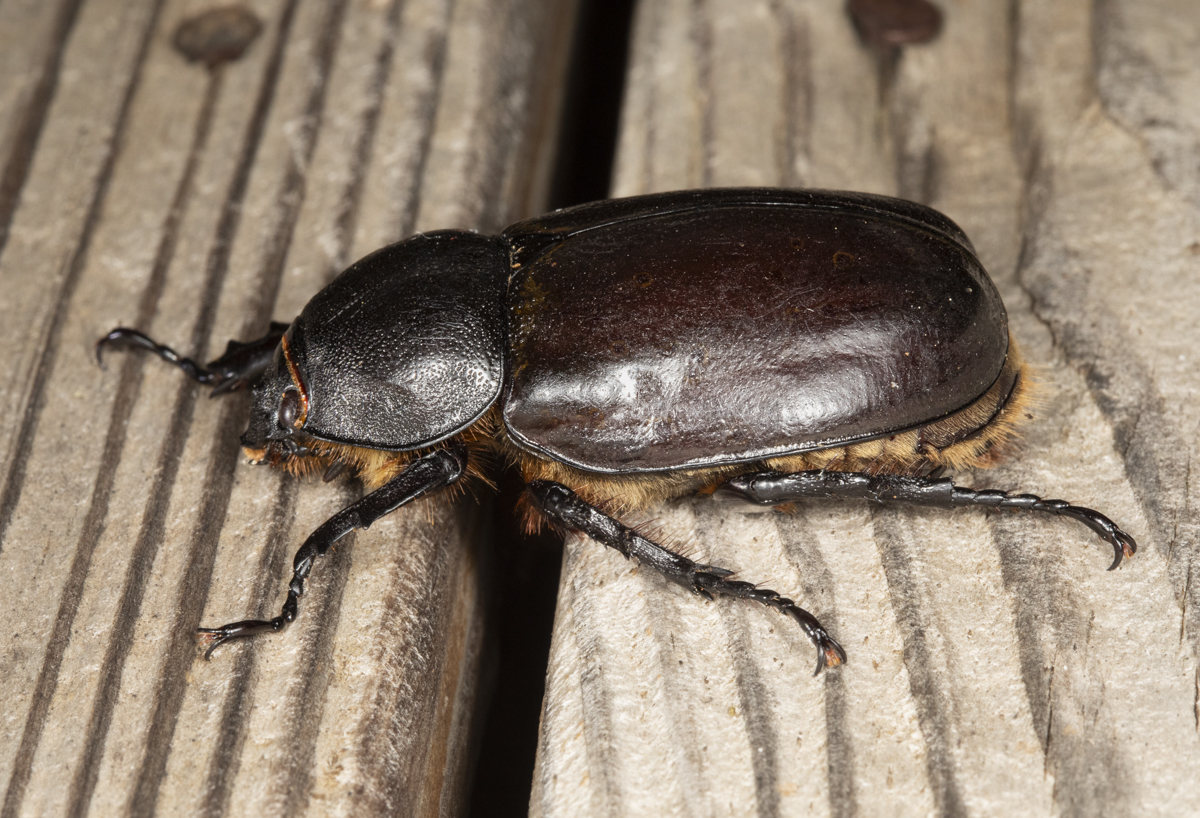
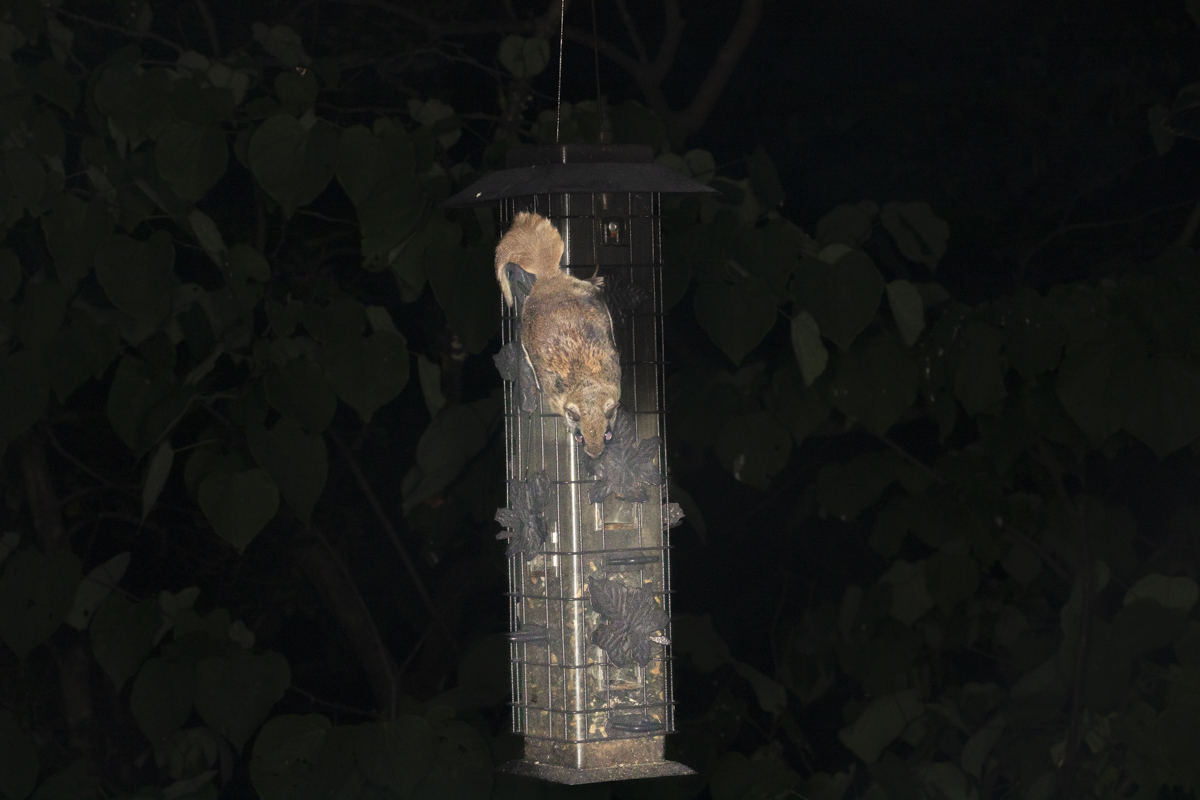
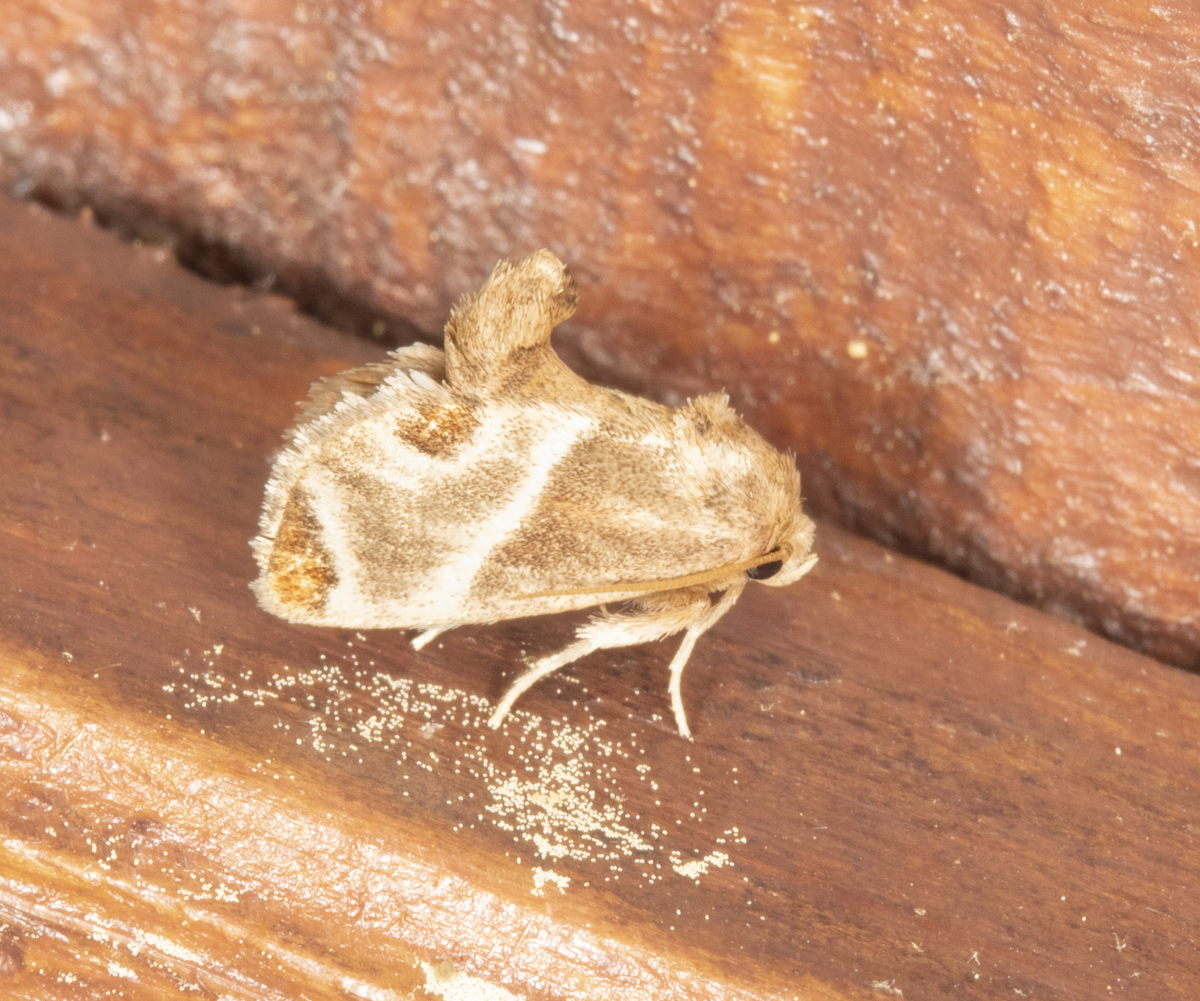
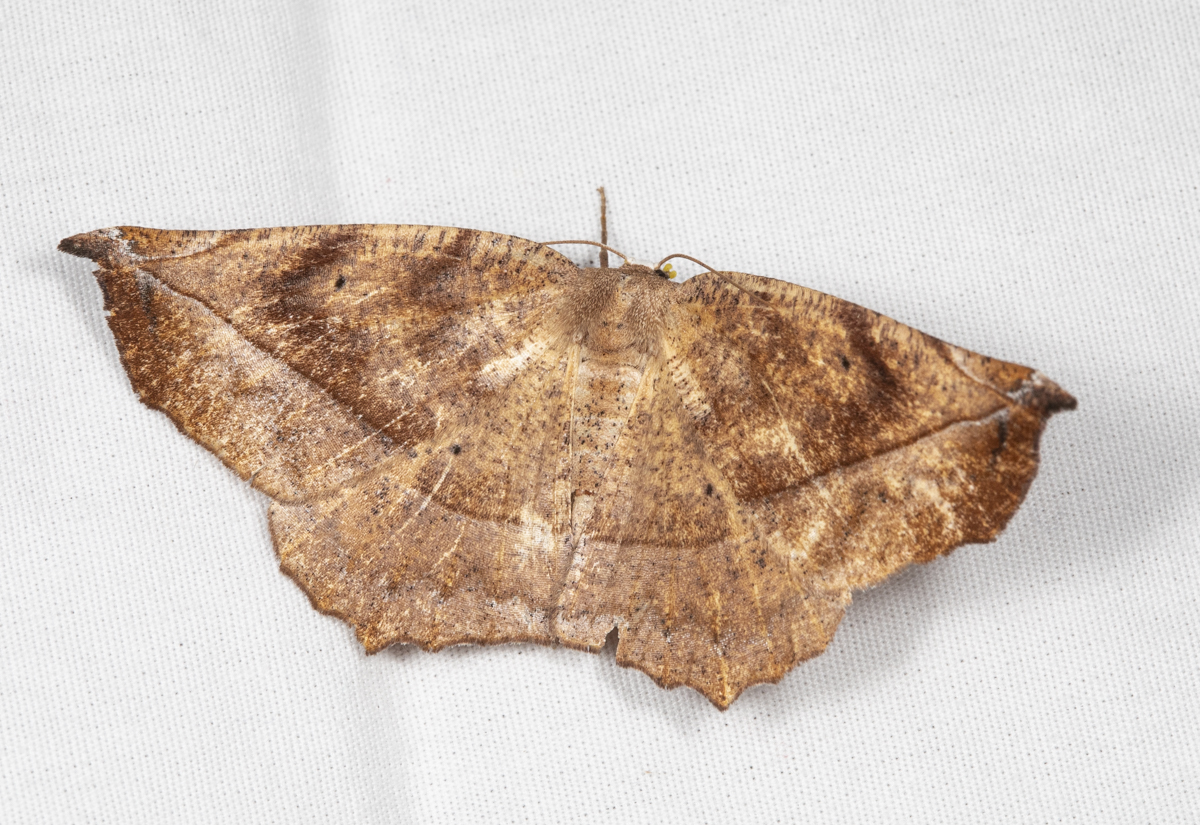
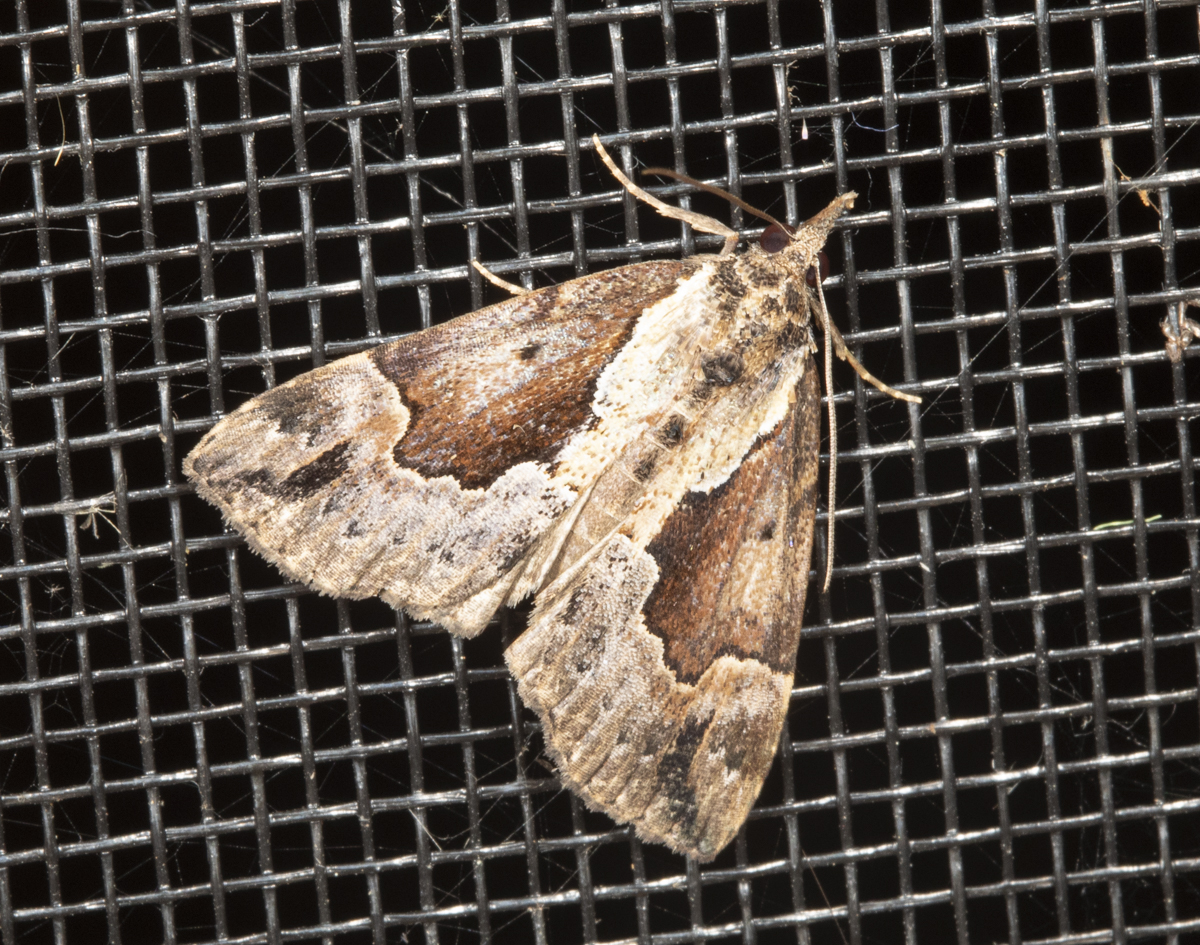
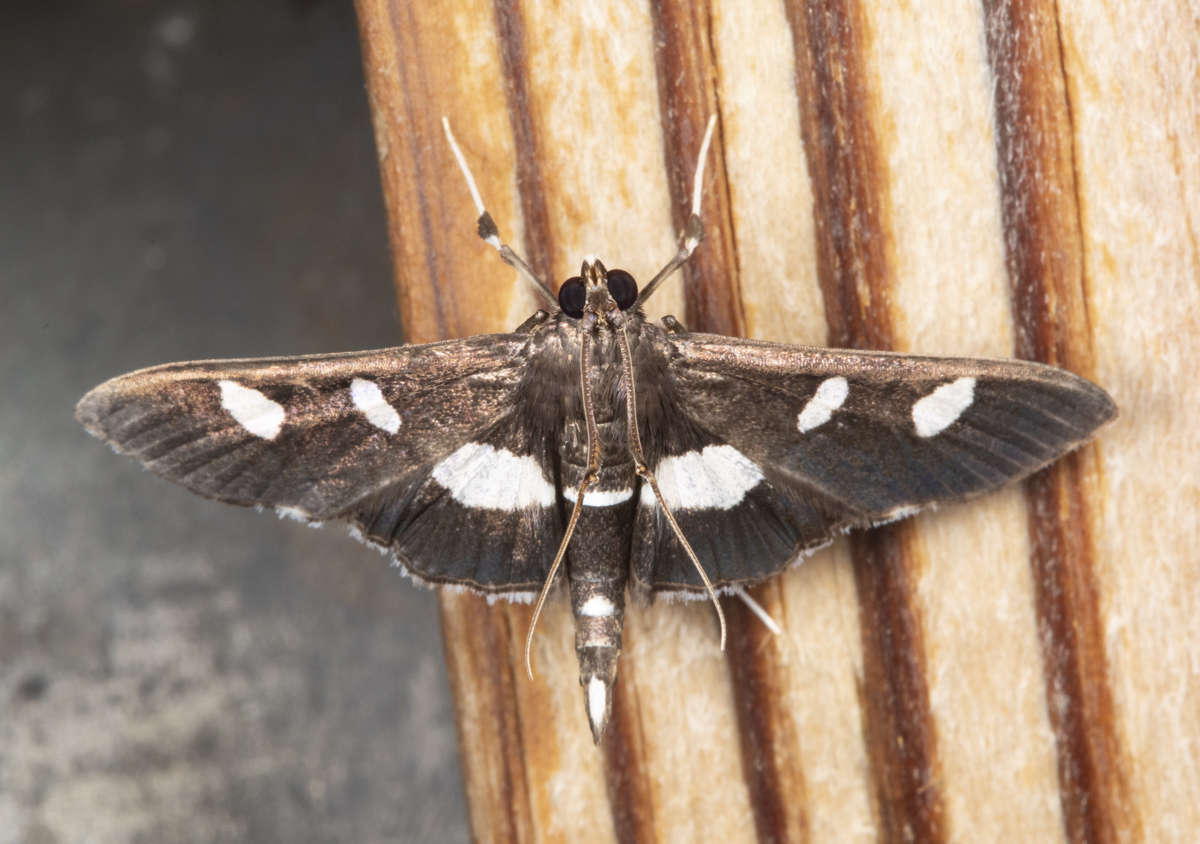
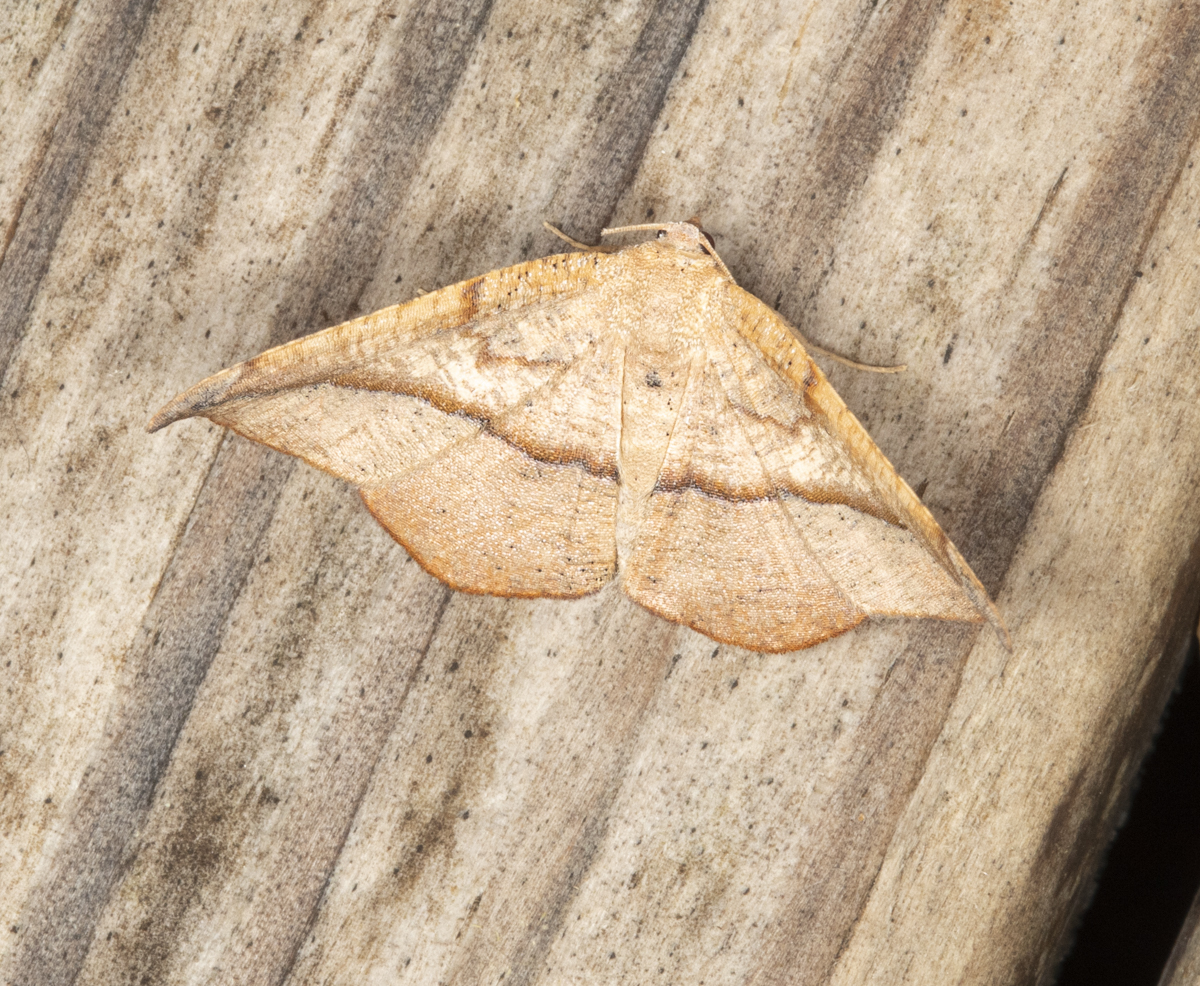
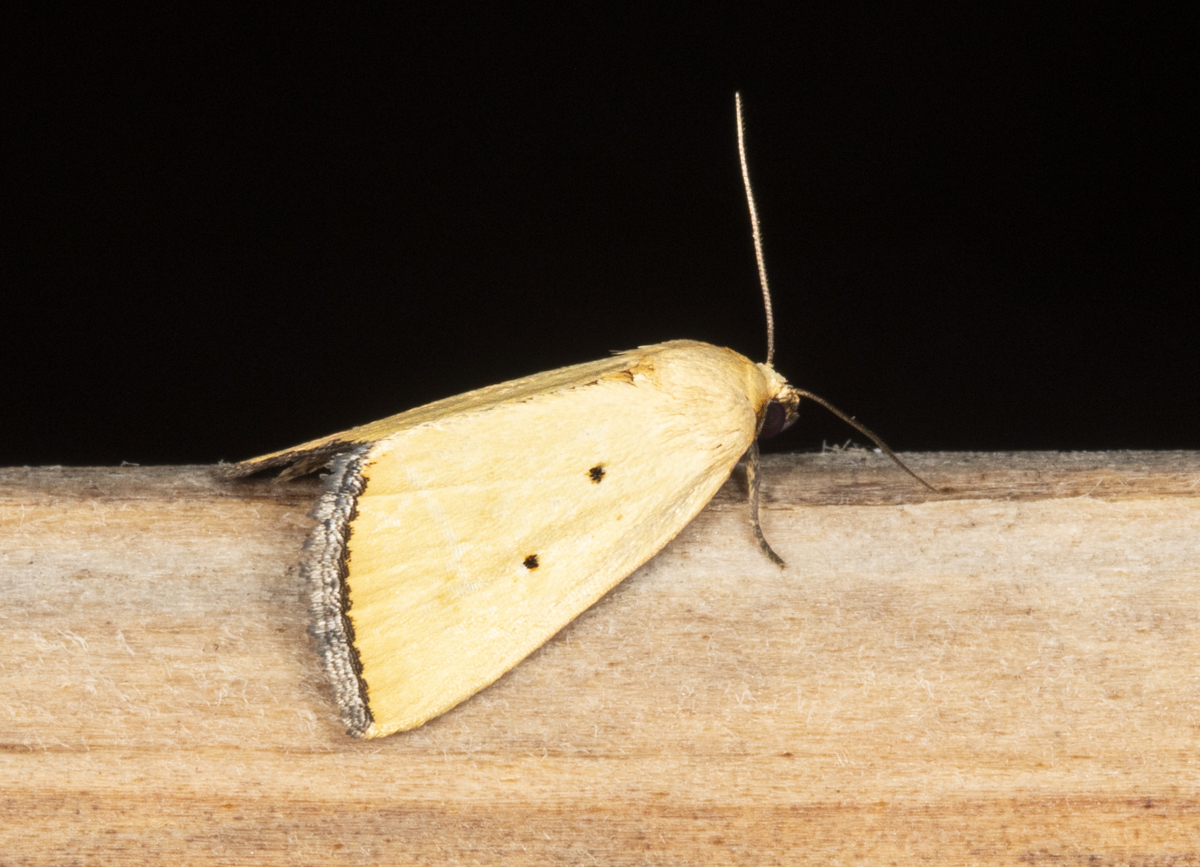
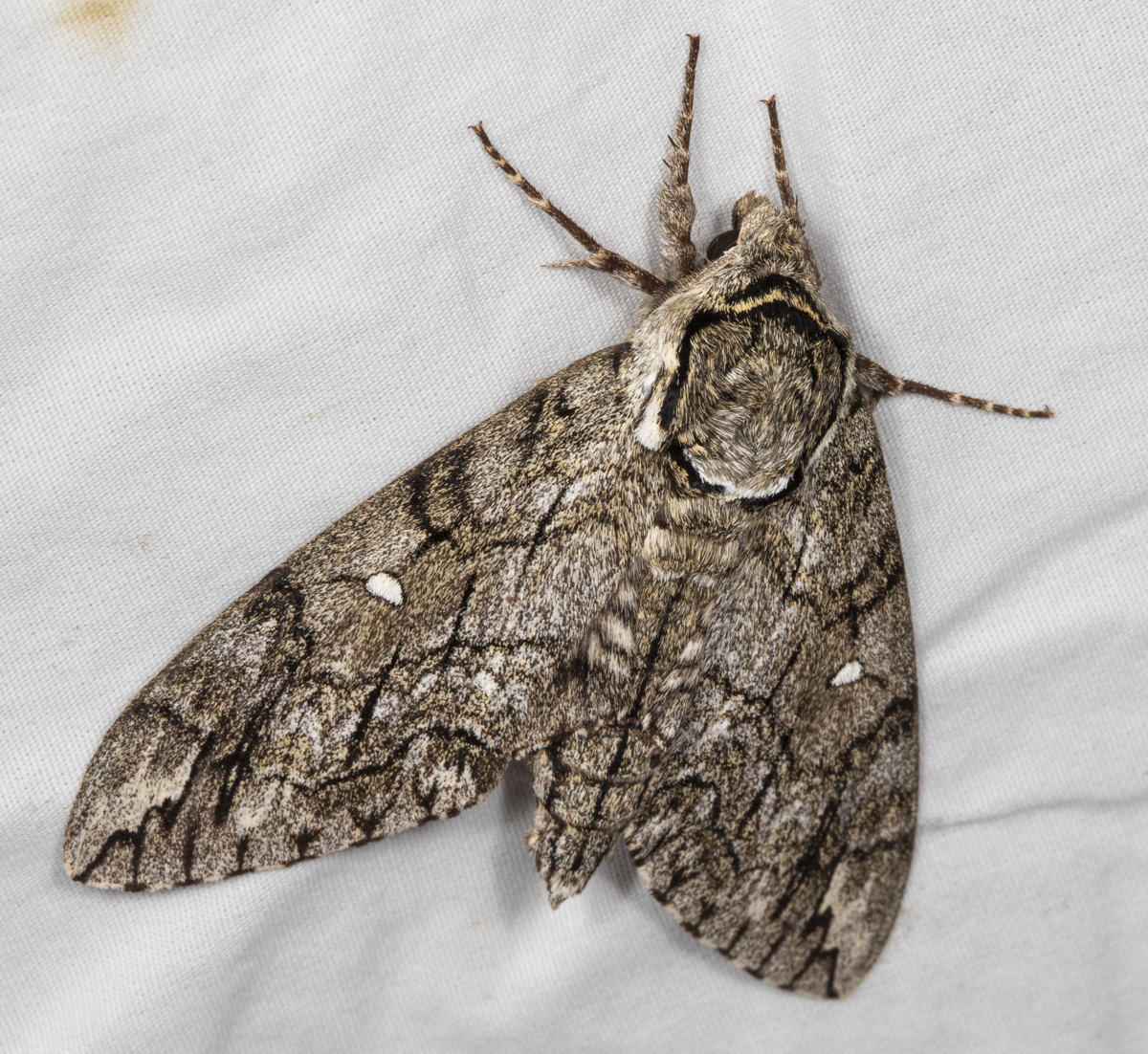
The night started with a new species for me, a beautiful Angel Moth, Olceclostera angelica. Larvae of this species feed on ash. (click photos to enlarge)The most abundant insects on the sheet were several species of caddisflies. This one, the Zebra Caddisfly (Macrostemum zebratum), stood out due to its extremely long antennae. The larvae are net spinners in flowing water.I’m always excited to see Dobsonflies at the moth light. This one is a female (one of two that showed up). It is amazing they are consistent visitors on moth nights since it is probably a half mile or more to the Haw River from our house. The larvae, called hellgrammites, live in fast flowing water. Note the small insect next to it – another type of caddisfly.This huge Scarab beetle was calmly sitting on the deck all night. Though I have never seen one with this coloration, my references say this may be a completely dark female Hercules Beetle, a species we often have come to the lights.Allways happy to see the Southern Flying Squirrels at the sunflower seed feeders on mothing nights. There were two enjoying their free meal while I came in and out to photograph the insects. One never budged, the other would quickly jump into the tree branches to hide every time I opened the screen door.The Black-fringed Leaftier moth, Psilocorsis cryptolechiella. Larvae feed on several hardwood tree leaves and build a leaf shelter.Splendid Palpita Moth, Palpita magniferalis. Larvae feed on ash.Maple Looper Moth, Parallelia bistriaris. Larvae feed on maple and a few other hardwoods. The adult moths often rest on the ground where they blend in very well with the leaf litter.Hebrew Moth, Polygrammate hebraeicum, so named because the pattern on the wings is similar to characters in the Hebrew alphabetShagreened Slug Moth, Apoda biguttata. This distinctly marked little moth was apparently named for its textured scales which reminded the namer of a rough-surfaced type of leather called shagreen.Curve-toothed Geometer, Eutrapela clemataria. Larvae are an amazing twig mimic.Baltimore Snout, Hypena baltimoralis. This distinctive triangular moth is a common visitor on our moth nights. Larvae feed on maple leaves.Grape Leaffolder Moth, Desmia funeralis. These small day-flying moths lay eggs on grape species. The larvae create shelters by rolling grape leaves with silk which contracts as it dries, pulling the leaf edges together.Juniper Geometer Moth, Patalene olyzonaria. Another dead leaf immic as an adult and a twig mimic as a caterpillar.Black-bordered Lemon, Marimatha nigrofimbria. A beautiful little moth whose larvae feed on grasses (espcially crabgrass) and certain morning glorys.Waved Sphinx, Ceratomia undulosa. A large sphinx moth that blends well with tree bark when perched. Larvae are large caterpillars and I often find them on Beautyberry and Frringtree.
I aways enjoy seeing members of the Silkmoth family. Living in the woods means we often have several species of these colorful moths visit our moth lights. Monday night was an especially productive one.
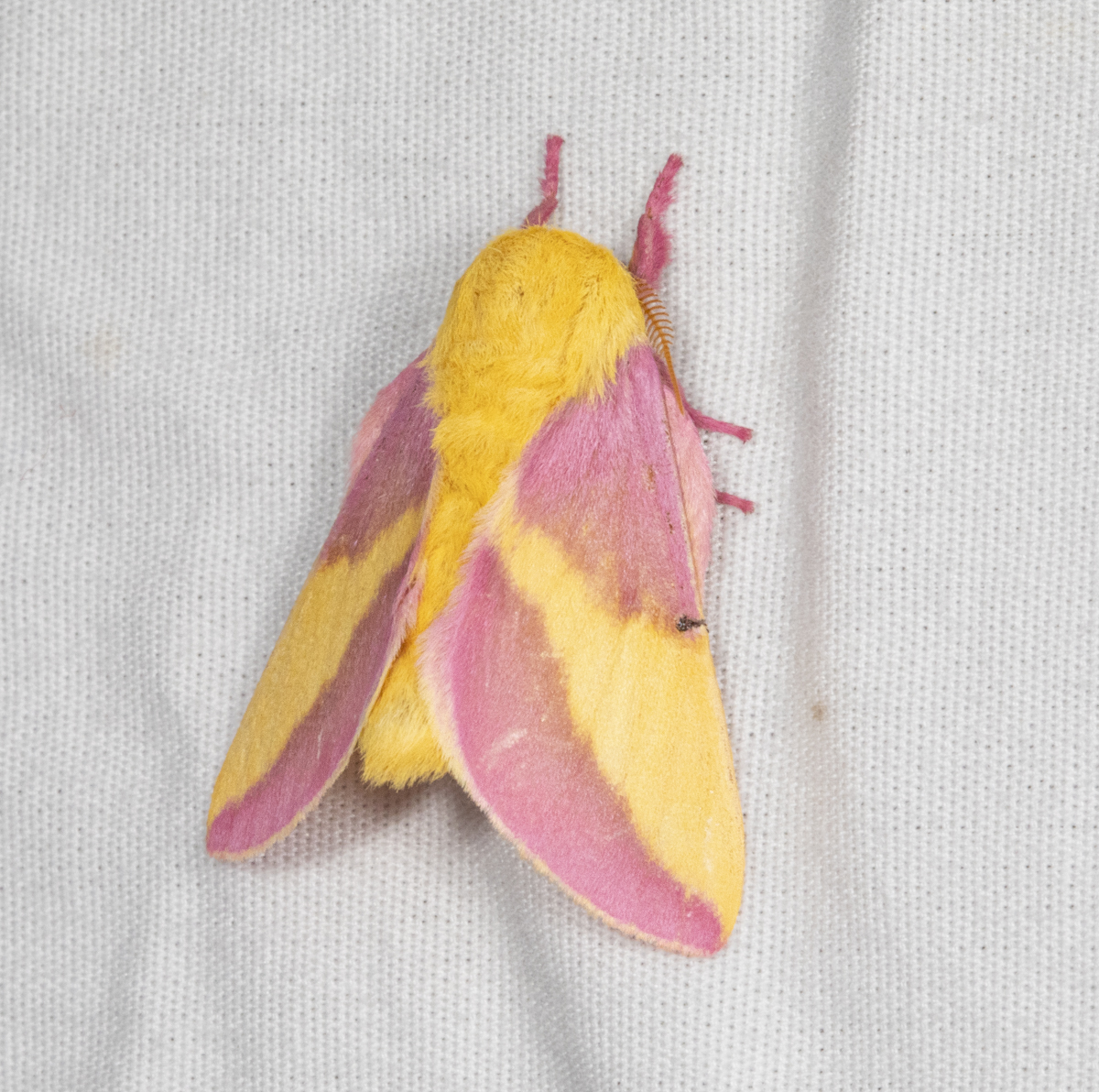
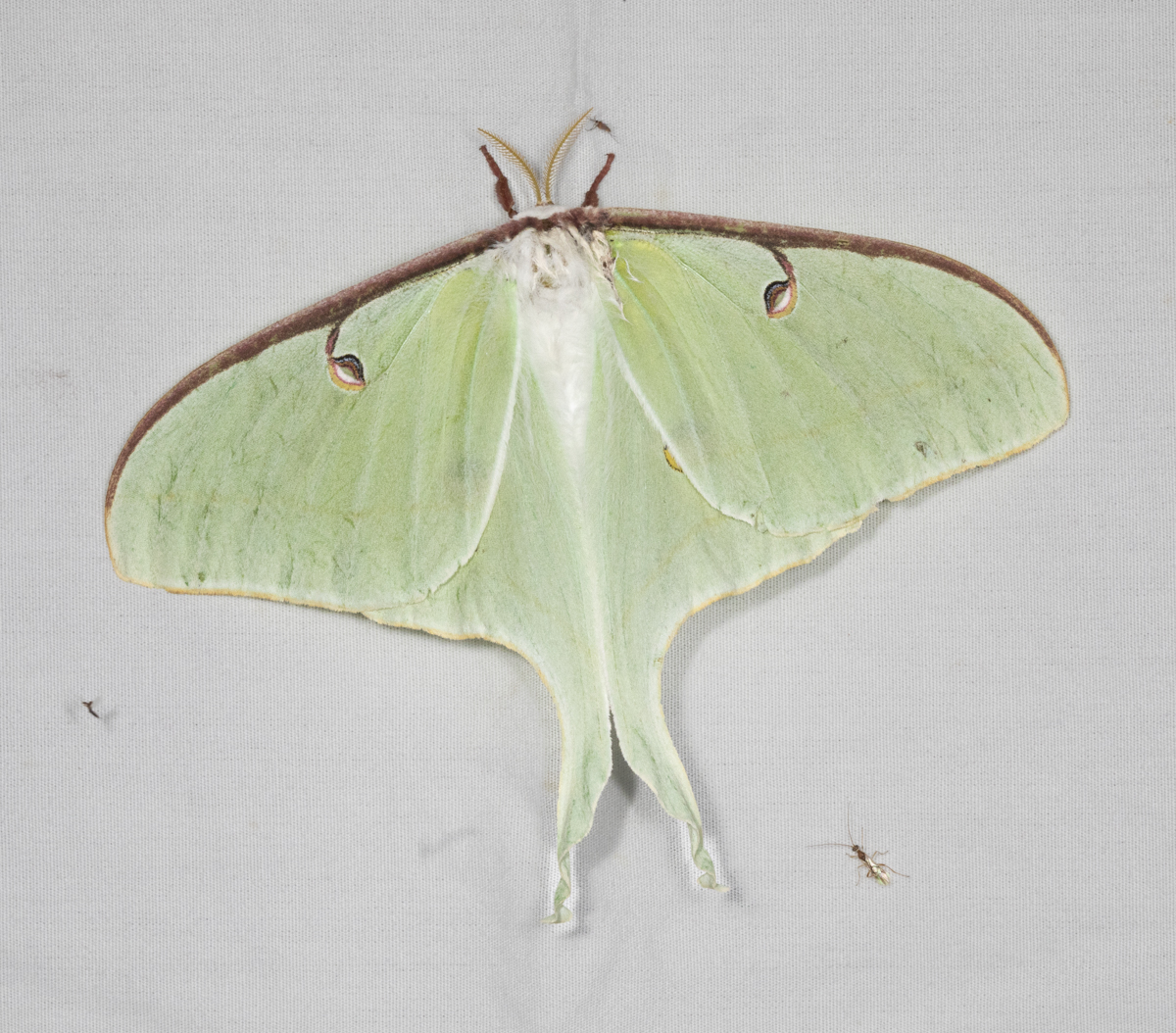
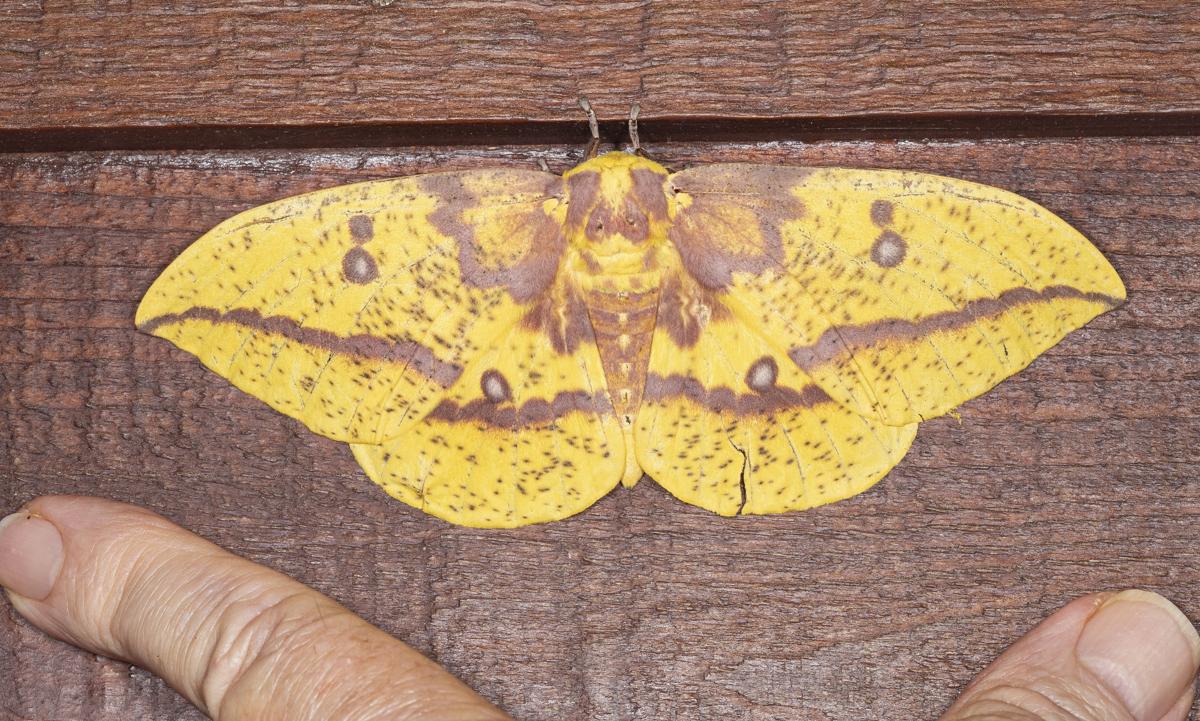
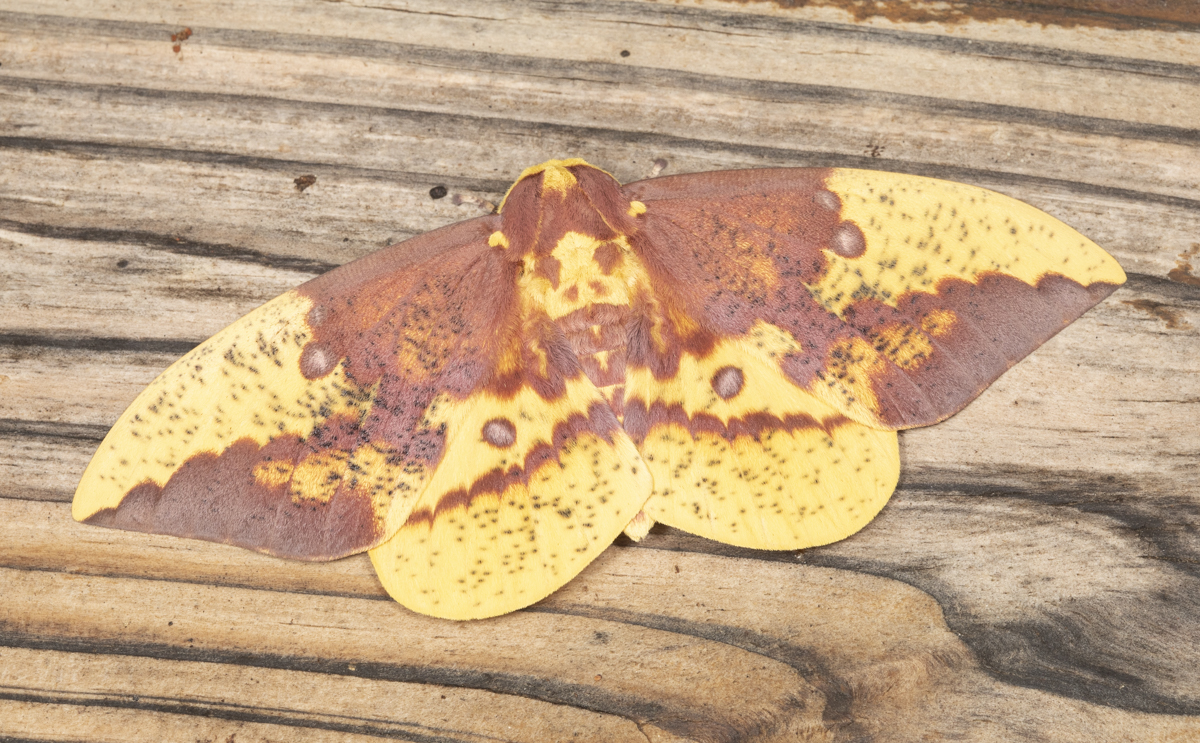
The Rosy Maple Moth, Dryocampa rubicunda, is one of our favorites. I’m not sure what advantage this striking color pattern could give this beauty, but it is a pleasure to see one. They are common in our woods and at one point Monday night, there were seven on the sheet.Luna Moth, Actisa luna. The moth species that sparked my interest in the night-flyers many years ago. Larvae feed mainly on Sweetgum in our area. This large moth with its trailing tails is one of the few night-flying insects that I can positively identify when they fly in front of one of my trail cameras at night.A gorgeous Tulip-tree Silkmoth, Callosamia angulifera. These beauties are one of our more common silk moths as their larvae feed on Tulip Poplar, probably the dominant tree on our property. Cocoons are made of silk inside a folded leaf that falls to the ground when the leaf drops. One more reason to “leave the leaves”.The stars of the night were the Imperial Moths, Eacles imperialis. They are huge moths, (perhaps our second largest behind Cecropia Moths) with females (like this one) often reaching 6 or 7 inches in wingspan. Male Imperial Moths tend to have more darker colors in their wings than females, but these moths can be highly variable in their patterns and colors. Around midnight we had seven Imperials at the lights (4 females and 3 males). When they first come in they are very erratic, flying all over the deck, hitting the sheet, the light, and me. Then they suddenly land and freeze their movements.
As always, it is a treat to see some of the amazing creatures we share these woods with and to learn more about their life histories. We will certainly do it again soon (if it ever stops raining!).
Wherever we go in the mountains, we find more than we seek.
~John Muir
My long-time friend, Scott, is working at Mount Mitchell State Park this summer so I decided to pay him a visit last week. It was good timing, since the predicted high temperature here at home was in the mid- to upper nineties while up there atop the highest mountain in the Eastern Unites States, it was in the low seventies! Melissa was leading a museum workshop down the Blue Ridge Parkway all week so this was a solo trip to see Scott and some other friends in the area.
It was a real treat to spend time in our high elevation mountains (click photos to enlarge)
On his days off, Scott has been photographing some hummingbirds that regularly visit a patch of flowers near the far end of the restaurant parking lot. I’m always up for a photo challenge, so we spent some time in the morning and afternoon standing by the flowers and shooting whenever the dominant immature male hummingbird visited. We did see one or two interlopers from time to time, but the dominant bird quickly chased them off (good way to work up an appetite!). It was overcast and breezy (and very cool!!) so that added another challenge as we both tried to capture the action.
One of the “interlopers” sneaking in for some nectar while the guardian male was preoccupied
The flowers were so thick and, with the breeze, there were few times that one of the birds was clearly visible for a photo. But, we kept at it.
The dominant male finally came up high enough to photograph. Young males (hatched this year) may show a few red neck feathers (the gorget) in late summer. One more as a bird comes into the bee balm
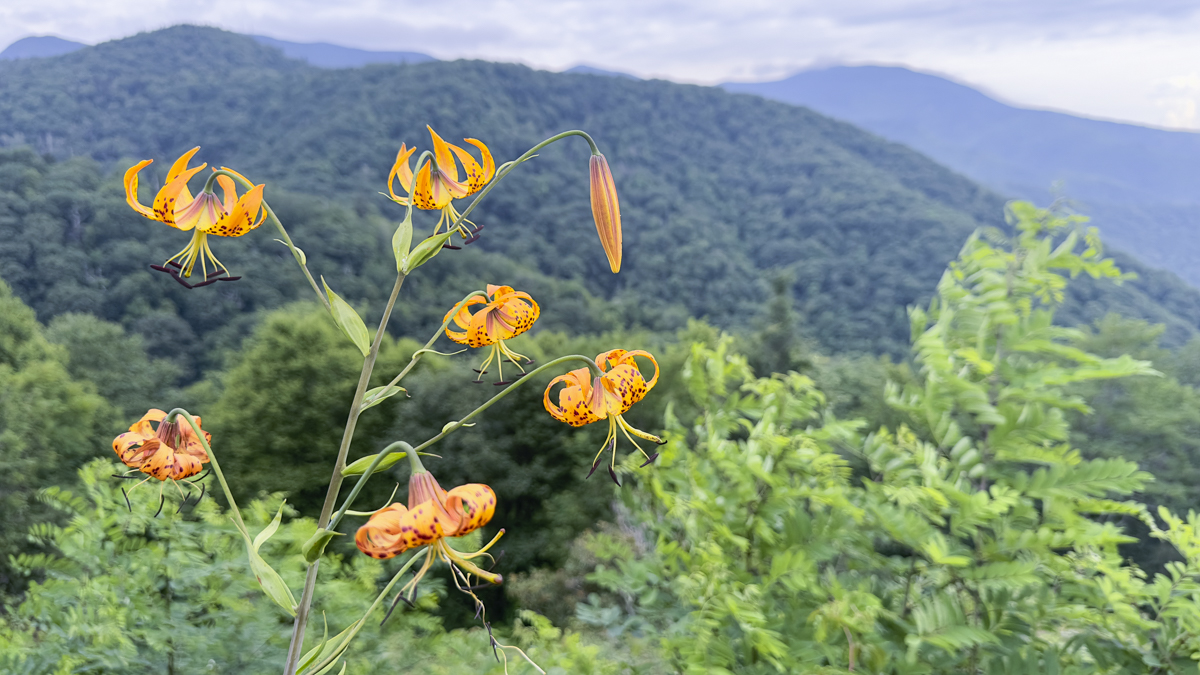
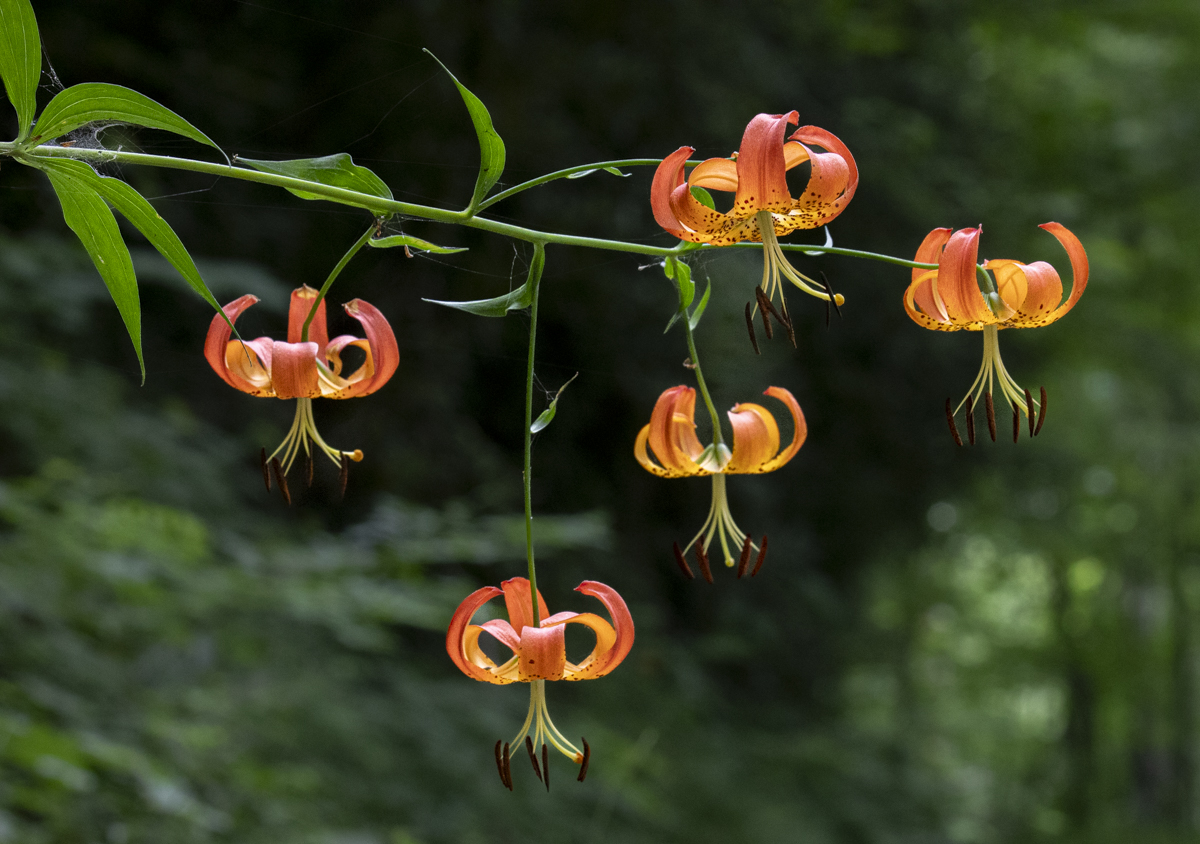
I probably got about 6 decent photos the whole time we were there but it was fun trying to anticipate the hummingbird’s moves. Between our two bouts of hummingbird stalking, we drove down the Blue Ridge Parkway to look for wildflowers, especially the abundant and gorgeous Turk’s Cap Lilies (Lilium superbum). These are the largest of our native lilies reaching heights of 4 to 8 ft. A single plant may have as many as 40 flowers.
Turk’s Cap Lilies in bloom along the parkwayThe stunning orange color, recurved petals, and long stamens jump out from the background of green along a stream on a cloudy day
Hummingbirds and large butterflies, like Pipevine and Eastern Tiger Swallowtails, are the primary pollinators of Turk’s Cap Lilies.
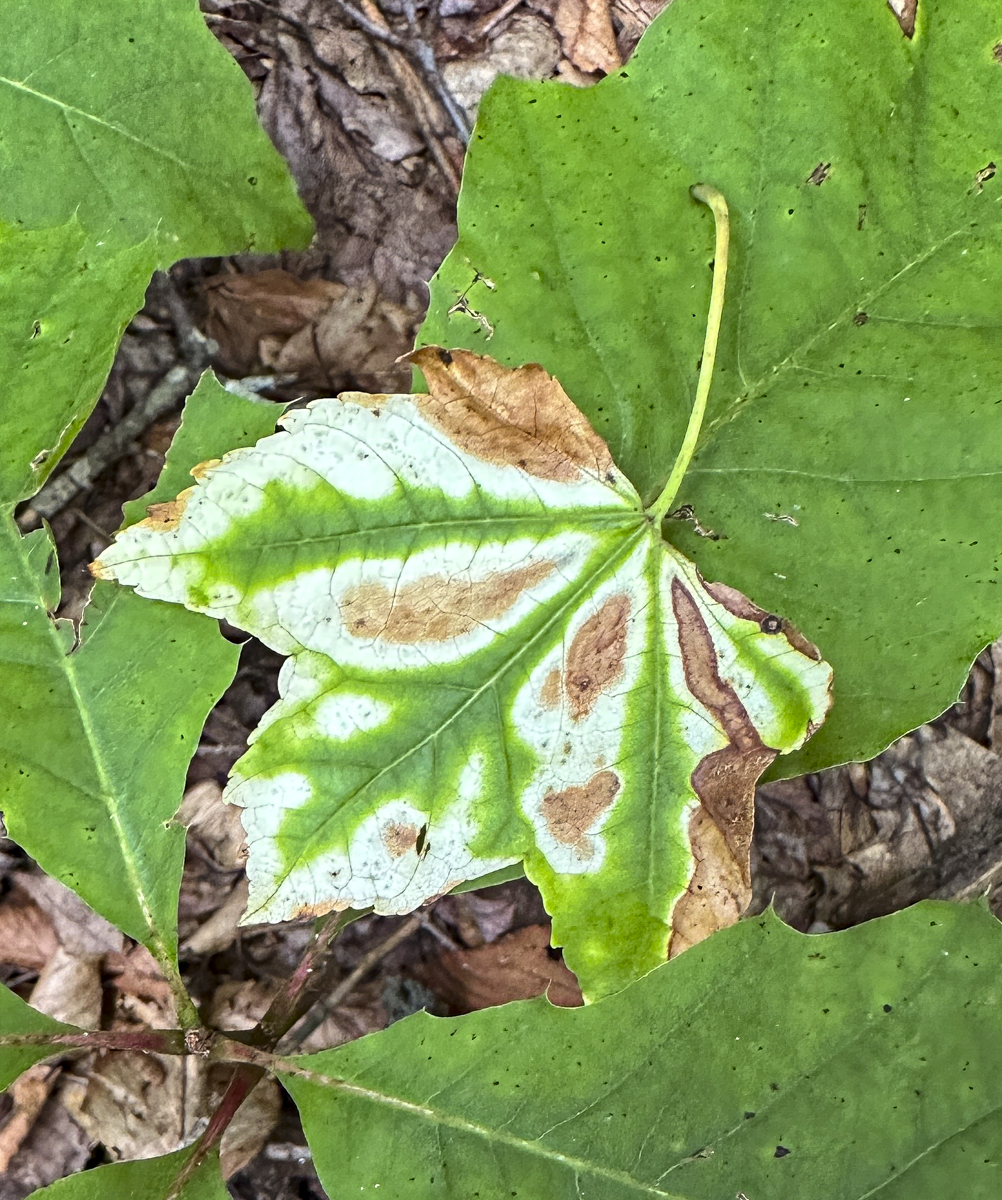
A fallen leaf caught my eye with its odd color pattern. Not sure what causes this.
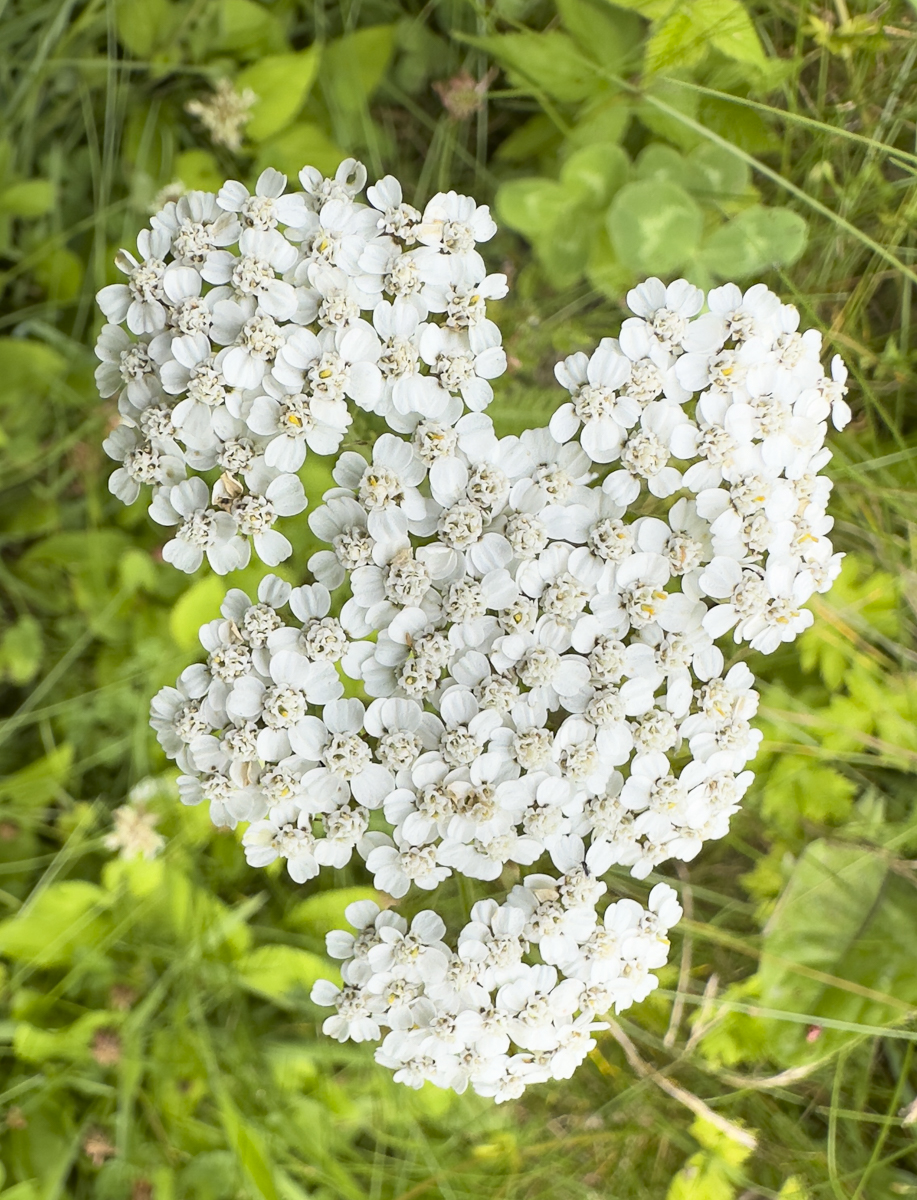
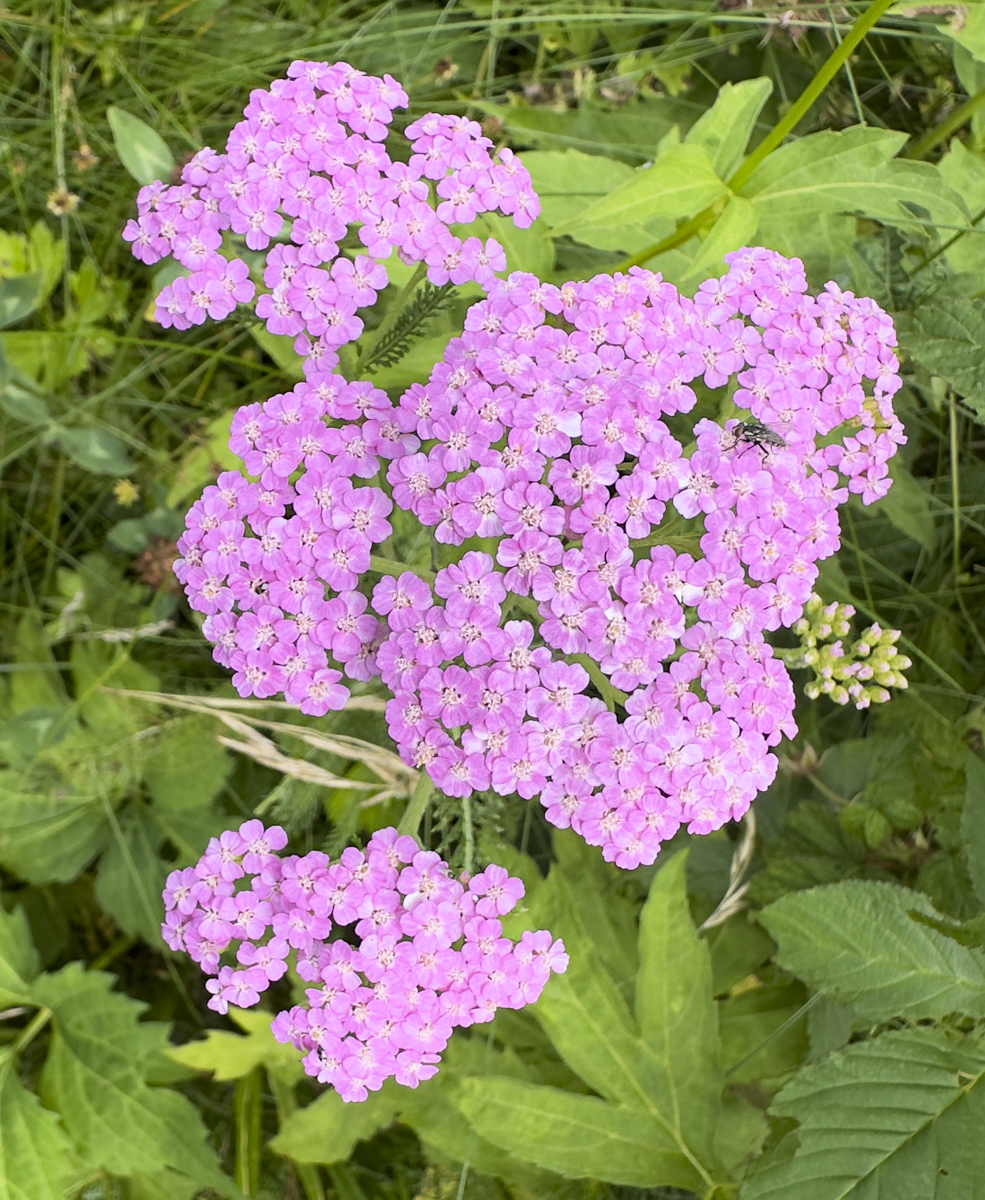
We found another plant puzzle back up on the mountain near the park office. Common Yarrow, Achillea millifolium, was blooming in scattered clumps along the roadside. Yarrow is one of those plants that has a wide native range in the northern hemisphere, but is considered both a native and non-native since it is difficult to discern its true distribution. It is a good pollinator plant and has been used for centuries for various medicinal purposes. The genus name is after Achilles, who used plant extracts from yarrow to treat soldiers’ wounds. The species name means “a thousand leaves” referring to the highly divided leaf form. Many tribes in North America used yarrow to treat a variety of ills from wounds and burns to colds and headaches.
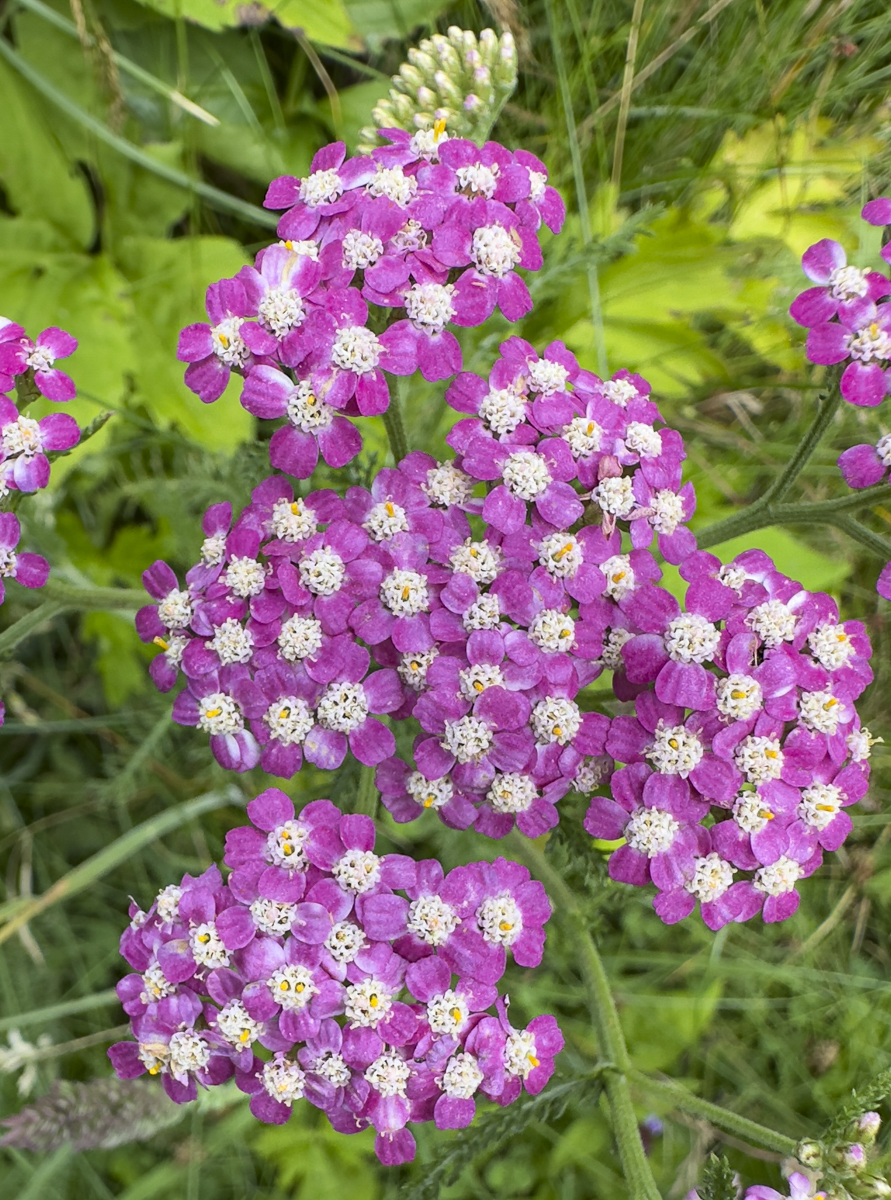
The usual color is white, but we observed three distinct colors of yarrow within a space of just a few yards – white, pink, and magenta. Is this just natural variation, hybridization with cultivars, or something else like soil conditions?
A white clump of Common YarrowPink flowers are also fairly common at Mount MitchellThere are a few clumps of this magenta-colored yarrow with white centers. This photo doesn’t do the color justice – it really pops when you see it among the green grasses and other low plants
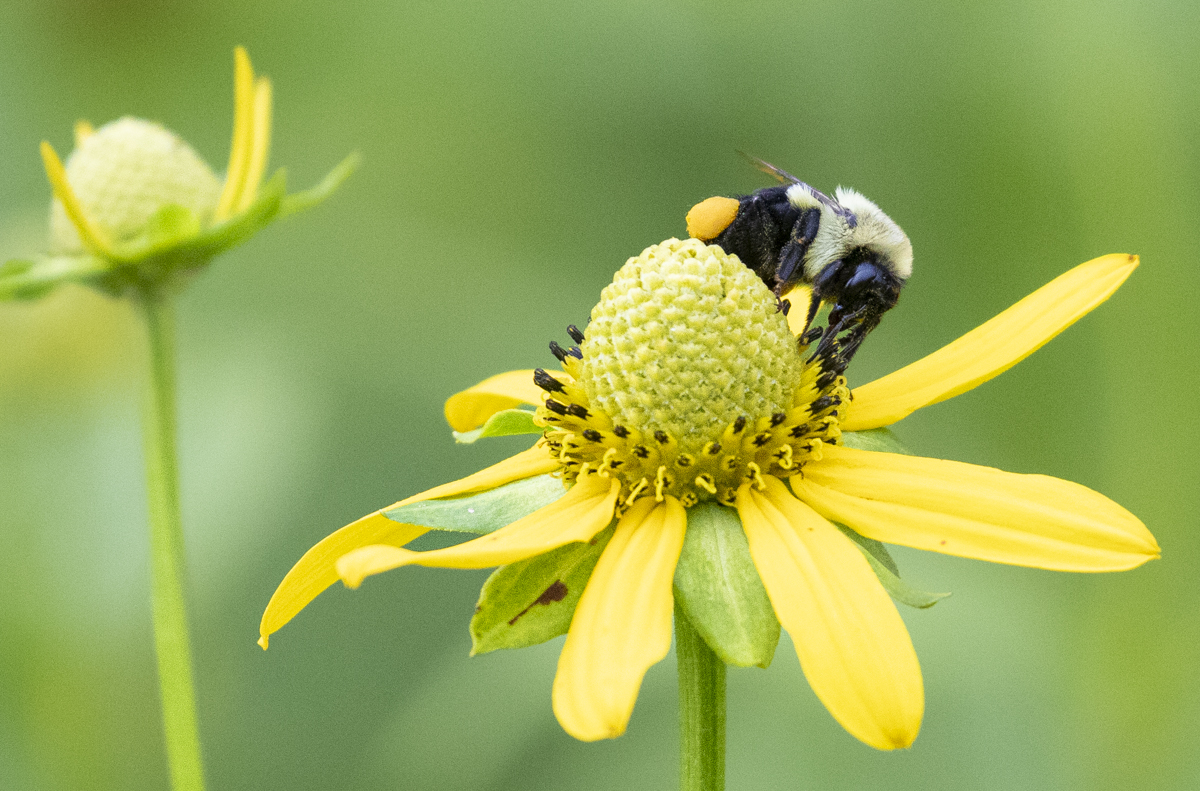
Back at the flower patch, there were other critters visiting the flowers besides the hummingbirds. As it was a cool and breezy day, the main pollinator insects I saw were the numerous bumblebees working the blossoms.
A bumblebee gathering pollen on a Green Conehead flower
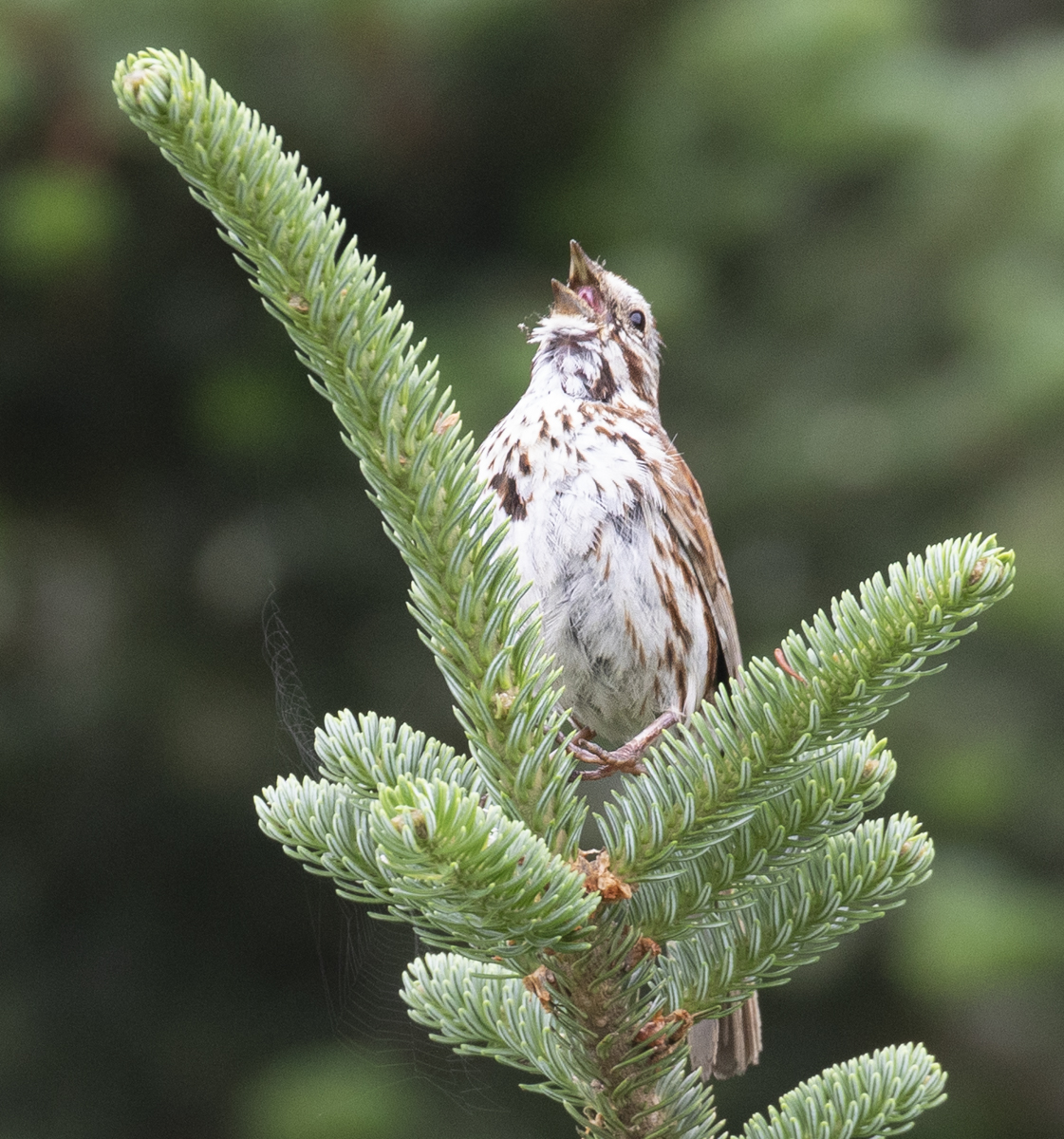
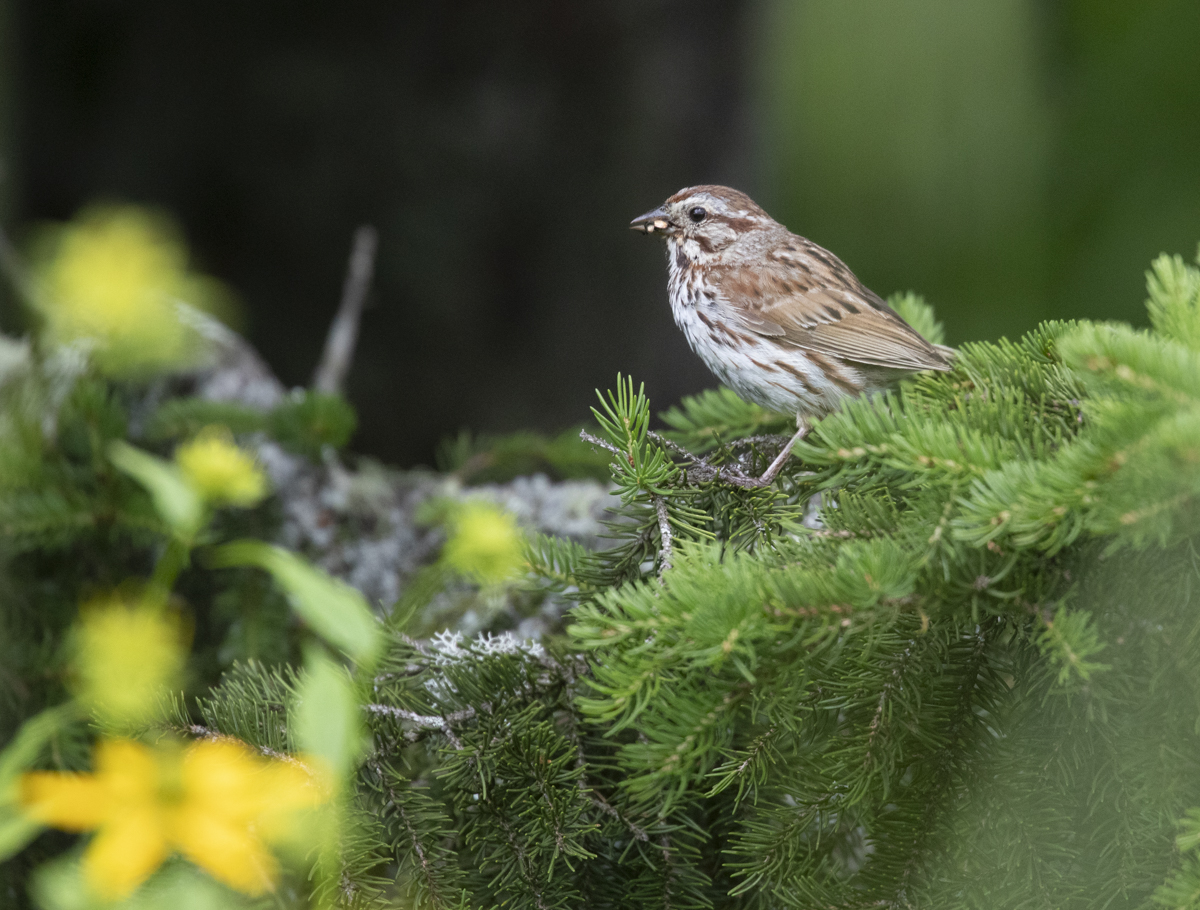
We also had a few other bird species drop by, mainly in the trees behind the flowers – a Song Sparrow, Dark-eyed Junco, and some Cedar Waxwings. The sparrow would sit atop a branch and loudly sing. Then we noticed plant stems moving in the flower patch, time and again in the same location. That meant a nest in the flower patch.
Song Sparrow singing its loud sweet songA Song Sparrow bringing in some insects and/or spiders to feed its nestlings
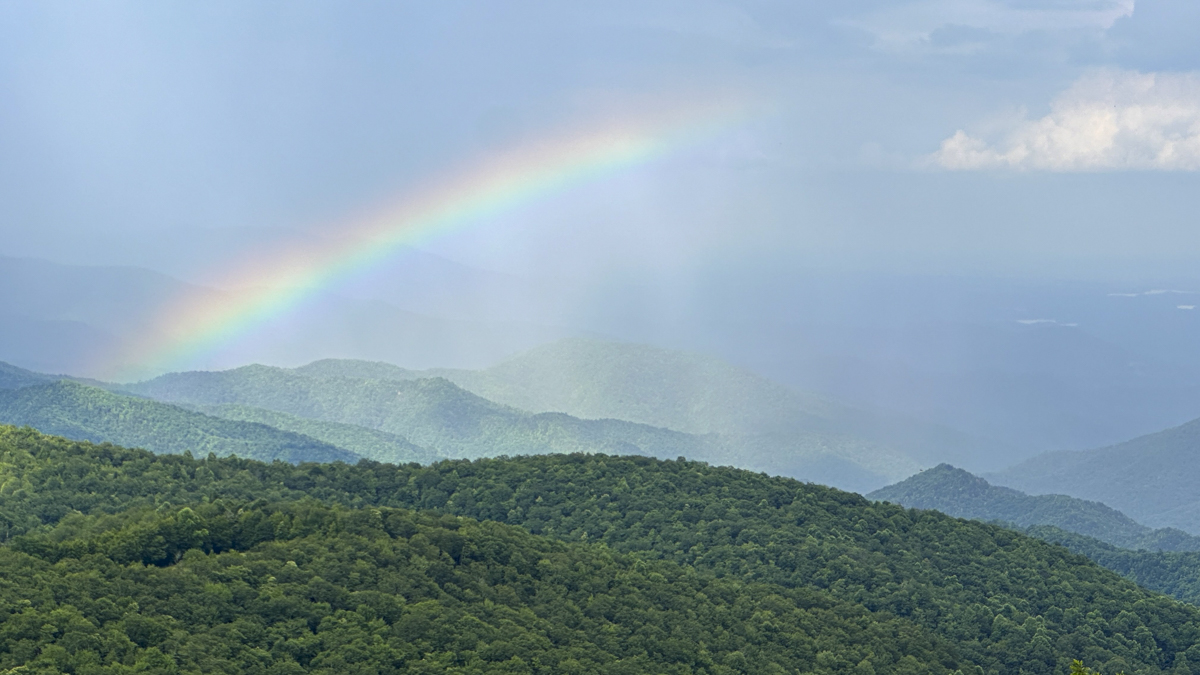
Late in the day, it started to rain so I reluctantly said my farewells and headed back off the mountain. A nice rainbow greeted me on the parkway, perhaps the mountains’ effort to convince me to stay in the cooler temperatures a little longer but I stoped only for a few photos before heading home.
Rainbow along the parkway
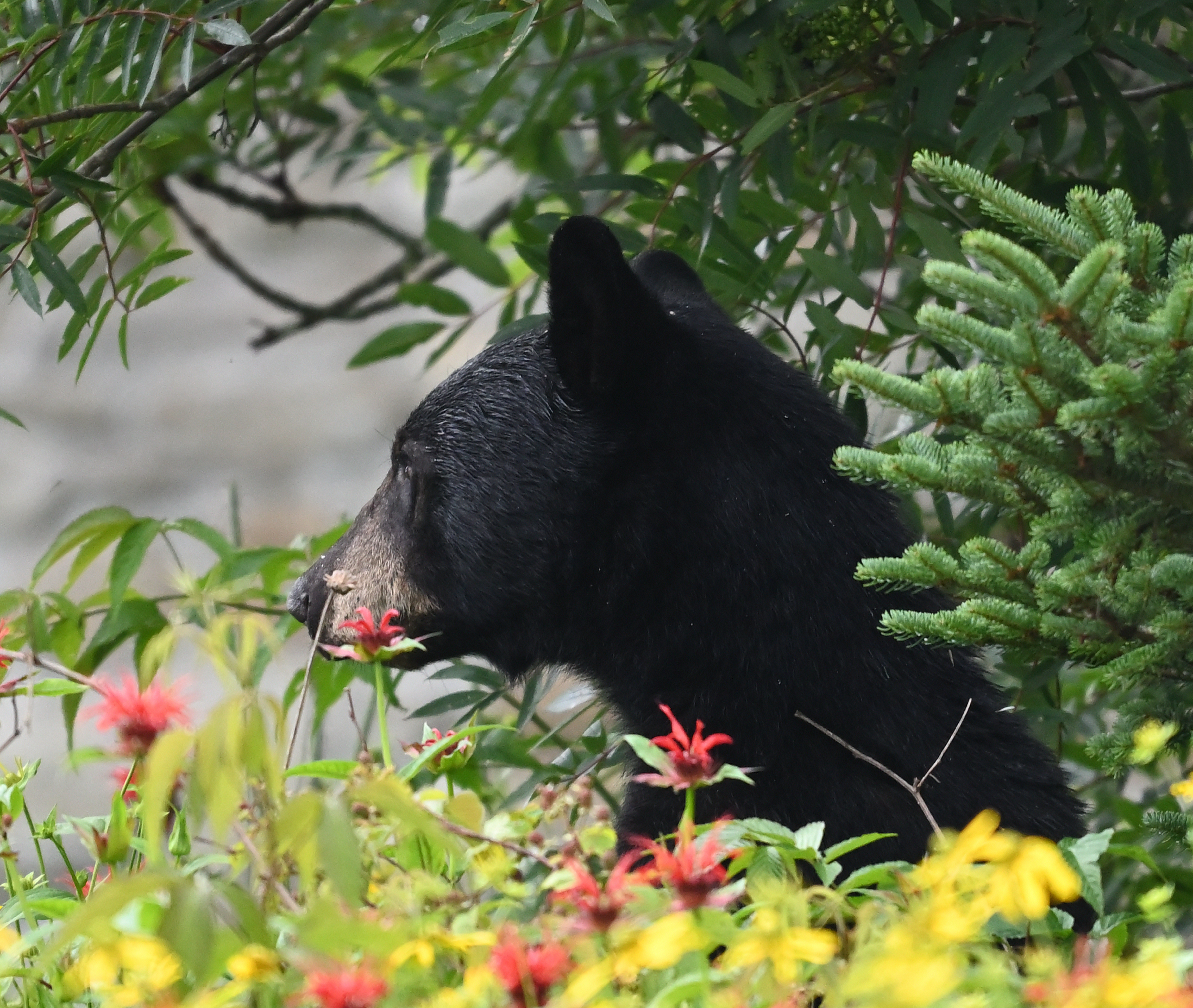
A few days later Scott had an interesting experience at the flower patch and sent me the photo below. Remember, this patch of yellow and red flowers is at the end of the parking lot closest to the restaurant at Mt. Mitchell. There are bear-proof trash cans and a dumpster (inside a fence) within yards of the flowers. Scott was standing at the patch waiting to make a phone call (one of the better places in the park for cell phone service it seems) when a young Black Bear crossed the road and went through the flowers to check out the dumpster, just to make sure it was bear-proof we suppose. It walked around the dumpster and Scott thought it had moved on, but it came back. So, he yelled at it and the bear ran off. But, a bit later it apparently walked over to the seasonal barracks (just 100 ft or so away from the dumpster). Here’s hoping it doesn’t become a problem bear.
The bear-y patch. A cute, but a bit too bold ,young Black Bear passes through the flower patch on its way to check out the dumpster enclosure (photo by Scott Hartley)
As the quote at the top of the post says, sometimes you find more than you seek when you go to the mountains, especially if you are lucky enough to live and work there.
[The public lands represent] in a sense, the breathing space of the nation.
~Richard Nixon
After Melissa joined her group of educators, I had a few days in Yellowstone on my own. You shouldn’t be surprised that I wanted to spend as much as time as possible out in it, watching wildlife, staying away from the crowds, and feeling grateful for another chance to spend time in this magical place.
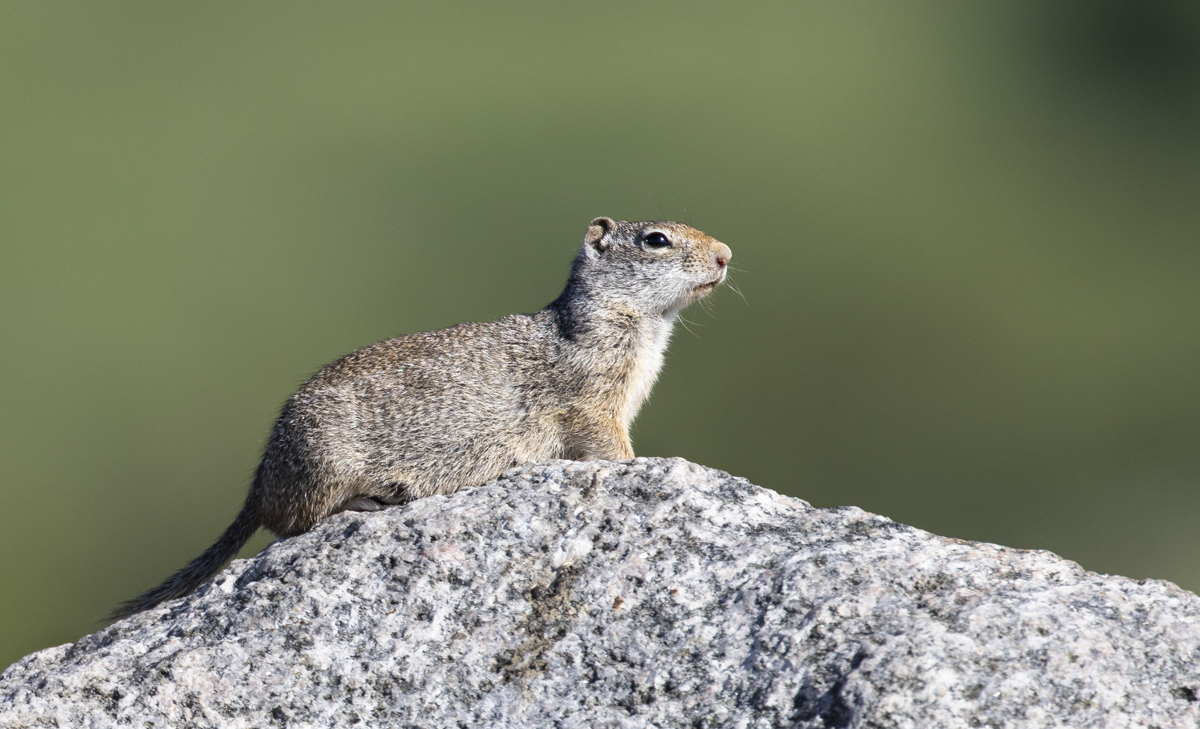
A Uinta Ground Squirrel, perched atop a large boulder, greeted me (sort of) as I started my walk (click photos to enlarge)
That afternoon, I stopped at the pullout for the Crystal Creek drainage and hiked up the trail along the creek. In past years we have seen a lot of birds in the willows along the creek as well as Pronghorn and other wildlife in the surrounding grasslands. There had been active beaver lodges and small dams along the creek, but this time it seems there were no active lodges and a couple of the pools were mainly mud flats with a small creek flowing through. My main companions were several Uinta Ground Squirrels which let their neighbors know of my presence with a series of high-pitched squeaks.
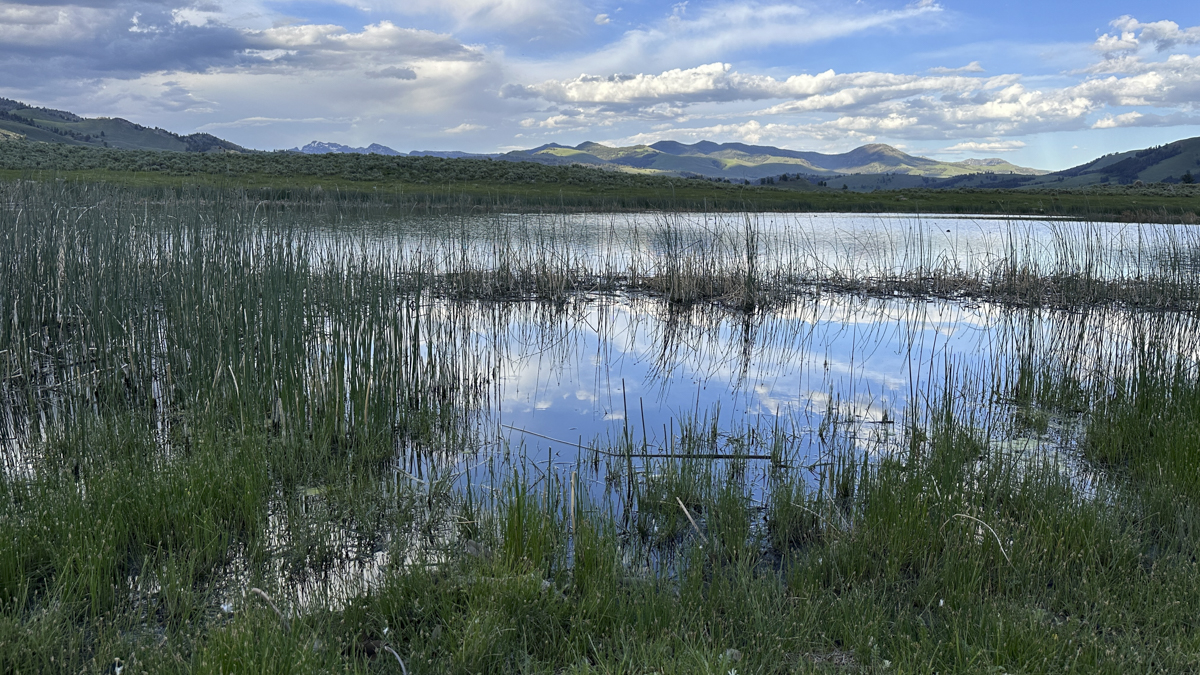
The next morning I drove through Lamar and decided to check out one of the ponds in Little America where I had seen some waterfowl the day before. Walking down to the pond edge, I slowly meandered in a zigzag path with frequent stops, so as to not alarm the birds. I finally positioned myself on a rock about 15 feet from the edge.
The pond in Little America
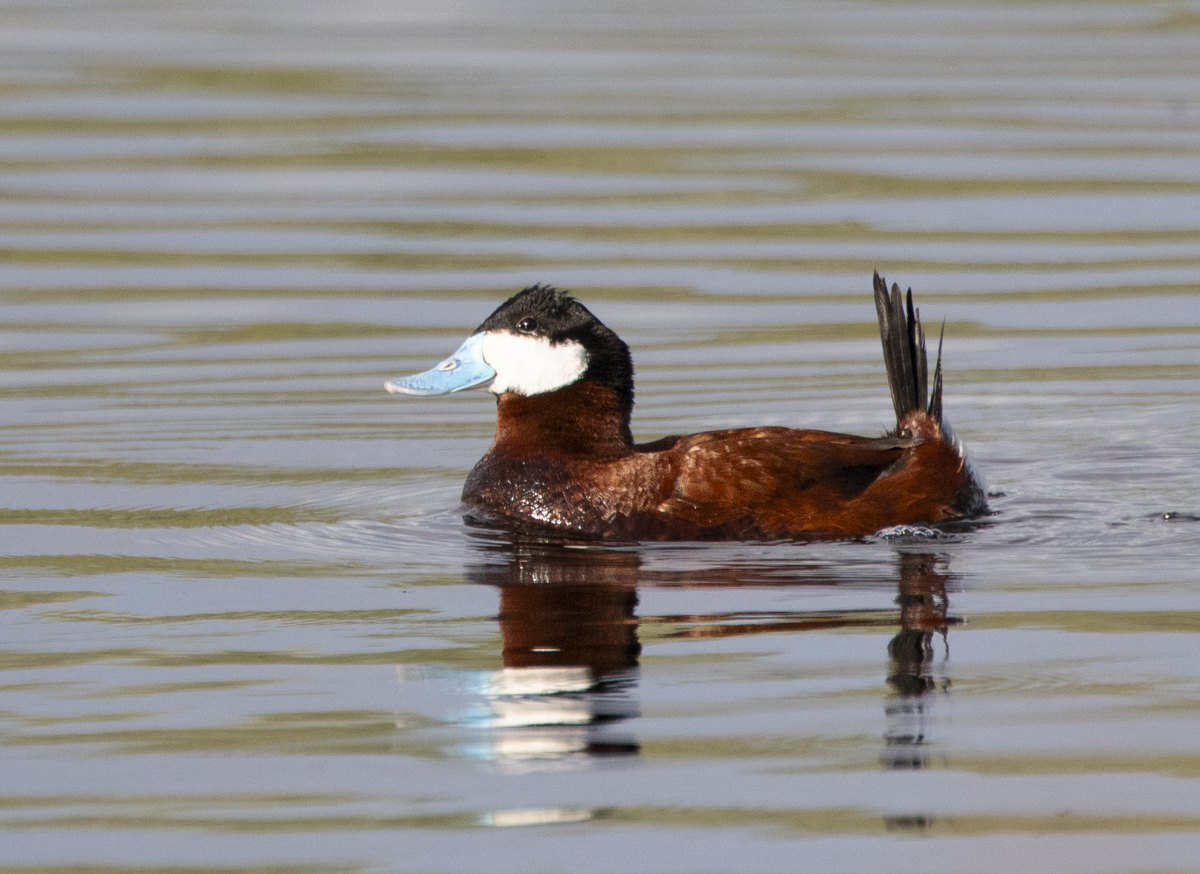
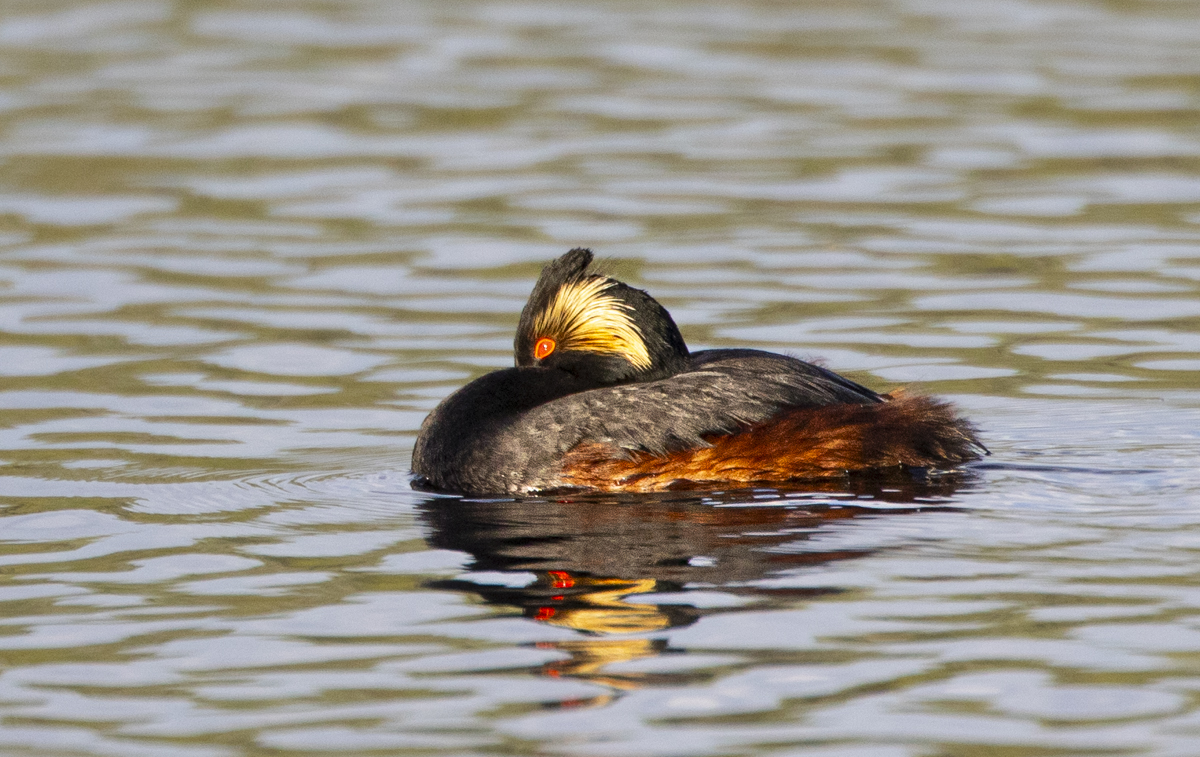
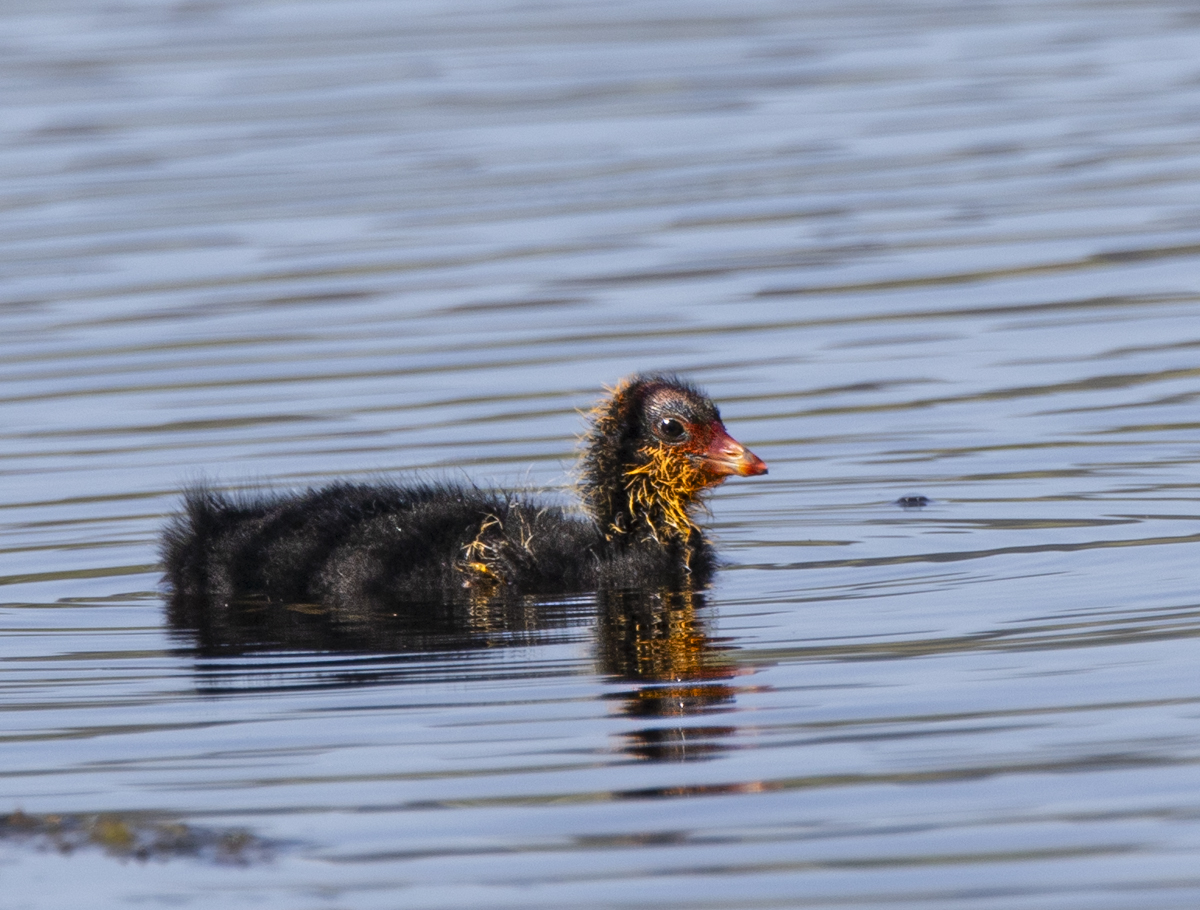
Several years ago, some Trumpeter Swans nested in this area and it was closed to walking, but that has not been the case for some time. There was a narrow gap in the pond vegetation through which I hoped to photograph the many Ruddy Ducks, Eared Grebes, and American Coot that were swimming and feeding along the shallows.
A male Ruddy Duck in between his courtship displays
The male Ruddy Ducks were putting on a show, both visually and audibly, as they attempted to impress some nearby females. They hold their tails upright and rapidly beat their Cariolina-blue bill against their inflated breast, ending the display with a loud fart-like sound (a ruddy duck raspberry). I didn’t have a tripod for my telephoto (no room in the luggage) so was unable to do video, but maybe next year…
Eared Grebes are a favorite of mine in this area with their striking “ear” plumes and scarlet red eyes.
I was hoping to get some photos of baby American Coot that were abundant in the edges of the pond. They are so homely that they are actually cute! Most of the feeding action between parents and young was happening on the far end of the pond, but one duo finally swam close enough for a pic, though the adult was partially obscured by the grasses. Young coots lower their head in a twisted position when begging for food.
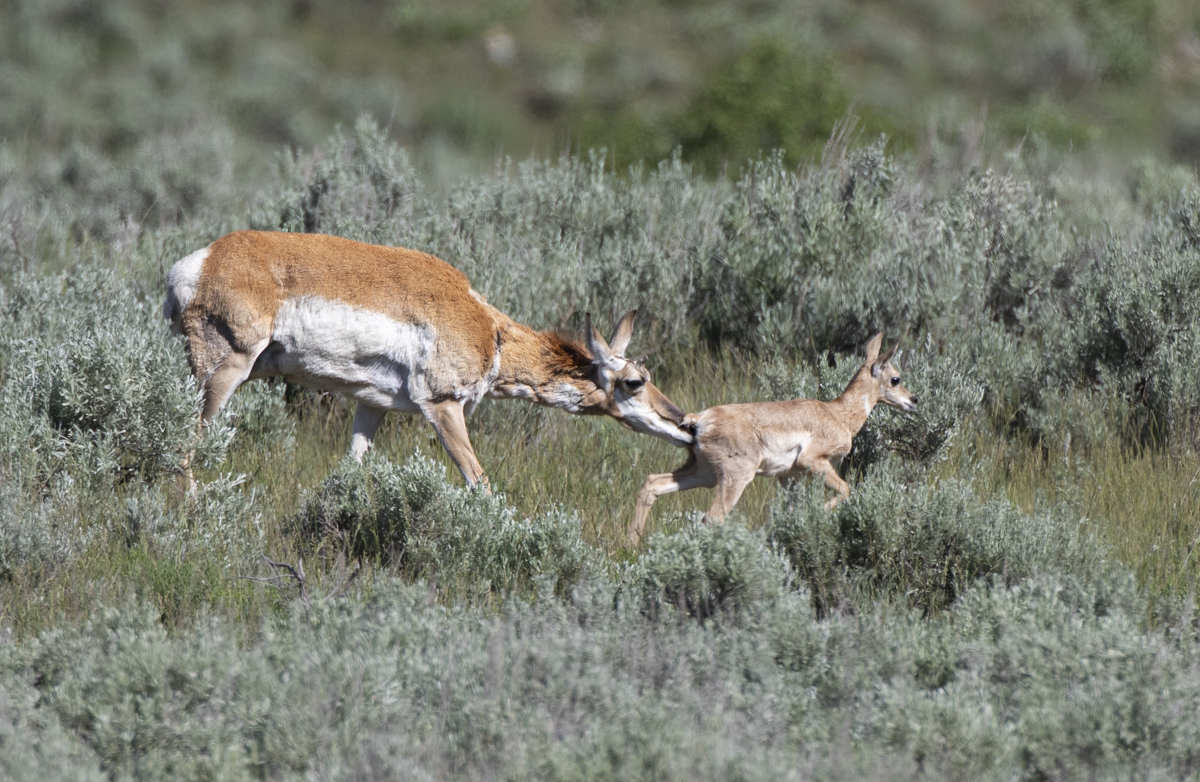
A baby American CootI mentioned in the last post the butt-cleaning behavior shown by mama Pronghorns to their babies. This mom just wasn’t satisfied and continued to clean the poop off for several minutes as the fawn tried to walk away.
There seemed to be fewer Pronghorns out in Lamar and Little America than I have seen in some years but we did see several females with fawns.
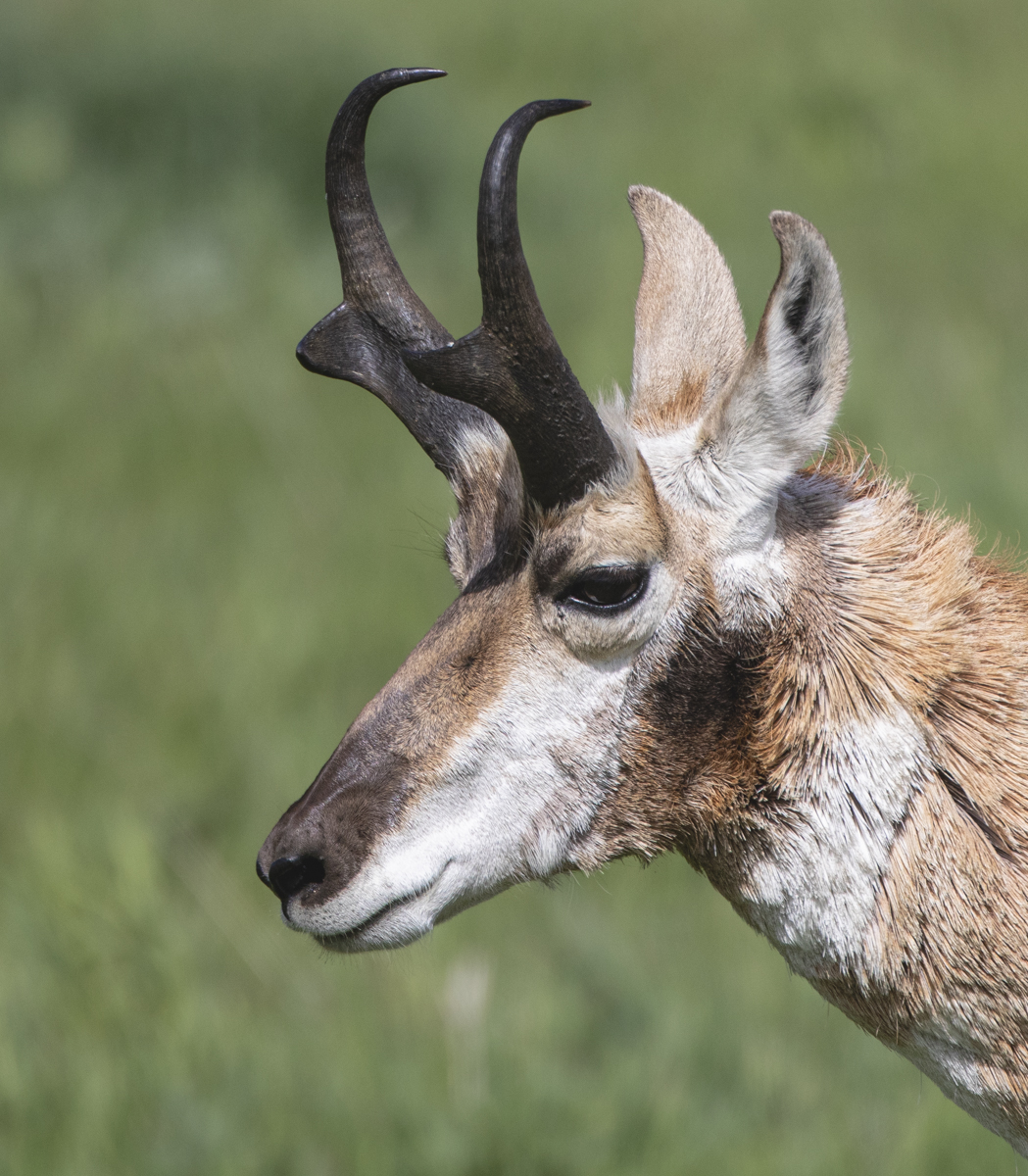
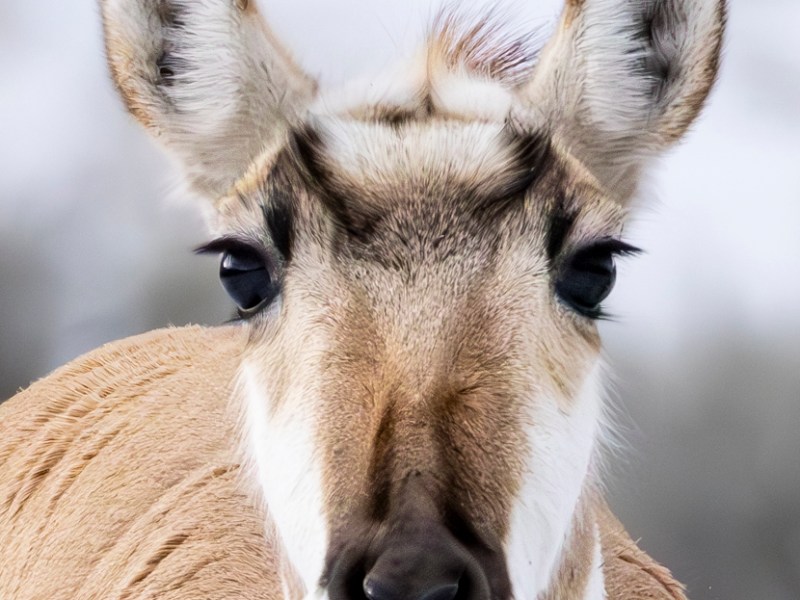
Male Pronghorns have the descriptive prong on their horns (females do not). Pronghorns are the only ungulate in the world that sheds its keratin sheath annually making their horns sort of a blend between a true horn and an antler.
Bears were everywhere this trip, both Grizzlies and Black Bears. At Tower, I pulled into a crowded parking lot and spied a couple of volunteers standing near the back. They were wildlife volunteers whose duties included keeping people and wildlife a safe distance apart. They pointed to a somewhat problematic Black Bear sleeping in a tree at the end of the lot. Her one cub was apparently on the other side of the trunk out of sght. She has a habit of staying close to the roads and park facilities, almost always causing issues with traffic jams and crowds of visitors approaching her. The volunteers appreciated this nice break where very few of the hundreds of people passing through this spot even knew she was there.
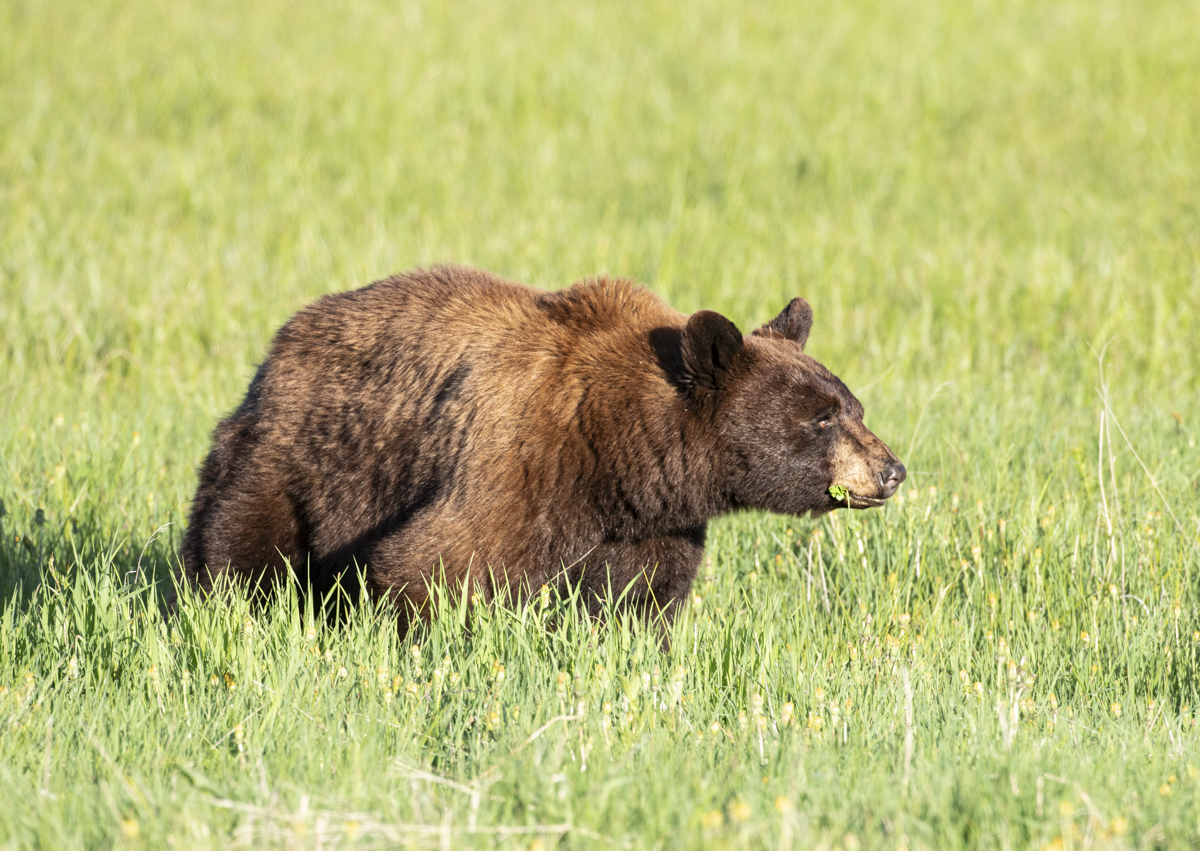
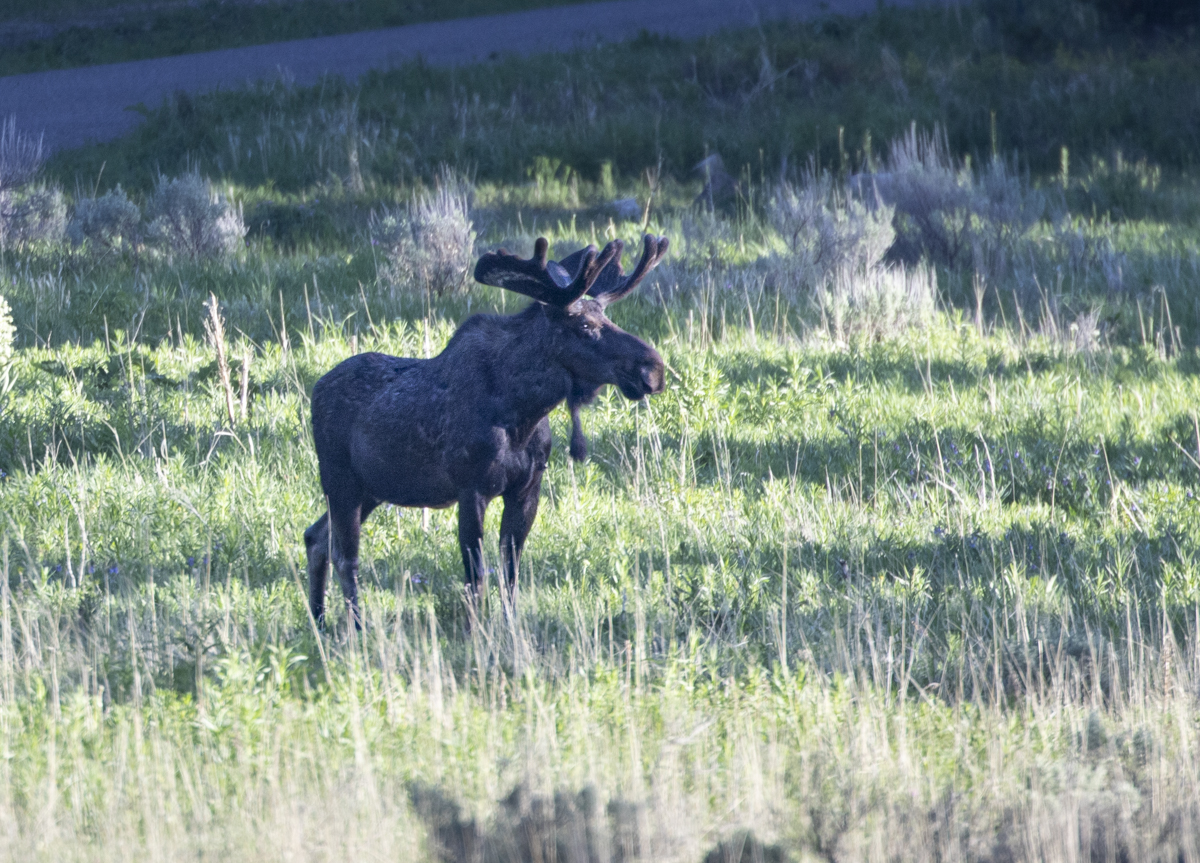
Black Bear taking a snooze in a large tree at TowerA cinnamon-colored Black Bear grazing on grasses and wildflowers. I can see why so many visitors mistake these for Grizzlies. The left shoulder of this bruin looks like a hump from a distance, but the facial profile is still distinct – Grizzlies have more of a dish-shaped or concave profile from the eyes to the nose tip whereas that area in Black Bears is rather long and straightThis was on of three bull Moose feeding near Pebble Creek, and they were less than 50 yards from the cinnamon Black Bear – quite a morning
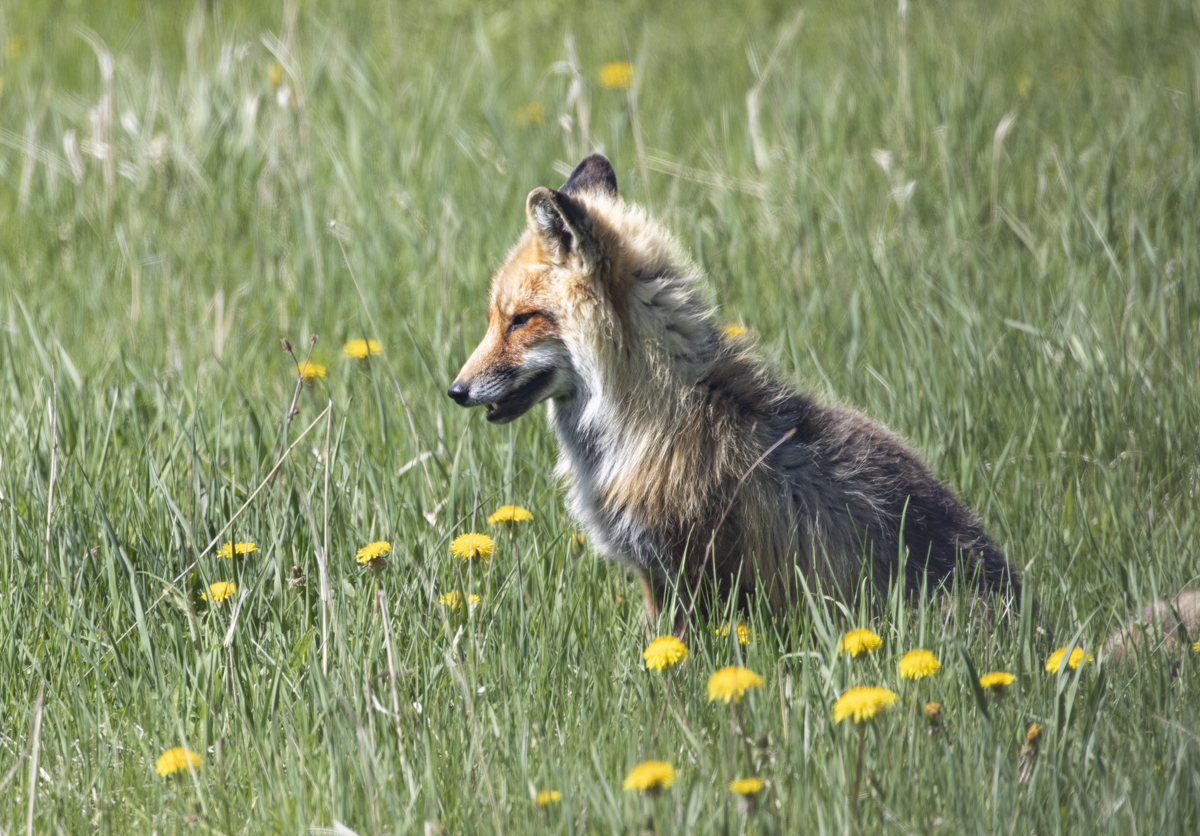
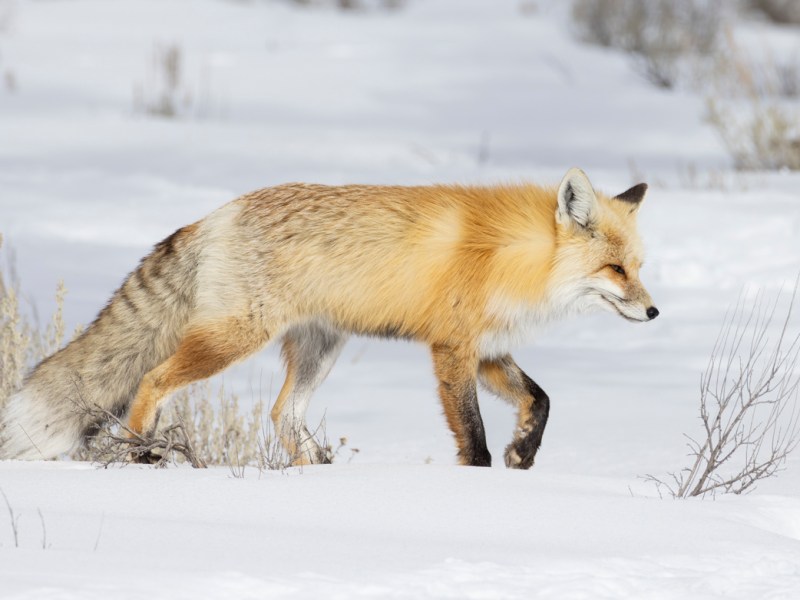
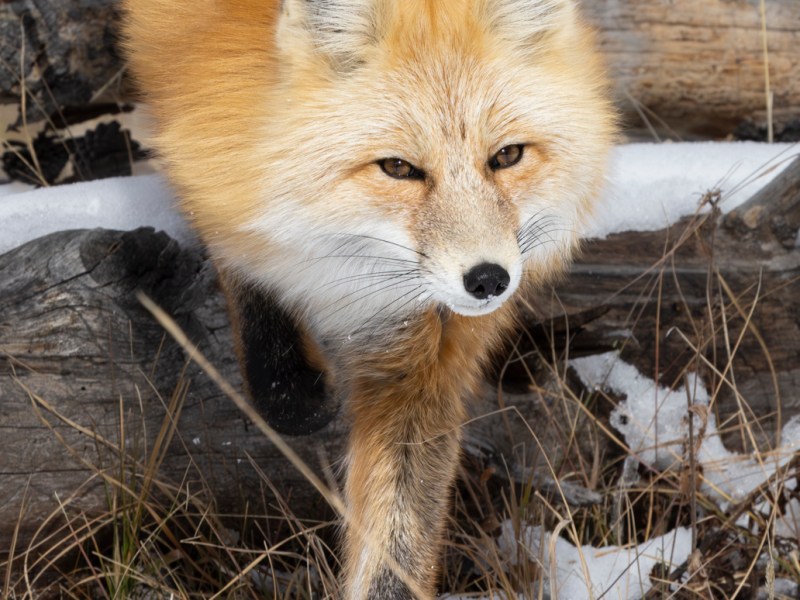
I saw Red Foxes mainly in the northeast part of the park between Lamar Valley and Silver Gate. Unfortunately, it is obvious at least a couple of the foxes have been rewarded with human food as they routinely approached visitors and vehicles to beg. I would shoo them away when they did that although they also seem to have a knack for recognizing the precursors to being fed and will veer away if you don’t show any signs. The fox below wandered close to some cars at a pullout but never got rewarded and then proceeded to snoop around looking for more natural prey.
Red Fox surveying its scene for a snack
I saw one failed attempt at catching a small songbird in a shrub and then a successful pounce on a Northern Pocket Gopher.
The fox trots off with its prey pocket gopher secured
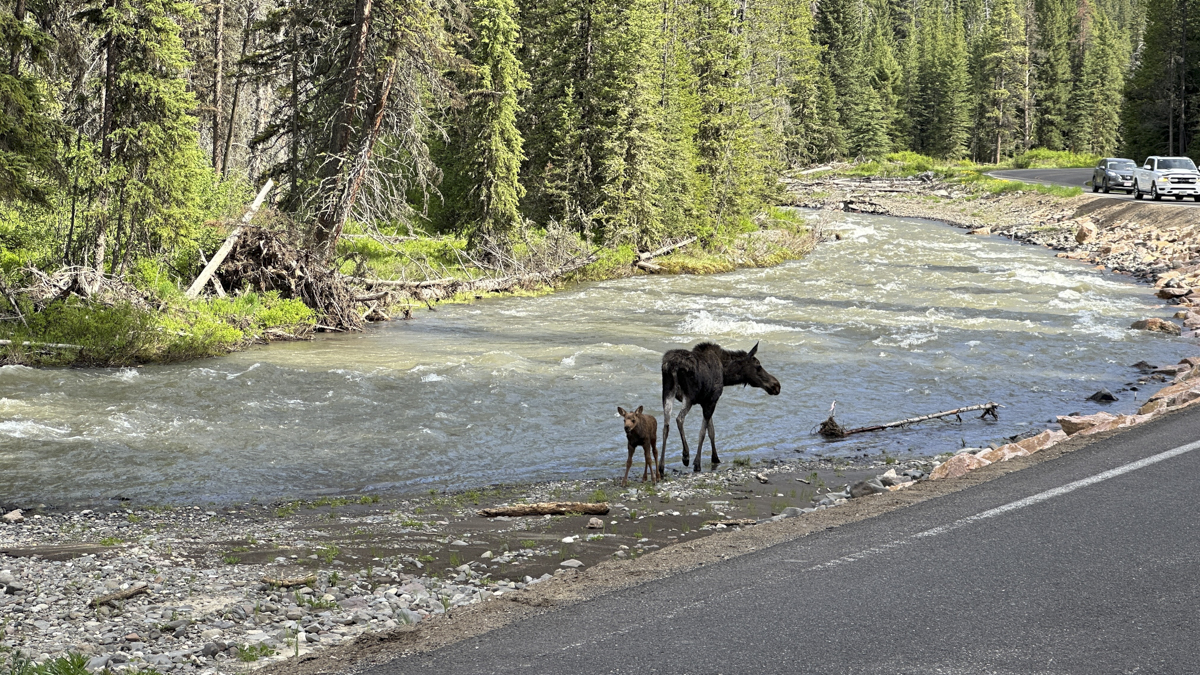
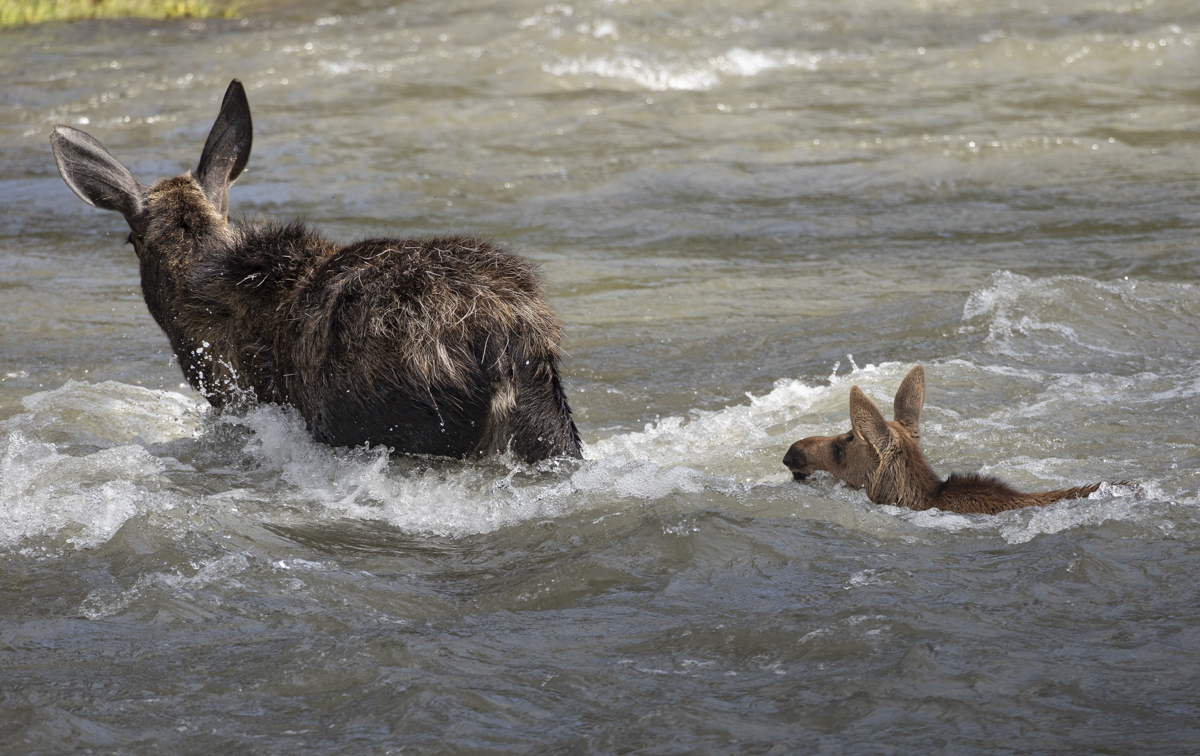
One morning as I approached the area where the moose and calf were hanging out, I saw a stopped car coming in the other direction. I saw the Moose and quickly stopped hoping to give them a buffer zone without any harassment (mine was the first car in my direction). The cow and calf attempted to cross the rushing waters, but the calf got swept downstream several feet and turned back to the rocky shore. This section of road was washed out in the 2022 flood and is now stabilized with large angular rocks).
The cow came back to the calf and looked for a place to cross the road.
The cow came back across the creek to be with her calf. She then decided to try to cross the road to the safety of the trees. Meanwhile, a truck had driven around me and was now stopped in the middle of the road in the section that had been an opening for the Moose. The cow was obviously agitated now (hackles raised and stomping as she walked). The calf struggled trying to climb the rip rap wall (I was worried it might break a leg. The the cow came back down to the creek and they both walked upstream to try to get to dry ground. A growing number of people were now outside their vehicles and moving closer. I hollered to them to back up and give the Moose some room to get back on land. Some listened, others did not. Soon, the cow decided to cross the stream once again with her calf closely following.
The cow and calf crossing the stream This time, the calf made it across, shook off, and raced to get to its mothers’ side
On my next to last day, I was driving through Lamar and encountered one of many “Bison jams ” during the visit. It is not unusual for people to stop when a Bison is close to the road and stick a phone out the window for some photos. I get that, but there is a limit to how long you can sit in one place in the middle of the road once the Bison give you a gap. Cars in both directions had come to a stop even though the Bison were just milling along the side of the road. And then, when there was a clear space through the behemoths, nobody moved. So, I slowly eased my car past the next couple of photo-obsessed drivers and finally had a clear space to get through. Suddenly, it got more complicated…
This is just one reason why you always need to plan for extra time when driving through Yellowstone.
Our friends Dan and Cindy are owl experts and always seem to have an idea of where to find them. Dan told e about a place we might find a Pygmy Owl, a species I have never seen. I sent an email to see if we could go out the day before I was scheduled to leave but that wouldn’t work so they suggested I come over the morning of my departure. My flight from Bozeman (about 2 hours away at a minimum, depending on wildlife jams, etc.). I was hesitant at first, but, hey, it is for a Northern Pygmy Owl! So, I met Dan the next morning at 6:15 and we headed out.
We hiked into the conifers and waited. I must admit, when sitting quietly in Grizzly country, trying not to move, your mind begins to notice every little noise. When by myself, I have started wishing for a small parabolic mirror in front of me so I can see what is behind me without turning around. After about an hour an owl flew in and I managed a few shots.
A Northern Pygmy Owl is just that, tiny, about the size of your fist. Even so, they are fierce predators, often taking prey (mainly songbirds, but small mammals as well) up to three times their size. Pygmy owls frequently hunt during the dayWhen the owl turns its head, the feather pattern on the back of the head looks like two large eyes, which may provide some protection from would-be predators fooled into thinking this little guy is something bigger
That was a great way to end my stay (thanks Dan and Cindy) though I did miss what would have been an awesome pic of the owl with a prey item while I futzed with my camera and heavy telephoto lens. But, to see a species I have been after for years was worth it.
As always, time spent in Yellowstone is time well spent. And, besides, I’ll be back soon.
National parks are the best idea we ever had. Absolutely American, absolutely democratic, they reflect us at our best rather than our worst.
~Wallace Stegner
Melissa had another of the museum ‘s amazing educator workshops to Yellowstone last month. This year, we decided to go out a week early to enjoy the park, hang out with friends, and scout areas for her workshop prior to the arrival of her participants and co-leaders. It was a week well-spent and included an awesome backpacking trip with friends to some backcountry patrol cabins.
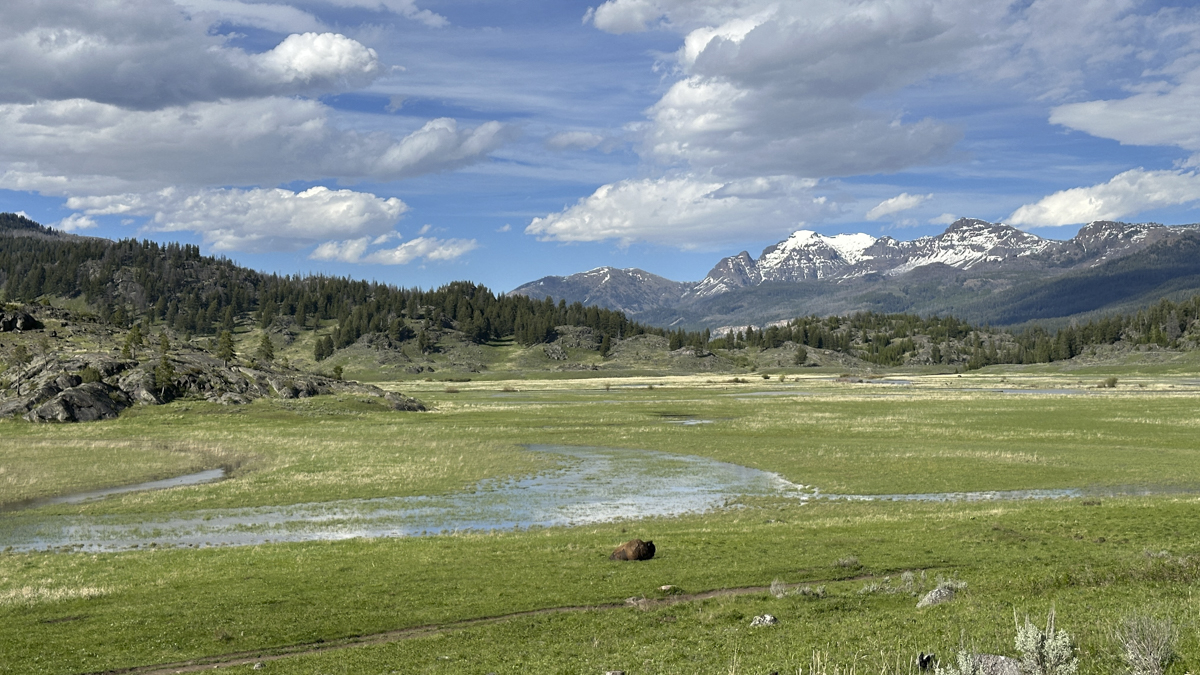
Bison were everywhere in Lamar Valley this spring
On our first night in the park, we went out for a few hours and soaked it all in and were amazed at the number of Bison in the green valley floor of Lamar Valley. The next day we met our friends (both NPS employees) and backpacked to the Lower Slough patrol cabin. Ivan is the backcountry office manager for the park and inspected all the backcountry campsites along our route. It was a fairy easy hike up the Slough Creek valley with little elevation gain (good for my bad back/legs). The weather was perfect and spring wildflowers were dotting the landscape in abundance.
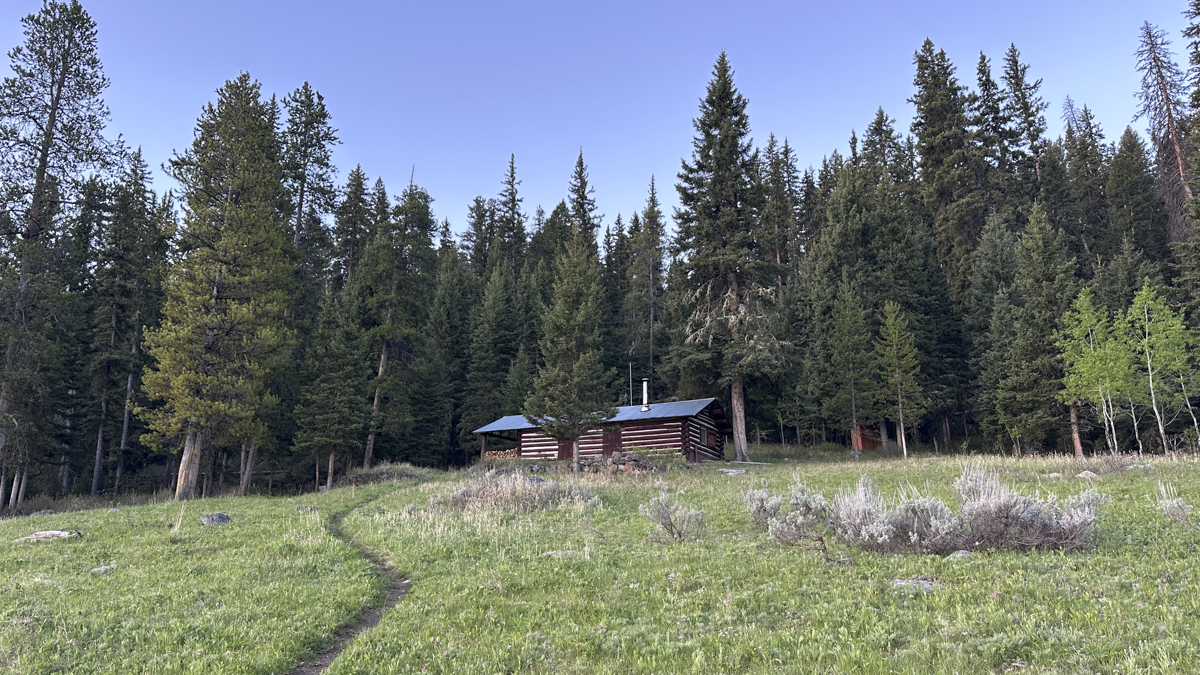
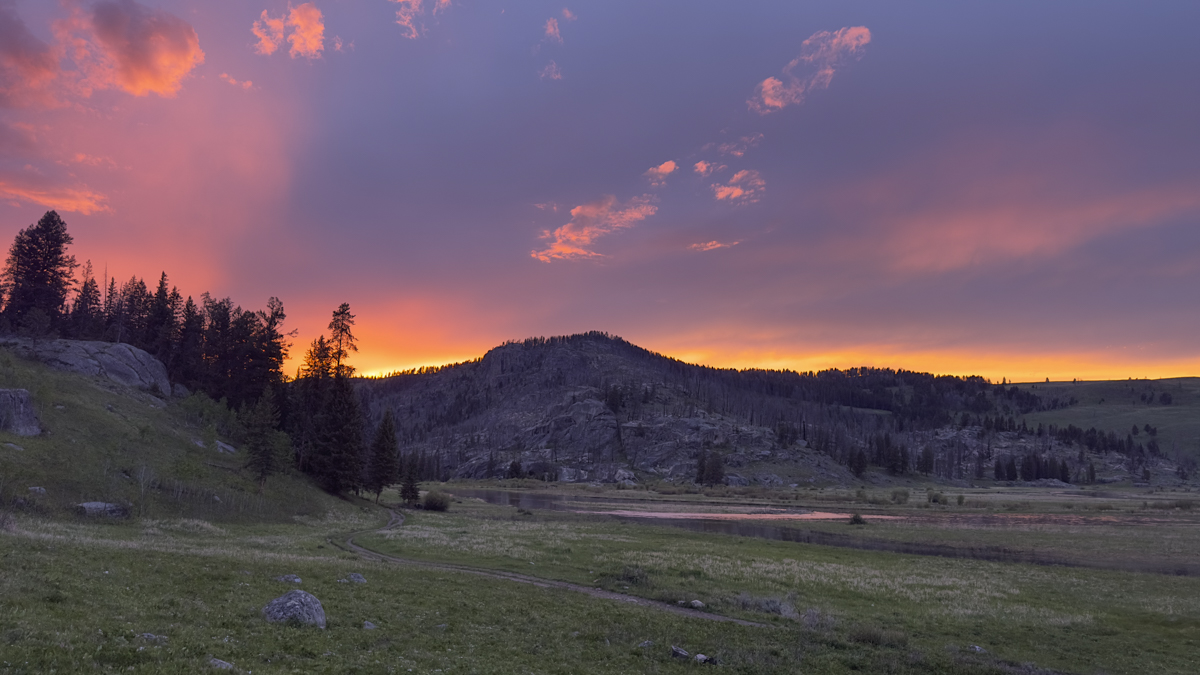
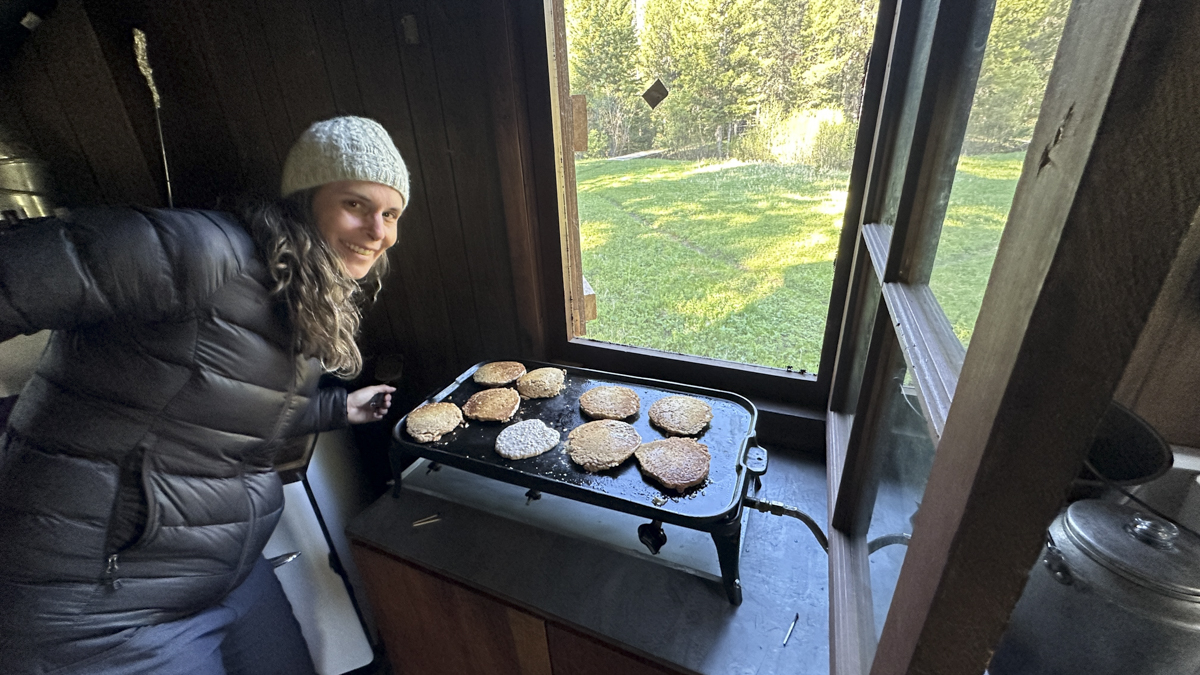
We were excited to find several patches of Fairy Slippers (Calypso bulbosa). This orchid goes by many other common names (Venus’ Slipper, Calypso Orchid, and Angel Slipper).The first cabin was log construction and built in 1916. Park staff using the cabins must restock any firewood used (we did not use any) and leave it in as good or better condition than they found it. We were impressed by its cleanliness and beautiful location.The view from the Lower Slough cabin porch. A marshy area with a few Bison, over 20 Sandhill Cranes, and a hunting Coyote. Oddly, a group of the cranes escorted the Coyote all over the area as it hunted.The sunset on our first night of the backpacking trip was quintessential YellowstoneWe hiked another 5 miles the next day to the next cabin, Elk Tongue. A more modern, but smaller, facility with another incredible view. Both cabins had outhouses, necessitating a flashlight when you visited after dark as this is prime grizzly country.Melissa cooking up some oatmael pancakes on the huge griddle at the cabin
We spent 3 nights in the backcountry with our friends and it was glorious. Wildlife sightings included a couple of Black Bears, some Moose, the cranes and Coyote, and a Peregrine Falcon. Melissa also got a quick glimpse of a wolf chasing a Moose. After that, we headed to our lodging in Gardiner for a couple of nights, venturing out into the park each day.
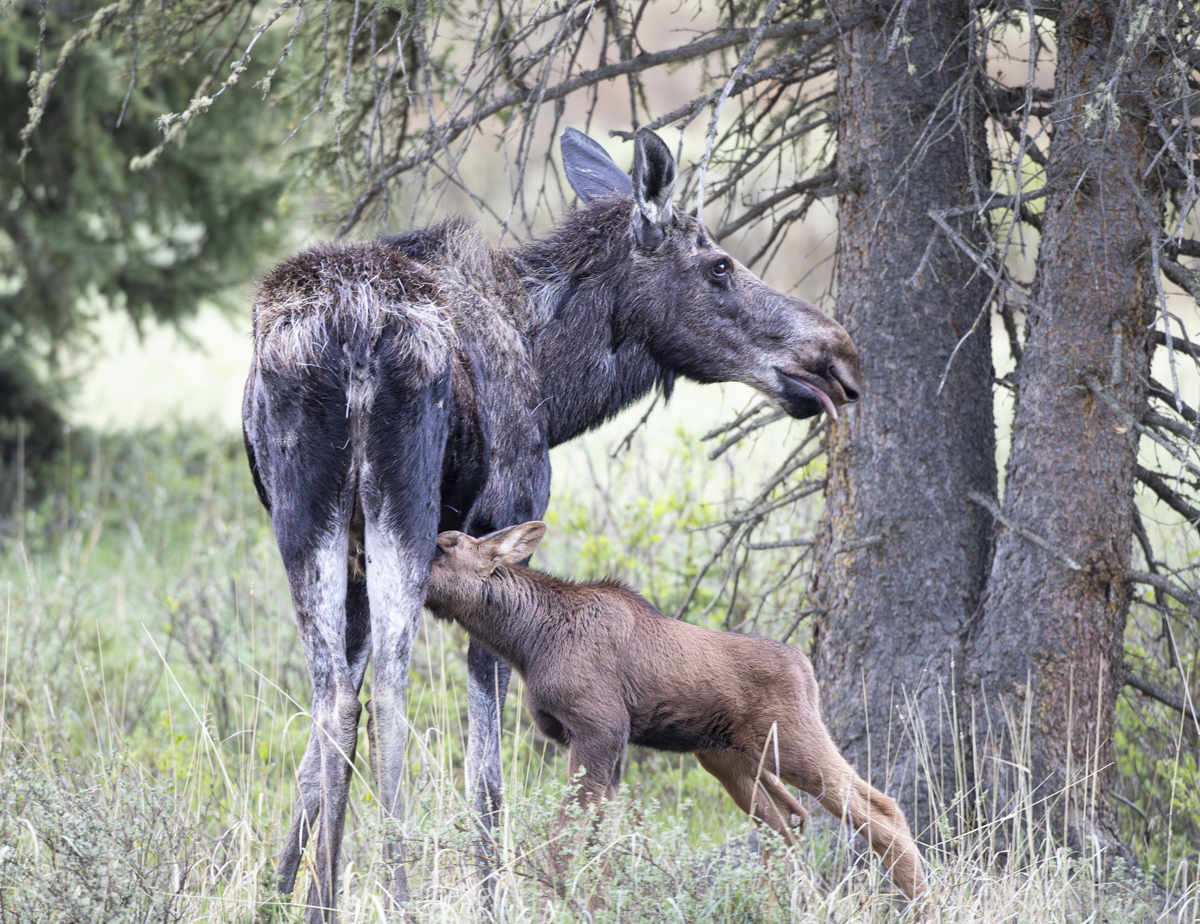
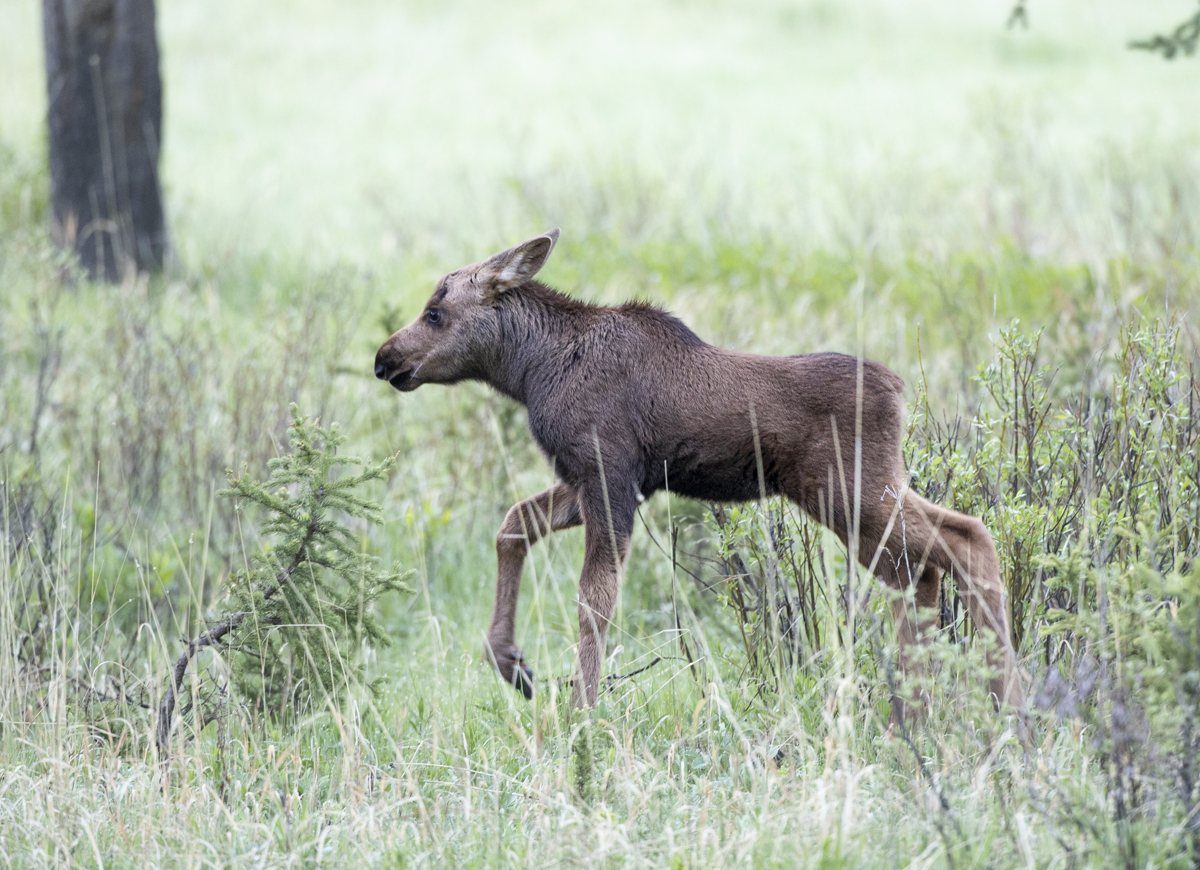
A couple of young bull Moose along Soda Butte Creek in the northeastern part of the park.This cow Moose and calf were seen several times during our stay, always within a few hundred yards of the Soda Butte picnic area.The epitome of gangly (and cute)
One of the best things about this time of year in Yellowstone is the abundance of baby animals. It is a tough place to be a baby with so many predators out and about searching for food, and different species have different strategies for protecting their young. The mama Moose keeps a keen eye out for any danger, and will not hesitate to attack a threat (a point I kept trying to make to people out of their cars and approaching her). On a drive down the road to the Slough Creek campground, Melissa spotted a Pronghorn doe with a youngster on a ridge away from the road. As we slowed, the baby dropped down behind a shrub. From our angle, we could no longer see it. This is typical behavior of these swiftest of mammals. Young will hide among vegetation while the mother wanders off to feed, returning every few hours to nurse them. The babies behavior and color allow them to blend into the landscape very well. Years ago, I almost stepped on one before seeing it. It remained motionless, flattened to the ground as I walked away. And, in a true act of love and protection, mother Pronghorns lick the droppings from their fawns’ rear end as a way to reduce scent that might attract predators.
We drove a small distance so we had a better angle and could see the baby Pronghorn’s head up behind the shrubMother Pronghorns can be quite protective of their young. This doe meandered closer to the road, munching away on vegetation. She ended up quite close to our car as if to say, “I am watching you…stay in your car and leave my baby alone”. She eventually went over the ridge leaving her baby until the next feeding
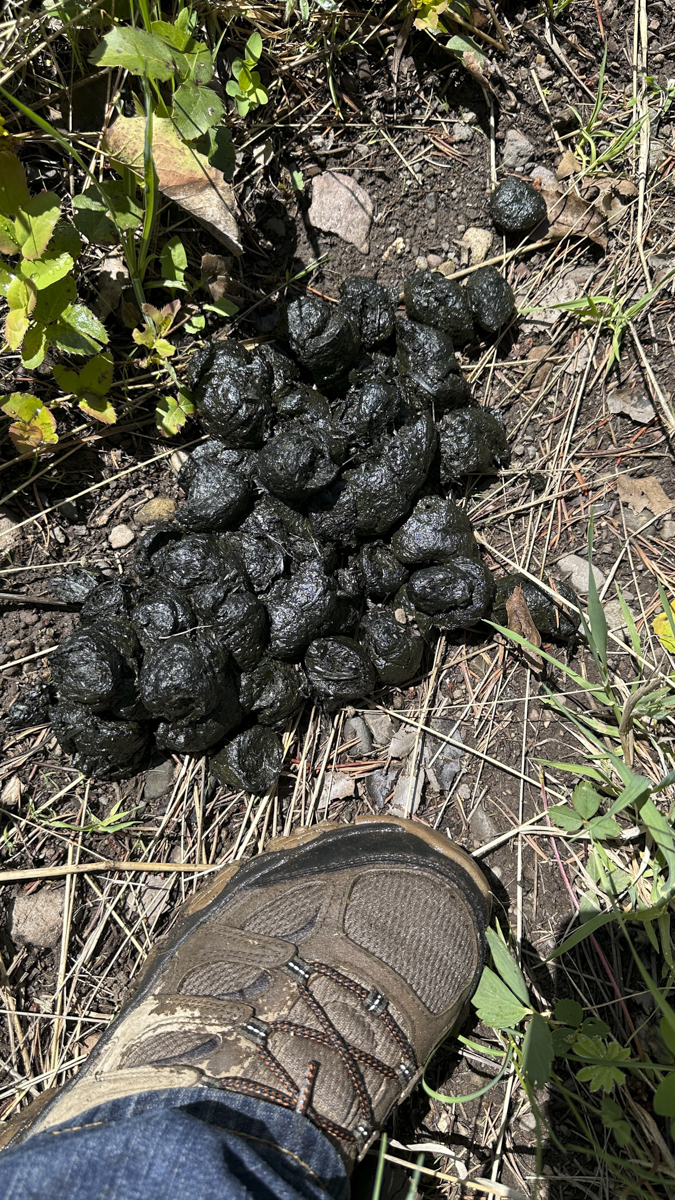
There have been a lot of Grizzly sightings reported this year so anytime we hiked, we carried bear spray and were paying attention to our surroundings. On one trail, we came across some fairly fresh Grizzly scat…that really makes you alert!
Grizzly scat
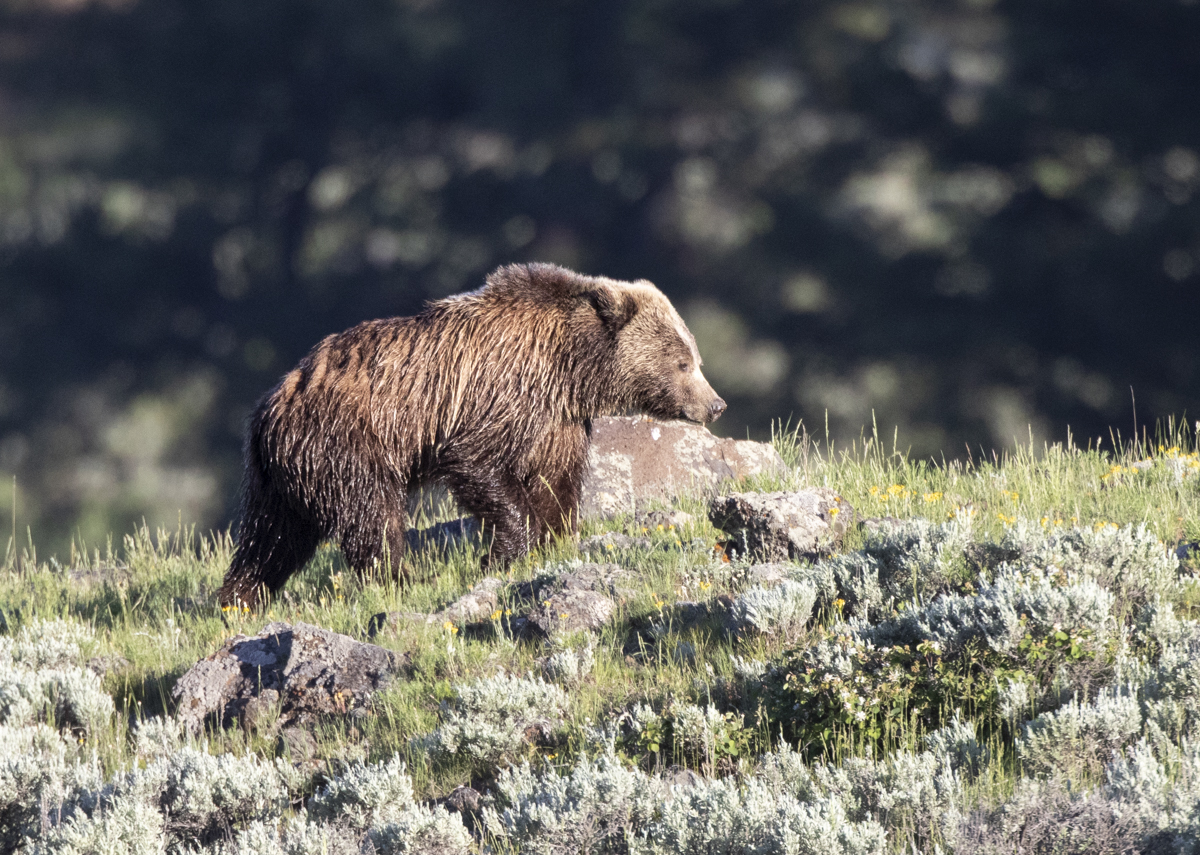
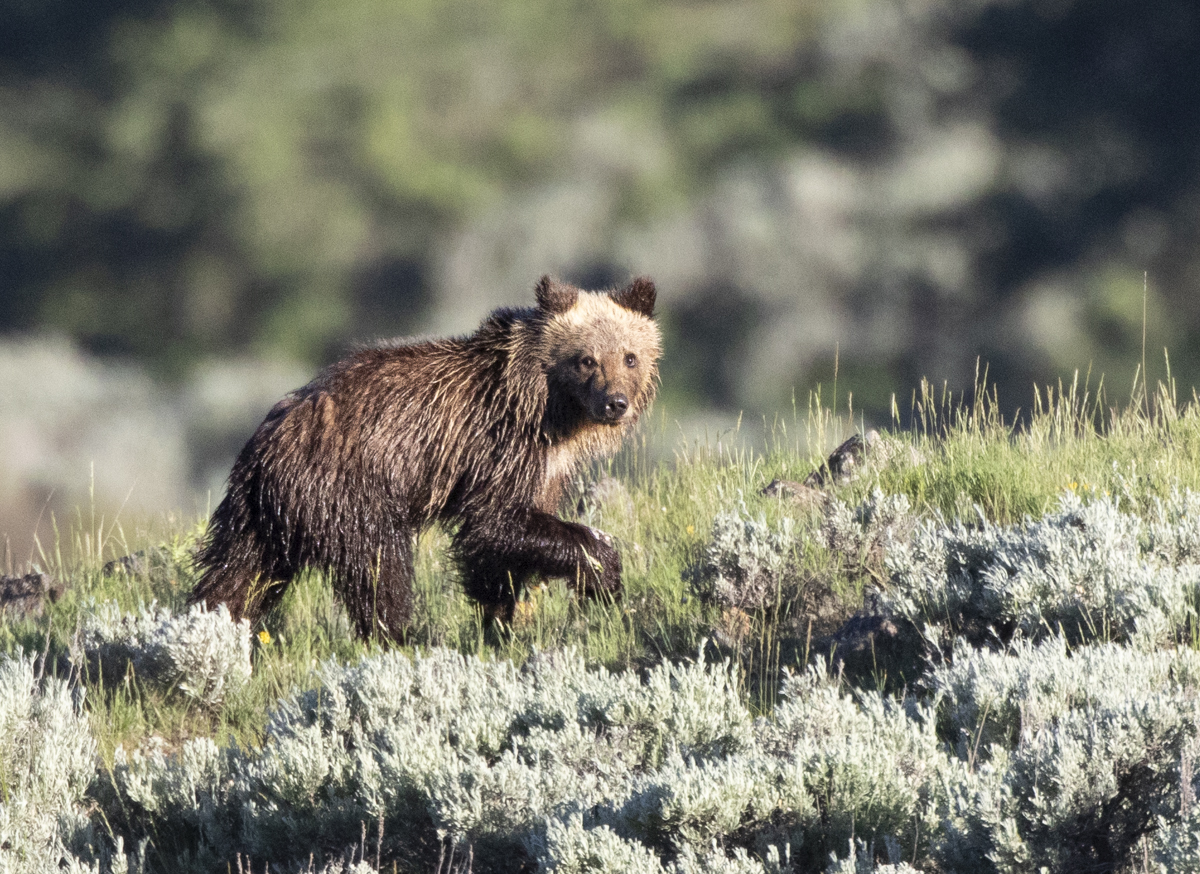
Driving into Lamar from the northeast one day, we saw a group of people at a pullout looking down toward Soda Butte Creek. They told us a Grizzly sow and cub (from the previous year) had just crossed the creek and had disappeared behind the ridge. We stopped at the next pullout and a group of people, chaperones and young students, were headed back to the parking lot saying “there are two Grizzlies headed this way”. I commend the leaders of this group for doing the right thing when they saw the bears – move everyone to safety and don’t try to get close for a photo!! In just a couple of minutes, the bears crossed the road.
The Grizzly sow had a cub from last year with her as she crossed the road and headed up through the sagebrush.I saw an opening in the sage as the bears climbed to the top of the ridge and focused my attention there hoping for a photo (these pics are shot with a 500 mm lens and teleconverter and are heavily cropped)The cub paused for a second, paw in the air, and glanced back down the ridge at the throng of viewers
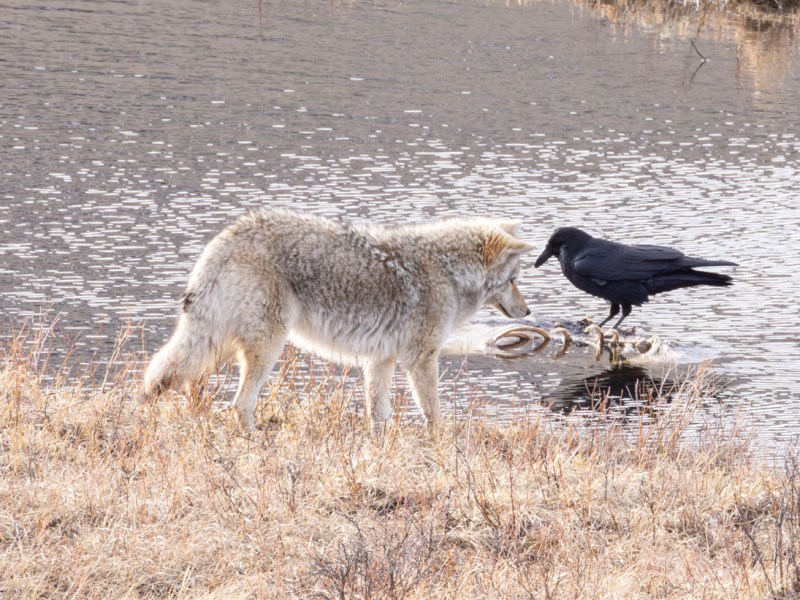
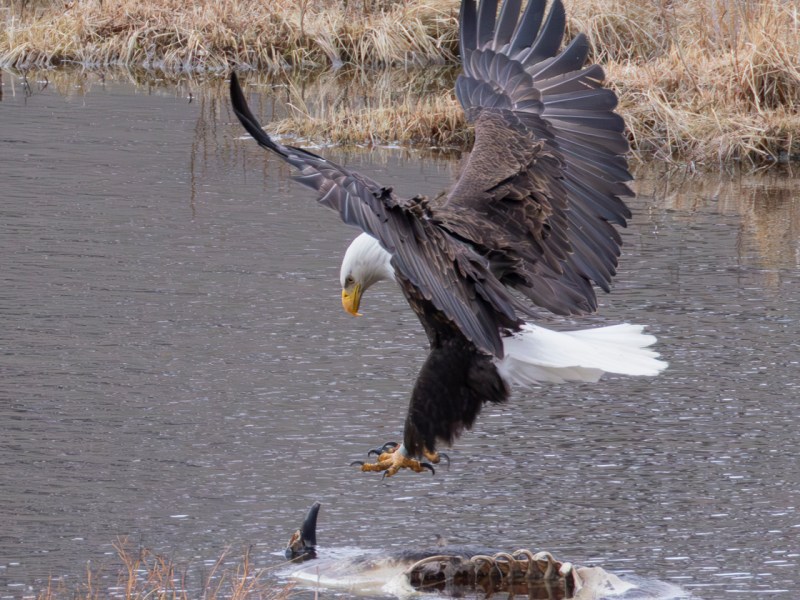
As always in Lamar Valley, the Bison are the real stars of the megafauna, especially with so many “red dogs” (young calves) frolicking or sprawled out asleep in the grass. But we also witnessed a sad and yet fascinating Bison behavior – acknowledging the death of a member of the herd.
–A dead Bison laying next to the road (no doubt a roadkill from the night before) attracts a lot of attention from others in the herd. Rangers hauled the carcass off later that day to avoid chaos along the road due to the presence of scavengers and crowds of visitors
We saw several Pronghorn fawns during our first week in the park. Pronghorns frequently have twins, and these two were both curious and cautious, never getting far from each other or their mother.
The most unusual wildlife encounter we had was with a bird, an “attack grouse”.
–This Dusky Grouse had an attitude and aggressively attacked people and cars that passed through its territory
On one trip down the Slough Creek dirt road, a car in front of us had its flashers on and was moving very slowly. We then saw a Dusky Grouse right next to the vehicle. These birds can be fairly tame so it wasn’t a huge surprise. But as we drove by, the grouse went under our car so I had to stop. Melissa got out to see if it came out and indeed it did, right at her. For the next few minutes she and the grouse did a dance with the grouse actually pecking at her a few times. Finally, she got away and back into the car. We saw this behavior a few other times as we drove down that road over the next day or two. Finally, someone wth the park put out two orange highway cones and a sign that read “Slow, congested area ahead”. Close enough, I guess:)
After several days, I drove Melissa to Bozeman to meet her teacher workshop group. I then headed back to the park for a few days on my own. My next post will provide some of those highlights.
Any glimpse into the life of an animal quickens our own and makes it so much the larger and better in every way.
~John Muir
While we were away (more on that in a future post), the trail cameras caught some interesting events in our woods. They also caught several deer inside our deer fence for several days due to a fallen tree splitting it (but I am trying to forget that event and its devastating impact on our yard’s wildflowers). Here are some of the highlights of what our wild neighbors were up to in our absence.
What I believe to be the same wobbly young fawn that I shared in my last post is now looking more agile as it follows its mom
There were a few captures of other birds in our absence: American Crows foraging in the leaves; a very short clip of an Eastern Screech Owl landing on a perch; and two quick clips showing a Red-tailed Hawk chasing a group of crows (payback, no doubt). Then there was this clip of a juvenile Red-shouldered Hawk catching something behind a log and then feeding on it, whatever it was.
I am always glad to see what the coyotes are up to and this time they gave us some nice glimpses. The female I call “one ear” (because of a deformed or mangled left ear) was seen on several days/nights. Here, she goes about her business, literally.
One ear gives us a longer view as she stops in front of the camera to scratch. Oh well, we’ll take it even though it is not the most exciting behavior she could share.











 Roads End Naturalist