

Wood Ducks begin courtship in the fall and continue throughout the winter and into the spring. A couple of years ago I photographed several ducks on the ice at Pungo Lake where you can see several Wood Ducks that appear to have already paired up. On my recent paddle at Merchants Millpond and surrounding swamps, I flushed several male wood ducks that were probably tending to their mate as she sat in a nearby nest cavity – a fact supported by the occasional flush of a female from a cavity. The male remains near the nesting female until the eggs are within a few days of hatching, which is longer than males of most other duck species remain with their mates.
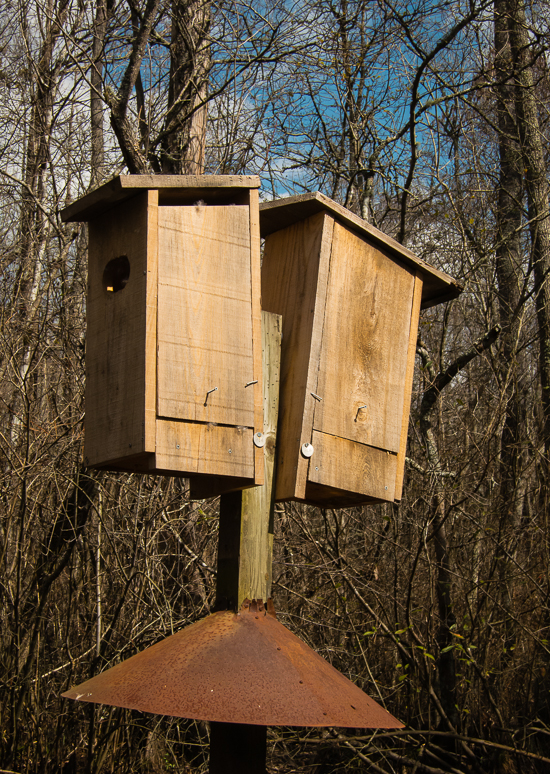
Although swamps are great places for cavity nesting birds due to the abundance of hollow trees and cavities, I often see artificial Wood Duck nest boxes placed along these waterways. This pair of boxes is along Bennett’s Creek and the one facing the creek had a fluff of down clinging to the entrance hole, indicating it might be occupied. Naturally, I wanted a peek…the box builder had done a good job so the side door easily opened and this is what the camera caught inside…

Like most (if not all?) birds, Wood Duck females lay one egg per day until she finishes and begins incubating. Normal clutch size according to many sources ranges from 6-16 eggs with an average of 12. So, how many eggs do you see in this nest? Certainly way above the average number for a clutch. This may be an example of intraspecific brood parasitism, also called “egg dumping” or “dump nesting”. Egg dumping occurs when a female wood duck, frequently a first-year breeder (according to some references), follows another hen to a nest site during the egg-laying period and lays her eggs in with the other nest, presumably coming back each day while the original female is away foraging to keep laying until she has finished. This results in very large clutches that often cannot be effectively incubated. In a typical nest box, approximately 80% of the eggs hatch, but where egg dumping is common, it may drop to as low as 10% or the original female may abandon the nest altogether. Some suggest that in the wild, the impulse to egg dump is kept in check because wood ducks normally nest in fairly isolated locations. Artificial nest boxes that are placed too close together or in very conspicuous locations may lead to increased egg dumping (some reports are as high as half the nests). Several resources recommend trying to mimic the natural situation (single boxes placed in swamp habitats) as much as possible to help with nest success.
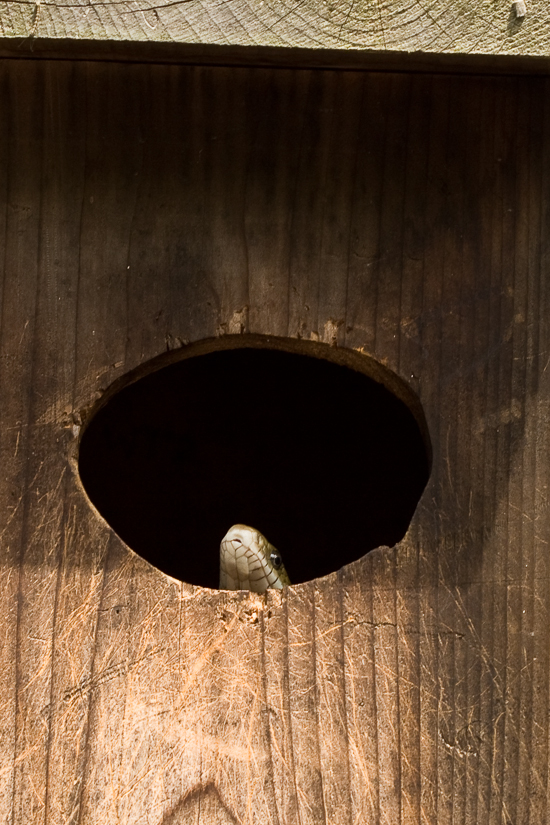
The other thing people recommend is placing the nest box on a pole with a metal predator guard to help reduce predation from raccoons. But there are other species of predators that the ducks need to worry about as I once observed while paddling on the Scuppernong – a nest box with a guard had been placed a little too close to a small overhanging tree limb…
If all goes well, after about 30 days of incubation the eggs hatch (usually in April in these parts). The tiny fluff balls may stay in the nest for several hours until coaxed out by the hen. If the nest is in a tall tree and away from water the ducklings take a dive out of the box and literally bounce on the ground before heading off in a line following Mom to the nearest waterway.
Check out this site for live views (and recordings) of the inside of a nest box here in NC – http://woodiecam1.com/.


 Roads End Naturalist
Leave a reply to Sue Key Cancel reply