
may my heart always be open to little birds who are the secrets of living
~ee cummings
Here is a long overdue update on those little birds that nested just outside the garden driveway gate at the Botanical Garden…I am happy to report these diligent parents were apparently successful in rearing their young. You may remember my earlier post where a pair of blue-gray gnatcatchers were building the nest (they finished it around April 10). A few days after that post, I saw the female incubating the eggs, so I tried to keep an eye on her to see when they might start feeding the young. Finally, I saw her off the nest the first week of May. I wasn’t able to get out to photograph them until May 7. That was probably about 6 or 7 days after they hatched. I had trouble counting the tiny heads even after looking at my images from that first feeding day, but I could tell there were at least three young. Later, I saw the fourth beak pressing skyward on one of the feeding bouts, so the total was four.
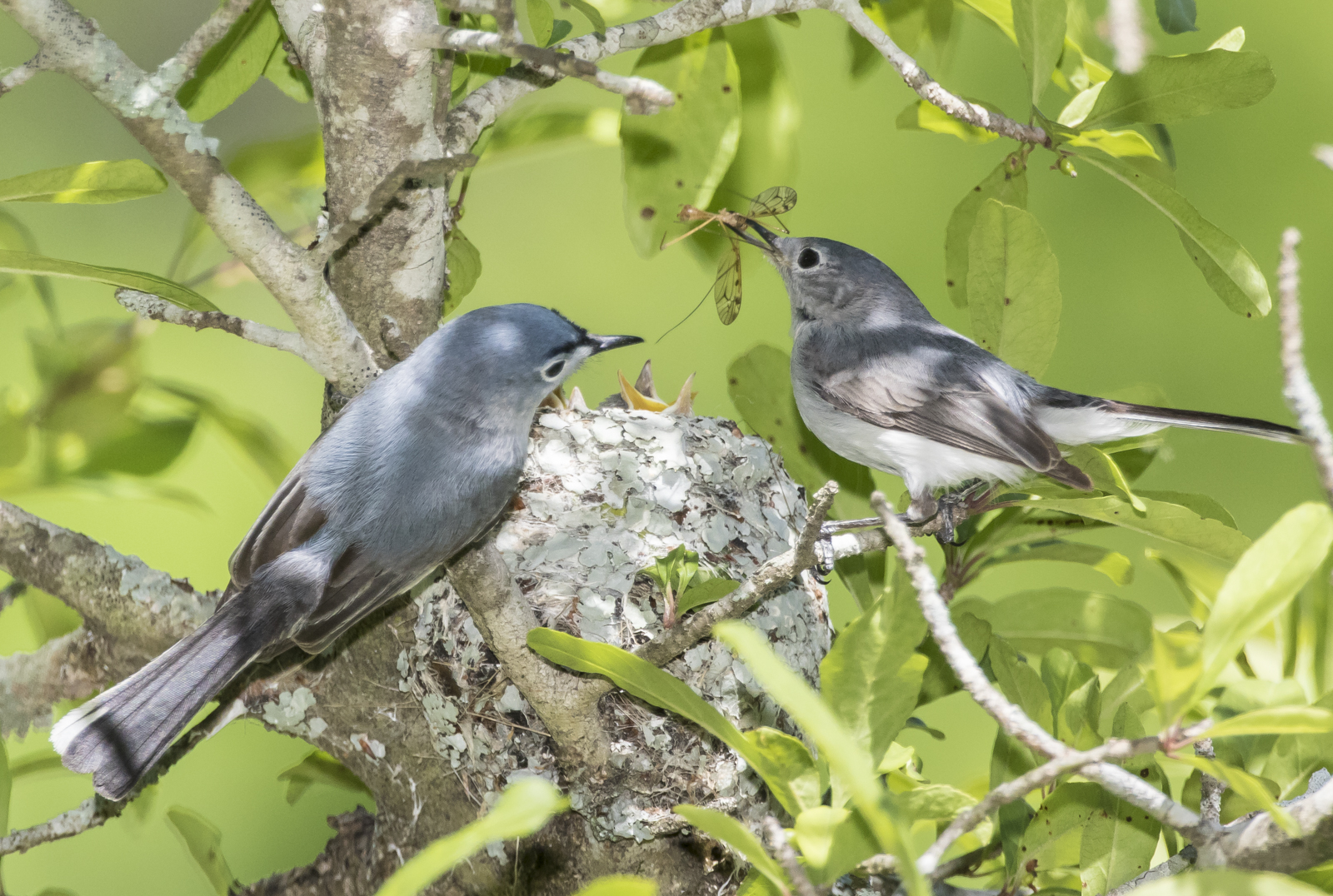
The feeding bouts were fast and furious, with adults staying just a couple of seconds on each trip. What amazed me on that first day was the large number of huge craneflies that the parent birds were bringing in.
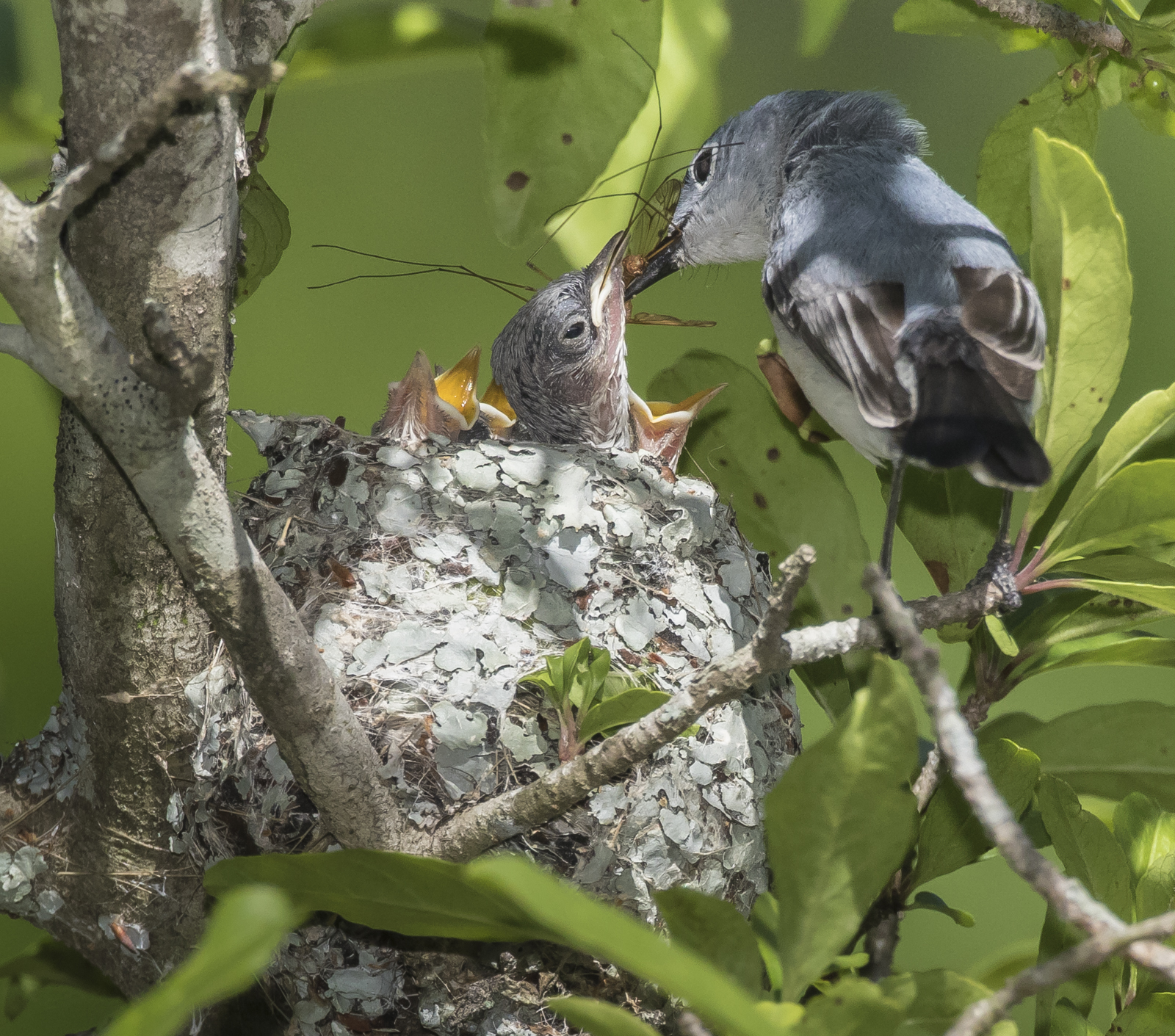
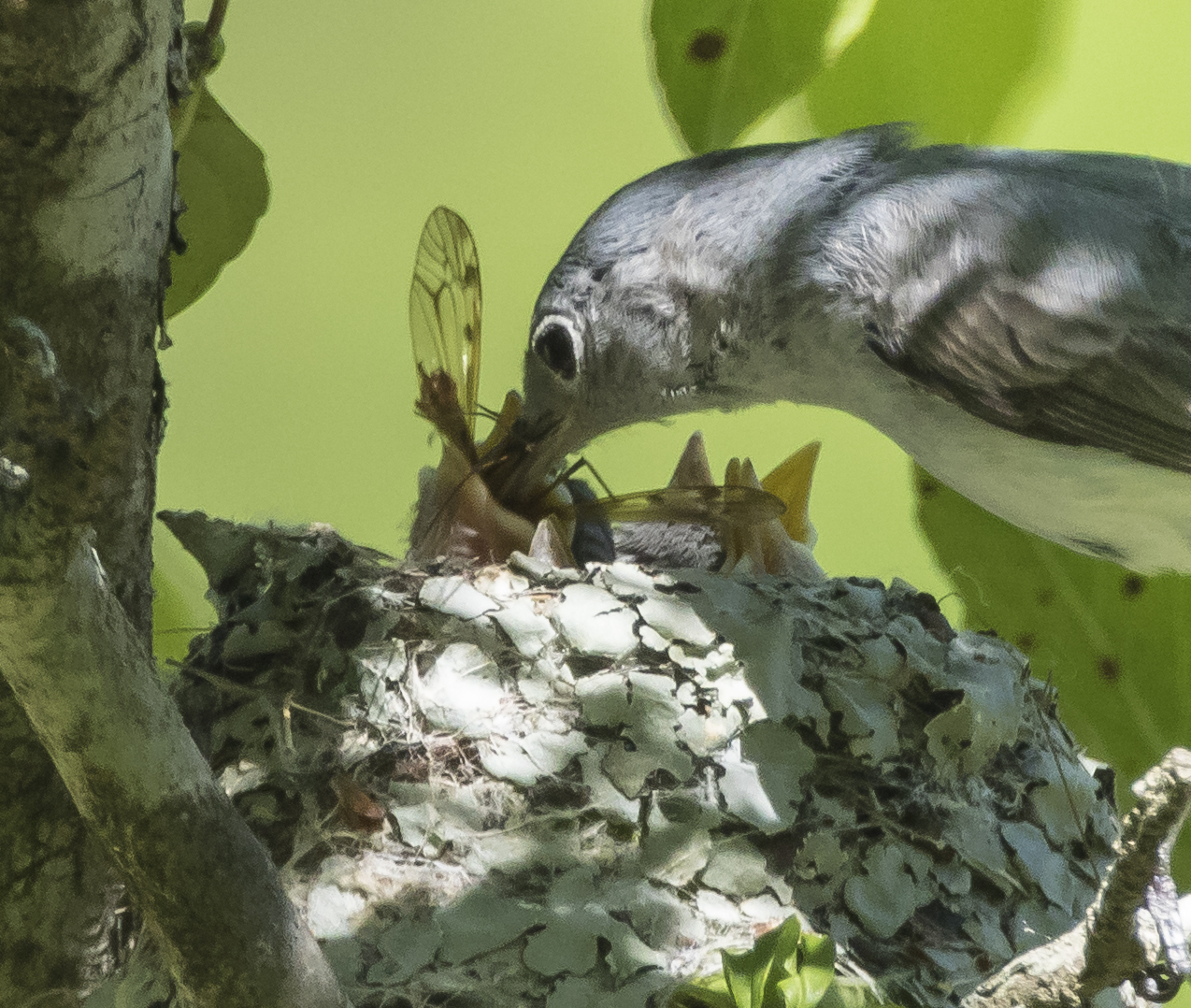
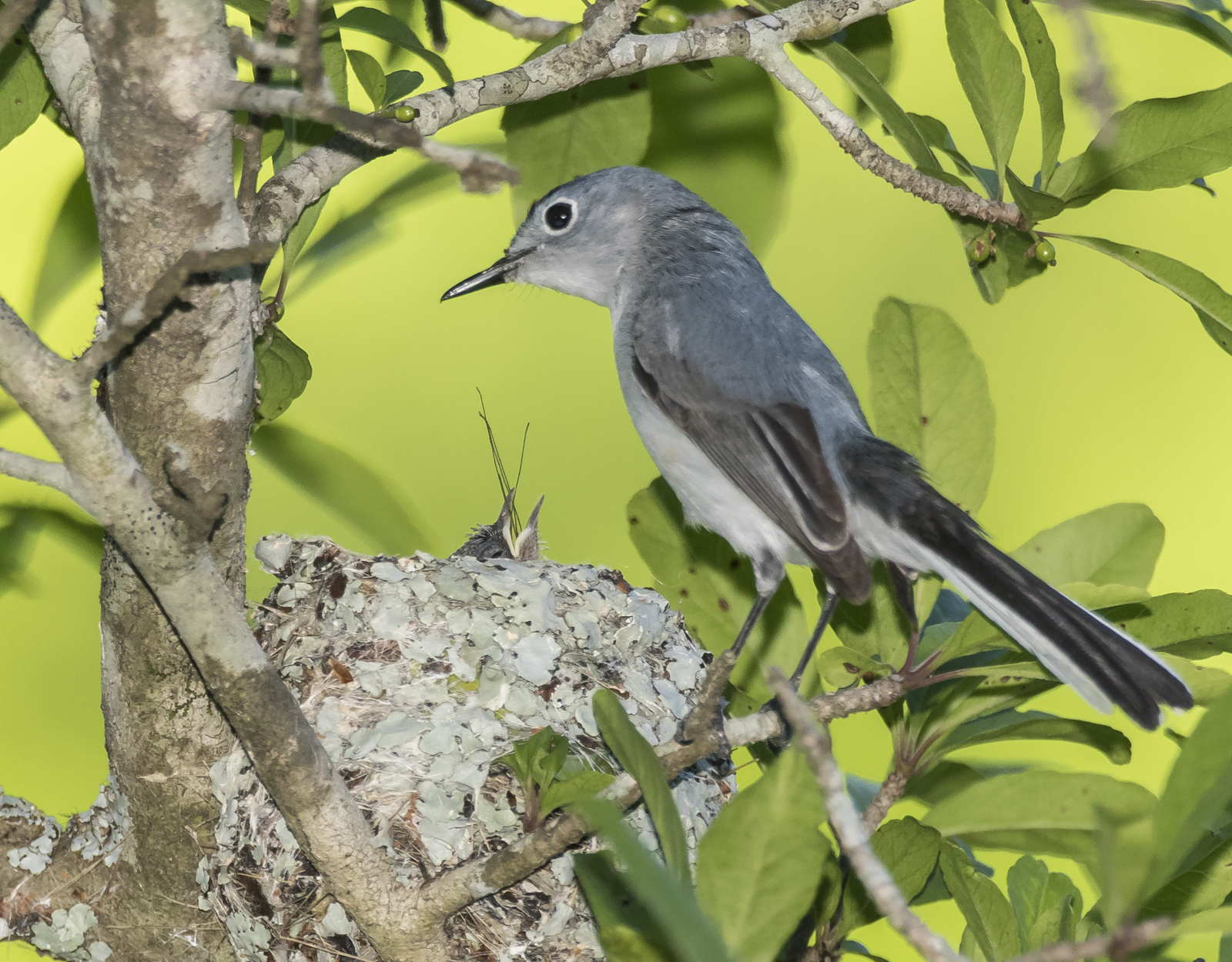
It seemed like about half of the food items brought on that first evening were craneflies. There is a nearby creek and large vernal pool that may be the source of so many of these huge flies (their larvae are aquatic), but I was impressed how many the adult birds were able to catch. Even more impressive was how many the tiny nestlings were able to swallow. On many occasions, a parent brought another food item, but I could still see the long legs of the previous meal sticking out of the beak of one of the recently fed young.
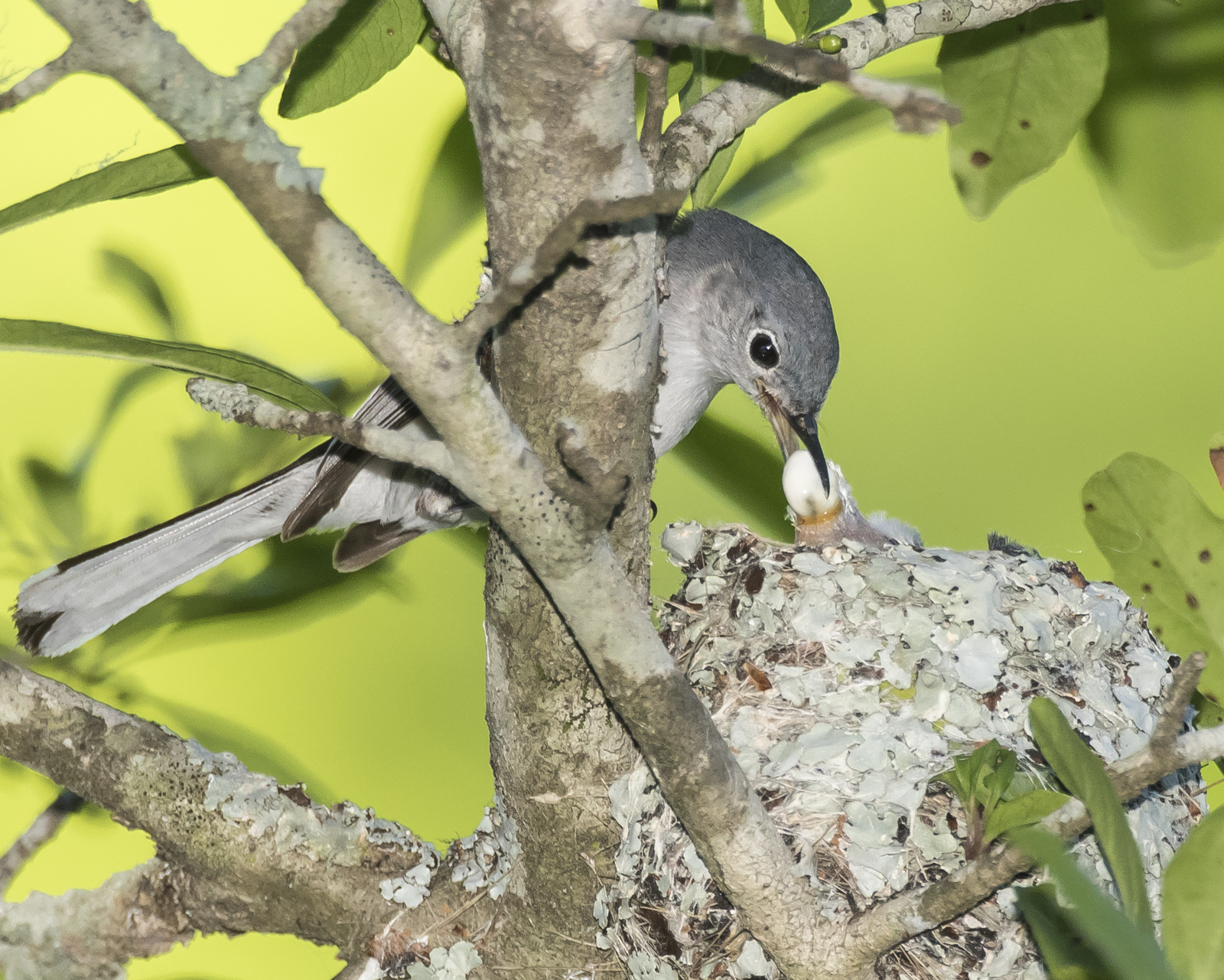
Of course, what comes in, must go out, so after every few feeding trips one of the young birds would raise its rear end after the adult had passed on a prey item, and the adult dutifully plucked the pre-packaged fecal sac and flew off. Data shows they usually drop it after flying 30 to 40 feet away from the nest (this helps keep the nest area clean of smelly poop that might attract predators).
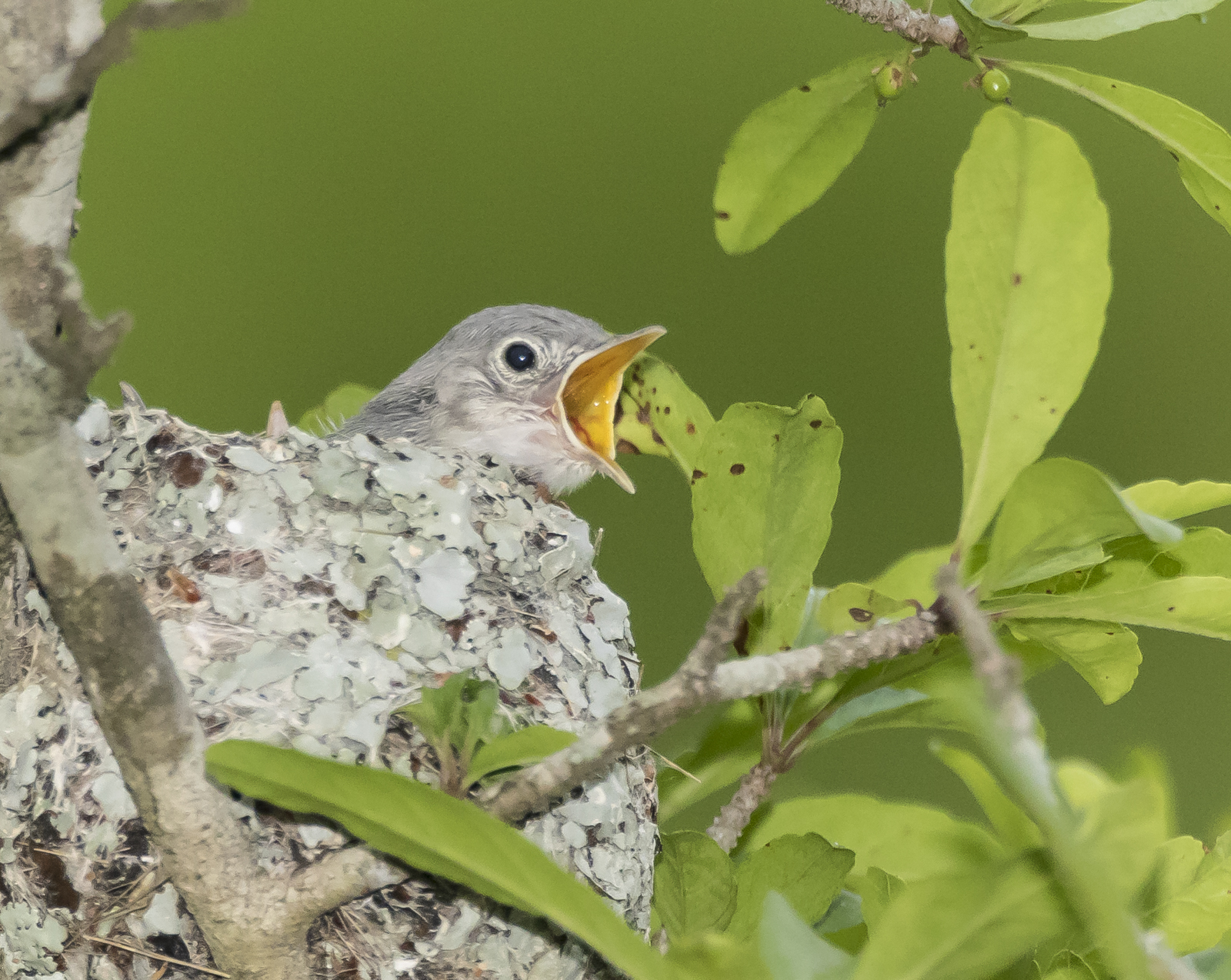
I spent some time photographing the feeding of young on three separate occasions, all after the Garden closed at 5 p.m. By the third date, May 11, the young were noticeably larger, more active in the nest between feeding bouts, and getting more feathered, especially on the head. Their huge gape and bright yellow mouth linings were hard to miss, and surely provide a great target for tired parent birds bringing in the food.

I was amazed that, after that first day of a menu heavy on craneflies, the last day I watched them, the adults brought in nary a one. Most of the food items were much smaller, and were difficult to identify even after zooming in on the images.
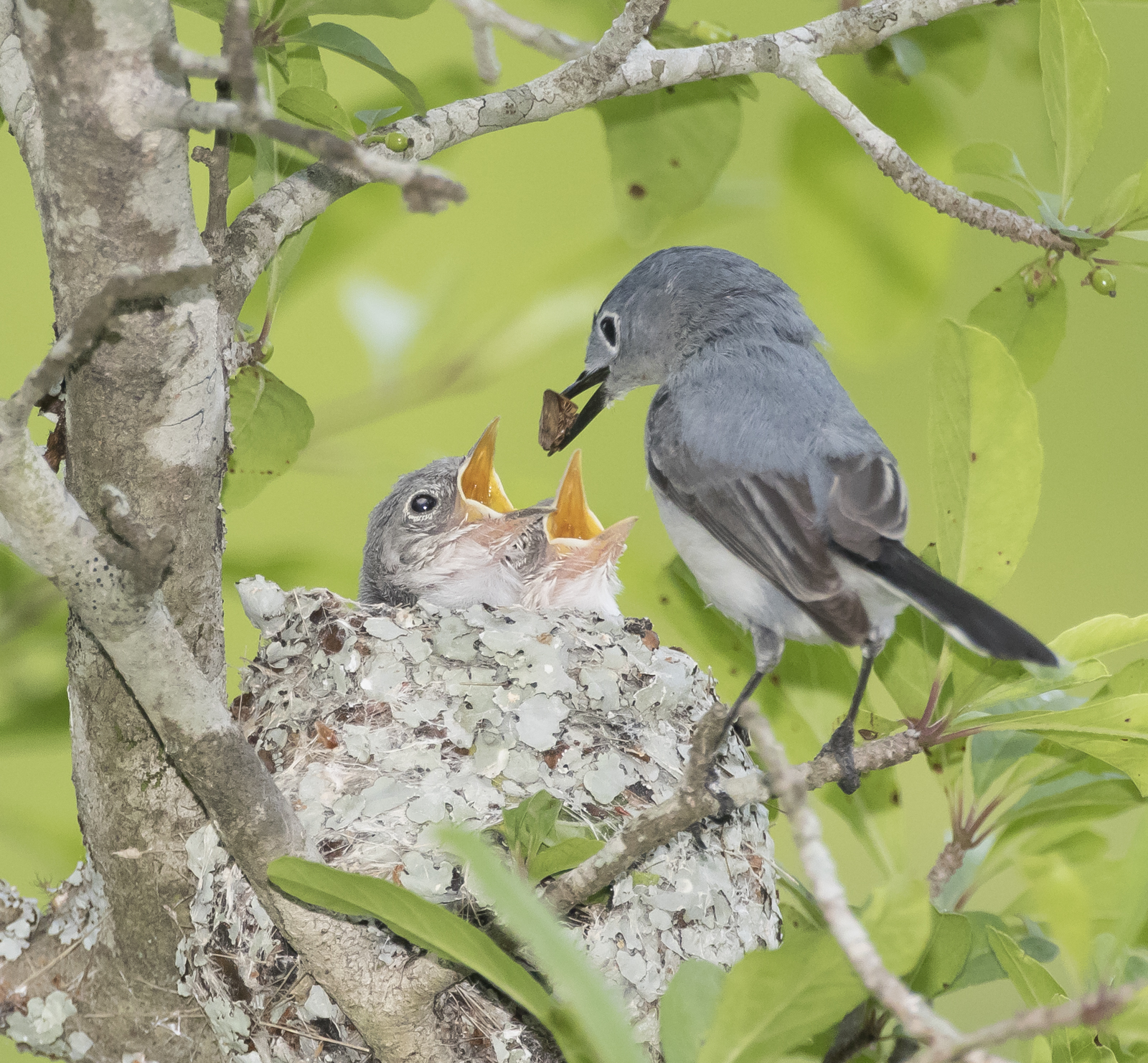
But the pace of feeding had quickened. That last day, May 11, I decided to keep track of the feedings. I stood out there for a total of 86 minutes that evening. During that time, the adult birds made a total of 51 feeding trips. The longest interval between feedings was 6 minutes. On several occasions, there were 2 or 3 feedings within the span of a minute!

Although I was hoping for another day of shooting the nest, I thought they might fledge before I returned, as I was taking a long weekend. Sure enough, when I returned to work on May 16, the nest was empty. Records show the young usually leave the nest 10-15 days after hatching, so that puts these guys right on schedule. Here’s hoping they all made it and are out there learning to be on their own.


 Roads End Naturalist
Leave a reply to Anne Beavan Cancel reply