
We had a few good observations and comments on our mystery post from yesterday. Deb noticed the silk strand in one of the images (reprinted below) which made her suspect some sort of silk-spinning critter. That pretty much limits what type of animal since the only two groups of terrestrial critters I know that can spin silk are spiders and caterpillars. Of course, it could also be that a spider or caterpillar just happened to go by this spot before I took the photo.
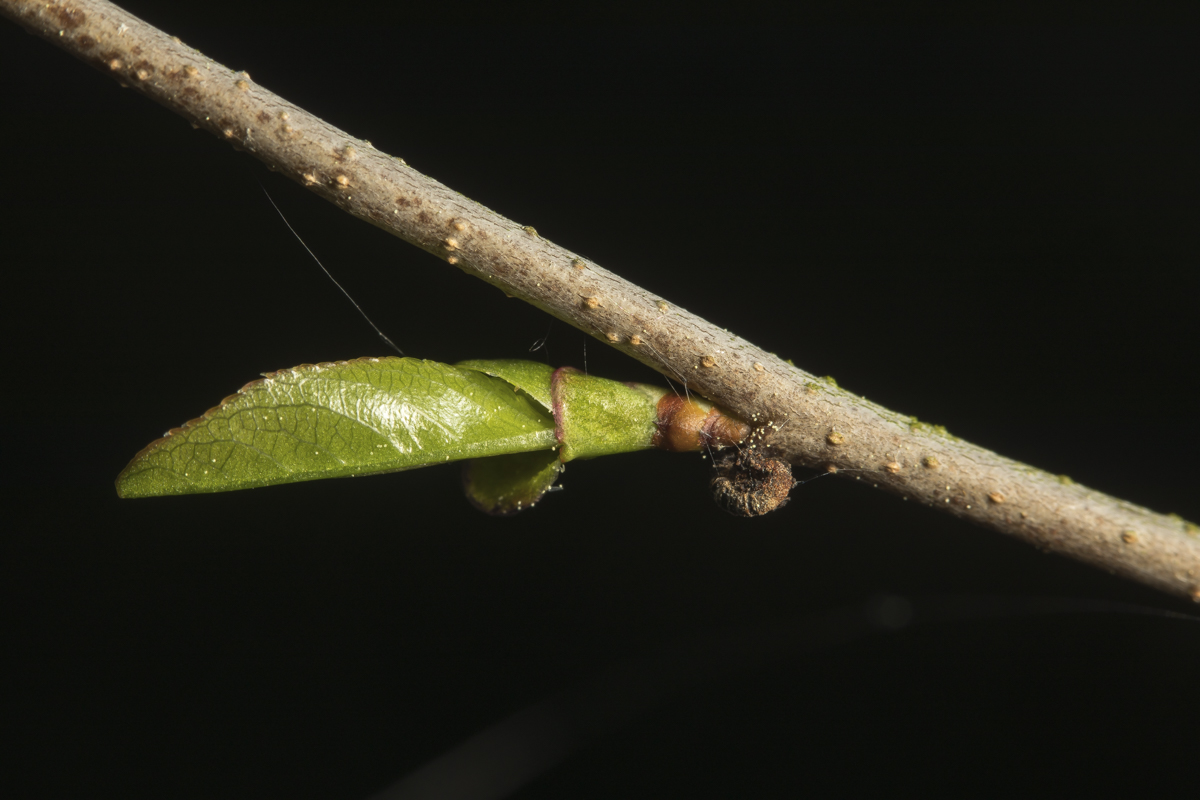
The other clue I intended for you to see was the pic with the tiny hole in the emerging cherry leaf (see below). This indicates something has been feeding on the emerging leaf bud, again, hinting at the possibility of a caterpillar or some other vegetarian insect.

As I mentioned in my last post, I have seen these critters in previous springs. I observed them slowly moving on the cherry twigs with a head and some legs protruding out the end. As I recall, I assumed it was a caterpillar based on what I could see, and then I looked online for caterpillars in swirled casings. I found images of what I now believe is a type of Pistol Casebearer Moth larvae, Coleophora sp. Below are a couple of closer images of these interesting larval cases.


There are hundreds of species of Coleophora moths in the U.S. and several are called Pistol Casebearers due to the resemblance of the spiral-shaped larval case to old-time pistols. Based on my web search, this one could be Colephora atromarginata, because of the host plant (cherry) and the shape of the case. But, according to the online expert, it would take dissection of the gentalia of the adult moth to be sure (oh well…). Caterpillars of this group construct cases of silk, plant material, and frass (caterpillar poop). I think the small brown clumps you can see on the outside of the case are frass pellets. The silk is hardened by an unknown secretion (giving it the black color) and is enlarged as the larva grows (giving the case that segmented appearance). The caterpillars never leave their case and carry it with them as the crawl around on the host plant (much like a snail). When ready to pupate, they use a heavy pad of silk to attach their case to a substrate. They then turn around inside the case and eventually emerge out the back end of the case into a tiny moth. If this is the species I think it is, it overwinters as a caterpillar inside these cases, which explains why they are already this large just as their host plant leaves are emerging.
For a great video of a casebearer larva moving about, check out the incredible work of Sam Jaffe at The Caterpillar Lab. Sam is doing an amazing job of helping people see the magic all around us in the world of caterpillars.
I hope you enjoyed this mystery and we will have another challenge tomorrow.


 Roads End Naturalist
Leave a reply to Kathleen Piercefield Cancel reply