
Hunters will tell you that a moose is a wily and ferocious forest creature. Nonsense. A moose is a cow drawn by a three-year-old.
~Bill Bryson
For many years, Moose have been one of the more difficult of Yellowstone’s large mammals to find. The best place was usually at the Northeast entrance or in the small town of Silver Gate just beyond that gate. This trip had Moose aplenty, with sightings on almost every day we were in the park, ranging from the upper part of Lamar Valley to near the Northeast entrance. The area known as Round Prairie was particularly productive and we saw a record (for us) of seven of these magnificent creatures there one day. Unfortunately, our best views happened before our group of students arrived, though they also saw Moose, but at greater distances (except for one quick roadside spotting on our last full day in the park).
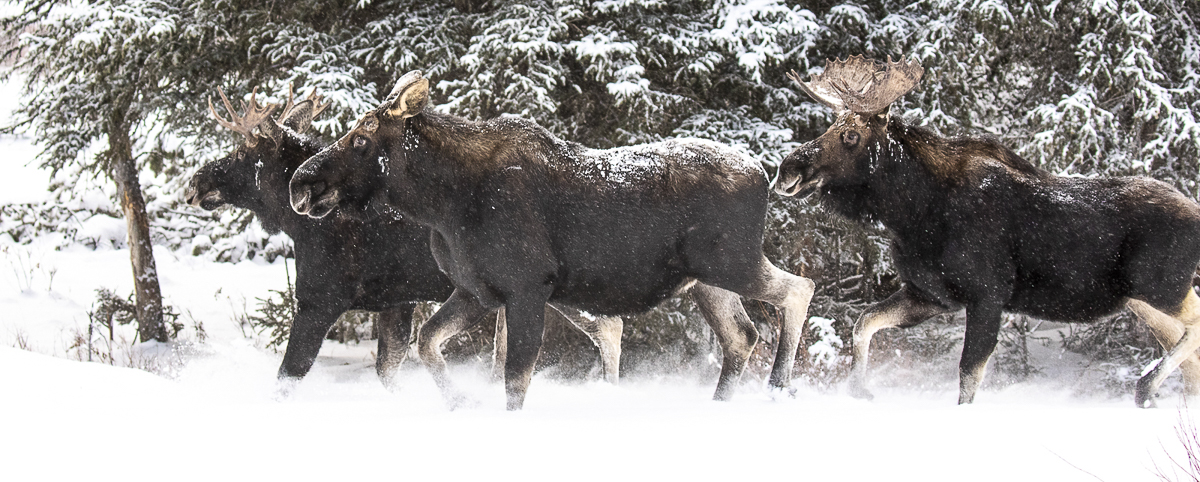
Needless to say, on our multi-moose day at Round Prairie, there was a crowd. We got lucky and pulled into a spot in the closest pullout as someone was leaving. Here are some images of the group of five Moose close to us (another two were far out in the meadow in another willow thicket).
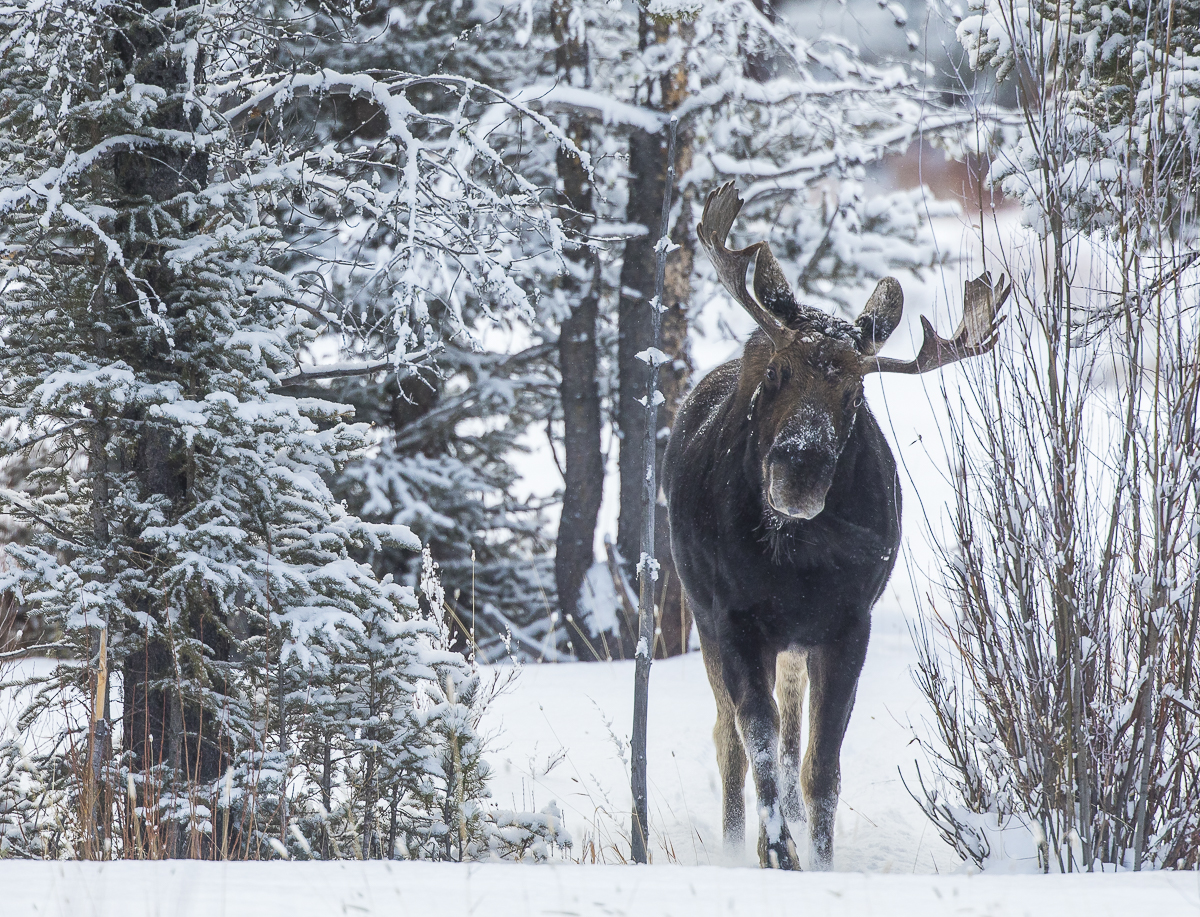
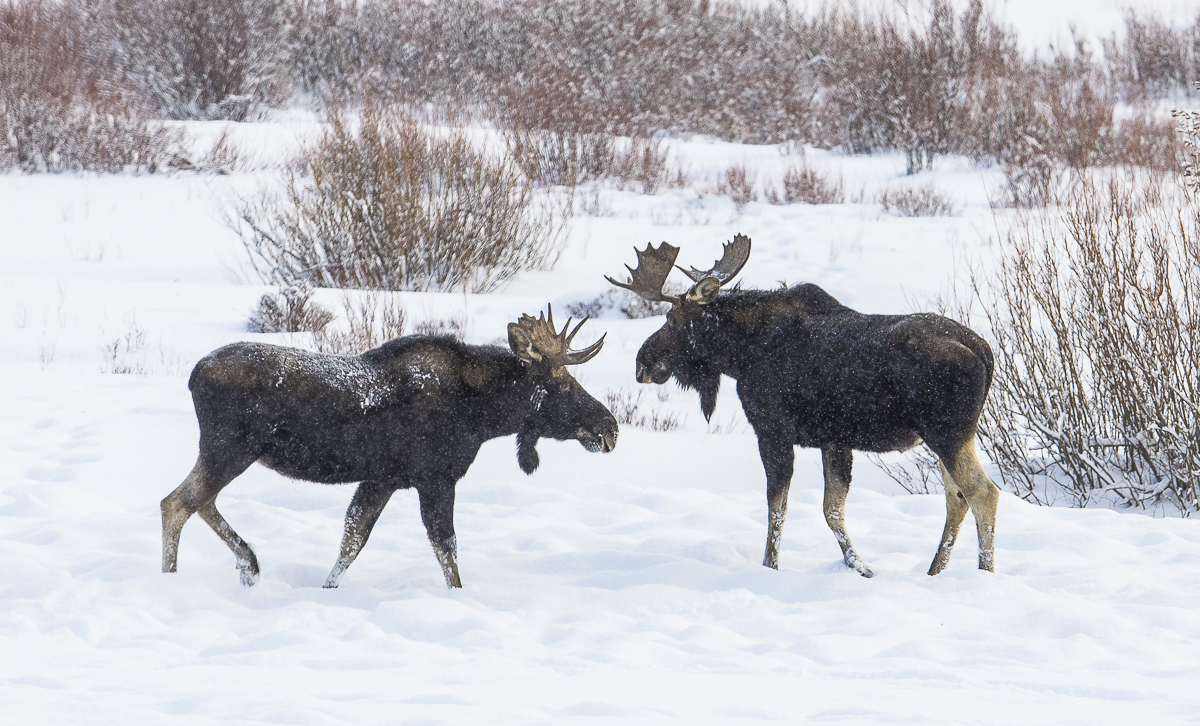
At first glance, I thought we had two bulls and three cows feeding in front of us. When I looked with binoculars I could see that one of the largest animals was actually a bull that had dropped its antlers. Bull Moose shed their antlers annually anywhere from late November until March. Mature males tend to shed the earliest, soon after the fall mating season (the rut). That makes sense as you probably wouldn’t want to carry around those giant armaments (they can weigh over 50 pounds and span almost 5 feet) any longer than necessary.
Bulls start growing their new set of antlers a few weeks after dropping the old ones. A bull’s antlers increase in size (the number of points, span, and size of the palms – the flattened portions) each year until its prime (usually about 5 or 6 years of age). Young bulls start off with only a few points and small palms as a yearling. The number of points and the size of the palms will grow each season with the antlers usually forming a protective arch over the face during the prime years, preventing damage to the bull’s eyes when competing for mates. As he ages past his prime, the antlers tend to get smaller each year, with fewer points and smaller palms.

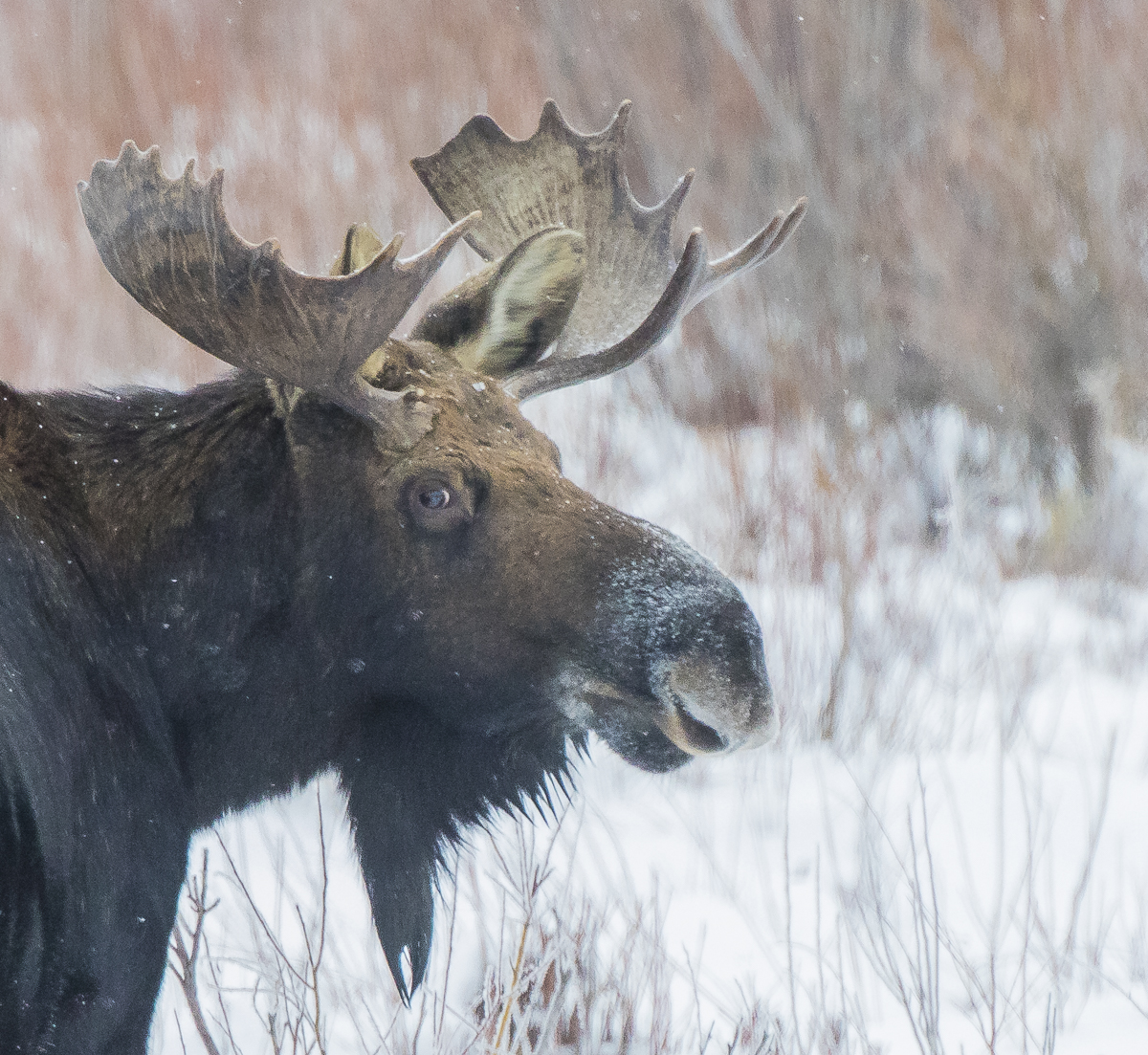
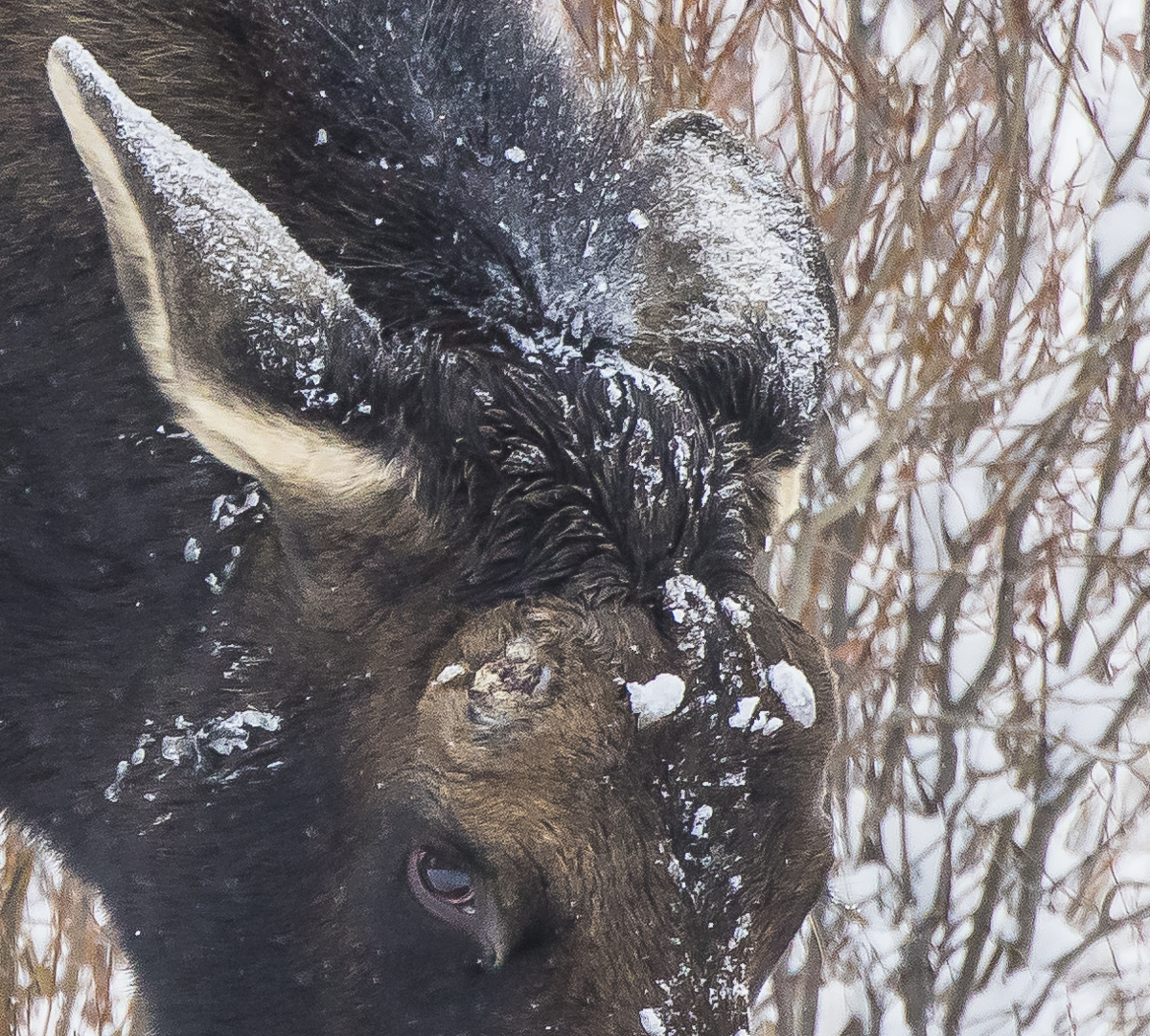
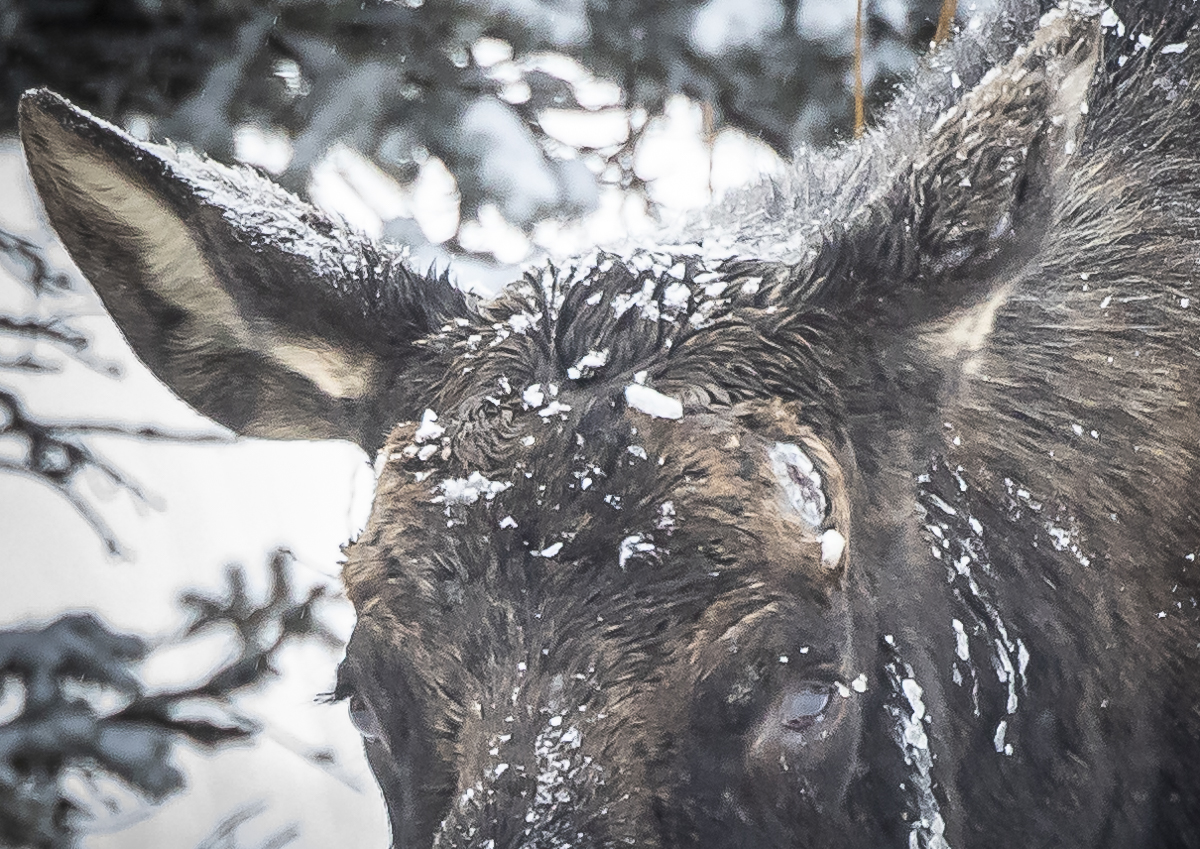
At one point, three bulls started running toward the road as they shoved one another and acted a bit aggressive. There’s nothing like a running bull moose (weighing up to 1100 pounds, being nine feet from nose to tail, and 7 feet at the shoulders) to get a gang of photographers to move (although I thought a few of them did not clear out of the way fast enough for their own good considering there were three bull moose running toward them!). Two of the bulls went across the road and then returned to the willows to feed with apparently no more ill will between them. Moose tend to be solitary animals, but will congregate, especially in winter, at good food sources. The willow stands in Round Prairie offer that prized resource.


A Moose’s winter diet consists almost entirely of twigs. In fact, the word moose comes from a Native American word that means “twig eater”. We watched them browsing the tips of the willow shrubs and a close look would show them both breaking off the twig tips to eat and pulling on them as if to strip off the bark.
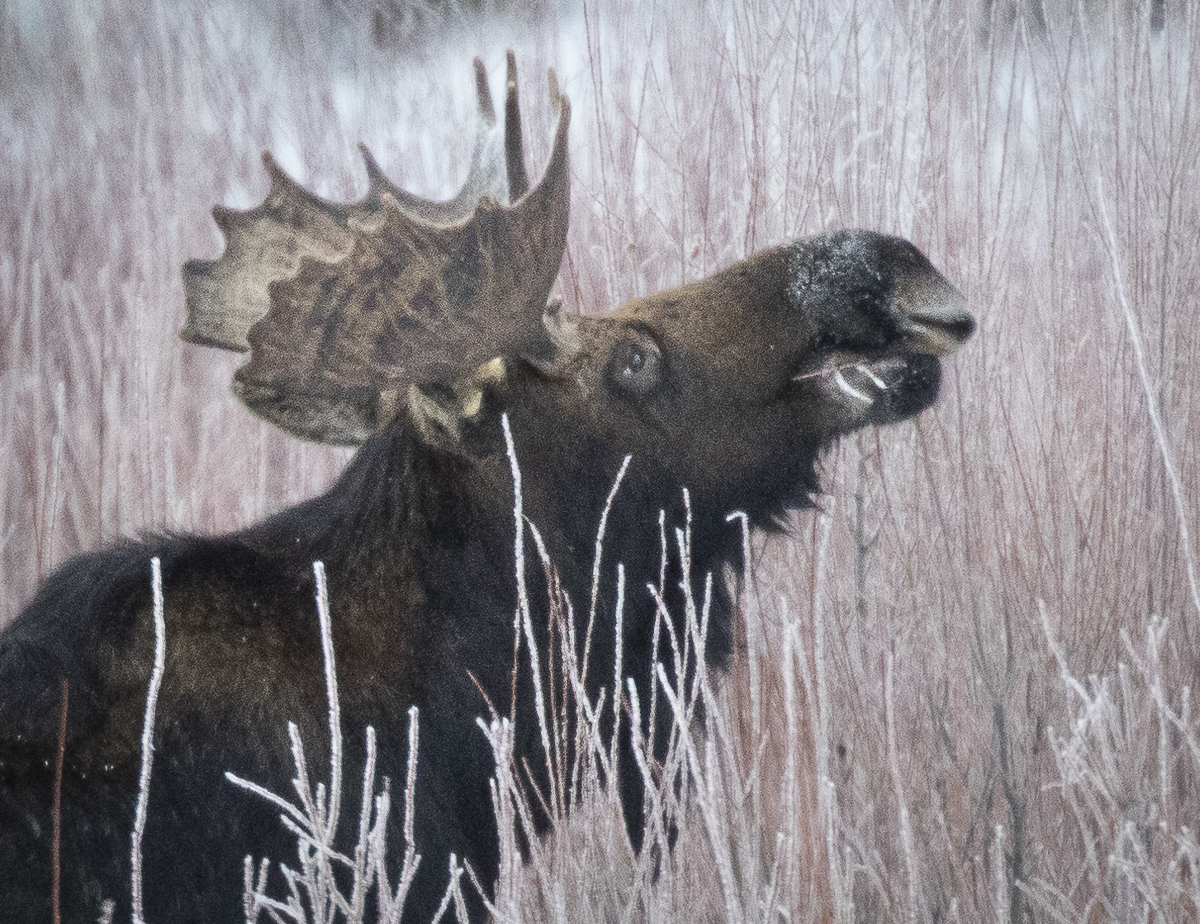
Here is a short video clip of Moose eating twigs. The falling snow made it difficult to get a sharp image but it is still interesting to watch them feed.
–– Moose feeding on willows in Round Prairie
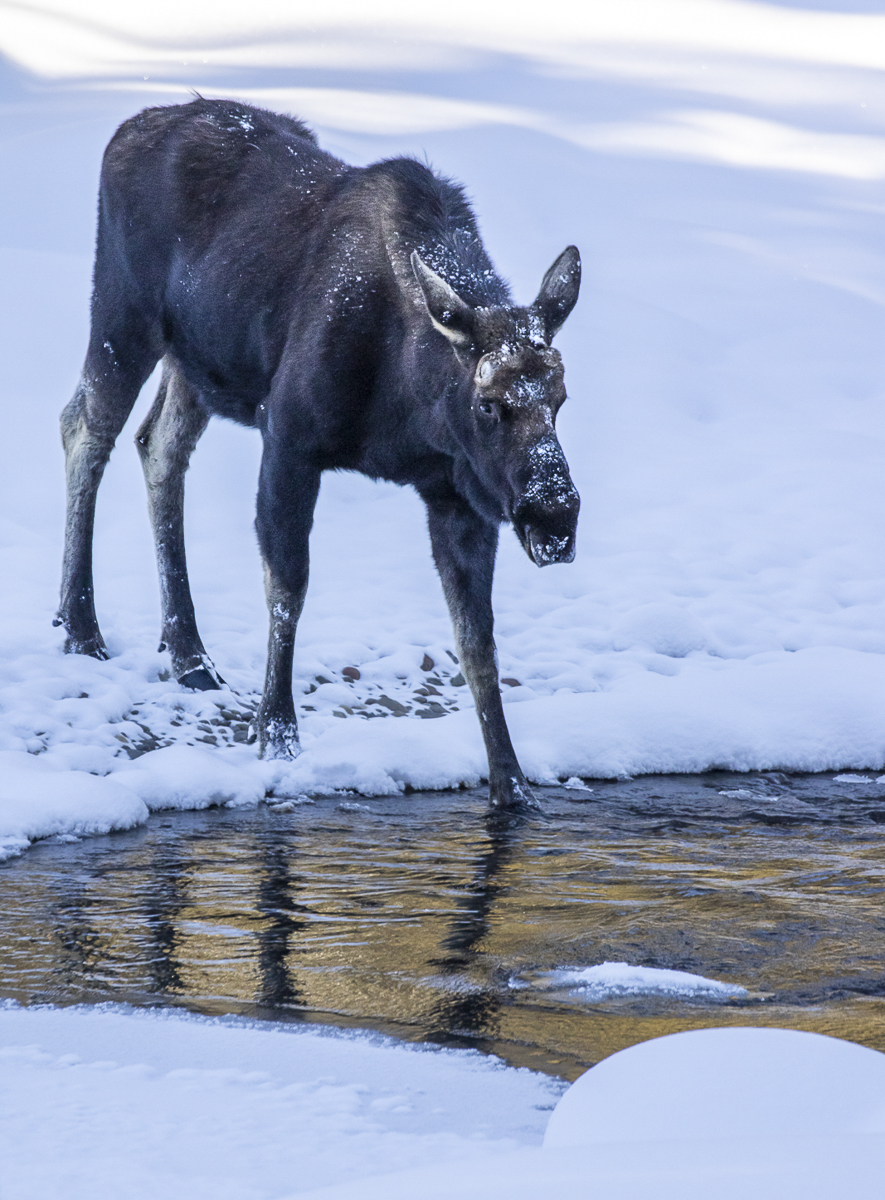
Though Moose look gangly and awkward to many, I am fascinated by this largest member of the deer family. I hope their population continues to grow in Yellowstone so other visitors may also marvel at these magical beasts.


Leave a reply to Mary Gay DeFino Cancel reply