
Wherever we go in the mountains, we find more than we seek.
~John Muir
My long-time friend, Scott, is working at Mount Mitchell State Park this summer so I decided to pay him a visit last week. It was good timing, since the predicted high temperature here at home was in the mid- to upper nineties while up there atop the highest mountain in the Eastern Unites States, it was in the low seventies! Melissa was leading a museum workshop down the Blue Ridge Parkway all week so this was a solo trip to see Scott and some other friends in the area.
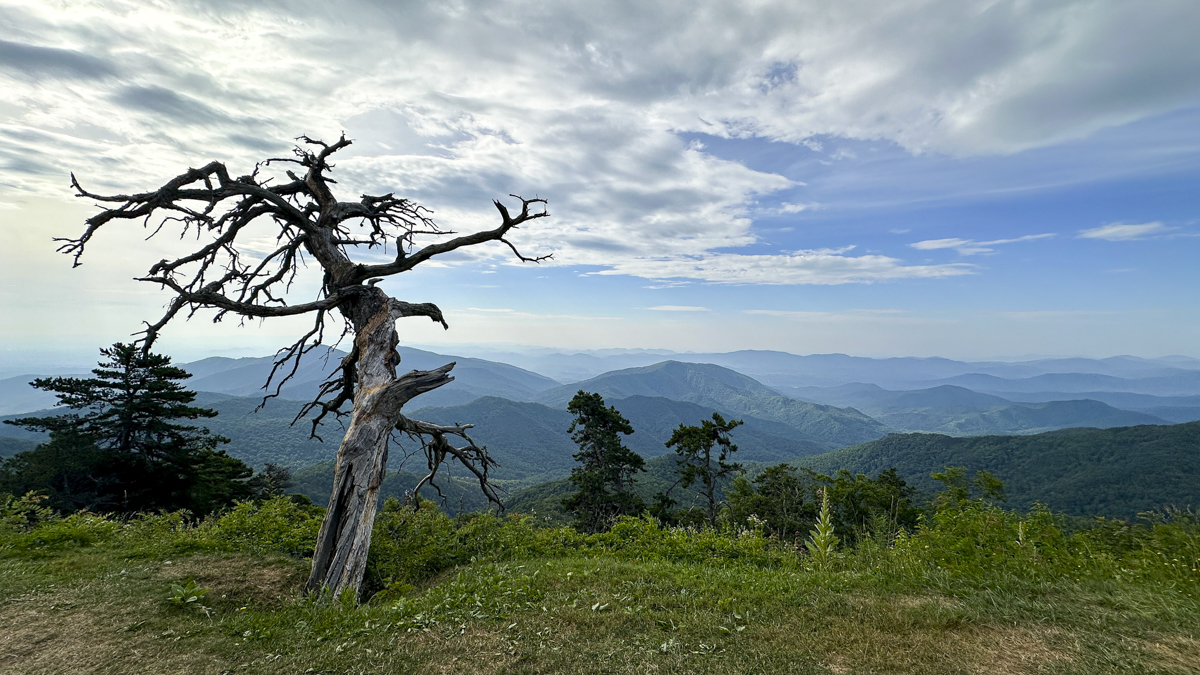
On his days off, Scott has been photographing some hummingbirds that regularly visit a patch of flowers near the far end of the restaurant parking lot. I’m always up for a photo challenge, so we spent some time in the morning and afternoon standing by the flowers and shooting whenever the dominant immature male hummingbird visited. We did see one or two interlopers from time to time, but the dominant bird quickly chased them off (good way to work up an appetite!). It was overcast and breezy (and very cool!!) so that added another challenge as we both tried to capture the action.
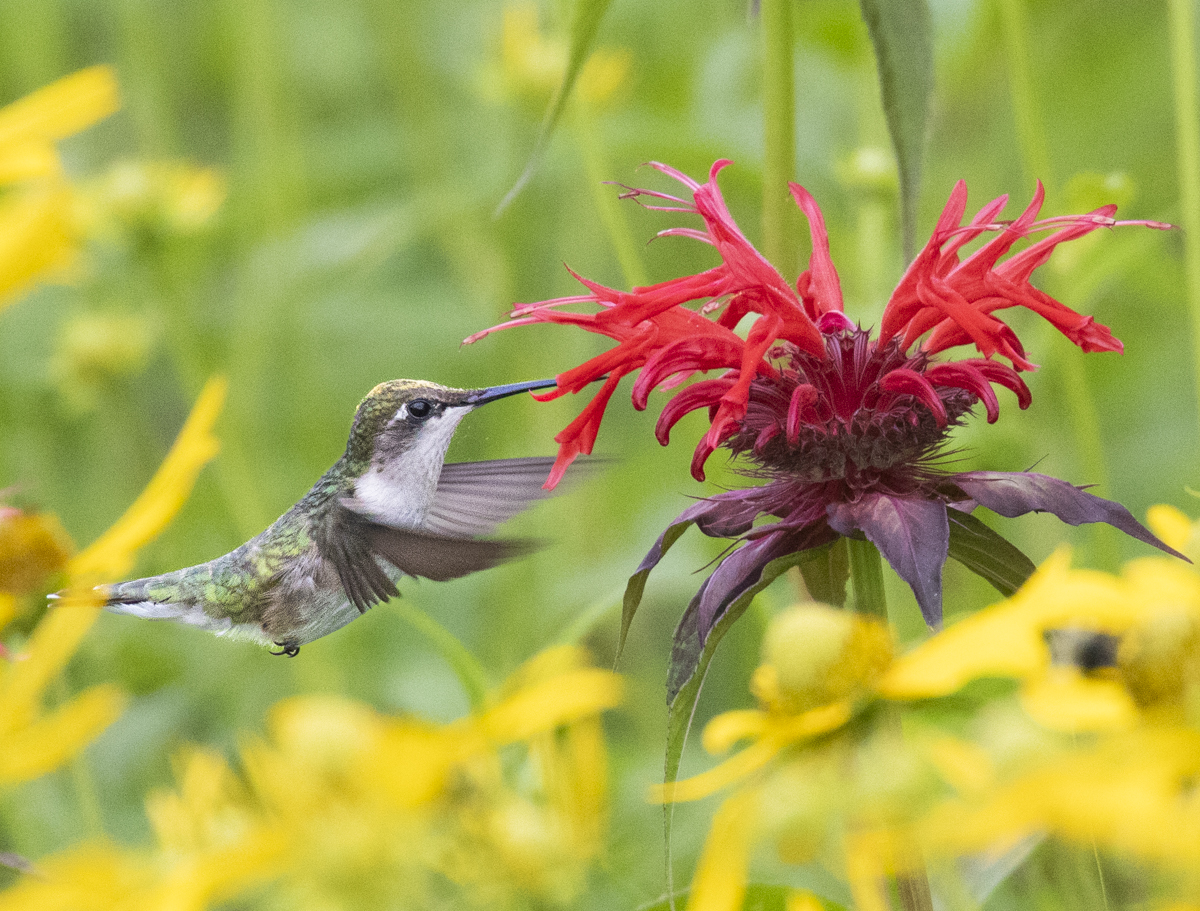
The flowers were so thick and, with the breeze, there were few times that one of the birds was clearly visible for a photo. But, we kept at it.
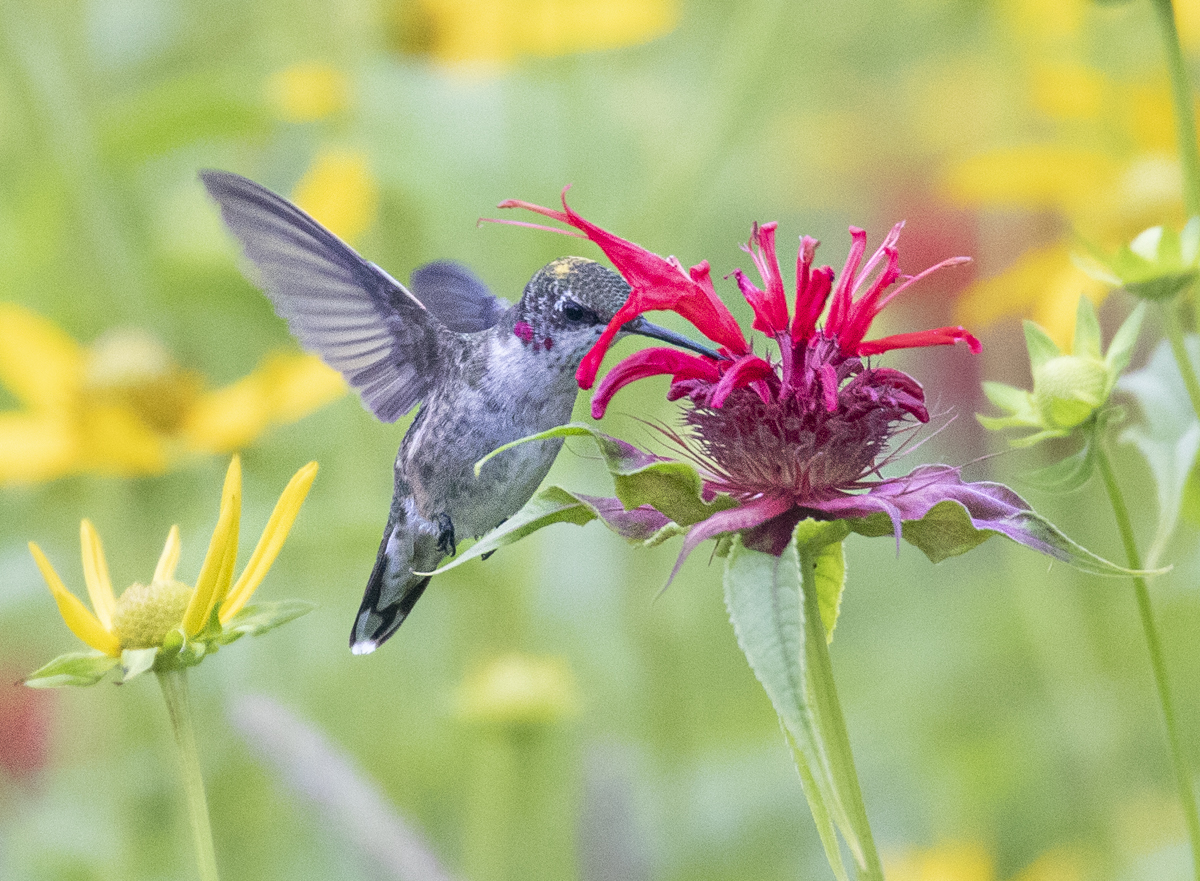
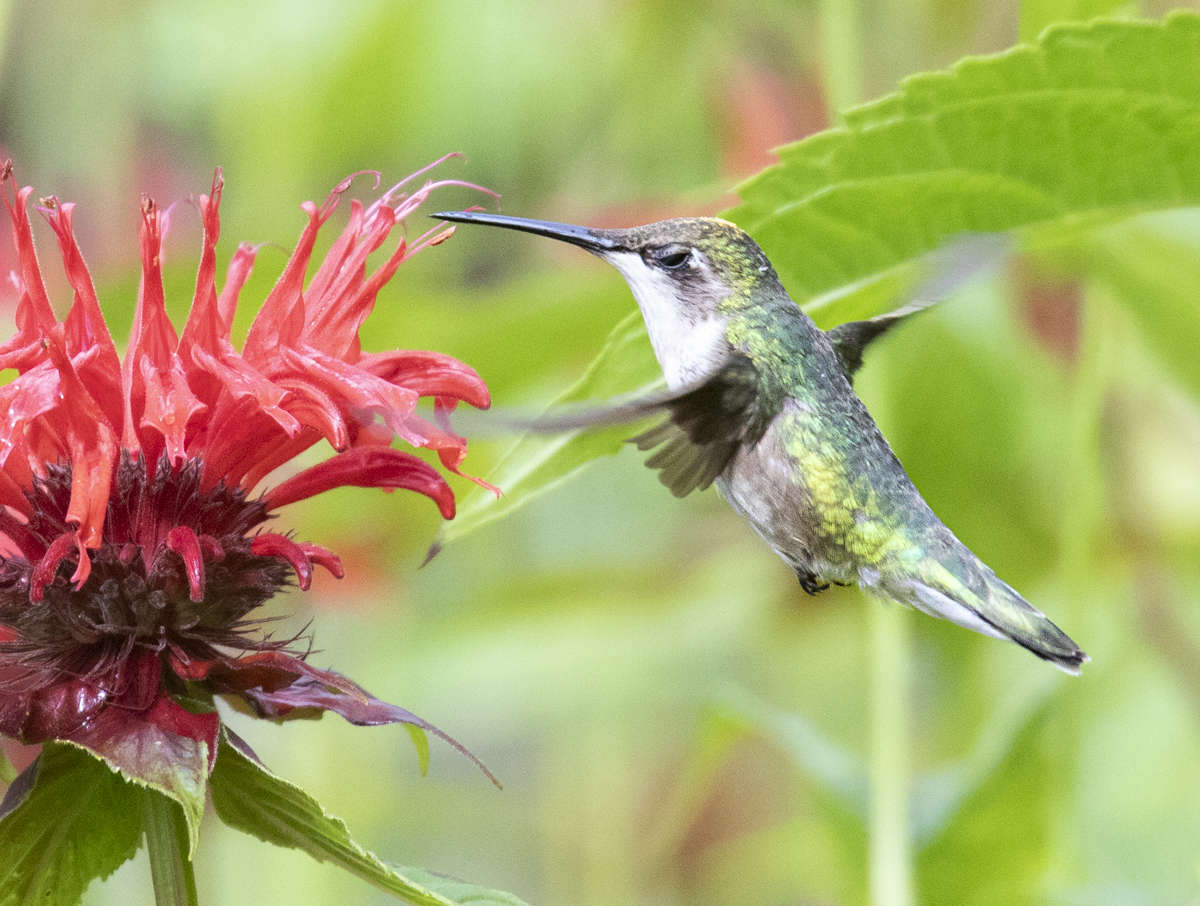
I probably got about 6 decent photos the whole time we were there but it was fun trying to anticipate the hummingbird’s moves. Between our two bouts of hummingbird stalking, we drove down the Blue Ridge Parkway to look for wildflowers, especially the abundant and gorgeous Turk’s Cap Lilies (Lilium superbum). These are the largest of our native lilies reaching heights of 4 to 8 ft. A single plant may have as many as 40 flowers.
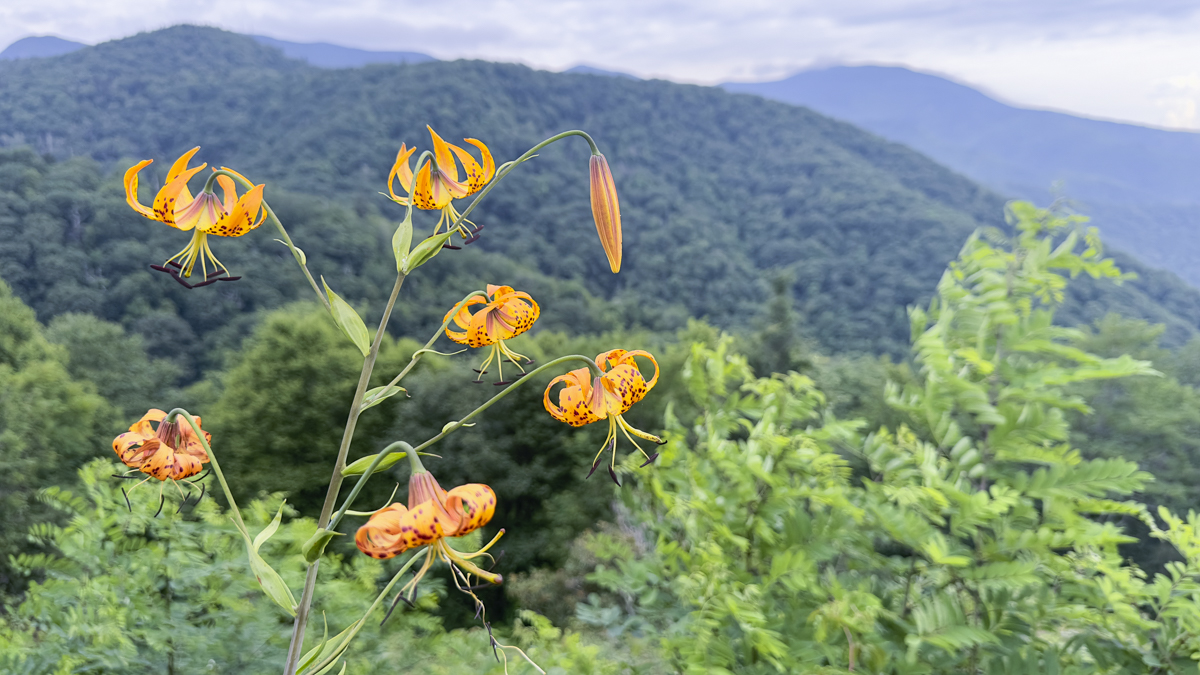
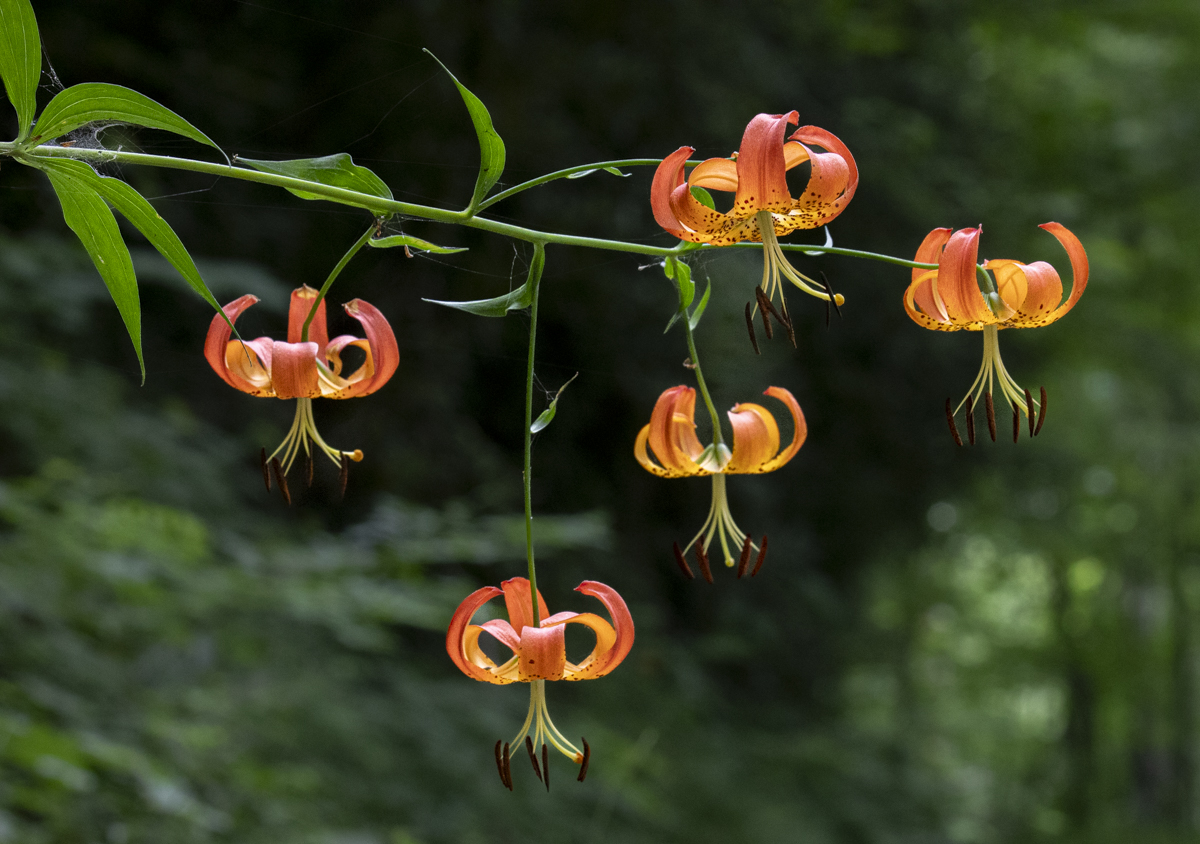
Hummingbirds and large butterflies, like Pipevine and Eastern Tiger Swallowtails, are the primary pollinators of Turk’s Cap Lilies.
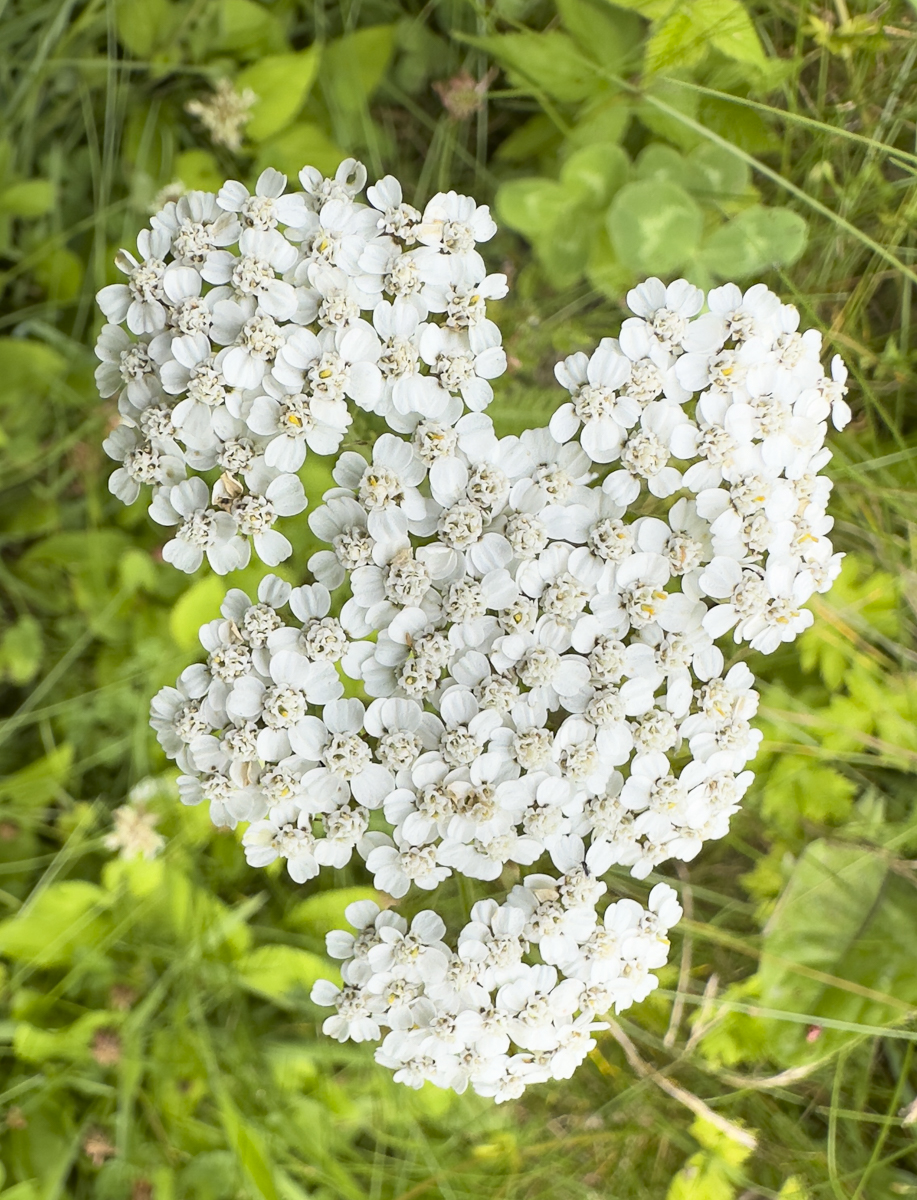
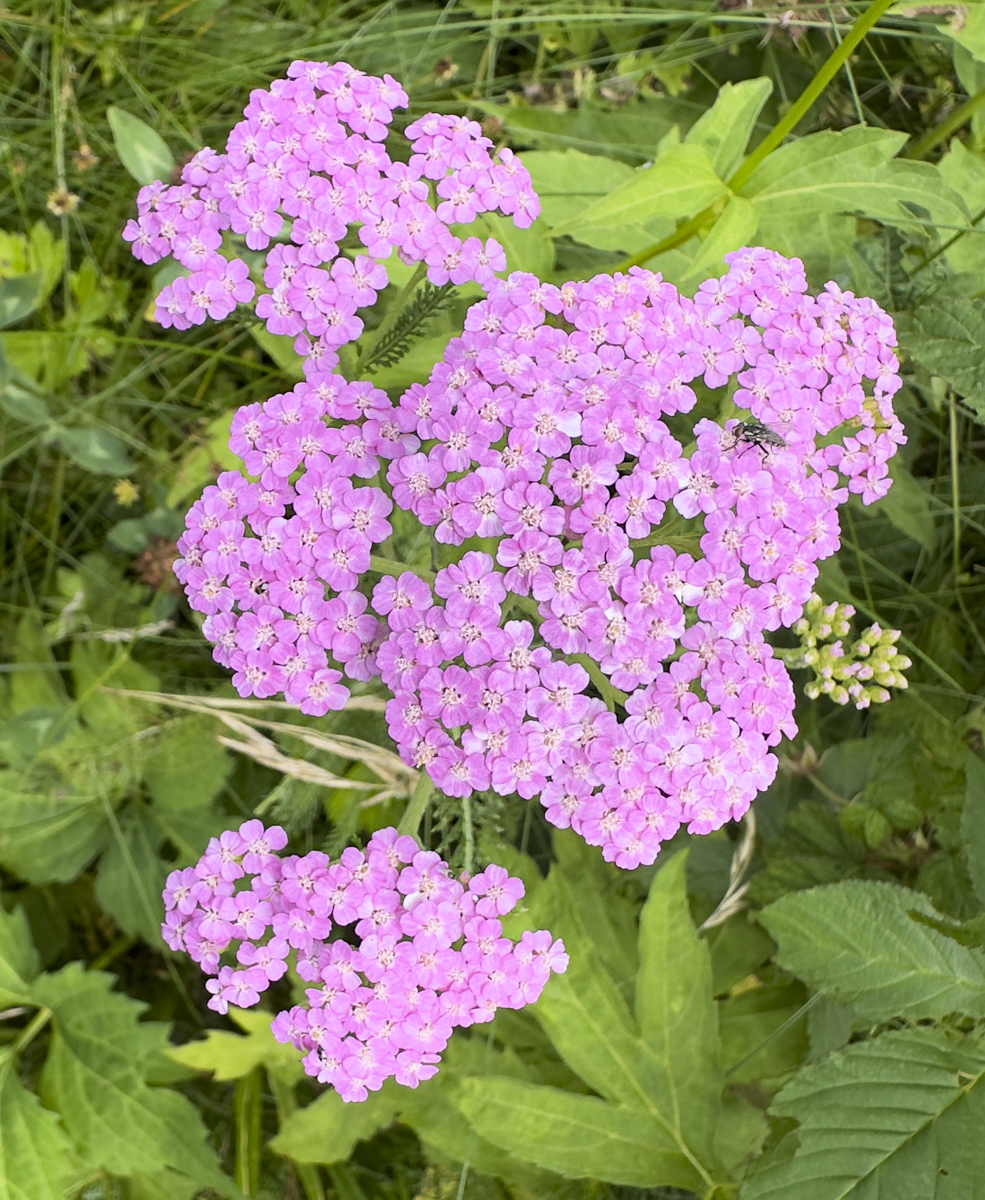
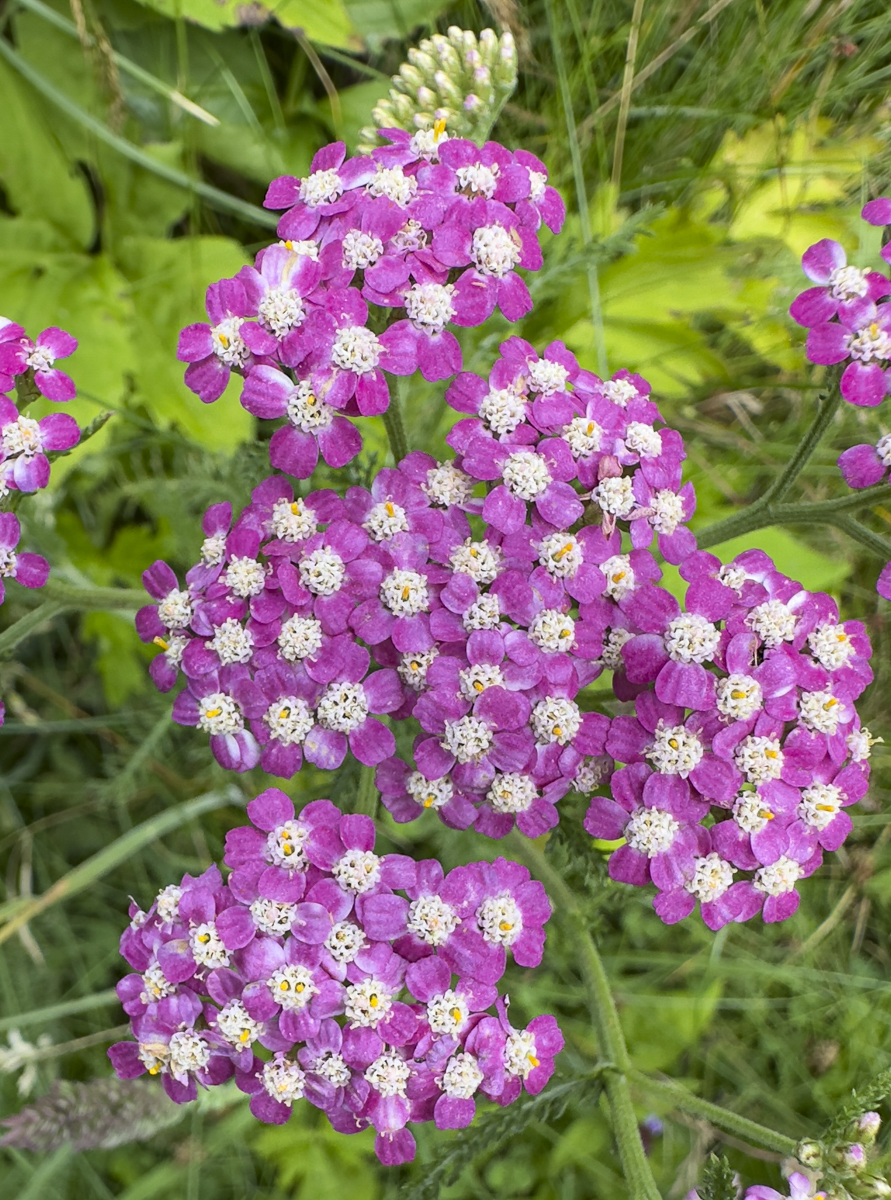
We found another plant puzzle back up on the mountain near the park office. Common Yarrow, Achillea millifolium, was blooming in scattered clumps along the roadside. Yarrow is one of those plants that has a wide native range in the northern hemisphere, but is considered both a native and non-native since it is difficult to discern its true distribution. It is a good pollinator plant and has been used for centuries for various medicinal purposes. The genus name is after Achilles, who used plant extracts from yarrow to treat soldiers’ wounds. The species name means “a thousand leaves” referring to the highly divided leaf form. Many tribes in North America used yarrow to treat a variety of ills from wounds and burns to colds and headaches.
The usual color is white, but we observed three distinct colors of yarrow within a space of just a few yards – white, pink, and magenta. Is this just natural variation, hybridization with cultivars, or something else like soil conditions?
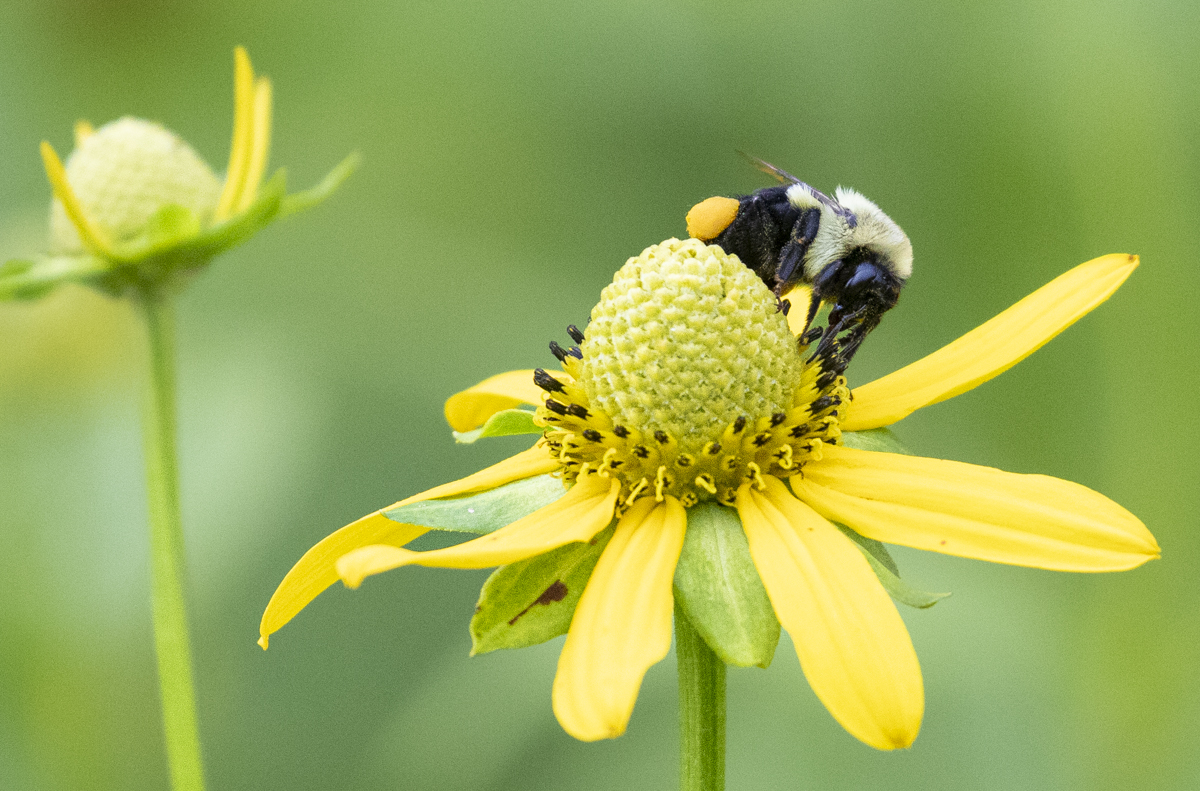
Back at the flower patch, there were other critters visiting the flowers besides the hummingbirds. As it was a cool and breezy day, the main pollinator insects I saw were the numerous bumblebees working the blossoms.
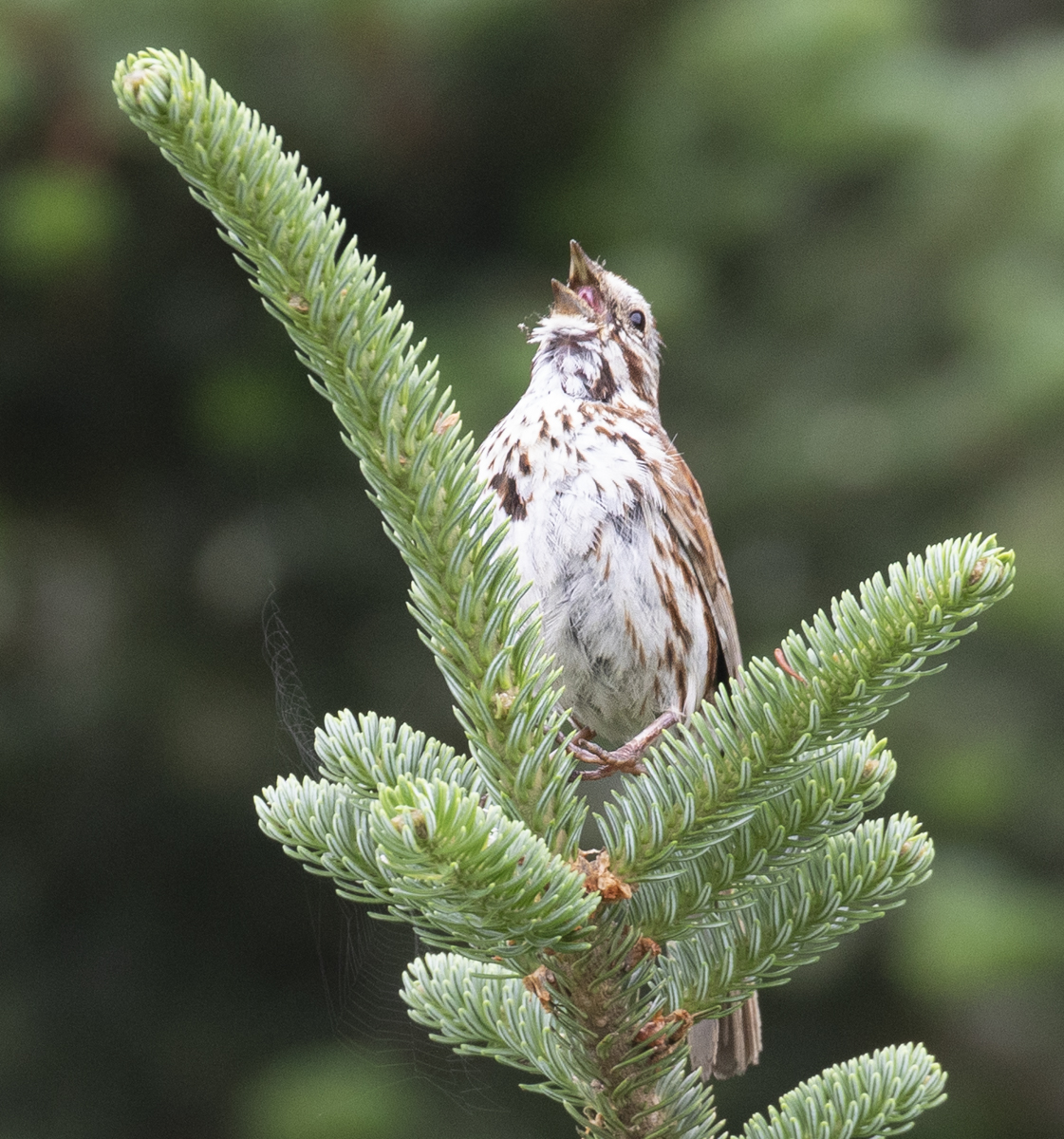
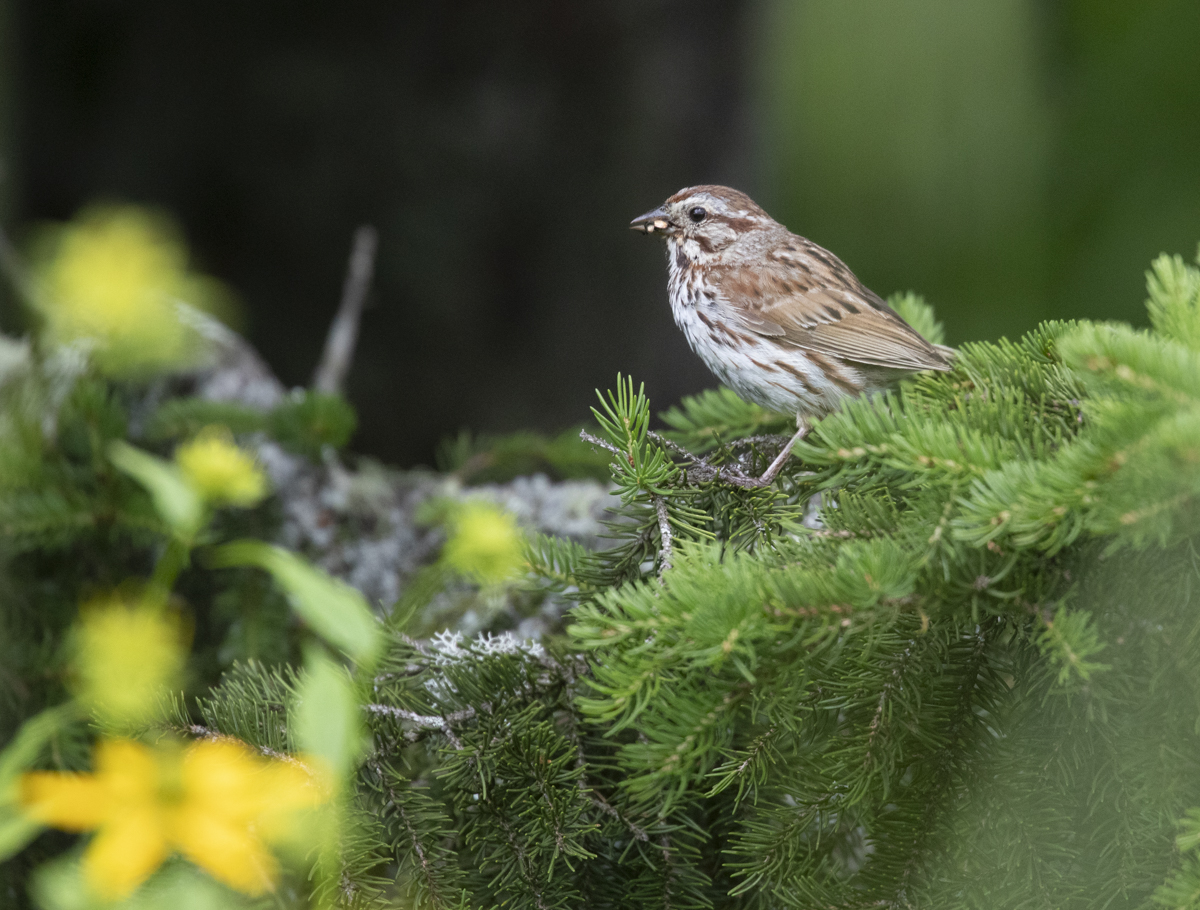
We also had a few other bird species drop by, mainly in the trees behind the flowers – a Song Sparrow, Dark-eyed Junco, and some Cedar Waxwings. The sparrow would sit atop a branch and loudly sing. Then we noticed plant stems moving in the flower patch, time and again in the same location. That meant a nest in the flower patch.
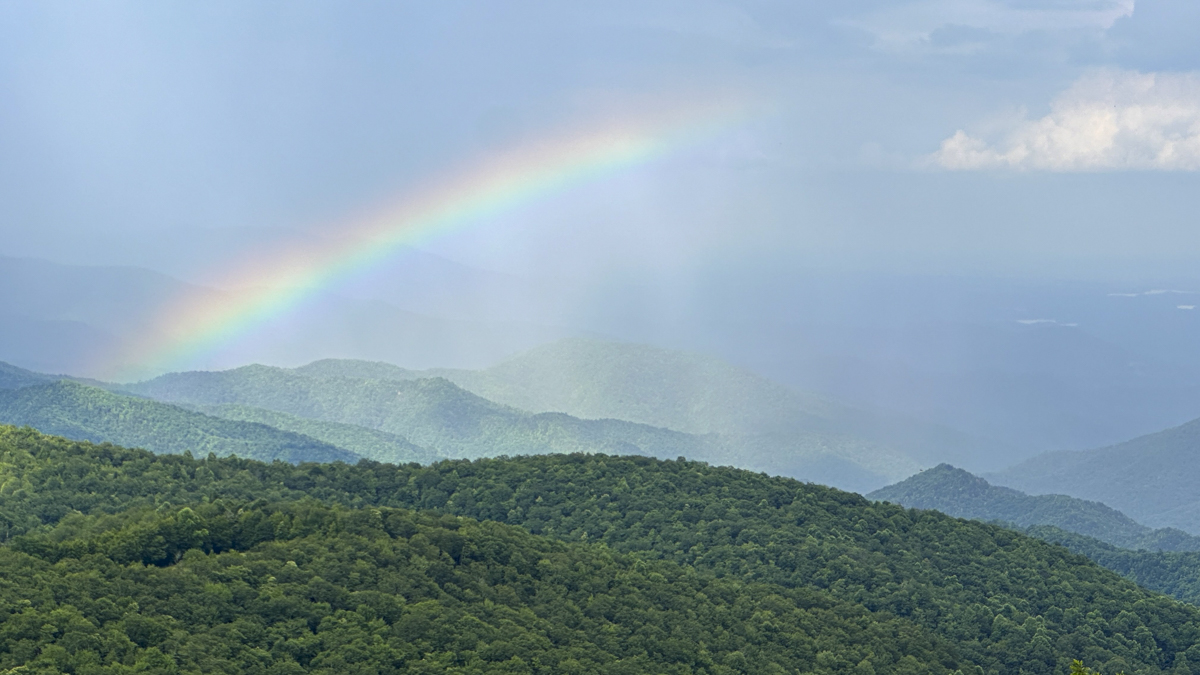
Late in the day, it started to rain so I reluctantly said my farewells and headed back off the mountain. A nice rainbow greeted me on the parkway, perhaps the mountains’ effort to convince me to stay in the cooler temperatures a little longer but I stoped only for a few photos before heading home.
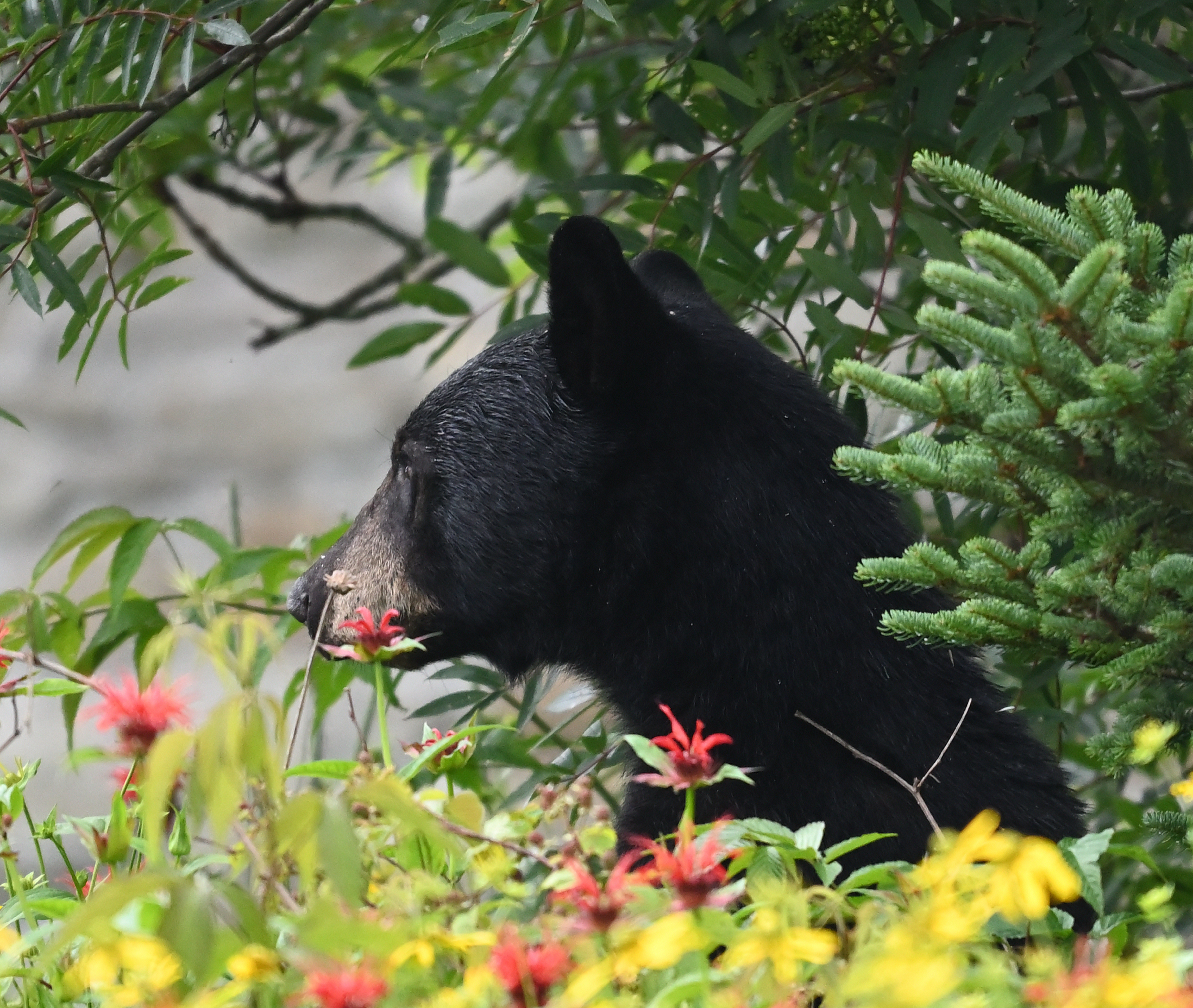
A few days later Scott had an interesting experience at the flower patch and sent me the photo below. Remember, this patch of yellow and red flowers is at the end of the parking lot closest to the restaurant at Mt. Mitchell. There are bear-proof trash cans and a dumpster (inside a fence) within yards of the flowers. Scott was standing at the patch waiting to make a phone call (one of the better places in the park for cell phone service it seems) when a young Black Bear crossed the road and went through the flowers to check out the dumpster, just to make sure it was bear-proof we suppose. It walked around the dumpster and Scott thought it had moved on, but it came back. So, he yelled at it and the bear ran off. But, a bit later it apparently walked over to the seasonal barracks (just 100 ft or so away from the dumpster). Here’s hoping it doesn’t become a problem bear.
As the quote at the top of the post says, sometimes you find more than you seek when you go to the mountains, especially if you are lucky enough to live and work there.


 Roads End Naturalist
Leave a reply to Arizona Kate Cancel reply