
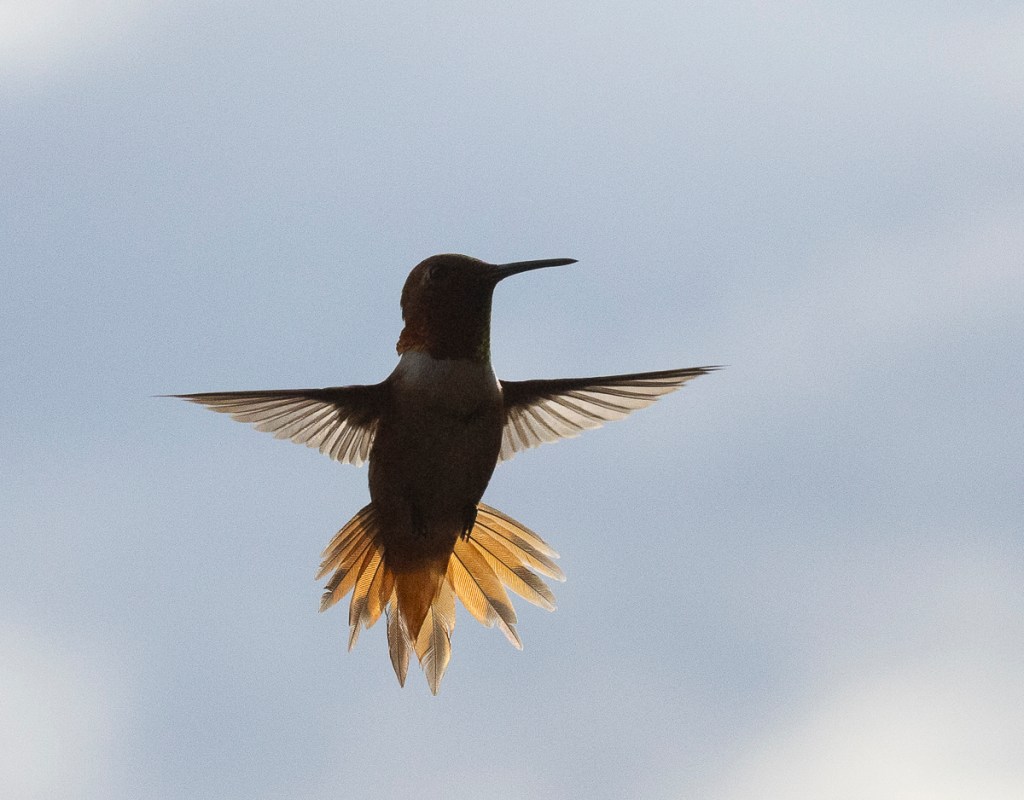
Hummingbird teaches us to transcend time, to recognize that what has happened in the past and what might happen in the future is not nearly as important as what we are experiencing now. It teaches us to hover in the moment, to appreciate its sweetness
~Constance Barrett Sohodski
We were looking forward to seeing some different hummingbirds this summer at our feeders here in Montana. We loved watching the antics of the ruby-throated hummingbirds back in NC but they are a species that does not occur here in Yellowstone country. We learned that there are three species we should look for in the park – rufous, calliope, and broad-tailed. We saw a broad-tailed hummingbird on one of our road trips out West a few years ago and noted its loud sounds and fairly large size. The others would be new to us. So, thinking we wanted to get the early ones, I put up our feeder right after we moved in on May 7 and waited…and waited..and waited some more. Nothing showed up for the entire month of May and June and I was ruing the fact that we had almost no wildflowers on our new tiny lot to help bring in the hummingbirds..
Then, in early July, I saw a darting shadow – a hummingbird! Over the next several days we would see one bird every now and then. After careful observation we decided it must be a rufous hummingbird, either a female or immature male. We started seeing another one several days later. In late July, an adult male showed up and staked his claim to the feeder. At that point we decided one feeder was not enough with this diminutive bully in town.
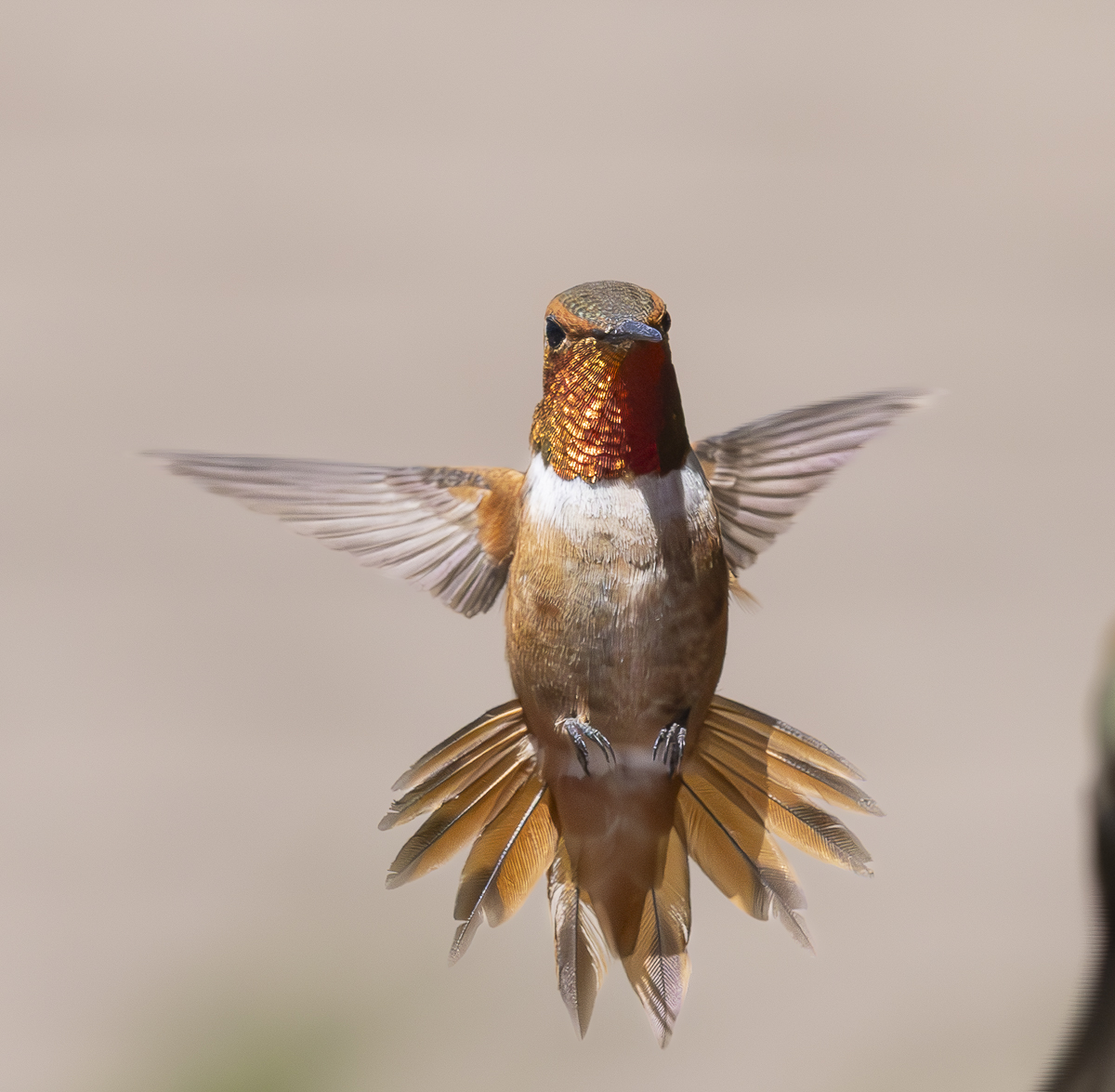
We put up two more feeders, one on each side of the house, to make it easier for birds to avoid the aggressive male. Well, it turns out they are all aggressive, so there were constant battles. They all seemed to prefer the initial feeder so that is where all the action seemed to take place. As days passed, more and more birds showed up. We started looking hard for the other species and finally, one day, got a clear look at a noticeably smaller hummingbird. After finally getting a photo of one, we are pretty sure it was a calliope.
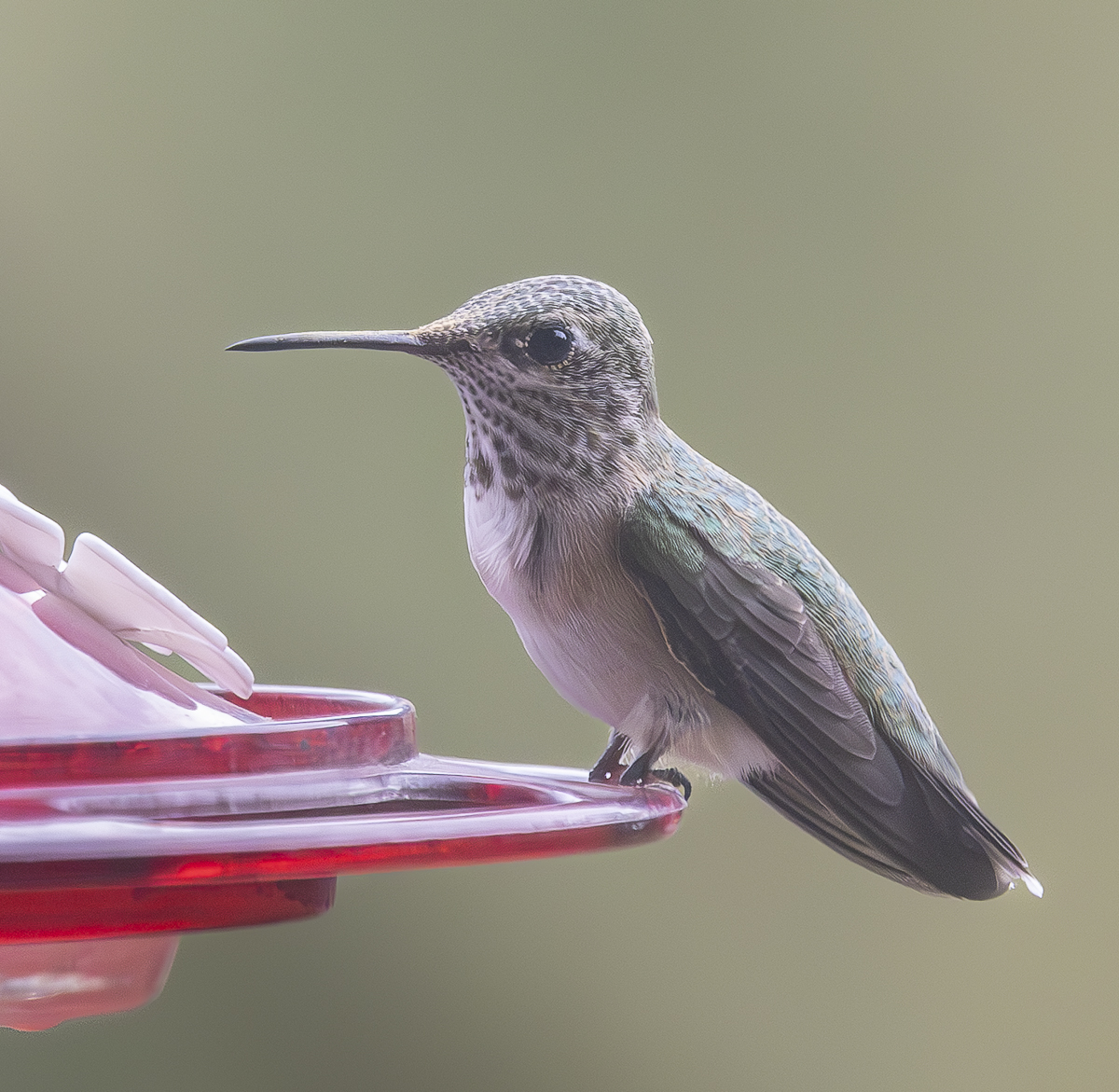
Eventually we confirmed two calliopes and we think all the rest may have been rufous hummingbirds. Interestingly, the calliope hummingbirds were often left alone at the feeder for a bit while the rufous were still squabbling with each other. Calliope hummingbirds are the smallest hummingbird in North America and the smallest bird in the United States. They weigh about the same as a ping pong ball. And given their small size, they are considered the smallest long distance migrant in the bird world with migration distances of about 5000 miles each year between their breeding grounds in the Pacific Northwest and northern Rockies to their wintering grounds in southern Mexico. I’m hoping that we see an adult male next year as they are stunning with rays of magenta feathers on the gorget (throat) that he can extend outwards in displays.
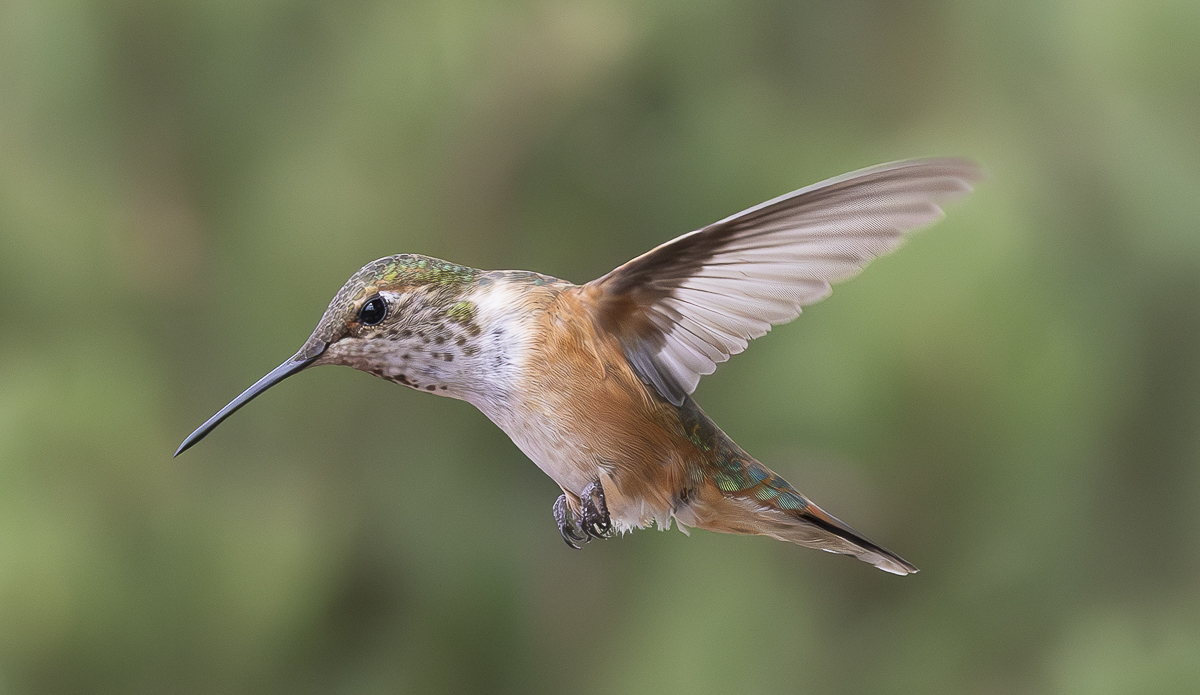
My first few photographs were taken late in the afternoon which meant I had mainly silhouettes due to the position of the feeder. I started going out early in the morning and sitting along the deck rail to photograph them in better light. These pix were taken with my 100-500 zoom telephoto and the images are cropped. It is definitely a challenge to get a decent photo of these aerial acrobats. I tried to get my shutter speed at around 1/8000 sec whenever possible to try to stop the wing action but even then there were some blurs. I used the mechanical shutter at the start with frame rates of 12 photos per second but found that by switching to the electronic shutter (20 frames per second) I was able to get many more keepers (but a lot more images to go through and delete when necessary).
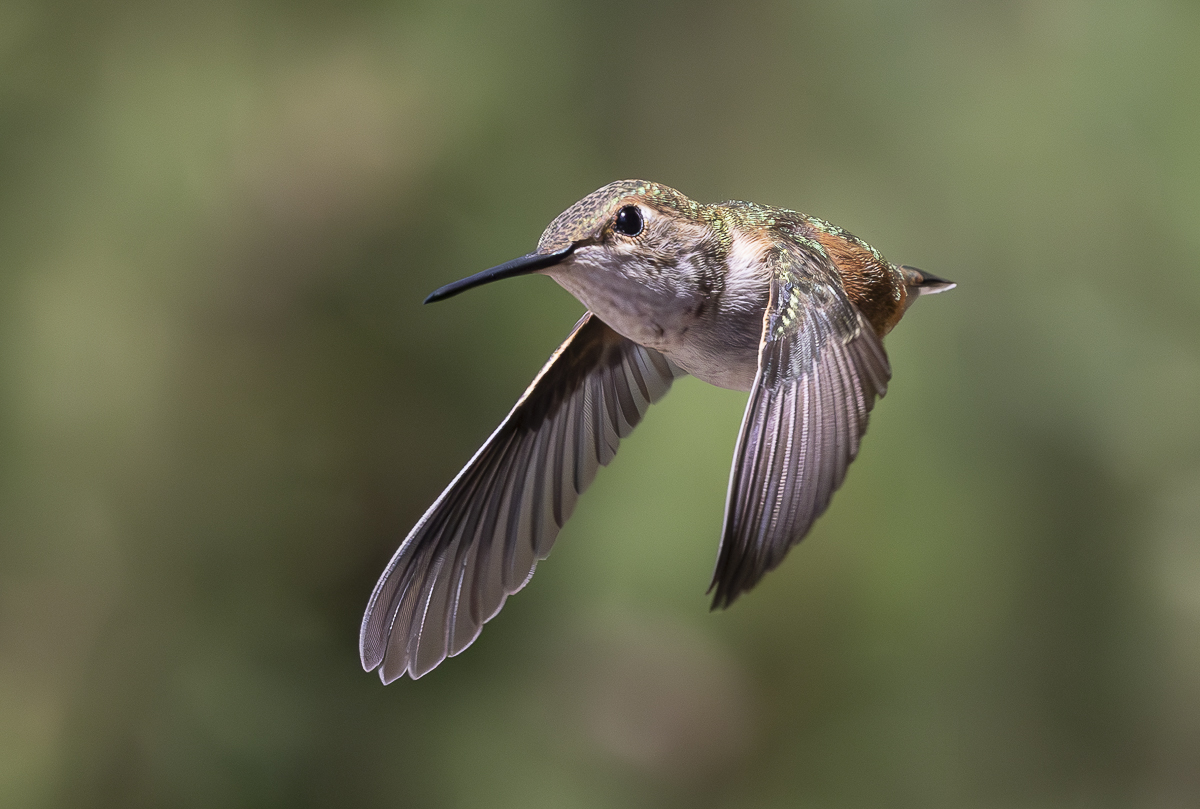
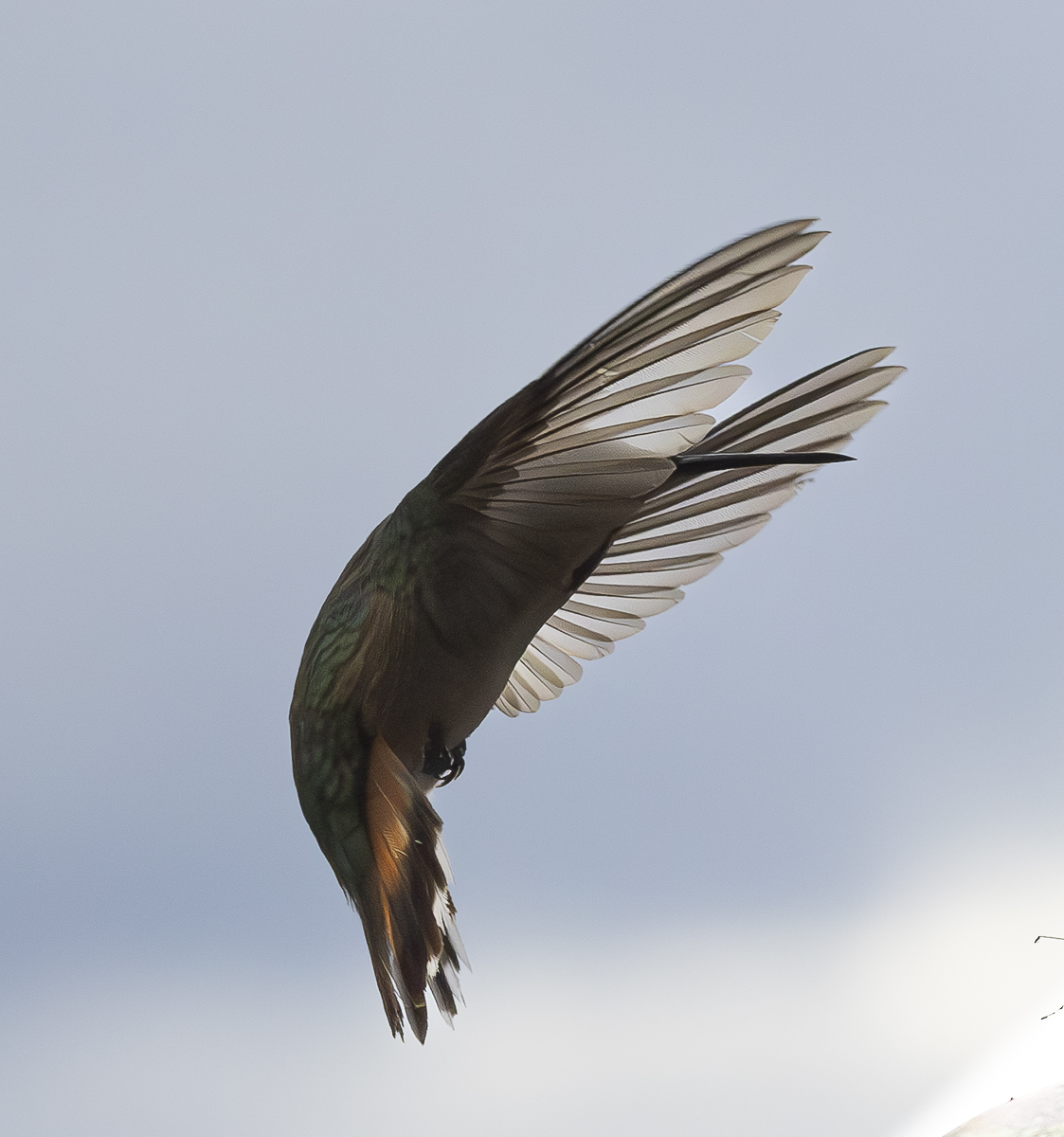
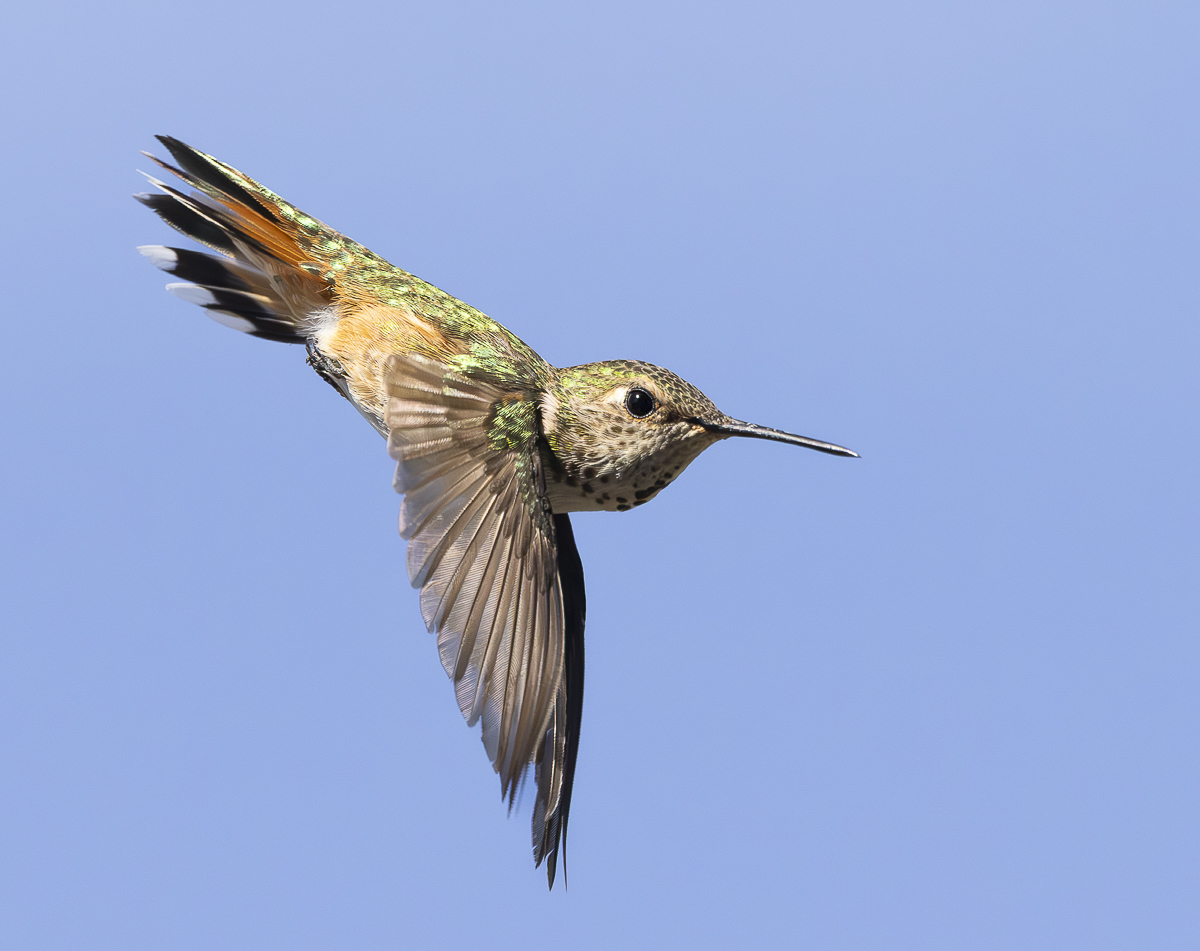
One of the behaviors I wanted to photograph was their intense mid-air battles. Everything I read said that rufous hummingbirds are one of the most aggressive species we have. Indeed, whenever there were two or more near a feeder they seemed to want to squabble. And their aerial squabbles are lightning fast. Here are a few I was lucky enough to capture.
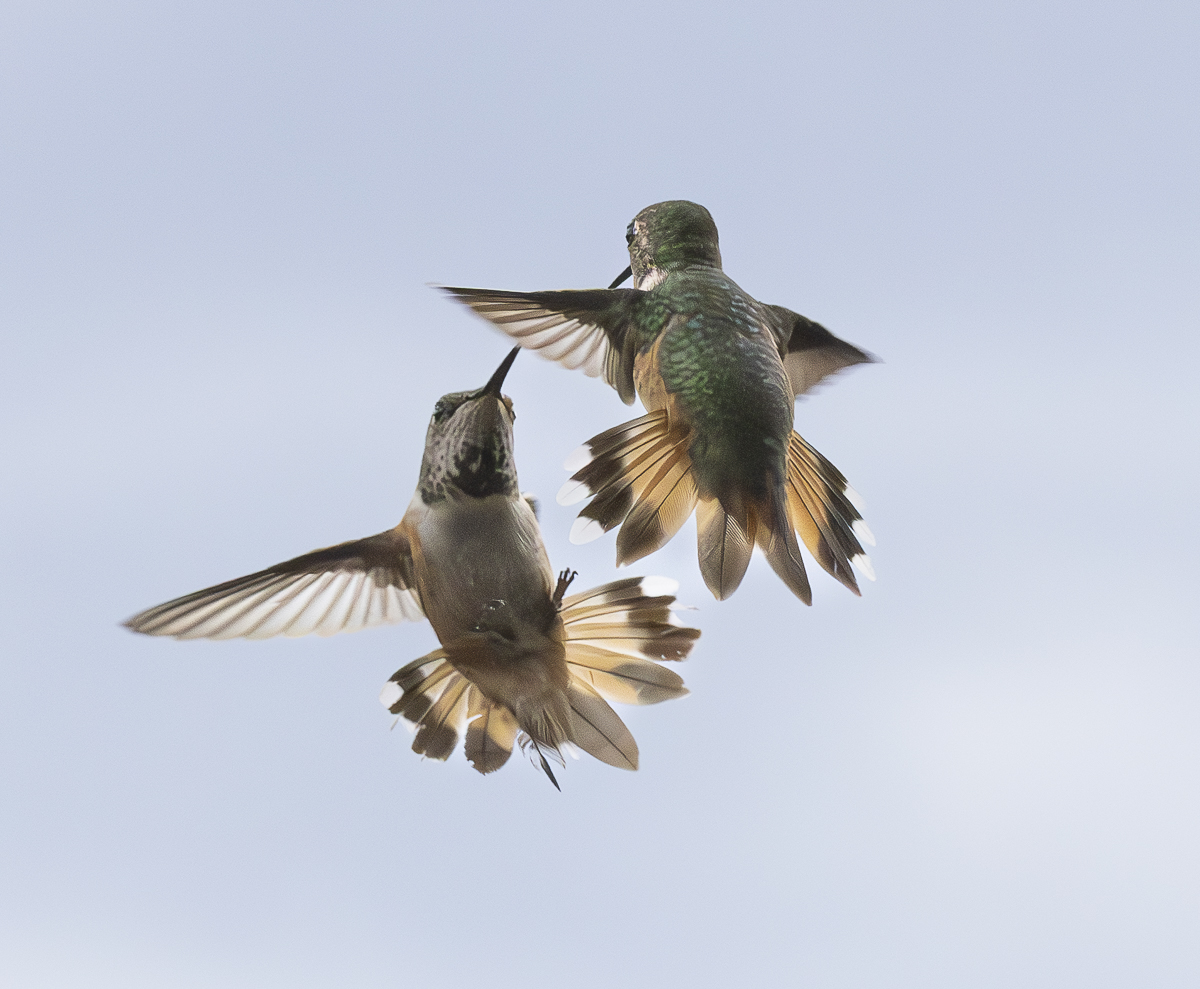
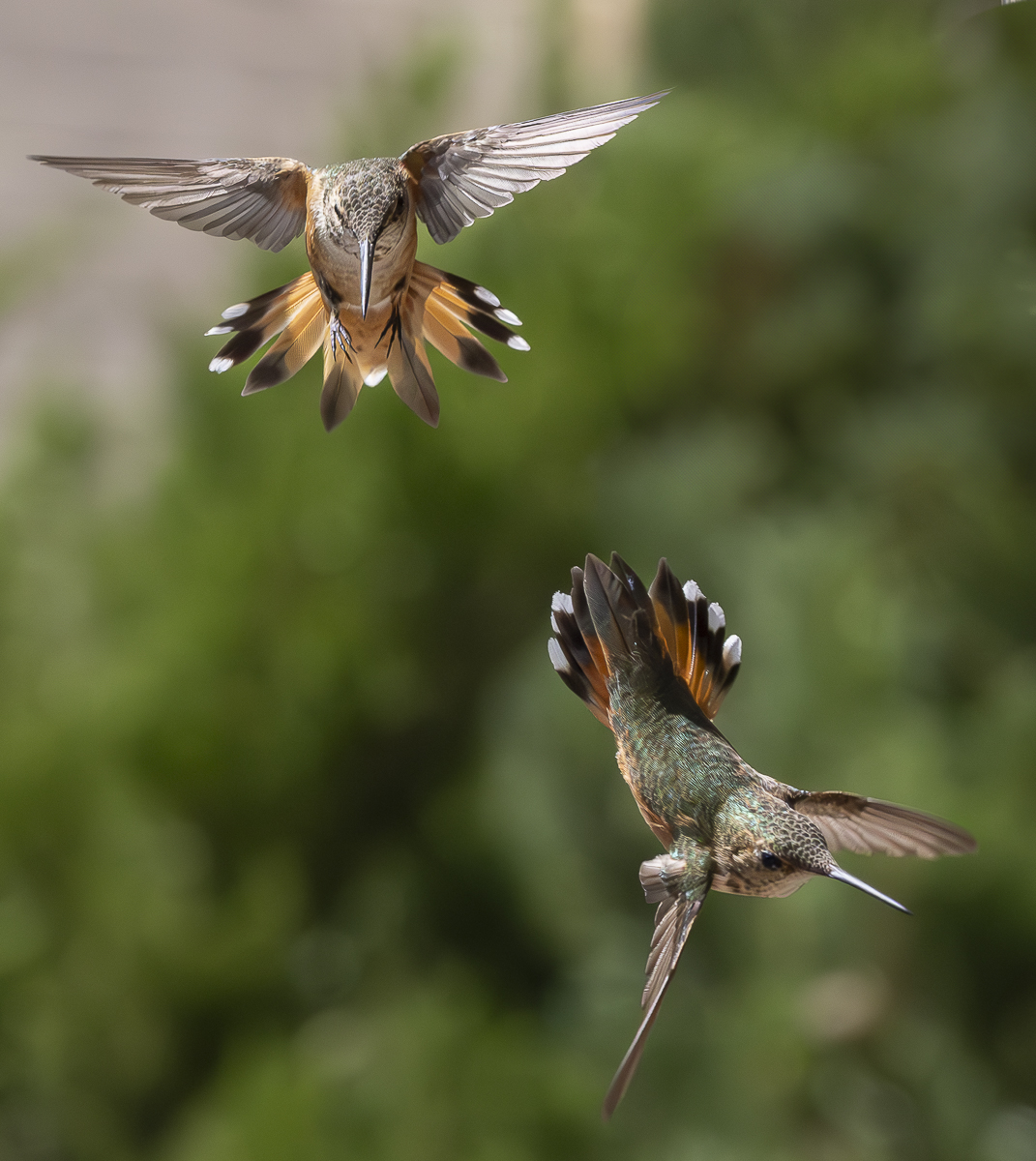
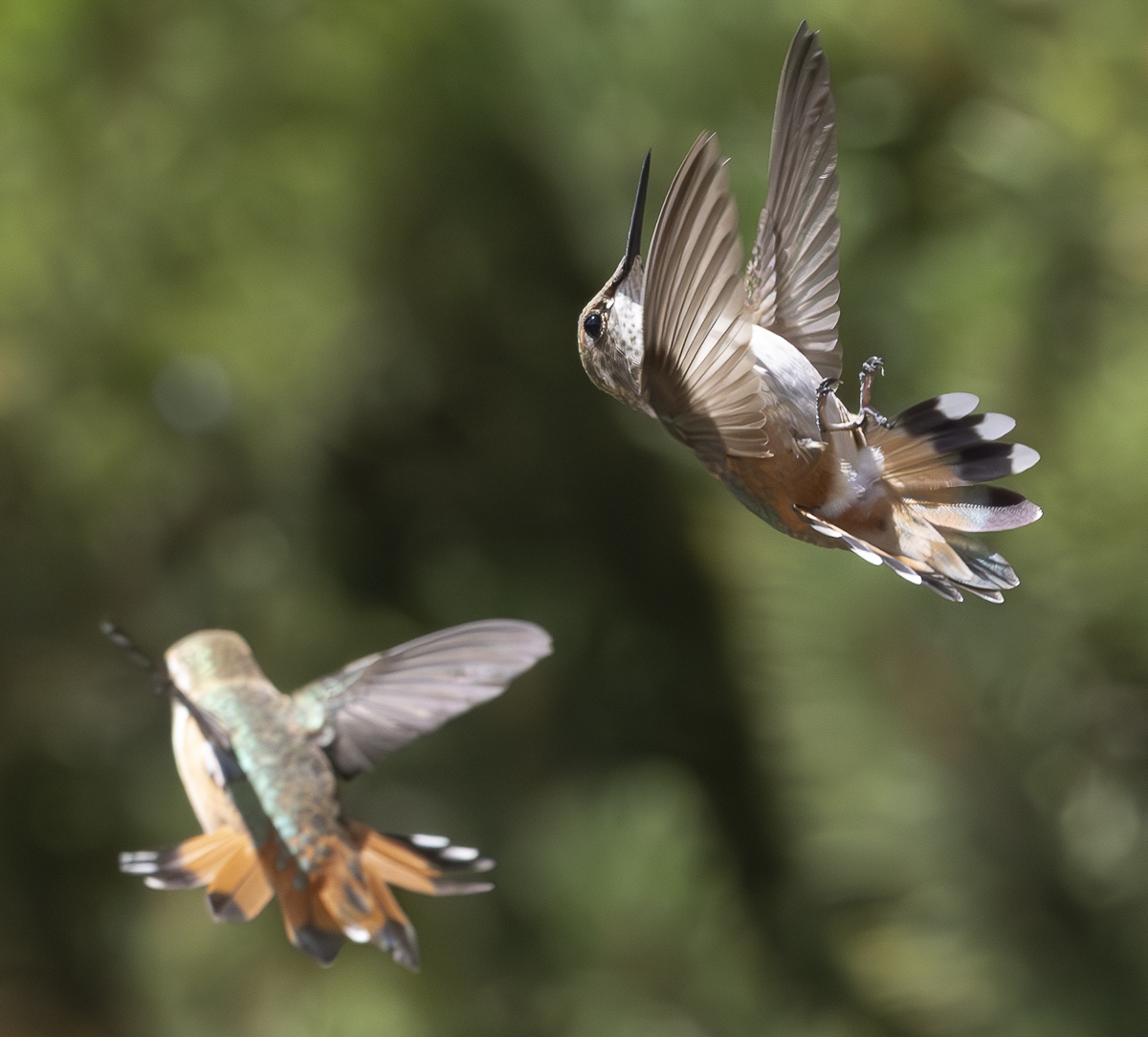
In early August things started heating up at the feeders, though the first feeder I had put out was still the favorite. In a matter of days, the numbers of hummingbirds went from 5 or 6 to 15 to 20 at a time at that feeder. This is probably due to migratory birds showing up. Rufous hummingbirds have a migration path that extends up the west coast and into Canada by May. They nest farther north than any other hummingbird. By mid-summer they start migrating south but take a route more through the Rocky Mountain states, especially the high mountain meadows with abundant wildflowers. There are records of them nesting in Yellowstone but I think most of the birds we were seeing were probably fall migrants. It was truly amazing for over a week in August when I was filling our feeders twice a day to feed the hordes of hummingbirds. I ordered a larger feeder to accommodate the hungry birds as we were scheduled to be away for a couple of days. But, it did not arrive until after we returned and the feeders were dry. After that, though we still had numerous birds at the feeders, it was not the frenzy we had seen earlier. Here’s an example of how crazy it was for over a week in August.
As we moved through August, the numbers of hummingbirds continued to drop and their visits to feeders came mainly early and late in the day. Not sure where they were during the middle of the day but I almost never saw one from about 9 a.m. until after 5 p.m.
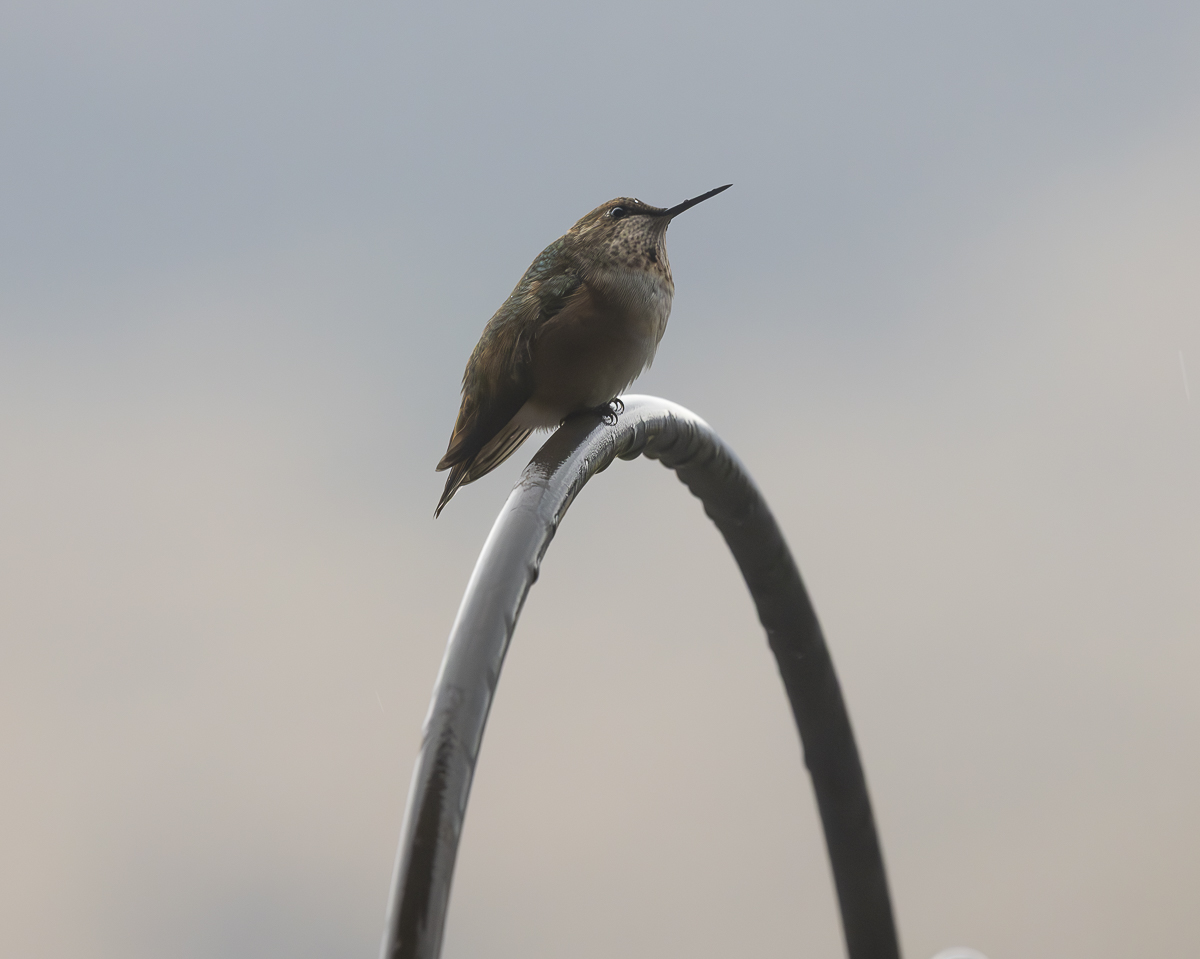
Now that we have a better idea of what to expect I will be looking forward to the return of this avian acrobats. I am planting some more hummingbird attracting plants in the yard and will have 4 feeders up for next season. And I’ll definitely be watching for that male Calliope.


 Roads End Naturalist
Leave a reply to Laurie Cancel reply