
The grizzly is a symbol of what is right with the world.
~Charles Jonkel
A few weeks ago, a large bull elk walked out to the edge of a marshy area in the park and got stuck in the mud. For two days it struggled, unable to free itself. Being fairly close to a road, many visitors saw this huge animal attempt to escape its muddy prison. In what was a somewhat uncharacteristic move for park staff, they put the animal down (I heard they shot it and killed it to put it out of its misery). Normally, park staff only intervene if an animal injury is human-caused. In this case, being close to a road and so visible to visitors, the decision was made to intervene after giving the bull two days to try to free himself. As is always the case here in Yellowstone, one animal’s death provide sustenance for a host of other species. Surprisingly, it apparently took 4 days before a grizzly showed up at the carcass (I am going on what I was told by some bystanders at the site). I had a lot going on when I first heard about this carcass but then saw several photos on social media of the large bear laying on its prize. Several days went by and I finally had a chance to drive the couple of hours to that part of the park to check it out. The bear had been feeding on it for 6 days already so I thought it could be a waste of time as most of the carcass might already be gone, but I went anyway.
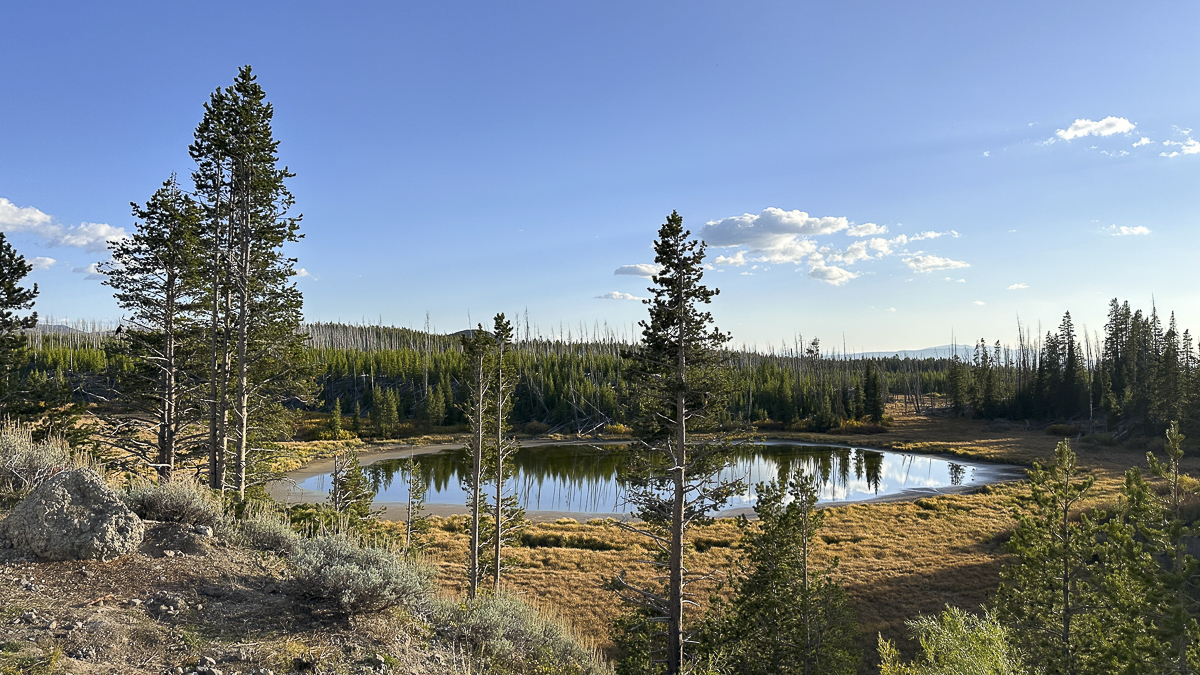
When I arrived I could see a decent crowd gathered so that gave me hope that maybe something was still going on. I luckily found a parking space and got out and glassed the shoreline and saw a big dark brown blob next to some elk antlers a little over 150 yards away. I took a couple of quick photos and realized this was pretty far out so I would be better off using the spotting scope.
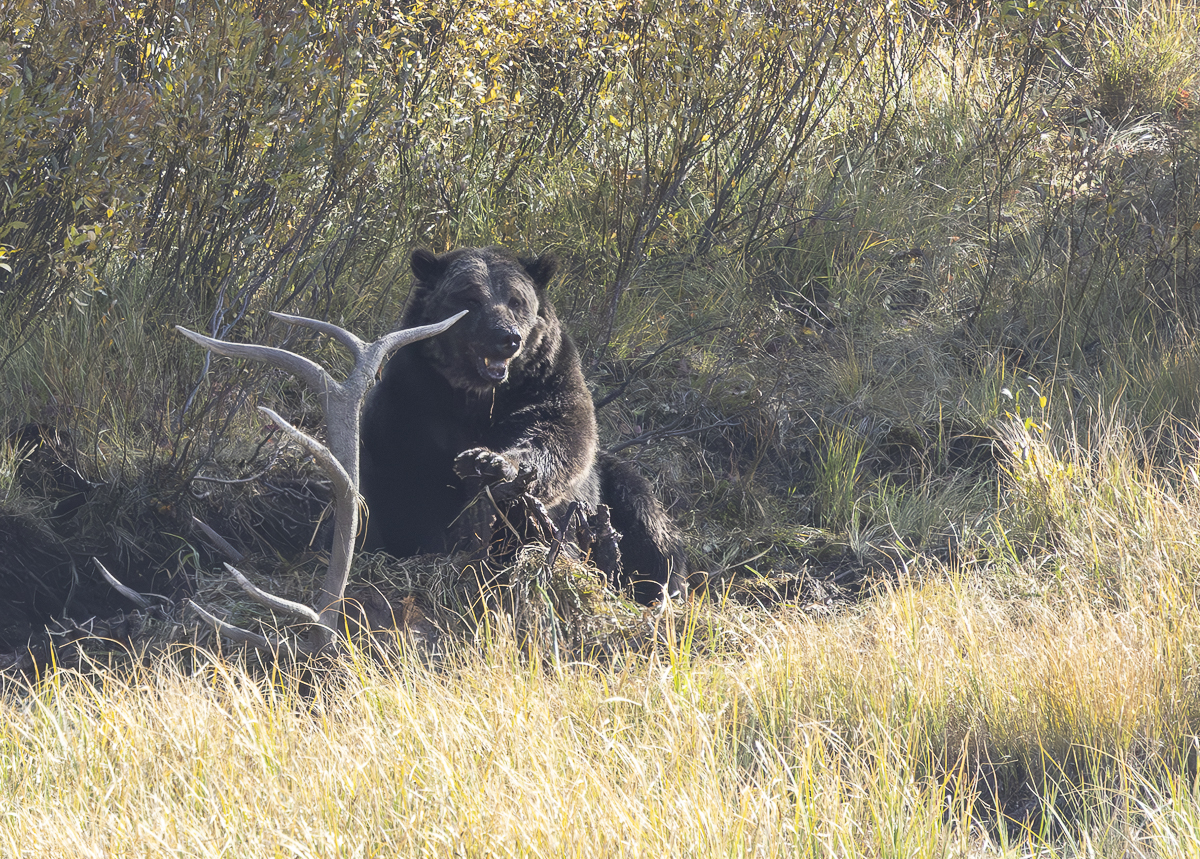
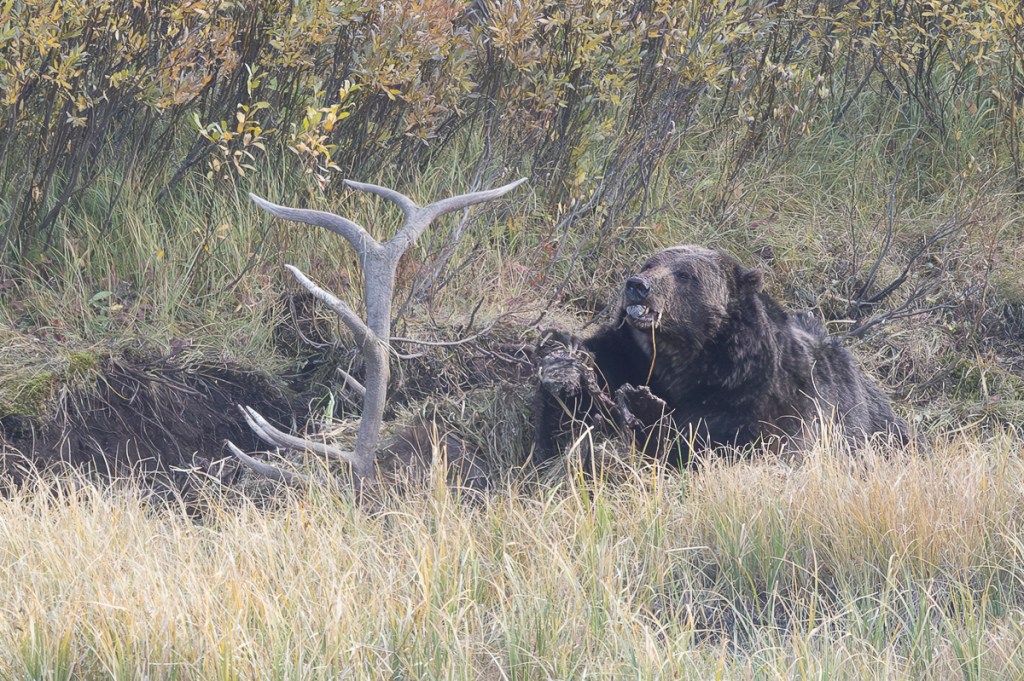
The scene was pretty dramatic – a huge boar grizzly (some in the crowd estimated it to be about 600 pounds) laying next to a nice set of elk antlers. The grizzly had covered most of the carcass with mud and grass and was laying on top of it (this is typical grizzly behavior at a carcass). The scope and phone adapter provided a much clearer view of the action. My apologies as I apparently forgot to tune down the audio on some of these video clips so you may just want to keep the audio off as it is just people talking and road noise.
–The big grizzly lays down on the elk carcass – note the bear’s huge claws!
Talking with a few folks around me that had been watching this play our for several days I learned this grizzly is known by the name “Big Red”, although no one explained why this very dark-colored bear had that moniker. Big Red would lounge around, then periodically stir and start feeding, all the while keeping any encroaching ravens at bay.
–Big Red feeding on the cached elk carcass
At one point, the grizzly stood up and walked about 50 feet away from the carcass and stood along the edge of the pond. I soon heard someone in the crowd say “There’s a wolf at the carcass”. I turned my scope back and saw a coyote (this is a common identification mistake I hear from visitors – mistaking a coyote for a wolf). The coyote must have been waiting in the bushes behind the bear and it wasted no time in coming in and pulling off some chunks of meat while keeping a wary eye on the brutish bruin just a stone’s throw away.
Folks in the crowd told me that Big Red had chased away other coyote interlopers as well as a couple of other bears during the week. And Big Red apparently never left the carcass in all that time, even sleeping on top of it when not feeding.
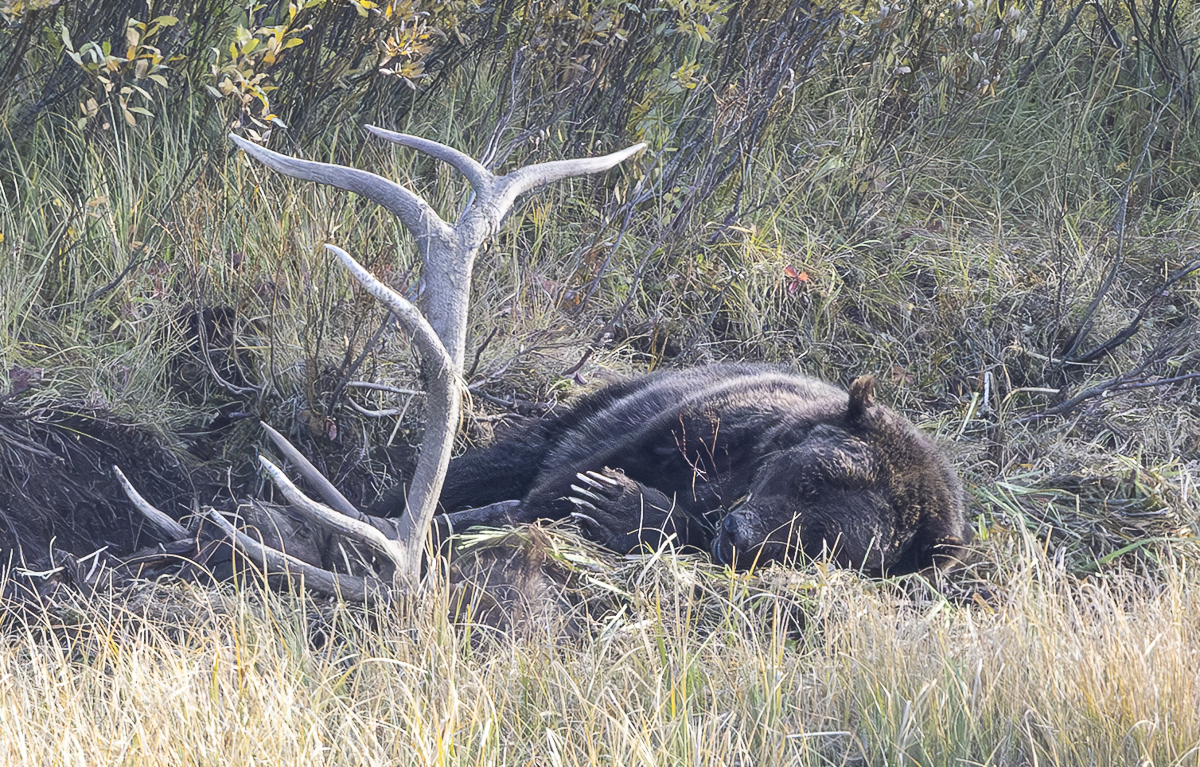
I spent about 4 hours that first evening watching this scene and chatting with a couple of photographers. Much of the time, Big Red was just laying down so I was able to look around at other comings and goings – ravens, magpies, and an amazing little caterpillar that appeared on the roadway guardrail where I was standing.
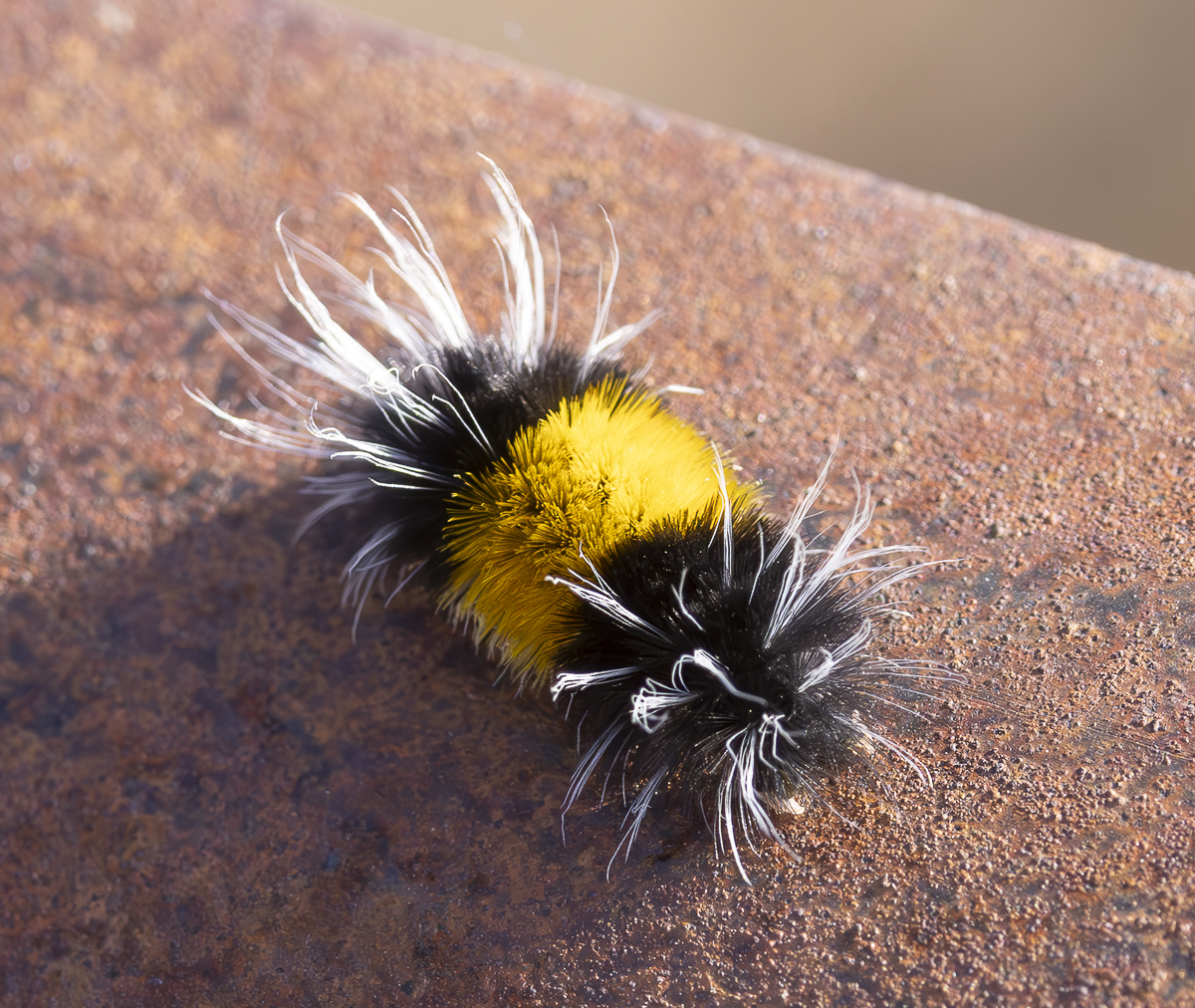
The next morning I left before dawn to drive the two hours to see if the bear was still there. Along the way, I spotted a beautiful golden-colored grizzly in Hayden Valley digging for food so I naturally had to stop and watch for several minutes.
I finally arrived at Big Red’s site and found him still guarding the carcass. I had only a short time before needing to be back home so I mainly watched and took just one video of him looking around for intruders, his breath billowing in the cold morning air.
–Big Red looks around trying to keep a coyote away from his stash of food.
After saying farewell to one person I had chatted with for two days of watching Big Red, I headed home. But there was to be one last wildlife surprise along the way…
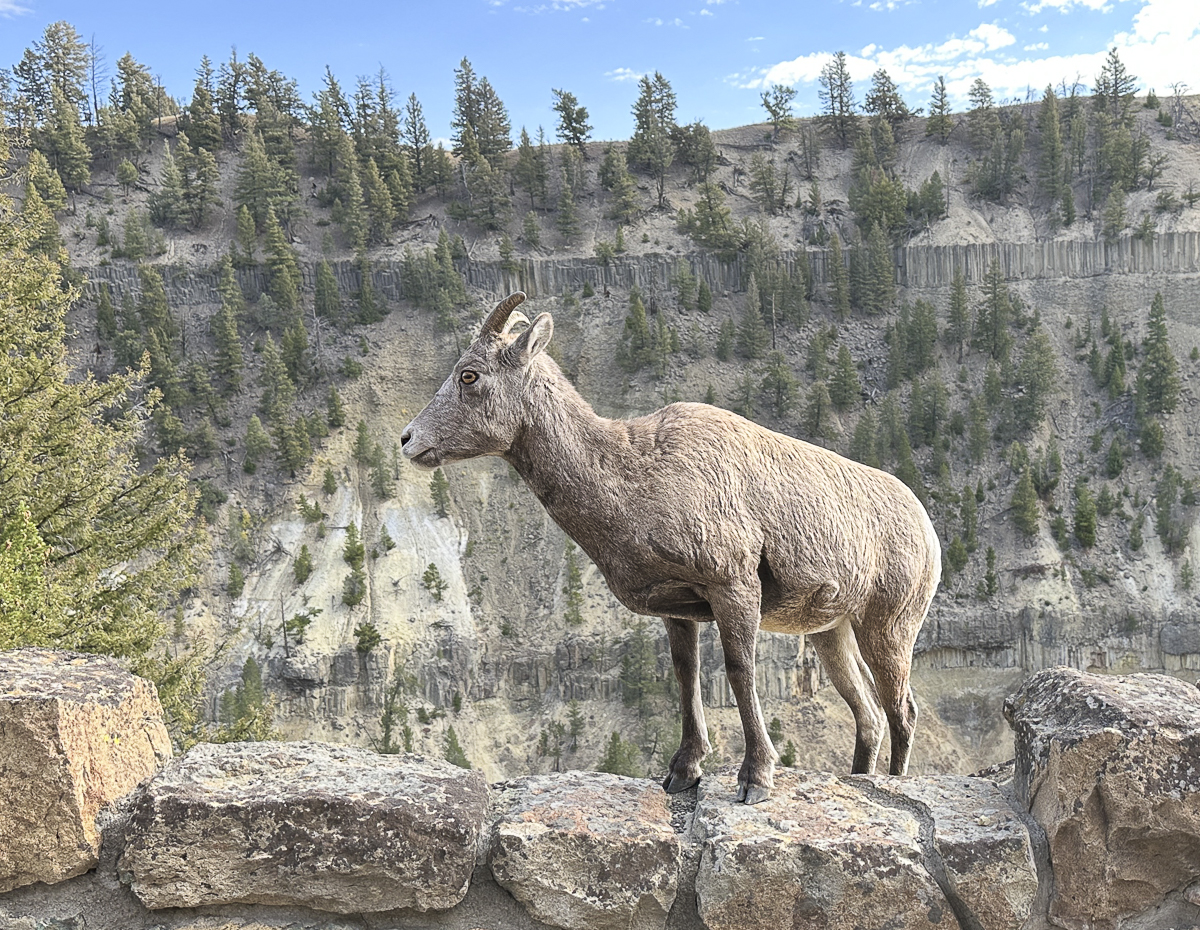
Melissa and her sister had been out of town while I was on my excursions to watch Big Red, so after hearing my stories they decided to make a sight detour to the site the next morning as they headed to Grand Teton National Park for a night of camping. Unfortunately, I guess Big Red had decided he had had enough and was not there when they arrived. Interestingly, this week (about 3 weeks after I visited the carcass) reports are that another grizzly is now digging up the remains and feeding on what scant amount of meat may be left. Nothing goes to waste here for sure.


 Roads End Naturalist
Leave a reply to Deb Cancel reply