
“This is a Glorian.
The ant carrying the coyote blossom across the desert is a Glorian.
A Glorian is an encounter.
A Glorain is a meeting with the élan vital.
A Glorian is a moment of grace.”
~Terry Tempest Williams
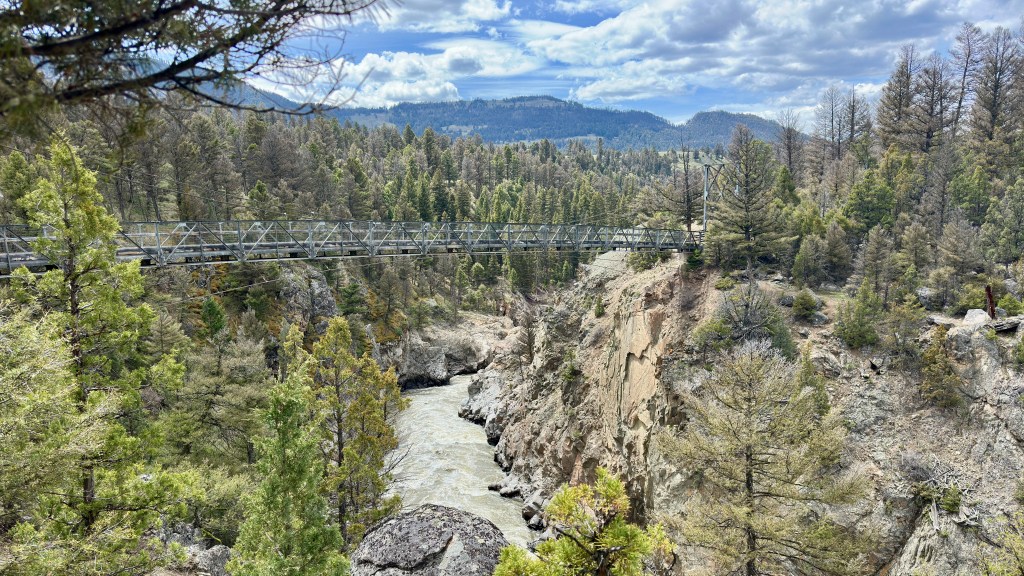
Recently, I’ve been reading Terry Tempest Williams’ new book, The Glorians: Visitations from the Holy Ordinary about her encounters with the wonders of the natural world, both tiny and grand. Last week, Mike and I took a short backpacking trip on Yellowstone’s Northern Range. Here are a few of the Glorians we ran across…
May 6 – We are along the Yellowstone River in the Black Canyon. We started at Blacktail Creek Trailhead after dropping the truck at the Hellroaring Trailhead. Just a short distance in, the trail drops behind a low hill and out of sight of the road for the most part. A pond edges the trail. As we approach, we hear a loud “so-RA” sound. We stop and look, nothing. We decide to eat lunch in the hopes that the small rail will show itself. It’s a no-show, but we see a muskrat and a breeding pair of buffleheads.
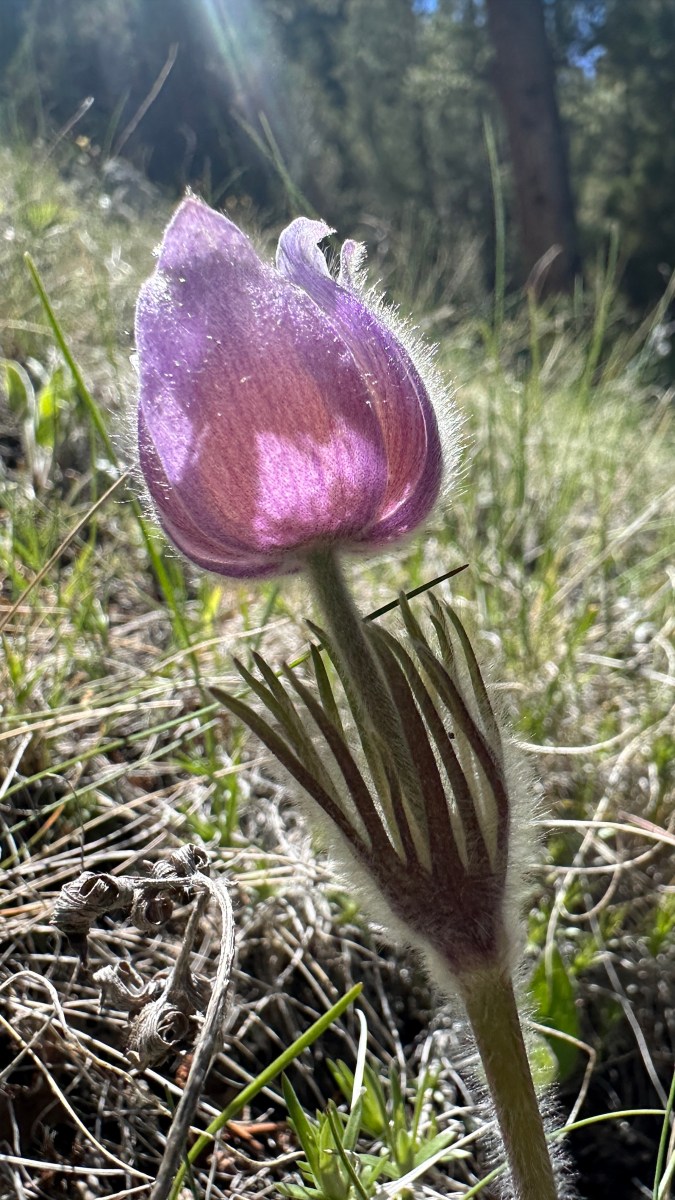
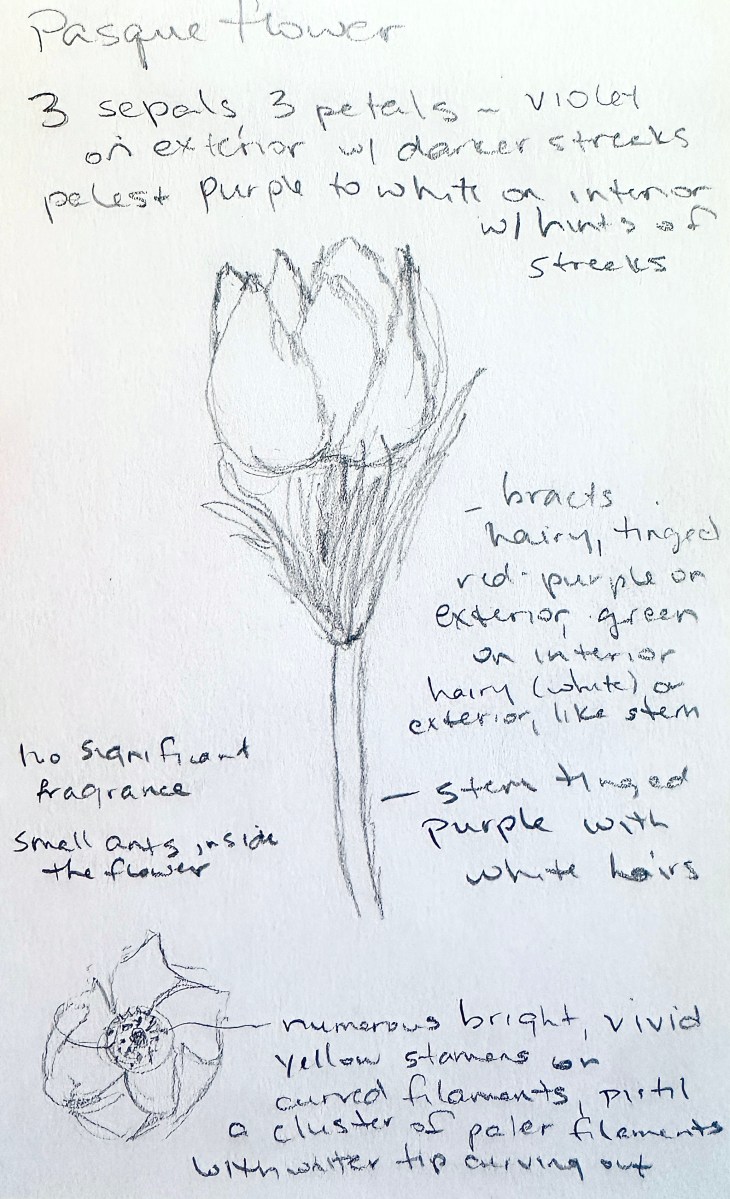
The wildflowers on the north-facing slope as we descend along Blacktail Creek are coming alive. Larkspur and pasqueflower, spring beauty and shooting star are all in full bloom. I love the elegant lines of the pasqueflower bloom sitting atop an open hand of its bracts, which are completely covered in short hairs to protect from the cold nights of early spring. Vibrant, robust stems of Solomon’s seal push up near boulders and tree roots where the soil is rich. Arrowleaf balsamroot flowers are sheltered in thick clump of leaves. They are still green, but show their shape. Some of the leaves look burned by the late frosts after a too-warm early spring.
By the river at camp, in the shelter of junipers, a ruby-crowned kinglet, mountain chickadee, and two Audubon’s warblers hunt insects. I am so happy to finally see a kinglet after recognizing its songs all spring. It is the sound of my new home. Now, as darkness falls, the evening calls of robins popcorn around the landscape while a low musical note, like one out of a bittern’s strange call, sounds. I don’t know what it is. Mike’s breathing slows beside me, warm in the tent, even as light lingers in the sky.
May 7 – A campsite on Hellroaring Creek. I can see hints of the road: headlights on a distant hill. The wind is gusting in the trees, though it is hard to differentiate the wind from the rush of the creek. The very healthy bull bison that crossed the creek and approached our tent earlier, looking for greener grass I suppose, has disappeared, perhaps up the rocky slope behind us. It’s nearly 9 pm and the sky is still bright, though most of the color of sunset has passed. The clouds have a bit of a golden glow still lingering on their bottoms.
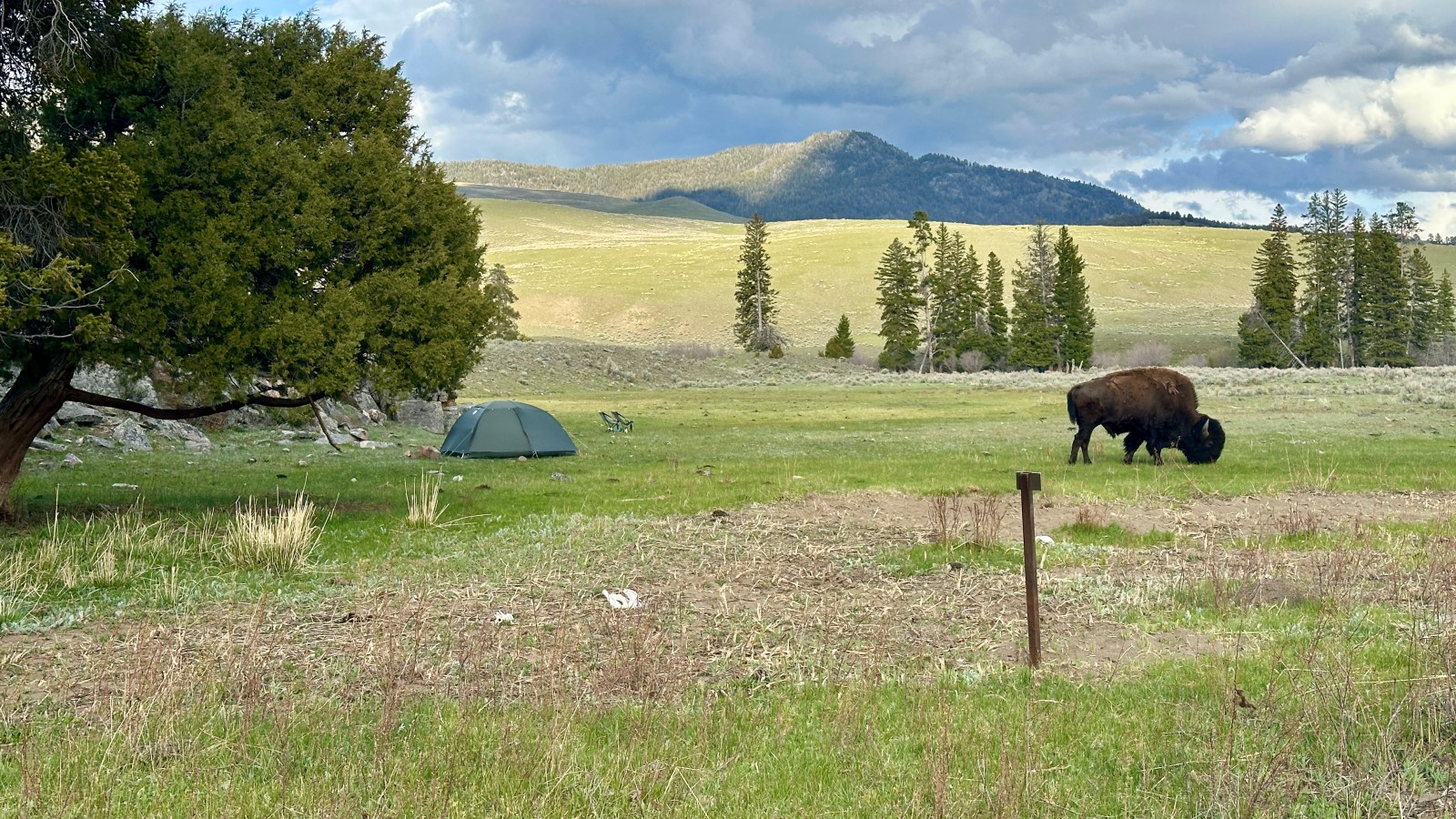
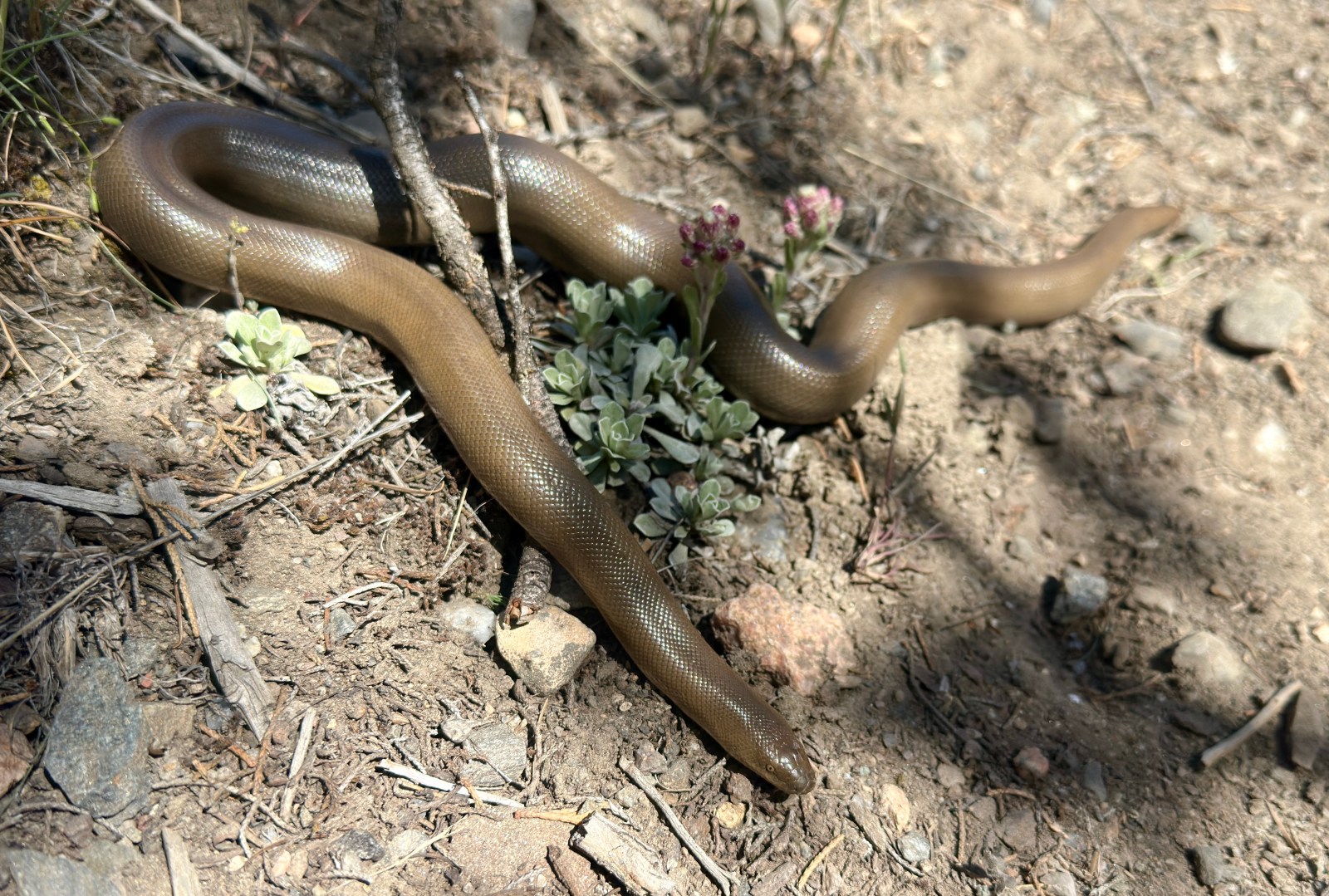
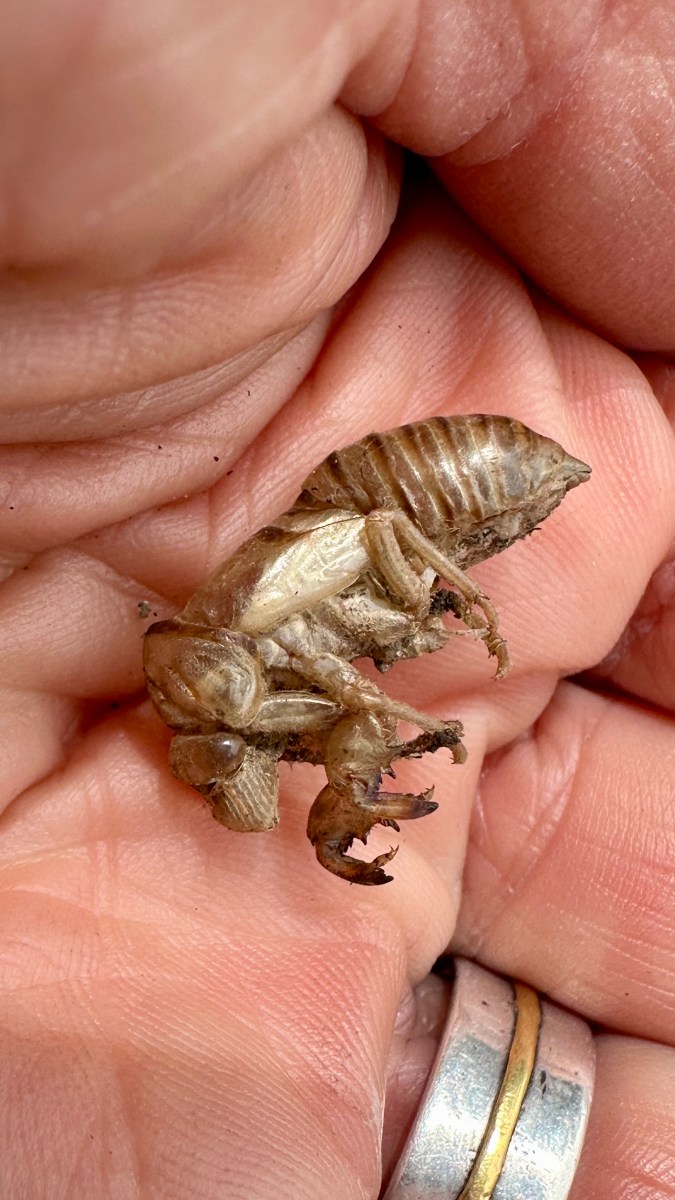
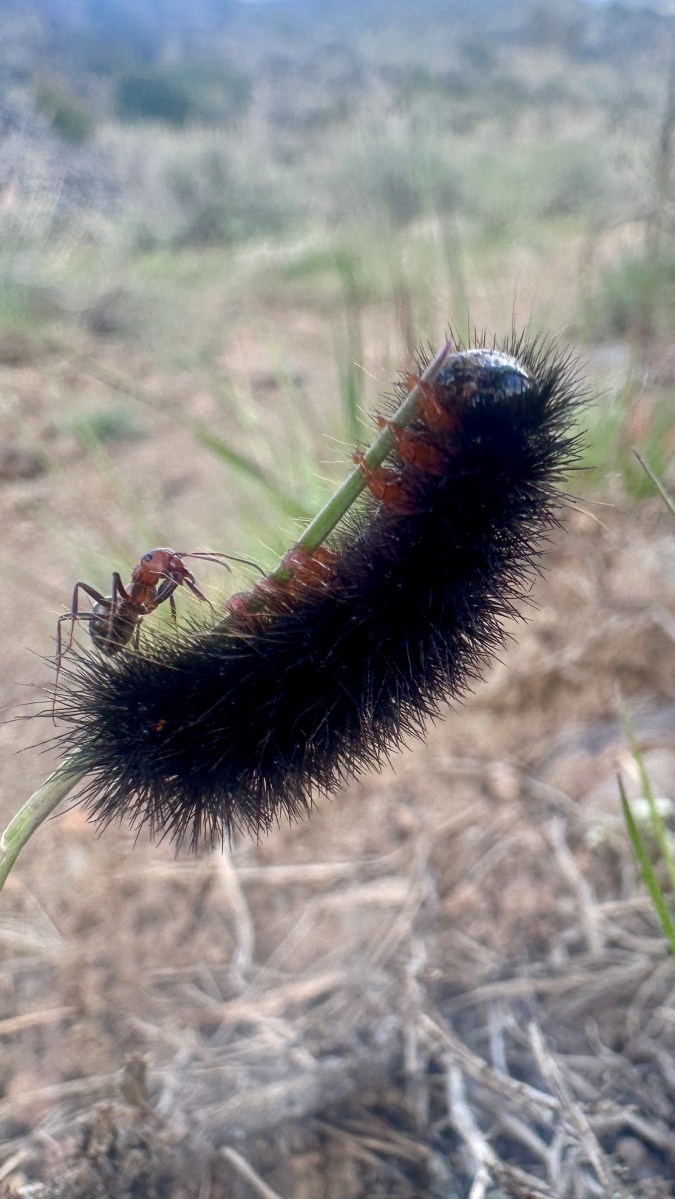
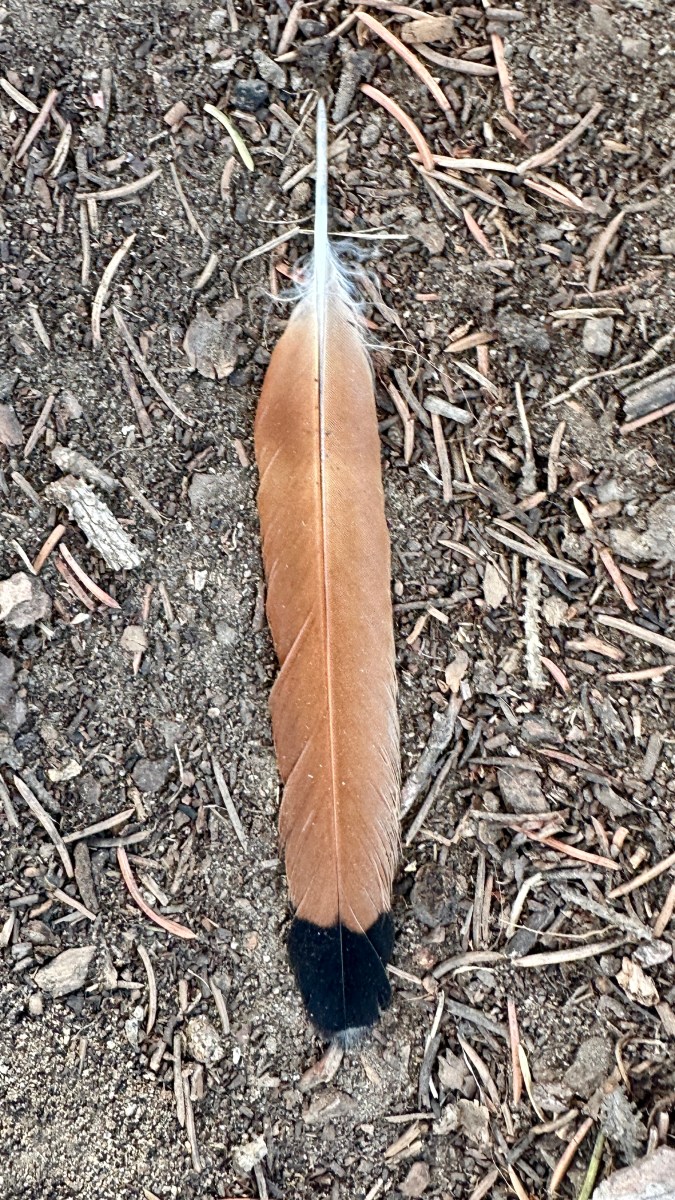
A few of the smaller discoveries earlier in the day included a cicada shed, a caterpillar being attacked by thatch ants, and a kestrel tail feather beneath the food pole in our campsite. I heard cicadas in the park last summer, but this was the first larval shed I’ve come across. Shortly after I took the photo of the caterpillar, it dropped to the ground and two more ants began to swarm over it. I picked it up and moved it away, my love of caterpillars beating out my desire to let nature take its course. There were other kestrel feathers in camp, too, including a wing feather and number of body feathers. It’s hard to believe something caught an acrobatic, speedy kestrel. Another moment, one that couldn’t be captured by a camera, was hearing one round of the deep thumps of a ruffed grouse drumming, the rumble so deep you almost feel rather than hear the sound.
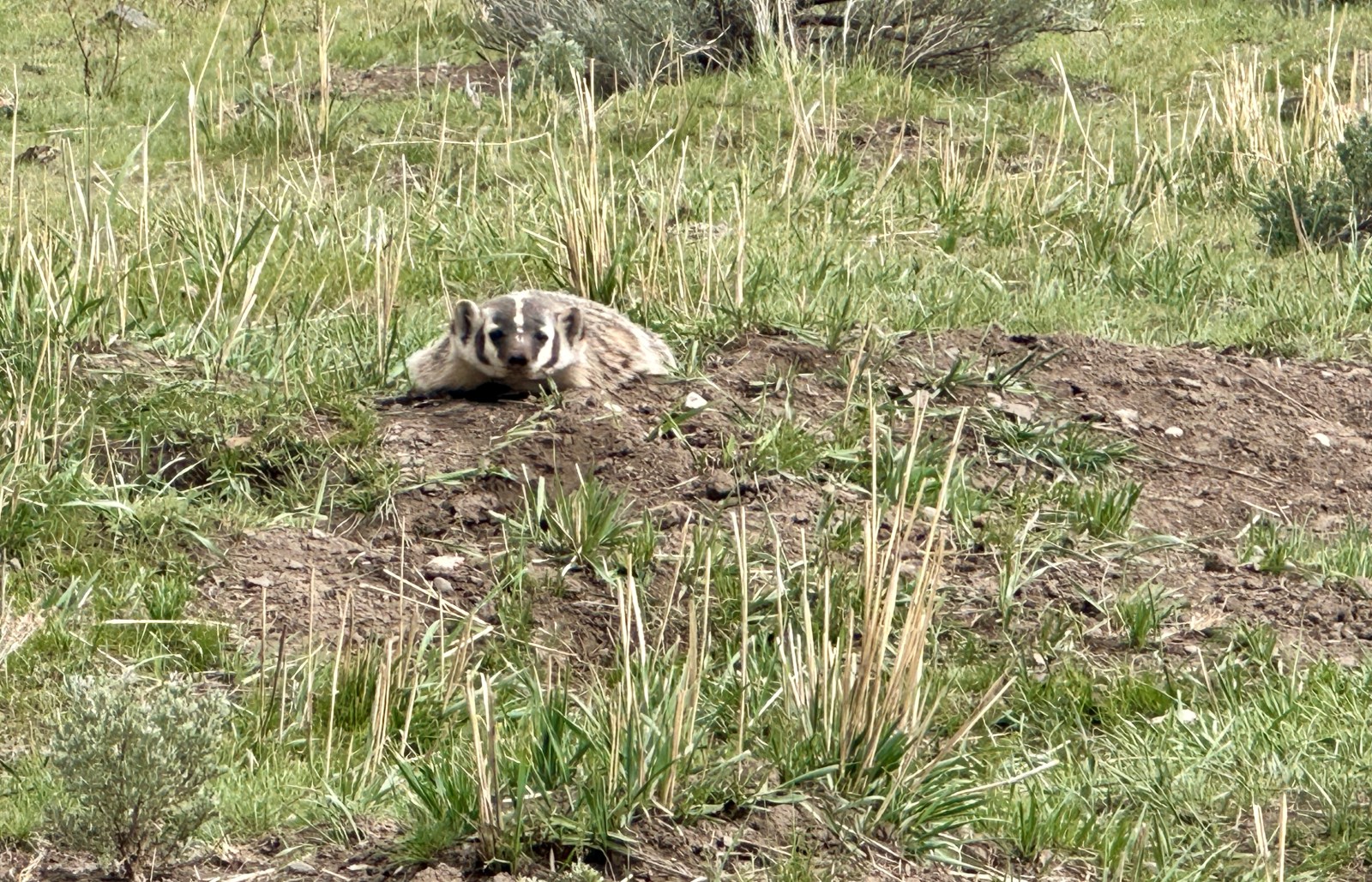
Our favorite wildlife moment was a curious badger. As we approached, I saw a flash of rusty fur disappear behind a mound. We slowed, and soon it popped its head up to check us out. That striped face is unmistakable. We approached like elk, back and forth, pulling grass, and the badger seemed unfrightened, even curious. At close distance, through my binoculars, I could see its nostrils twitch as it scented us. It pulled down the burrow, ears still visible, then couldn’t resist taking another look at us.
Perhaps most notable highlight of the trip was walking out of the canyon and into the open country of Hellroaring. It is a mosaic of vast slopes of sagebrush and grasses, dotted with cobbles dropped by glaciers. The land rolls and swells, backed by rocky cliffs and snow-capped mountains. The low points, many cut with a narrow, winding creek, display a vibrant spring green. The drier slopes have the verdancy of summer. Douglas firs dot the landscape here and there. Most seem to have a large scrape or wallow in their shade. This landscape, dotted with bison and elk waiting to hear a wolf’s howl– this is Yellowstone.


Leave a Reply