
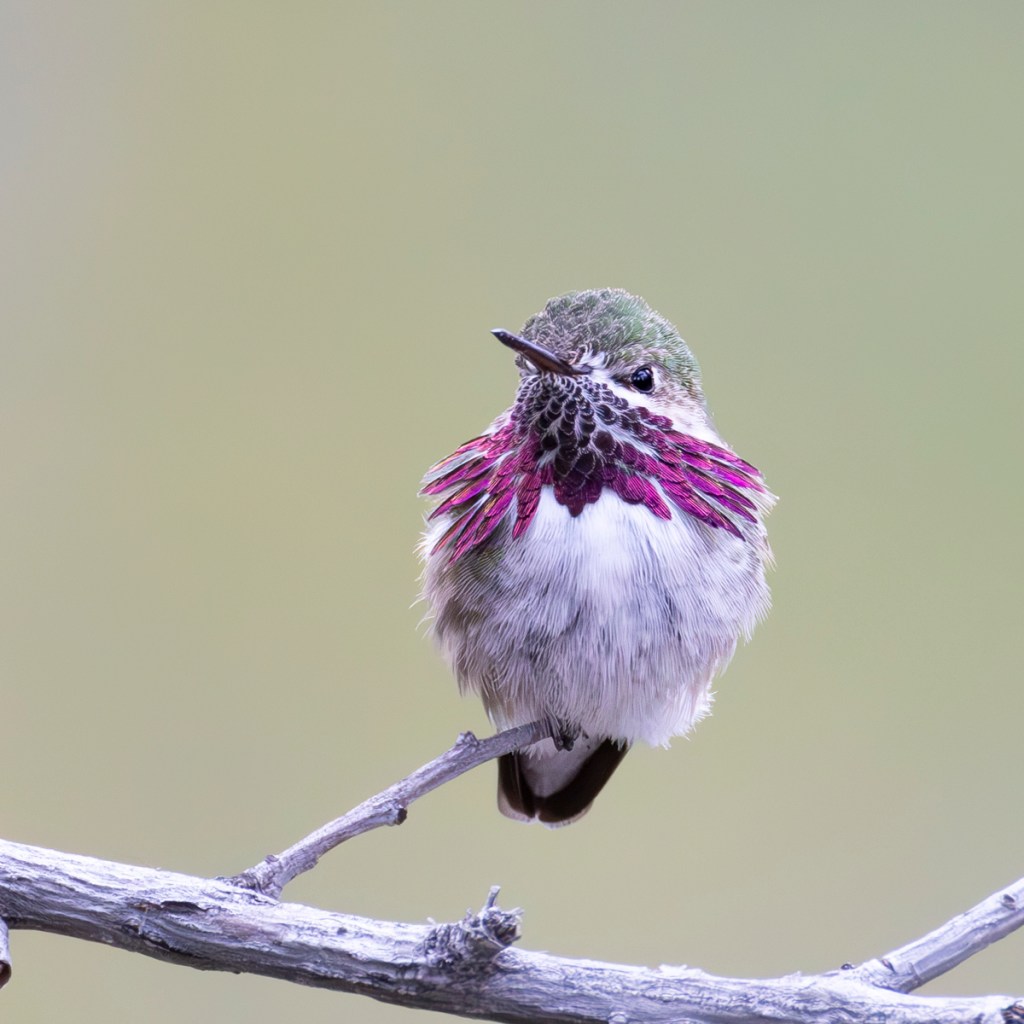
It is a remarkably spirited little creature, and one would hardly expect so much fire and courage to be condensed into so small a body.
~John Muir
A couple of years ago on a trip to Yellowstone, I heard reports of a calliope hummingbird near Gardiner. I looked it up in a field guide and was blown away – what a stunning bird! They are the smallest breeding bird in North America weighing in at about 2 to 3 grams or about the same as a ping pong ball or a penny. They also have the distinction of being the smallest long-distance migrant in the world annually traveling 5000 miles between their breeding grounds in the Pacific Northwest and Rocky Mountains to their wintering areas in Mexico and Central America. Last summer we had a couple of calliope females (or immature males) at the feeders a few times but they were overwhelmed by the larger broad-tailed hummers and the frenzy of rufous hummingbirds. But I had not yet seen a male until this past week. Melissa saw a male at our feeder a few times while I was out in the yard working. Then she saw one while I was in the living room but it was on the back side of the feeder out of my sight. But I was hopeful now that one was hanging around.
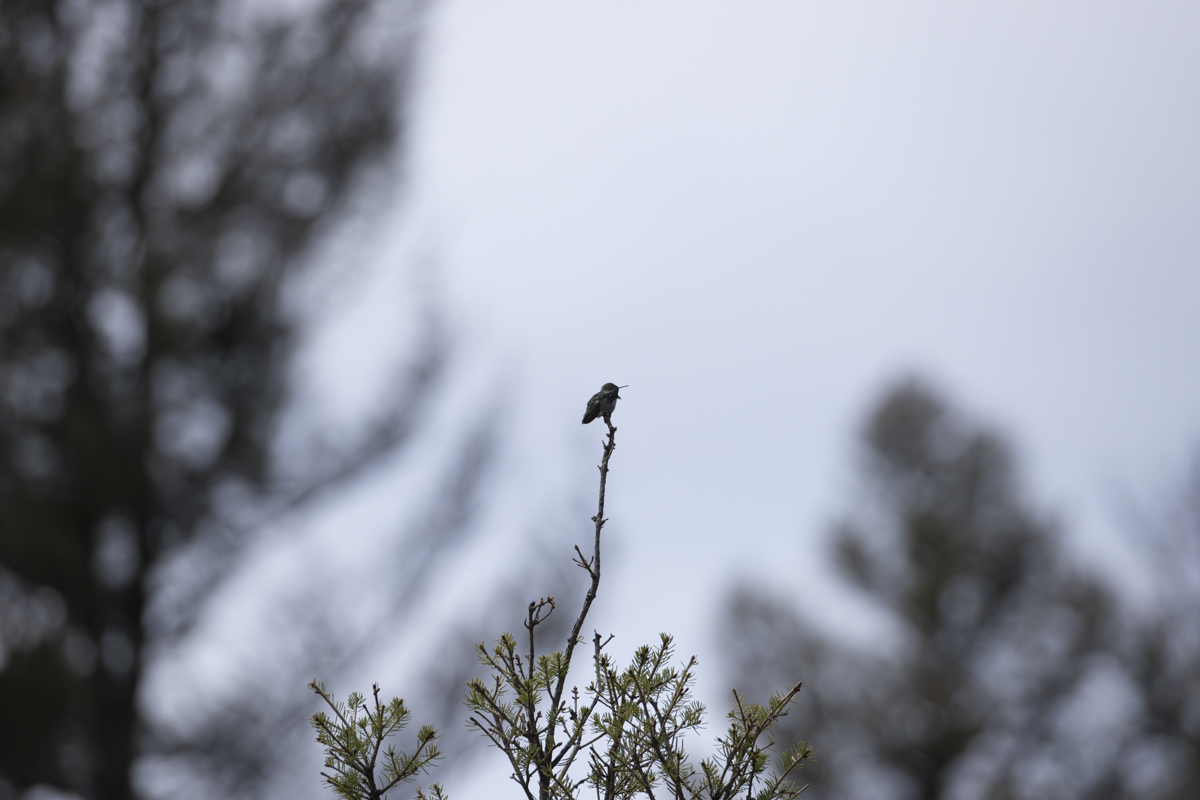
Then she guided a birding group (including some friends from NC) last week and I tagged along on the walk to hope to see dusky grouse. Along the way Melissa spotted a male calliope that flew past and perched high on a small conifer. The group gathered trying to get a look and a photo. The bird flashed off and then reappeared on the same perch. I managed a couple of poor photos before it zoomed away. I regretted not looking at it through my binoculars instead of taking a distant photo in poor light. But at least we had seen one.
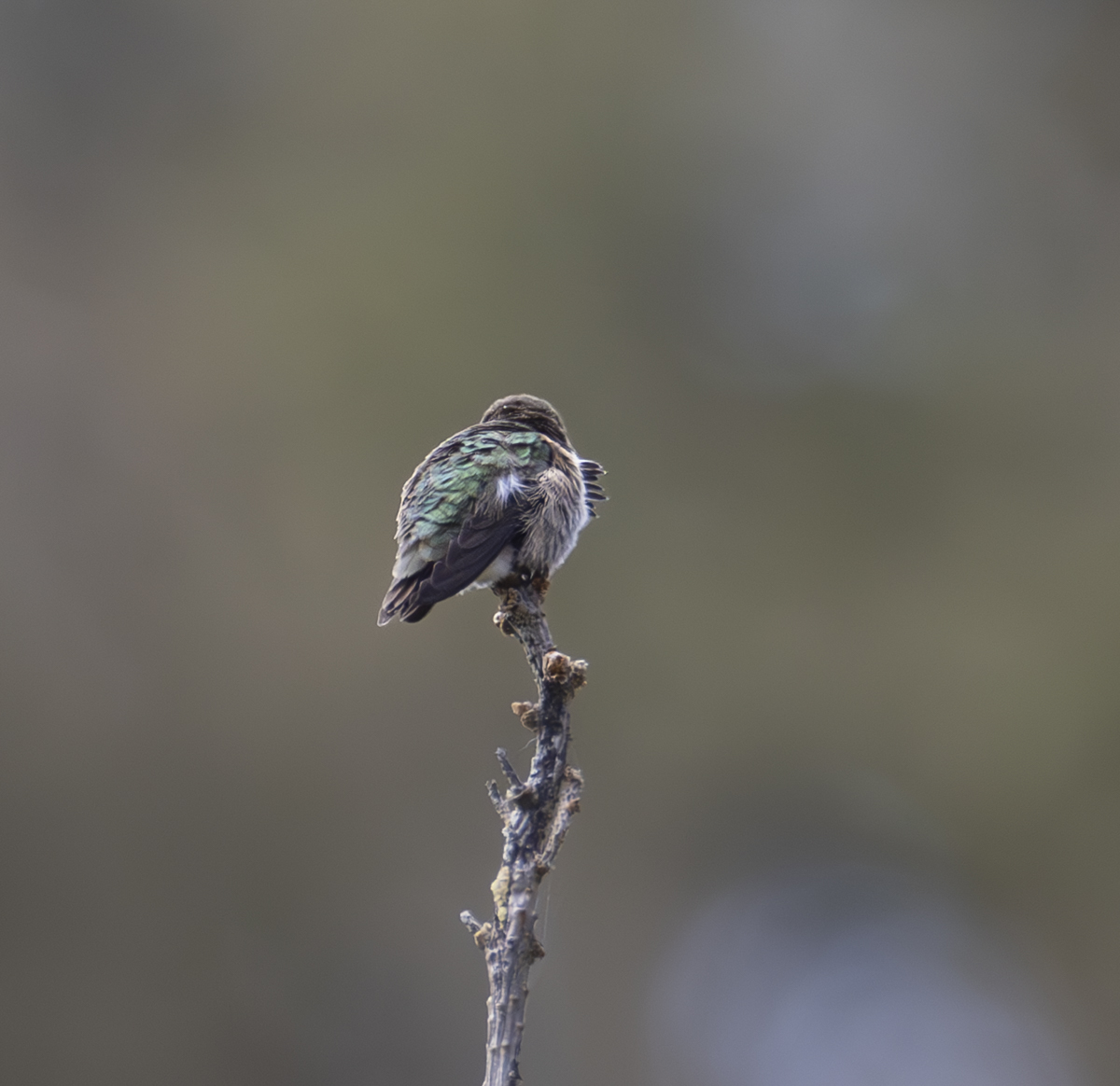
On the way back, we spotted the bird again in the same general area as before. I got a little closer and managed a photo with its back turned. It wasn’t until I looked at the pic on my computer that I realized that even with its back facing me I could still see its unusual gorget feathers sticking out away from its body..
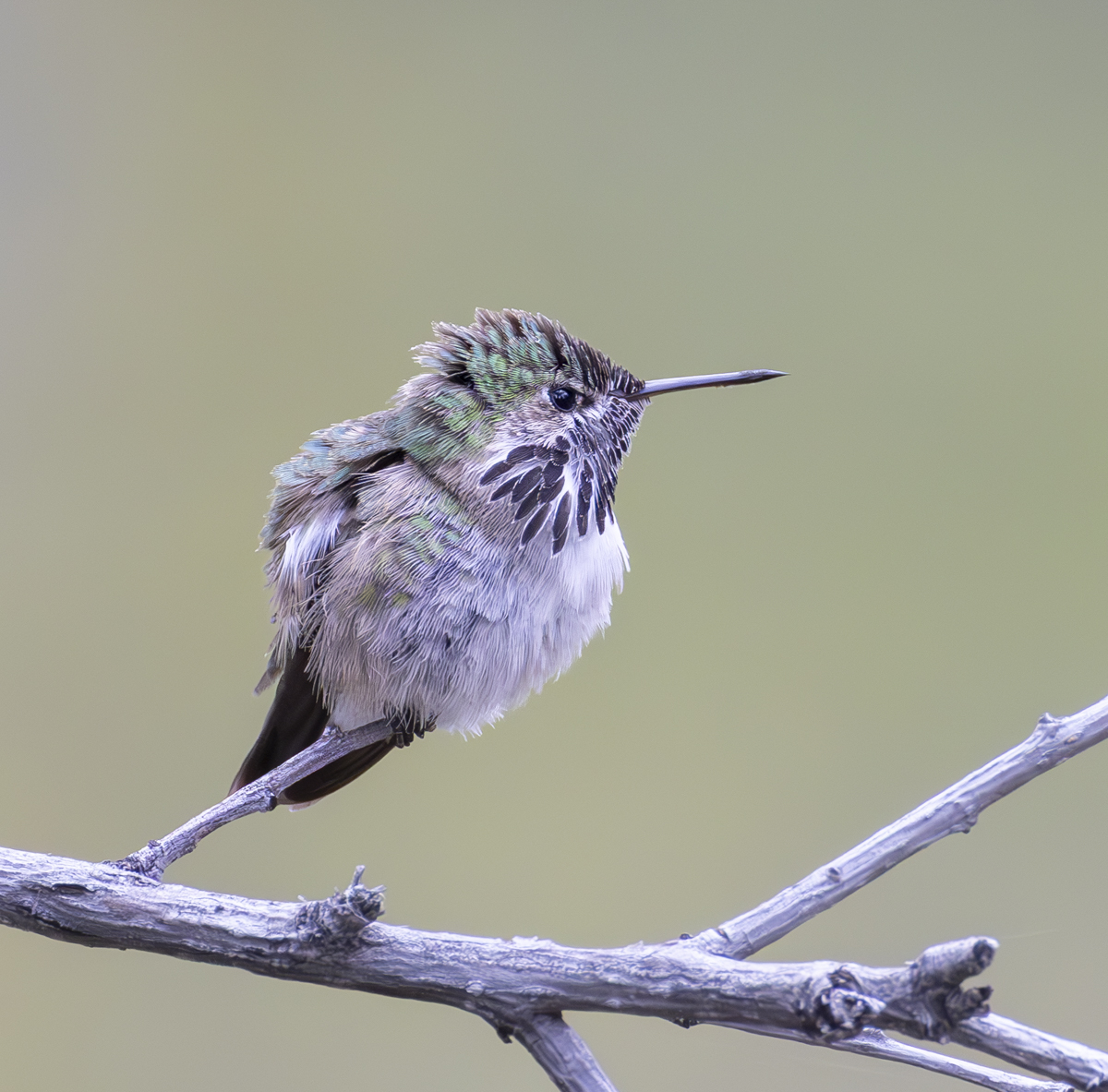
And that is what helps make the male calliope hummingbird one of the most spectacular birds I have seen. Unlike other North American hummingbirds whose males have a more or less solid pattern of bright color on their neck feathers (their gorget), the male calliope has separate magenta-red feathers that spread out like starburst rays on a white background. When viewed from the side, they appear dark like the gorgets of many other species of hummingbirds. But when viewed head-on, it is amazing!
Our bird soon flew off so the group drove on to other sites. I decided to stay and see if the bird returned so I sat on a log by the trail and waited. I spoke to a nice group of folks from North Carolina and a young couple hiking by and then it was quiet. I waited about 15 minutes and decided it might be time to go when suddenly a male calliope flew in and landed on the other side of the trail on a small dead twig. For a few seconds he was facing the other way and then he turned around and faced me, head turned to the side.
But when they turn toward you, the effect is dazzling. The wine-purple feathers are set off by the white background in between. And the male can elevate the bright feathers outward to create that starburst effect. That has got to impress the ladies. It sure impressed me.
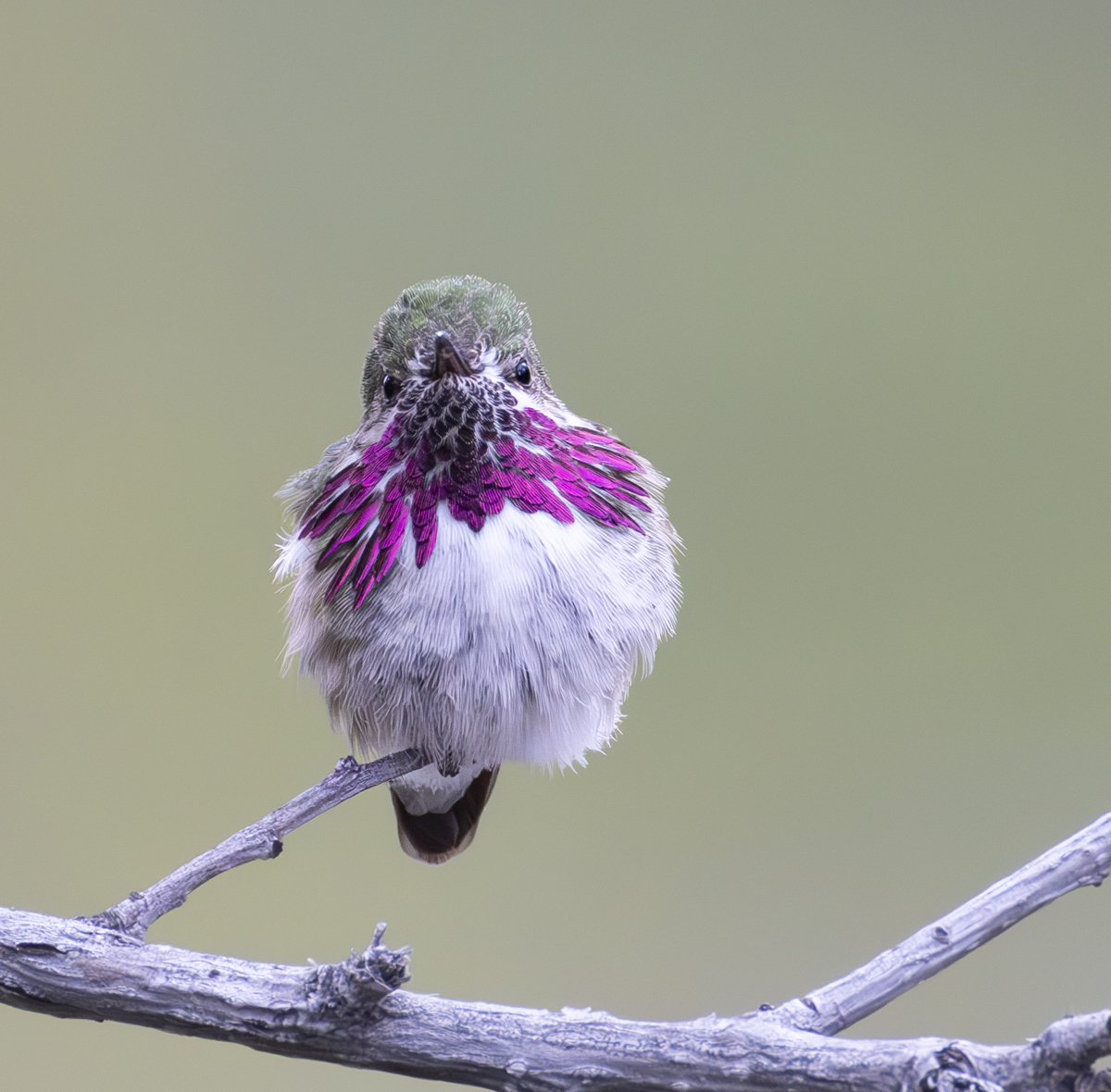
And this was a cloudy day. I look forward to going back to try to catch a glimpse of one in the sunlight which should really set off the colors in those bright streaks of feathers.
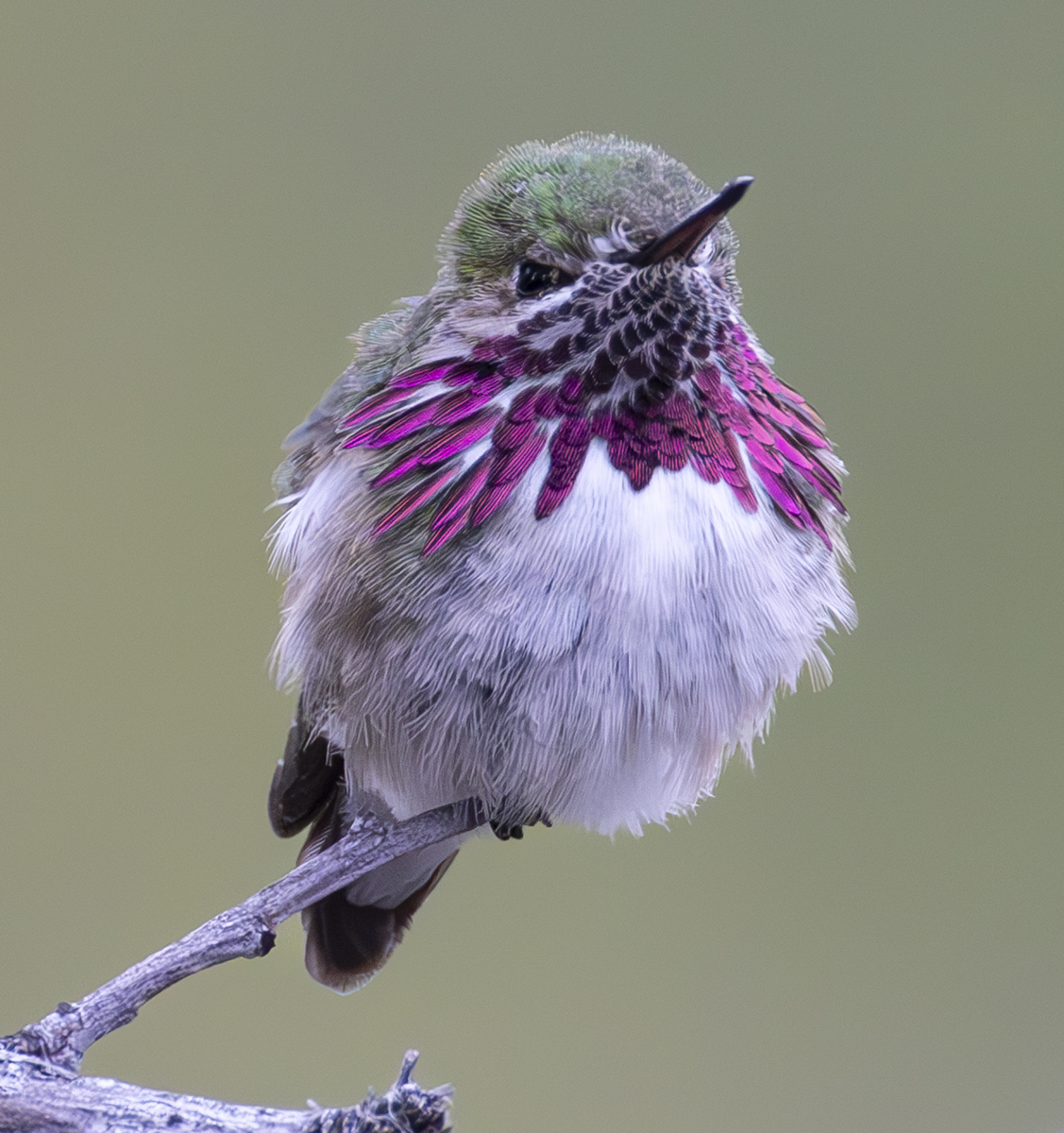
Remarkably, no one walked past me on this trail for the 10 minutes I sat with this bird that was only 15 feet away. Before it flew off to parts unknown I tried some handheld video clips. I accidentally filmed them in slow motion (guess I was still very excited to be sitting near this jewel of a bird). Here are portions of the two clips.
–Male calliope hummingbird in slow motion
Even in slow motion a hummingbird poops quickly.
Note the breathing action of the bird in this next clip and the occasional flying insect (mosquito?) that gets attention from time to time. That yoga stretch looks pretty relaxing as well.
In the 10 minutes I was privileged to watch this bird, I took over 270 photos and 3 videos. But I could have spent much more time with such an intriguing and beautiful creature. Here’s hoping I get some more chances this summer.


Leave a Reply