
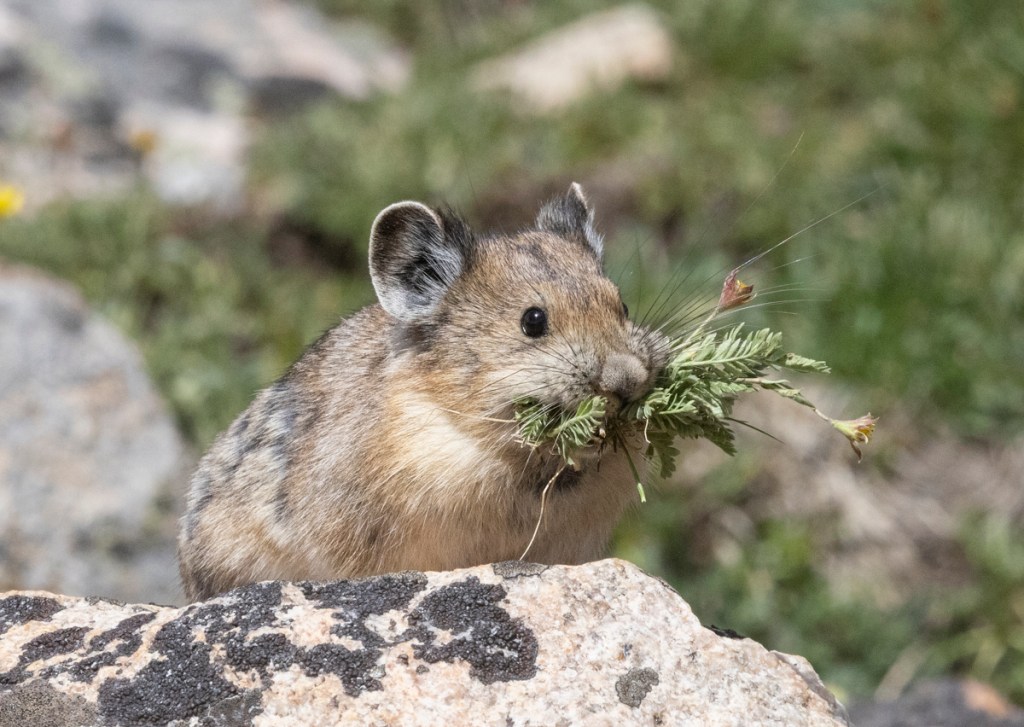
I find an incredible amount of joy when I spend time with the American pika.
~Deirdre Denali
Last week we took some visiting friends up to the Beartooths for the scenery and a break from the heat. While there we looked for pikas in some talus slopes along the roadside. We were rewarded with several of the little cuties roaming the rocks and collecting vegetation for their winter food supply – their haystacks. Melissa saw one pika go under a large boulder and later took a look and confirmed a nice haystack in progress. So, when she went hiking this past weekend with friends (I declined because of a persistent sore heel), I headed back to the Beartooths for some pika time. The site where we saw them before is near our favorite pika spot but just below the road instead of a short hike above. Given my foot ailment I opted for the lesser walk and picked a flat rock to sit on just yards be;ow the Beartooth Highway. Unfortunately, it was a biker rally weekend in Red Lodge so I literally heard hundreds of motorcycles go by above me in my 6 hours of pika watching. But it was worth it and the pikas didn’t seem to mind the noise.
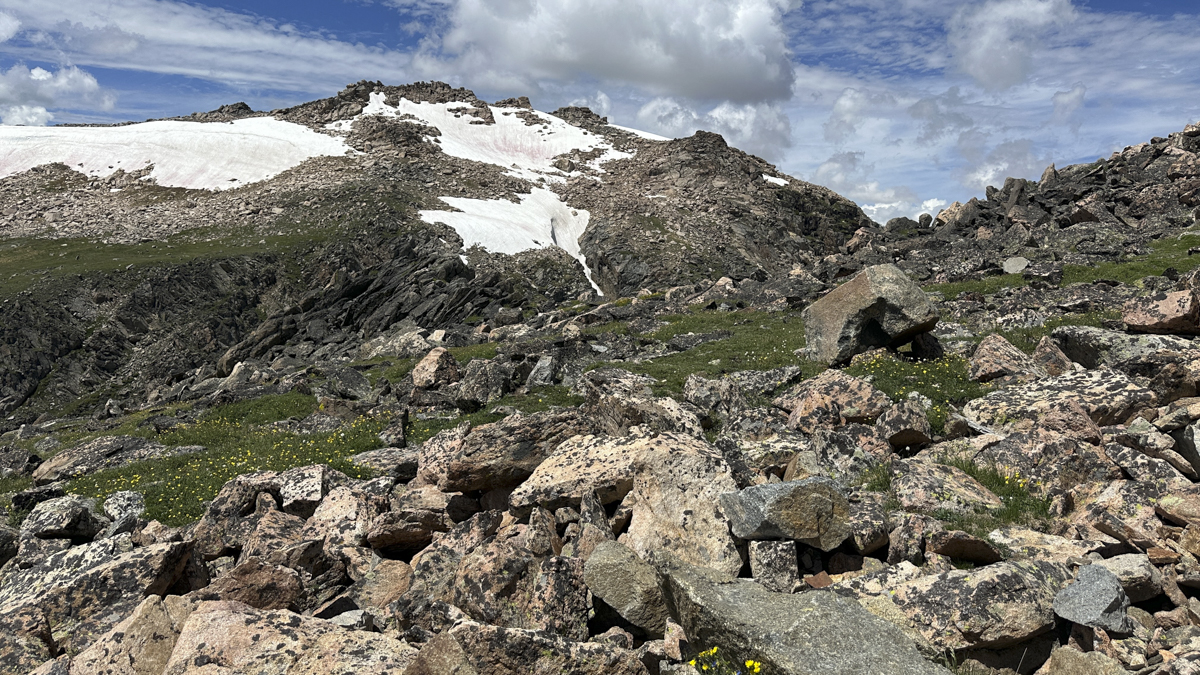
After I settled in uphill from the known haystack location, it took about 20 minutes before I saw my first pika movement. As usual, that first one was a brief blur of fur between the rocks out of the corner of my eye. I then stared in that location and it appeared again and moved up on a rock to look around. It was quite a distance from me so I didn’t raise the camera. That’s the usual way it goes with pika. But this was going to be the longest I ever sat in a pika habitat so I expected better sightings as time went on. And, indeed, that was what happened. I soon saw a pika running toward the haystack under the rock about 10 feet from where I sat.
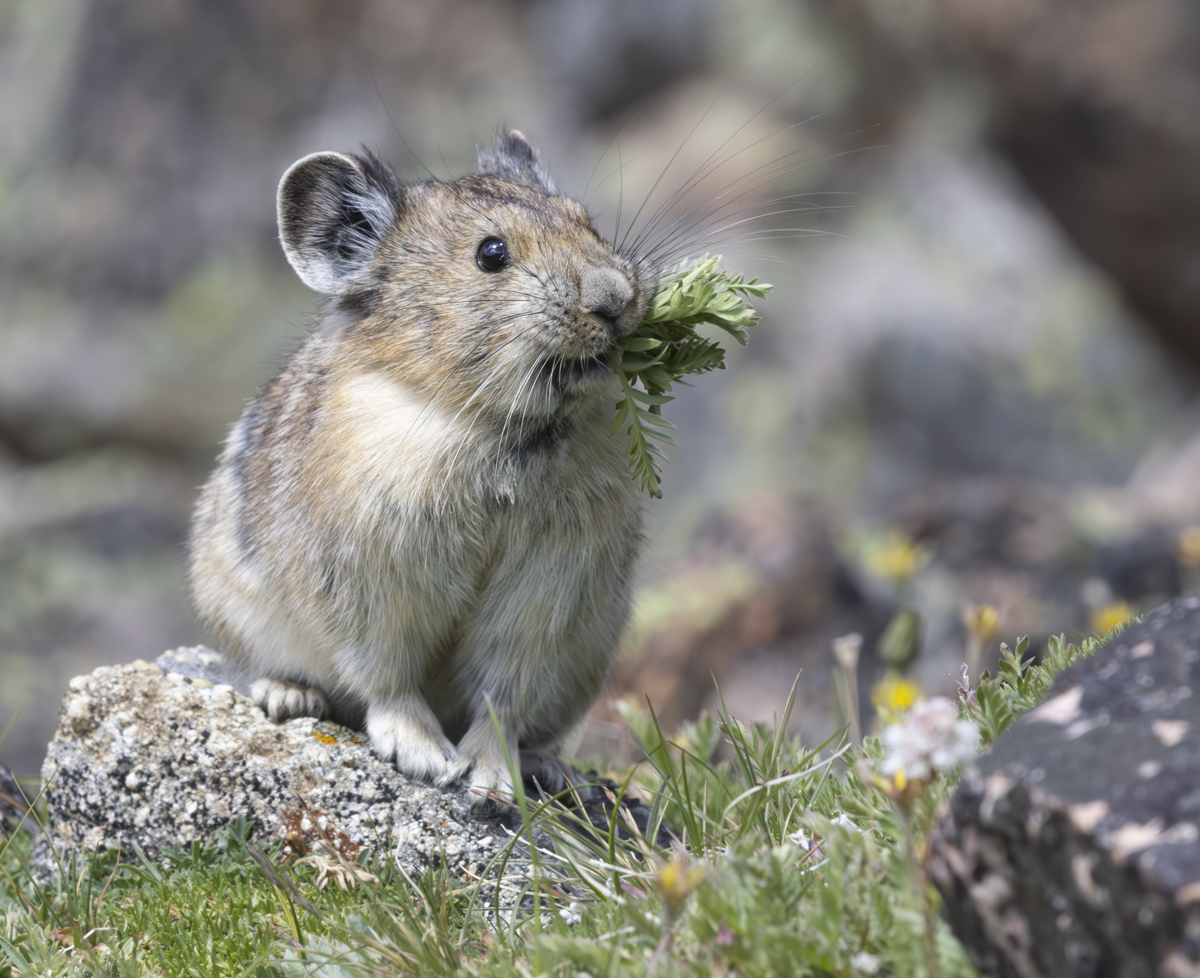
It was awesome watching this little guy (or gal?) running through the rocks toward me. It would appear and then disappear as it traversed the 100 feet between where I first saw it and the haystack rock. It seemed I had been accepted as just another blob on the landscape. So, for the next few hours I watched these amazing and industrious little rabbit relatives (yes, they are in the same Order as rabbits and hares, the Lagomorphs, but are a separate family. Ochotonidae). Here are just a few of the images I captured while enjoying their company…
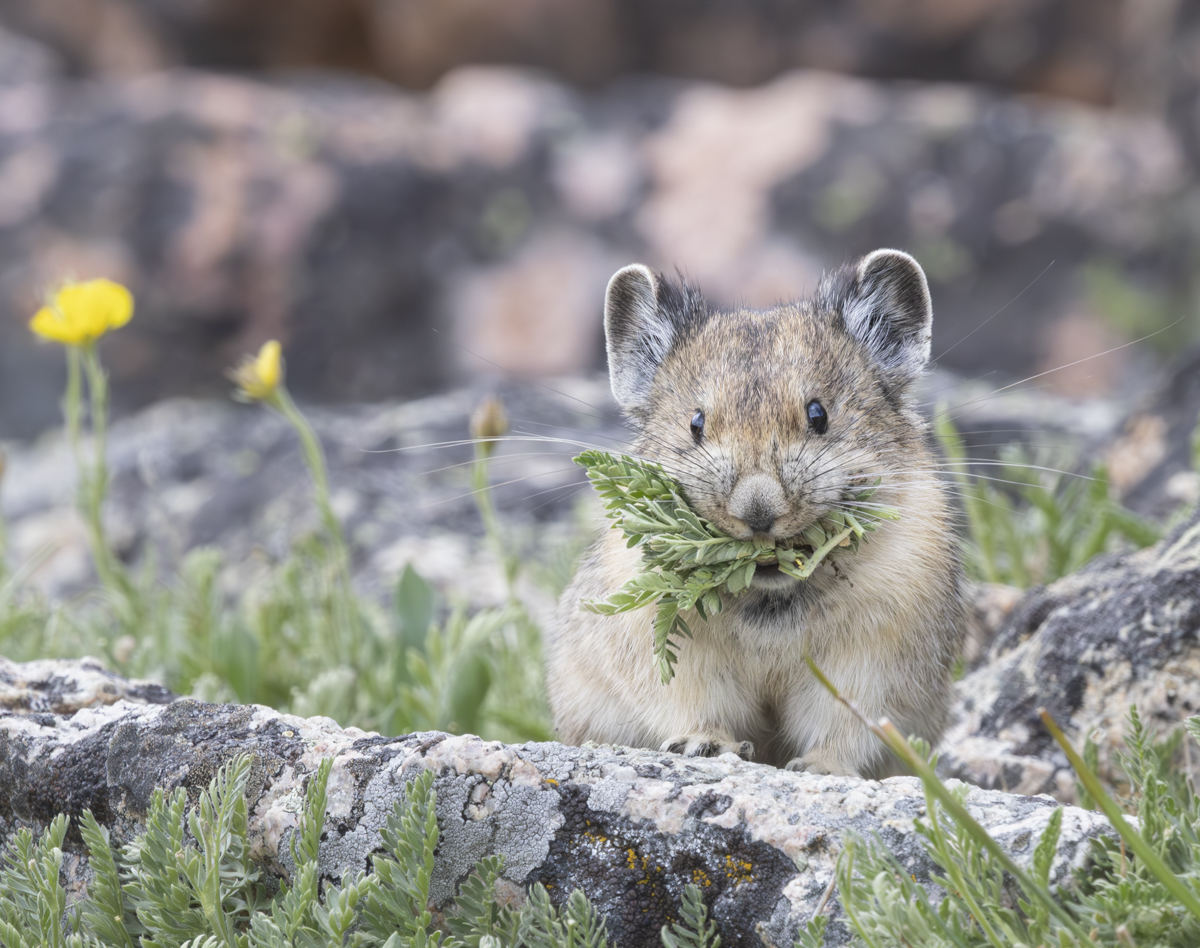
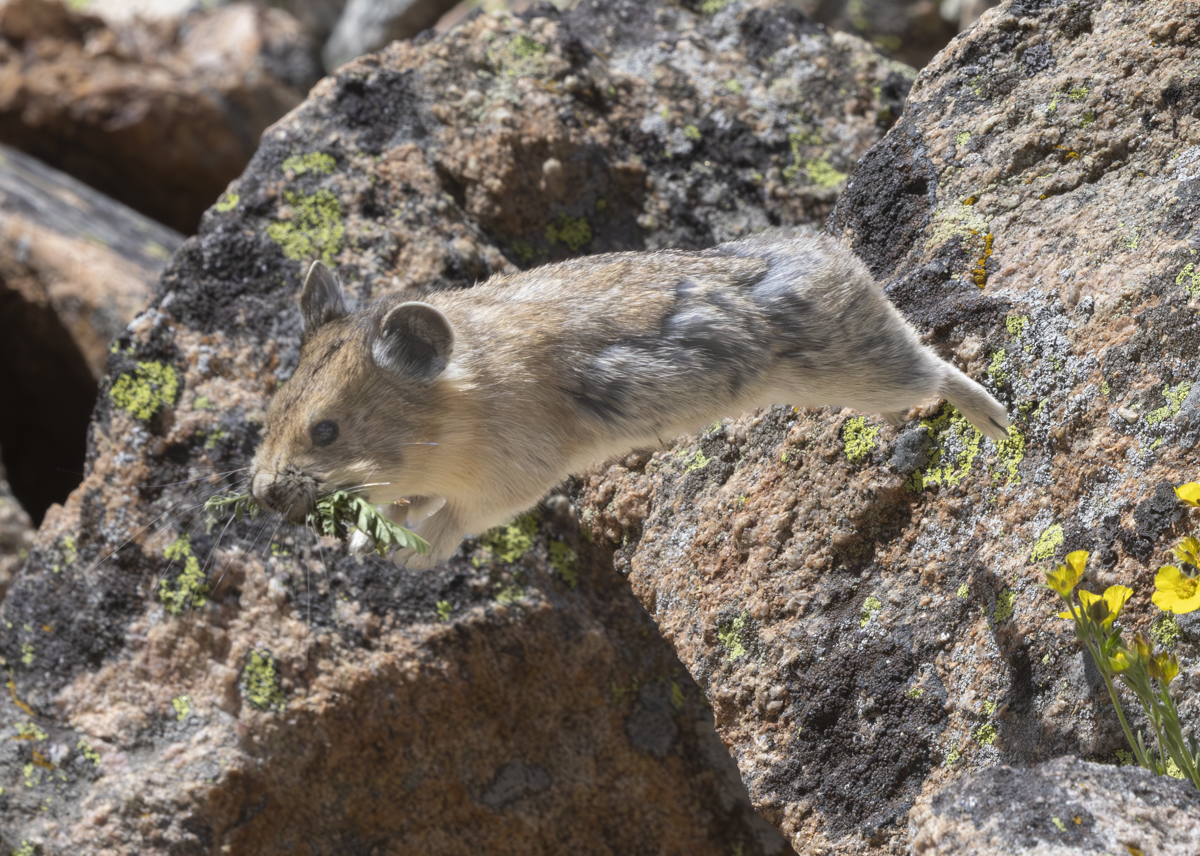
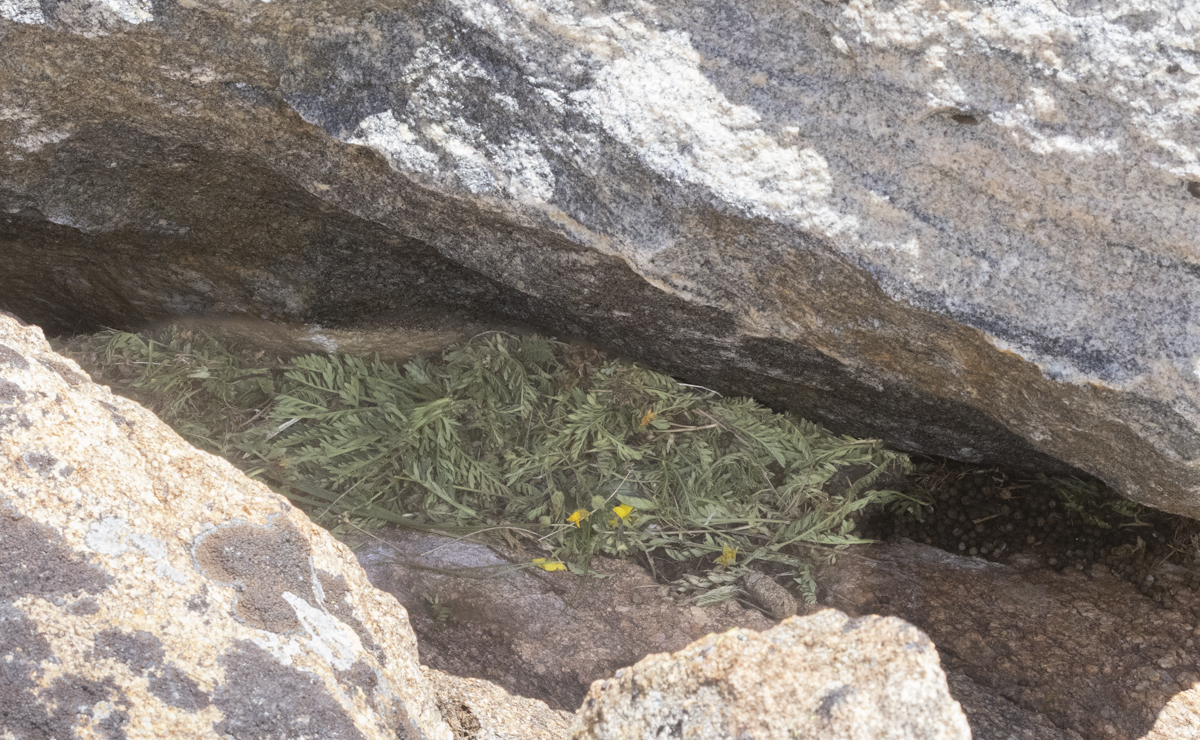
Pikas do not hibernate so they spend the summer month collecting vegetation and storing it in piles under overhanging rocks. These haystacks provide their food during the long cold winter. Researchers estimate a single pika may collect between 30 to 60 pounds of vegetation for its winter store. A pika weighs about 6 ounces. If it were the size of a human, they would be collecting about 5000 pounds of vegetation! I think I saw about 3 adults collecting vegetation. They don’t share their winter stockpile and I found the location of one other haystack near me. The kept a steady pace of collecting and transporting with occasional breaks for just eating grasses. Observers say a pika may make up to 14,000 short trips a summer stockpiling ts winter food supply.
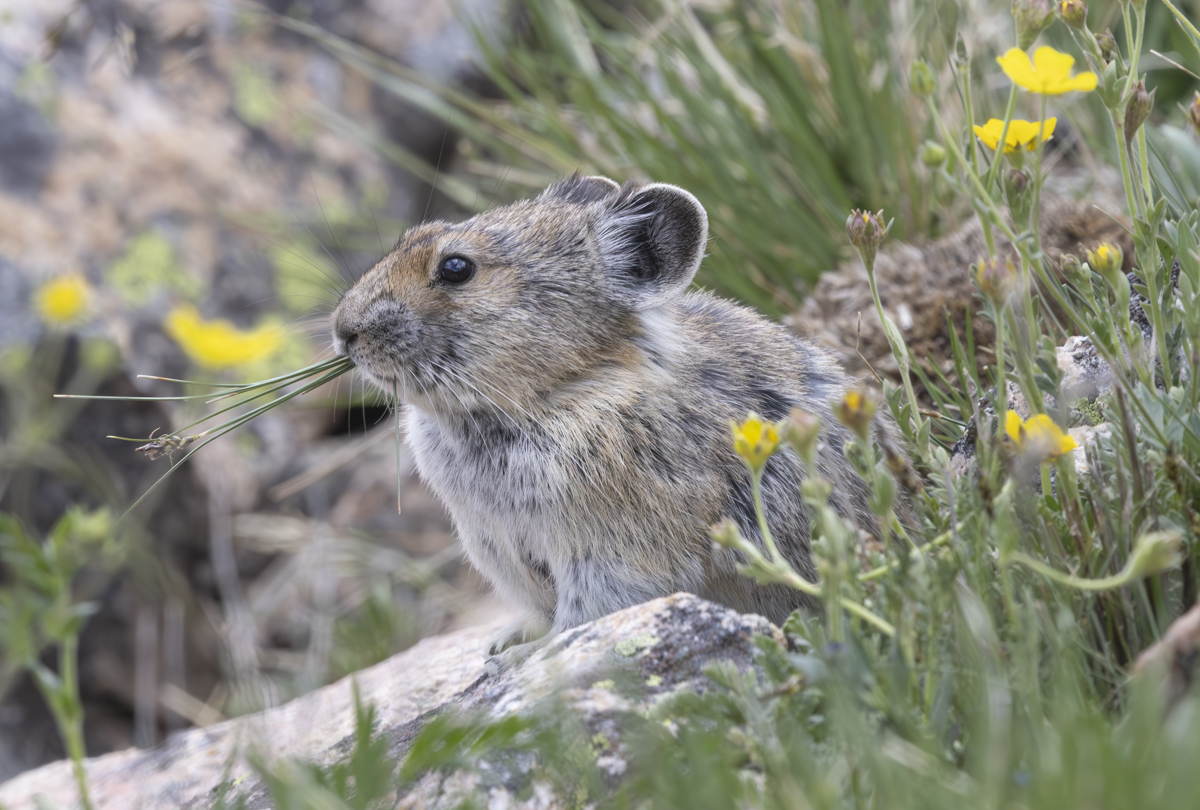
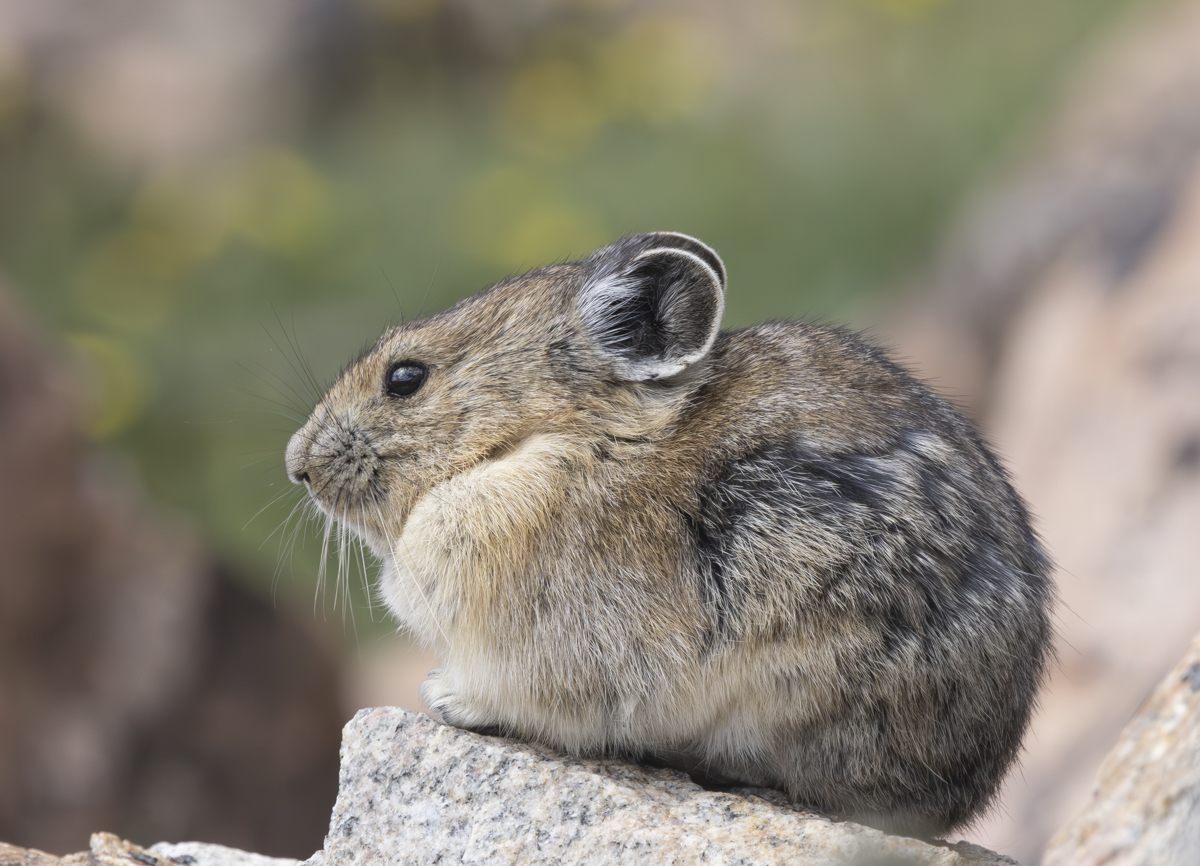
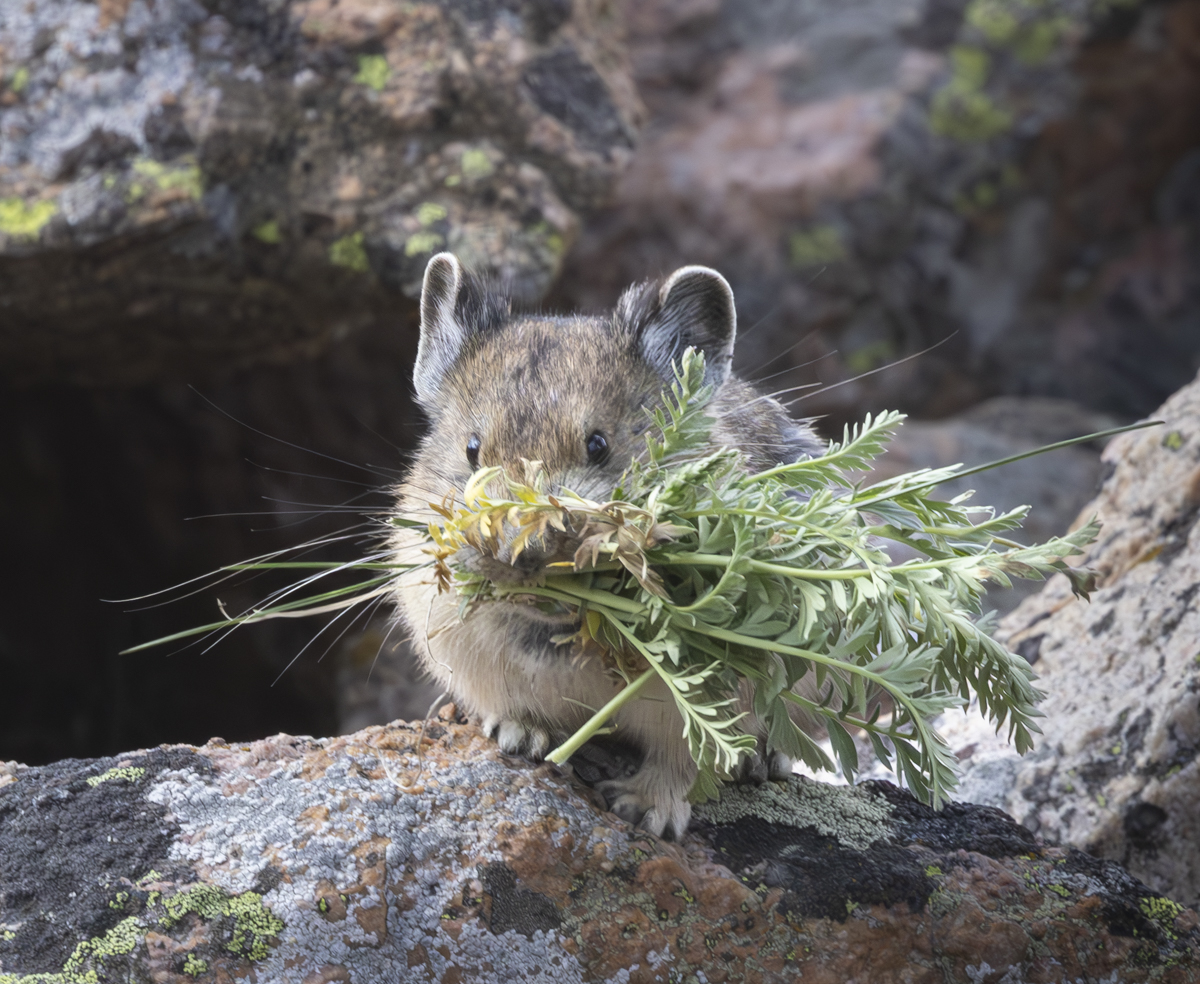
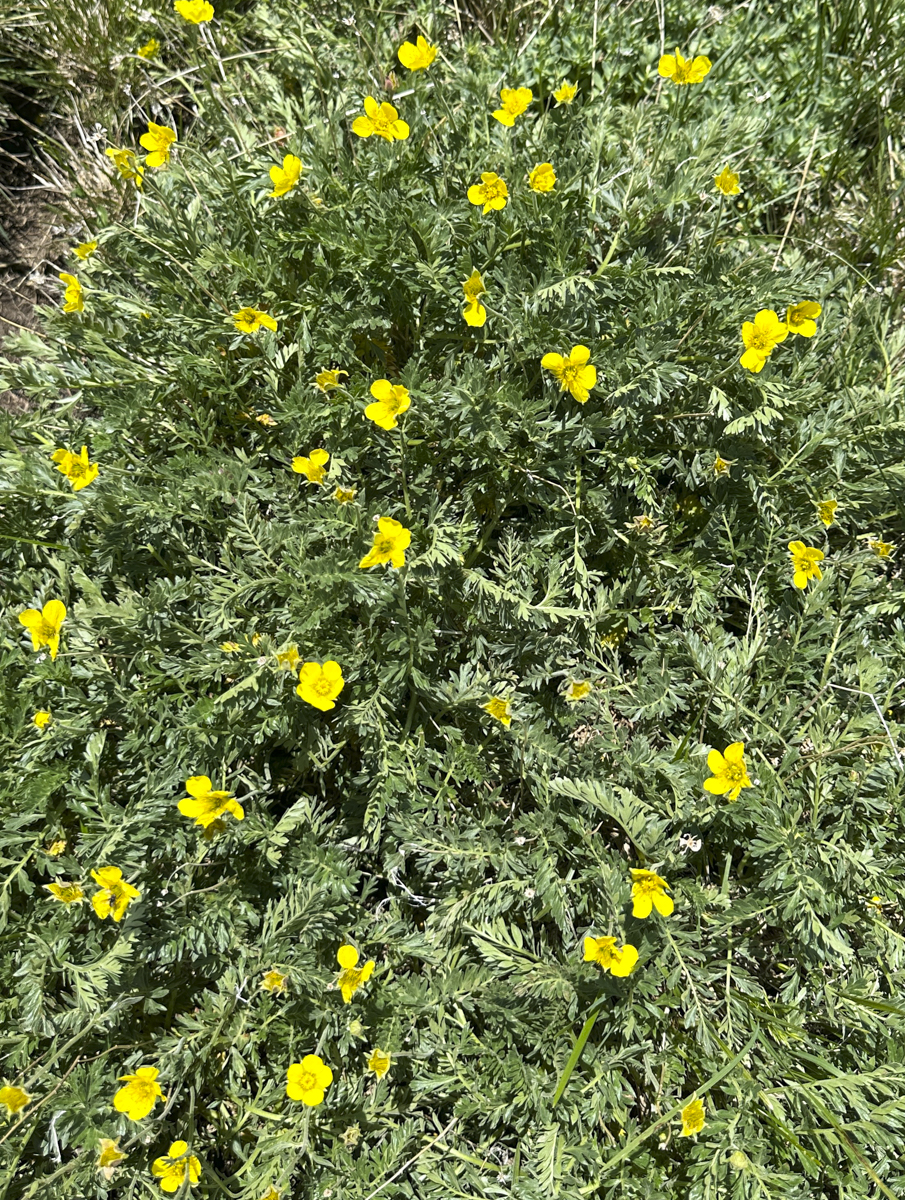
Studies have shown that pika preferentially collect leaves of alpine avens, a common alpine wildflower, and bring it to the haystacks. It is high in tannin which helps prevent decomposition which could hasten the decay of other species in their larder.
At one point I looked up and coming up over that dark gray pile of rocks I mentioned earlier was a band of mountain goats. They looked as surprised to see me as I was to see them.
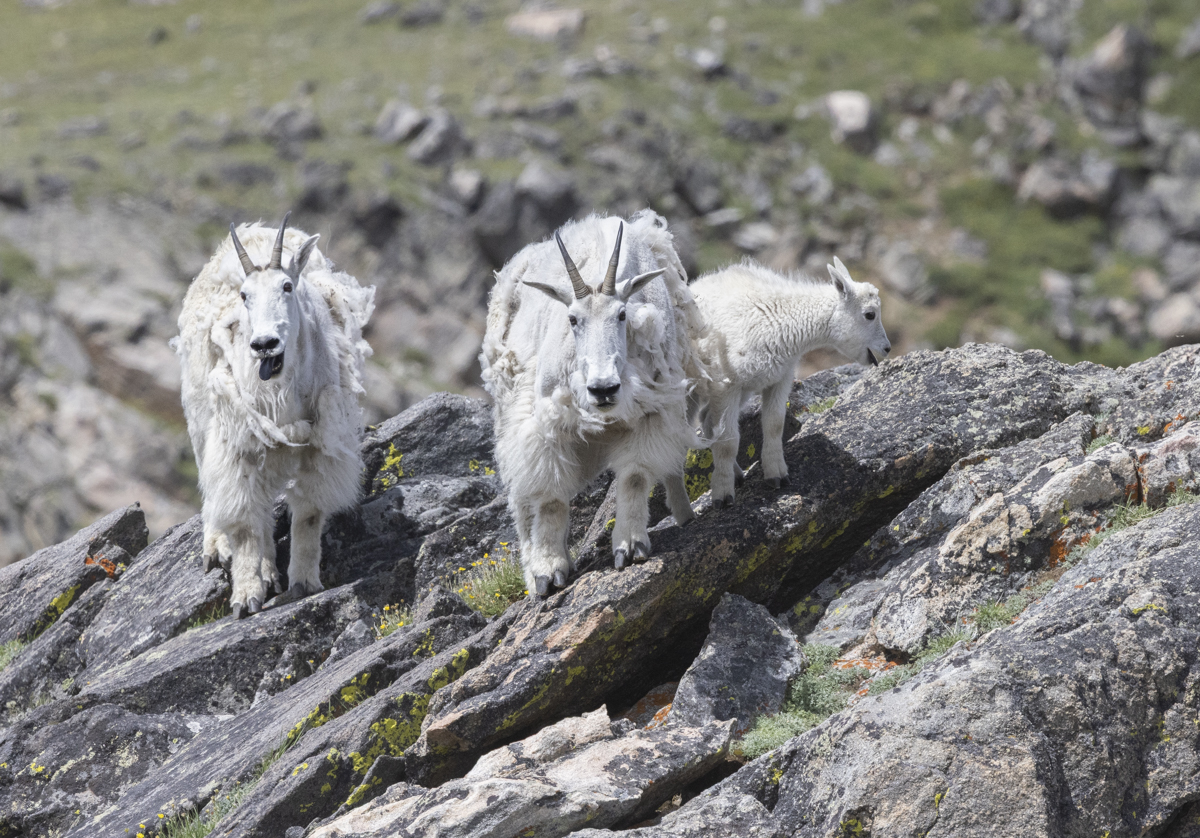
The goats walked calmly in a group and disappeared over another steep drop-off. I have often seen them in this area so I figured they might go up to a grassy knoll above the road but I never saw them there. I took a break for lunch and decided to go look for the goats by driving up to Beartooth Pass (over 10,000 feet in elevation). Sure enough, just beyond the pass I saw a couple of cars pulled over and I slowed and could see the goats below the road. I parked and watched them for about 30 minutes as they grazed in the flower-rich alpine meadows.
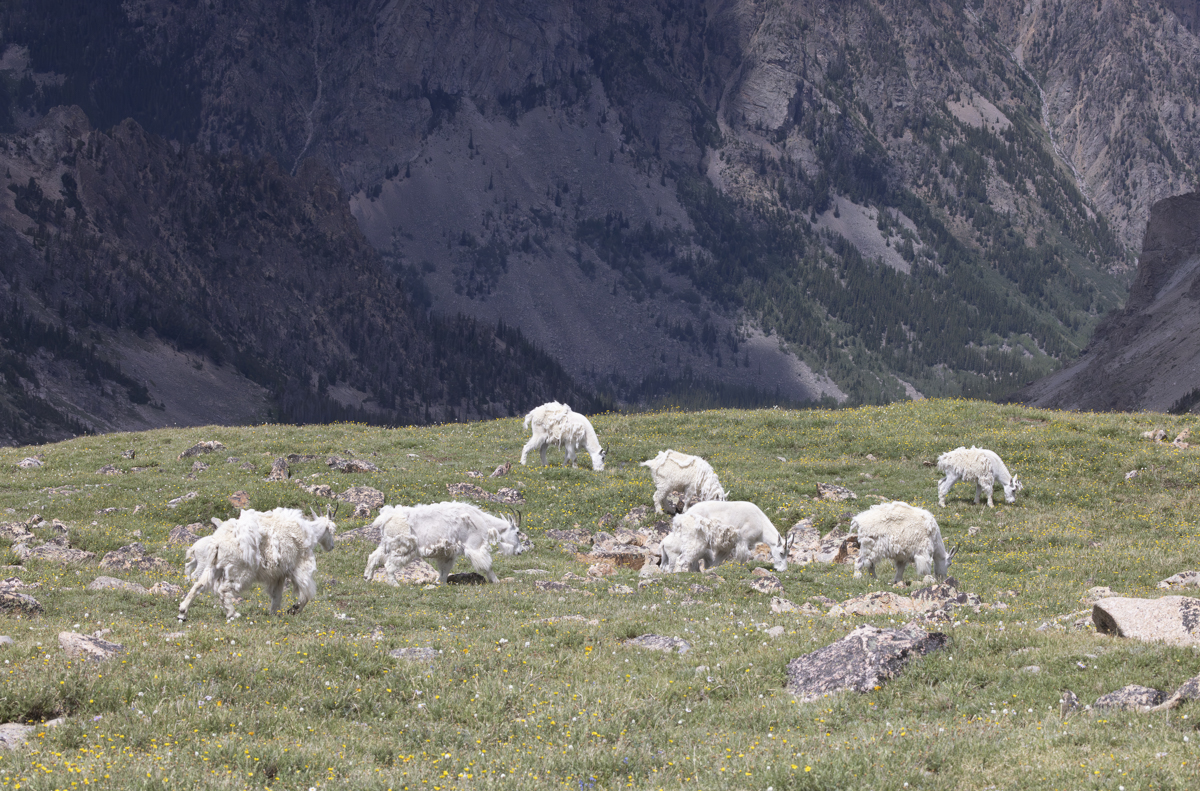
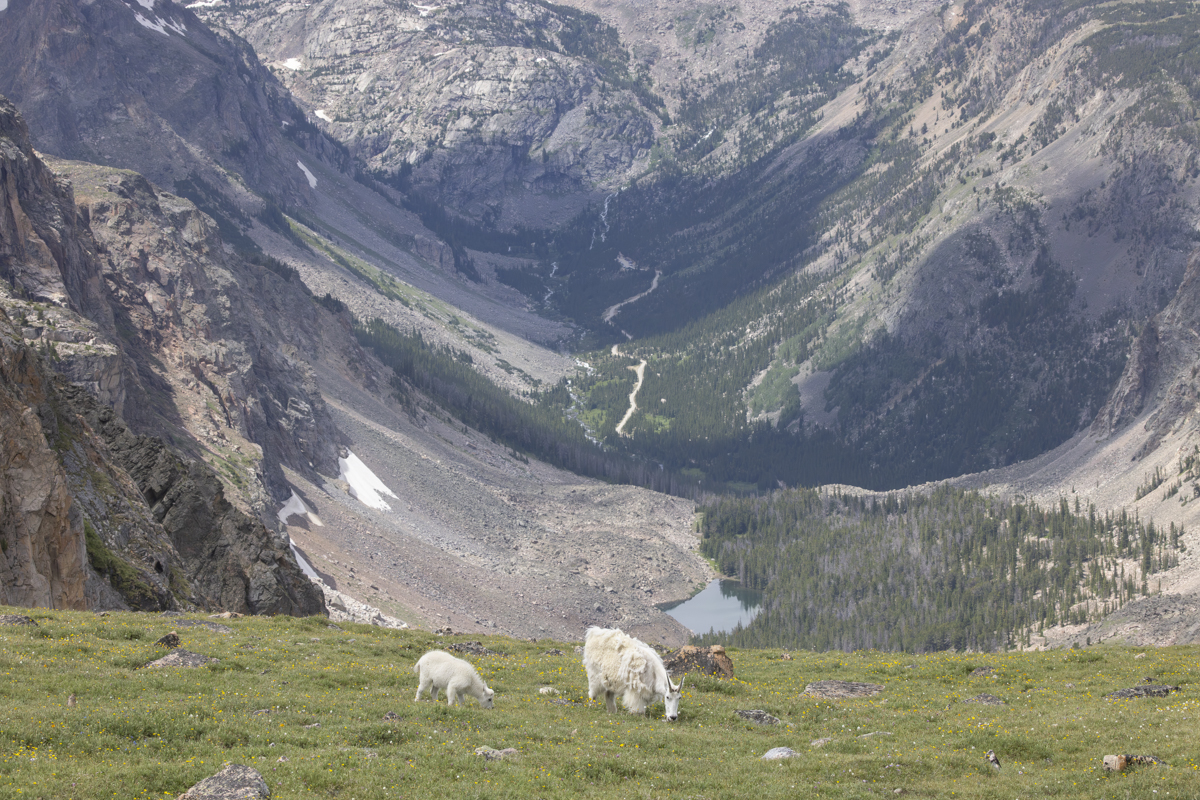
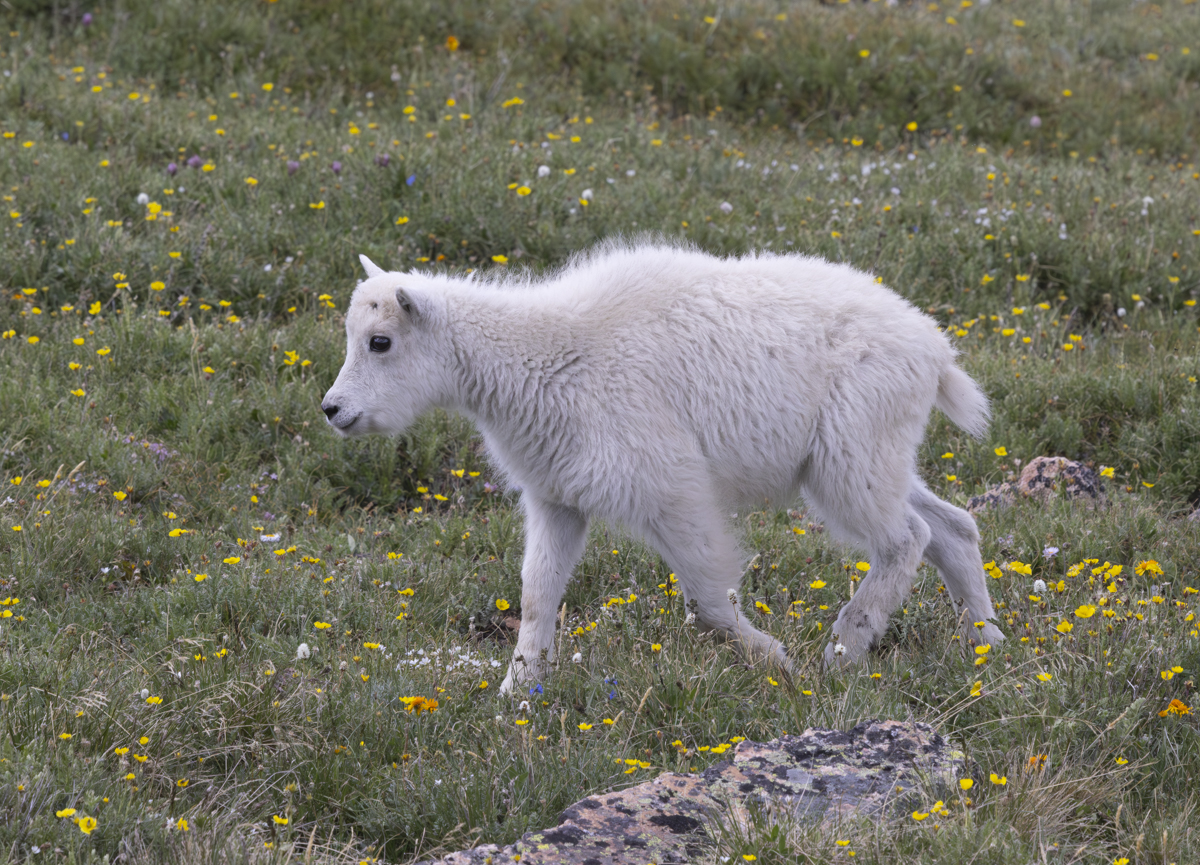
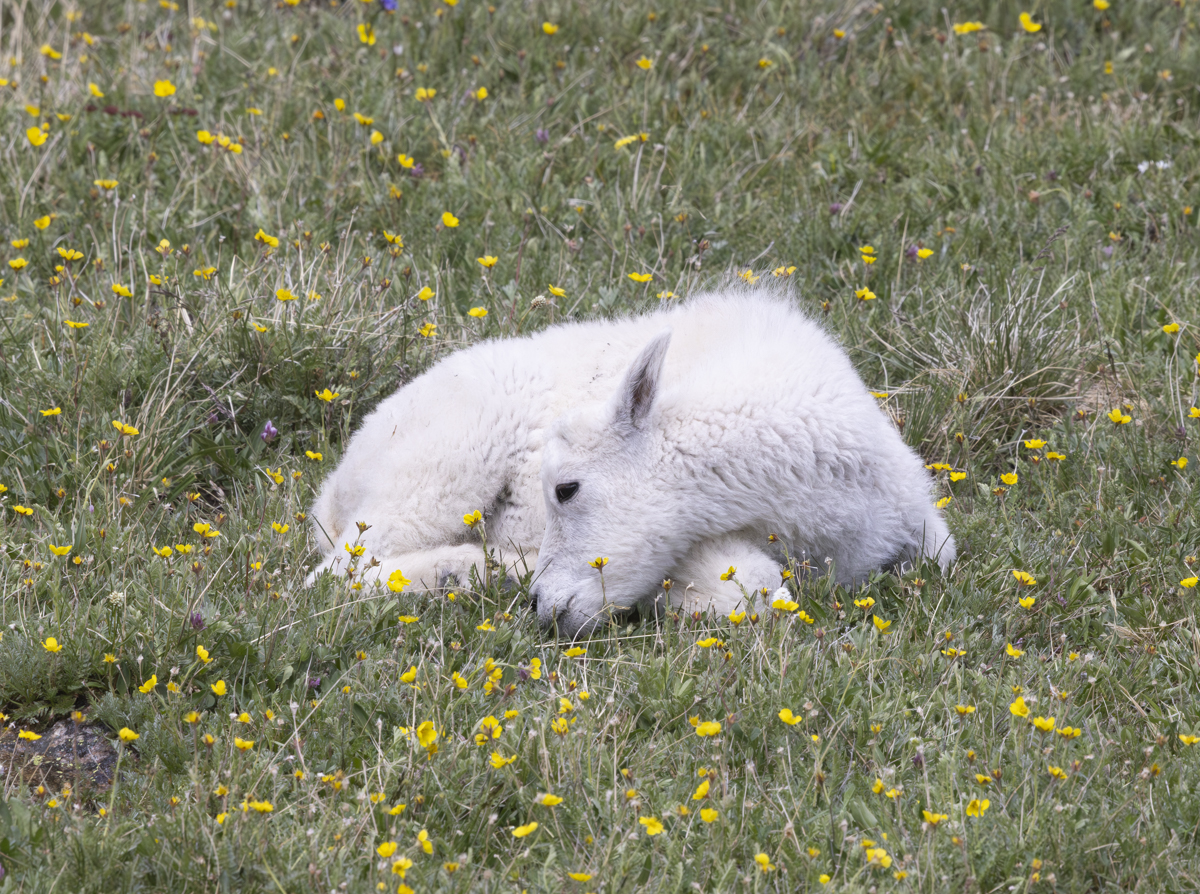
Mountain goats were introduced to the region in the 1940’s and 50’s for hunting. They appeared in Yellowstone in the 1990’s. There are around 200-300 in the park today and many more in the Beartooth Plateau. There is concern that they may have negative impacts on the delicate alpine habitats and may out-compete the native bighorn sheep for resources. I recently read that because of these issues, officials in Grand Teton National Park have been working for a few years to remove all mountain goats from that park. Makes me wonder if Yellowstone is considering that as well.
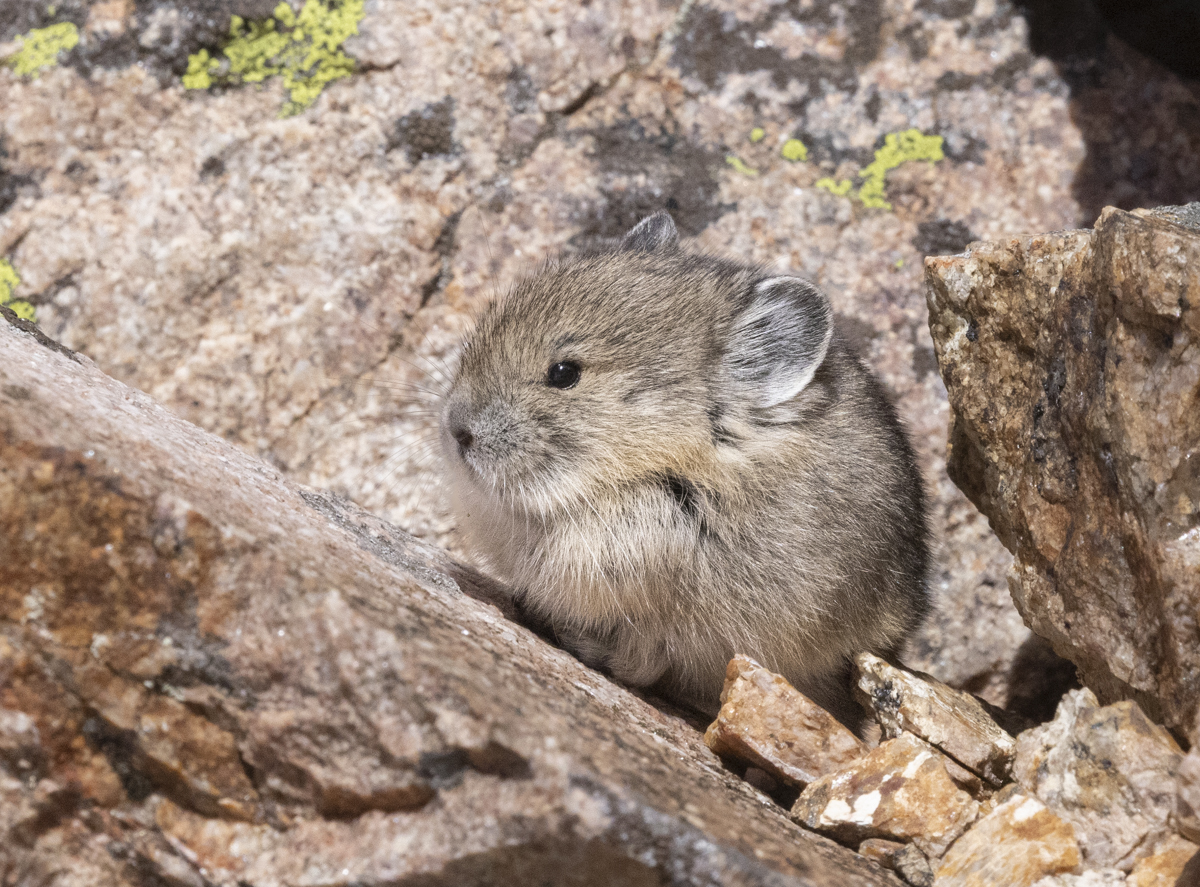
Back at the pika habitat, it didn’t take long for activity to pick up. Then I saw the first of two baby pikas, called piklets (just love that). And I have to say, even though I don’t use this word that often, they were adorable. Born hairless and blind in late spring, they grow rapidly and within a few weeks are exploring their rocky home. These little guys were very timid but curious. If i moved they would disappear but soon came right back out to look and nibble on the nearby vegetation.
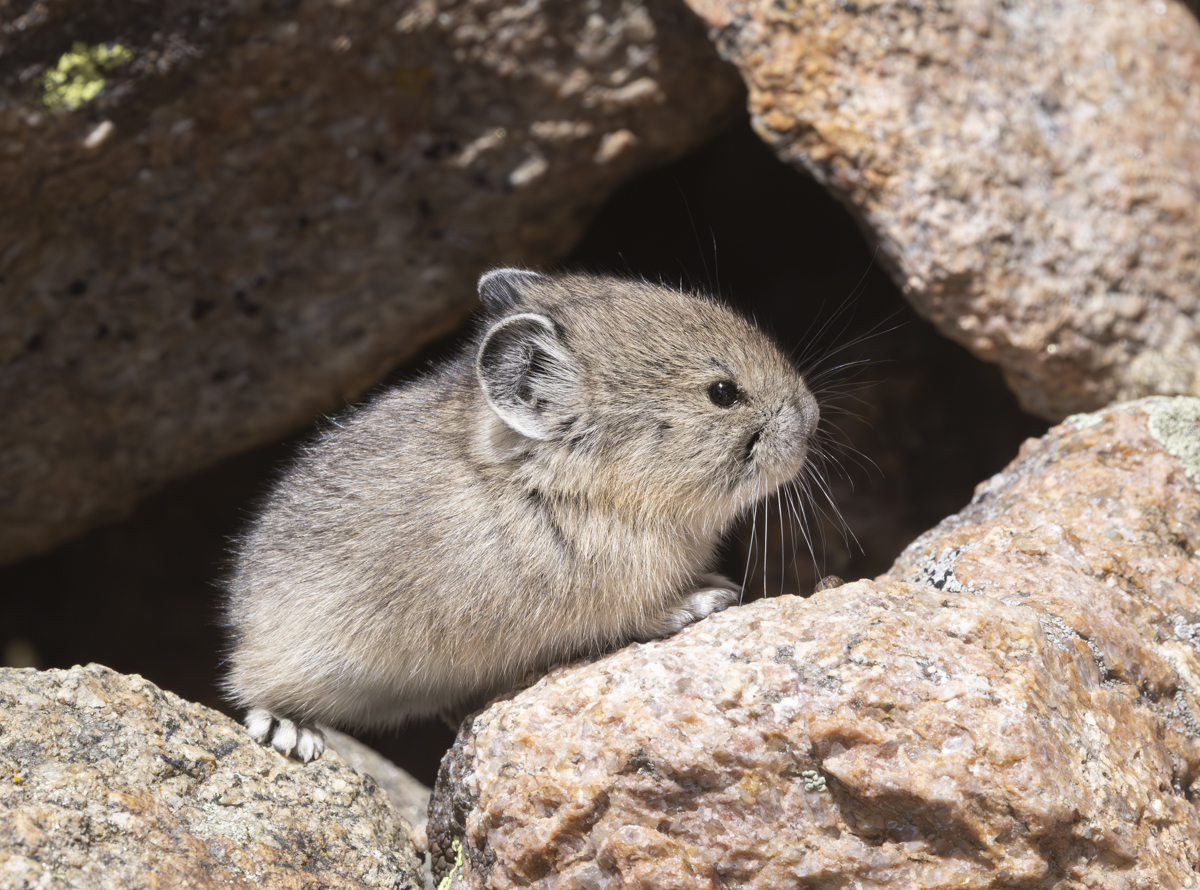
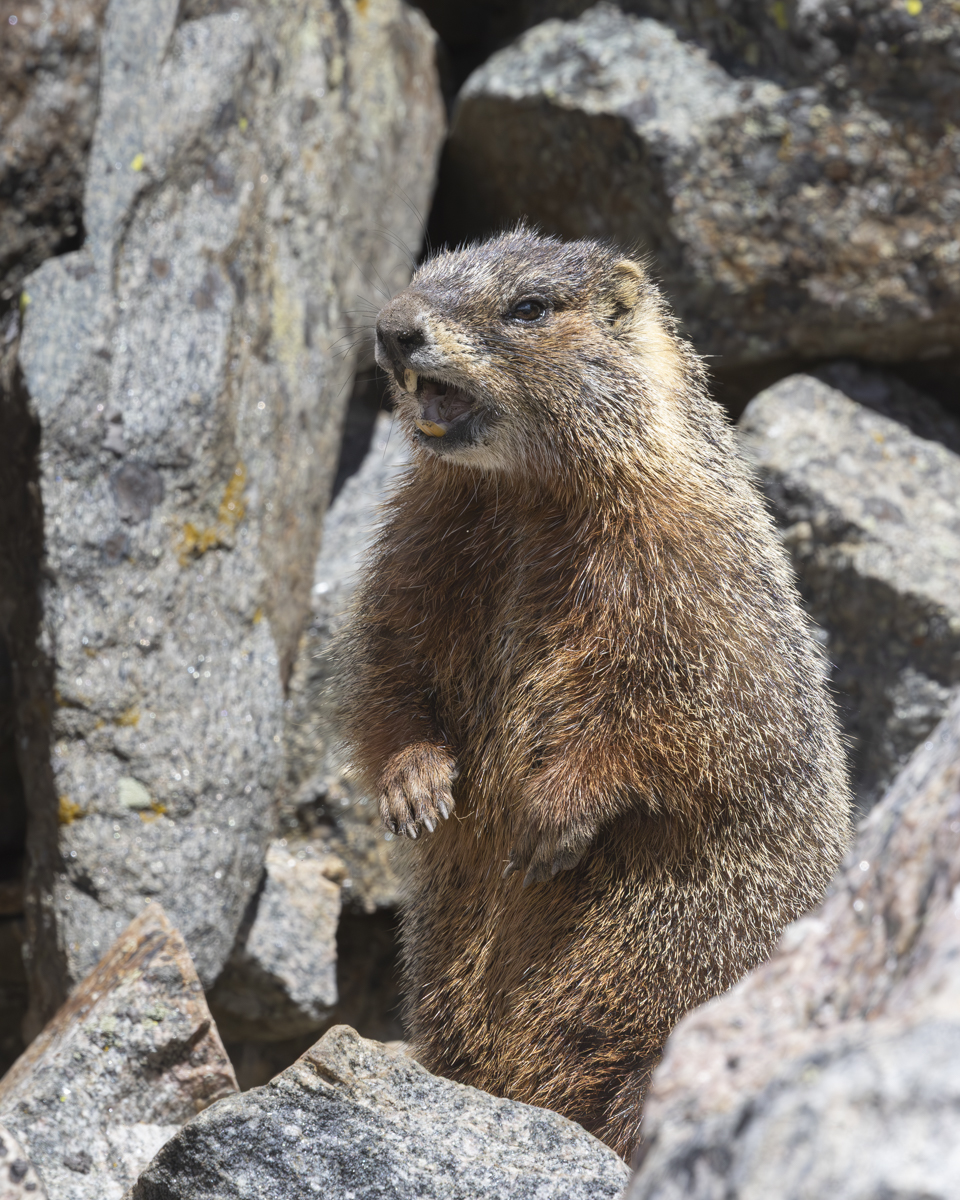
As often happens, when you sit in one spot for any length of time, all sorts of critters seem to accept your presence and make an appearance. But, I’m not sure the two local marmots were all that accepting as this one sounded its shriek alarm whistle anytime I budged. The pikas heeded the alarm at first but then started to ignore it as they apparently did not see me as a threat
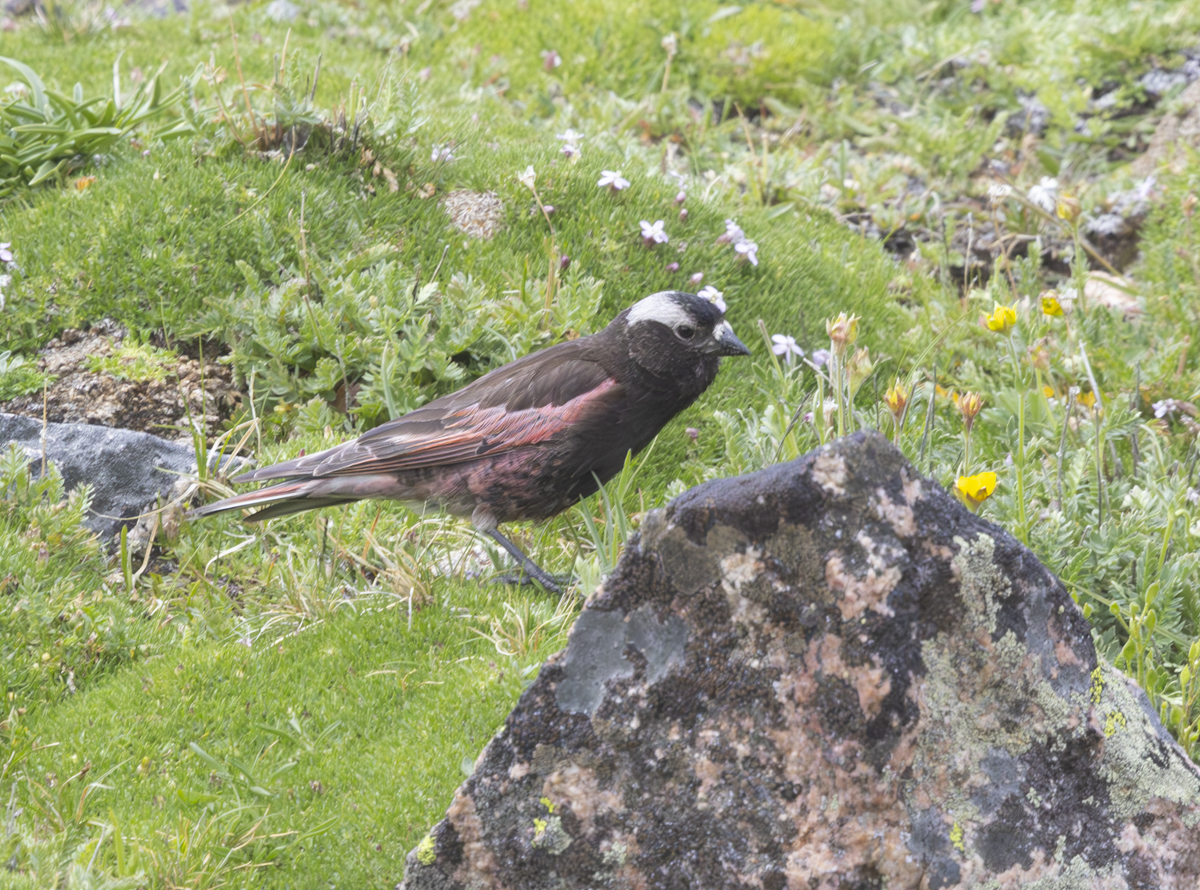
Another high altitude visitor stopped by – a beautiful black rosy finch. This species is a high altitude specialist, spending most of its time in alpine environments..
Toward the end of my stay I saw one pika cutting flowers. That was one of the images I really wanted.
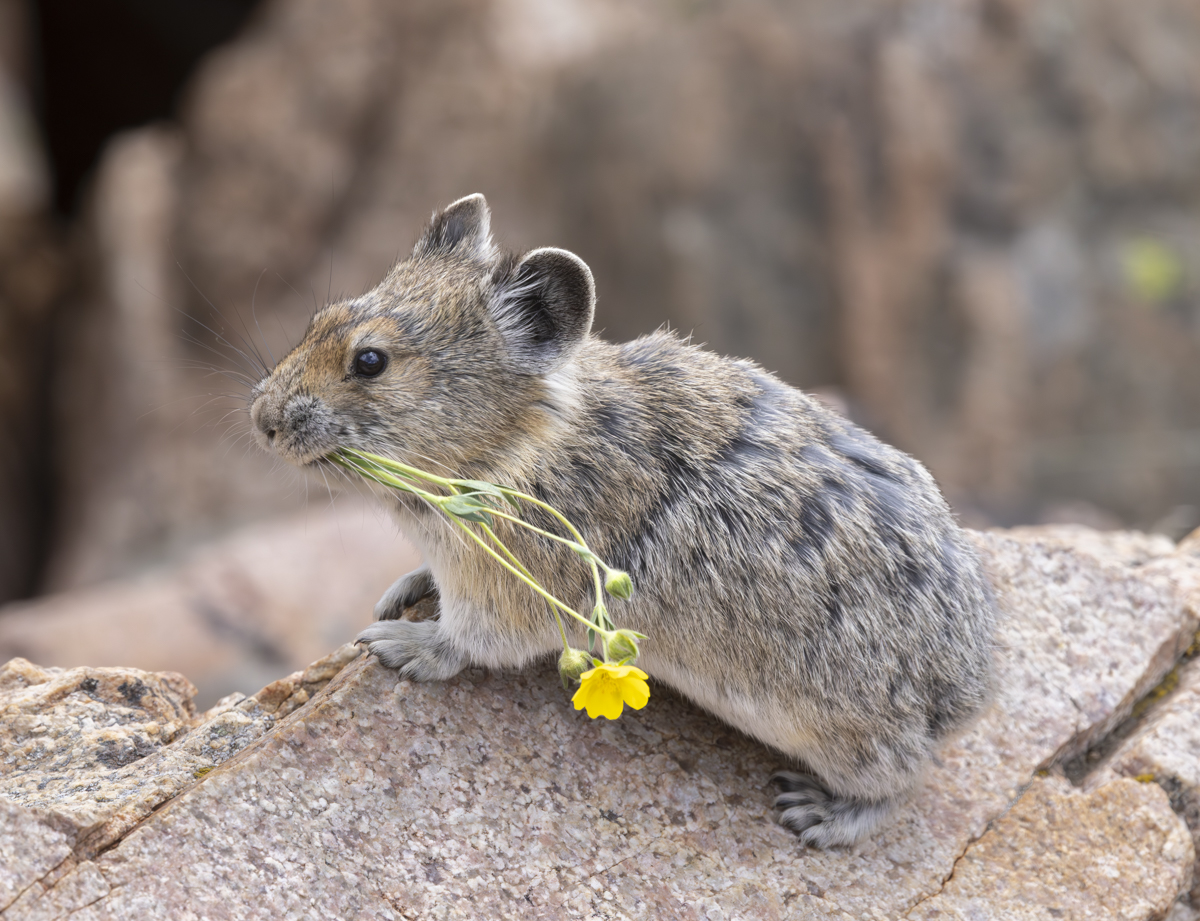
A perfect ending to a wonderful day of observing pika
I look forward to returning to pikaville for some more photographs and observations of one of the cutest mammals in North America.


Leave a comment